Tag Archives: processing

Photoshop CC Shake Reduction

While a lot of people have been quite vexed by the introduction of a subscription based approach to the Adobe software suite including Photoshop, I decided to get over it and upgrade to Photoshop CC.  One of the features introduced in CC is Shake Reduction.  This is an effort at dealing with motion blur in images.  It isn’t going to rescue a crappy shot but it is potentially able to to take an almost good shot and rescue it.  I decided to experiment with it on an image I recently took.

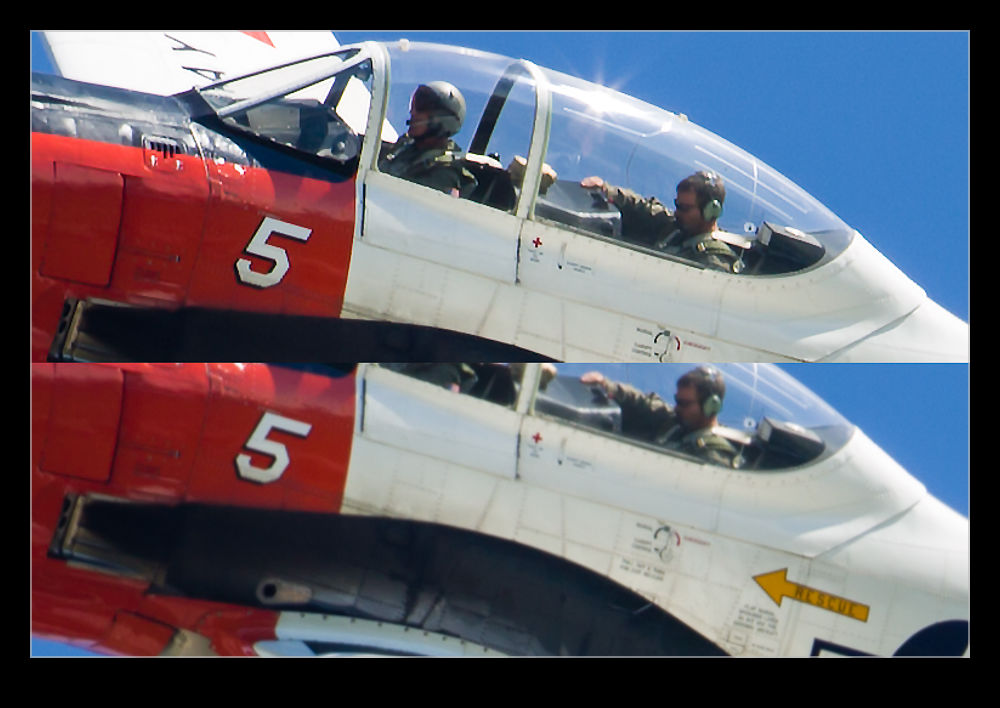
wpid7287-C59F2218-Edit-2.jpgThe image above is a combination of the original image without sharpening and the filtered version.  (It is recommended that you turn off sharpening before running the filter or it will make things break up more.)  The effect actually seems to be quite useful.  I should note that I tried it on several shots and they didn’t all respond as well to the filter.  However, it did make quite a good upgrade to this image.  I shall potentially use this again if there is an image I really like that is not quite as sharp as I would like.  Another tool to potentially use but not one I think I can rely on.

Playing with Noise Reduction

One of the biggest developments that there has been in digital imaging in recent years has been the improvement of performance in low light.  A few years ago, it was hard to get a decent image at above ISO400 and much post processing work was required to try and make the images workable.  Plug-ins for noise reduction were very popular.  However, the camera manufacturers have been very aggressive in developing chips and processors that allow shooting at ISO levels that would have been unthinkable a while back.  You hear of cameras being perfectly acceptable at ISO6400 and above.

My cameras are not the newest on the market but there are certainly not slouches in low light.  However, I have never been terribly happy with the performance at high ISO settings with the image breaking up a bit when viewed up close.  This is where I have to admit that I can be a complete idiot sometimes.

I shoot RAW all of the time and then process the images in Lightroom.  I have created some presets of development settings that I apply each time I import an image and which then acts as the starting point for any additional editing.  This is where my problem lies and why it has taken me so long to realize it I can’t imagine.  Anyway, enough of the self-flagellation and on with the topic.

The problem lies in the Detail section of the Develop module.  This is where sharpening and noise reduction are applied.  I have some basic settings I start with here and, when I was importing shots taken at high ISO settings, I was not changing them.  I would play with the noise reduction but things still didn’t look right.  The problem was, of course, the sharpening.  The basic setting I had entered was sharpening far too much for the ISO setting and was causing some odd breakup of the image.  I finally realized this one morning while lying in bed – I have no idea why I was thinking of this but it suddenly came to me.

I got up and opened some high ISO images and went to the detail area.  I zeroed out the sharpening and the noise reduction.  Everything looked awful.  Then I brought back the noise reduction and things suddenly started looking a lot better.  When I was happy with the noise, it was time to bring back some sharpening.  Things were a little soft after the noise was taken out so the sharpening brought back a bit of punch to the image.  A tweak on the amount and opening up the radius a bit made things look good.  Then a more aggressive level of masking of the sharpening and suddenly the image was looking way better than before.

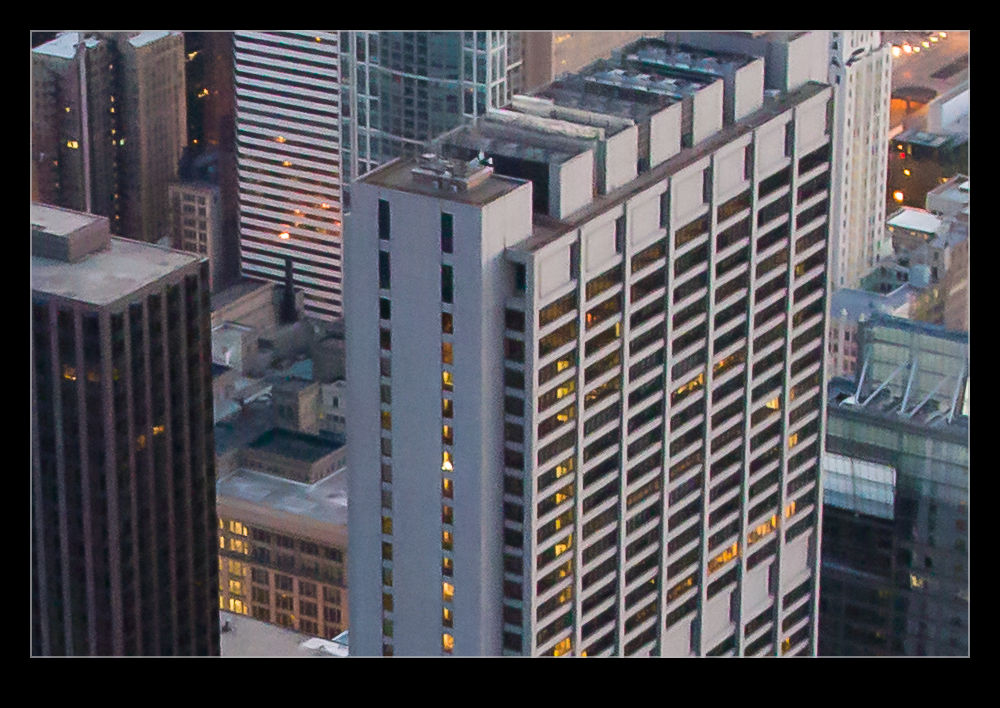
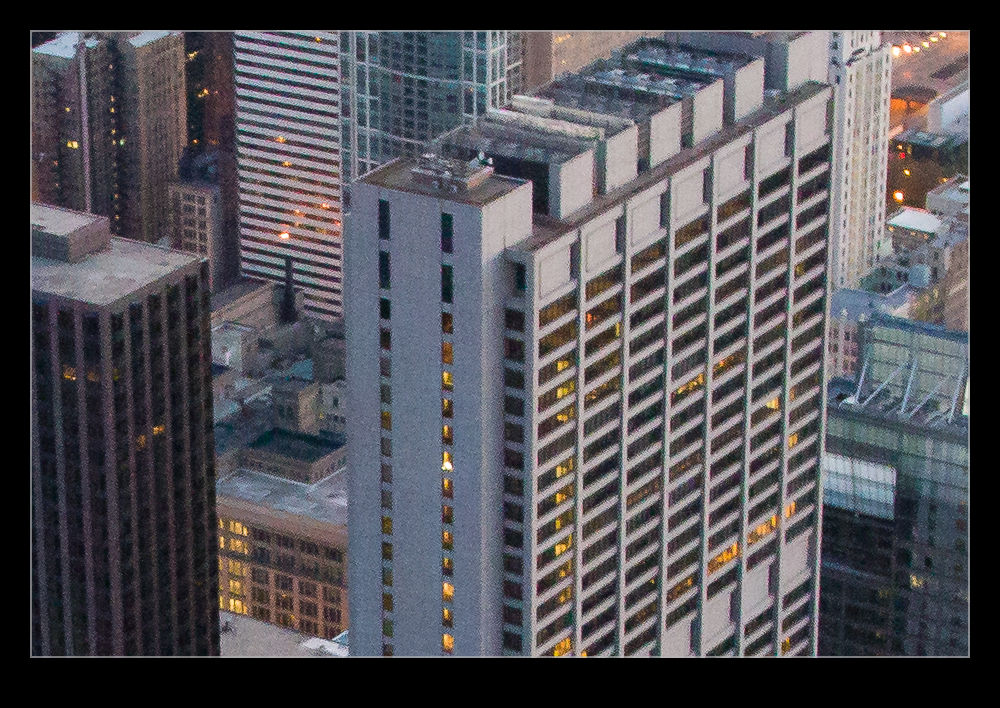
When I was happy with things, I saved a new preset that was just sharpening and noise reduction and labeled it as High ISO Detail.  Now I can apply it to any images that need it and be in a far better starting position for further processing.  Each image will require its own approach if I am going to make more effort on post processing but I will now be starting from a far cleaner place.  The samples above are comparison of approximately 100% crops with my original settings and the revised approach.  Hopefully you can see the difference.  It might be annoying to realize you have been missing something for so long but at least I finally worked it out!

Dust Spotting – It’s Over There!

A slight change in direction today.  I am going to talk about a post processing tip that I recently read in the NAPP magazine, Photoshop User.  It was a tip about how to manage dust in images.  This may be something that everyone knows about in which case I apologize for being late to the game.

Dust is a familiar problem to a lot of photographers.  It isn’t familiar to a lot more but it should be given the number of shots you can see that have dust spots all over them.  Cameras have got better in recent years with the addition of dust cleaning functions that shake the dust off.  However, not all cameras have them and they don’t always work perfectly.

When shooting aircraft against a blue sky, dust spots can be particularly conspicuous.  If the area with the spot already has a lot of detail in it, the chances are you won’t notice it – particularly if the aperture is reasonably wide.  In that case, you don’t really have a problem.  The difficulty with dust spots is that you can get to a point where you cease to be able to see them.

Lightroom has a nice feature to assist in dust spotting.  If you zoom in to 1:1 view in the Develop module and press Page Up or Page Down, you can look at the whole image to use your spot removal tool.  As it moves down to the bottom of the image, another press of the button will move you across and back to the top so you cover the whole image without having to think about it.  In the past, I have used this technique combined with really ramping up the Blacks slider to make the dust show up.  Even then, the results are not always perfect.

The tip from the magazine was the creation of two Tone Curves to help show up the dust.  I will describe the creation of the curves at the bottom since it is a bit long-winded and many may not be interested.  The two curves when applied to the image create a very freaky effect.  You could actually think of it as a creative finish itself but I will leave you to decide on that one.  You can save the curves as a preset and use them whenever you need them.  (I assume you can do this too in Camera Raw if you are using Photoshop since ACR and Lightroom use the same processing.)

The colors will be really messed up but the effect will make the dust spots really jump out of the image.  You might wonder why there are two curves but, interestingly enough, some spots will show up clearly with one curve but barely at all with the other.  I tend to apply one curve and run across the image, then apply the other curve and run back the way I came.  It really doesn’t take very long to do.

One thing to bear in mind with this.  The technique finds dust spots you had no idea were there.  You will start to think that your sensor is filthy.  Yes, it is – BUT – most of this stuff is totally invisible.  Don’t get paranoid.  You can get messed up with this.  I had some shots of a vintage prop aircraft and the slow shutter speeds had resulted in small apertures and more conspicuous dust.  I ended up with so many spot removal edits that the image rendering took a lot longer than normal.  I suspect I had gone overboard with those shots.

Do you have to do this with all shots?  Nah.  However, if you are planning on doing something significant with the shots and you are concerned to keep dust spots out of the image, this could be a good way for you to find the dust more quickly and get back to what you really want to be doing rather than hunting for dust which, I suspect, is not most people’s favorite task.

Creating the Curve:

The curves are reversed versions of each other.  One of them starts at 0,0 and the other starts at 0,100.  Create a point at each 10% across the x-axis with each point alternating between 0 and 100.  You then have a very aggressive looking sine curve (or cosine curve for the alternate I guess).

When Does Noise Matter?

I will freely admit I am as much of a gearhead as the next photographer.  New toys always catch my attention and then it is a matter of time before the battle is won between my sensible side or my not very sensible side as to whether I am going to get something.  The price of said item may well have an influence on which side wins that battle.

One thing that is a popular discussion for the pixel peepers is noise.  Having started off with a Canon EOS10D when I first went digital and worked through a number of bodies since – none of which have left my ownership I must confess – I have seen some steady improvement in noise reduction capabilities although not always with as much benefit to the final image as I might have liked but I digress.

A while back I was shooting at the Oceana air show with two of my buddies, Ben and Simon.  We had trekked down from DC for the show and were greeted by less than ideal weather.  The cloud base was solid and low and a bunch of displays didn’t take place.  Some did though and we still had a good day.  Given the heavy cloud, though, we were struggling for light.  I was shooting mainly with the MkIIN and was up at ISO 800 for a lot of the time.

The MkIIN is well into the noisy range at 800 and I knew that was the case but there was little option.  A while after this show, Lightroom 3 came out and it had a lot of noise reduction built in that wasn’t in the previous version.  I took a look at some of the Oceana shots to see how much better they might look.  There was a noticeable improvement and I was happy.

Why am I discussing this now, over a year later?  I was mulling over this topic for some reason, probably related to another acquisition decision, and I wondered how the printed version was affected by this noise.  There are plenty of things that I fret over in an image when looking at it on screen, usually zoomed in far too close, that really don’t become apparent at all when printing.  Is noise one of those things that looks better on paper?
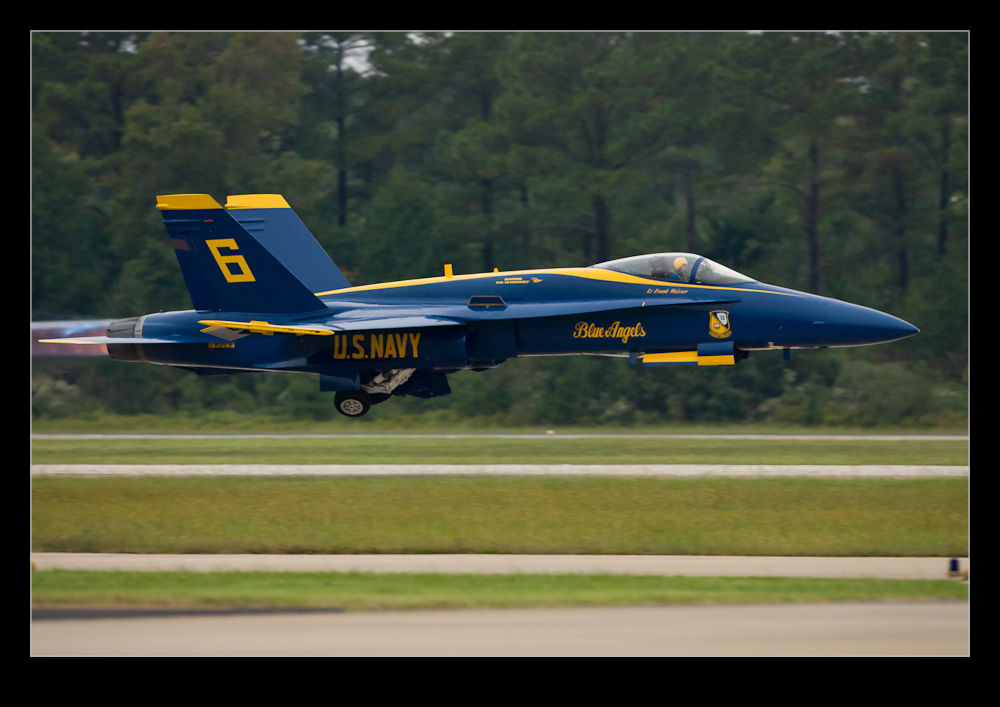
I picked one of the shots from that day to experiment with.  The shot in question is this one of one of the Blue Angels taking off.  Since there was the treeline behind, the gray sky was not an issue and the burner plumes show up nicely given how dark it is so I like the shot.  Now to check it out on a print.

One of the nice features of Lightroom is the ability to mess with the print layouts.  I made a couple of virtual copies of the image and one one of them did my best to optimize the noise reduction and on the other switched it off for the most part.  On screen, it did not look great.  I then set up a page in the print module with two cells right next to each other and put the left side of one image in the left cell and the right side of the other in the right cell.  It looks like a full aircraft if I get the positioning just right.

First I printed it on an 8.5×11 sheet.  If I look closely, I can see the divide.  It actually shows more in the background than on the aircraft.  It is visible but it isn’t as noticeable as you might expect.  This had got my interest!  What about the size of the print.  I repeated the layout on some Super B (13×19) paper of the same type and printed it again.

As you might expect, this time is is a little more noticeable – hey, it’s twice the size!  However, even now, while it isn’t great, it really isn’t that bad.  We are talking about turning the NR almost off.

So, what do I conclude from this?  Well, technology is going to always get better, both in camera and on the computer processing it and I am still going to be a sucker for a new piece of kit.  However, while there is a noticeable noise difference on screen, the print is really a lot more forgiving.  Maybe I should relax about it a lot more and just enjoy the shooting, even when the light is limited.