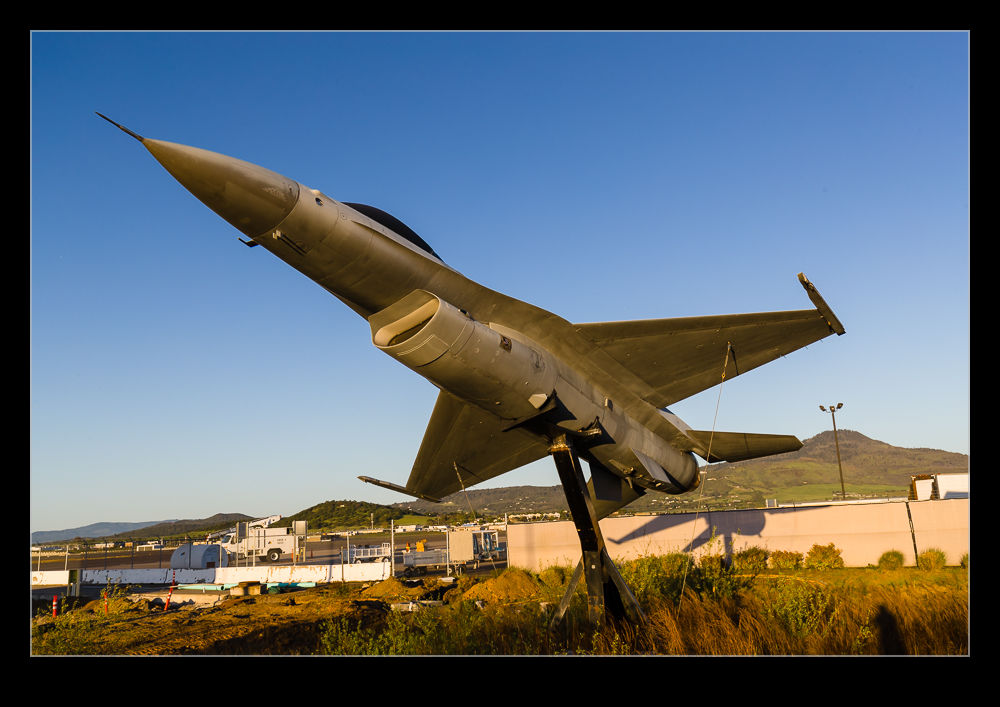
Our overnight stop at Medford in Oregon was close to the airport. I took a stroll towards the terminal which had an F-16 mounted on a pole outside. This was an F-16A model. I assume it had been there for quite a while. There was a time a while back when units would detail bits of their jets with chrome. A-10 guns would be chromed and F-16s would have the port around their guns chromed up too. This jet had obviously had the treatment. The odd thing was that, over the years the paint had become heavily faded. However, the gun port looked exactly like new. These pictures won’t really emphasize this since they were taken wide to get the whole jet in but you might just be able to make out the gun port.
Author Archives: Rob
Sensor De-mosaicing and Southwest Colors
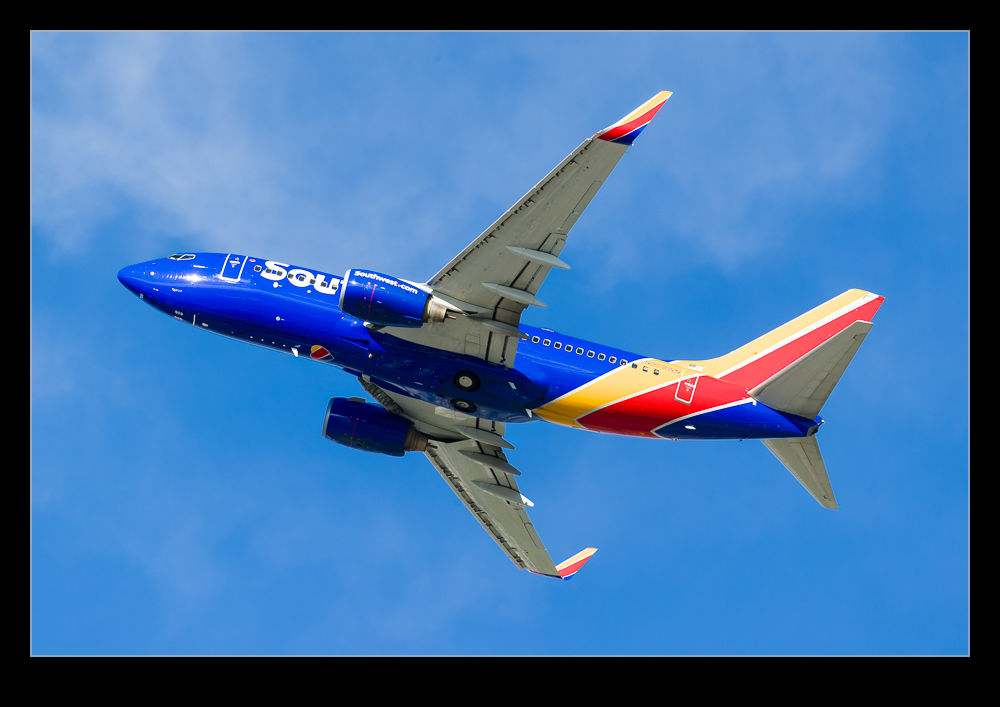
I have been pondering the way in which the method by which digital images are captured is affected by what is being photographed. As part of my workflow, I render 1:1 versions of the images and then quickly weed out the ones that are not sharp. This needs you to be able to see some detail in the shot that shows whether the sharpness is there. I have found that, if a Southwest Airlines 737 is in the new color scheme, something odd happens.
Digital image sensors actually capture one of three colors. Each pixel is sensitive to a certain color – either red, green or blue – courtesy of a filter. They colors are arranged on the sensor in a pattern called a Bayer pattern. The camera then carries out calculations based on what the pixels around each location see to calculate what the actual color should be for each location. This process is known as de-mosaicing. It can be a simple averaging but more complex calculations have been developed to avoid strange artifacts.
When I photograph the new Southwest scheme, something strange occurs around the N number on the rear fuselage. It looks very blotchy, even when every other part of the airframe looks sharp and clear. I am wondering whether the color of the airframe and the color of the registration digits are in some way confusing the de-mosaicing algorithm and resulting in some odd elements to the processed image that weren’t there in real life. If any of you have photographed this color scheme, can you see whether you had something similar and, if you did or didn’t, let me know what camera you were shooting with so we can see if it is manufacturer specific or not.
Boeing 787-10 on Test
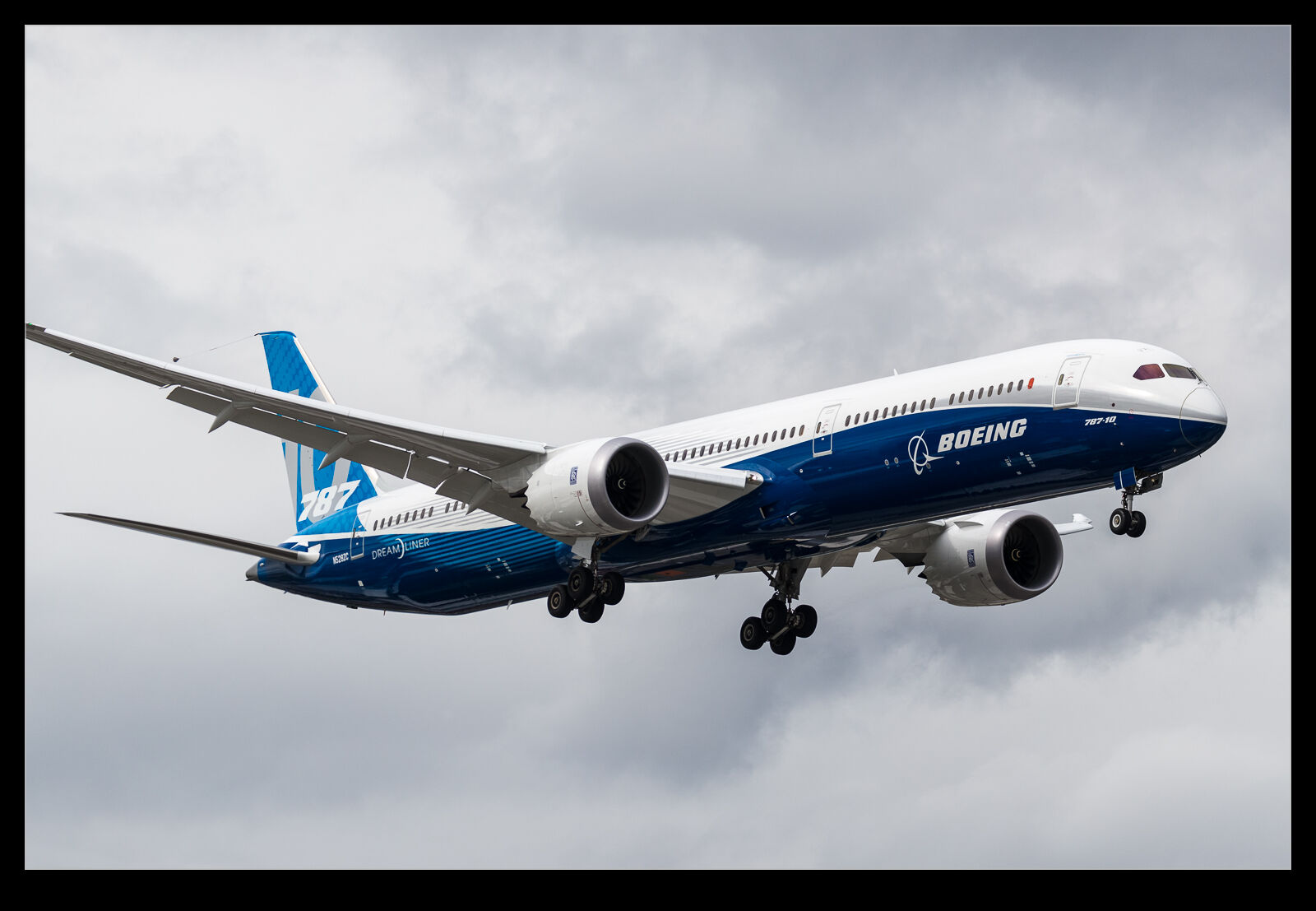
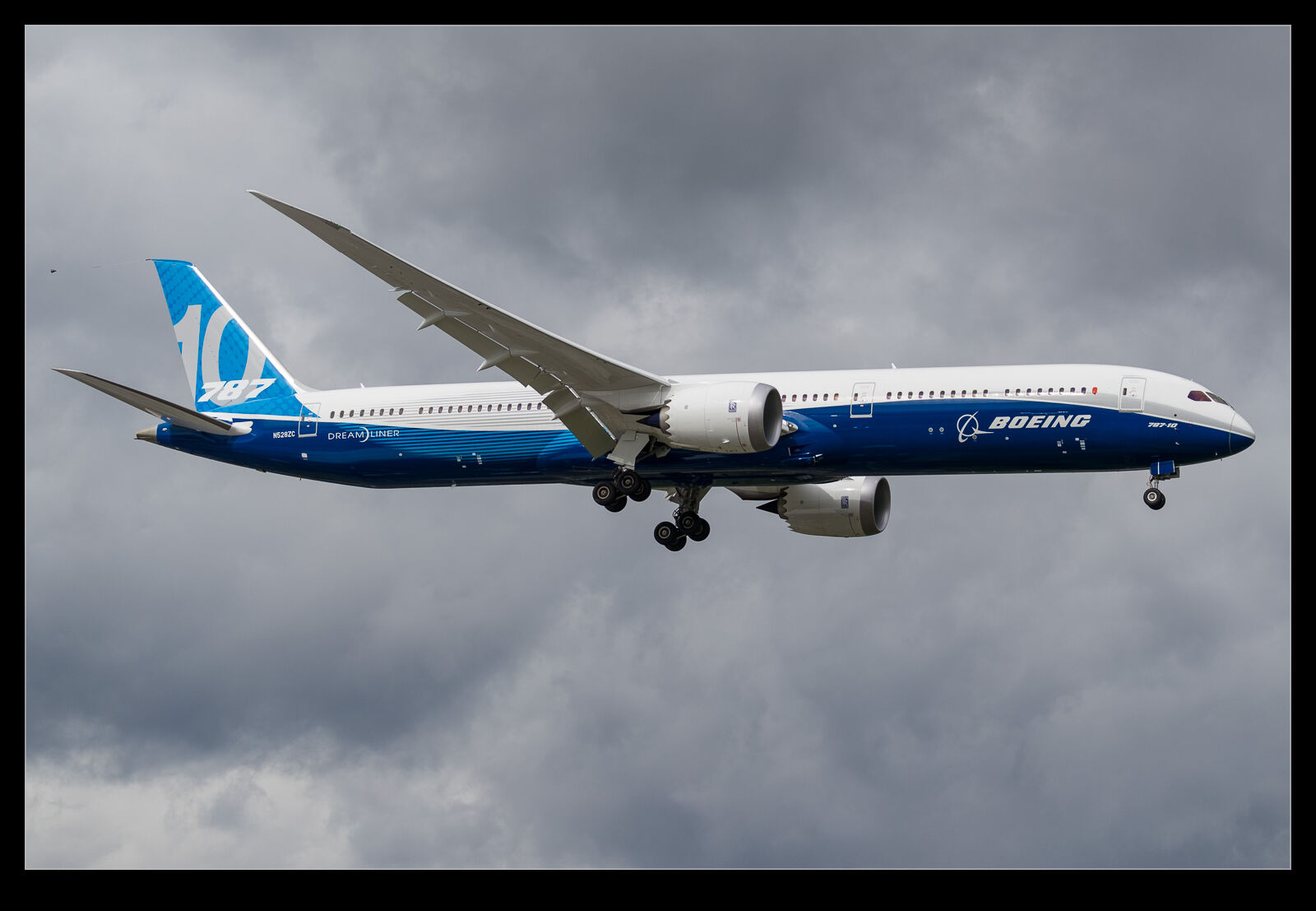
I wrapped up some work in Seattle and was about to head back home when a quick check on FlightRadar24 showed me that the Boeing 787-10 test aircraft was en route back to Boeing Field. It would be rude to ignore that. The weather had been pretty crummy and there was plenty of heavy cloud in the area but it looked like it might brighten up a bit and, as the sun went down, there was a chance of it lighting up beneath the clouds. I sat in the car dealing with some emails and waiting for the arrival.
Sure enough, as the time approached, the sun did start to peep out from beneath the clouds. It was intermittent at first but it became more consistent as Boeing 01 Heavy called up on approach. Meanwhile, a nice black cloud was still lurking in the background. What a great combination that type of light makes. The plane glided down the approach, its trailing static cone hanging from the top of the fin and then it was down. A nice result.
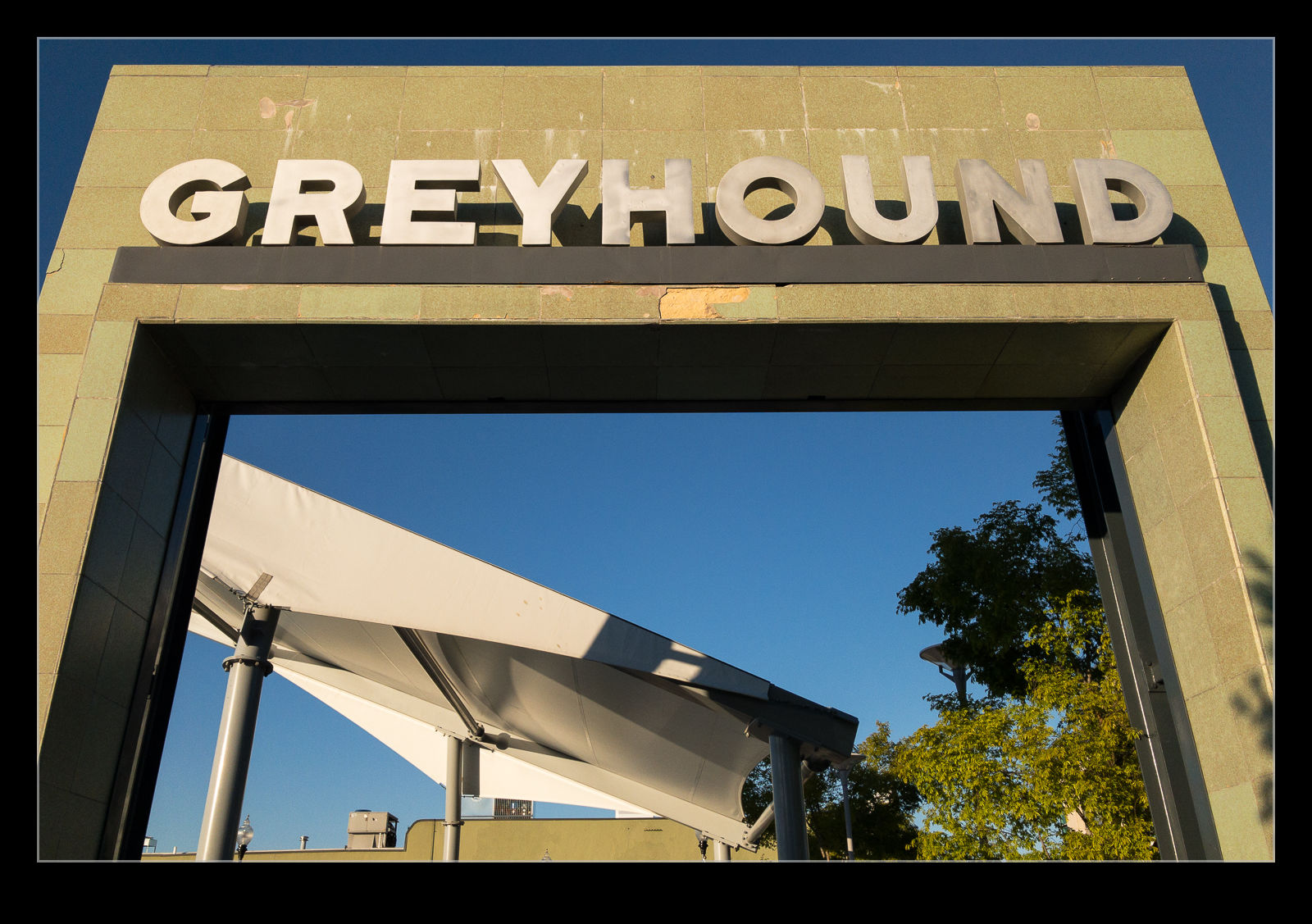
Greyhounds Used to Park – Now it is a Park
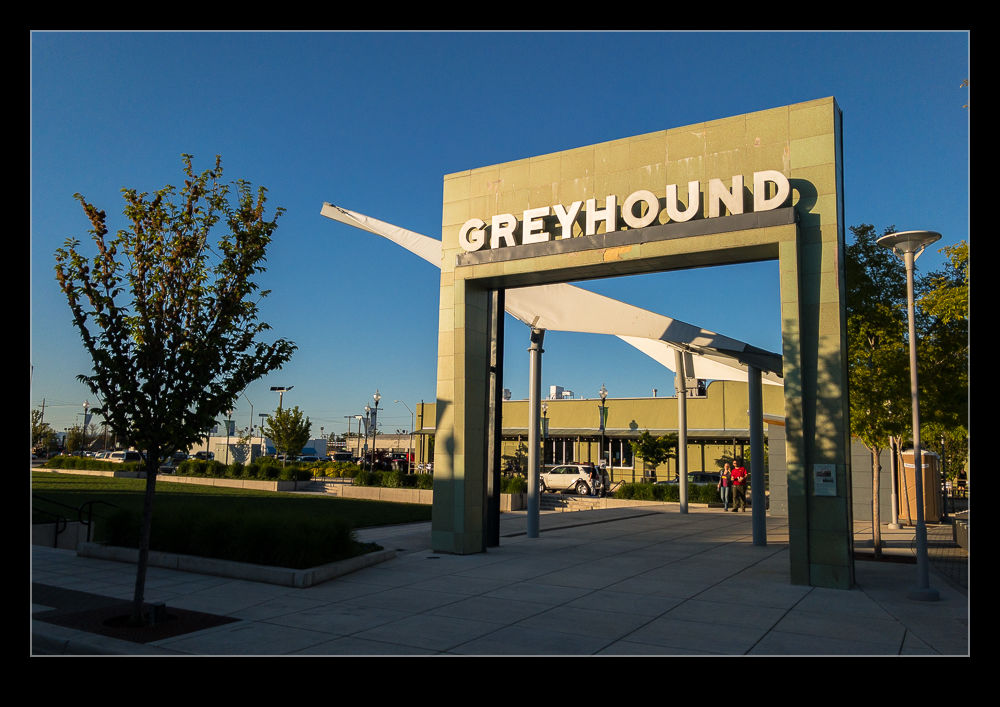
An overnight stop on our drive from California to Washington was Medford in Oregon. There were a few aviation areas of interest in Medford and they will appear in the blog in due course. (That may have influenced my thoughts on overnighting there but, to be honest, it was the best place for us to stop.). We went into the town to get some dinner and, as we walked back to the car, we passed a small park. This park used to be a bus station for Greyhound services. A small plaque showed some shots of how it once looked. An archway into the building had been preserved and now was free standing courtesy of a reinforcement frame. The color and style of the arch were clearly of their time but it looked rather cool in the evening light.
Bones Are Cool But Better in Pairs
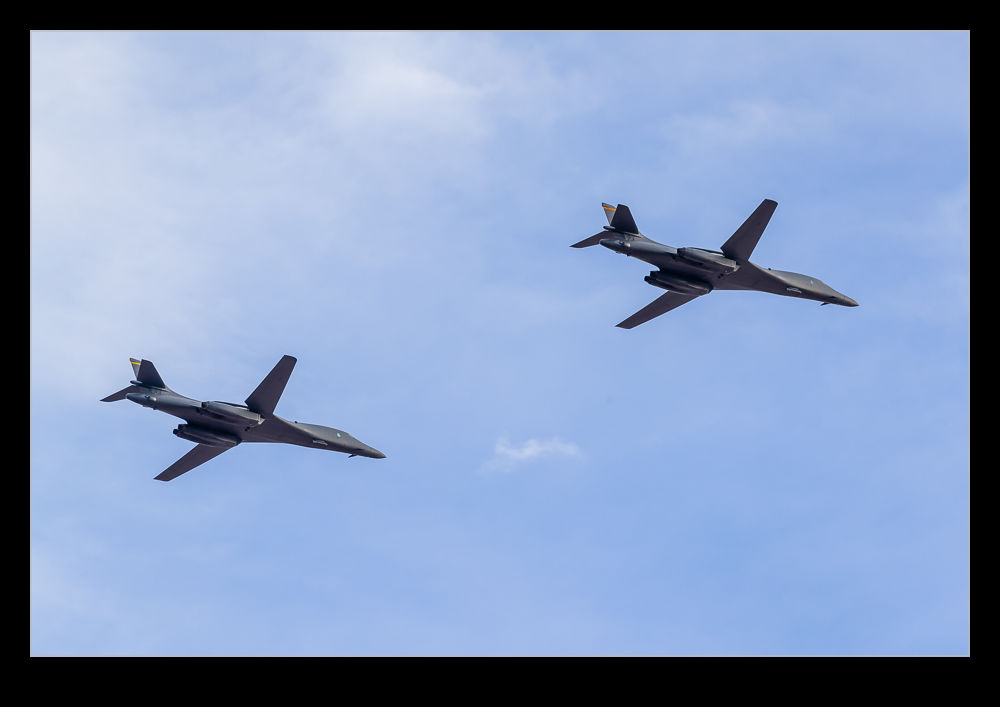
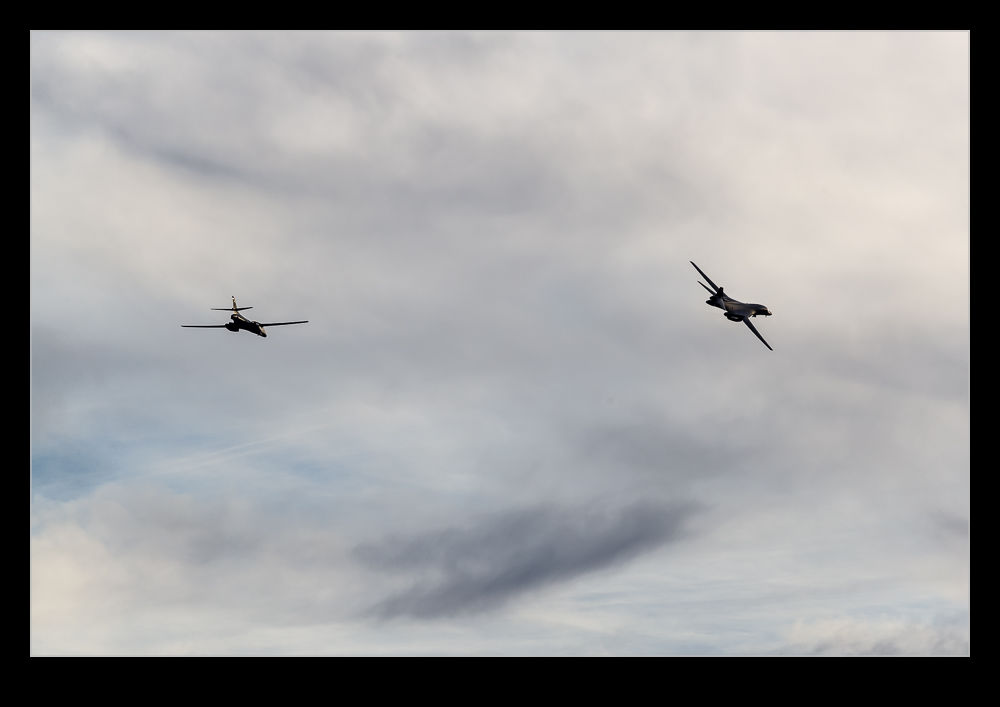
Paul and my second full day at Red Flag was also the one where we both had to fly home. We knew that the timing would mean leaving before the last of the big aircraft came home but we should get most of the recovery. We set a time and started packing up. We had done well so no complaints. We hopped in the car and drove towards the turn to take us out to the freeway. Just as we got there, a pair of B-1s came running in to the break in formation. Surely we couldn’t let them go. A rapid stop at the side of the road, grab cameras from the trunk and start shooting.
They flew by in formation and broke downwind. Each of them turned in reasonably tight for their approach and it was possible to get some nice topside views as the curved around to final. We could have been a bit closer and probably would have chosen different lenses if we had been able to choose but we got the shots. Then it was time to repack the bags and get going. We only lost about five minutes and everything worked out fin getting back so it was totally worth it. There was no waiting for whatever followed them though.
Demise of a NAS
Moving house means packing up your stuff and hoping it all survives the journey. Some things you have are not ones you are happy about leaving out of your control so you take them with you. Since we were driving up, we had a bit of flexibility about what we could take with us. Aside from the camera gear, I brought my two NAS devices. These have the backups of all of my stuff so, while the computer went in the truck, I had the backups. However, when we got to the new place, one of the NAS units wouldn’t fire up.
This rather defeated the purpose of taking my backups with me. The reason I have two units is that the one I have had the longest is limited in the size of drives it can handle. 2Tb drives are the largest so, as it was getting full, I bought a new unit. Originally I had planned to just use it but, instead, I kept the one going and added new data to the new unit to avoid having to buy larger drives up front.
I figured at some point I might want to retire the old NAS. It was far noisier than the new one and was probably over ten years old. It seems to have made the decision for me.
Now I was in a worrying position. The newer unit didn’t have enough capacity for all of the data. However, it could handle most of it. I immediately backed up what I could. Meanwhile, I ordered new drives to expand it. The price of drives has dropped dramatically so the 3Tb units are being replaced by 8Tb items. That should provide plenty of capacity for a long time! As the drives get swapped out sequentially and the NAS rebuilds and syncs everything, I gradually got extra capacity and set up the full back up process. Now I am back to normal. It does make me wonder about the life cycle of a NAS though. (As an aside, I do have a tertiary backup of the images to BluRay so, while some elements were vulnerable for a while, the majority did have a fallback option.)
American’s 737s in the Old Scheme
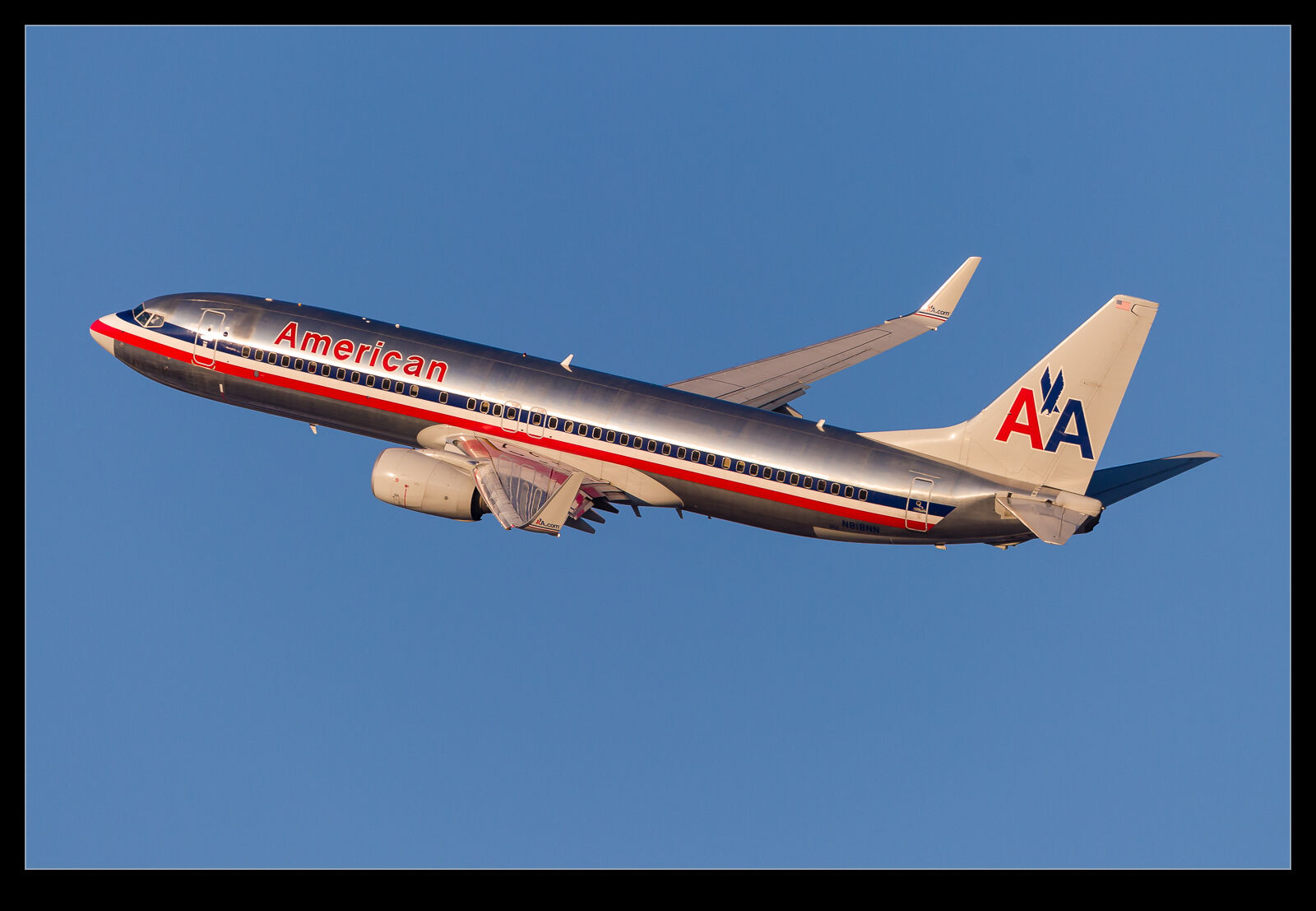
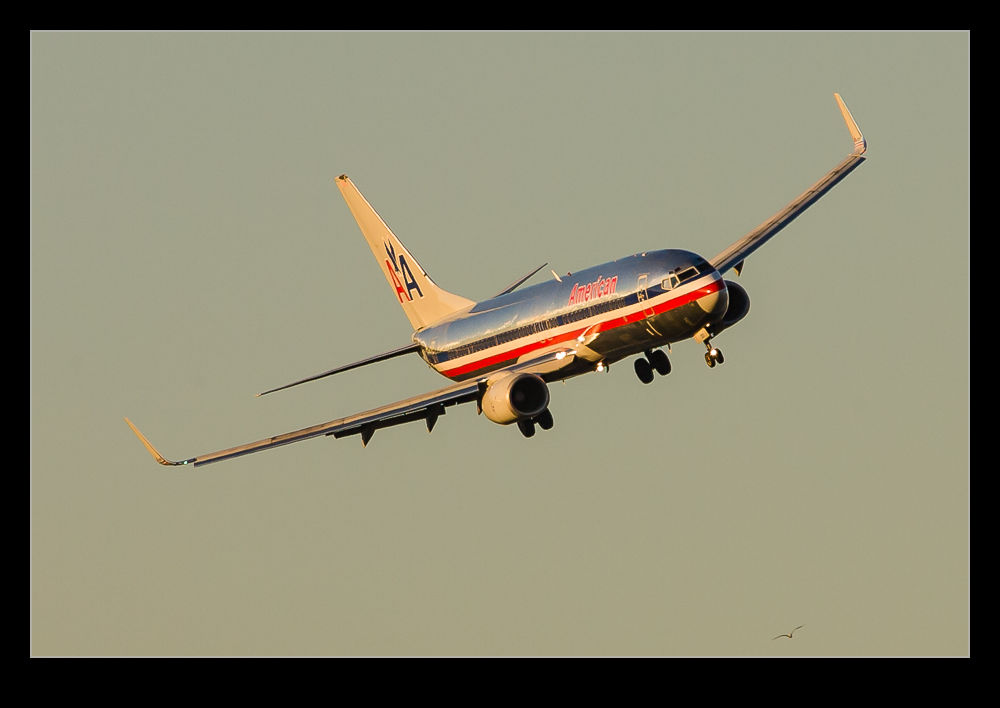
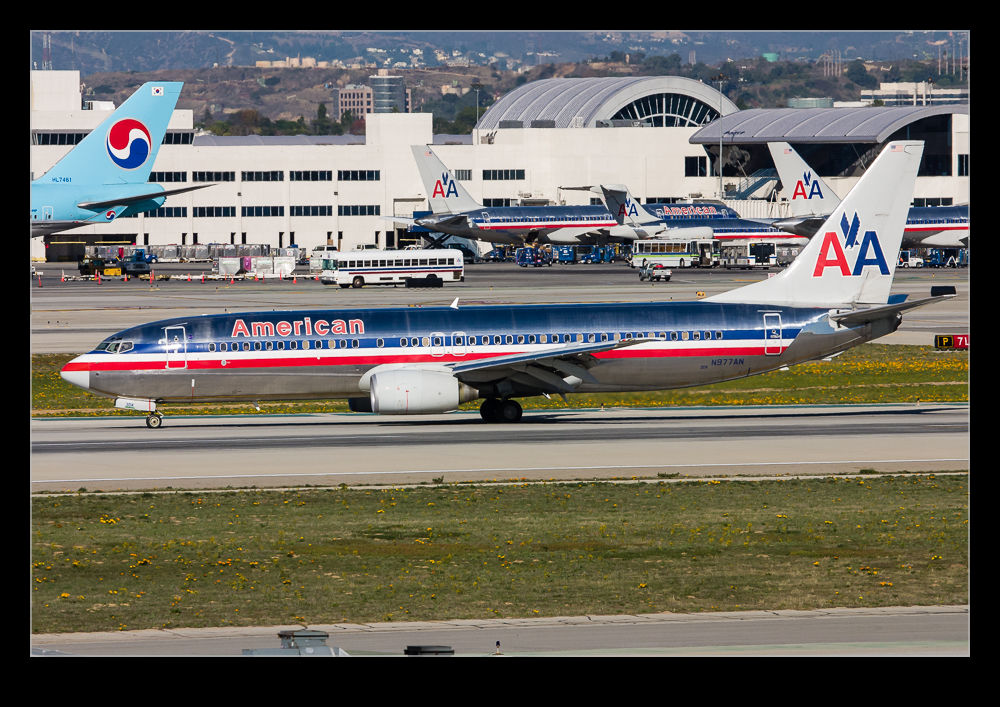
When American introduced their new colors, there was uproar. The criticism was plentiful. I seemed to be in a very small group of people that actually quite liked the look that they had gone for. Having been a regular customer over a number of years, I had grown tired of what I thought was a dated look. Over time I think people have calmed down about the change and now I don’t hear too much mention of it.
As more of the fleet gets repainted, I now notice more when I see a jet still in the old scheme (except MD-80s which obviously are not going to be repainted given their imminent demise). I have come across a few of the 737-800 jets recently in the metal finish. Here are some of them before they finally disappear for good.
Another Go at Stitching iPhone Raw Shots
As I posted a while ago, I have been experimenting with stitching shots from my phone. Since I am shooting in raw on the phone, I have some latitude to play with the shots in post that wasn’t there before. This time, though, I thought about it a bit more and put the camera into manual mode to fix the exposure. This should make the stitching and blending easier than when it changed between shots (although, to give the Lightroom team credit, it did a pretty good job anyway). I allowed plenty of overlap and the merge seemed to go pretty well. Since it outputs a dng file, you still have the chance to edit more aggressively than would be possible with a jpeg. Meanwhile, you get a higher resolution shot than with the internal pano mode. This may be my go to method from now on.
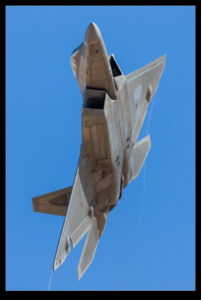
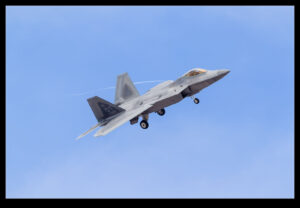
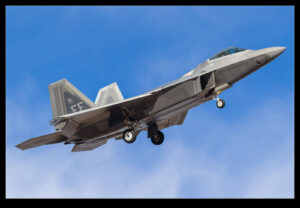
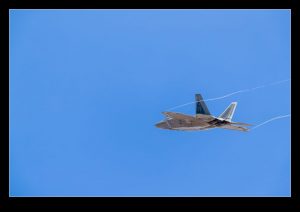
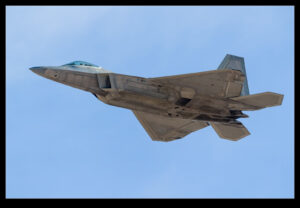
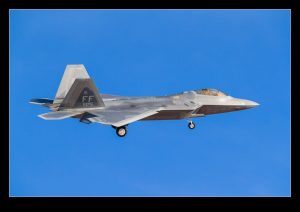
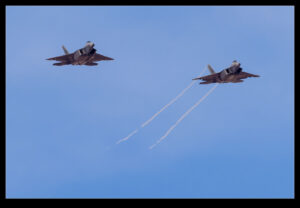
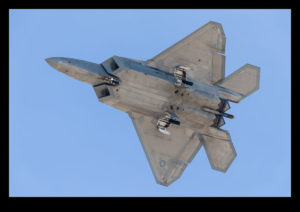
Some Raptors Because, Well Why Not?
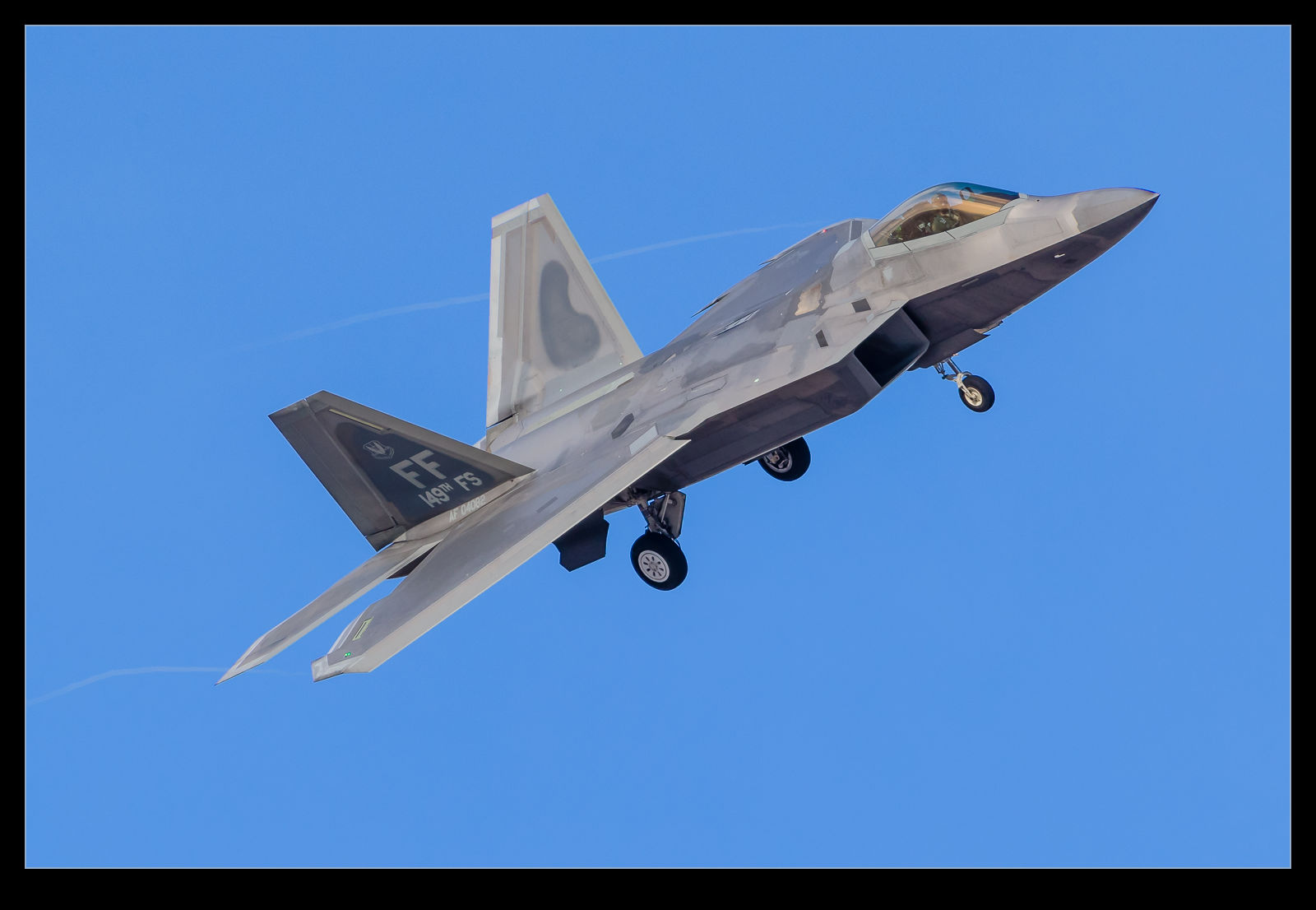
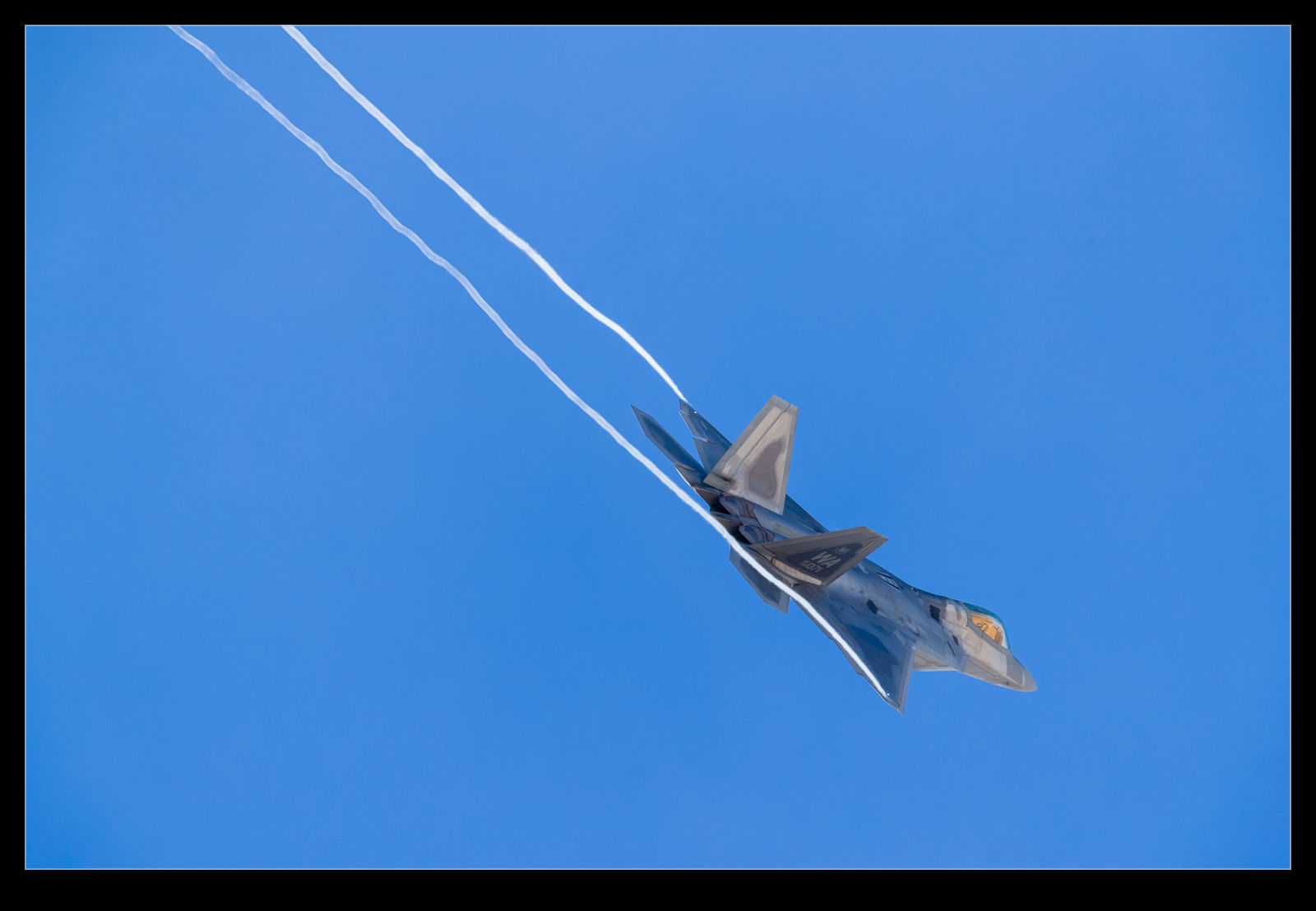
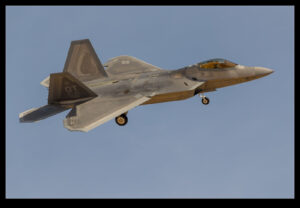
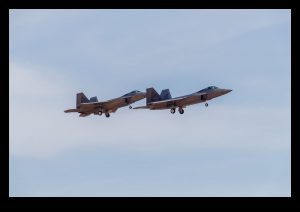
The 1st FW at Langley AFB was the source of the Raptor contribution to Red Flag this year. They weren’t the only F-22s I got to see though. Some of the based aircraft were busy before and after the Red Flag missions so there was plenty of Raptor action. Not much of a story to tell on these. Just a chance to gratuitously show a variety of photos of F-22s because, from the right angle, they look pretty cool!
- A USAF Lockheed Martin F-22A Raptor on final approach to Nellis AFB NV.
- A USAF Lockheed Martin F-22A Raptor turns on to final approach at Nellis AFB NV.
Mount Shasta
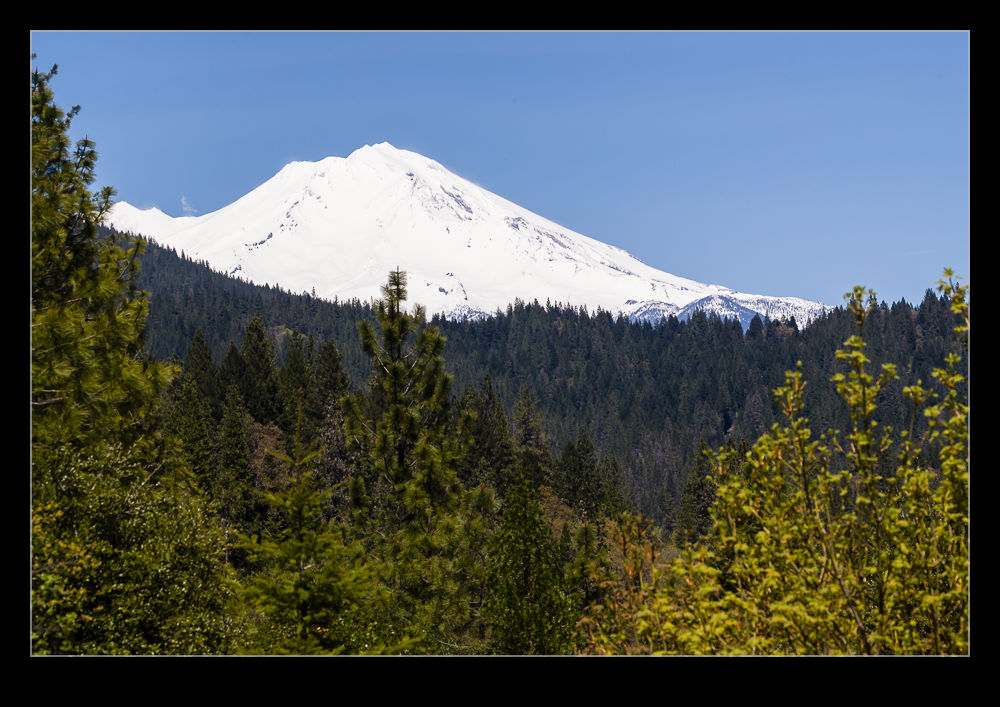
The move from the Bay Area to the Seattle area involved a two day drive. The first part of the drive north is pretty flat but, as you get further north, you get into the southern end of the Cascades Range. The interstate runs around the south and west of Mount Shasta. You first see it a long time before you are anywhere near close to it. These large mountains are not easy to miss provided it is a clear day and the weather was lovely on this occasion.
We pulled off the road briefly at a viewing location. We were still some distance from the mountain and the view was not unimpeded but I guess this was a better spot than was available further up. The mountain had plenty of snow on it. As you looked closer, you could see wisps of cloud above the surface. I couldn’t tell whether they were actual clouds or snow that was being whipped up by wind as we were too far away. It took a long time to go by the mountain. We came up the west side but for a long time it just was there. Eventually, it was behind us and we continued on to our overnight stop.