Tag Archives: jet

Heathrow Departure and I Resurrect an Old Camera

I had something coming up where I might be a bit limited in my camera that could be accommodated so I dug out an old camera as a possible alternative. This is my EOS M6. It is a little mirrorless unit that has really been overtaken by the developments that Canon has undertaken but it was still a useful piece of kit. It is an APS-C sensor camera with some specific lenses which don’t have a role in the current product lines. However, it will do the job with some limitations.

Ahead of the intended usage, I decided to take it with me on a work trip to check it was still working as expected. My journey took me out of Heathrow so I decided to see what shots I could get of the planes around us as we headed out. Things all worked pretty much as I remembered. It isn’t a fast camera and the 55-200mm lens I have on it in these circumstances is okay but not special. However, it does okay and, when shooting through a dodgy aircraft window, the problems are more likely to be that than the kit you use. Sitting on a taxiway does give you some views of jets you wouldn’t normally have access to so that is fun. Plus, some A350s will always make me smile.

What a Difference the Angle Makes

I shared some shots from a brief visit I made to Feltham to get some airliner departures from Heathrow when they were on an easterly flow. Some of the planes turn to the south shortly after takeoff giving you a view that is not quite a topside but is close to it. When photographing them, you are naturally shooting them at an angle as they are climbing quite steeply. However, if you want to play around with the shot afterwards, you can change the impression of the shot quite a lot. Rotate the fuselage until it appears horizontal in the shot and now it looks a lot more like you are flying alongside the aircraft. This is cheaper than sorting out and air to air sortie! Here are a couple of before and after shots to show what I mean.

Canadian Hornet Visits BFI

Digging back through some stuff from last year and I came back across a surprise that I got at BFI. A Canadian Hornet had been visiting – presumably an overnight stop. It was heading off to its next stop and I have no idea whether that was back over the border or further into the US. Its presence had clearly attracted a fair bit of attention. There were loads of people out on the Modern ramp when it taxied out.

Hornets can get off the ground pretty quickly and I was hoping that the pilot would not be very high by the time he came by. With all of those people on the ramp, it would be nice of him to keep it low and he didn’t stay on the deck but still made a good effort. As he passed the perimeter fence, he pulled up a bit harder and was a bit too distant for a good shot of the vortices forming on the LERX, but I managed a hint of it.

Recovering a Fence Shot

In an earlier post, I had shared some images of and A340-600 operated by European Cargo that I saw at Bournemouth. What I didn’t include in that post was any images close to the rotation point, despite me having been well positioned for that. When I say well positioned, I omit one key element which is that there was a fence between me and the plane, and I wasn’t able to photograph above the fence. Shooting through it was the only option.

I tried a couple of things to mitigate the issue with the fence. First, I was as close to it as possible to take the fence wires as far out of focus as possible. I was also shooting wide open – again to try and throw the wires out of focus. The last thing I tried was to go with a low shutter speed to smear the wires as I panned. With this combination, I was hopeful that I wouldn’t really have the wires in the shots. I was wrong.

When I took a look at the shots, the fence was very obvious. I did start to wonder whether it would have been better to have the wires well defined as maybe that would be easier to remove. However, too late for that as the shots were done. Now to see if there was anything I could do to recover them to something usable (and by usable, I mean that might be shareable but nothing that was going to be a great publishable image).

I tried some of the healing tools in Lightroom to see if that would work. I was getting nowhere fast – possibly a sign of how little I understand the capabilities of the tools or maybe they are just not the right thing. Then I decided to try something else. Because of the way I had shot the image, none of the airframe was obscured. There was just the grey overlay from the fence. That made me think that it was more like a darker area of the shot. I decided to use the brush tool in the masking panel and draw some lines that were heavily feathered across the lines that the fence wire created. Having made a grid of these, I then bumped up the exposure for the mask.

The result was surprisingly effective. However, I then ended up with some overly bright areas at the edge of the mask. A rework of the mask to change the size and the feather amount and this time the result was pretty good. There were a few areas that were still a touch dark and I used a large, soft brush to address those parts. If you know what the original image looked like, you will probably spot the remnants of the work. If you had never known before, it’s possible that you might not notice how much work had been done on this.

Some Buccaneer Details

Older jets were designed with some more brutal approaches to functionality. Modern fighters have a focus on fit, and finish and stealth/drag considerations will result in blemish free surfaces. The Buccaneer comes from a different generation. Wandering around then pair that were on show at Kemble, I did enjoy looking at the little details on these old jets. Here are some shots that caught my eye.

This is Further Away Than I Expected to See an Air Canada Max

During my brief visit to Heathrow, I got a bunch of long-haul departures and loads of single aisle types serving destinations closer in. However, I was caught off guard slightly by one 737 Max 8. It belonged to Air Canada. I’ve seen a few of those including when they were on test, but I hadn’t anticipated seeing one in the UK. However, the longer range of the Max means that Air Canada is using it serve Halifax from London. I guess that is not really much longer a flight than plenty in Europe, so it makes sense and is probably more efficient. I just didn’t expect to see one of their narrowbodies there. Given that the A321neos are now becoming so prevalent, this is likely to be a regular thing for other airlines too. JetBlue is already doing this so others will be too.

Bournemouth Aviation Museum

I posted some shots of the Chichester Miles Leopard in another post and some of the Vulcan cockpit – both exhibits at the Bournemouth Aviation Museum. I haven’t shared some more general shots of the museum, though. I stopped over there late one afternoon. They weren’t due to be open for too much longer, but I did have some time to wander around. Being the end of the day meant it was quiet, so I was able to have a bit of freedom taking shots of the planes on display.

There is an interesting mix of types on show will military and civilian types to see. Some are full aircraft while others are fuselage sections that have been saved when the whole plane was being disposed of. The cockpits of many were accessible. Planes like the Jaguar have a soft spot for me so I liked taking a look at them. Others were less of interest but still worth a peak. I did like seeing a Cri-Cri – the world’s smallest twin (at least when it came out in the 80s).

Some of the types have a connection to the flight testing that this part of the country is associated with. Bournemouth is not far from Boscombe Down which has been the centre of UK military flight test for many decades. The BAC 1-11 is an ex-Boscombe asset. Others are just interesting types. If you are in the area and like planes, do swing by. Don’t make a significant detour specifically for it but do check it out if nearby.

KC-10s Are Consigned to History

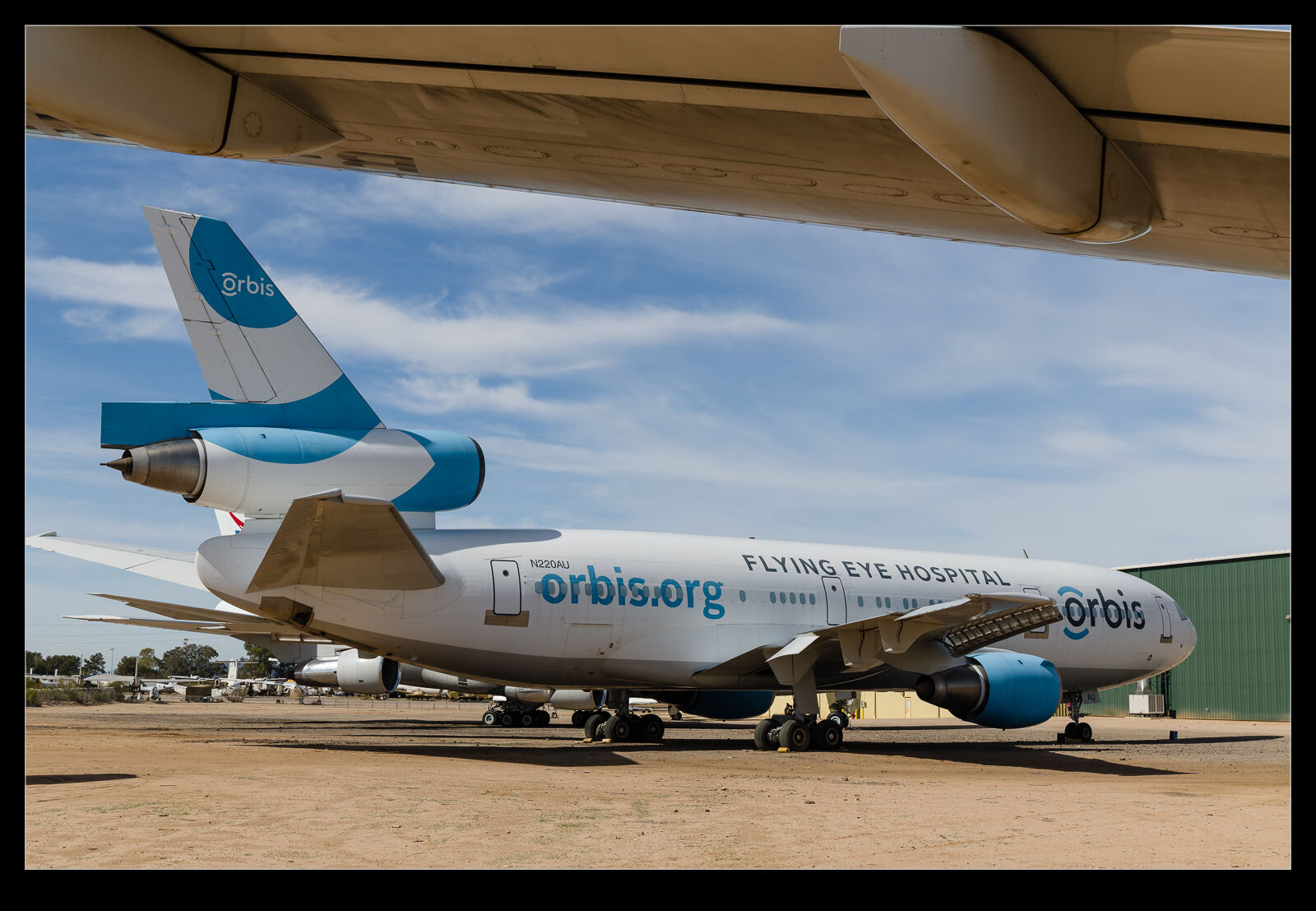
The retirement of the KC-10 Extender by the USAF caught a lot of attention when it happened. I was intending to write something then but got distracted by other things. I won’t put much together to be honest. Our team at Global Aviation Resource made a better effort of that so check that out if you are interested. Instead, I am just going to post some of my favourite images of the Gucci tanker. Strange to think it has gone given how effective it can be.

Buccaneer Event at Kemble

The Buccaneer Aviation Group has charge of a couple of retired Blackburn Buccaneers that it looks after at Cotswold Airport at Kemble in Gloucestershire. They held an open day in April that included some taxiing of one of the jets and I decided this would be a good way to spend a spring Saturday. They were going to start up the jet, taxi it around on the ramp, run through a sequence of tests on the airframe and then go out to the runway for a fast run before returning to the ramp to shut down.

There would then be a break while they repositioned everything to their ramp where everyone would be able to spend some time up close with the planes and get pictures as required. The jet that was going to be taxied was one of the last Buccaneers built and is painted up in retro Royal Navy colours as worn by 809 Sqn jets when serving on Ark Royal before the carrier was retired. I don’t think this jet actually had any RN pedigree but that isn’t a big deal.

The second jet that they have is in the process of being prepped for painting in the standard RAF camouflage. Currently it is stripped back ready for paint, and I have to admit I found it rather cool looking with the random patterns that are visible. This will show in another post. The two jets were lined up together in front of the hangar to allow everyone to get their photos.

I was one of the first cars allowed through the gate to the second part of the day which meant I was able to get some images before everyone else showed up and it started getting busy. However, they did have a good level of organisation to it all so, after giving everyone some time to get up close, they pulled everyone back a bit to leave it unobscured for photos. I did notice some steps off to one side of the ramp and asked I they might be moved in to get a higher angle on things, fully assuming that wouldn’t be possible. I was wrong. They were more than happy to bring them in which made for a better angle on the shots.

The day had started out with some damp and windy conditions. It did rain a bit during the taxi section of the day. This was quite handy in that it made the grey paint look like it would on a carrier at sea, i.e. wet! It also showed up the blowing of the wing when they carried that out and resulted in a cool vortex in the inlet being visible. As the day progressed, the weather got a lot better. It was quite sunny by the time we were on the ramp with the jets.

The team were in no hurry to kick us out and, as the afternoon wore on, the number of people thinned out and the light got nicer. I hung around with a guy called Matt that I had met, and we were able to pass the time talking about planes, cameras and places. Finally, we were the only ones around and the crew started putting the jets away. The steps were still out so I was able to get a high angle as they pulled a jet beneath me. It was a tight fit, but it all worked out well. A top day out and many thanks to the tea baggers at TBAG.

More Variations on the Theme of a Tug

I have posted previously about the tugs that get used at airports to push back the jets when they are departing. The big tugs with a tow bar are common in the US. You also get the ones that pick up the nose gear and push from there. While sitting at Heathrow waiting for a flight, I watched their latest approach. These are remotely controlled devices.

They also grab the whole nose-wheel and have a capture device that wraps around the tyres to hold tight. By the looks of them, they are electrically powered so will be recharged when docked somewhere presumably. The operator walks alongside them as they move across the ramp and when moving the planes. It doesn’t seem that fast compared to a normal tug and clearly it still has an operator. However, it looks like a cheaper unit to buy and operate along with lower emissions compared to a large tug. I assume that is why they make sense. Here is some video of them dispatching a jet.