Tag Archives: engine

The X-35B and Its Propulsion System

The F-35 is in widespread service in considerable numbers with many more to come in due course. However, before the F-35, there was the X-35 – the Lockheed Martin contender in the JSF competitive fly off. Up against the Boeing X-32, two X-35s were built. One of them was initially used to demonstrate the proposed Air Force configuration before it was modified with the vertical lift system proposed for what became the F-35B in USMC service.
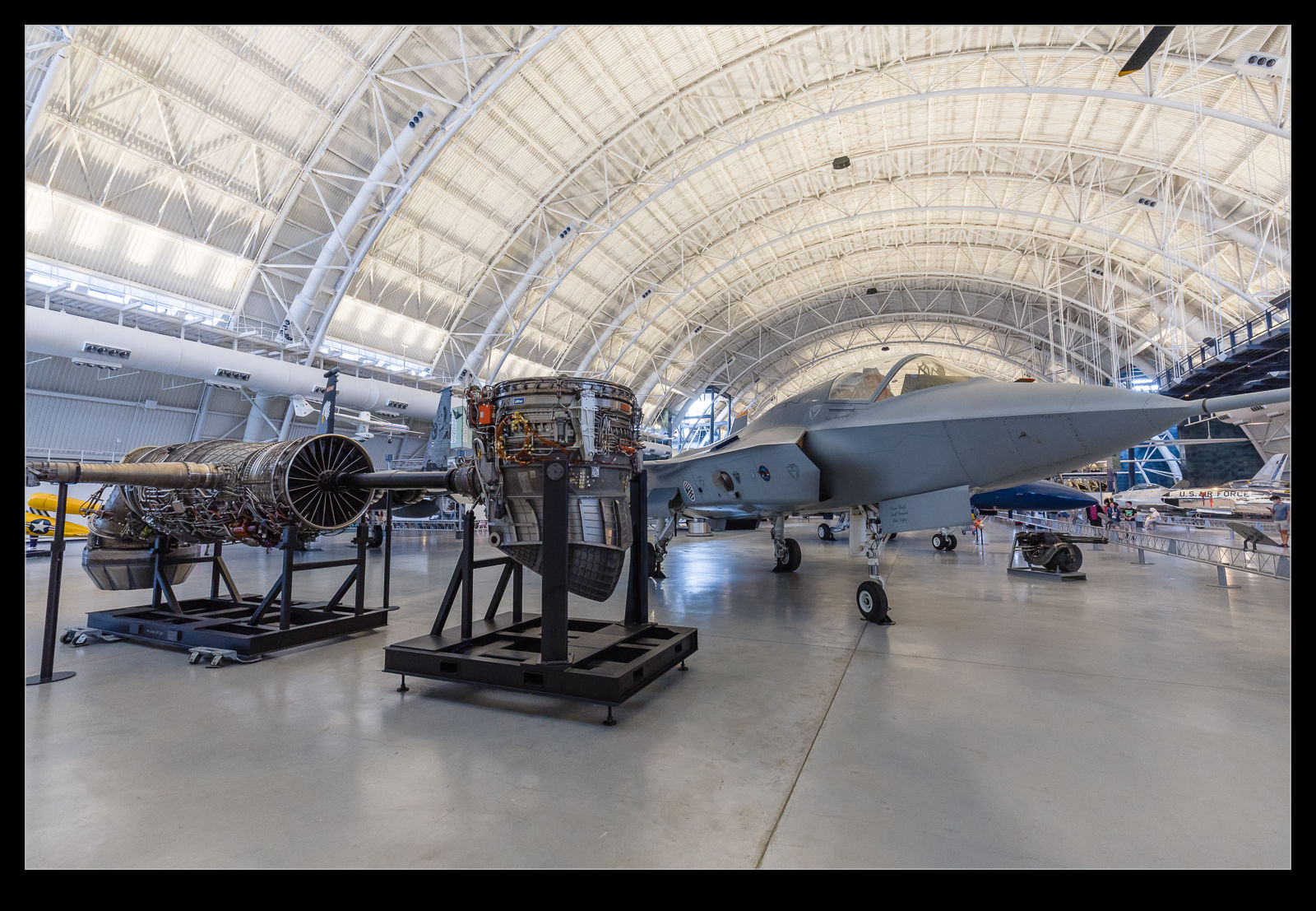
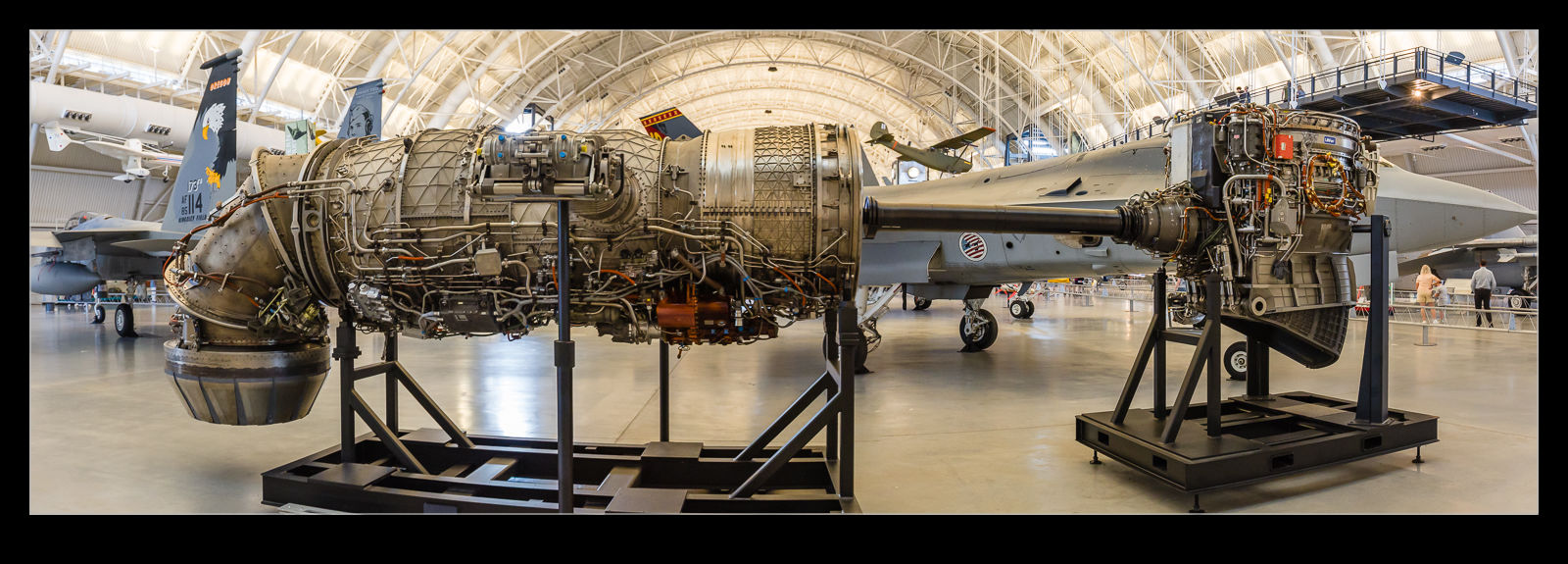
With the competition complete, the demonstrators were superfluous and the X-35B airframe made its way to the National Air and Space Museum. Here it sits on display. What is the most interesting part – at least to me – is that they have taken the propulsion system out of the jet and put it on display separately. You can see the main engine as well as the lift fan module, the shaft coupling the two, the nizzle that both have to direct the flow and the roll posts that are used to provide both additional lift and roll control in the hover.

It is a cool demonstration of the basic configuration that is now operational in the F-35B. it has certainly been developed since this design, but the basic principles remain the same. Unlike the Harrier that had the engine in the centre of gravity of the aircraft (not a very convenient location) and redirected all thrust through four nozzles, this configuration has a mighty engine at the rear which can be vectored down when required through a three bearing nozzle that is both simple and ingenious but then a shaft drive from the same engine to a fan module that sits behind the cockpit drawing air from above and directing it down with some ability to vector it too. This forward fan balances against the rear main nozzle. It provides a significantly higher amount of vertical thrust than the Harrier ever managed and allows a larger and more capable aircraft to land vertically at the end of missions. Quite a smart piece of design.
A Spey with a Burner Grafted On

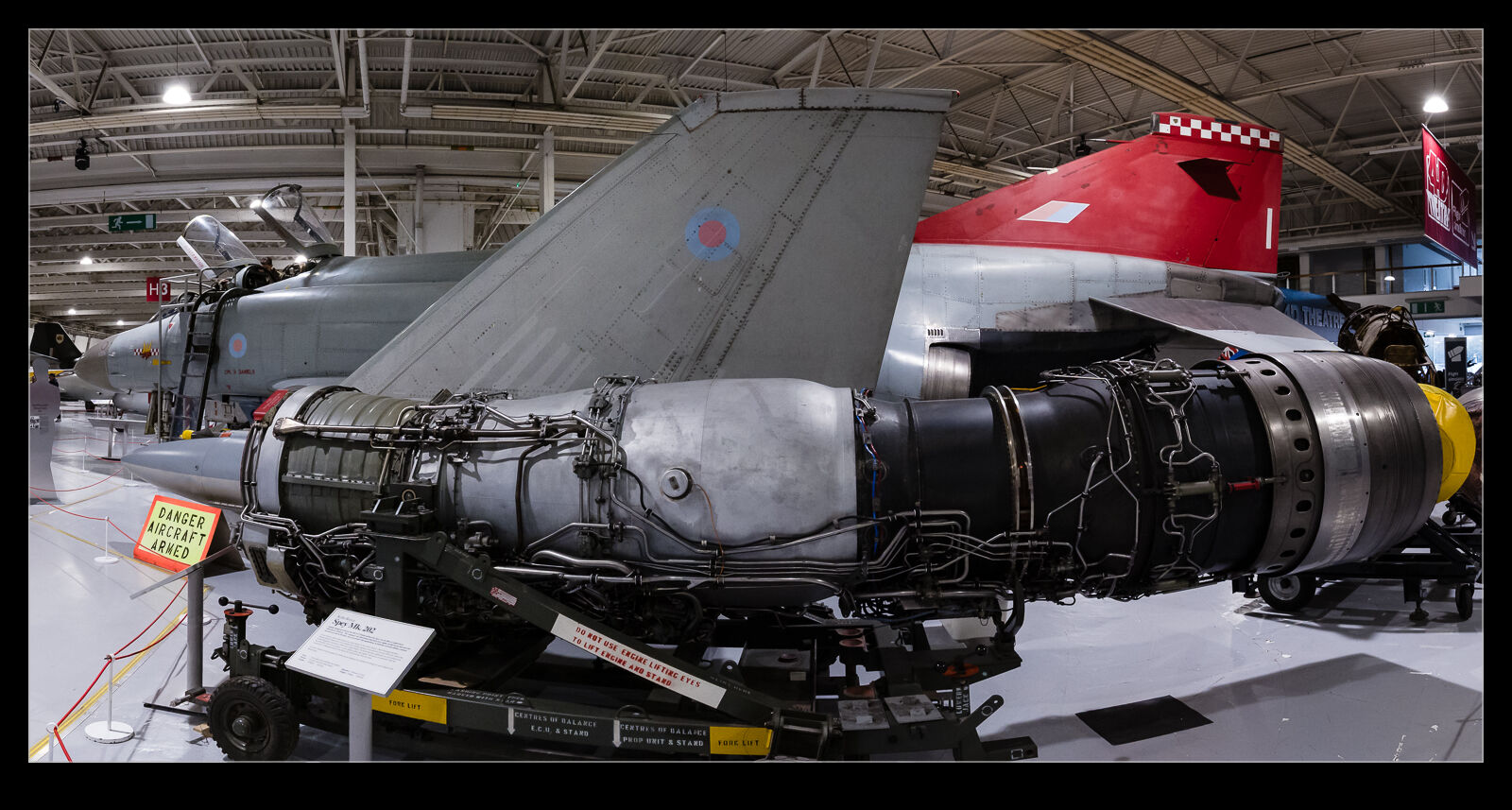
British defence projects have a bit of a reputation for trying something that will boost domestic content but that compromises overall performance. In fact, some civil aviation projects would probably fit that description. One such project was the procurement of the F-4 Phantom. To boost UK content, the J-79 engine that was used in all other variants was replaced by the Rolls Royce Spey. This engine made it into various civil and military aircraft over the years. For the Phantom, it needed an afterburner.

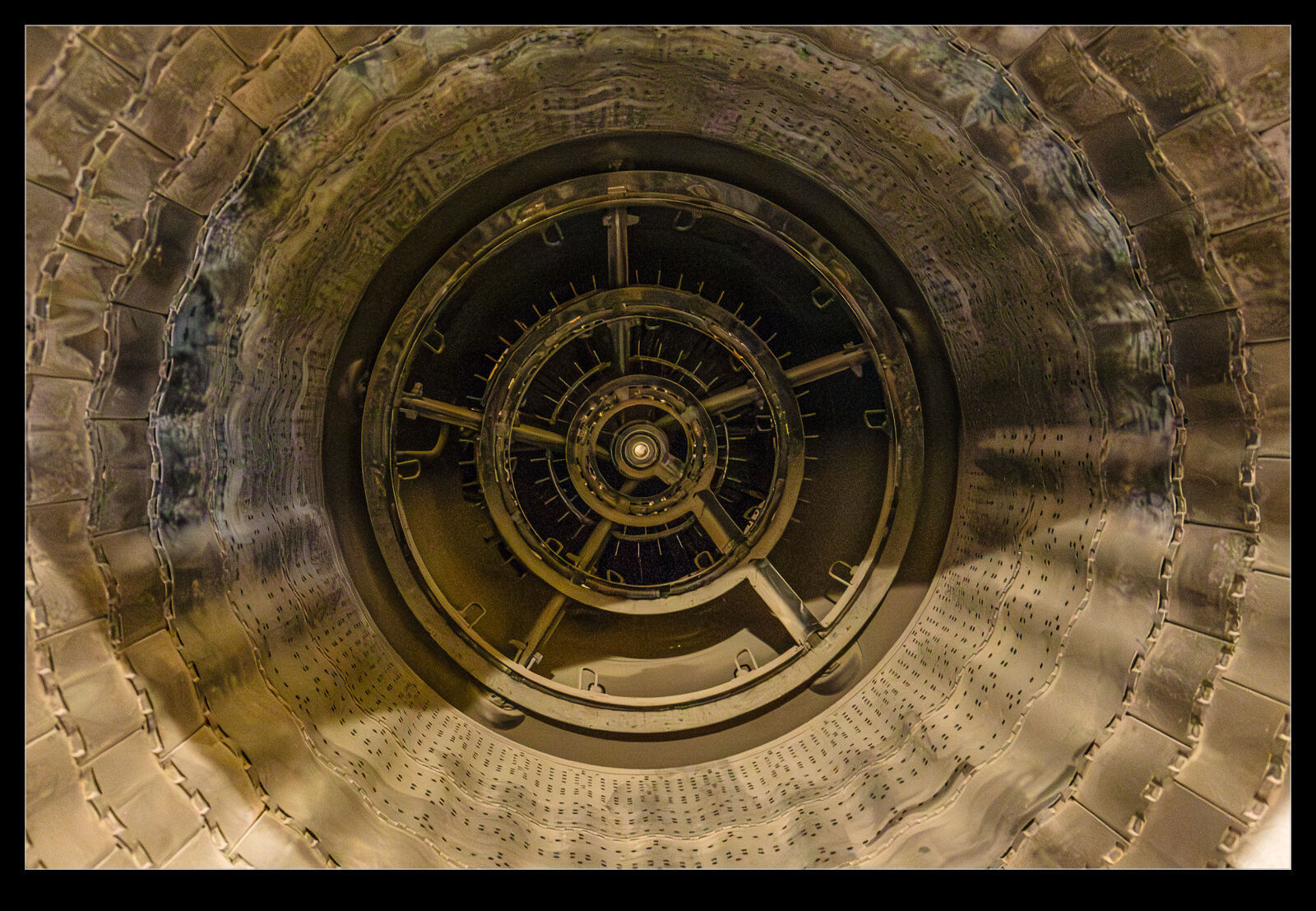
An example of the engine is on display at the RAF Museum in Hendon. I was first interested by the patterns of the flameholders in the afterburner so took some shots looking straight up the jet pipe. Then I moved around to the side. It is so easy to see where the original engine ends and where the added afterburner starts. It does not look like an integrated design whatsoever. It worked well enough although the redesign of the fuselage to accommodate it resulted in significantly increased drag. Top speed was reduced as was climb performance. One upside was that the Spey was a turbofan so, in the original ground attack role the Phantom had in the RAF, it actually improved low level fuel burn. It probably wasn’t so welcome once they moved across to the air defence role, though.

Was That Engine Supposed to Fit in There?

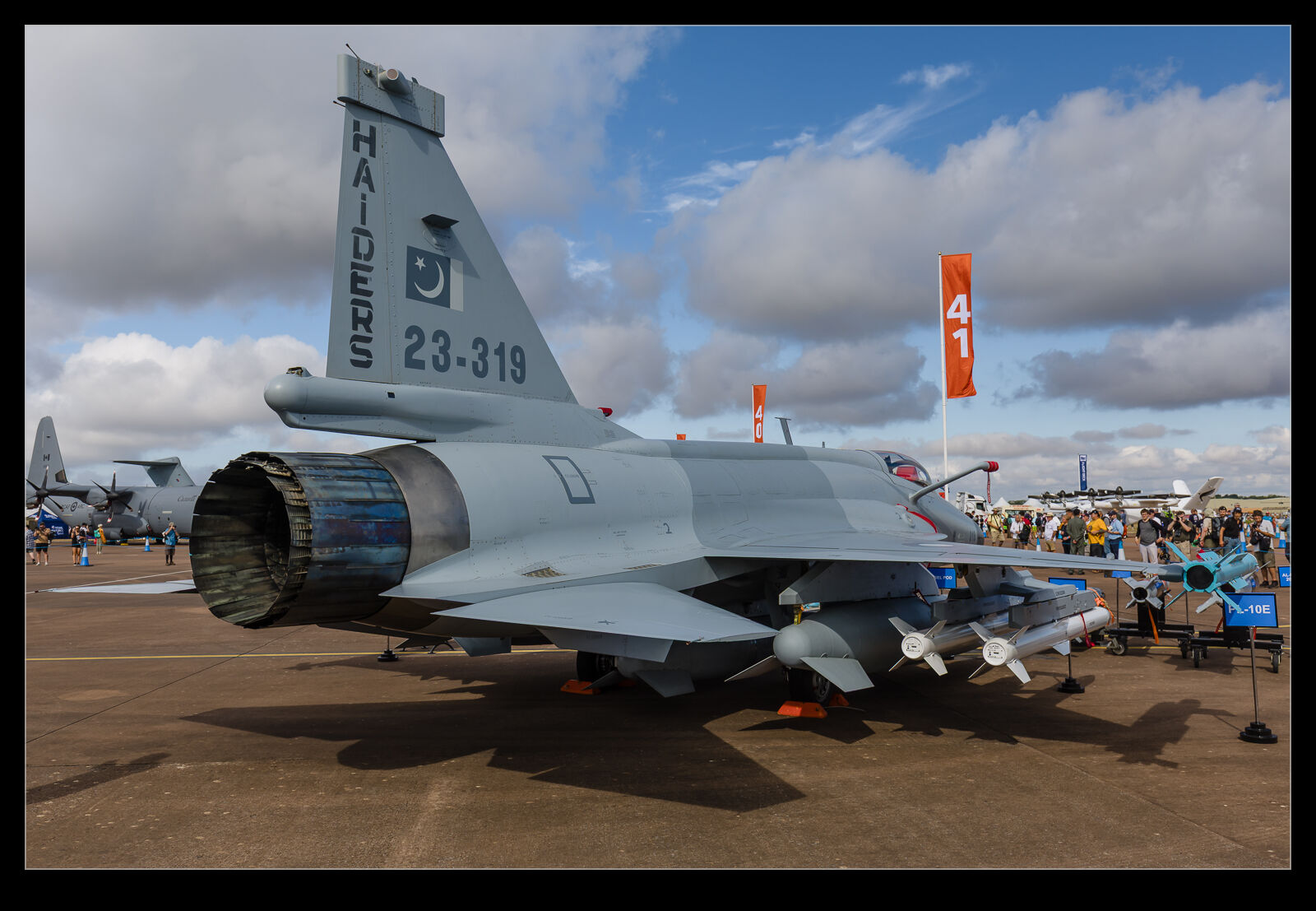
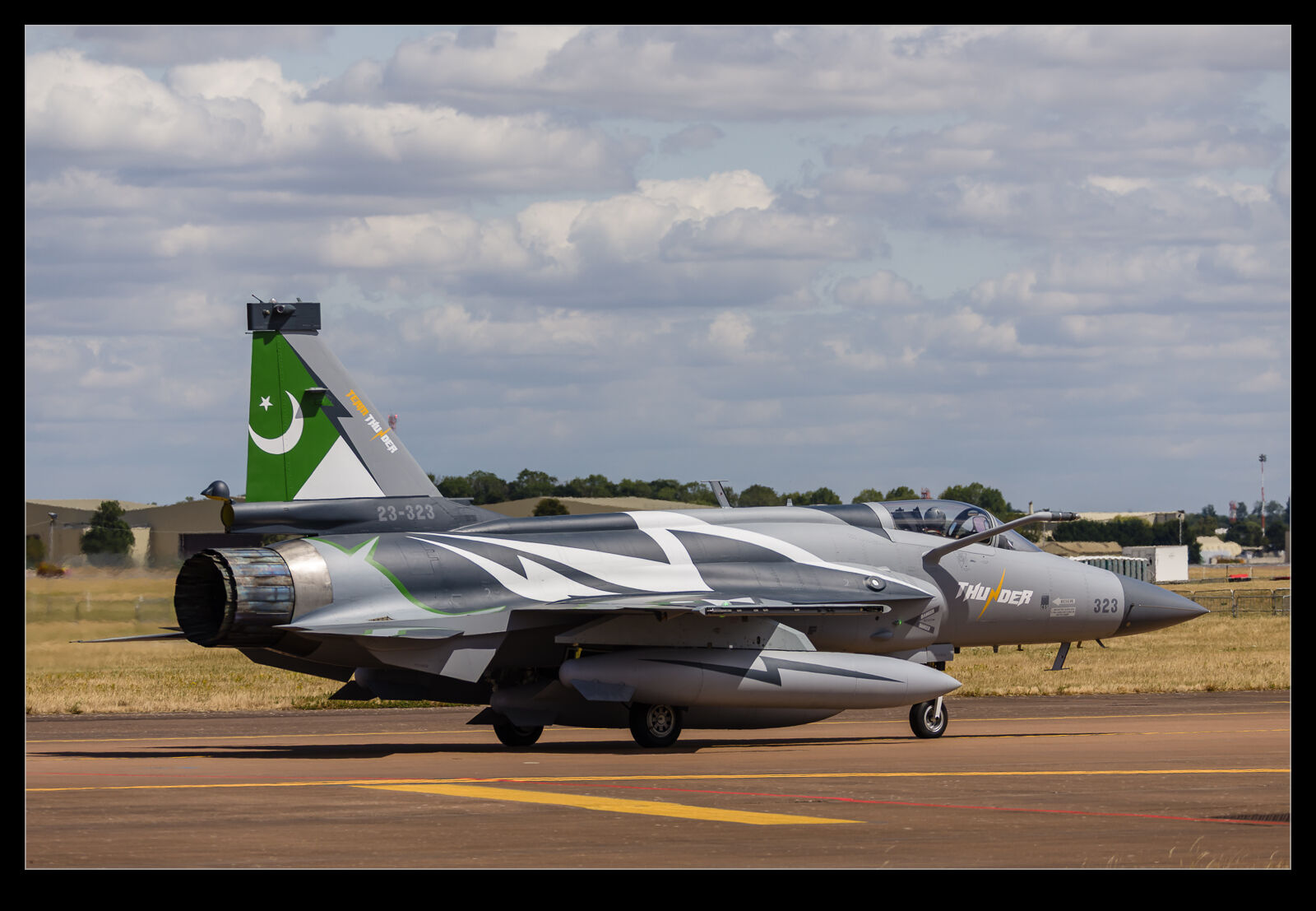
The JF-17 Thunder was one of the interesting aircraft to make it to RIAT in 2025. It had been before, but this was the first time I got to see it. The Pakistan Air Force brought a pair of them. I got to have a good look at one of them in the static park and something struck me about it. The engine installation. The plane is fitted with the Klimov RD93 engine which is a derivative of the engine for the MiG-29. The diameter of the nozzle for the engine seems to be very small compared to the rear fuselage size. Afterbody drag is a big deal on fighters and I wonder how bad the penalty is for this configuration. I understand that China is developing an engine to replace the RD93 and maybe the sizing of the fuselage is for this new engine. In the meantime, it does look like someone made do with the engine available.

How It Works – The Steam Locomotive

A Ladybird Book reference in the title for some of you of a certain age from a certain country. An exhibit at the National Railway Museum in York is a sectioned steam locomotive. One of the guides at the museum showed us the various stages of the process of turning coal and water into power for the loco. I hadn’t understood the process fully before (and probably still need some additional education to be honest) but having the side of the loco cut open to show the various processes and the flow of the steam really made it easier to understand. I was going to say visualise, but it isn’t really visualising when you are looking right at it!

CFM56 Inlet

I recently took an EasyJet flight from Glasgow to Southampton at the end of a work trip. I boarded from the front of the plane and, as we lined up on the steps, I found myself staring into the inlet of the CFM56 engine on this A320. The blade designs on this older generation of engine are not as complex as the newer LEAP engines but they are still interesting to me. The fan blades still have snubbers on this design and the textures of the metals and the inlet look cool.

What Is The Story With This Reverser?

I was scanning through some photos from my travels to Oregon with Mark and came across some photos of a United Airlines 737-700 landing at PDX.  It was braking and had the reversers deployed.  Looking at the shots, there is a dark burn mark on the engine nacelle that is split either side of the join in the reverser.  It looks like something has been cooked a little.  Anyone with experience that can suggest what has been going on with this engine?

A220 Engines Look Big Underneath

The A220 (or C Series as it was then) was the plane that spooked Airbus and then Boeing.  It was an efficient plane with a new engine – the Pratt and Whitney geared turbofan or GTF.  Airbus decided the re-engine the A320 family with a version of the same plane and the success of that project changed Boeing’s plans from a new plane to a reboot of the 737 which gave us the Max!  They went with a different engine to the GTF (and Airbus decided to offer both).  The GTF is a high bypass engine so it takes up a lot of space under the wing.  This A220 passed over me on approach to SeaTac and gave a good idea of just how large the engine nacelles are compared to the rest of the plane.

Big Steam Engines

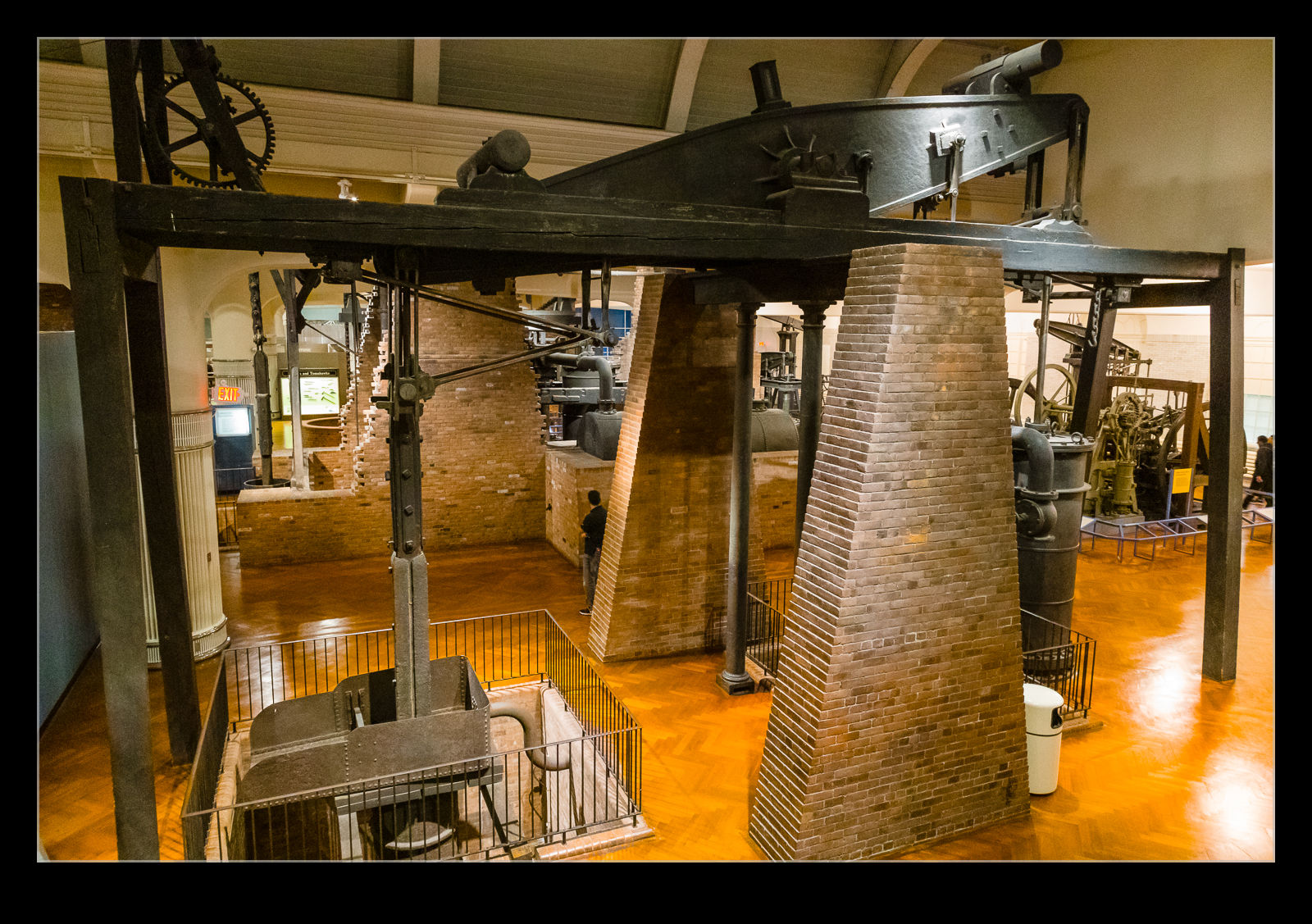
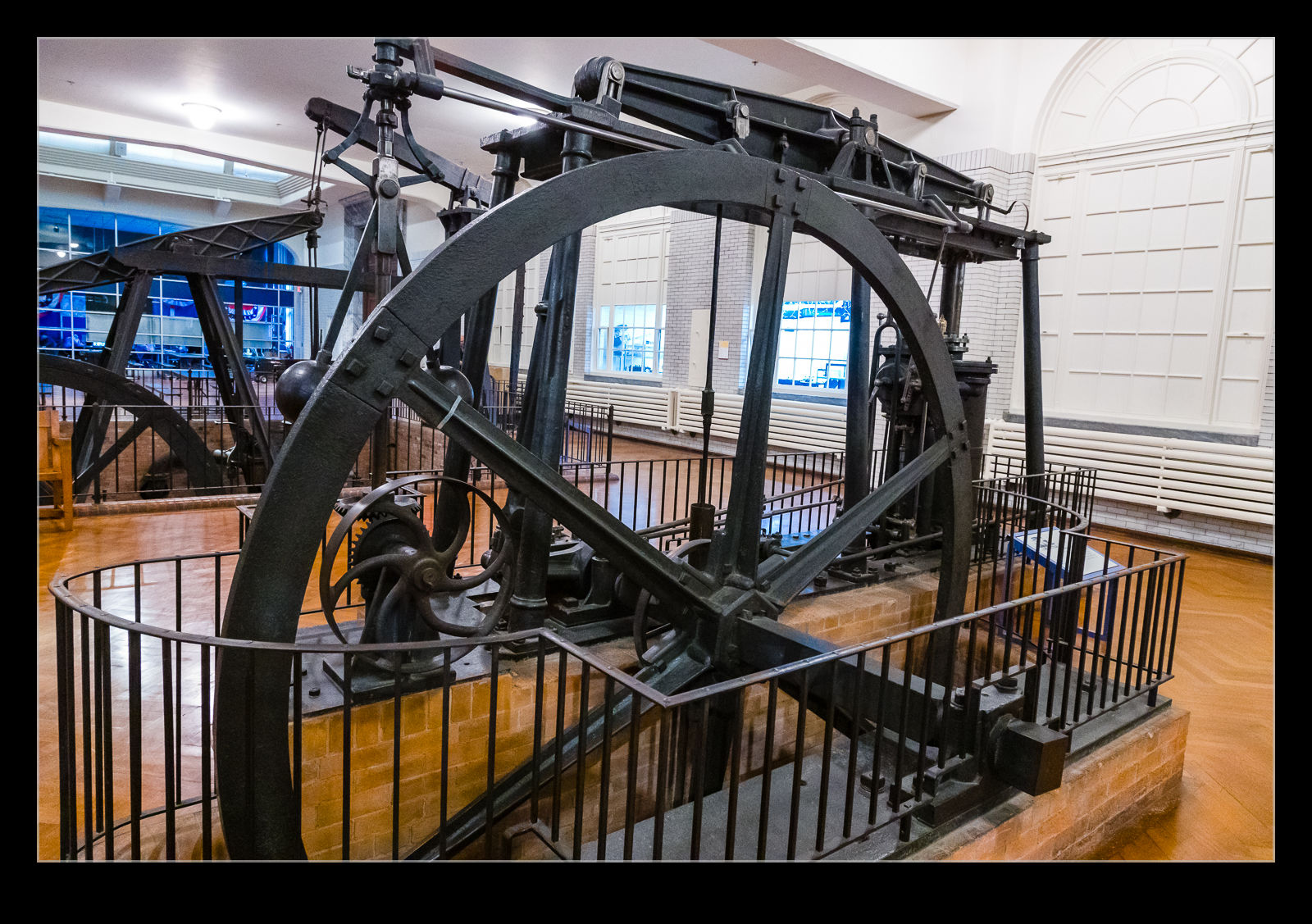
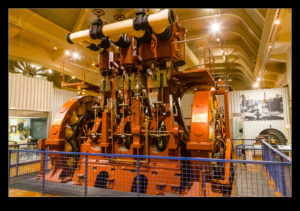
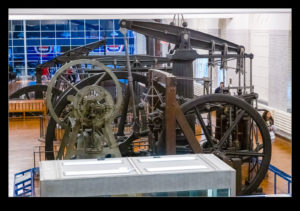
In the days of steam, power was produced by huge machines.  If you needed a more powerful machine, you just made it bigger.  The huge wheels and pistons that resulted were most impressive.  The Henry Ford has quite a selection of these old steam engines of various designs.  The efficiency improved as they introduced multiple phases to the machines to recover more work from the output of the engine.  The big beams and pistons remained a theme, though.  The large brick structures and the associated metalwork have been nicely preserved and displayed.

Quite a Locomotive

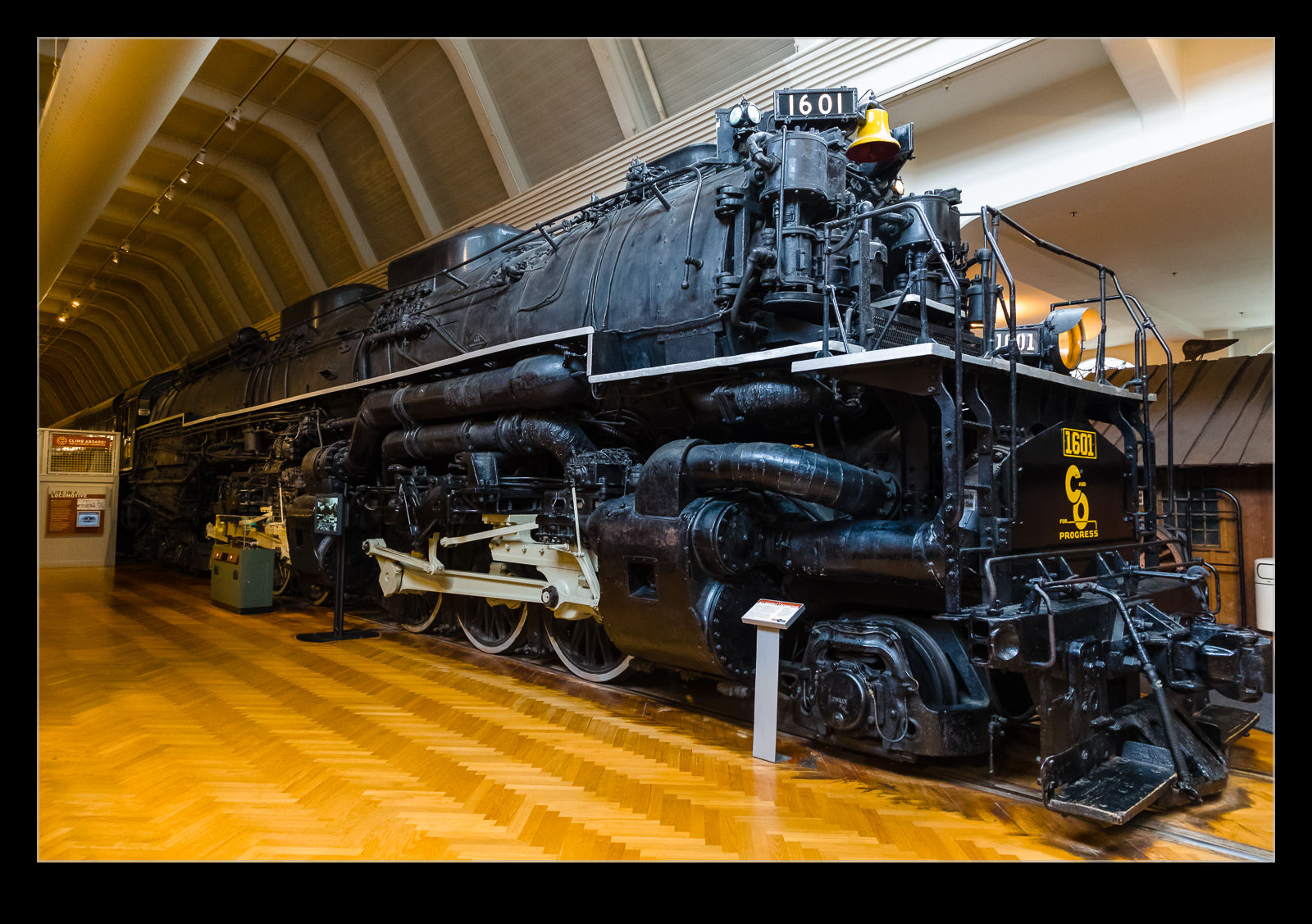
I know a few of the regular readers of the blog are in to trains so I hope this one pleases them.  The Henry Ford Museum covers all sorts of engineering endeavors including a selection of rail vehicles.  This was one of the last things we saw before we left so I didn’t explore very much.  However, there was one rather large steam locomotive on display.  This thing was a beast and I imagine it was quite the sight when it was in regular usage.  Our visit coincided with the running of Big Boy after restoration so something similar to this can been seen for real once again!

Anyone Have Any Engines?

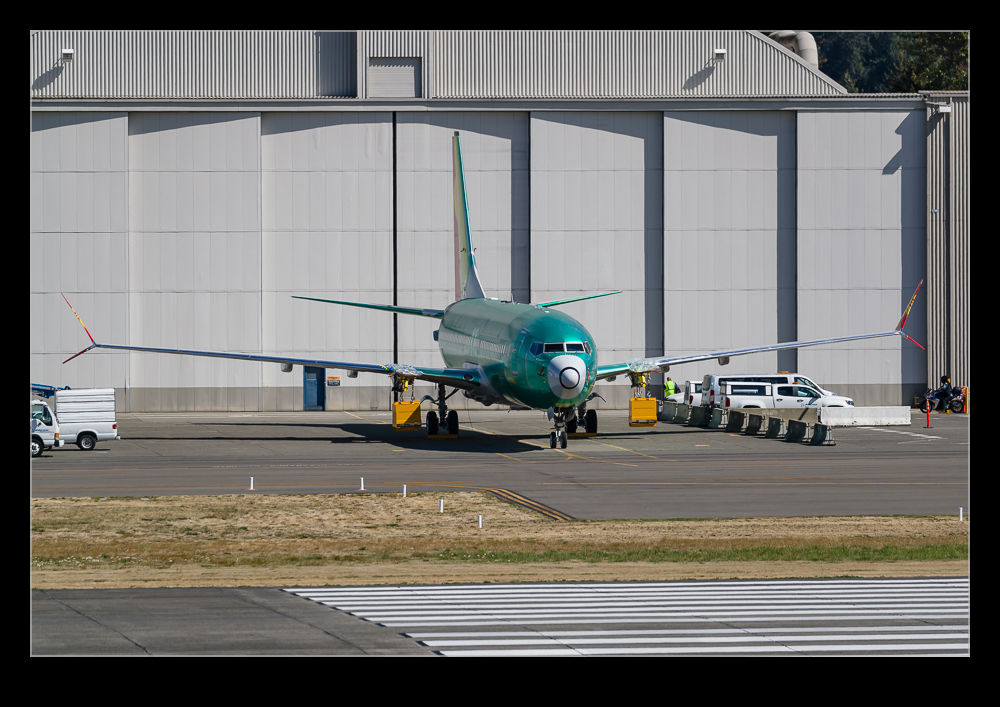
Engine supply is a bit of a problem for the big two airliner manufacturers at the moment.  Rolls powered 787s are going through a drawn out program of rework and A320neos are sitting around awaiting both Pratt and CFM engines.  Boeing is also short of CFM Leaps and the result is a lot of parked 737 Max jets at Renton and Boeing Field.  Apparently, they are flying jets to Boeing Field and then trucking the engines back to Renton.  As I flew over Boeing Field earlier in the week, the flightline did look full!

I wanted to see all of these parked jets so took a trip to Renton one weekend to see how things were.  There were certainly plenty of jets around and quite a few had ballast weights attached to the pylons.  Supposedly the backlog will not be sorted out until the fourth quarter (although some think that is a bit optimistic)!