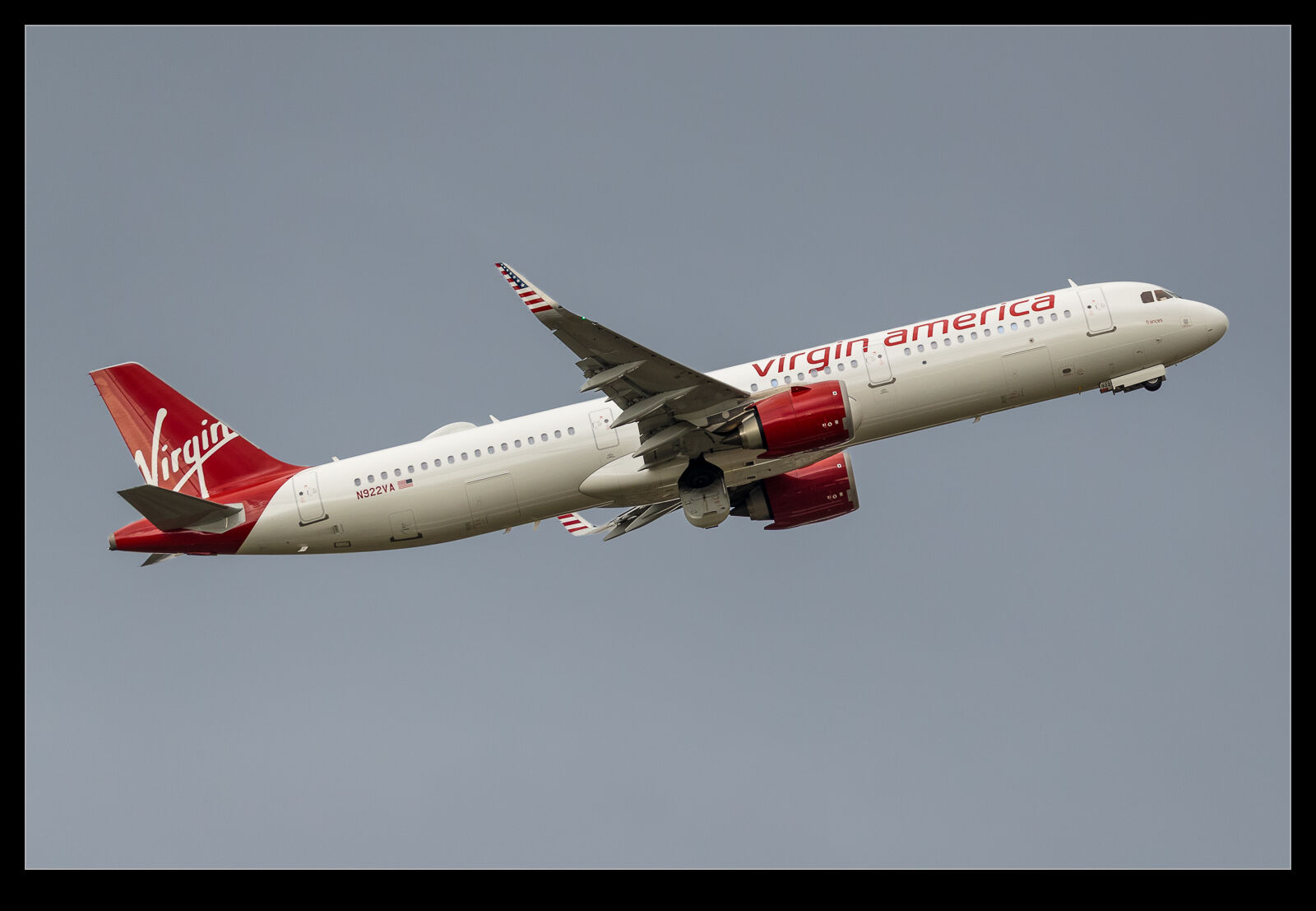
I recently posted a Virgin America A320 thinking back to when they were an airline before getting swallowed up. Then I got involved in looking for some other images of them and got thinking about their introduction of the A321neo. That got me to this image I took when they were early in their use. As with a lot of images recently, I took a fresh look at how to process it and went through my current approach to get a better result than I had achieved when I first took it. I like the look of the bigger engines on the neo and the A321 is a nicely proportioned plane.
Tag Archives: washington
Electrifying Dash 7
As a youth, the de Havilland Canada Dash 7 was, if not a widespread aircraft, one that was reasonably popular. This was a time when STOL operation was such a big deal with the idea that STOL aircraft would make operations from cities more of a thing. This idea didn’t last long but, at the time, a four engined aircraft with the ability to guarantee climb out in an engine out condition was important which also is why the 146 was a four engined plane.
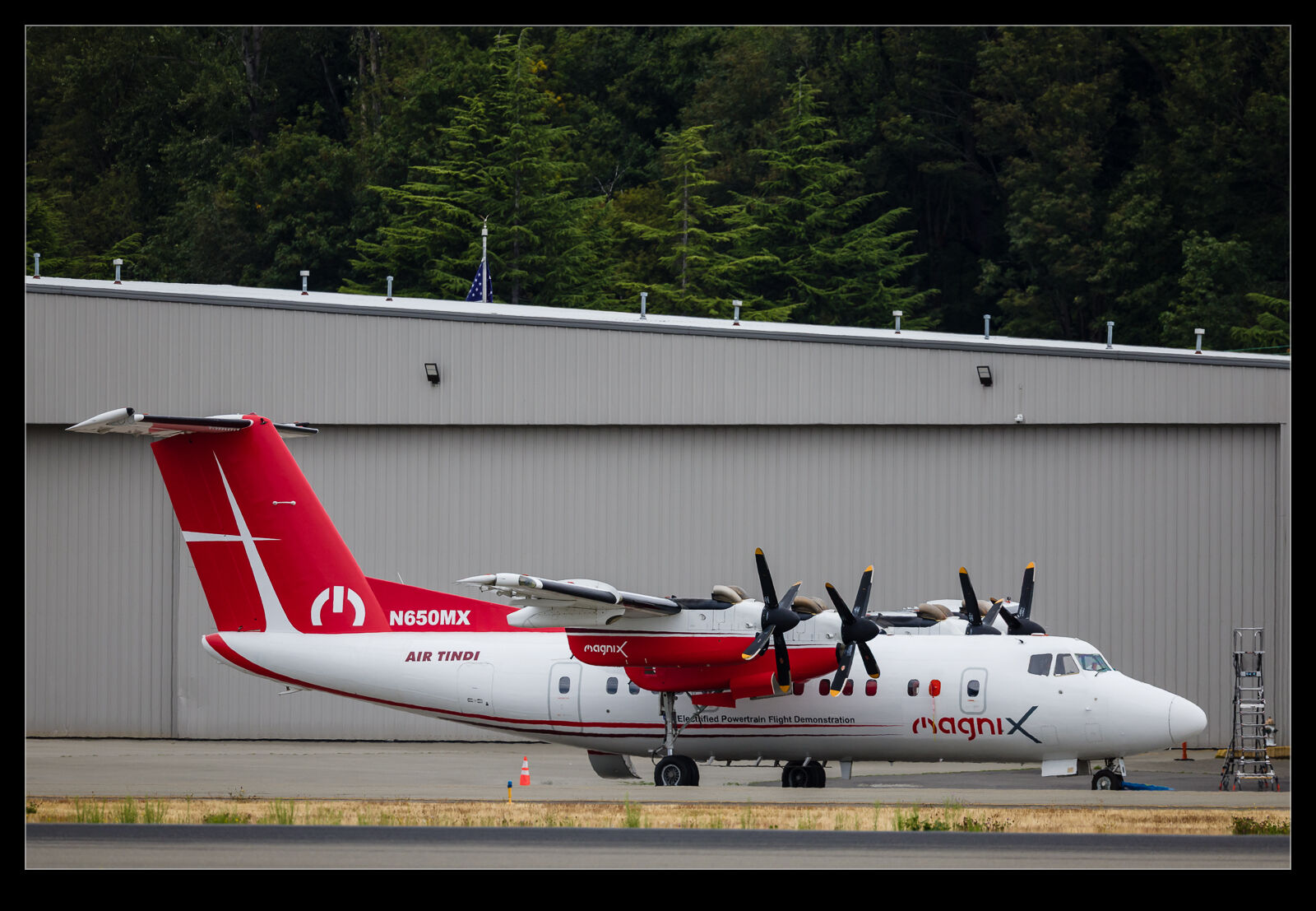
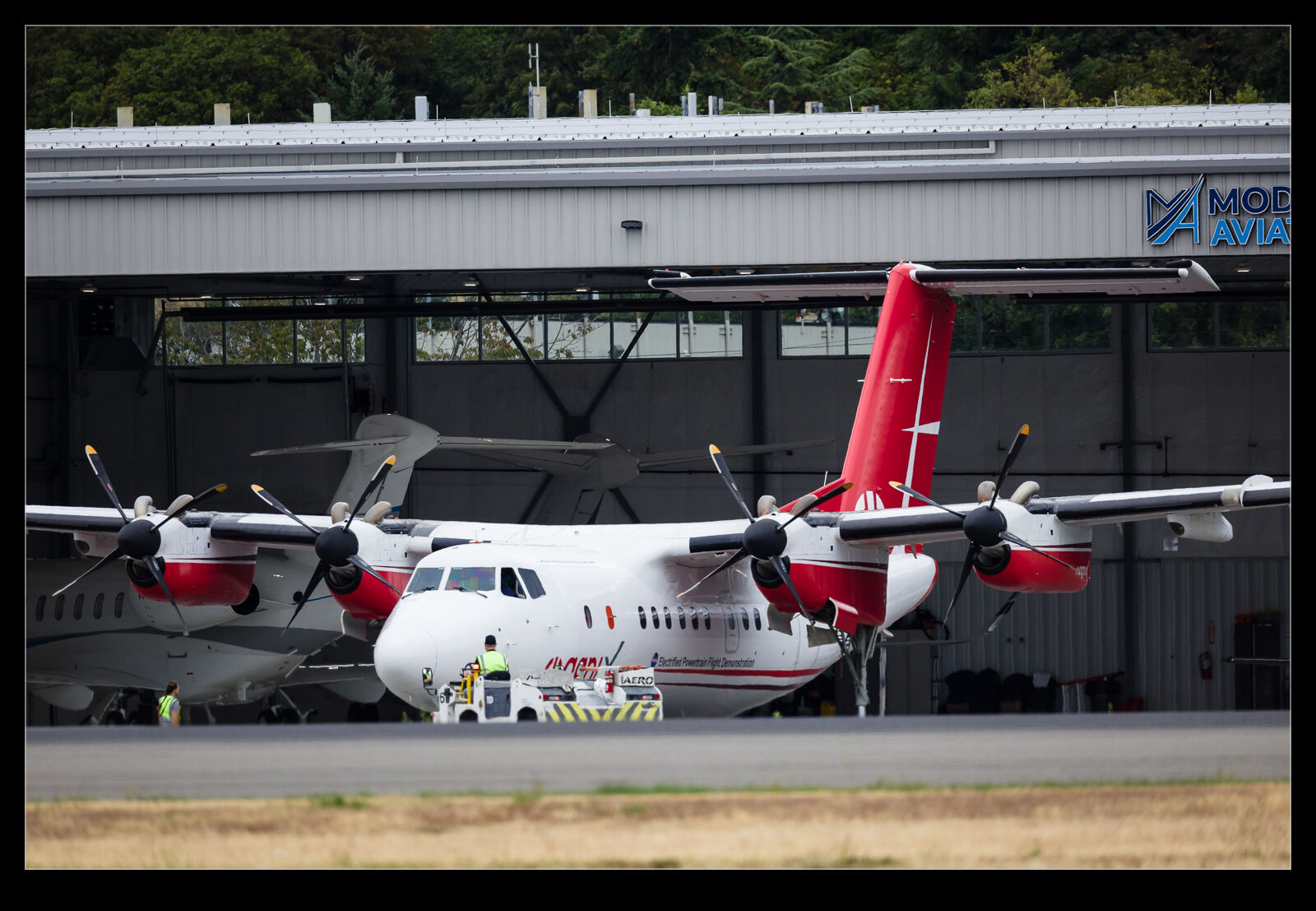
As the focus shifted to regular airports, twin engined turboprops took over including the same company’s Dash 8. The Dash 7 has hung around in niche uses but they are not easy to find. Air Tindi operates them in Canada and one of their airframes showed up in Seattle a while back. Magnix is a company that is making electric powerplants for aircraft and it is supposedly using a Dash 7 as a testbed. It showed up at Boeing Field for a publicity event. Sadly, I didn’t see it in flight, but it was out on the ramp at the FBO for a while before it was moved into the hangar for the event.
Well, They Didn’t Survive
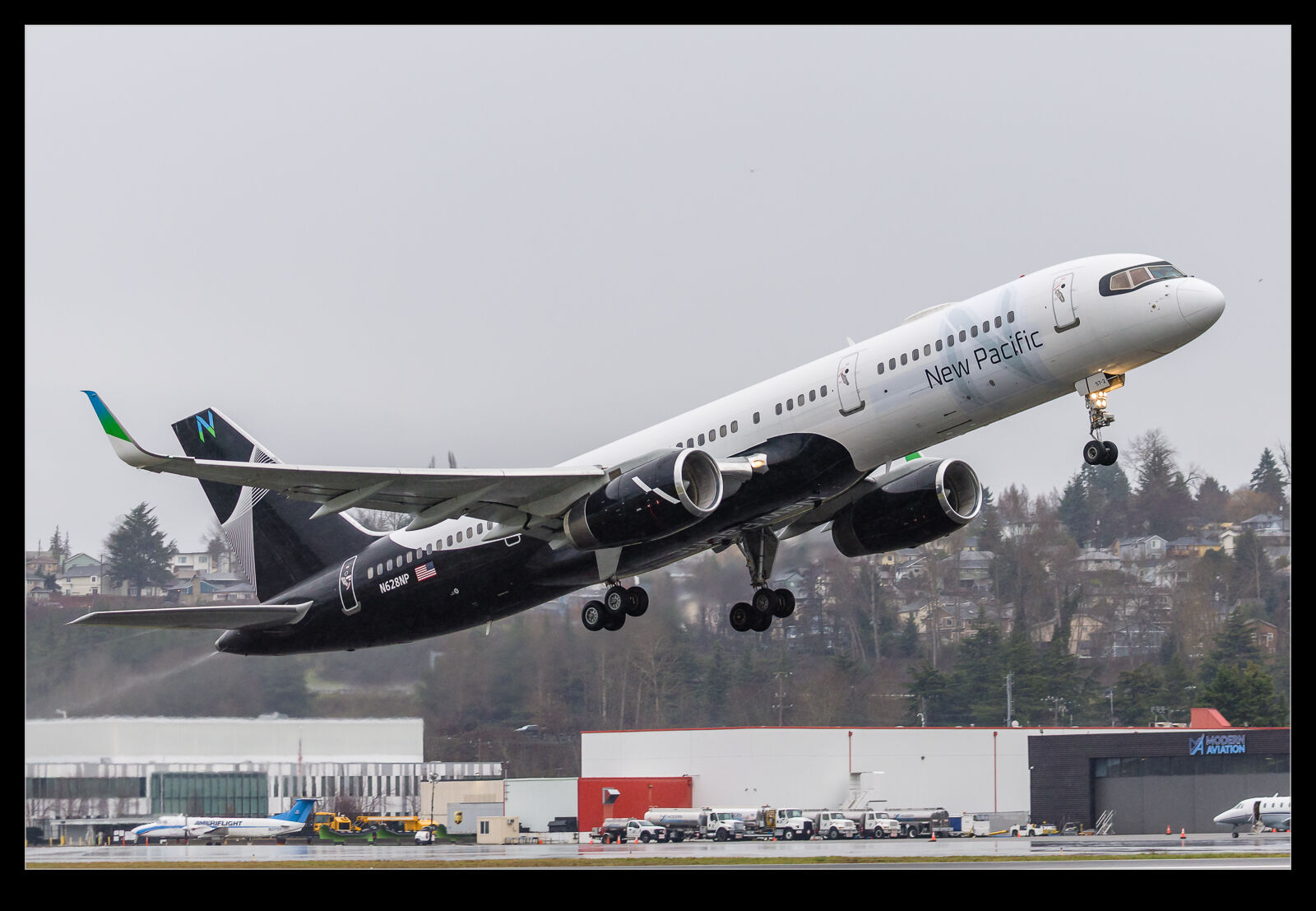
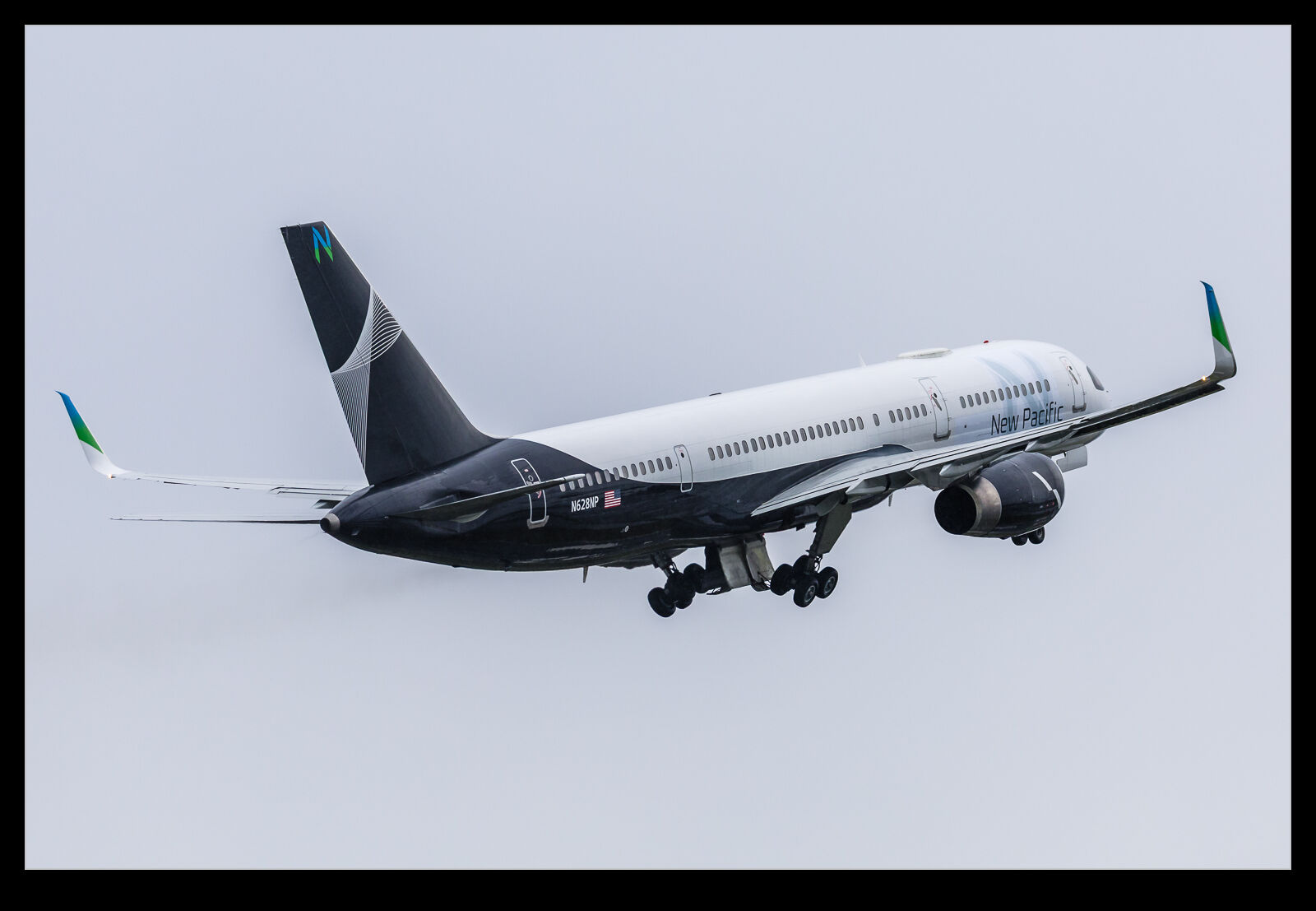
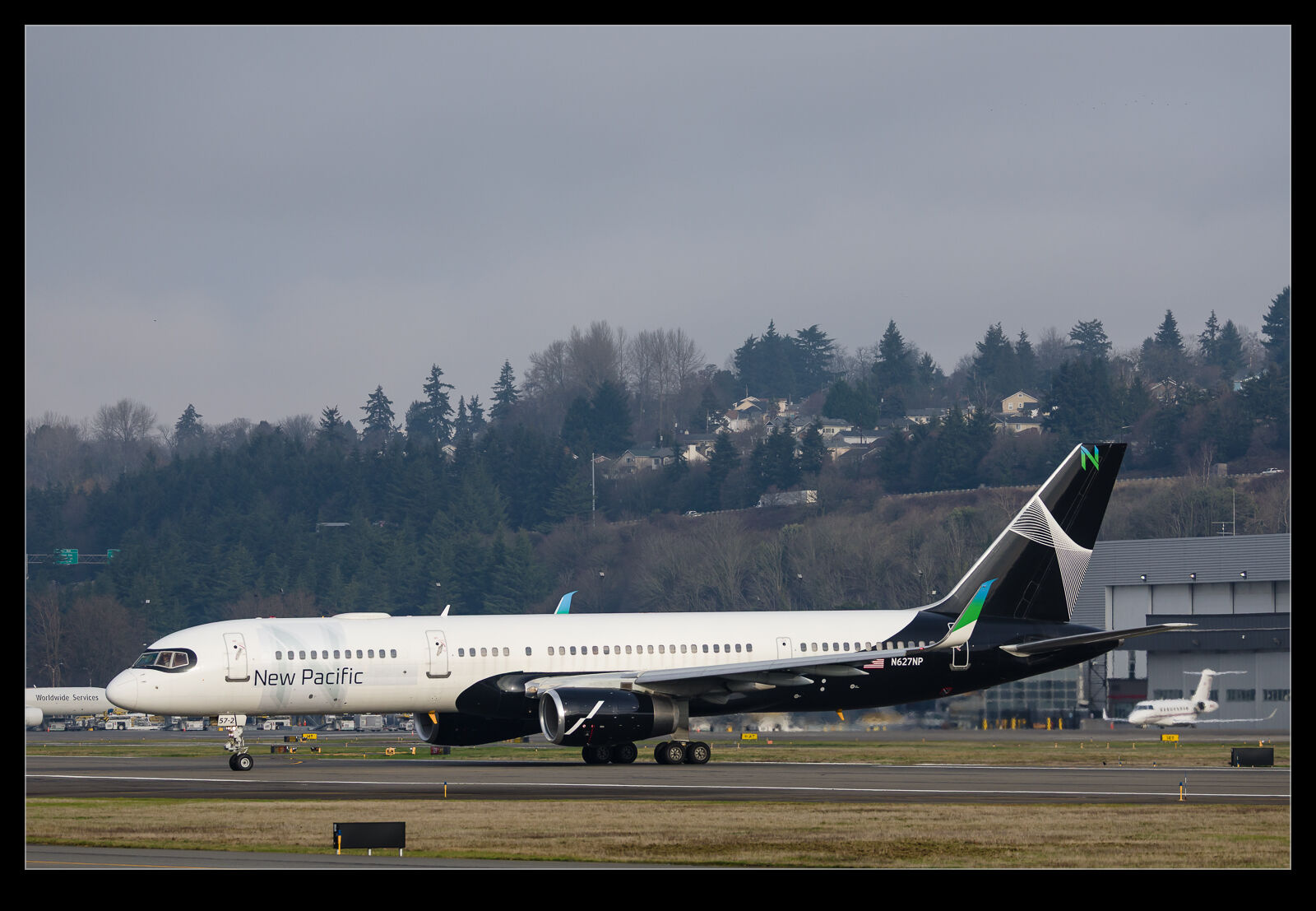
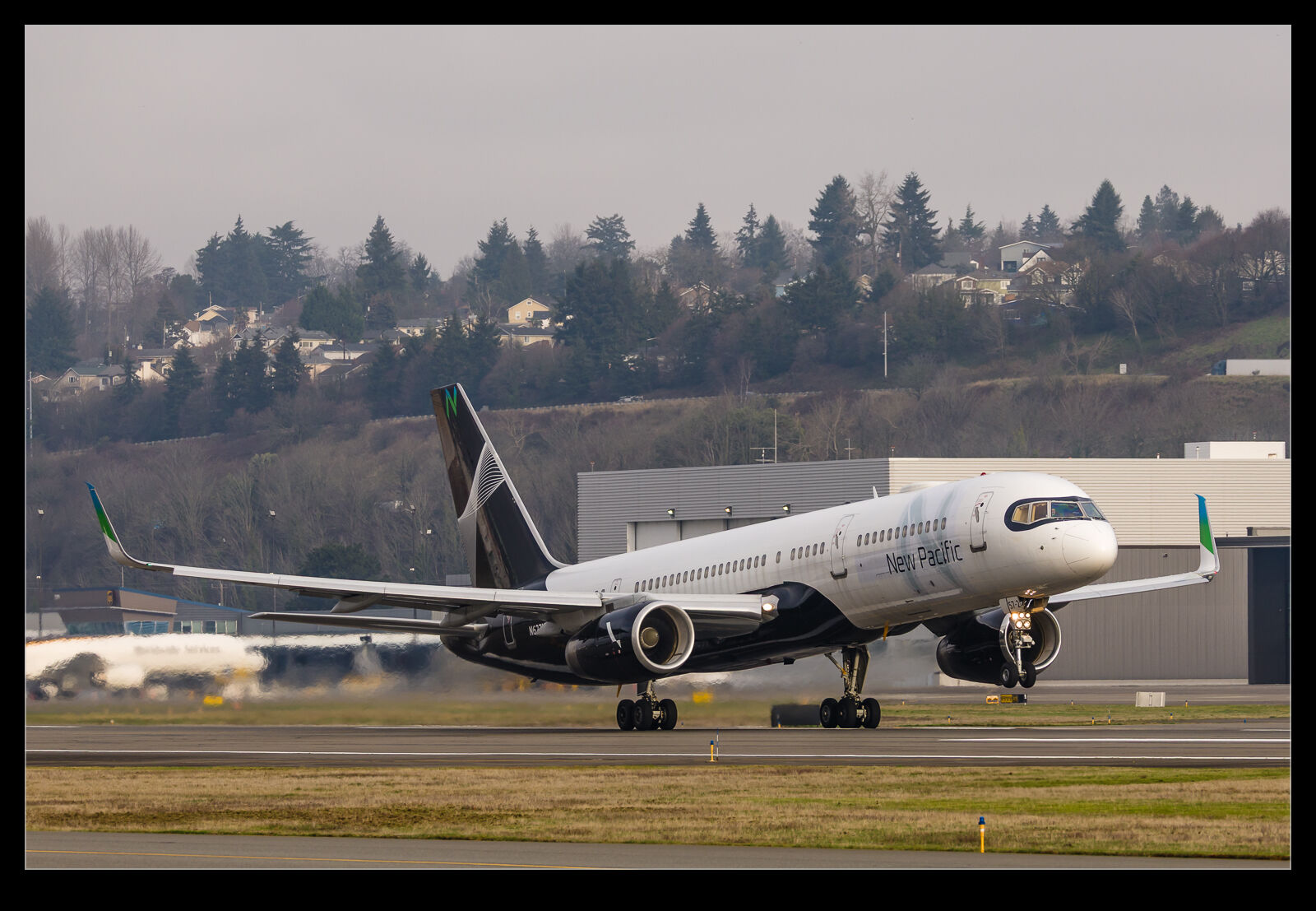
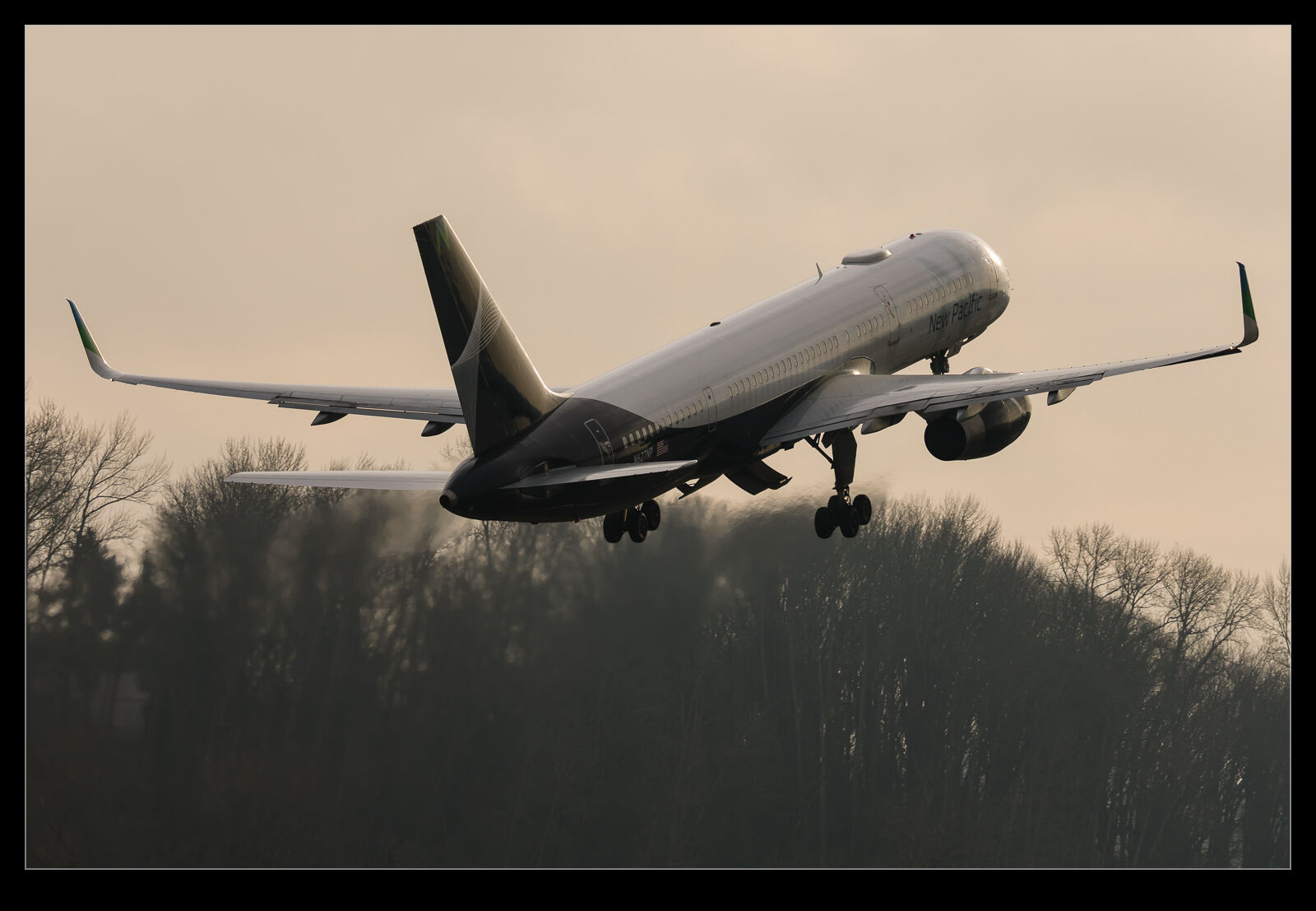
I wasn’t terribly shocked when I recently heard that New Pacific ceased trading. The model seemed a bit suspect when it was first announced and they rapidly transitioned to charter work and away from schedule flying. I still liked seeing their 757s when they showed up in Seattle but I never thought they would survive long. Sadly, that proved to be the case. Here are some other shots of their operations which we won’t see again.
Types I’ve Never Seen Before
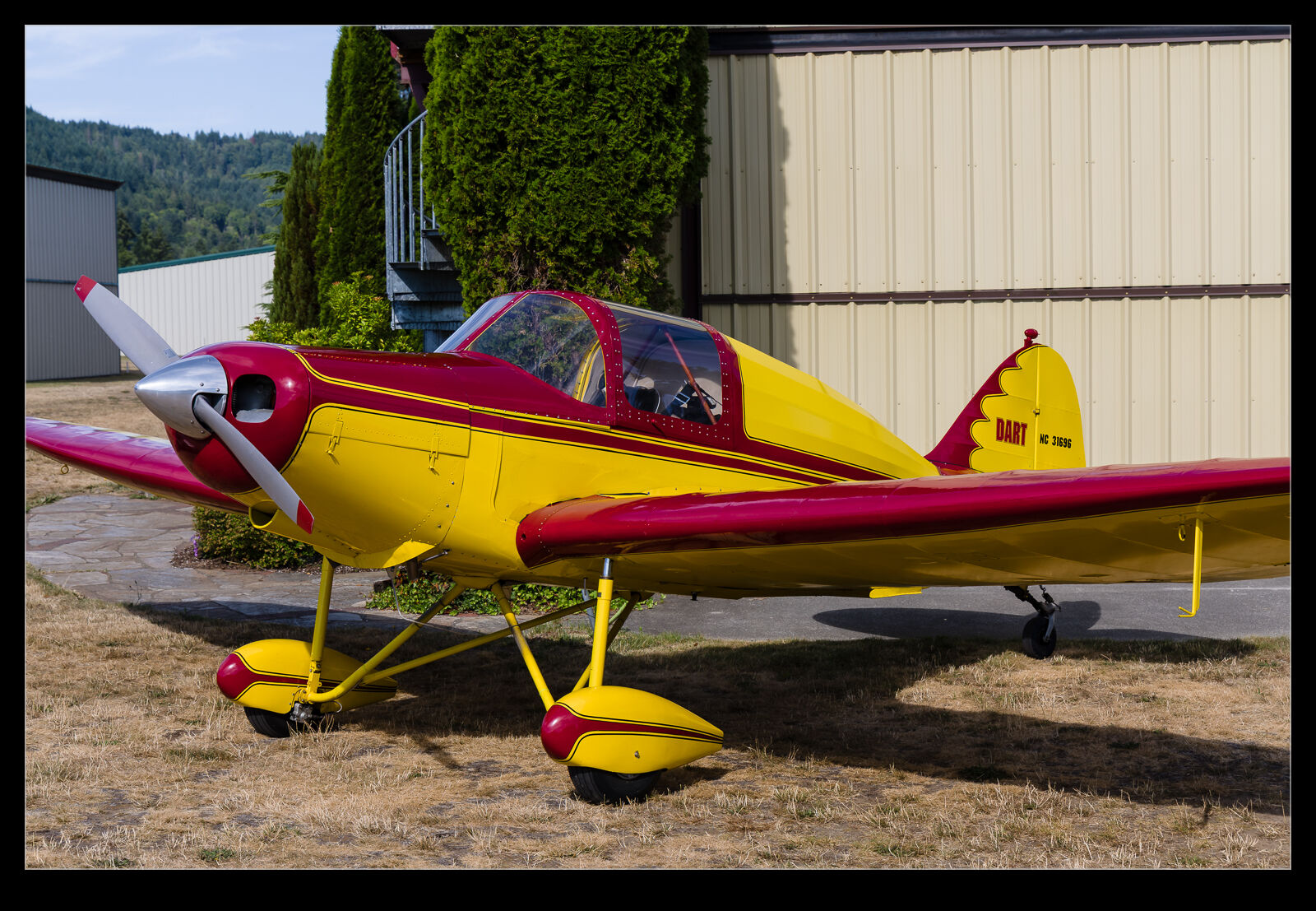
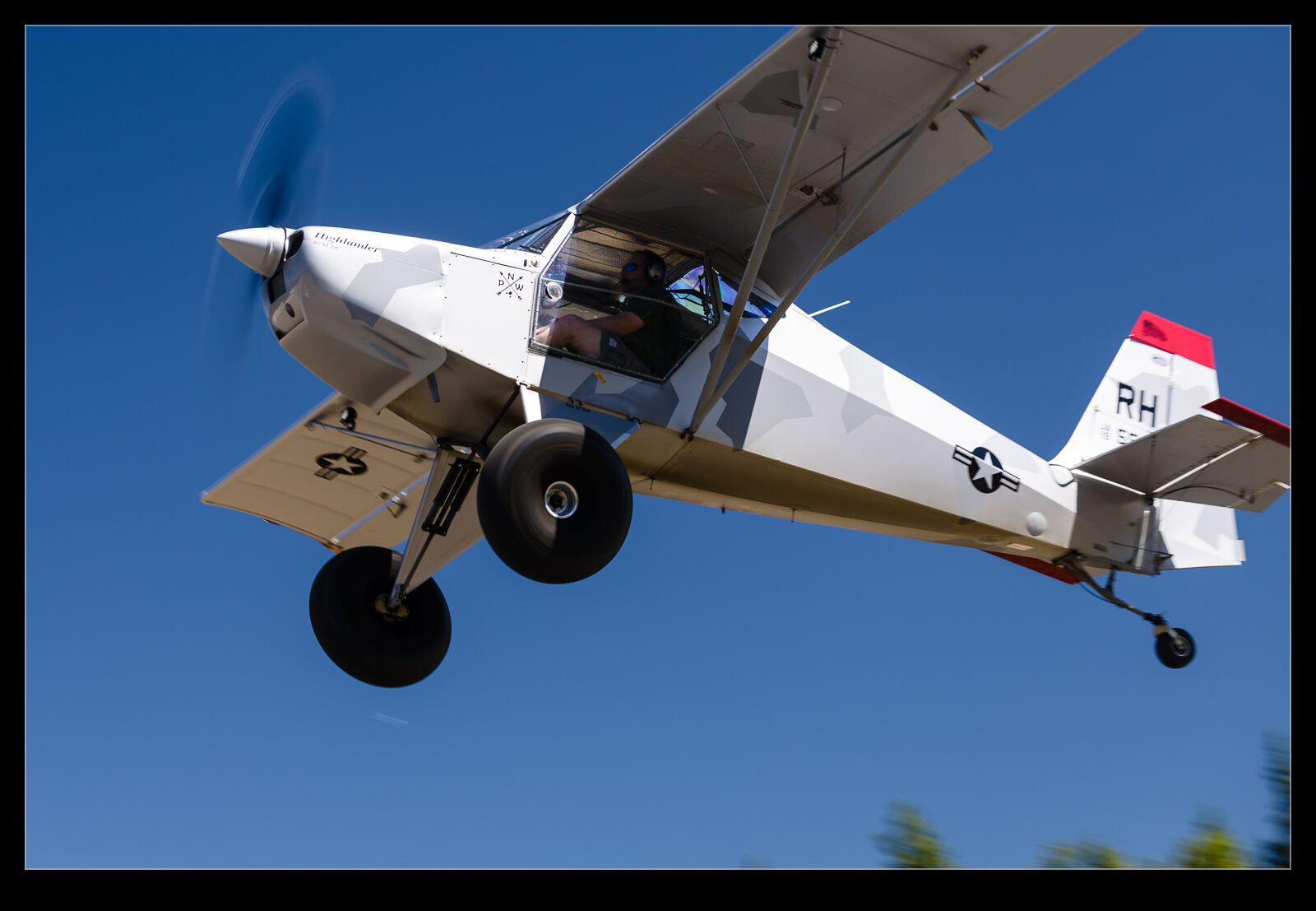
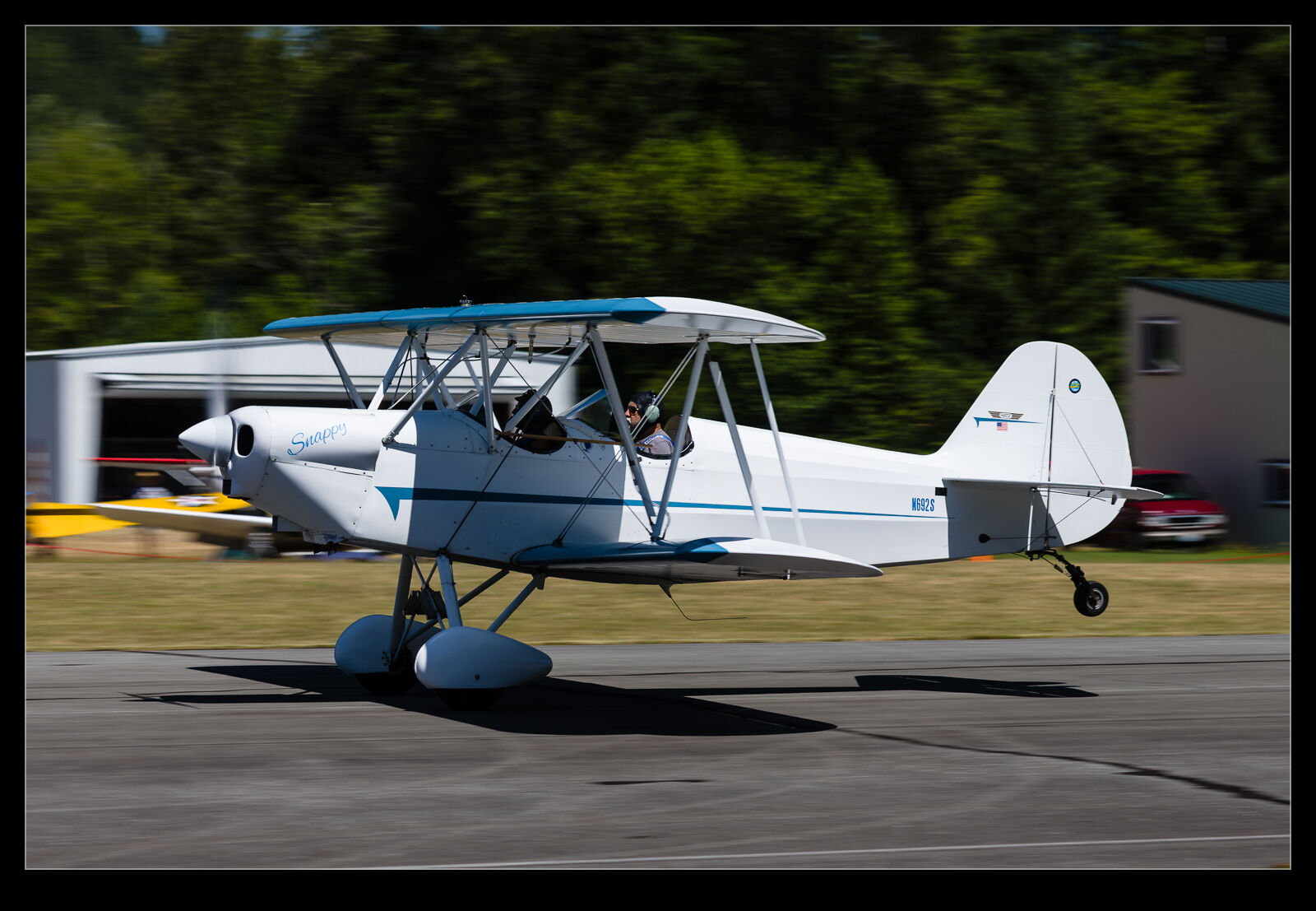
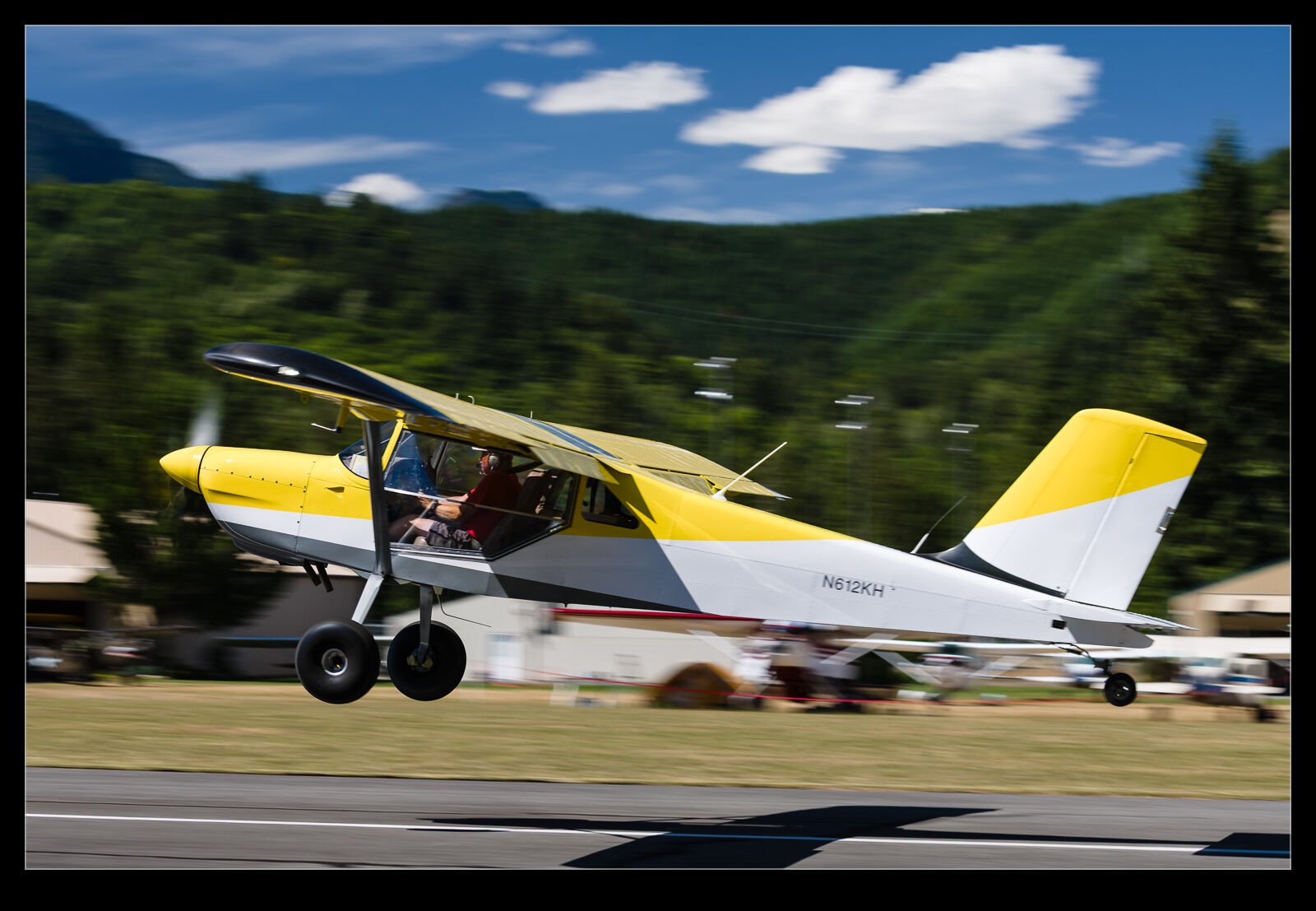
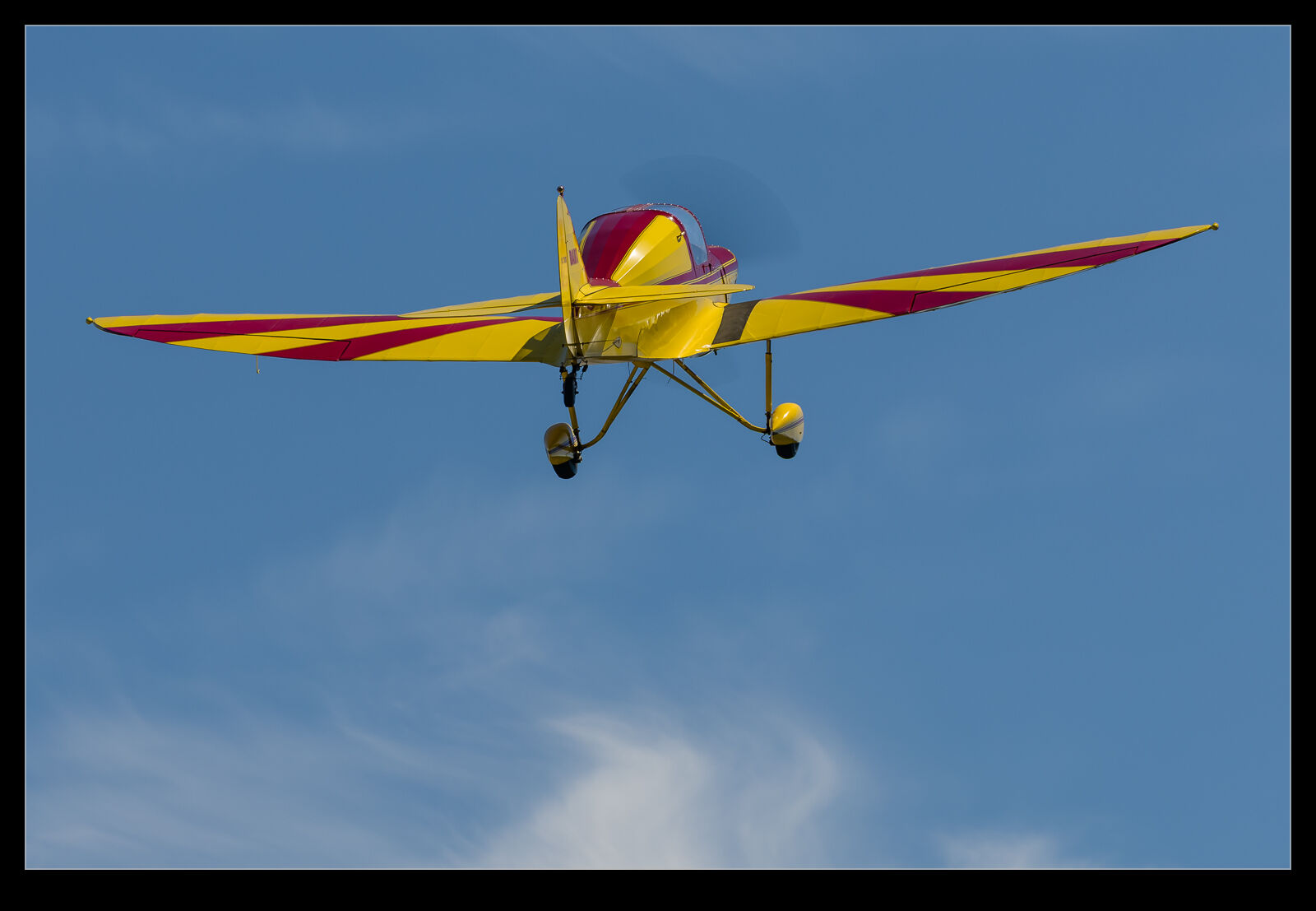
I am going back to a previous fly in at Concrete for today’s post. I am not a specialist when it comes to the wide variety of light aircraft that are out there. I have friends that know them all really well, but my knowledge is more limited. It is fair to say that, over the 20 years I was in the US, I became a lot more familiar with some of the types. Probably true to say that about warbirds too. However, an event like Concrete would often bring in planes I knew nothing about.
In this selection of shots, there is a Dart and a pair of Highlanders. Probably some others that were a bit of an unknown for me. It still amazes me to go to an event and see an aircraft that I had no idea existed.
Black Jets Look Better
Taking a Chance With the T-38 Landing
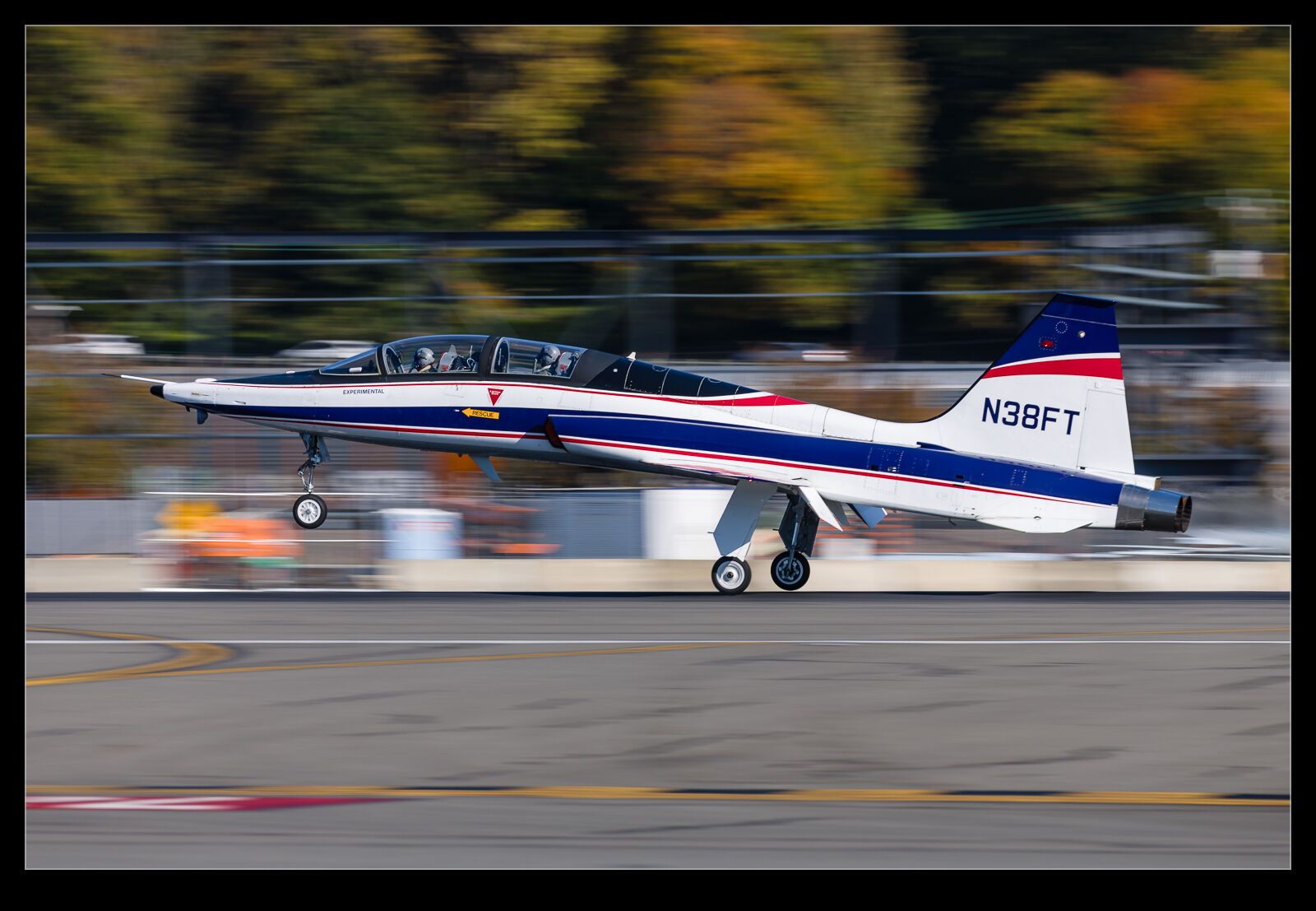
The T-38 chase planes that Boeing operates from Boeing Field did not fly as often as I would have liked. I’m sure they got plenty of use out of them, but it seemed to be a lucky break if one was up – particularly if I was in any place to see them. Consequently, I was always wondering whether I should make sure to get a sharp shot or take a chance on getting a more interesting look to the image. On this occasion, I decided to go with the latter. I dropped the shutter speed down to 1/100th of a second and hoped. A few came out okay. The cluttered background at Boeing Field is always a problem so a bit of blur helps put the focus on the plane.
Super Bugs at Bremerton
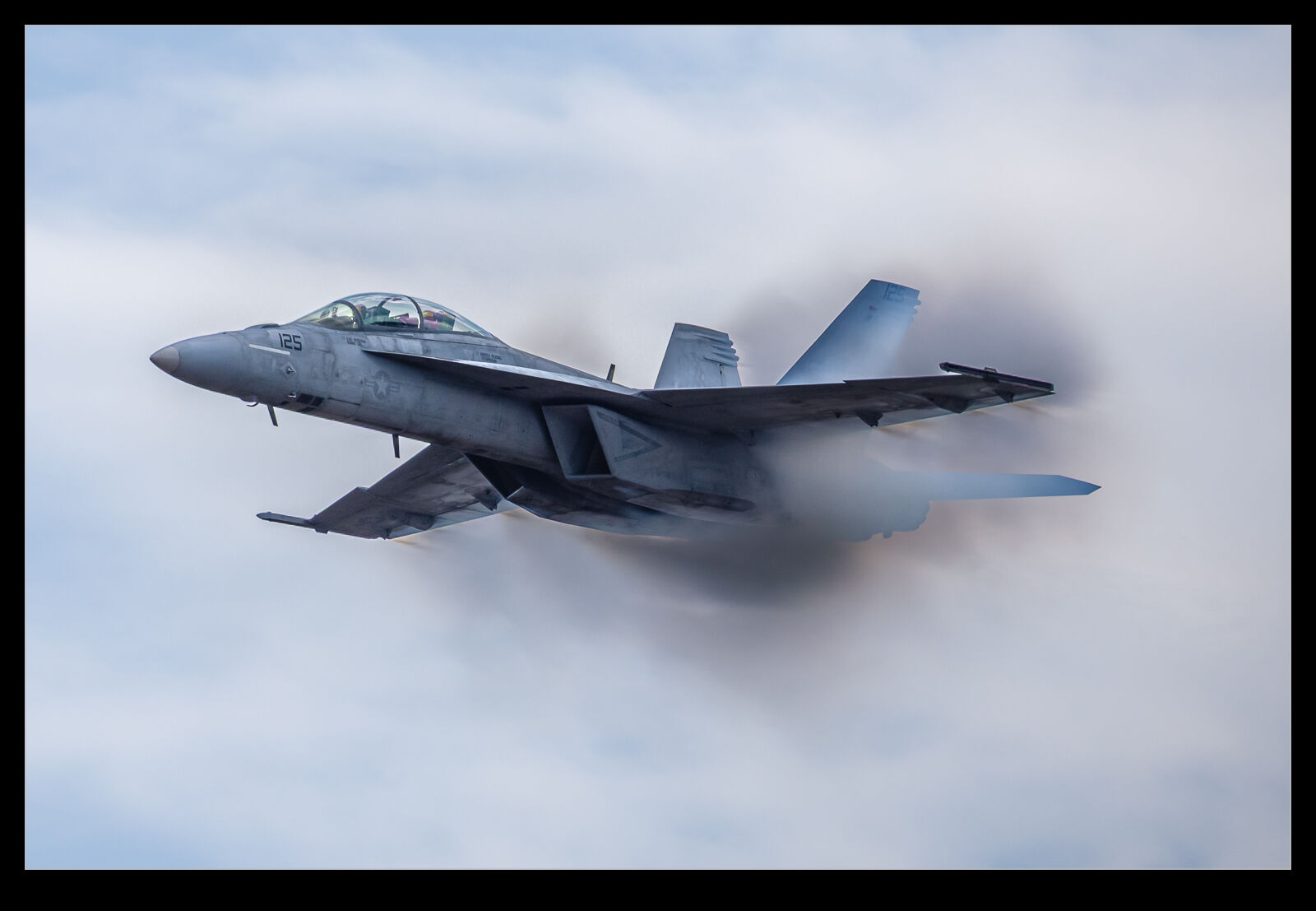
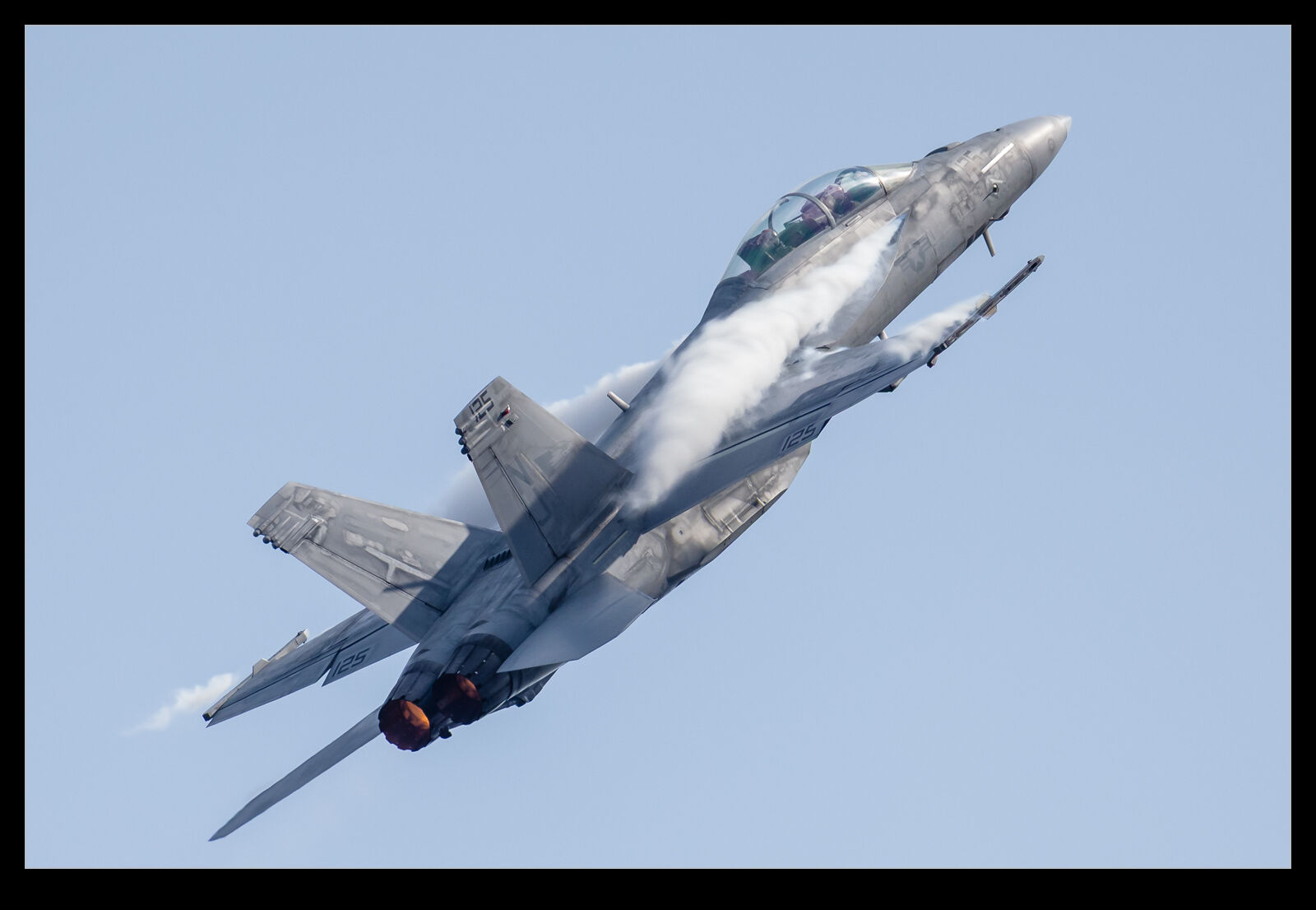
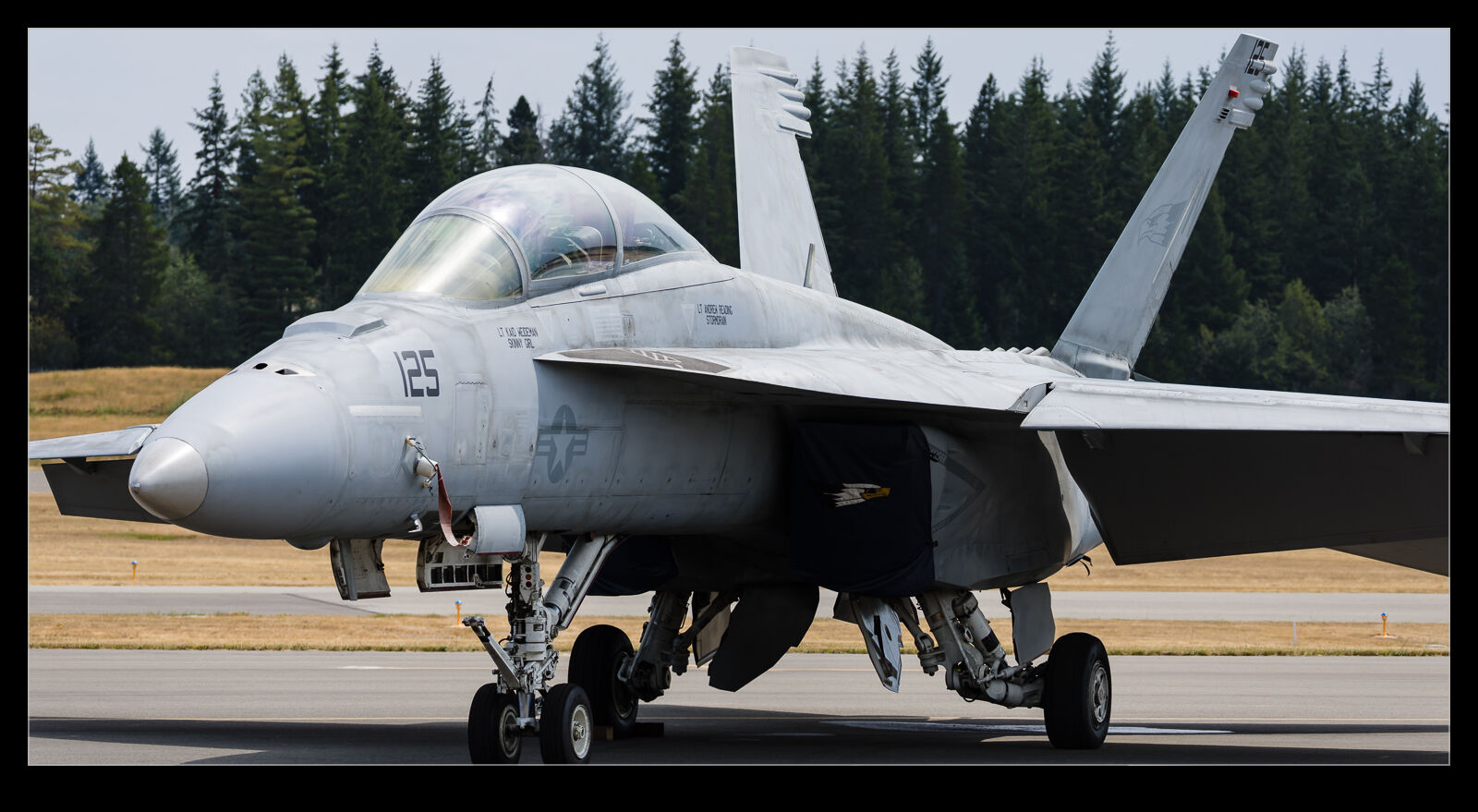
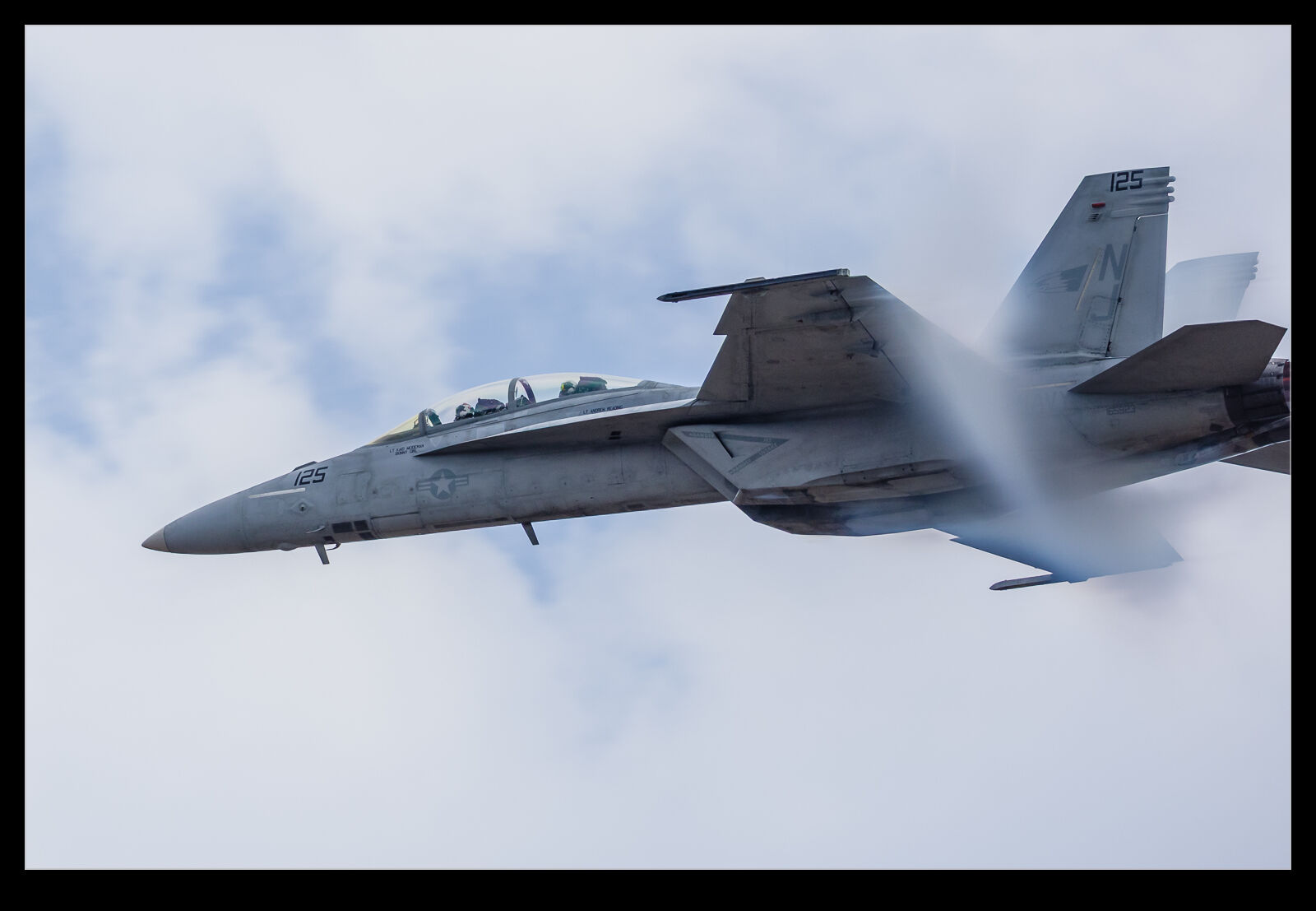
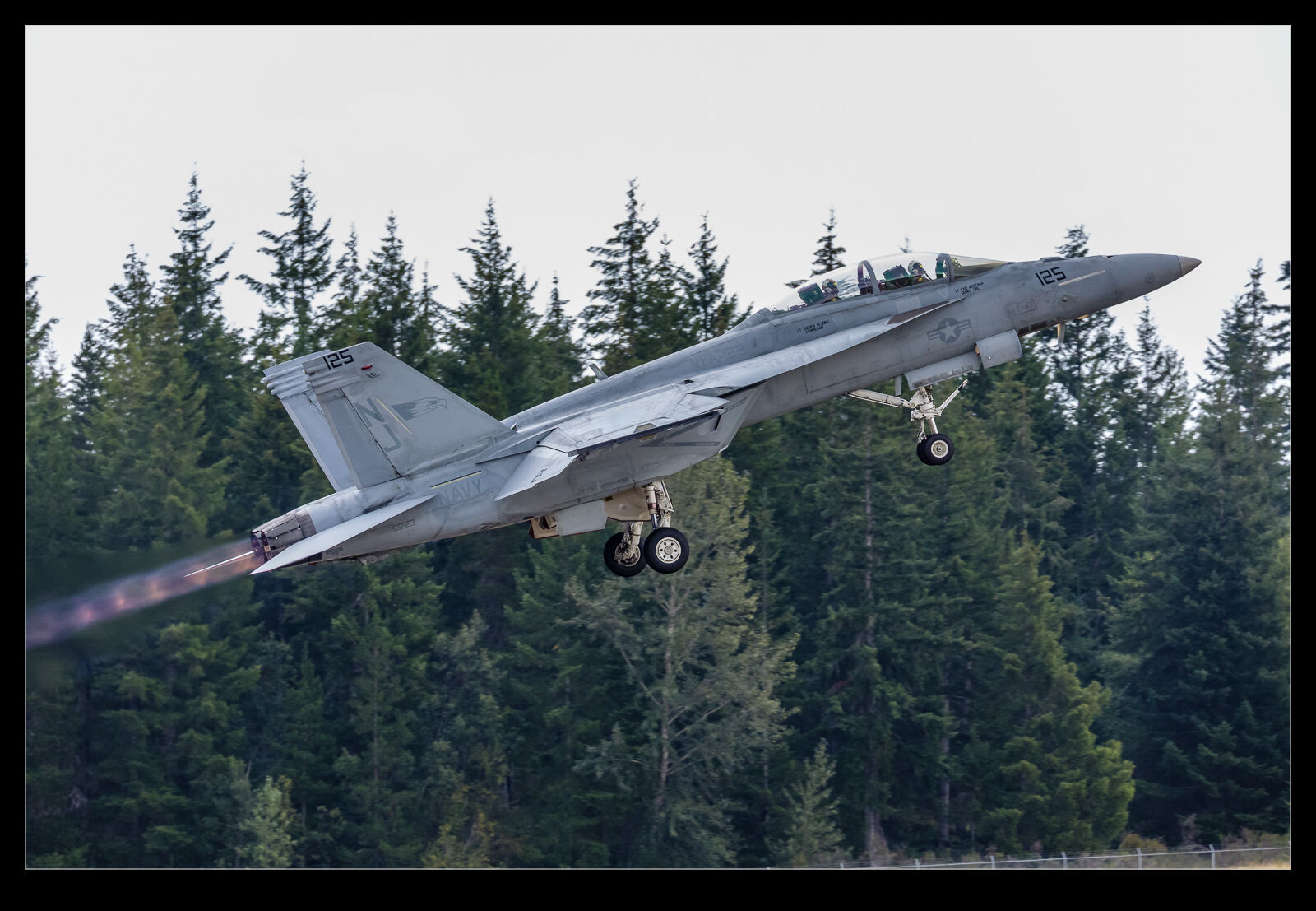
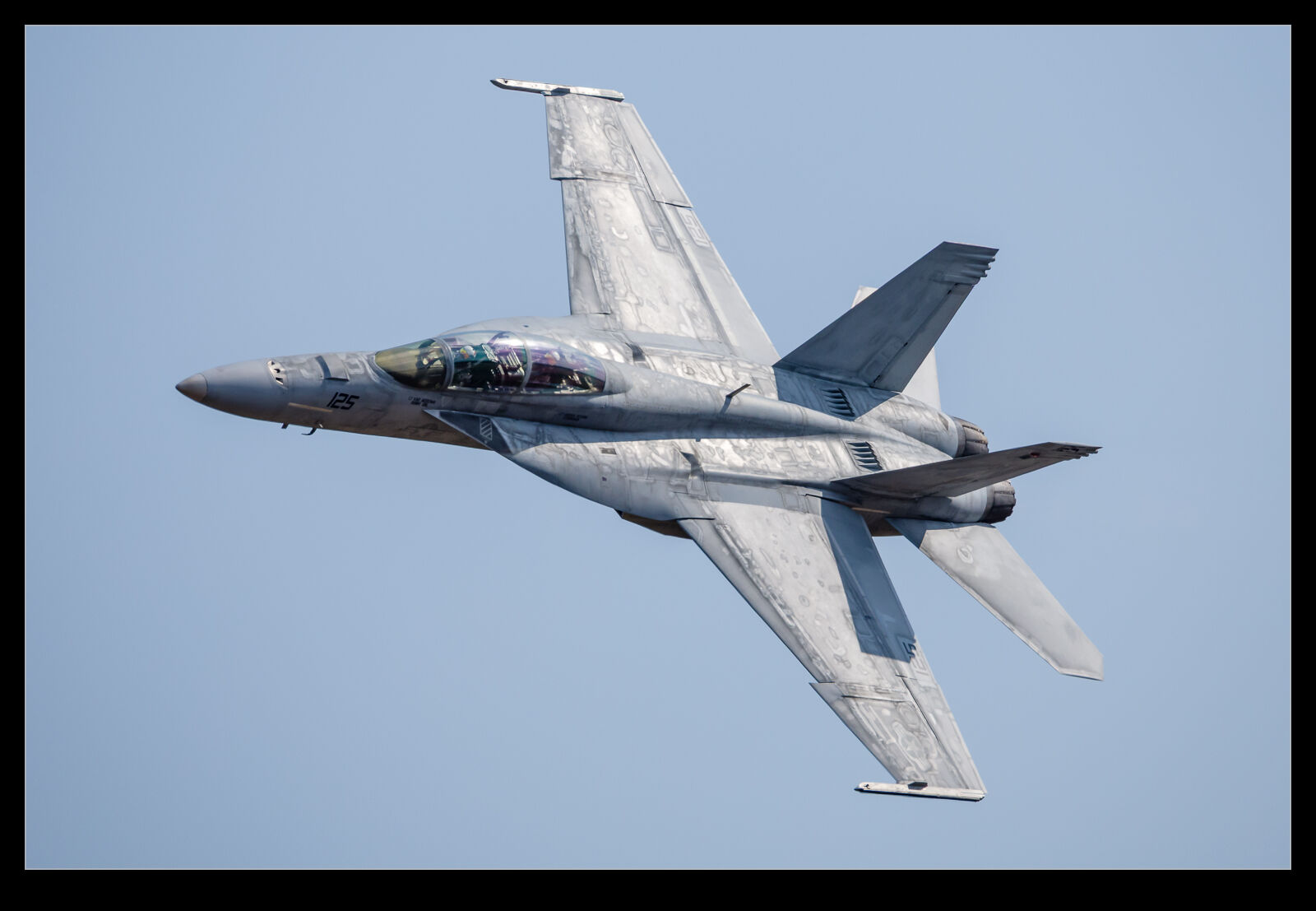
One of the last air shows I attended before we left the Pacific Northwest was at Bremerton. The unusual thing about this air show was that I didn’t head there alone. Instead, Nancy came along with me. It is a long time since she last came to a show with me, but the good news was that she enjoyed it! One of the parts of the show that she found the best was the US Navy’s Super Hornet display. They ripped up the sky for a while. Their blast across the field from crowd rear particularly amused her!
The conditions not ideal from a lighting point of view but there was humidity in the air with the upside that the jet was created plenty of spluff. One of the passes in particular created a lot of cloud activity. It made for a difficult image to process given the contrast with the cloudy background and that its own clouds needed not to be over exposed. I suspect I shall probably try reprocessing this again in the future as either my techniques improve, or the software gets more advanced. I did have a bit too much lens for the closest part of the pass – oh well…
Stormy Sunday Atlas 777F
A stormy sky doesn’t immediately inspire you when going for some aircraft photography but, if the light on the subject can end up being okay, a dark background can suddenly seem like a great option. One Sunday an Atlas 777F was up on test at Paine Field. The sky was dark and gloomy but not a solid cloud background. Instead, the clouds were stratified so there was more detail and texture to see.
As the 777 came down the approach, it was not brightly illuminated but it was picking up a good amount of light compared to what I had expected to be the case. This did require some thought about the camera settings. When the sky is dark, I often significantly over-expose. This is because the clouds will dominate the metering response and the subject – which is usually quite dark – really disappears. In post processing I can then bring the exposure back down but there is sufficient light on the subject to get a good image of it against the sky.
In this case, I had to be more careful. With good light on the subject, the dark sky would result in blowing out the plane. Therefore, I had to keep the exposure compensation off to allow the subject to not get too overexposed and not leave enough latitude for processing it to where I wanted it to be. The results came out okay. This was more important for the longer shots. Once the plane was close in, it started to dominate the metering response and, once on the ground, the illumination was more balanced.
Once they touched down and brought in the reversers, you could see that the conditions had not long ago been wet as the runway still had plenty of water on the surface and the reversers kicked it up in the air.
The Gloomy Conditions Make the Cockpit Displays Visible
Back on one of my last visits to Coupeville to watch the Growlers undertaking FCLP, the weather was not playing ball and things ended up getting quite gloomy at the end of the slots they had planned. With a modern camera, this is not really an issue as you can handle some really low light without too much compromise. However, the thing I did notice as I was going through the images was that the green colours of the cockpit displays really start to show up. In some of the earlier shots, the light in the sky was reflecting off the canopy which washed it out a touch but by the last few passes, the green was really showing up.
Reverse Thrust Bizjets
Boeing Field is busy with business jets and some of them are more interesting than others. However, one thing that does catch my attention is the use of reverse thrust. On bizjets, it is often used for braking when taxiing to keep the brakes cooler. Of course, it is used for landings. Usually, the reversers are stowed as the jet slows but other times they are left in until they have vacated the runway. Here is a selection of jets with their reversers in use.