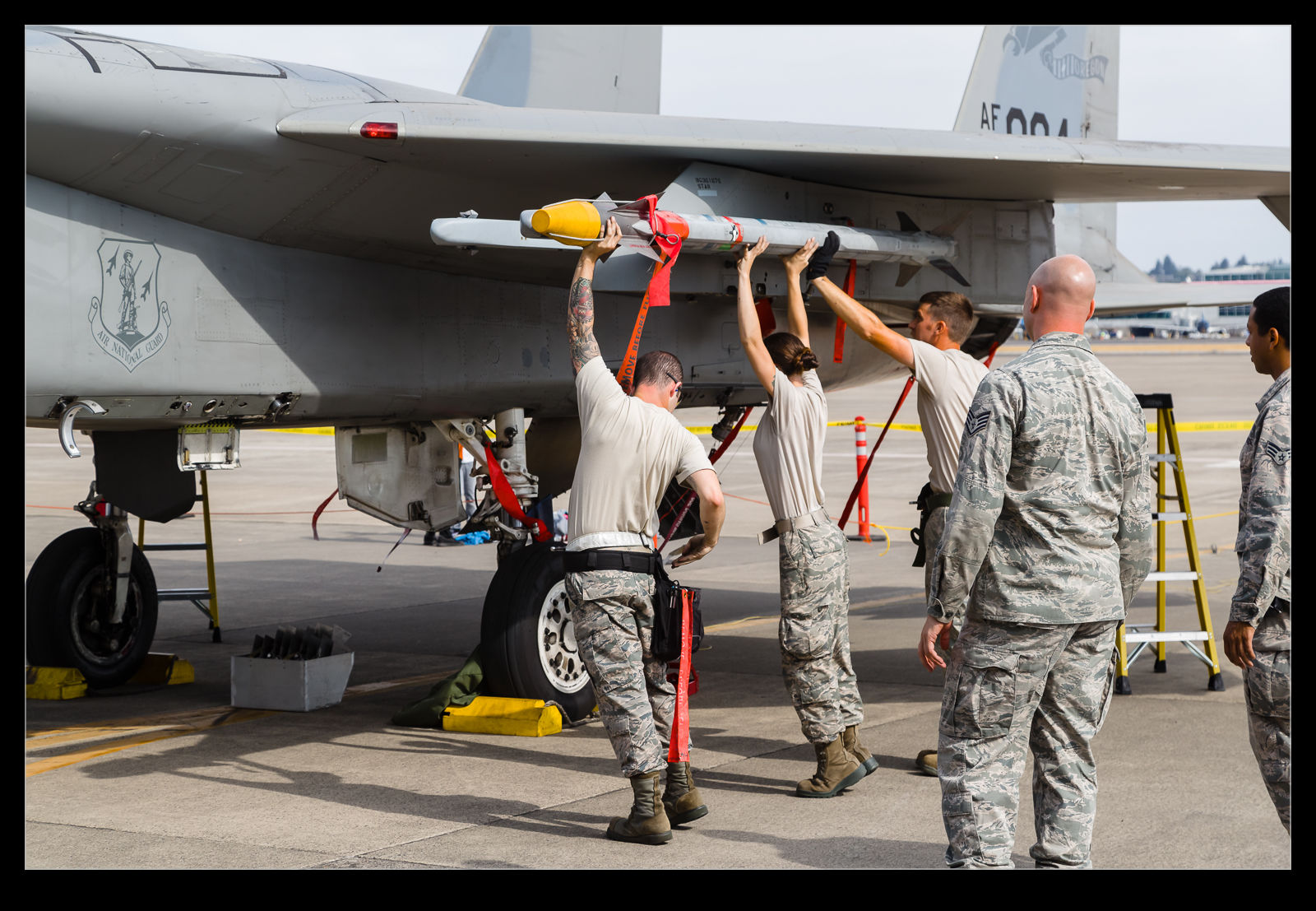
 The open day at the Portland ANG base included a demonstration of missile loading. A jet had been parked out on the ramp for the morning and there was a rack of missiles also on display. Towards the end of the morning, a team started to prep the jet for loading. This was an exercise that had multiple purposes. It was a demonstration for the guests, but it was also a qualification test.
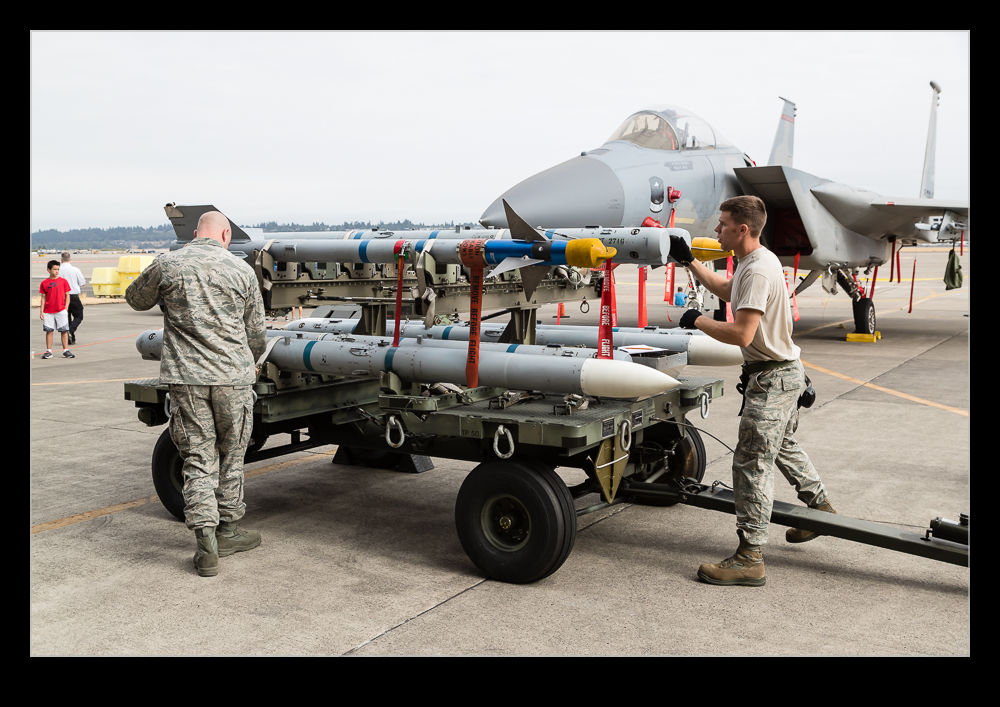 Apparently, the crews are required to carry out a loading drill every 90 days when they are timed and observed in order to maintain their qualifications. Therefore, a pair of observers were there to watch the three-person team do their work. It can’t have been fun to have the public watching and the assessment team overseeing you at the same time. The crew got to it though and they seemed to be diligently following every procedure which is no bad thing when you are potentially dealing with live weapons (not that these examples were in any way live).
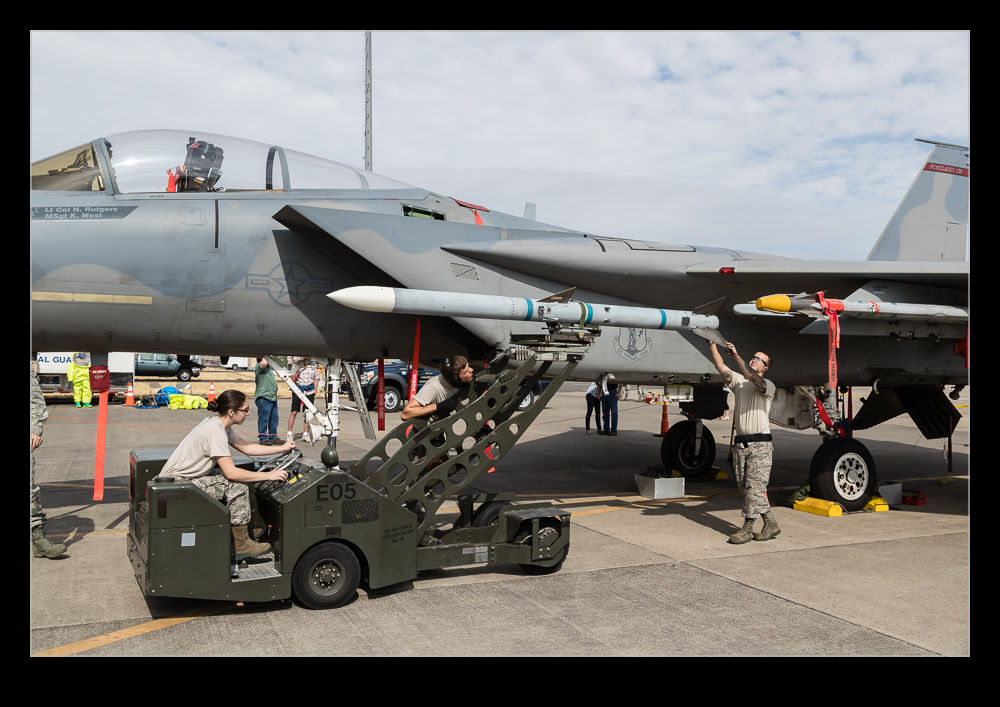 The missile configuration was quite a mix. They had six AMRAAMS to load, four on the fuselage and two on the stub pylons. The other two stubs were fitted with an AIM-9M and an AIM-9X. The Sidewinders were loaded by hand but the AMRAAMs are heavier and required the use of a mechanical loader. Prepping the plane before the missiles came close took a while and then the missiles were loaded in sequence with things like fins being added at different times such that some were on before the missile was attached and some were added once it was installed.
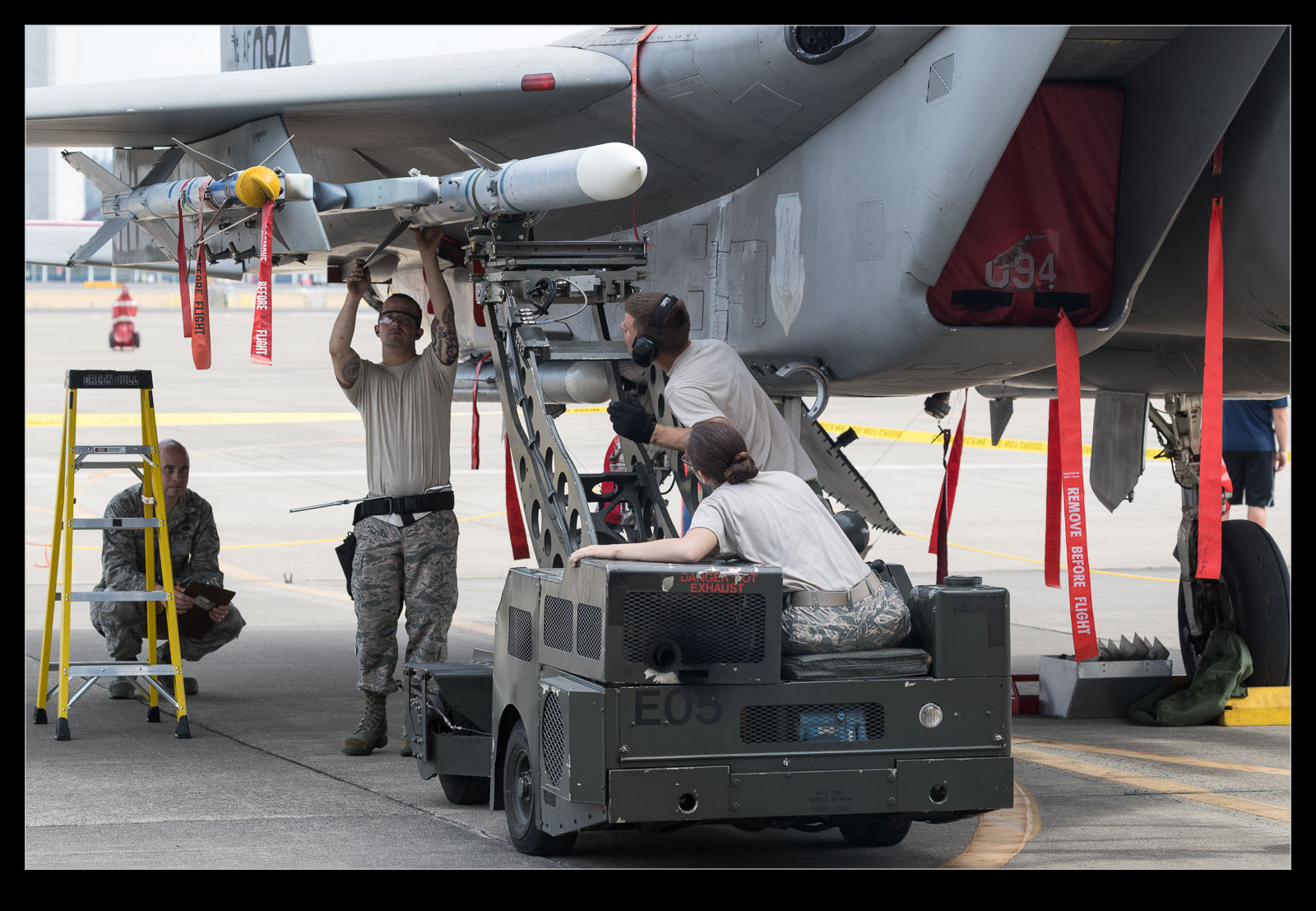 Once the whole task was completed, they reversed the process and removed the missiles. There was some choreography involved with getting the loader in place. It is not a subtle piece of machinery, but it could be placed quite accurately. Then there is adjustability in the rotation and position of the missile holders to allow things to be fine-tuned into position. Maneuvering a missile on to the rail or the launcher while not hitting anything else also requires some careful work. It was a most interesting process to watch.
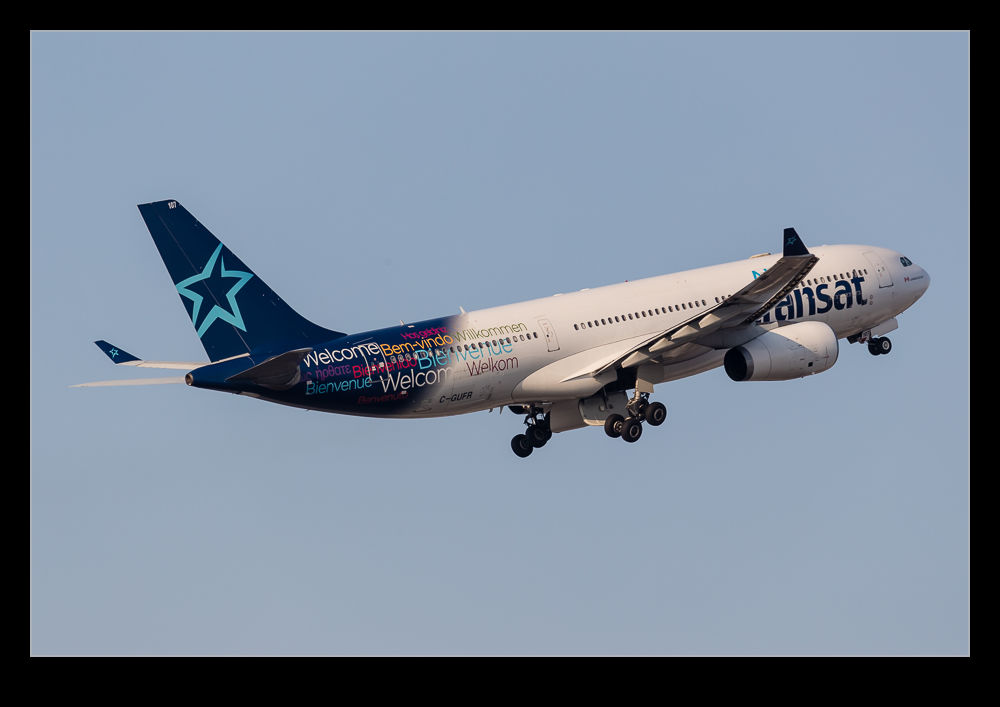
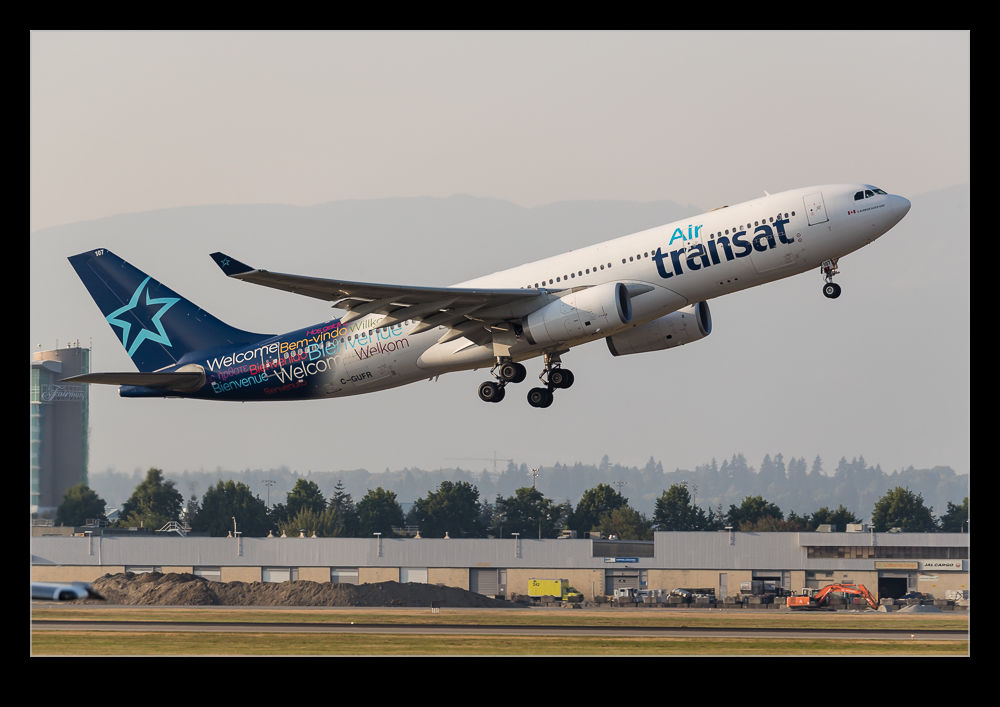 Air Transat is an airline that I haven’t seen much of. I recall them flying to the UK decades ago with TriStars (if I am thinking of the right airline) but, since then I have not really come across them. To be honest, I actually thought they were long gone but it turns out they continue to ply their trade. As I was heading to Vancouver International, I saw one of their A330s climbing out and I was a bit annoyed to have missed it. However, it wasn’t their only scheduled departure for that evening. A later flight went while I was there and I managed to get my first shots of them in action.