Tag Archives: Boeing

A Couple of Connie’s “Finest”

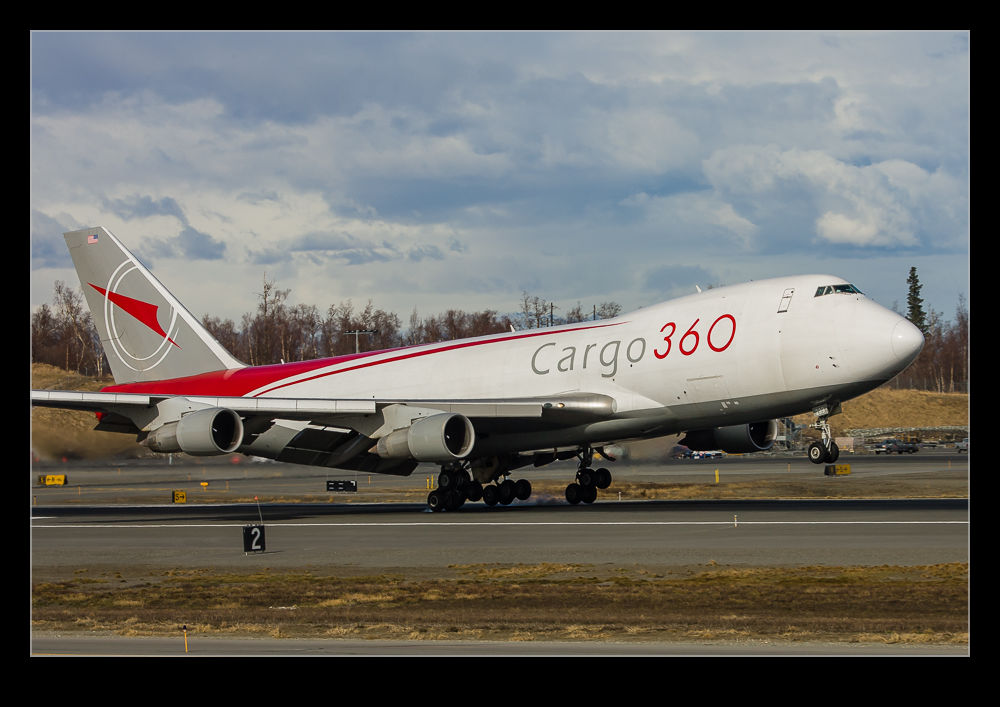
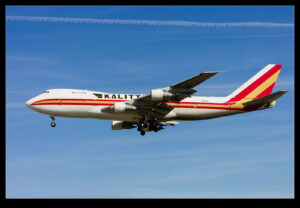
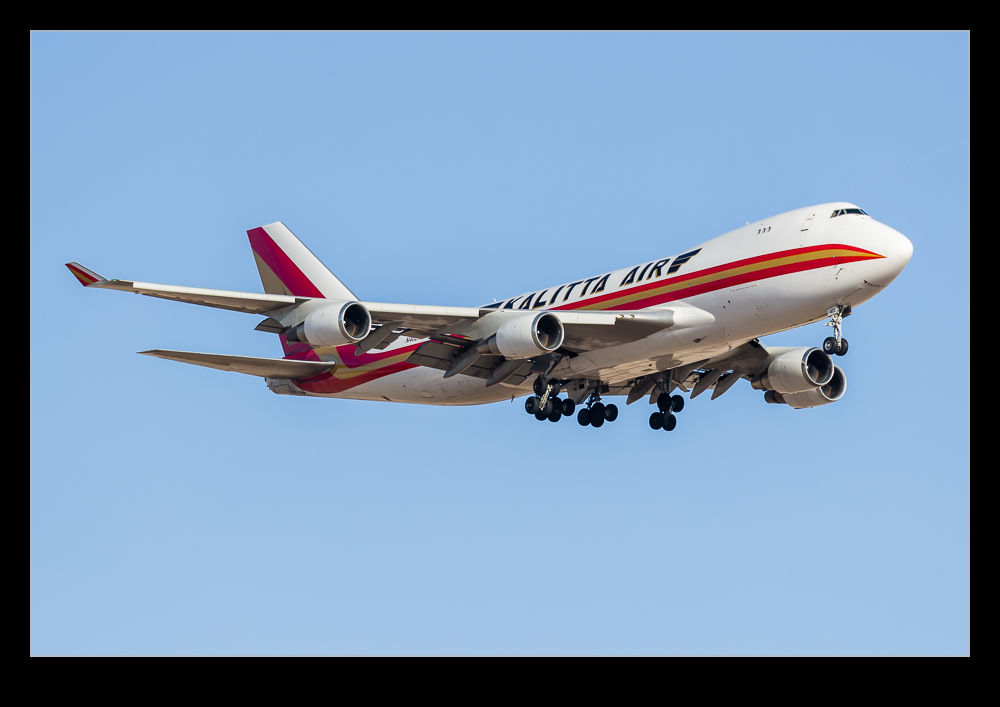
Red Flag is a time for lots of military aircraft to do their thing.  However, it isn’t only the military that show up.  Transporting everything that is required to support lots of deploying jets might be done by military transports but it is not unusual for civilian organizations to get some work.  Whether it was Red Flag support or something else, we got to see a couple of 747-400 freighters while we were there.  Both of them came from the same company, Kalitta.
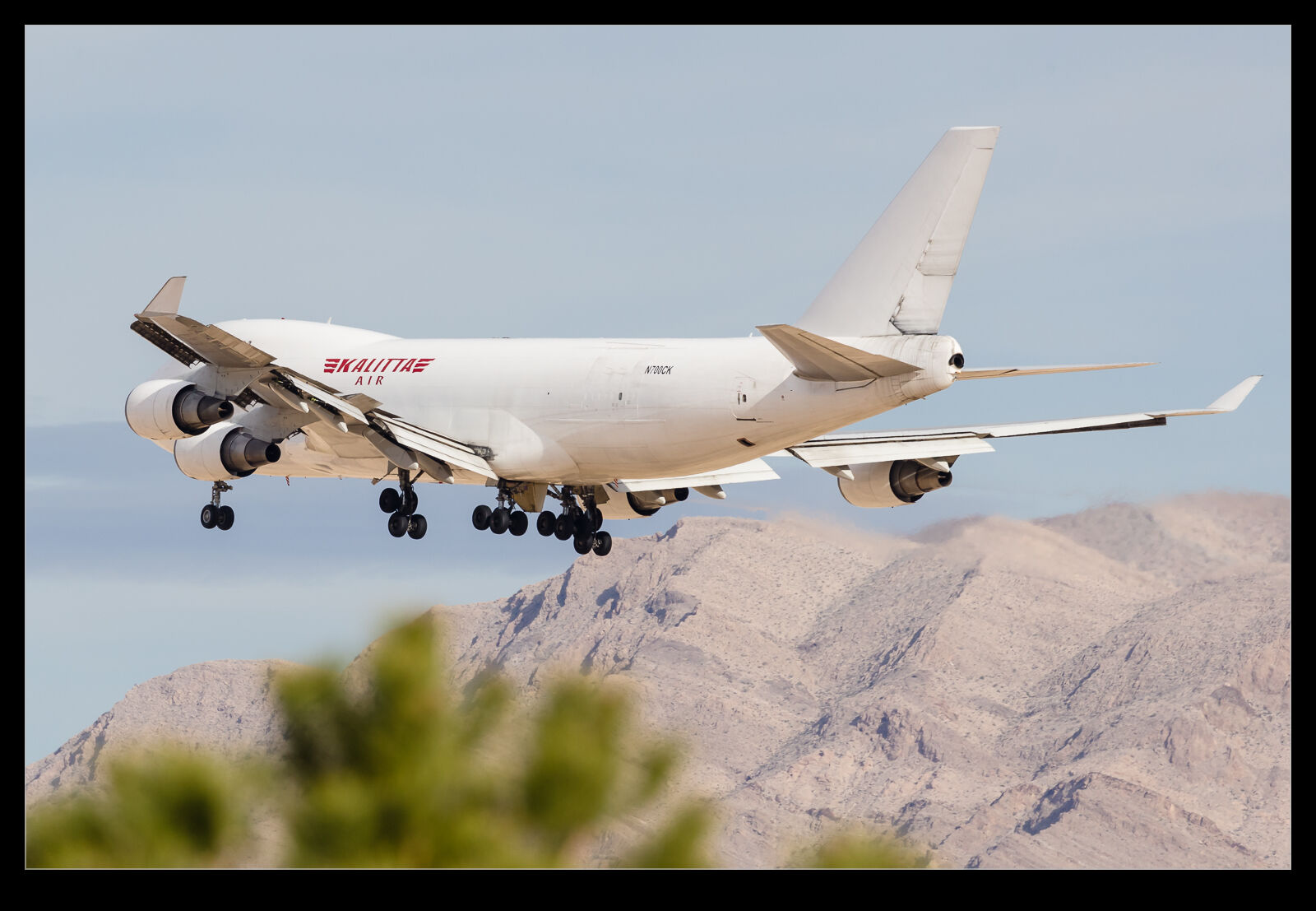
One of the jets was fully painted up and showed up on the approach one day.  It flew a straight in approach and landed to either deposit or pick up some bulky items.  The second jet was a bit different.  First, it was in plane white with just some Kalitta markings.  More importantly, it arrived during a Red a Flag mission.  It ended up holding overhead for a long time while the launch was underway.  Finally they brought them down for an approach.  However, it wasn’t clear which way they would come.  Nellis has a habit of bringing jets in from different ends almost at whim.

At first it looked like they would land on the 21s.  Then they looked like they would go to the other end.  We jumped in the car and headed that way.  Just as we were getting close, the jet turned away and headed east.  We did a quick about turn and followed suit.  We hadn’t gone too far when they reversed course.  Where they deliberately toying with us?  Another quick reversal and we were getting close but now they were turning on to final.  Time ran out and we pulled in to a parking lot by a tire dealership just as it came in to view.  We had to work for that one.
A Lot More of the Talon Hate

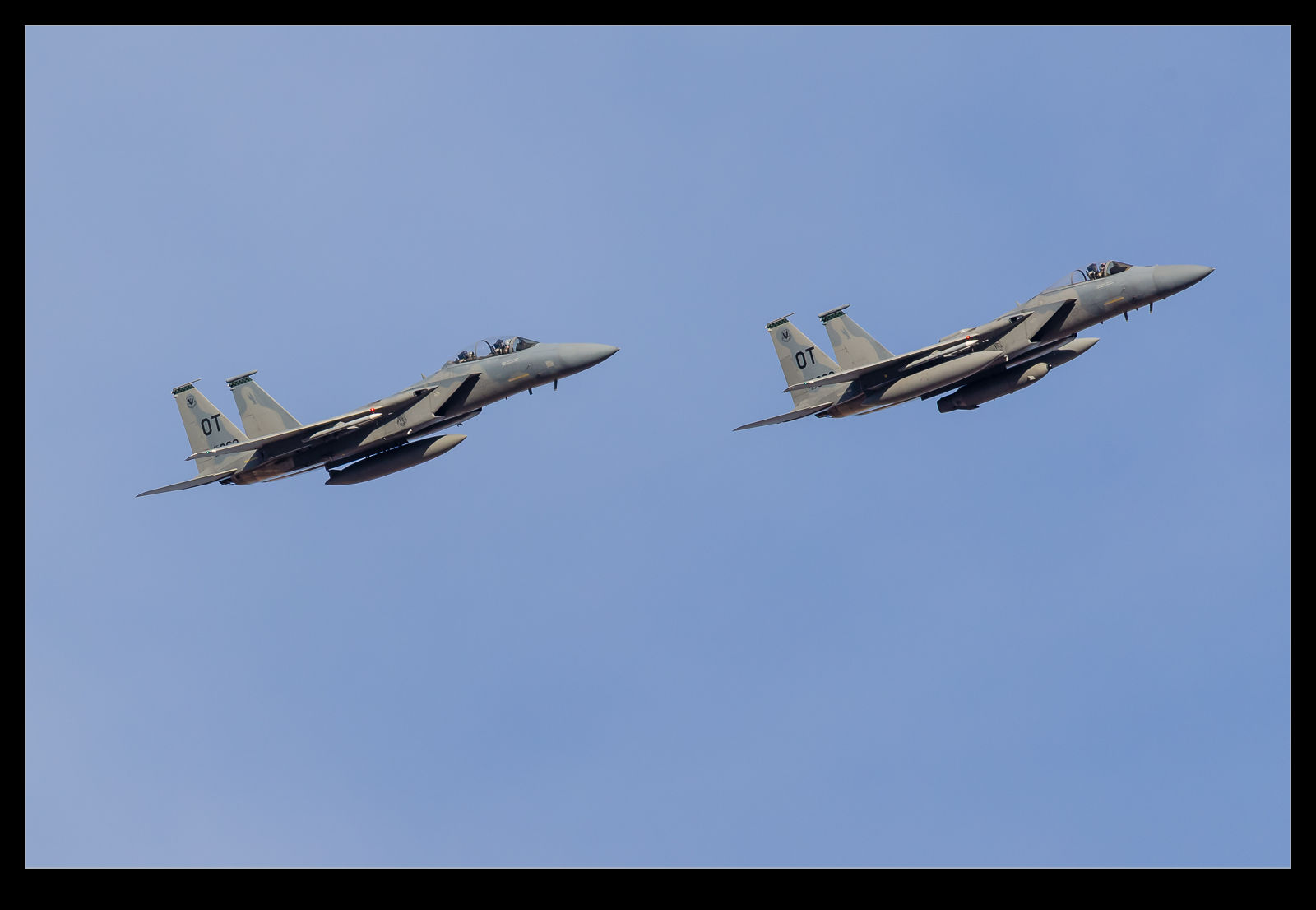
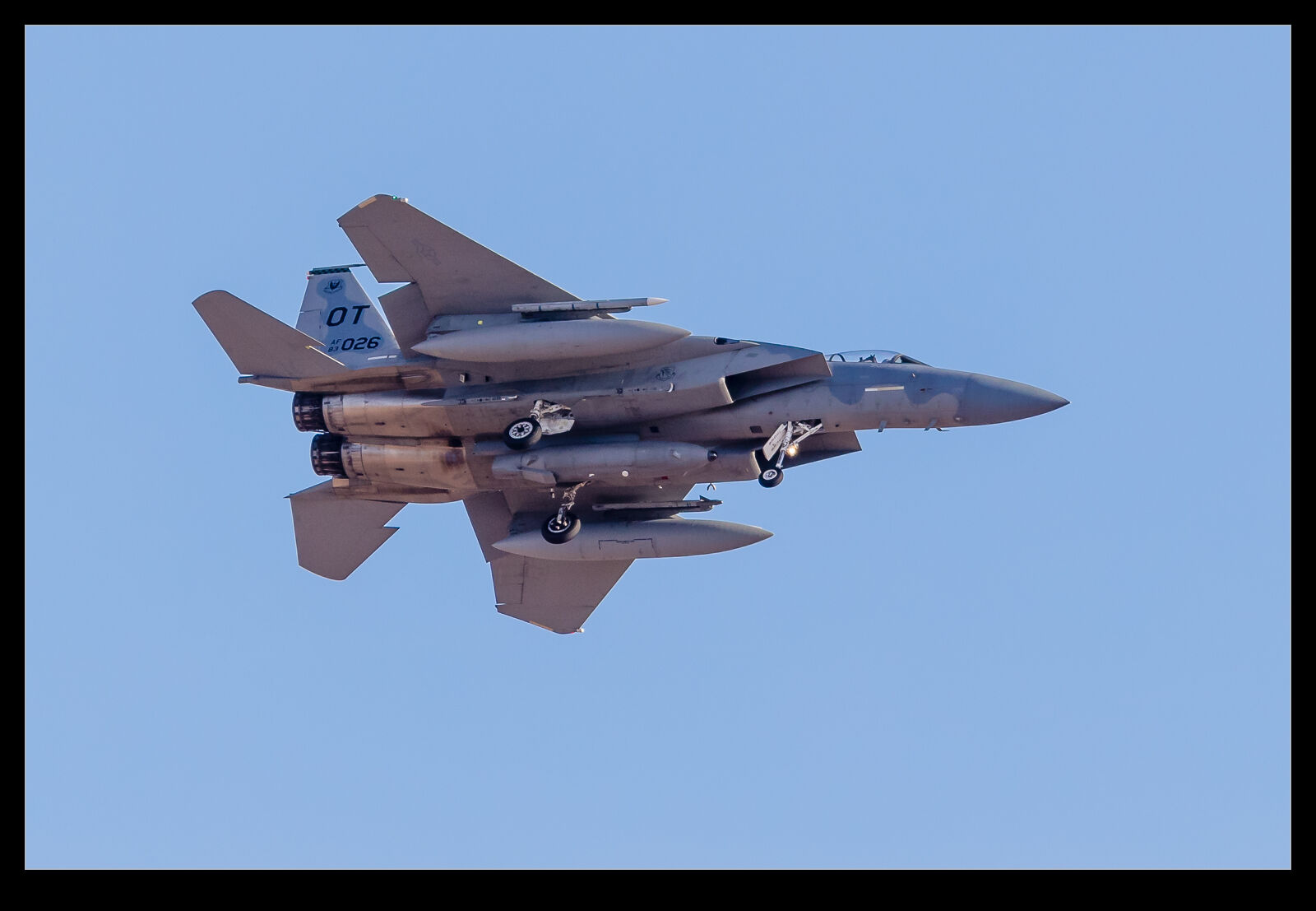
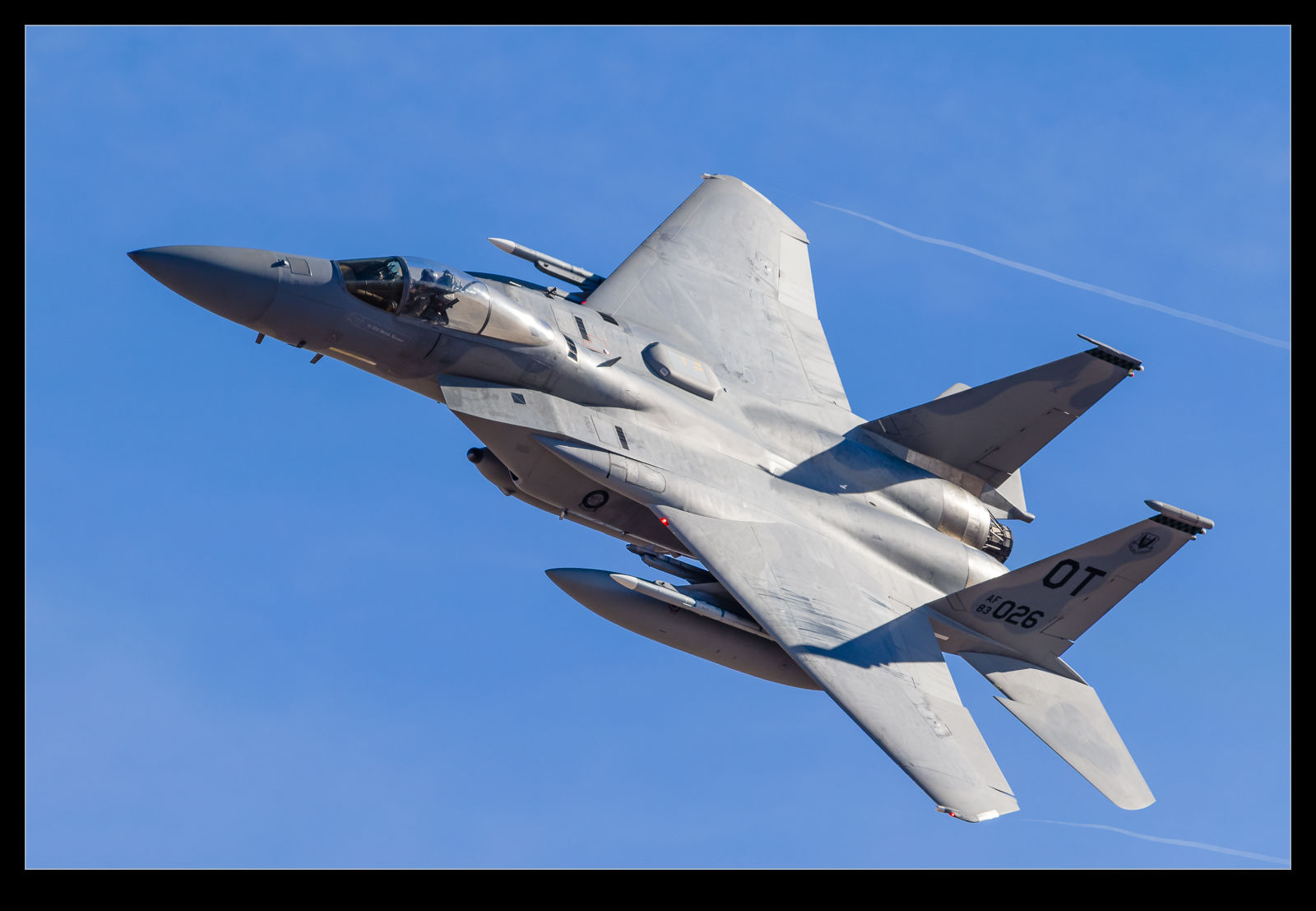
I got some shots of the Talon Hate jet on a previous visit and posted about it here.  On this trip to Nellis, not only was it very active but it managed to come our way whenever it flew.  Whether it was views of it flexing on departure or tight approaches to bring it passed us on the speedway, it all seemed to work out well.  I love the F-15 anyway but getting this special one was a lot of fun.  I’m sure the wingman in the F-15D knows that the single-seater is the one we are looking at but they certainly made a good effort to be in position for us to get some good shots of them too.  Here are a few of the two of them including a very nice two-ship run in and break.

777 Freighters at O’Hare

Nothing terribly timely about this post.  These shots were taken quite a while ago during a visit to Chicago.  (At least they are so old that they are from when I lived there.)  There was a time when the 747 was the freighter of choice.  There are still missions for which the 747 is still required but few loads require the nose loading and the most versatile of the big freighters these days is the 777.  (It seems that the 777 is taking over everything that the 747 used to do.)

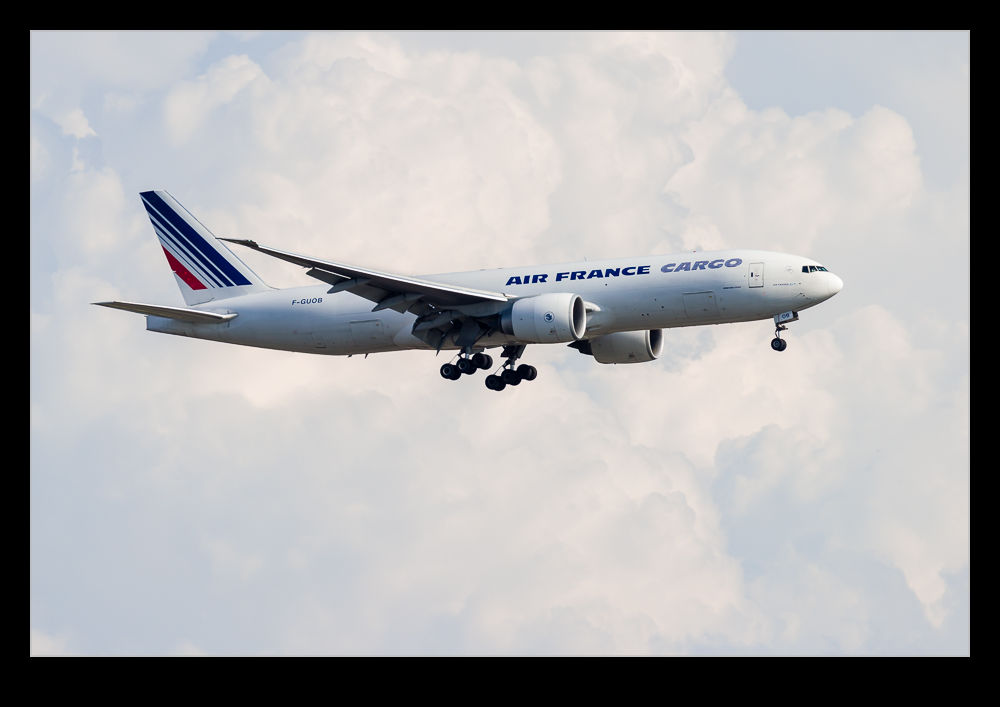
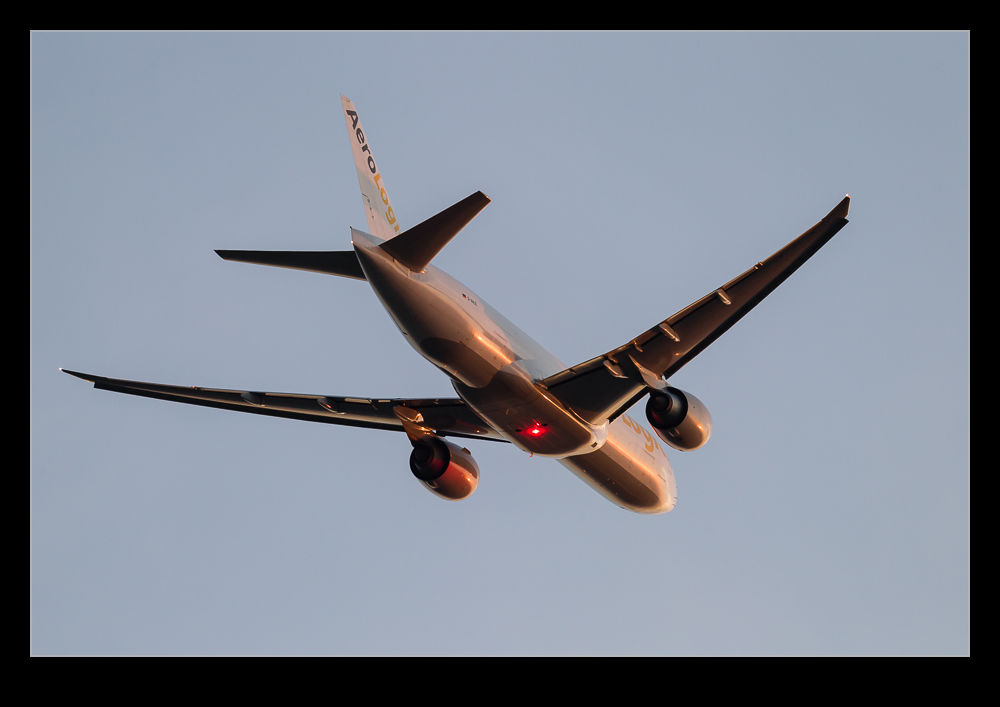
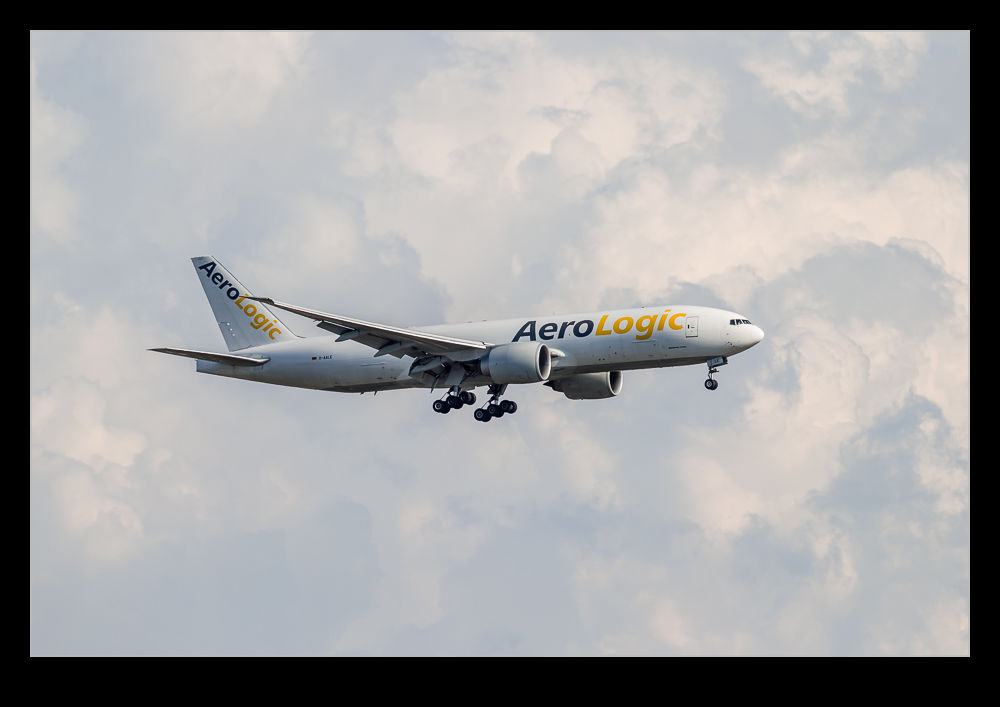
One afternoon at O’Hare included a couple of 777 freighters.  AeroLogic had one of theirs in town.  I saw it coming in and also got so see it head out again.  I don’t know where it was coming from or going to.  Meanwhile, Air France also had one of their freighters making an appearance.  It’s a shame that the 747 is not so prevalent anymore.  It is a cooler looking jet and the 777 freighter is barely distinguishable from the multitude of 777s on passenger duty.  However, that is the way it is these days.

Blue Angels at Oceana (And High ISO)

I have only been to the Oceana show once.  I headed down there with my friends Ben and Simon.  We weren’t terribly lucky with the weather.  There was flying during the show but things were overcast and deteriorated as the show went on.  The finale of the show was, naturally for a big Navy base, the Blue Angels.  I was shooting with a 1D Mk IIN in those days and that was a camera that was not happy at high ISO settings.

The problem was, the light was not good and the ISO needed to be cranked up a bit.  Amusingly, if you were shooting today, the ISO levels would not be anything that caused concern.  Current cameras can shoot at ISO levels without any noise levels that would have been unthinkable back then.  However, I did learn something very important with this shoot.  The shot above is one that I got as one of the solo jets got airborne.  I used it as a test for processing.

I processed two versions of the image, one with a lot of noise reduction dialed in and one with everything zeroed out.  I think combined them in one Photoshop image and used a layer mask to show one version in one half of the image and the other for the second half.  When I viewed the final image on the screen, the noise in one half was awfully apparent.  It was a clear problem.  However, I then printed the image.  When I did so, things were very different.  If you looked closely, you could see a little difference.  However, when you looked from normal viewing distances, there was no obvious difference between the two.

My takeaway from this is that viewing images on screens has really affected our approach to images.  We get very fixated on the finest detail while the image as a whole is something we forget.  We print less and less these days and the screen is a harsh tool for viewing.

FedEx Fleet Types

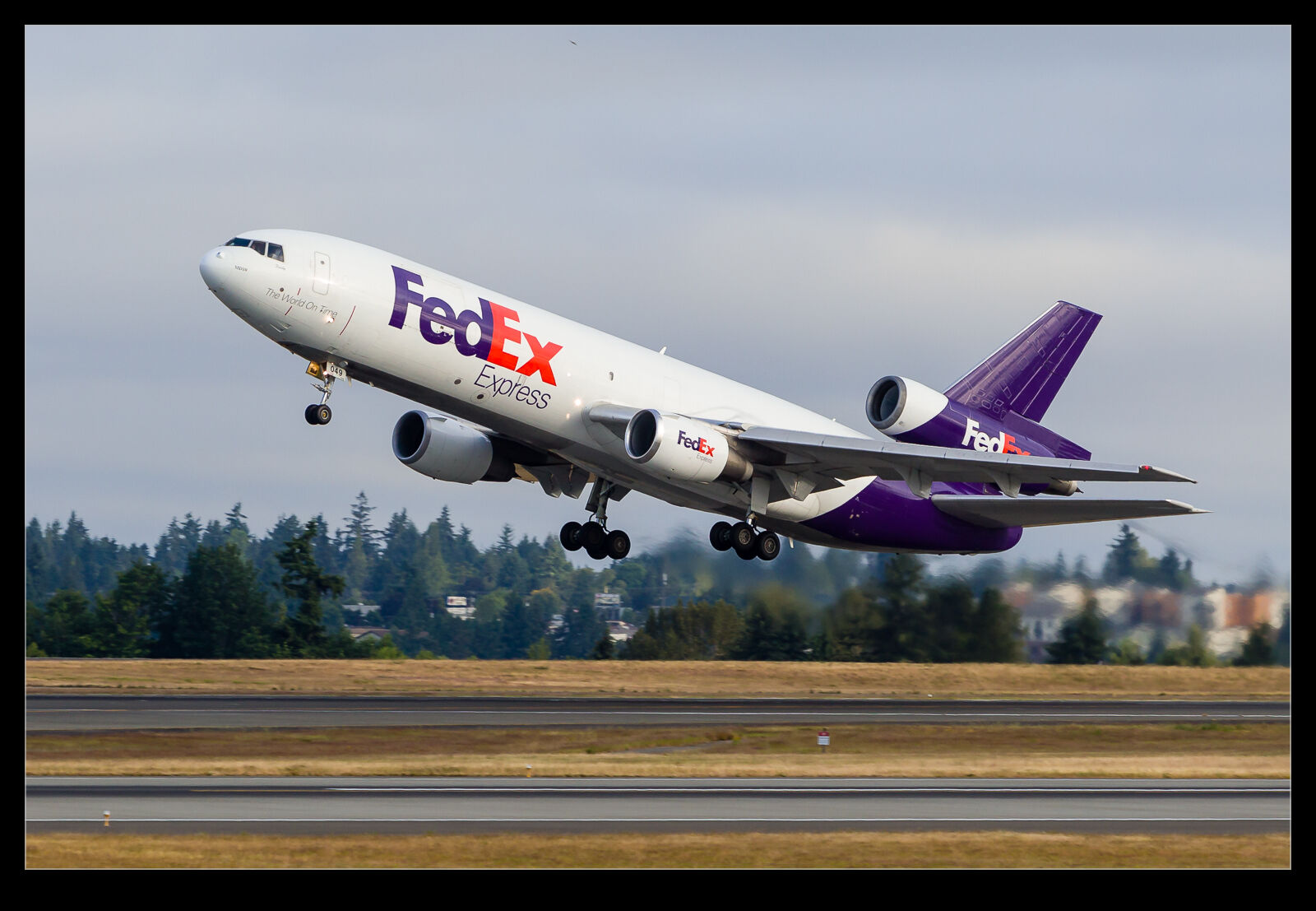
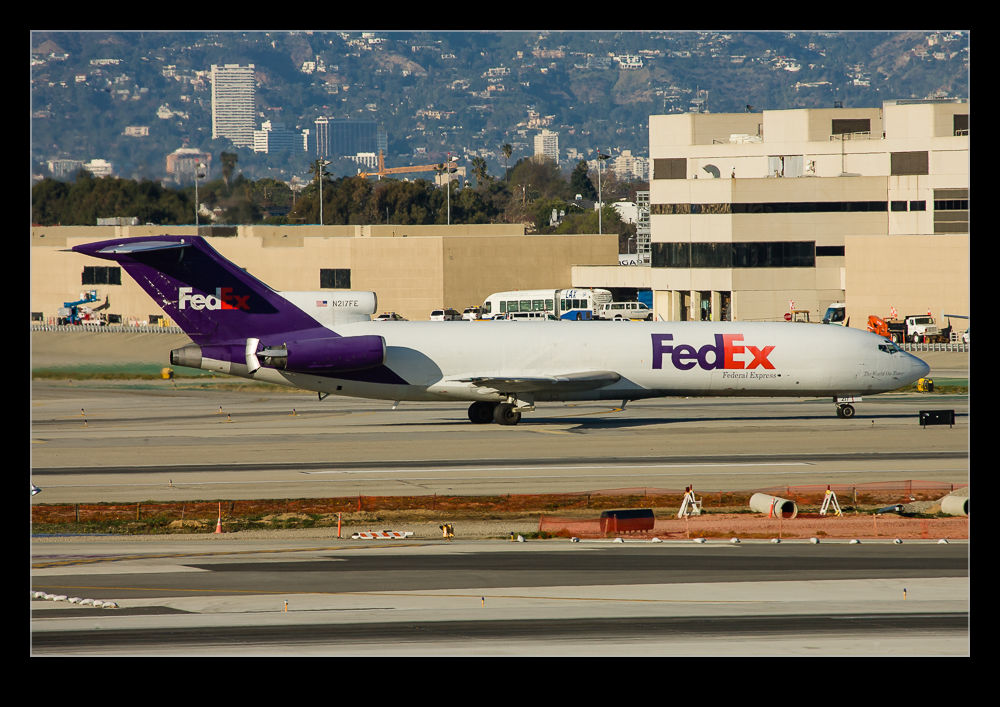
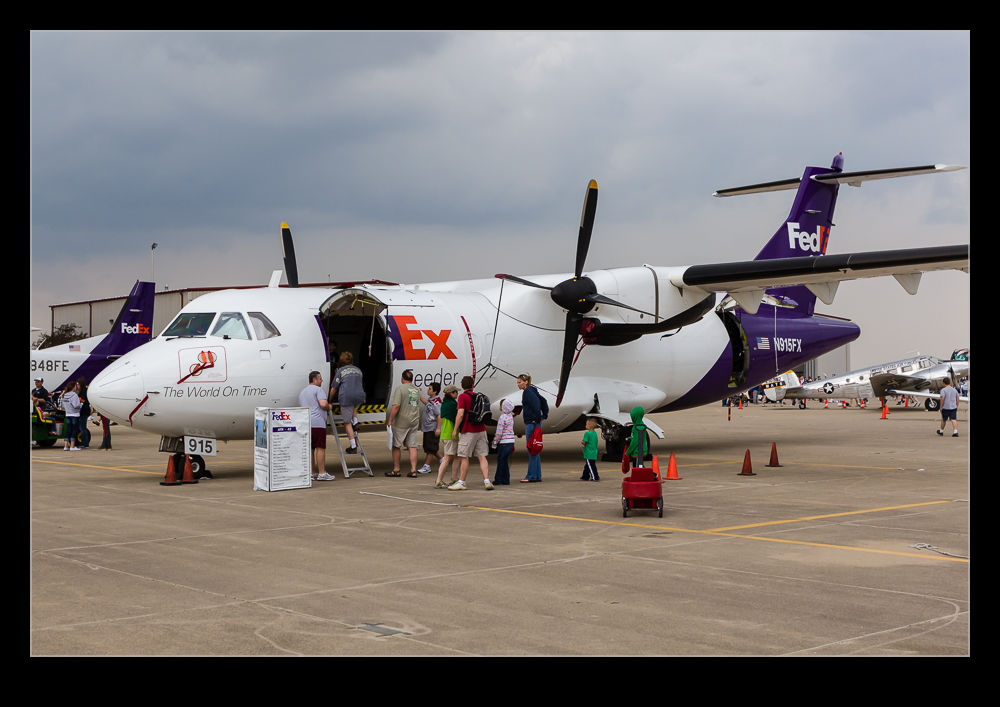
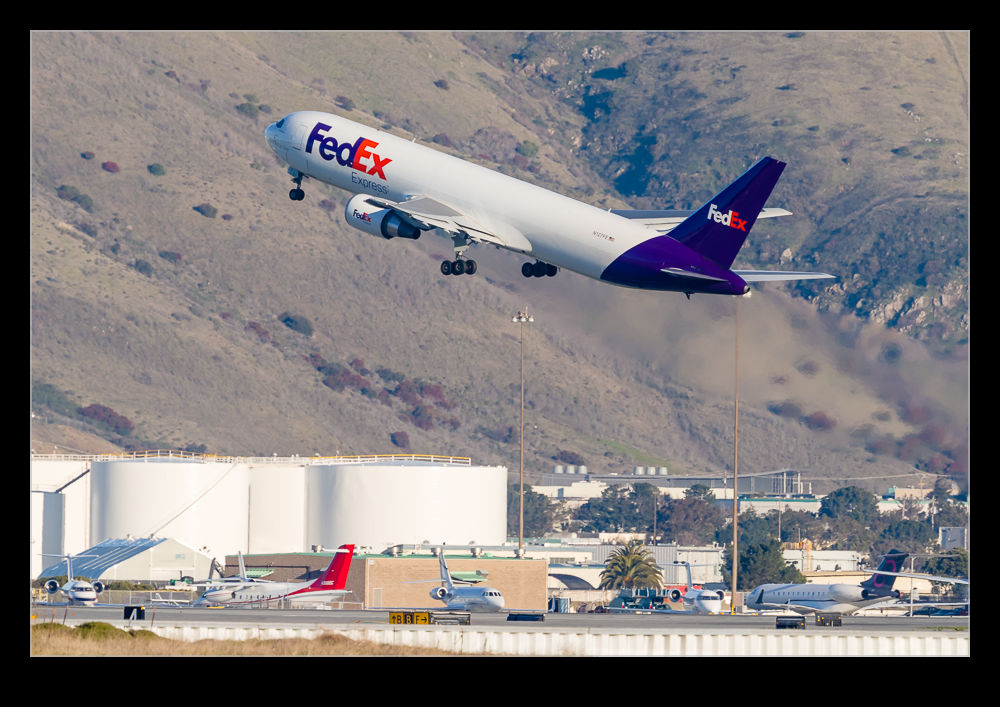
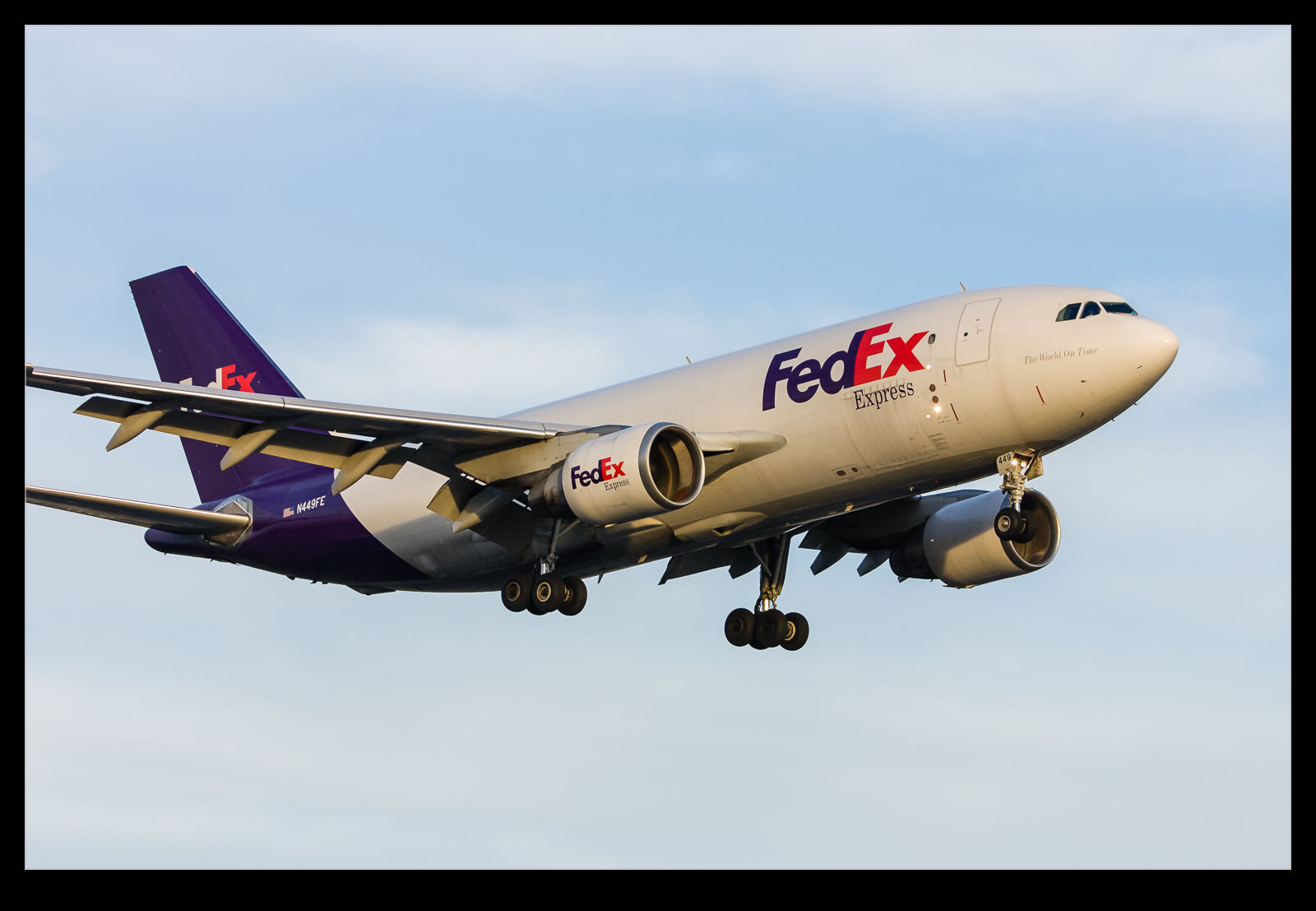
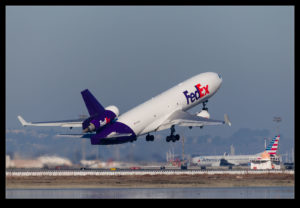
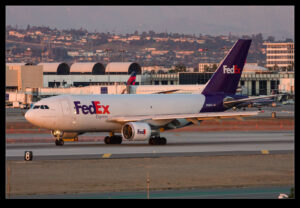
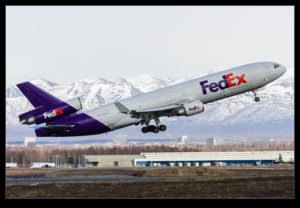
Flipping through various shoots looking for something else, I happened to come across a few shots of aircraft from the FedEx fleet.  It occurred to me that I could drag together a post that was focused purely on the FedEx aircraft types.  FedEx has an extensive fleet of aircraft these days.  Their early days of using Falcon 20s to move their packages around are long gone.  Now they have a variety of aircraft types of different sizes and range to meet all of their needs.
The fleet is constantly in a state of regeneration.  The types that have long been a part of FedEx operations are now going or gone and being replaced with something more up to date.  The 727 fleet has gone.  The A300s and A310s are still in use but the number in the fleet is gradually going down.  The interesting thing about the FedEx fleet is the way the economics are changing.  For a long time, second hand jets that had been retired from airline service made a lot of sense.  The operating model involves a lot of jets flying from their home base to Memphis in the middle of the night to deliver packages to the hub.  Then, after a quick turnaround of all of the sorted packages, the planes fly back to base.  Then they sit on the ground for most of the day.
This model means that utilization for the aircraft is low.  Having a less efficient jet is not a problem when it only flies a few hours each day.  If it is cheap to buy, you can use it efficiently.  Having a bunch of inefficient 727s works very well.  Similarly, the smaller aircraft that feed into hubs also can be operated relatively cheaply.  A fleet of Cessna Caravans that sit on the ground or a bunch of ATR42s is effective.

The 727s are gone now.  They have been replaced with 757s which have all been retired by airline operators (a lot of them from British Airways).The big change is that new jets are being acquired.  The operating economics for FedEx have changed.  The DC-10s (which got upgraded to MD-10s) are gradually being replaced by new 767s.  Meanwhile, the MD-11s which had previously been the kings of the long haul flights are now being relegated to domestic service while the 777F takes over the long haul missions.  Direct from Memphis to China is now the norm for the 777F.  You don’t see MD-11s crossing the Pacific as much any more.  I think the Europe runs are limited too.  The 777 can go direct with a decent payload and doesn’t need to stop for fuel in Anchorage.

The MD-11 will survive for a while yet.  Its less efficient operate will mean it can be pushed onto shorter segments with lower utilization.  The high utilization missions will be the preserve of the newer jets.  The older jets will be fine on the flights that only involve a couple of trips a day.  For these their low capital costs will offset any operational cost penalty.  The migration of the fleet will continue though.  Soon it will be a fleet with a few less types and things will be a bit less interesting.  There will still be a bunch of 727s scattered around airports that had them donated though so keep an eye out for them.

Before There Were 400s

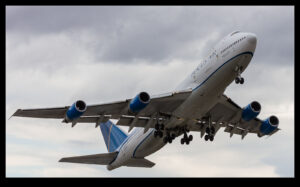
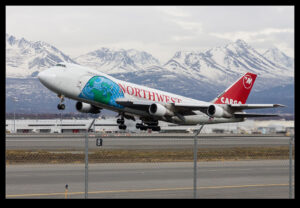
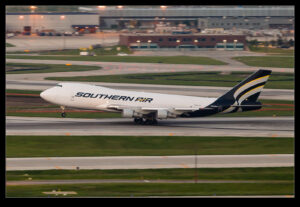
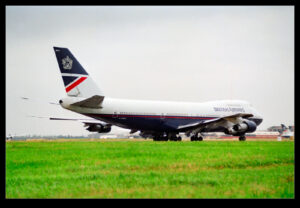
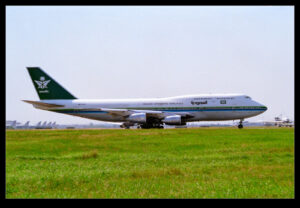
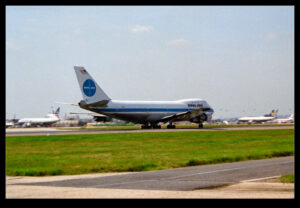
The 747-400 has been around for so long now and has sold so well that it is by far the dominant version of the jet in service.  However, before the late 80s, there were previous versions of the 747.  The 100 series through to the 300 series and the SP.  The 400 series is the one you see now but, before the 400 took over, the earlier models were the ones that were everywhere.  Since I wasn’t taking a lot of photos in those days, I have a lot less photos of the earlier models but I do have some.

Pan Am operated the 100 Series jets and I saw them at Heathrow in the 80s.  200 Series freighters were built in some numbers and many are still around or were until relatively recently.  I think the only 300 Series jet I ever photographed was a Saudia example at Heathrow.  These shots are some of the ones I have come across in my time.  With the 400 Series jets now starting to disappear, it is no surprise that these earlier jets are mainly a thing of the past.

The Merger Jet (At Last)

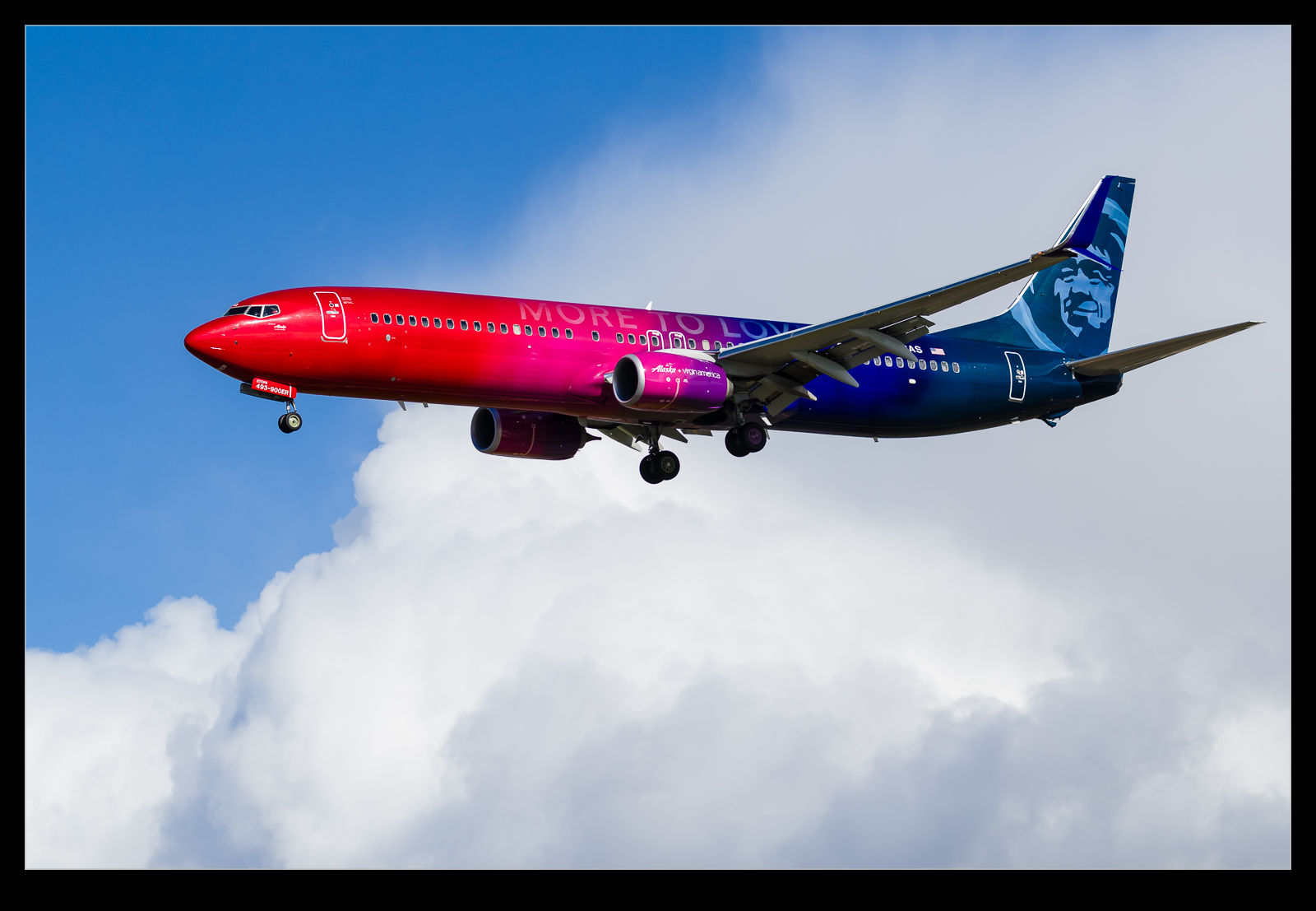
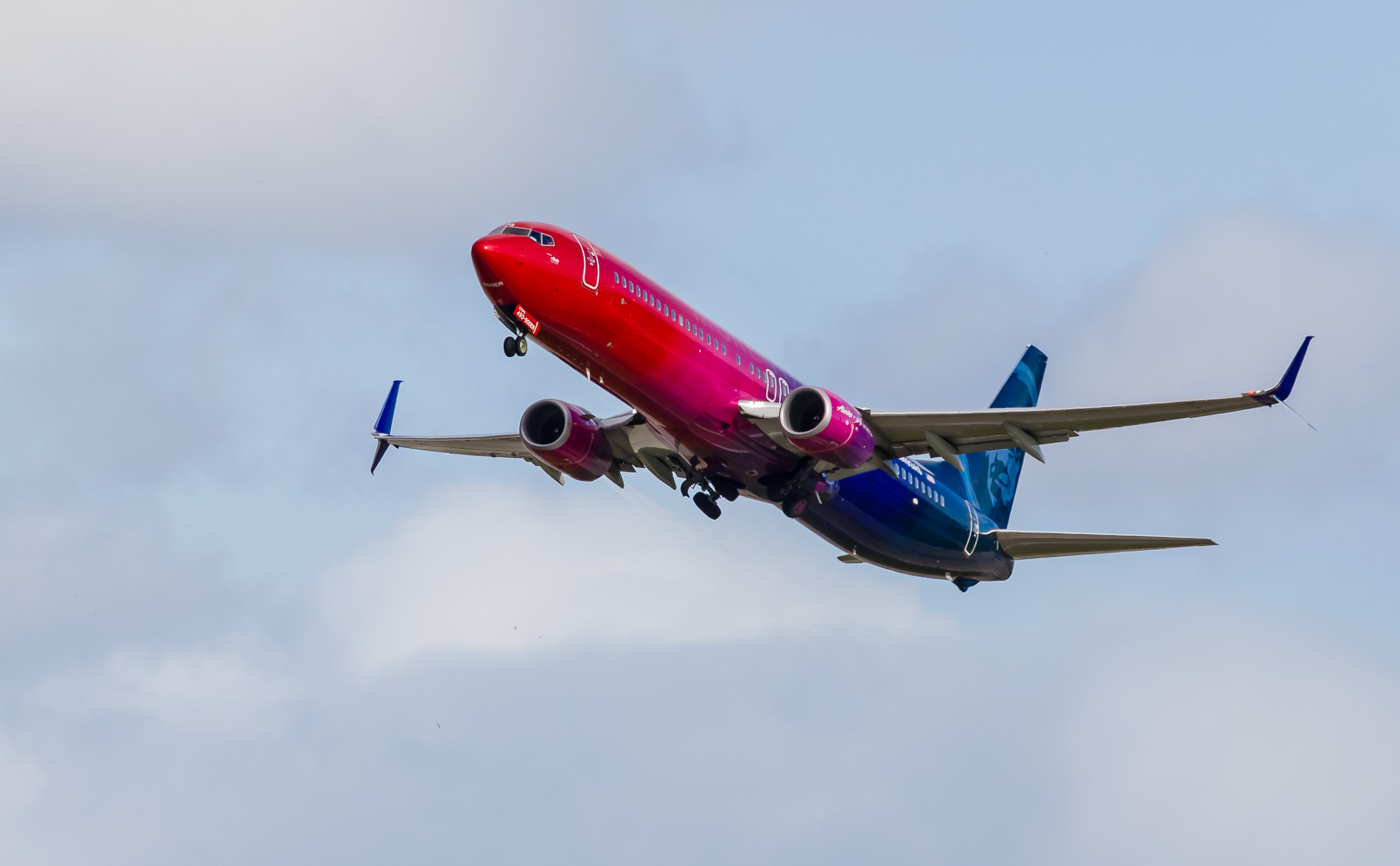
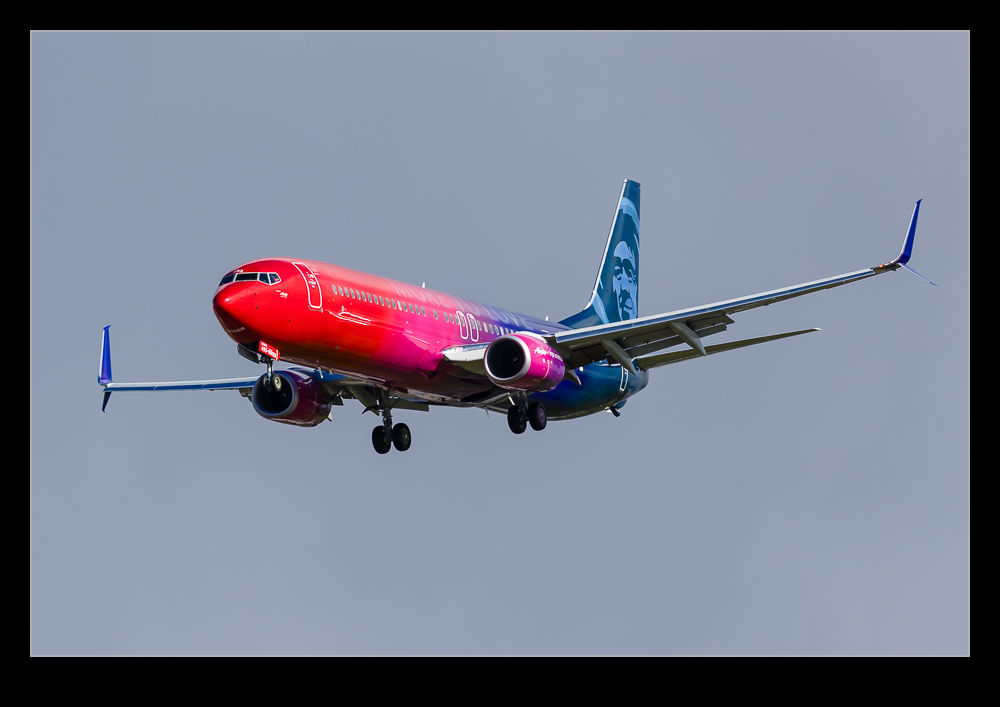
West Coast airline flying includes a lot of Virgin America.  Headquartered in Redwood City, just down the peninsula from SFO, Virgin America has been struggling to establish itself as a carrier with a different level of service.  It must have done well enough because Alaska got worried enough to buy it.  They call it a merger but Alaska bought Virgin.  Everyone wonder what will happen next since the fleets are totally dissimilar as is the customer service.  Alaska repainted one of their jets in a new livery to celebrate the completion of the acquisition.

It is one of their 737-900s and the colors migrate from red to blue to symbolize the joining of the two.  I have missed the jet on numerous occasions.  I thought I was never going to catch it but finally saw it at San Jose.  You are a lot closer to the flight path at San Jose which is good.  What is even better is being there on the pouring rain when the clouds part five minutes before the jet arrives.  Sadly, the weather closed in just as it took off again but the light was okay over the airport, even if it wasn’t where I was.  Still, I finally got it!

Global Supertanker

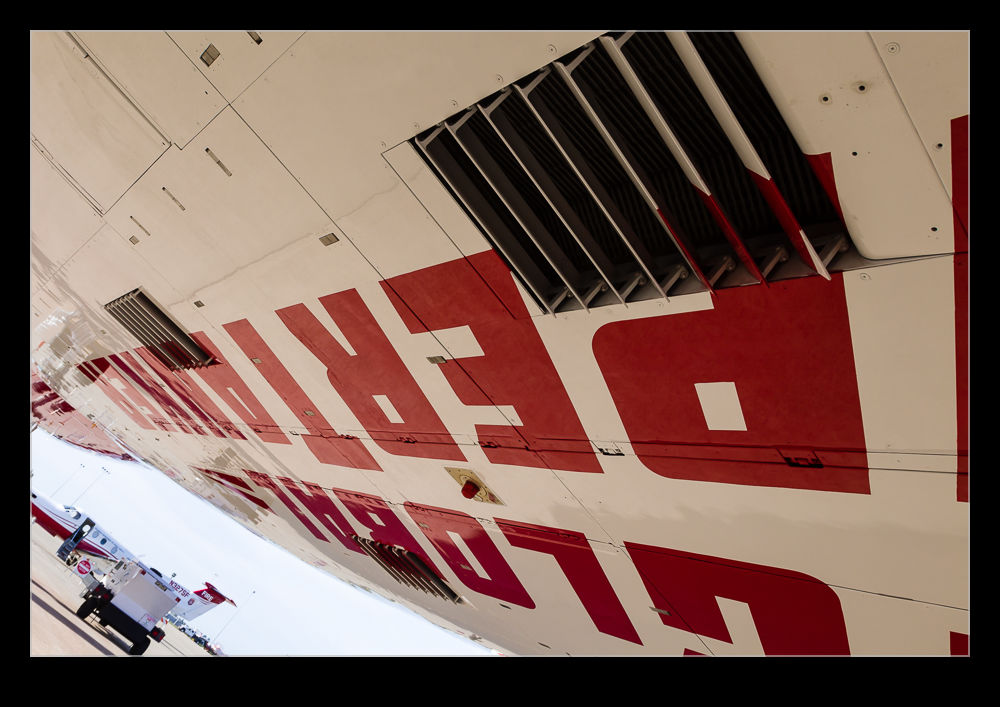
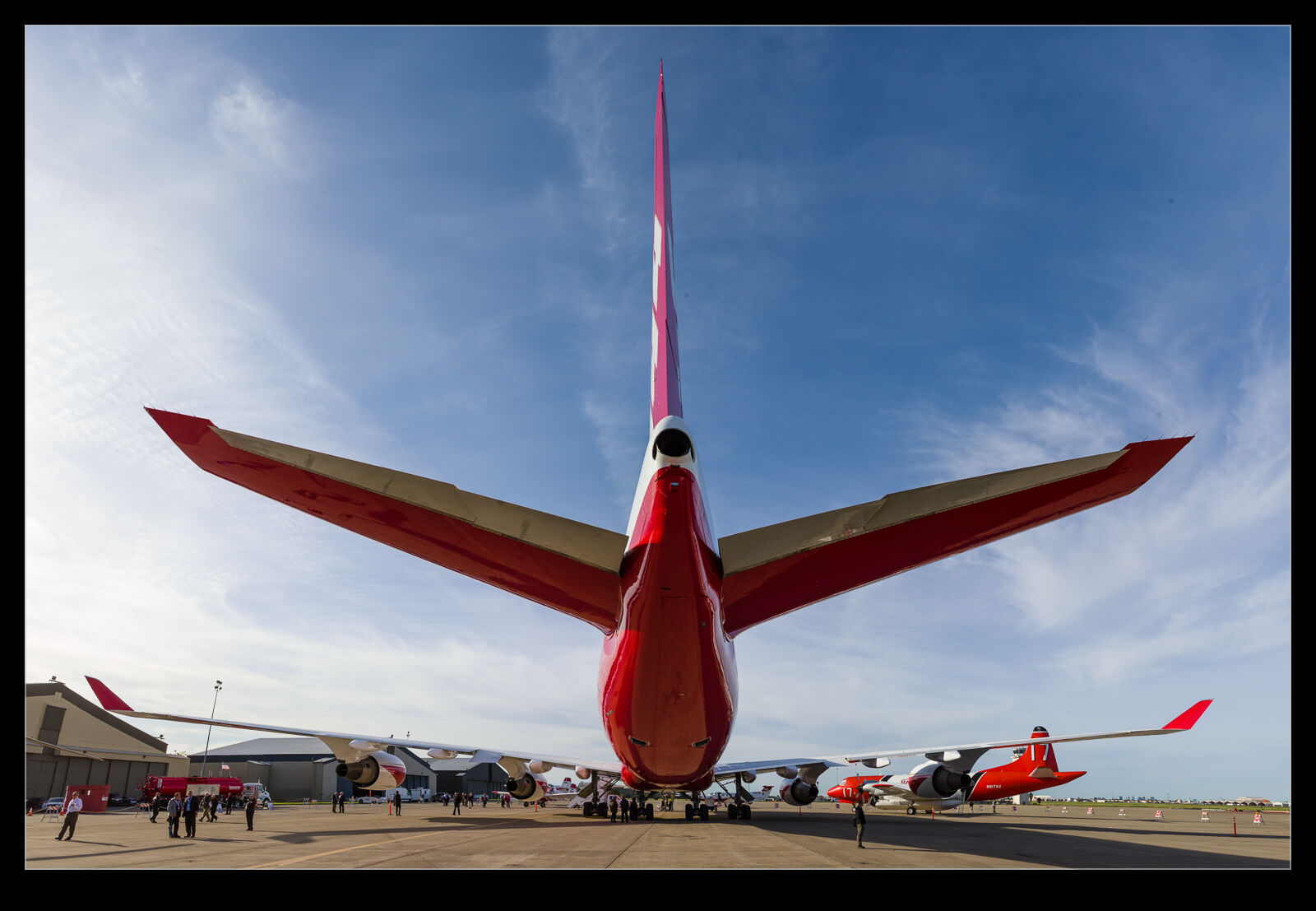
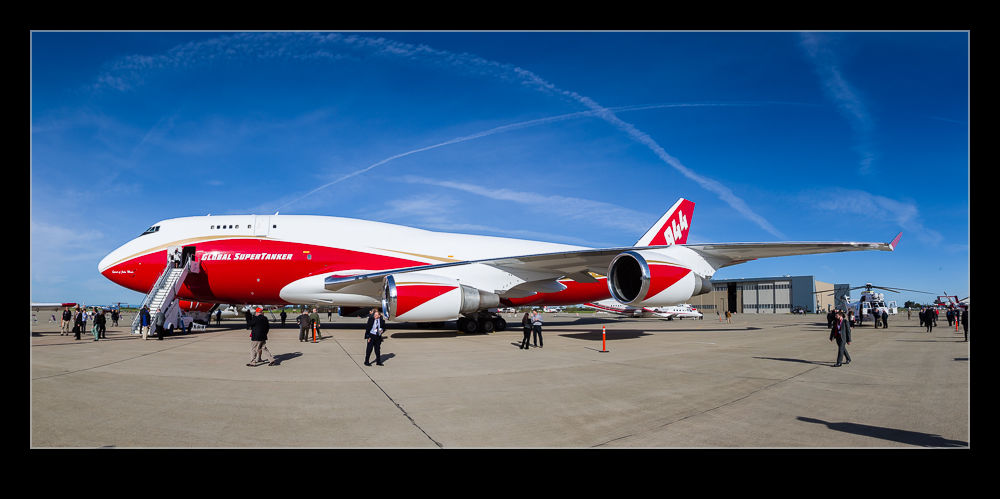
Some of the news clips I have seen recently were showing the firefighting activities underway in South America at the moment.  With their summer in full swing, wildfires have been springing up and they have brought in a variety of aircraft to fight them.  One of these is the Global Supertanker, a converted Boeing 747-400.  I saw this aircraft at the aerial firefighting conference that was held last year in Sacramento.  It was very close to approval at that time and we were allowed to check it out.

The systems had previously been used on a 747-100 airframe but they had been migrated to the 400 series jet.  The airframe was an ex-JAL aircraft that had undergone the freighter conversion program and seen some further service before being acquired for the firefighting role.  The tanks and piping had been installed and we got to see a bit of the interior during the event.  Unlike the 100 series prototype, this one had been given a nice new paint job and it looked great being straight out of the paint shop.

It dwarfed everything else on the flightline and ended up being the backdrop for the group photo of the conference attendees.  I don’t get to appear in that shot since I was taking it.  I can live without having my presence recorded I guess.  Now it is in operation, there are some rather more dramatic images being captured.  For the time-being, I will have to make do with these shots.

Going Further Gets You There Quicker

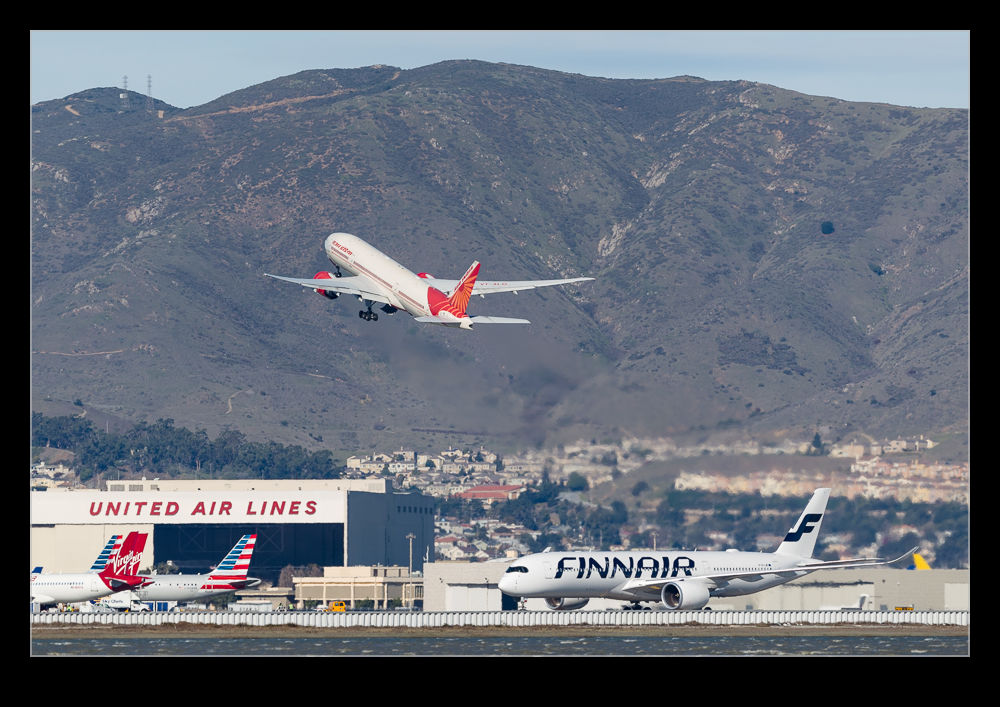
The title of this post is a pretty weak premise for the pictures I am posting.  The pictures are of Air India Boeing 777-200LRs.  In the pictures, they are not doing anything special.  However, I shall justify the pictures with a slightly interesting fact.  Air India has been serving SFO for a while.  It is a long flight from Delhi to San Francisco and they were looking in to alternative routes.  A lot of negotiation ensued that finally allowed a polar route to be used.  This route is nearly 1,000nm longer than the route that they were previously flying.  However, the prevailing winds on the longer route are helping the jet along.  The result is that the longer route is actually two hours quicker.  Strange but true.

Get Those Shock Waves Showing

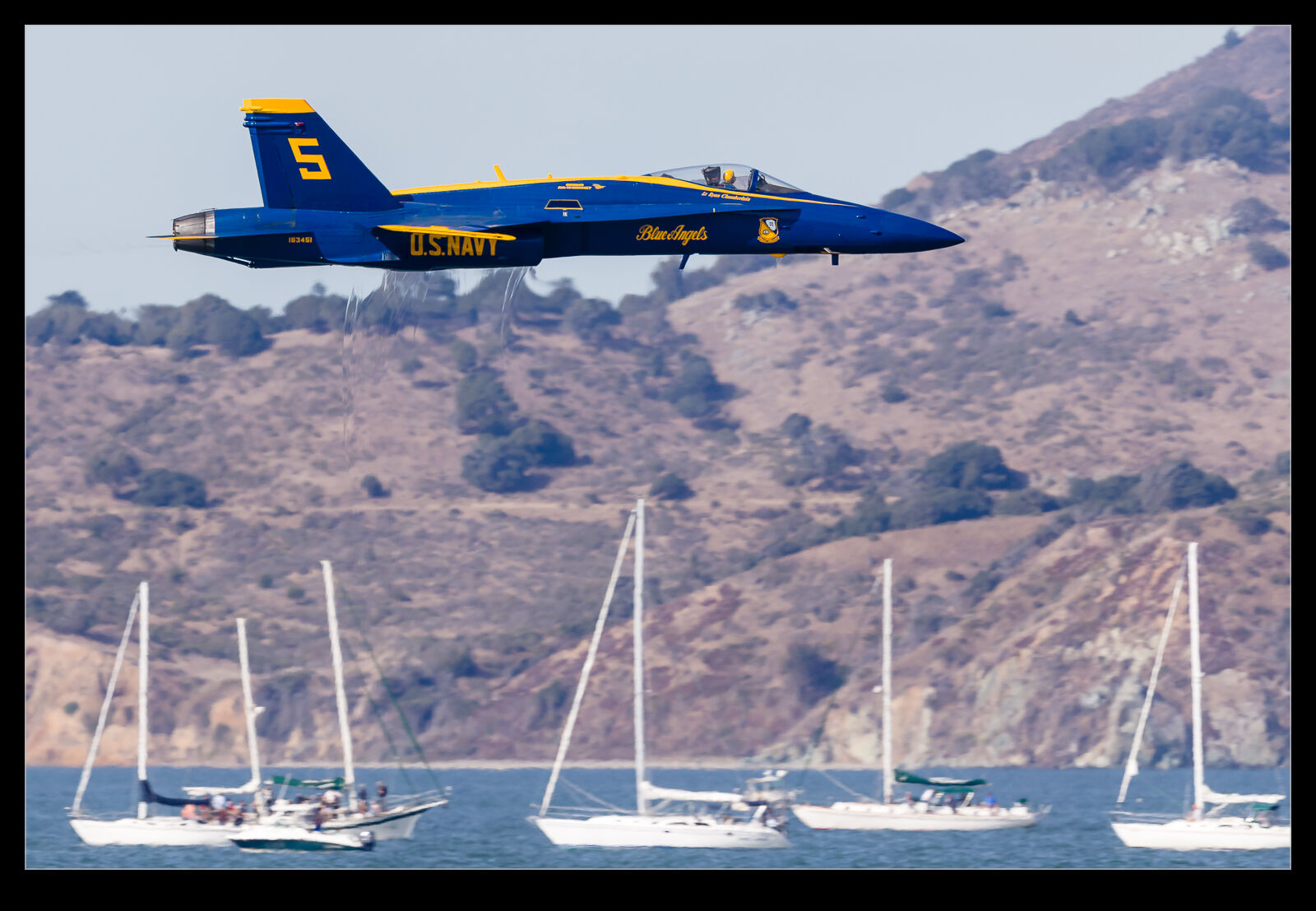
The Fleet Week air show in San Francisco is wrapped up by the Blue Angels.  The sneak passes made by the pair are an opportunity to try and get something interesting.  Since they display over the bay and the city is known for having high relative humidity, I am always hoping to get some good vapor shots.  This time out, that wasn’t to be.  The air seemed to be pretty dry and there was not a lot of vapor on show.  However, the fast pass from left to right takes the jet in front of the hills and Alcatraz which provides some detail to show up the distortion caused by the shock-waves.  The large number of boats and associated masts meant a clean shot was tricky but I got a couple I was pleased with.