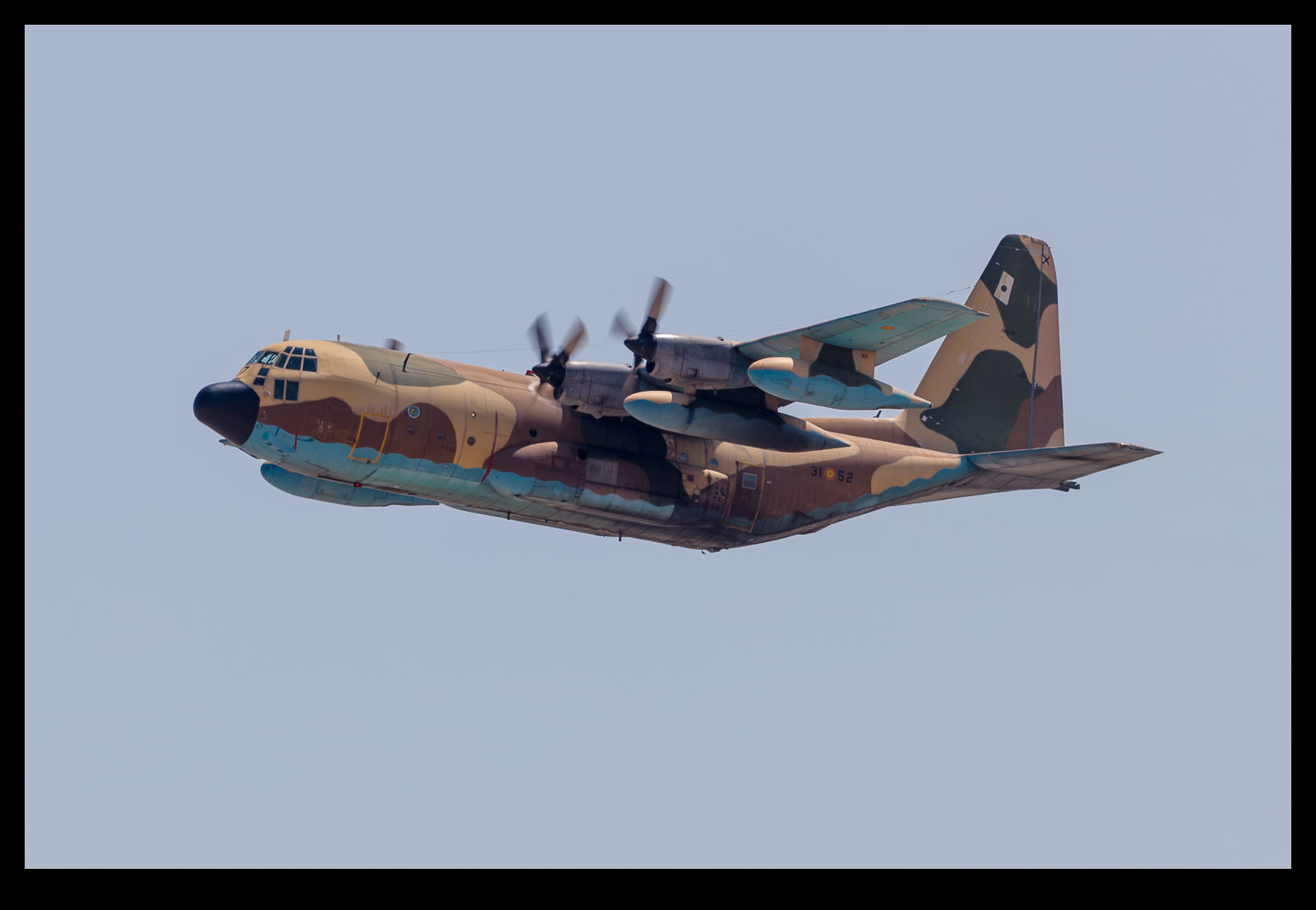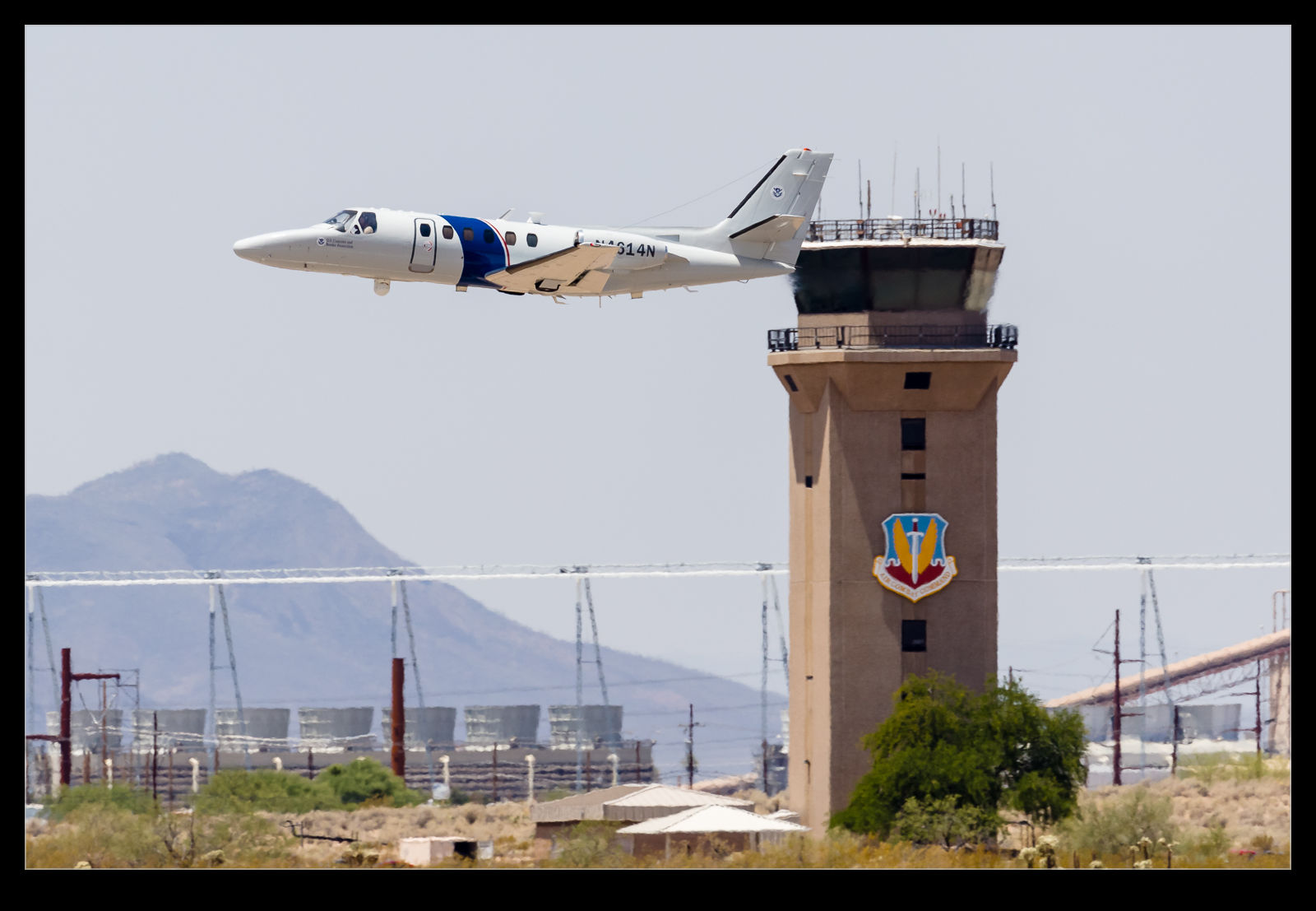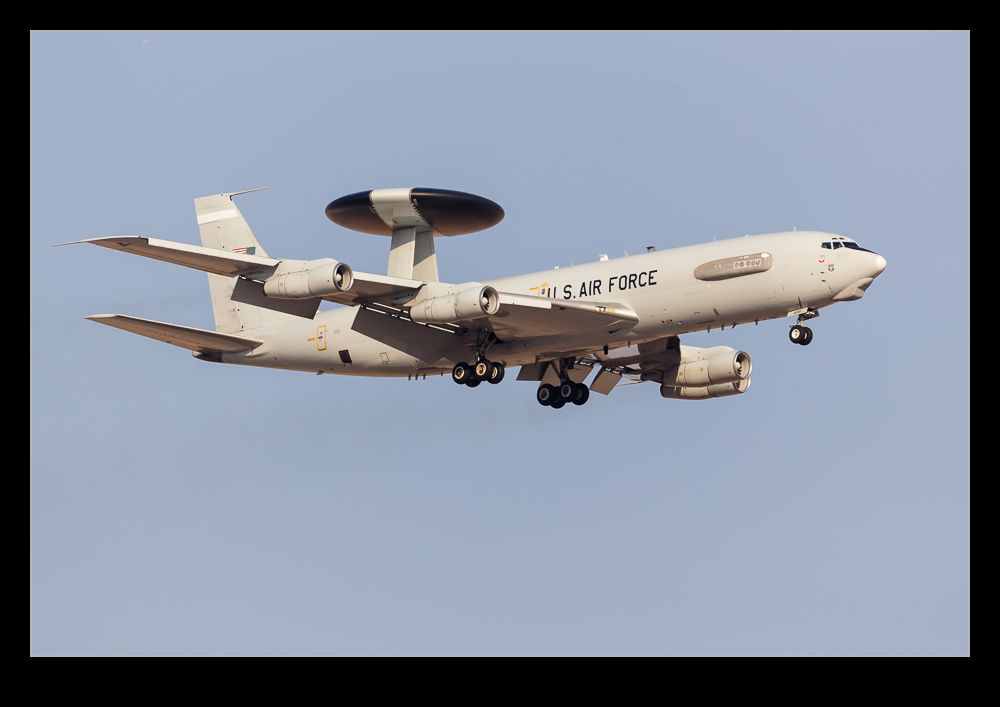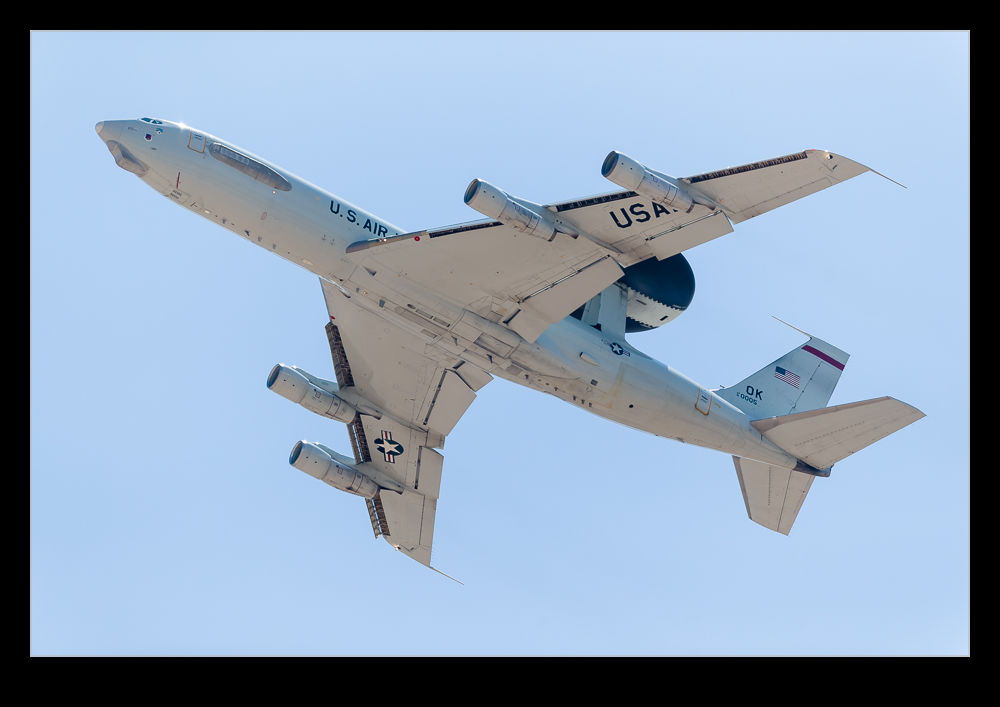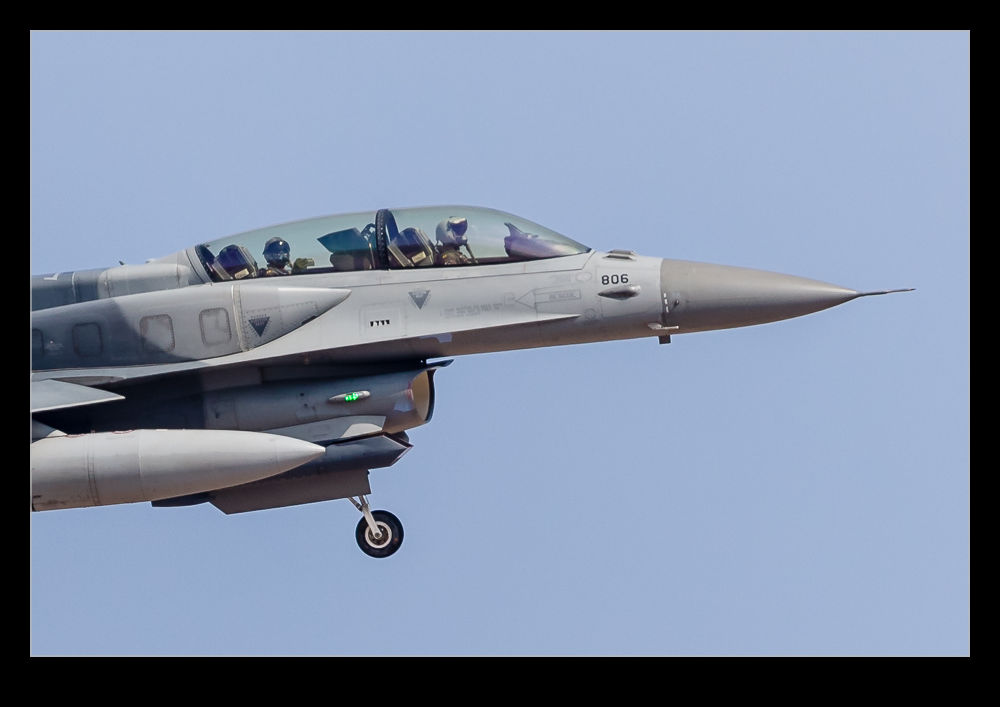
The beginning and end of an exercise has a common theme. Long before the fighter start launching, an E-3 AWACS will lumber off the runway and head out towards the exercise area. It gets on station and sets up to direct the fight as the fast movers enter the range. It will support the whole mission and will guide the small guys back home at the conclusion of their missions. It will deal with any of the jets that have to change plans or abort. With everyone else back on the ground, the AWACS can finally come home. They are often the last jet back on the ground. Hopefully everyone outside will stay around for their recovery. You wouldn’t want them to feel neglected!
Category Archives: military
Backseat Cameraman
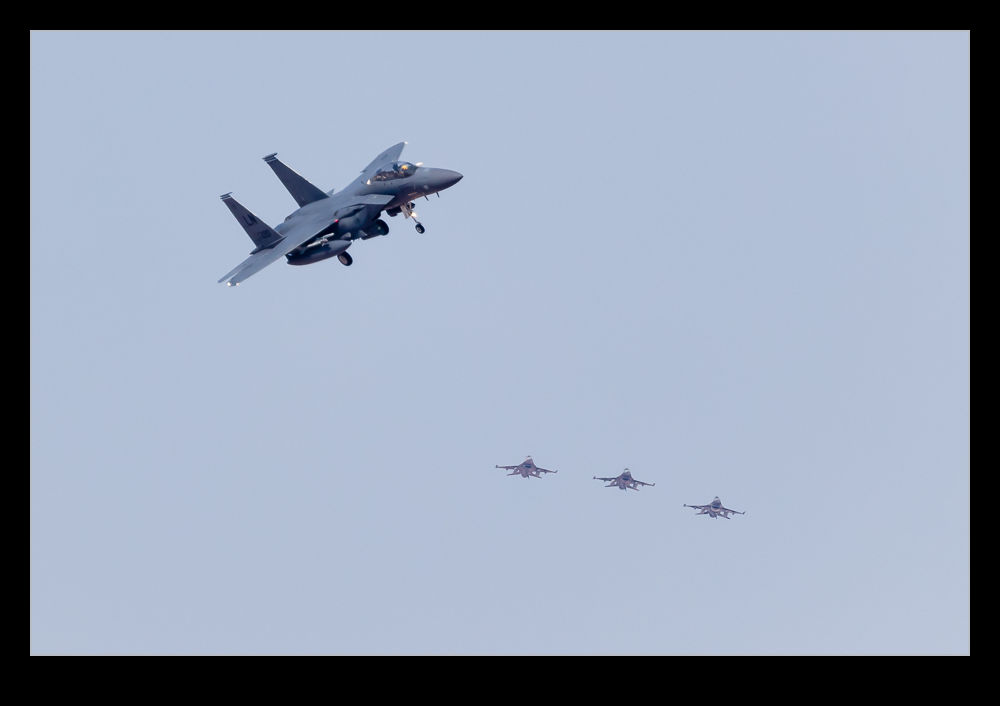
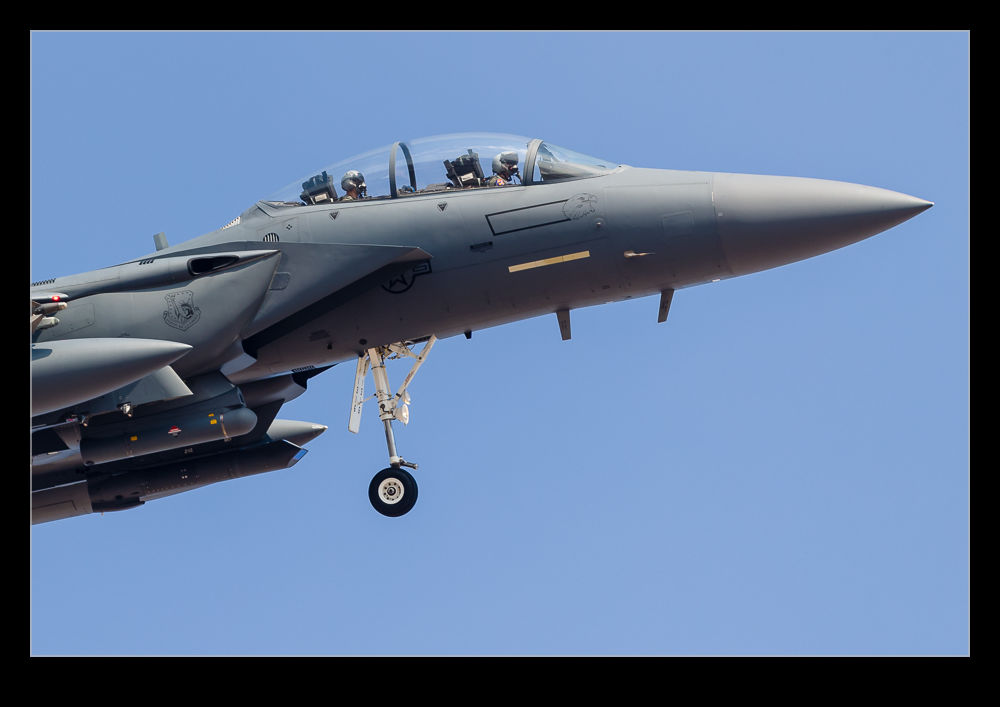
One of the fun things about looking through my pictures from a shoot is spotting things I didn’t notice at the time. Often it is pilots waving or looking like they are doing something different. This time, I was surprised to see a couple of the backseat guys in the jets with their cameras out. One of the places you would really like to be as a photographer in in the backseat of one of the jets getting shots as things happen. I guess the crews are not a lot different. I assume they are pretty busy during the main part of the mission. The recovery is a different story and the front seater is dealing with everything that counts. Time for the Guy in the Back to take in the scenery and grab some shots of the approach.
The French Government Comes to Town
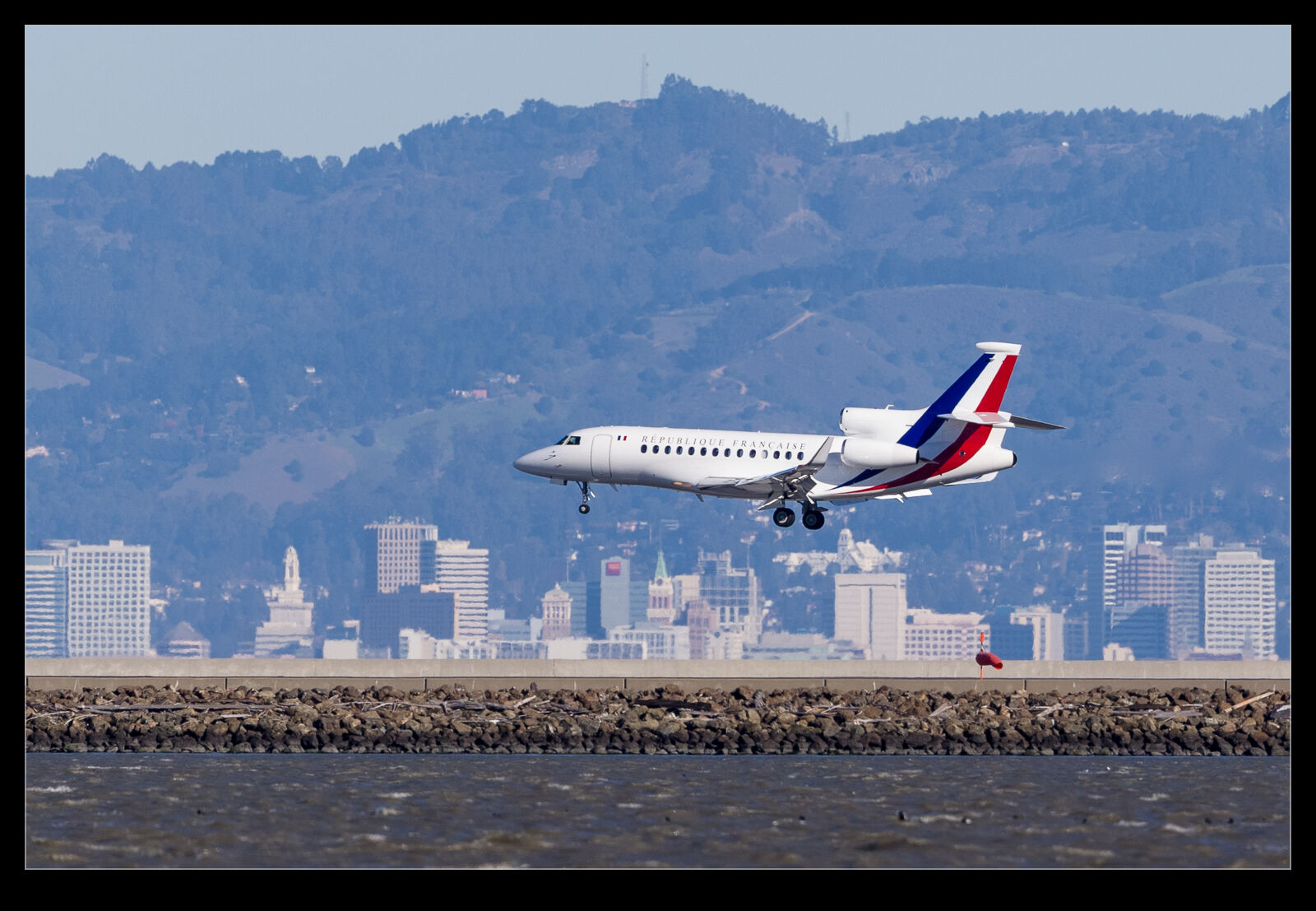
Catching a cool bizjet is nice but coming across one that is a bit special is even better. I almost missed this one. I was focused on something else when I looked up and saw something on the approach. At first I thought it was a parallel approach but I lifted the camera up to my eye and saw it was a colorful fun that was getting my attention. It was a Dassault Falcon 7X. It was in French government colors. The fin was the French tricolor. This was a cool thing to catch and quite a surprise.
Spanish Fake Canopies
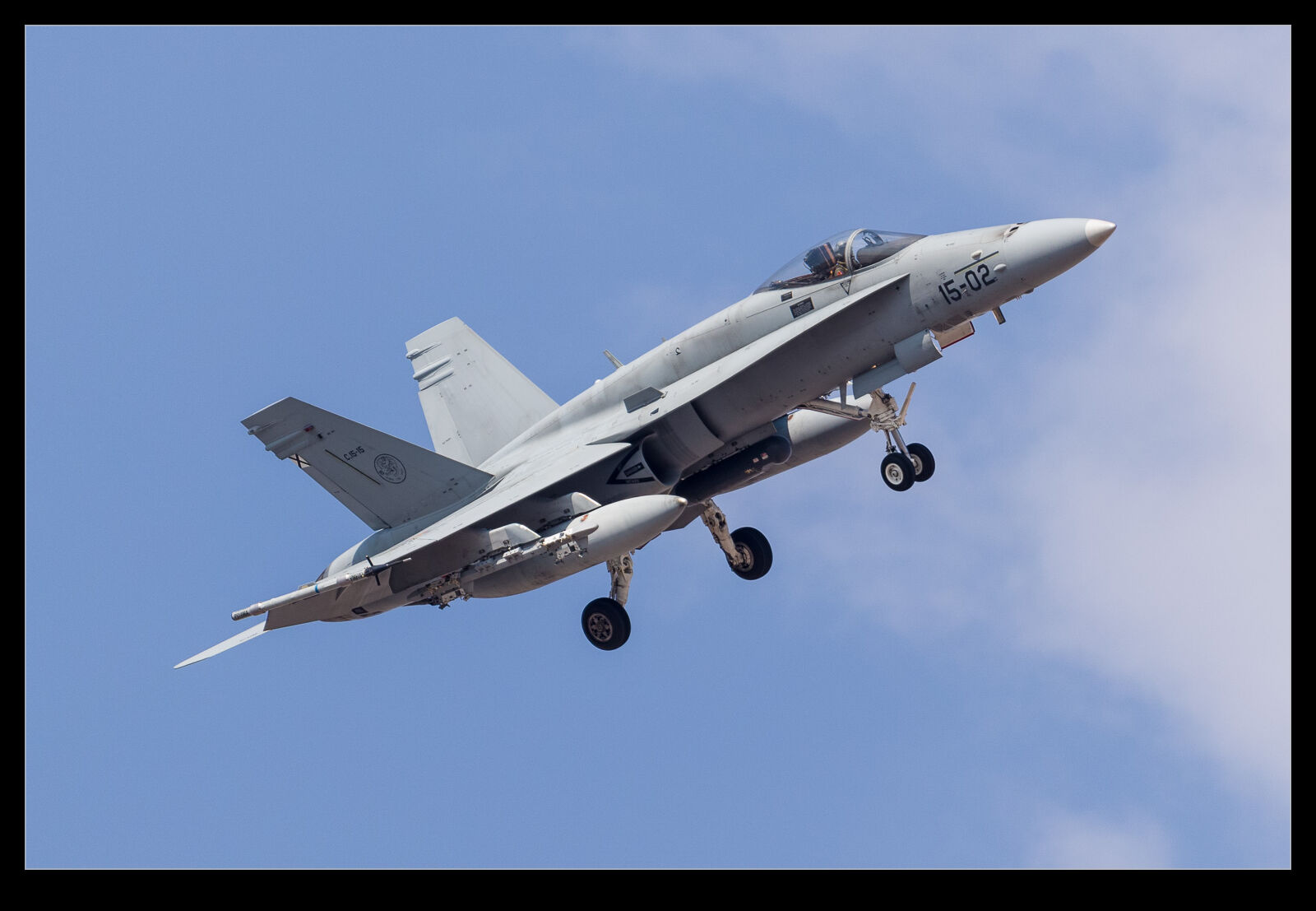
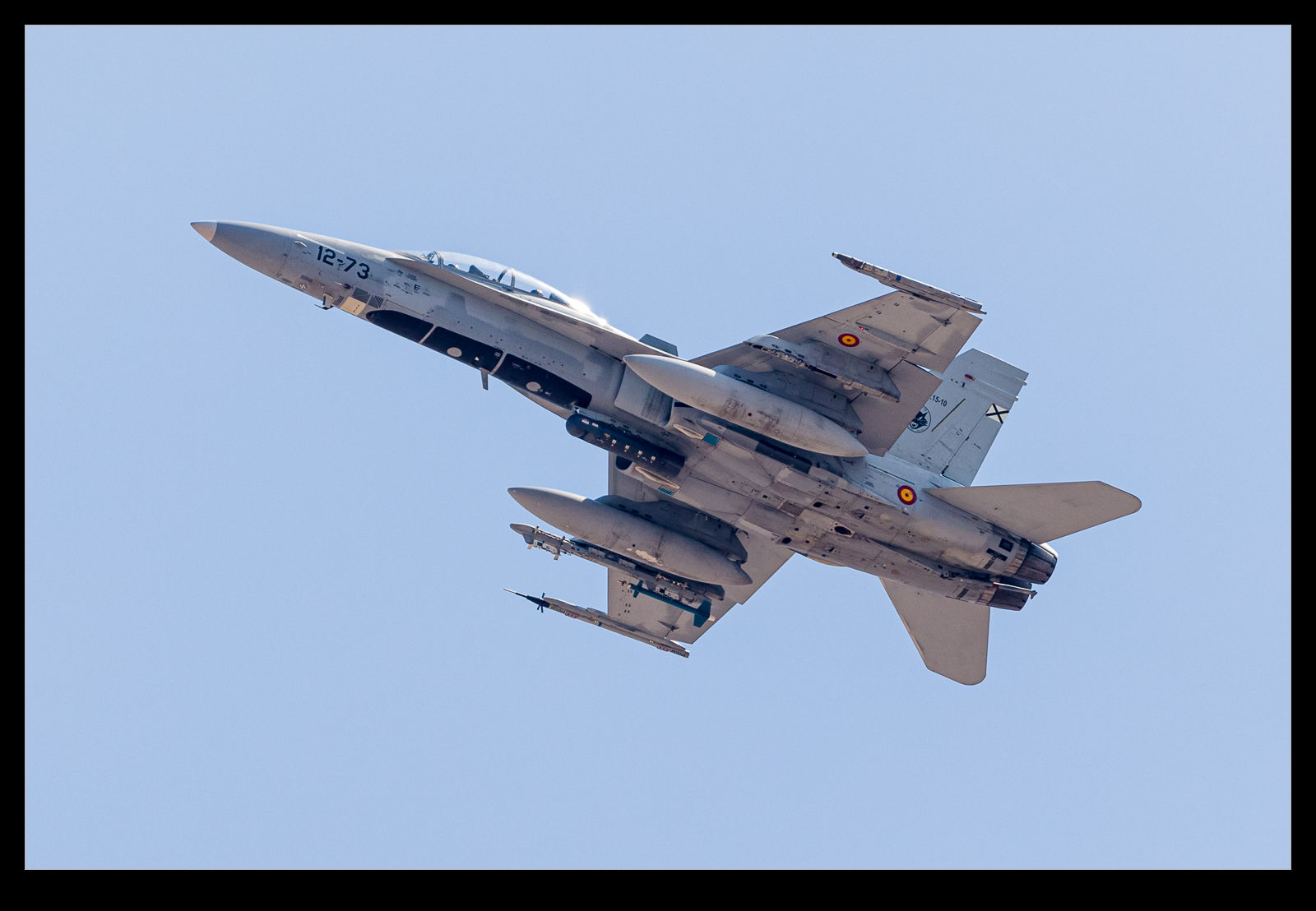
When the Canadian Hornets first came into service, they introduced the fake canopy on the underside of the front fuselage. This was a painted outline of the canopy. The idea was that, on the heat of a dogfight, the opposing pilot might be confused about the orientation of the jet and think it was coming towards him rather than away as a result of seeing this canopy.
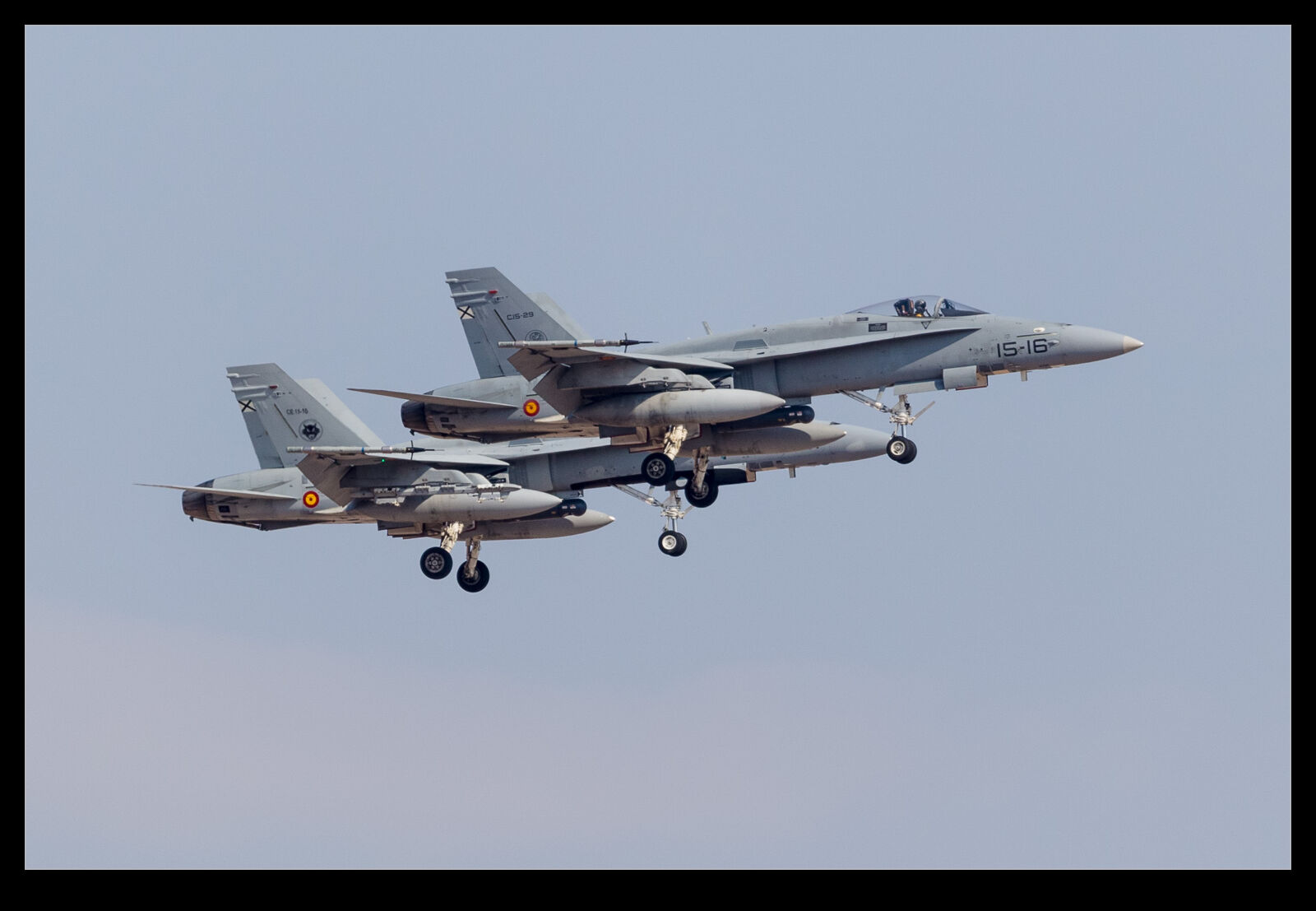
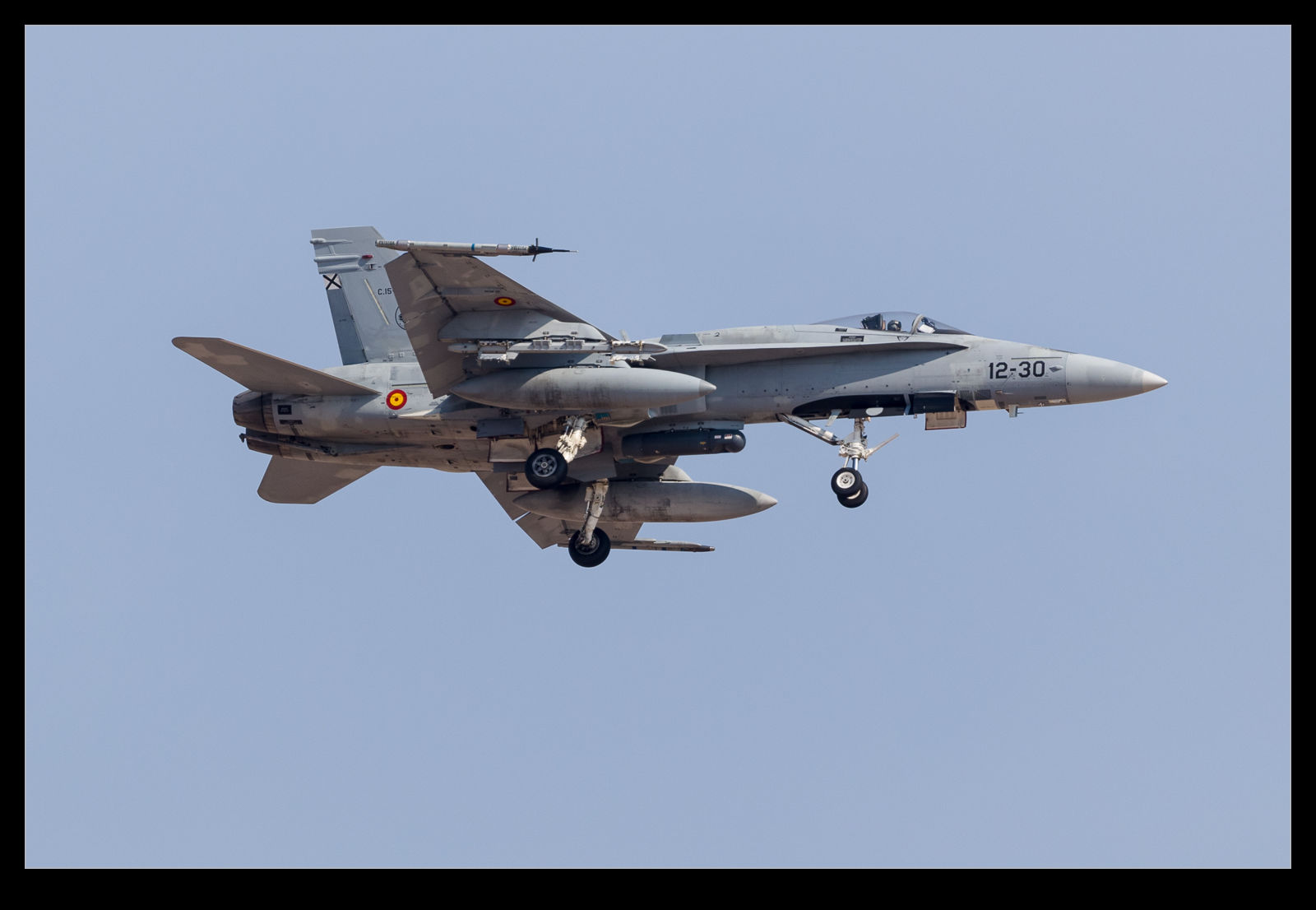
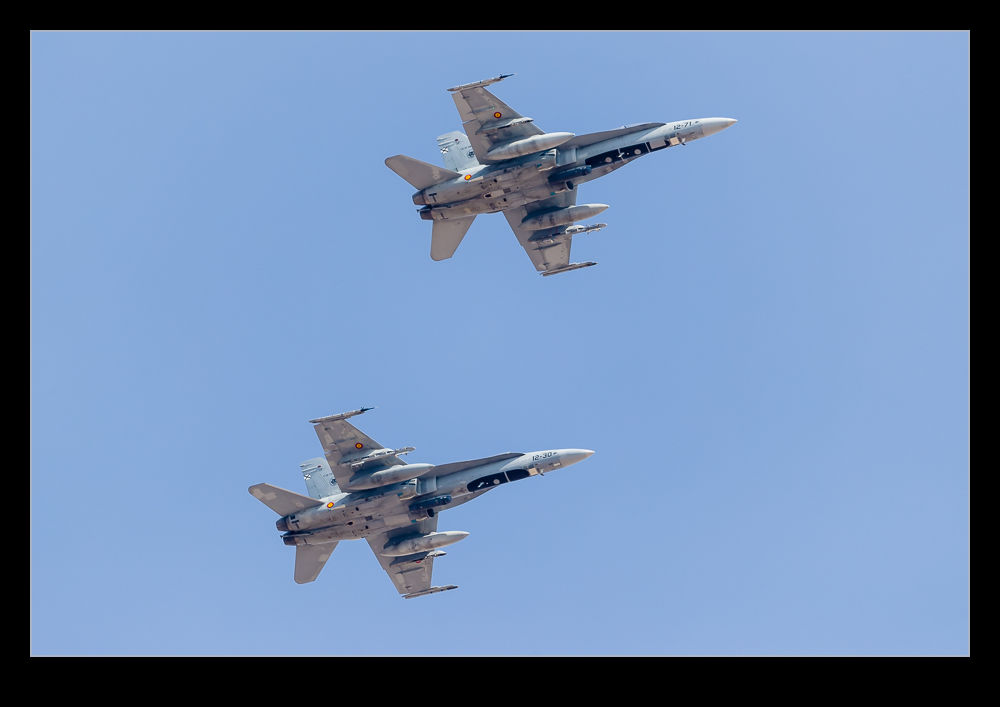
The US Hornets never had this on the fleet jets but it appears that the Spanish Air Force has adopted it for theirs (although not all of the jets are so painted). I heard a rumor that the Canadians have some rights on this and other users have to pay for it but I have no idea whether there is any truth to this or not. However, their jets certainly do have the canopies painted on the fuselage.
Some Janet Airline Activity
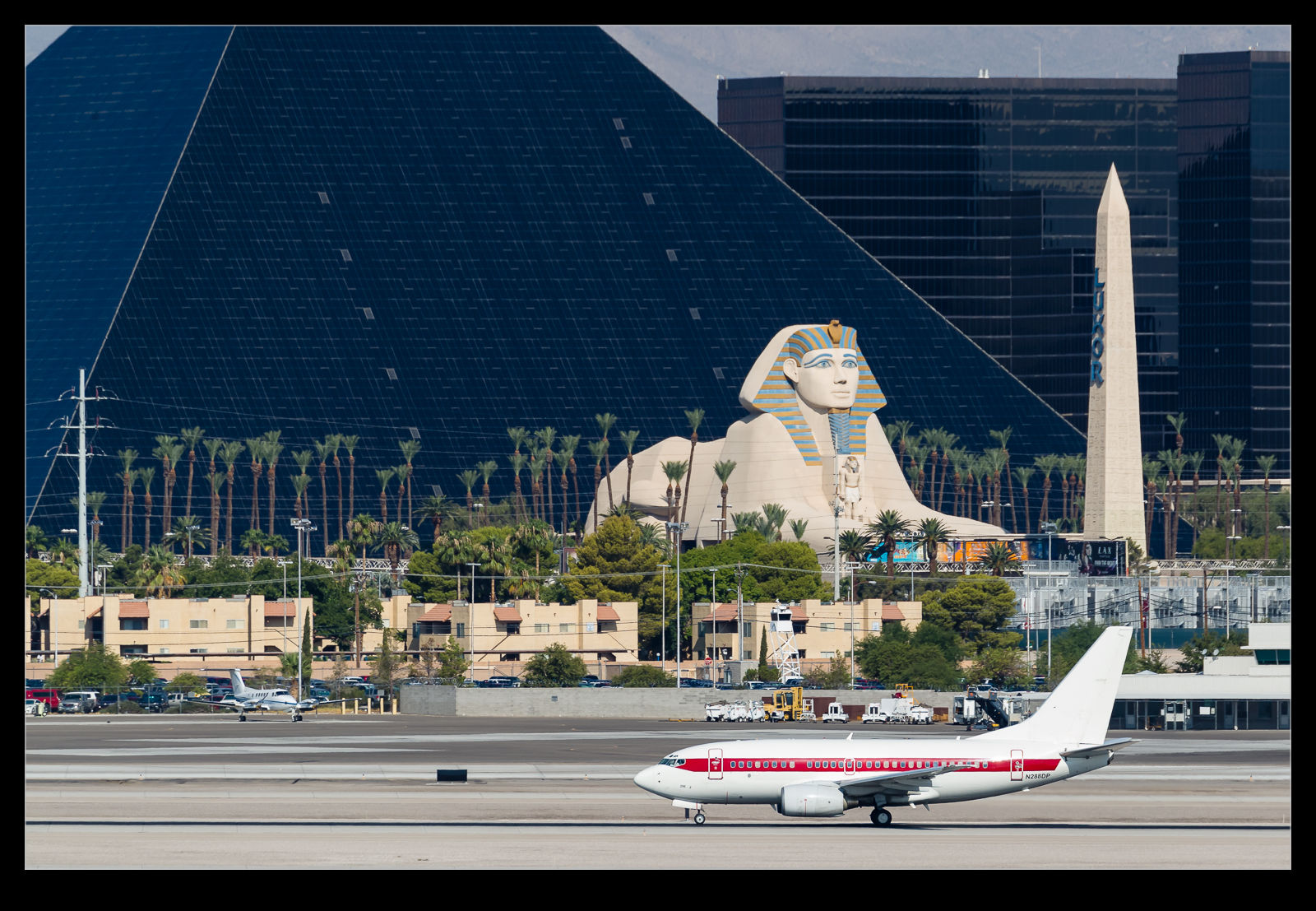
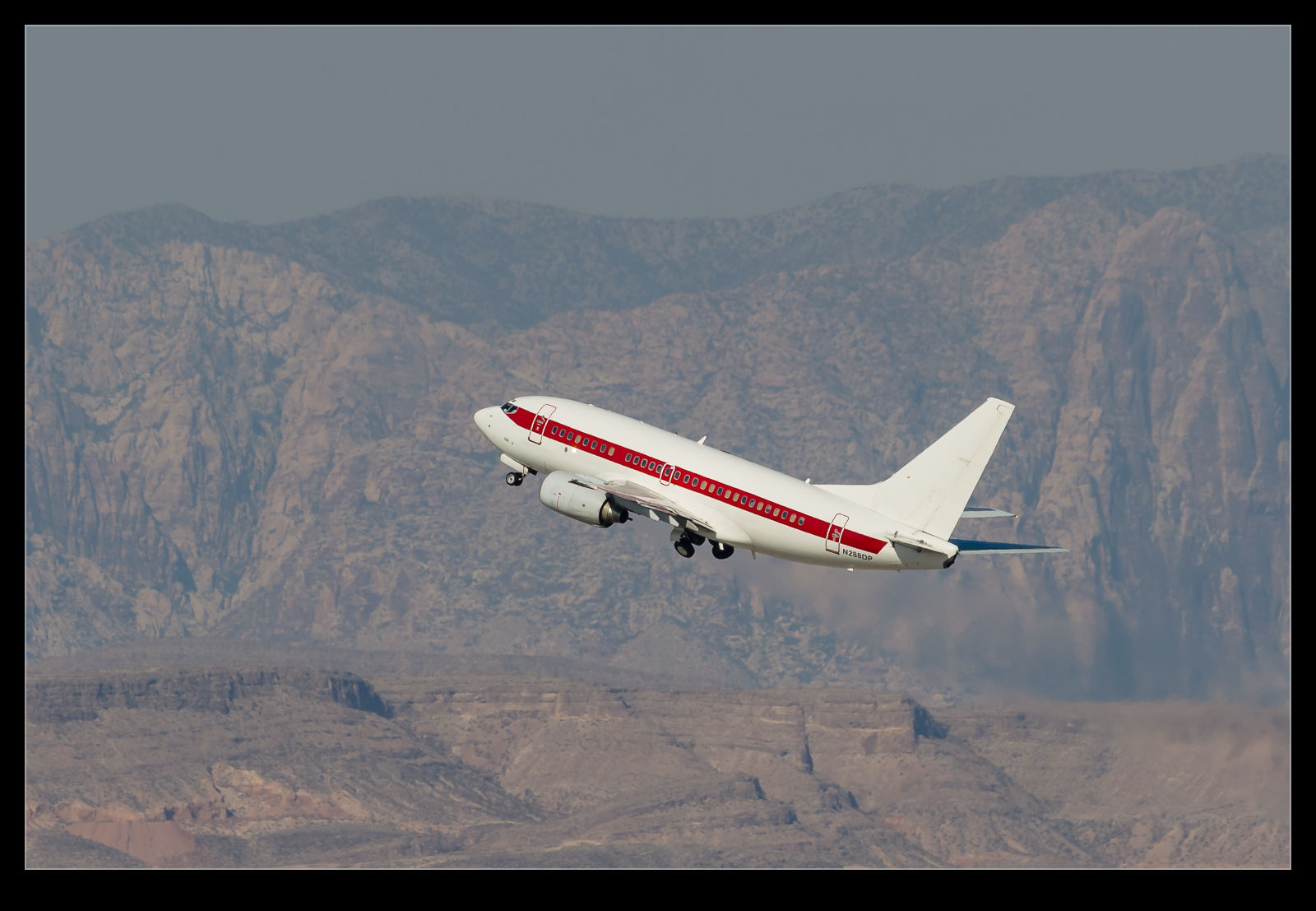
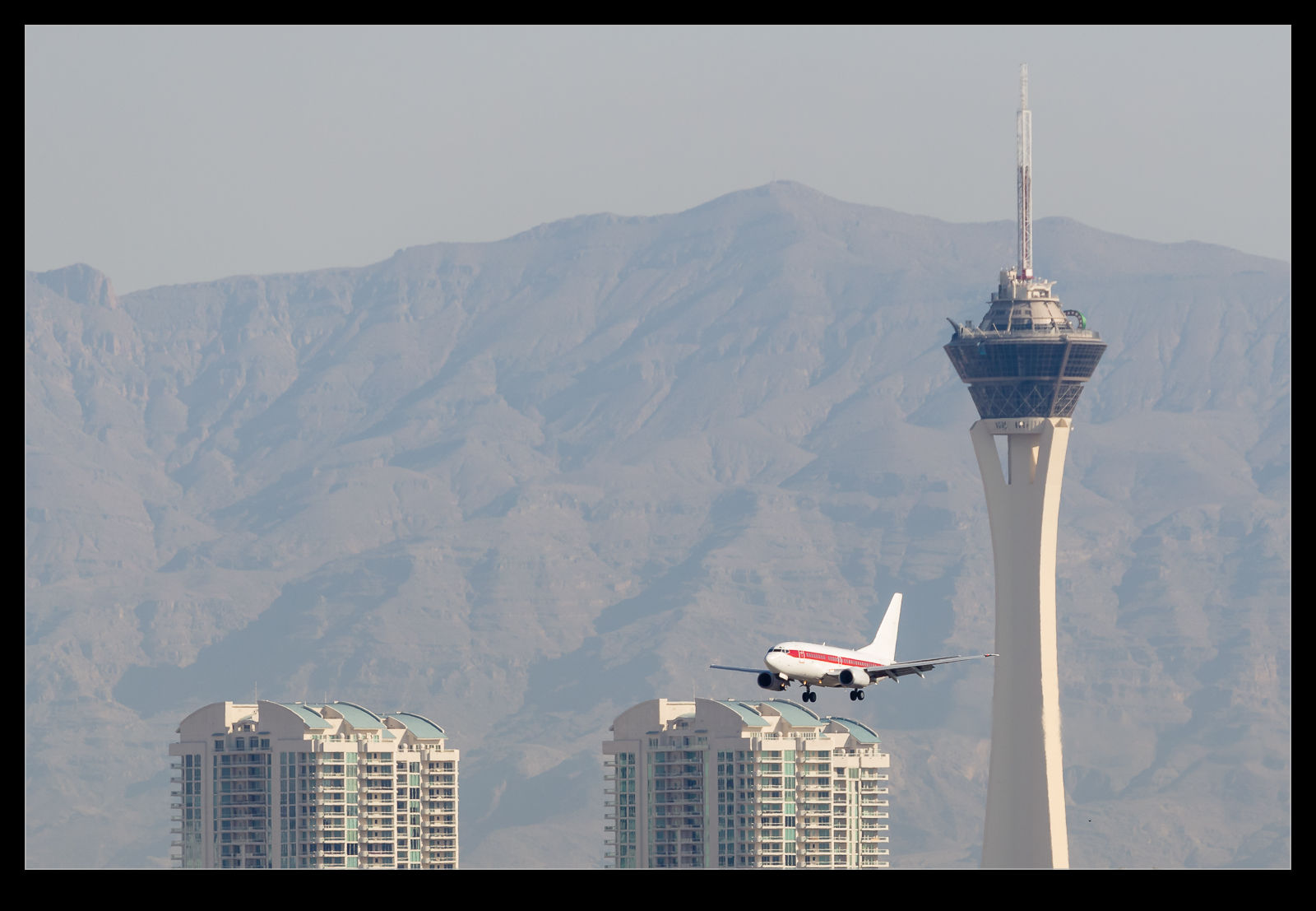
Any time at McCarran is likely to include some Janets. The use of the 737s to transport staff to the various locations in Nevada at which spooky things happen is well established and you can see the schedule online if you want. They have moved on from 737-200s to 737-600s but the service is much the same. They may be 737s but the spooky nature of the operations makes them more interesting than the average airline.
Weapons School F-35s
The local Nellis traffic gets a bit restricted by the exercise traffic when Red Flag is underway. Get a mission in during the morning or wait for the gap between the afternoon and the evening evolutions to get airborne. For those of us outside, they provide some additional aircraft to shoot. They may also give some variety in types (although given how few types there are these days, not a lot). Before the F-35 becomes ubiquitous in service and replaces the multiple F-16 units that currently participate, it is something a bit different.
The Weapons School has a bunch of F-35A jets now. The first ones to arrive at Nellis were OT jets for operational test and evaluation. Now the Weapons School is using them to develop tactics and employment. The lines of the jets are a bit different from the Marine Corp F-35Bs that I shot at a previous exercise. Without the lift fan, the back of the airframe is smoother while the canopy is blended into the spine in a different way that enhances visibility and fits with the different profile. The jets were pretty active while I was there so I managed to get a few shots. I had seen them during previous visits but, when on base we had been barred from shooting them and, while off base, I had always managed to be in the wrong place to get them. While I am currently pleased to have got some shots, I will soon be used to seeing them around all over the place.
Talon Hate
Talon Hate is a program that the Air Force is running involving an infrared sensor mounted in the front of a centerline fuel tank. It is mounted on an F-15 from the operational test unit at Nellis AFB. The first time I saw it, I was walking along the flight line at Nellis. We were shooting with the California ANG unit that was the next space along the line. As we walked past the Talon Hate jet, we were under strict instructions not to photograph it. I was right there but nothing I could do.
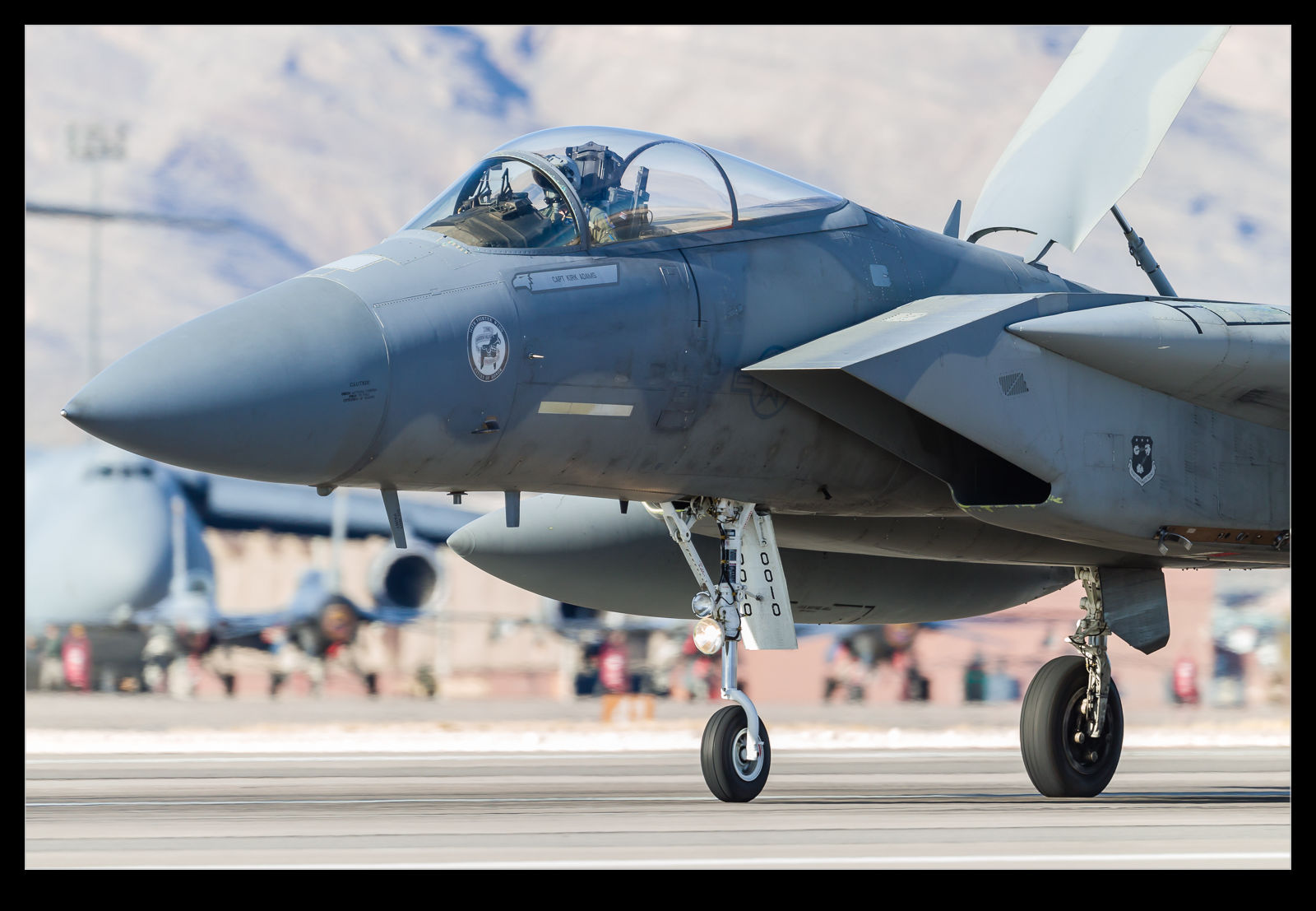
During my visit to Red Flag 16-4, the Talon Hate jet flew a couple of times. It flew with a second F-15 each time and sometimes with other jets. The pod is clearly visible on the jet but the other modifications are less conspicuous. There is a satellite communications antenna mounted on the back on the jet. When it turns for final, you can see the antenna mount. I don’t know what the outcome of the program will be but it is cool to see the venerable F-15 still trying out new stuff.
Bayou Militia Eagles
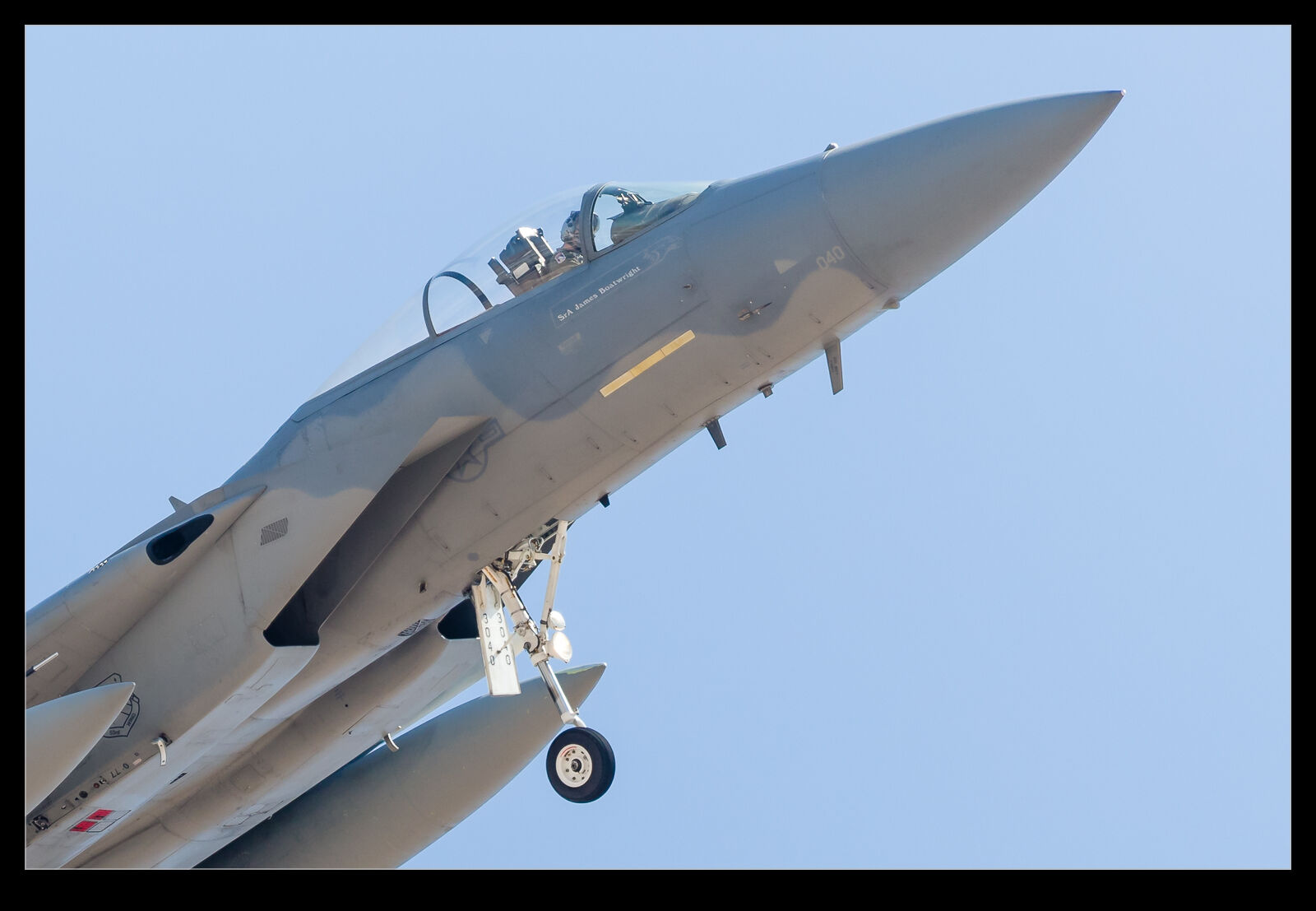
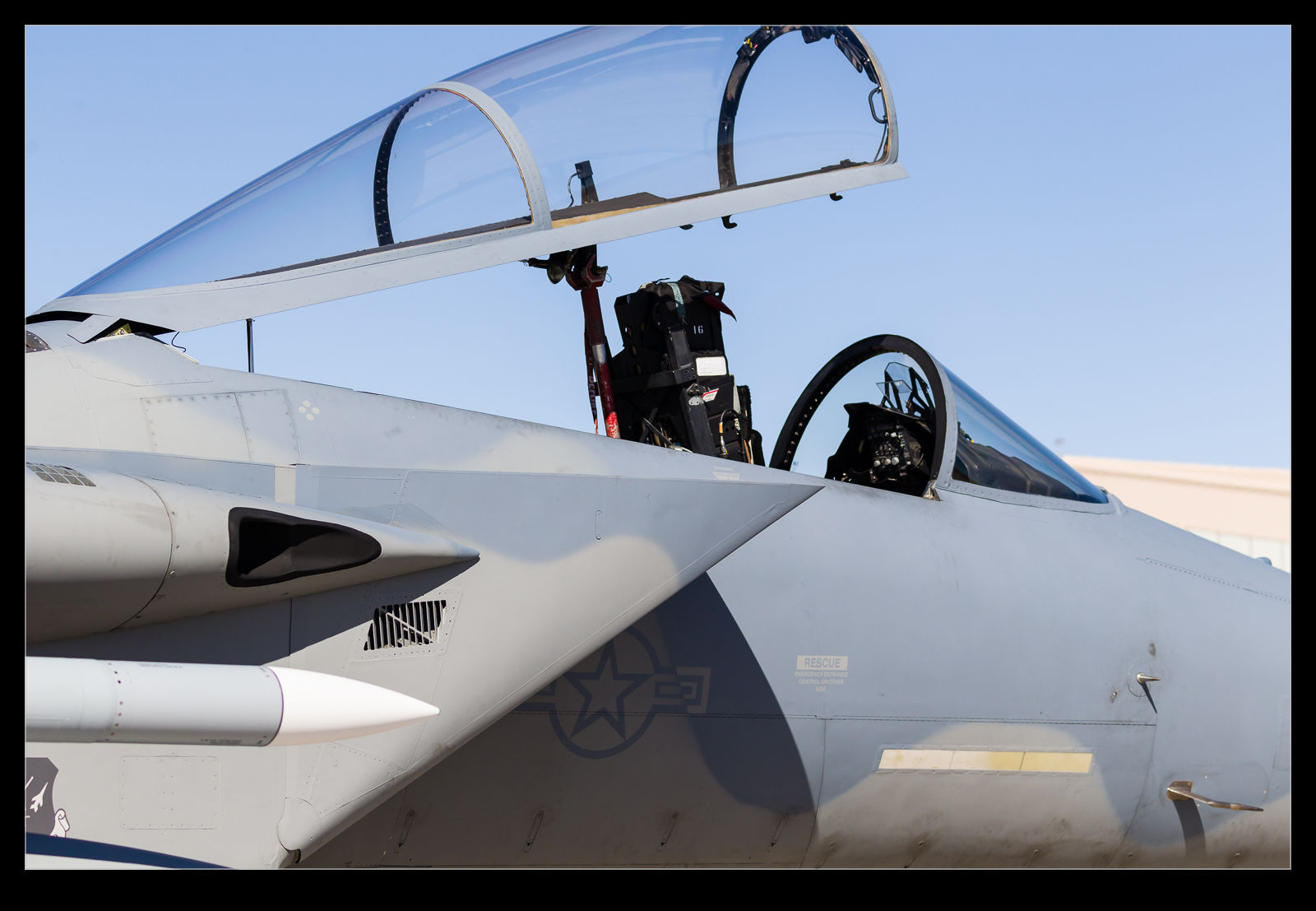
The F-15 has been in service for a long time now. It operates with regular Air Force units, reserve units and Air National Guard units. The Bayou Militia is a unit based at New Orleans in Louisiana. Their tail code is JZ which, if you think about where they are based, makes a lot of sense. I had seen pictures of jets from this unit a lot over the years but I hadn’t seen them for myself. Having them at Red Flag made me a lot happier than makes sense for a unit.
They put a lot of jets up while I was there including flying at odd times of day. They were happy to fly tight approaches when nothing else was in the pattern so I got a lot of chances to see the, in action. I still love the F-15C so it didn’t take much persuasion to get me to watch these guys in action.
Port Townsend Aero Museum
You know your wife is special when, while on vacation and discussing what to do, she points out an aviation museum that you could visit. Not only that, but when you say she can drop you and pick you up later, she says she would be happy to look around with you. What a star! During our trip to the northwest, Nancy suggested the Port Townsend Aero Museum. I wasn’t even aware of it but I was willing to take a look. To be honest, our schedule did not include a lot of spare time but we had an hour or too to look around.
The museum is a really nicely laid out establishment. The hangar in which everything is kept is a really nice building and the exhibits are laid out well with some on the floor and others suspended from the roof. The way everything is put together is really good. There is space around each plane and the signs explaining what everything was were well put together.
The planes are all in excellent condition and some are still airworthy. (My only minor gripe was that they all had a museum logo sticker on them which was not ideal from a photo point of view but this is hardly something to focus on.) The aircraft are all vintage types. Most are piston powered but there are some gliders too.
This proved to be a great surprise on the trip (including that Nancy enjoyed it so much)! I’m not sure how many visitors they get (it was quiet when we were there but we were on a day when I wouldn’t have expected many visitors competing for space. I hope the business is sustainable because it is a great little museum.
Lumps and Bumps on the Sufas
Lockheed Martin has been evolving the F-16 over the years. It has been massively transformed from the original F-16A (which was a big change from the YF-16) to the Block 50/52 version. The development of the F-16E/F for the UAE took the jet up another level. When the Israeli Air Force decided to buy an updated jet, they created the F-16I Sufa. A lot of local electronic systems are incorporated to the LM designed airframe.
As you take a closer look at the airframe, you see all sorts of bits that are specific to the jet. The big spine is a common feature these days although it was pioneered on Israeli jets a long time ago. Aside from that, there is a circular antenna on the spine. On the sides of the inlets are some more antennae. Head back on the spine and some more side antennae seem to be present (although not on all of the jets I saw). Then there are sensors on the canopy (which I guess are related to helmet sighting systems). The jet is covered in devices. I assume there is a great system for integrating all of the information these sensors are gathering. The crew should have plenty of data to work with.