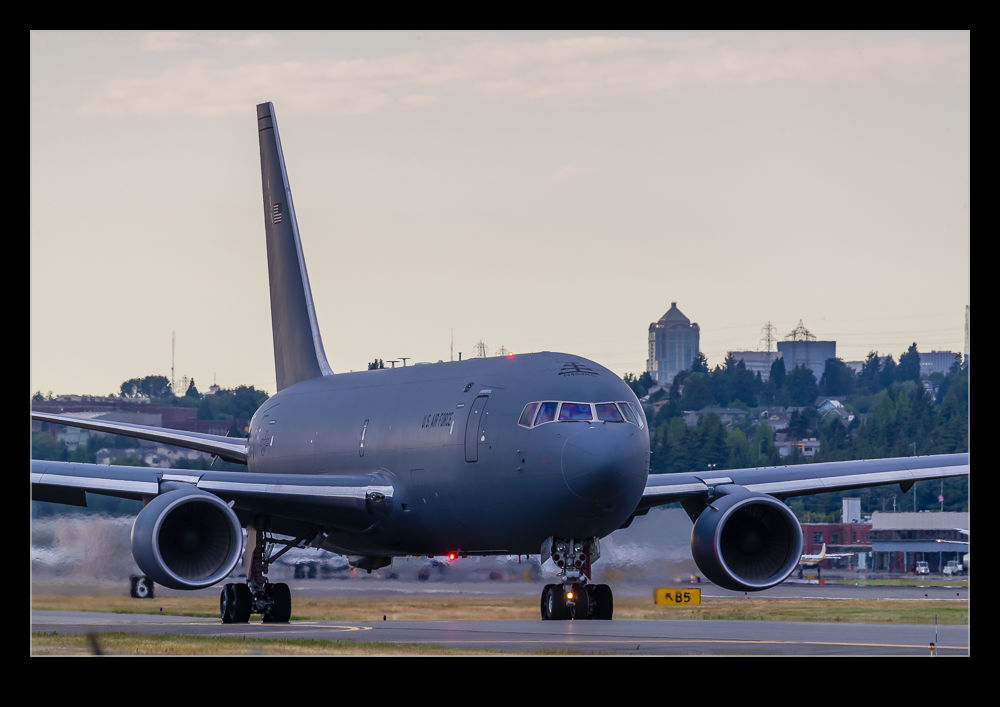
 The KC-46 Pegasus test program drags on. The delivery of jets to the USAF is still not happening and the number of jets built increases but they are stacking up at Paine Field and Boeing Field. Meanwhile the test jets are working through test points and endeavoring to prove that the problems identified in previous tests are now resolved. I have seen a few jets now and shot them in varying conditions from sun to downpours.
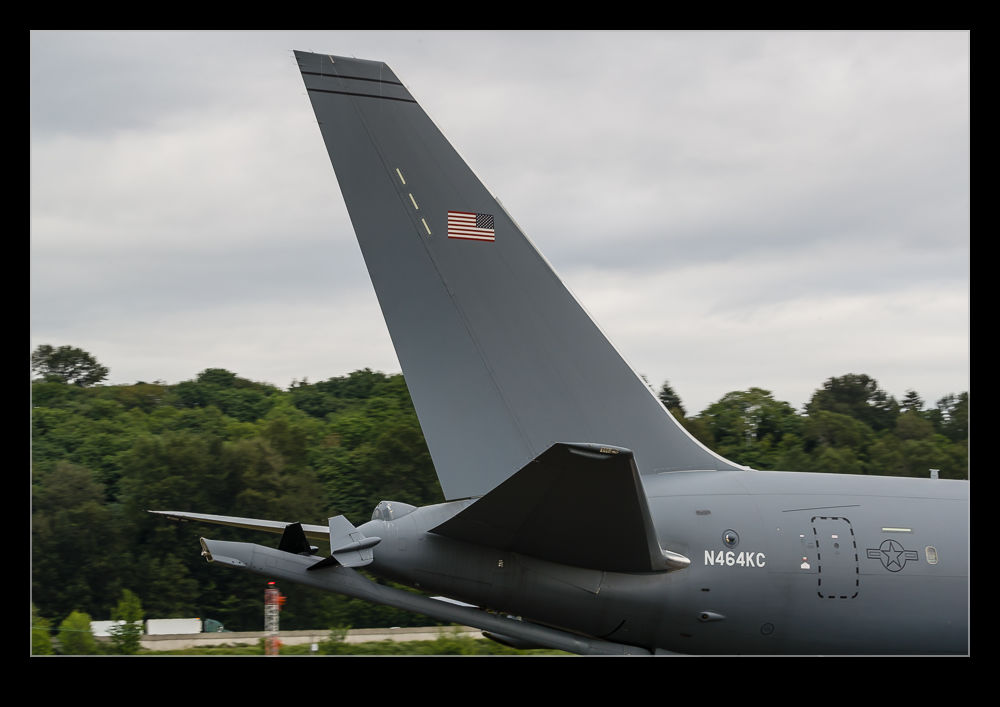 I was at Boeing Field one evening waiting to pick up someone at SeaTac later in the evening when one of the test jets taxied out from the Boeing ramp at the north of the field and came right by me prior to departing on another mission. The jet was configured with the boom and the underwing pods so the planned final configuration. As it came by, I decided to get some shots of the airframe to get a better idea of what the various parts look like.
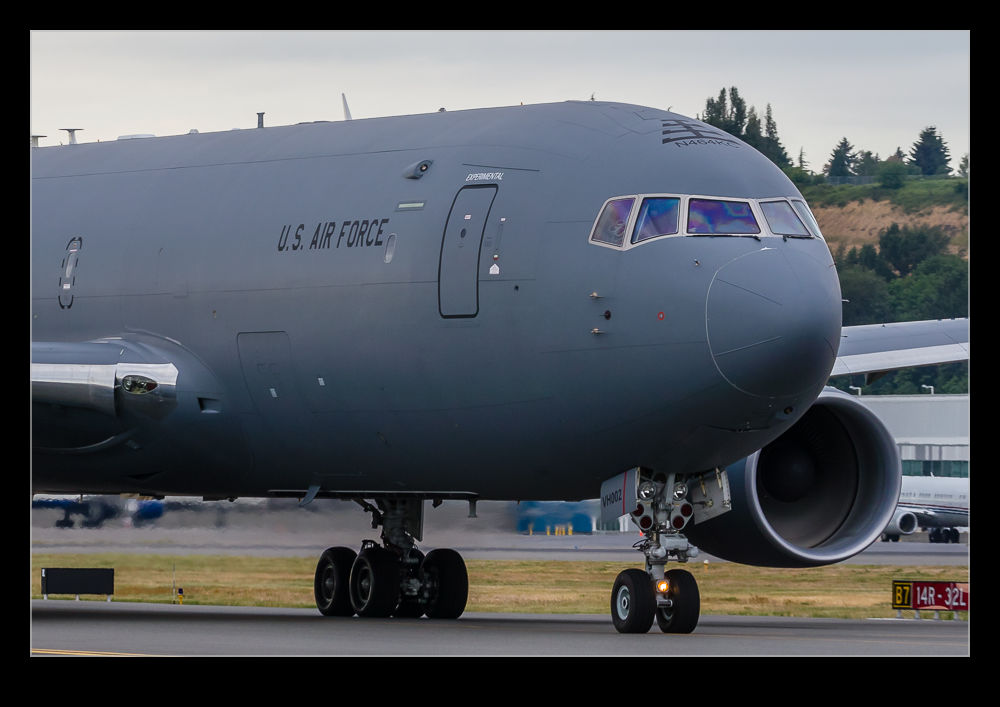 The airframe is the familiar 767 although there are some changes structurally. The cockpit is updated too but you can’t see that from the outside. However, you can see the various sensors mounted around the airframe which, I assume, are radar detectors. Above the cockpit is the receiver receptacle for the refueling boom to allow the jet to receive as well as dispense fuel. You can’t see much from the ground other than the markings to guide the boomer (and the markings that identify which jet it is).
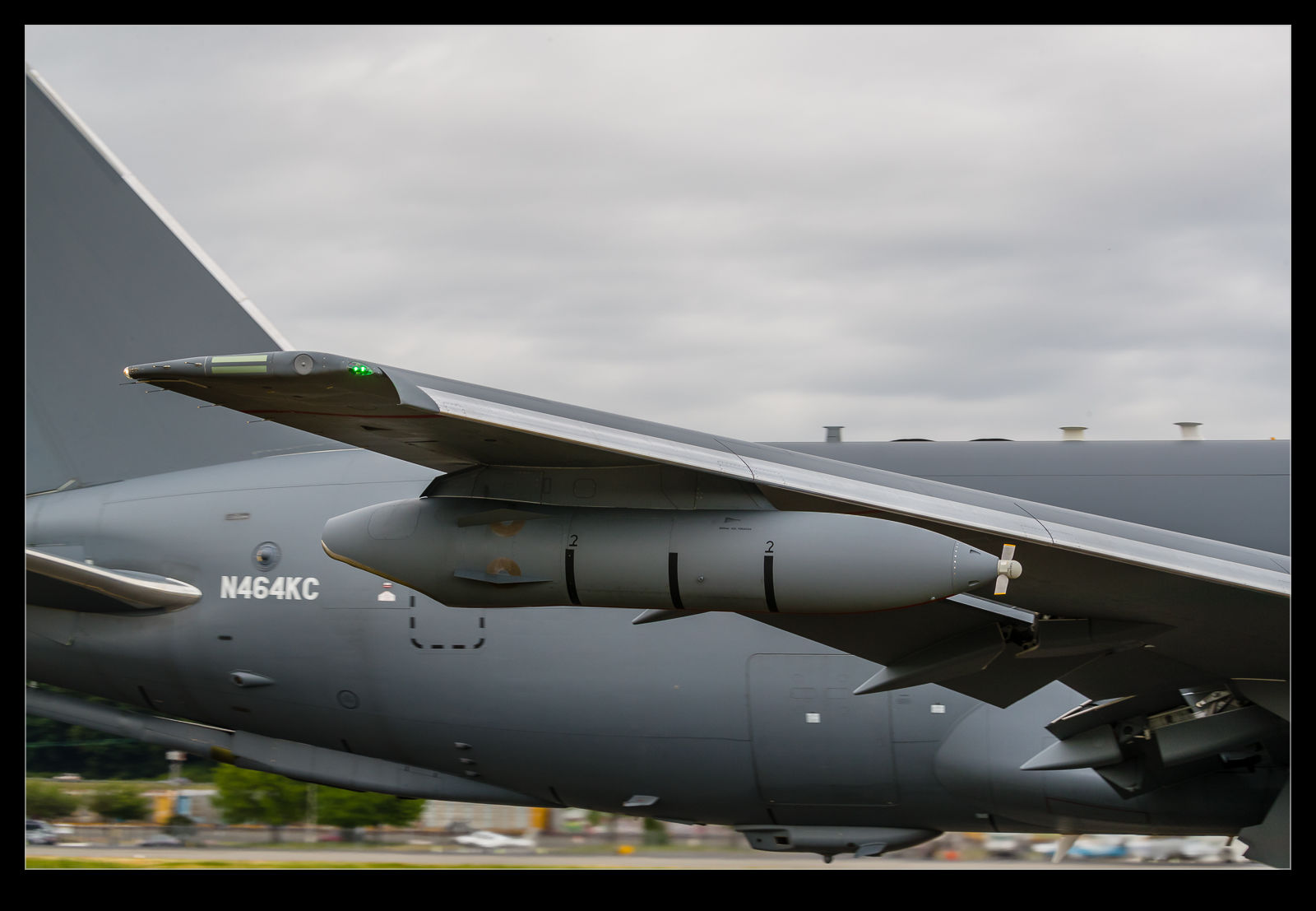 The underwing refueling pods are a source of some of the troubles the program is having. Apparently, the supplier in the UK underestimated what was required to achieve he civil certification that is part of the contract requirements. The pods may not be cleared when the initial jets finally enter service. Modern pods have a more streamlined look. Earlier pods have a blunt back end that the hose and drought come out of. The modern pods and more streamlined and the rogue comes out of a ramp in the bottom of the pod.
The back end has the boom. Given how many boom tankers Boeing has produced, modern booms seem to cause them a lot of trouble. This one is still one of the major defects with the jet. Hopefully it will be resolved soon. The boomer does not have a window like the earlier jets but instead uses stereo video cameras to give the boomer the view of what is going on. I assume some of the apertures around the rear fuselage are for the cameras to support this functionality. We shall see how long it is before we see this being used for real by the USAF as opposed to the test team.
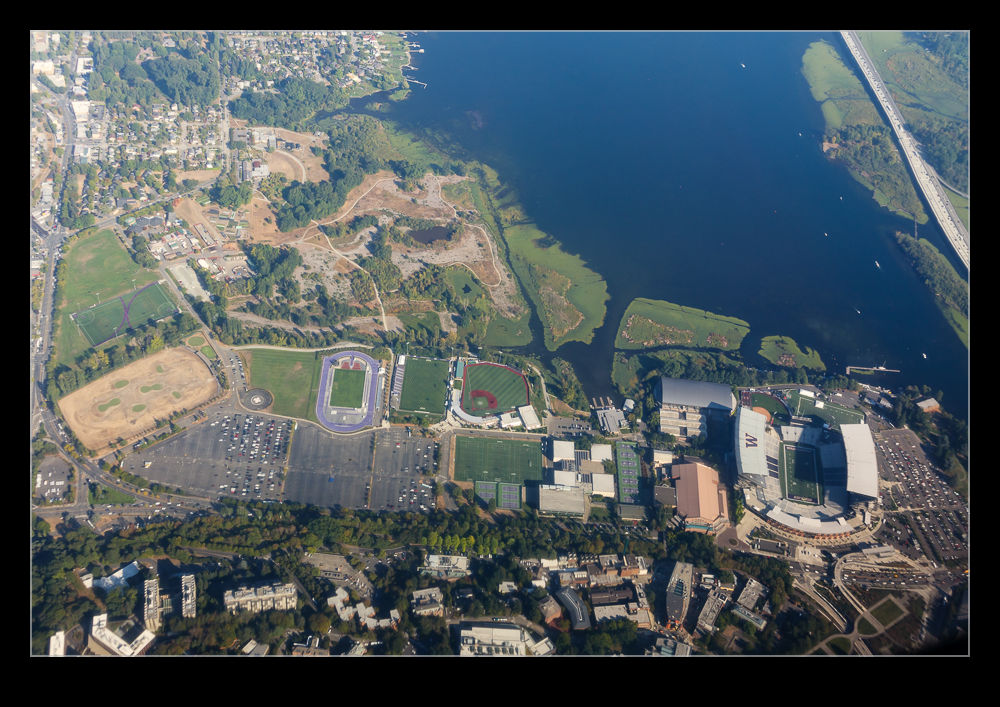
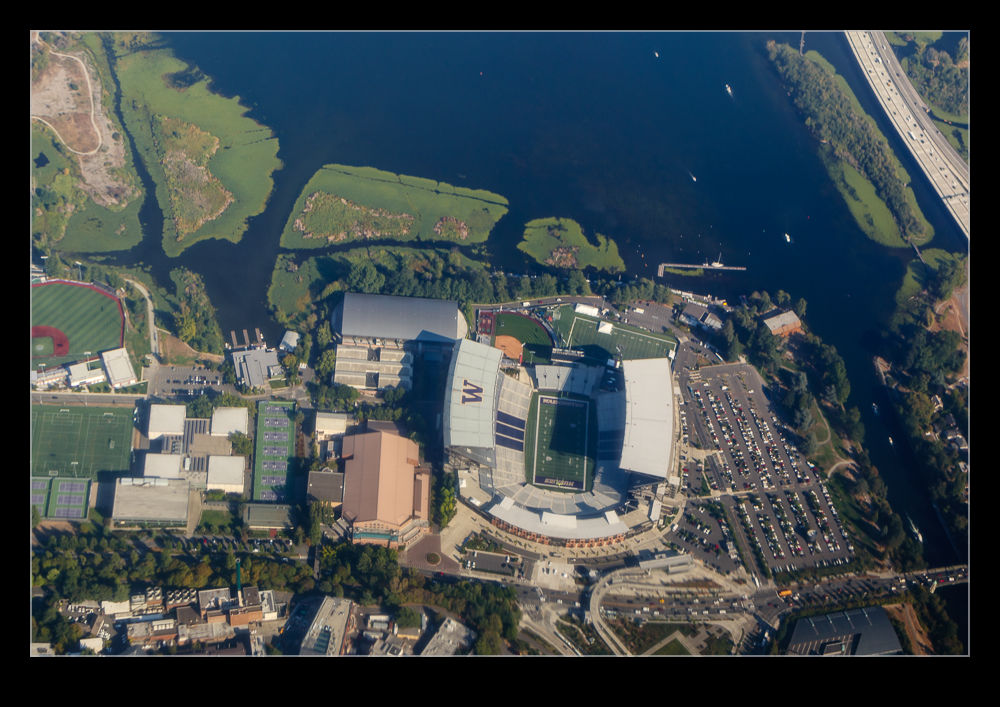 This post was originally going to be based on a shot I got of the University of Washington’s football stadium that I took while were hiking in the park nearby. However, things moved on a bit and I wasn’t too bothered by the shot. Then, as I was coming home from a trip, I was sitting on the left side of the plane as we made our approach over Seattle. I was looking straight down on the university campus and the stadium. I figured this would be a more interesting view for a post so finally the topic makes its way on to the blog.