Tag Archives: airplane

Finally I Get to See the Mossie

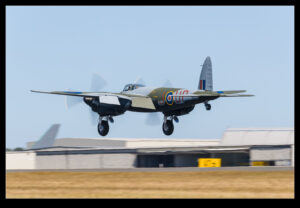
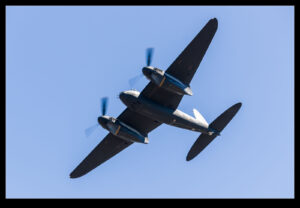
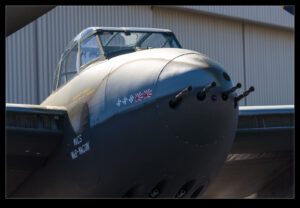
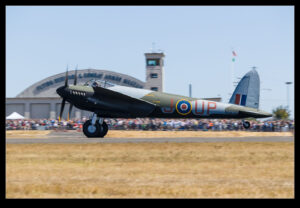
I last saw a Mosquito in flight in the early 1990s when the BAe operated example was on the air show circuit prior to its loss at Barton.  I had assumed at that time that I was unlikely to see another one fly.  I never saw Kermit Weeks’ example fly and it has been on the ground for a long time.  I hadn’t counted on the recent interest from collectors in getting rare aircraft rebuilt.  The Mosquito has been a popular project and there are a couple now flying in the US and, I think, another one in Canada.  It is great to see people with the available funds getting these aircraft back in the skies (even if these are pretty close to totally new builds).
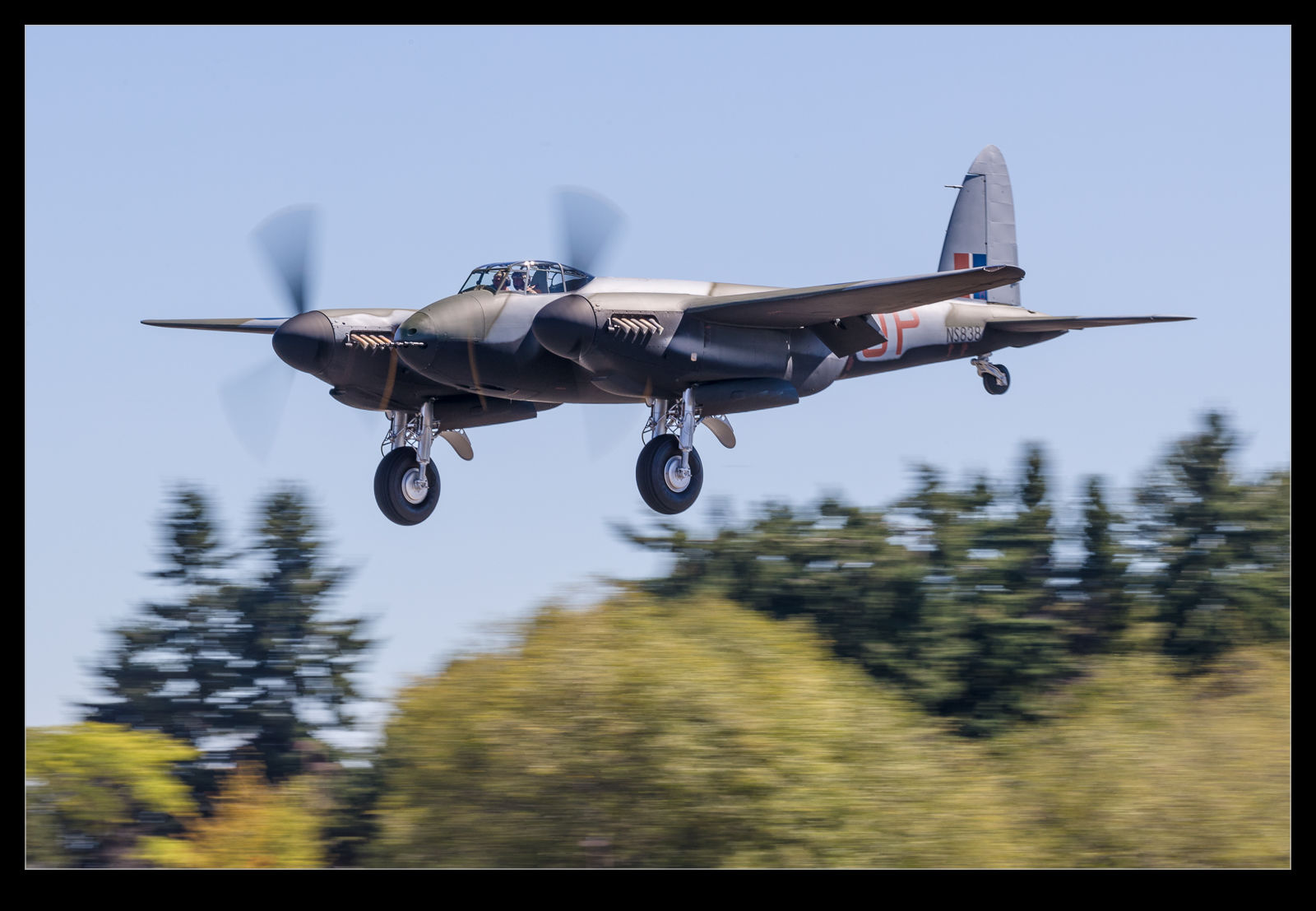
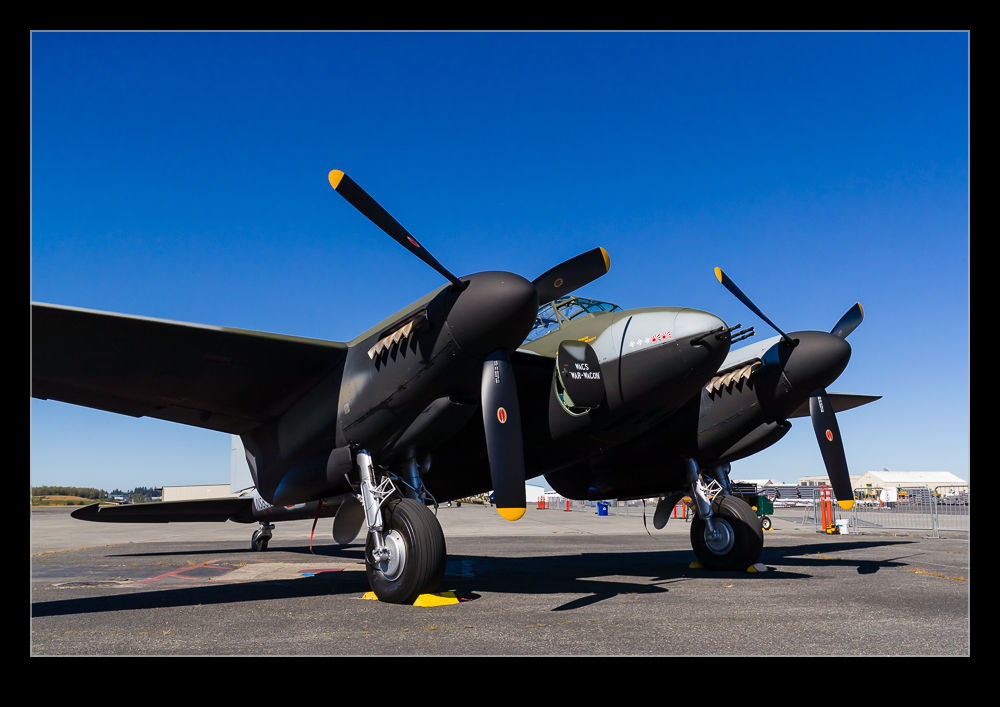
One of the Mossies is part of Paul Allen’s collection and the Flying Heritage and Combat Armor Museum (FHCAM).  It had flown a few times since we moved to the area but I had not seen it fly until they held their European Theater Day.  I was determined to see it this time.  I had forgotten just how large an aircraft the Mossie is.  It flew with a bunch of other fighters and included a number of passes with a 109.  The Mossie is huge when next to the 109 and it really has presence.  It is a bit of a pain to photograph because the color scheme has camouflage upper surfaces and black undersides.  With the sun high in the sky, this makes for a very contrasty subject.
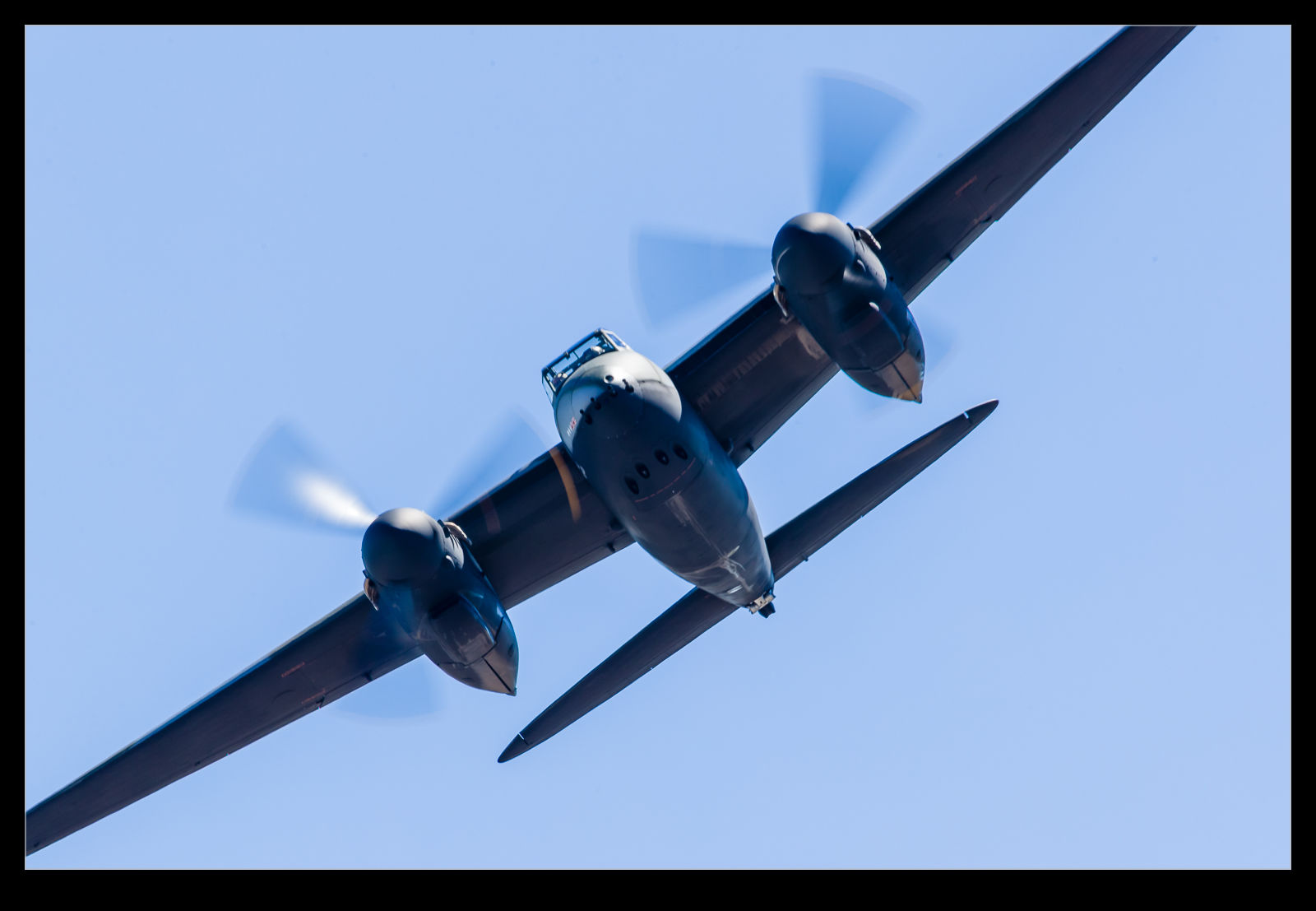
I probably got a little overenthusiastic photographing the plane.  It was parked on the ramp before and after the flypasts although not well positioned for the light in either case.  That didn’t stop me though.  When it was flying it got my maximum attention – a little bit of a compromise since the 109 it was partnered with was also something worthy of some shots.  I did get a few of them and they will be in an upcoming post.  It is nice to have finally shot a Mossie though after all of this time.  I look forward to seeing it again, particularly on its own and in more of a display format.

Open House at the 142nd

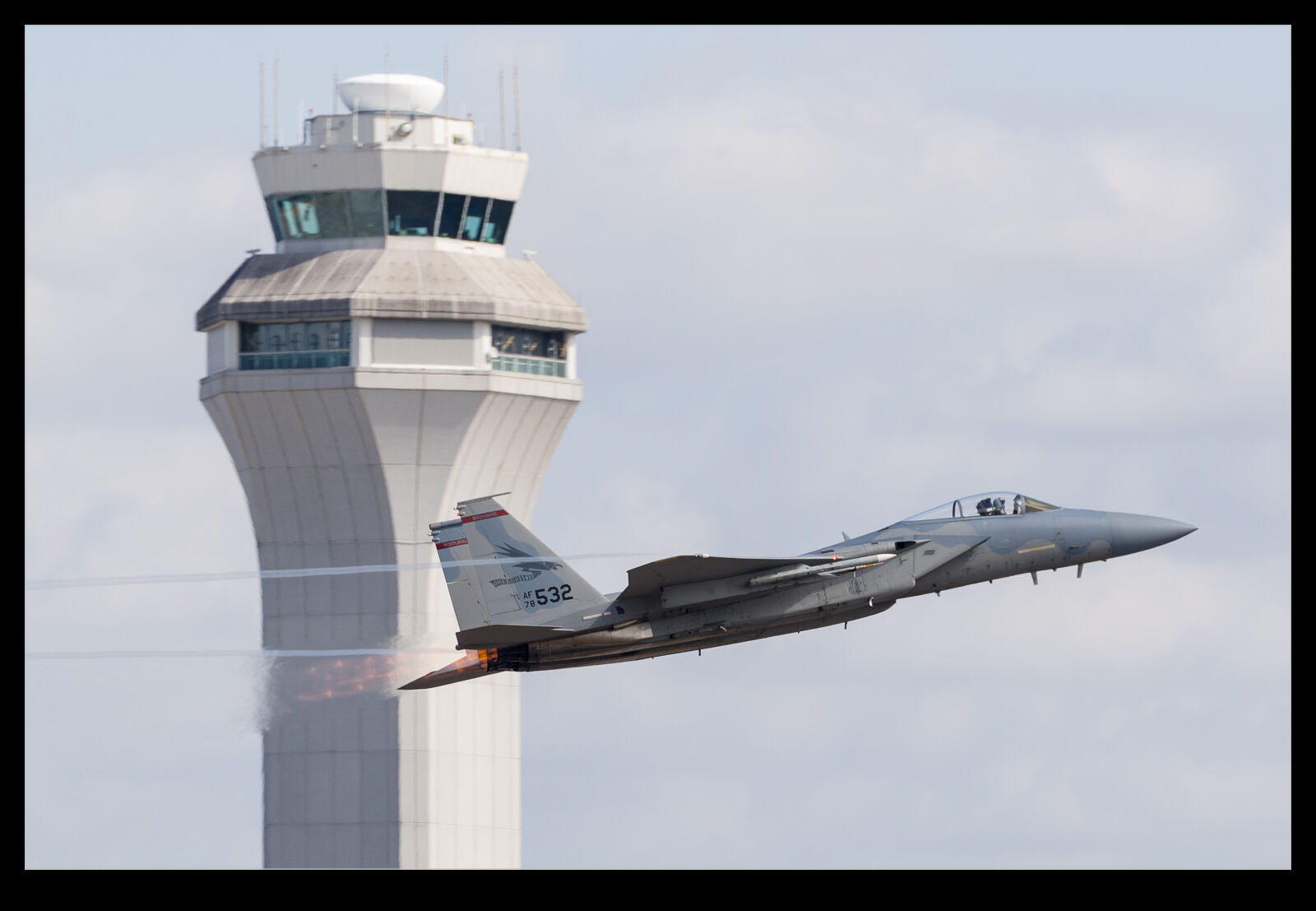
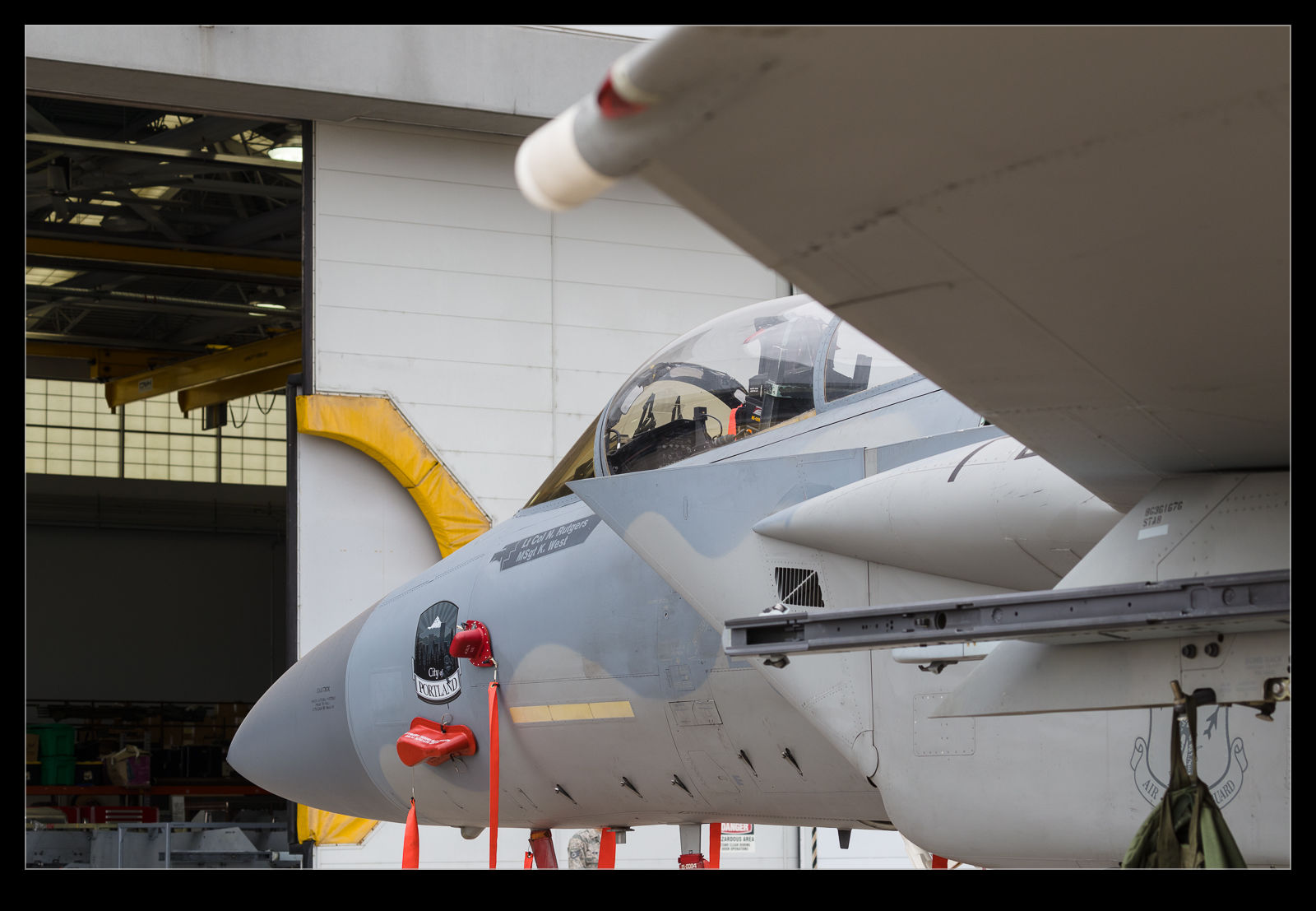
The 142nd FW of the Oregon ANG is based at Portland International airport.  They held an open house one Saturday morning and I figured a trip down was worth it.  I put together a piece for Global Aviation Resource on the visit which you can see here if you want.  The event was aimed at sharing the work the unit does with the local community that is probably well aware of their presence courtesy of the regular launches of F-15s from the runway at the international airport.

They had a couple of the jets for people to take a look at.  One was out on the ramp and you could walk around it.  Another was in the hangar with an access ladder to the cockpit (devoid of ejection seat, just to be on the safe side).  They also had missiles and engines available to look at with people on hand to talk about them.  Meanwhile, the unit launched a few waves of jets.  They taxied out from the shelters a short distance away and, given the distance to the threshold of the runway, the F-15s were airborne well before they even came in to sight.  Fortunately, they did keep them low and fast until they came by our location.  Then they pulled up rapidly.  Each departure was appreciated by the spectators!
A Change of Location Makes for Locals That Are of Interest

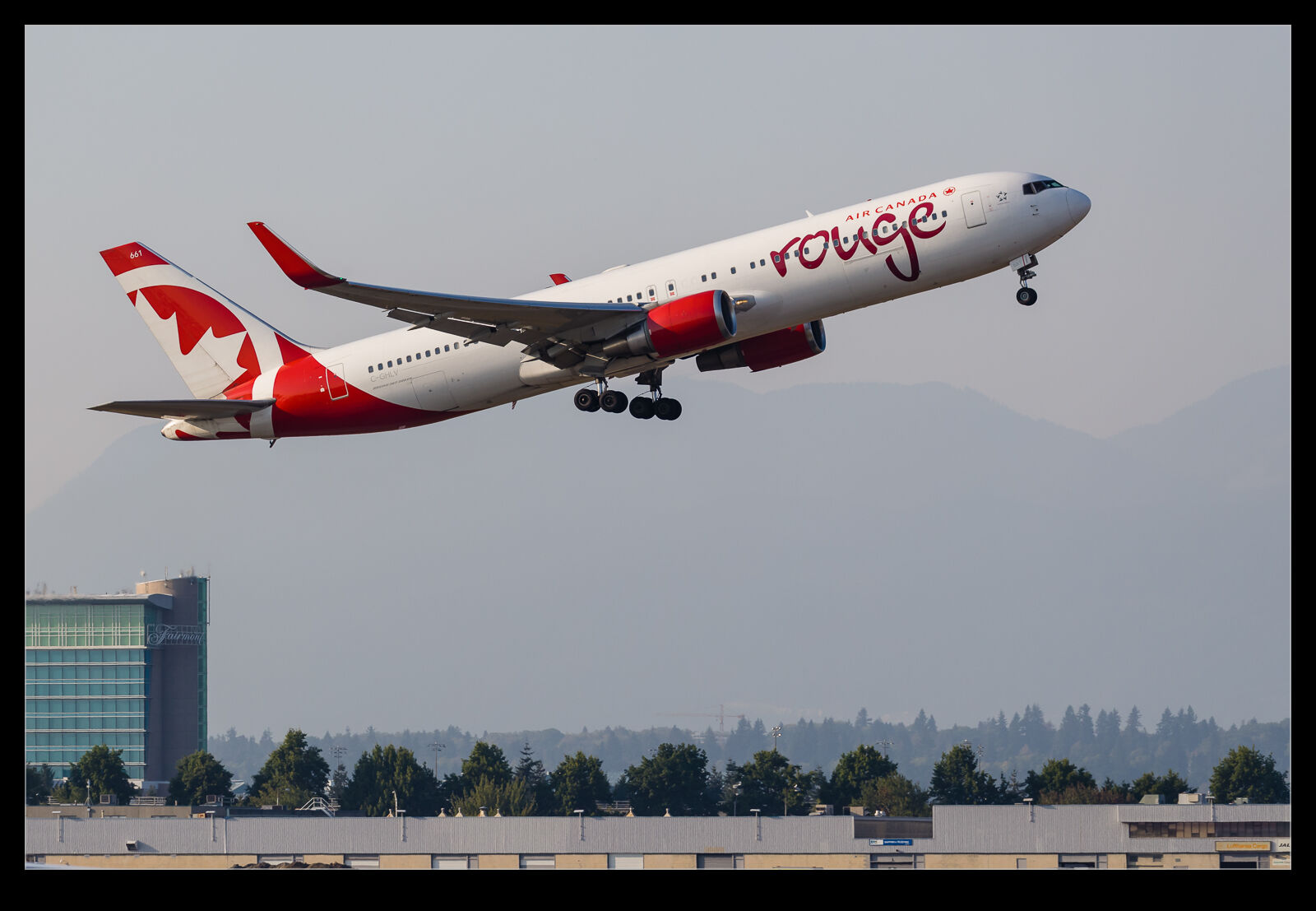
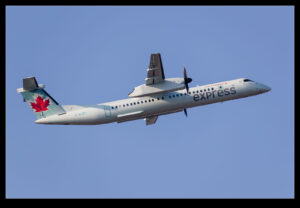
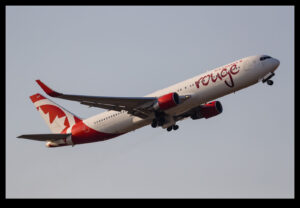
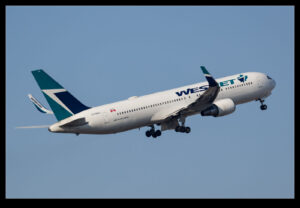
I made a stop at Vancouver International on my way to the city for a few days.  It was the end of the day when I got there and I met up with my friend Mark who gave me a few pointers of what to look out for.  The arrivals were in the opposite direction to that we had expected which messed up things a little but there were still options.  Besides, I hadn’t shot there before so I was keen to see what was going on.

When you live near an airport, you can get blasé about what comes and goes.  The same things every day can be a bit dull.  For someone who has never been there before, though, all of this stuff is new and interesting.  WestJet may be a familiar sight in Canada but I don’t see them very often.  Dash 8s may be very old hat but they have largely vanished where, replaced by the Q400 derivative, so I am pleased to see them.  It is this variety that makes somewhere new so interesting.  These shots are some of the items that sparked my interest that day.  Some more specific planes will get their own time on the blog in due course.

EVA 747s Are the Next to Have Gone

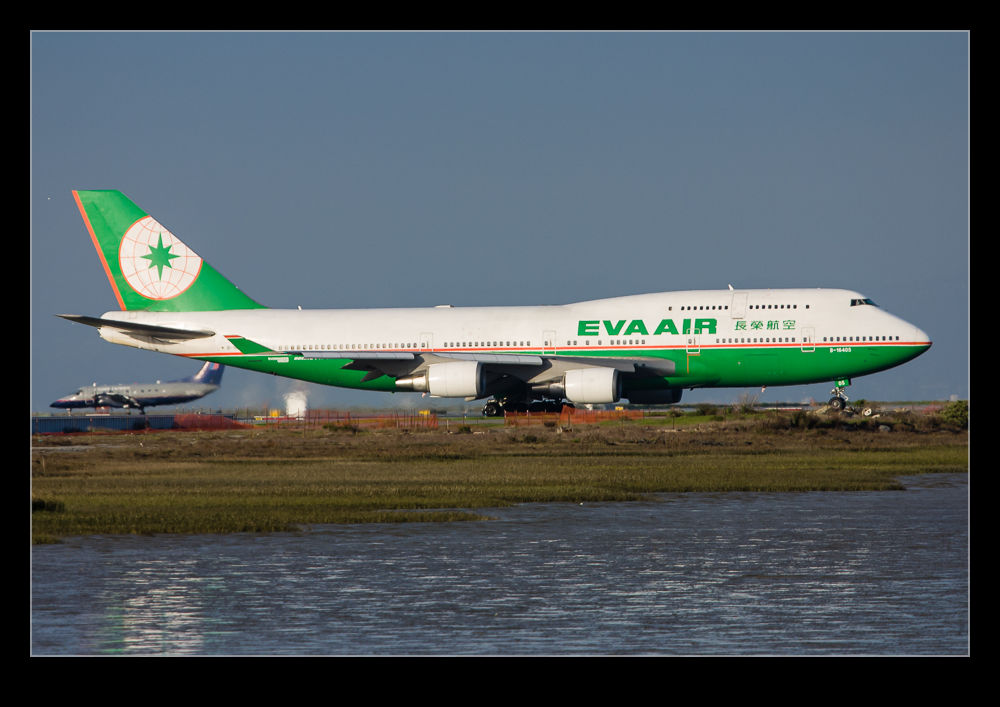
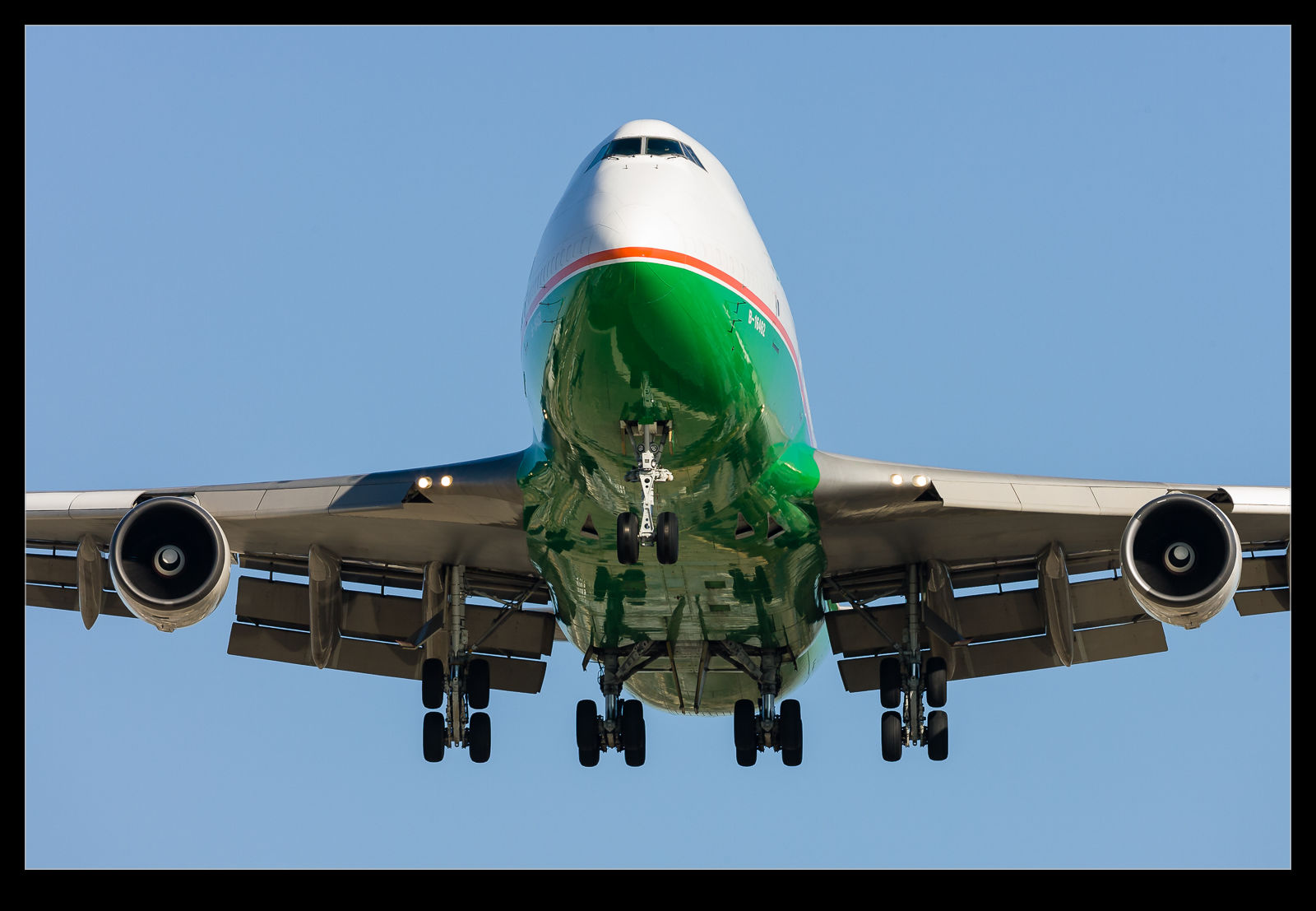
I have documented the demise of some of the fleets of Boeing 747s as airlines progressively send their planes to a new owner or a recycler.  The latest airline to join the trend is EVA Air.  Based in Taiwan and owned by the Evergreen shipping line, the airline was originally launched under the Evergreen name.  However, there was another airline called Evergreen at that time so they had to change the name to EVA Air.  Now Evergreen have gone bust, I guess they could change their name but at this point there seems little reason to do so.

I don’t know whether the retirement of the 747s includes from the freight services or whether it is just passenger use but I suspect the latter.  These shots are just of the passenger jets that I have seen over the years.  They have been harder to see as the 777-300ERs took on more of the routes and now they will be harder still!

The Spooks Are in Town

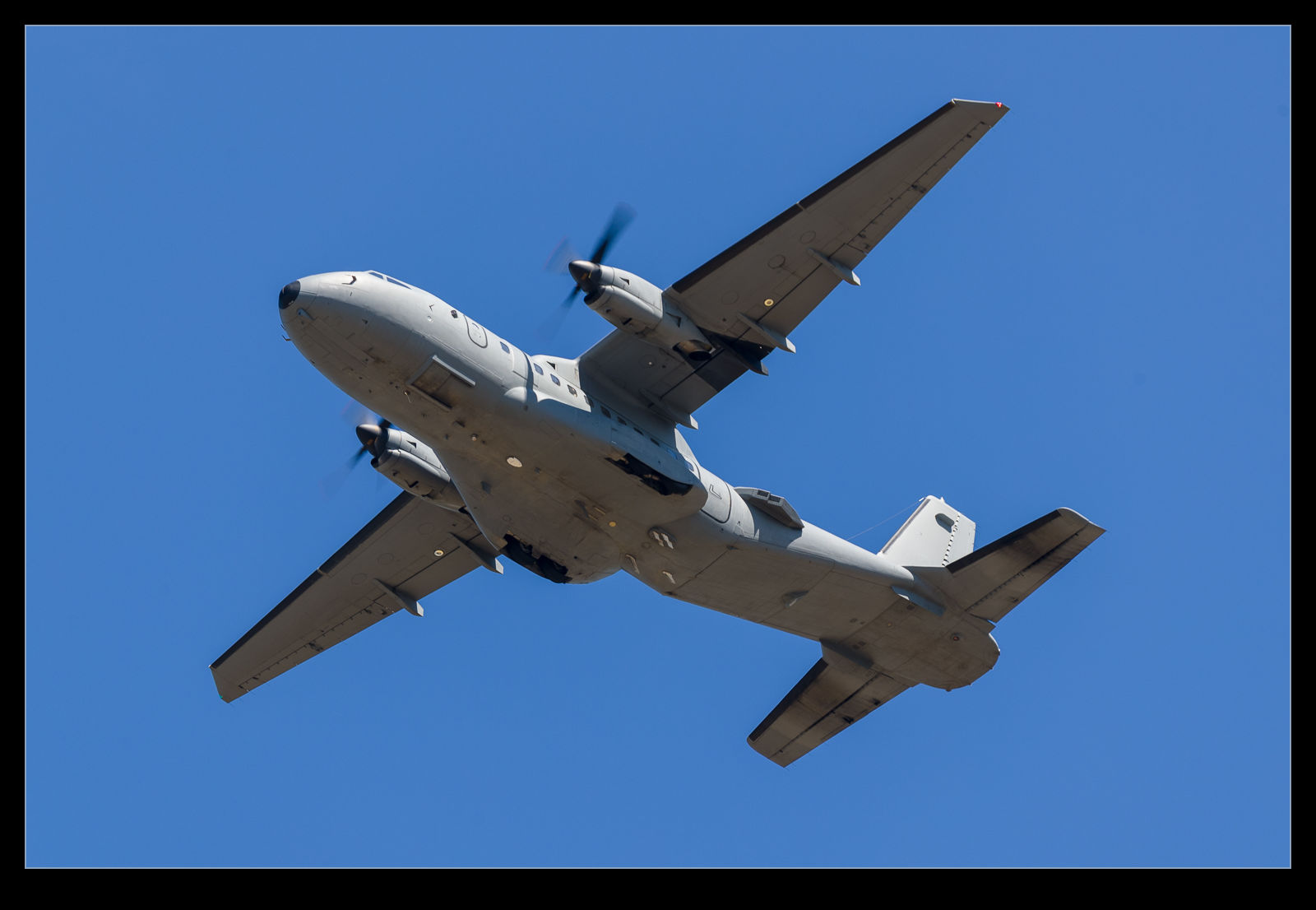
The subject of this post ended up getting some coverage but, when I saw it, I didn’t know about the interest surrounding it.  I was at BFI awaiting the departure of another aircraft when a turboprop took off over me.  I had the camera to hand so grabbed some shots of what I realized was an Airbus CN235.  Painted in a dark gray scheme, it looked a little odd.  A closer look at the shots showed it had a few lumps and bumps suggestive of an array of antennae.  I figured it was just passing through en route to somewhere more interesting.

However, that wasn’t the case.  It had been spotted flying some patterns over the city.  I had seen some odd flight paths on Flightaware being flown by a plane called Spud21.  I loved the name!  it was flying orbits over the city but I couldn’t see anything else about it.  However, when I saw the plane crop up in the media, the article identified that it was the owner of the Spud21 callsign.

I don’t know what the purpose of the flights was.  It is suggested that the aircraft is owned by the US military but whether it is for their use or is in support of an overseas operator, whether these flights were for testing purposes or were checking out the residents I don’t know.  I do know that it was something a little out of the ordinary though.

Parallax Preferences

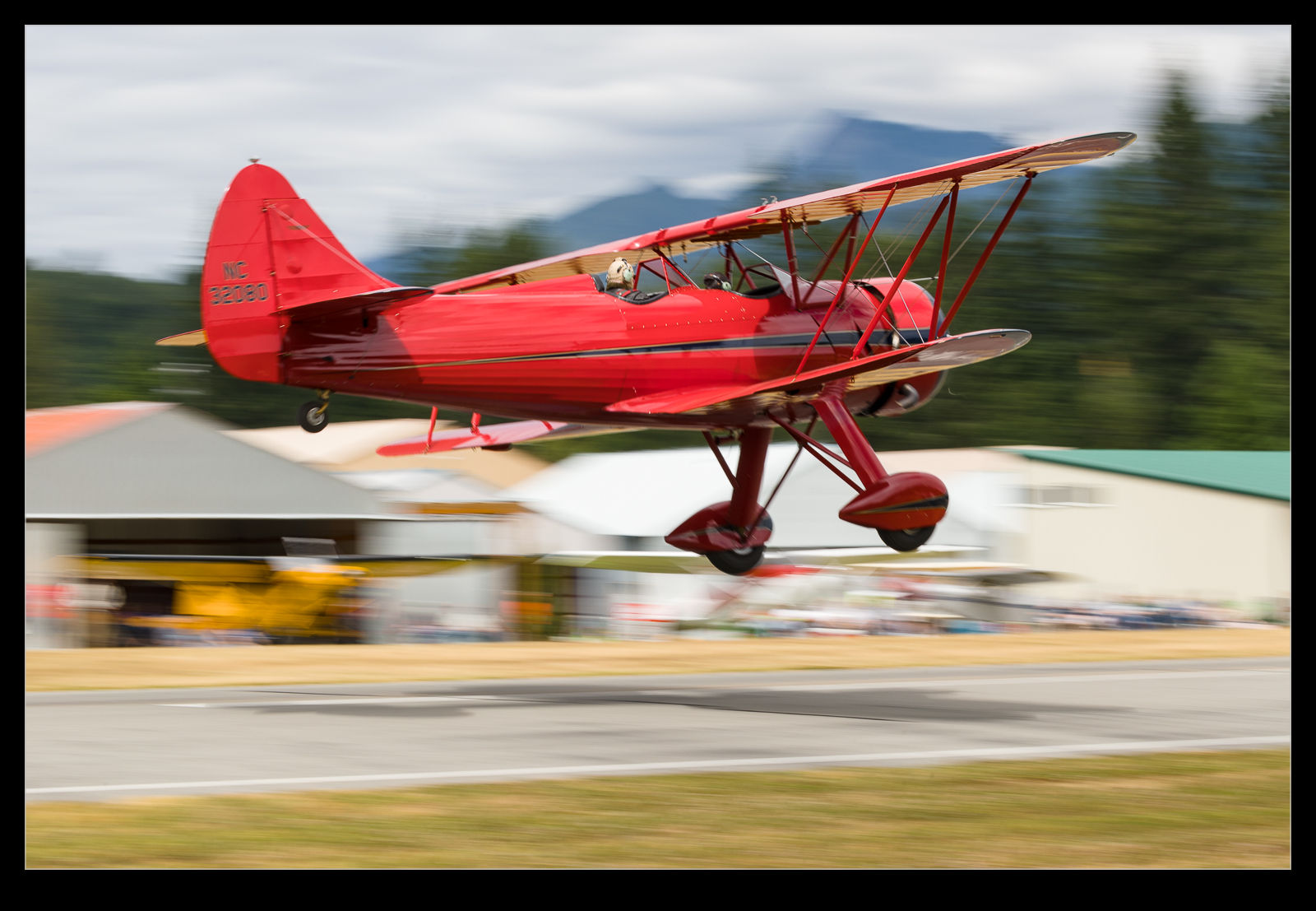
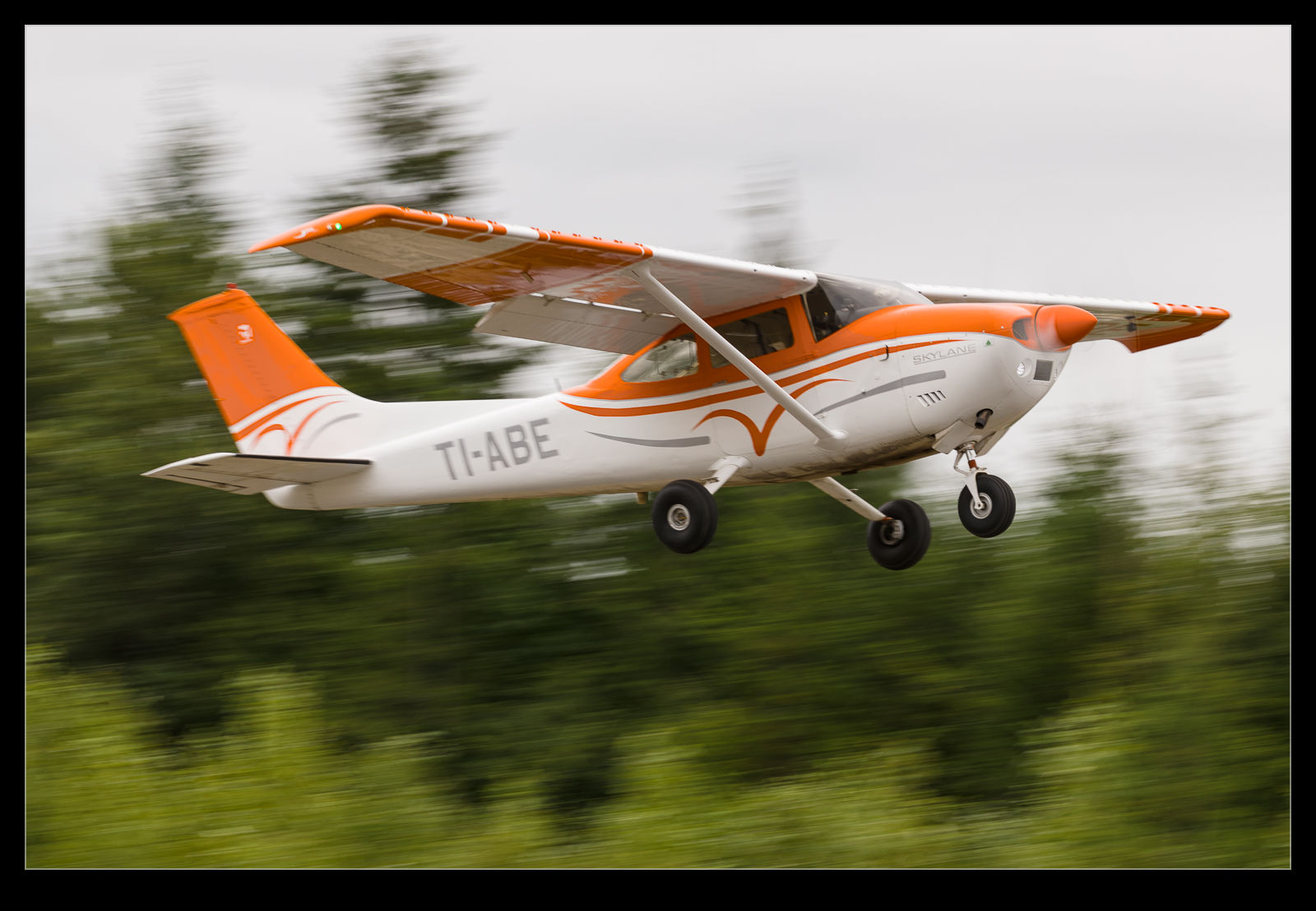
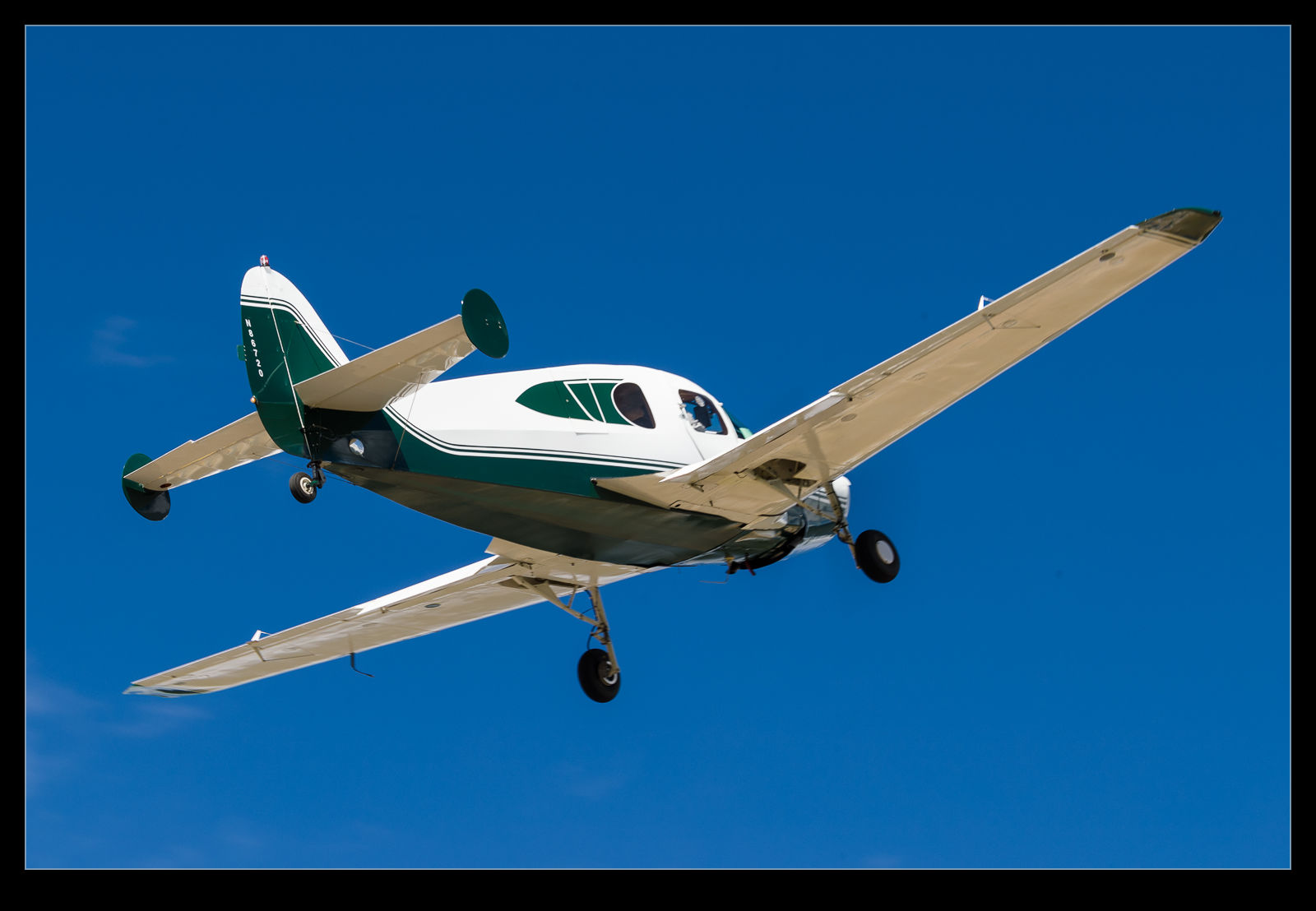
This post is really a question about what people like in an image and what they are prepared to tolerate.  I was at Concrete for the vintage aircraft fly-in up there a while back.  This is an event where you get to be very close to the aircraft.  I was able to experiment with shutter speeds that were very low to get lots of prop blur.  Because the planes are so close, you are not using a long lens and so the low shutter speeds are less likely to cause a problem with camera shake.

However, another problem comes to the fore.  Since you are so close, using a low shutter speed and photographing something that is moving past you, you get parallax issues with sharpness on the plane.  The different parts of the plane are moving at different speeds relative to you as it passes so, if one part of the plane is sharp, another part is unlikely to be so.  The question is, what is acceptable.

I have spoken to friends about this in the past.  One or two of them have expressed their unhappiness with having a blurry part of the airframe.  Others prefer the blur this allows to the background to emphasize the speed.  Some are most bothered about the amount of blur on the prop.

My first instinct with a shot is whether the nose is sharp.  For me this is a bit like whether the eye is sharp on a wildlife shot.  If the nose is sharp, I can tolerate a blurry back end.  But, when the plane is going away from you, the tail is more prominent in the view.  In this case, is it better to have the tail sharp than the nose since the blur of the backend will be the thing you see first and will drive your first impression of the image.  I would really like to know what people prefer.

If You Want Shocks, You Don’t Need Fast Jets

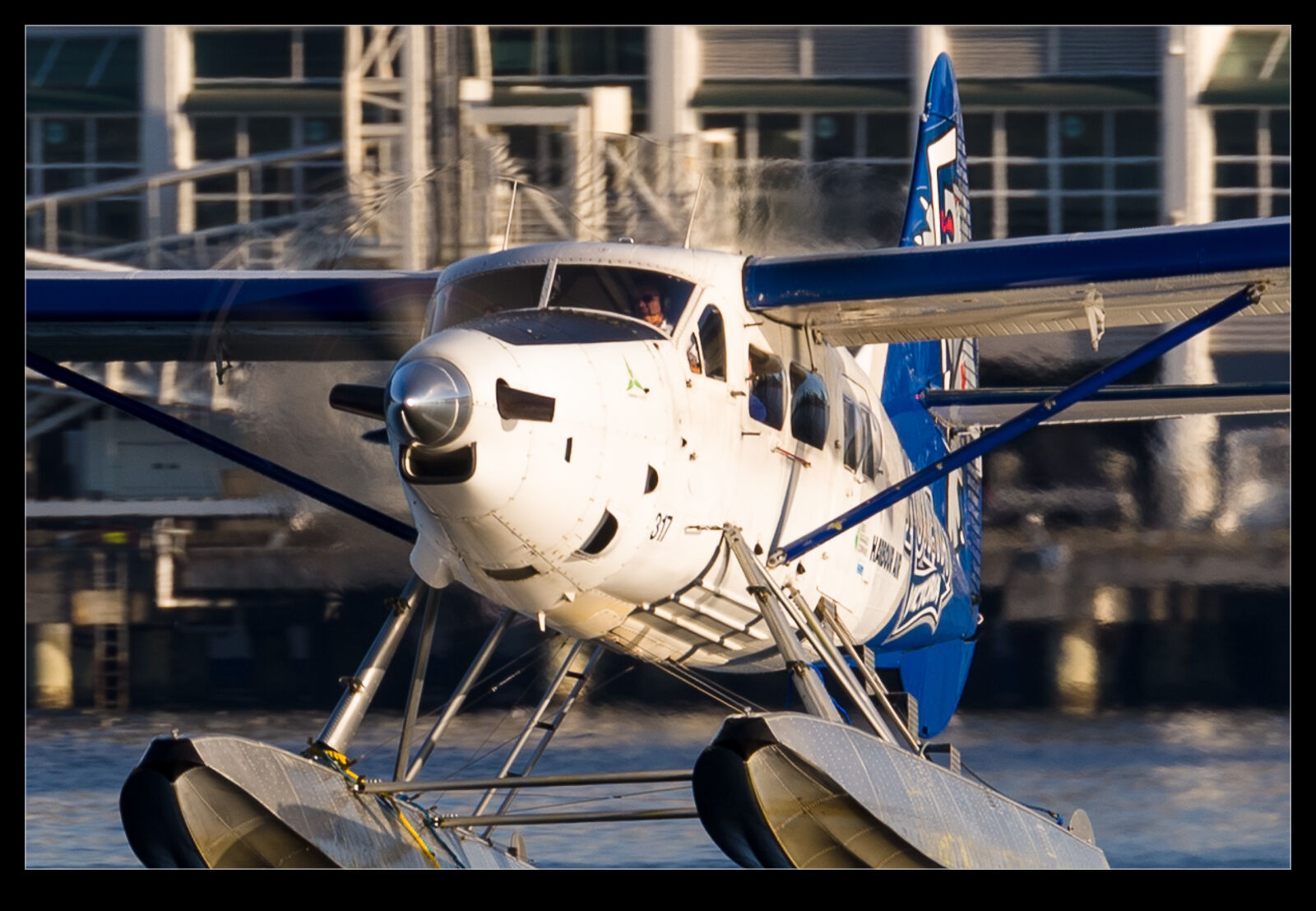
Every once in a while, when photographing a fast jet at transonic speeds, you might get something in the background that allows the diffraction caused by the formation of shockwaves to be visualized.  I have posted about that here.  I was in Vancouver and shooting the floatplanes taking off from the harbor (since it is a Canadian harbor, perhaps I should write harbour).  As I was looking through the images zoomed in to check on sharpness, I realized that there was a visual effect of a similar nature.  (If you think this is a Schlieren effect, it is not.  That is a technique that involves a certain type of lighting to show the density differences but should not be applied to every time you see it in the wild.)

I don’t know whether what is showing up is the result of shocks forming on the props as they spin rapidly or just the tip vortices causing a similar effect.  You can often see diffraction in trailing vortices.  Whatever the reason, as you look above the aircraft at the patterns of structures on the shoreline beyond, you can clearly see some interesting effects.  Since the props are spinning fast and there is an overlap of the wakes from each pass of a blade, the shapes are rather complex.  Now I know that this is a thing, I might be tempted to take a longer lens and see what I can get in more detail of this interesting visual effect.

A Primer 747 Really Catches the Sun

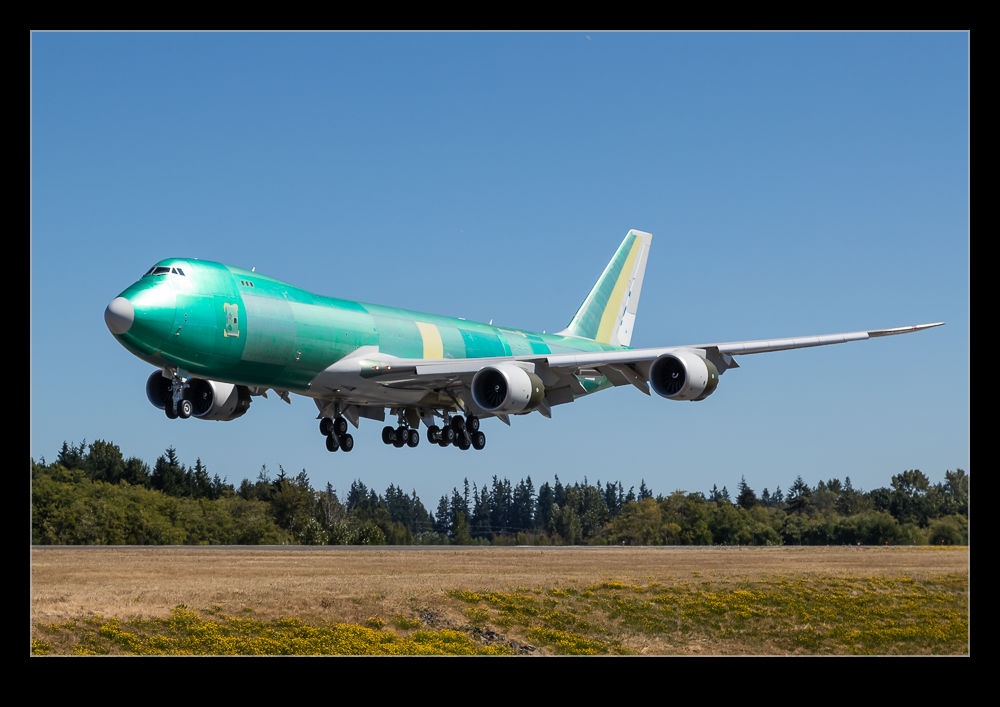
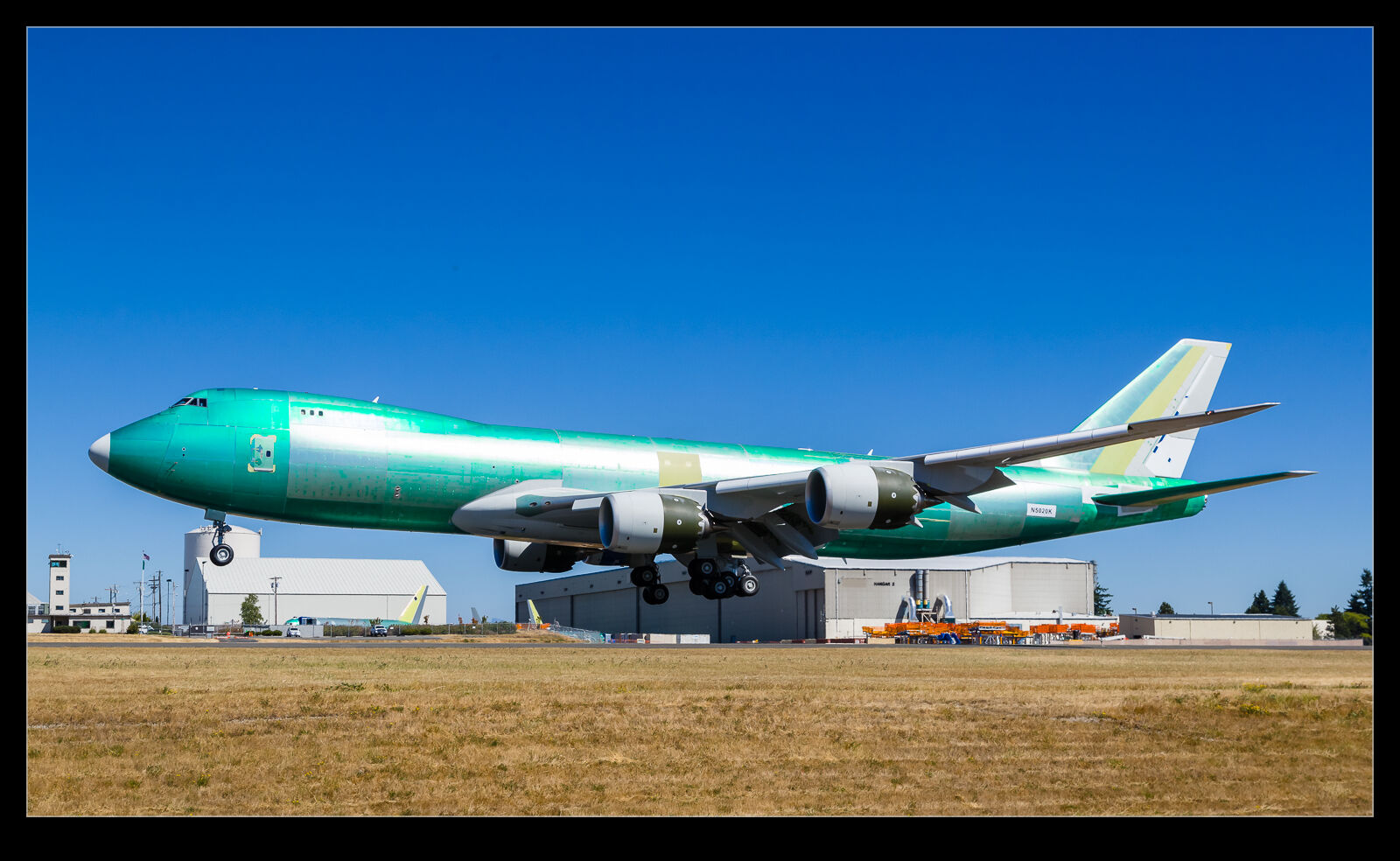
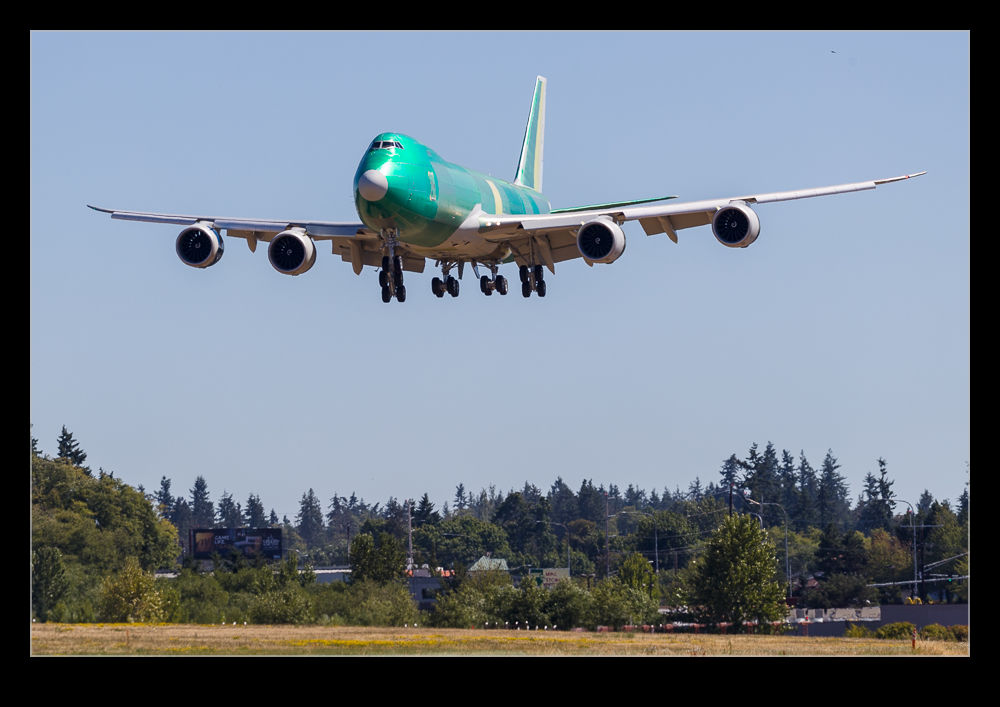
A primer finish on a jet looks a lot more dramatic in sunny conditions.  The green finish of the protective film is quite reflective so the sun really makes the plane shine.  This 747-8F freighter was carrying out some production test flying from Everett during a visit.  I was getting ready to leave when it came in so I got a bunch of shots.  As I was driving away, I heard the sound of a jet and it turned out the plane had landed, turned around and taken off in the opposite direction.

I was a bit annoyed as I saw it climb and turn pretty sharply – I assume it was lightly loaded.  Then it became apparent it was going to make a teardrop turn and come back in to land again.  Since I was now on the road home, I pulled off into a parking lot somewhere close to the line of the approach path and got the camera back out.  Into view it came and flew across right ahead of me.  I got a few extra shots.  Not the dramatic climbing turn but still a nice to have addition.

Return to Evergreen

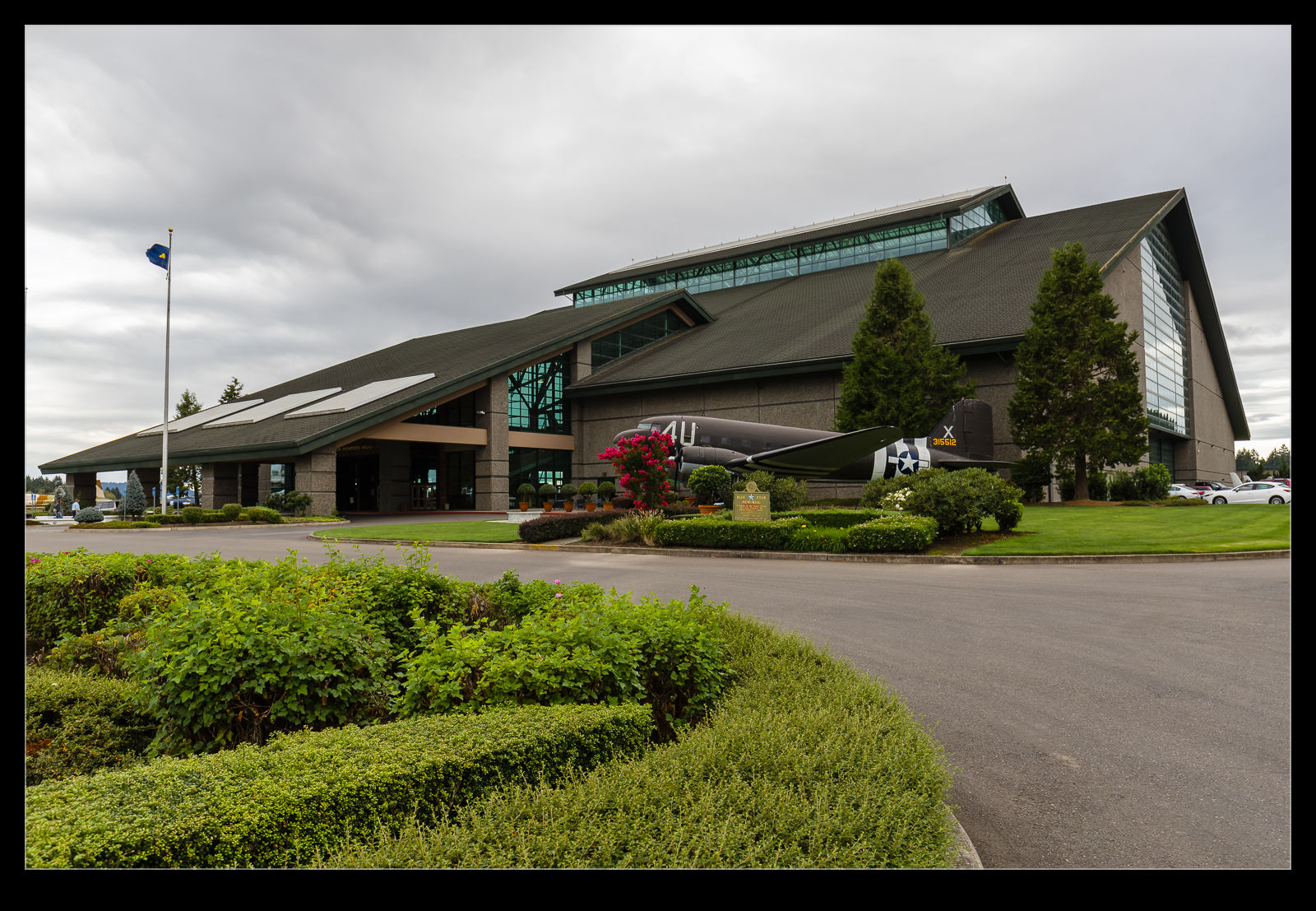
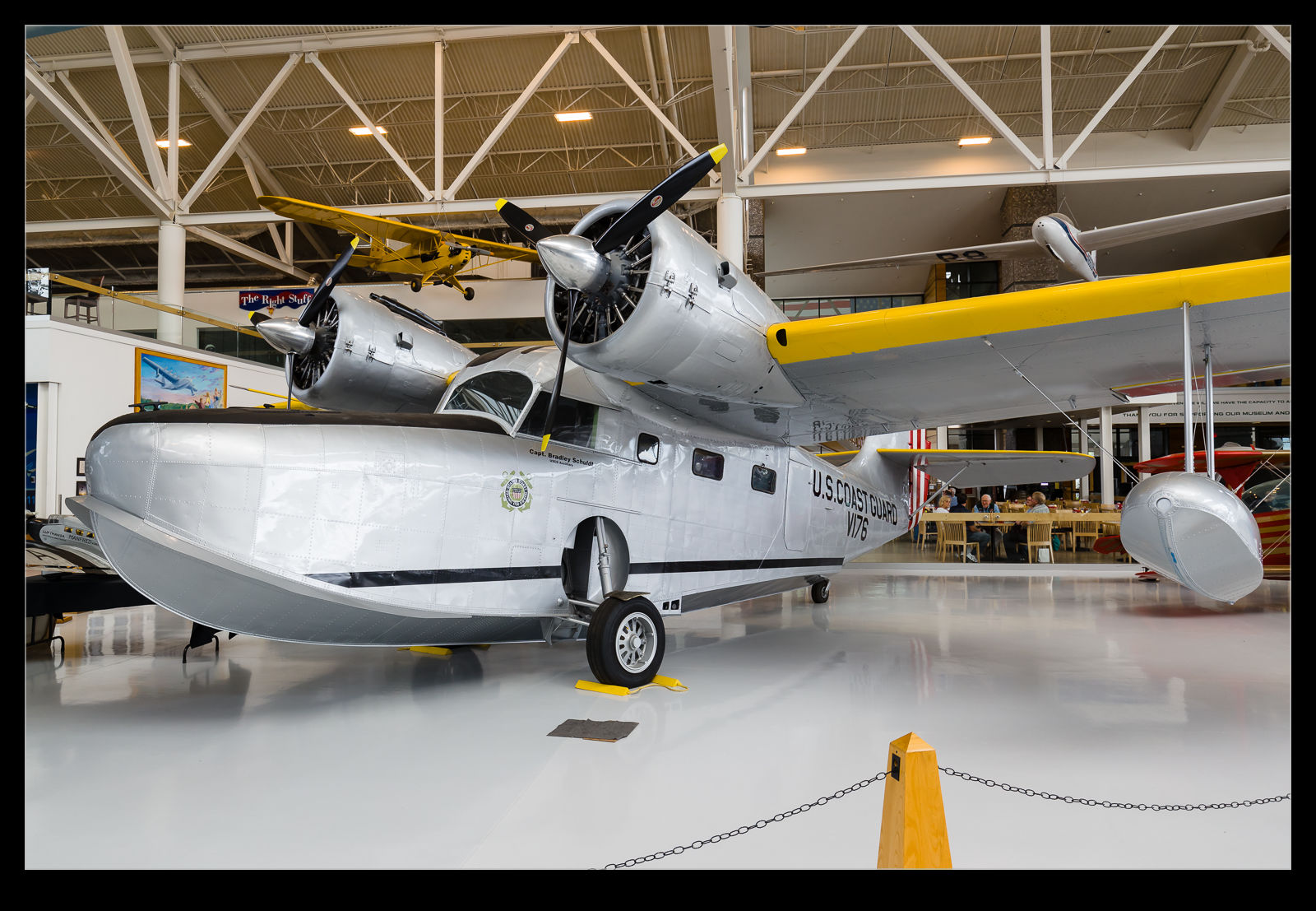
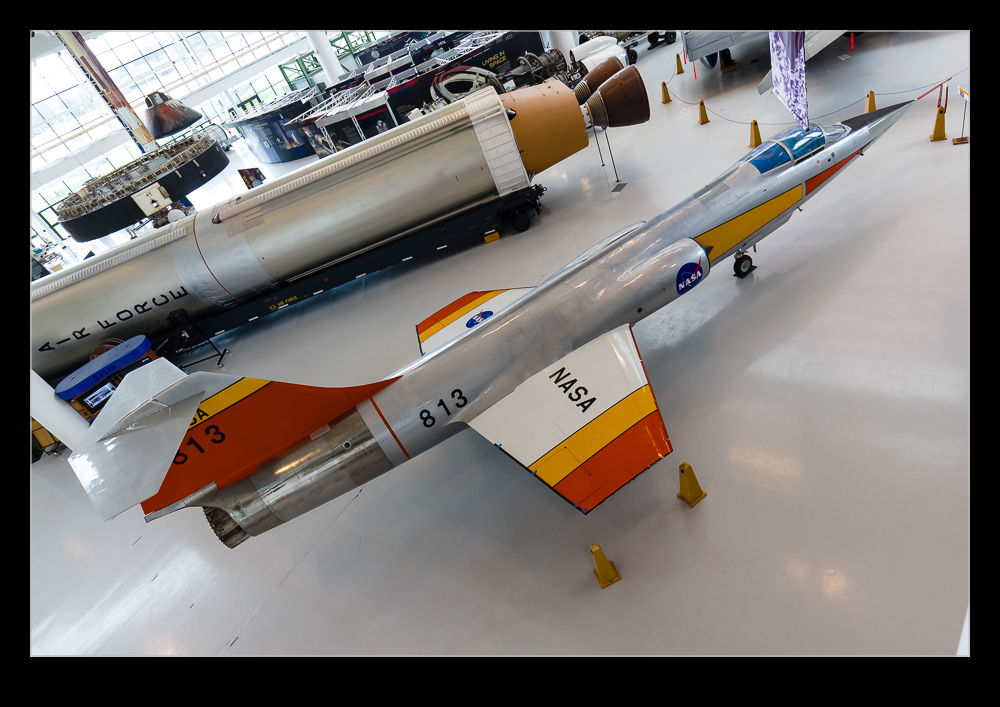
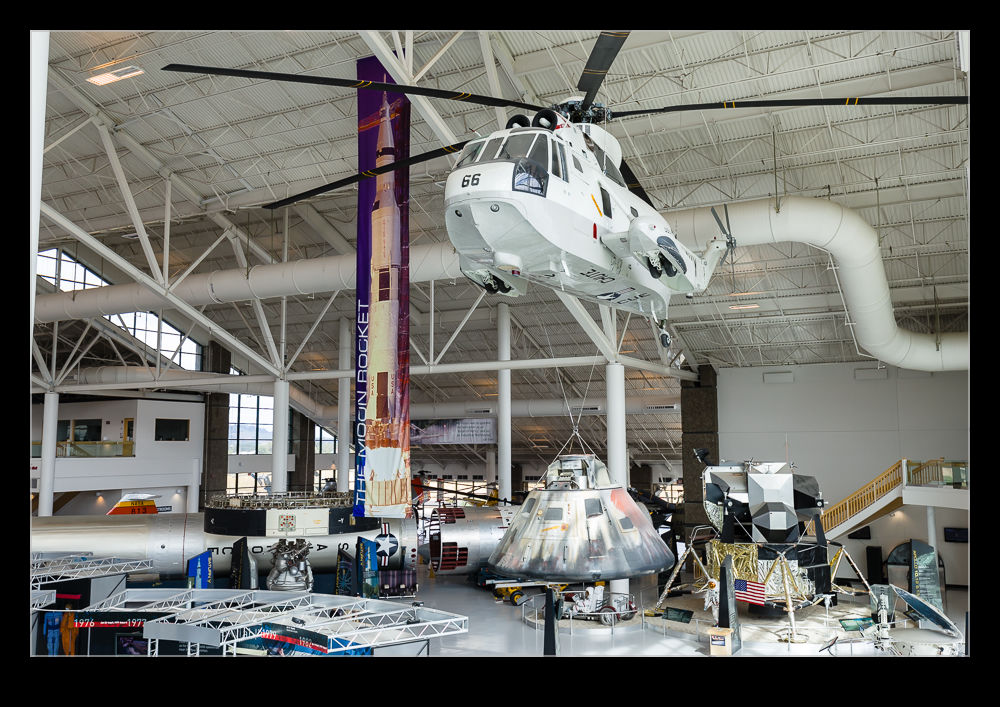
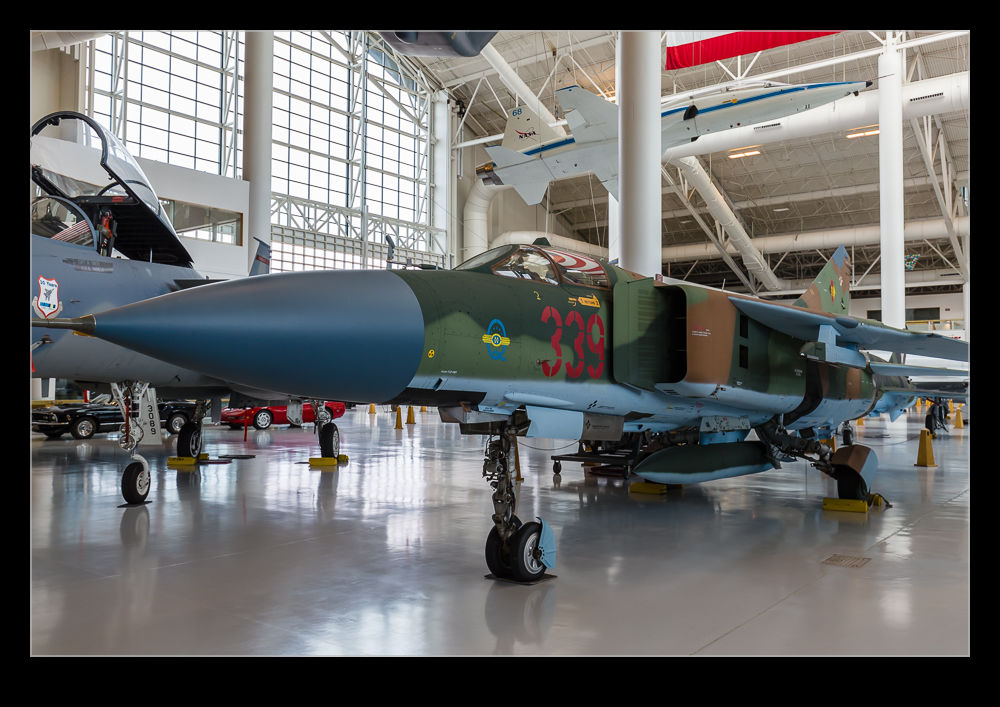
I have made one previous visit to the Evergreen Aviation Museum in McMinnville Oregon.  That was probably ten years ago.  I was in Portland for the morning Open House at the ANG unit so, having gone that far, I decided to go to the museum to see what had changed.  I underestimated a couple of things.  One, McMinnville is a bit further from Portland than I thought it was so it took about an hour to get there and that hour was also going to be added to my return journey.  Also, a lot of things have changed so I was going to spend more time there than I thought.  I was not getting home early that evening!

When I last went, one building housed the exhibits and a second was being built.  It was close to completion and they were talking of space exhibits and, hopefully, a Space Shuttle.  That didn’t work out but now there is certainly a lot more to see.  There are two main exhibition buildings – pre-Vietnam and post-Vietnam eras – housing civilian and military exhibits.  There is also a theater building.  None of this includes the water park that is close by.

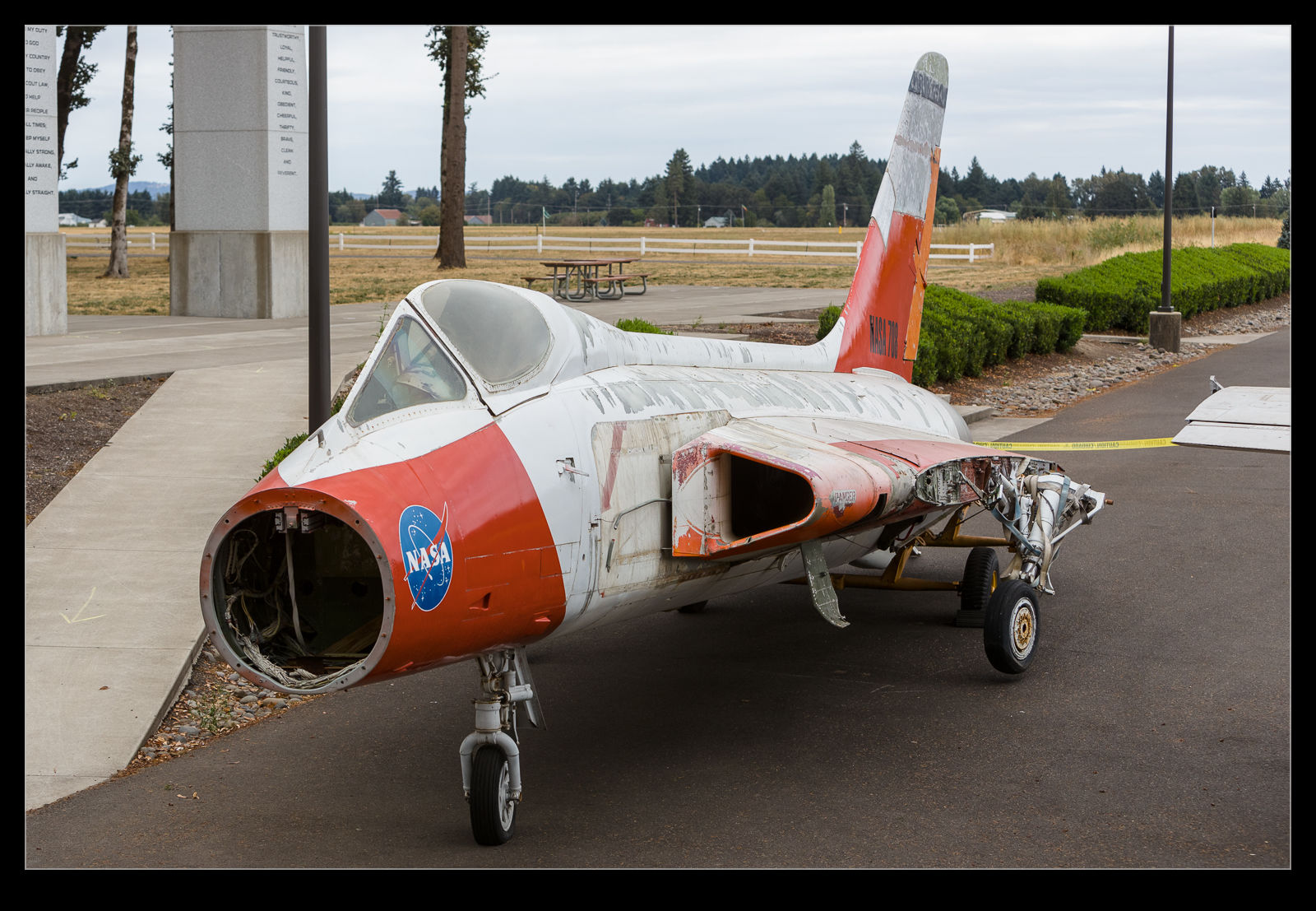
The amount of space means that the exhibits are not crammed upon each other although some areas are a little more cramped than others.  Some helicopters that I rather liked were jammed together.  There is a shortage of space I guess, though, because lots of exhibits are outside and there are a few still scattered around the parking lot awaiting restoration.  That is not a criticism though.  The museum has plenty of great stuff to see (although the Beech Starship was in the parking lot last time I was there and still is, looking a little more forlorn now than it did then).

If I were to try and pick out highlights, it would be tricky.  The Spruce Goose is the main feature of the original building and it still dominates things there.  Indeed, it is so large that, at times, you actually forget it is there because it either is way above you or it fills the view becoming invisible in the process.  The SR-71 is a delight to see at any time and the way that one engine pod is opened up is a nice touch and gives a good idea of the installation for a unique engine.

The rockets and missiles are well displayed and I shall come back to them in another post.  Some of the aircraft are painted up in unusual schemes although these are not always original to the airframe on display.  Even so, they are a change from what you might normally see.  Having a 747-100 parked outside the front of the museum is a nice touch too – a reminder of Evergreen’s operations before the airline went bust.

I only had a couple of hours so I was in a bit of a hurry working my way around but this is definitely a place that you could spend a lot of time.  The journey there is long enough to make doing so something that you should really plan for.  I saw plenty that I had seen before but plenty that was either not there or was not displayed in the same way.  If you are in the vicinity, make a trip to McMinnville.

Easy to Guess Who You Work For

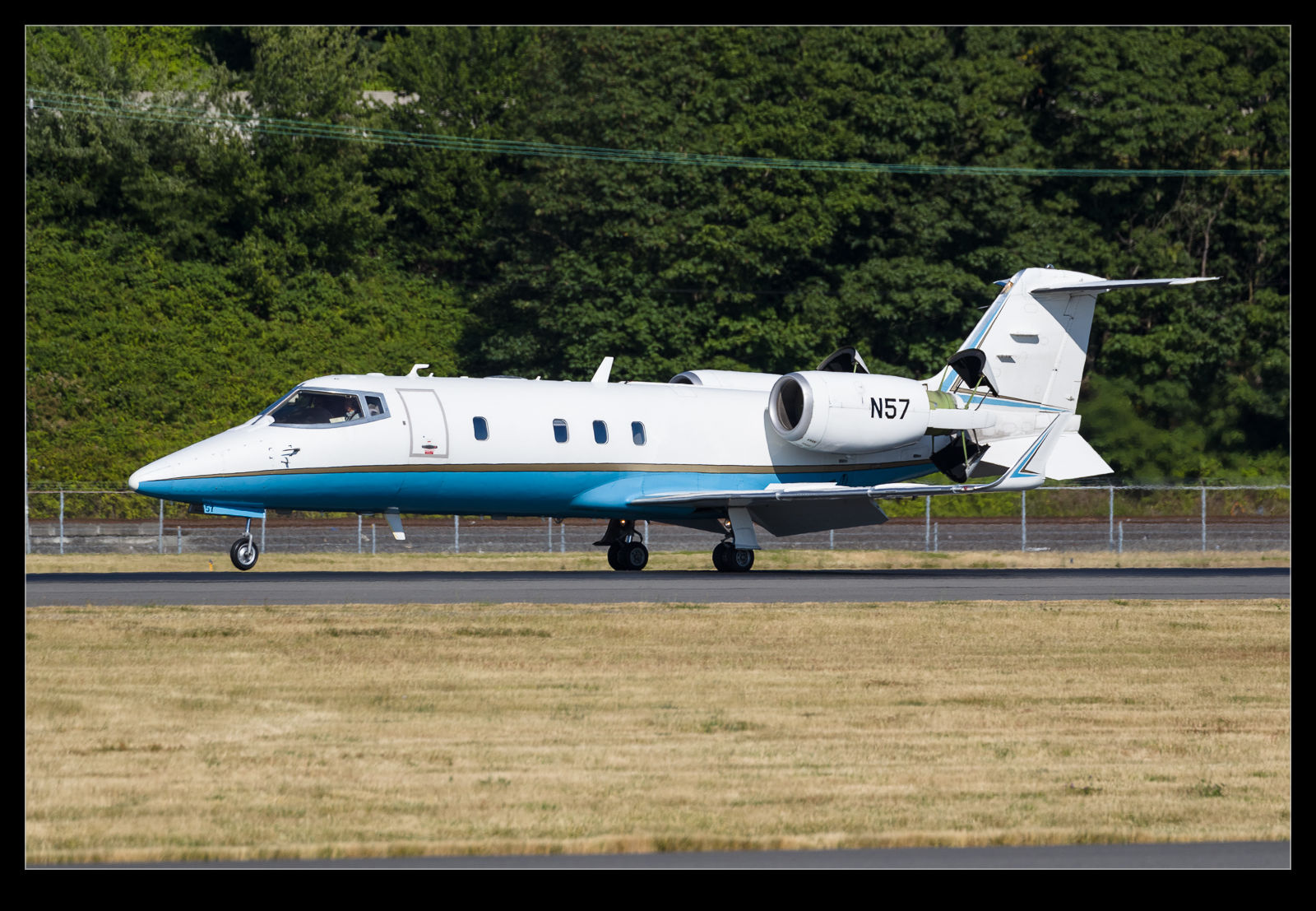
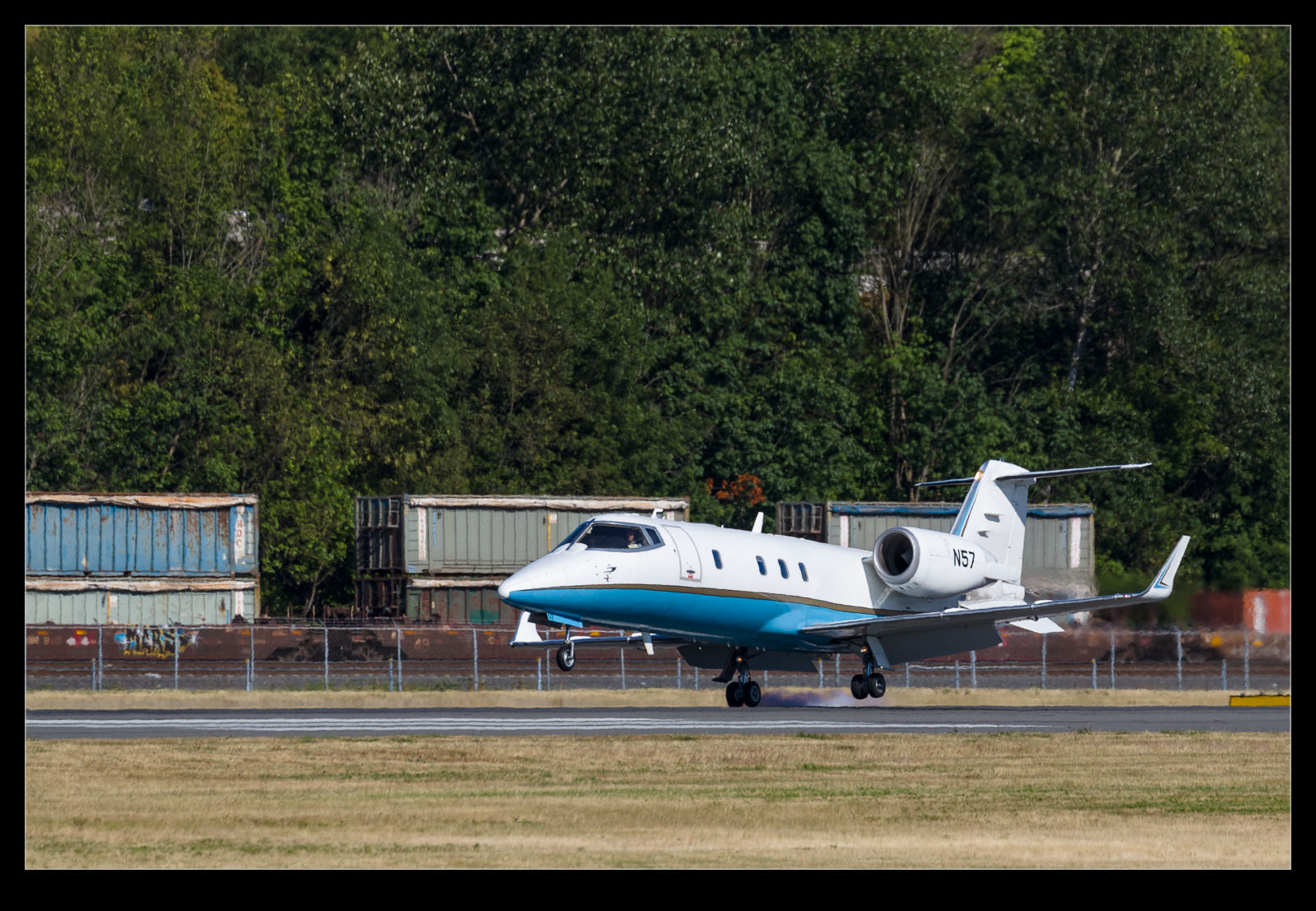
At was at BFI awaiting the arrival of something and I was checking FlightRadar24 to see what was coming in.  I saw a Learjet 60 on the screen south of SeaTac and tapped on it.  As soon as I saw the flight path, it was clear who the jet belonged to.  The shot below was what I saw and the repeated patterns around SeaTac suggested it was an FAA aircraft undertaking calibration flights for the airport instrumentation.

I stopped thinking about it for a while until I saw a jet appear on the approach to BFI that I hadn’t been aware of.  Sure enough, it was the FAA Lear 60.  They plonked it down right on the keys and quickly exited to the FBO.  I imagine that flying repeated sequences of approaches is not the most exciting way to spend the day so they were glad of the break.