Category Archives: military

Fuddy Duddy

The Lyon Air Museum has a B-17 as part of its collection.  Named Fuddy Duddy, I was told by a docent that it is airworthy.  I don’t know whether that means it is still flown or not and a quick search has not brought up any recent photos of it but maybe it is out and about at times.  I walked around it in the hangar and got a few shots of it in amongst the rest of the museum collection.  It looked to be in great condition but I have no idea what is beneath the skin.

A-26 Invader

The A-26 is a plane that had a longer life in service than many of its stablemates.  It found use as a ground attack aircraft in Vietnam despite having its origins in WWII.  It cropped up along the way between these extremes.  Some of them found use as corporate transports too including the one I saw at Lyon Air Museum.  It had been used by Howard Hughes at some point.  Now it is restored to something closer to its operational configuration.

It was tight in amongst the other exhibits which made getting good shots tricky.  It is also finished in black which can make the photography a touch more challenging.  However, having not shot a lot of them, I was keen to make the best of it.  These shots are a summary of what I got as I checked out this speedy beast.  How I would like to get some airborne shots of one.  I believe one lives close to me but I have yet to see it out in the wild.

Hellcat Surprise Pattern Work

I had gone to Paine Field for an Antonov arrival that has its own post here.  We got a nice bonus while there.  A Hellcat was up for a Check flight of some sort which I didn’t even know about until it flew a pattern overhead.  I had figured it was just another light aircraft making a midfield departure.  The overhead was nice to see but a bit distant.

However, whatever the check flight was for was obviously done quite quickly as they called for an approach.  As they came down final, another light aircraft was ahead of them and was not going to vacate in time so they were told to go around.  Two approaches!  Thank you.  The first had been straight in but the second was a nice curving approach with a good top side view.  That will do nicely.


P-3s Coming Out of the Sun

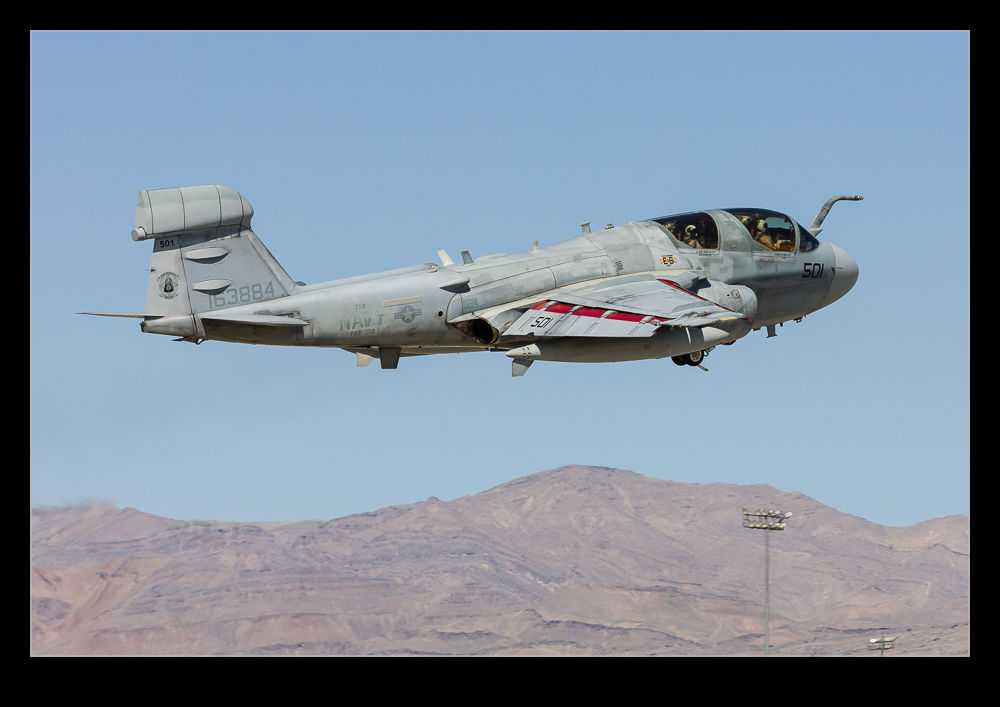
When Ault Field is operating on 25, the aircraft taxi out to the departure end along a taxiway that gradually brings them into view from the crash gate.  The sound will usually precede them and, in the case of the P-3s, that is a pretty distinctive sound.  As the day wears on, they are coming at you out of the sun so a bit more silhouetted but that helps to make them look more interesting.  They pull around to the hold point, sometimes mixing in with the Growlers before departing off to the west.  This is a sight that will soon be gone as the P-8s take over.

Aussie P-8

With the progressive retirement of P-3 Orions around the world, the Boeing P-8 Poseidon is starting to take over as the dominant maritime patrol aircraft.  The US Navy is the principal customer, but Australia was relatively quick to order the type too.  They are now in the process of being delivered and I happened across one coming back to Boeing Field at the end of a test flight.  Since it was operating from their military ramp, it taxied back along the field after landing and right by giving me a good look at the configuration the Aussies have gone with.  India has been another customer and, before too long, the first of the RAF jets should make it through production.

More FCLP at Coupeville

My buddy Mark let me know that some more FCLP training was scheduled for Coupeville on a day with a good weather forecast.  Sadly, the wind suggested they would be operating in the opposite direction to that of my last visit (as discussed here and here) but there was the possibility of some morning flying which might mean the sun was on the right side for a while, even if a bit on the tail of the jets.  Unfortunately, the unit didn’t get the memo and they showed up in the middle of the day for the first round of flying so, while the conditions were okay, they were working against us.

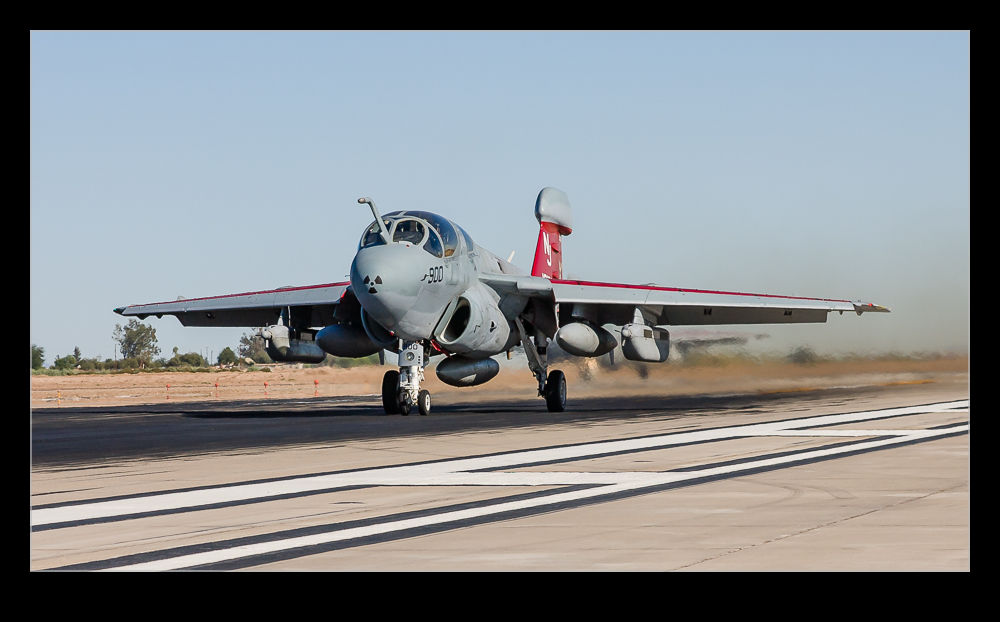
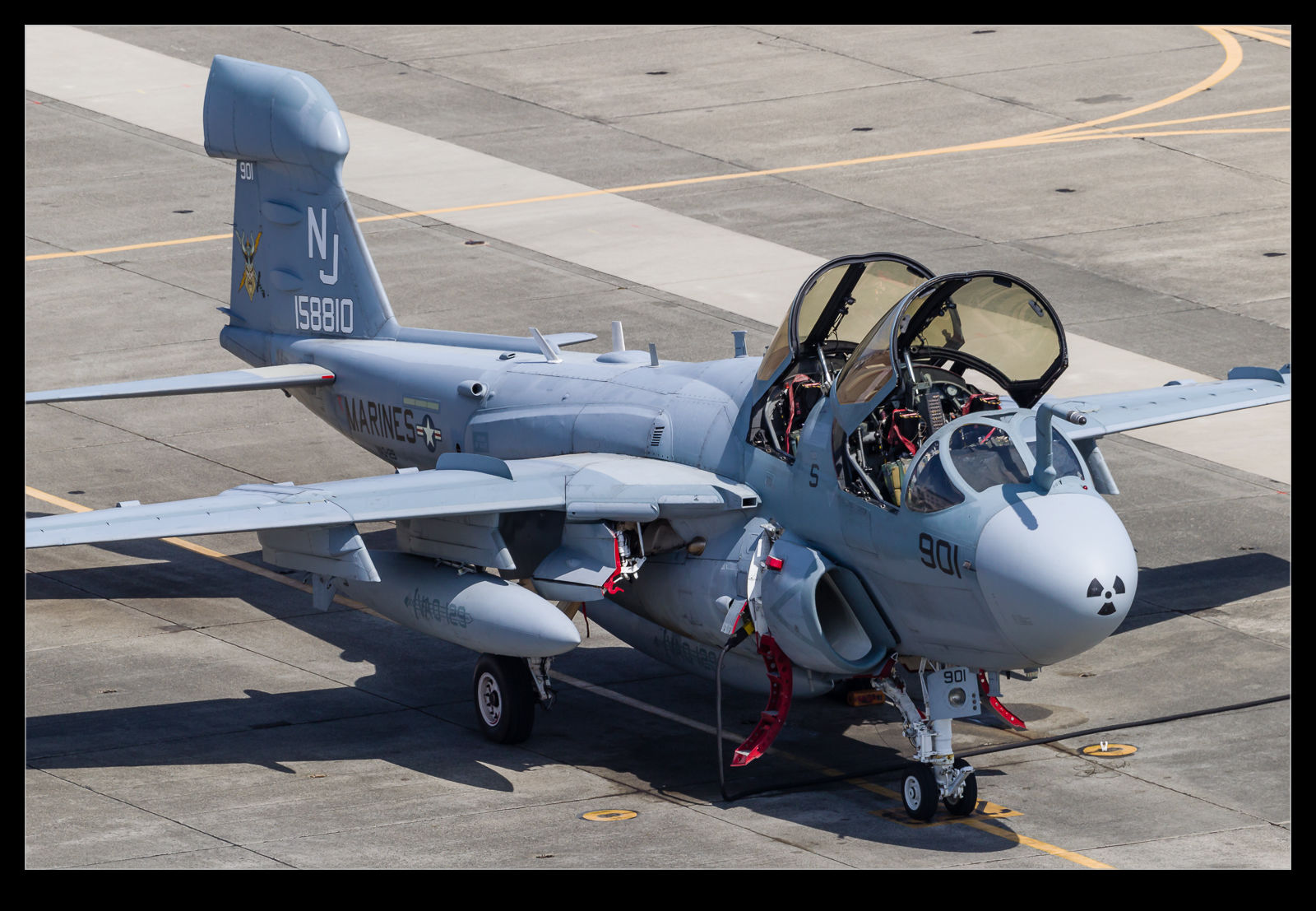
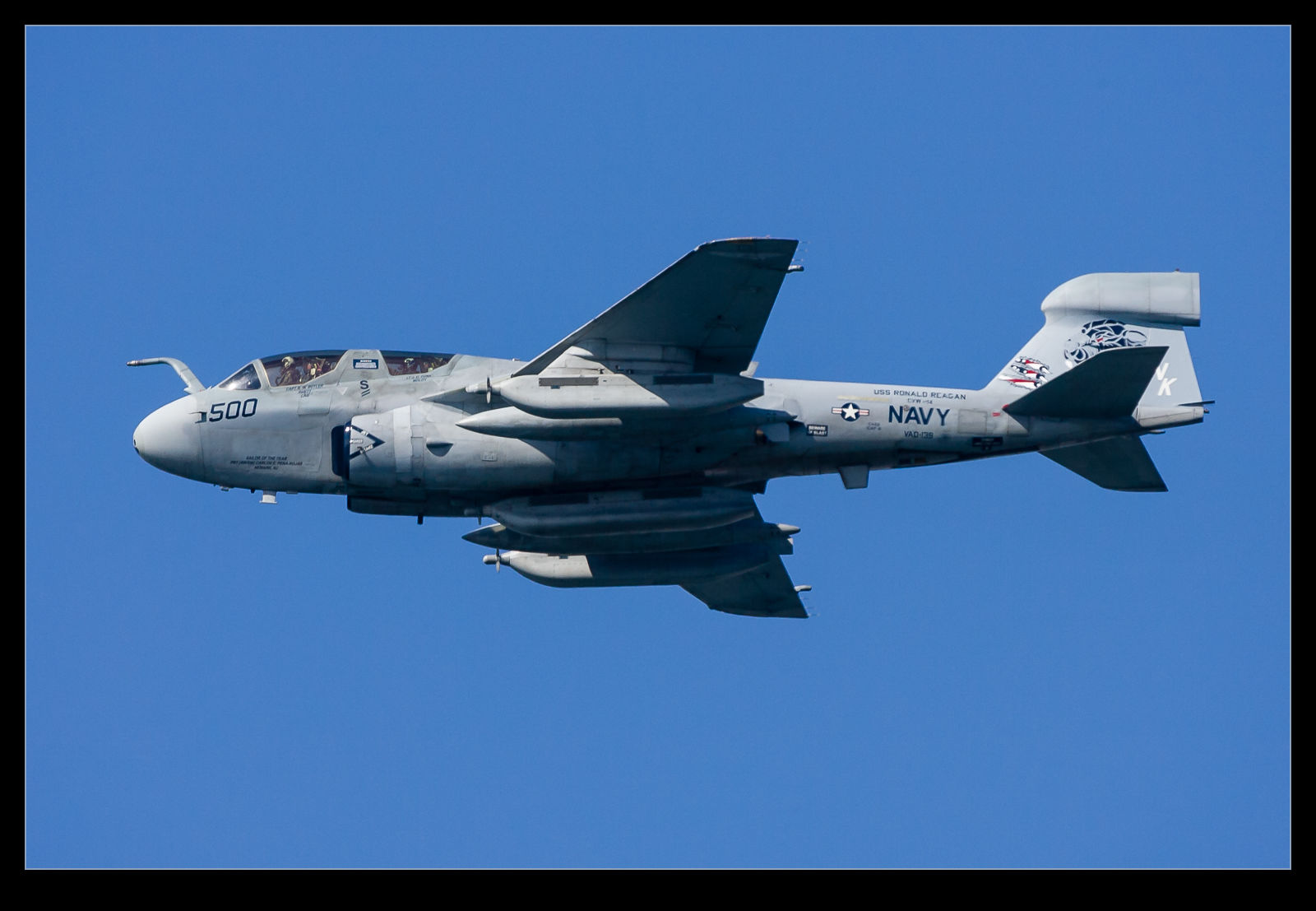
Still, there are a lot worse things to do than watch Growlers bouncing through FCLP training.  You can move along the fence line at Coupeville to try and vary the angle, so Mark and I were zipping to and fro in order to try and find something different.  There are some bushes on the field that can be a touch inconvenient when looking to capture the moment of touchdown but a little experimentation and you could get a good result.

The jets appear to come through a tunnel in the trees as they are on final approach and the trees provide a nice backdrop for touchdown.  As they power up and away again, the light angles are most favorable so you can get a few good shots.  However, they end up pretty samey pretty quickly.

We expected a second batch of jets in the early afternoon so headed to the other side.  Here you are a lot further from the runway so the jets on the ground are rather distant and heat haze is a bit of a problem.  We got a few movements and then headed back to a nearby park where the jets tend to turn over the top of you as they enter the downwind.  The light is a bit better here but, again, the shots are pretty repetitive.  The only change is when the jet is done and it climbs straight out cleaning up as it goes.

With a decent amount of shots made, we decided it was time to try our luck elsewhere.  The Growlers would get back to Ault Field pretty quickly but we were going by car so it was a little longer for us.  However, there was much to justify the trip and that will be apparent in some upcoming posts.
One of the Early F-16s

The early versions of jets are often repurposed throughout their life.  They serve a role for testing but they are not configured like production jets and to make them so is too expensive to be worthwhile.  Besides, they are instrumented to some extent so they can be useful for carrying out alternate tests.  As a result, they often get used for trials, research tasks or development of alternate concepts.  The early F-16s did a lot of this sort of work and ended up in some odd programs like the AFTI effort.  Sitting outside at the Frontiers of Flight museum is one of these test aircraft.  It spent its life with General Dynamics (now Lockheed Martin) at Fort Worth and, once it was done with, it found a new home at the museum.  Compared to the average F-16, this jet will have had a lot of interesting experiences!
Flying Pancake

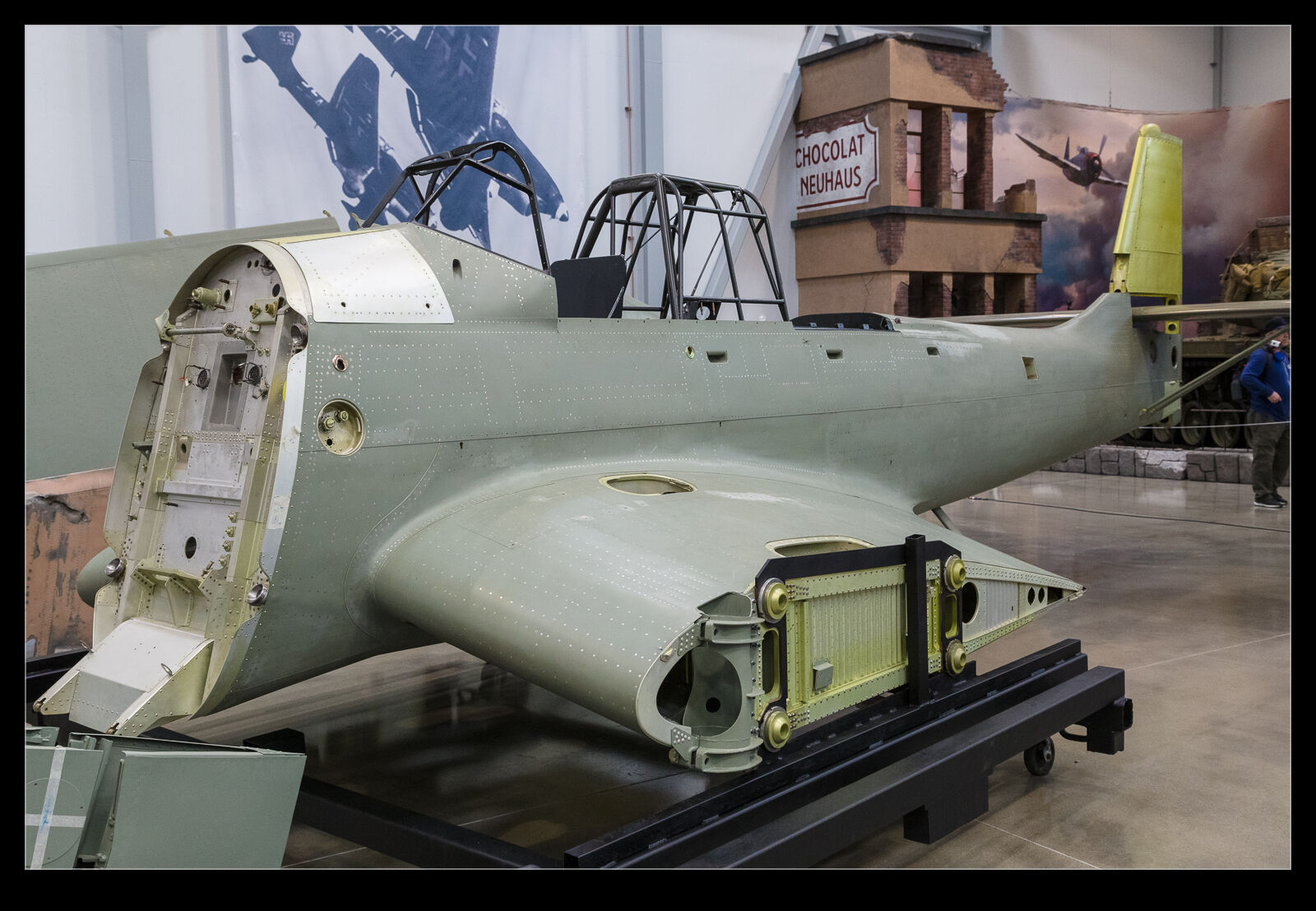
A long time ago, I was part of an ISAP symposium held in Dallas.  During the field trip day, we went to a number of locations, all of which were very interesting.  One of them was the restoration facility at what was then the Vought factory, now Triumph I think.  This was run by volunteers that had retired from the plant and was working on a number of projects including painting an F4U while we were there.  Another project that was a work in progress was the Flying Pancake.  At the time is was skinless and in a rotating frame to allow everyone to work on it more conveniently.

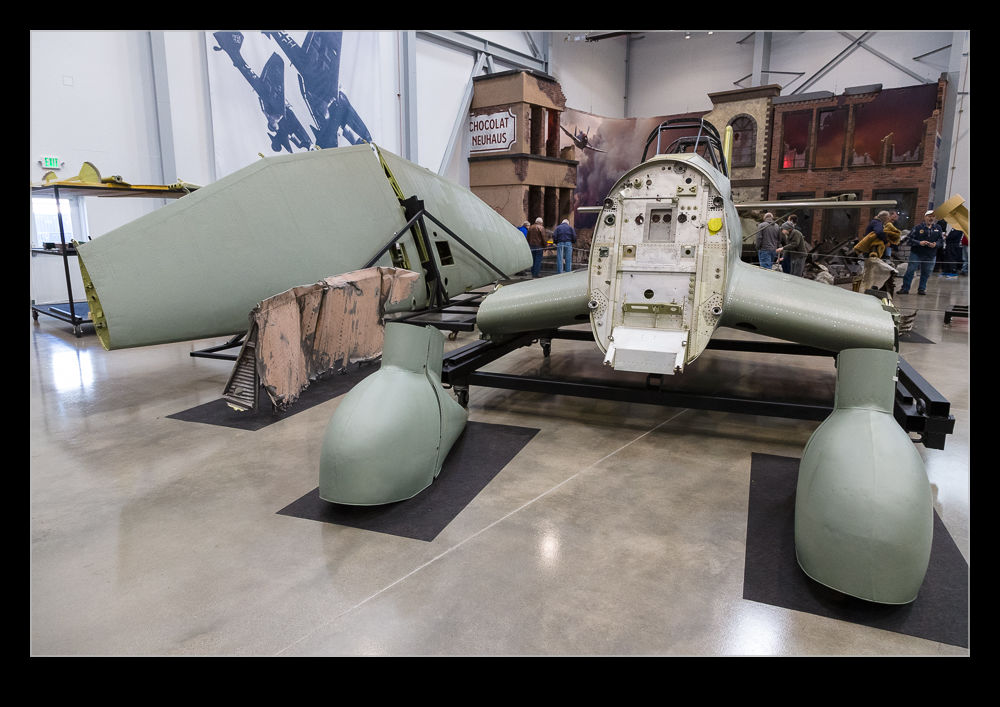
Roll forward to now and I was at the Frontiers of Flight Museum at Dallas Love Field.  The museum is the home of the finished restoration.  The aircraft looks fantastic.  The restoration team did a great job.  To see it completed including the huge propellers is something special.  Fortunately, there is a mezzanine level above the plane so it is possible to see it from a number of angles.  Great job everyone involved.

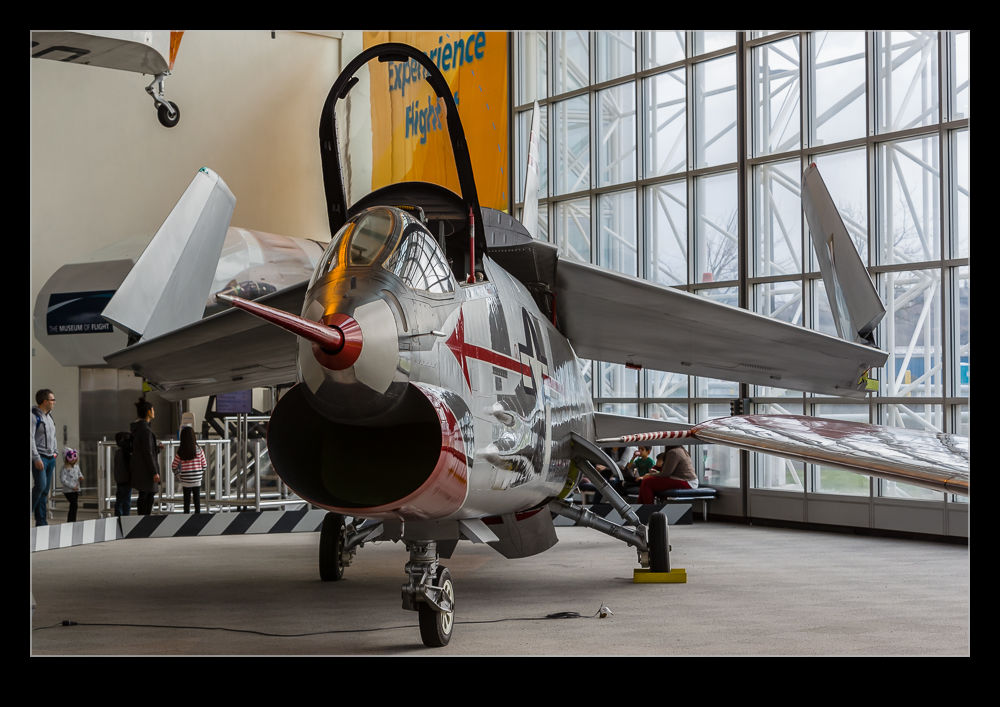
Skyray – Or Is It?!

The A-4 Skyhawk had a long and illustrious career in many air forces around the world.  It has a close cousin that didn’t fair so well.  The Skyray shared a few design cues with the Skyhawk but it was designed as a fighter rather than an attack aircraft (although the Skyhawk spent a lot of time as an adversary fighter over the years).  I find the Skyray a more attractive aircraft than the Skyhawk (not that I have anything against the Skyhawk) but that might be more about the rarity value.

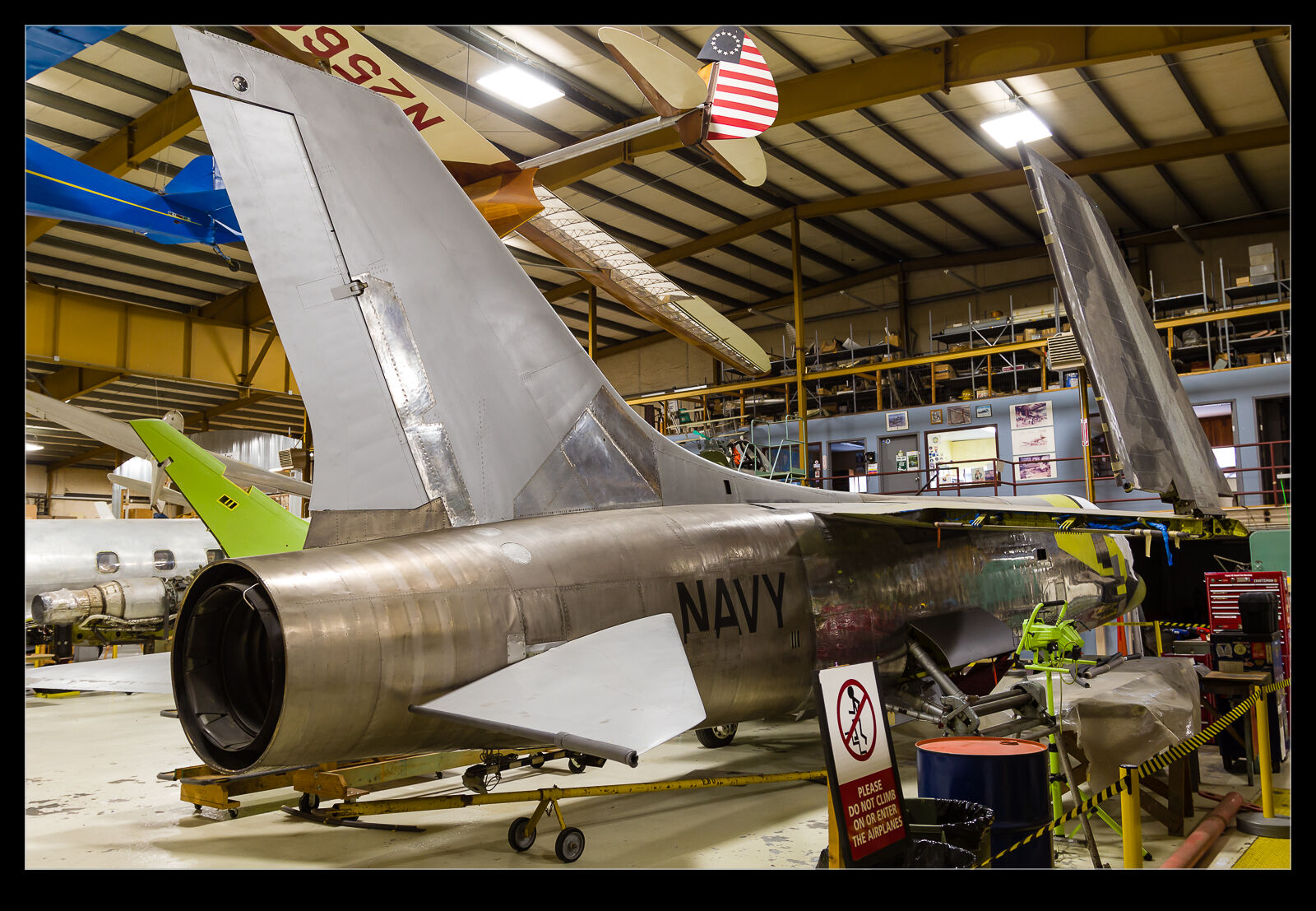
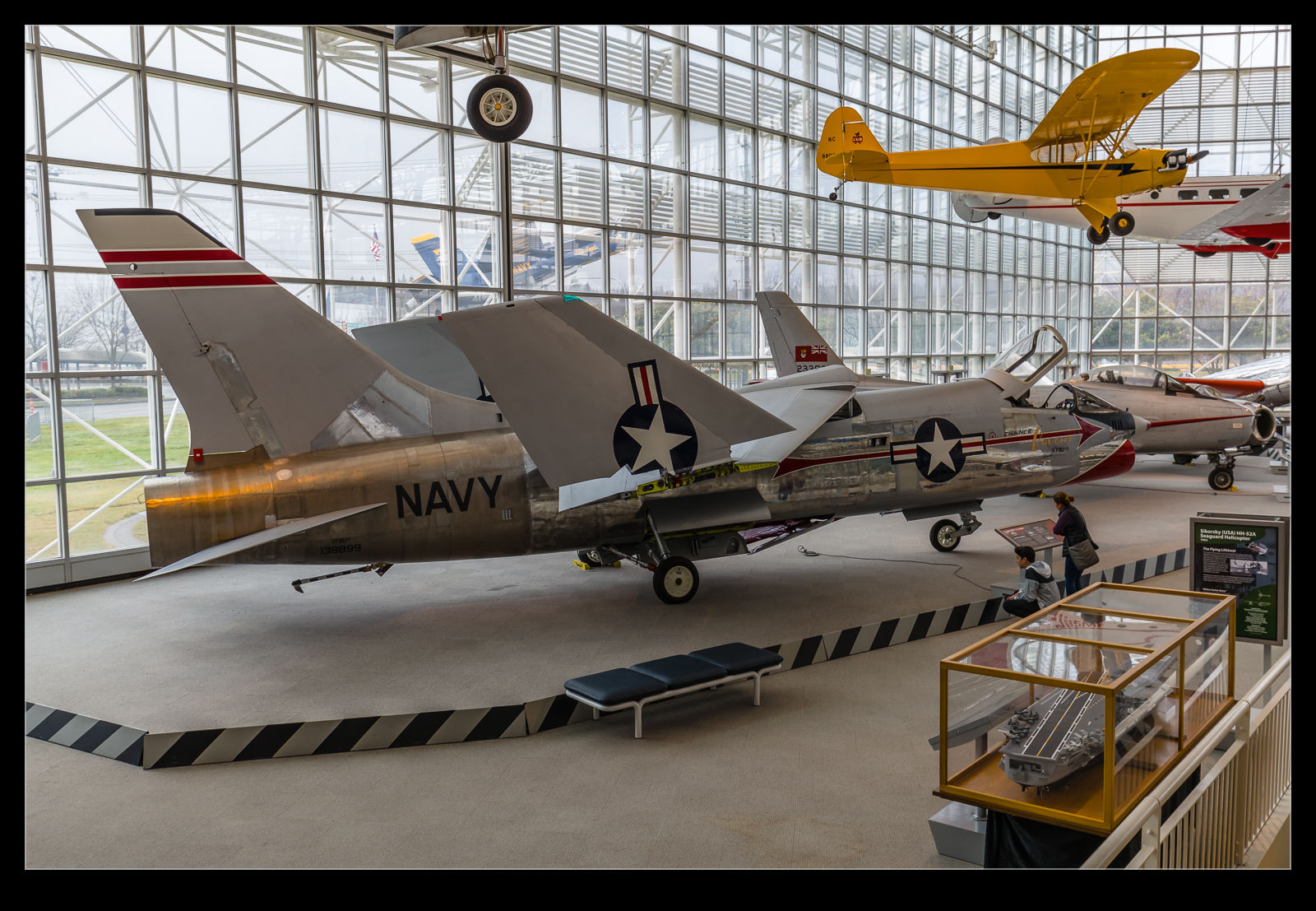
I thought I had come across one parked in the parking lot of the Evergreen Aerospace Museum in McMinnville Oregon.  I was surprised to find it there at all and more so to see it sitting outside.  I am not sure what the future is for the jet – obviously some parts are removed for the time being – but I hope it will make it in to restoration.  It certainly is worthy of a good home.  That is even more true because it is not a Skyray.  It is actually a Skylancer.  This was a development of the Skyray that got so modified that it became a new type.  It never got to production and this example was used by NASA before retirement.  In this location, it is possible to get up on the earth bank behind it to get an angle that might be trickier if it ends up inside the museum.

Lyon Air Museum

A weekend in Southern California for work was not my idea of fun but I did have a few hours free on the Sunday morning so I headed down to Santa Anna to the Lyon Air Museum.  It is located on the opposite side of John Wayne Airport from the main terminal building and is not terribly obvious unless you look hard.  Even the entrance road is a bit obscure and could be easily missed.  However, once there, it was definitely worth the time.

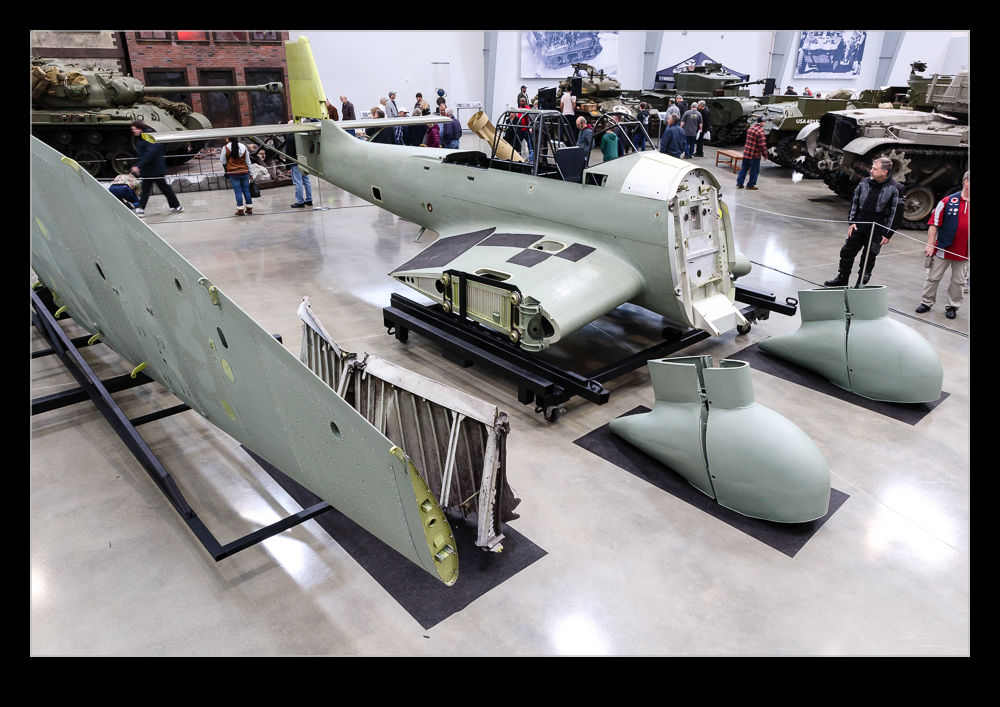
The museum is in a modern structure and has an impressive collection.  Supposedly the planes are all airworthy and they have some interesting ones there.  Some of the collection will get their own posts.  For now, here is an overlook of the museum and a few of the side exhibits that don’t get their own story.