Tag Archives: photo

El Al 777 Overwing Vortex on Takeoff

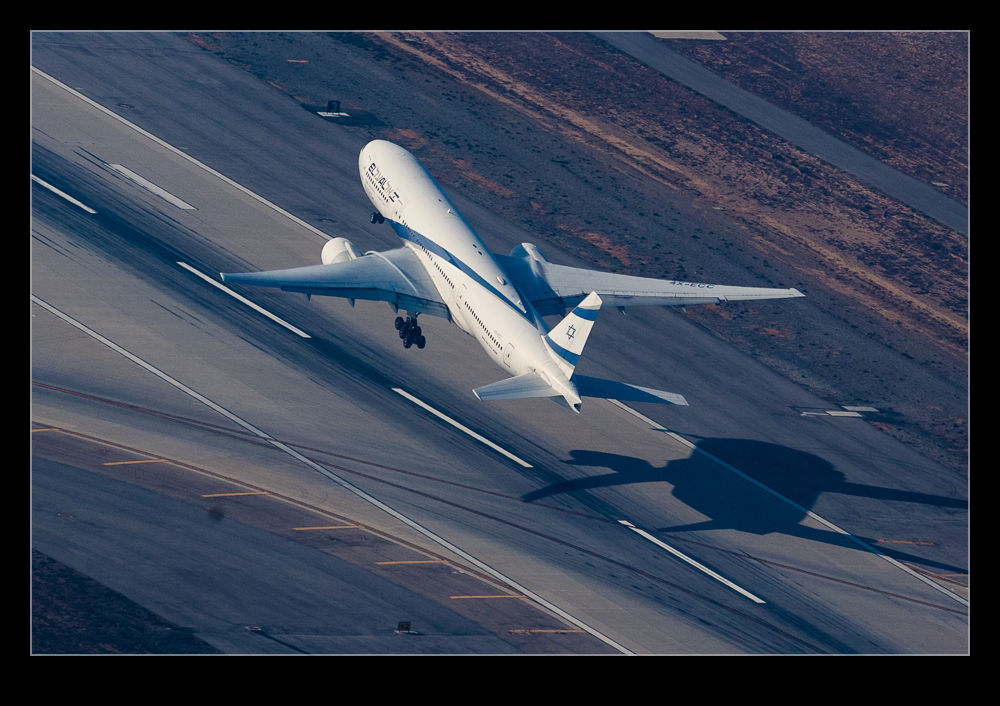
Engine nacelles are optimized for cruise performance.  At high angles of attack, their shape results in some rather awkward flow properties which can influence the wing performance above and behind them.  In order to control things, you will see small vanes attached to one or both sides of the nacelle that generate a vortex that stabilizes the flow somewhat.  As an aircraft rotates at takeoff, the strength of this vortex increases and it will often become visible as moisture in the air condenses within in.  This vortex will stream back up and over the leading edge of the wing.

When you are inside the aircraft, this is pretty easy to see provided the conditions are right.  From head on or aft they are also quite conspicuous.  It isn’t often that you get a good view from above.  When I was flying over LAX in the helicopter, the aircraft departing from the north complex had better light on them.  However, the runways are offset so the rotation point is further west and beyond the area in which we are allowed to fly.  However, you can get a view from above and behind as the jets get airborne.  An El Al 777 took off while I was up and I managed to get some shots of it as it rotated and climbed away and the vortices were clear to see as the angle of attack increased.
Manhattan Sunset

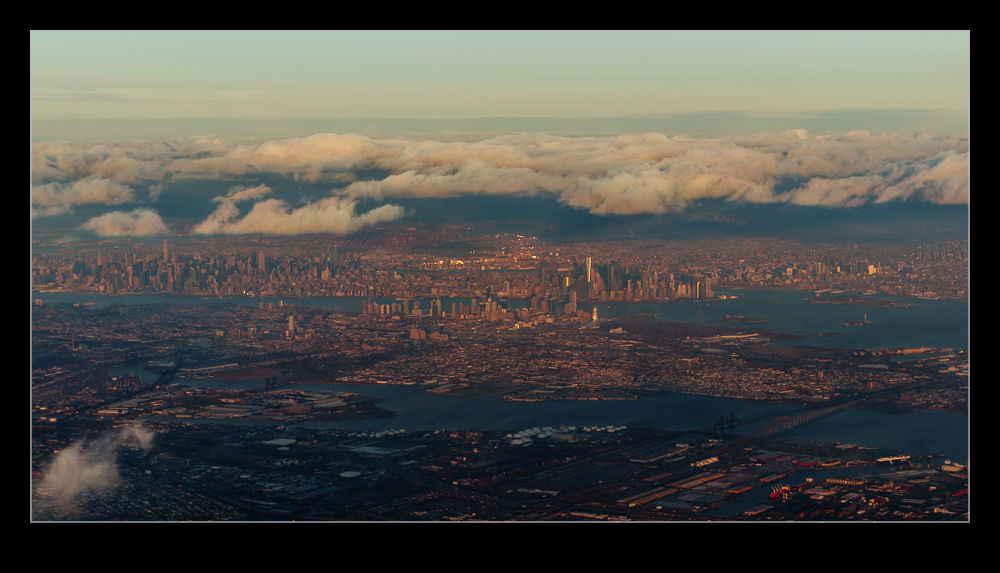
My departure from New York was out of Newark Airport.  The day was coming to a close as we taxied out for departure and the turn after take off gave me a view back across towards Manhattan.  The sun was getting low in the sky so, while the sky behind the city wasn’t glowing, the light on the city was really nice.  Not a bad view as you start the long trip home.  Fortunately the winds were favorable and the trip back took an hour less than expected!

Gulfstream from Above

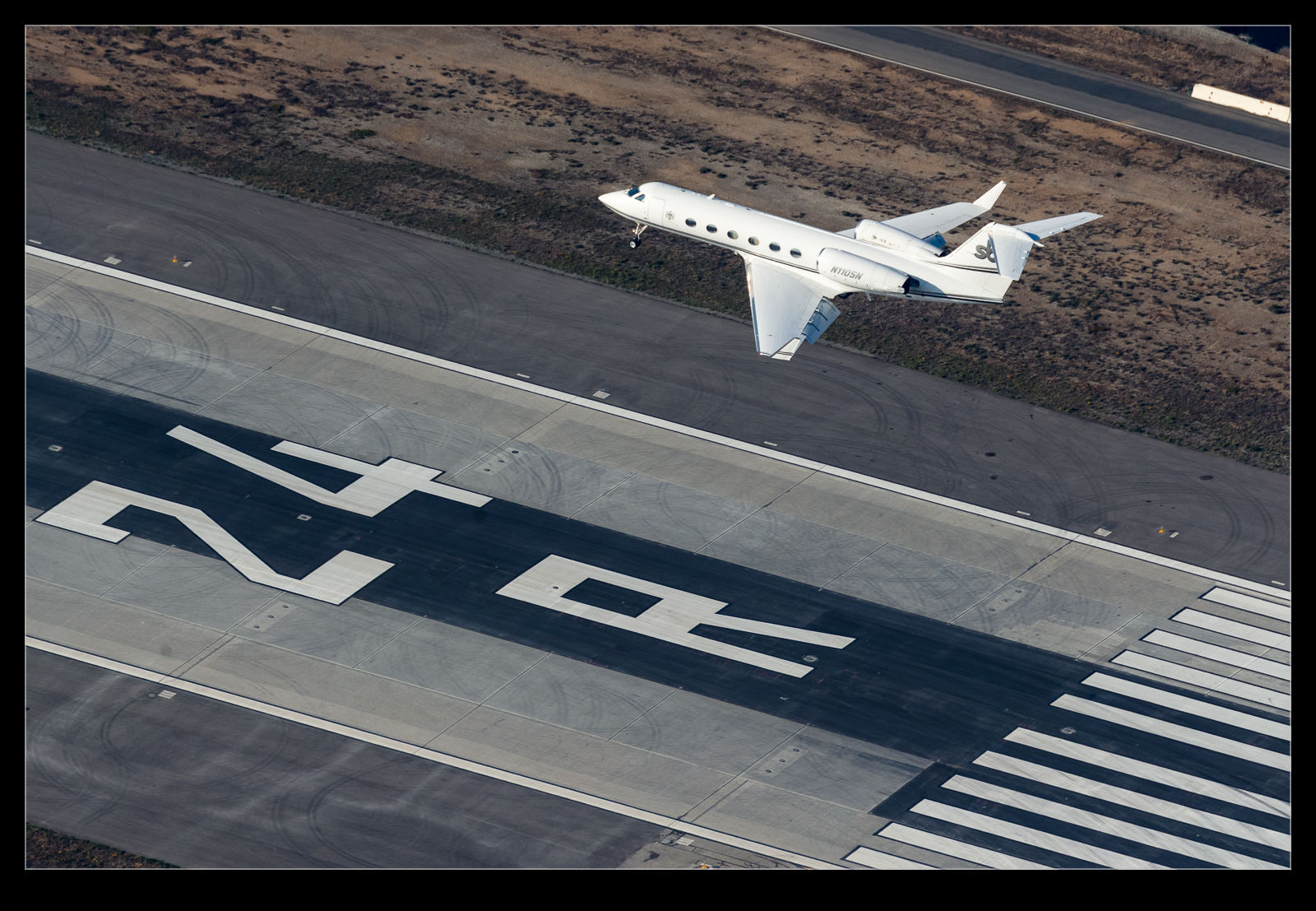
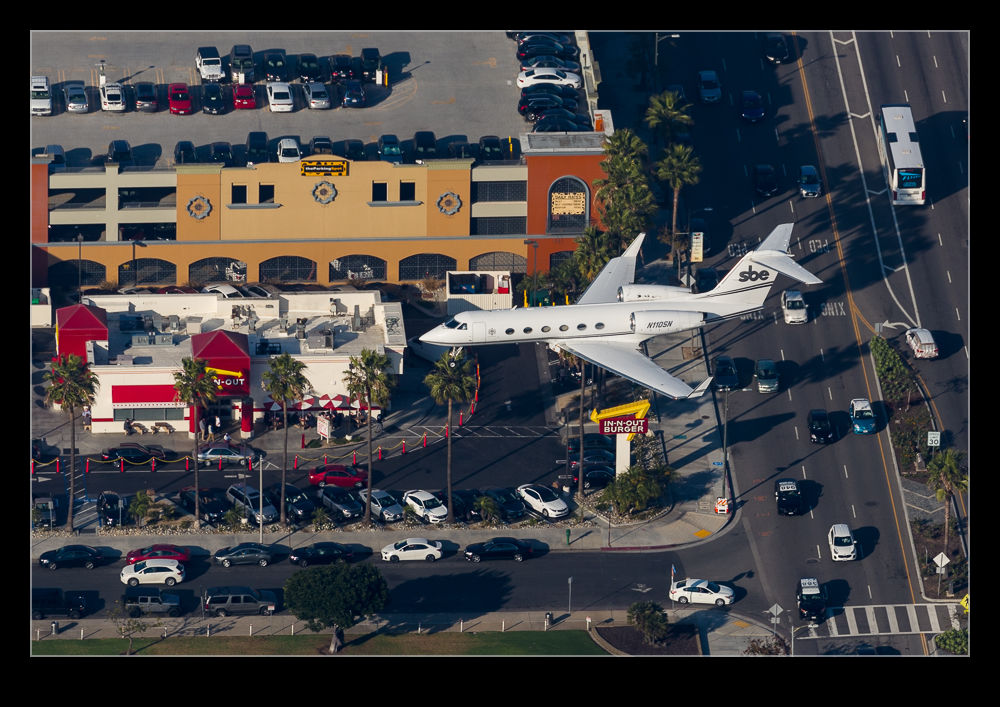
Getting the airliners coming in to LAX was what I was aiming for but I was pleased to get a bizjet bonus.  A Gulfstream made an approach to the northerly runway complex.  This was a surprise to me as the facilities for corporate aviation are on the south side of the airport so an approach over there would seem to have made more sense.  As with some other arrivals, I wasn’t complaining.  An aerial shot of a Gulfstream was very welcome.

Going Mirrorless

Being late to the party is something that I make a habit of.  You could also be more optimistic and say that I am not an early adopter.  A number of friends and colleagues have added a mirrorless body to their collection of gear and I have followed suit.  I am perfectly happy with the performance of my SLRs.  This was to add something rather than replace something.  The primary interest was in size and convenience.  There are times when lugging the heavy bodies around is just inconvenient.

I went with an EOS M6.  I did consider going with a different manufacturer but using other equipment I already have was one factor.  Another was that this camera gave me an option I was quite keen on.  It has a screen for use while shooting but it also has an optional viewfinder to slot into the hot shoe.  This was discounted to only $11 when I bought the camera.  I like a viewfinder hit am okay with a screen.  Nancy, on the other hand, does not like screens so the viewfinder can be brought along if required and will make her happier to use the camera.

So far my experience with it has been very good.  Image quality has been fine, the controls are good and let me make adjustments without needing to enter menus.  The flippy screen is really handy and the kit lens fits plenty of needs.  The app that works with it is also pretty handy which gives a few options I wish the SLR could match!  The time lapse functionality is good too.  I have not tested it fully with my range of lenses and will do so at some point.  However, for what I bought it for, it is doing the trick nicely.

NASA’s DC-8 Is Watching Me

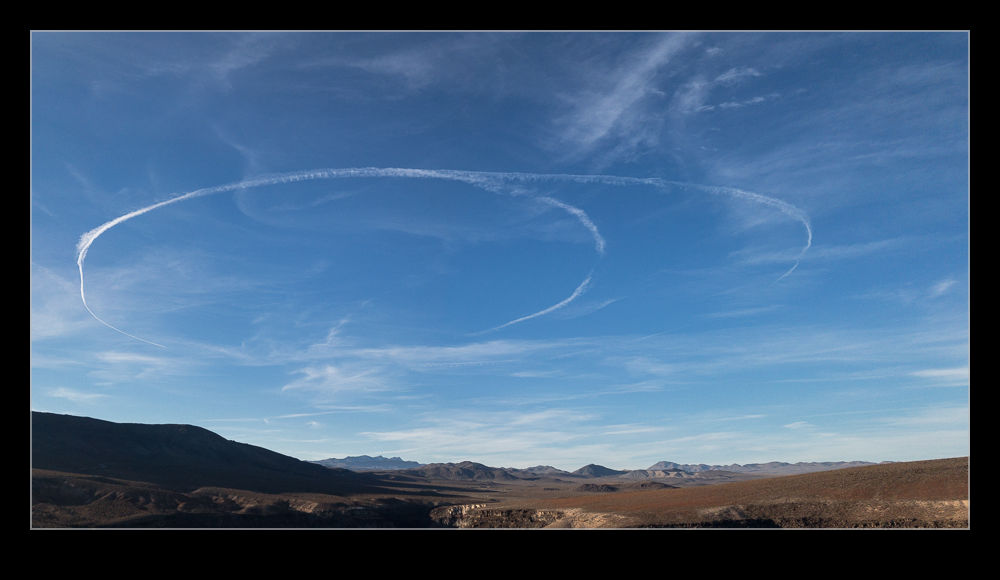
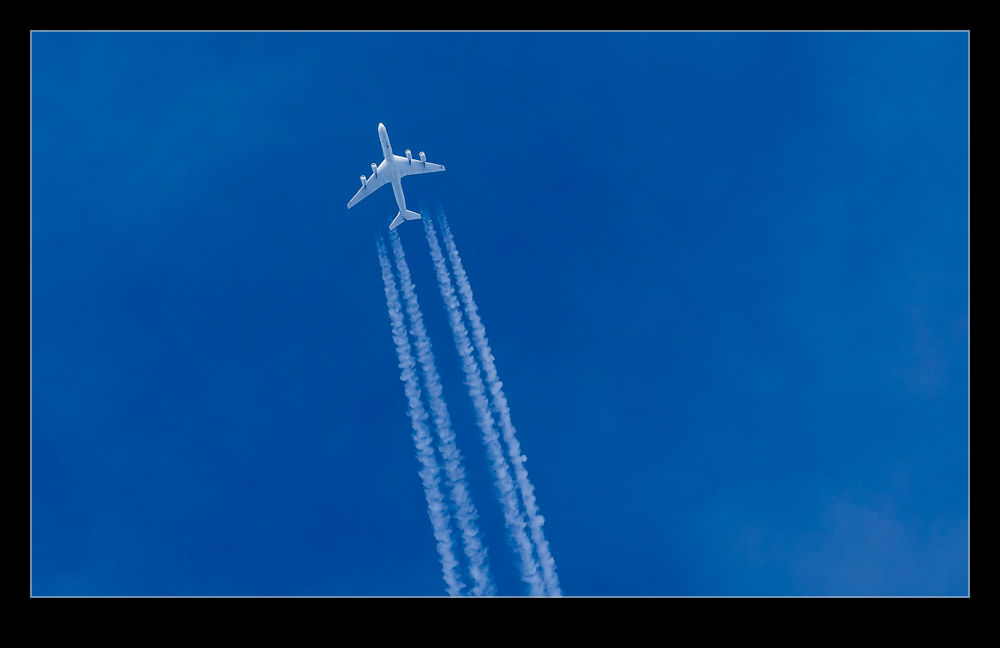
While hanging out at Rainbow Canyon awaiting the next jet, someone was flying high above.  They were pulling a contrail at their altitude so you had a really good idea of their flightpath.  They were flying regular extended orbits above us.  The racetracks they left in the sky made it all pretty simple.  A look at an ADS-B tracker told me that this wasn’t a tanker waiting for trade.  It was NASA’s DC-8.  This is a rare beast indeed and, while still a long way off, I was glad to get a shot of some sort of it.

Flatiron Building for Real

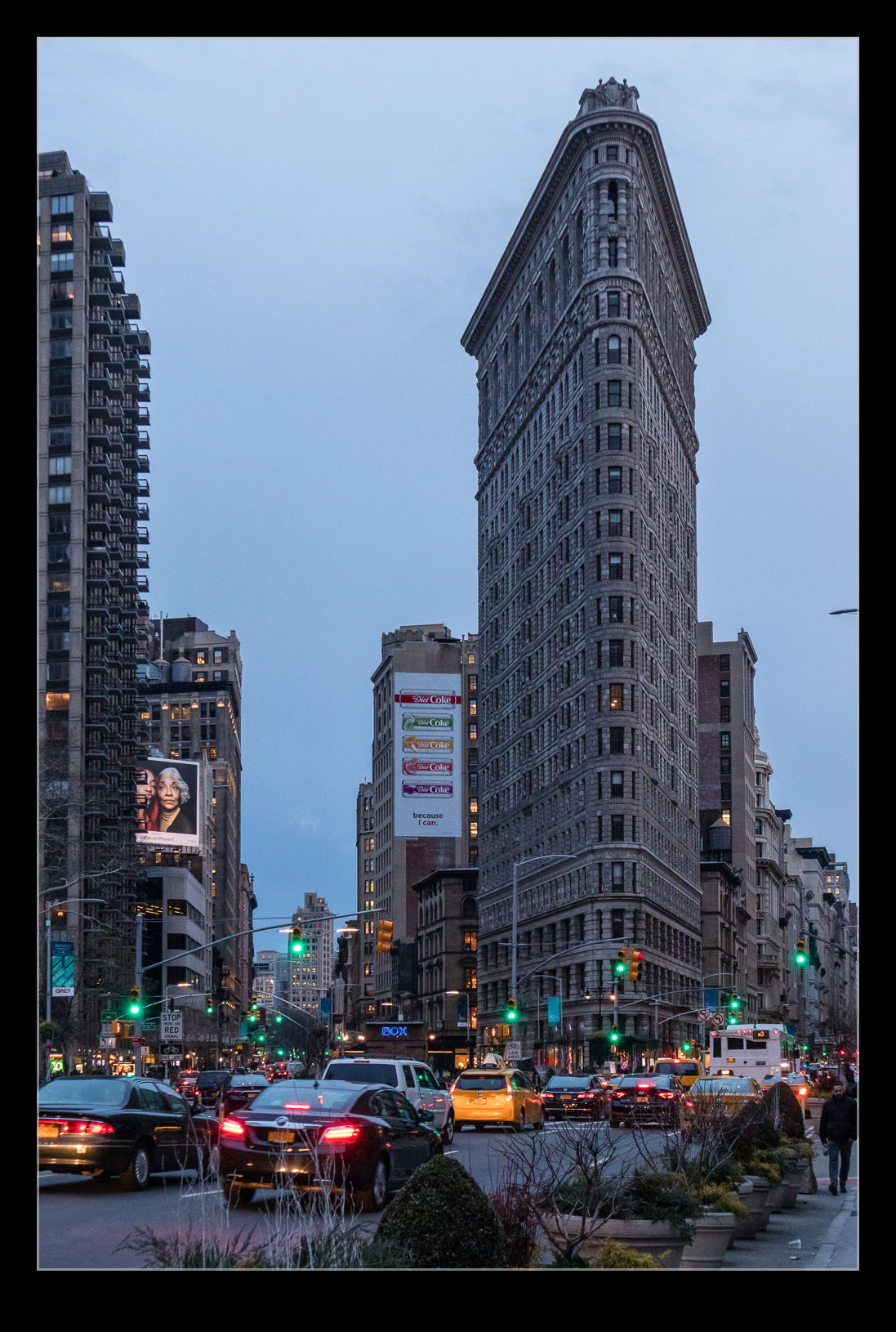
When I worked in Oakland, I got some images of the building on Broadway and Telegraph that slots into the narrow wedge shaped plot of land.  In my post on that building which you can read here, I talked about the Flatiron Building in New York.  Finally, on a work visit, I got to see the original (assuming it was built first).  It happened to be right next to the place I was meeting a colleague for dinner.  Couldn’t resist taking the camera along for that.

Bounce It Down and Do It Again

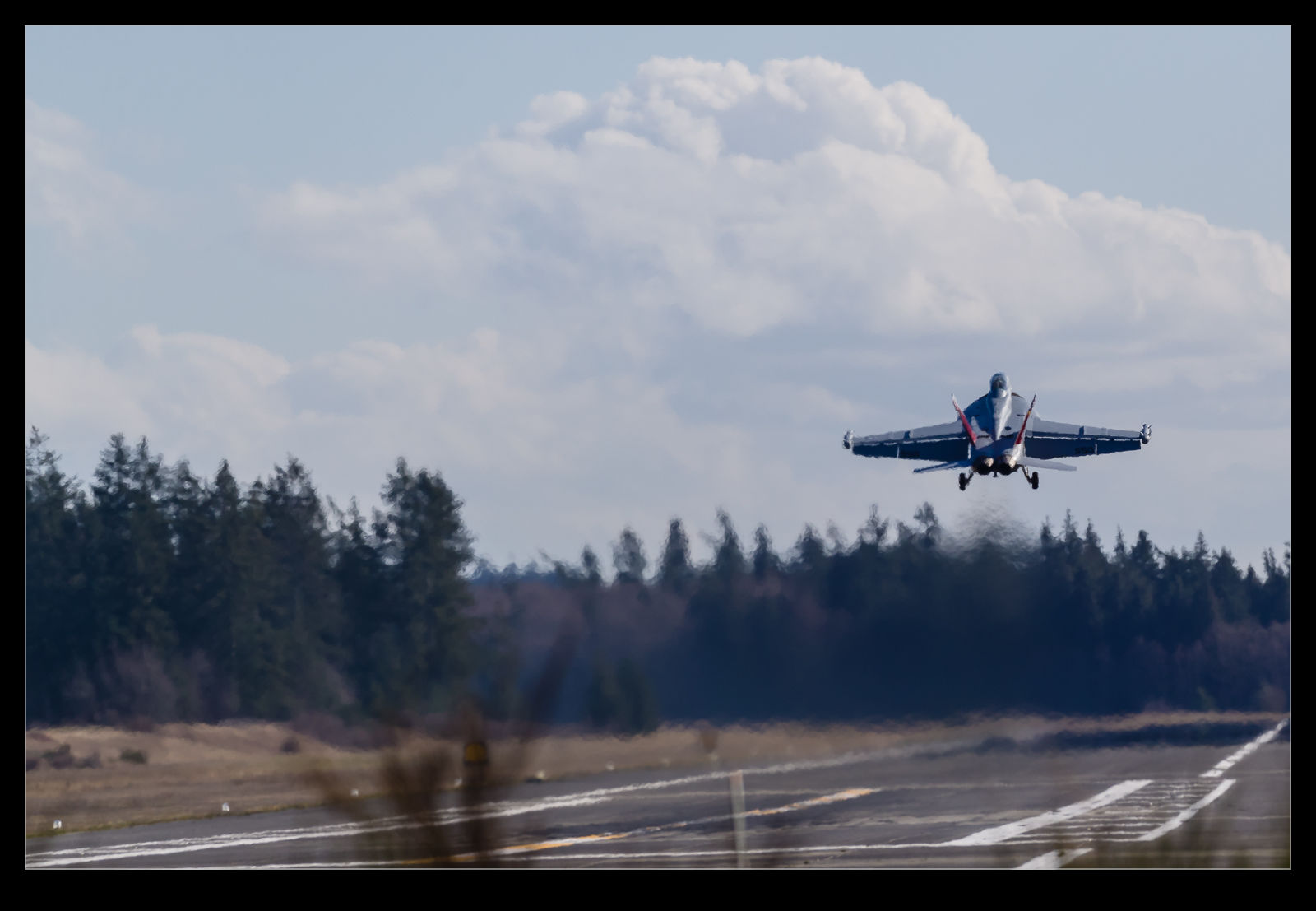
Since the Growler crews were training as if they were on the deck at sea, they don’t flare their landings at all.  They hit the runway hard and the tire smoke that results is substantial.  Normal landing procedure on a carrier is to go to full throttle as soon as they hit the deck.  There isn’t time to react if you miss the wire so hit the gas and, if the wire doesn’t stop you, you fly right off the other end of the deck and climb away.  Since there is no wire at Coupeville, that means every touchdown is followed by a rapid rotation and climb away.  The climb is pretty steep initially which keeps the speed under control until the power is backed off.

Putting Your Boat in the Water

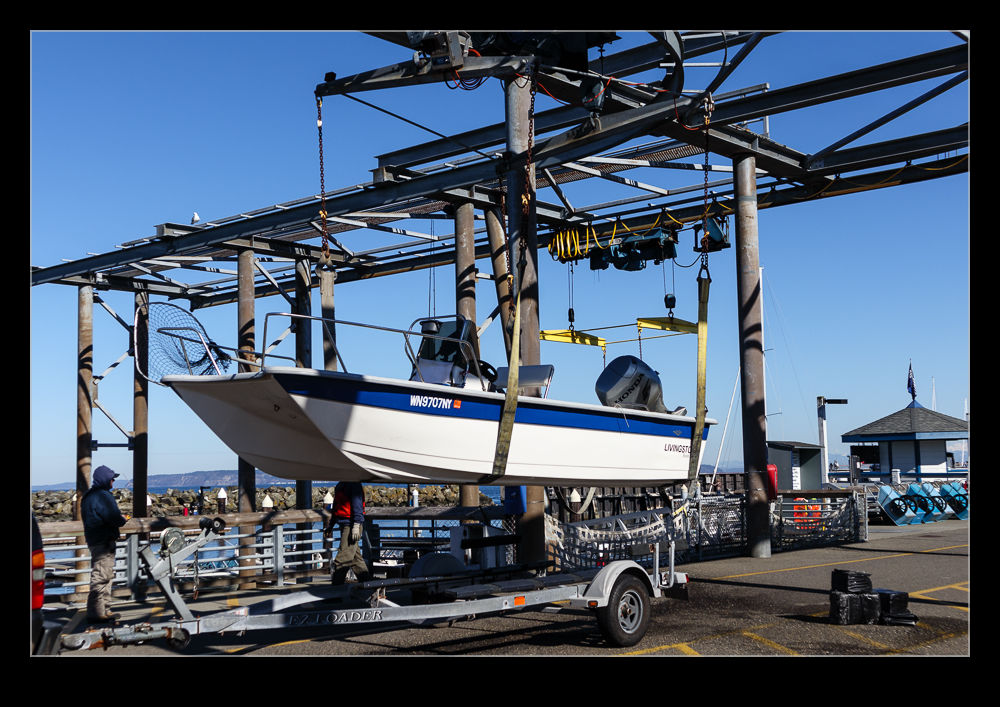
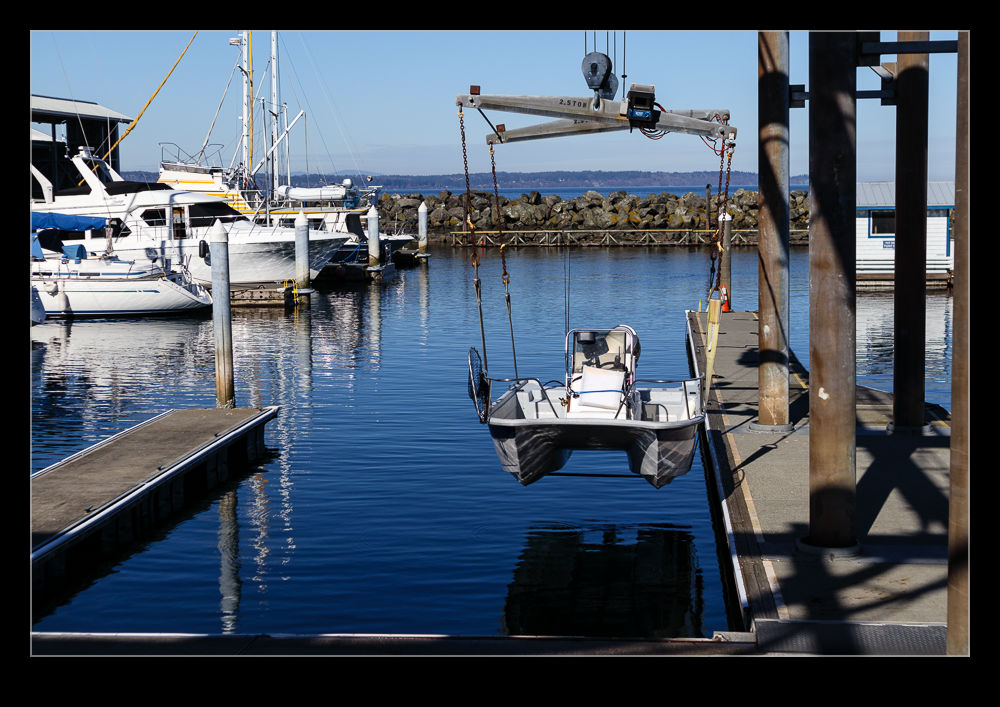
While walking along the shore in Edmonds, we passed the marina and the loading area for the boats.  They had a boat lift for the smaller boats to be taken off trailers and put in the water.  A guy brought his boat along just as we got there so I had to watch the process.  The two guys running the lifts clearly knew what they were doing but the guy insisted on explaining it all to them.  They handled it with good grace.

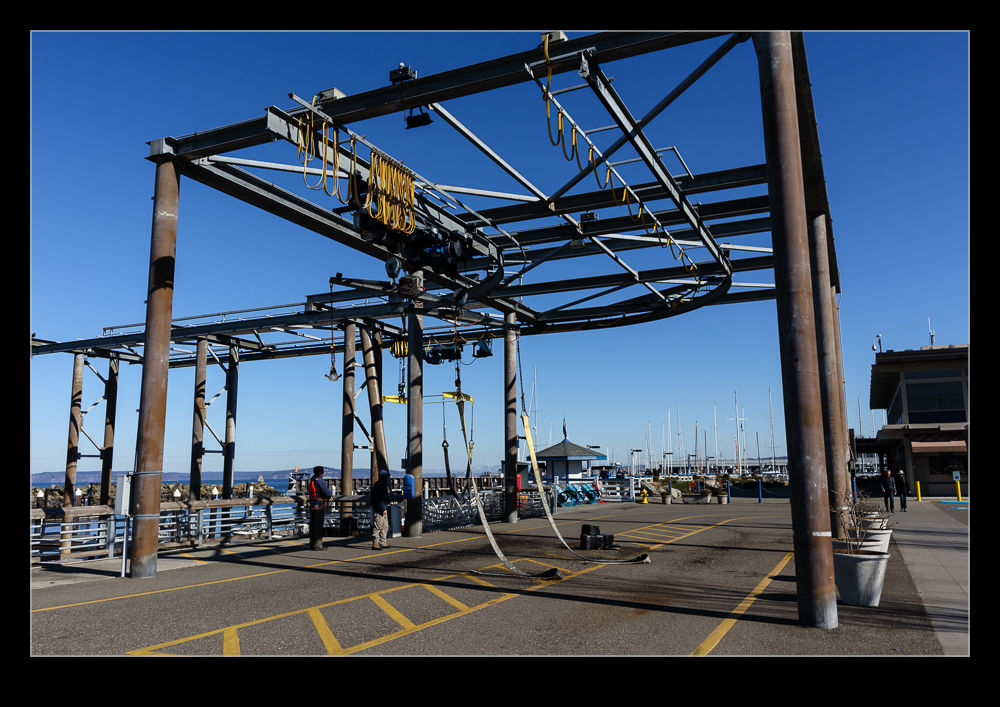
The lift had a track system that turned through ninety degrees.  There were two lifts in parallel if the demand was there.  The trailer was driven into position and the lifting straps were brought around.  They were then passed under the boat and it was lifted up.  Once it was clear of everything, the whole assembly motored along the rails, around the corner and out over the dock.  It was then a simple process to lower it down into the water and then move it away.

This was fine for boats of a certain size.  If you wanted to put anything larger into the water, a far larger rig was required but that wasn’t needed while we were there so I didn’t get to watch it.  In my younger days living in Cowes, I got to see those lifts at work a lot.

The First 737

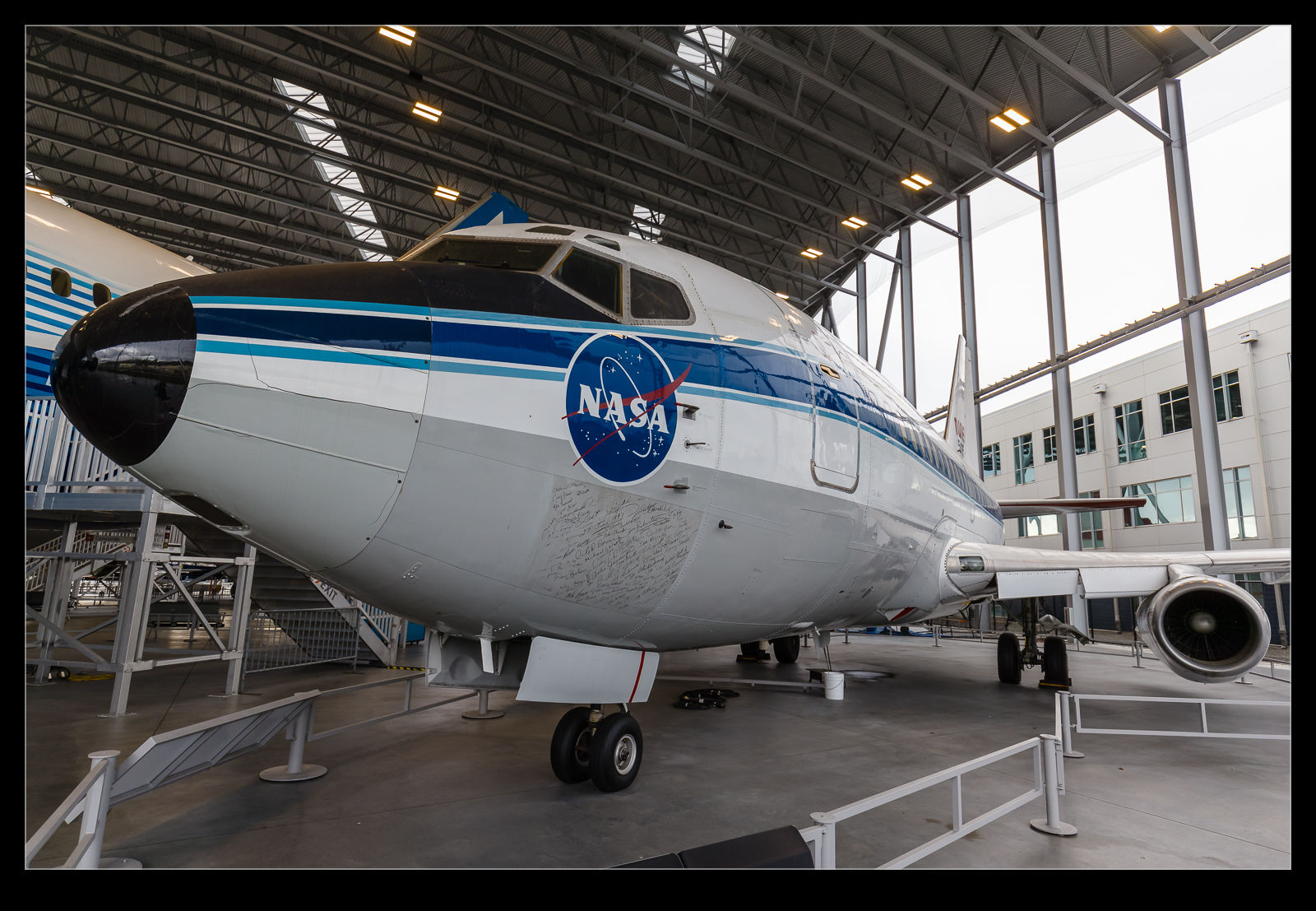
The Museum of Flight has a number of prototypes of Boeing airliners.  They have the first Boeing 737.  This is a 737-100.  Very few of these were built with the 200 series being introduced soon and then taking over completely until the introduction of the 300 series many years later.  (For those of us of a certain age, the 200 series was known as the Classic once the 300/400/500s came into service.  Today they are often called Classic when compared to the NG models which are, themselves, now being superseded by the Max.)

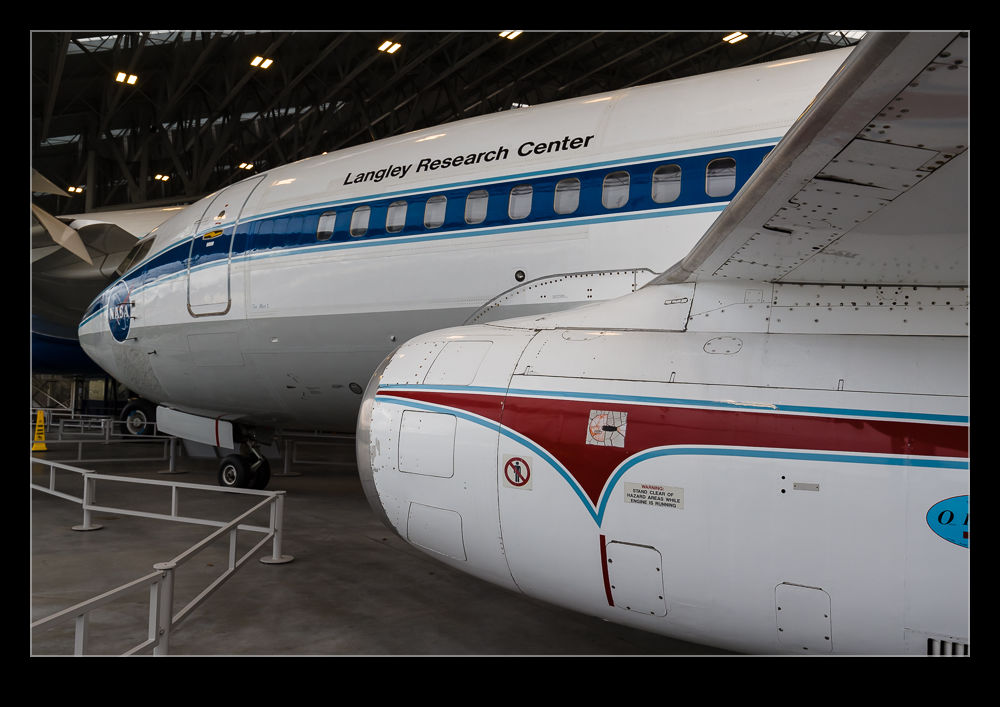
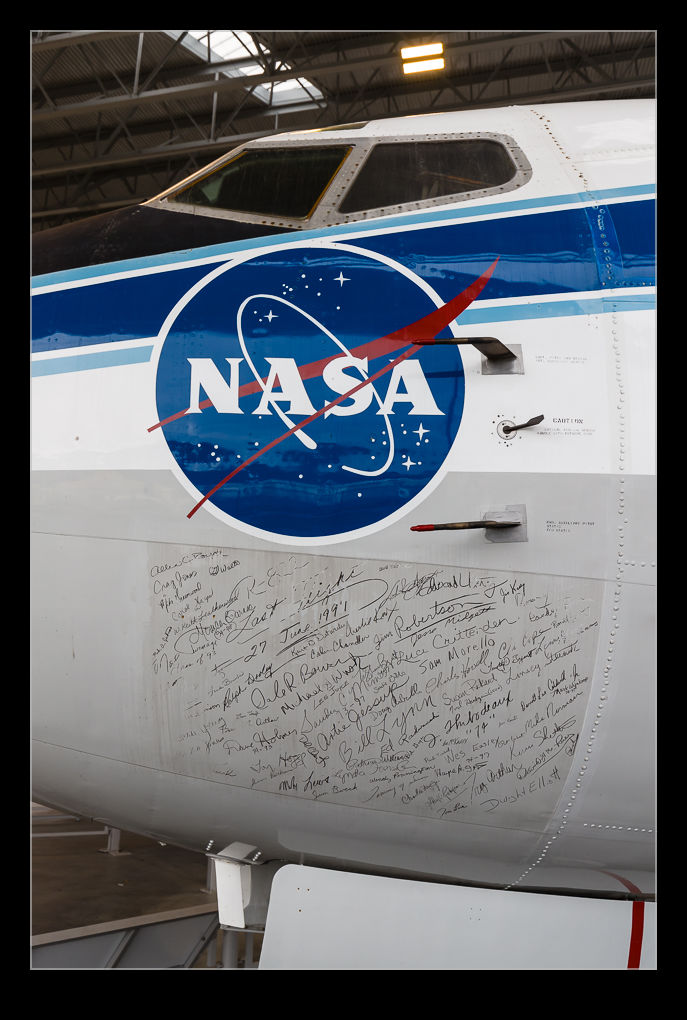
The first airframe ended up with NASA being used for testing duties of all types.  At the end of its testing career with NASA, it made its way back to Boeing Field and to the Museum of Flight’s outside collection.  These are now under cover with a roof having been built over the many aircraft.  The 200 series is a pretty short jet but the 100 is even more so.  It is quite something to see this aircraft and compare it to the big aircraft that are now the staple of Boeing’s output.  The Max 10 will be nearly 50% longer than the original.

The aircraft is displayed in its NASA colors rather than the original in-house colors when it was first built.  Also, since NASA used it for a variety of odd tests, it has a bunch of additions from those test activities.  Since it is parked in amongst the 787 and 747 test aircraft and is kept at the far end of the space, it is a little lost I feel.  However, when you contemplate its place in the history of airliner development, it really is a very significant plane.  There was a time when Boeing contemplated selling the whole program.  How different things could have been!

Empire State Building

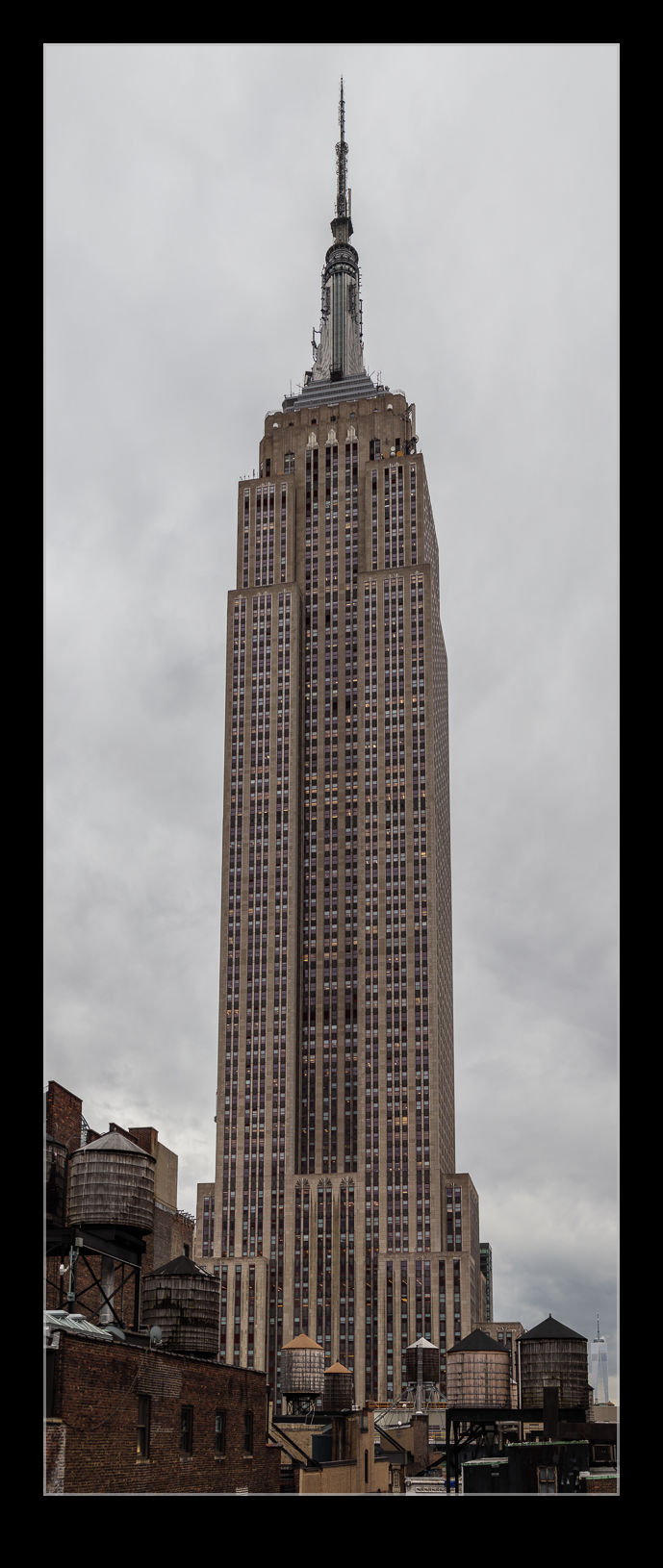
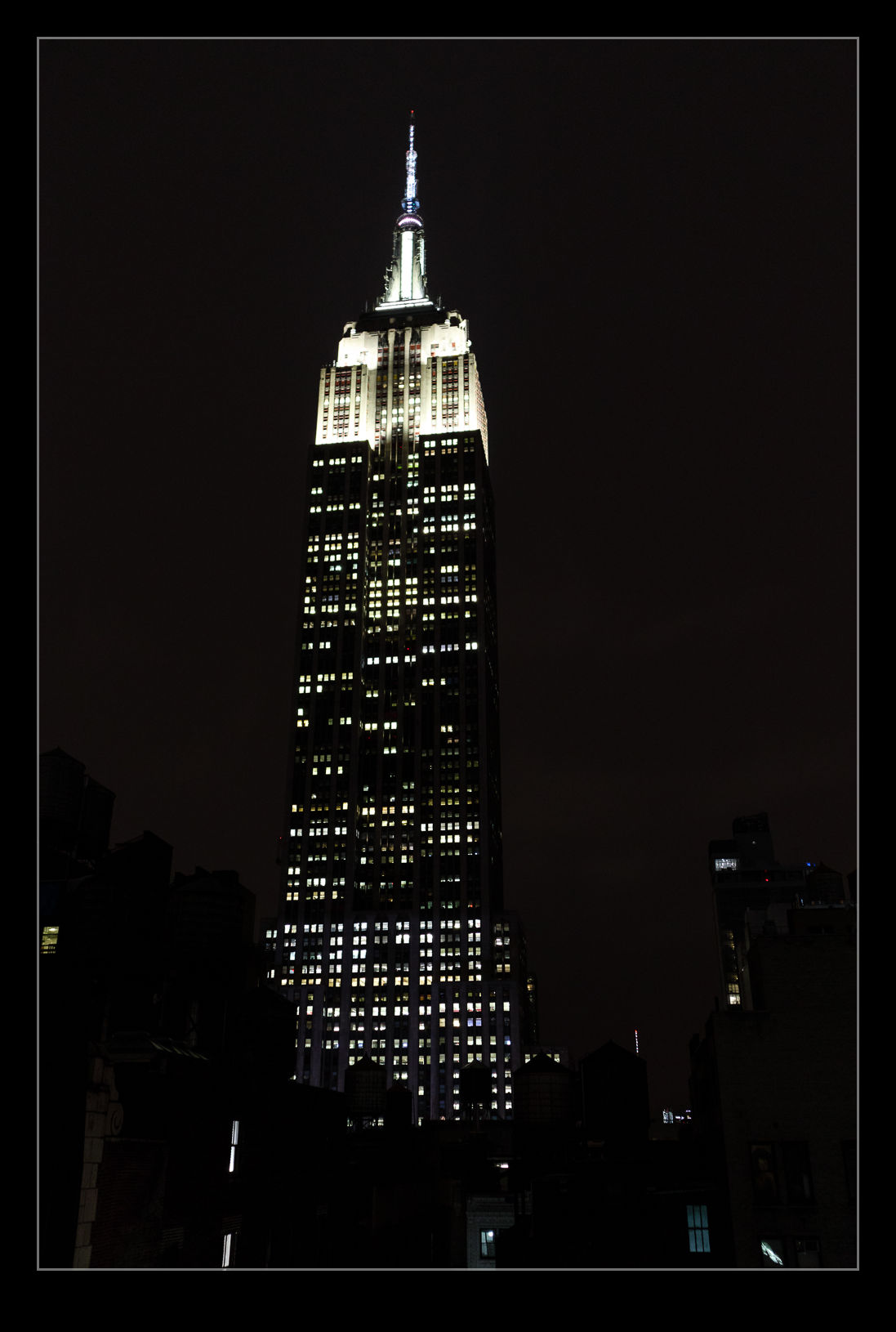
A work trip required a quick dash across the country to New York.  I got into the city at the end of the day and checked in to my hotel for the evening.  It turned out that my room was at the top of the hotel and had a view straight across at the Empire State Building.  The weather wasn’t great but what are you going to do when you have an iconic building across the way?  Of course I took some pictures.  I even did a panorama.

When I got back from dinner, the building was lit up nicely.  The clouds had not dissipated but, at night, you don’t notice them unless they envelope the whole thing so I tested the low light capabilities of the camera.  It did just fine.  I headed out of town the following day.  It snowed in the morning but was bright and sunny by the time I was at the airport.  Too late to get a better shot sadly.