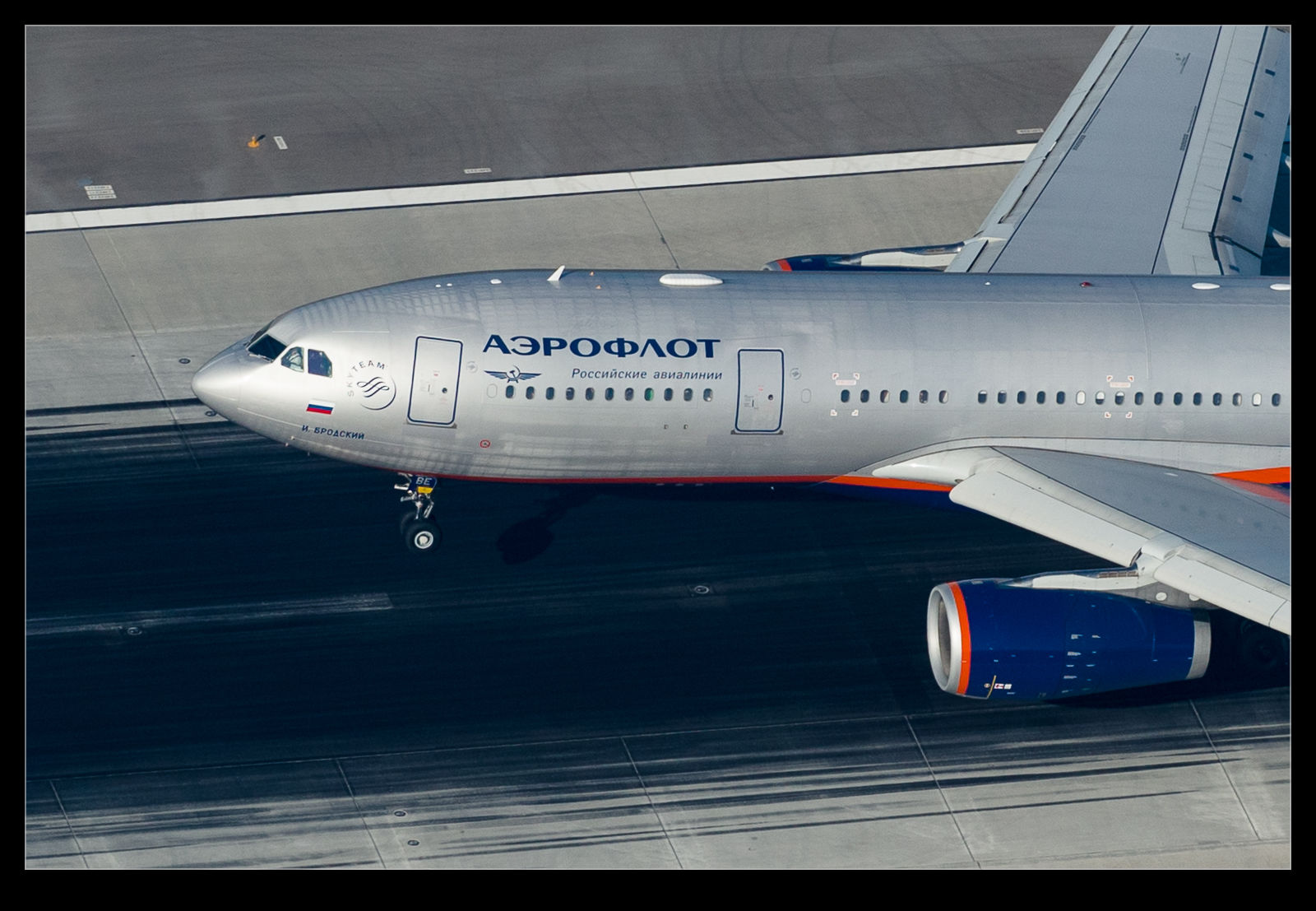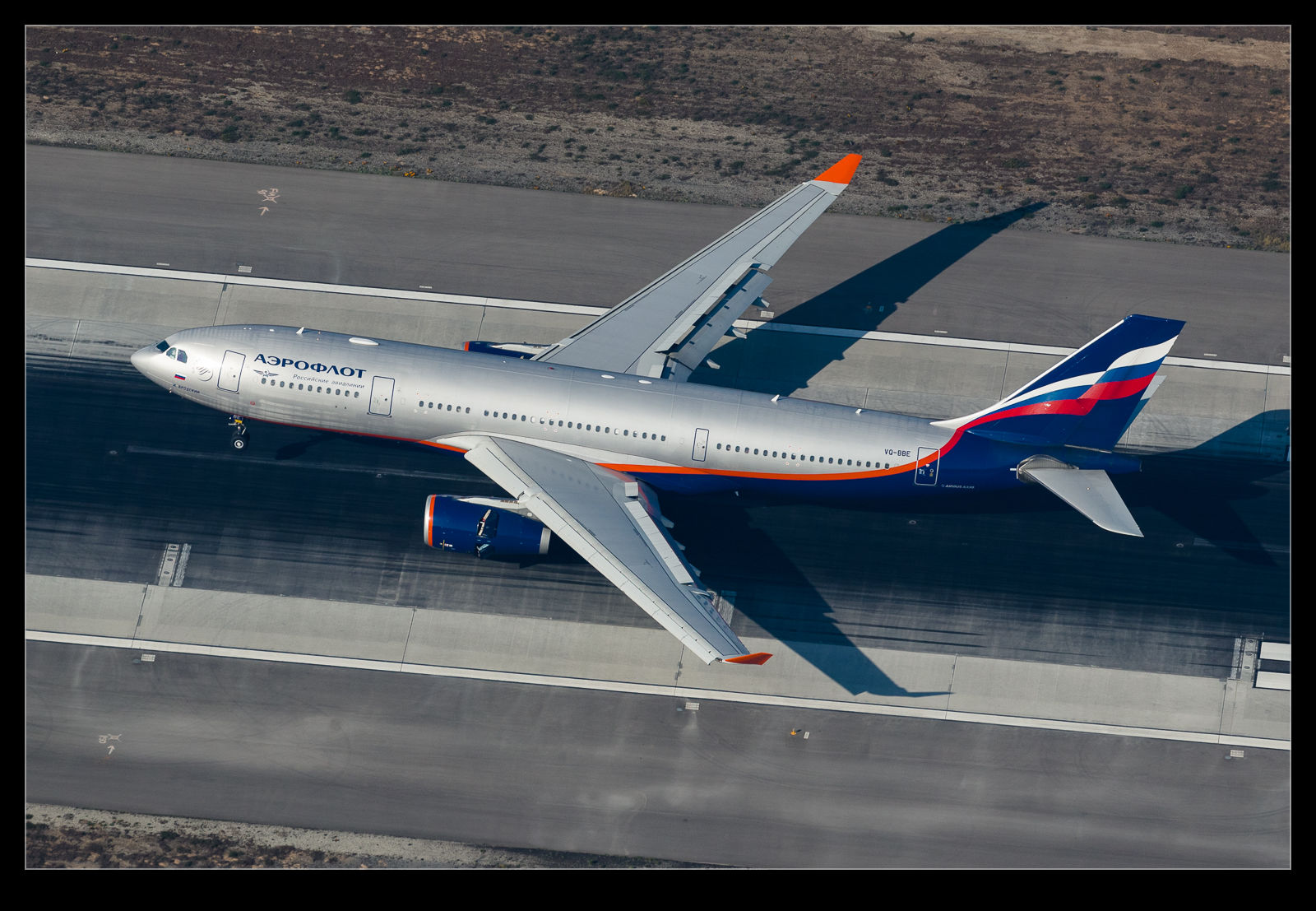
An Aeroflot Airbus A330 landed at LAX while I was shooting there. On plenty of occasions, I have seen ice on the underside of the wings of landing aircraft where the cold fuel remaining in the tanks has caused condensation and freezing in the warmer damp air lower down. However, I haven’t ever noticed it on the fuselage structure. On this jet, though, I could see ice on the surface and the patterns of ice reflected the underlying fuselage structure. Maybe this is there more often and it was just the paint finish that made it show up this time.
Tag Archives: jet
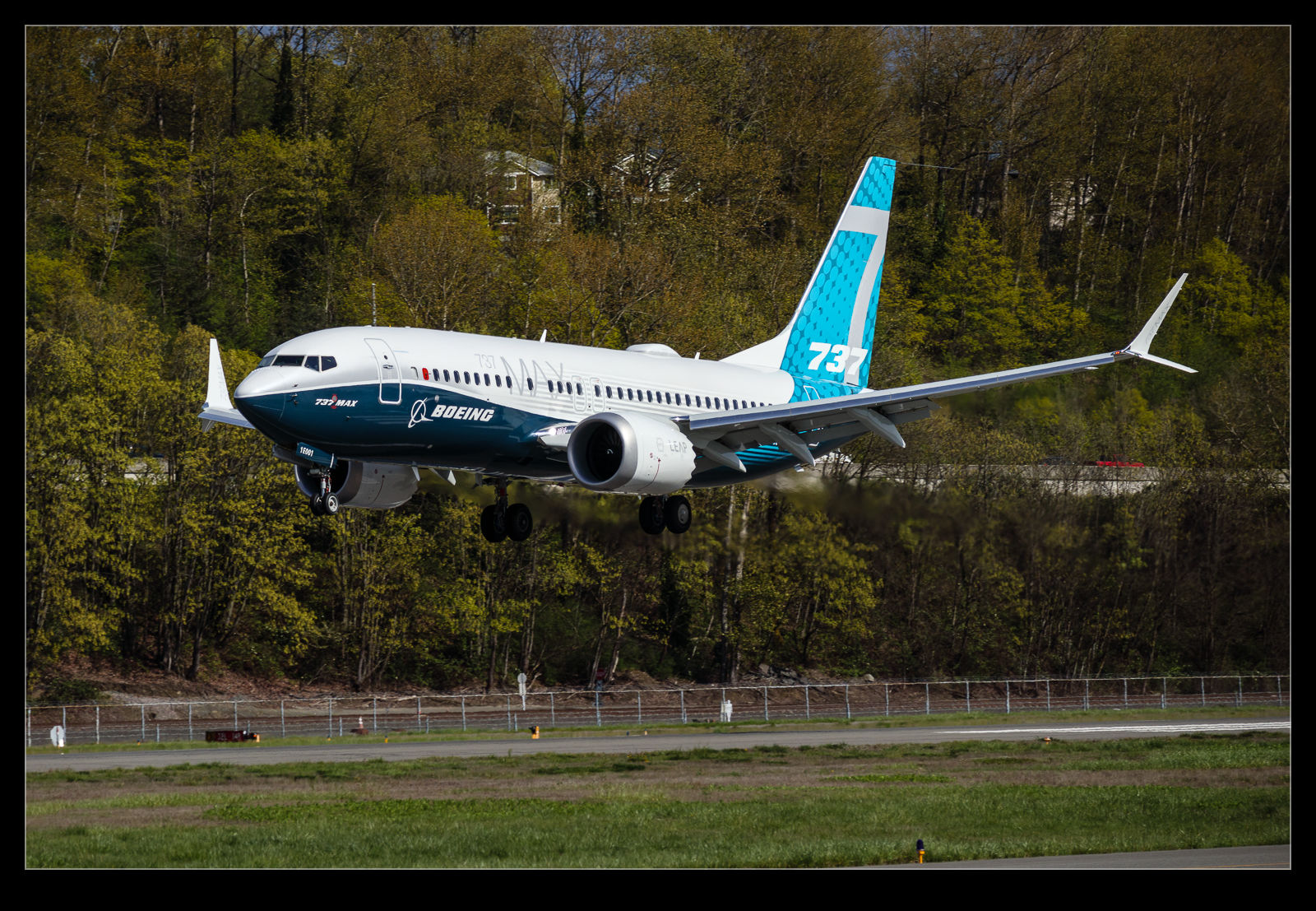
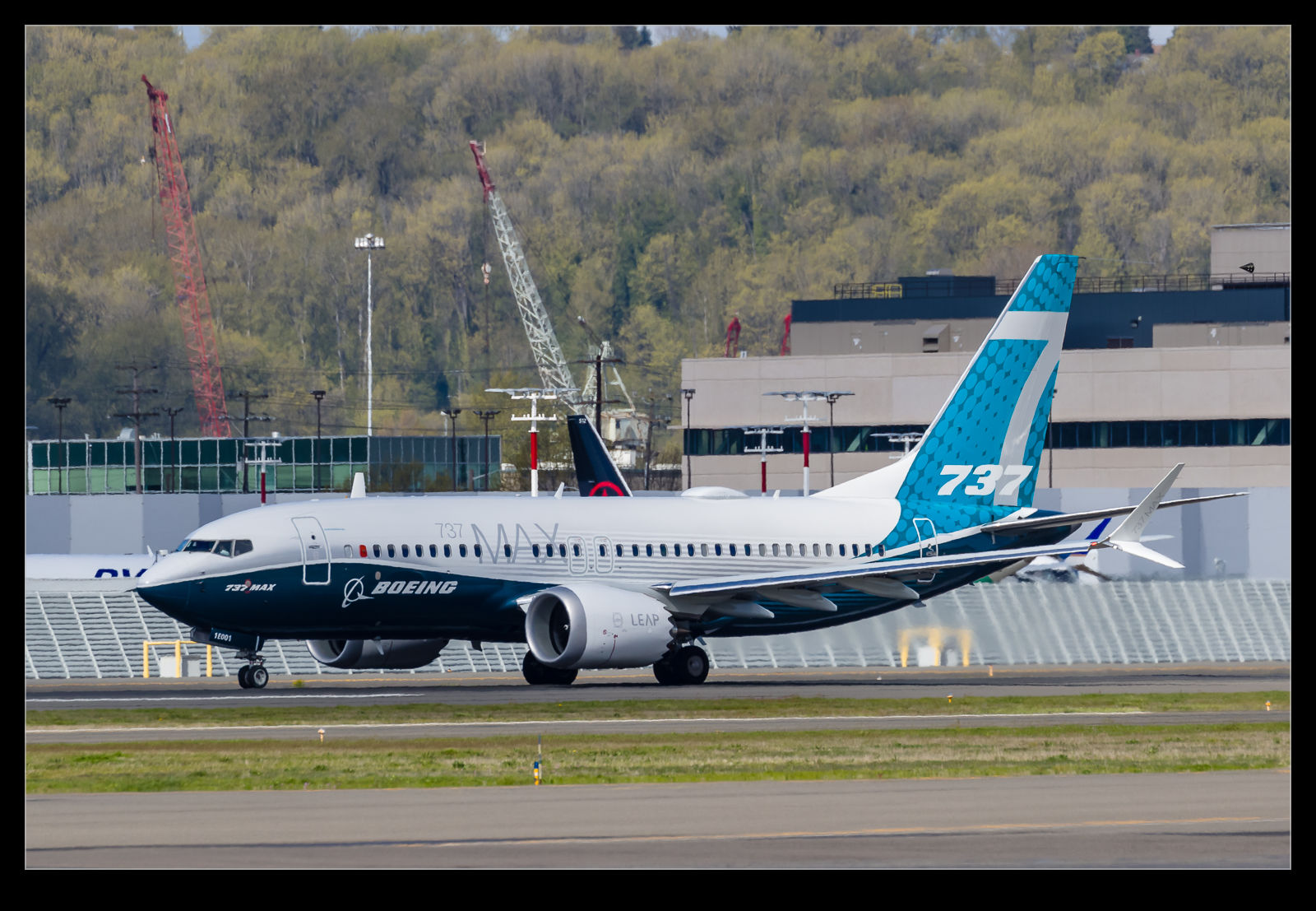
Max7 Test Aircraft
The 737 Max8 and Max9 Jets are both certificated and in service. Next to come along is the Max7. It is a lower priority as a result of a far lower level of orders combined with a redesign it underwent to make it larger than originally intended. It is now flying though. I saw one aircraft on the ramp at Renton when passing by and also saw the first test aircraft landing at Boeing Field. I actually saw it take off as I drove in to the city heading to a meeting and it returned at the end of the day. Neither the Max7 nor the A319neo has sold well so it will be interesting to see how many of these enter service.
Smoking the Nosewheel of the A380
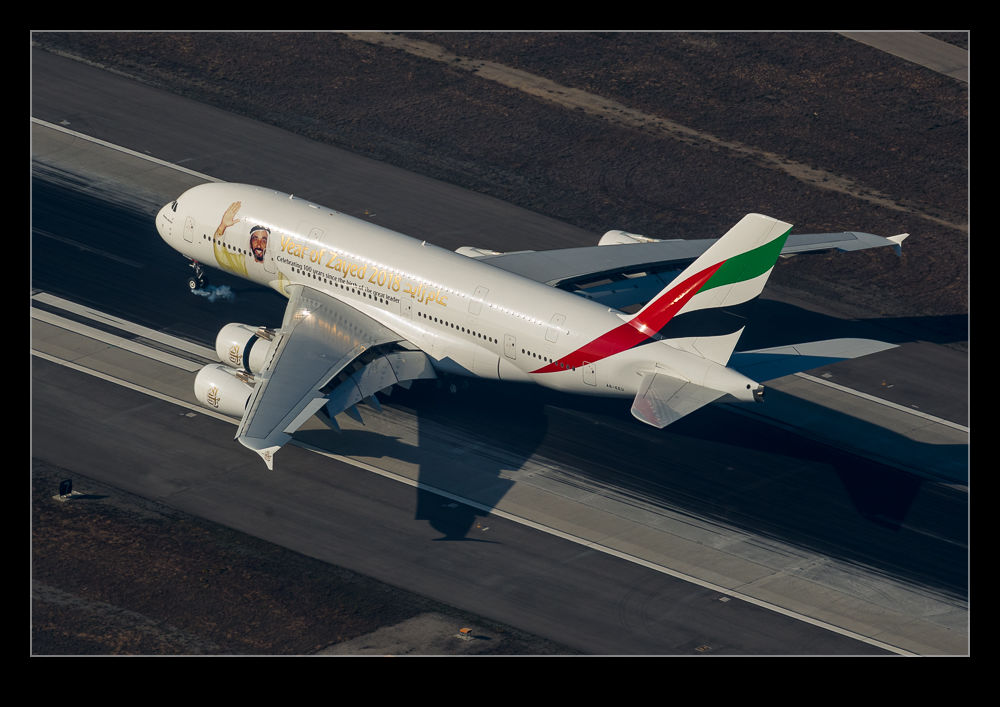
Touchdown of an airliner almost always results in a big cloud of smoke as the rubber burns off the tires when they spin up to speed after first contacting the runway. Lots of tires can mean even more smoke and the 20 main tires on an A380 should mean a lot of smoke. Less often noticed is that the same thing happens when the nose gear touches down. As I shot this A380 landing at LAX, I happened to catch the smoke from the nose gear as it hit the ground.
El Al 777 Overwing Vortex on Takeoff
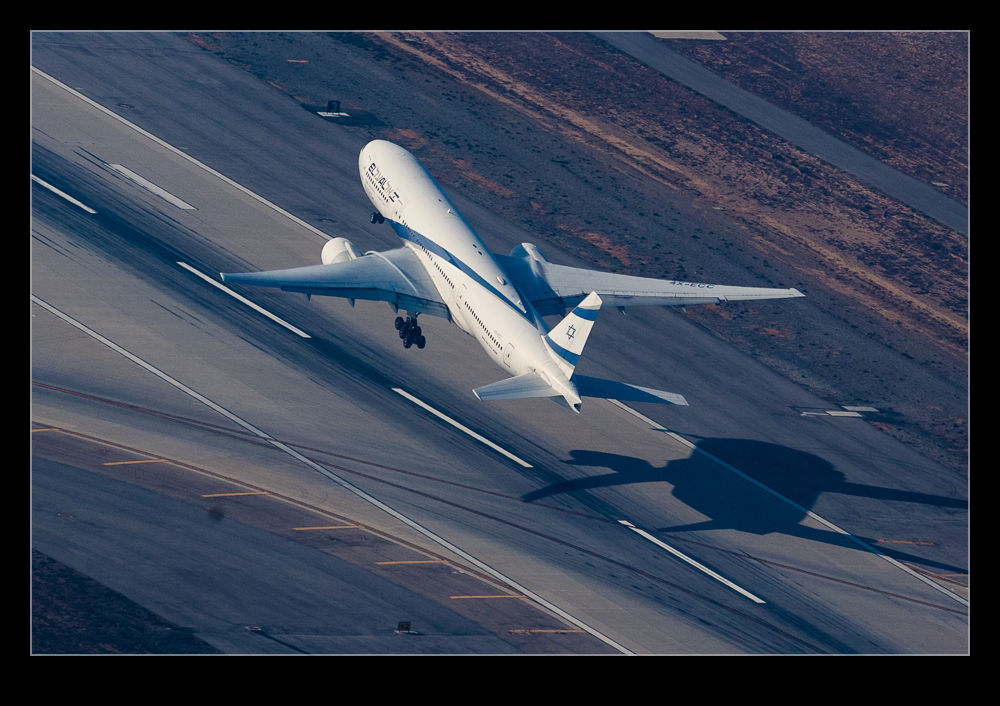
Engine nacelles are optimized for cruise performance. At high angles of attack, their shape results in some rather awkward flow properties which can influence the wing performance above and behind them. In order to control things, you will see small vanes attached to one or both sides of the nacelle that generate a vortex that stabilizes the flow somewhat. As an aircraft rotates at takeoff, the strength of this vortex increases and it will often become visible as moisture in the air condenses within in. This vortex will stream back up and over the leading edge of the wing.
When you are inside the aircraft, this is pretty easy to see provided the conditions are right. From head on or aft they are also quite conspicuous. It isn’t often that you get a good view from above. When I was flying over LAX in the helicopter, the aircraft departing from the north complex had better light on them. However, the runways are offset so the rotation point is further west and beyond the area in which we are allowed to fly. However, you can get a view from above and behind as the jets get airborne. An El Al 777 took off while I was up and I managed to get some shots of it as it rotated and climbed away and the vortices were clear to see as the angle of attack increased.
Gulfstream from Above
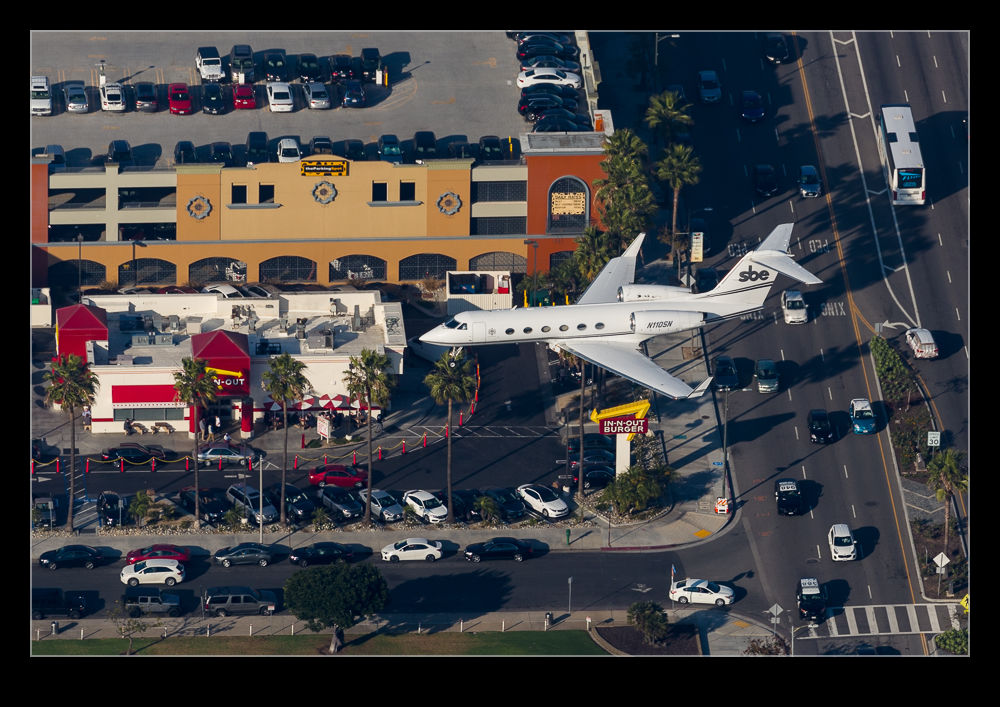
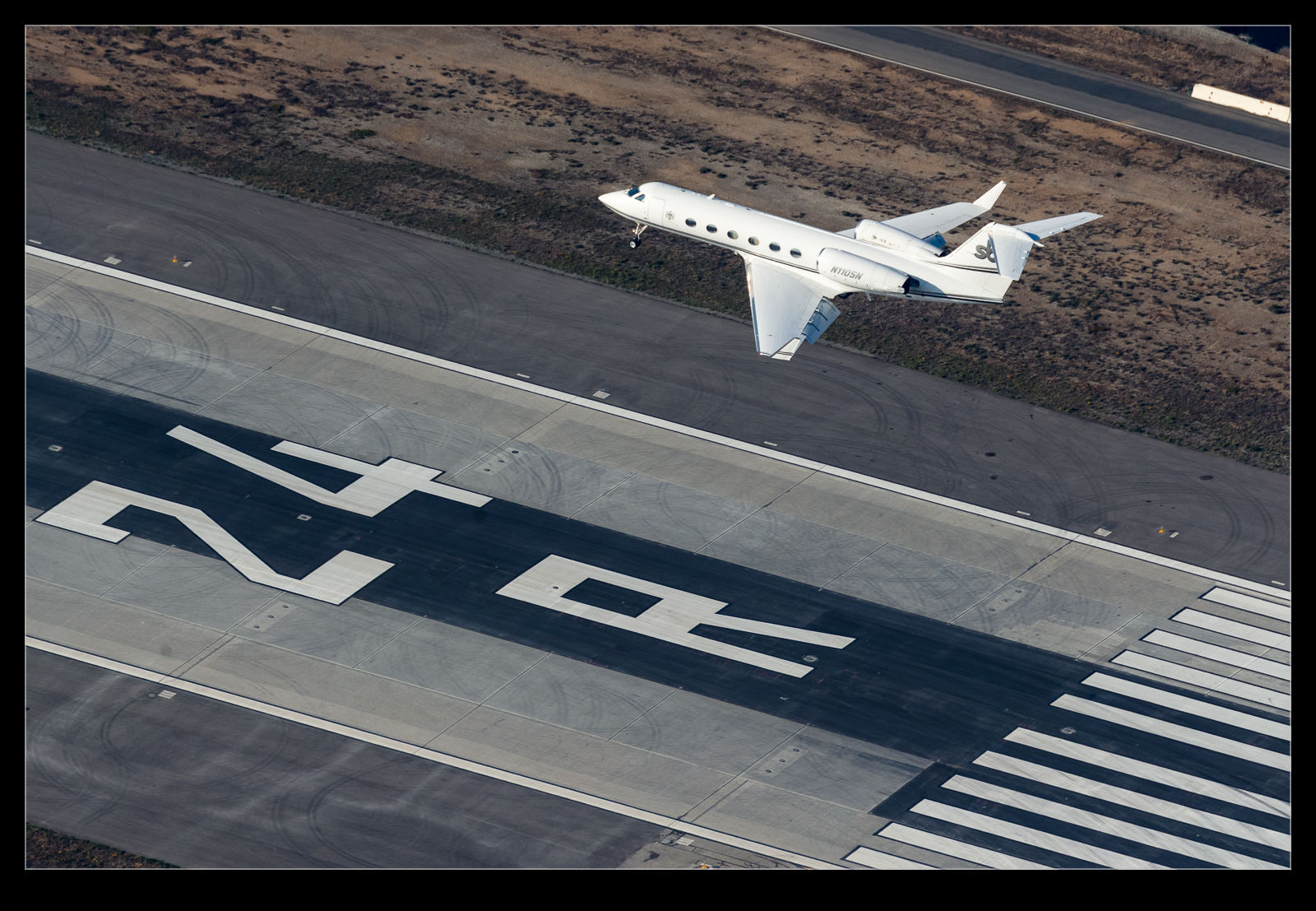
Getting the airliners coming in to LAX was what I was aiming for but I was pleased to get a bizjet bonus. A Gulfstream made an approach to the northerly runway complex. This was a surprise to me as the facilities for corporate aviation are on the south side of the airport so an approach over there would seem to have made more sense. As with some other arrivals, I wasn’t complaining. An aerial shot of a Gulfstream was very welcome.
NASA’s DC-8 Is Watching Me
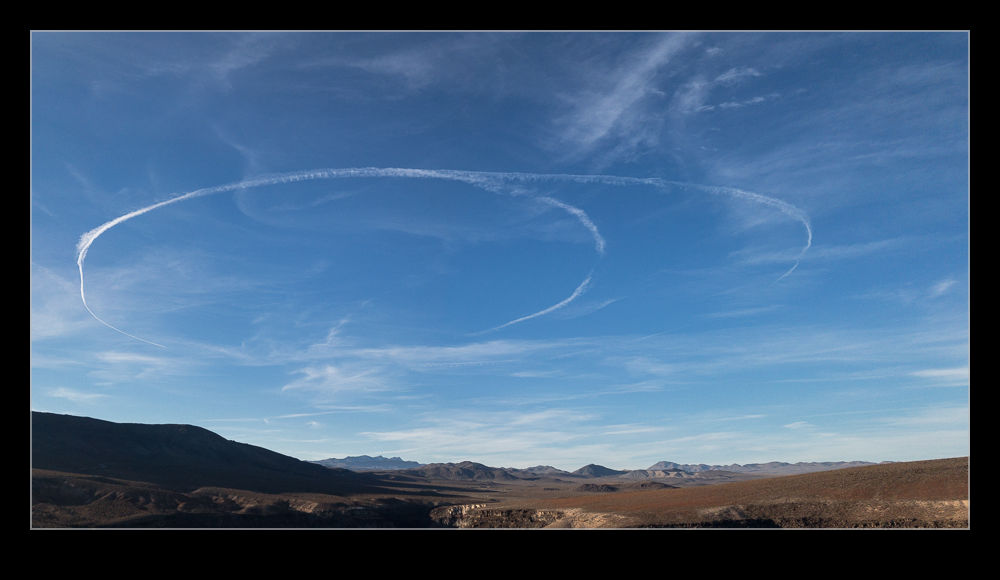
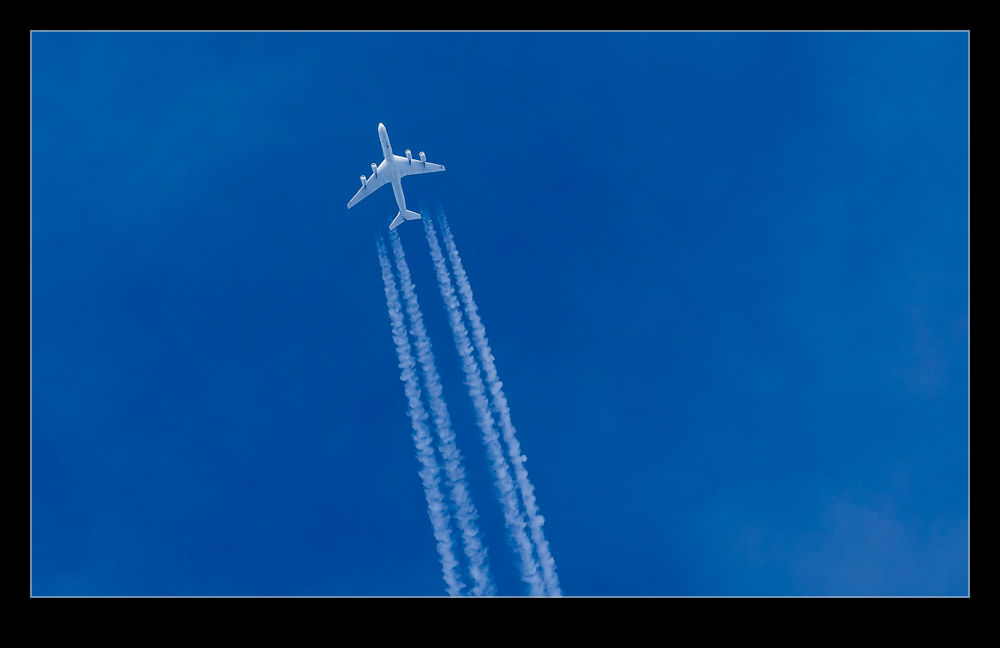
While hanging out at Rainbow Canyon awaiting the next jet, someone was flying high above. They were pulling a contrail at their altitude so you had a really good idea of their flightpath. They were flying regular extended orbits above us. The racetracks they left in the sky made it all pretty simple. A look at an ADS-B tracker told me that this wasn’t a tanker waiting for trade. It was NASA’s DC-8. This is a rare beast indeed and, while still a long way off, I was glad to get a shot of some sort of it.
Bounce It Down and Do It Again
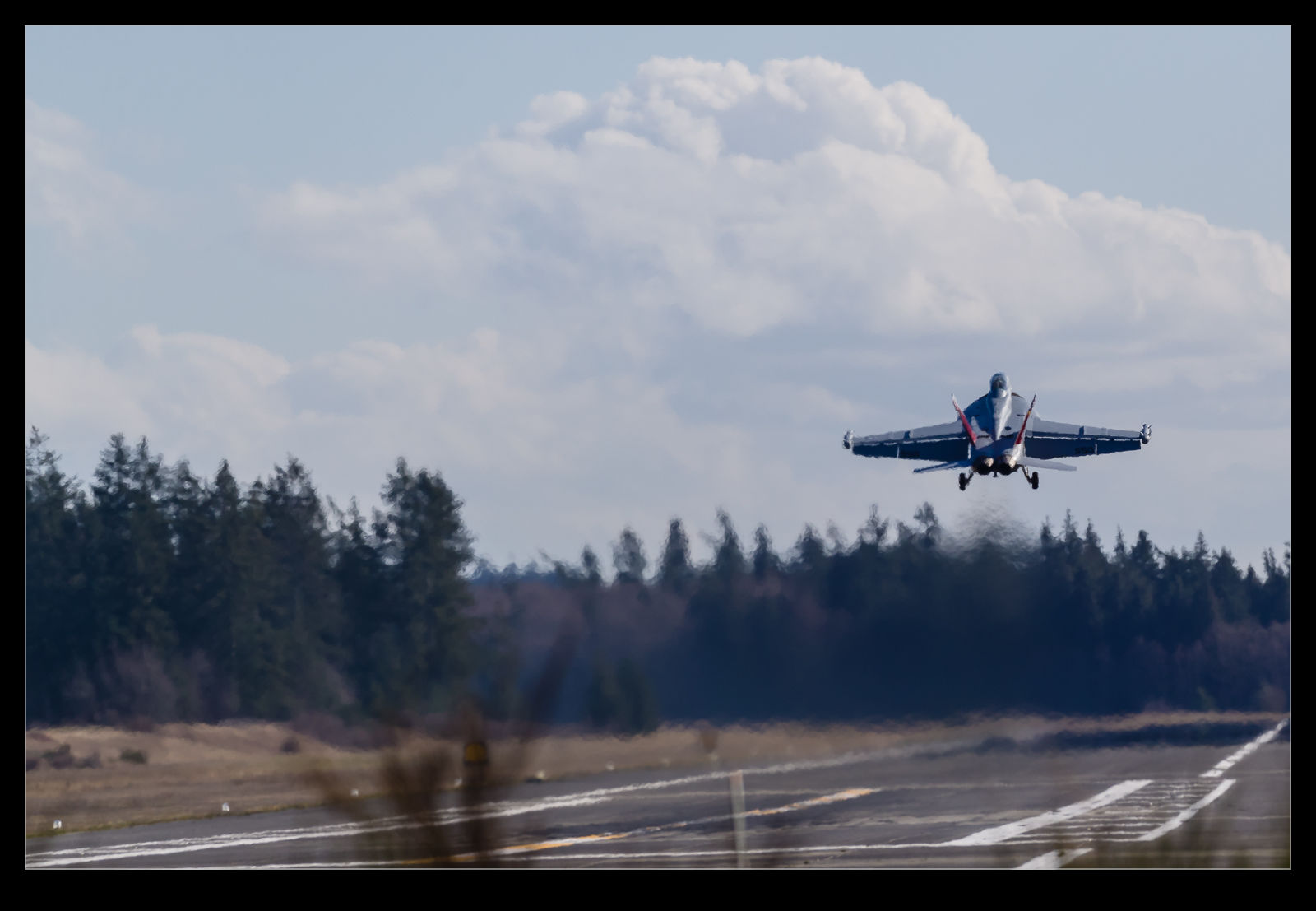
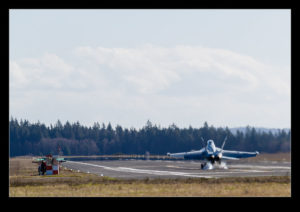
Since the Growler crews were training as if they were on the deck at sea, they don’t flare their landings at all. They hit the runway hard and the tire smoke that results is substantial. Normal landing procedure on a carrier is to go to full throttle as soon as they hit the deck. There isn’t time to react if you miss the wire so hit the gas and, if the wire doesn’t stop you, you fly right off the other end of the deck and climb away. Since there is no wire at Coupeville, that means every touchdown is followed by a rapid rotation and climb away. The climb is pretty steep initially which keeps the speed under control until the power is backed off.
The First 737
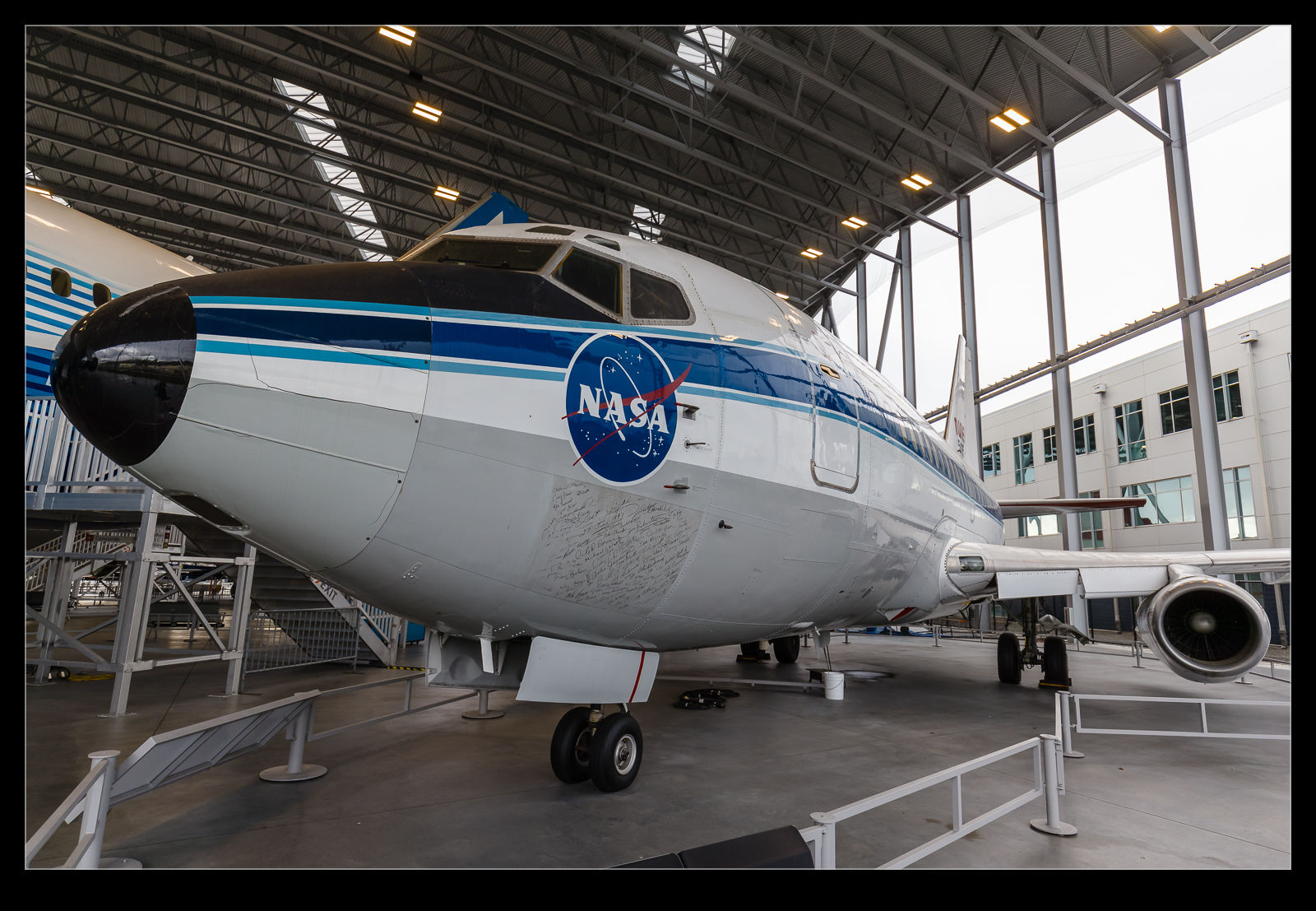
The Museum of Flight has a number of prototypes of Boeing airliners. They have the first Boeing 737. This is a 737-100. Very few of these were built with the 200 series being introduced soon and then taking over completely until the introduction of the 300 series many years later. (For those of us of a certain age, the 200 series was known as the Classic once the 300/400/500s came into service. Today they are often called Classic when compared to the NG models which are, themselves, now being superseded by the Max.)
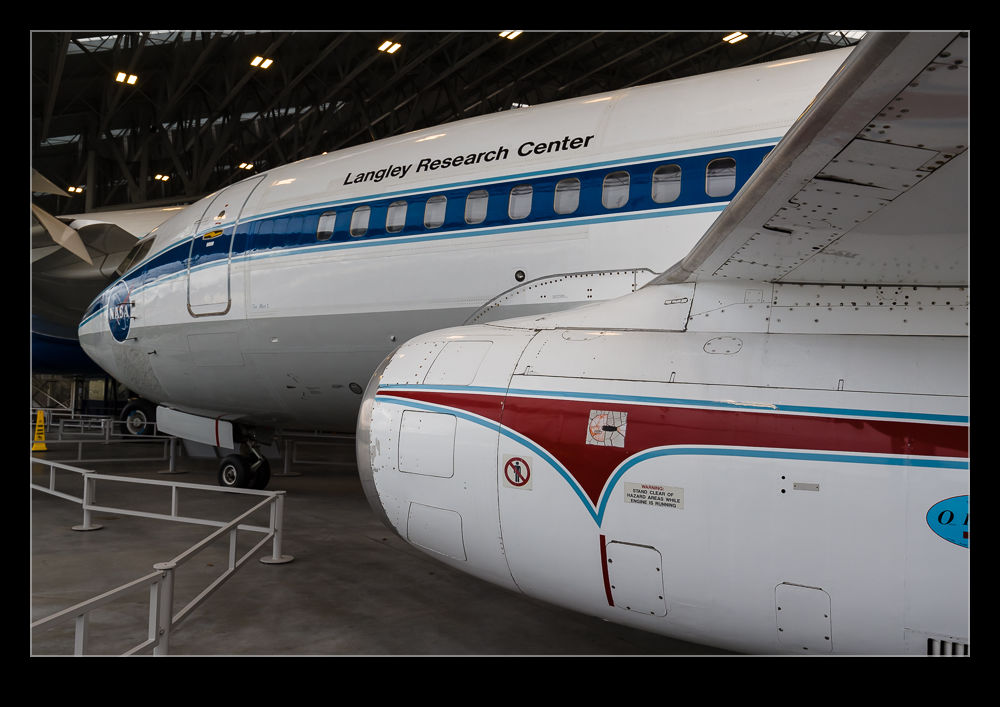
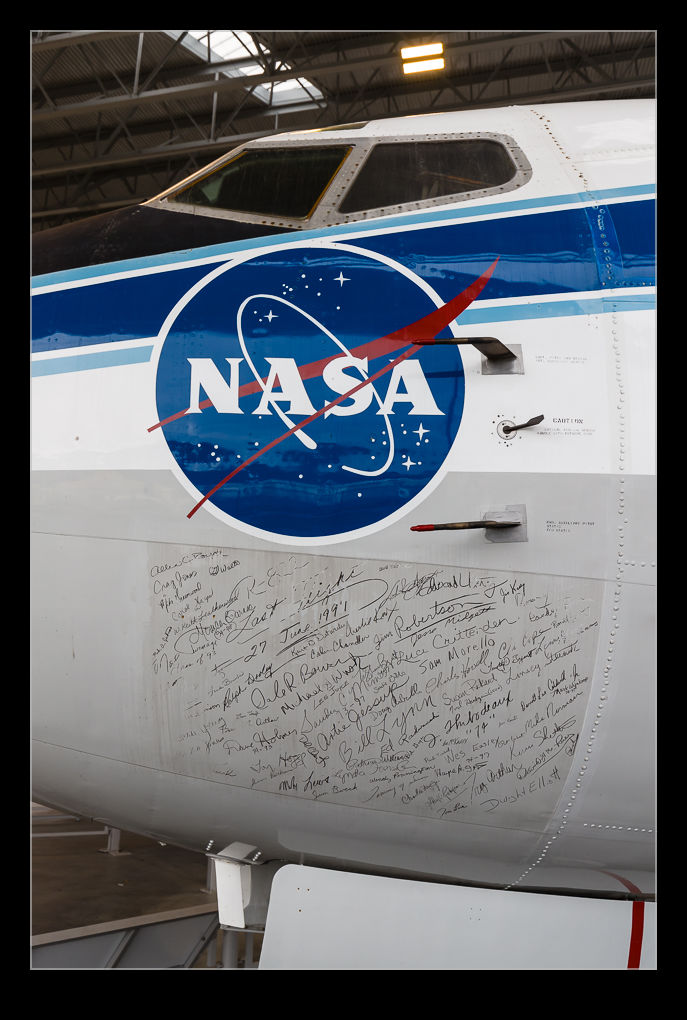
The first airframe ended up with NASA being used for testing duties of all types. At the end of its testing career with NASA, it made its way back to Boeing Field and to the Museum of Flight’s outside collection. These are now under cover with a roof having been built over the many aircraft. The 200 series is a pretty short jet but the 100 is even more so. It is quite something to see this aircraft and compare it to the big aircraft that are now the staple of Boeing’s output. The Max 10 will be nearly 50% longer than the original.
The aircraft is displayed in its NASA colors rather than the original in-house colors when it was first built. Also, since NASA used it for a variety of odd tests, it has a bunch of additions from those test activities. Since it is parked in amongst the 787 and 747 test aircraft and is kept at the far end of the space, it is a little lost I feel. However, when you contemplate its place in the history of airliner development, it really is a very significant plane. There was a time when Boeing contemplated selling the whole program. How different things could have been!
Growler Overhead
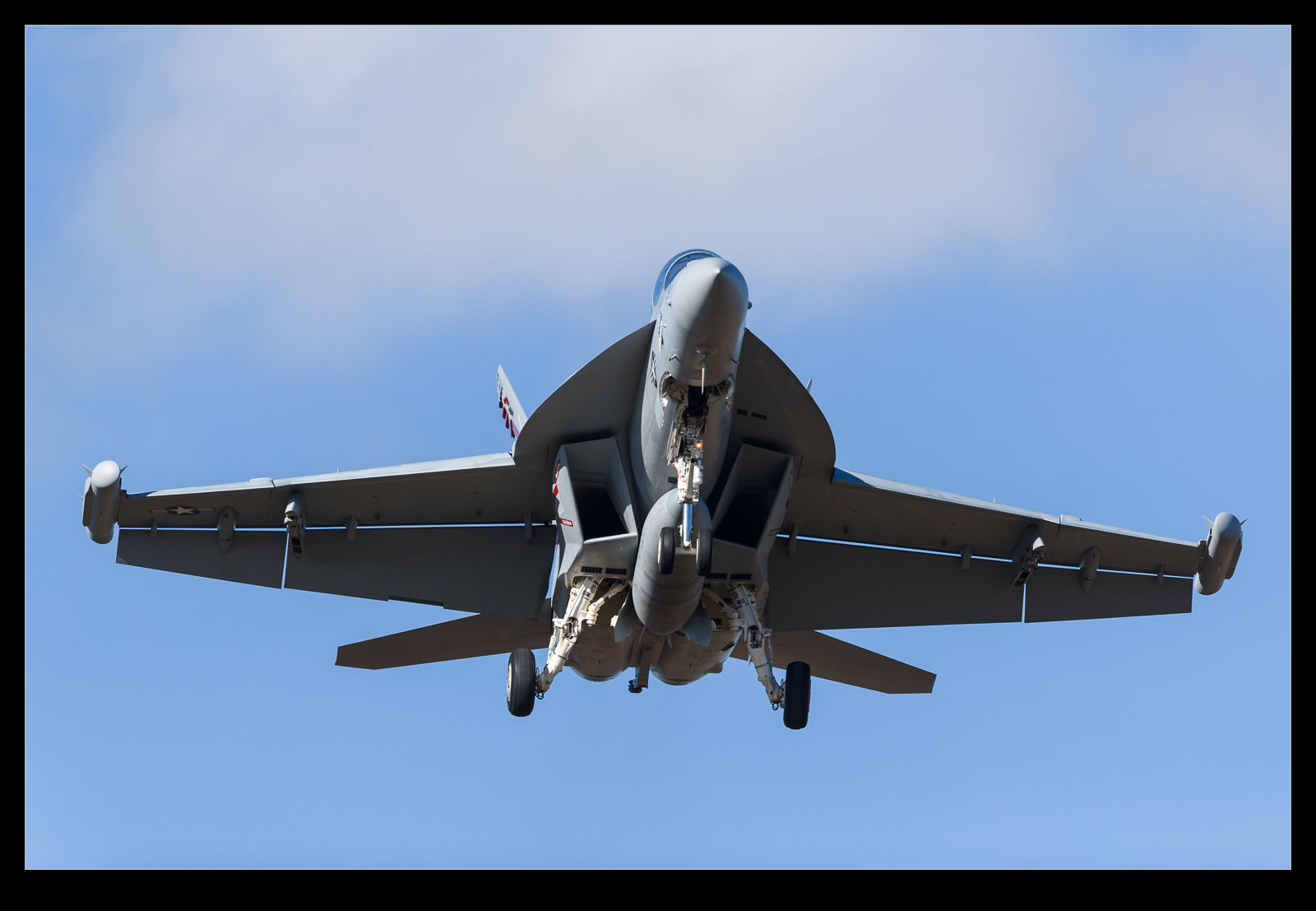
The approach to the runway at Coupeville brings the jets right over one of the local roads. This meant I had the opportunity to go for some head on type shots of the jets. As they came right over the top of me, I got a nice view of the underside of the jets. I also experienced the noise level of a Growler. I hadn’t thought to bring hearing protection and, if I go back, which I am pretty sure I shall do at some point, I will remember to take some. You are really quite close and the sound levels are high!
PDX Evening Arrivals
Back in the summer of 2017, we made a trip to Oregon for the solar eclipse. You can read all about that in previous posts here and here. The night before the eclipse, we stayed in Portland and the most convenient place to stay was at a hotel near the airport. The location turned out to be between the two runways at PDX and that evening the approach paths brought the planes in from our direction to the runways.
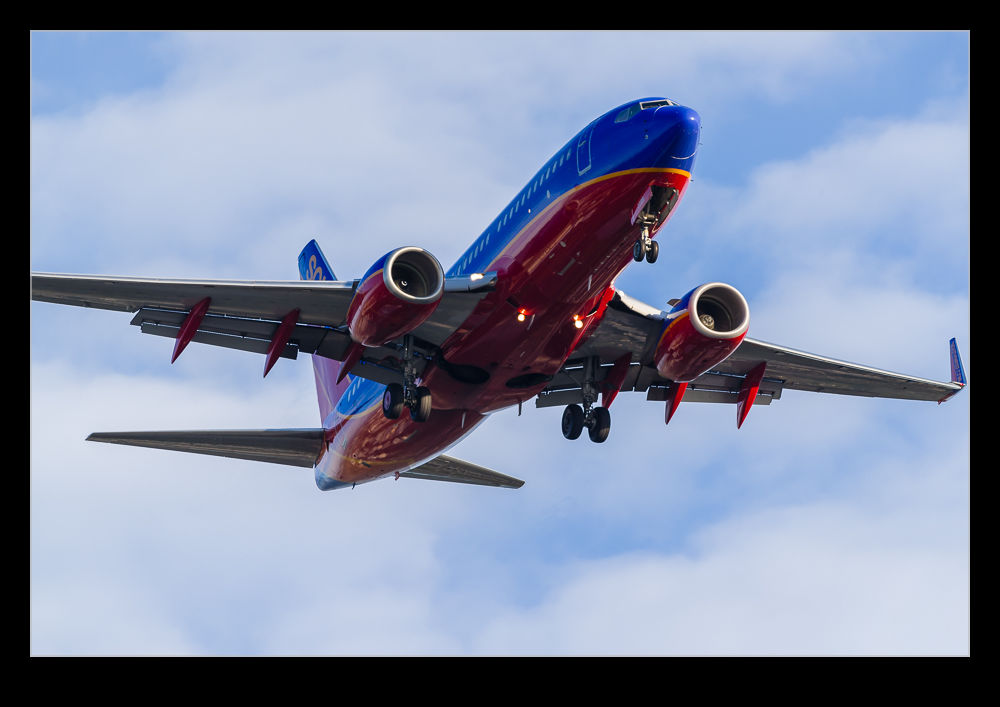
I figured I could pop out for a few minutes and photograph some of the arrivals. The evening light was coming in and we were a little on the wrong side of the closer runway but this was an impromptu shoot so I didn’t mind. A little biz jet traffic came in on the other runway while I got a selection of Q400s, FedEx freighters and the usual narrowbodies.
Since I was close to the centerline of the approach, it provided a slightly different perspective to that which I would normally go for. Looking up and almost straight down the nose is interesting. Not something to do all the time but certainly some variety (particularly if it only requires you to walk out to the parking lot). It’s good to try different angles on a regular basis and avoid getting repetitive.