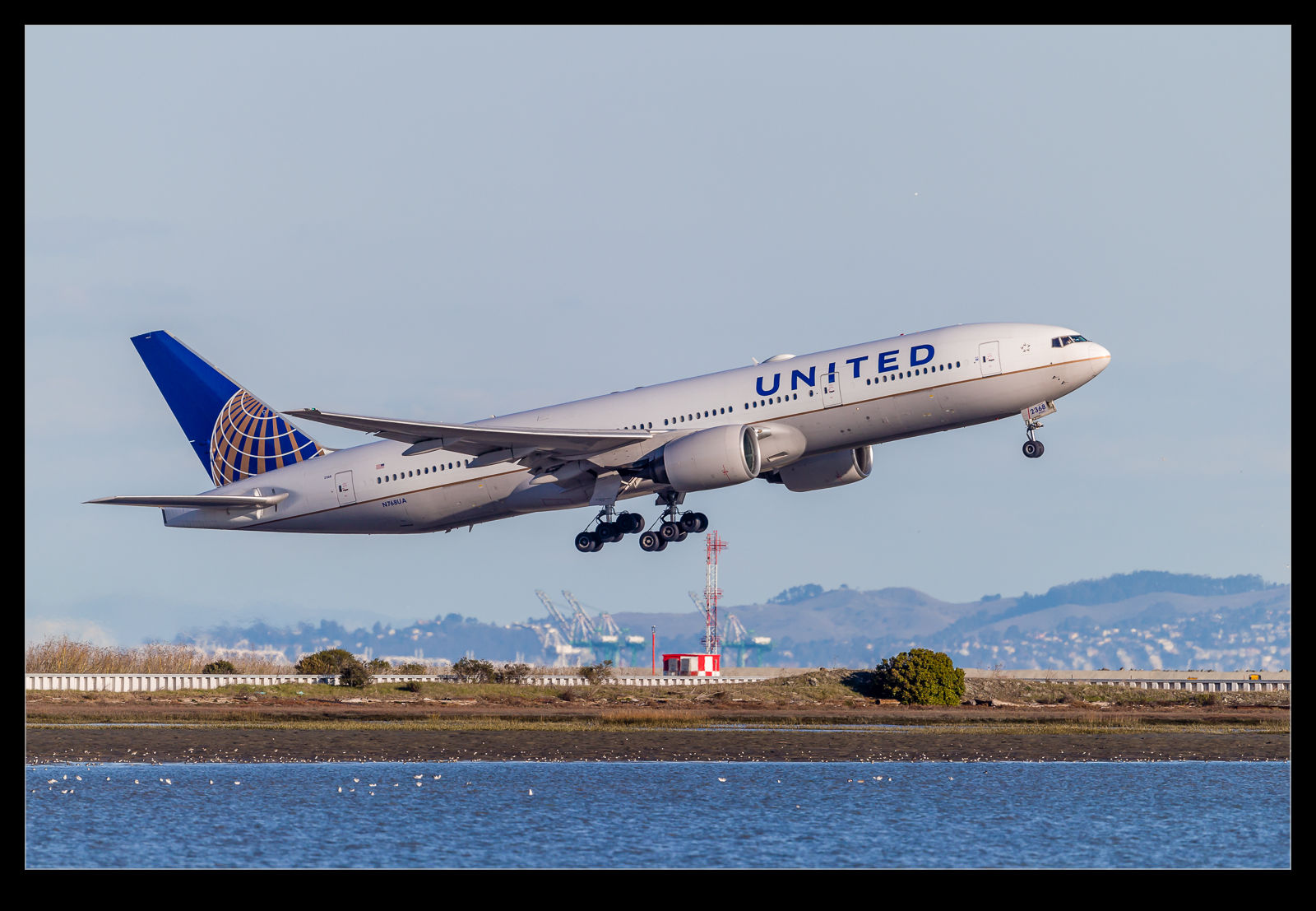
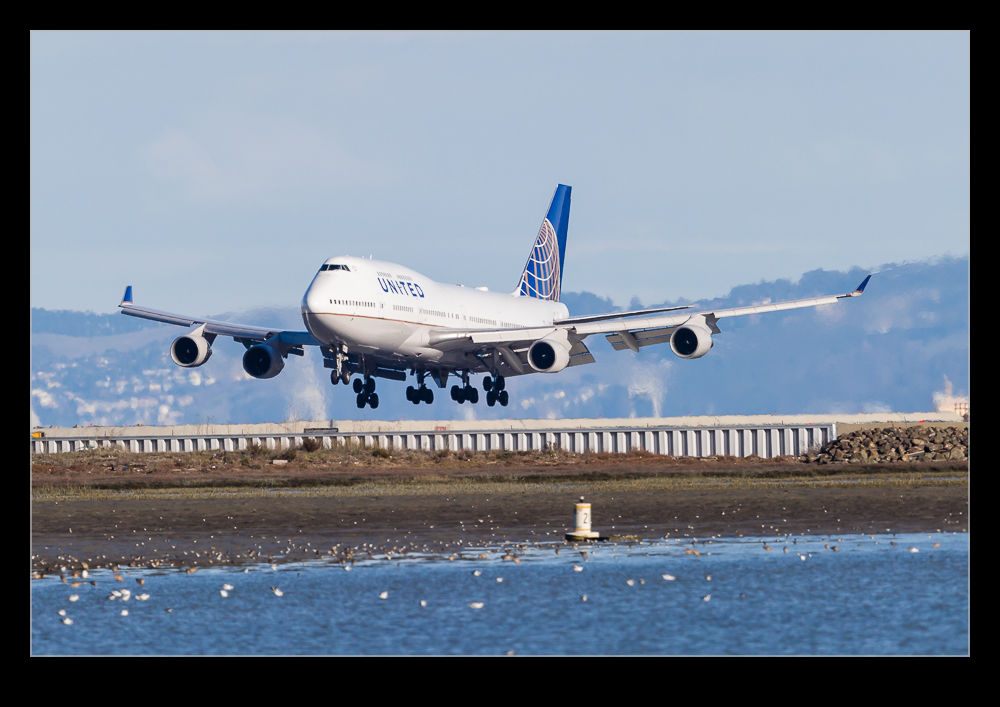
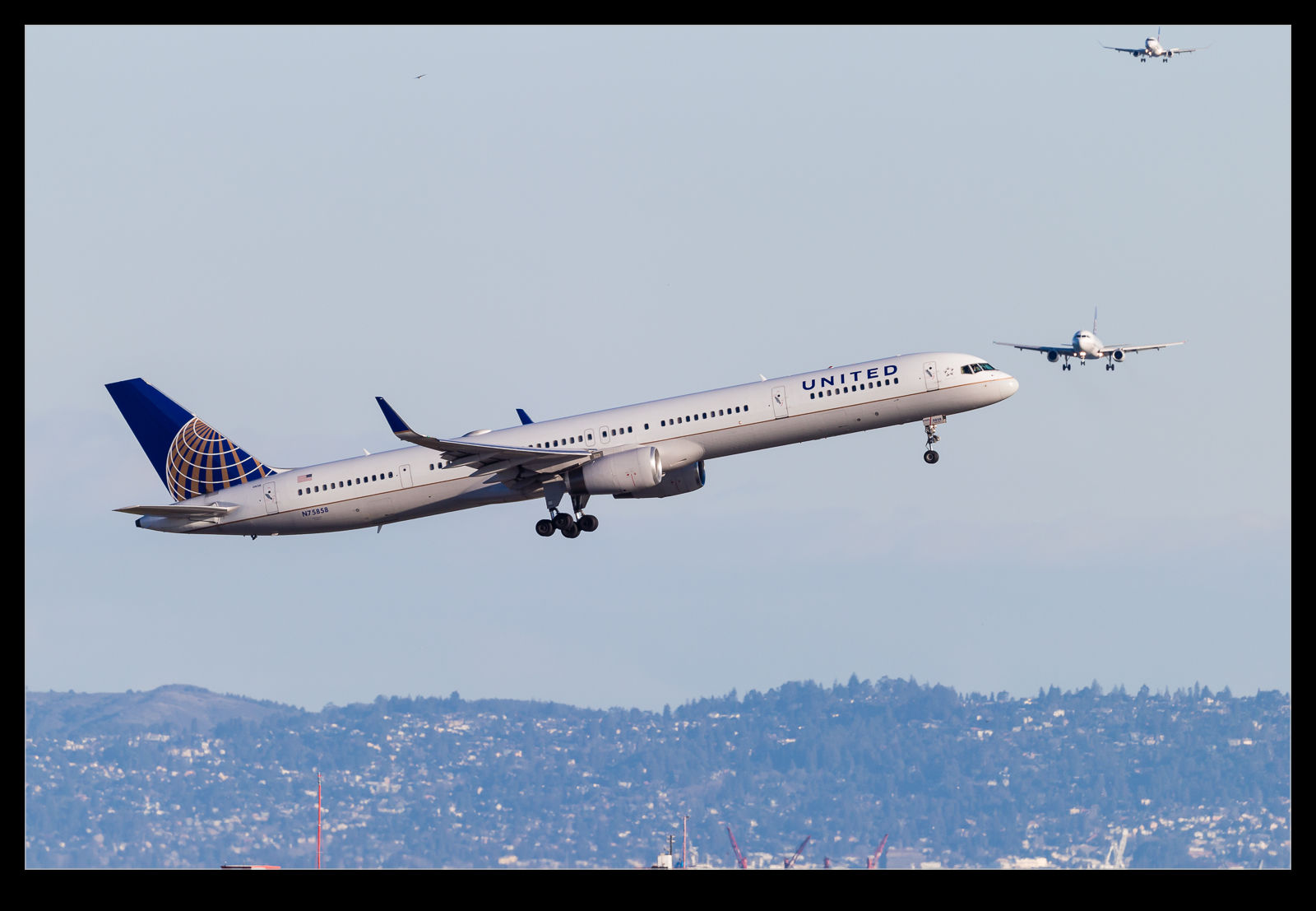
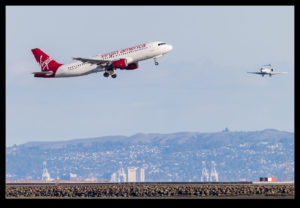
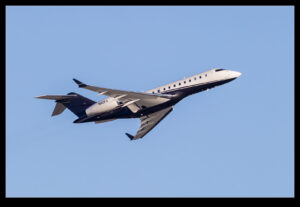
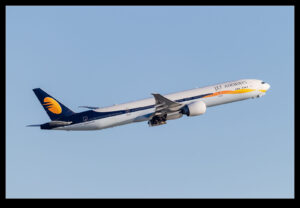
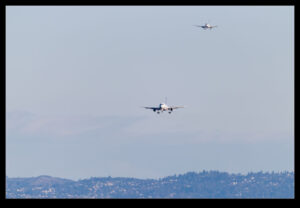
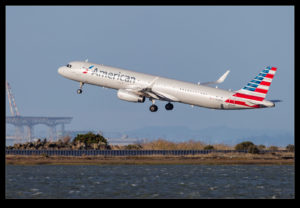
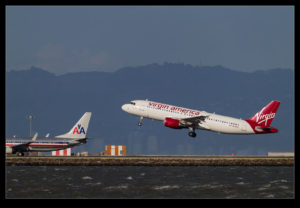
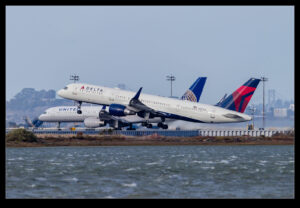
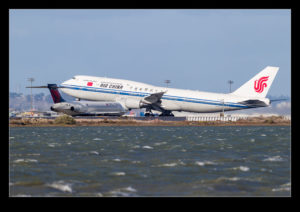
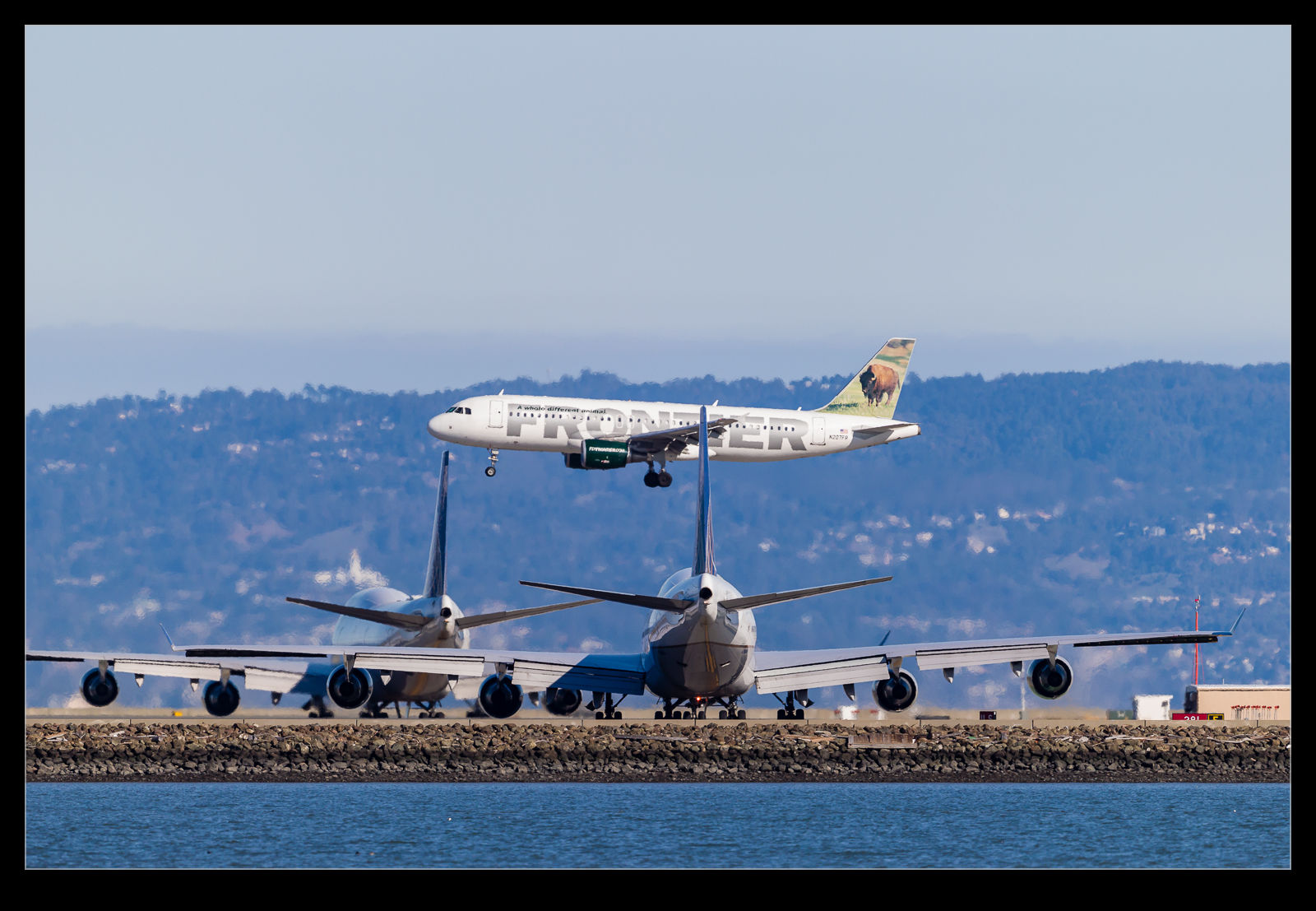
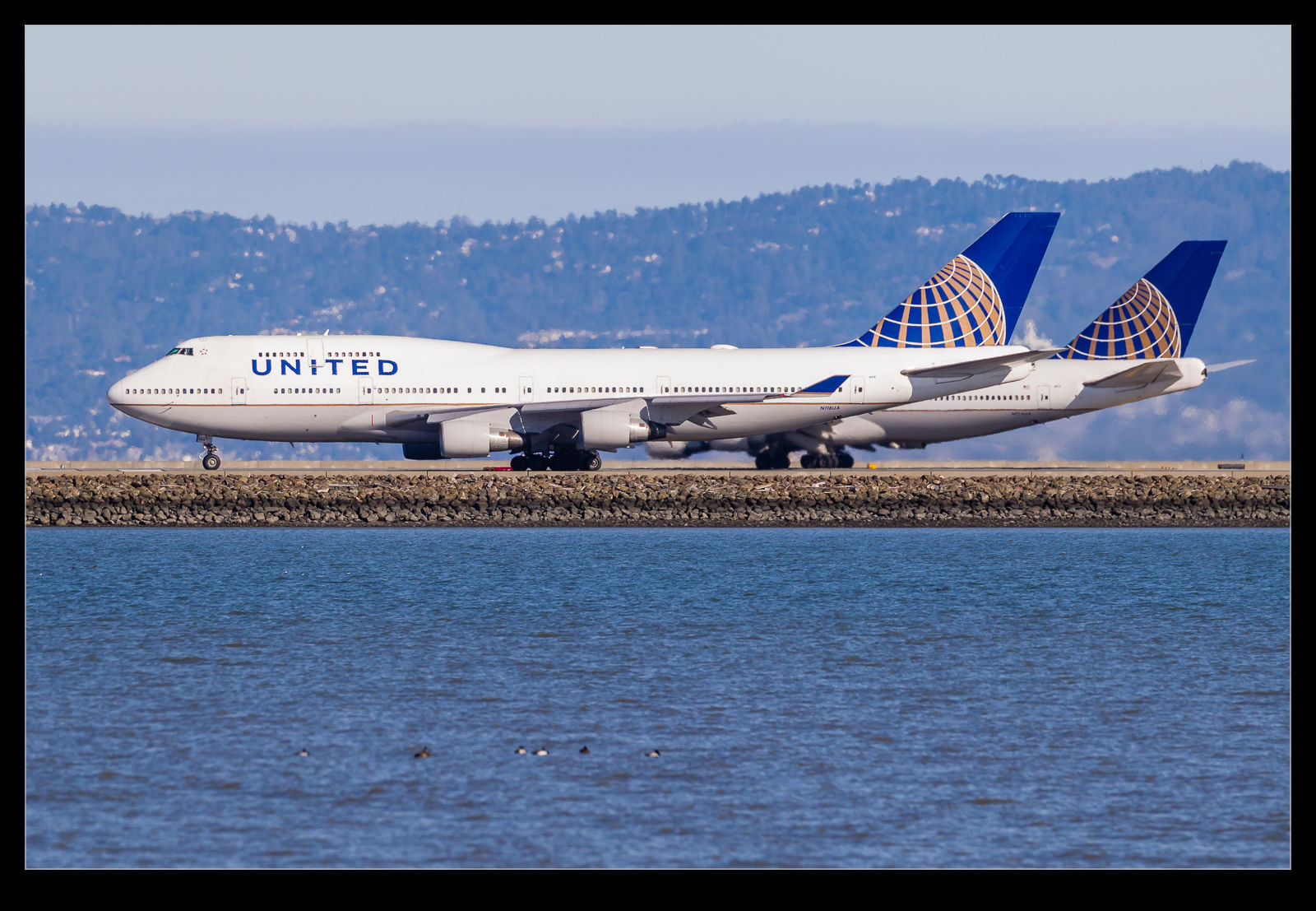
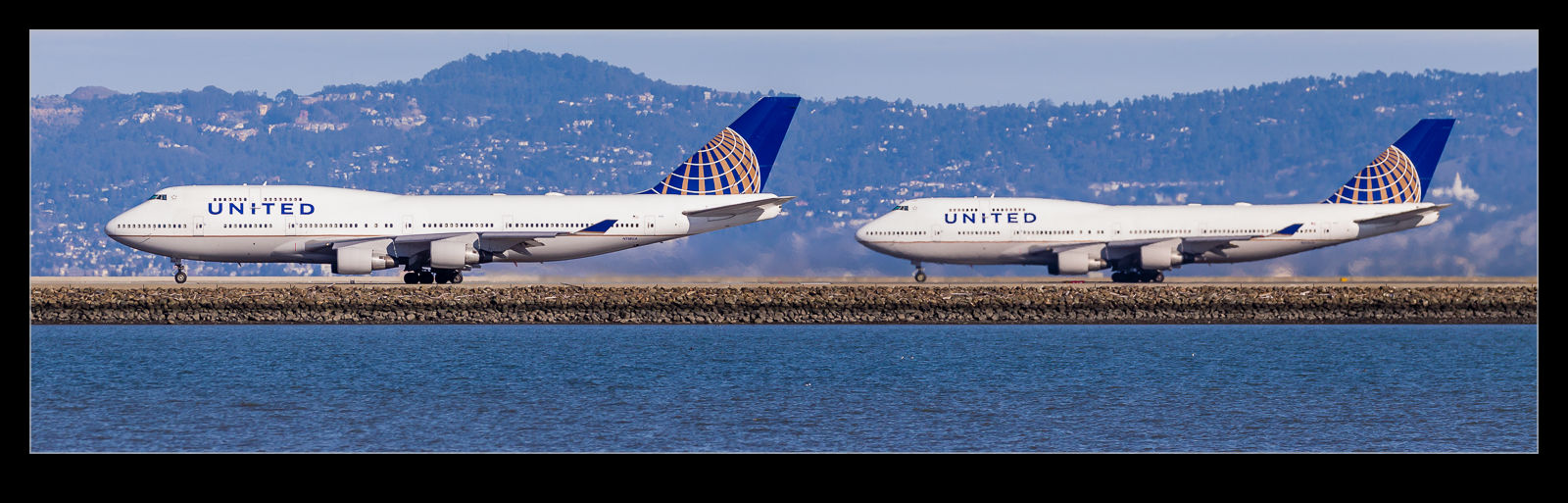
The winter brings days with clear skies and nice light angles. That is not all it brings, though. It can mean strong winds. One of my visits to SFO last year coincided with some very strong winds. The wind was gusting over 40kts on a regular basis. This was far to strong to allow operations on all of the runways. With the wind almost directly down the 28s, those runways were in use for arrivals and departures.
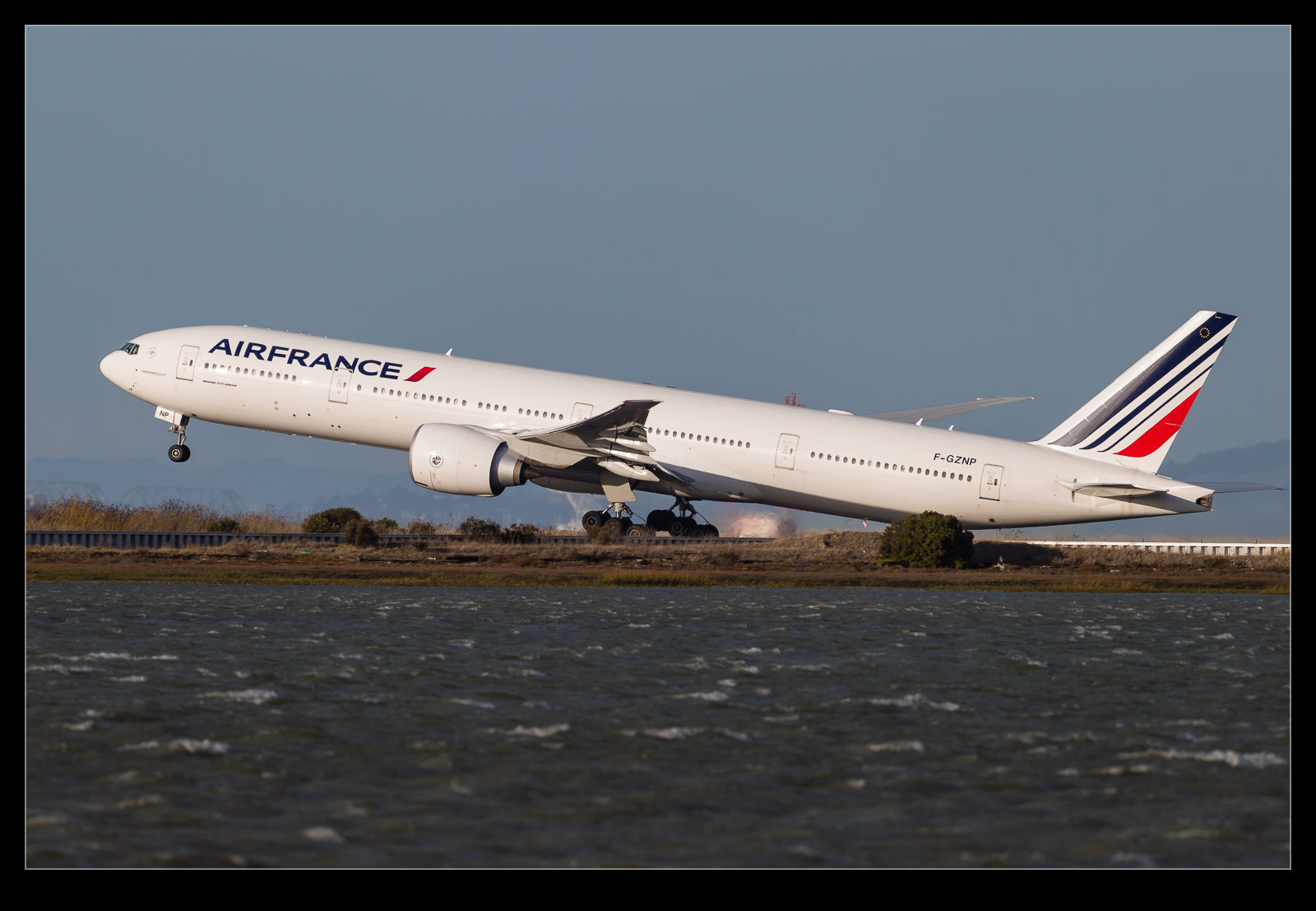 The wind might have been strong but the conditions weren’t bad for photography. The sun was actually out and the light on the planes was pretty nice. However, using a long lens was a bit more tricky with the wind since it tended to blow the lens around a lot. I spent a lot of time trying to stay in the lee of a tree to shield myself from the worst of the gusts.
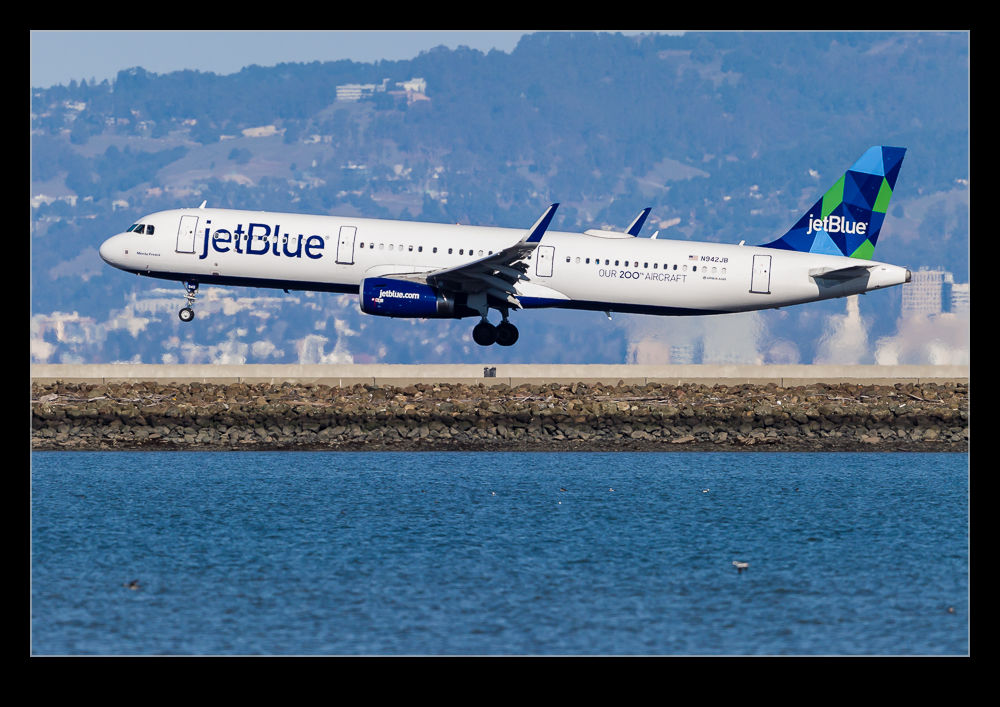
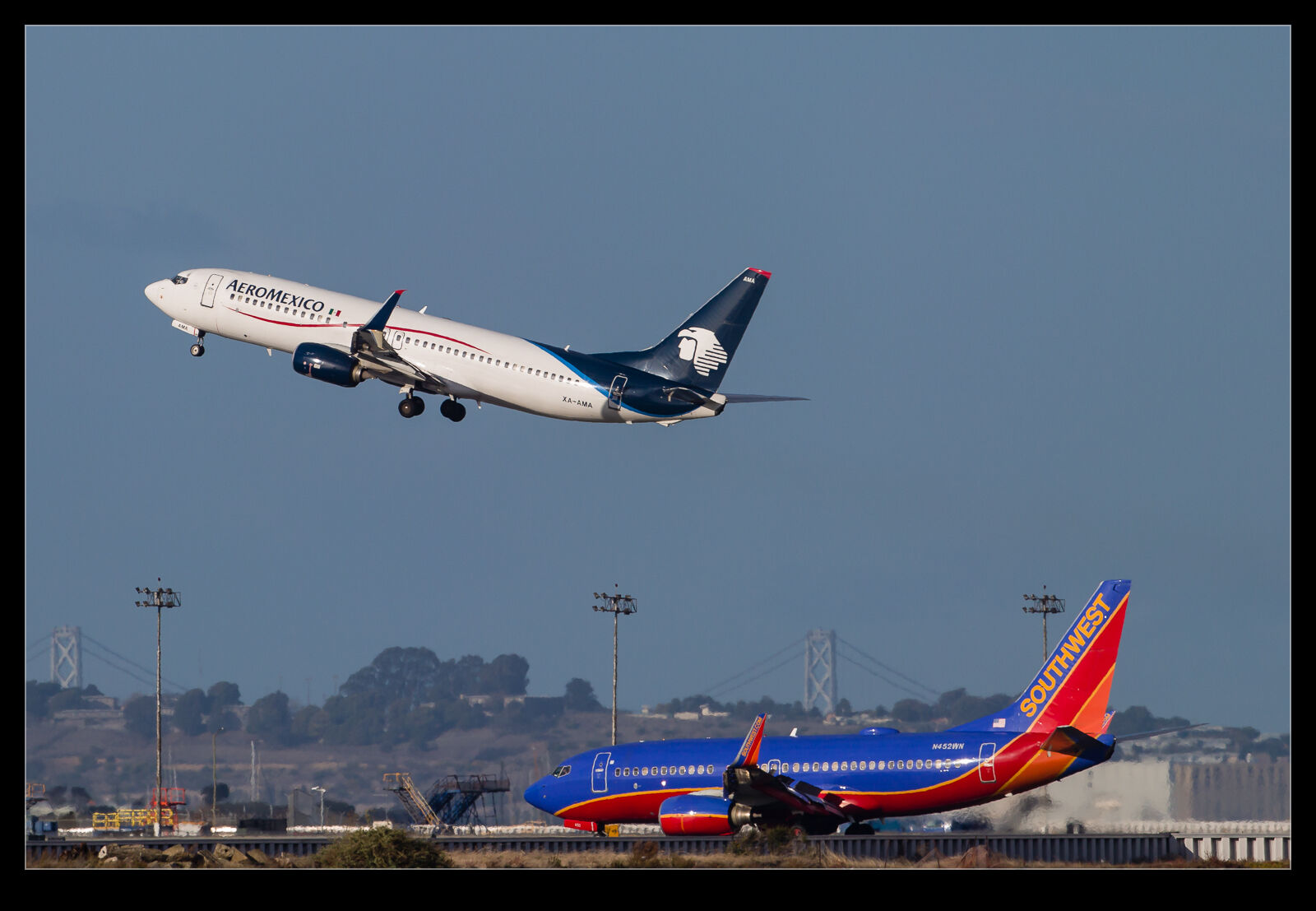 Consolidation of all operations on the two runways meant that things could get pretty congested near the thresholds. Plenty of jets were lined up ready for departure in between the arrivals. Having so many jets up there is relatively unusual. It is a bit problematic for some shots though. The arriving jets are behind those awaiting departure slots. The waiting jets produce a lot of distortion from the heat of their engine exhausts. This can be quite frustrating since the number of jets means that clear space for a shot is limited.
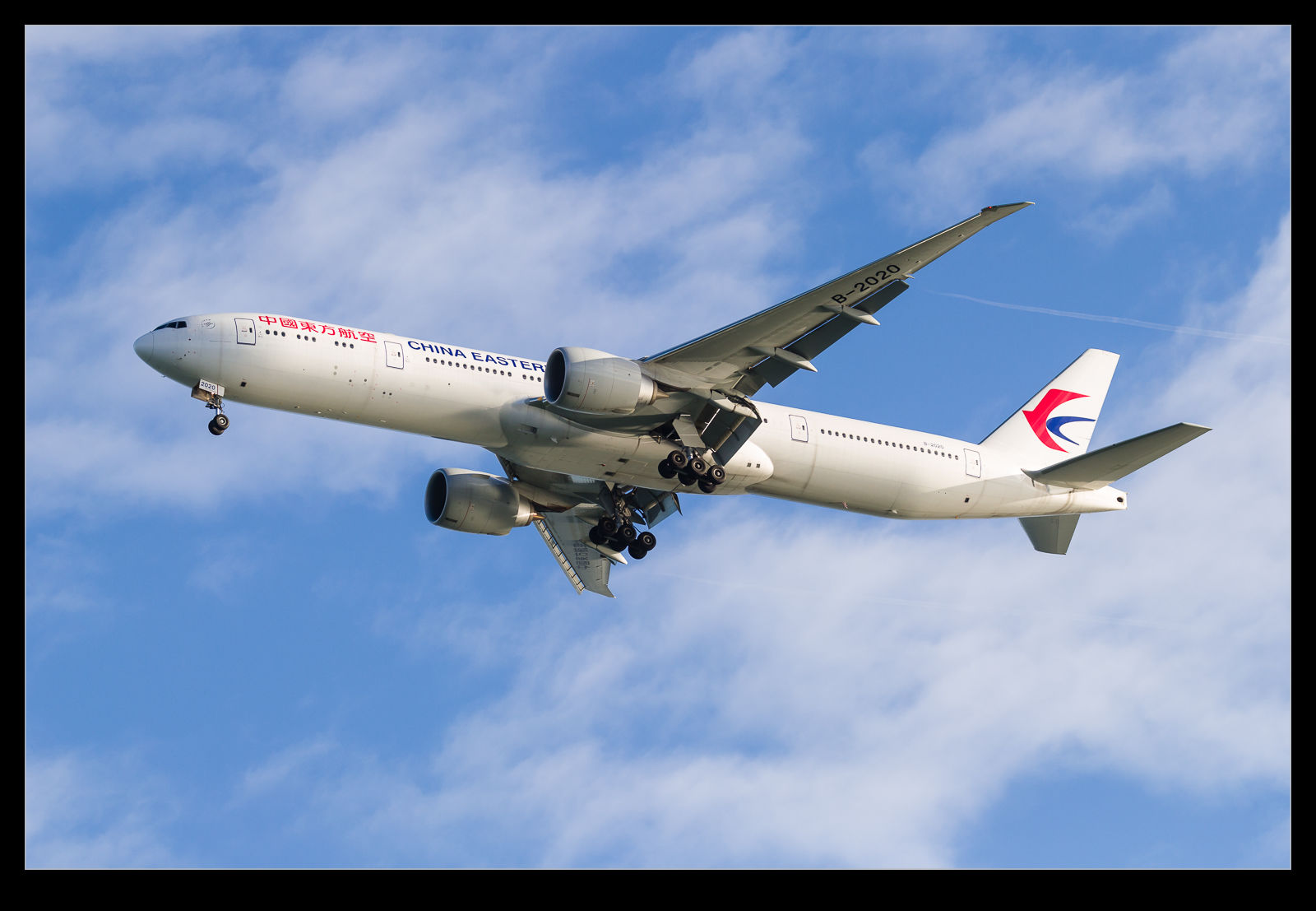
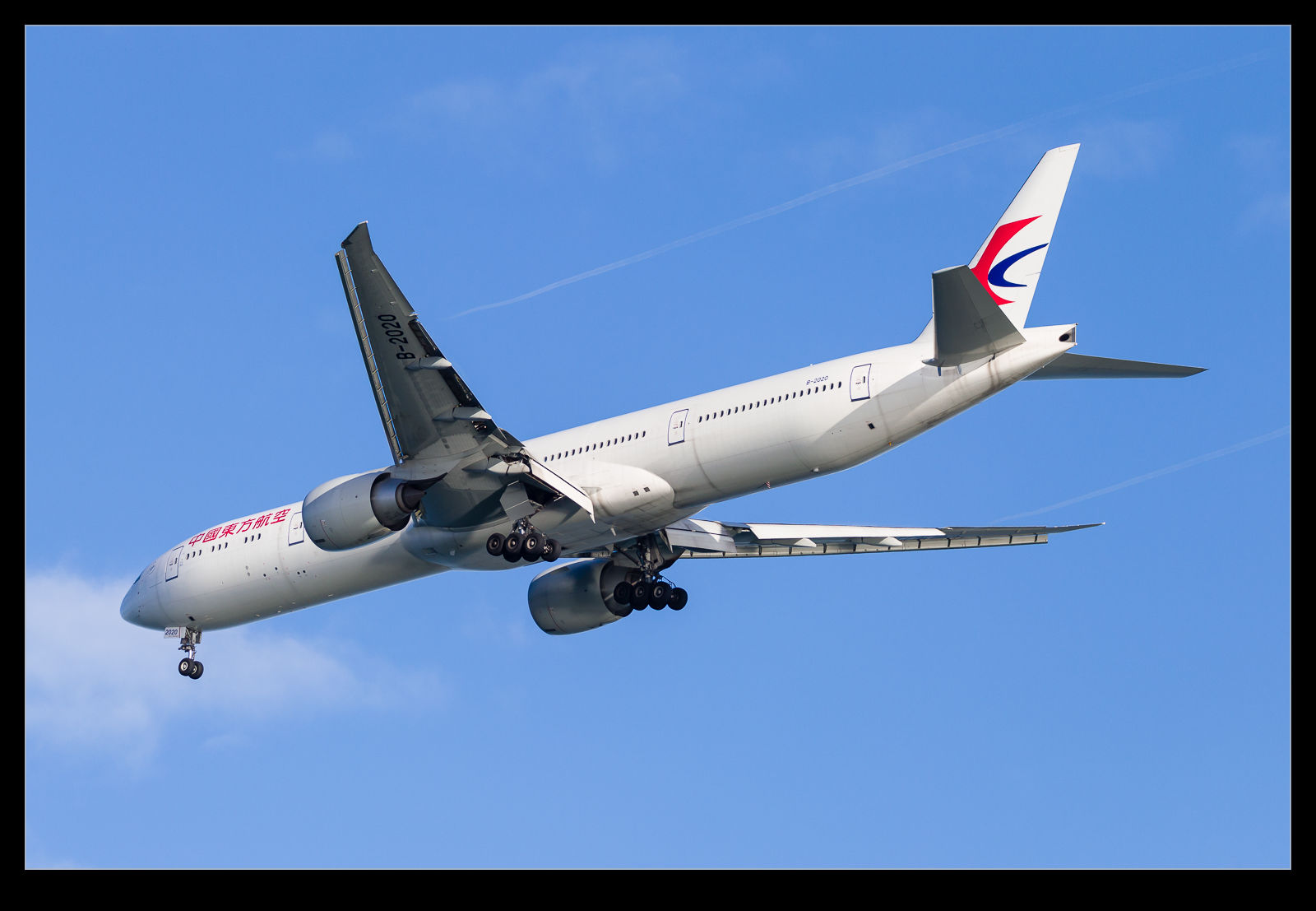
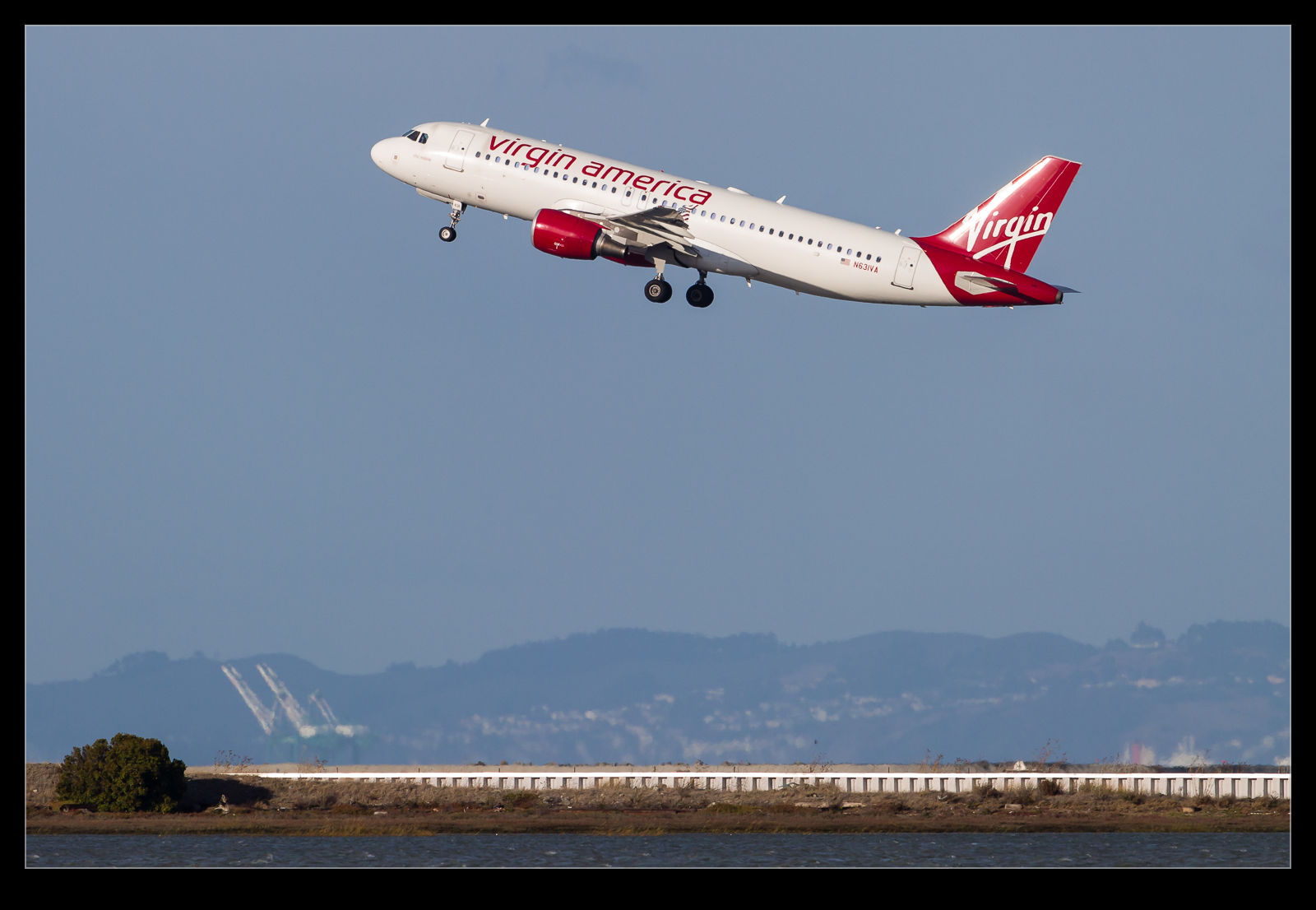
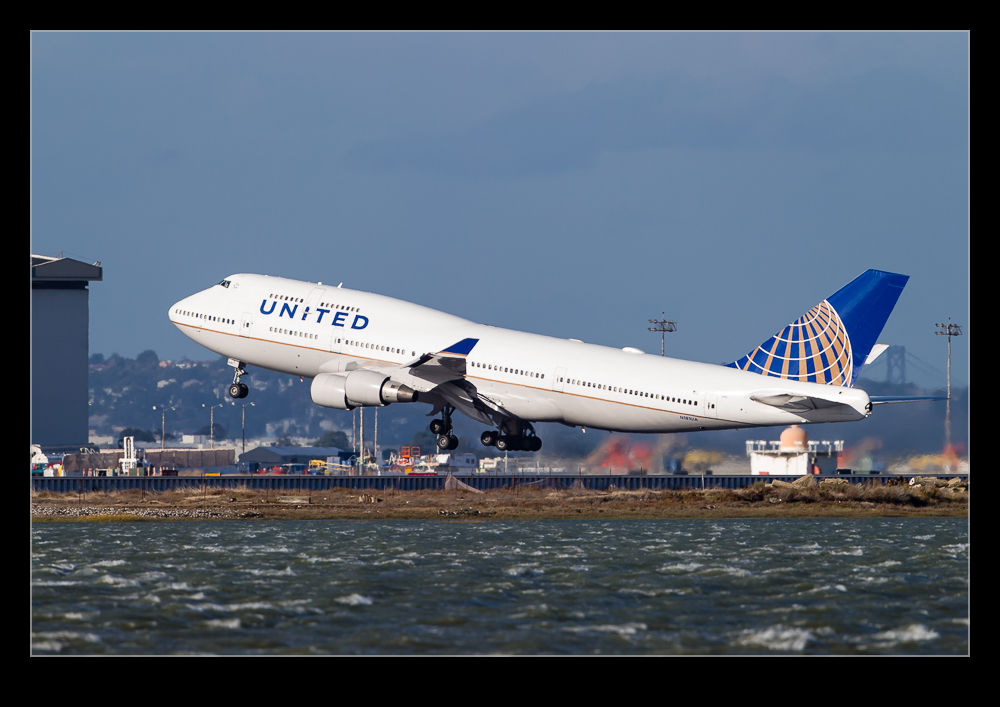 There are more benefits of course. Having very strong winds straight down the runway means the departing jets have a big advantage. Nearly 40kts on your ASI while standing still means a lot less ground roll is needed to get airborne. The narrow bodies were jumping into the air long before they got off peninsula extending the runways out into the bay. The same was true for the wide bodies. The heavy 747s always have a longer roll but they were getting up before the cross runways. The big twins were getting up very quickly. I had a pretty good view of the 777s as they departed and got what is probably my clearest view yet of the truck rotation on the 777-300ERs – a quest familiar to the regular readers.
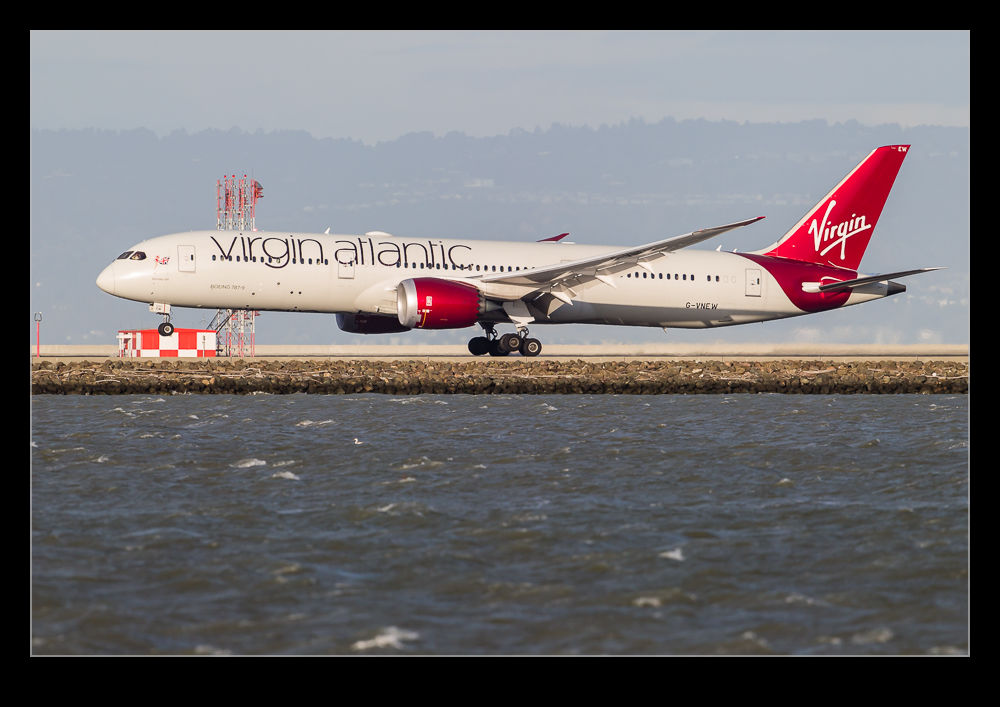
 Fighting the wind made for a tiring day. I decided I would wait around until the Virgin 787-9 showed up and then call it quits. This was due to be one of the last big arrivals prior to the sun disappearing. When it came in, the light was very nice. I got some good shots and then packed up to go. Going back through the shots since, it was quite clear that the wind was a big factor in my shooting. The sharpness of some shots suffered but the bigger issue was tracking accurately. Far to many extremities of planes got chopped off. Despite, that, the opportunities a day like that offers made it well worth doing and I would be back in a heartbeat if the conditions come together.
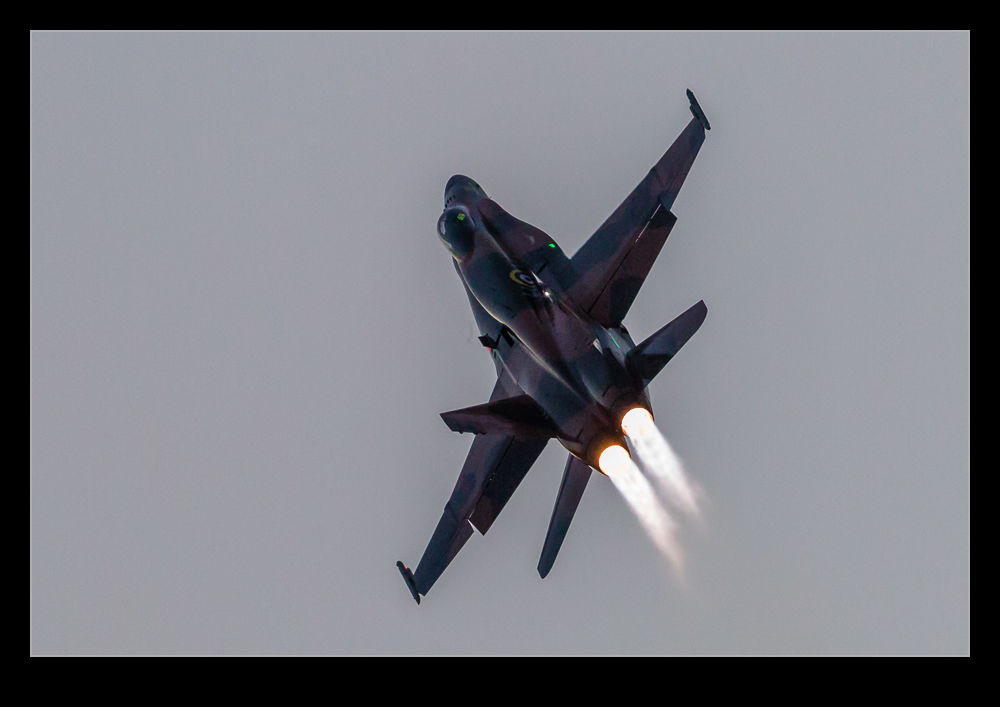 Previously I may have mentioned my recent efforts to go through images I took a long time ago. The evening show at Chino had a number of performers and one of them was the Canadian Hornet demo. When I go through my images, part of my process is to render all of them at 100% and then view the full size image on one screen and the zoomed in version on the other. This allows me to see whether the shot is sharp and also whether there is anything glaringly wrong with it like bits cut off or someone’s head in the way.
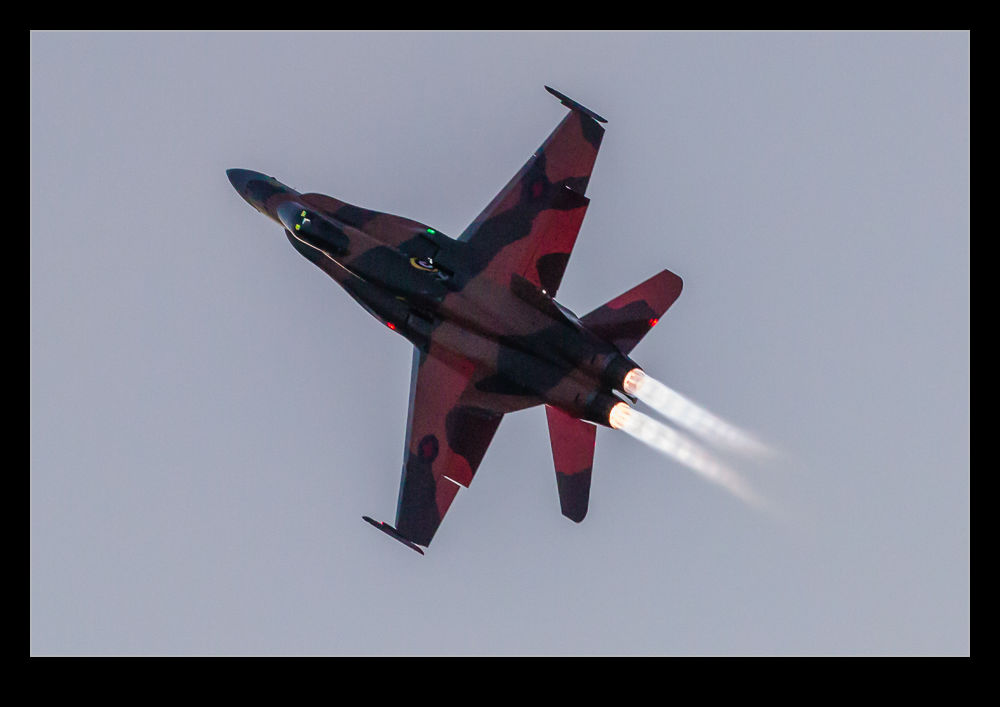 I was going through the shots of the Hornet which flew after the sun had gone below the horizon, I noticed that, as it flew over the top of a loop, I had a view into the cockpit. Normally, this would be dark as the brightness of the day overpowered the shade of the cockpit. However, since it was pretty dark, the glow of the multifunction displays on the panel is clearly visible. We aren’t going to be able to see the details of the displays themselves but they are very conspicuous which is not the norm.