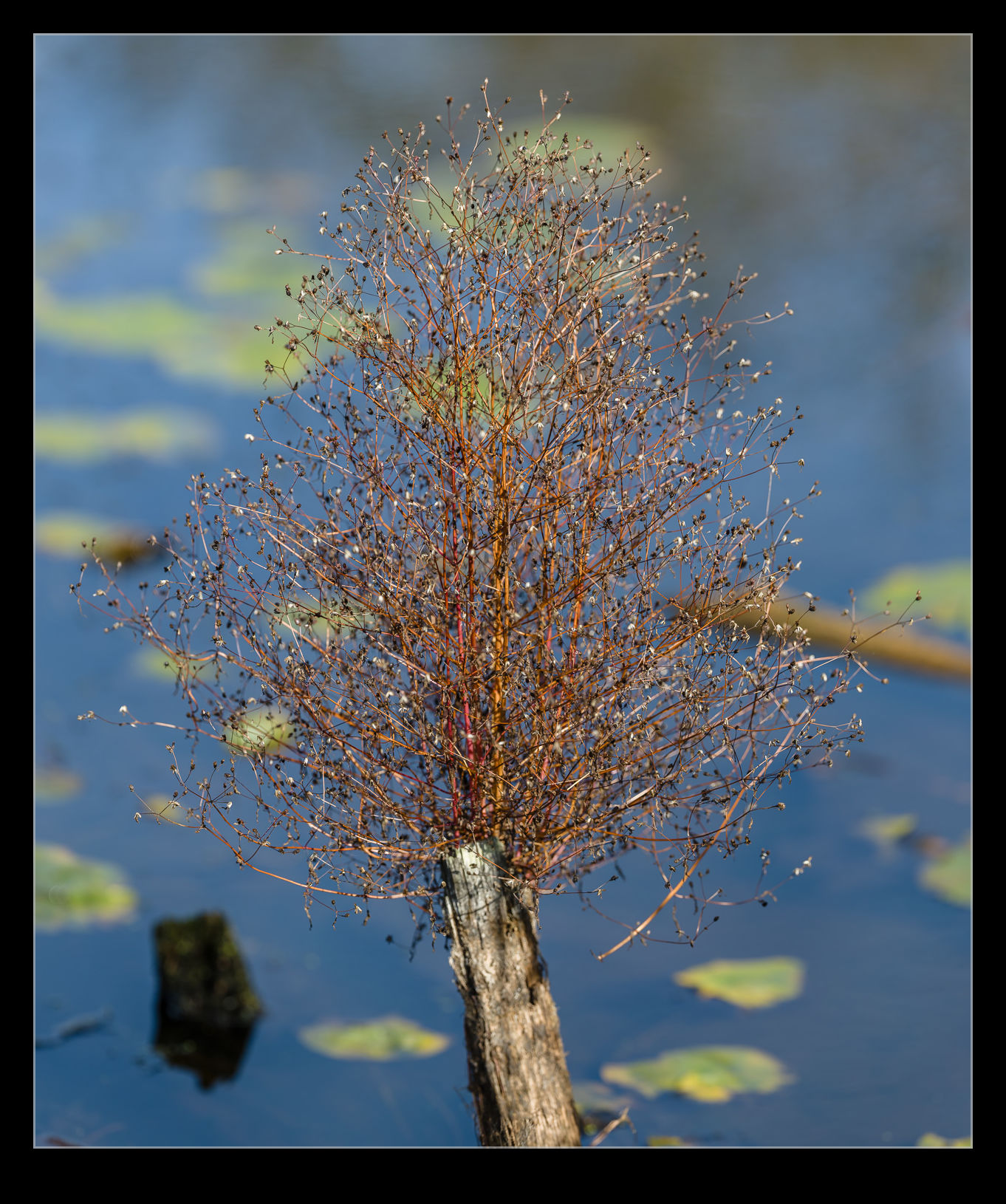
Sometimes you just don’t have the right gear with you. I had gone to Juanita Bay after work and was only carrying one camera with the 500mm on it. Looking down in to the water to one side of me, I was quite taken by a stump in the water that had a new growth of a small tree coming from the top of it. It was too far away to get a decent shot with the phone so the 500mm was the only option. I took a sequence of shots to stitch together later on. I quite like the separation that you get with using such a long lens for a shot like this. I wonder how large the tree will ultimately grow to be given the limitations of its home!
Tag Archives: technique
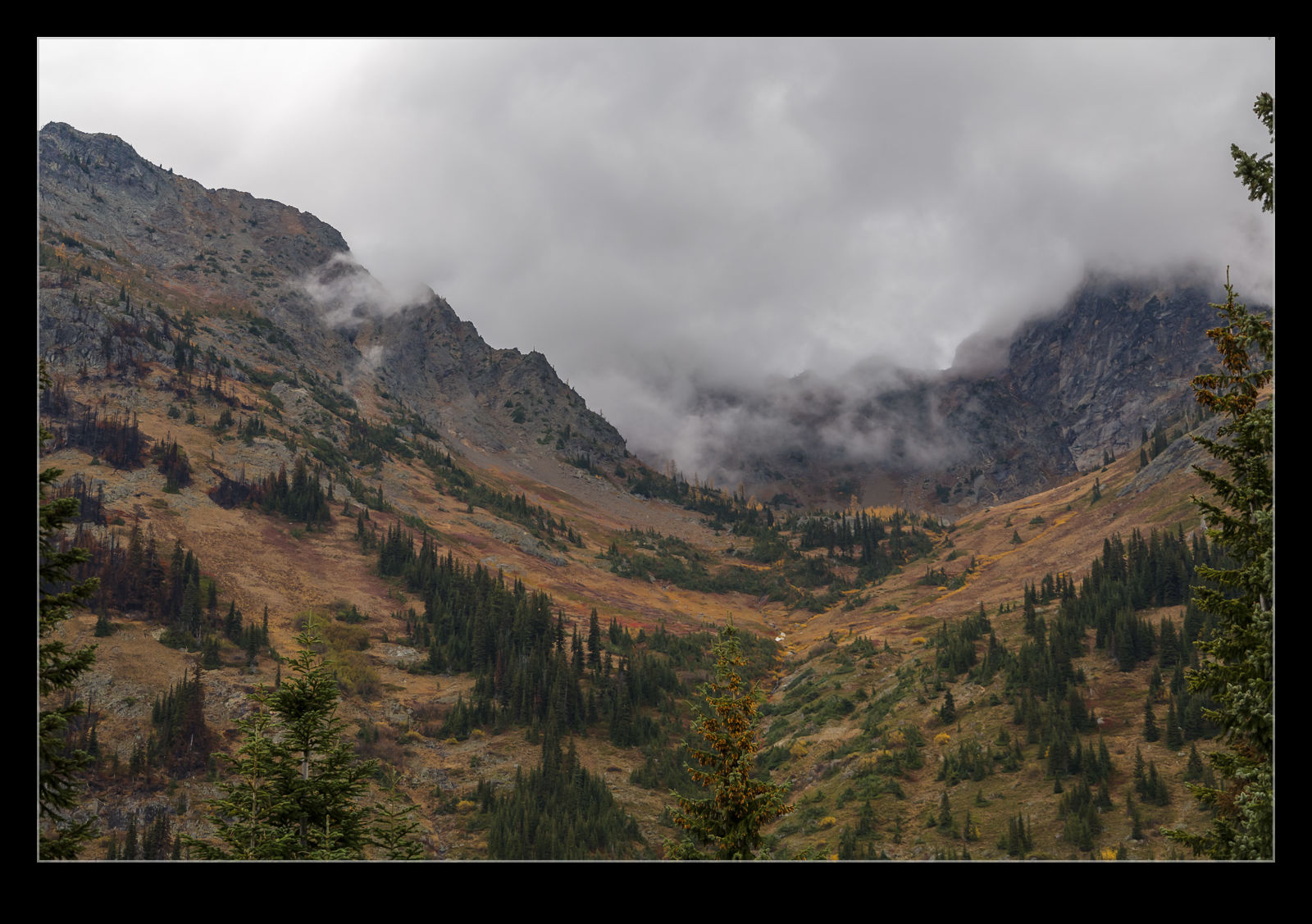
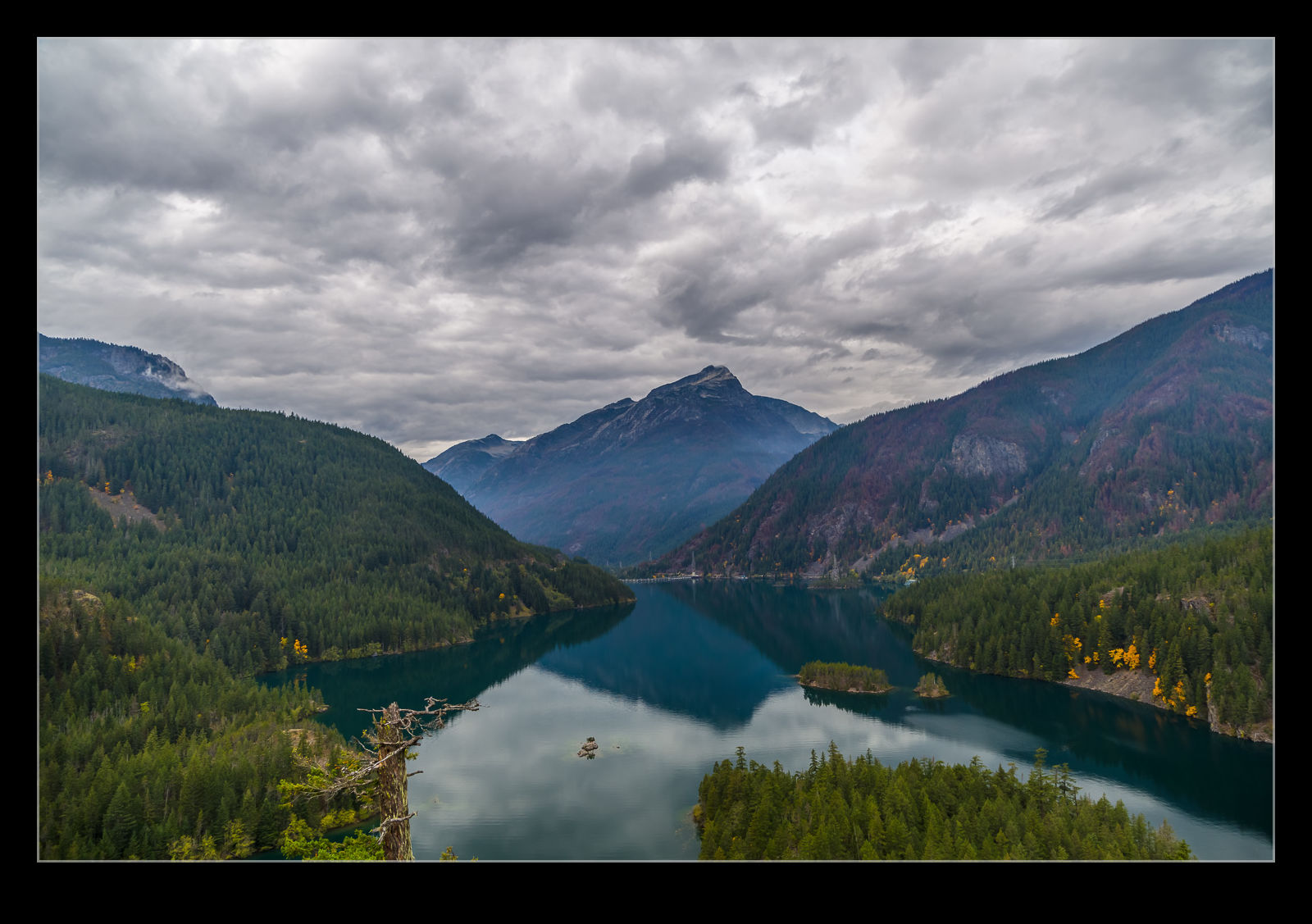
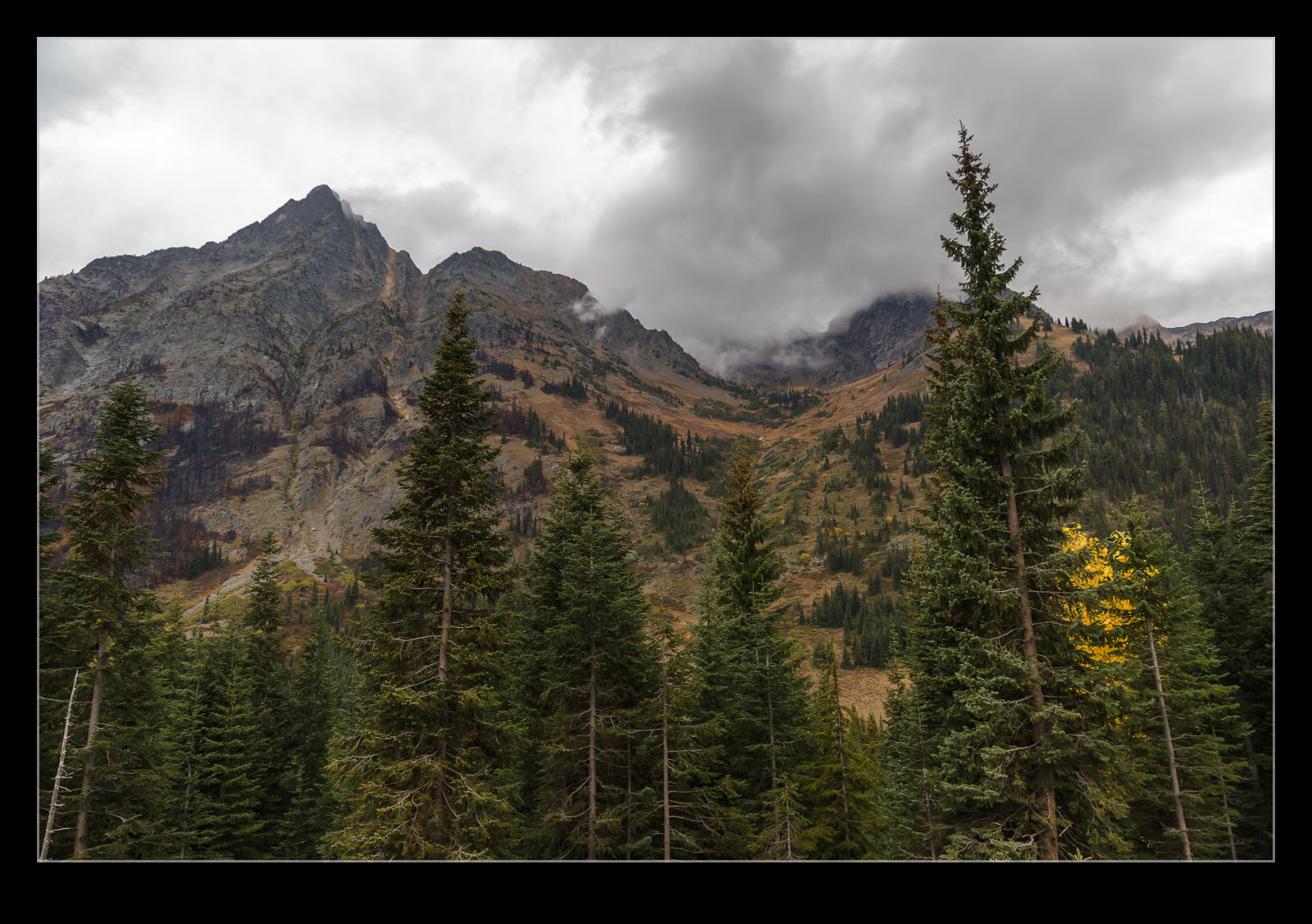
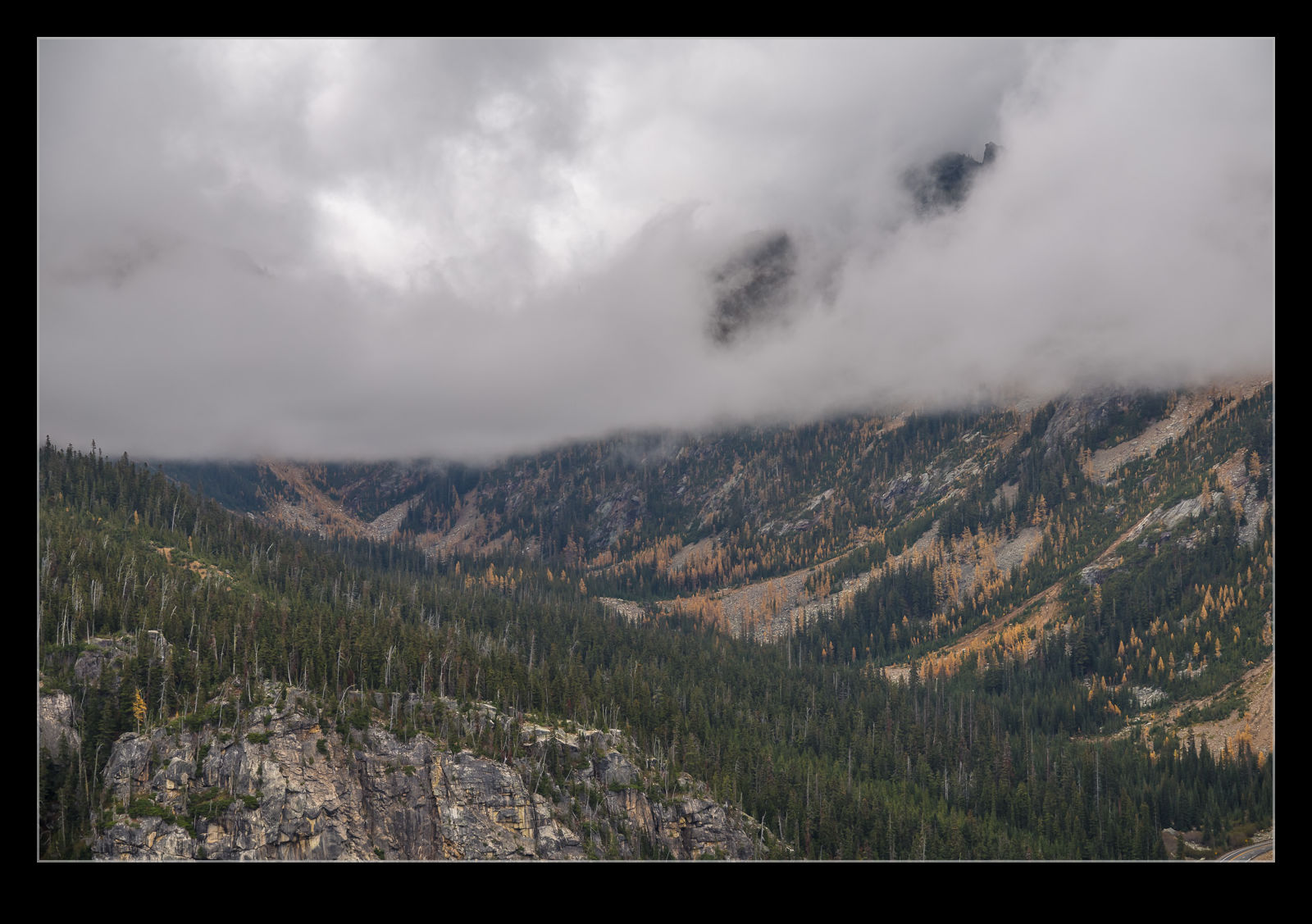
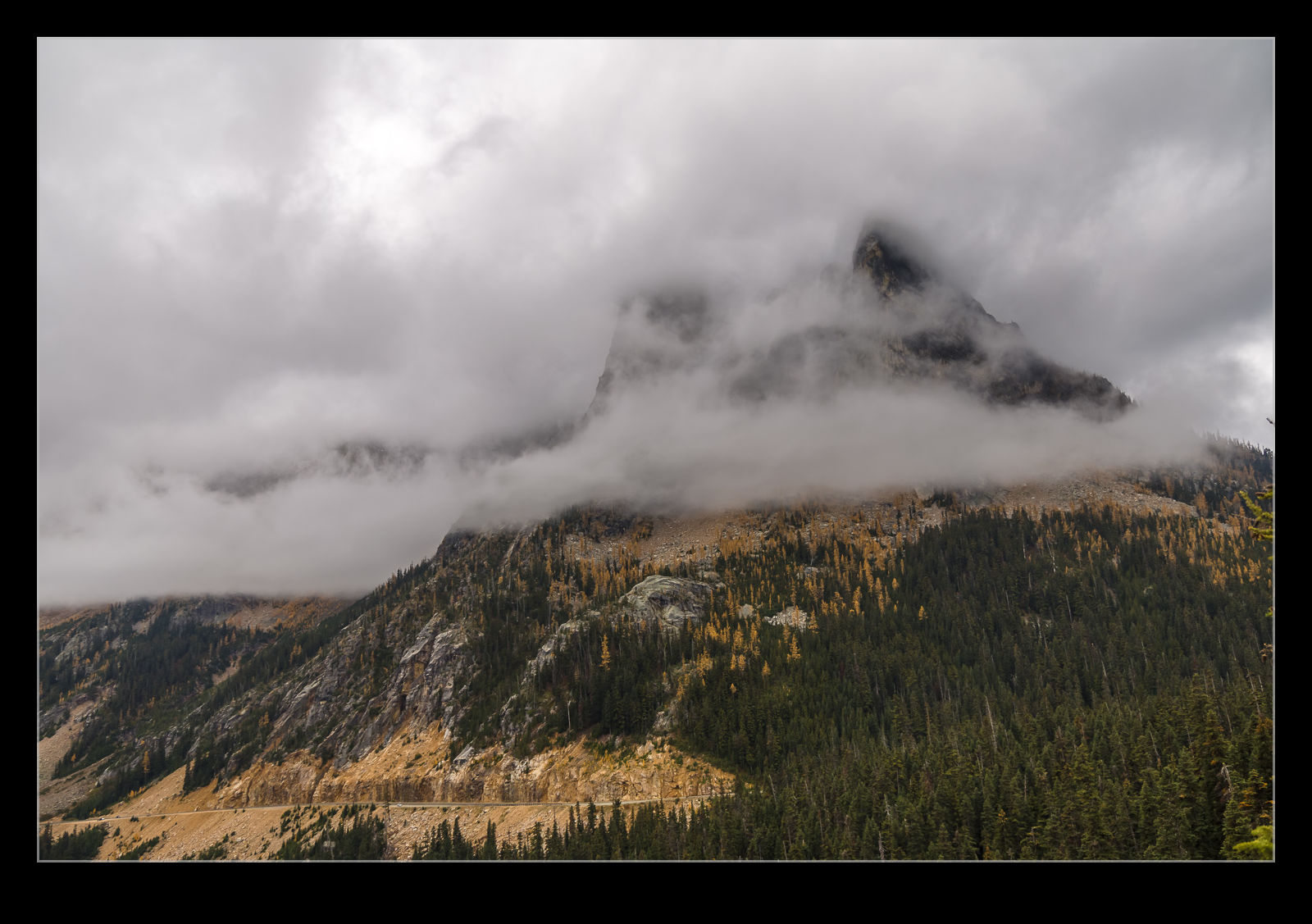
Clouds in the Mountains
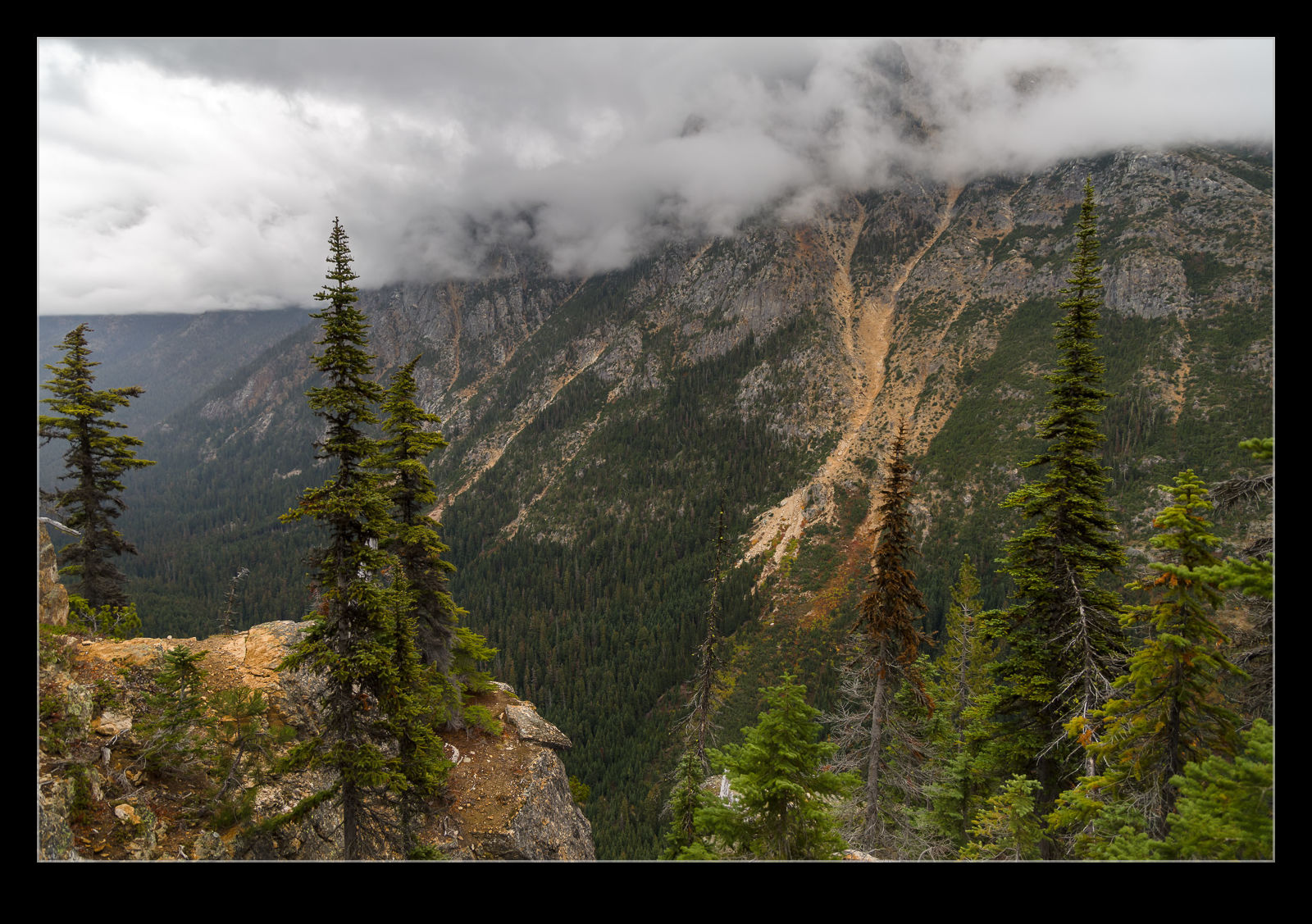
The North Cascades Highway gets snowed in for the winter, so we decided to take a trip up there before the snow arrived. It was also a good time for fall foliage, so we wanted to see what the mountains had to offer. The colors in the trees as we drove up were very nice but, the higher you get, the more you are into the evergreens and the foliage becomes sparse. However, we had something equally attractive awaiting us.
It was an overcast day as we drove up with any hints of sun from the lower levels gone as we got higher. There were some really cool bands of clouds to see as we drove. At one point we had the valley in sight and the tops of the mountains but a band of cloud in the middle. It was while on a stretch of road with nowhere to stop so no shots of that. However, as we got up to Diablo Lake and then Washington Pass, we got plenty of mountain tops in and out of the clouds.
I experimented with both normal shots and HDR. With the shadow of the valleys and the brightness of the clouds, the dynamic range was pretty wide, and I thought HDR might give me some more processing options. I was glad I made that choice as it really helped to get detail in all parts of the images. That will be our last trip up there this year. The snows will be getting heavy before too long and then it will be a waiting game until the pass is cleared in the spring.
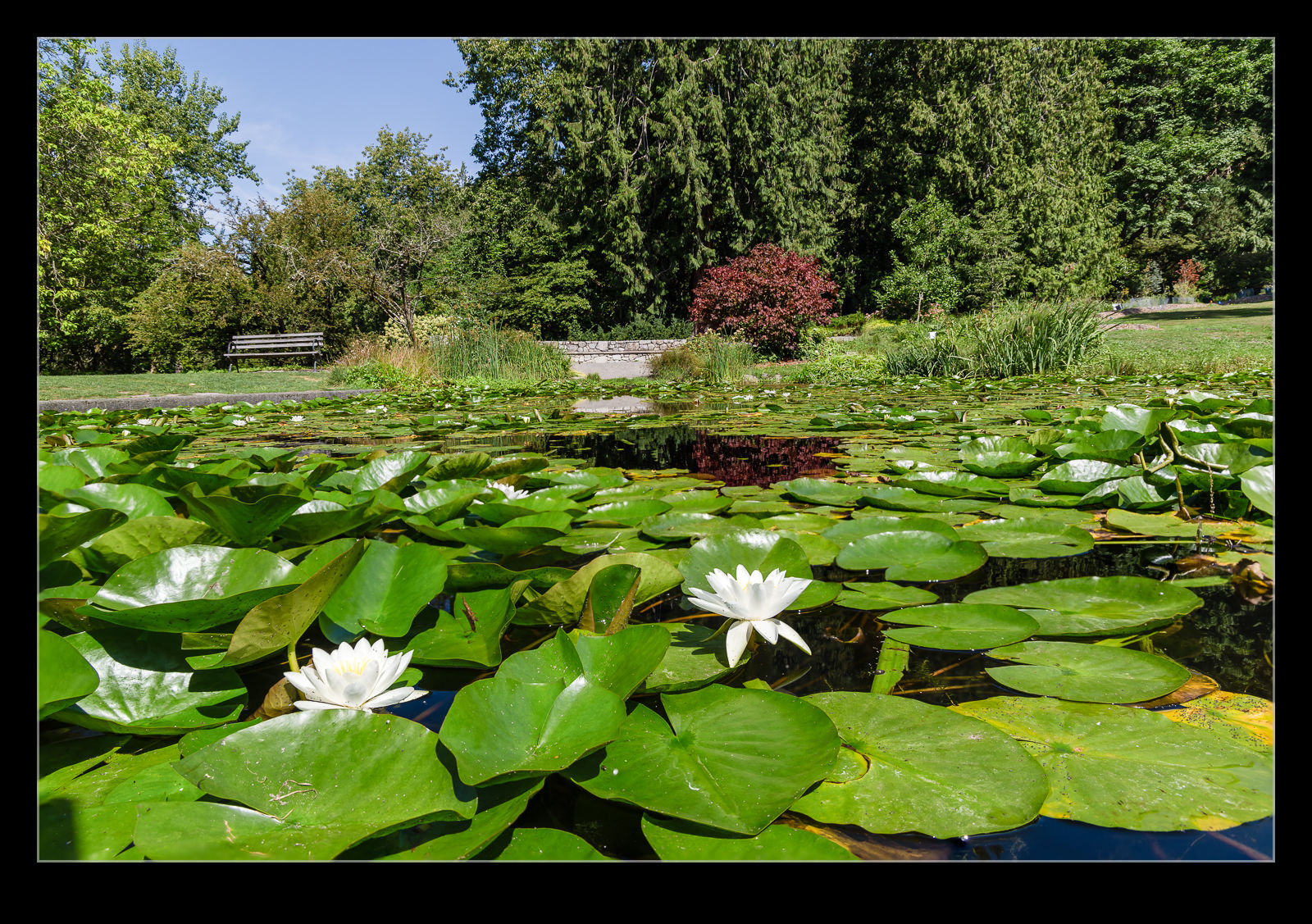
Focus Stacking the Lily Pond
A walk in Washington Park Arboretum in Seattle took us by one of the ponds that is covered in lilies. Unlike when I was in Juanita Bay, this pond allowed me to get down to water level. This provided a far more interesting perspective across the pond to the trees behind. It did put me very close to the foreground elements so I focused stacked some shots to provide a deeper focused range across the shot. I far prefer the lower angle as it really emphasizes the foreground elements in a way that isn’t possible when higher up.
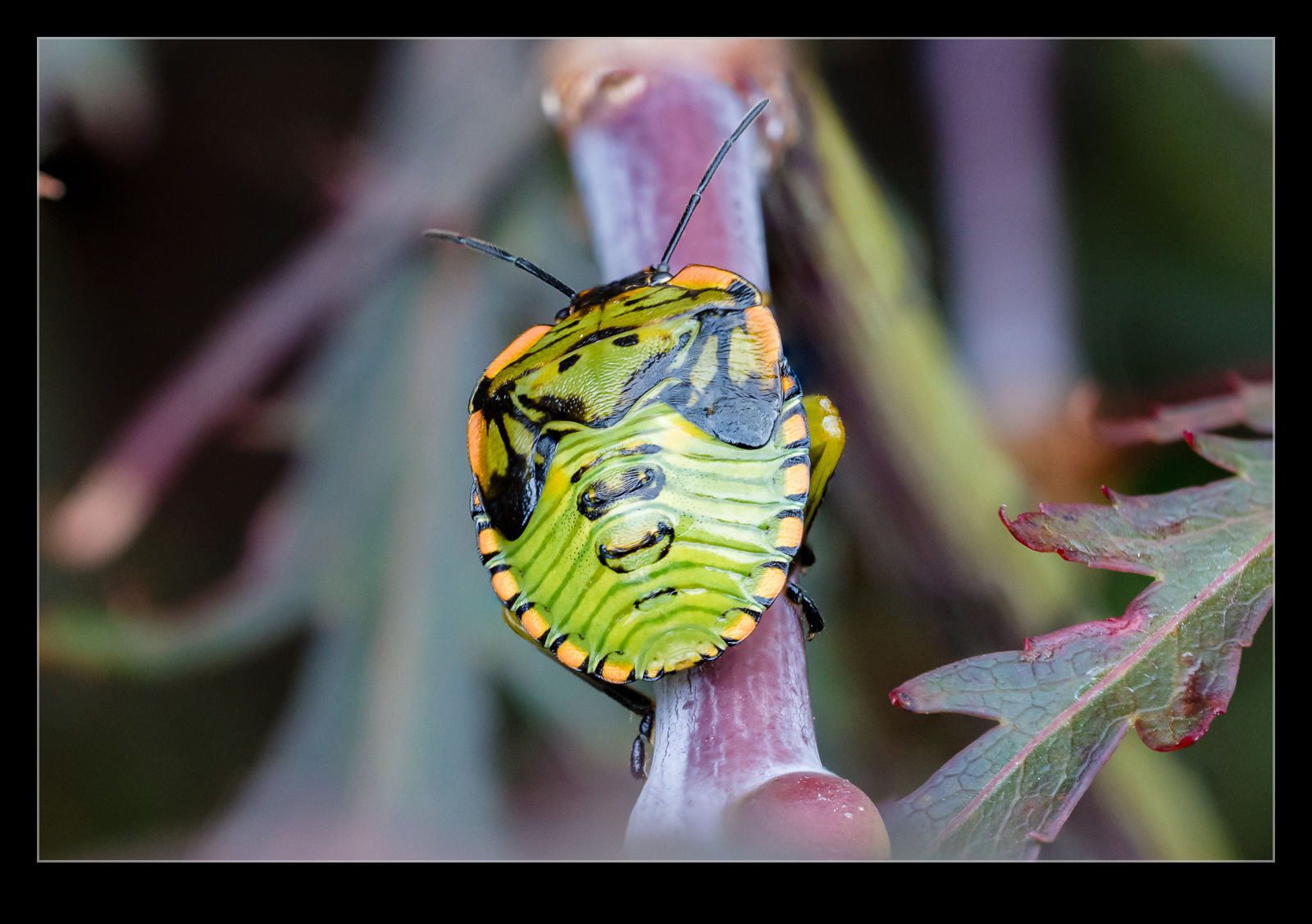
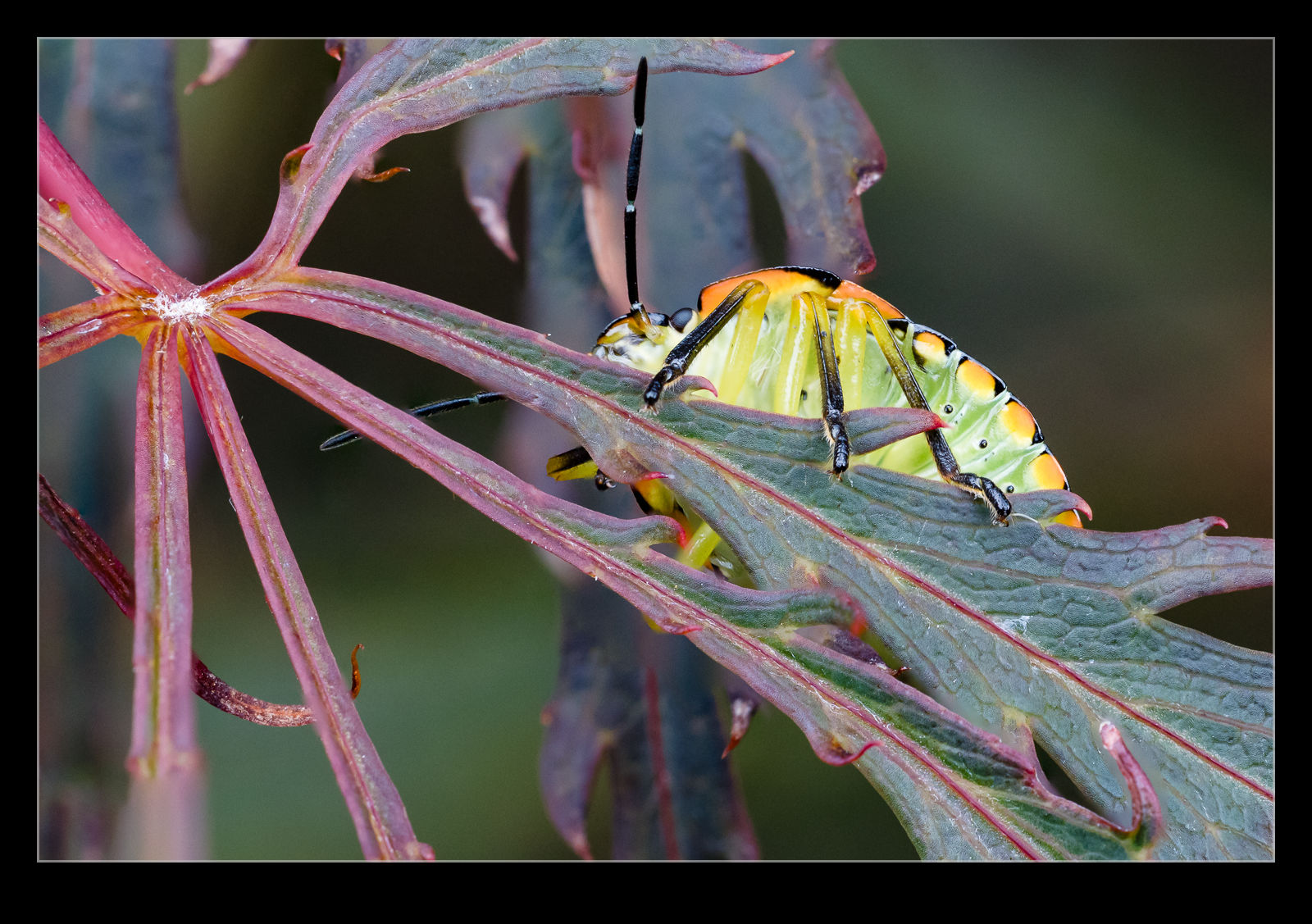
Beetle on the Acer
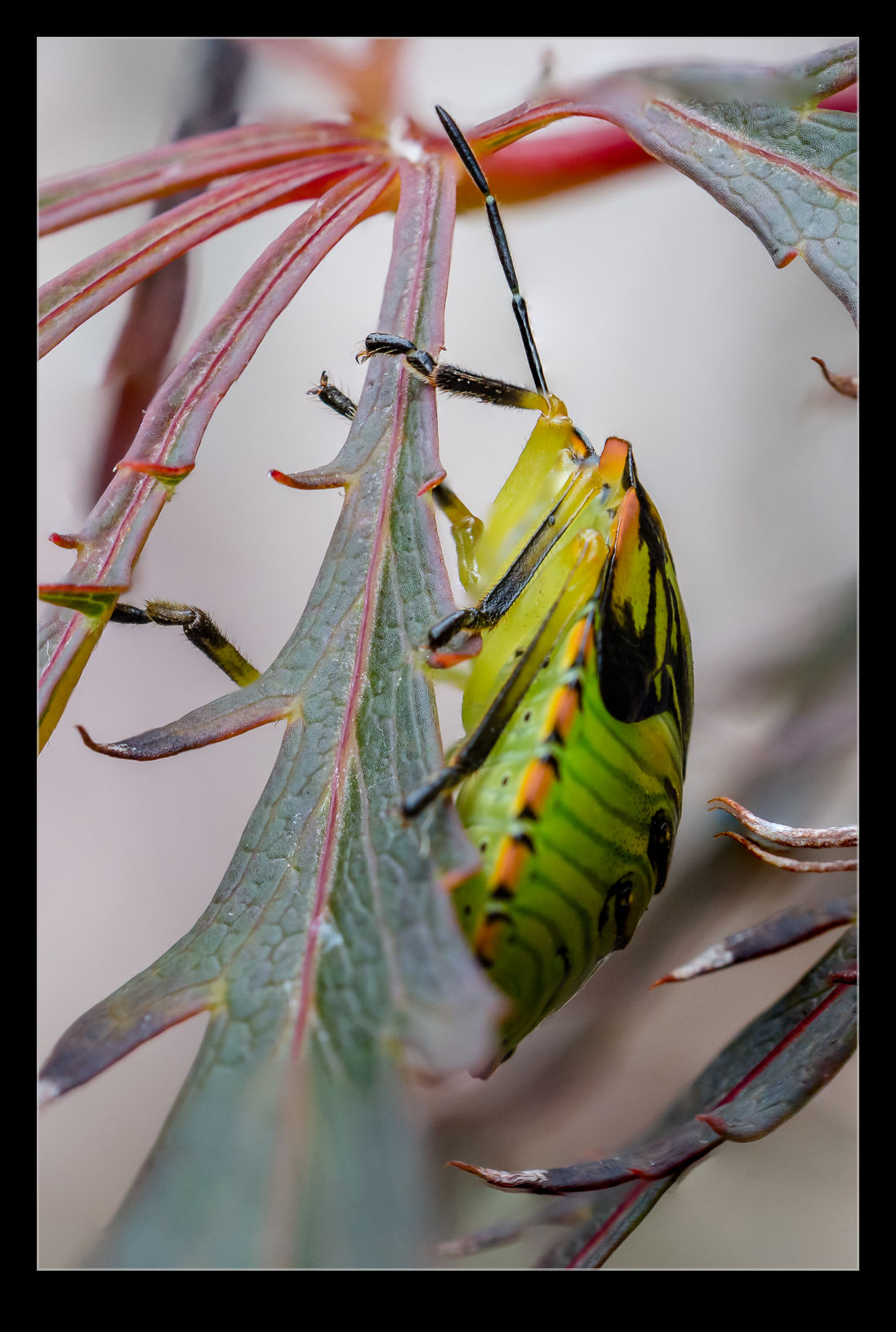
Walking through the backyard, I noticed a colorful looking beetle on one of the branches of our Japanese maple. Did I shoo it off? Of course not. I ran to get the camera instead. The bug flipped around the branch as I returned and was showing its underside instead which was not what I wanted. I got a shot or two just in case and then waited to see if it would turn over again. Thankfully, it did and I was able to get something closer to the shot that I had originally envisaged.
Red Bark
The arboretum in Seattle is unsurprisingly home to many interesting varieties of trees and plants. One tree that caught my eye was (perhaps) a type of willow that had bark that peeled to reveal an intense red coloration beneath. Sometimes these colors don’t seem to show up as well in an image but I fortunately had a polarizer with me and that took out some of the reflection and glare and allowed the color to show up well. Cropping in tighter seemed to make more sense, too.
Almost Directly Under the Approach
Photographing airliners can be a little “samey” since there are lots of very similar jets and getting a shot of them from the side looks much like any other shot unless the aircraft is specially painted or the lighting is particularly unusual. Consequently, every once in a while, it is fun to try and shoot from a different angle. The approach to SEA when the planes are on a southerly flow brings them in over a part of Burien where you can get yourself pretty much under the flightpath.
It won’t take too long before you are again getting a sequence of repetitive images, so it isn’t going to be useful for much time, but it is a chance to do something a little different. Head on shots from a distance are possible. Then you can get the shot looking up from the underside. This might be a tight shot of a part of the airframe, or a wide angle shot of the whole thing. An opportunity to do something a little different when you are photographing aircraft that are not ones where you care about missing the shot as you might when something special is coming in.
Playing With the Bizjets to Experiment
I have been messing around with low shutter speeds for traffic at Boeing Field a lot this year. Some of those shots have made their way into posts on here. One sunny afternoon, I was at the field and there was a lot of business jet traffic but nothing terribly special. This provides a good opportunity to try different things. I had the polarizer and a neutral density filter. The polarizer is good on sunny days for taking down the glare and it also cuts the light. However, the neutral density can really pull the shutter speed down.
Since I didn’t care if the shots were a failure, I was willing to just keep bringing the shutter speed down and down. I compensated by cranking up the frame rate in order to increase the probability of getting a sharp one. This is an interesting challenge. Normally I spend a bit of time culling out shots that just aren’t sharp but, when playing with silly shutter speeds, you need to re-calibrate just how sharp things should be. What is a little off when zoomed in might be of no concern when looking at the full image. That is not an excuse to let plainly bad shots through though.
Here are some of the results that weren’t too bad. Even an average Challenger can look a little more interesting with a very blurry background!
Re-Editing a B-2 Shot
Periodically, when I am looking through my image catalog for a specific subject for one project or another, I come across some images from a while back that look okay but might benefit from some of the more recent approaches to processing that I have adopted. This doesn’t always help but it can be fun to start from scratch on a raw file and then see whether the final version is any better than the previous attempt. I created a new virtual copy in Lightroom and zero out all of the sliders, upgrade to the latest processing version and give it a go.
I did this a little while ago on a shot of a Northrop Grumman B-2 Spirit. I shot this jet at Palmdale many years ago on a visit with my friend, Paul. The shots were okay, and I was happy with them at the time. Here I shall show you the current version first and then the next one down is the previous result of my processing from when it was shot. Do you think it is a significant change?
Why Am I Struggling with the Butterflies?
The flowers in our back yard are very popular with butterflies and, with nice evening light in the garden, I was bound to drag out the macro lens. However, when I tried getting some shots, the camera was having a really hard time focusing. I often ended up using the manual focus ring to get something close when the camera kept focusing on the background. I had struggled with a couple of other subjects previously and I was beginning to get really annoyed. This was not a cheap lens, and the camera certainly isn’t cheap but why wouldn’t it focus on a butterfly? I was using animal mode so thought it would cope.
I ended up trying different focus area modes. Narrowing it down to the small focus spot and moving that around by hand rather than using the subject detection modes was my next effort. I seemed to have some better luck, but it still was unreliable and was giving me a red box around the focus area. Why wouldn’t it work. I took a look in the menus to see if there was something in there which was going to be an issue but nothing there either. I was beginning to be fearful I had a dud. Then I noticed something. The focus limit switch had moved from the full range to having a minimum focus distance of 0.5m. That would certainly be an issue. Put it back to where it should have been and suddenly the focus was working perfectly. What a dope. Not sure when I had knocked that switch but it might have been a while back. Doh!
Spider on My Car Means Macro Time
I was waiting for a friend to arrive at SEA and was parked up in Burien. I noticed a couple of small jumping spiders on the car and, since I had the macro lens in the trunk, decided to try and get a few shots of them. The problem with spiders and mirrorless cameras is that the focusing logic hasn’t been trained to deal with their multiple eyes. The body tends to be what the camera focuses on. Still, I was able to get a few reasonable shots as they scurried across my car.