This one is something that I can attribute to the Kelby media juggernaut. I did not discover this myself but, if you are a user of Lightroom CC and use either the HDR or the panorama functions, this could be of interest. One of my issues with them was that they took a while to bring up a preview. Once you had got this, the processing would work in the background.
It turns out, if you don’t need to tweak the settings and are happy with what you used previously, you can hold Shift and Ctrl and press either M for panorama or H for HDR and it will launch right into processing the whole thing in the background. You can set multiple versions off if you wish and they will all get to work out of sight while you do something else. While my feelings on the outcome of the processing are not universally great and I covered this in some previous posts, it does a reasonable job most of the time and this is an even better feature that is well concealed!
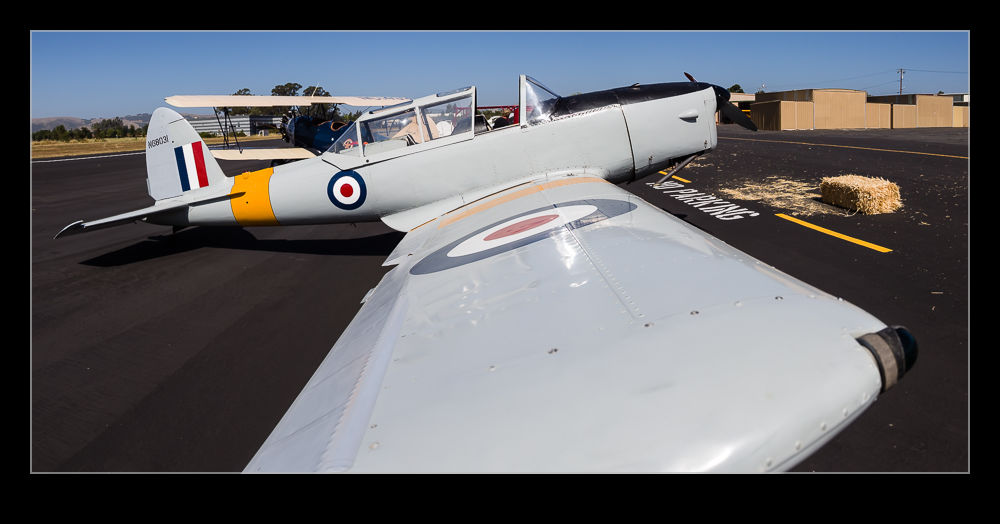
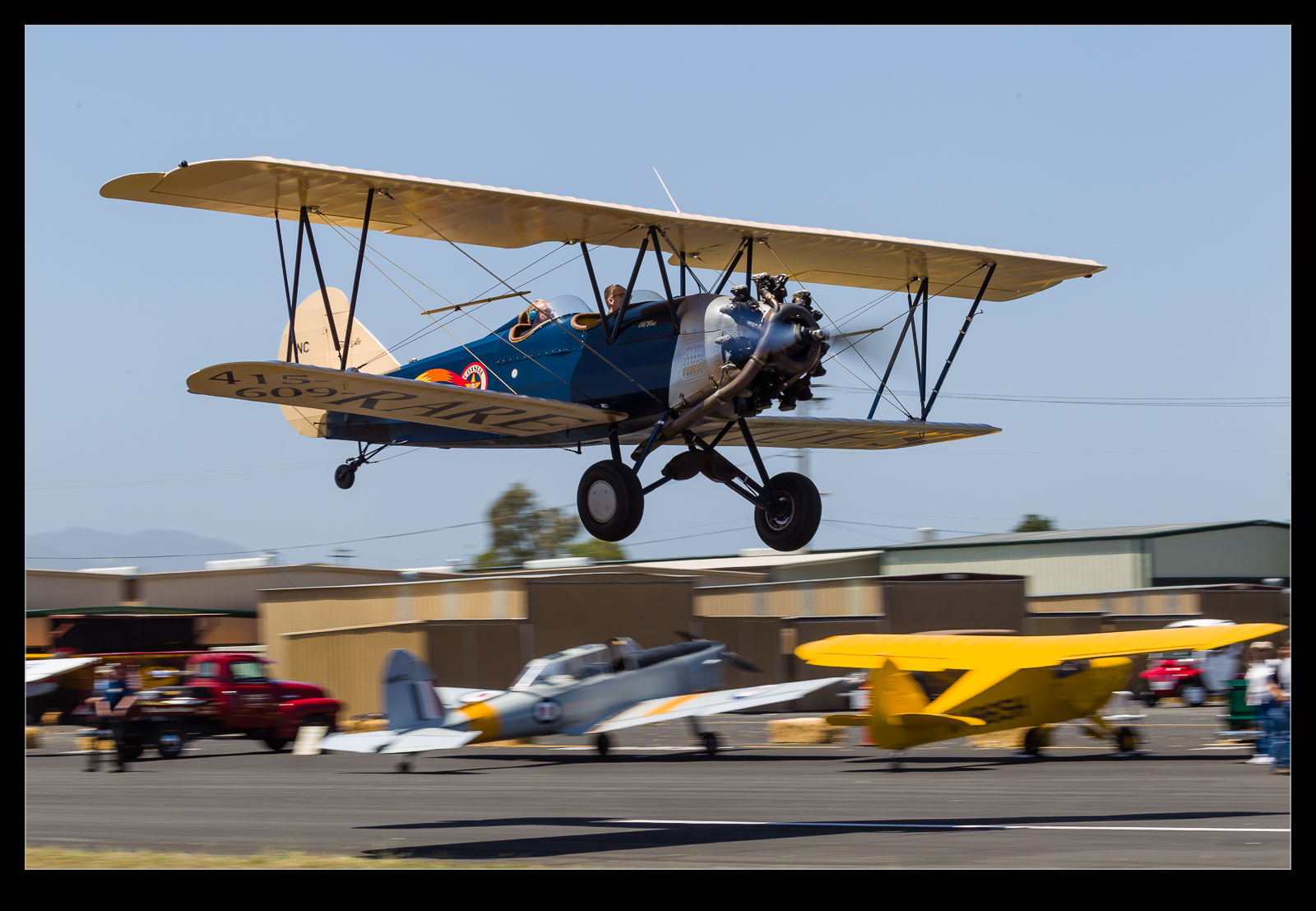
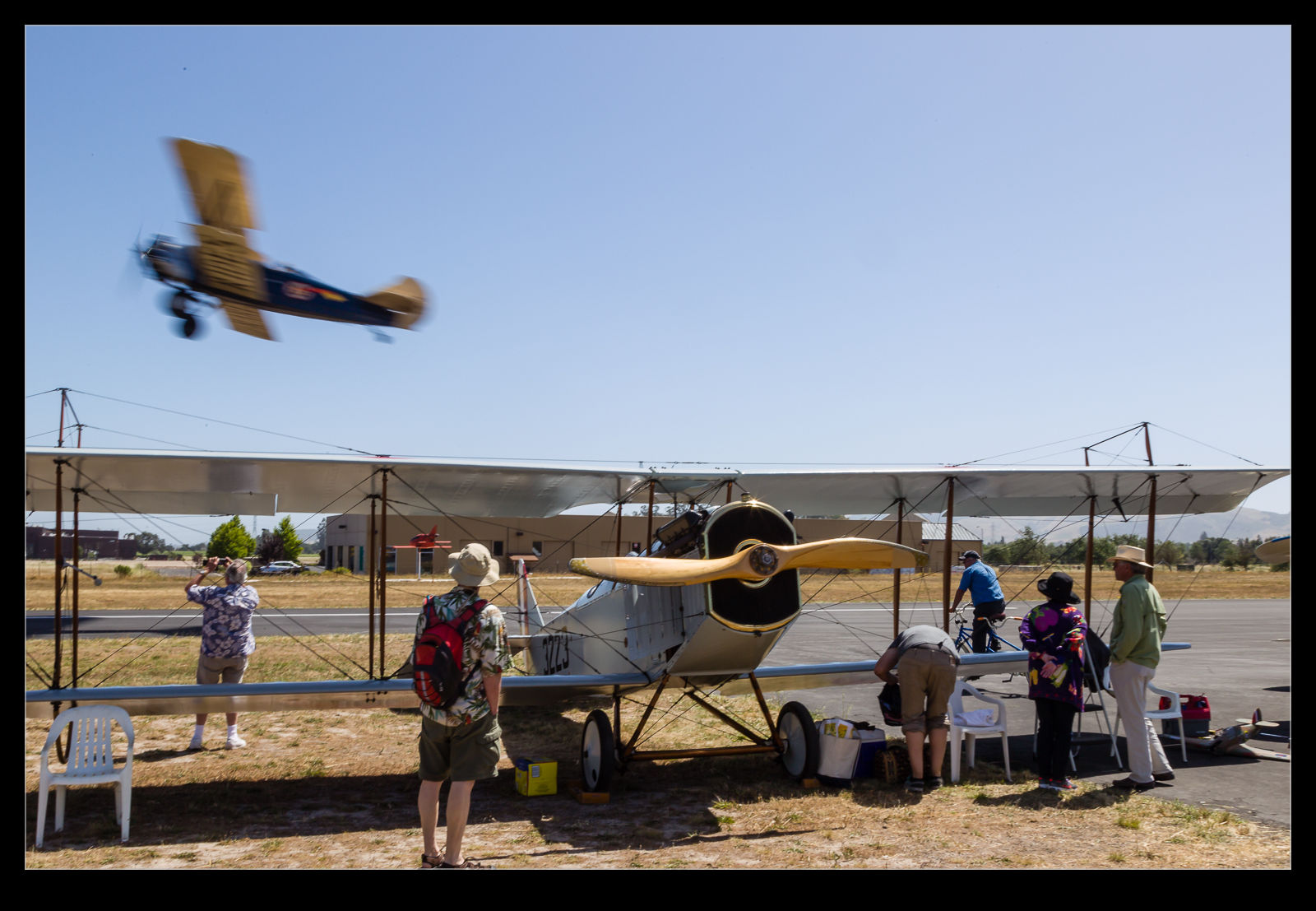
Big airshows can be fun. However, the confined nature of things and the number of people involved can also make them a little less enjoyable. Small events at local airfields do not provide the same level of activity but they can prove to be every bit as fun. Such is the case with the Sonoma Skypark’s Family Fun Day. This is one of those opportunities for a local airfield to invite people from the area to come and see what happens at the field. It is a good way to build relations with the local community.
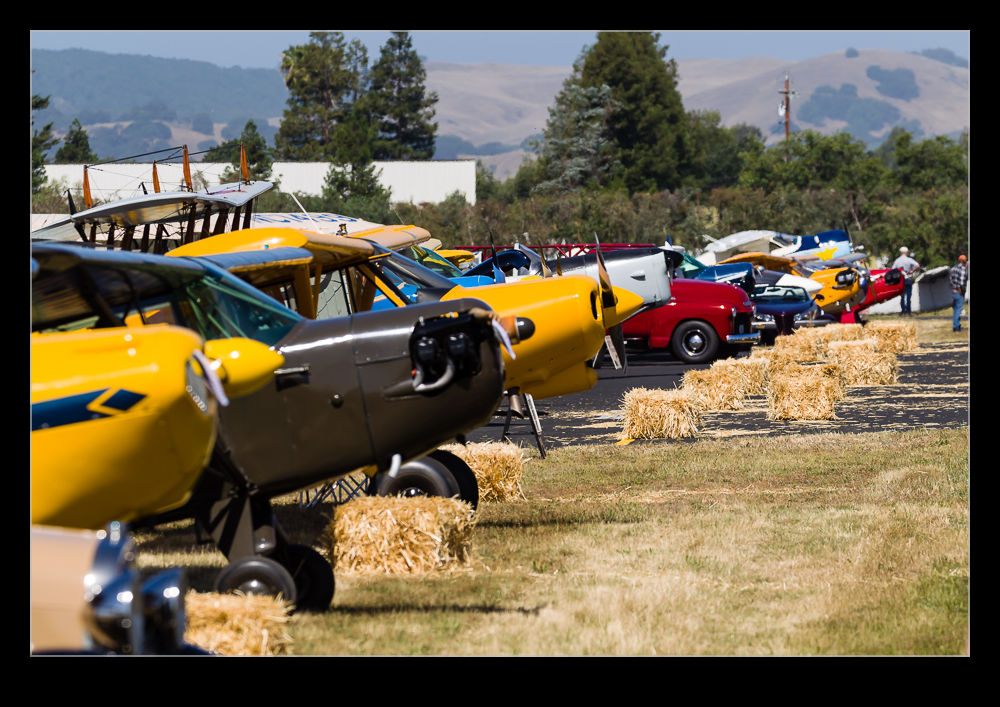
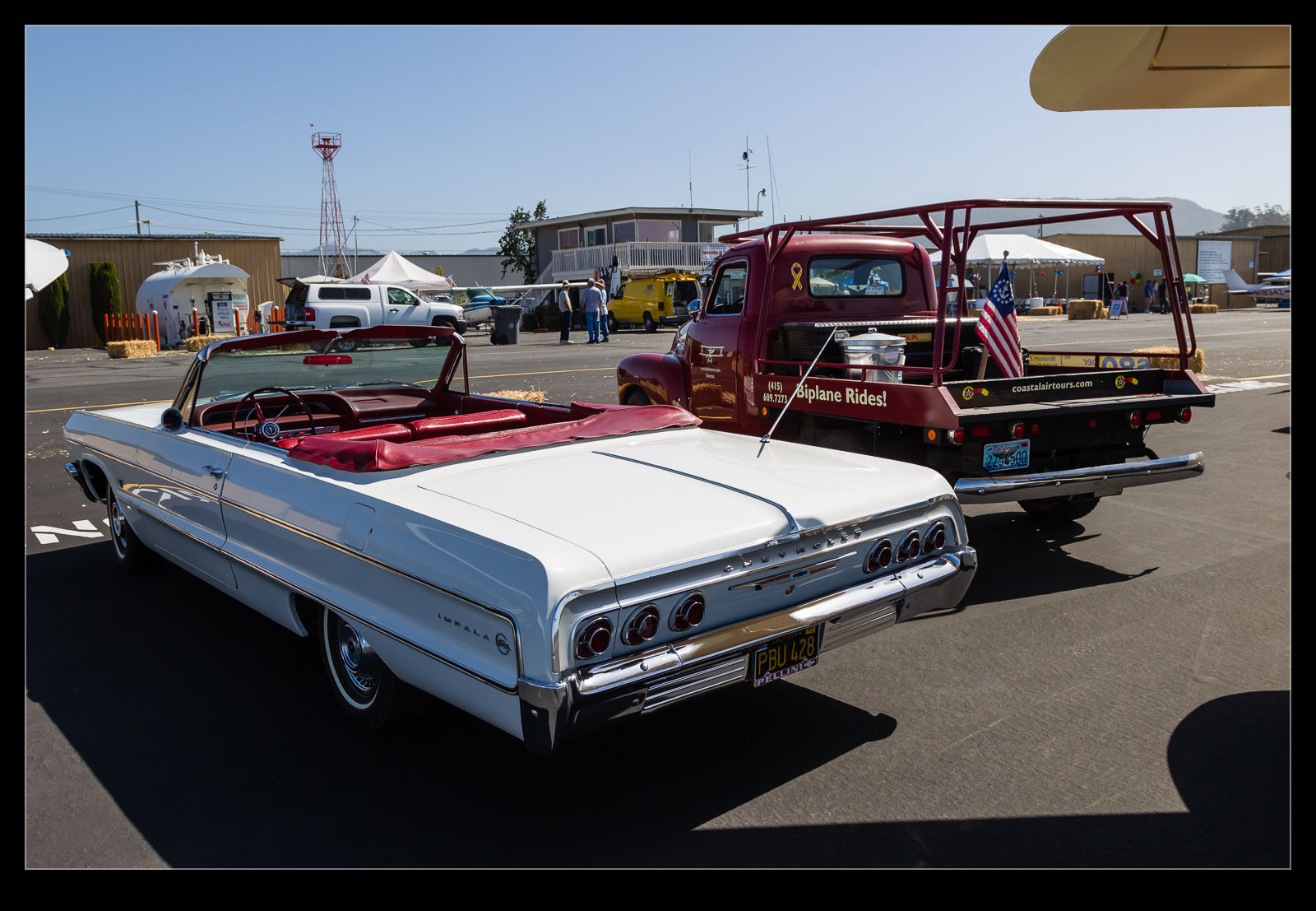
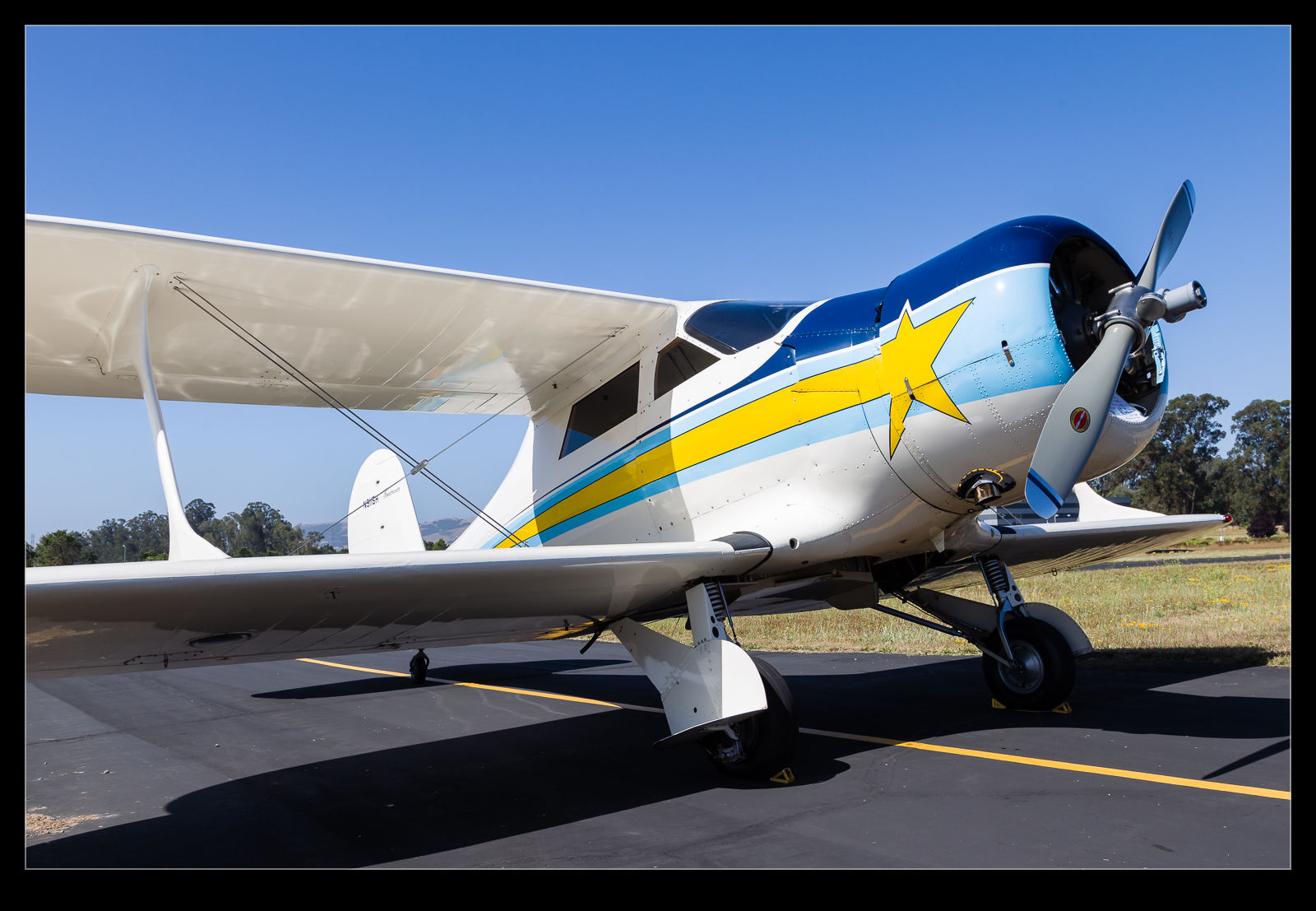
I may not be “local” but I wasn’t going to miss the chance to join in. I arrived relatively early and some of the setting up was still in progress. A selection of the most interesting (read old) planes based at Skypark were being lined up on display. Some vintage cars were also being added to the lineup. Meanwhile, some of the stands were getting set up for local societies and offering food and drink.
There was no flying display taking place. However, there were some movements covering pleasure flights and some sky diving flights. The airport was shut for the main part of the event although one pilot didn’t seem to notice that. Another arrived and managed to leave the runway and ground loop in the grass. I missed this as I was watching a parachutist landing from the opposite direction. All ended up fine with no significant damage incurred.
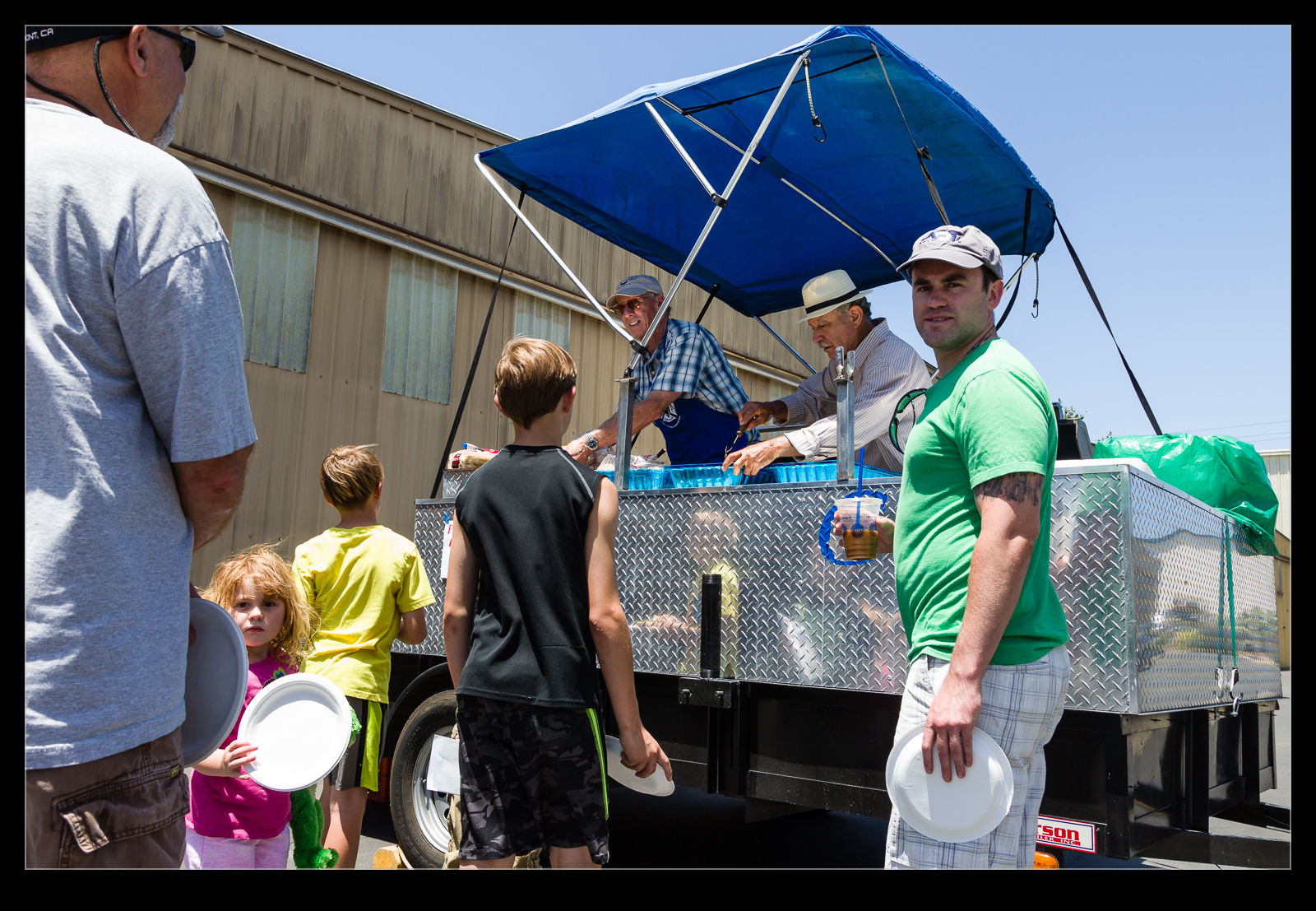
Entry to the event included free lunch. There was a steady line of people taking advantage of the food that was being cooked and everyone seemed to be having a good time. Rides on a trailer pulled by a tractor seemed to keep the smaller visitors amused and there were competitions for paper airplanes as well. A lot of people showed up during the day and, hopefully, the bond between the airport and the community got a little bit stronger. I had a great time!
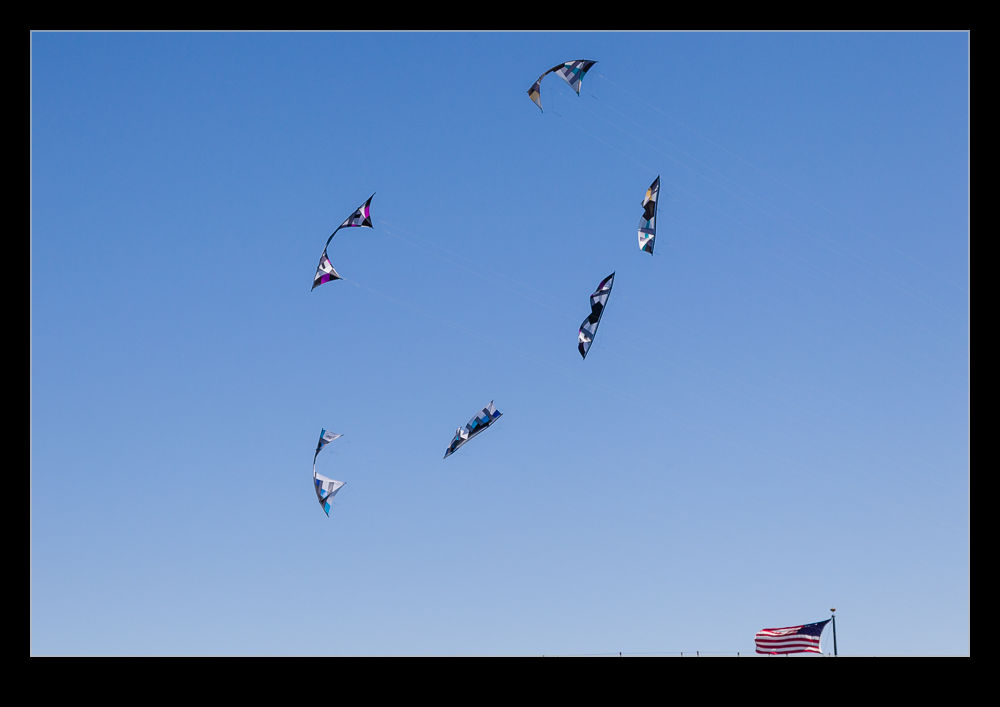
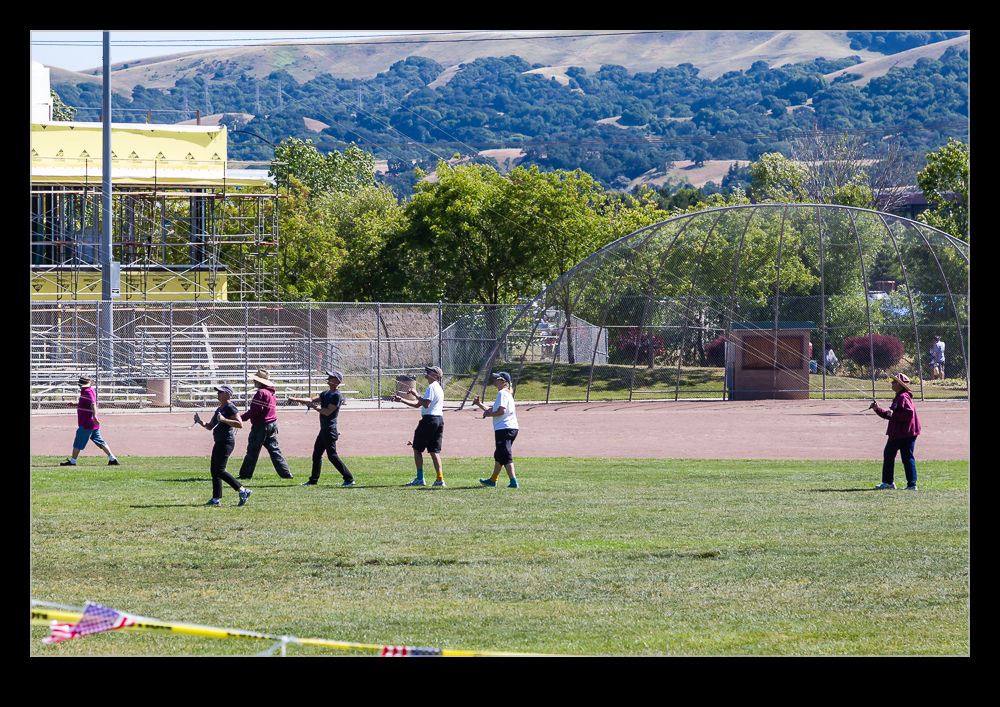
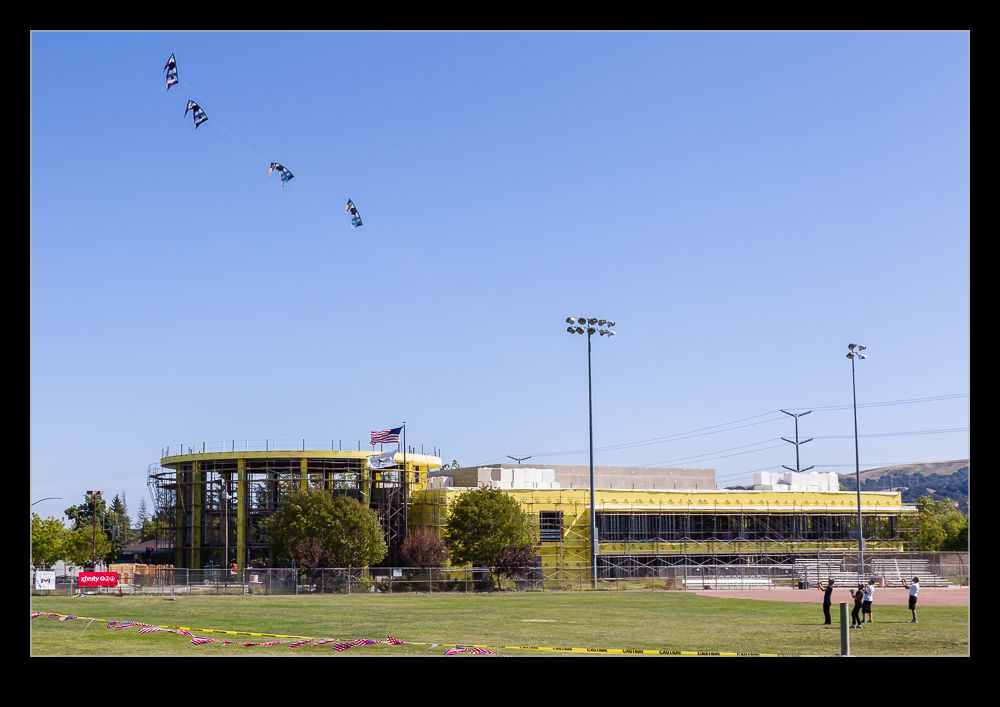
San Ramon holds an annual kite festival which we checked out last year. This time we went back and, rather than get too distracted by the other stuff that was there, we focused on the kite flying itself. There is a large field on which a series of demonstrations of different types and numbers of kites was undertaken. The quality of flying was very impressive. (I will caveat that by pointing out that a bunch of kids were flying their own kites around the field edges. They had obviously just had a kite bought for the, but the parents didn’t seem terribly bothered what they were doing with them so you could get a swift kite to the head if you weren’t careful – and I obviously wasn’t!).
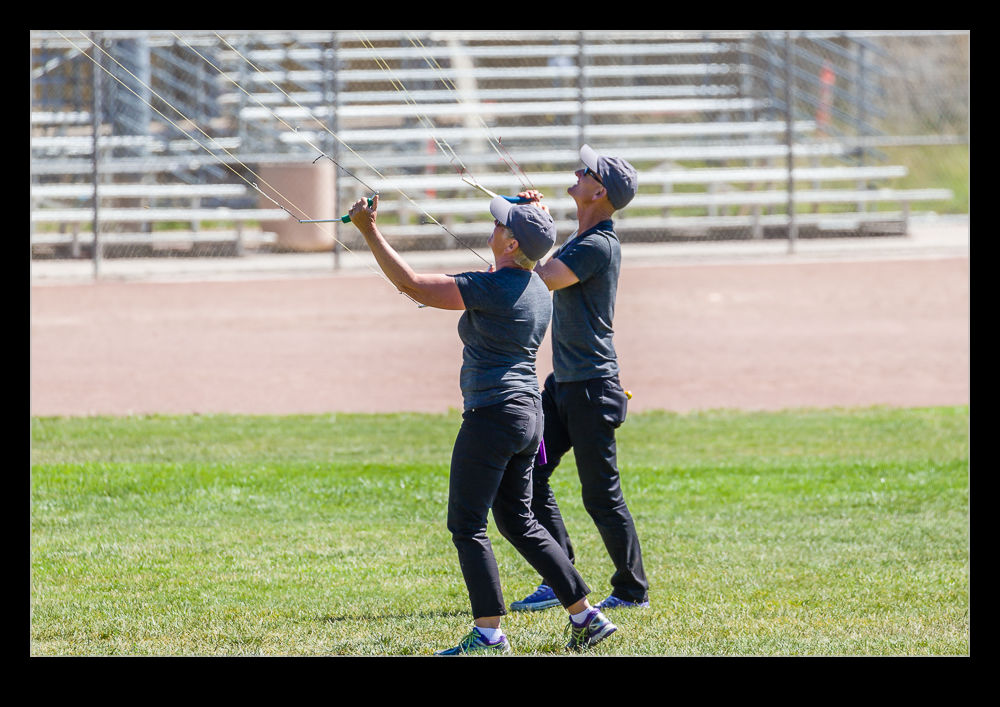
If I ignore the health hazards, the demonstrators were putting on some excellent displays. The individual flights were good but the coordinated flights were outstanding. Two, four and sometimes six kites were flown in formations which was very cool. The lines can overlap so they can continue to control the kites even when they have overlapped the lines several times. Of course, untangling them again is required to avoid a lot of pain when they land.
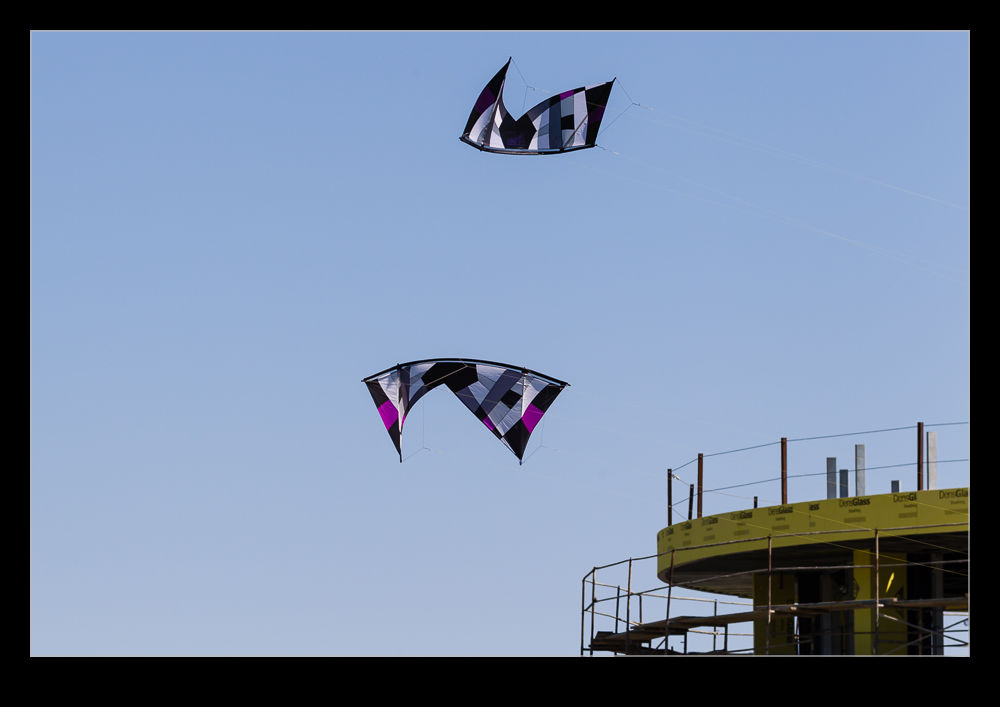
The different kite styles also bring different capabilities. Twin line kites can be steered left and right while the four line kites allow steering or rotation in place, moving up or going backwards. In the right hands, they are very maneuverable. I have tried a quad line many years ago and they are twitchy but incredibly clever provided you don’t keep crashing them.
I also put together a little video of the flying below. It turns out shooting video of kites is a bit harder than I expected. They can move quite quickly and are pretty close to you. Also, it is hard to predict their next move so tracking is a touch harder than you would hope. Still, video gives a far better impression of them than stills can achieve. Now I am thinking about trying to find some old photos of kite flying in Lytham. Where are they?
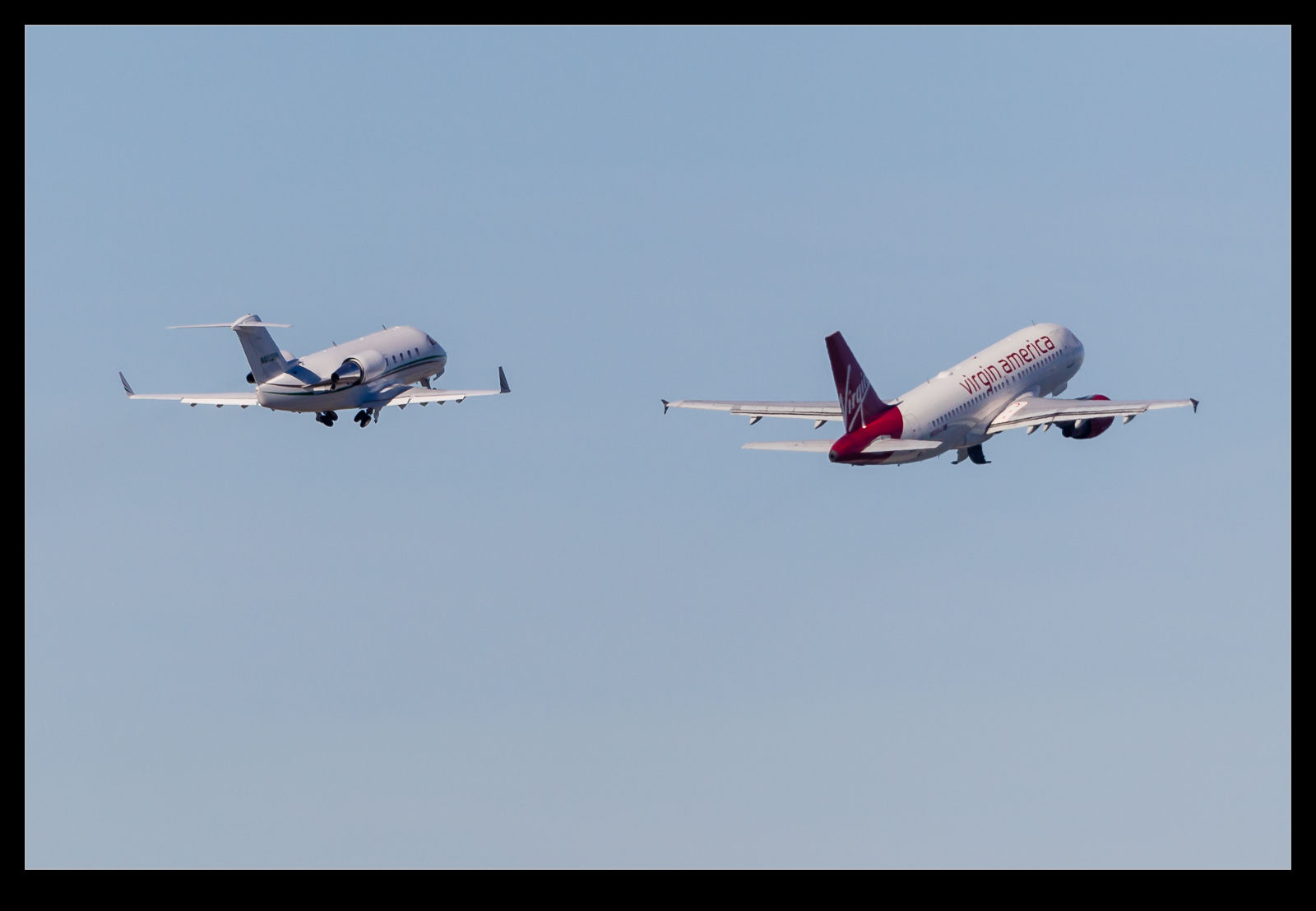
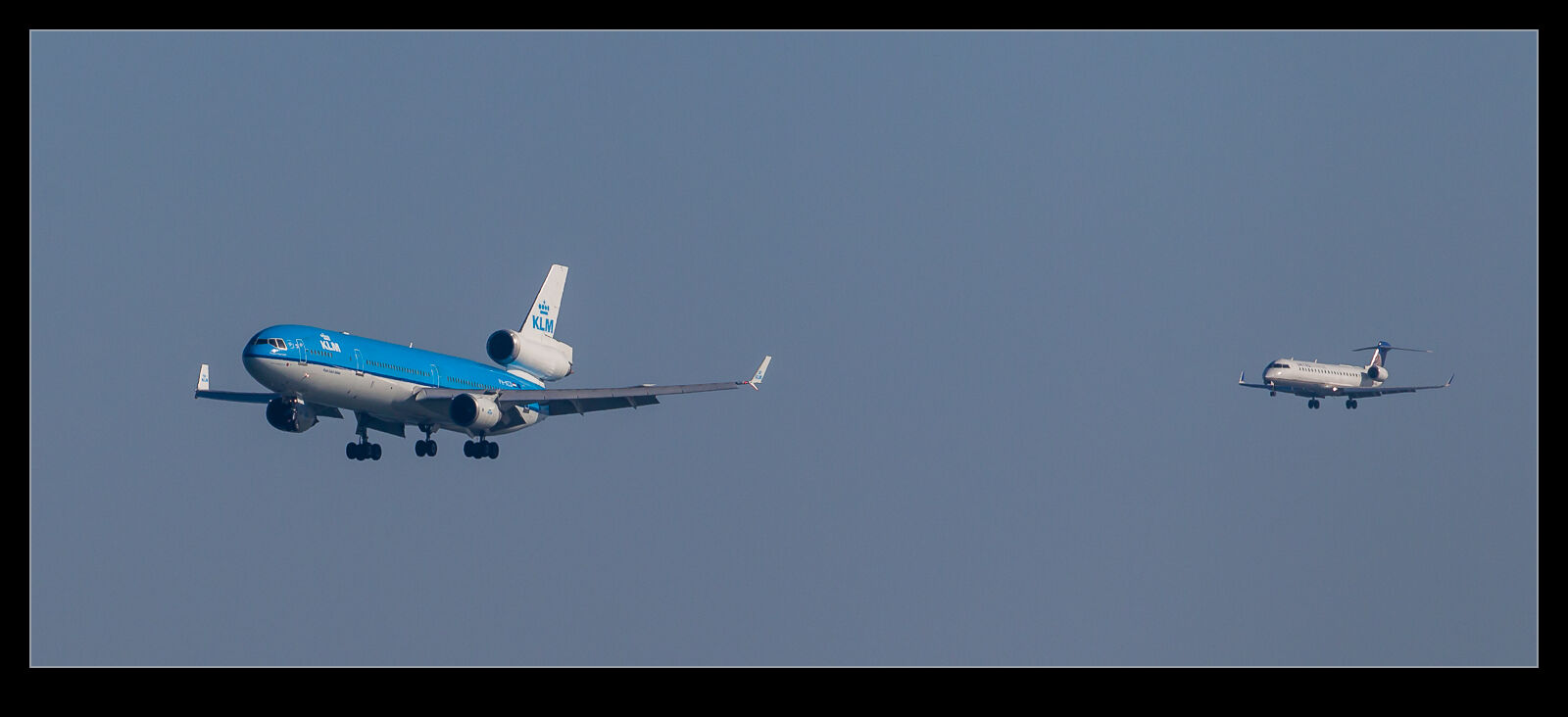
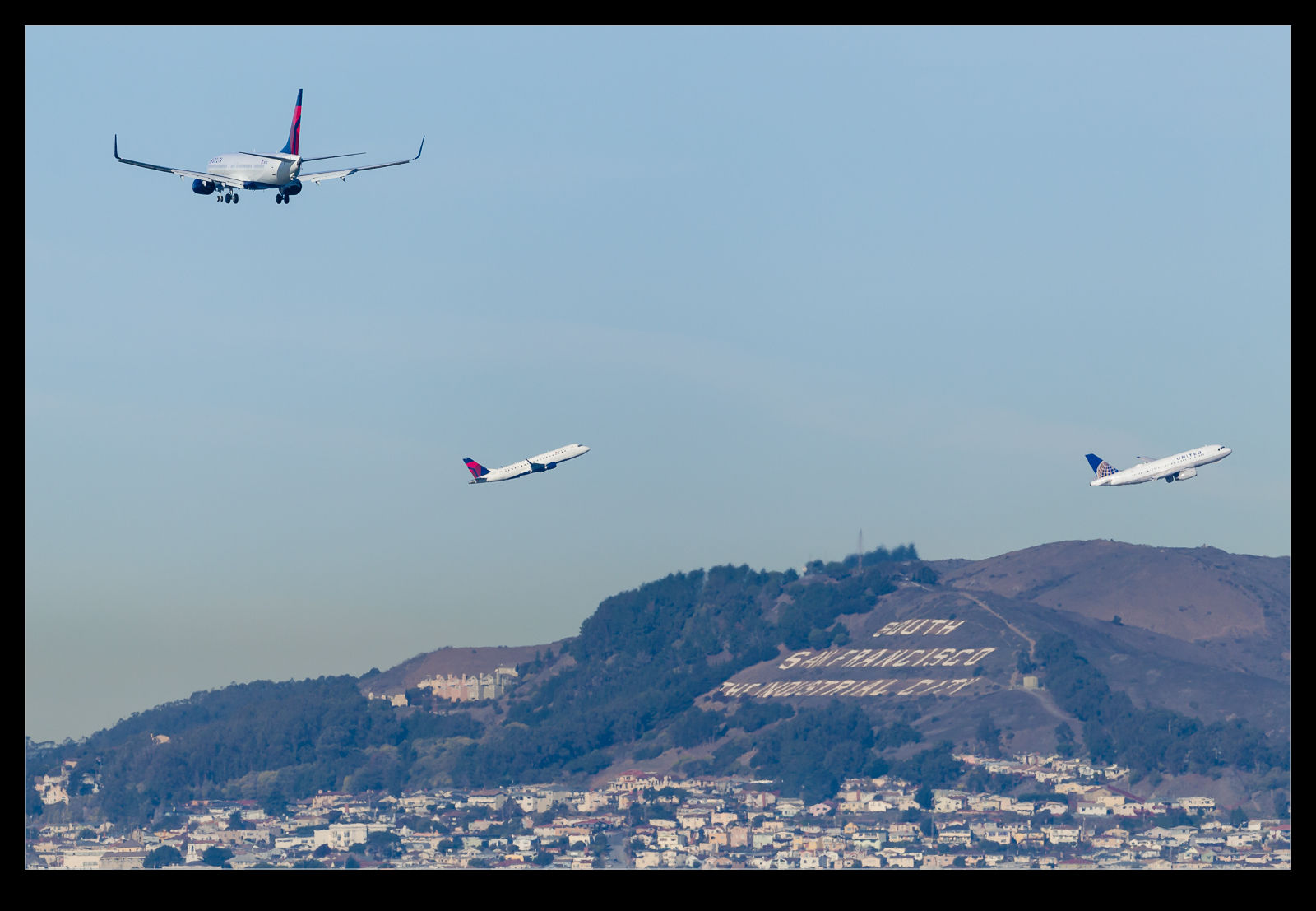
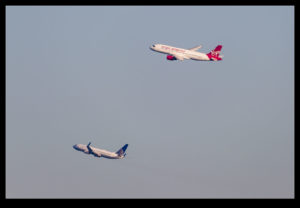
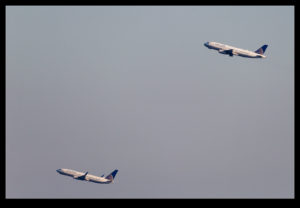
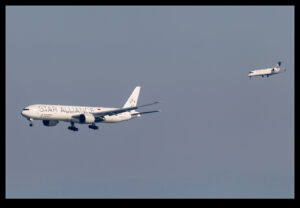
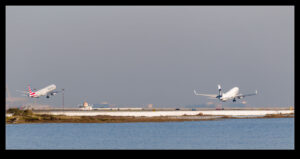
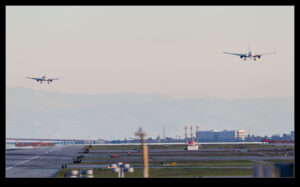
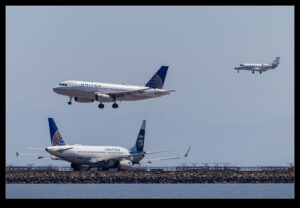
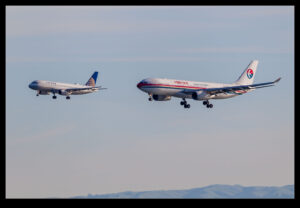
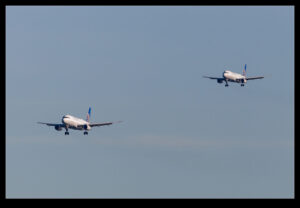
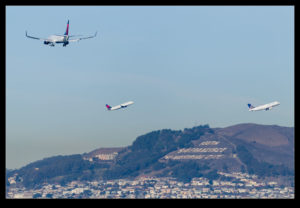
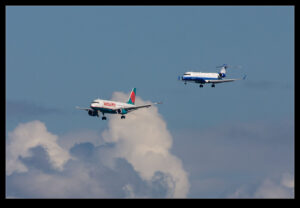
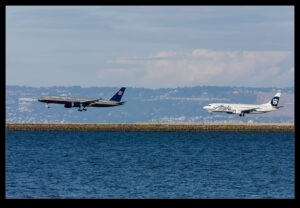
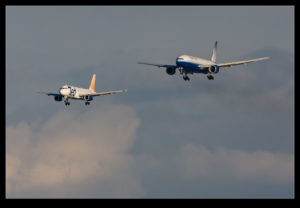
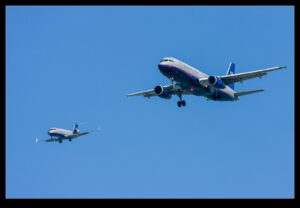
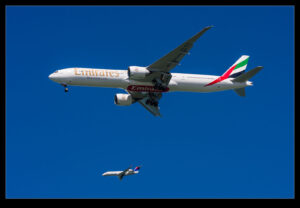
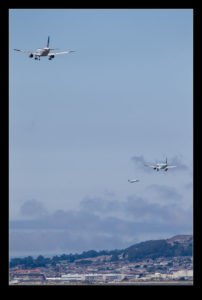
The layout of SFO with the two pairs of cross runways makes for some operations that are quite specific to this airport. At peak times, parallel approaches are made to the 28 runways from along the bay shore. These approaches require the following plane to make sure it does not overtake the leading plane. I don’t know for sure but I imagine the choice of which side leads is based on the wind direction so the wake turbulence doesn’t affect the downwind plane.
Getting them close together is the goal as a photographer. Often they end up being separated by a lot more than you thought. When further out things look like they are close but then the approach turns out to be more offset than you expect and you don’t get a good shot when they come in to land.
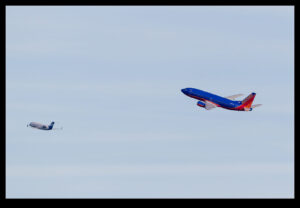
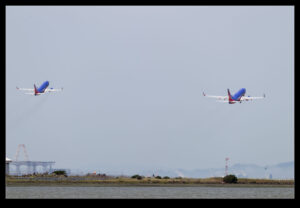
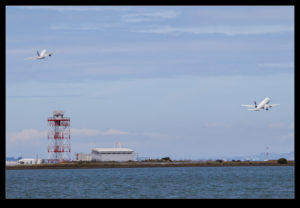
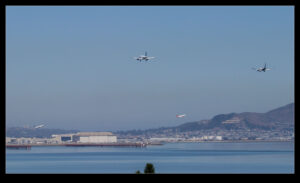
Arrivals aren’t the only parallels though. The departures are sent of the 01s from both sides. The clearances are usually offset and the thresholds are slightly different so the planes often get airborne well apart. However, that is not always the case and sometimes you get what amounts to a formation takeoff. Once airborne, the planes turn to increase their separation. Getting a shot of them close together is something to try for if you can. They are too far away when they take off to be a great shot individually but getting both in frame certainly makes for a more unusual shot than is the case for most departure procedures for big airliners.
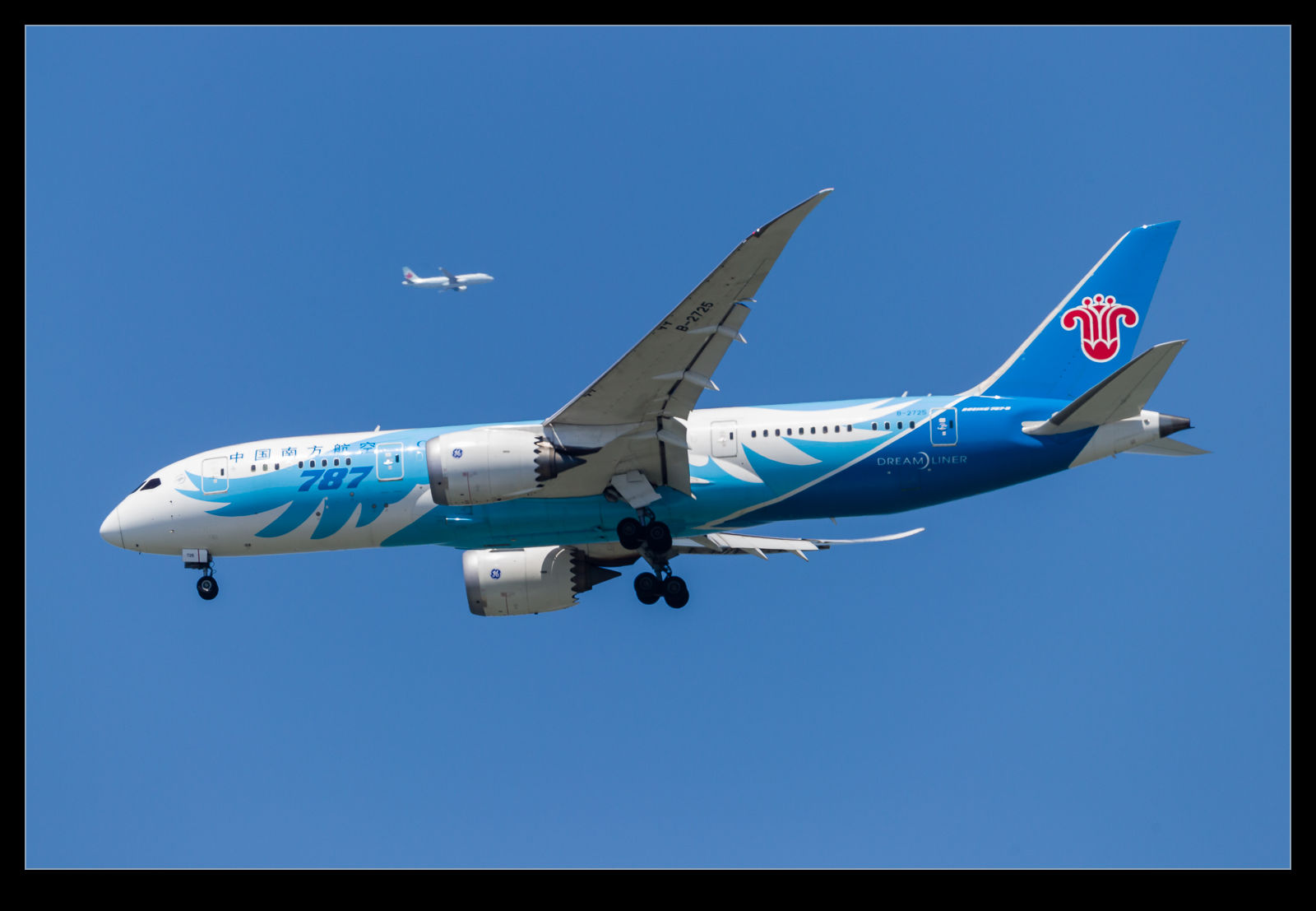
The timing of my visit to Seal Point Park did coincide with the scheduled arrival time of the China Southern Boeing 787. This was one that I had meant to shoot previously and had bodged as a result of being distracted. That was discussed further here. This time I thought I would make a more concerted effort to get it right. I was just hoping that the heat haze would not be a problem.
As it worked out, I did not lose track of what was going on and I was ready when the colorful jet showed up on the approach. He was a bit far out which meant the haze was a problem from some angles but still good enough to get a reasonable shot as it passed which was combined with an Air Canada A320 heading downwind for its arrival.
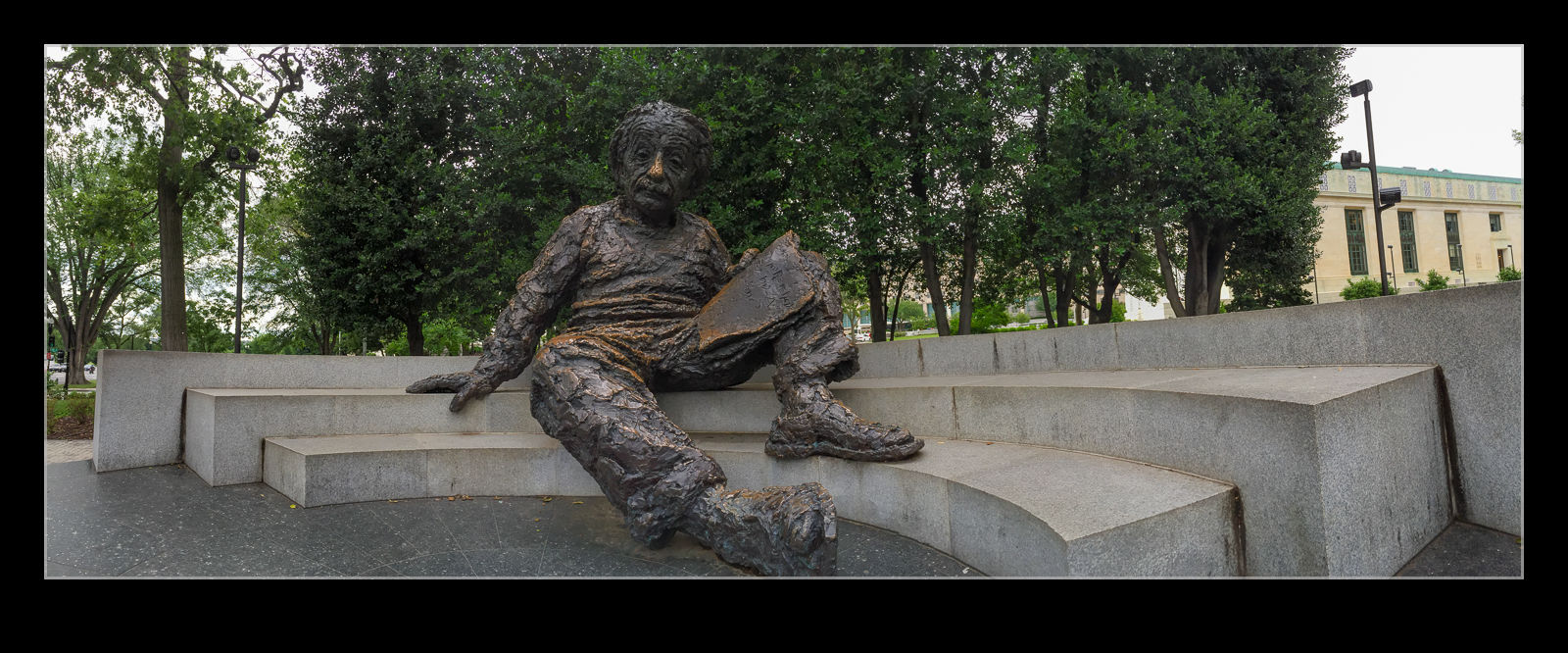
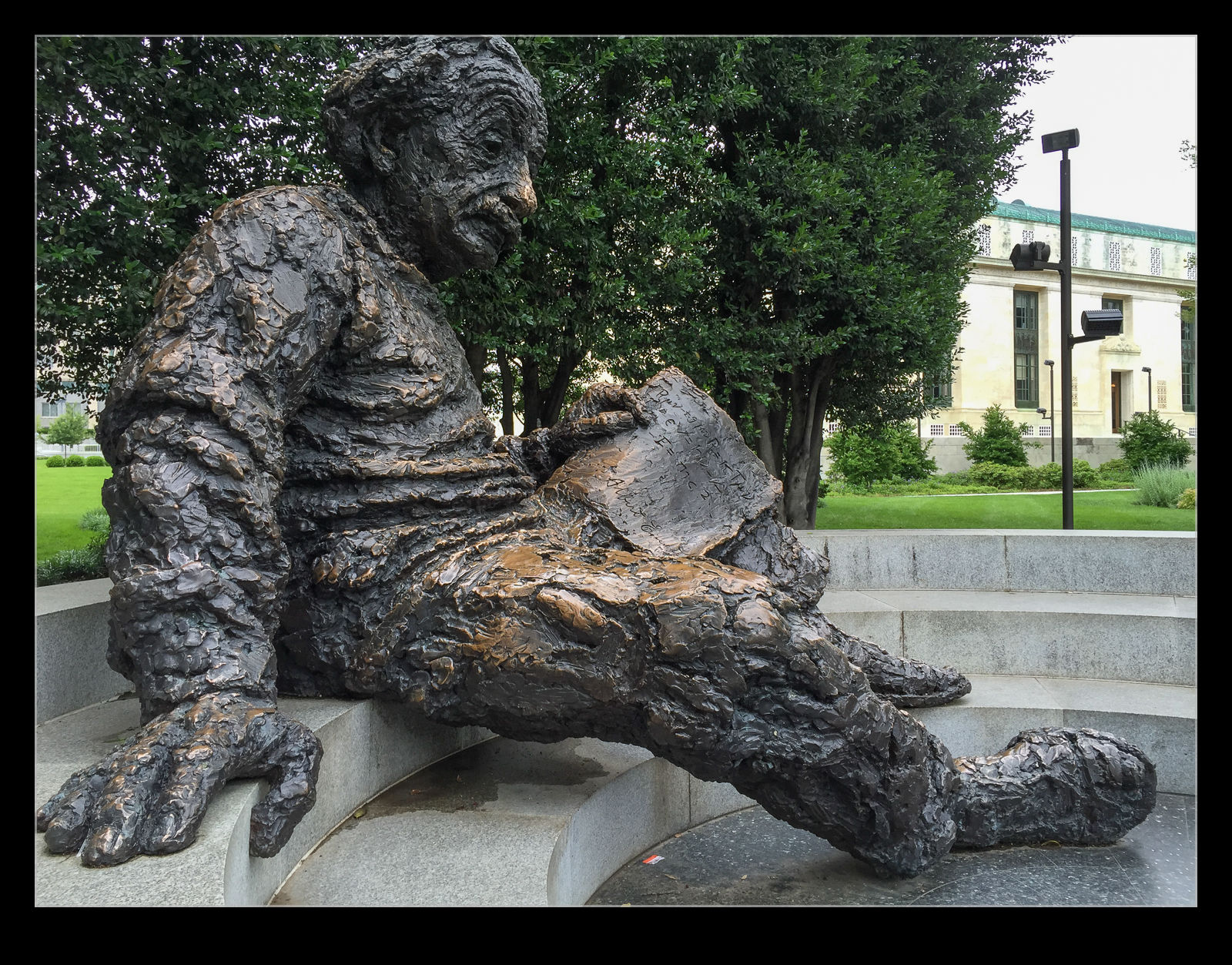
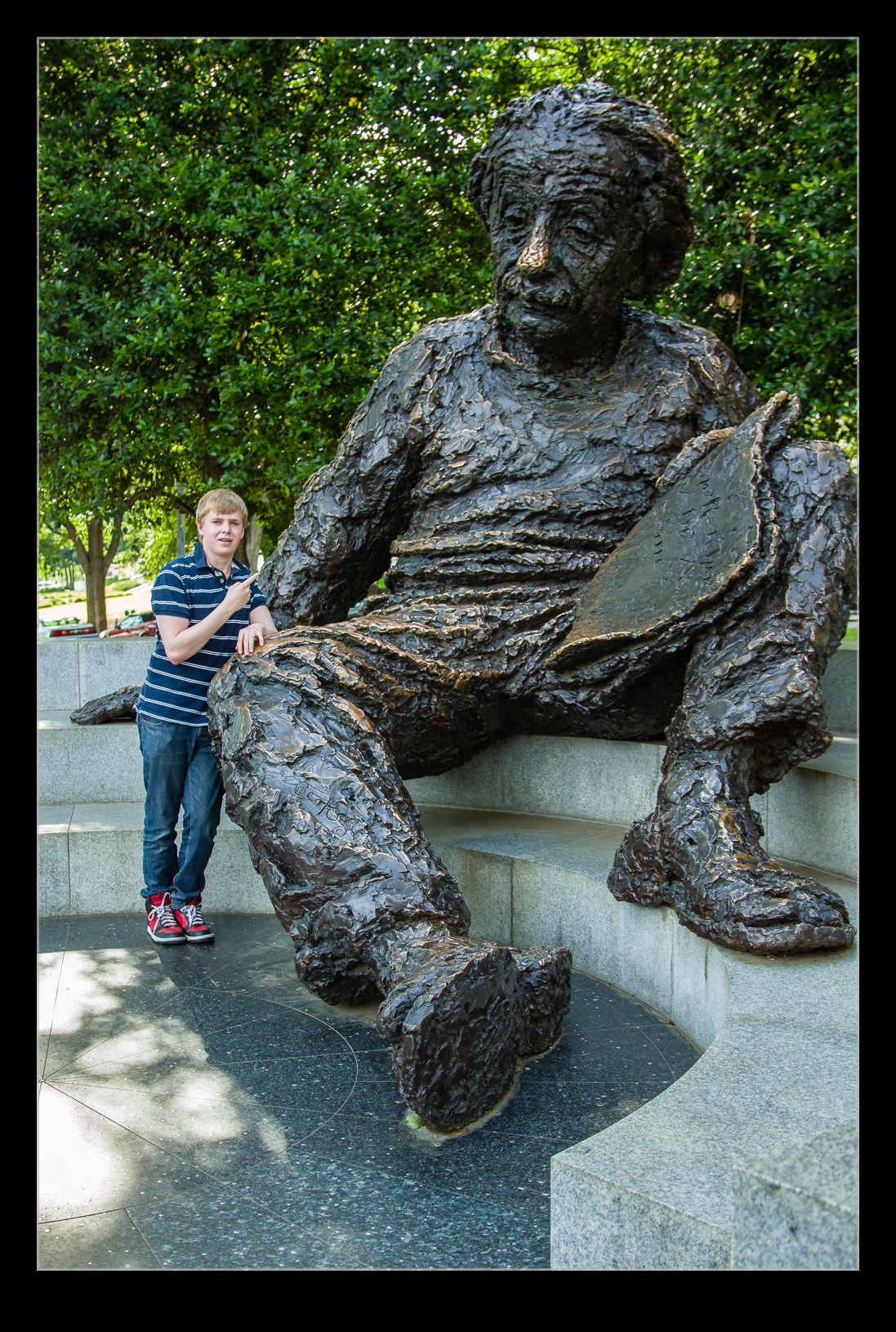
Tourists wandering along the Mall in Washington, D.C. will migrate from one famous tourist attraction to another. The Washington monument, the Lincoln Memorial, the Vietnam Memorial wall and many other spots will be on their itinerary. One thing that is often overlooked as a sculpture just north of the mall. It is a sculpture of Albert Einstein in a very relaxed pose. I have always found it to be a very cool thing to see and to see how everyone engages with it is also cool. Some wanted to touch him while other are happy to jump up on his lap. I certainly recommend that although the surface is a bit too bumpy to be comfortable for too long. If doing the DC tourist thing, do try and fit this in. I also include a picture of my nephew, Chris, next to the statue to give you some idea of scale.
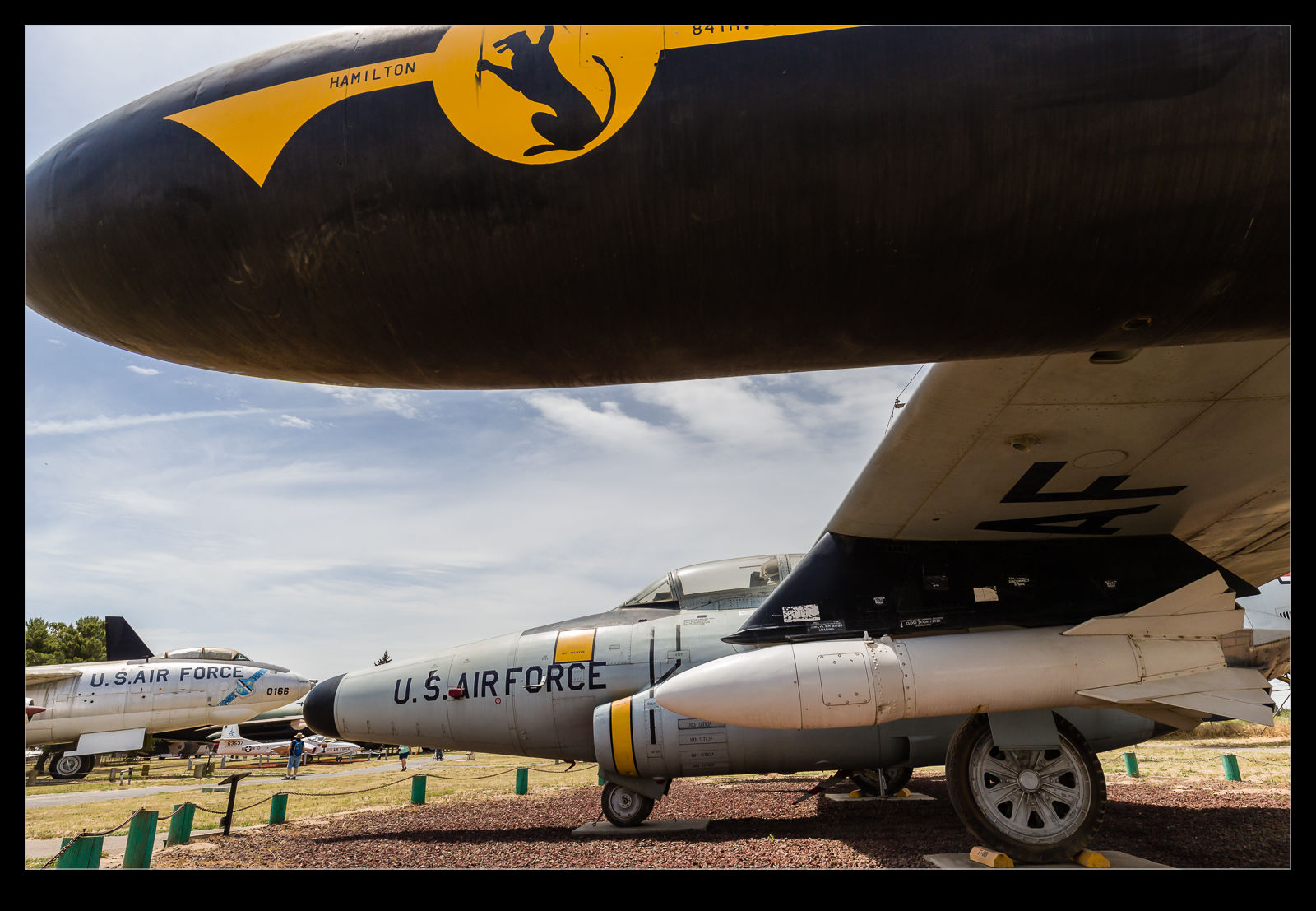
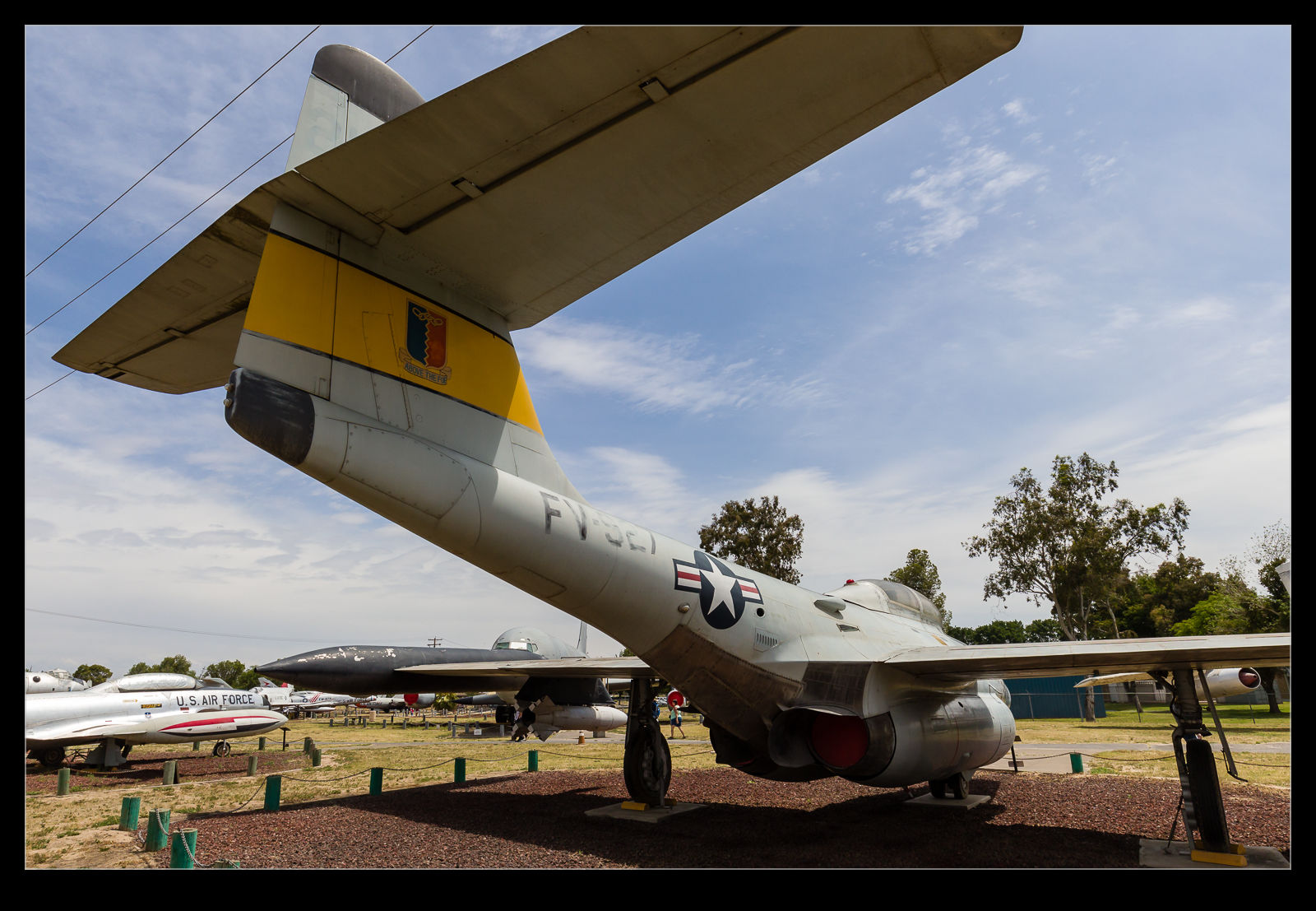
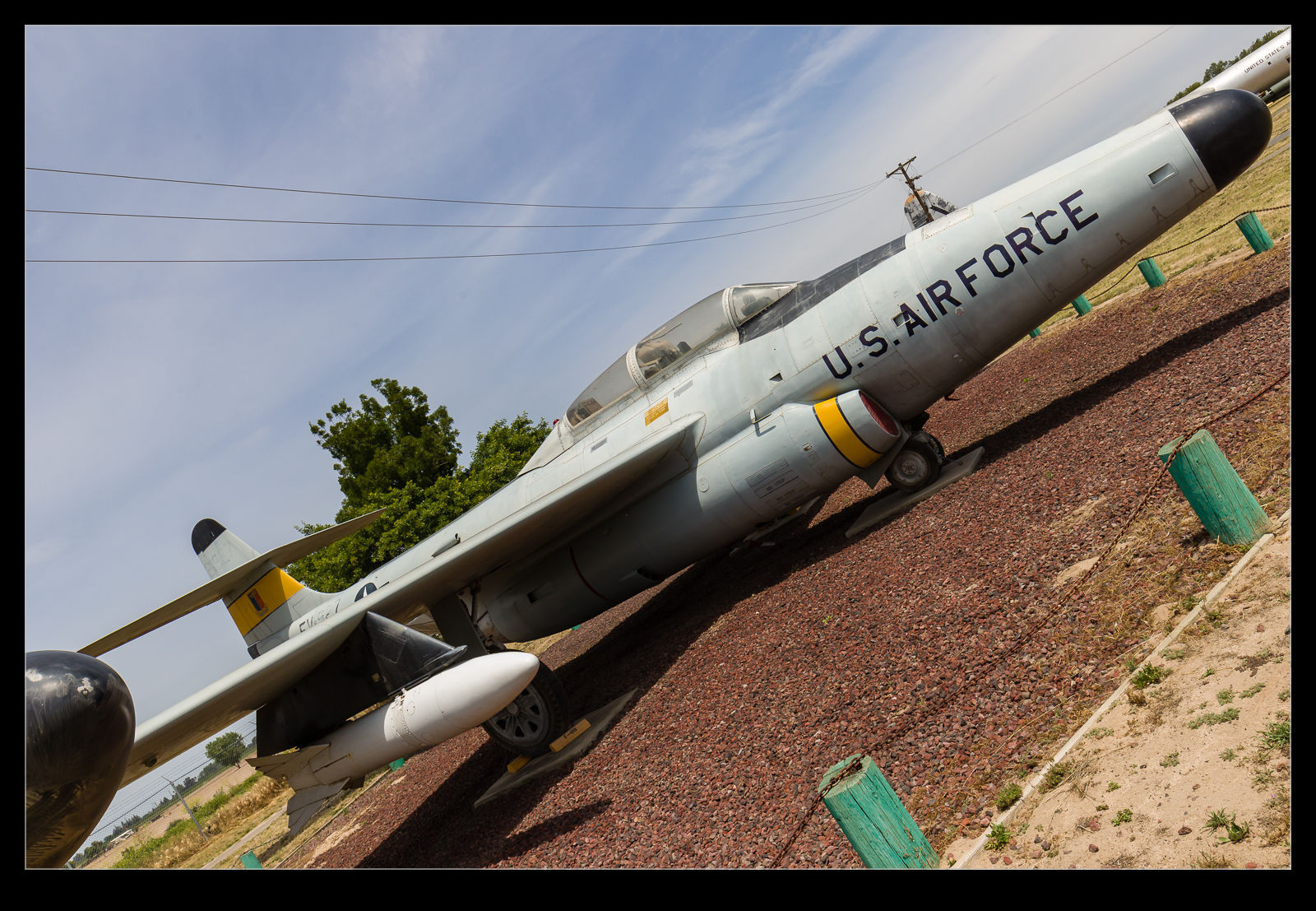
Some aircraft I blog about are ones that I find cool and wish I had seen in action. This is not one of those. However, it does interest me because it is so different from many of the types from the same era. This is the Northrop F-89 Scorpion. The Castle Air Museum has an example on display and I have seen a few scattered around various museums. The Scorpion is, in theory at least, a fighter. However, looking at it, you might be forgiven for not realizing this. It is a big beast of a lane with an unswept wing and a decidedly chubby appearance.
It’s role was to shoot down bombers heading to the US. It was made in an era when jet engines were famously inefficient and having long range and endurance was tricky for a fighter. In order to operate far enough out to shoot the bombers while they were still out of range of their targets, the Scorpion focused on efficiency. It was not a maneuvering fighter. Its job was to get close enough to the bombers to launch its missiles.
These missiles look a bit odd too. They are not your traditional air to air missile designed for speed and agility. They also didn’t need to be. The Genie missile had a special warhead. It was a nuclear weapon. As long as it was reasonably close to the target, it was going to take it down. No clever tracking and requirement to get close to have the required effect. Ultimately, this combination was only suitable for a relatively limited type of target and the focus moved to newer fighters and missiles (although the nuclear armed missile concept lasted a lot longer). The Scorpion went into the history books.
One other aspect of the Scorpion is of interest. It had large wing tip fuel tanks to increase endurance. Someone came up with the idea of equipping the jet with unguided rockets and these were installed in the front of the tip tanks. I’m sure it was well worked out but the idea of having rocket exhaust plumes on the front of a fuel tank seemed bizarre to me as a kid.
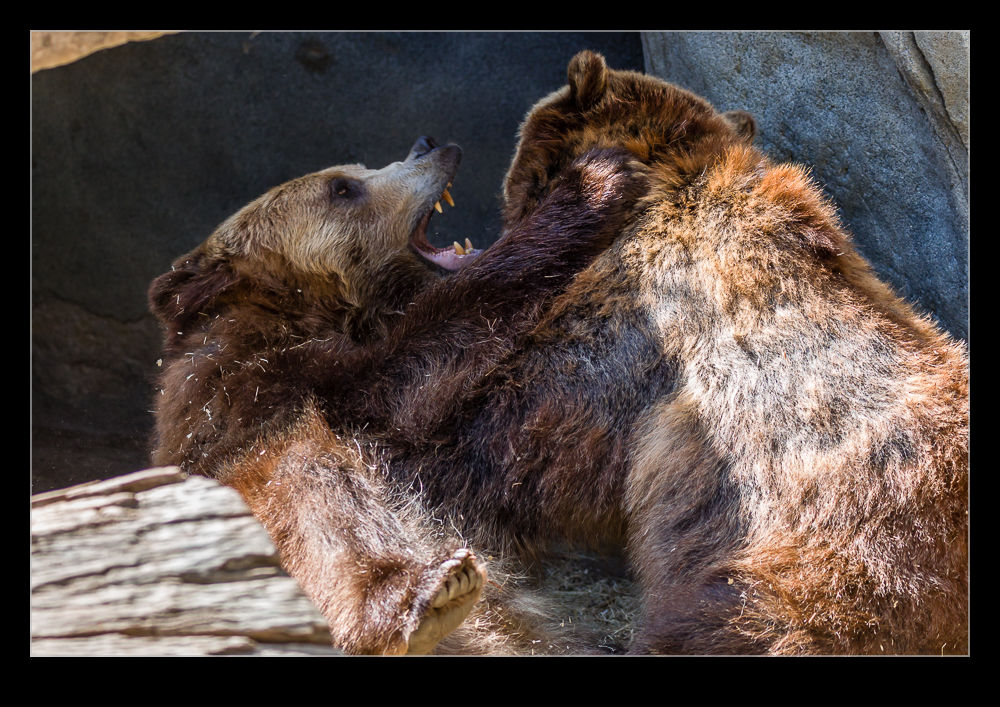
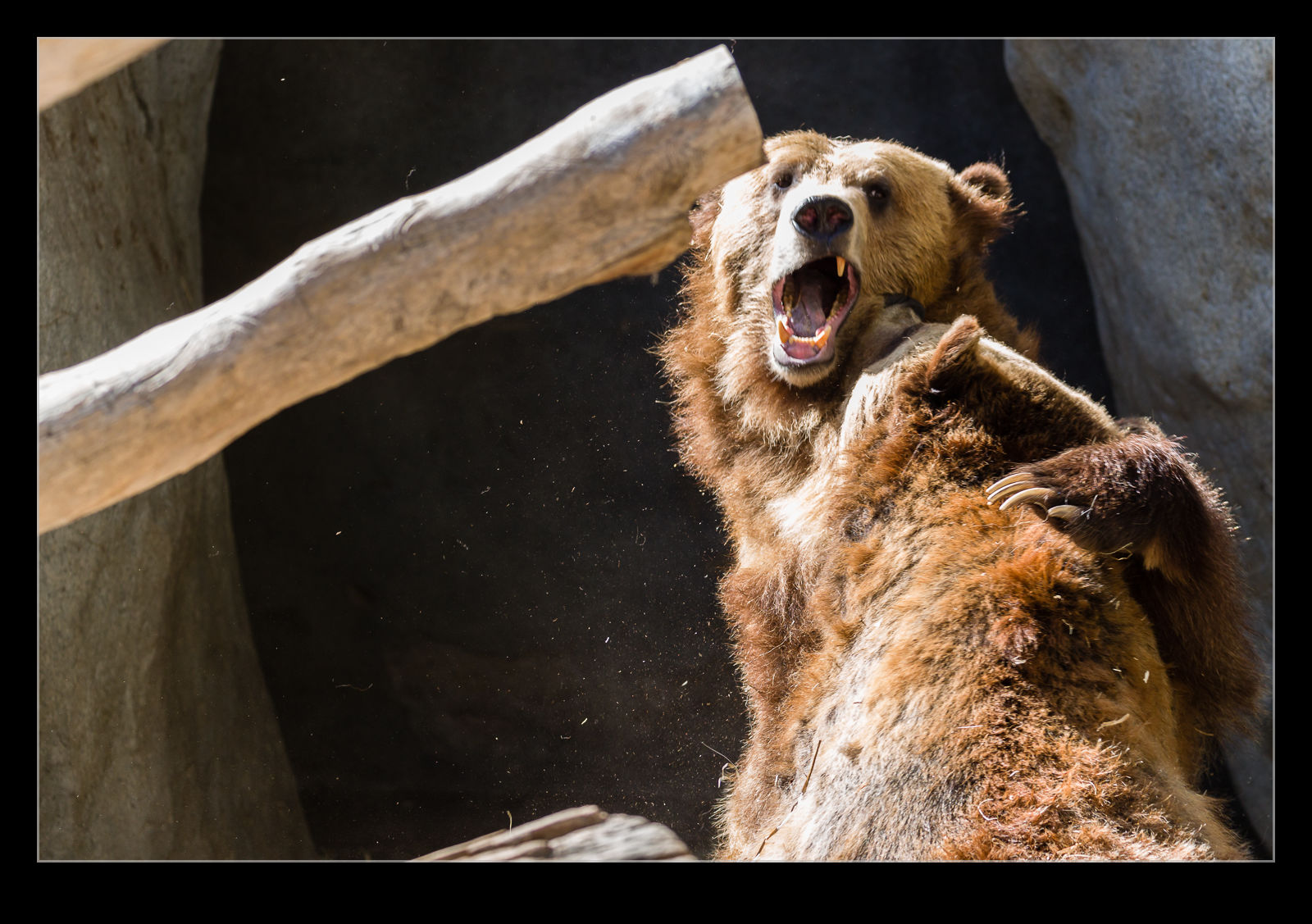
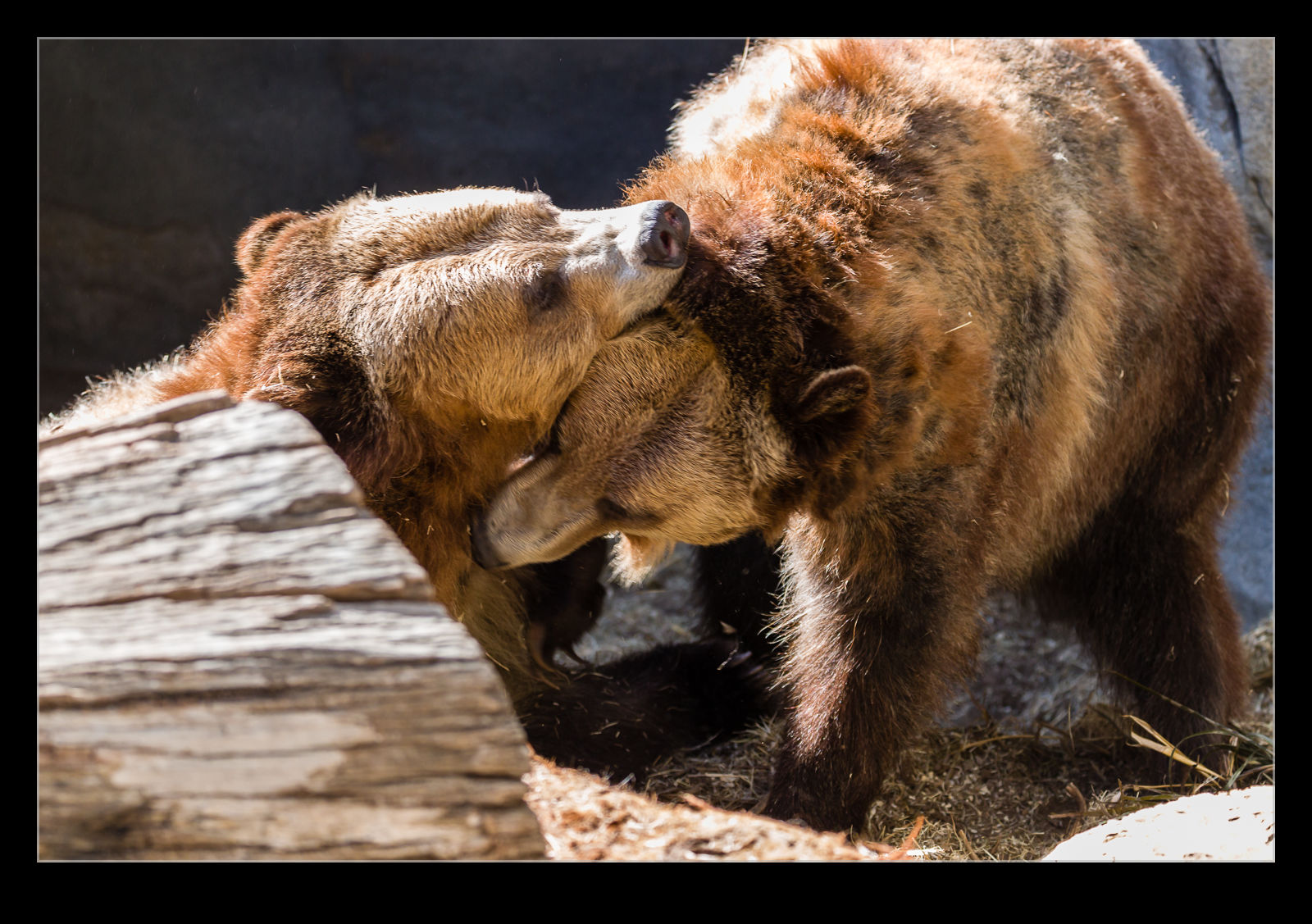
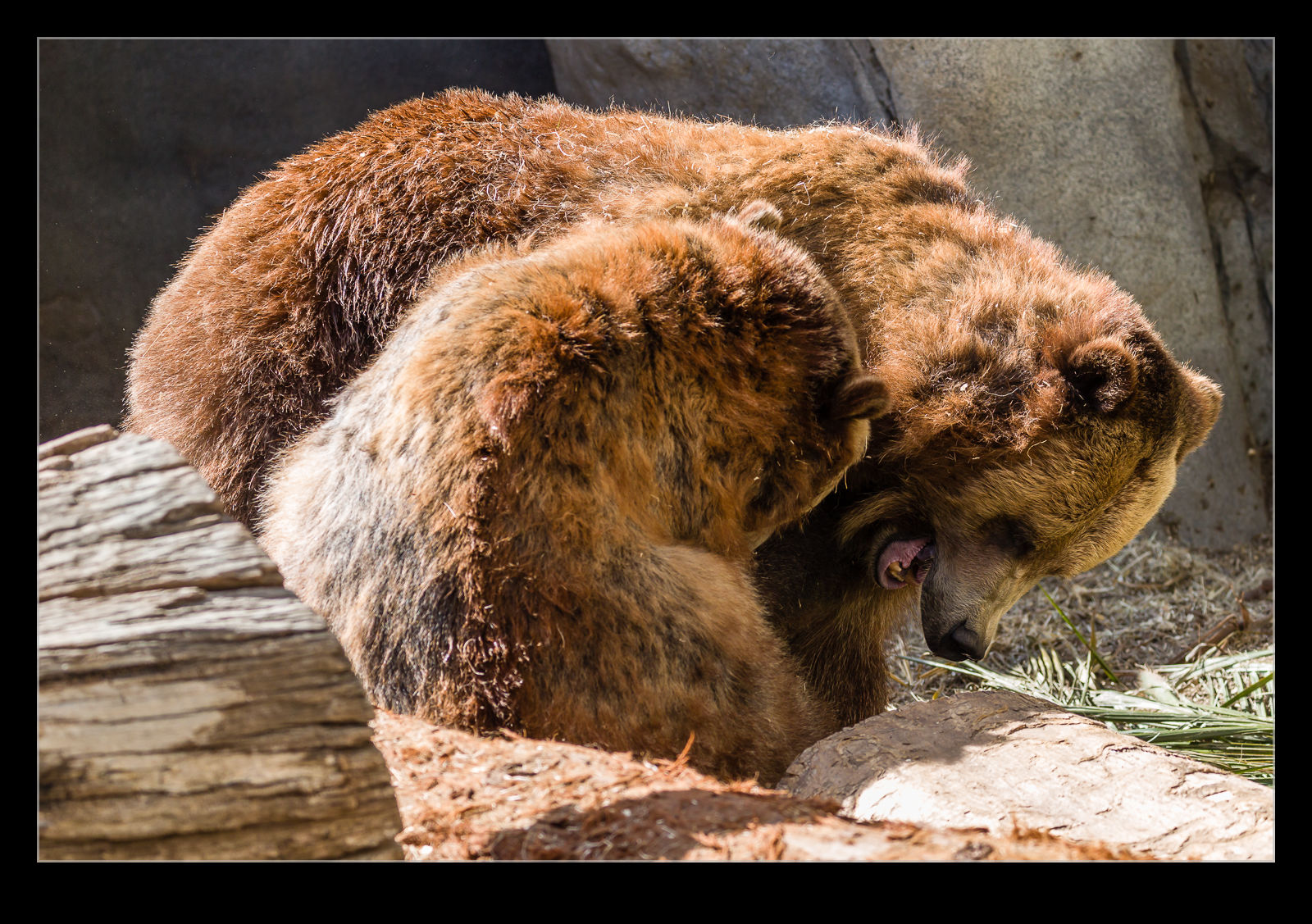
Bears are not known as being the most active creatures in zoo environments. They may wander around sniffing for food or take a dip but they are just as likely to be sleeping as anything. Getting some more activity is, therefore, a reason for some celebration. The reason was that the enclosure had two Grizzlies that are brothers. Put two tough brothers together and guess what happens. They start fighting.
Nothing dramatic. None of this was serious. Just the sort of sparring that boys will do if no one stops them. Of course, they do fight behind some branches so you don’t have quite as clear a view as would be ideal. Even so, watching them wrestle and bare their teeth at each other was a lot of fun.
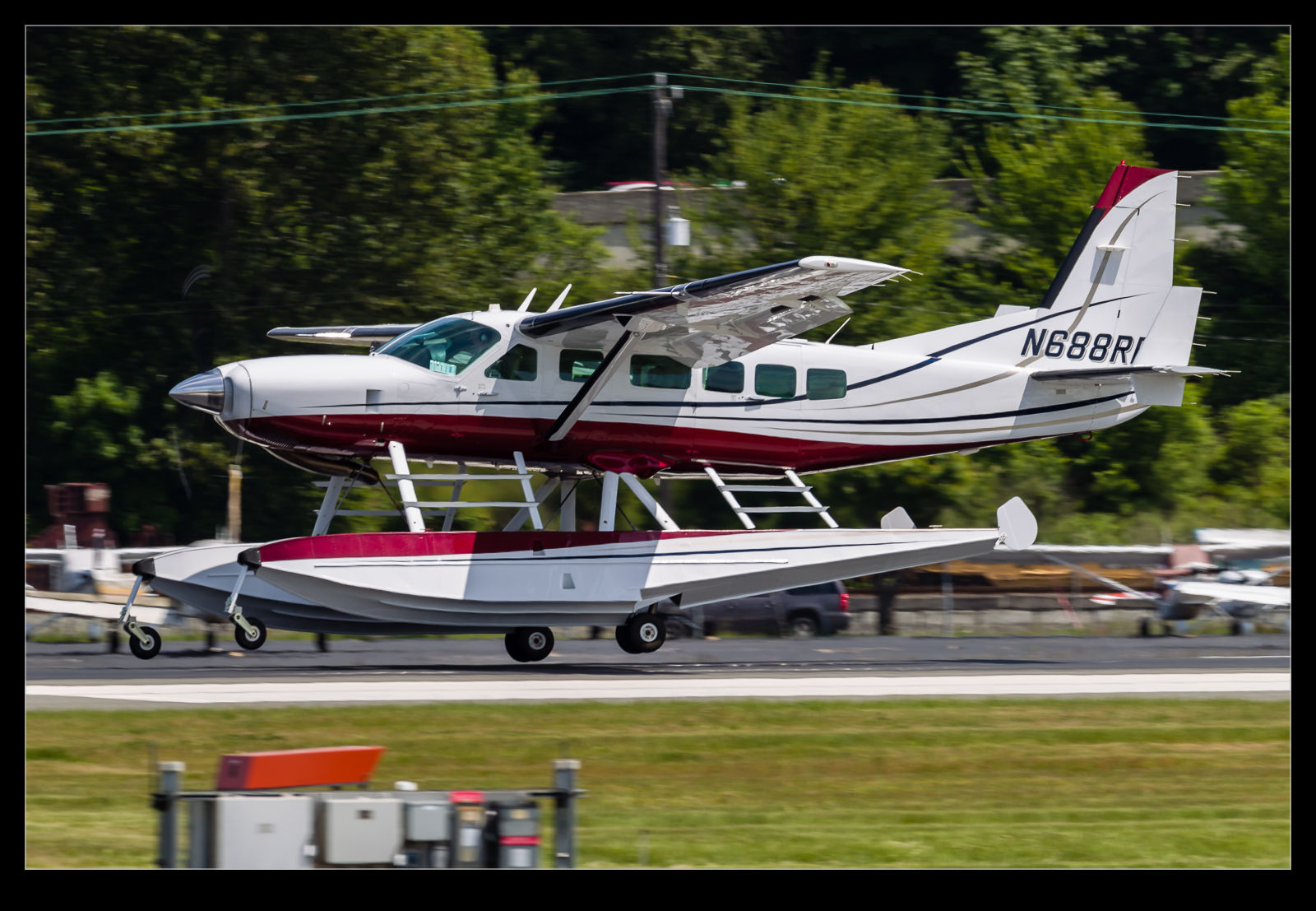
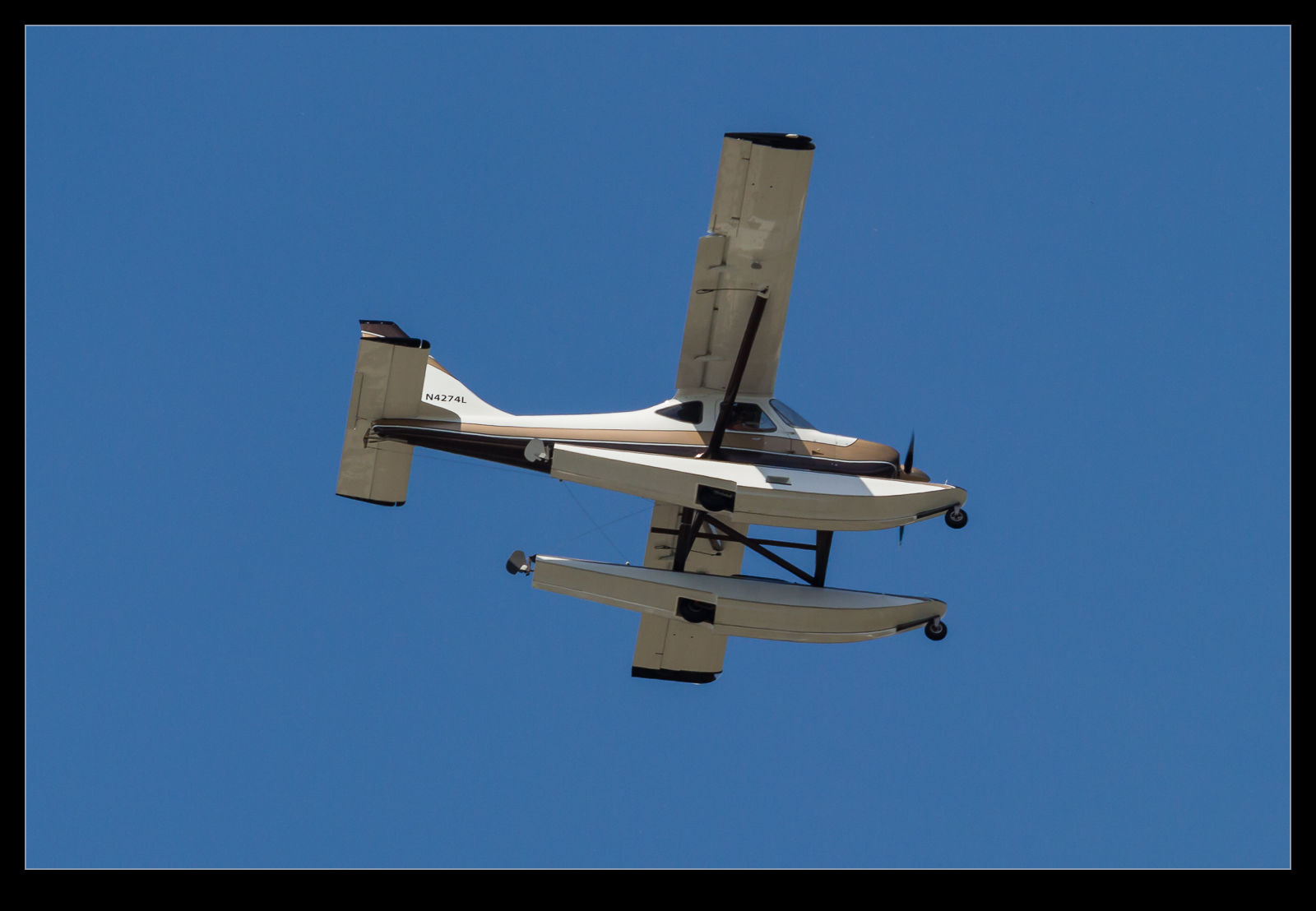
A fun feature of flying in the Pacific Northwest is the abundance of floatplanes and amphibians. The locations that support water based aviation are many so the planes are pretty common. Boeing Field provided me with a couple of examples on one recent visit. One was a Cessna Caravan on amphibious floats that showed up on approach while I was distracted. I almost didn’t get it at all. The other flew overhead but didn’t land. I did get a couple of quick shots as it flew by though. I wonder where it went next.
The smoothness with which air traffic is usually managed means that, whenever something doesn’t go to plan, it is quite a surprise. A go around on approach is a relatively rare occurrence. I have only been on three commercial flights that spring to mind when a go around was executed. I saw a couple at SFO last year on one day but that was when two of the runways were shut and they were squeezing as much as they could in making the chance of a conflict higher.
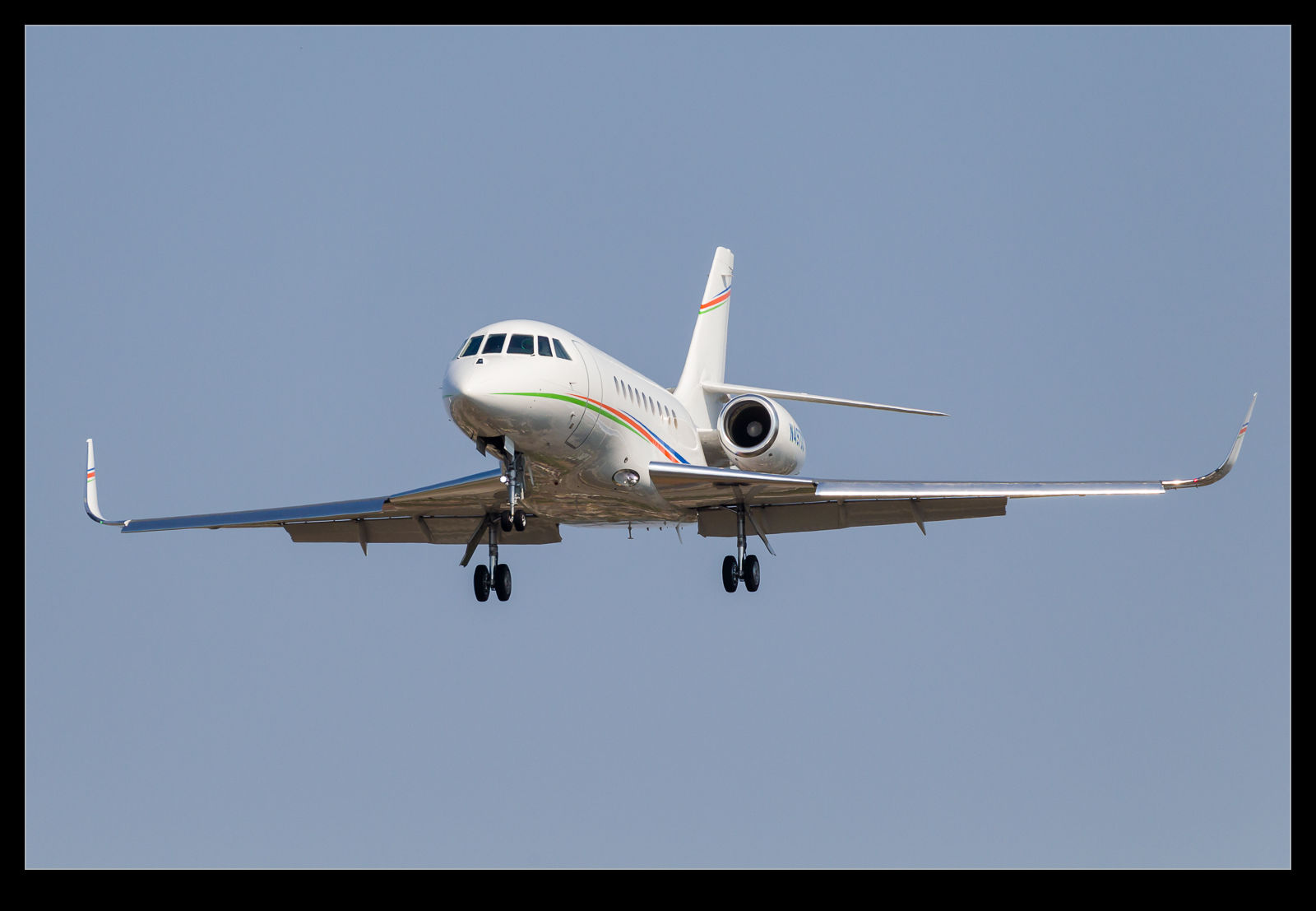
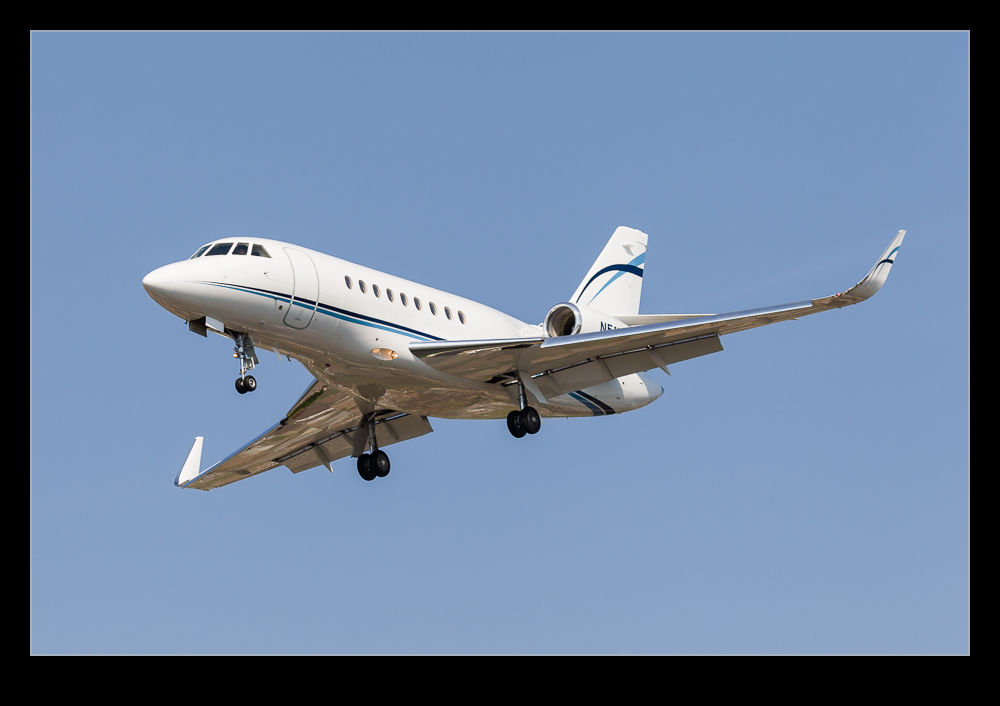
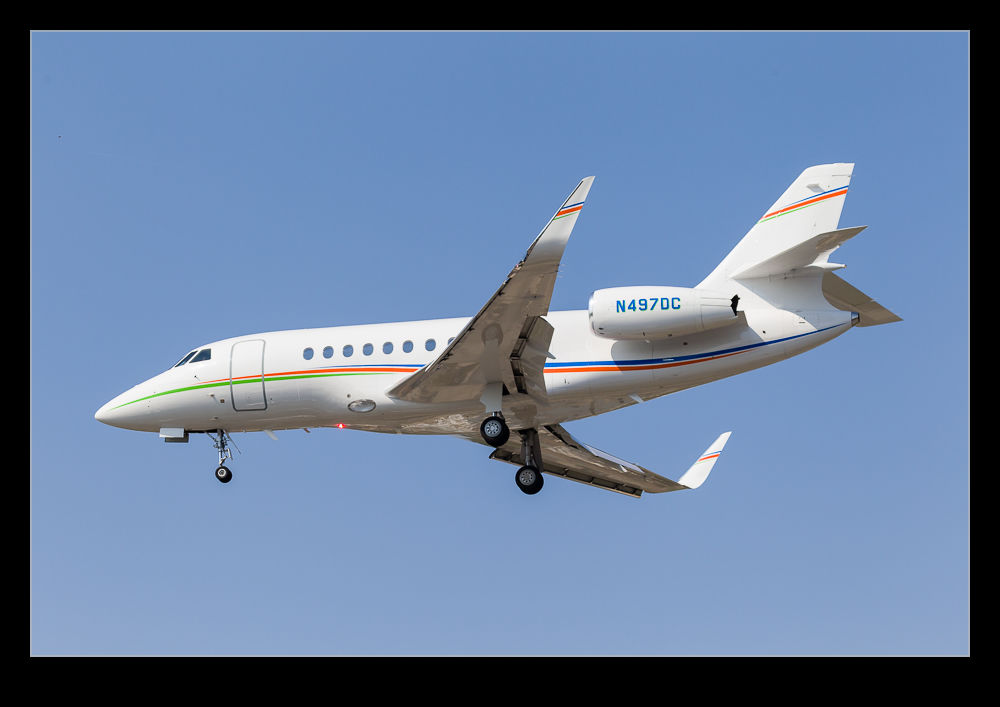
I was watching arrivals to Chicago Midway when I saw a Falcon 2000 on approach. As they got closer, they obviously got the call and the aircraft pitched up and applied power to climb away. It made for an unusual angle at which to see the plane as it banked away on to the missed approach procedure. It obviously was not a complicated procedure because they showed up again shortly afterwards. They were then followed by a similar Falcon 2000 and it was only later, when I was going through the pictures, that I worked out which one was the jet that had made the go around.