Tag Archives: Boeing

Before There Were 400s

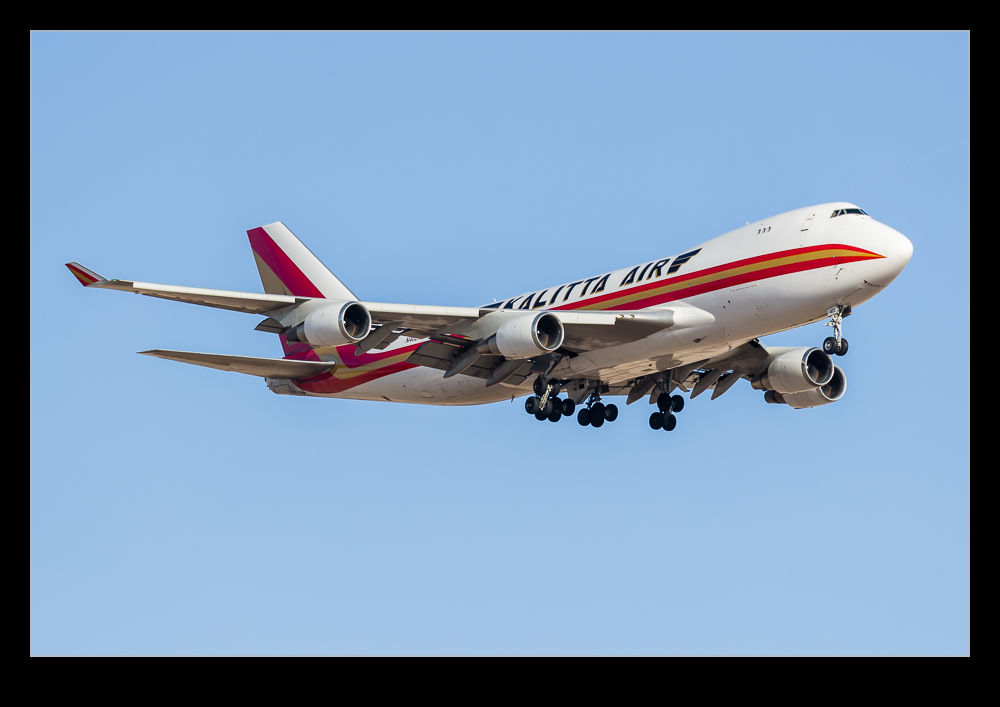
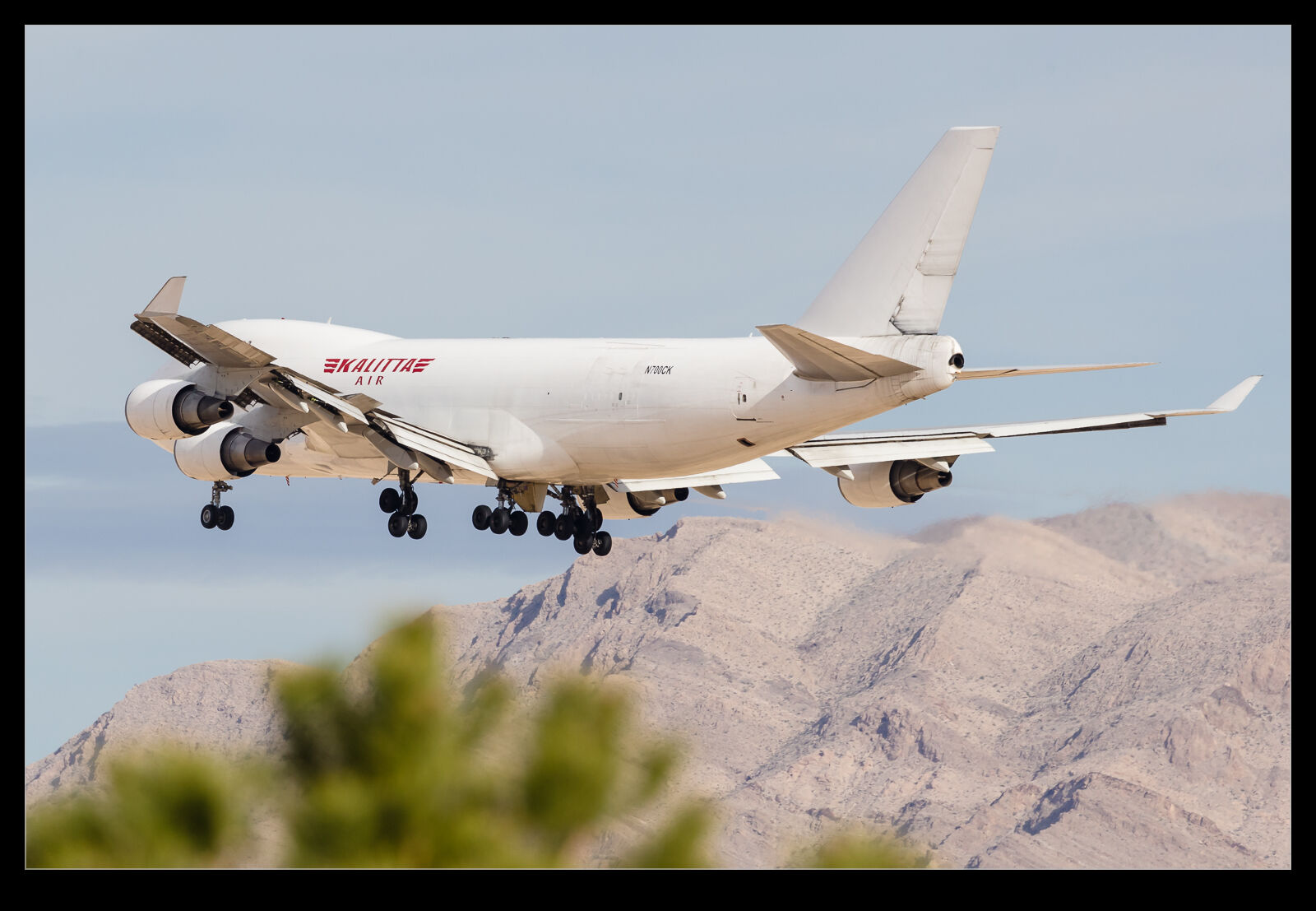
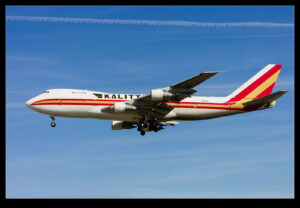
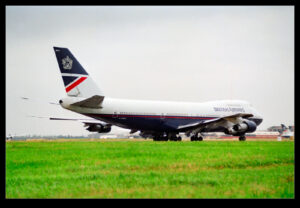
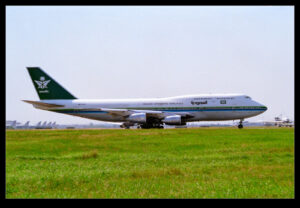
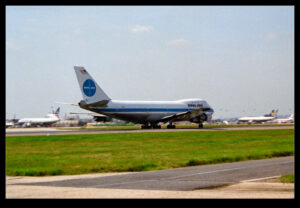
The 747-400 has been around for so long now and has sold so well that it is by far the dominant version of the jet in service.  However, before the late 80s, there were previous versions of the 747.  The 100 series through to the 300 series and the SP.  The 400 series is the one you see now but, before the 400 took over, the earlier models were the ones that were everywhere.  Since I wasn’t taking a lot of photos in those days, I have a lot less photos of the earlier models but I do have some.

Pan Am operated the 100 Series jets and I saw them at Heathrow in the 80s.  200 Series freighters were built in some numbers and many are still around or were until relatively recently.  I think the only 300 Series jet I ever photographed was a Saudia example at Heathrow.  These shots are some of the ones I have come across in my time.  With the 400 Series jets now starting to disappear, it is no surprise that these earlier jets are mainly a thing of the past.
The Merger Jet (At Last)

West Coast airline flying includes a lot of Virgin America.  Headquartered in Redwood City, just down the peninsula from SFO, Virgin America has been struggling to establish itself as a carrier with a different level of service.  It must have done well enough because Alaska got worried enough to buy it.  They call it a merger but Alaska bought Virgin.  Everyone wonder what will happen next since the fleets are totally dissimilar as is the customer service.  Alaska repainted one of their jets in a new livery to celebrate the completion of the acquisition.
It is one of their 737-900s and the colors migrate from red to blue to symbolize the joining of the two.  I have missed the jet on numerous occasions.  I thought I was never going to catch it but finally saw it at San Jose.  You are a lot closer to the flight path at San Jose which is good.  What is even better is being there on the pouring rain when the clouds part five minutes before the jet arrives.  Sadly, the weather closed in just as it took off again but the light was okay over the airport, even if it wasn’t where I was.  Still, I finally got it!

Global Supertanker

Some of the news clips I have seen recently were showing the firefighting activities underway in South America at the moment.  With their summer in full swing, wildfires have been springing up and they have brought in a variety of aircraft to fight them.  One of these is the Global Supertanker, a converted Boeing 747-400.  I saw this aircraft at the aerial firefighting conference that was held last year in Sacramento.  It was very close to approval at that time and we were allowed to check it out.

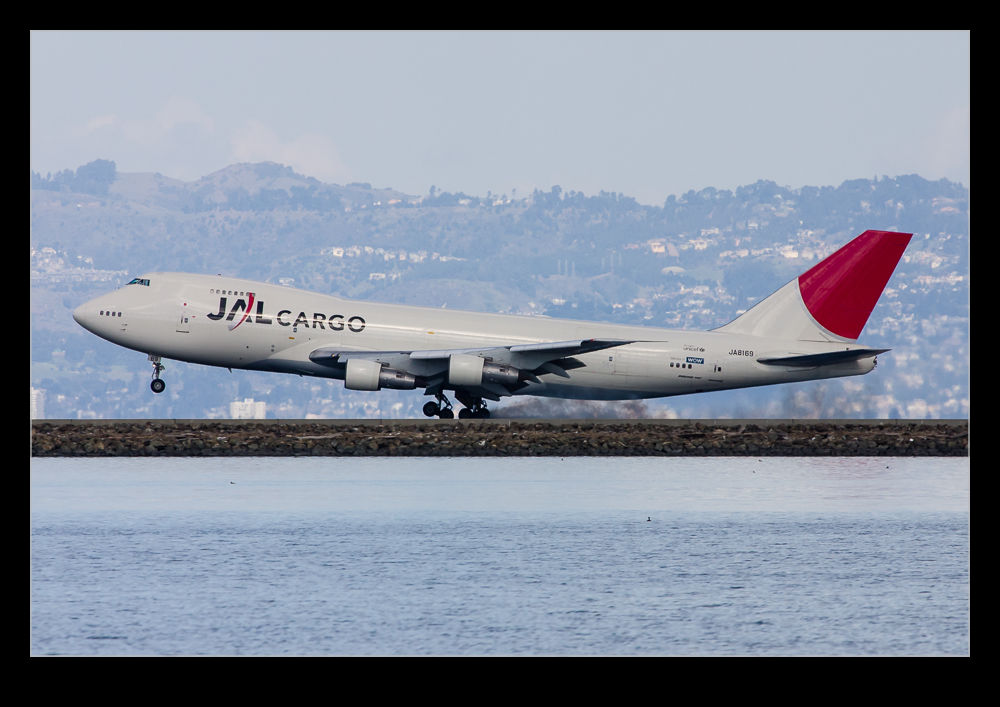
The systems had previously been used on a 747-100 airframe but they had been migrated to the 400 series jet.  The airframe was an ex-JAL aircraft that had undergone the freighter conversion program and seen some further service before being acquired for the firefighting role.  The tanks and piping had been installed and we got to see a bit of the interior during the event.  Unlike the 100 series prototype, this one had been given a nice new paint job and it looked great being straight out of the paint shop.

It dwarfed everything else on the flightline and ended up being the backdrop for the group photo of the conference attendees.  I don’t get to appear in that shot since I was taking it.  I can live without having my presence recorded I guess.  Now it is in operation, there are some rather more dramatic images being captured.  For the time-being, I will have to make do with these shots.

Going Further Gets You There Quicker

The title of this post is a pretty weak premise for the pictures I am posting.  The pictures are of Air India Boeing 777-200LRs.  In the pictures, they are not doing anything special.  However, I shall justify the pictures with a slightly interesting fact.  Air India has been serving SFO for a while.  It is a long flight from Delhi to San Francisco and they were looking in to alternative routes.  A lot of negotiation ensued that finally allowed a polar route to be used.  This route is nearly 1,000nm longer than the route that they were previously flying.  However, the prevailing winds on the longer route are helping the jet along.  The result is that the longer route is actually two hours quicker.  Strange but true.

Get Those Shock Waves Showing

The Fleet Week air show in San Francisco is wrapped up by the Blue Angels.  The sneak passes made by the pair are an opportunity to try and get something interesting.  Since they display over the bay and the city is known for having high relative humidity, I am always hoping to get some good vapor shots.  This time out, that wasn’t to be.  The air seemed to be pretty dry and there was not a lot of vapor on show.  However, the fast pass from left to right takes the jet in front of the hills and Alcatraz which provides some detail to show up the distortion caused by the shock-waves.  The large number of boats and associated masts meant a clean shot was tricky but I got a couple I was pleased with.

Vipers Sneaking up on Strike Eagle

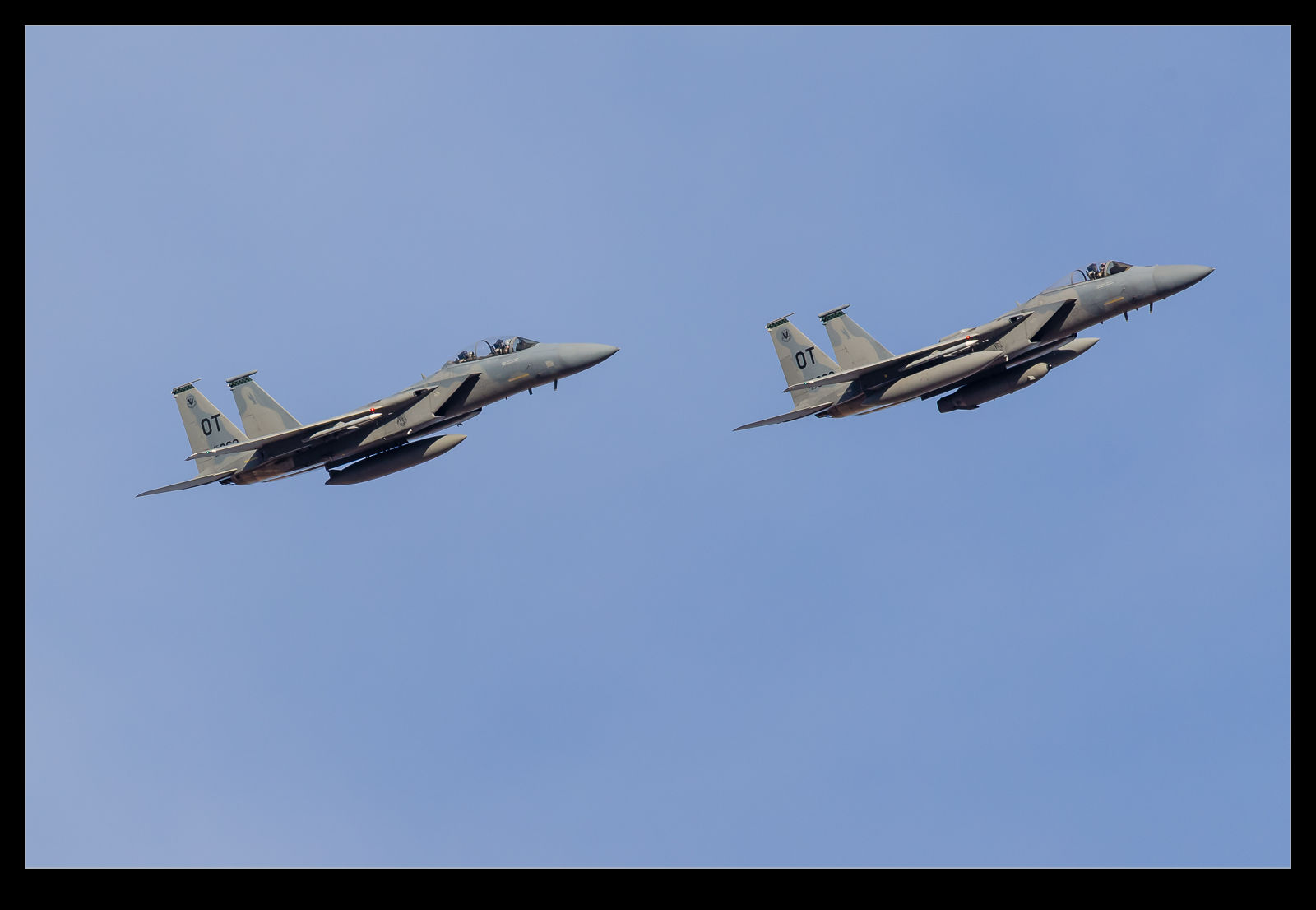
B11I5439.jpgBefore I say anything else, this shot is not original.  I didn’t think of this and I certainly wasn’t the first to shoot it.  Indeed, it is the exact opposite.  This is a shot that I have seen from other people a bunch of times but that I have never achieved.  The recovery for Red Flag has a lot of jets coming home at once.  Jets will break into the pattern and will be turning final when more jets are coming in to the break.  You can get jets coming in overhead directly behind the jet on final turn.  It looks cool but I had not got it before.  This time I got lucky.  I don’t know whether I am pleased with the shot or just glad that I finally happened to get it!

Some FedEx Vapor

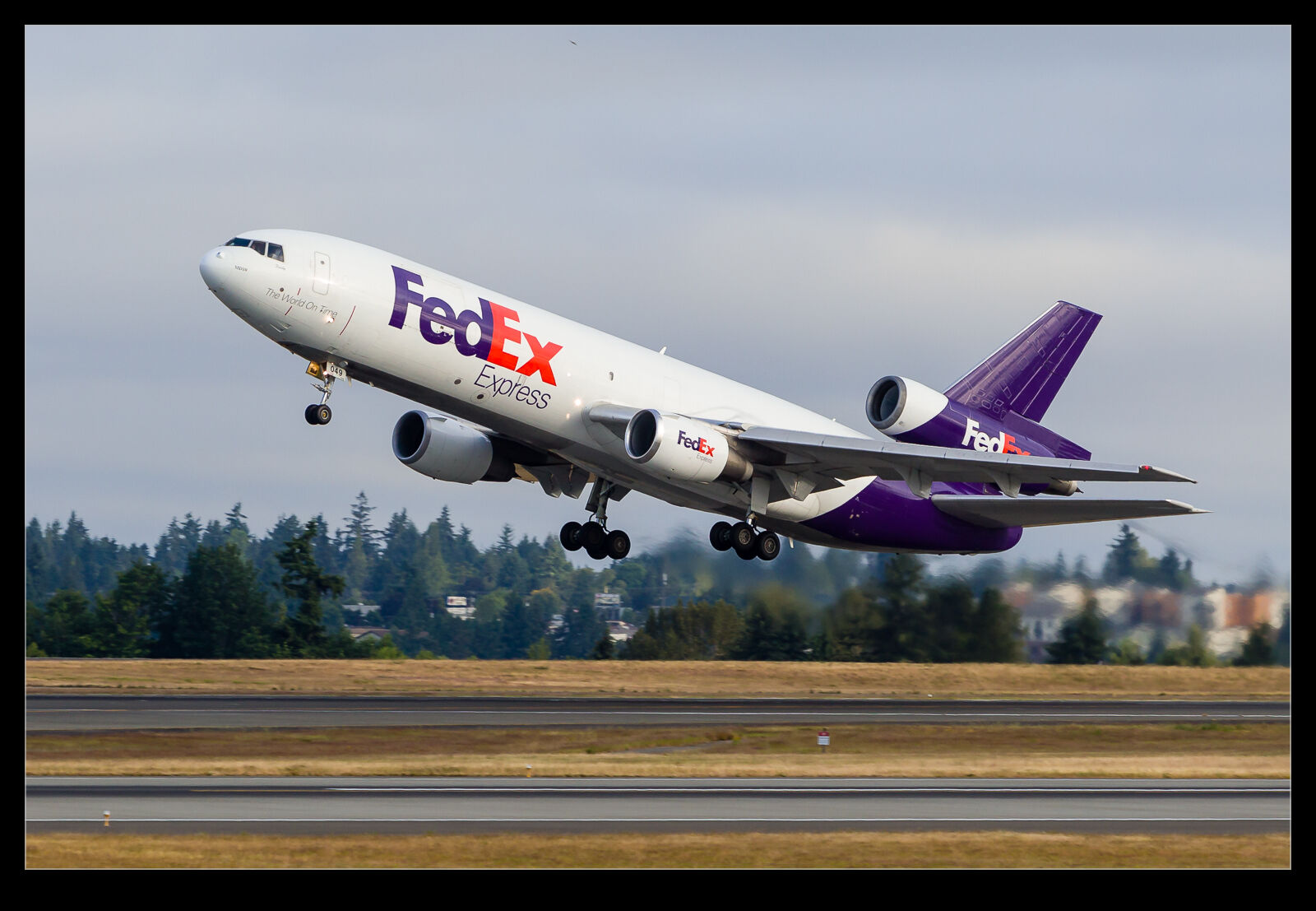
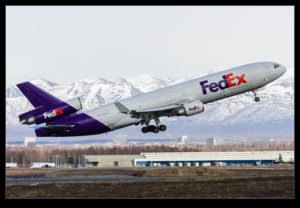
AE7I7353.jpgDamp conditions are not uncommon in the Bay.  Getting some vapor over the wing during a climb out would not be a surprise. Getting it on the approach can also happen but not so often.  A FedEx MD-11 was on the approach to Oakland while I was walking along the shore.  As it headed away, they were configured for the final approach as some flashes of vapor showed themselves above the wing.  I happened to get them this time.

Spanish Hornets and Some Strange Patterns

B11I5220.jpgIt has been a long time since I last saw some Spanish Air Force Hornets so I was glad to see them at Red Flag.  They may not look very different to the Navy and Marine Hornets but still, some variety is worth it.  It was the second week of the exercise so I would have expected everyone to be pretty familiar with the operations around the pattern.  However, the Spanish guys seemed to have some different ideas.

B11I5389.jpgThey were certainly interested in keeping the patterns tight.  I don’t know whether they convert to type with the Navy and are trained to fly tight or whether that is just their nature.  However, on one occasion, the pilot came way inside the downwind line while another jet was flying that line and he was going to end up cutting them off.  I guess he realized at the last moment because he turned left to get back out where he should have been.  A bit strange to watch!

B11I5044.jpg

Eagle Inlets

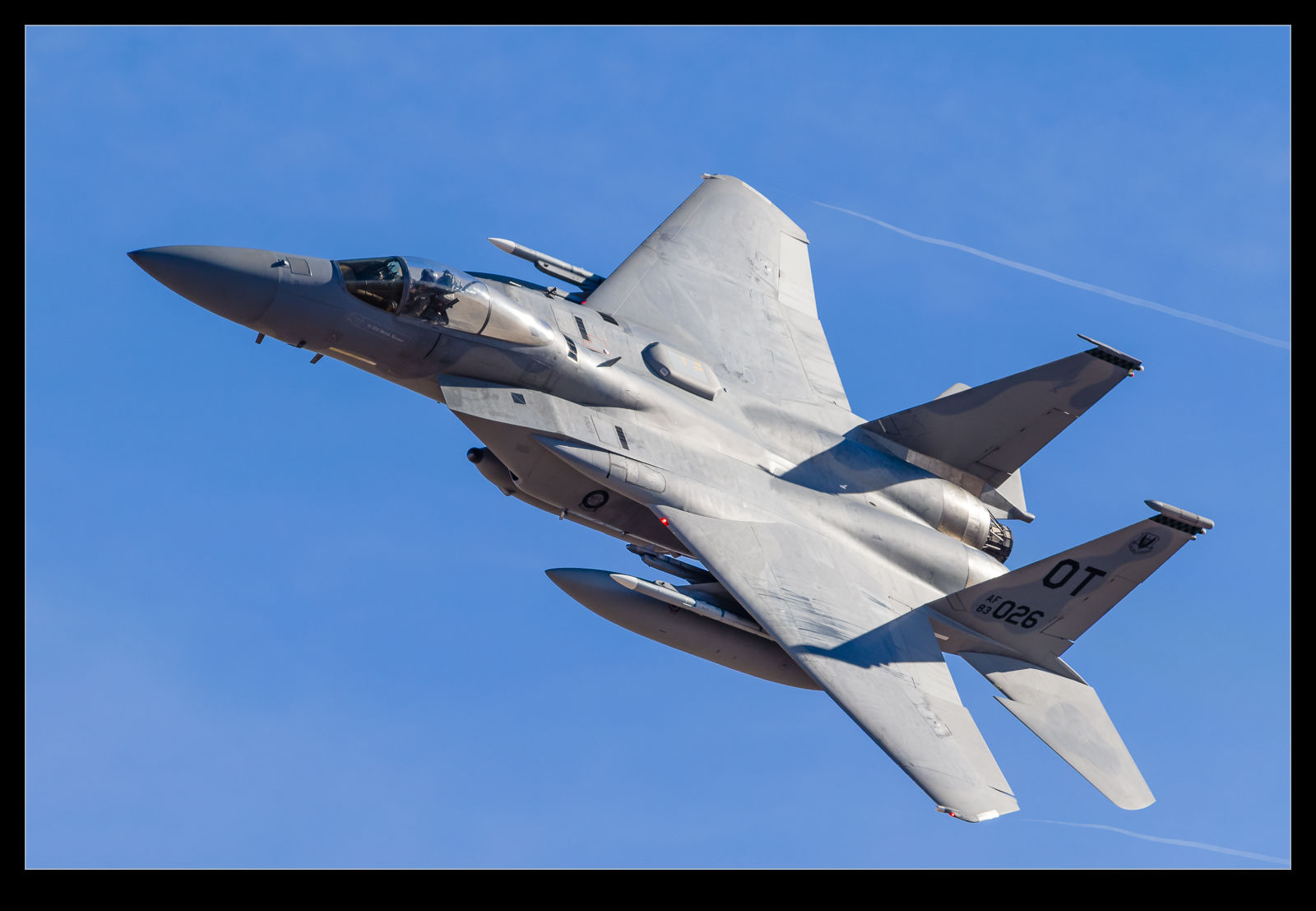
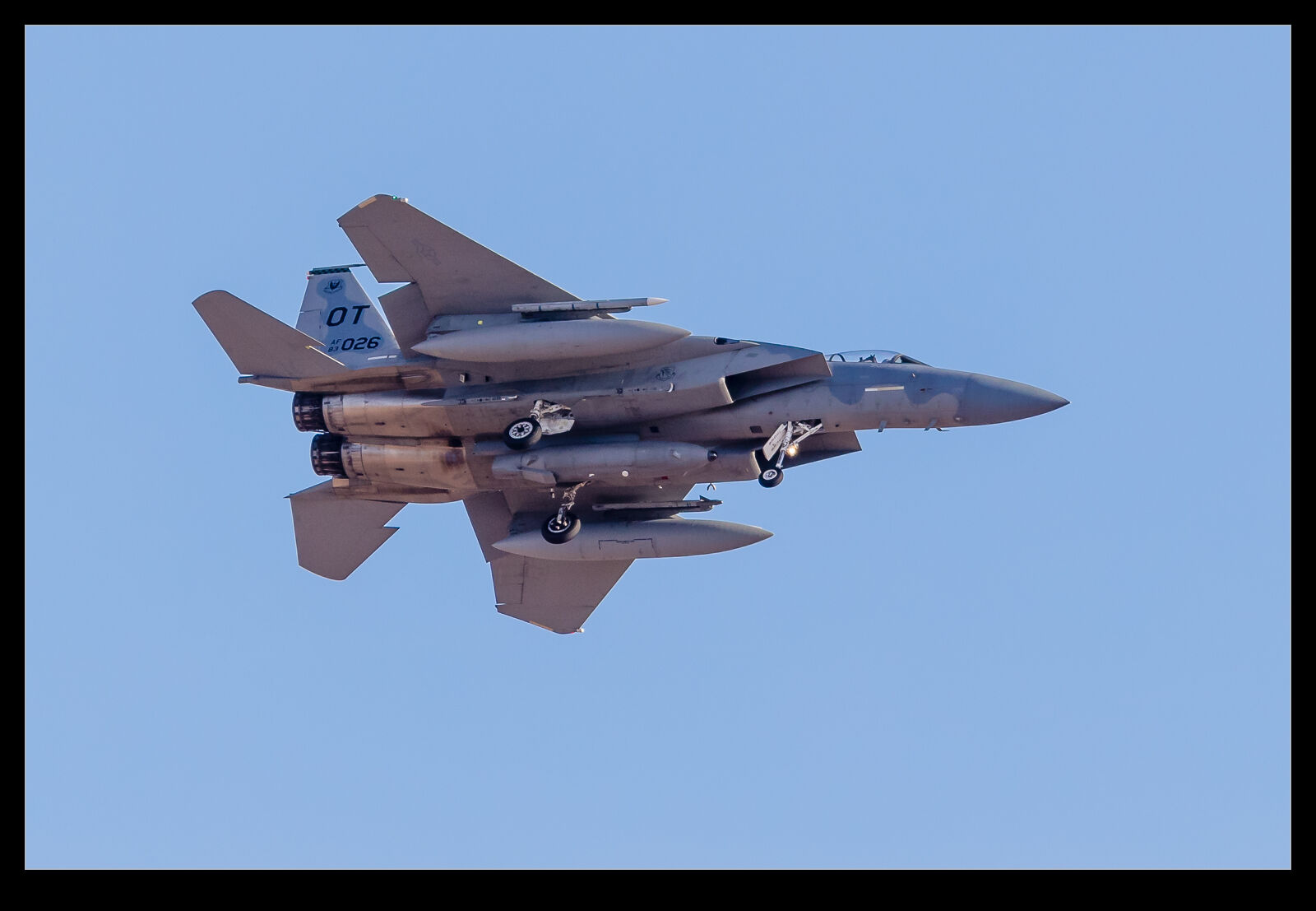
B11I2311.jpgThe F-15 came onto the scene in the 1970s and it has been a major force ever since.  As a kid growing up fascinated with planes, the F-15 and F-14 were two of my favorites.  They each had features I loved.  One of the cool things about the F-15 for me was the inlets.  Big ramp inlets were in vogue at that time.  They combined an angled profile with complex ramps and doors to take flows from above Mach 2 down to subsonic speeds to feed the engines.  (Interestingly the F-16 went with a simple pitot inlet and could still just about make Mach 2.  It used the fuselage to redirect the air into the inlet rather than raking it.)  The F-14 inlets were very sharply angled.  The F-15 didn’t have such a sharp angle but instead took a different approach.  The inlets rotated down towards the approaching air.

B11I5733.jpgThis always struck me as a cool feature and whenever I see F-15s now, I am always looking at the angle of the inlets.  Since they are often at lower speeds when I get to shoot them, they are at higher angles of attack and this means the inlets are rotated down.  McAir’s engineers did a great job of the joint so the top surface doesn’t look too discontinuous.  I include a shot of a parked jet to show the difference.  Even after all these years, I still get a kick out of this.

AU0E7545.jpg C59F5705.jpg

The Lonely Life of the AWACS

B11I5825.jpgThe beginning and end of an exercise has a common theme.  Long before the fighter start launching, an E-3 AWACS will lumber off the runway and head out towards the exercise area.  It gets on station and sets up to direct the fight as the fast movers enter the range.  It will support the whole mission and will guide the small guys back home at the conclusion of their missions.  It will deal with any of the jets that have to change plans or abort.  With everyone else back on the ground, the AWACS can finally come home.  They are often the last jet back on the ground.  Hopefully everyone outside will stay around for their recovery.  You wouldn’t want them to feel neglected!

B11I2618.jpg