Tag Archives: nevada

Strike Eagle Shot I Couldn’t Ignore

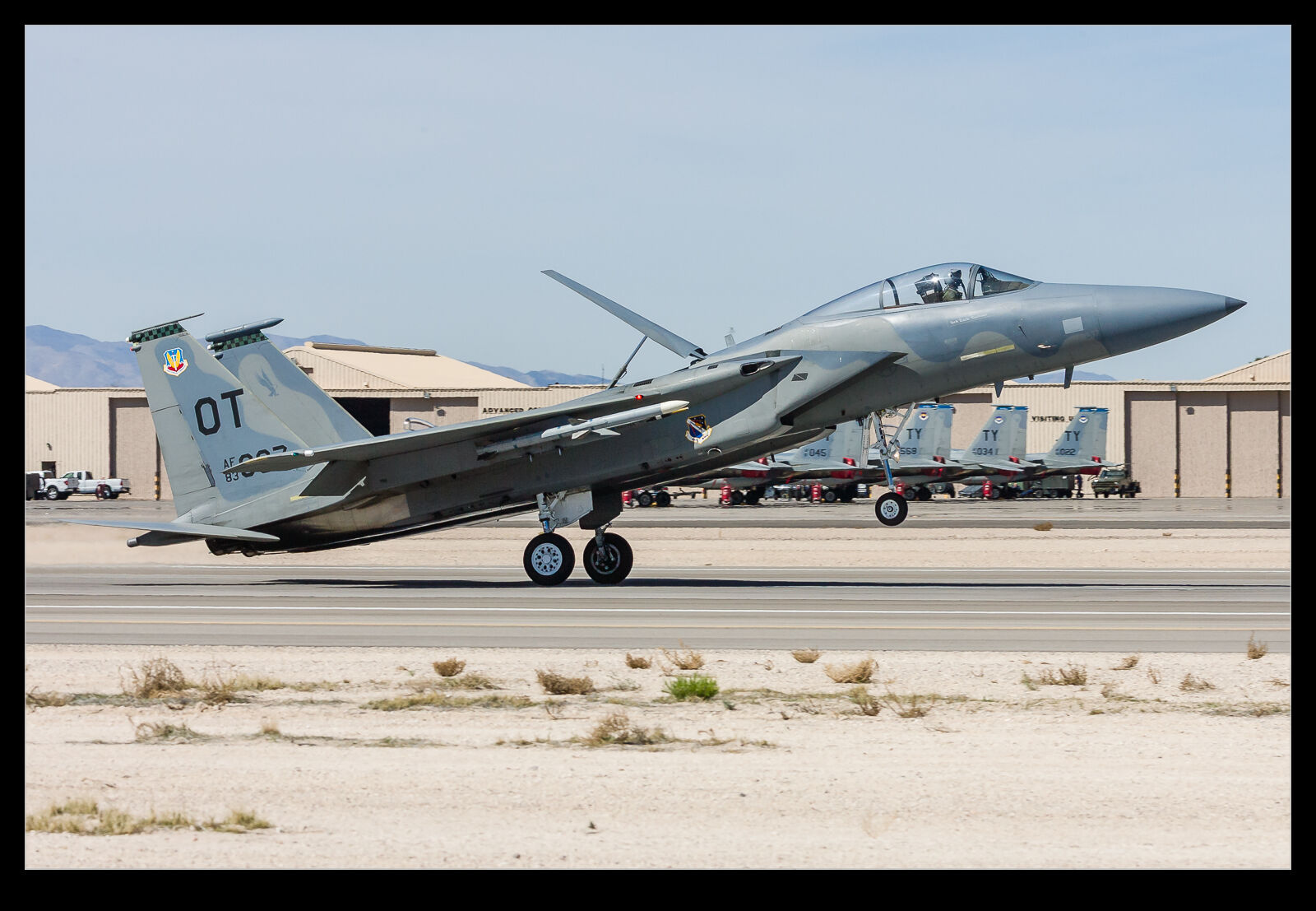
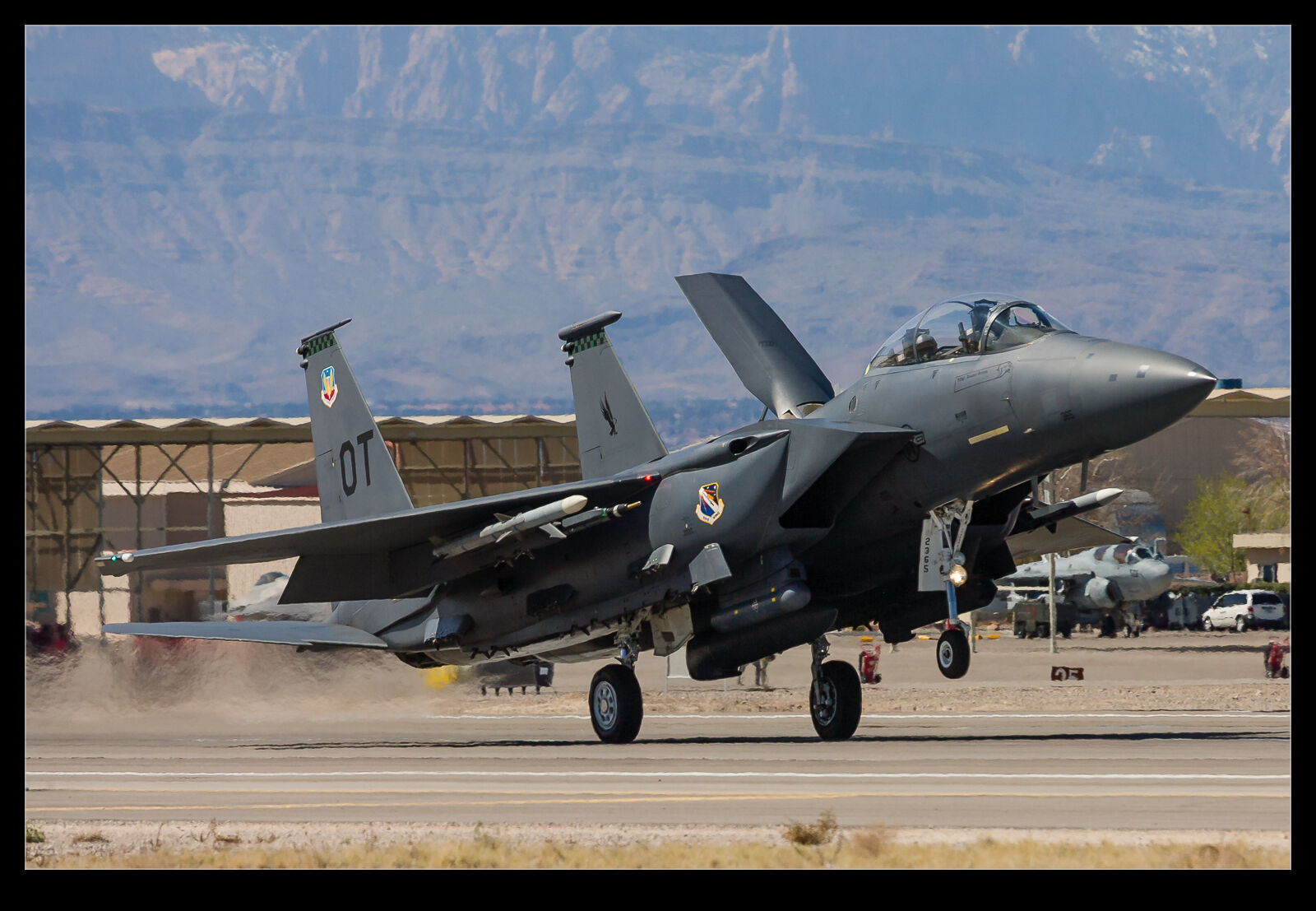
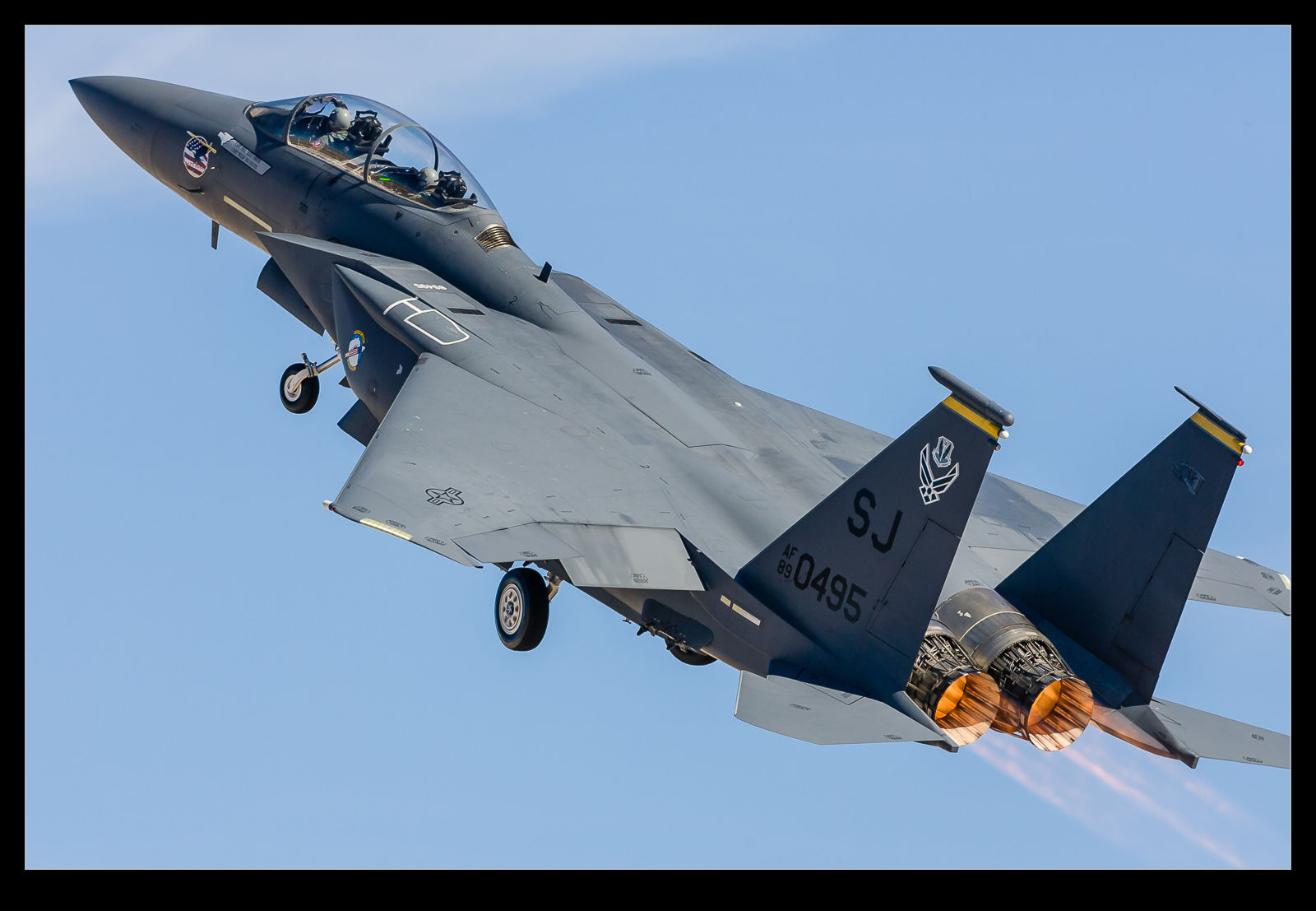
As is often the case, this shot is the result of me looking for something else. While searching through the catalogue to find something, I came across my first visit to the Aviation Nation show at Nellis AFB. I would end up spending a lot of time at Nellis over the years, but this was possibly my first real visit. The USAF F-15E Strike Eagle demo was on the programme, and I had the 500mm on as it took off. By purely good fortune, it rotated at almost the perfect spot for that focal length.
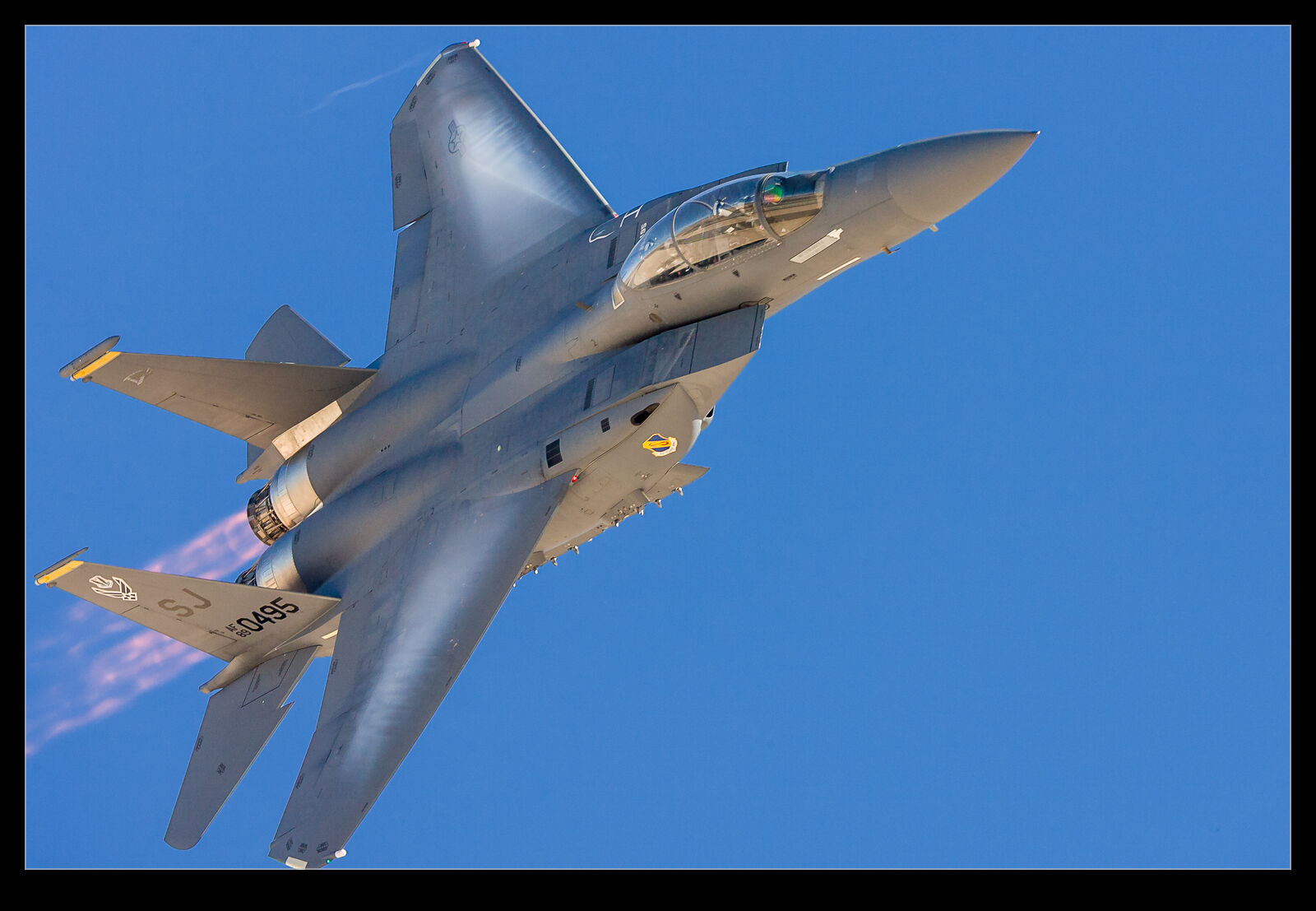
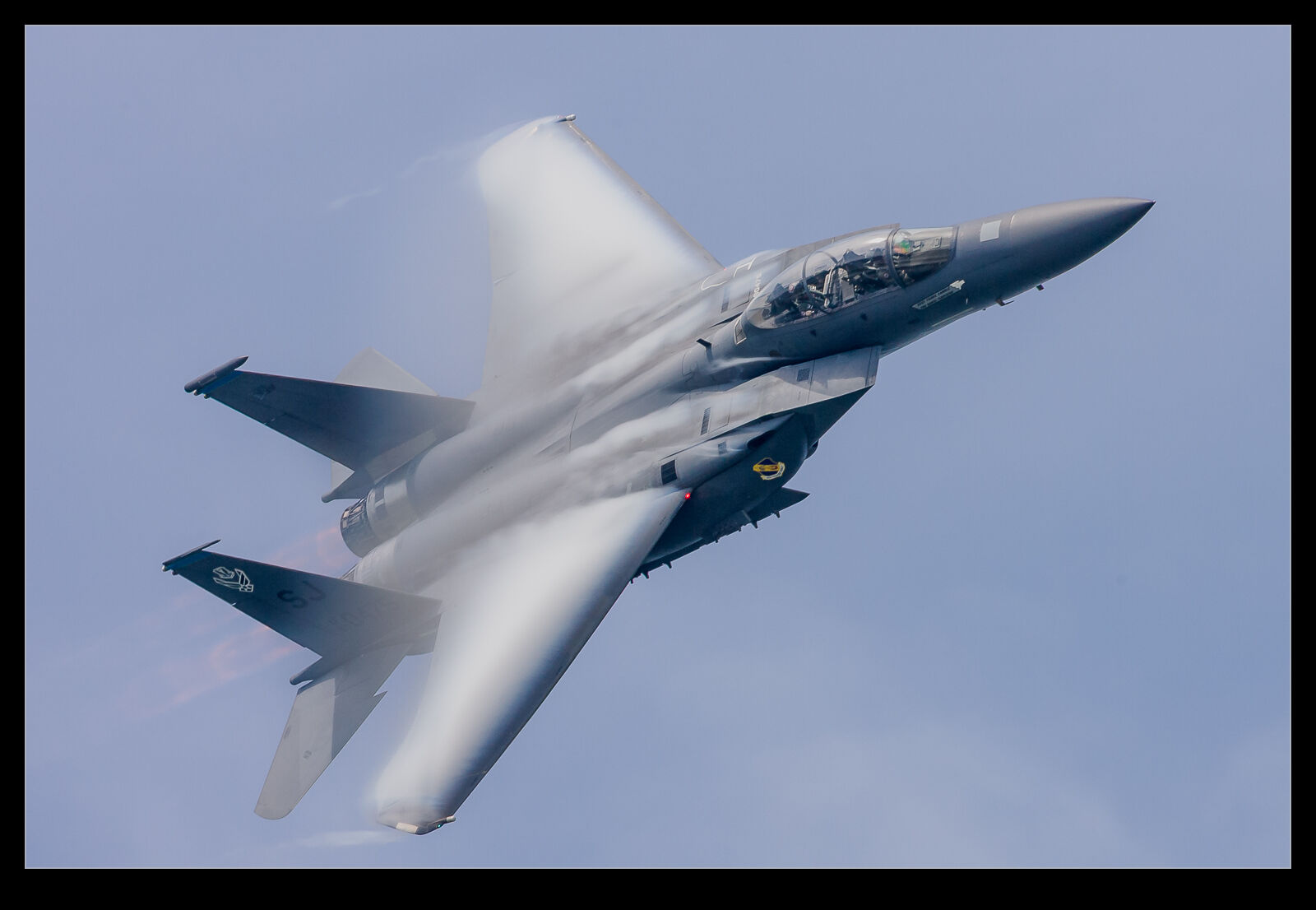
There is a tiny bit of clipping of the airframe, but the dynamism of the shot combined with the favourable lighting means I don’t mind. This then got me thinking of other F-15E demos that occurred around then. On two of them I got the mudhen in an arcing turn at speed with vapour across the airframe. One was in nice light but slightly backlit while the other was in more muted conditions. I figured I would include both of them here so you can compare them yourself.
Aggressor Eagles

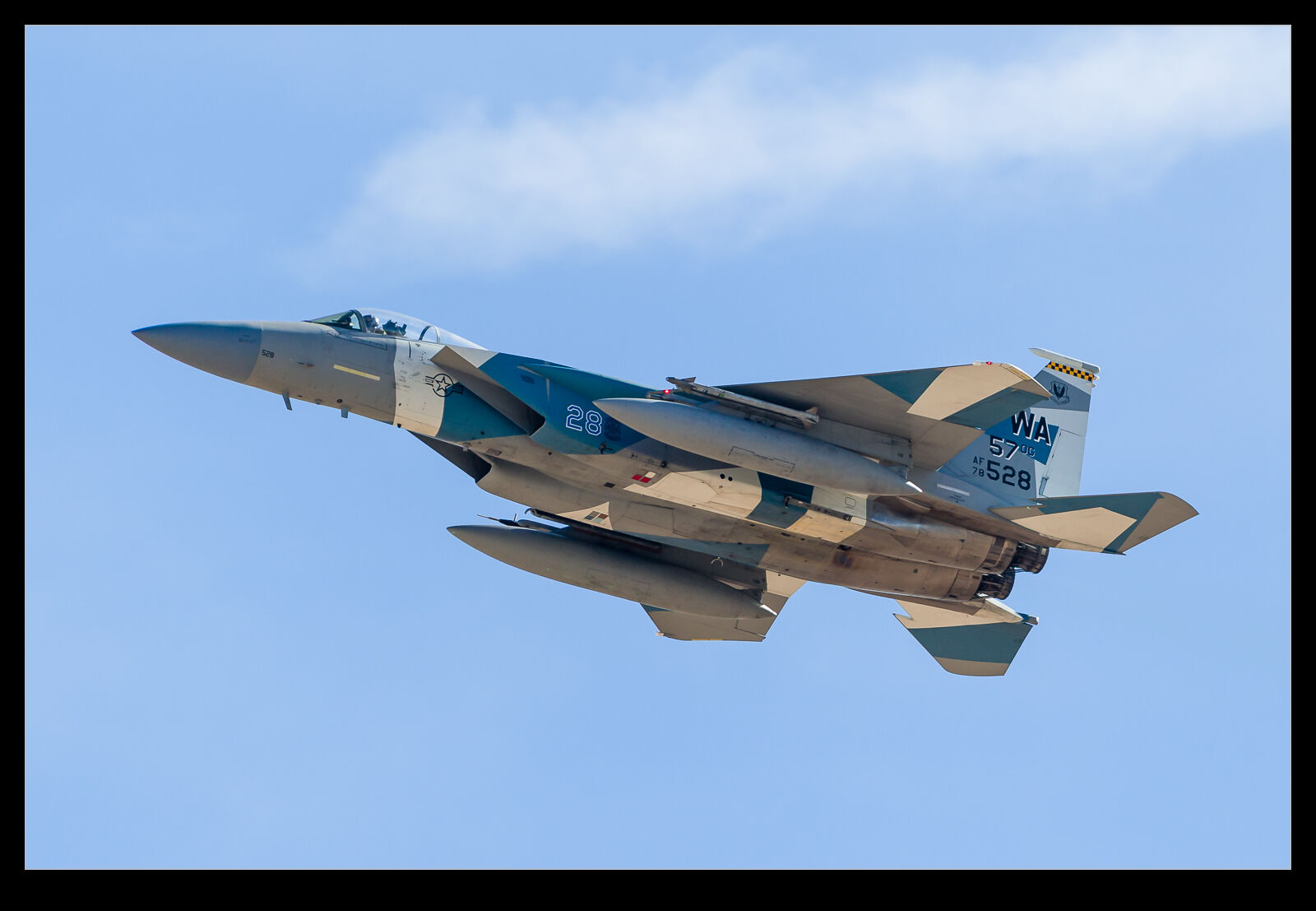
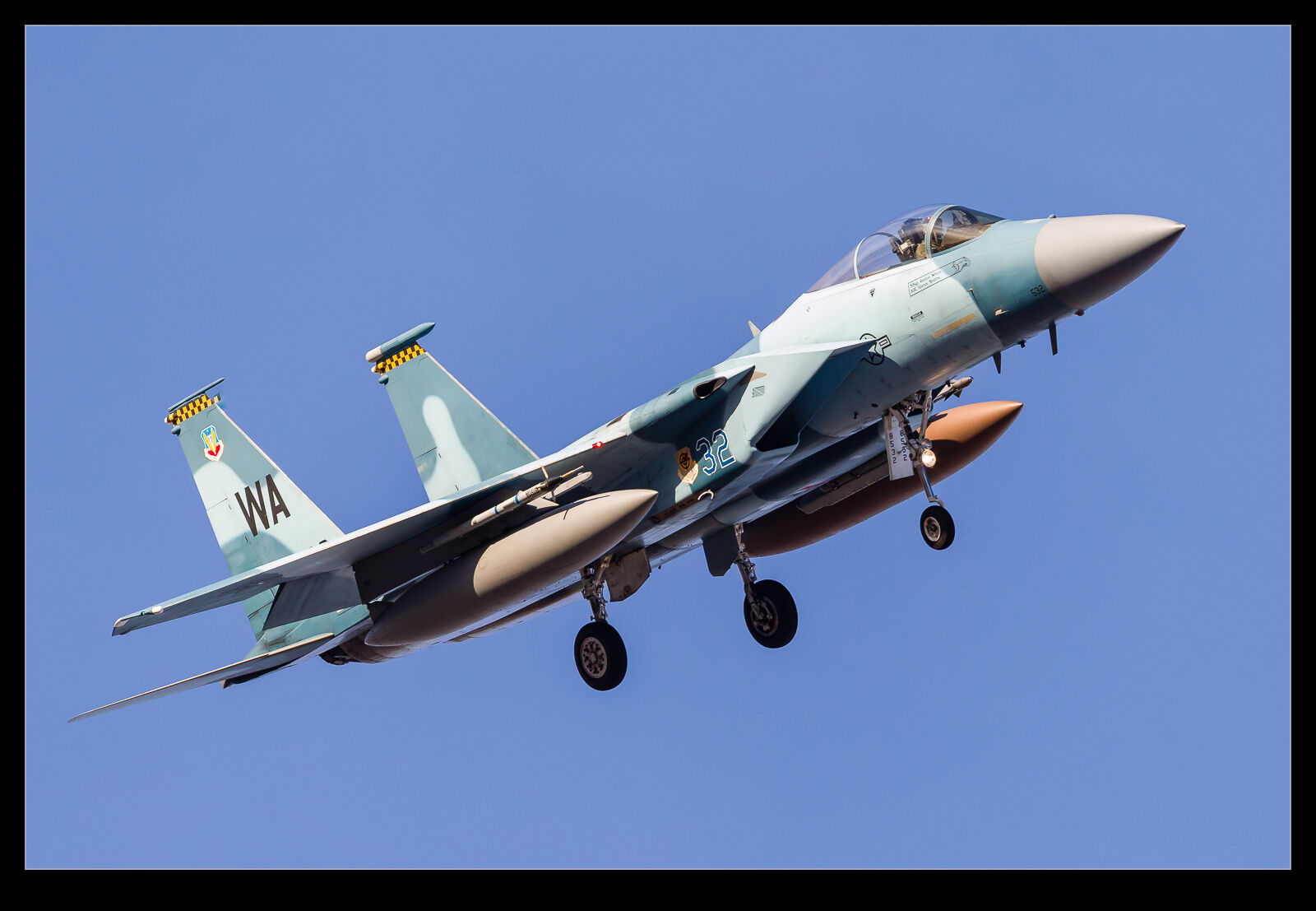
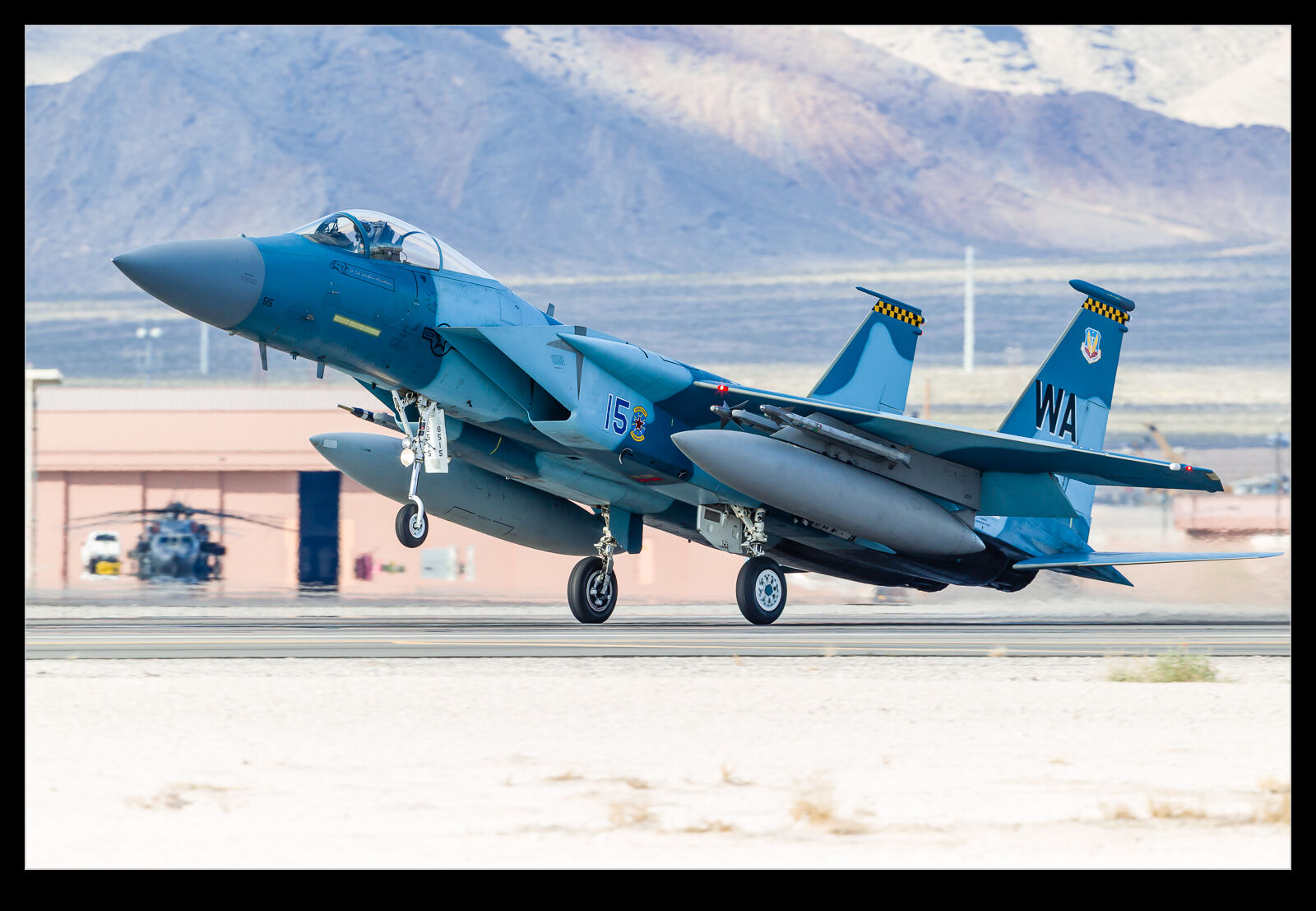
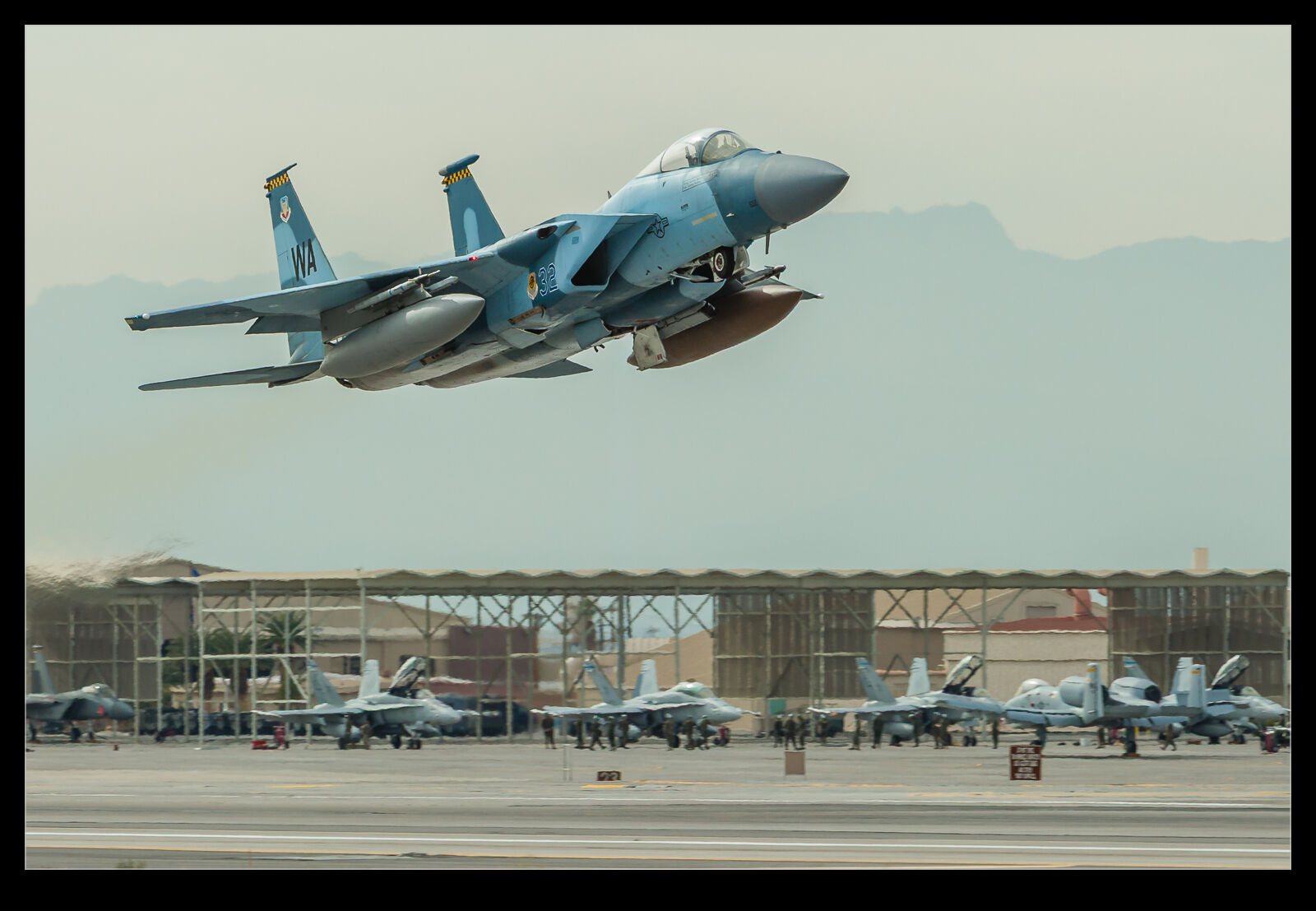
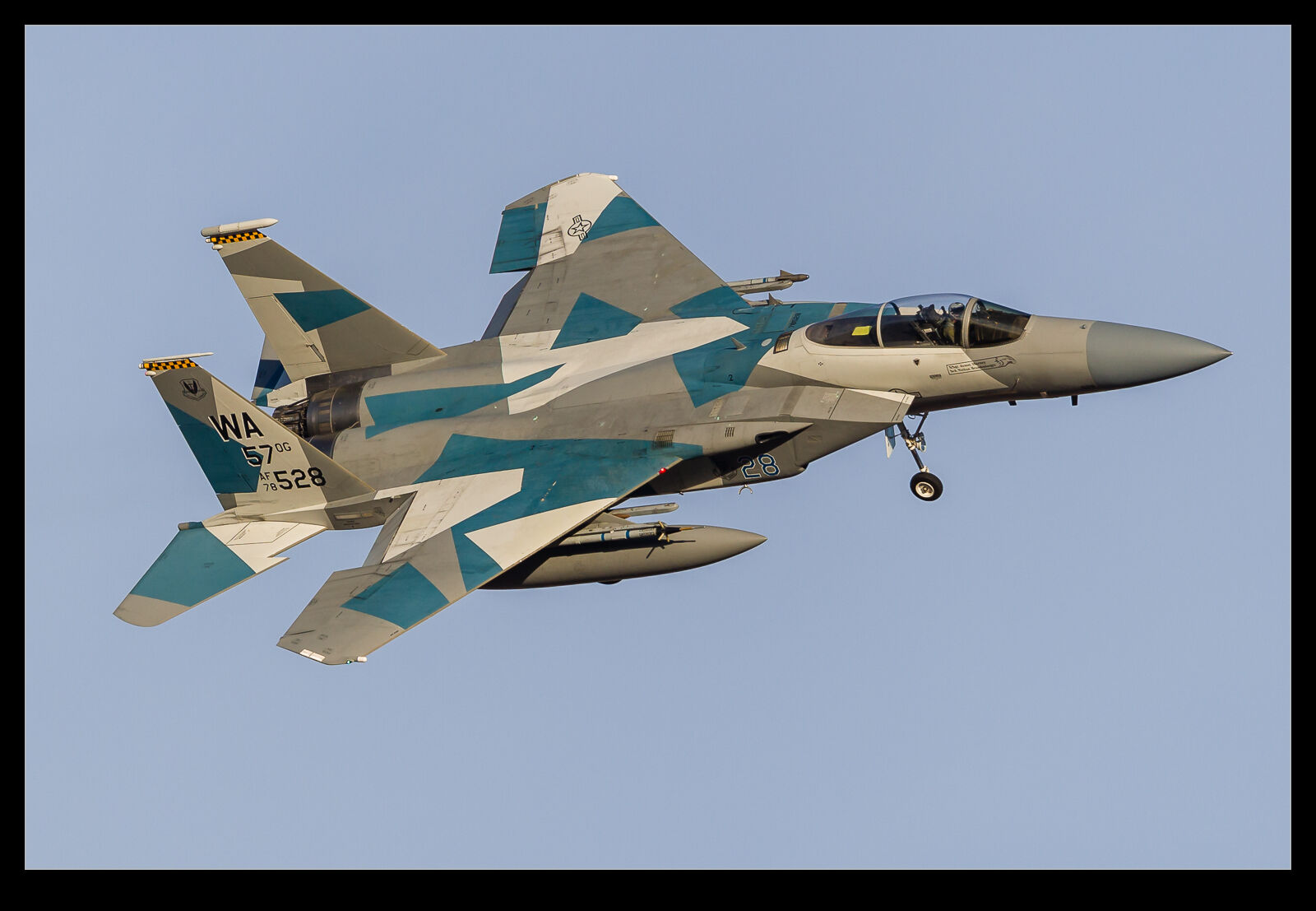
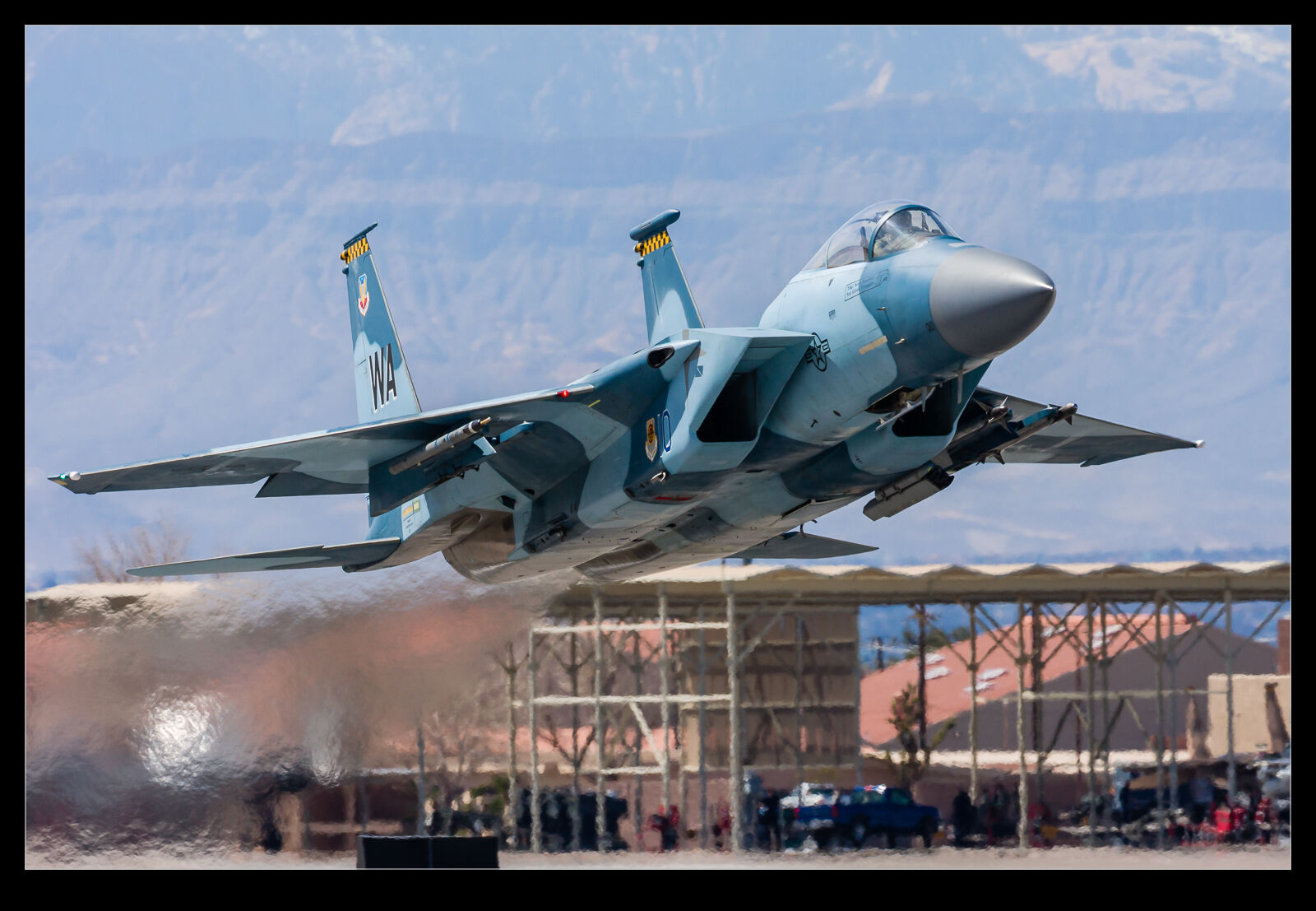
I did post some Eagles previously and had said I would repeat types much in this string of Red Flag posts, but I didn’t say never. Eagles are worth breaking the rule. The aggressor eagles went away a while back with the F-16s taking on the role alone until F-35s started being added. Th Eagle looked great in aggressor colours so here are some of those that I shot at different visits.

Raptor Blast Off

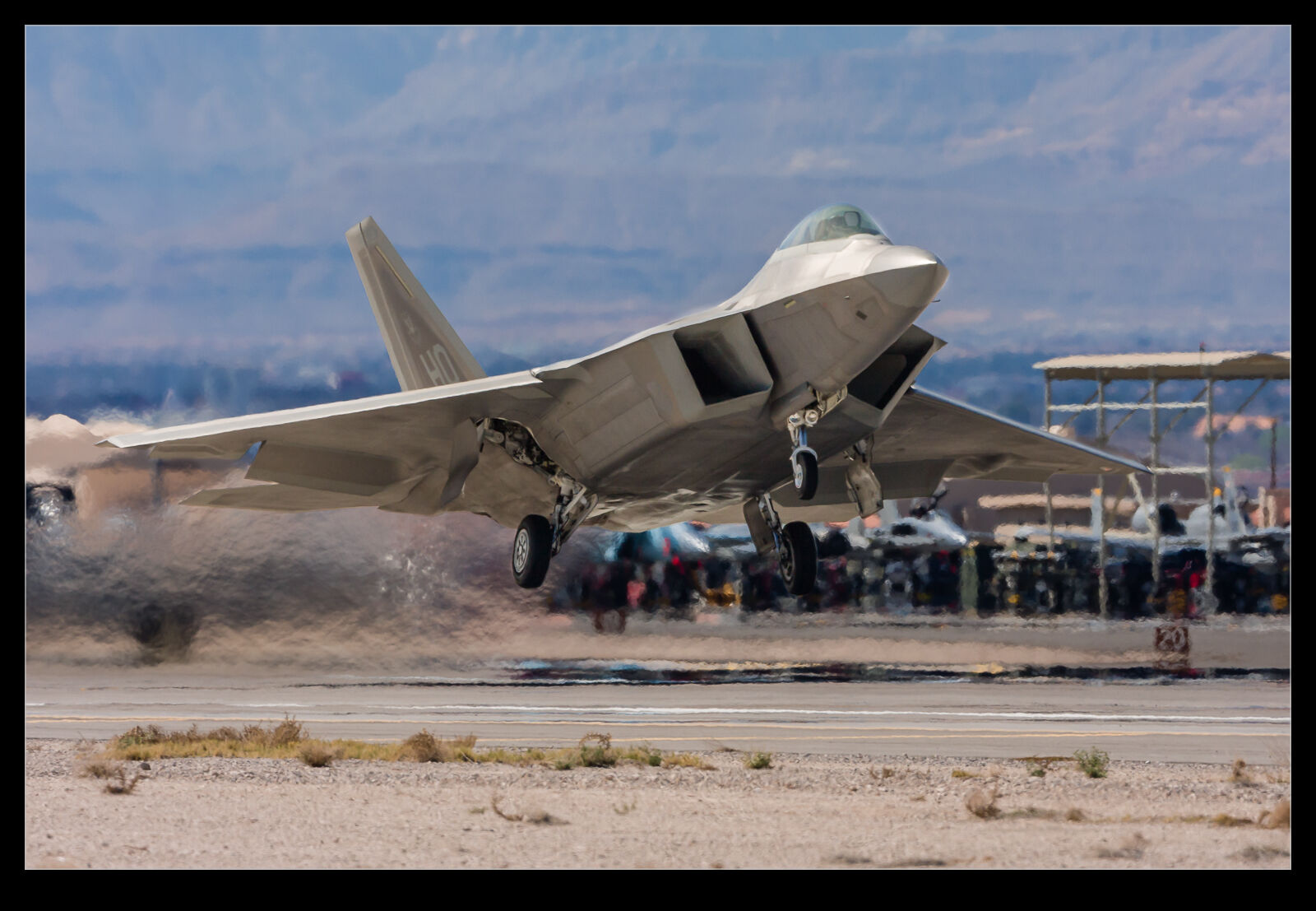
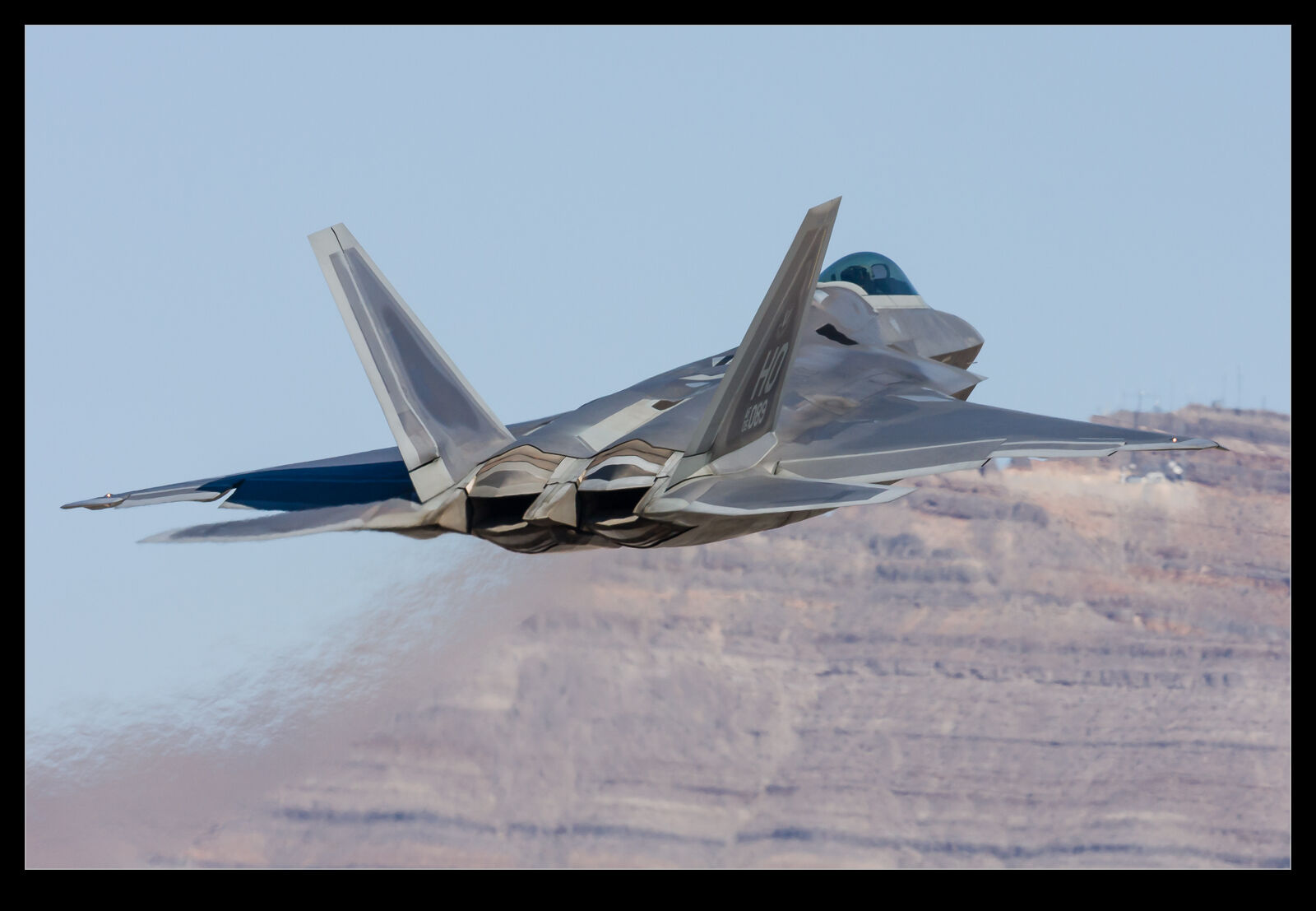
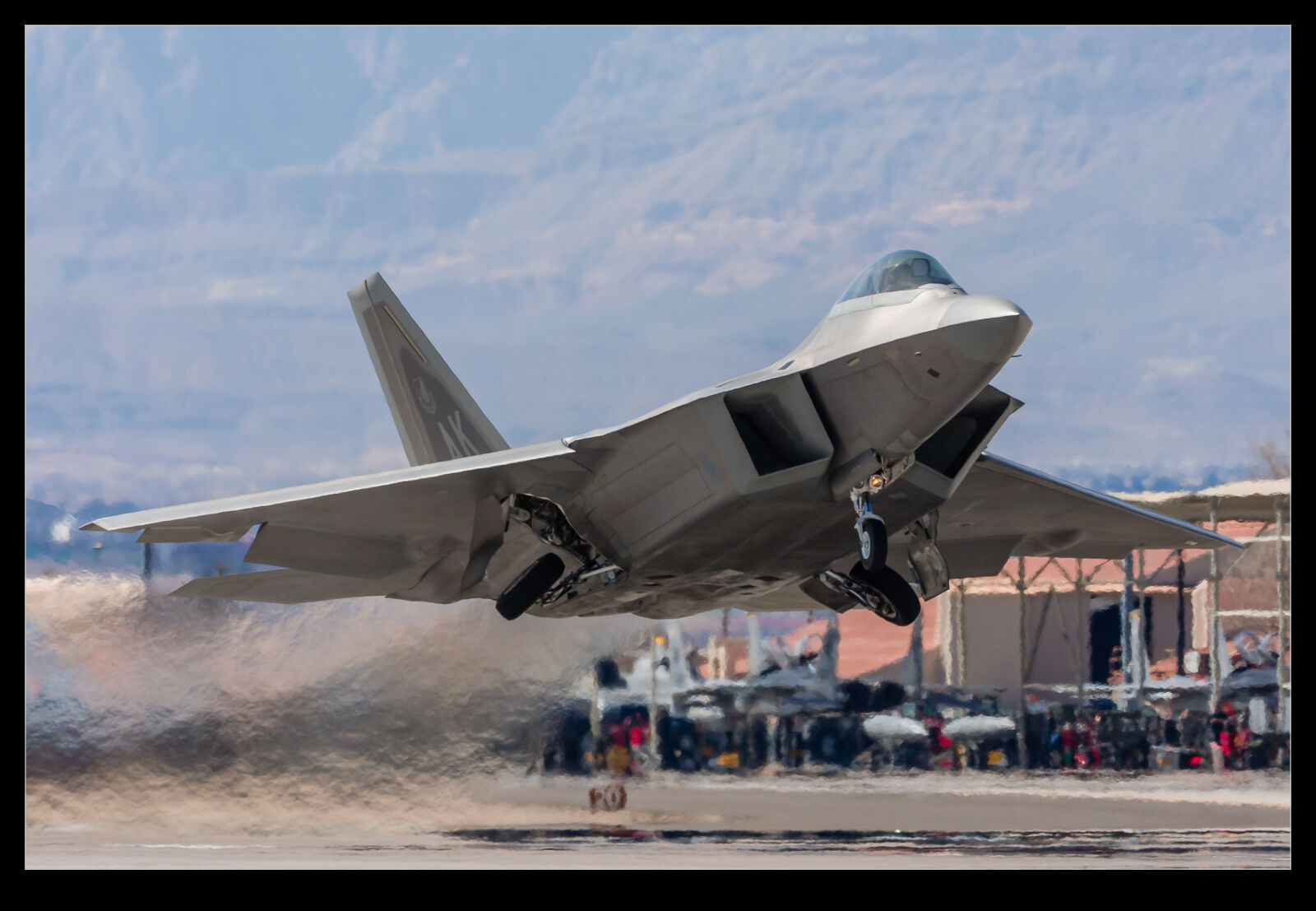
The F-15 was in a previous post as a favourite of mine and it was replaced in the primary air defence role by the F-22A Raptor. The Raptor is an impressive aircraft in many ways, but it is not something that appeals to me in the same way as the Eagle. However, it really has some novelty value given that it was produced in limited numbers. Being close to Raptors as they launch is so much fun. Just try not to balls it up!

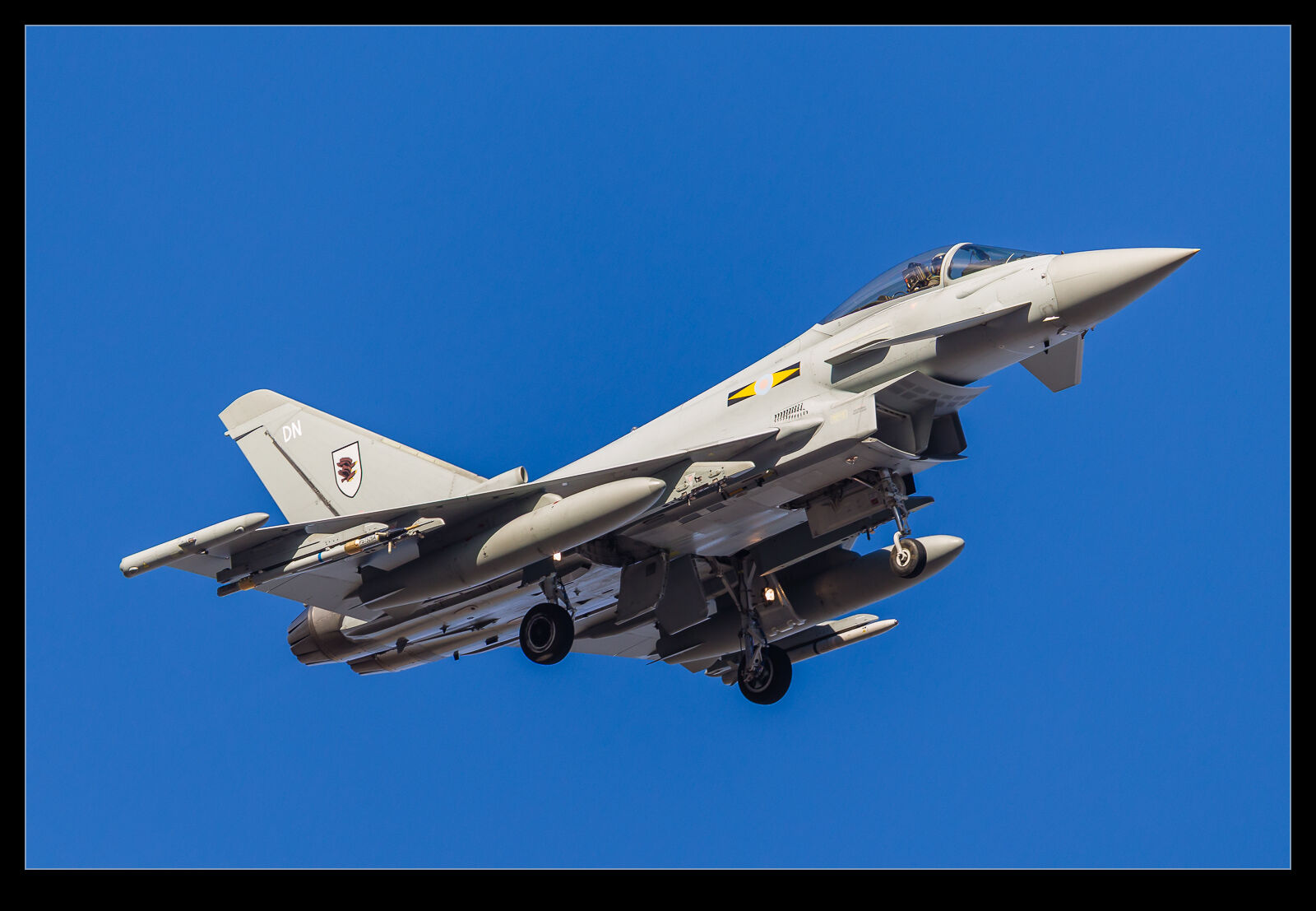
Typhoons With Squadron Markings

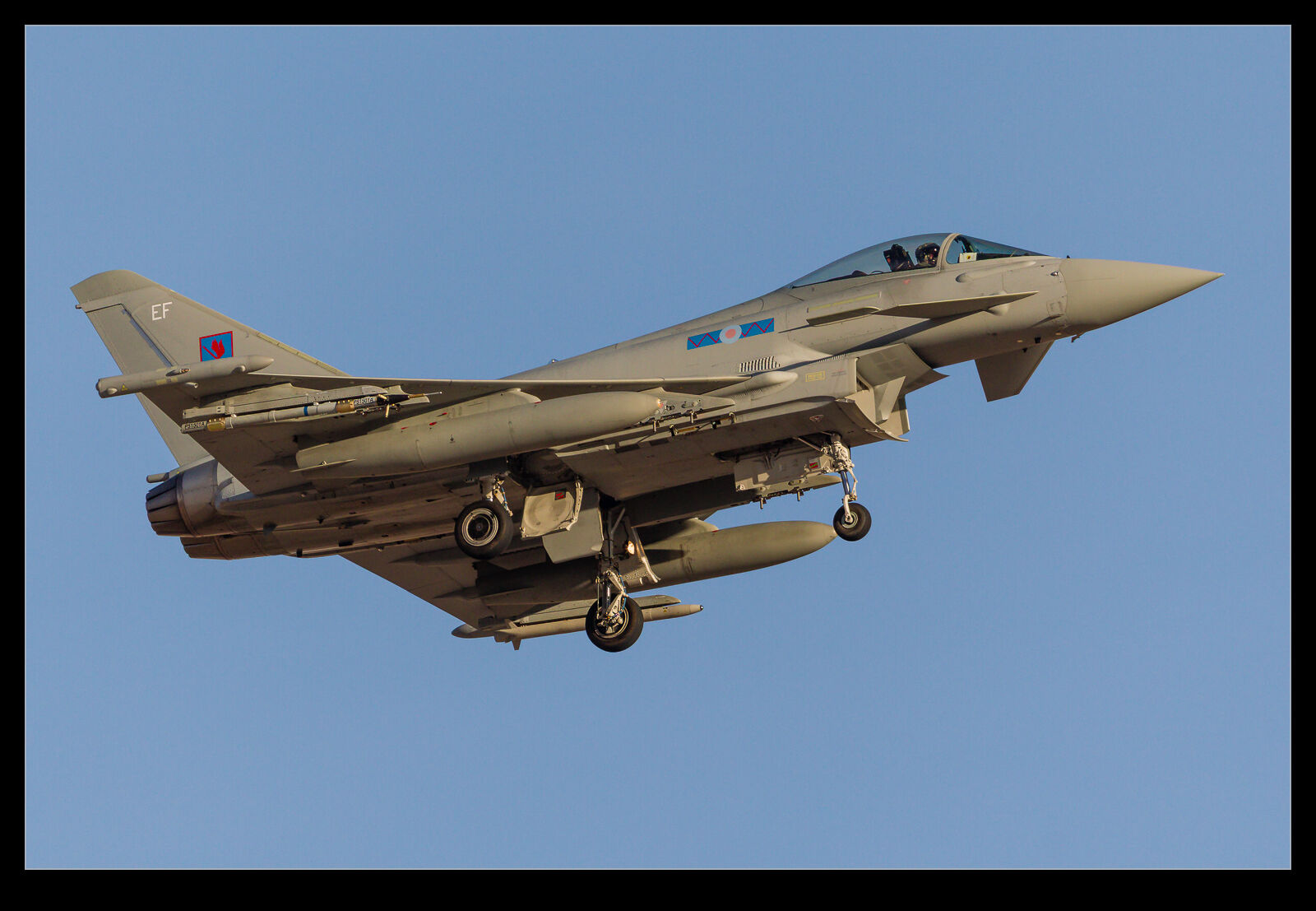
The first Red Flag of the year has traditionally been the one where the closest allies are invited with the RAF and RAAF being frequent attendees. The RAF brought a selection of Typhoons one year when I was there. The Typhoon fleet is not totally without squadron markings, but they can be a bit sparse. Fortunately, the jets that had been brought across had a few squadron markings on them. This spruces up the otherwise bland look of the grey paint finish.

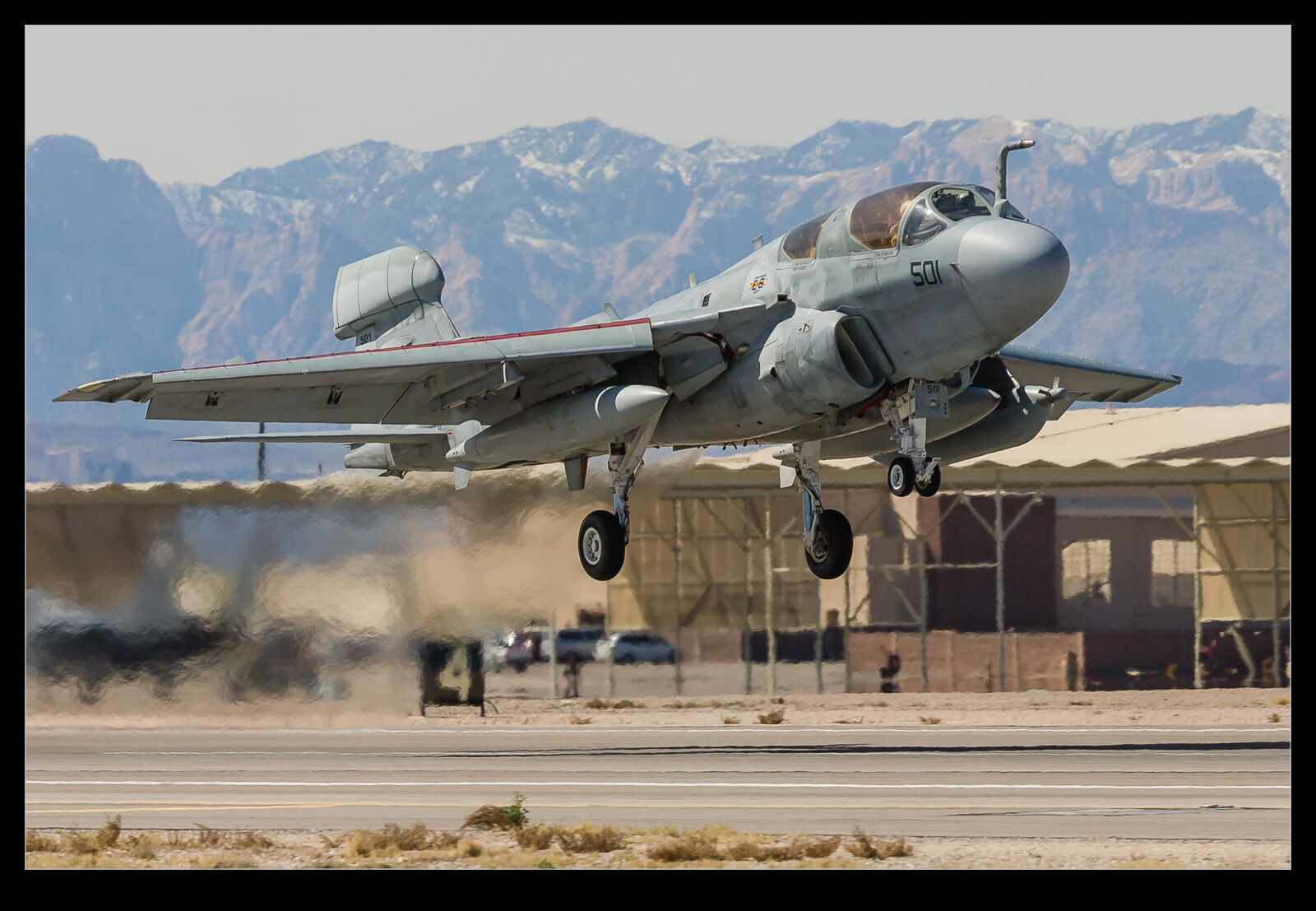
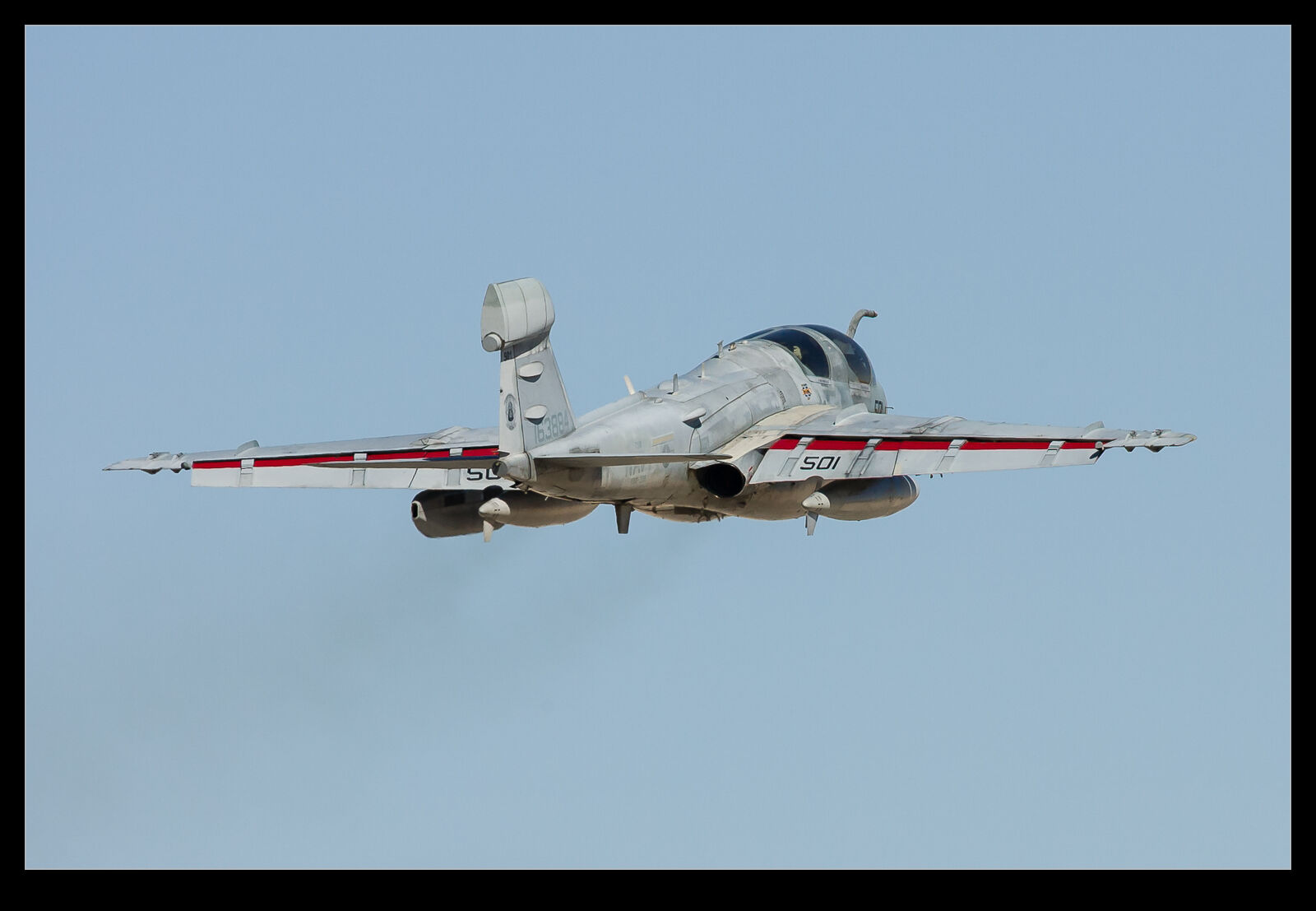
Miss the Prowler

When I was a kid, Airfix released a kit in 1:48 scale of the Grumman EA-6B Prowler. When it was released, I didn’t even know what it was. However, the unusual shape fascinated me and it continues to do so although they are now long retired and replaced by the EA-18G. I got to see them on a variety of occasions including not long before their retirement but this visit to Red Flag got me some close-up time with them departing.

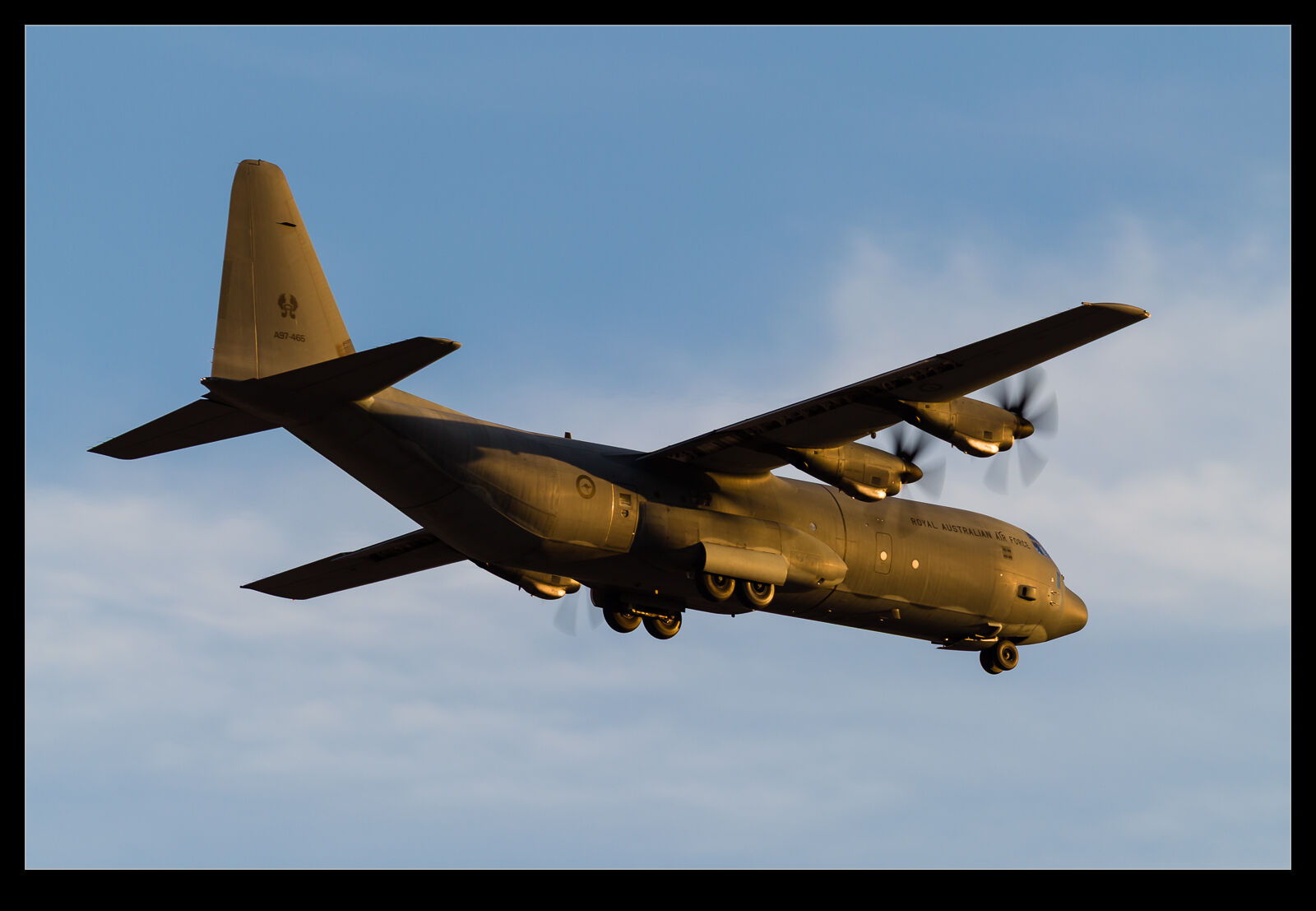
Aussie Herc in Great Light

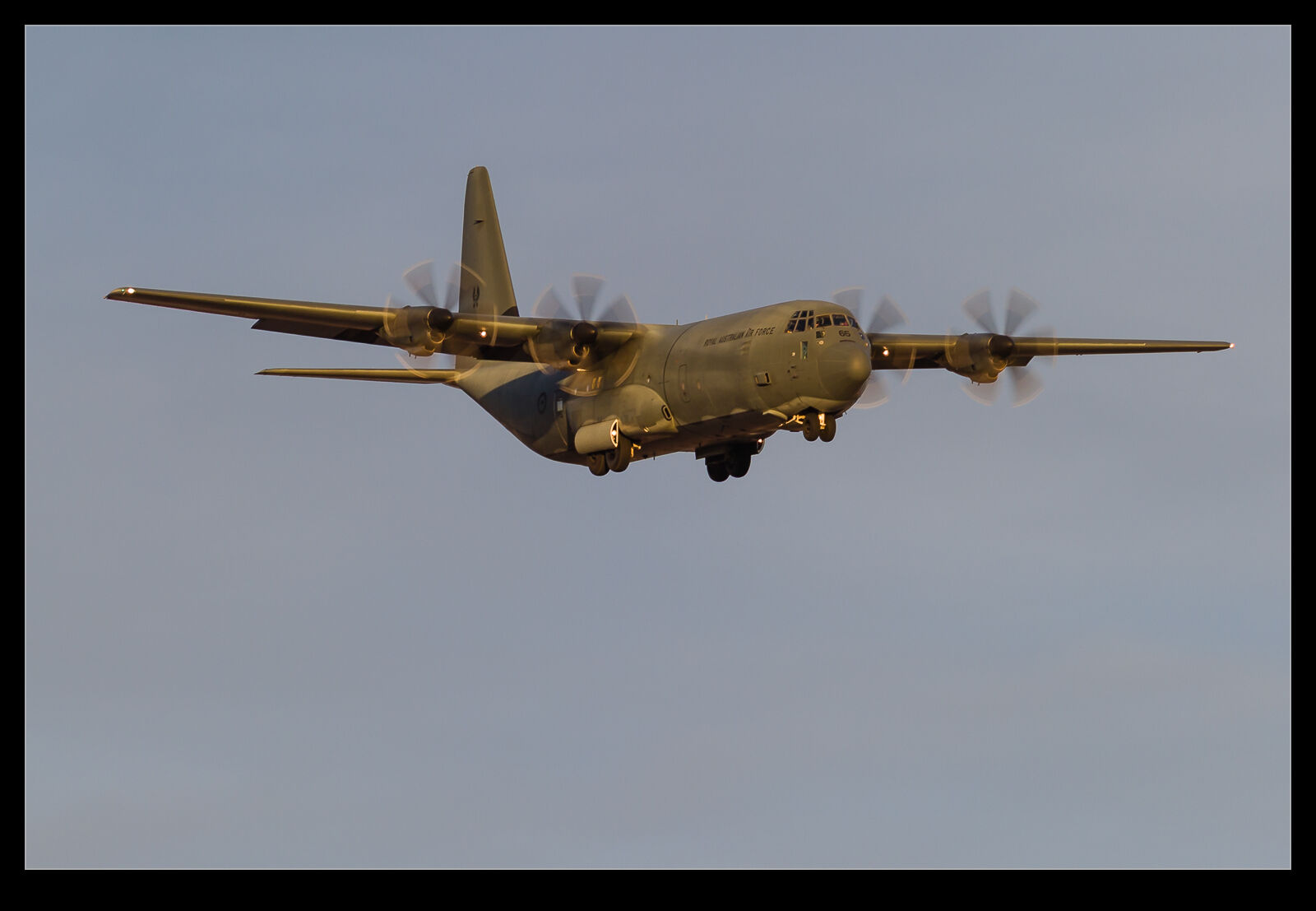
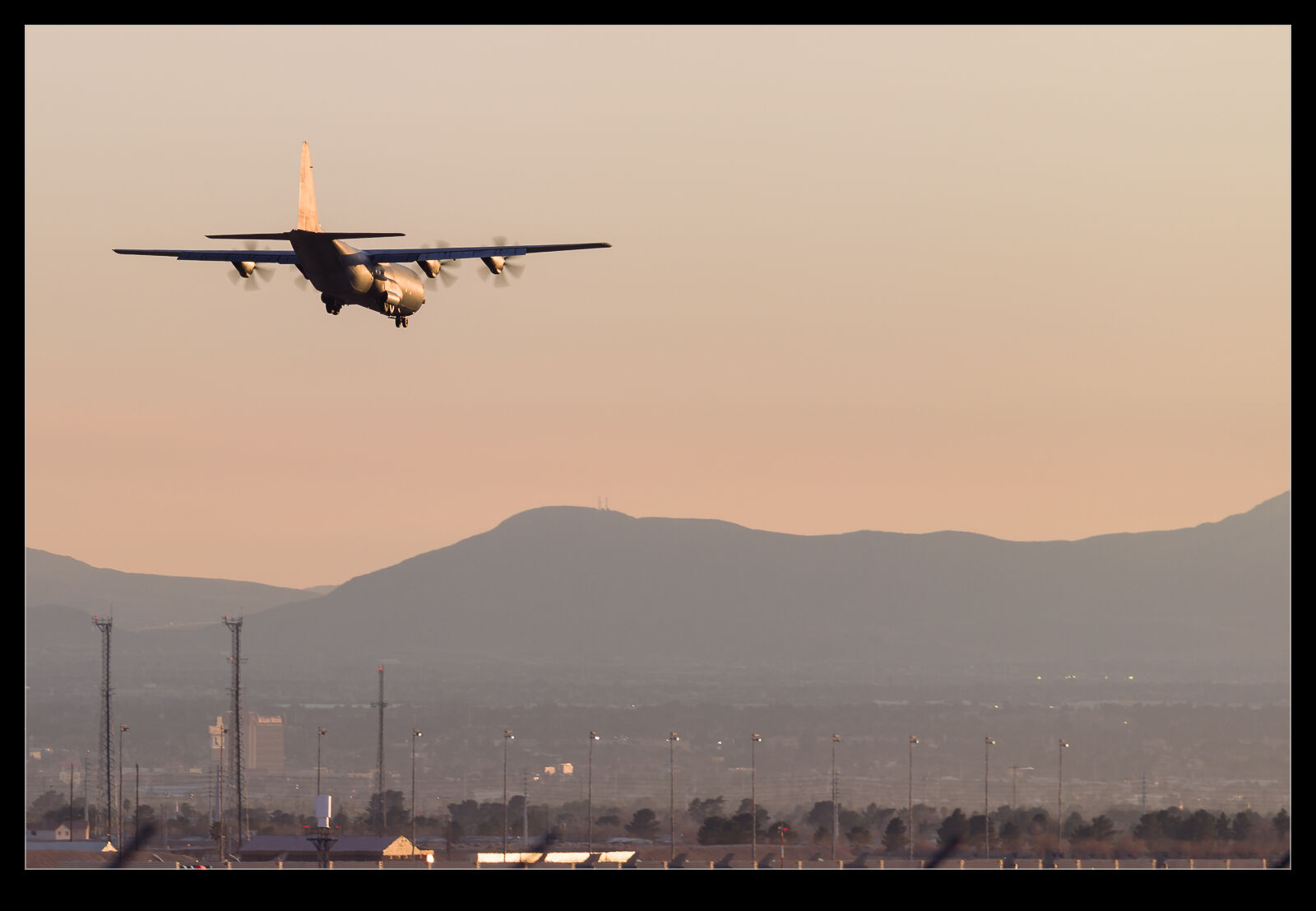
The last returns at the end of the Red Flag evolutions are usually the larger aircraft. The tankers and the AWACS will be near the end as might be the larger bombers if they are involved. You do also get some transport activity on the missions, and the Royal Australian Air Force had one of their Hercs included during one of my visits. I was off base for this return, and the light was beginning to get low which made for far better conditions than the high sun in the middle of the day. The Herc picked up the late light really nicely.

Everything About Eagles That I Love

As a kid, I was a big fan of the F-15 Eagle. It was the fighter of the 70s and 80s and its size and power were so impressive to me as a kid. It could also go faster than almost anything else (although it wouldn’t in real life). The big wing (causing the nickname flying tennis court) and the nodding inlets looked excellent. Aerobraking and the speedbrake are just a bonus. Being able to see them so close up when at Red Flag was a big treat for me. I am so glad that the EX model means that they will be around for a while yet. Here are some shots of the jets that, I assure you, resulted in a big grin on my face at the time.

This is an Old Hornet!

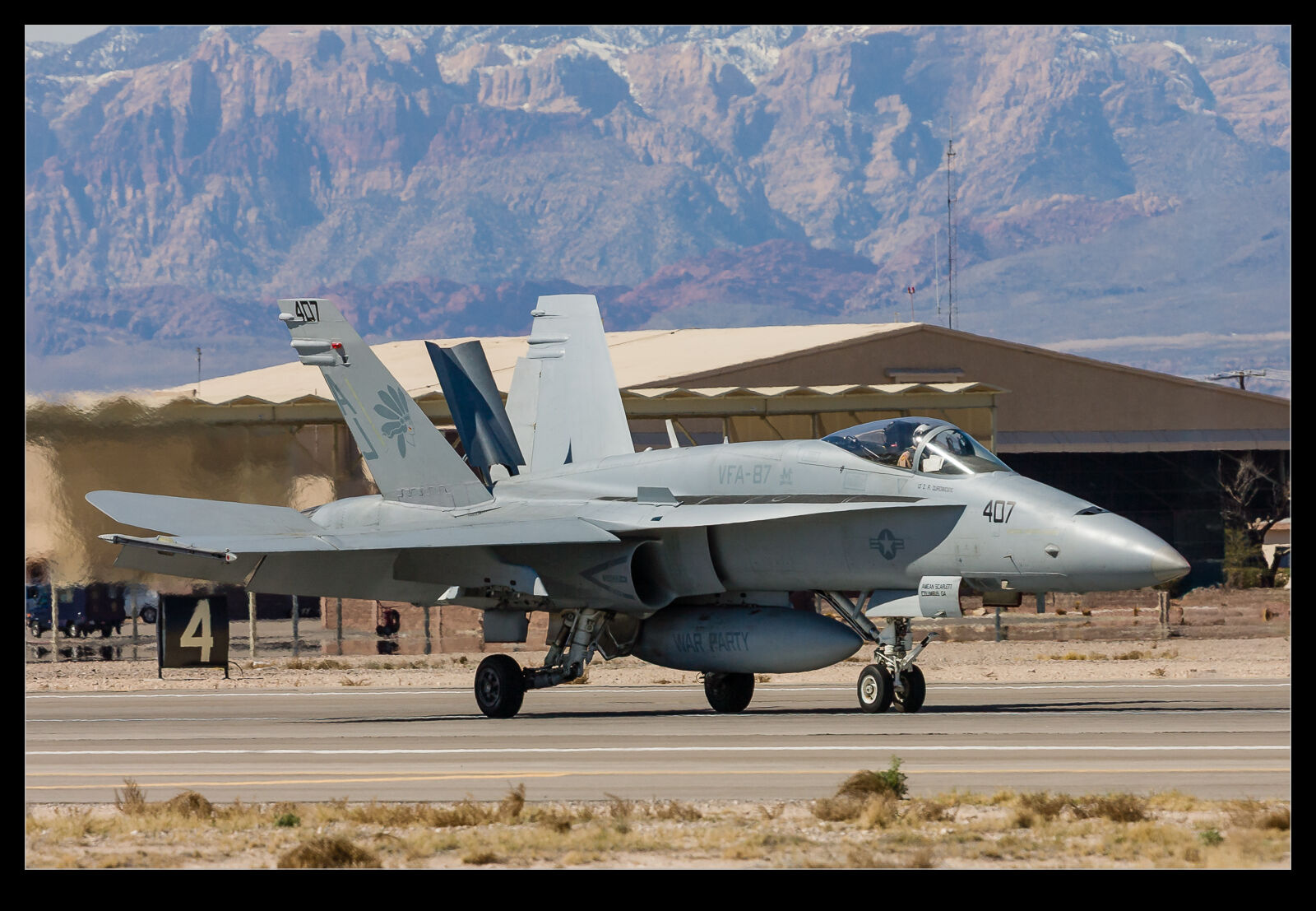
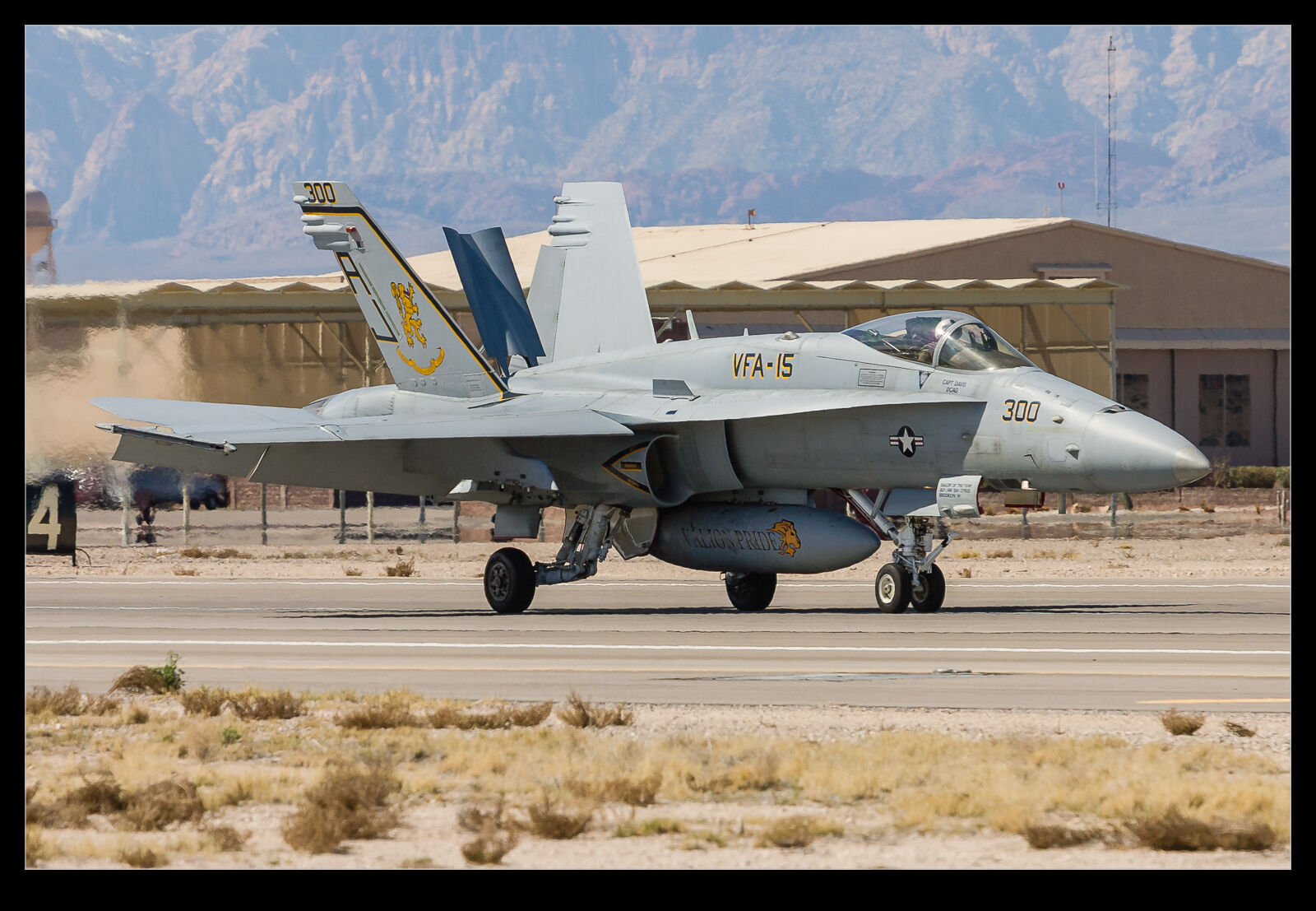
This US Navy Hornet was rolling out at Nellis AFB during a Red Flag exercise. Looking at it now, it doesn’t have the antenna locations that the C model had so this must be an old A model. The US Navy has now retired all of its original Hornets (although the Marines haven’t relinquished all of theirs yet). However, when it took this, I think that the Navy was mainly using C models so this must have been on its last legs. I do love the look with the speedbrake deployed. There was a Charlie as well so I shall include that for fun.

Look at the Tailplane on the Bone

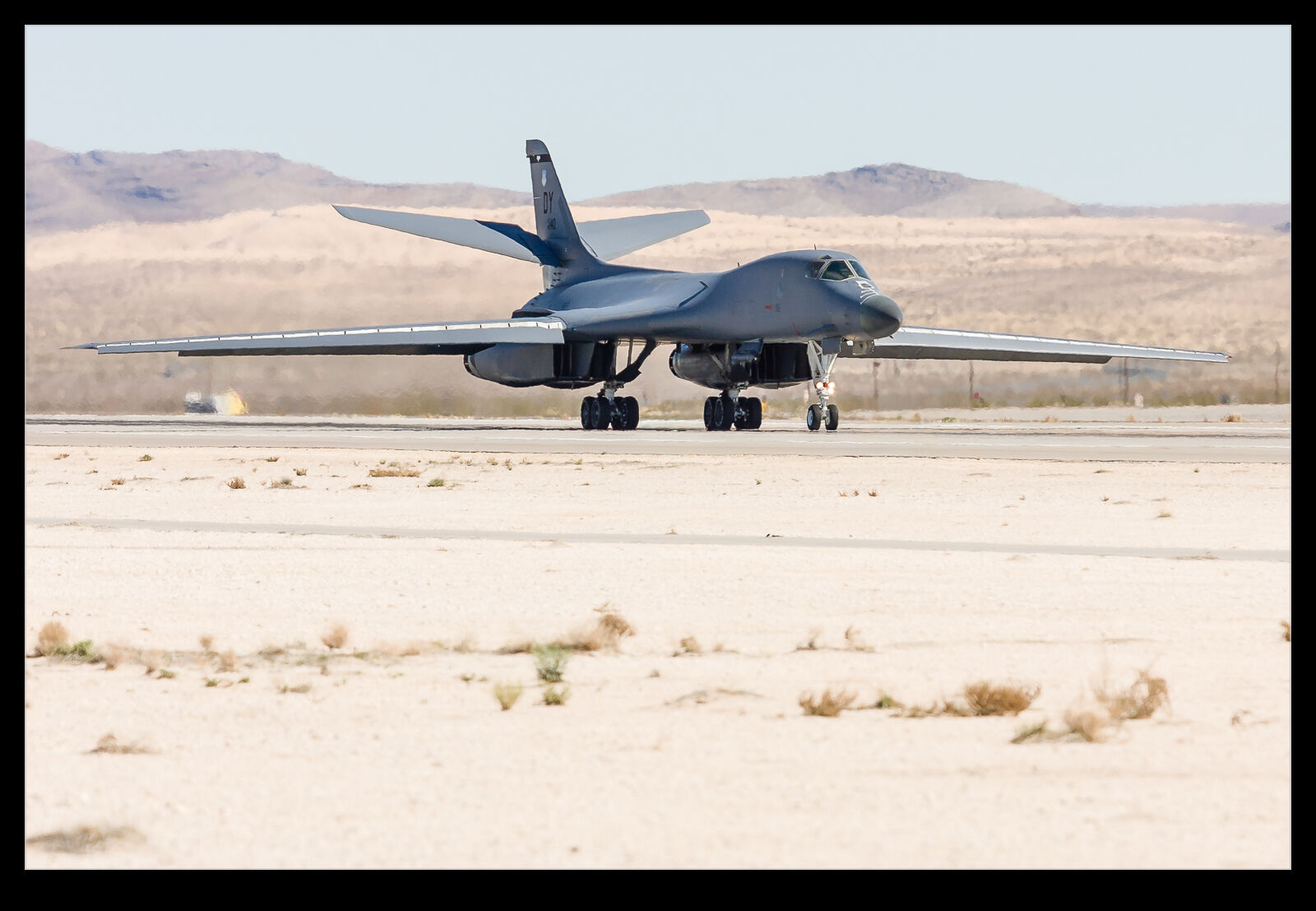
I have been looking back through a variety of shots from old visits to Red Flag exercises. Therefore, there is going to be a steady steam of Red Flag photos in the near future. Sorry if that gets a bit repetitive but I assure you that they will be different types on the whole. I start with the B-1B Lancer. This example was taxiing along the runway as it backtracked for departure. The pre-take off routine includes exercising the full range of travel for the tailplane and it really can move a long way. This shot showed it in the full nose up position.

Flow Viz on a Hornet

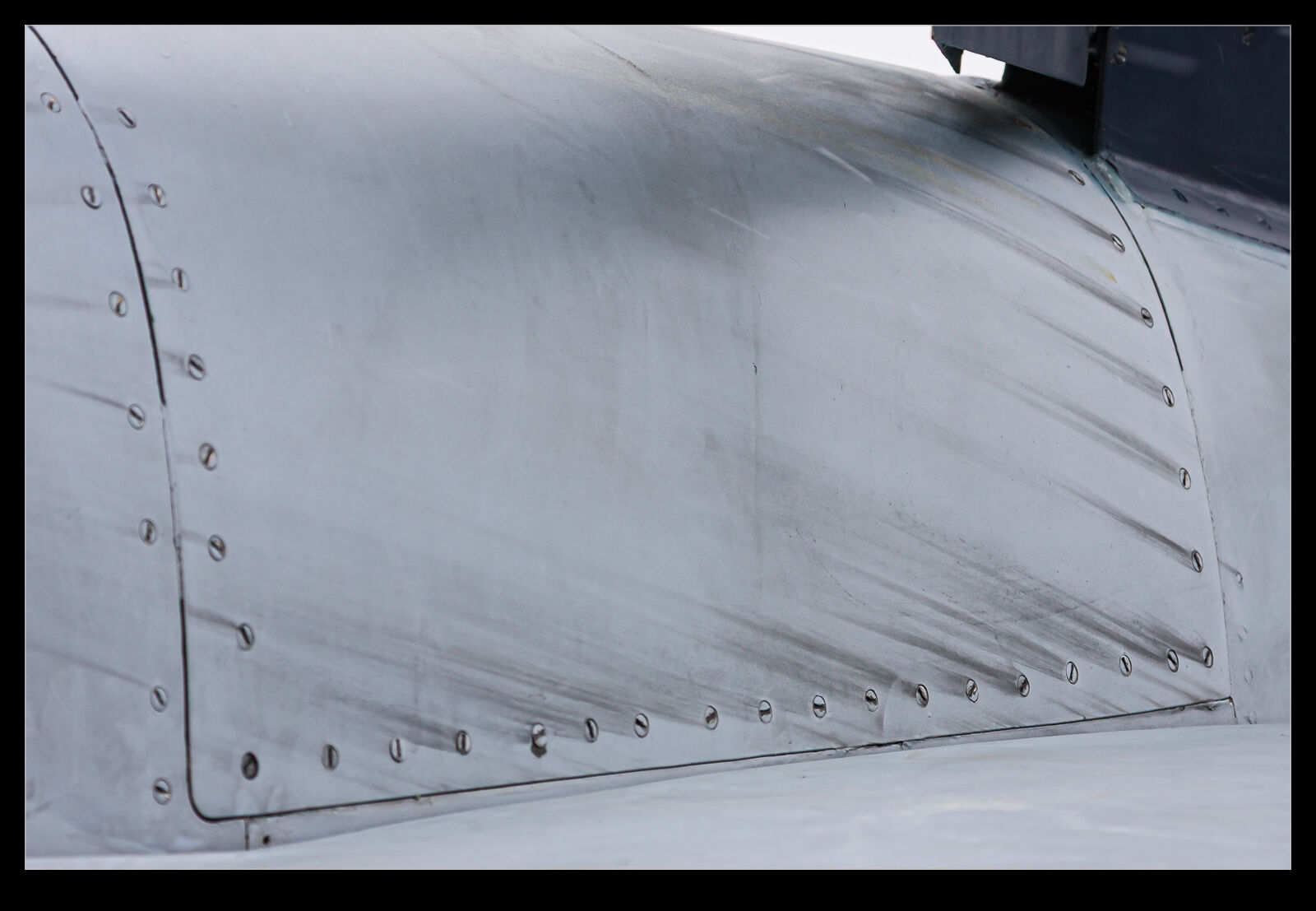
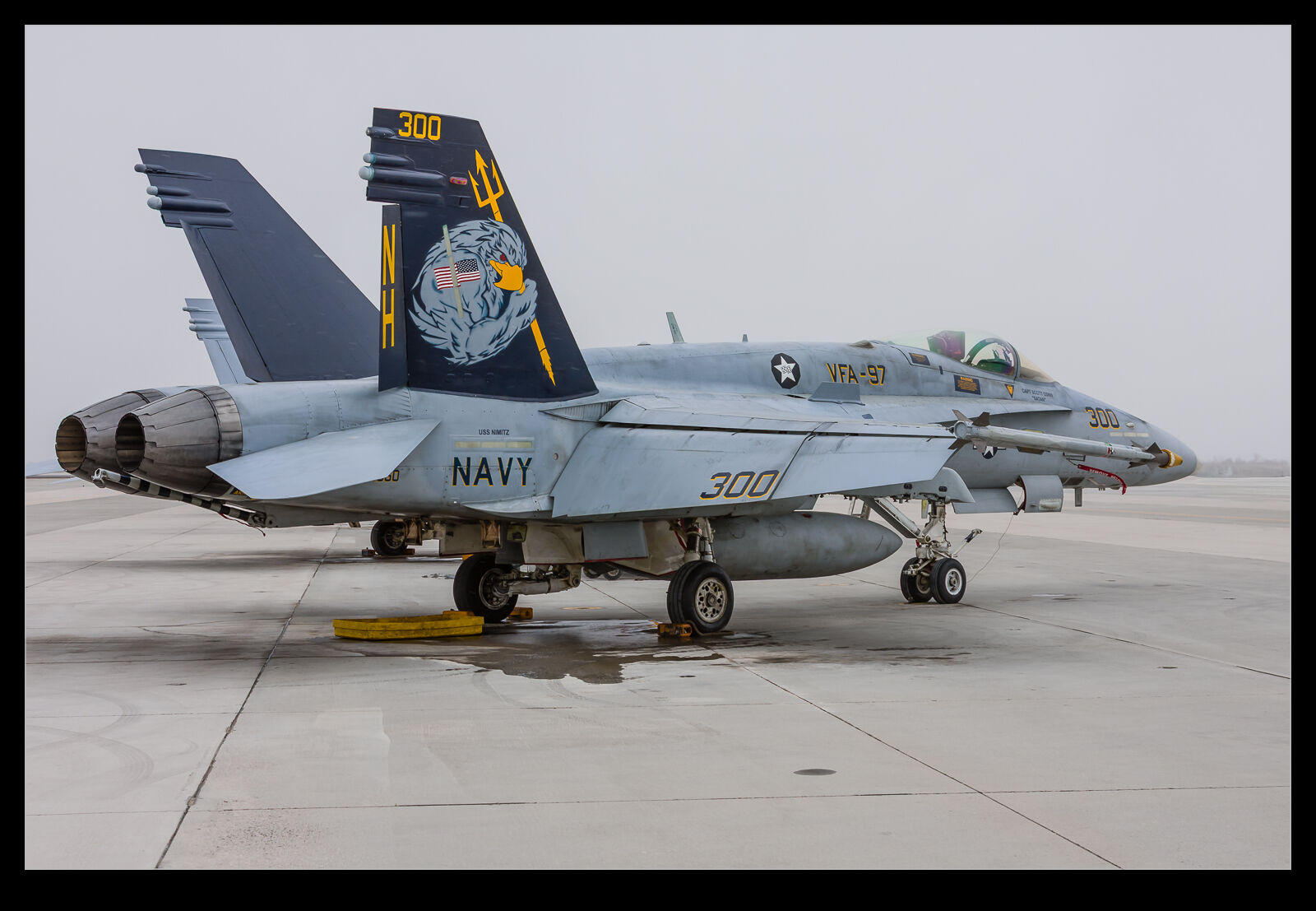
A long time ago (but not in a galaxy far, far away), I had a visit to the naval air station at Fallon. The weather was not ideal for the visit, and we had a bit of a disappointing result when it came to flying jets. I did spend some time on the ramp, though. A Super Hornet was marked up in squadron colours, and this was what initially caught my attention. However, as I looked at the jet more closely, I was fascinated by the dirt streaks emanating from the fasteners on the rear fuselage panels. These marks clearly showed the path the flow takes across this part of the airframe.