Tag Archives: jet

Reunited With DA2

In September 1990, I started work at what was then British Aerospace at Warton in Lancashire. I was part of the aerodynamics department so couldn’t have been happier fresh out of an aeronautical engineering degree. The walk from our office to the staff canteen could be done along the road but, why do that when you can cut through the hangars. 2 Hangar was the easiest route and also happened to be the location where the front fuselages for the Eurofighter were being assembled.

The programme went through a reworking as the German government considered its continued role post the end of the Cold War, but it did end up continuing even if one of the prototypes was deleted and the others got renamed. The first two planes were P01 and P02 which were German and British respectively. They became DA1 and DA2. DA2 made its first flight while I was away on a project, but I got to see it fly shortly after I returned.

I then got to see it fly a lot over the coming years. Initially it was in a grey paint scheme but, when it had the pressure mapping sensors fitted, it was painted black overall. I recall there was a justification for this, but I always felt it was because the initial Rafale had been painted black and looked really cool.

Military aircraft prototypes don’t usually have a long life. Usually, the development programme means that they are quite different from the final article and so not a useful platform for continued development. As instrumented versions of the production aircraft come online, the prototypes are superfluous. That was the case for DA2, and it found its way into the RAF Museum’s collection at Hendon. It is suspended from the roof of one of the hangars. This makes for a dynamic pose rather than just standing on its gear. However, it is a bit more limiting from getting angles on it.

Thankfully, the museum has a couple of balconies at that end of the hangar that you can access so you can try a variety of different positions to get a shot. There is always a problem with a black painted aircraft when photographing it indoors. The light is a bit limited and the backgrounds are quite bright compared to the subject. Definitely some challenges with taking the images and then processing them to show what you want without making it look wrong. Then again, that’s part of the fun, I guess. It was fun being reunited with a plane that I haven’t seen for a very long time, and I am glad that it has found a home that means many people can get to enjoy it too.

A Spey with a Burner Grafted On

British defence projects have a bit of a reputation for trying something that will boost domestic content but that compromises overall performance. In fact, some civil aviation projects would probably fit that description. One such project was the procurement of the F-4 Phantom. To boost UK content, the J-79 engine that was used in all other variants was replaced by the Rolls Royce Spey. This engine made it into various civil and military aircraft over the years. For the Phantom, it needed an afterburner.

An example of the engine is on display at the RAF Museum in Hendon. I was first interested by the patterns of the flameholders in the afterburner so took some shots looking straight up the jet pipe. Then I moved around to the side. It is so easy to see where the original engine ends and where the added afterburner starts. It does not look like an integrated design whatsoever. It worked well enough although the redesign of the fuselage to accommodate it resulted in significantly increased drag. Top speed was reduced as was climb performance. One upside was that the Spey was a turbofan so, in the original ground attack role the Phantom had in the RAF, it actually improved low level fuel burn. It probably wasn’t so welcome once they moved across to the air defence role, though.

Cathay Pacific A350-1000

If you are a regular reader, you will know I love an A350, you will also know I like late day light on planes. How about the combination of the light and the plane. In this case, it is Cathay Pacific – an airline that has a livery that works quite well with a warmer lighting set up. In this case it is an A350-1000 which has pleasing proportions although the -900 is not a bad looking jet either. I was happy to get this one.

G600 Has the Usual Gulfstream Flaps

This G600 was coming into land at Farnborough while I was visiting. The conditions were far from ideal for photographing anything flying but I am not going to pass one up if the chance presents itself. I was close to the approach path so had an almost head on position. Not ideal but it would be fine. However, what struck me as I looked at the images afterwards was the flaps. Gulfstream has never impressed me with their wing designs. They always seem to have just gone with a larger wing to achieve whatever performance was needed and the flaps on all of their jets seem to be barn doors rather than some advanced design. It seems that the current generation of jets is no different. I guess it doesn’t matter enough to their sales so why bother?

The Ramp Action at Barcelona

When I made a trip to Spain for work, my route took me through Barcelona. Not a city I have visited before, but I do plan to return. I hadn’t brought a main camera with me since it was a brief work trip, and I was travelling light but I did take my old M6 along with me. Going to a new location can mean some different airlines. However, these days the airlines across Europe are usually the same ones. Ryanair is everywhere of course. There were some converted freighters sitting on the opposite side of the airfield from my terminal. I grabbed a few shots in the brief time I had which wasn’t long given that the schedule was pretty tight.

Virgin Atlantic Names of Planes

Since they first started flying, Virgin Atlantic has been naming their planes with slightly quirky titles. Many airlines have names on their planes, but they are more often something like cities, rivers, castles etc. Features of the country that the airline is based in. Virgin has a different approach, and they do like a good amount of pun activity in their names. This can also be reflected in the registration of the aircraft with the letter combination sometimes tied to the name.

I have seen this naming over the years and never really given it much thought. However, on a visit to Heathrow a while back that was aiming for something specific, I naturally got to see a bunch of Virgin jets arriving. I decided to get a few close-up shots of the names at the front and then decided to check out what other names I had come across. This is not a comprehensive list of the different planes, nor do I plan on making it a goal to get them all, but it is a fun look at some of the names that they have gone with.

Looking Back on Bones at Nellis

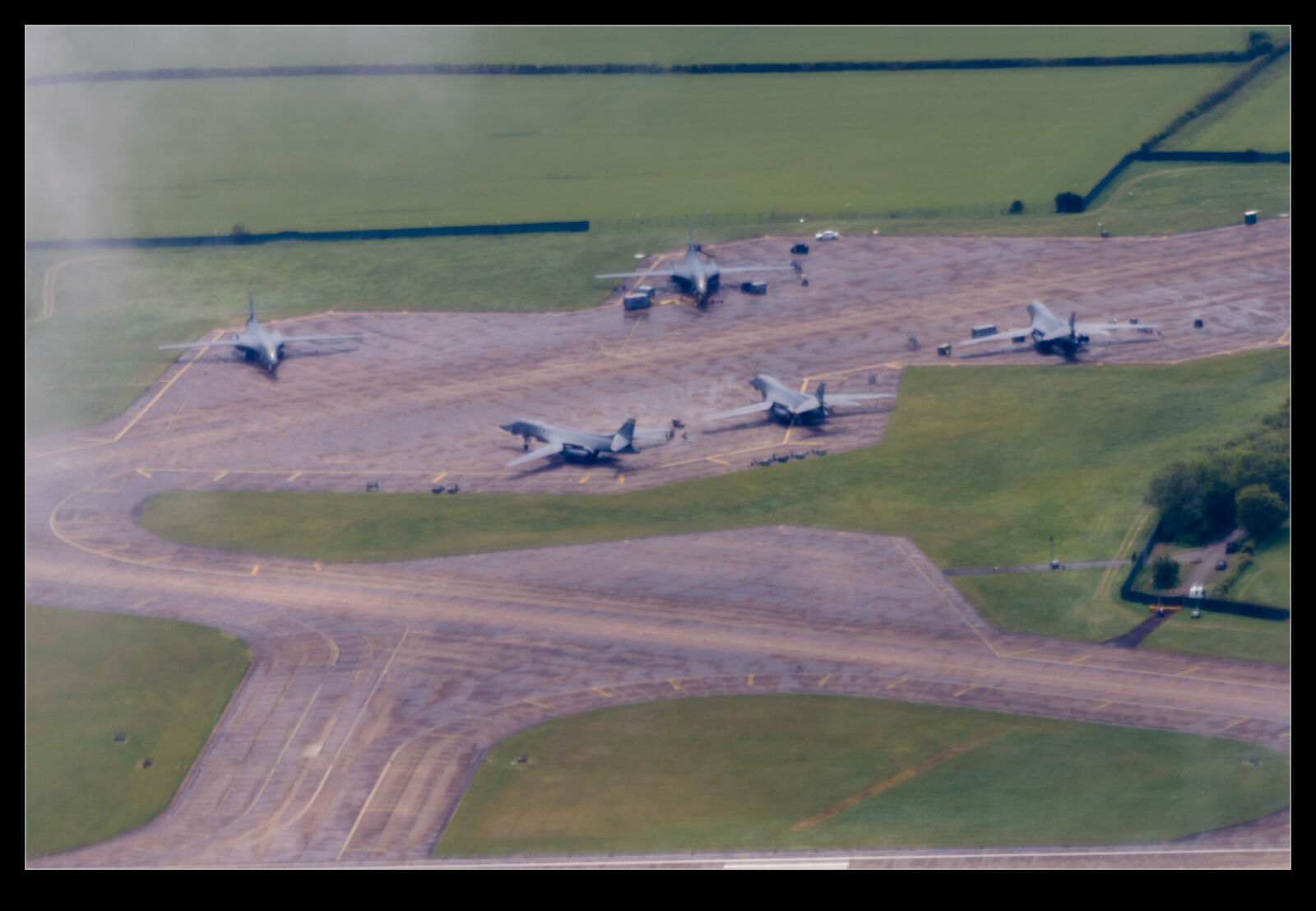
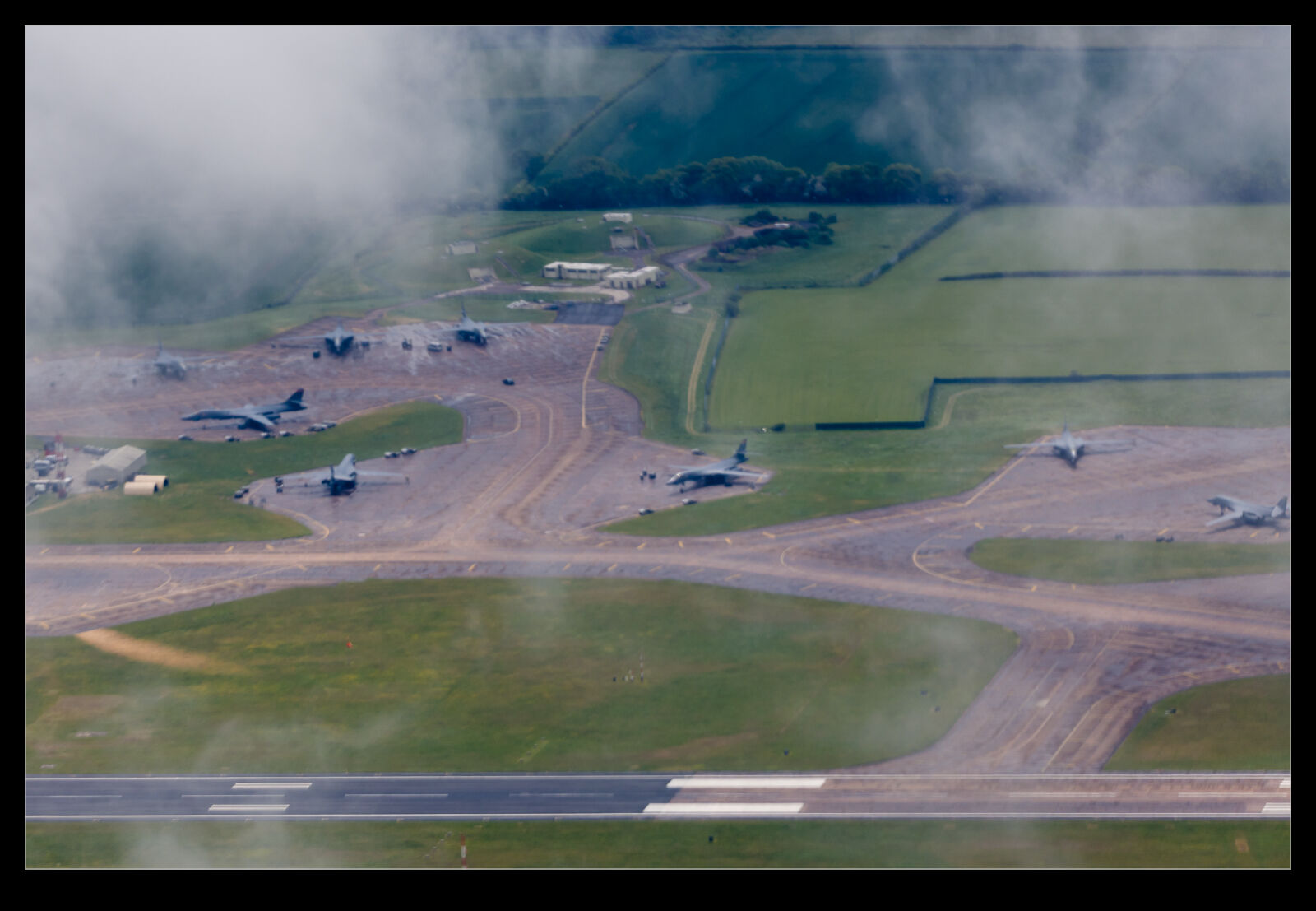
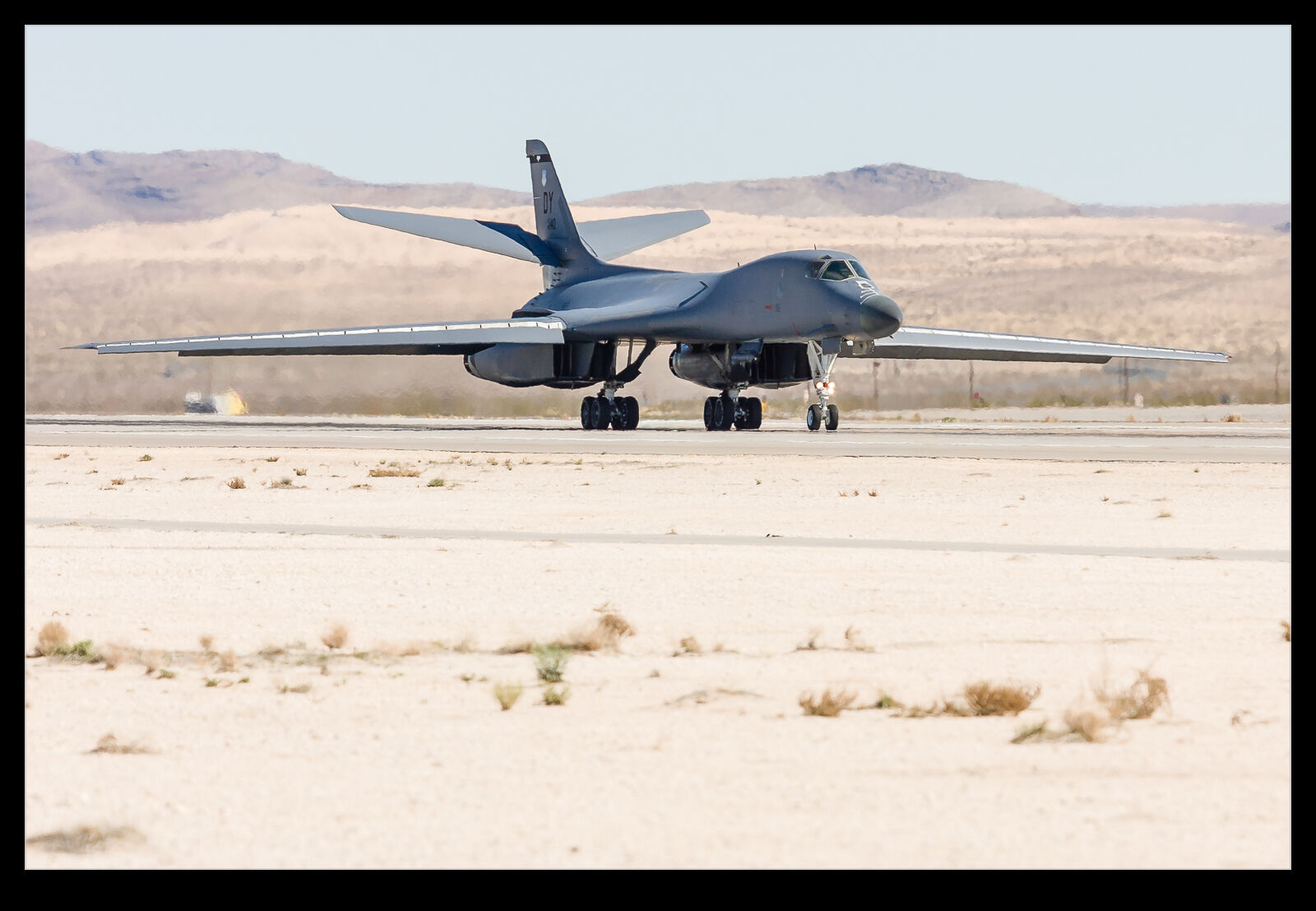
I was digging through the catalogue recently. Every once in a while, I will just randomly move the slider in grid view and see what pops up. Having been taking images for a long time, there are often things that I have completely forgotten about that show up in the collection. While doing this, I came across some shots of B-1Bs launching out of Nellis when I was between the runways for a Red Flag media day. I hadn’t really done much with these images. They were a touched underexposed and I had not processed most of them.

I ended up working through a few of them as they reminded me of the amazing experience being alongside a runway when four F101 engines in full burner come by. It really does get your attention. The B-1 fleet has been shrinking in recent years, and the plan is that the remaining airframes will be retired when the B-21 fleet comes online. It won’t be too long before this sight is confined to history.

High Speed Intake Model

The FAST museum at Farnborough has an extensive collection of wind tunnel models – both low and high speed. One that caught my eye was one that an old colleague of mine had worked on. It was a high-speed intake test model for what would become the Typhoon. You might be familiar with whole airframe wind tunnel models that are used to assess the aerodynamic characteristics of a plane. However, there are many different types of wind tunnel testing that get carried out. Intake testing is one of them.

This model served a number of purposes. There is the more obvious one which is assessing the quality of air coming down in the inlets as the aircraft changes angles of pitch and sideslip. A rake of probes will be set where the front of the engine would be located and then the test programme can assess how distorted the flow is as the aircraft manoeuvres. This is then compared to test data on what the engine can accept before it starts to have problems.

The Typhoon has the two engine inlets side by side. This can result in a problem with one engine affecting the other one. If an engine surges, a pressure wave will come back up in the inlet, and this can then affect the flow into the other engine. This surge interaction needed to be investigated prior to the plane flying.

One less obvious test programme related to the testing of air data system inputs. Fly by wire aircraft are very dependent on the quality of the measurements of the aircraft’s pitch, roll and sideslip. As the aircraft changes its angles, the readings at the location of the probes need to be calibrated. Flight testing will refine this information, but you need to have initial data for the first flights before calibration can be demonstrated. The intake model is the one that was used to verify the flow field around these sensors. I’ve included a shot of the sensors on one of the development aircraft to show where they are.

This model was very important in the preparation of the Typhoon for flight test. Great to see the model has been preserved.

United Eco Liveries

While I was shooting from a distance, I did get a shot of a United 767 heading into Heathrow. This jet is painted in the sustainable aviation fuel livery. I reminded me of a 737 I had seen from them in an Eco livery. Add to that there is the Max 10 that was involved in the fuel trials with NASA and I have a few of the United special liveries. Here are those planes.

Thinking Back to LAX and Old Favourites

I’m not sure what it was that got me to these pictures. I was working on something other project and then found myself looking at some shots from a visit to LAX a long time ago. Two planes jumped out at me from that day. One was a Lufthansa A340-300 and the other was a British Airways 747-400. Both were taking off later in the day and the light was very nice. I decided both deserved a re-edit.

The backgrounds for both jets were a little busy and so I decided to try something similar to my processing for airborne shots but that I hadn’t done much on the ground. I used the smart masking tools to select the aircraft. Then I inverted the mask to select the background. This allowed me to take the lighting down for the background and also make things a little cooler with the white balance. Then I could warm up the plane a little more and brighten it up. This helps to separate the aircraft from the background and make it more the focus of the shots.

The BA fleet of 747s are long gone now and passenger 747s are definitely a rarity. The Lufthansa A340s are still operating but only because of the delays to new aircraft deliveries. It won’t be too long before they are heading to the desert. This will be a nice reminder of the fun stuff I used to be able to photograph.