As is often the case, I was looking for something when I came across something totally different and that took me down a rabbit hole. In this case, I found myself looking through some old shots of the USAF Thunderbirds. Particularly when living in the Midwest, I used to see them display pretty frequently. You get a bit blasé about it after a while. Anyway, I was skimming through shots to see whether I had any crossing shots that I liked. I was pleasantly surprised to find a few of them that came out pretty well. Modern cameras allow rapid frame rates which help with crossing shots but apparently, I could still get it right occasionally when the tech wasn’t quite so advanced. The weather and lighting might vary a bit but here are some of the ones I liked most.
Tag Archives: aeroplane
Prop Effects When Using a Phone
Rolling shutter is a phenomenon that has become very apparent with the widespread adoption of digital sensors in cameras. The way in which a sensor scans across its surface means that relative movement can result in the position of objects being different at the end of the scan than the beginning. DSLRs used a digital sensor but a mechanical shutter so weren’t terribly susceptible to this (except when in video mode) but phones and video camera like GoPros have been.
Usually, if I am photographing aircraft with props, I am using my main cameras. (While I now exclusively use electronic shutter on my bodies, the read speed of the sensor is sufficiently high that the rolling shutter effects are barely visible. However, I rode my bike to Popham one Saturday and decided to grab a few pictures with my phone while I was there. The resulting shots have props that are clearly suffering badly from rolling shutter. It is not something I normally get so I actually found it rather funny. That wouldn’t be the case if I had desperately wanted the shot.
Want a Ride in a Spitfire
Two seat Spitfires seem to be ten a penny these days. The ability to make some decent money providing rides for people is a good way of supporting more airframes which isn’t a bad thing, even if they don’t look quite as elegant as the original design. There was one at Compton Abbas on the day of our visit that was doing a pretty good business taking people up for a ride. A blast down to the south coast and back seemed to be the norm.
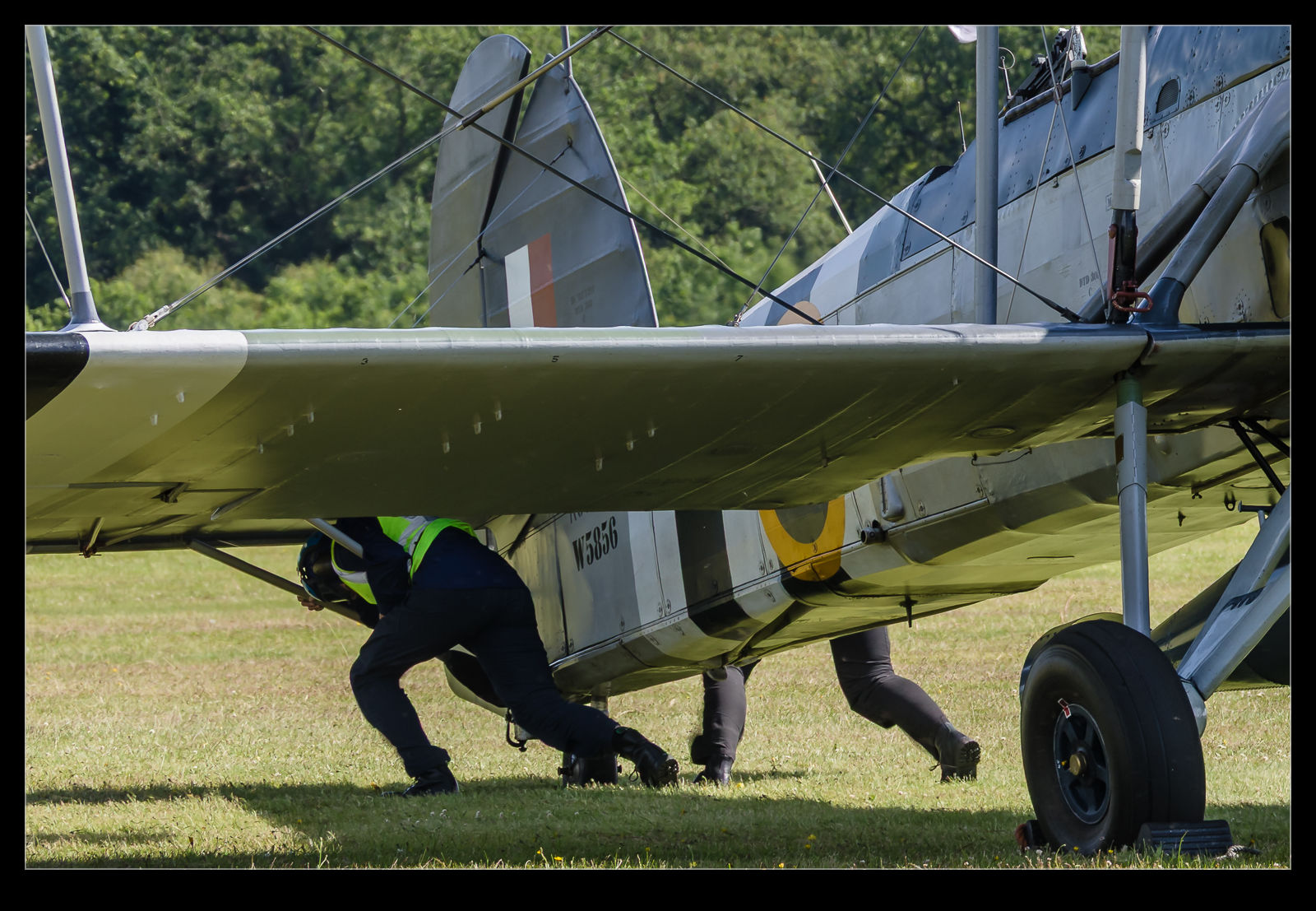
You had plenty of notice when it was going up. The process of strapping in the passenger was not speedy and, while the pilot might not yet have come out to pre-flight, the activity loading up let you know that a flight was not far off.
Conditions were pretty blowy which, given the location on a hilltop, didn’t seem so surprising. I wondered whether this would limit flying but it didn’t seem to be much of an issue. Besides, the wind was quite close to being down the runway so not much of a challenge. When firing up the Merlin, the crowds outside the restaurant were treated to a blast of wind from the prop. A few hats would be dislodged but no one seemed to mind!
There were quite a few flights during the course of the time that we were there. The return at the end of each flight included a high-level flyby but no beating up the field I’m afraid. That would have been a nice way to round things off but maybe that would not go down well with either the CAA or the neighbours.
Turbulent Times
If you are only used to airliners, light aircraft can look pretty flimsy. They are well designed, but they are small and a little flexible looking. They might be more than up to the task but, to a first timer, they might have the impression of being a bit risky. Then you can look at a Druine Turbulent. That takes the idea of simple to a new level. It is a home-built design that first flew in 1951. Small, light, powered by a small engine and with an open cockpit, it seems like even fitting in it might be a bit snug.
One was parked on the field at Popham one Sunday when we swung by to get some lunch. In due course, the owner came back to the plane and headed off. He had to hand swing the prop himself, so the aircraft was chocked while he started it up. The chocks were then stowed in a panel behind the seat and he climbed in and taxied out. Take off was not startling but still reasonably swift and he climbed out en route. What a cool little plane. I wonder whether it is a cost-effective way of flying.
Generations of Provost
RAF Cosford provided a perfect venue to have a demo from an old RAF Jet Provost T5. As the home of part of the RAF Museum collection, they have the original Jet Provost which is currently stored at Cosford outside the museum building. Looking at this airframe on its stalky undercarriage, you can see that not a lot was changed when adding the jet engine from the original Percival Provost. I saw one of these flying at Old Warden last year.
The later versions of the JP had a more optimised approach. The airframe was tweaked and the undercarriage was shorted considerably. With the need for prop clearance, there was no need for long undercarriage and, I imagine, it was probably really inconvenient for boarding and servicing. The JP3, JP4 and JP5 have their differences but they can clearly be seen to be of the same basic design. Having two of the three on one day was an interesting comparison.
Europas With Varying Numbers of Wheels
The Europa is a type I got attached to when my friend Sean had one. I was living in the US when he got it, but I used to come across for work on a regular basis, and we would often take the time to go for trips. It was a fun little thing to fly in with quite a turn of speed. The cockpit was very compact which was tricky when lugging a chunky camera around but not the end of the world! Recently, I made a couple of short visits to Popham Airfield and came across a couple of Europas.
The first was parked up and it is a Europa XS which is a later version fitted with tricycle undercarriage. It is a nice-looking aircraft, but it loses the novelty factor that the Europa Classic had. It has a mono wheel arrangement with outriggers to support it on the ground. The wheel, outriggers and flaps are all controlled together so, when you retract the flaps, the gear comes up. One had just landed when we got there and was getting some fuel. Fortunately, they took off before we left so I got a good look at it as it got airborne. A quirky but cool aircraft for sure.
Up Close with Some F-35s
This tanker trip included something I hadn’t had on previous flights – F-35s. Not a lot of them but we did get some jets show up later in the sortie. The surface finish on the F-35 is interesting, and it does pick up the light in good ways when the angles are right. The joy of being up at 16,000’ is that the chances of good light are high.
It is quite funny looking across at the pilot in the cockpit while they are plugged in. There I am staring at them while they are doing something reasonably intense. They have to decide whether to pretend we aren’t there and just look cool or are they going to give us a wave! Depends on your crew of course but I have had both.
A Fuji and a Bolkow
When hanging out at a small airfield, you expect to get a bunch of the regular light aircraft types. Cessnas and Pipers will be expected. Popham has a good selection of microlights and autogyros as well so that will mix things up. However, it brought a couple of planes during one weekend that really caught my eye. These are not rarities, but it is still cool to see something a little different. One was a Fuji FA200. I have caught these a bit in the past, but this was a nice surprise.
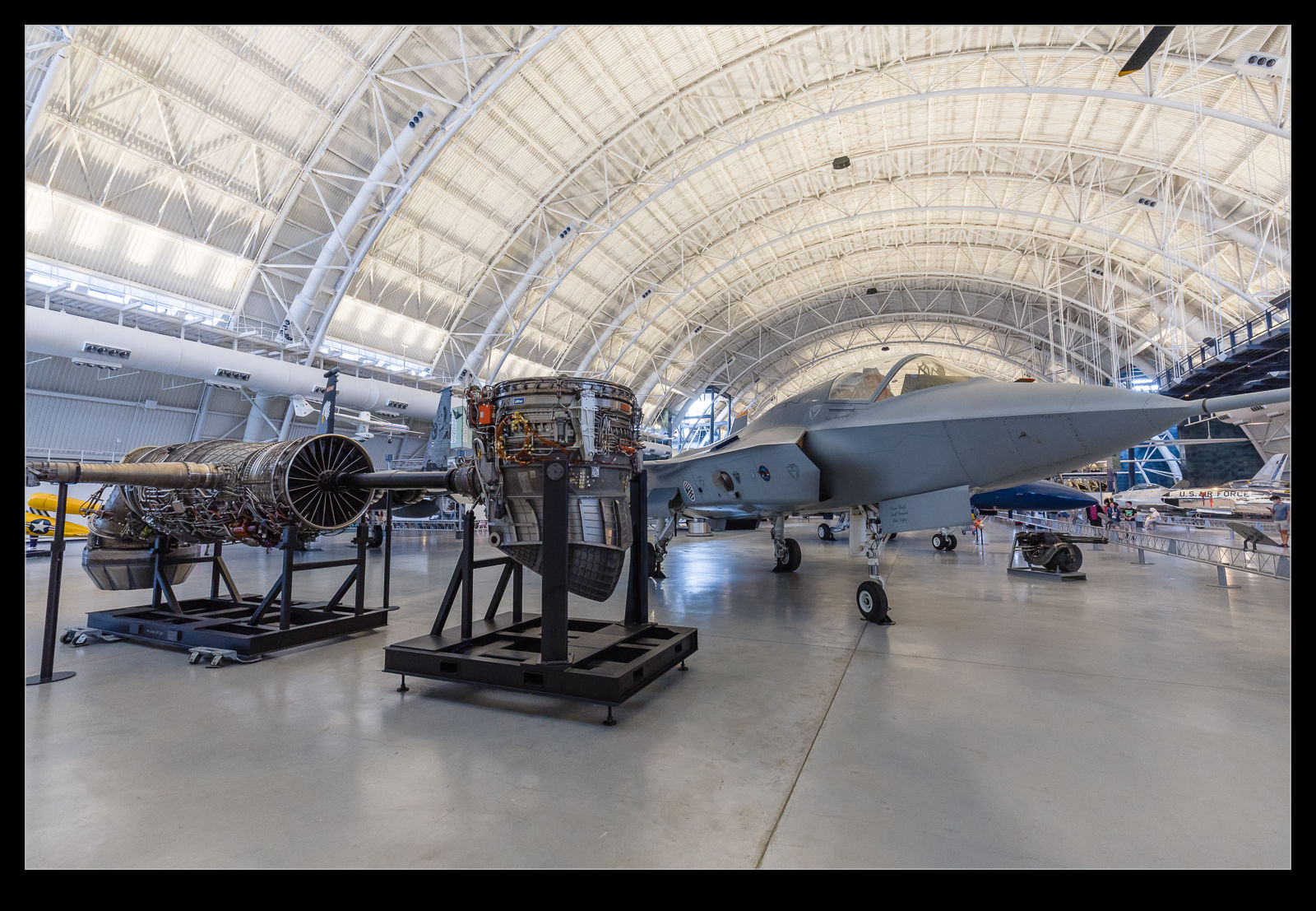
Then there was something that I genuinely had no idea about. I got some shots of it and then, when I got home, got on the internet to check out the registration to see what it was. A Bolkow BO.209 Monson was the answer. Bolkow was a manufacturer I was familiar with both from its earlier days and then being part of MBB building helicopters and part of the Panavia consortium building Tornado. I was not aware of the Monson before searching for this plane and found that 100 of them had been built by MBB before production ceased. There have been times when resurrection of production was tried but without significant success. What a cool looking plane and I hope I see it again.
Summer Afternoon at Compton Abbas
Back in the days when I first learnt to fly, I was curious about flying to Compton Abbas Airfield. Located on top of a hill in Dorset, it seemed like an interesting destination. However, I never made the trip there. Then, when my old friend Sean and I made some trips around the south of England in his Europa, we also discussed making a visit there. Not sure whether he ever went but I didn’t. Earlier this year, I got thinking about heading across because it is not much more than an hour from home by car. When I first thought of it, it was early in the year, and I thought summer would be a better time to go with longer days and a likelihood of more traffic.
Come July and it occurs to me that, if I am going to go, I should probably get on with it. So it was that one Saturday morning, we hopped in the car and drove west. It was a very pretty drive across there which made for a good start to the day. When we pulled up, they had some security guys on the gate. Apparently, it was a special day with Spitfire and Tiger Moth rides and there was a £10 charge to park. However, this £10 would then be offset against anything you bought from the café, so it really wasn’t a hardship.
The location is really rather special. Being up on top of the hill gives a lovely view to the lower ground to the north. It also makes for quite a backdrop for any aircraft shots, not that I was likely to be taking any of those! The restaurant is a modern structure, and the food was really good. We ended up sitting on a table outside to order our food which meant I was able to jump up whenever anything of interest moved.
The location does seem to make for some interesting conditions for pilots. Watching the planes on short final, you could see that they were keeping a bit high before dropping down when close in. The briefing notes on the airfield website highlight that, being low on approach can really get difficult. Looks like a place that you need to brief for carefully.
The pleasure flights in the old warbirds were certainly keeping things busy but there was the usual visiting traffic combined with some local flying training. Someone seemed to be having a bit of a time with timing their flaring for touchdown, and I felt a bit bad for them being so on view with all of the visitors when going through their early stages of flight training. I imagine learning there really teaches you some skills!
This was a lovely spot to spend some time on a sunny summer afternoon, and I would be happy to go back again. The food is also great so that would be tempting too. They had a converted horse lorry that served as an outdoor bar which might be worth checking out too next time.
A Pitts with Extra Oomph
When I was a kid, the Pitts Special was the pinnacle of aerobatic aircraft. Then, the arrival of a bunch of high-powered monoplanes like the Zlin Z50L showed up follow by Extras, and the Pitts became more the preserve of individuals getting into aerobatics. It can still make a good display platform, though, and plenty of souped-up versions are on the air show circuit. The Cosford show included one flown by Rich Goodwin that has been modified with a pair of turbine engines mounted on each side of the fuselage.
This makes for a lot of noise and plenty of extra power. The piston engine still does the majority of the work but, when going vertical, the jets are fired up and give a major boost in performance. That can include hovering in place if required. From some angles, the plane is hard to notice as being any different to any other Pitts. However, from the right angles, the engines are conspicuous. A pretty cool display act. I assume top speed is constrained by the original airframe limitations so not much point in using the jets unless pointing upwards.