Category Archives: military

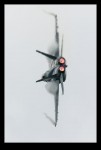
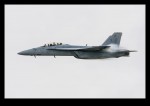
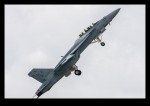
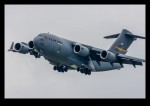
Red Flag 14-2

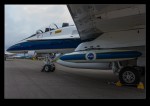
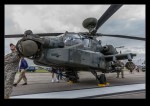
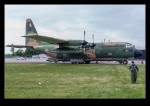
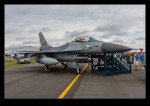
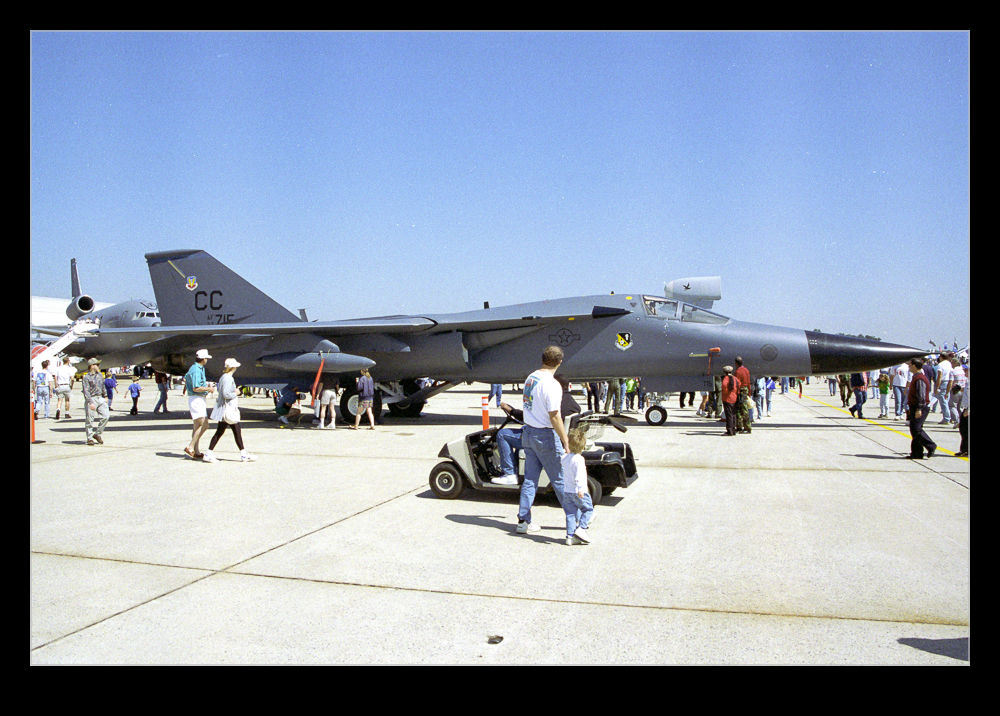
wpid9297-C59F9220.jpgWhen things go according to plan, the USAF holds their Red Flag exercise three times a year at Nellis AFB in Las Vegas NV.  Global Aviation Resource like to provide some coverage so, with the second event of the 2014 program taking place in march, I headed down to cover the event.  I spent a couple of days down there.  One day was on base as guests of the public affairs people at Nellis.  They started out the day with an interview panel with a number of officers from different units and air forces.  They were a good bunch and willing to answer our questions – well, most of them since they wisely avoided answering some questions that should never have been asked of them.

wpid9289-AU0E5816.jpgWith the interviews over, we headed out to the runways.  There are two runways at Nellis that are used together.  We were able to stand between them and given relatively free range as to how far up and down we wanted to go.  There are clear preferences as to which runway you want them to use based on the light.  The launch took place around the middle of the day and they launched off to the northeast.  In this case he light was best on the aircraft on the left runway.  However, you have to do what you can for those on the right as well – often the aircraft you want to focus on.  (There is a bunch of aircraft that you are told not to photograph.  Often it takes a while to realize that what is coming is something you can’t shoot but most people seemed to play by the rules.)

wpid9301-C59F0645.jpgWhen the recovery starts, they tend to use the opposite runways.  By now the light has come around so you really want them to come in on the left.  Sadly, a lot of traffic went to the right.  If you had been outside, you would have got a good amount of traffic to shoot.  When recoveries had wrapped up, we all got back on the buses and headed out.  The second day I spent outside the base.  This provides an opportunity to get a different selection of shots for the article.  It also is unrestricted in what you can shoot so some of the stuff that was restricted while on base can now be shot for the coverage.  Sadly, various things resulted in a lot of the recovering traffic going to the left.  This would have been great if I was on base but sadly it meant a lot of interesting stuff was a long way off.  Still, plenty of stuff came our way.  With the Speedway building up to a NASCAR racing weekend, the crews had been told to keep it tight.  Some certainly did that and came a lot closer to us than expected or even turned within us.  It made for some interesting angles to shoot.

wpid9293-AU0E6178.jpgThe finished article is available through the magazine we publish.  You can find it here.  Please go and download a copy if you haven’t already seen it.  Aside from my work, there is a bunch of great stuff to take a look at.

Curtiss Jenny

wpid9248-AU0E9870.jpgWhen talking about vintage aircraft, I am frequently discussing aircraft that are from the Second World War era or later.  However, one of the residents of Schellville is a Curtiss Jenny.  This is a First World War aircraft and the example here is an original.  It doesn’t get to fly very often but I was lucky to be there on a day when it was planned to take it up for a couple of sorties.  We moved it out to fuel up and then took it onto the field to launch.  (It should be noted that pushing an aircraft around the field quickly makes you appreciate where the gradients are.  What looks like nothing when you are walking suddenly becomes conspicuous when pushing an aircraft – even a relatively light older one!)

wpid9246-AU0E9866.jpgWe crewed up the Jenny and got her ready for start.  Unfortunately, fortune was not on our side.  She fired up willingly enough but a quick check of the engine compartment after start revealed a fuel leak and we shut her down.  A trip back to the hangar to troubleshoot meant that there would be no flying that day.  Once back inside, a hose was found to be split and this was the source of the fuel.  Not the sort of thing you want to find out about while flying so the sound approach of everyone was justified.  Fixing the hose was easy so, hopefully the Jenny will be flying again soon.  Now to get some good weather and availability for everyone concerned!
wpid9250-AU0E9879.jpgI also had a little video of the start up which you can see below.

Blue Angel

wpid9133-C59F7796.jpgA surprise visitor at Boeing Field timed his arrival perfectly.  I had just pulled up at the field when I saw something running in on the approach at speed and not descending.  This had the look of a military break.  I didn’t have the camera out but, fortunately, given that it looked like they would break downwind to land, I had some time to grab the camera.  Sure enough, it was an F/A-18 that broke overhead.  More interestingly, it was a two seater from the Blue Angels.

wpid9131-C59F7780.jpgI was ready by the time it was on the approach and managed to get a few shots as they landed.  They then taxied over to Clay Lacy’s FBO and parked up.  Not sure what they were in for but it could involve the planning for Seafair later in the year.  Whatever the reason, a nice surprise.

Nike Missile Battery

wpid9032-AU0E4617.jpgAt the height of the cold war, the possibility of large waves of Soviet bombers attacking the United States was considered high.  Defending the major cities and defense installations was a high priority.  The result was one of (if not the) most expensive defense programs ever.  The Nike missile program was an air defense system developed by the US Army.  Intended to replace the anti-aircraft gun batteries that were considered incapable of defending against jet aircraft, the goal of Nike was to take out incoming aircraft before they were able to drop thermonuclear weapons on the US.  Since the range at which nuclear weapons could cause devastation was high, interception far away from the target was the goal.

wpid9028-AU0E4569.jpgSeveral different missiles were developed as part of the Nike system.  Two if these missiles were the Ajax and the Hercules.  Ajax was the first of these two to be developed.  It introduced analog computing and tracking of both the target and the missile with the aim of bringing the missile to a successful interception.  The range of Ajax was relatively limited and large number of batteries was deployed around the major cities and defense installations.

wpid9020-AU0E4521.jpgMeanwhile, the Hercules missile was undergoing development.  It introduced a far larger booster (actually four of the Ajax boosters strapped together), a larger sustainer motor and new warheads including conventional and nuclear options.  The longer range and greater intercept capability of the system meant that fewer batteries were required to achieve coverage and they could be slightly further out from the area being protected.  With a range of approximately 100 miles, the Hercules missile could reach its target in approximately 90 seconds.  The enormous booster gave it a phenomenal acceleration.  By the time the tail of the booster reached the point where the tip of the missile had been on the launcher, the missile was already supersonic.

wpid9024-AU0E4538.jpgWhile Hercules had a notional capability against ballistic missiles, the move away from bombers meant the system was more vulnerable a technology advanced.  Ultimately, as part of arms limitation treaties, it was decommissioned as part of the anti-ballistic missile systems.  While hundreds of installations had once been in service across the United States and other countries, virtually nothing of them now remains.

wpid9036-AU0E4634.jpgThe only relatively intact location is just outside San Francisco on the Marin Headlands.  Located in a National Park, SF-88 opens to the public most Saturdays.  The last of over a dozen installations in the San Francisco area, it has preserved the core infrastructure of the installation even if it is condensed into a smaller area that was the case when it was operational.  The facility has a search radar and a tracking radar on display.  The search radar was used to identify the targets initially.  Then two tracking radar were used to carry out the attack.

wpid9026-AU0E4543.jpgThe first tracking radar would lock on to the target.  The second would track the missile as it was outbound.  The missile did not guide itself.  It received command guidance from the ground.  The two tracking radar would feed data to the analog computers that controlled the system.  It would then determine the guidance parameters to be transmitted to the missile.  The missile had four antennae on board – two to receive and two to transmit.  It would then make course corrections based on the signals received.  It would initially boost to very high altitude before arcing over and homing in on the target.  The aim was to detonate just ahead of the target to either provide a cloud of fragments into which it would fly or, in the case of the nuclear warheads, to obliterate it.  Even if the nuclear warhead detonated too far away to disable the aircraft, the electromagnetic pulse was considered likely to render the weapons inoperative.

wpid9022-AU0E4530.jpgThe control systems are on display in metal cabins above ground.  These systems were considered mobile if required, hence them not being buried.  The same was not the case for the missile bunkers.  They are underground with hatches to the surface through which the missiles would be raised and lifted into the near vertical launch position.  These facilities are still in place and the tour includes the chance to go underground, see a selection of Hercules missiles on the launch racks including one that is ready to lift.  When the guide has finished providing an explanation of the missiles and their usage, a climb back up out of the bunker allows you to see the missile being raised up out of the ground and into its launch position.

Only one missile could be fired at a time since the control system could only manage the tracking of one missile.  However, four launchers were part of the battery so multiple engagements could take place and batteries elsewhere in the area could also engage.  Once the missile had finished its flight, another could be loaded to go.  However, the large booster did leave its mark.  While it was scheduled to be jettisoned shortly after launch and to fall out to see, the intense heat could set fire to surrounding debris and the guides also talk about some falling propellant still burning as it came down.  Not a good place to be.  The sound of launch was also intense, even when in protected environments.

wpid9030-AU0E4584.jpgNo launches ever took place within the United States of deployed missiles.  However, regular launches were undertaken by crews for training.  These were carried out at White Sands Missile Range with the crews deploying there periodically to practice actually firing the missile.  These missiles obviously did not have the nuclear warheads but were aimed at incoming target drones, some examples of which are also part of the installation.

The Marin Headlands are full of military installations long retired.  Gun batteries designed to protect the Bay Area from naval assault are common.  However, the Nike Installation SF-88 is a unique example of some more modern weaponry that was located all around San Francisco with most people being totally unaware it was there.  A visit to see this amazing place is well worthwhile if you are in the area.

Decaying PV-2 and DC-3

wpid8428-C59F1005-Edit.jpgWhile Schellville has a great collection of vintage aircraft in operation, it also has a couple of large airframes that do not look like they are going anywhere in a hurry.  Parked near the runway are a DC-3 and the PV-2 Harpoon.  The DC-3 is a rare sub-type….

wpid8376-C59F0464.jpgThe PV-2 has apparently spent some time as a spraying aircraft and it has some Arizona logos on it from a previous existence.  It doesn’t have any doors on the bomb bay so I am assuming that these were removed as part of whatever conversion was done for the spraying role although that is just a guess.  Both of them are sitting out on the earth and, with the low sun angles you get at this time of year, they look particularly interesting.

wpid8380-C59F0468.jpgWe grabbed some shots of them both while keeping an eye out for any other interesting movements that the field would bring.

Stearman Central

wpid8426-AU0E9289.jpgSchellville also seemed to have quite a few Stearmans around on the day I was there.  I think they were generally doing rides for people.  A nice day for some open cockpit flying so I hope the passengers enjoyed themselves.  Here are some of the shots I got of the Stearman.

P-40 Tomahawk

wpid8396-AU0E8973.jpgArriving in a new part of the world means a lot of new aeronautical experiences are waiting to be had.  Those who have lived here a while know where the good things are to be seen but I don’t.  Therefore, it is best to take advantage of the knowledge that is already there.  Fortunately, I already know a few people out this way but also, courtesy of friends back in the Midwest, I have been introduced to some new people who are very familiar with the local aviation scene.

wpid8435-C59F1166.jpgMy friend Paul was in the area for work and we wanted to take a trip out.  I dropped a line to Roger, one person that I had been put in contact with, to see what he could suggest.  He said Sonoma would be the place to go.  There are two airfields very close to each other and we shall hear more of one of them another day.  On this day, we spent our time at Sonoma Valley or, as it seems to be more familiarly known, Schellville.  They hold an open day once a month and this was one of those days.

wpid8370-C59F0448.jpgWe arrived and things looked pretty quiet but it was early in the day.  We weren’t sure whether we had come to the right spot at first so made a quick recce down the street.  Finding nothing (at least nothing that made us feel like we were in the right place!), we came back to where we had started and there on the ramp where, only a few minutes previously, nothing had been now sat a P-40 Tomahawk.  This came as quite a surprise.

wpid8390-C59F0681.jpgAs we were looking over the fence at it, out comes a P-51 Mustang and parks next to it.  Towing them around was a guy called Chris who willingly told us about the day, what he was planning to fly and a good spot for us to go and put our stuff which would provide a good view of proceedings and some shade and seating!  Result.  We had a wander around before getting ourselves in position for the planned flight of the P-40.
wpid8394-AU0E8970.jpgA guy from Silicon Valley was having the flight as a birthday treat.  We watched them taxi out and depart before running in across the field.  Then they headed off to fly around the local area.  Not a bad start to the day!

Team SHAR

wpid7576-AU0E2766.jpgI have spent time with Art Nalls and his Team SHAR at various events over the years but it had been a while since we had last crossed paths.  Therefore, it was good to see Art and the guys again at Gary for the Chicago Air and Water Show.  This year has been a busy year for the team.  Not only have they got themselves well established on the show circuit but the lack of military participation has meant a relatively modern fast jet is in high demand to fill the gap left by the normal front line fighters.  Add to that, the difference that a Harrier brings and you can see why their calendar has been filling up.

wpid7580-C59F4939.jpgI caught up with Art early in the day and ended up running some errands with him for a while.  However, I didn’t want to miss other acts on the ground so left them for a while to do some other stuff.  I did get back later in the day and chatted to the guys for a while and watched the launch and recovery.  With the jet on the ground, I also took the time to get some shots of it while no one was working on it.  On the final day of the show, I did head back to the beach to try and catch it in action too.

wpid7592-AU0E3939.jpgIt was, as always, great to hang out with the team.  They did a great job and closed out the show nicely.  I hope it isn’t as long before I next see them!

Chicago Air and Water Show

wpid7588-AU0E3590.jpgMiddle of August means the Chicago Air and Water Show is back.  This year’s show, like all other shows in the US, was always going to be a bit different since the US military was not going to be taking part.  That means a shift in emphasis from normal with a lot more civilian acts.  With no headlining team this year (normally the Blue Angels and the Thunderbirds alternate), there was a question as to whether the attendance would be significantly reduced.  It is a free show so you might think it isn’t that big a deal but the sponsorship is important and that requires people to show so it was going to be interesting to see how things shaped up.

wpid7543-AU0E0739.jpgThere were some jets to add some noise and speed to the proceedings.  Art Nalls brought his Sea Harrier and Paul Wood brought the A-4 Skyhawk.  Both displayed twice on the show days to add a hint of military jets to things.  Of course, these are not operational fighters and are nursed a little more carefully than a front line jet which the pilot can swap for another if he breaks anything.  However, they still are able to up the tempo a bit.

wpid7559-AU0E1772.jpgI mixed my time between the flying on the beach in Chicago and Gary airport where everyone was staging from.  It is fun to get the mix of the actual displays and the activity around launching and recovering the planes.  The shots are a mix of those.  I got to spend a lot of time with Team SHAR and will have a separate post about that in due course.  From what I saw and heard, the attendance on the beach was pretty strong, if a little down on previous years.  It looks like the show does indeed go on!

WHF Day Out

wpid7411-C59F2218-Edit.jpgWhat seems like far too long a time had passed since I had last had a chance to head up to Waukegan to see the team at the Warbird Heritage Foundation.  A nice day and a break in my schedule meant that I was finally able to resolve that shortfall.  I headed up to Waukegan keen to see what sort of day was in store.  As with any collection of older aircraft, the chances of much flying are relatively limited since the planes are usually in need of some sort of care.  However, there were a few parked out on the apron when I got there.

wpid7397-AU0E5396-Edit.jpgSean and Mike were busy taking care of them as I wandered up.  The first thing Sean told me was that he had flown the Bird Dog that morning and that it was a shame I hadn’t been there.  Indeed so!  Telling me I have missed out on a great opportunity is just cruel!  Never mind.  I still haven’t seen the Bird Dog fly so it would have been good to see it let alone fly in it.

wpid7401-AU0E5417.jpgThe project for the day was the T-28 Trojan.  Not so long ago, this aircraft had an engine go bad.  The chip warning light came on while Sean was flying it and, since he was close to the field, he made a speedy descent to land.  The engine pretty much gasped its last as he taxied in.  A rebuild later and now the plane is flying again.  However, as with all engines after overhaul, it is going through a running in period.  This also requires a different grade of oil and a change of oil was the task for the guys.

wpid7405-AU0E5466.jpgWith the new oil in, the engine was run and the oil topped off.  Then it was time for a flight.  Jeff is a regular T-28 pilot and member of the Trojan Horseman and he came along to fly with Sean in the back seat.  Putting hours on the airframe is the goal but not going too far from the field in case anything goes wrong.  They did their duty flying patterns over the field and I grabbed some shots when I could.  Most of the time they were quite far away but, with the moon traversing the sky, a couple of opportunities presented themselves for shots with the moon in the background.

wpid7395-AU0E5379-Edit.jpgI also grabbed some shots of the aircraft on the ground while they were off doing their thing.  I haven’t got much before of the Bird Dog so spent a bit of time with it including getting some shots of the cockpit.  Harsh exterior lighting meant a but of HDR was required for some of the shots but hopefully it isn’t too obvious!  I have shot these planes a lot over time but there is always a chance for something new.  Good to see you guys again and hopefully it won’t be so long next time!