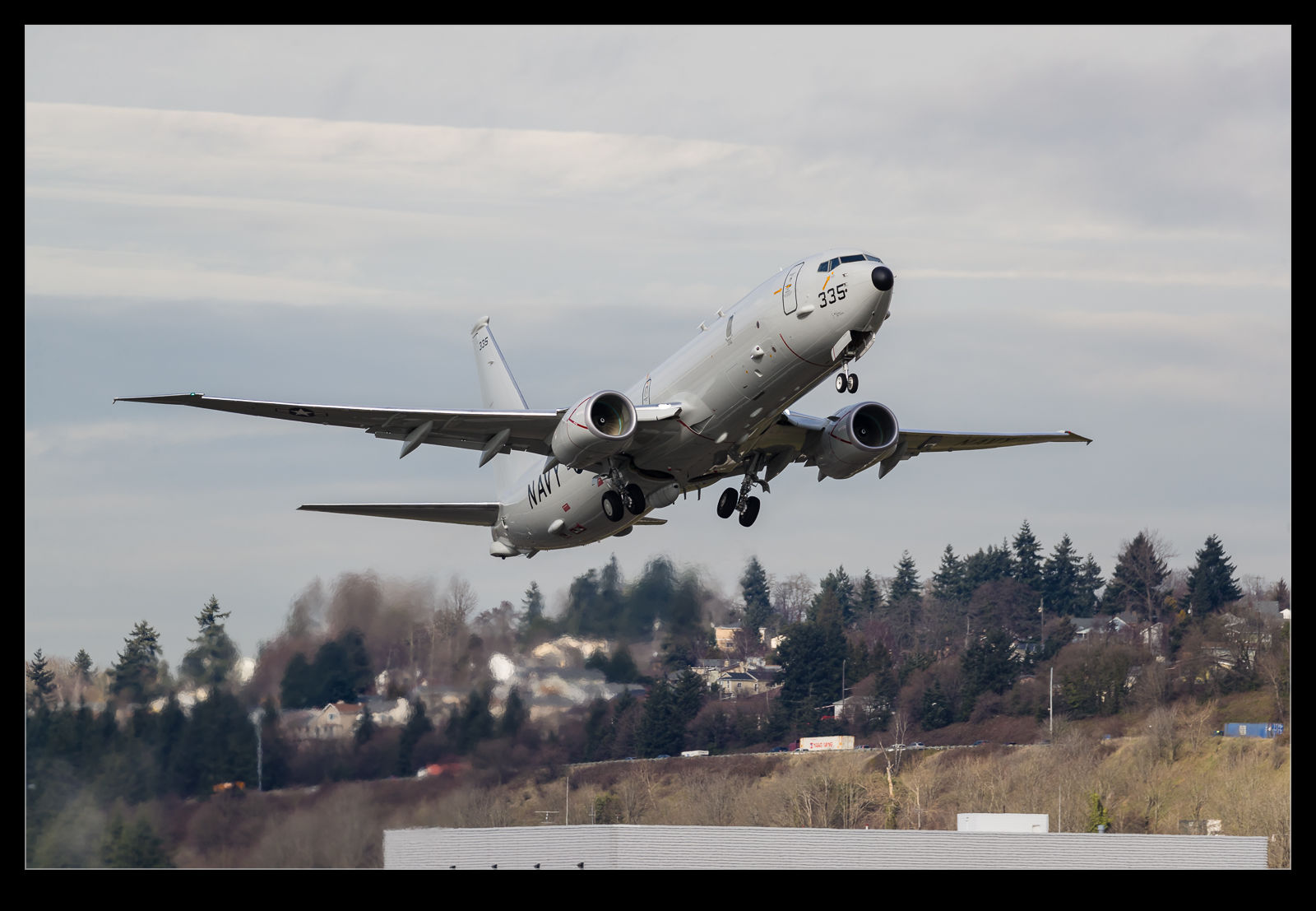
Every once in a while, you just get lucky. I happened to be at Boeing Field on a sunny day with operations in a southerly direction and a bunch of cool traffic. Most of the traffic shows up on Flightaware so you have a clue it might be flying but my recent experiences have been that the P-8 test flights have not been listed. Consequently, I was a little surprised when a P-8 pulled out of Boeing’s military operations ramp and taxied for departure. It came right past me as it made its way to the departure end. A short while later it rolled.
The sun was out, the light was nice, they rotated at a good location to get some nice shots and then, as they climbed out, the clouds were really nice providing a mottled sort of background. The colors looked great behind the grey jet. What a great combination!
There are a lot of air shows that I have been to over the years. You think you remember them well and then something shows up in your archive of images that you have completely forgotten about. I am a member of a Facebook group that has a different challenge each week and, when I get the next challenge, I work through my catalog to see what I have that might contribute. It is an interesting exercise in finding stuff that I had forgotten about.
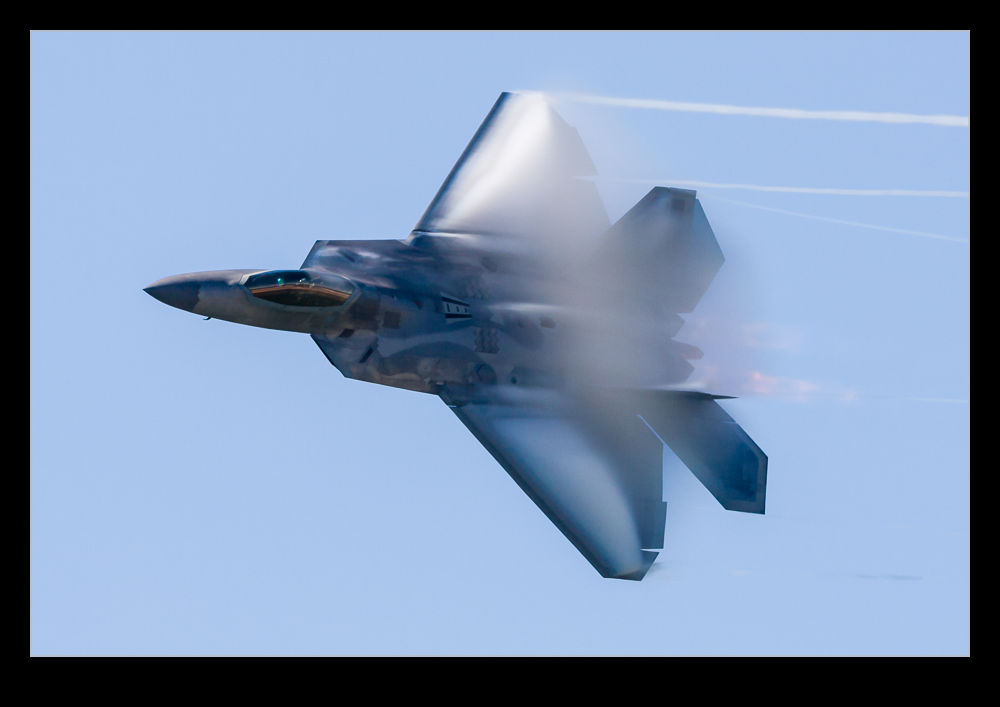
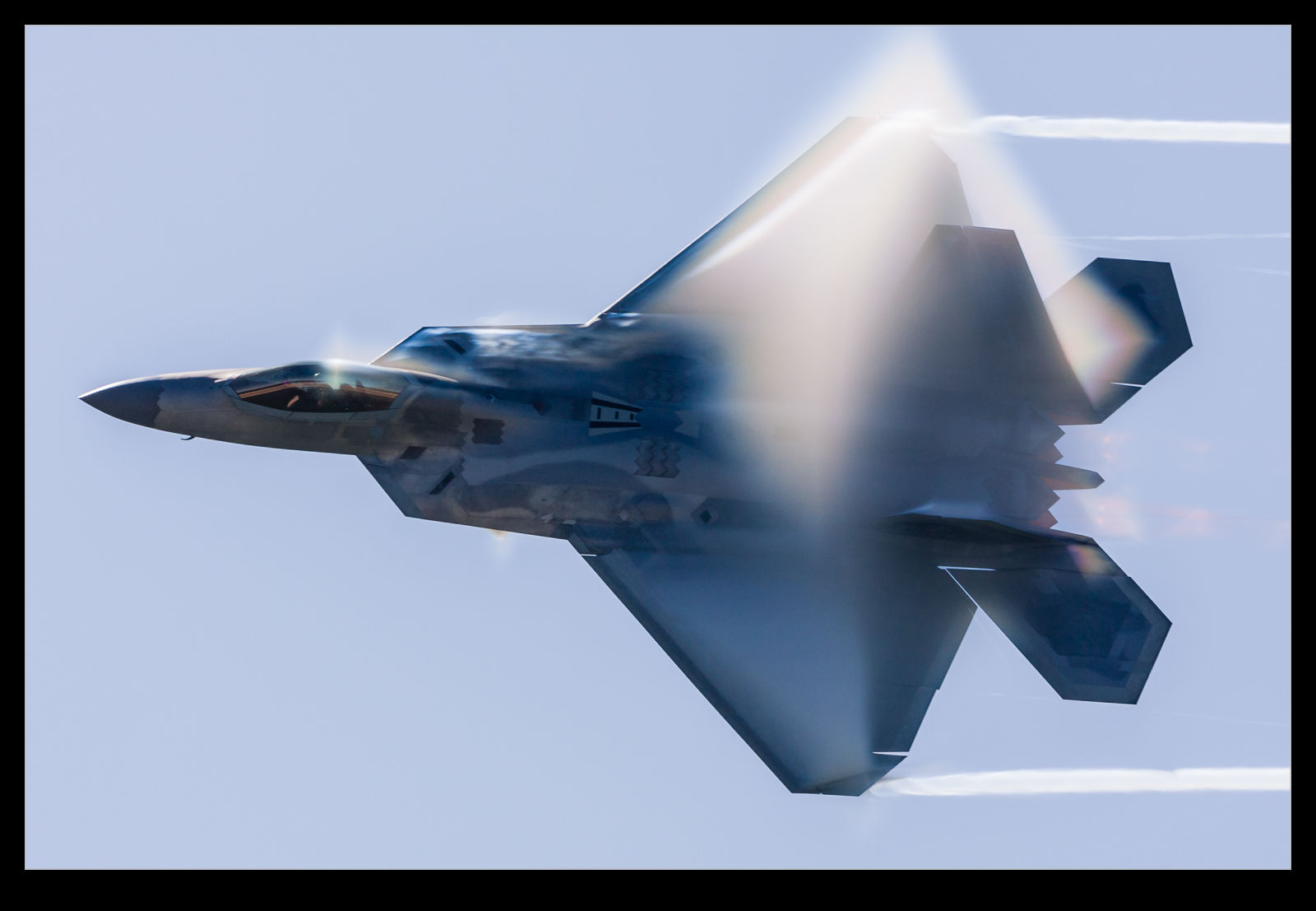
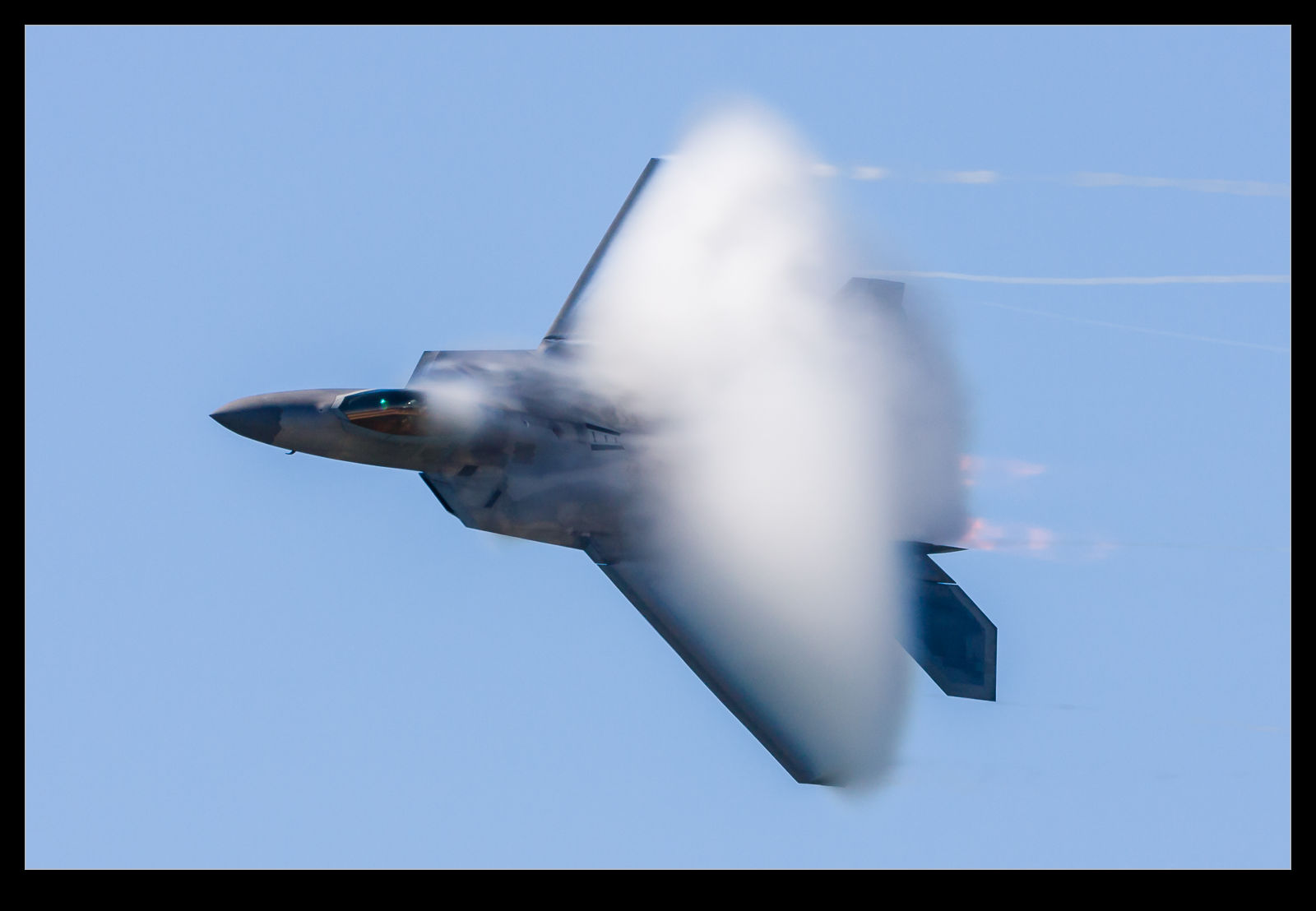
This wasn’t one of those challenges but I was looking for something else when I came across this shot of an F-22 pulling vapor and shockwaves as it did a fast pass at the Rockford Air Show. Rockford was a great show that I used to go to when I lived in Chicago. They always got great static displays and performers for the flying display. The only limitation was that you were pretty much shooting in to the sun.
This F-22 made a fast pass and was clearly pulling a lot of vapor as it went. I don’t know why I forgot about this sequence but apparently I did. I had a go at processing them again to see what I could make of the shots this time compared to my technique in 2009. Not an easy shot to make work but the plane is dramatic enough to make it worthwhile I think.
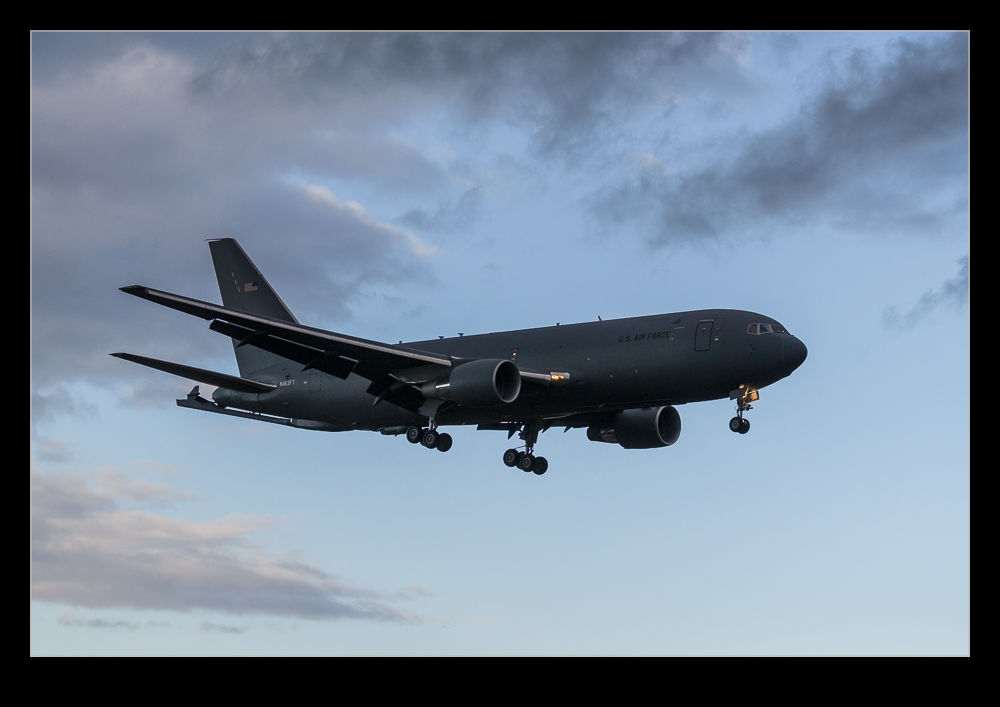
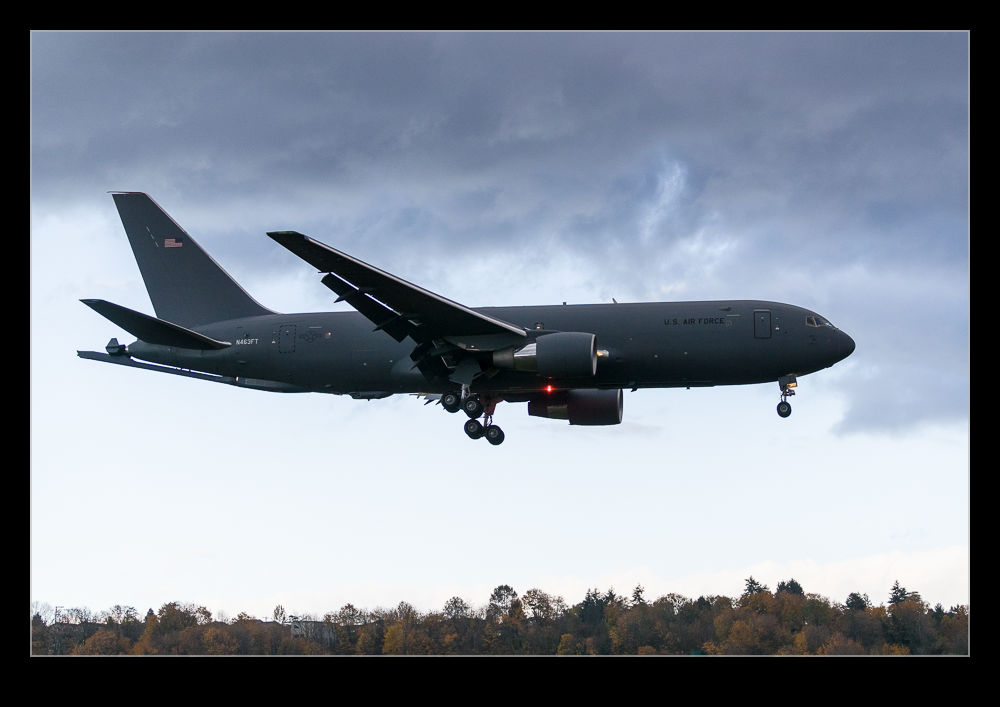
When the weather starts to turn, you can assume that whatever you are waiting for is likely to show up just after it gets bad. In this case, a KC-46 Pegasus was on its way back to Boeing Field and the clouds were rolling in. Things were getting darker and it looked like the clouds would open. Meanwhile, the KC-46 was still a distance away.
Sure enough, the skies opened. By the time the jet was on final approach, the light had disappeared and the rain was belting down. I got some shots of it but, even with a bunch of exposure compensation, the jet was more of a silhouette than anything else. A little post processing help brought out the detail but this was not an ideal shooting situation. A dark grey jet in dying light is just what you want!
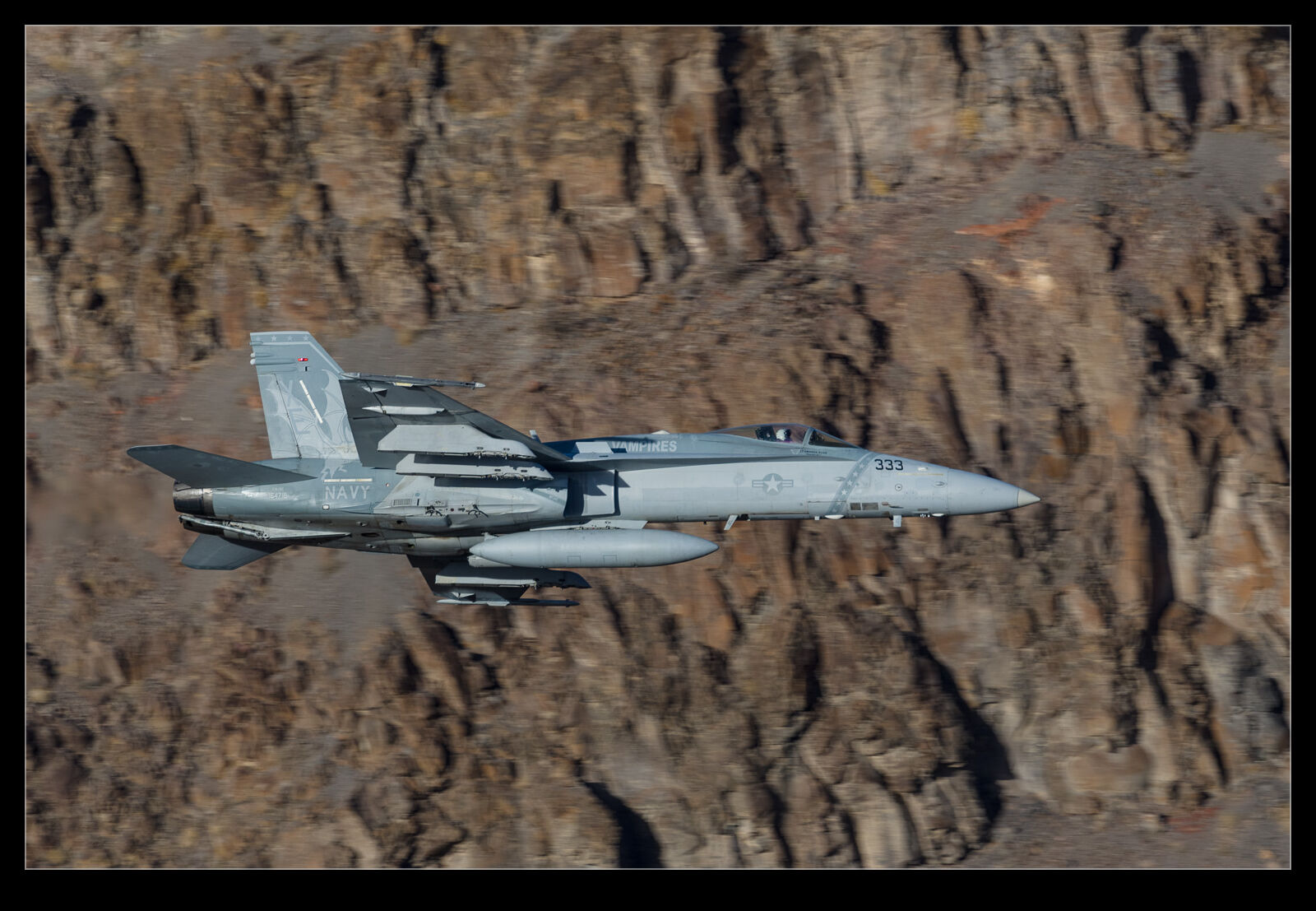
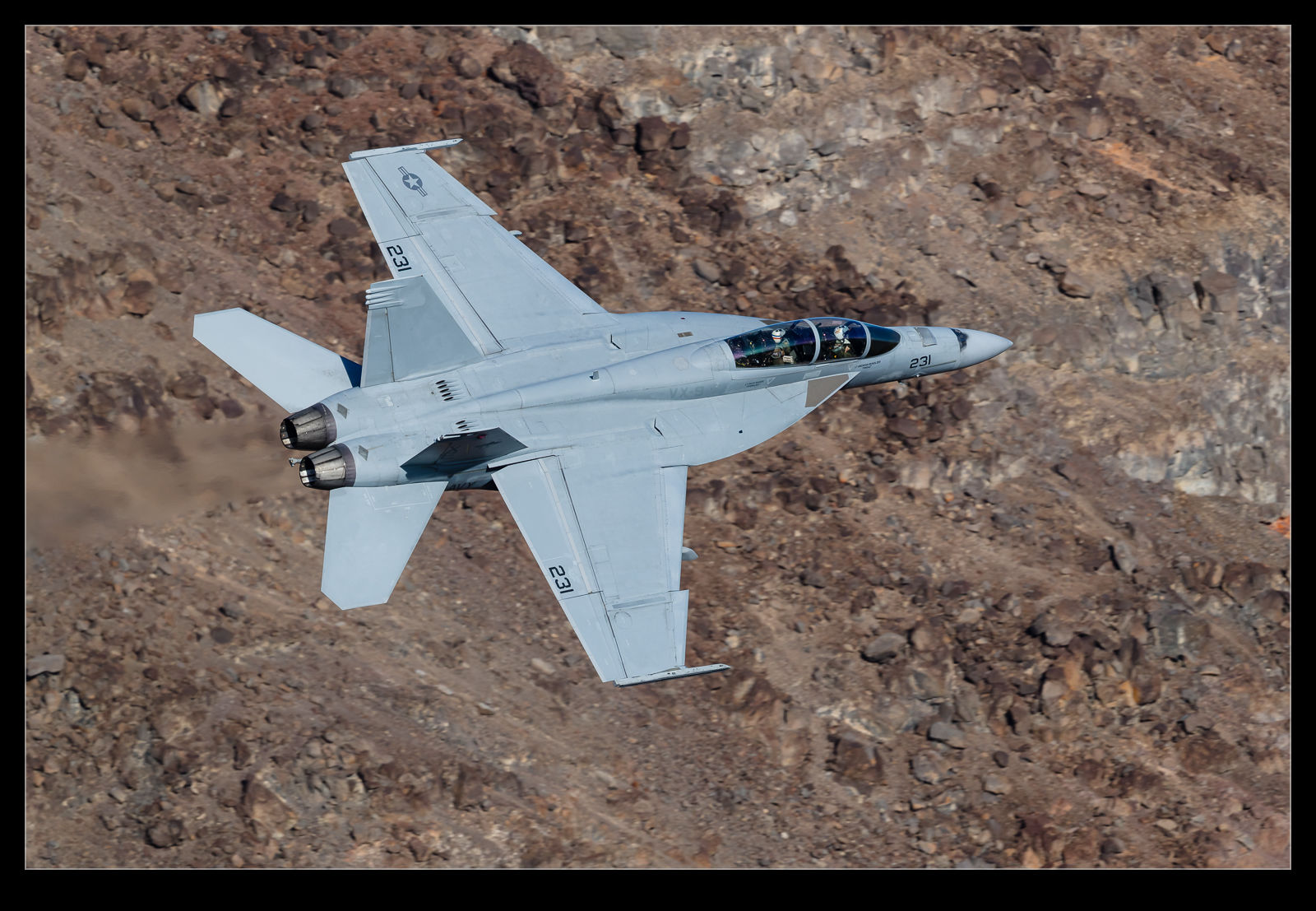
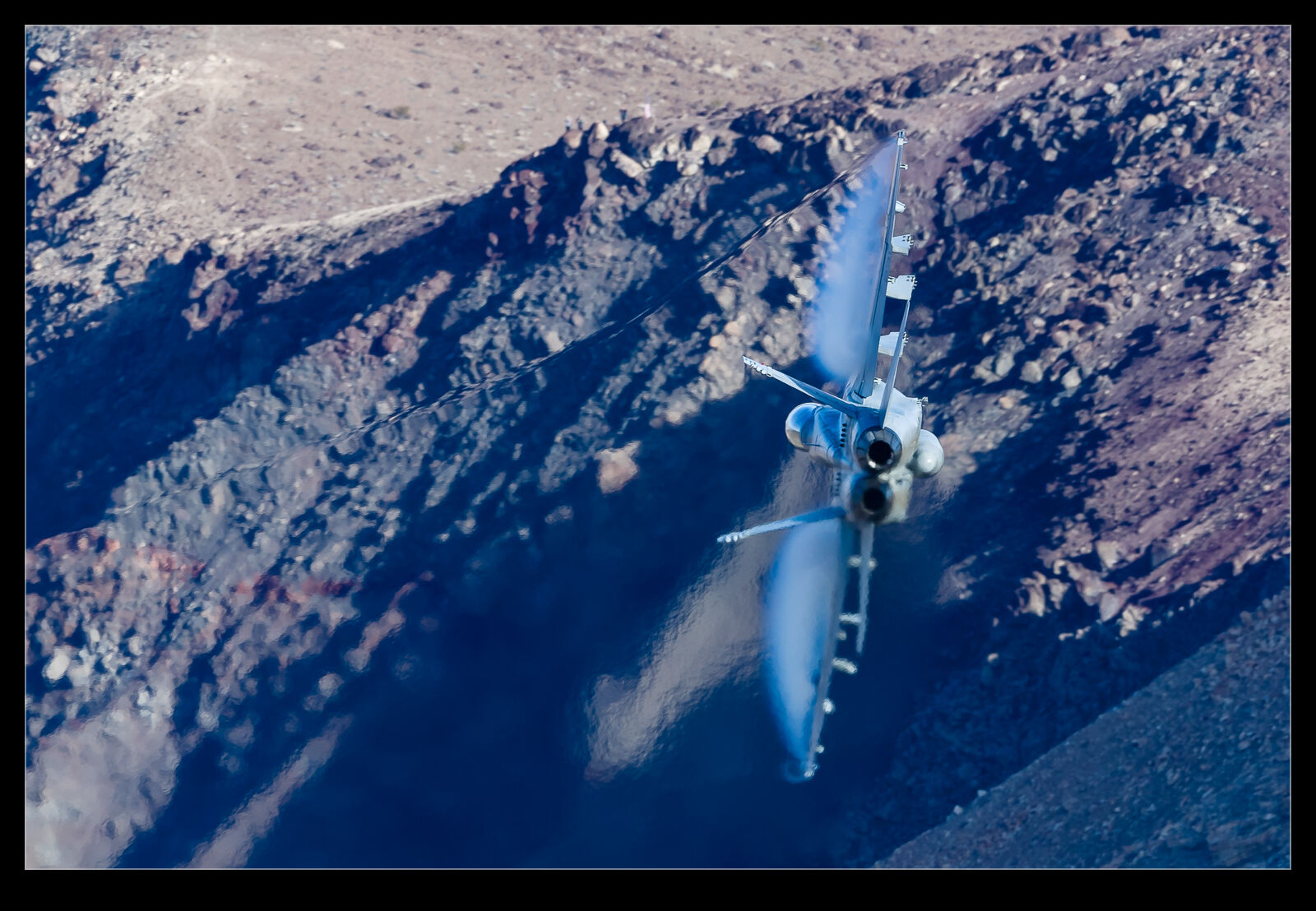
As my day at the canyon continued (you can read about the beginnings here), I got a bit more luck. The Navy came to the rescue with some Hornets and Super Hornets making their way through the canyon. One came in at an odd angle and then pulled out of the canyon over the overlook location. This was fine for me but probably annoyed those further down the canyon.
Then we got something a lot more like what we had anticipated. Jets came in along the angle from the highway starting out a lot lower than those that had come across the ridge. They could drop in a lot more quickly and be deeper into the canyon as they came by. This was what it was all about. They provided a last minute contribution to what I had come for and I was very grateful. A few more would have been good but it was okay.
Once disappointing aspect of this was that, with so few jets coming through, I shot all of them. I didn’t have the opportunity to waste so I never got to keep the camera down and just appreciate the jets transitioning through below me for what it was. On my next trip I will hopefully get to do that as well as get some shots.
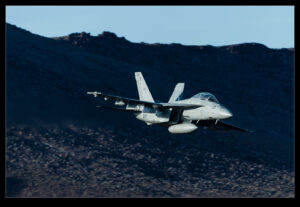
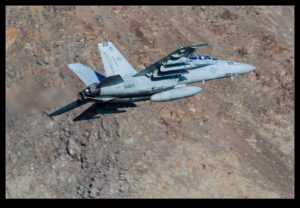
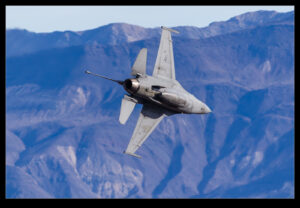
A US Navy Boeing F/A-18E Super Hornet flies through the Sidewinder transition in Death Valley CA.
A US Navy Boeing F/A-18F Super Hornet flies through the Sidewinder transition in Death Valley CA.
A US Navy Boeing F/A-18F Super Hornet flies through the Sidewinder transition in Death Valley CA.
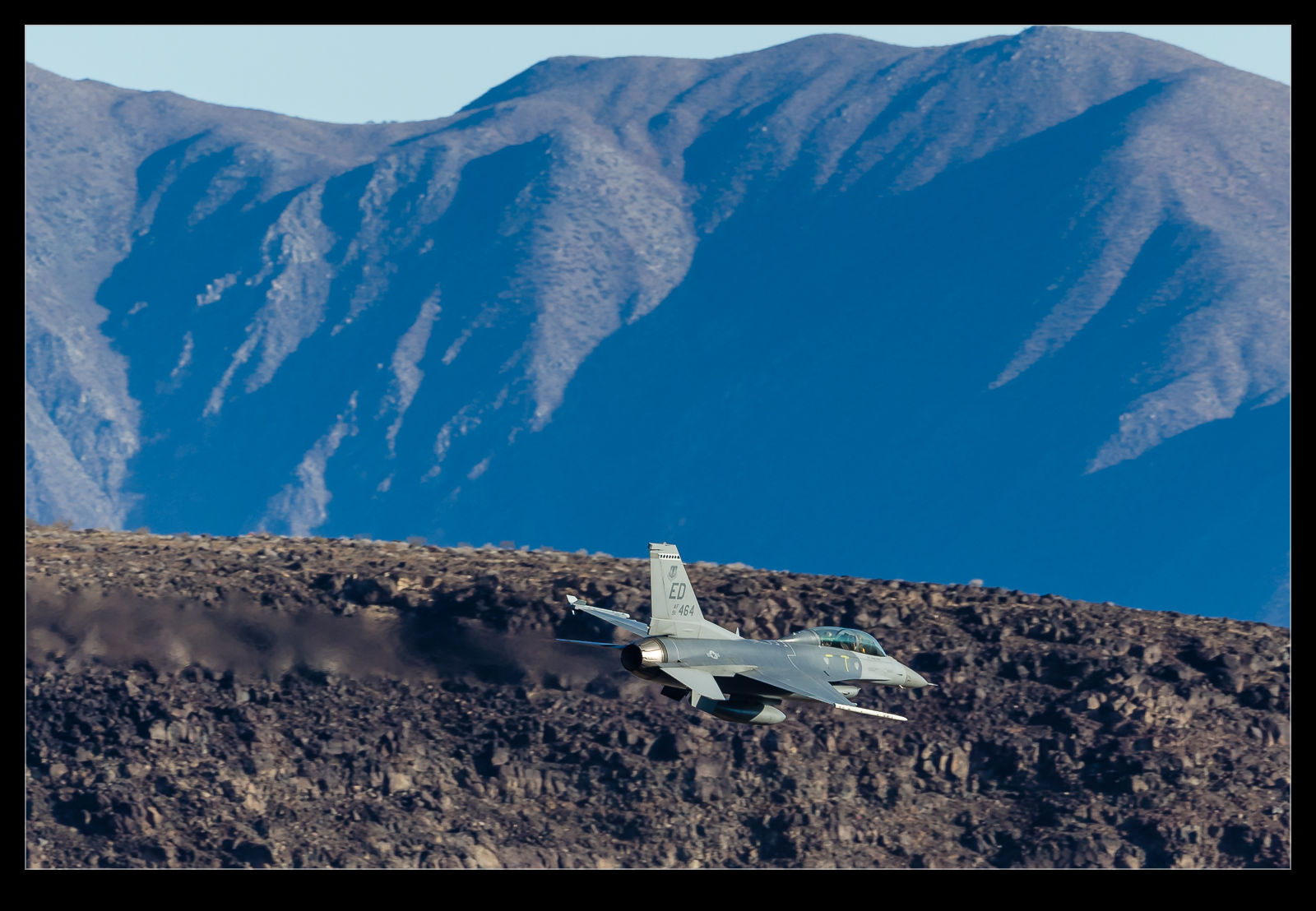
Photographing low flying jets in their environment is a popular challenge. The Loop in Wales is a great hunting ground. I have driven through there a few times and flown through there once but I have never been on a photo expedition there. Once I got close to setting up a trip but things got in the way. In the US, Rainbow Canyon is a popular spot. This canyon is known by a variety of names but it is well known for having jets flying through below the rim of the canyon so you can get shots of them beneath you.
I arranged to head there a short while ago with a buddy of mine. The two of us were going to meet in LA and head up. Sadly, he was unable to make the trip at the last moment but I figured I would go anyway as winter is a more acceptable time to be in Death Valley National Park and the chances of finding the time again soon were limited. I did stay up in Palmdale to shorten the drive a bit.
The trip had mixed results. We did not have a busy day. Plenty of jets could be heard overhead or in the distance but the number coming through the canyon was low. I probably got nine passes that day. More disappointing was how some of them were quite high and not against the backdrop of the rocks. Things did improve though…
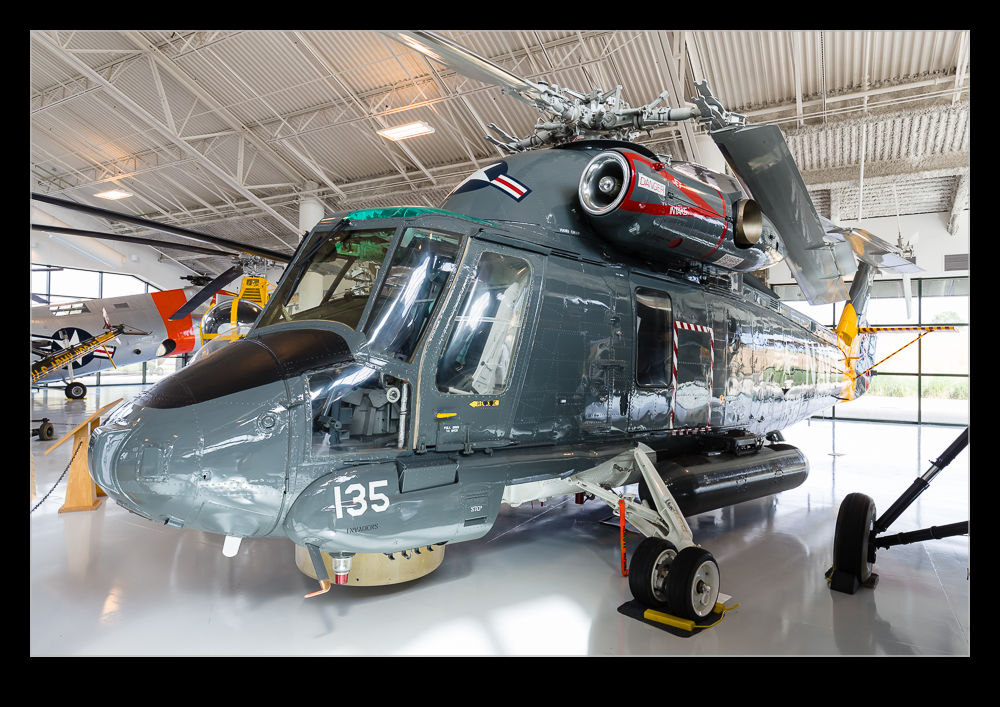
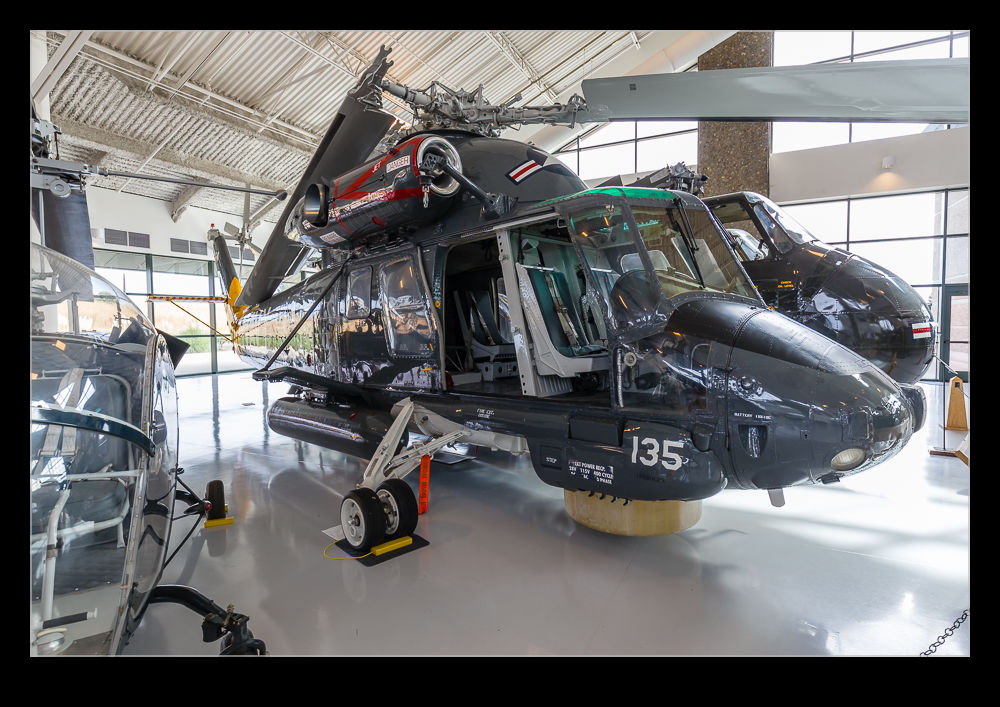
The first time I ever heard of the Kaman Seasprite was in the 1980s when Airfix released a new kit of the SH-2F variant. I thought it was a cool looking model but I wasn’t very aware of what it was used for. It was already getting towards the end of its time in service with the US Navy with the SH-60B Seahawk becoming the platform for shipboard helicopters. A few export programs went forward but these were not particularly successful.
I am not sure whether I have ever seen a Seasprite for real prior to visiting Evergreen at McMinnville. They have a corner that is stacked with helicopters. A Seasprite is one of the collection and I was pleasantly surprised to see it. Given the number of airframes they have in this corner, everything is jammed together. This made it hard to get a nice angle on the Seasprite but I was able to get a few shots anyway.
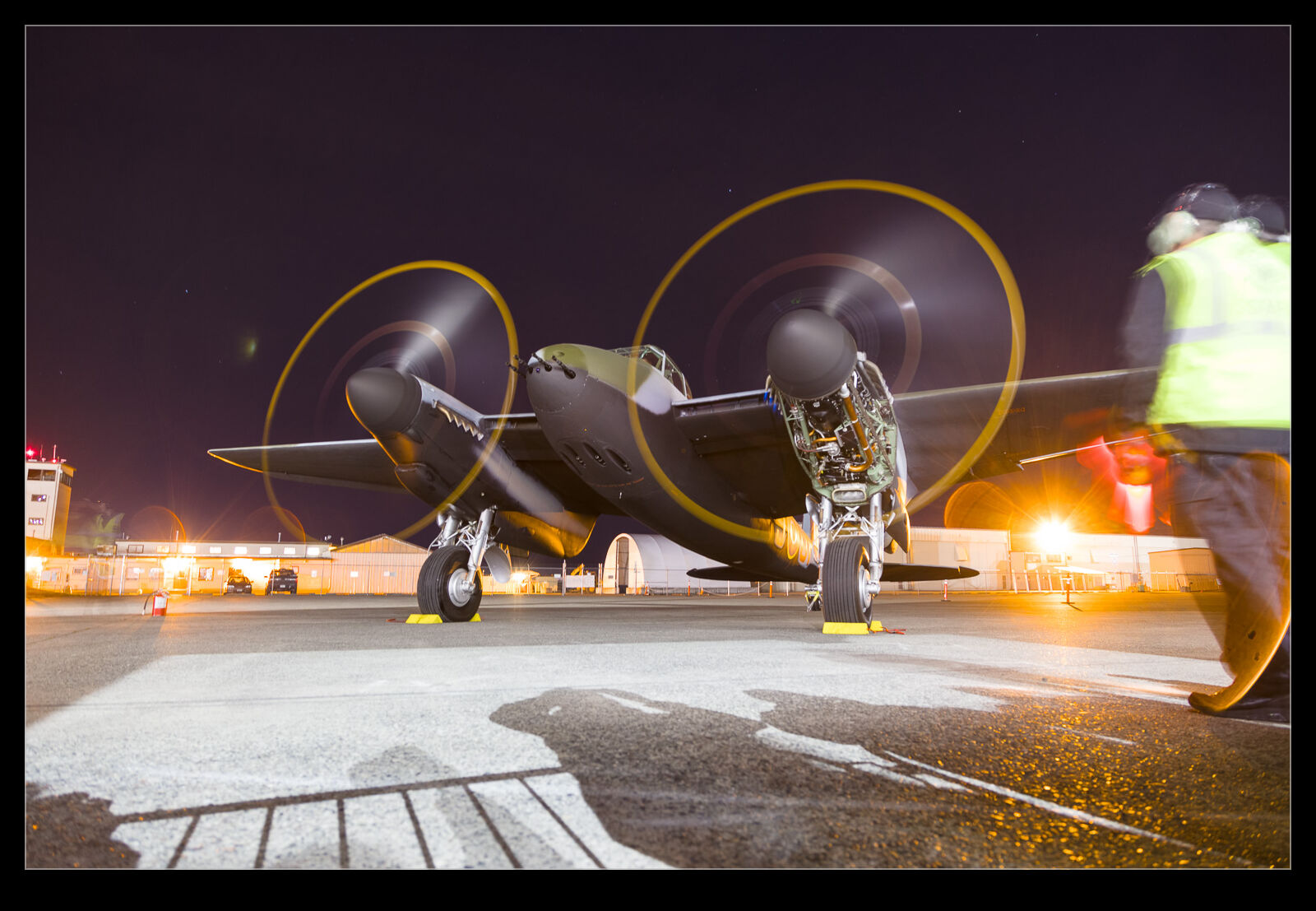
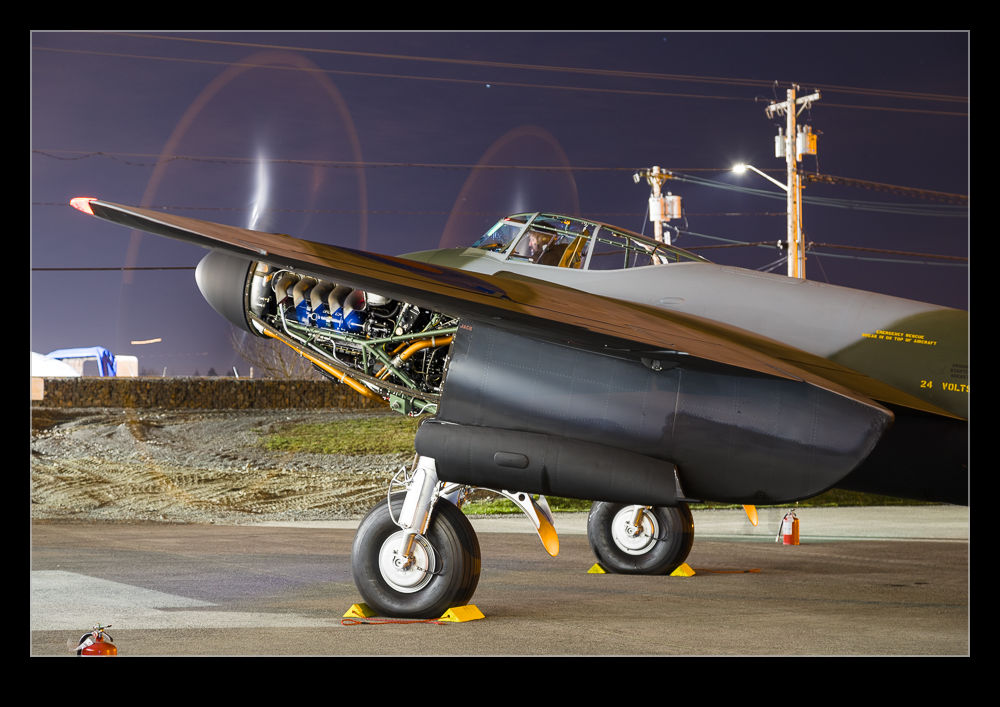
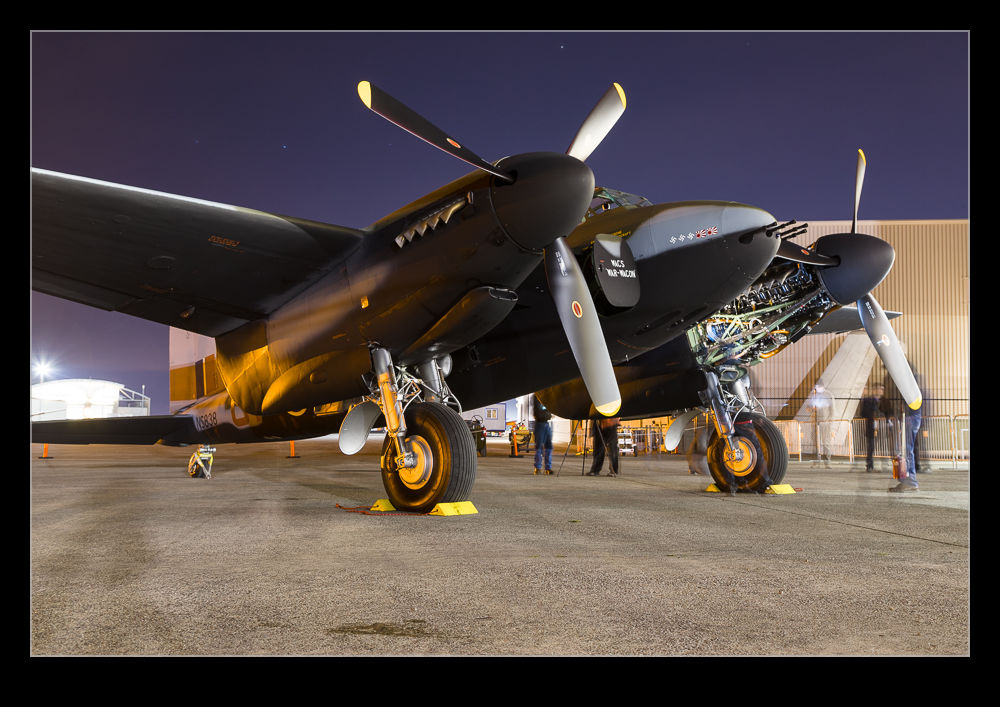
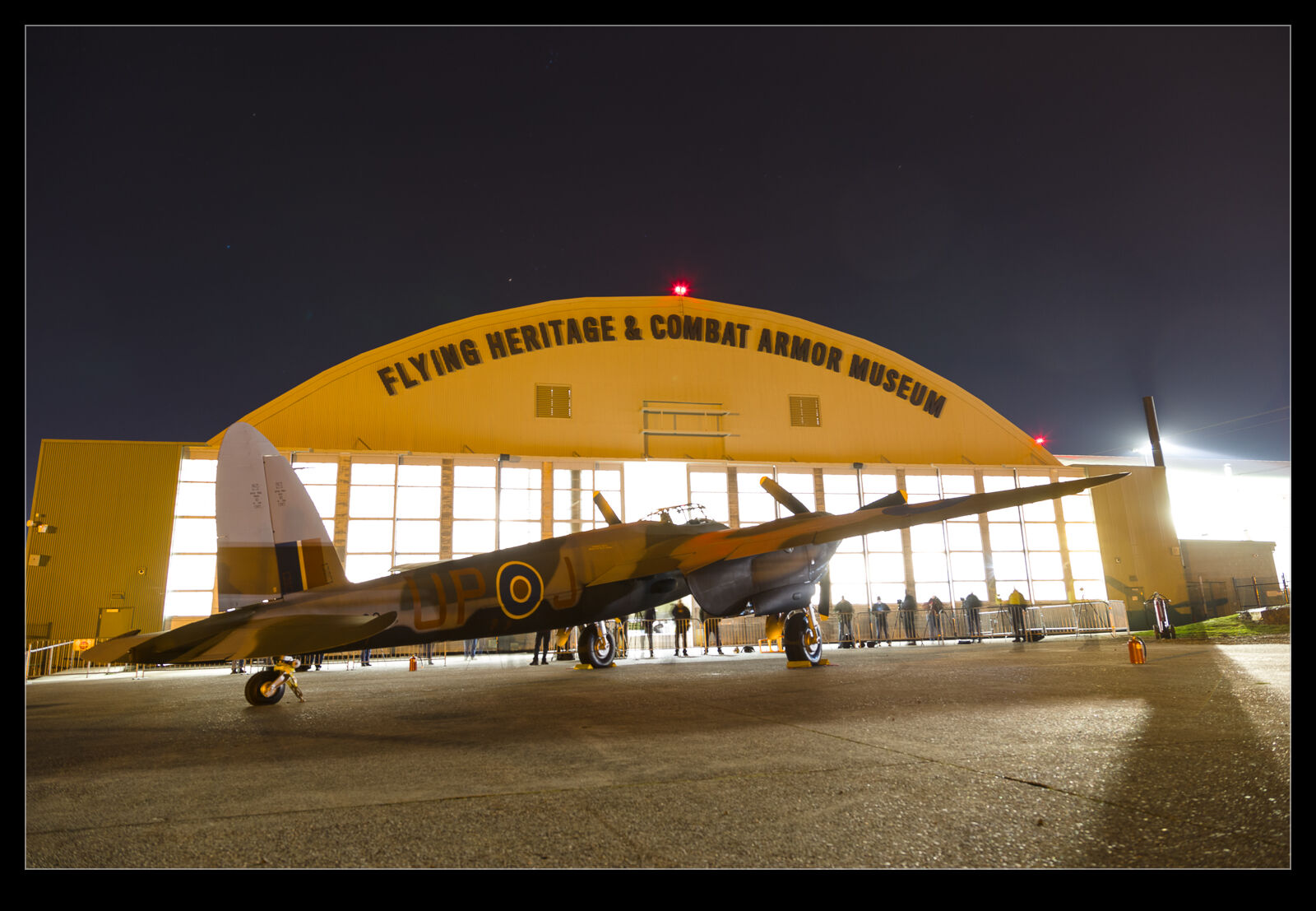
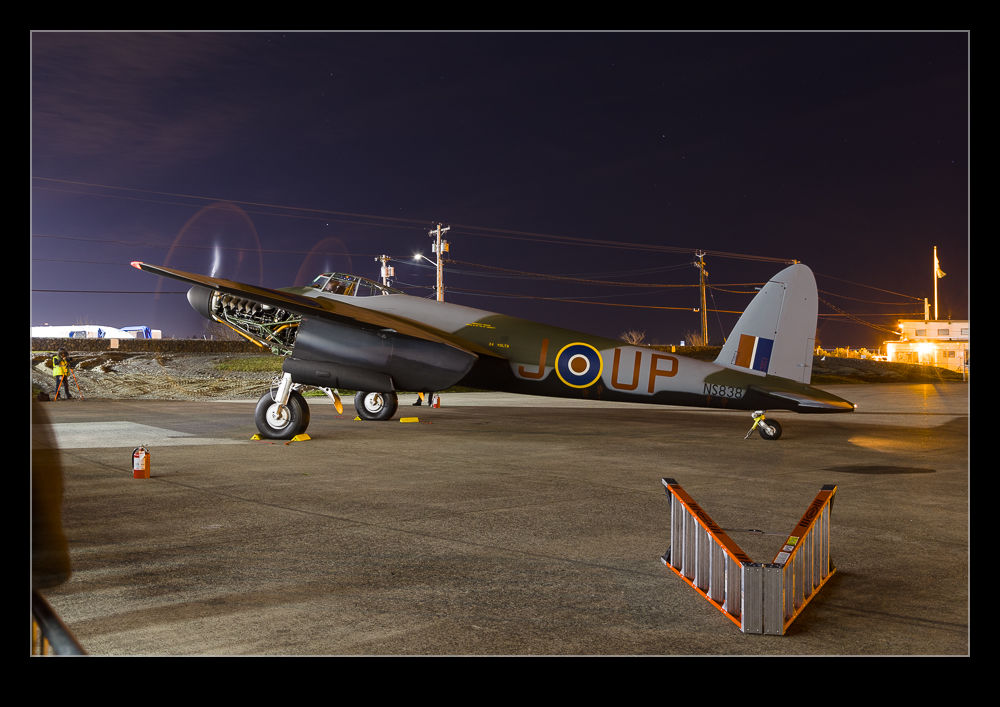
Night photo shoots are becoming more popular these days. The Flying Heritage Combat Armor Museum (FHCAM) held one with the de Havilland Mosquito. The evening started out with the plane on the ramp when people were free to wander around the aircraft. I was shooting a lot of long exposures using the tripod which does a good job of removing the people provided they keep moving. However, a few people were hanging around for long periods so they show up in the shots. Others were using the flashes on their cameras or flashlights to look at stuff which made things blow out.
Once we were all cleared from the ramp, one of the FHCAM crew came out to talk about the aircraft. He was the one that would carry out the engine runs and he ran through the test procedures that would be followed for the engines. People had the chance to ask questions and get a good understanding of the plane and how it is operated.
Then came the fun. The engines were fired up in sequence. Then they were run through the test program. The blue flame from the exhaust stacks could be clearly seen in the very dark conditions. When the mag checks were carried out, the flames were even more conspicuous. I moved around a bit to get some different positions. I was quite surprised to see how blurred some of the shots were. The aircraft clearly moves a lot despite being chocked and so some of the shots were totally unusable. This was a lesson learned. In future I would focus on shortening the exposure times a lot to minimize this issue which I hadn’t anticipated.
I also shot a bunch of video while the runs were underway. The edited video is below. It was a fun evening and thanks to FHCAM for holding it. It would be fun to do on another type. It might be nice to have a touch more light on the ramp but the dark conditions did have some advantages. I discovered a bit about shooting in that environment which should hopefully help on future night shoots.
The SR-71 Blackbird provided a reconnaissance platform that was unmatched. It would have been pretty high in the sensitivity list when it came to its sensors and capabilities. Now the jets are all retired. The example that is in the Evergreen Aerospace Museum has one of the sensors extracted from the sensor bay and mounted on a stand in front of the aircraft. I imagine there was a time when this was something that would not be available for me to look at but now, I guess, this is just another obsolete piece of tech.
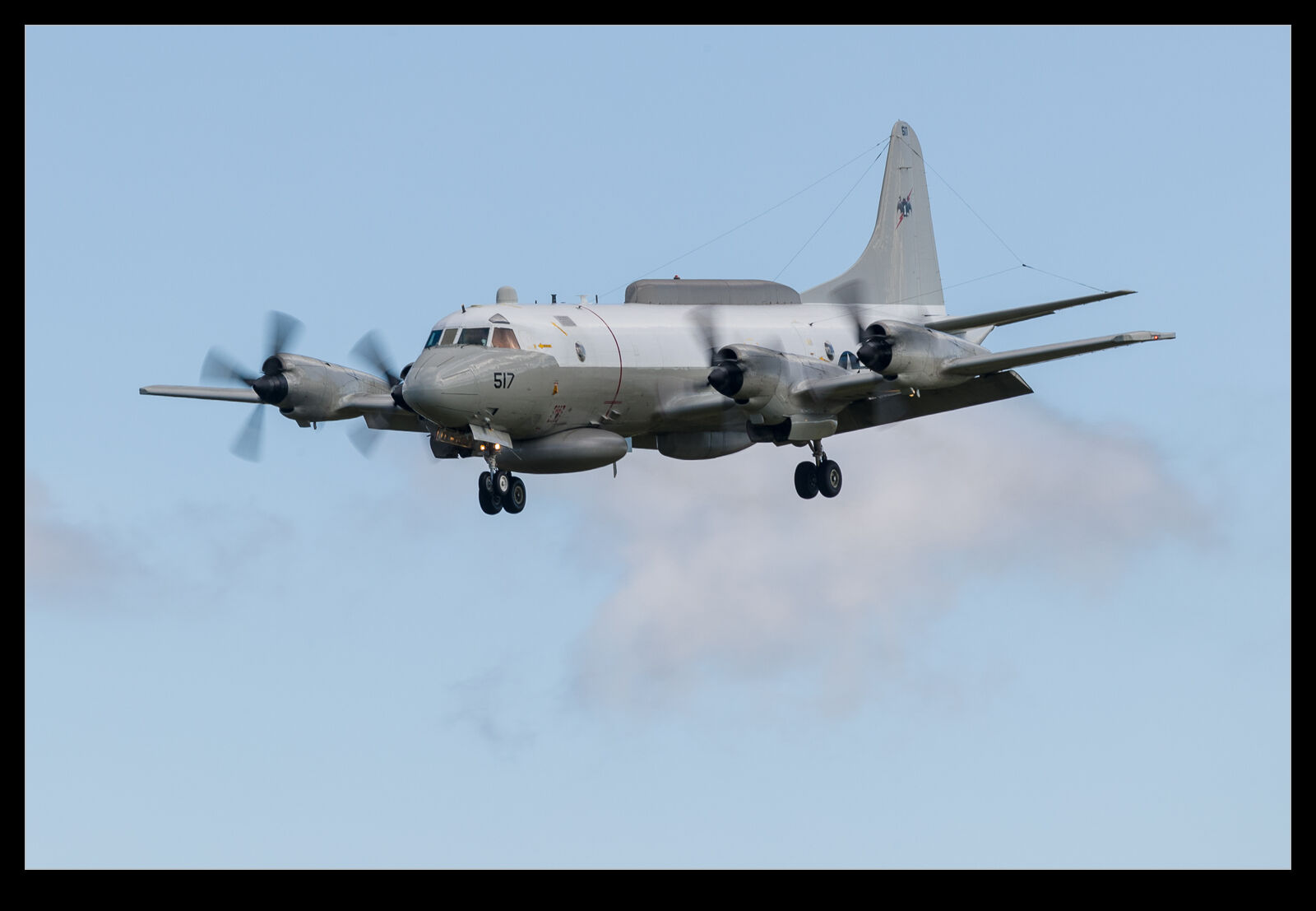
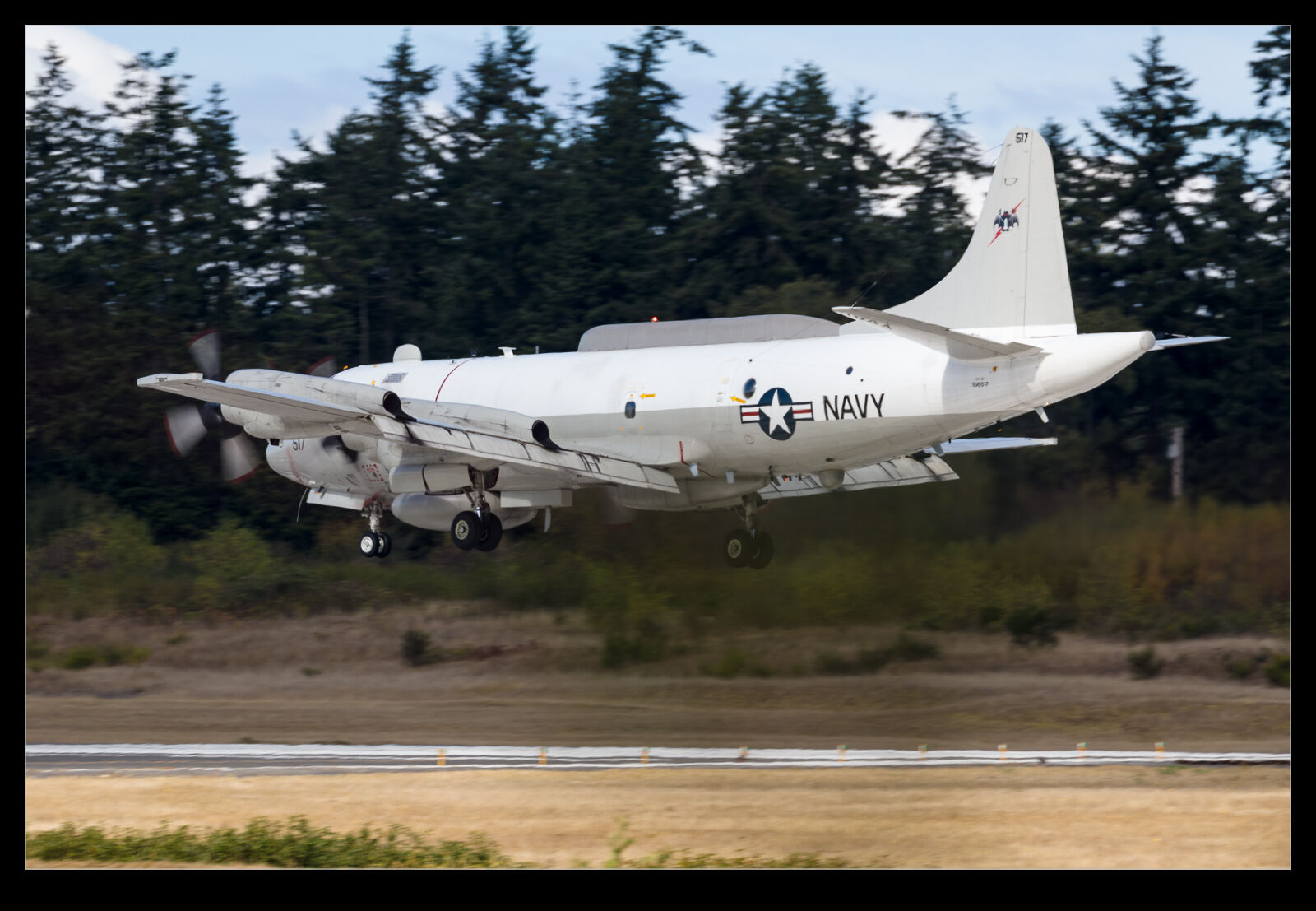
P-3 hunting was part of the plan when Paul and I headed to NAS Whidbey Island. We had some success. There was a nice bit of icing on the cake for us. An EP-3E showed up too. The EP-3 has a nice selection of large radomes added to the airframe to cover the wide variety of sensors that this type has to fulfill its role of listening to transmissions around the world. I don’t know how long the EP-3 has once the P-3s are gone from fleet service so getting one was a definite plus.
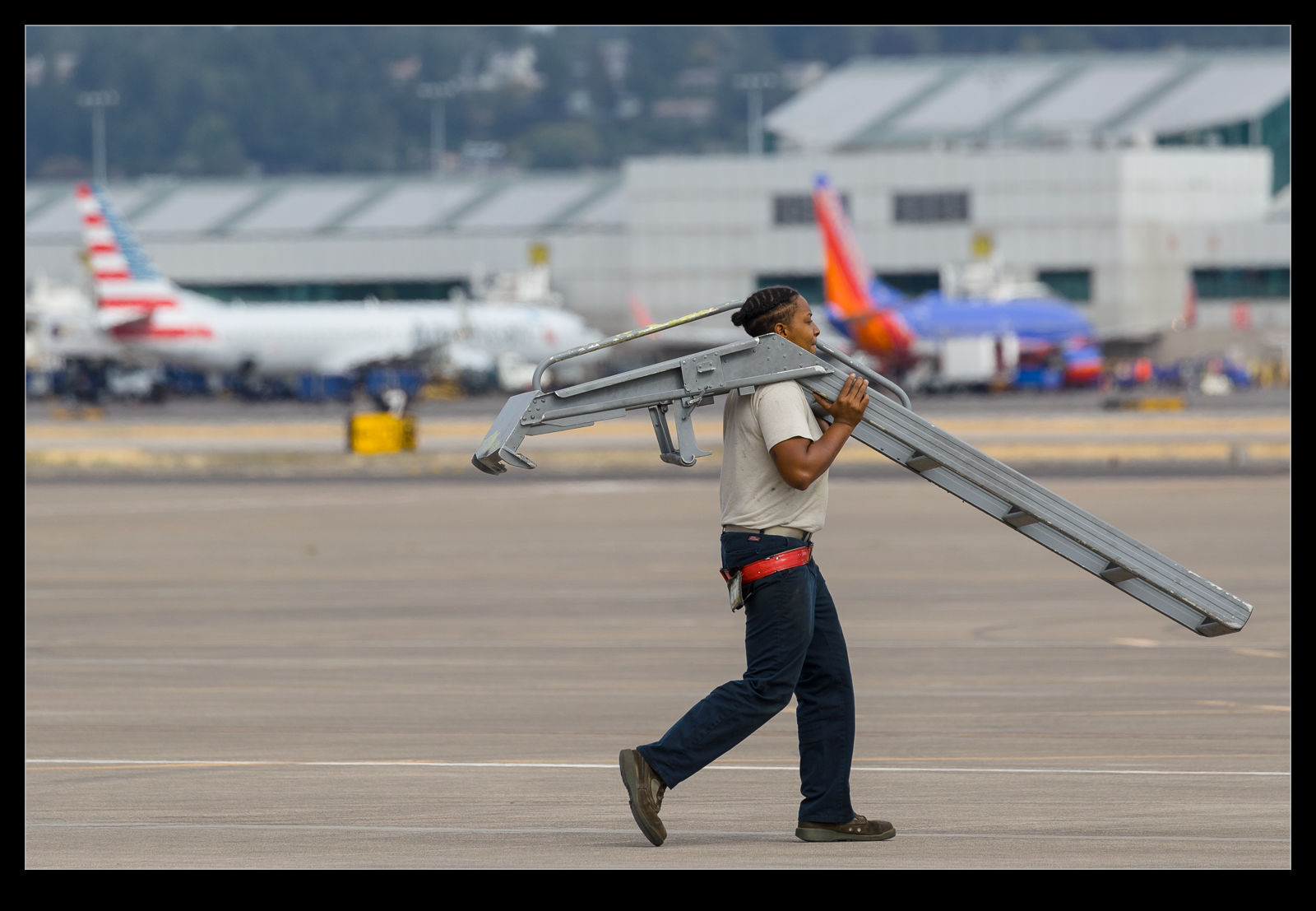
The Open House at Portland International that the Redhawks held was not the only thing going on that morning. While we were checking out the F-15s, a bunch of ground crew were at work out on the ramp area. They were setting up spots on the ramp for some incoming planes. As soon as I saw the ladders being carried, I could see that they were not for F-15s. They looked a lot more like F-16 ladders. The crews carried them out in a variety of manners but this person seemed to have a more relaxed way of moving a ladder around.
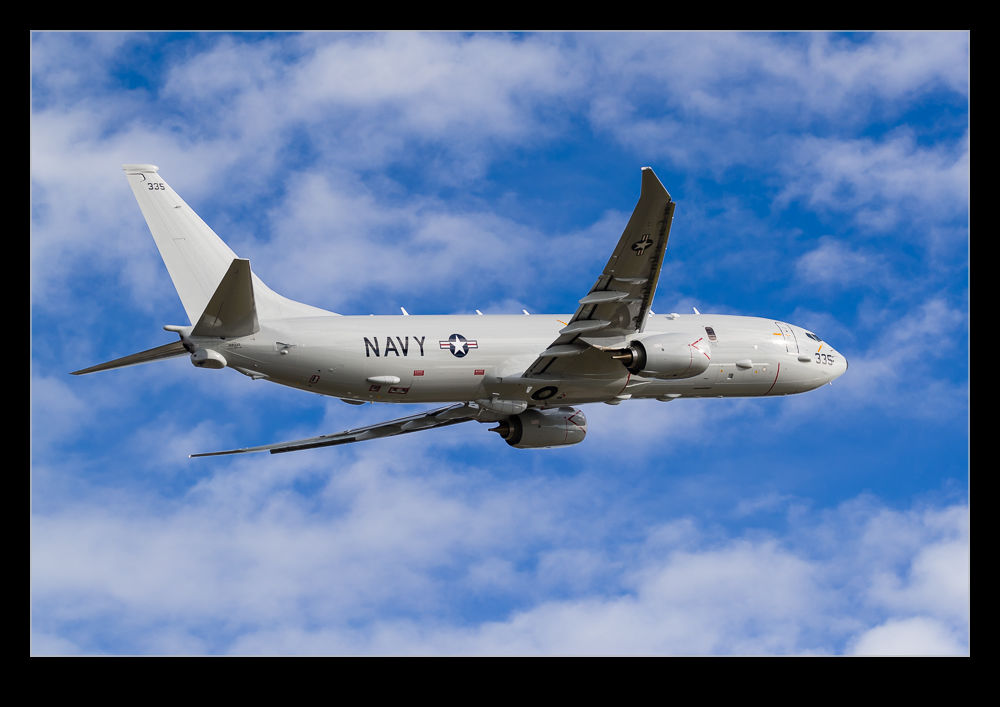 Every once in a while, you just get lucky. I happened to be at Boeing Field on a sunny day with operations in a southerly direction and a bunch of cool traffic. Most of the traffic shows up on Flightaware so you have a clue it might be flying but my recent experiences have been that the P-8 test flights have not been listed. Consequently, I was a little surprised when a P-8 pulled out of Boeing’s military operations ramp and taxied for departure. It came right past me as it made its way to the departure end. A short while later it rolled.
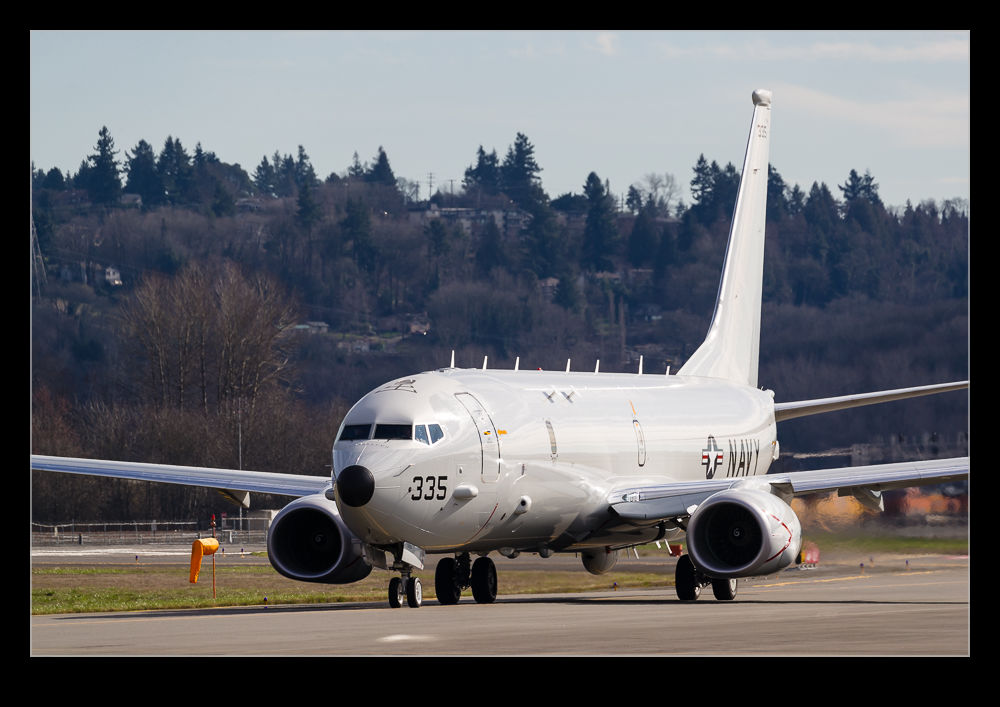 The sun was out, the light was nice, they rotated at a good location to get some nice shots and then, as they climbed out, the clouds were really nice providing a mottled sort of background. The colors looked great behind the grey jet. What a great combination!