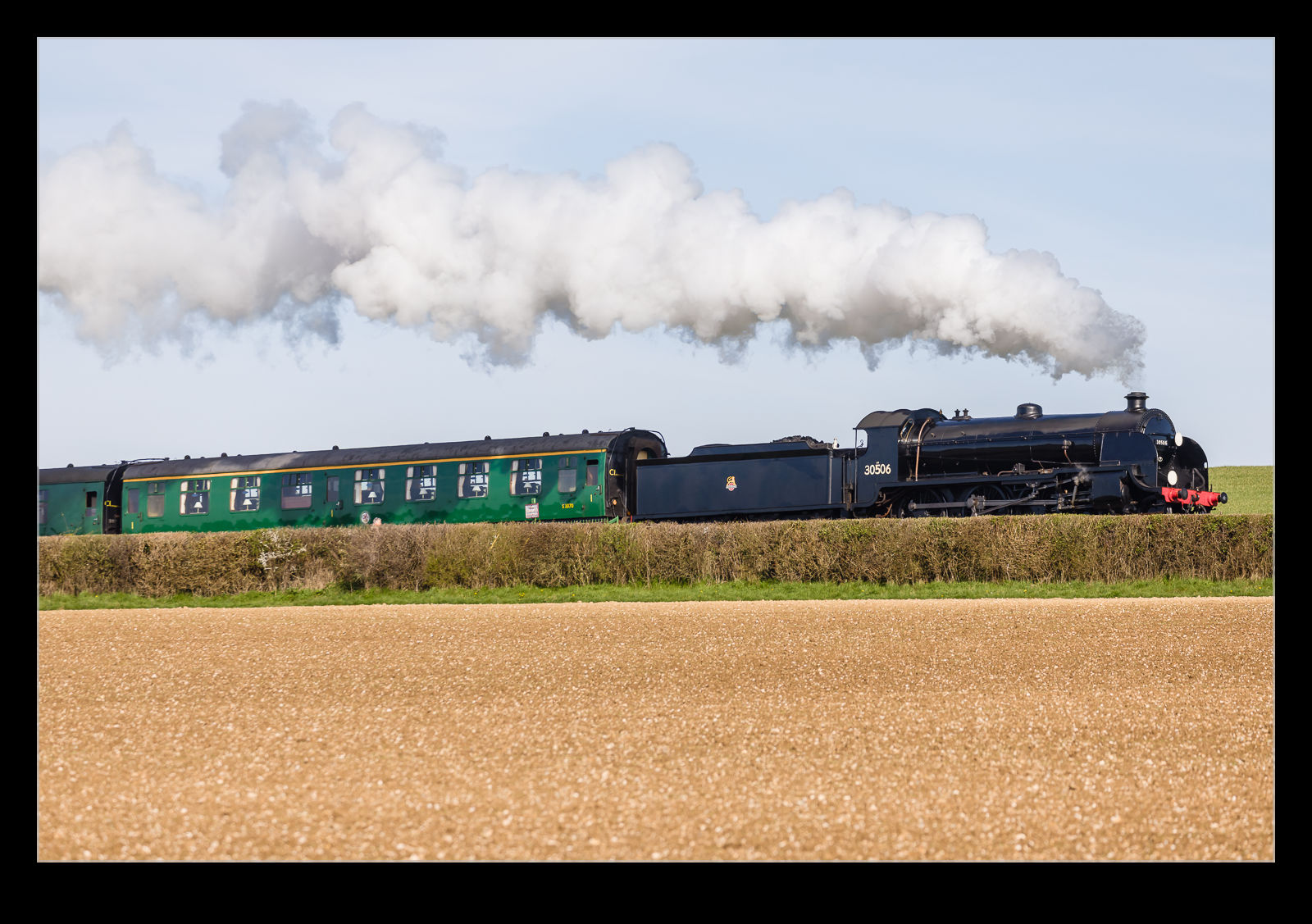
While out on a bike ride one weekend, I rode from Bighton to Ropley which takes me over the Watercress Line. I wasn’t aware what they might have going on that weekend, but it turned out that they had their “Thomas” making runs. It came out of Ropley towards the bridge I was on, so the phone came out to grab a couple of shots before I continued on my ride.
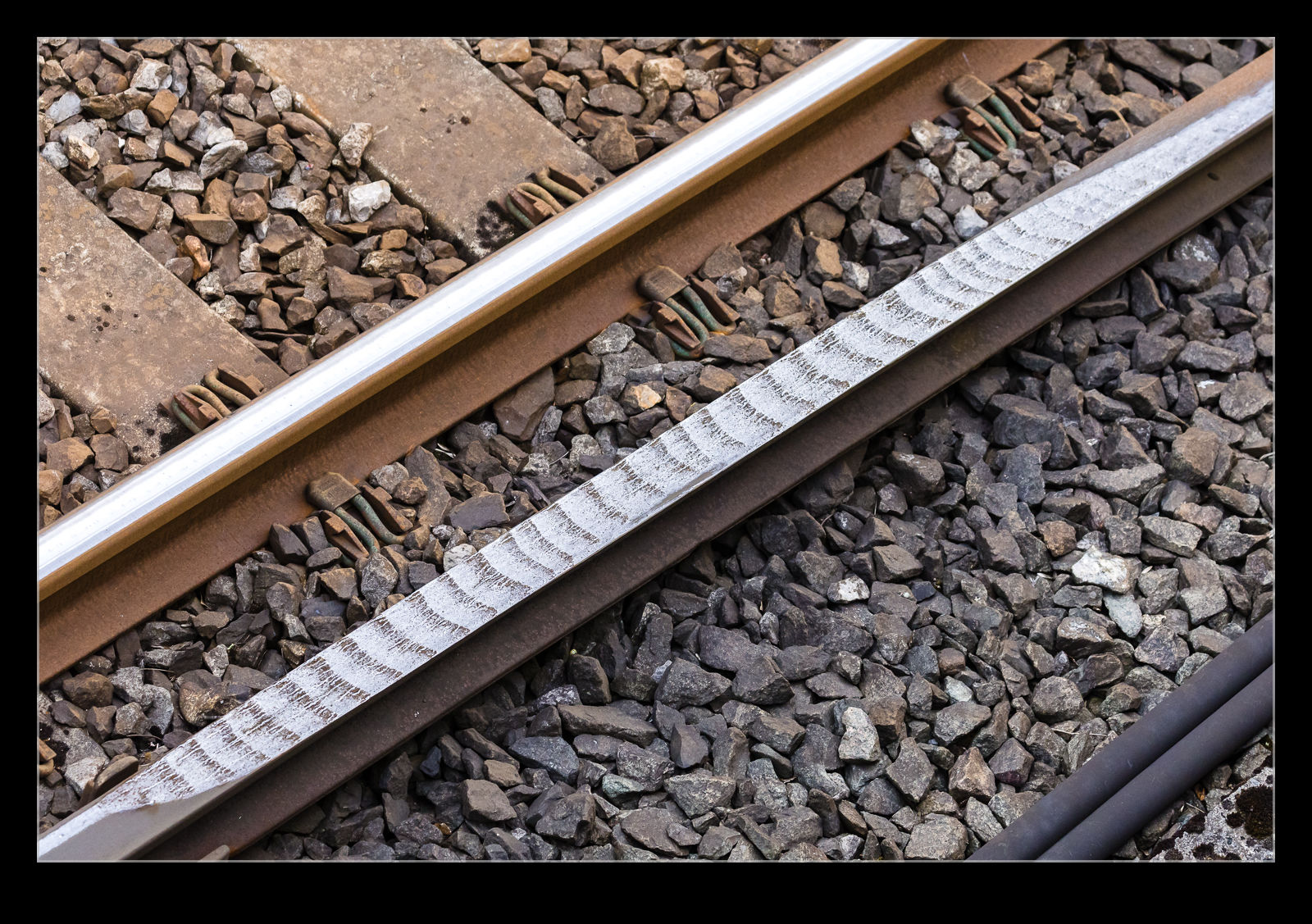
This is one of those more abstract items that occasionally catch your eye. I was standing waiting for a train and looked down at the rails for no reason whatsoever. I noticed the end of the third rail. For those that aren’t familiar with rail systems, the third rail is a power rail for electrical trains. There are two main power delivery methods in the UK. The overhead lines provide 25kV of AC power picked up by a pantograph while the third rail provides a nominal 750V of DC collected by a shoe. When the rail switches side, the end will be tapered down. If a train is pulling a lot of power when it joins or leaves the rail, there can be some interesting arcing. I think the patterns on the surface of the rail here were the result of repeated transitions. I know a couple of people that understand this stuff in way more detail than I so maybe they will correct me.
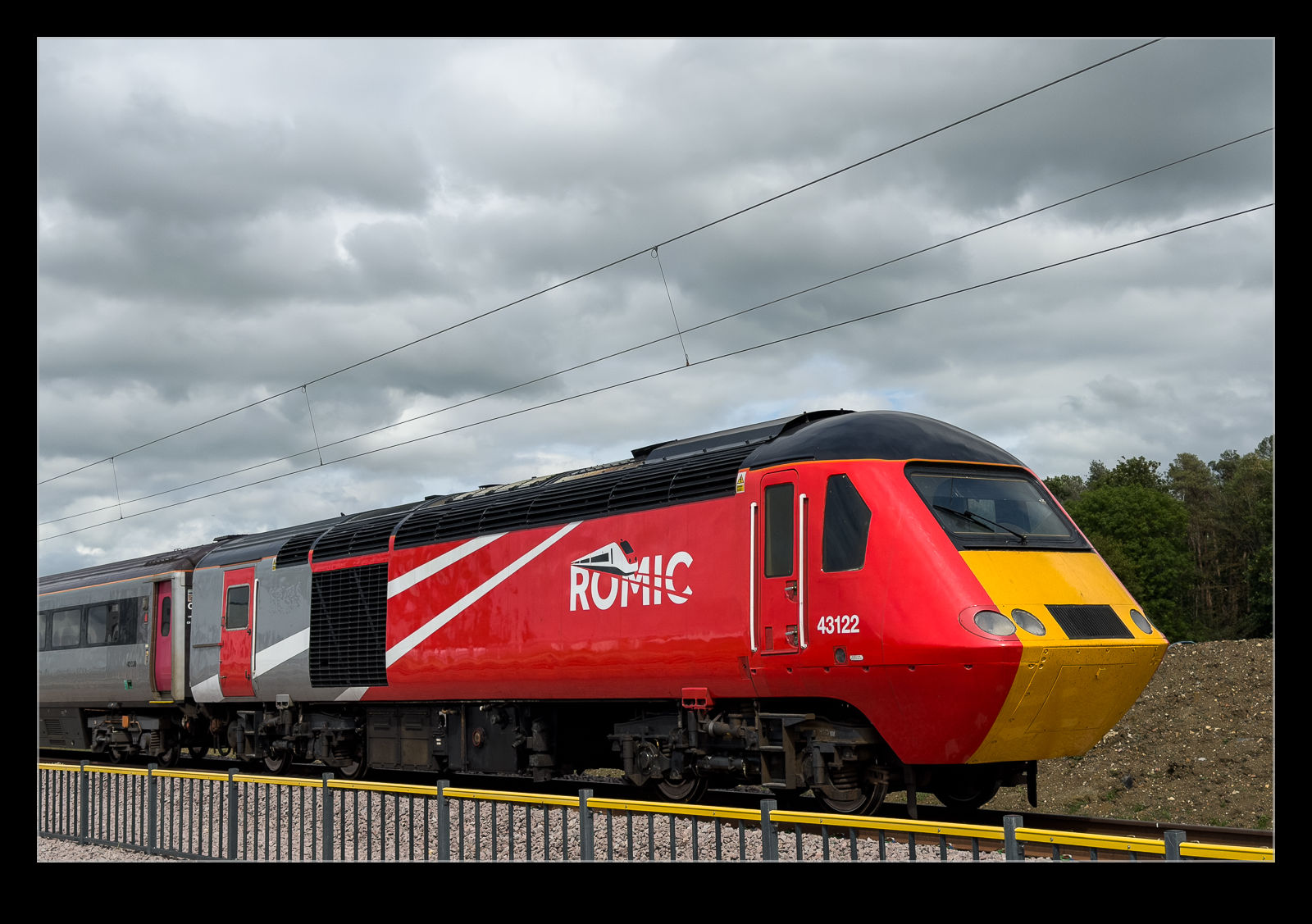
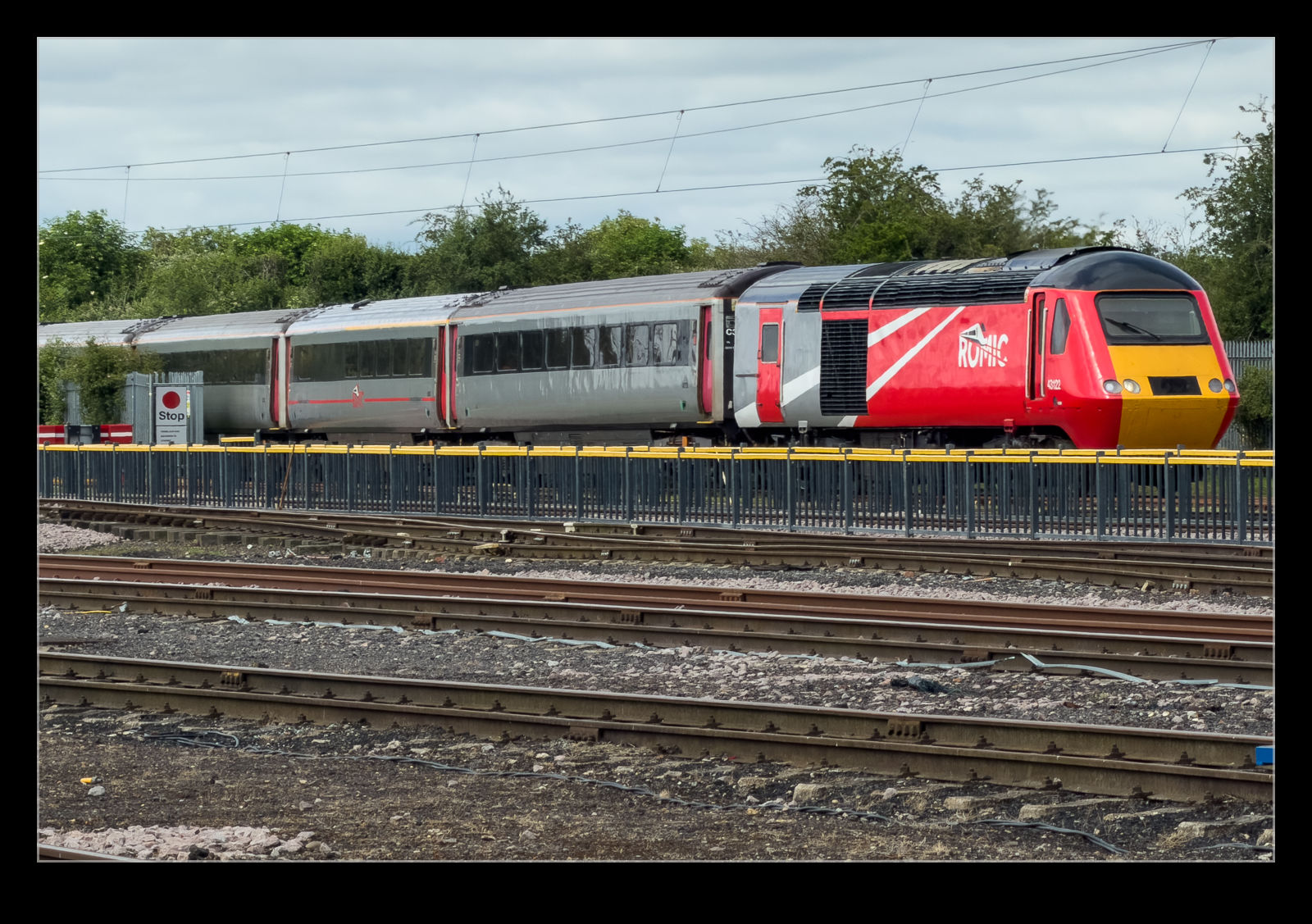
From their introduction in the 1970s until the time we left the UK in 2004, the High Speed Train (HST or Intercity 125) was ubiquitous on the UK network. At this point, they have almost entirely gone from service with only a few routes still having them at this point – hardly surprising given their age. Some are operating on charter services and one charter train came up to Long Marston from Paddington for RailLive each day. It was rather fun to see an HST again. Even at this age, it is still a pretty sleek looking train.
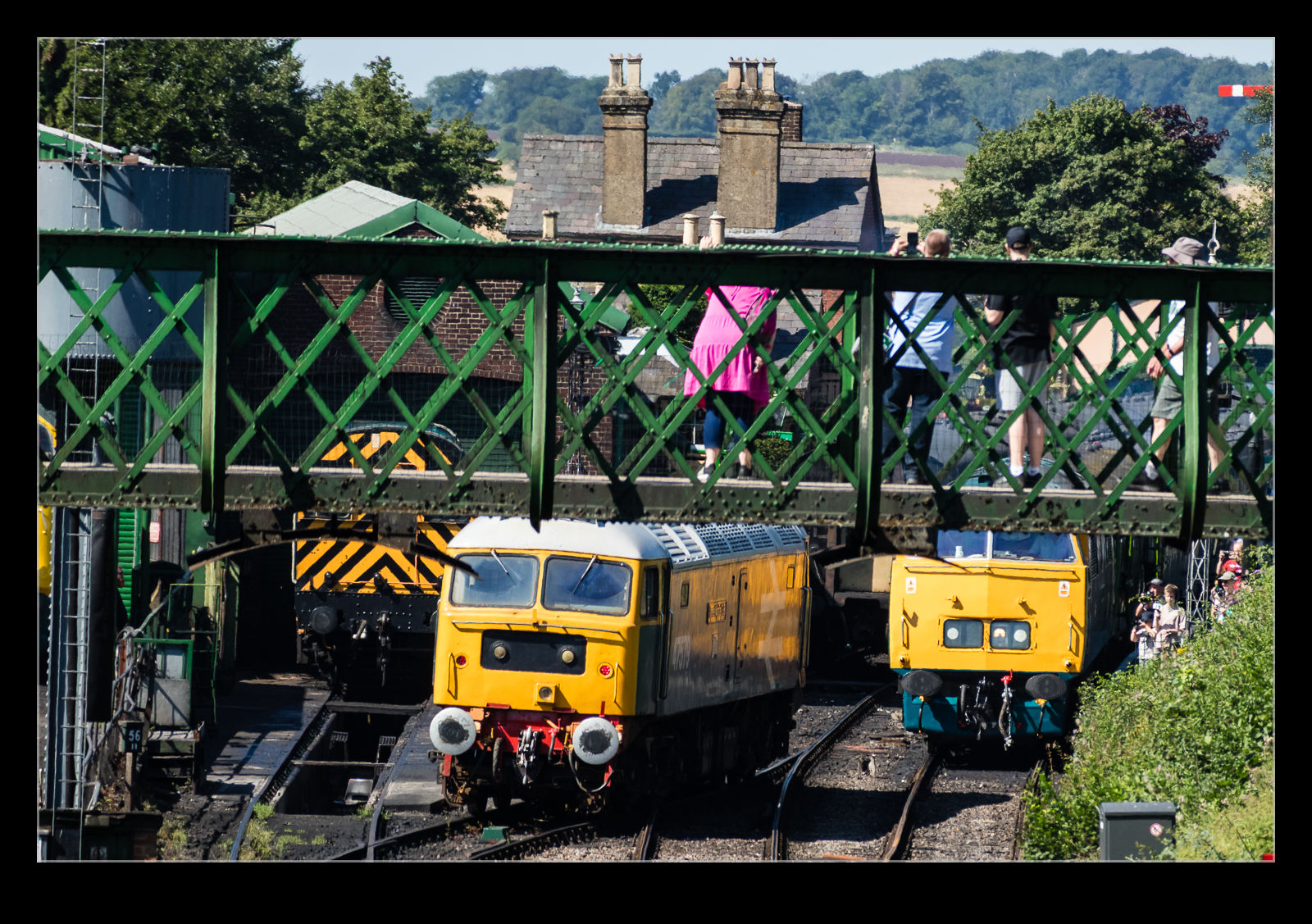
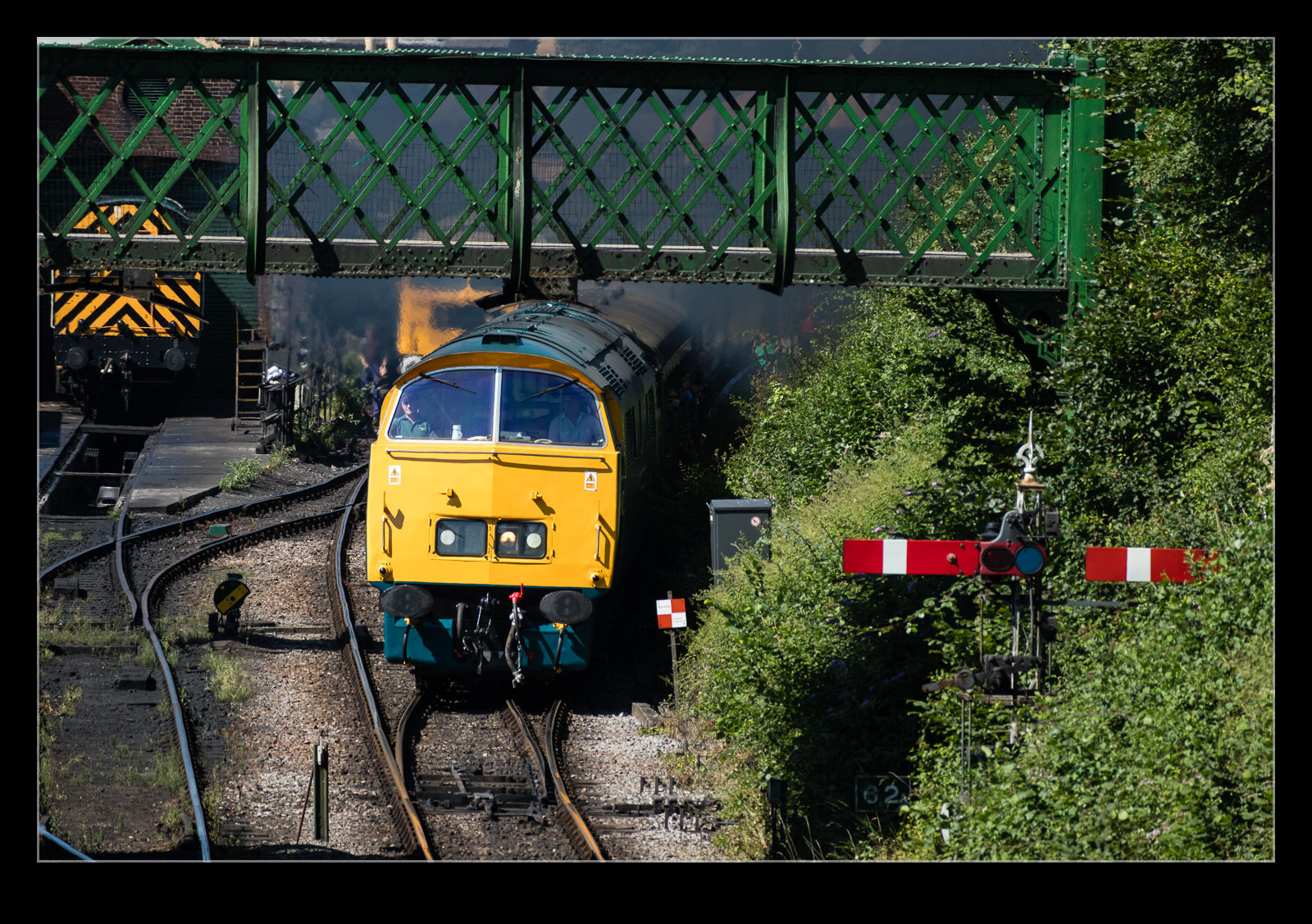
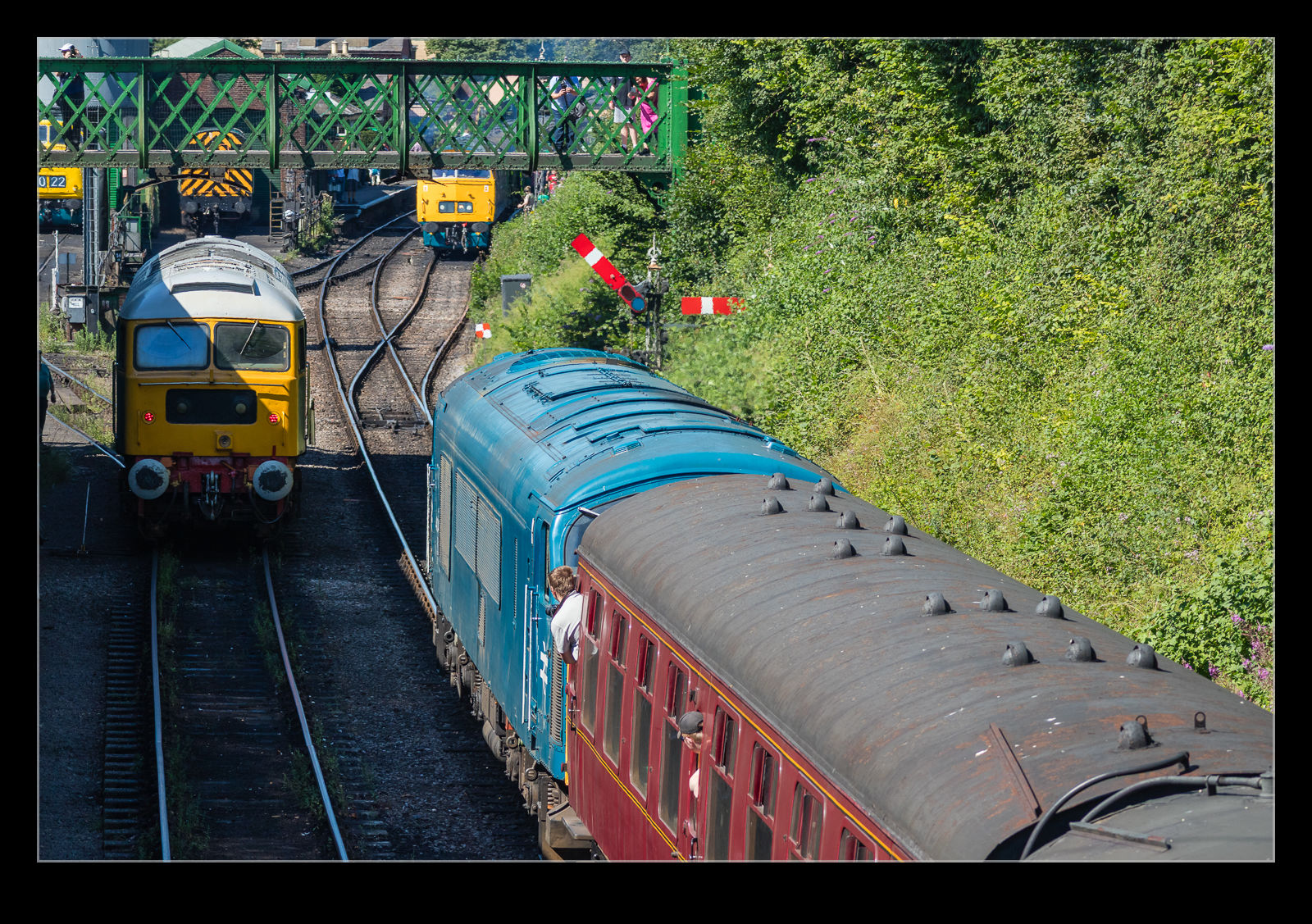
Back to last summer and I was out on the bike for a ride. I was doing a climb over a hill in Bighton and, once I came over the summer, I descended along a road that crosses the Watercress Line. I stopped to have a drink while sitting on the bridge and heard a diesel approaching. It turned out that it was the weekend of their diesel gala and I had timed my arrival well.
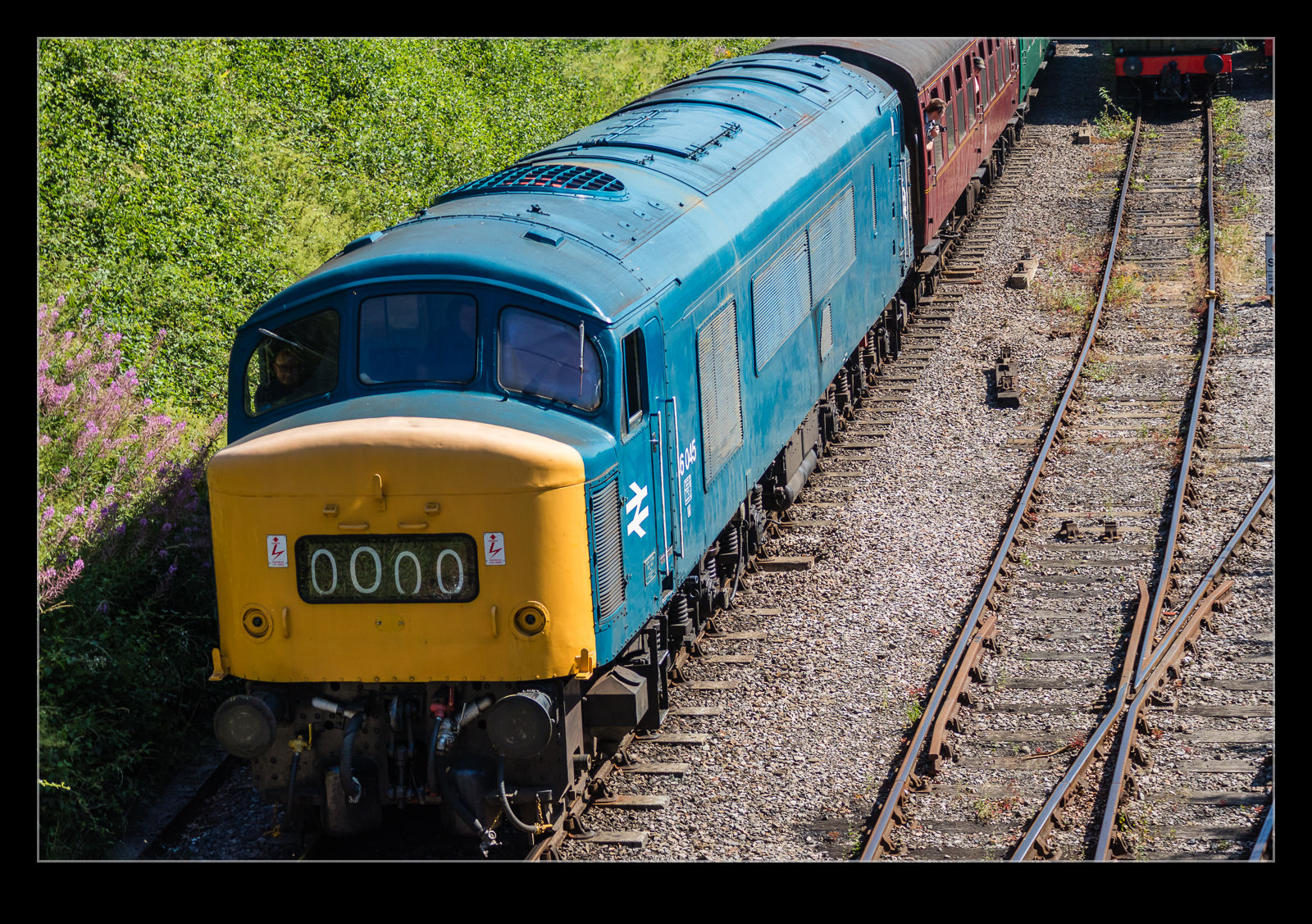
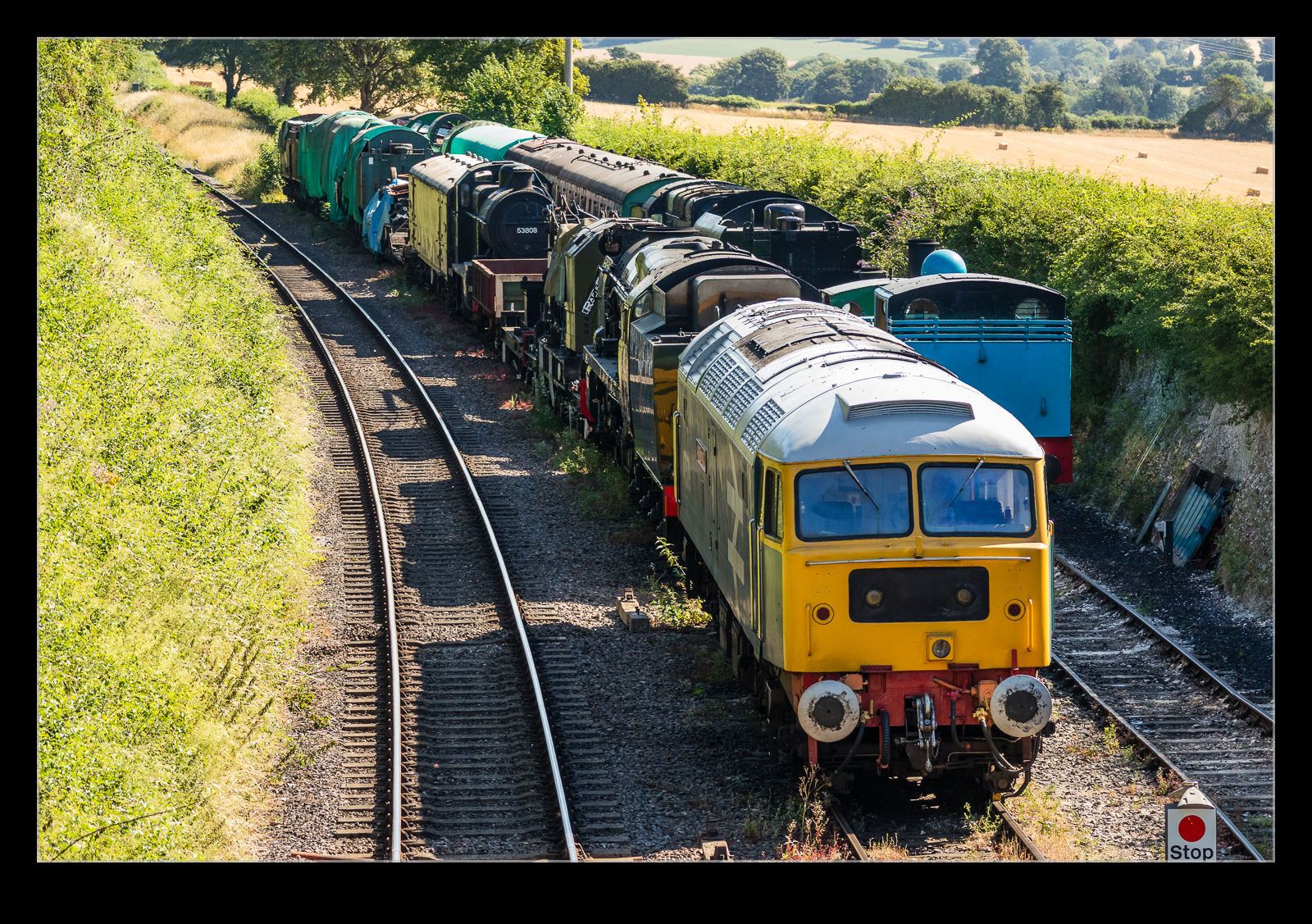
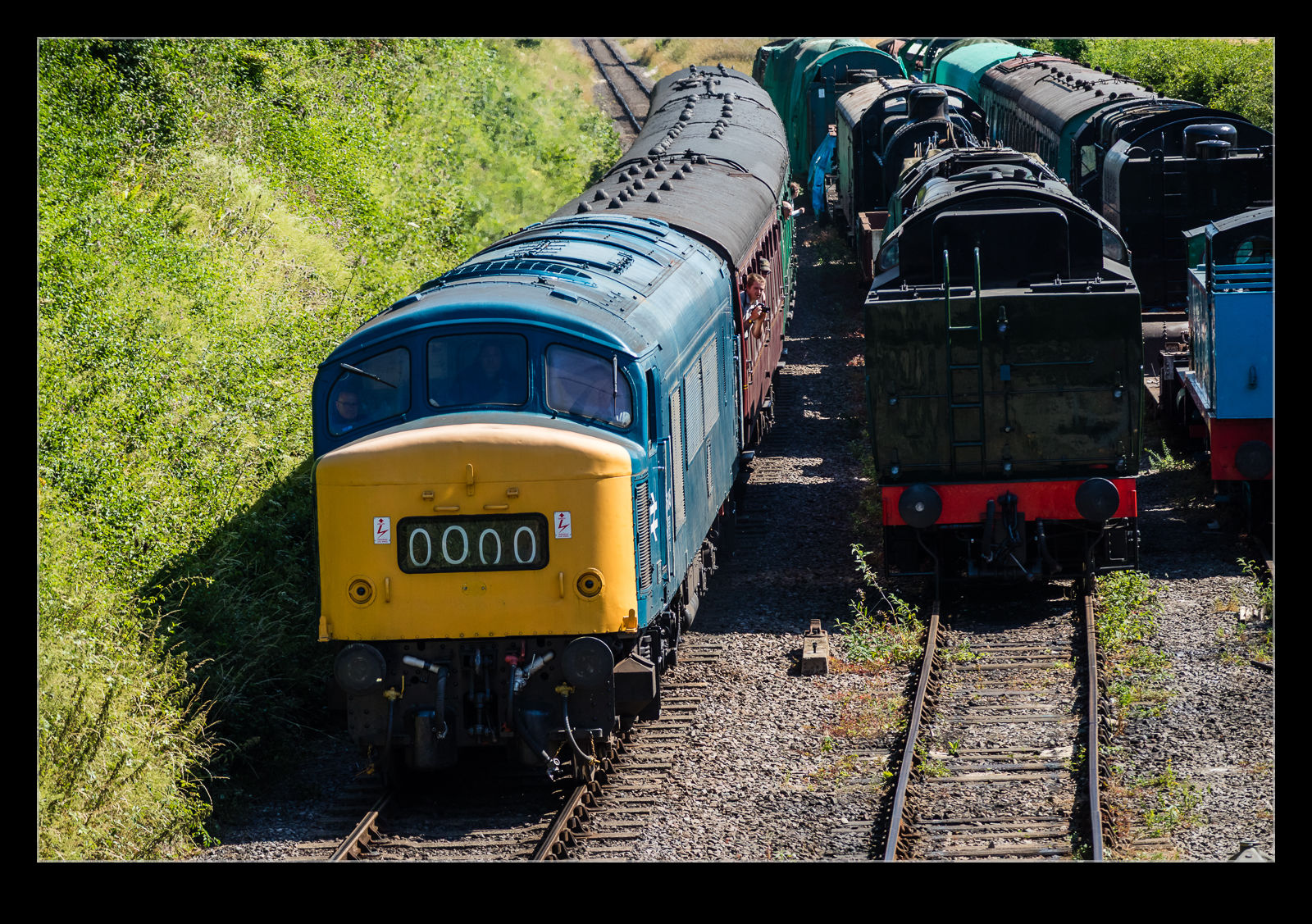
A couple of guys were in the process of taking a loco out of the sidings while a train was heading back towards Alresford. I am not a specialist when it comes to diesels but even I can read the number on the side. This was apparently a Class 46 pulling a train of customers. It was entering the station at Ropley and this is one of the passing places on the line so I figured there was a chance another train would be coming the other way.
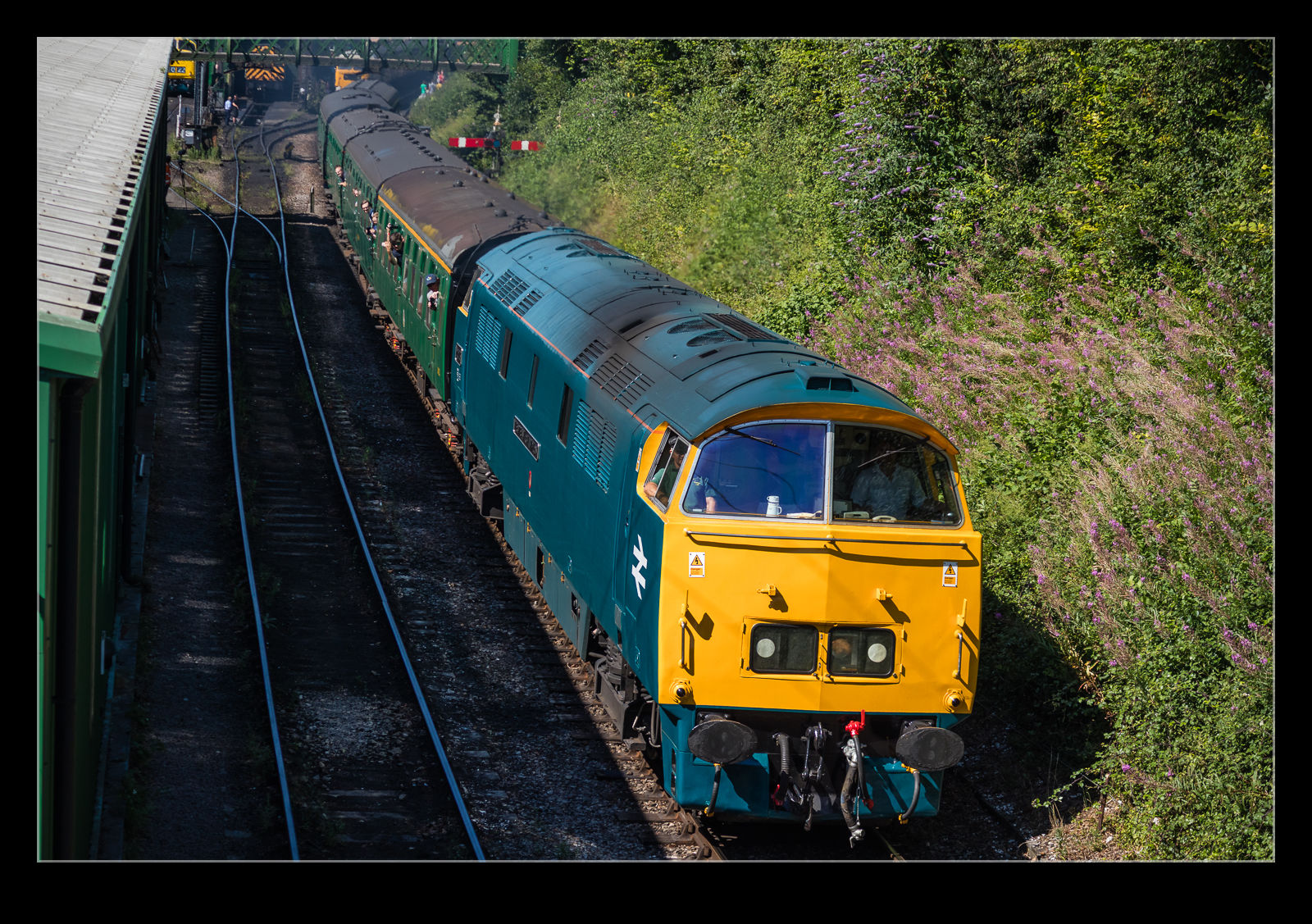
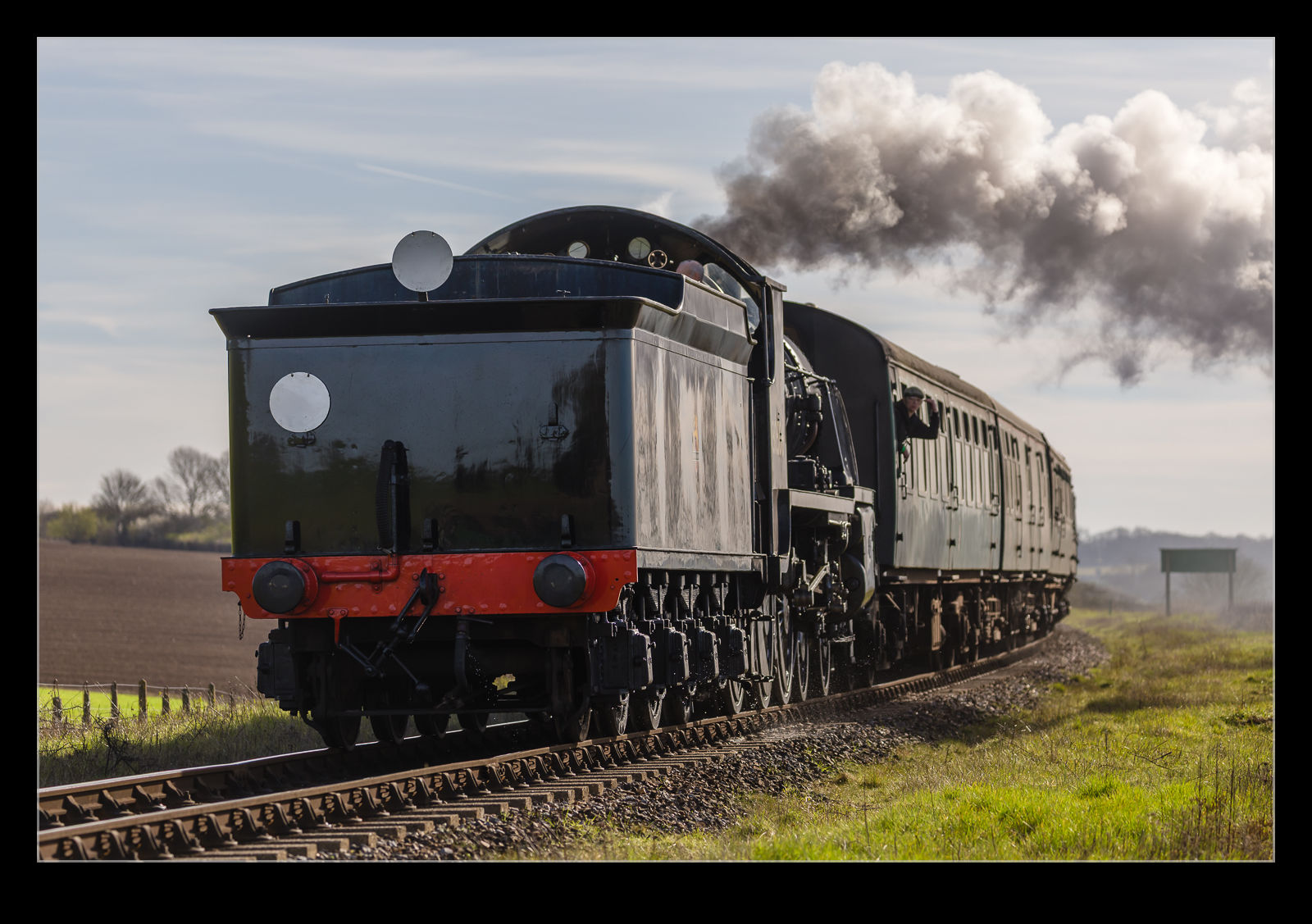
This proved to be the case. I think the loco coming the other way is a Western but might be mistaken so be gentle in the comments if this is wrong. As it pulled out of Ropley, the air above it was black with sooty smoke. These older locos are definitely not clean burning! Since it was accelerating uphill, it was working hard – hence the serious darkening of the sky! With it on its way, I had taken enough rest, and it was time to continue on my ride.
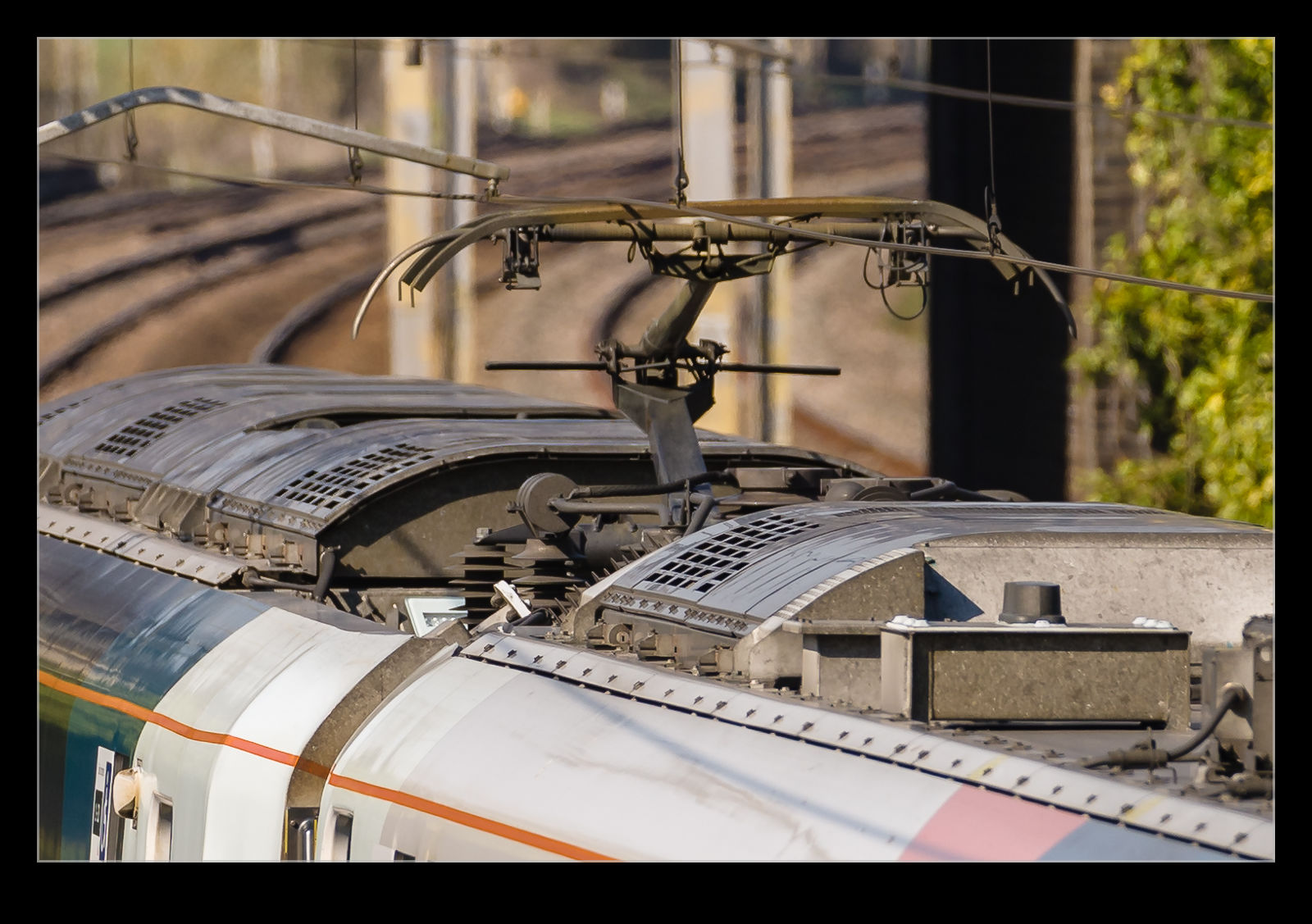
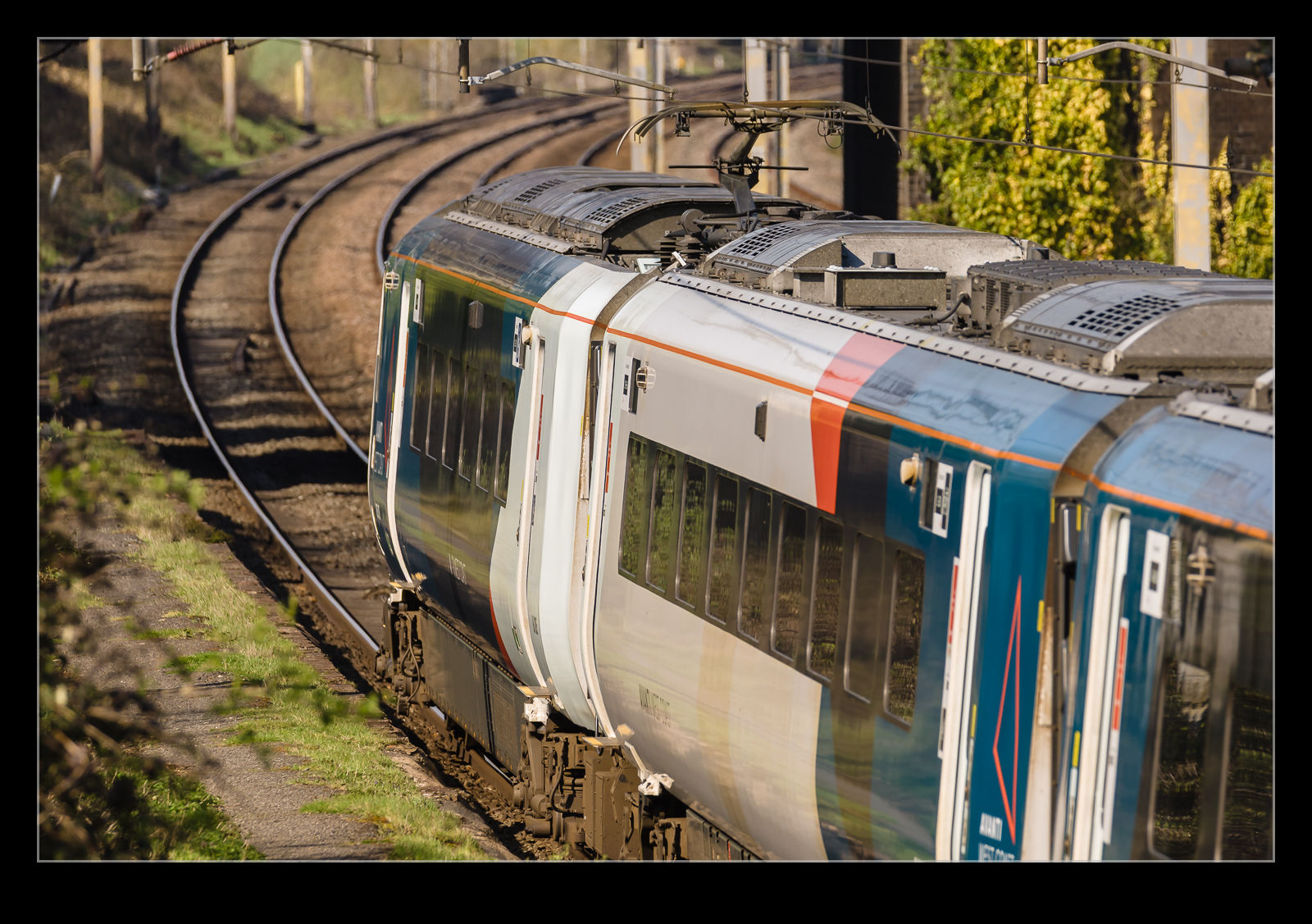
I had stopped off to eat some lunch in my car after a meeting, and I was alongside the west coast mainline. There were plenty of trains zipping up and down the track as I ate and I did take a few images while I relaxed. Only as I looked through the images when I was back at home, and I zoomed in to see which images were sharp did I notice the tracking of the pantograph along the overhead wire. The upward pressure was deflecting the wire by varying amounts depending on where it was in relation to the supports. It is interesting how much it can move the wire when passing so swiftly.
I had spent a bit of time preparing to photograph the Flying Scotsman on a Saturday morning at the Watercress Line. Once done, I had gone home and picked up Nancy so we could head to an appointment that we had in Itchen Abbas. When we finished there, the plane was to head to Alresford for some other stuff. This was going to take us by the bridge in Bishop’s Sutton that goes over the track. I thought it was about the time that another of the Scotsman’s planned runs should take place. Consequently, we drove by that way.
There were plenty of people on the bridge when we got there so I parked and asked if it was due. Someone said five minutes, so I grabbed the cameras from the car. As I did so, I saw people lifting cameras to their eyes so zipped back. The train was already climbing the hill out of Alresford. The longer shots were not great because the heat haze was already showing itself, but they were okay. As it came up the cutting, it was making plenty of power. Then it was gone. We were back in the car and off to our destination and it had barely taken five minutes out of our day!
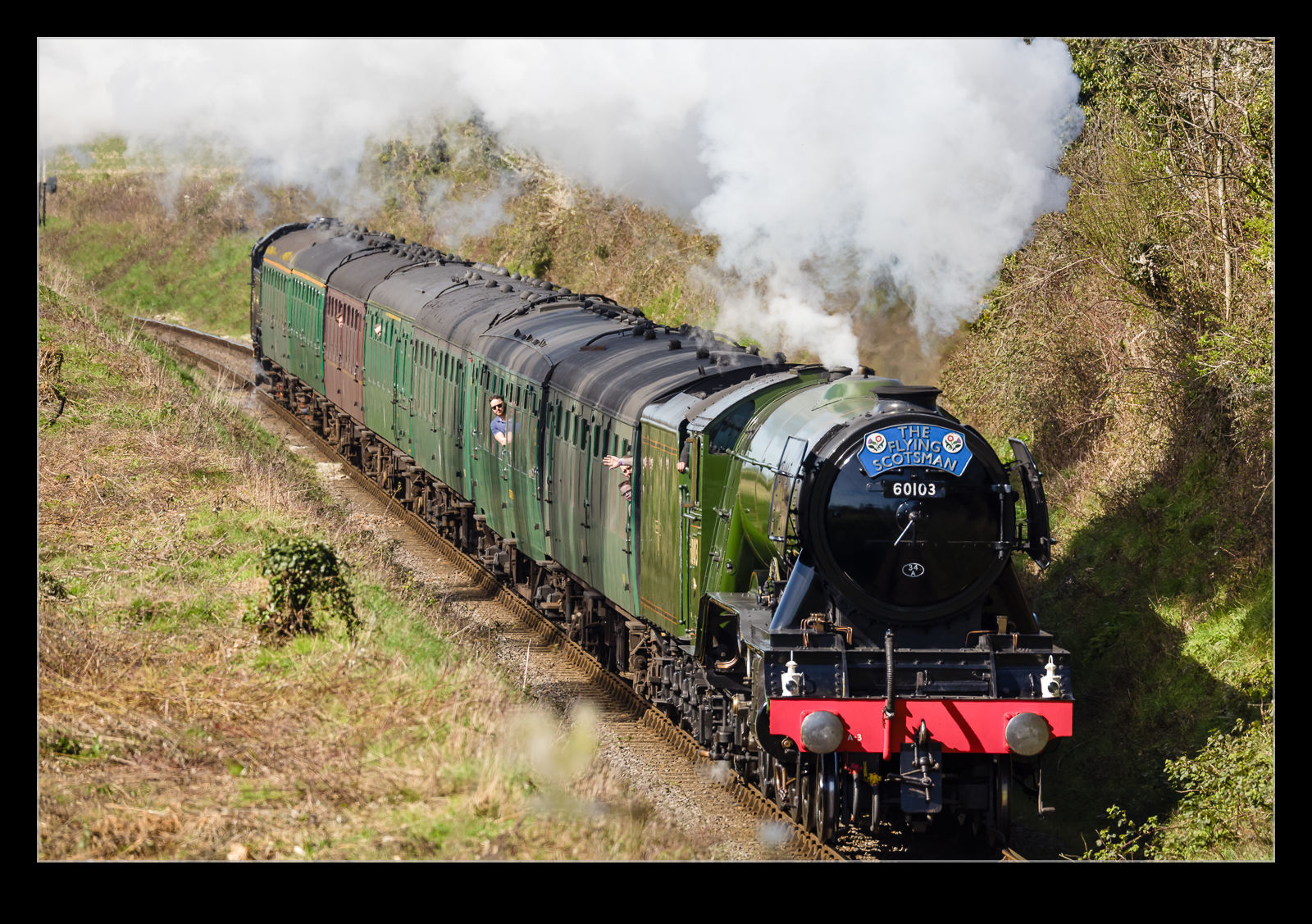
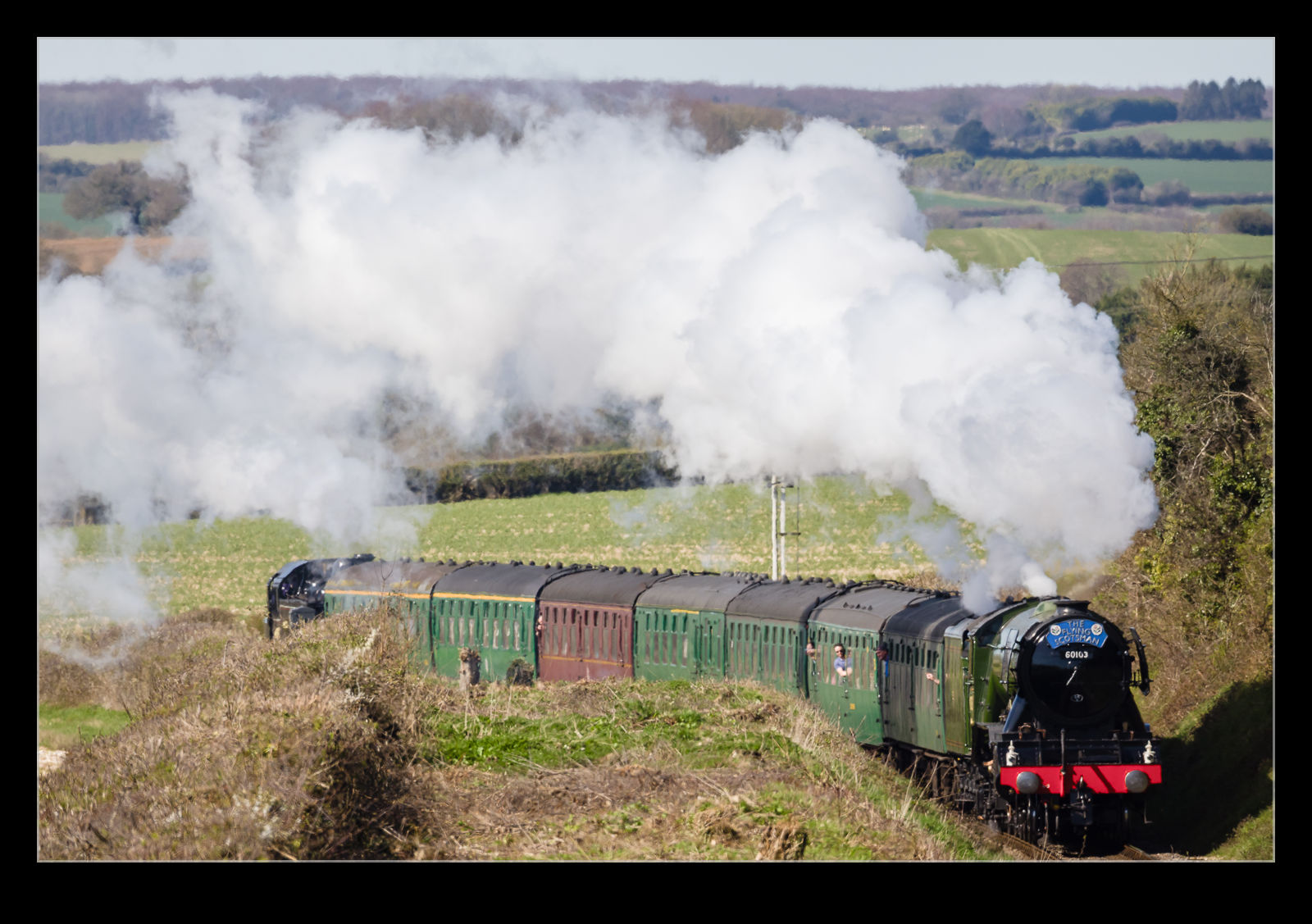
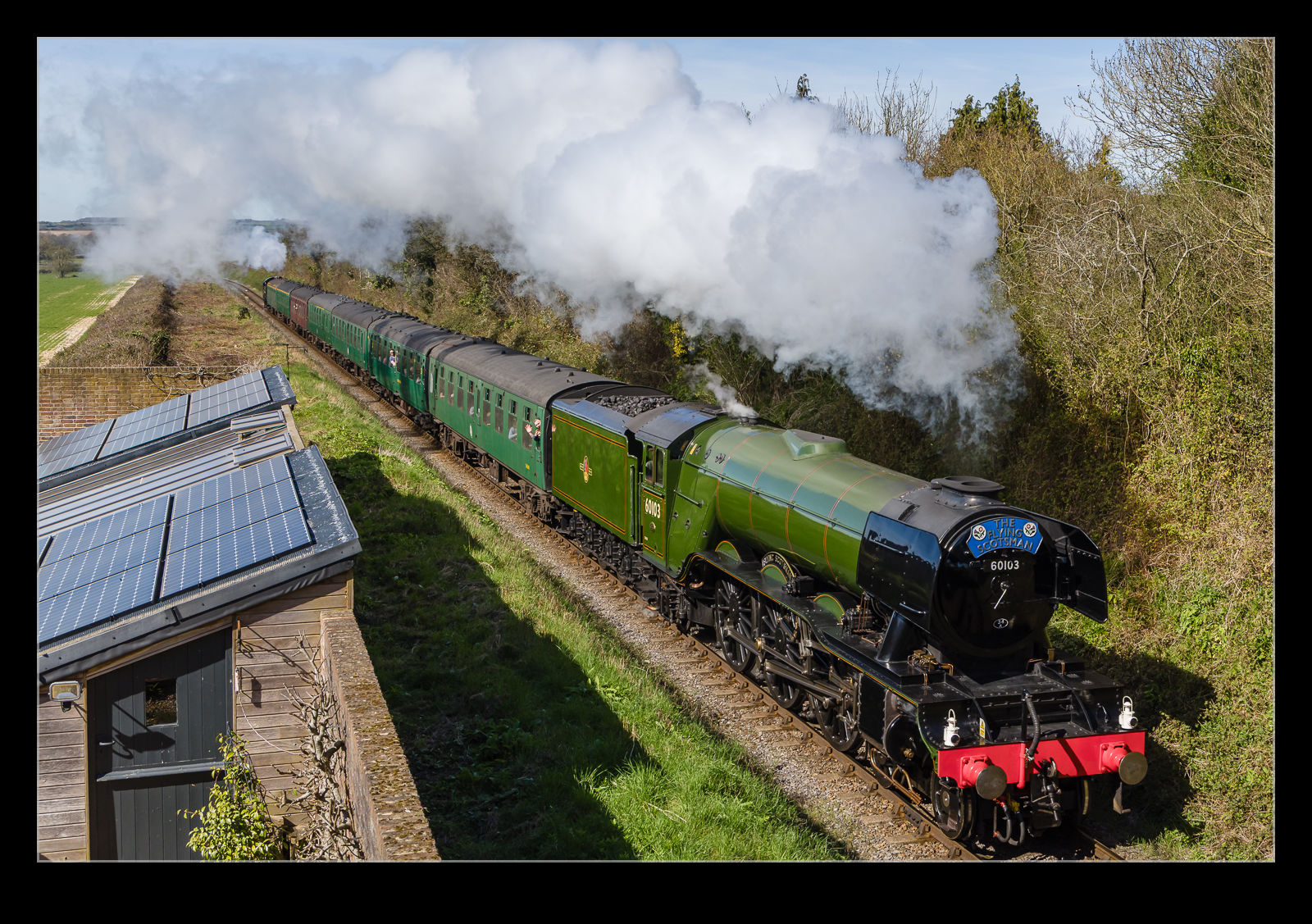
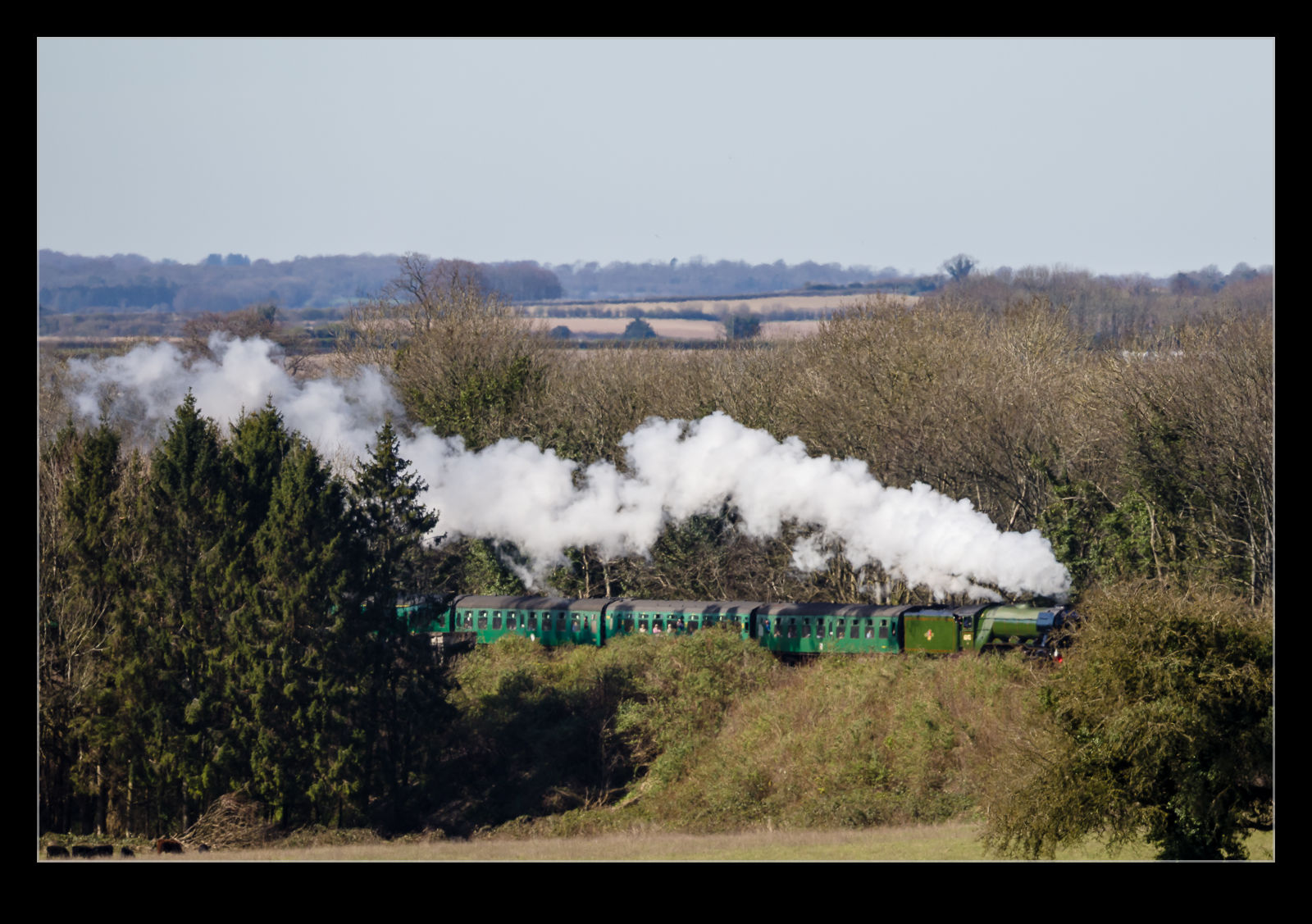
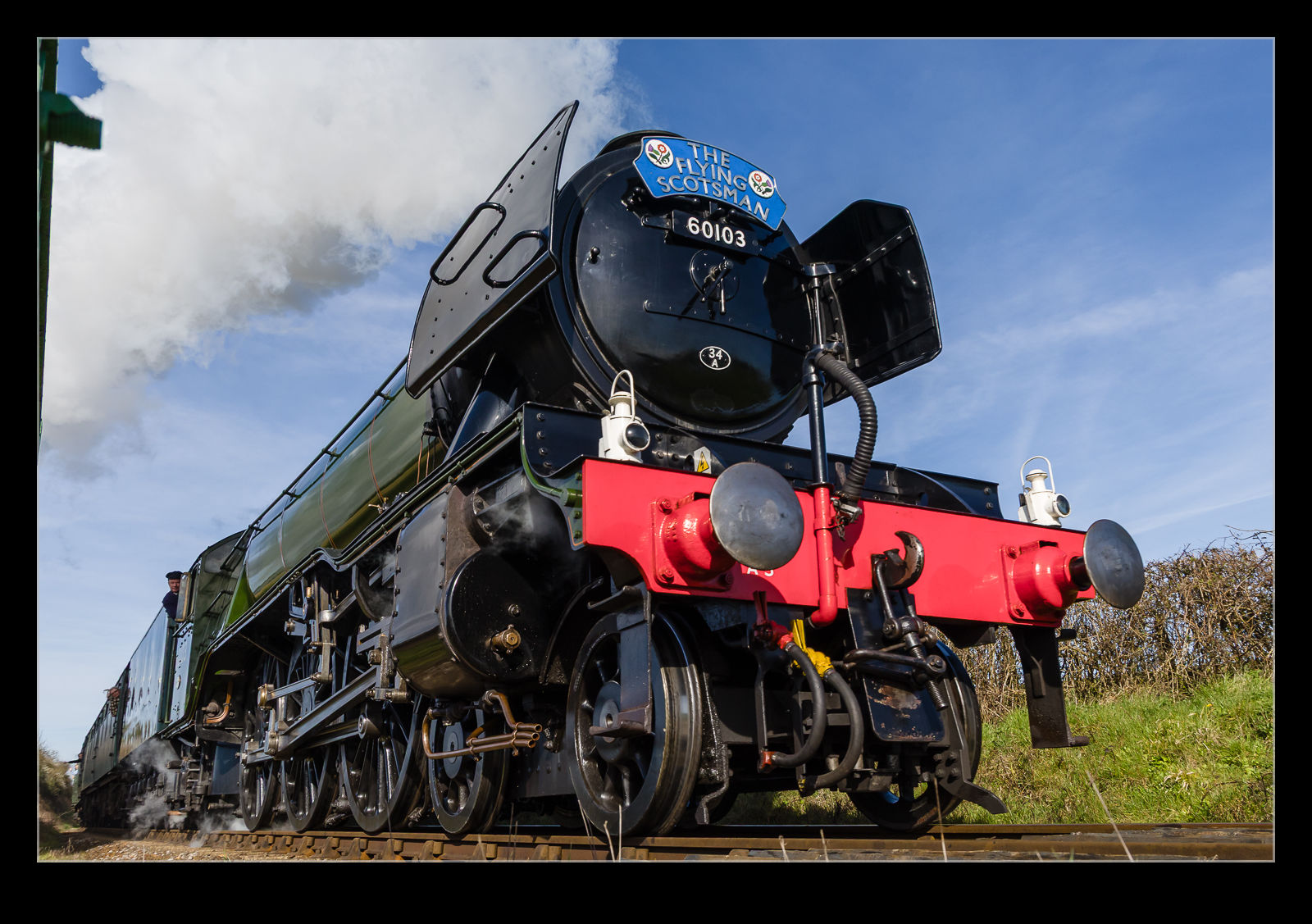
In a recent post, I told the story of my less than successful efforts to photograph the Flying Scotsman at the Watercress Line. In that entry, I mentioned how much public attention the loco gets. Given the number of large steam locomotives that there are in the country, it is interesting just how much more this one attracts visitors. If it helps the railways get some additional revenue, it is surely a good thing. Seeing as I had messed up getting photos on that occasion, I decided to try again the following weekend. The weather forecast was far nicer. Moreover, I spent a load of time thinking about what I would do. Even then, as I headed out in the morning, I had a couple of options with the things I was bringing.
I took two cameras with me and the Insta360 as well. I also had a clamp mount which I hadn’t decided whether I would use for the Insta360 of the second camera. I figured I would decide when I got there. Since the weather was nice and the Scotsman is popular, I worried that it might be pretty busy. There are limited parking spaces on the lane near the crossing I was going to, so I headed out in plenty of time. Of course, when I arrived, there was no one else around. Plenty of time to now kill!
I walked up to the crossing and found it empty. This gave me loads of time to decide on what to do. I had brought some PocketWizards with me. If I was going to use the second camera, these would be used to trigger that body.
As I unwrapped the PocketWizards, I realised that the Velcro cover I used for them would also make a nice wrap for the Insta360 handle. I attached it to the fence and wrapped the handle to the fence posts, and it provided a nice secure fit which meant I know had the clamp mount available. The Insta360 is controllable from my phone, so I was able to leave it fully extended and just activate it from the app when ready. I did a test with it when it stopped recording after 20 seconds. I have no idea why it did that so tried a couple of further recordings which all worked fine so I decided that was good to go.
While the PocketWizards can be used to trigger the second body when the first is firing, I didn’t actually want that. The two bodies were set up for different shooting scenarios – the long lens would cover the approach of the train but, during that time, it would be so far away that there would be no benefit to shooting with the wide-angle lens. Similarly, once it was close enough for the wide angle, the long lens would already be too much so I would have stopped shooting with it. Consequently, I handheld the PocketWizard and triggered it by hand when required.
I clamped the mount to the bottom of the fence with the camera at ground level looking up at the approaching train. I normally use back button focus but I don’t think that would activate via the PocketWizard, so I switched it to front button for focus and exposure. The joy of a flexible screen is that you can frame up the shot without having to be a contortionist which is good news for those of us with a few years under our belts. With everything set up, I set off a few test shots to see if everything was working. It all seemed good so now it was time to wait.
I was expecting one or two movements before the Scotsman which would give me a chance to test things out. There is a shuttle that is used to take people from Ropley to Alresford for the main event so I figured that would come through. It would be going the wrong way but would allow some practice. However, there was more than I expected. The first thing to appear was a steam loco running light in reverse from Ropley. Turned out that it was the Scotsman heading from Ropley to Alresford to join the train. That was a nice option but, of course, it had no coaches and, since it was running downhill, it wasn’t making much power. The shuttle also ran back, and forth which gave me some practice while another train rain down to Alresford for a service that would come after the Scotsman had departed for its first run.
All of this provided me with time to play around with the set up and make sure all was working the way I wanted. Then it was time for the reason for being there. The train departed Alresford pretty much on time. Since it is quite a climb up to Ropley, the loco was making lots of power and there was a banking engine on the rear too. The smoke could be seen through the gap in the trees, so we knew it was coming. Eventually it came around the corner in the cutting, and we could get some shots.
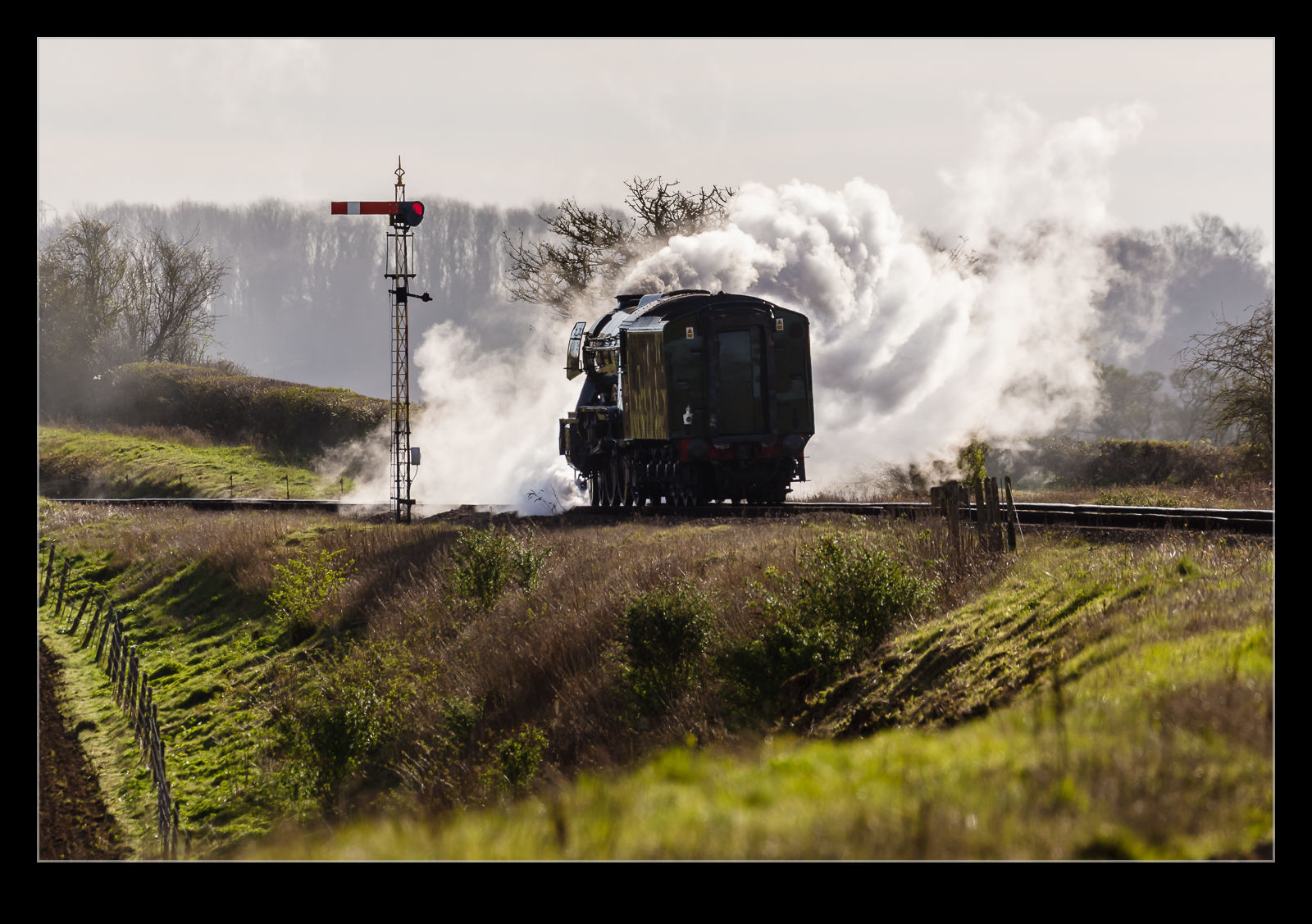
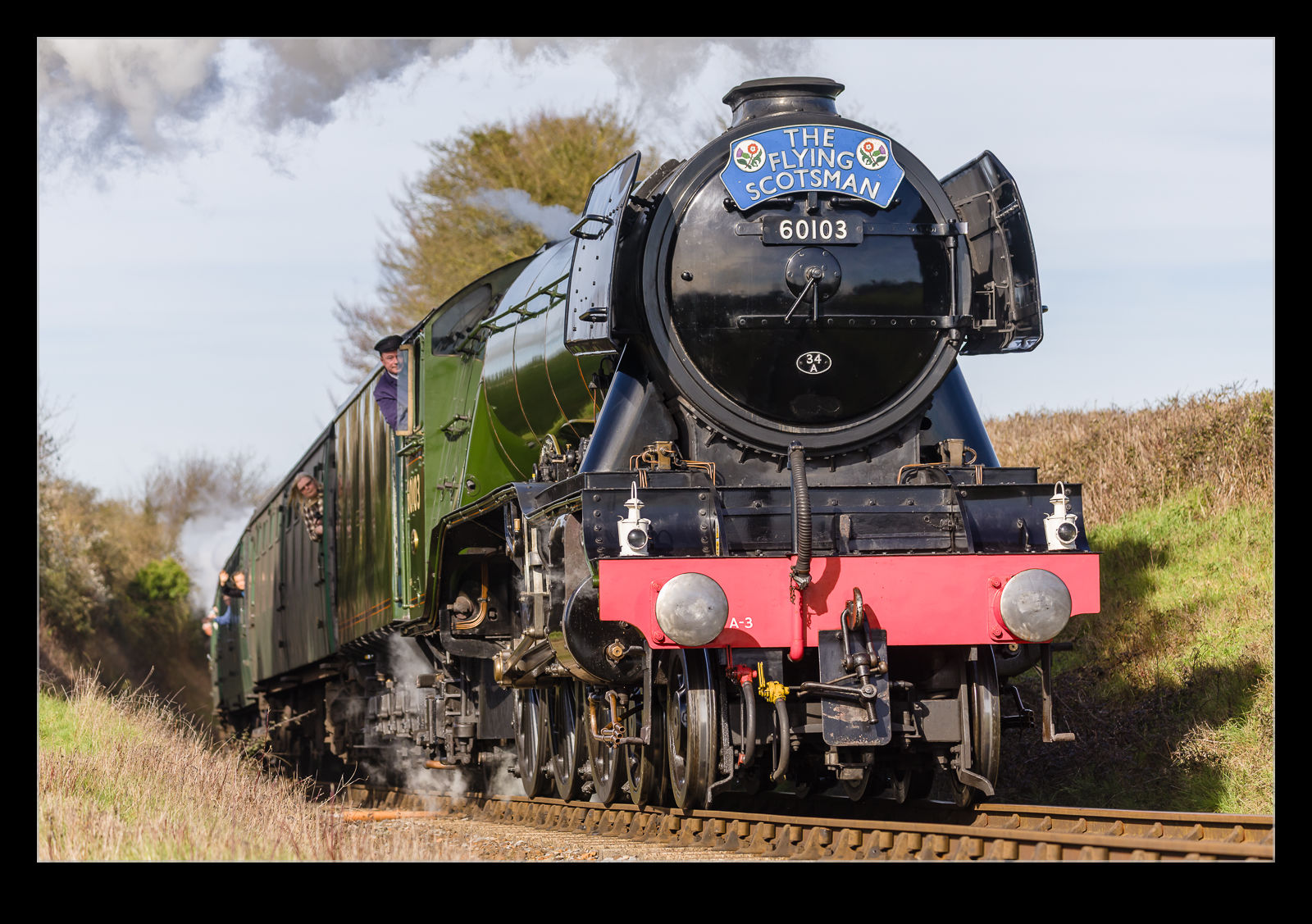
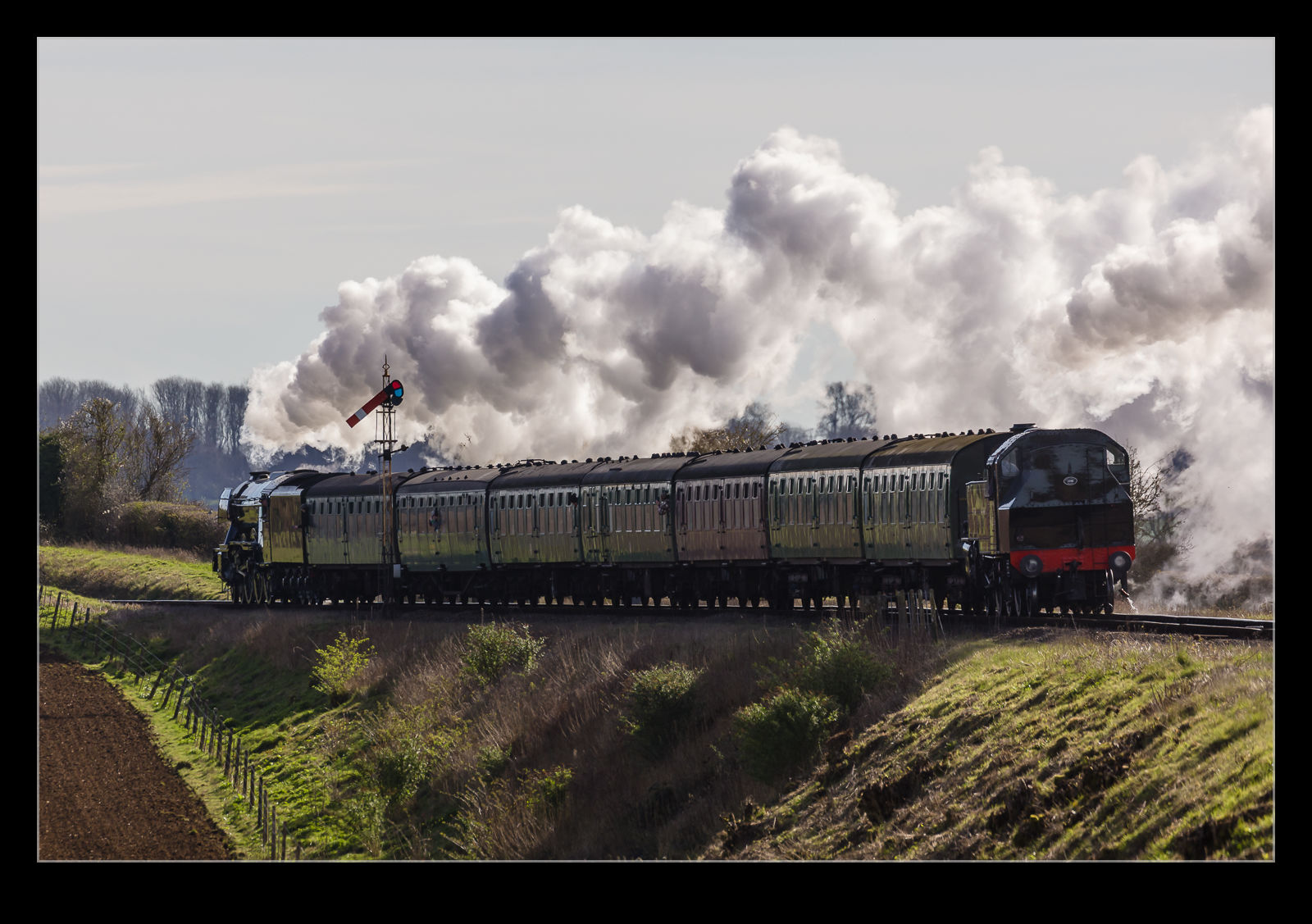
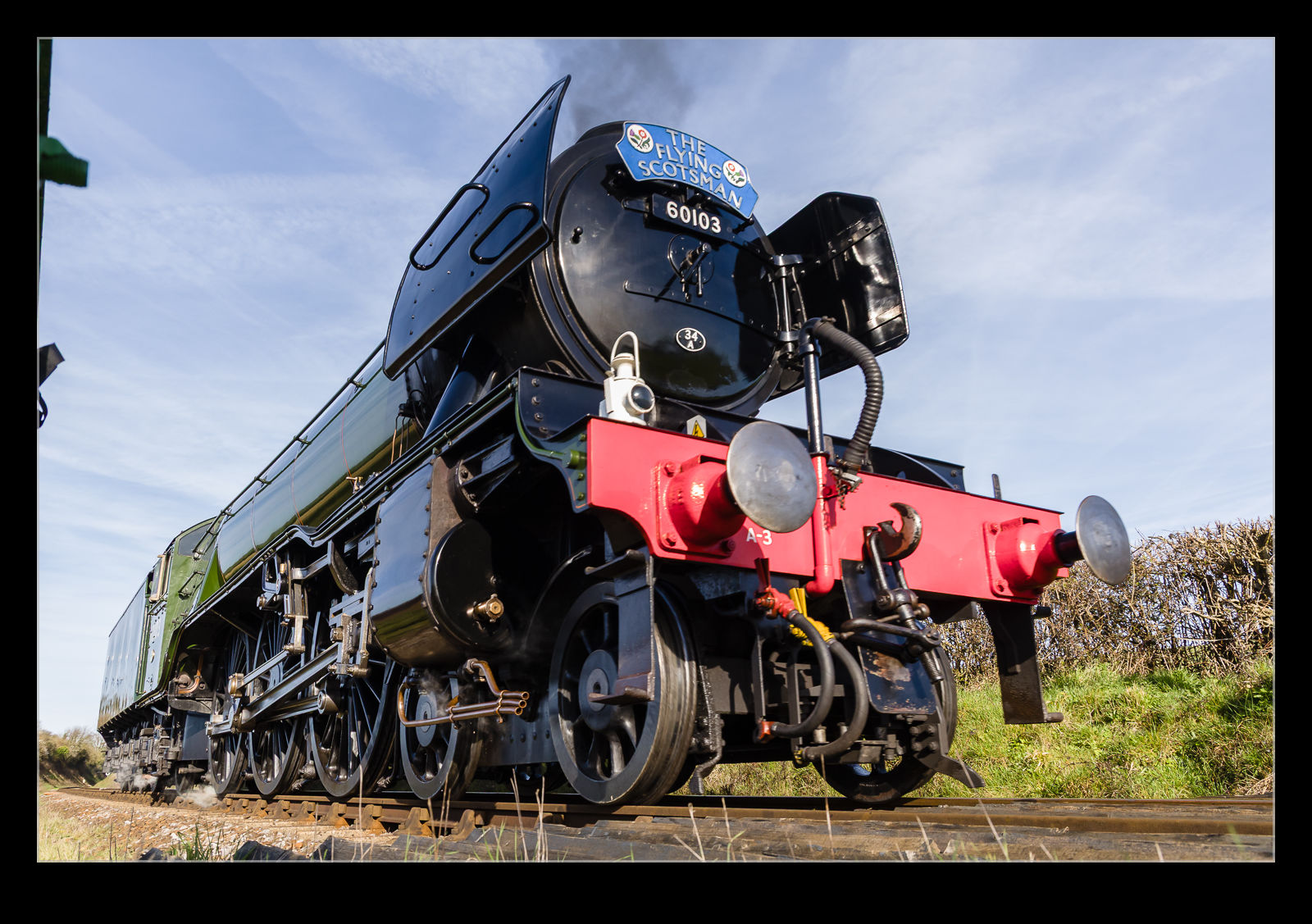
I started the Insta360 first and then proceeded to get some longer shots as it approached. As it got closer, I dropped down and photographed through the fence to look up at the loco as it came closer. Then I switched to the PocketWizard and took a bunch of it as it passed. I have no control on where the camera chooses to focus in that situation, but I was rather happy with the results. I even got some interesting shots of the driver and one of the passengers leaning out of the window. Then I took a few shots of the train as it retreated. That was very backlit, but it still made for an interesting view. And then it was done! All of that prep for a brief moment.
The people rapidly scattered and I started disassembling the things I had put in place. I had brought a small stool with me but that had never been used. Too much messing with gear or chatting to the others that had come alone. It was a very friendly atmosphere and made you feel good about being out on a sunny Saturday morning. I retraced my steps to the car. As I walked along the lane, I heard another whistle and pulled up the camera I had on a strap around my shoulder. The train that had run down to Alresford earlier was now making its run. It was skylined on the ridge above me and I just happened to be by a gap in the hedge so was able to grab a few remaining shots. Then it was time to head home.
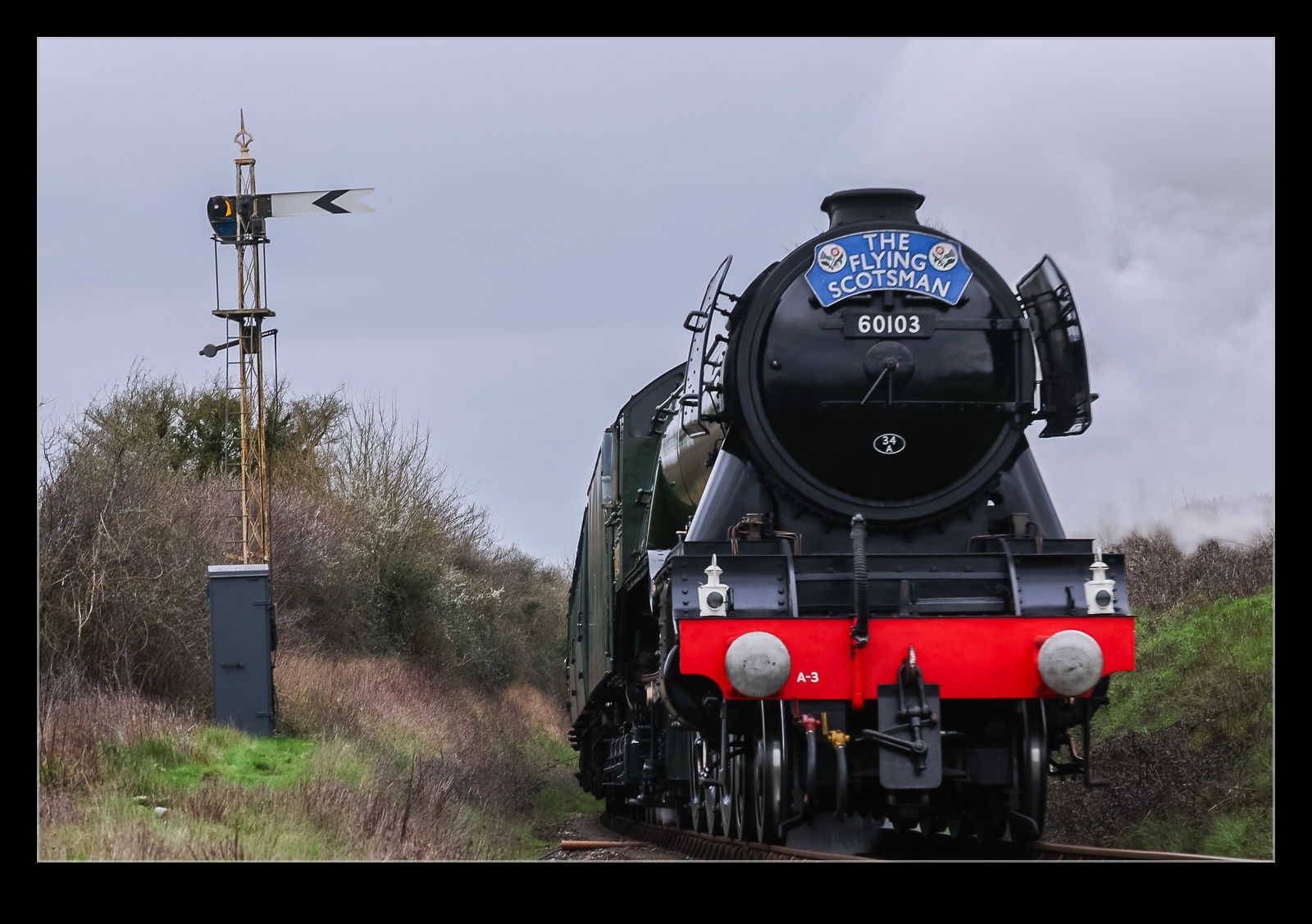
The Watercress Line had arranged for the Flying Scotsman to make a visit to the railway. This locomotive seems to really capture the attention of the public, so it was a major event for them. They even lengthened the platform at Alresford to allow longer trains to be formed meaning more passengers could be carried. They were running on two consecutive weekends, and my sister was interested in seeing it. I was always going to be game for a photo trip. She could only do one weekend of the two and I only had one day free that weekend so that was going to be the one.
Sadly, the weather wasn’t being very cooperative. It was very overcast and there was a decent chance of rain. Even so, there were plenty of people out at the crossing we were going to when we got there. Plenty of space for everyone but definitely popular. As the time for the loco approached, I changed a setting on the camera for a higher frame rate and got in position. I decided to take a couple of quick shots before it came in to view just to check all was well. It wasn’t!
As soon as I hit the shutter button, the screen was covered in a “Busy” message. This caught me out. It wouldn’t go away quickly. I turned the camera off, but it still took a while. When it came back on, I tried again and the same thing. This time I pulled the battery and reset. Third time the result was the same. By now the loco was coming into view. Since I didn’t know what the issue was and time was ticking, I tried switching over to video and that worked so I instead videoed the train as it came by.
The video was fine but not great and, if I had planned for that, I would have done things slightly differently. However, it did recover the situation to some extent. The video I took is below.
Once the train had gone, I went home and then pulled out the camera to see what had occurred. I had made a very dumb error. It would have been easily fixed too. When changing the frame rate, I had accidentally switched to the HC mode on the R3. This is the mode that allows 194fps in short bursts of up to 50 frames. Once you shoot like this, it locks up the buffer until everything has been written to the card. Then it is ready to shoot again. What a dope. Oh well, it wasn’t a total disaster and my sister got to see the train which was the main point of being there in the first place. However, now I was thinking about a second effort. More to come…
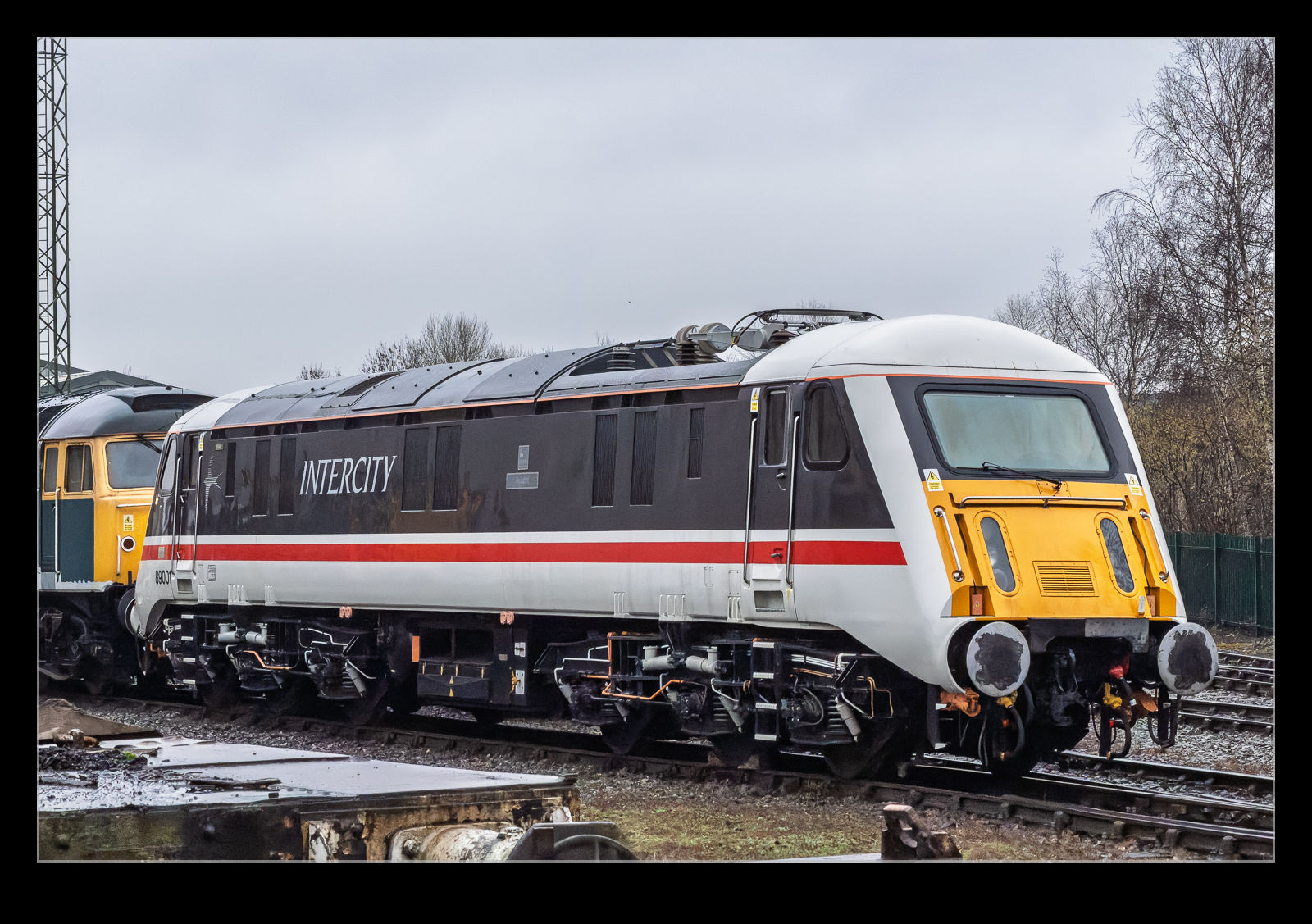
Every time I go to Crewe, I find myself looking out of the window of the train is we pull into the station wondering where the Class 89 is going to be. I have posted about it before, so I won’t waste your time repeating my reason for being interested in it. Instead, because it happened to be in a good spot to get a shot as I walked out of the station, here is another shot. That’s it! Nothing more…
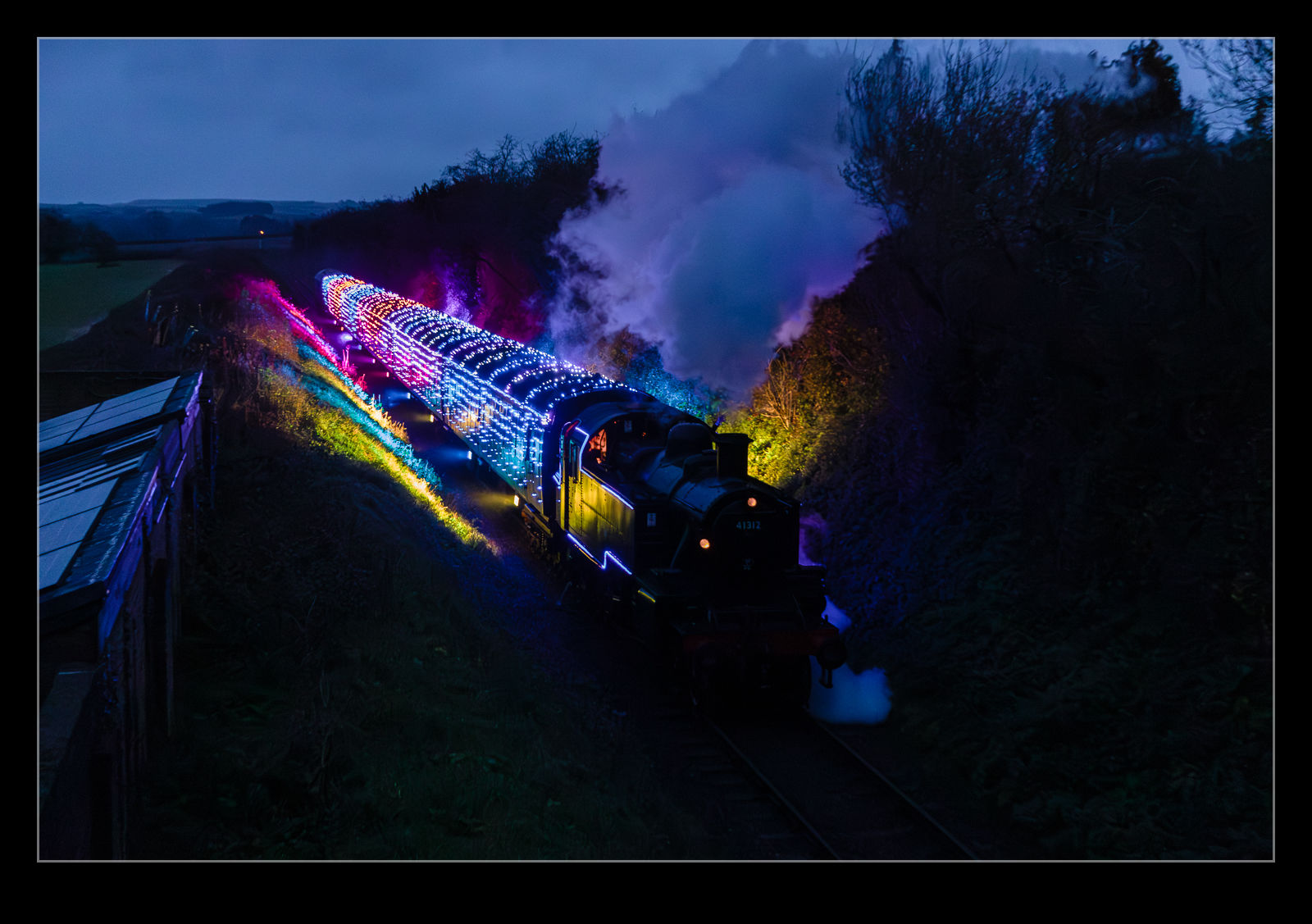
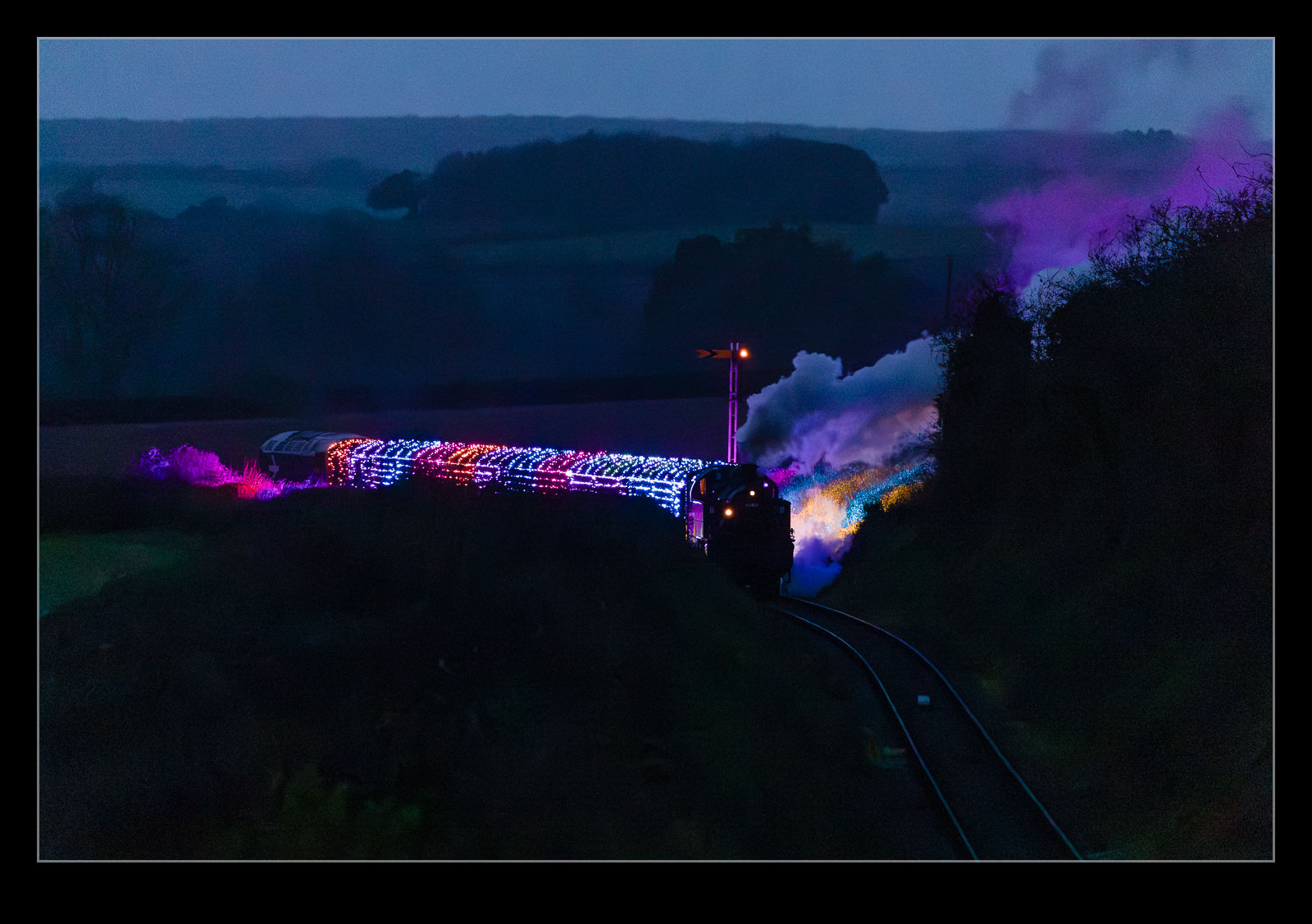
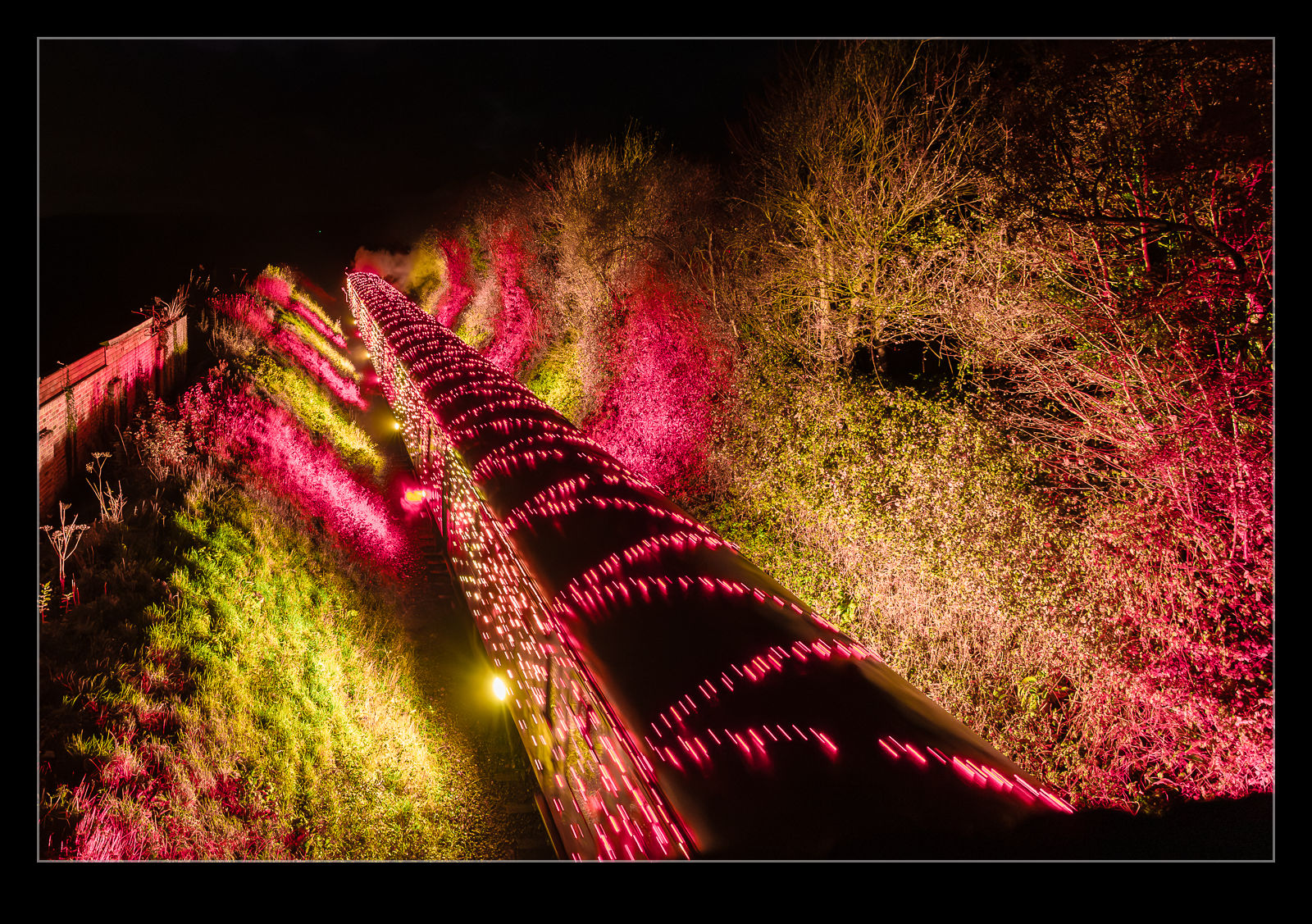
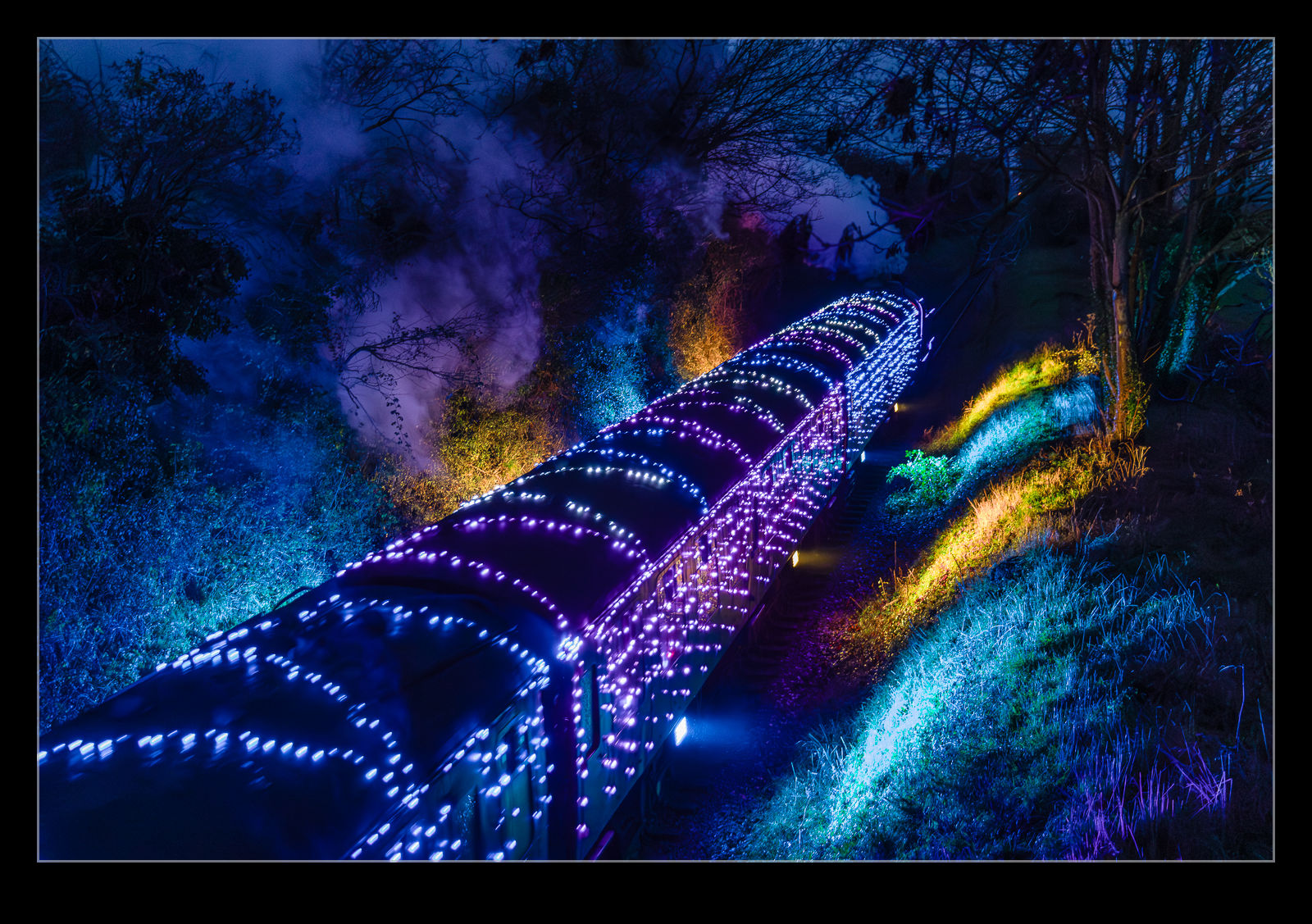
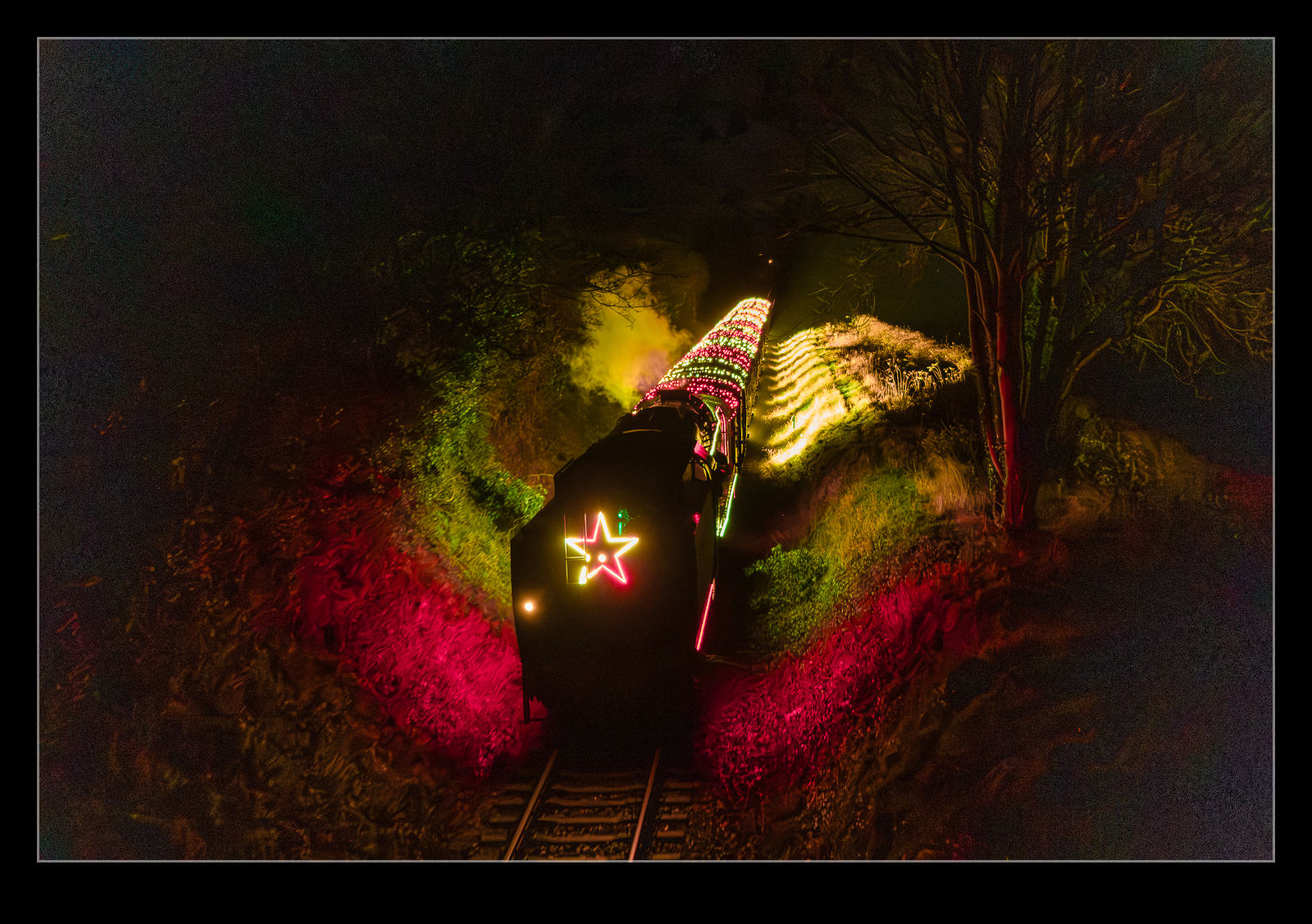
Get to the run up to Christmas and, if you have a heritage railway near you, there is a good chance they will be advertising that they have illuminated trains in operation. The trains will have lights all across the outside and probably within the carriages too. I’m sure they are fun to ride on but, from my point of view, seeing the outside lights is more appealing than being inside.
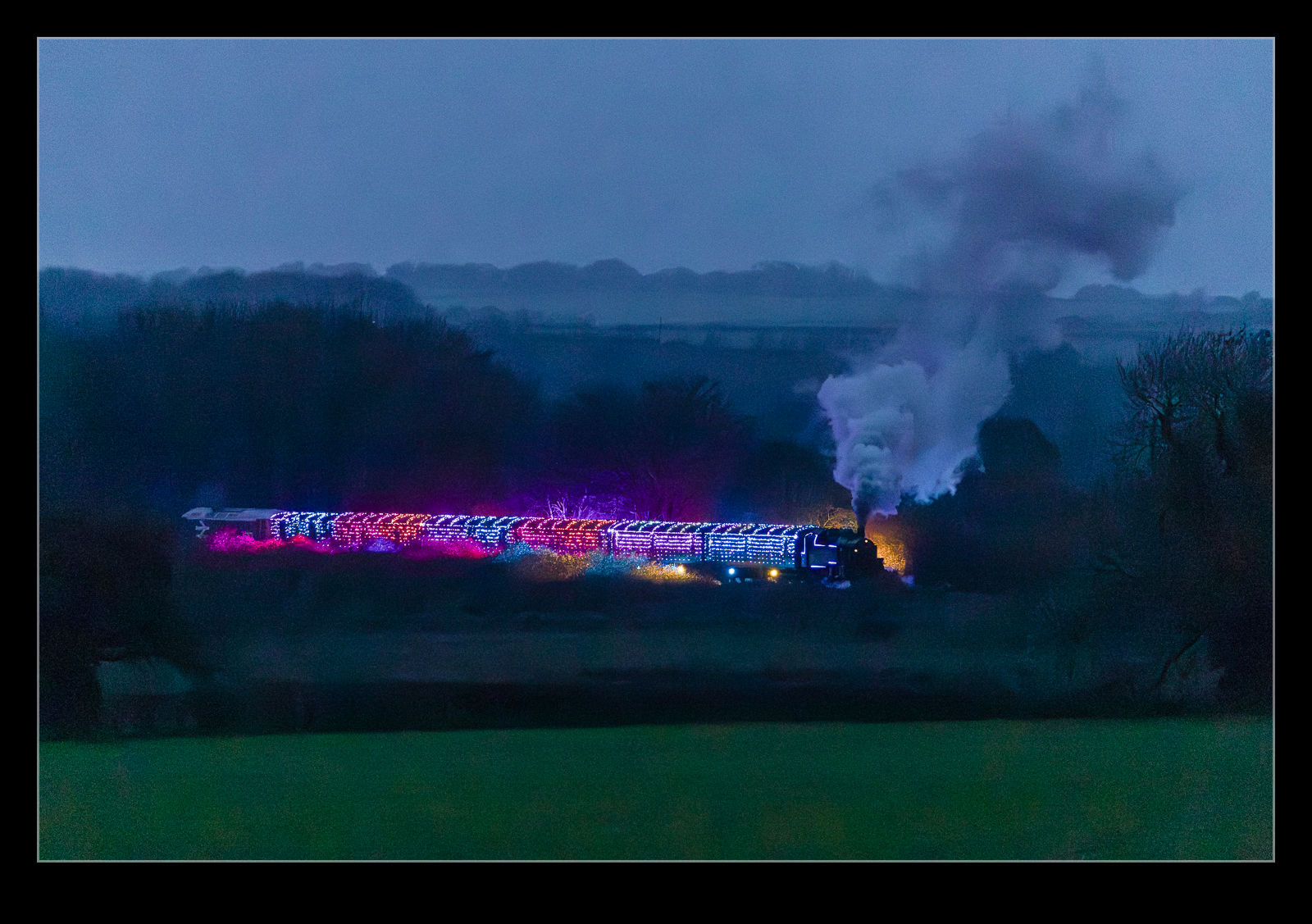
The Watercress Line is close to Winchester, and they had an illuminated service. In fact, they had more than one. My mum was visiting, and she was also interested in the lights so, late in the afternoon, since it was already getting dark at that time, we popped out to see the train go by. Sure enough, we soon saw it coming up the hill out of Alresford. There is a long stretch where the trees have been trimmed back when you get a good view of it coming our way. Even with the lights, the exposure is still a stretch for the camera. It did okay, though, and a bit of noise reduction software helps.
As they came around the corner into the straight heading at us, the lights would illuminate the embankment on either side of the cutting. There was also a strong yellow glow which, I assume, came from the firebox. The colours were constantly changing and it looked really impressive as the loco pulled hard up the bank. I think that they had swapped to a smaller loco because they had a diesel on the back of the train to support.
We were going to head straight home but one of the other people there told us there was a second train coming down from Alton a little while later. While it was getting a bit chilly and definitely dark, we figured there was no harm in hanging around. We did get the second train as it came down the cutting and then headed back the way the previous train had come. Going that way, they are going downhill so the loco is barely working to get them home. No plumes of smoke and thundering noise.
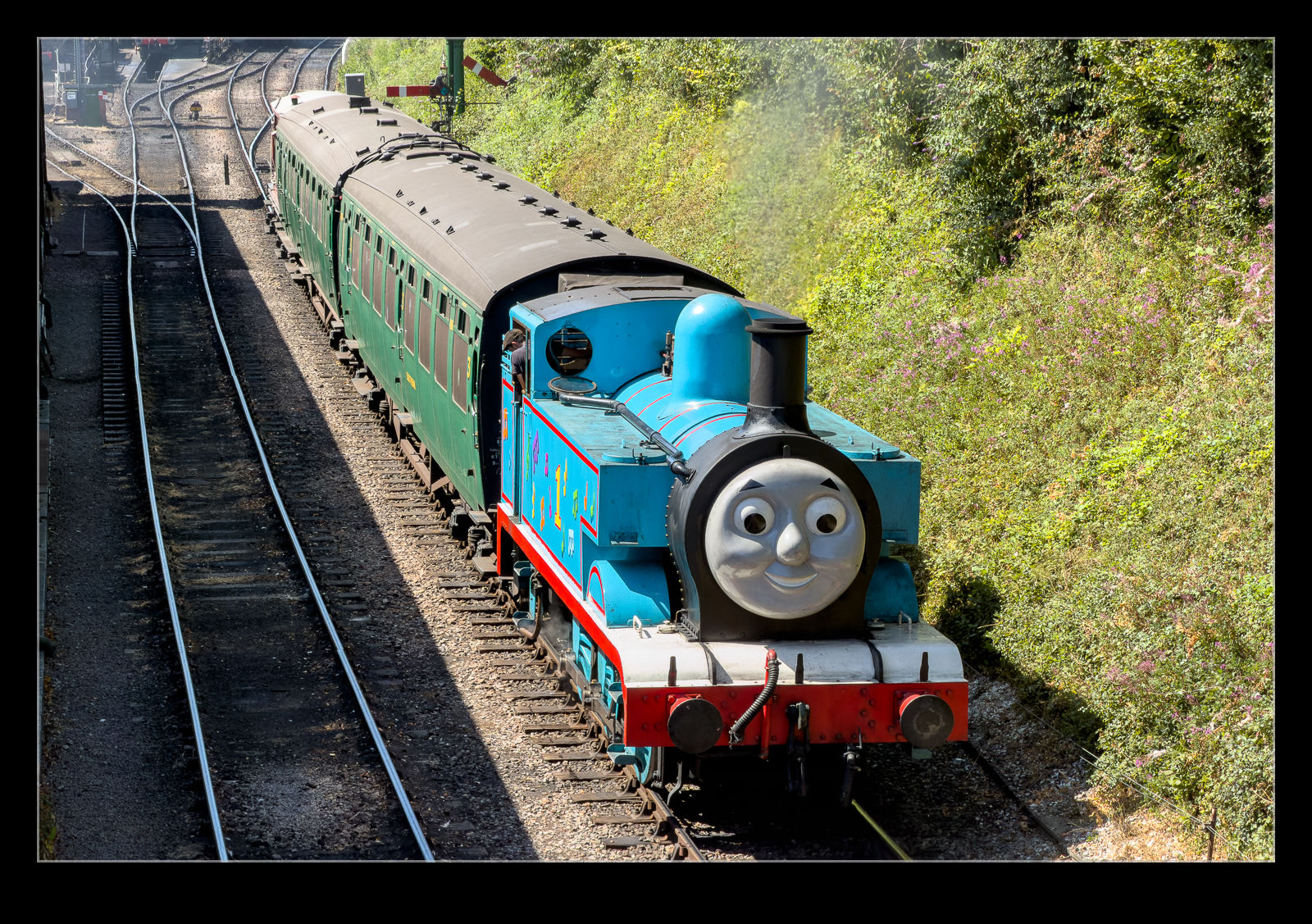 While out on a bike ride one weekend, I rode from Bighton to Ropley which takes me over the Watercress Line. I wasn’t aware what they might have going on that weekend, but it turned out that they had their “Thomas” making runs. It came out of Ropley towards the bridge I was on, so the phone came out to grab a couple of shots before I continued on my ride.