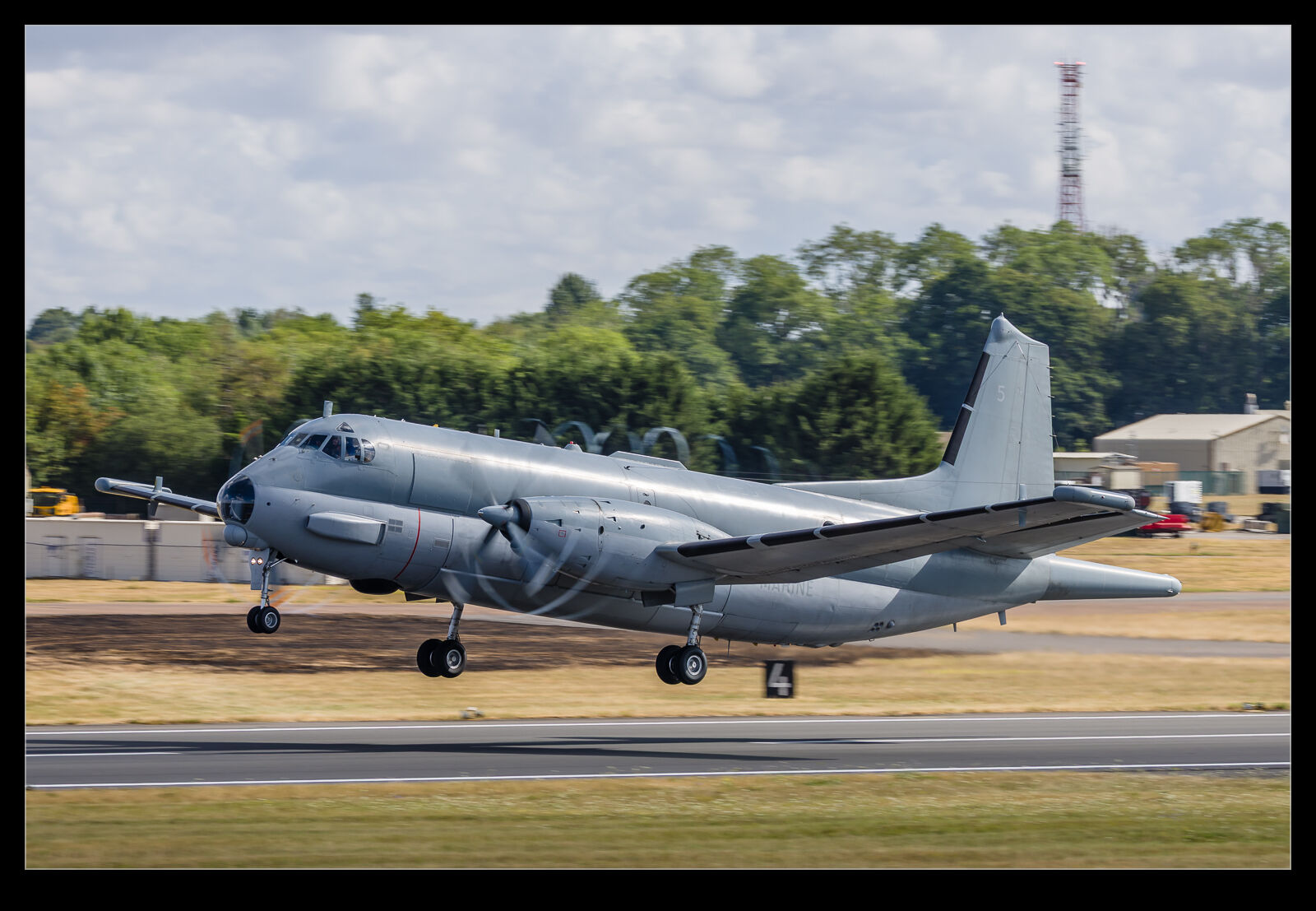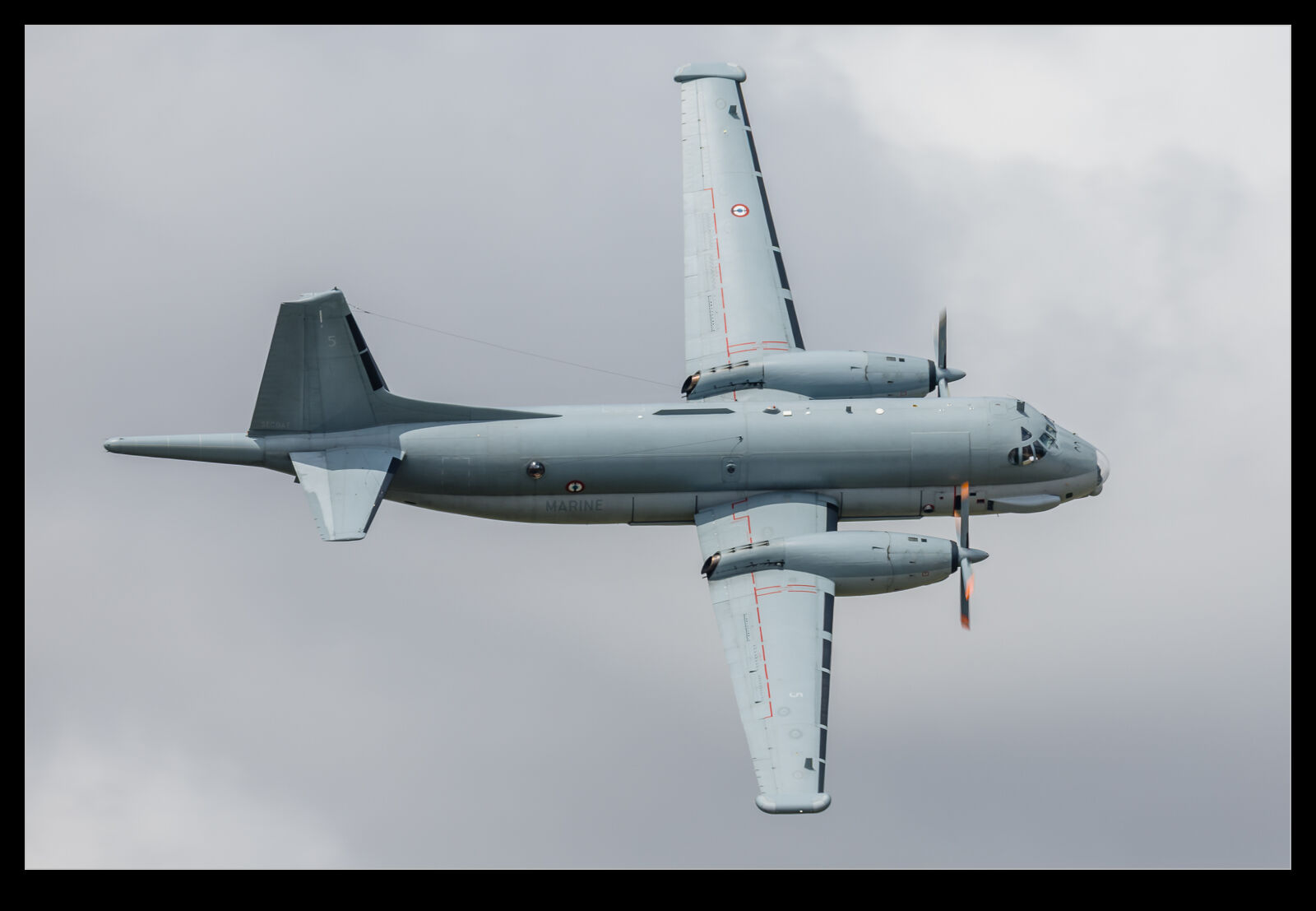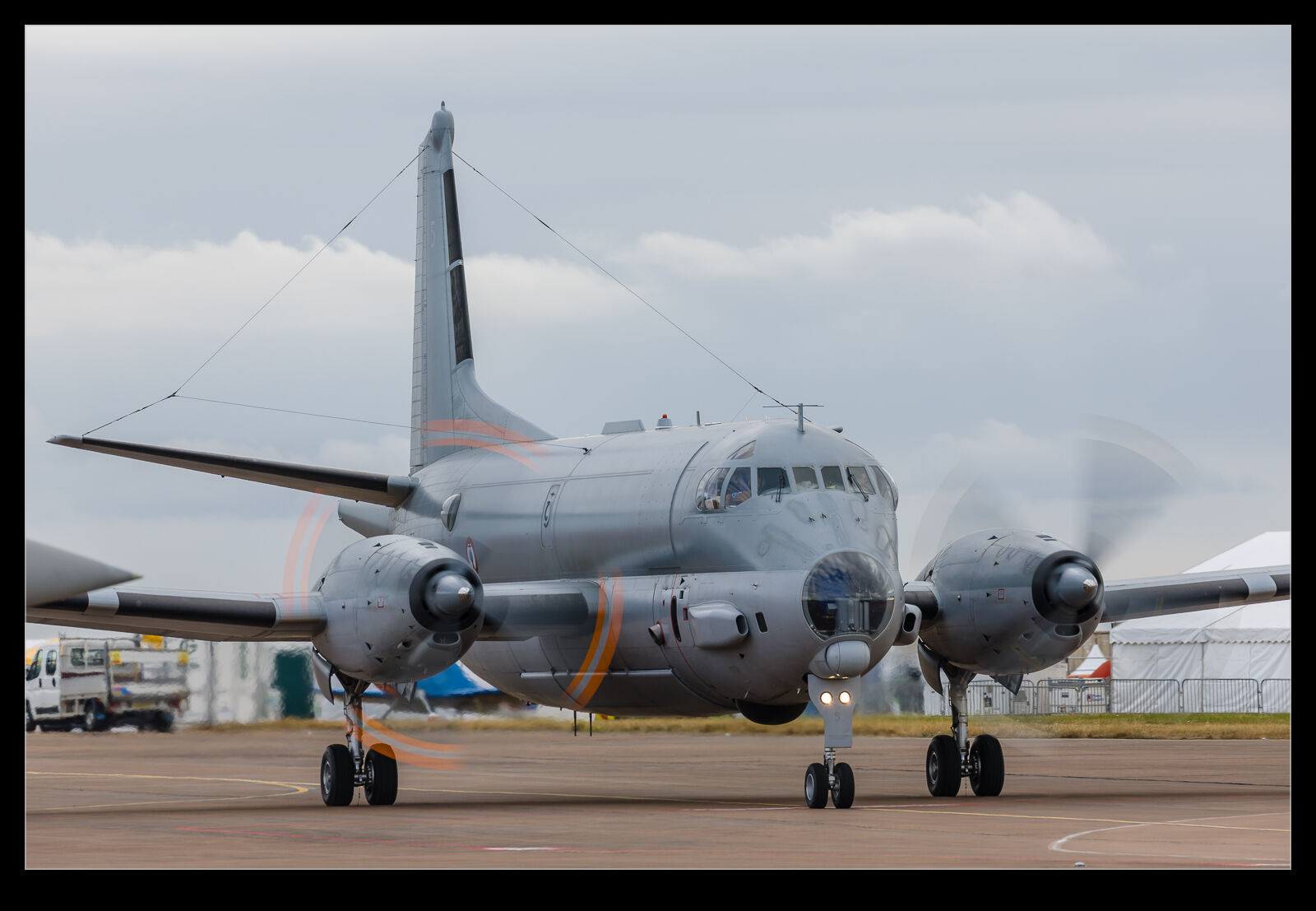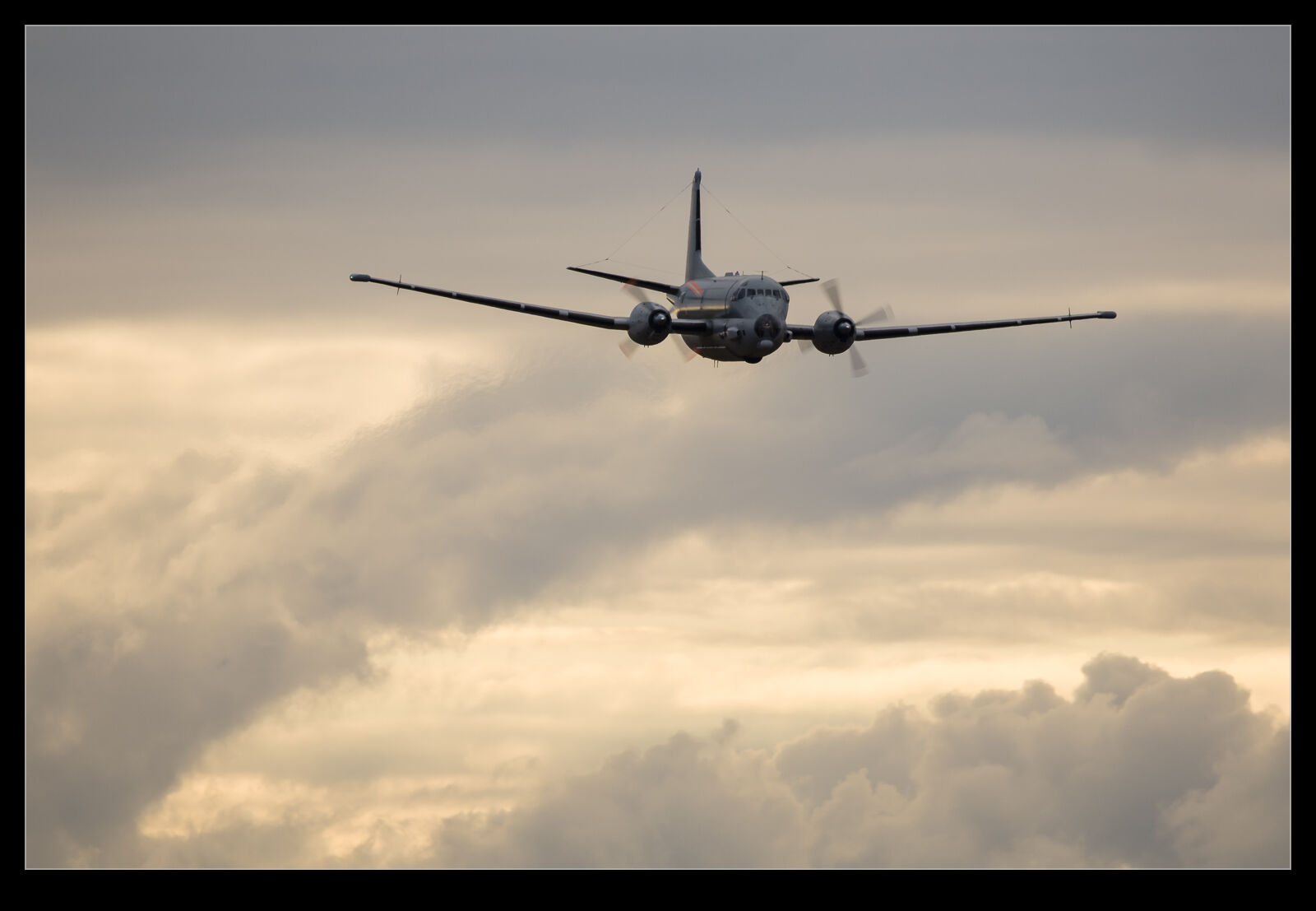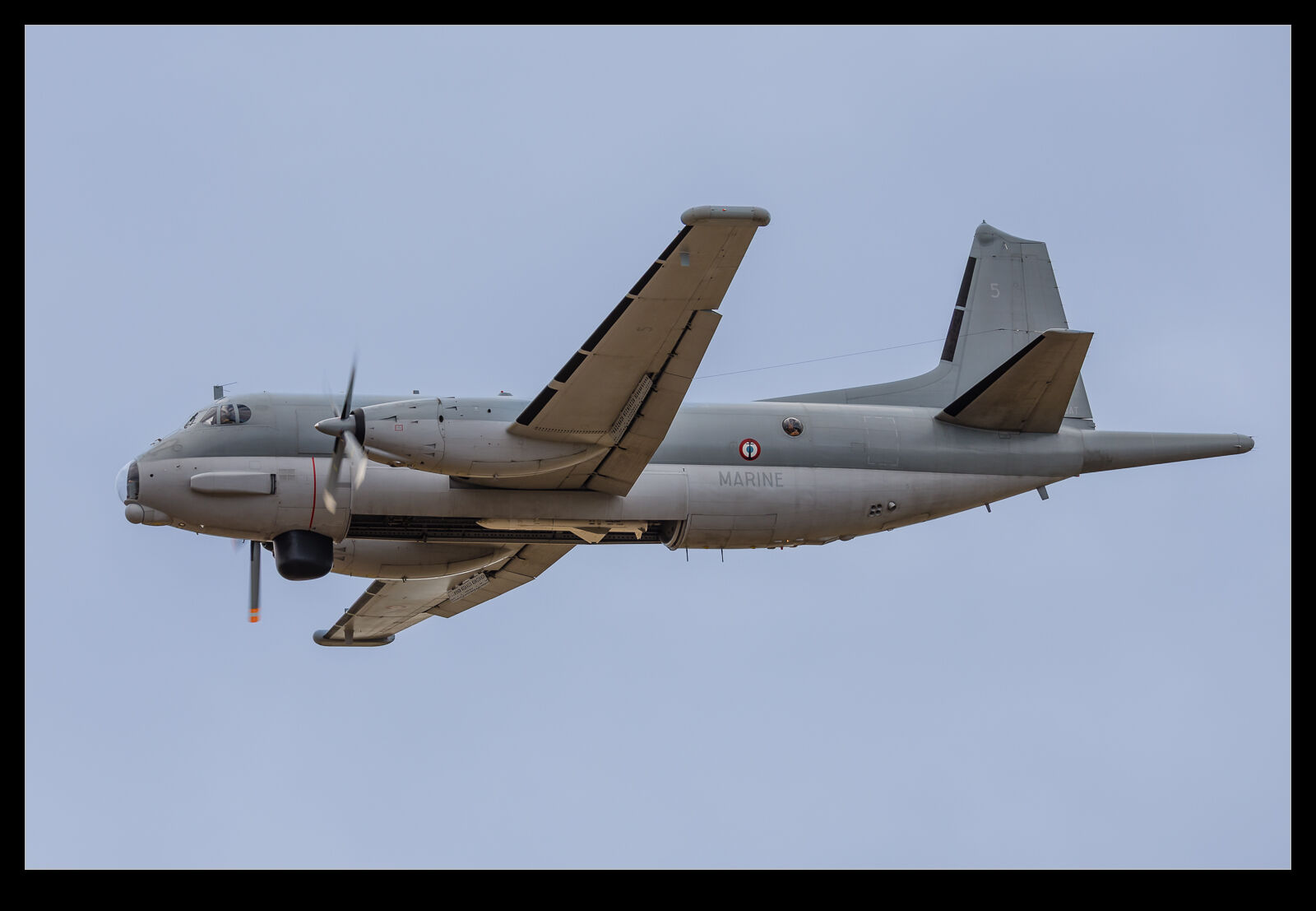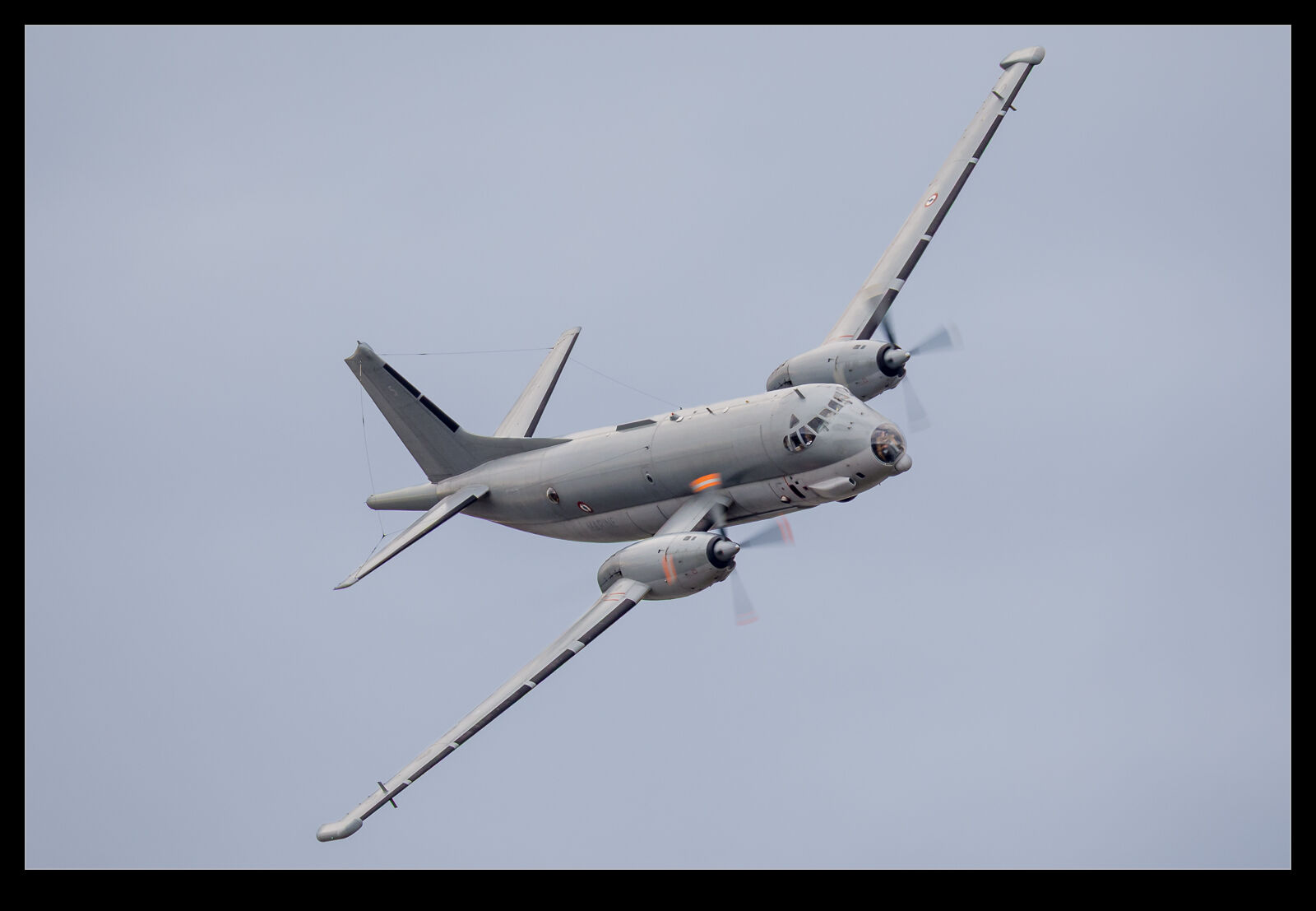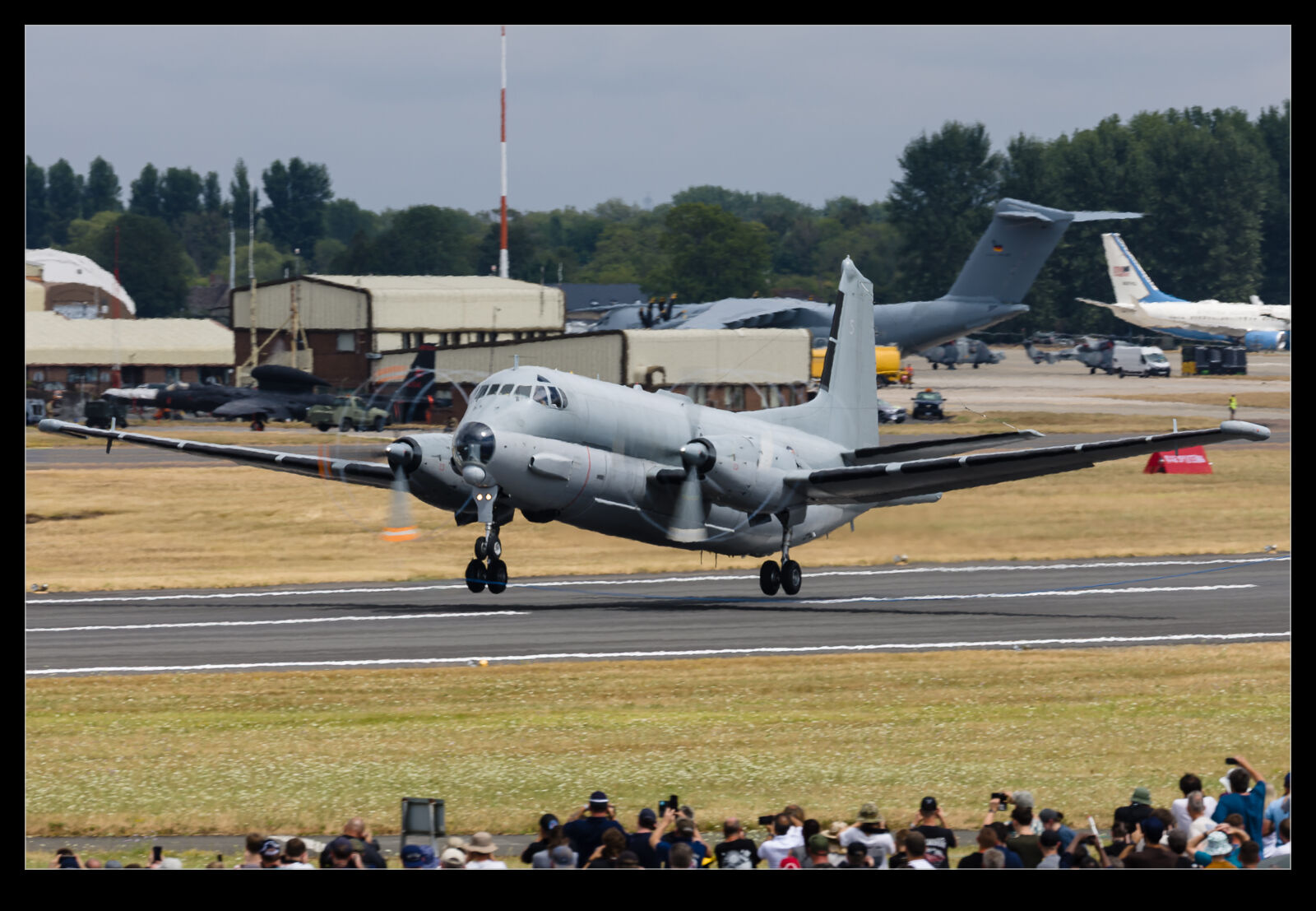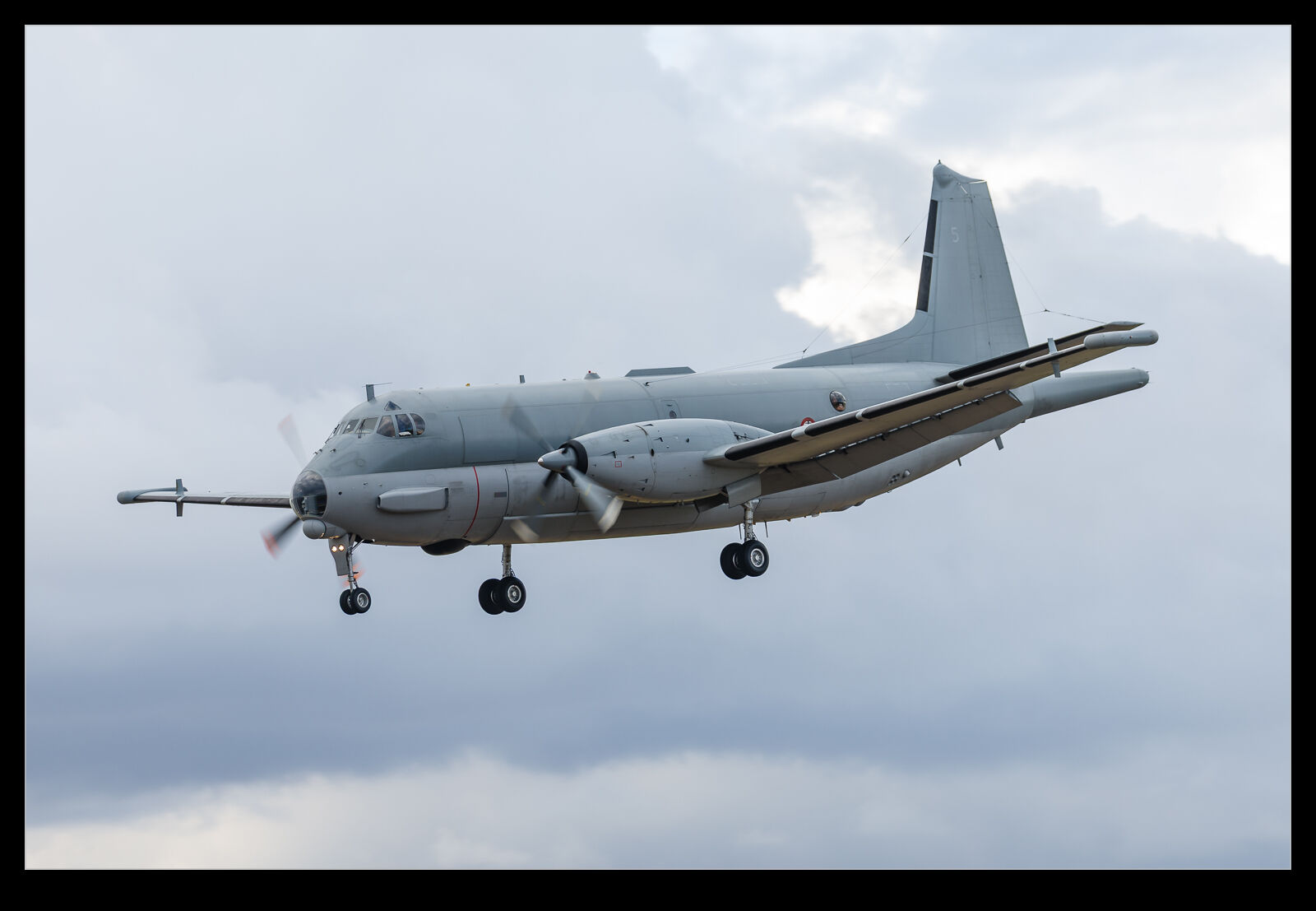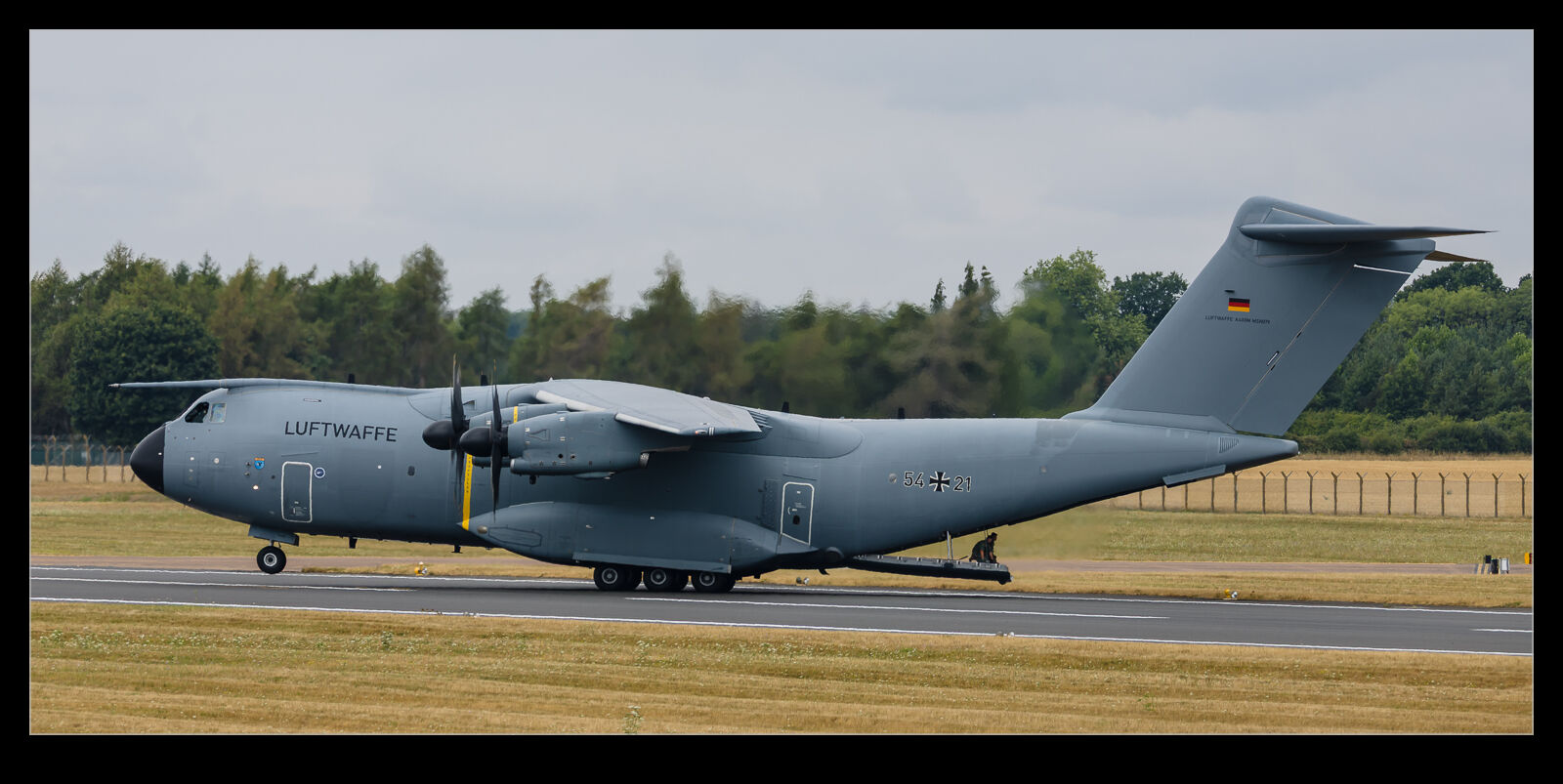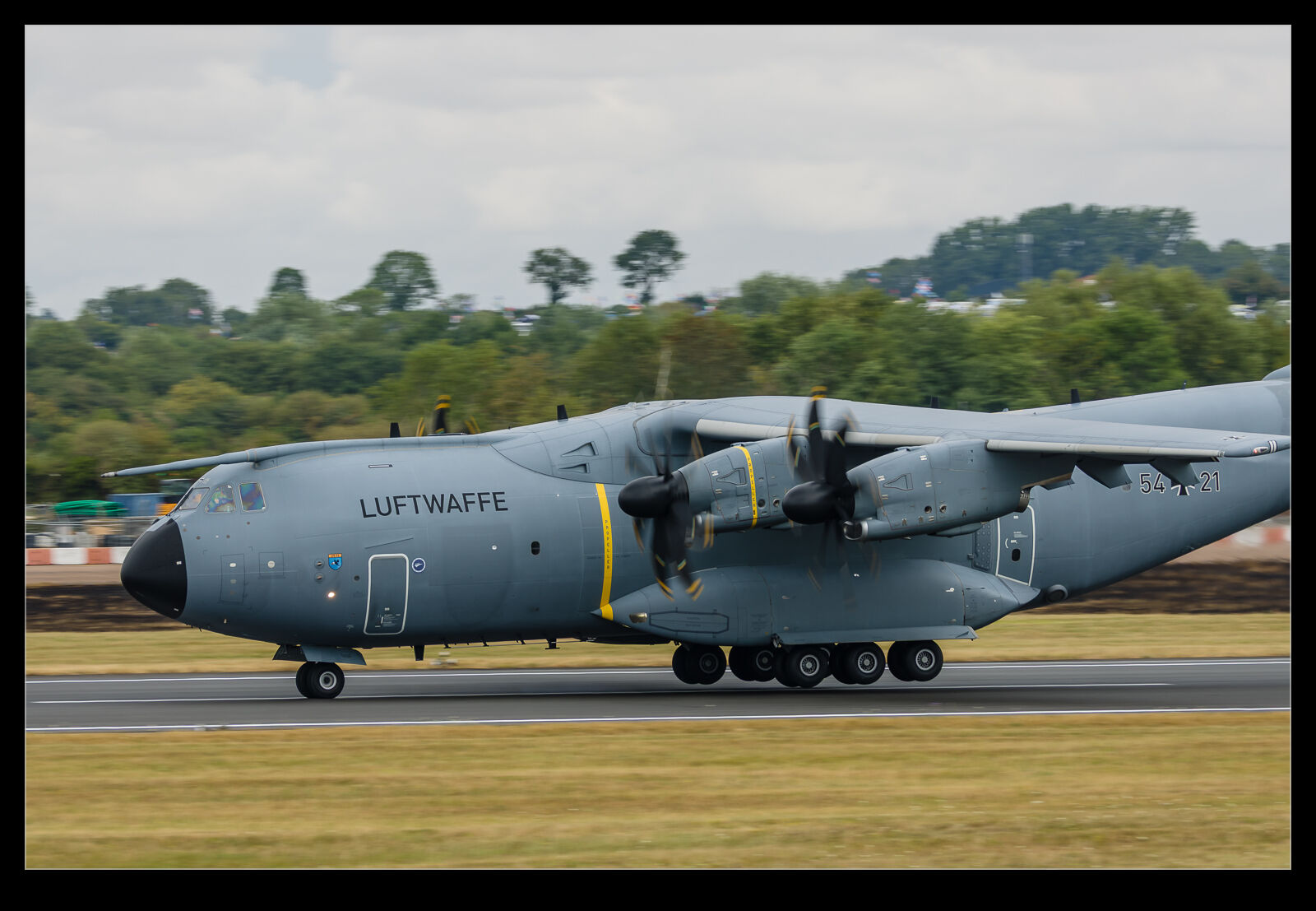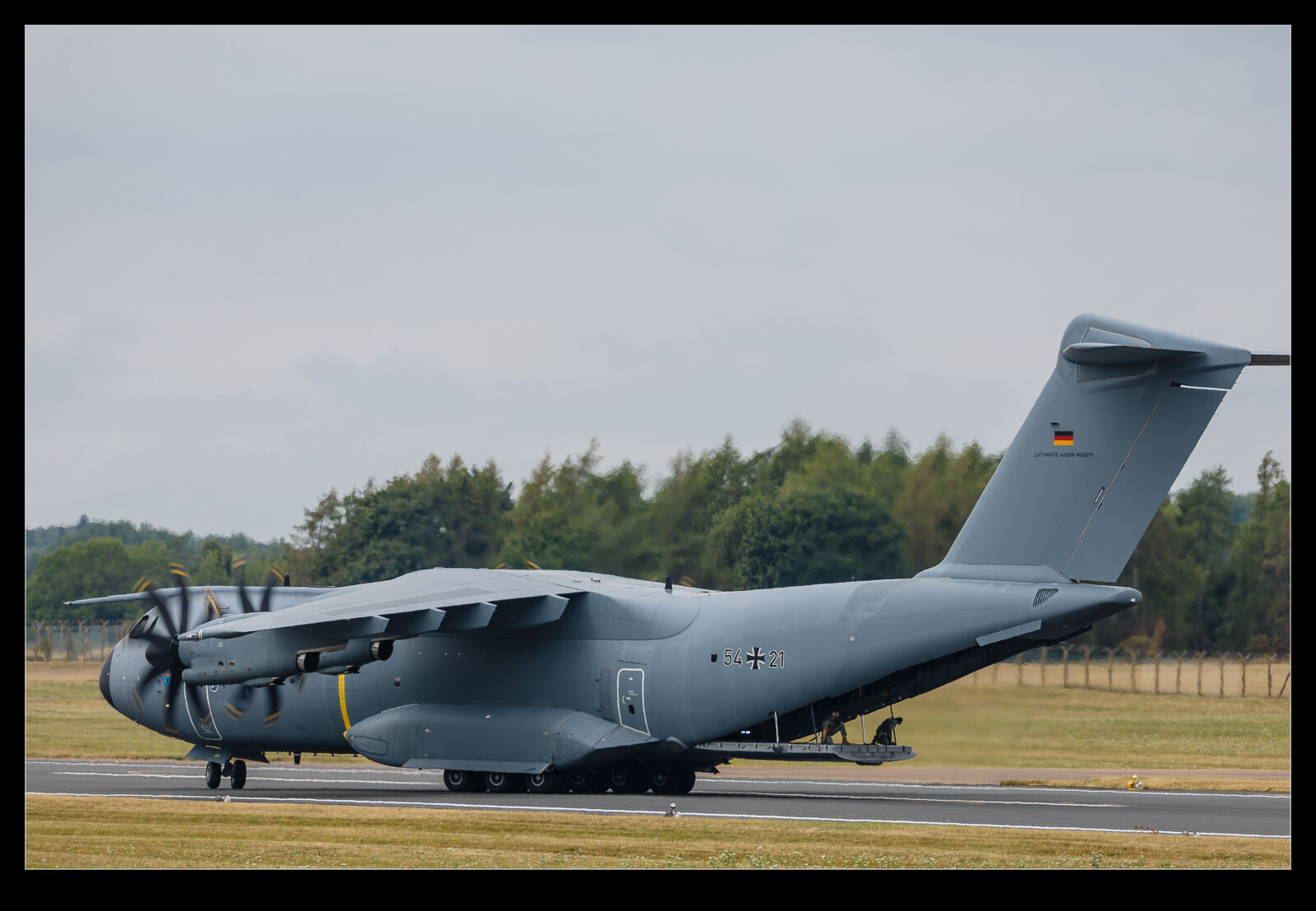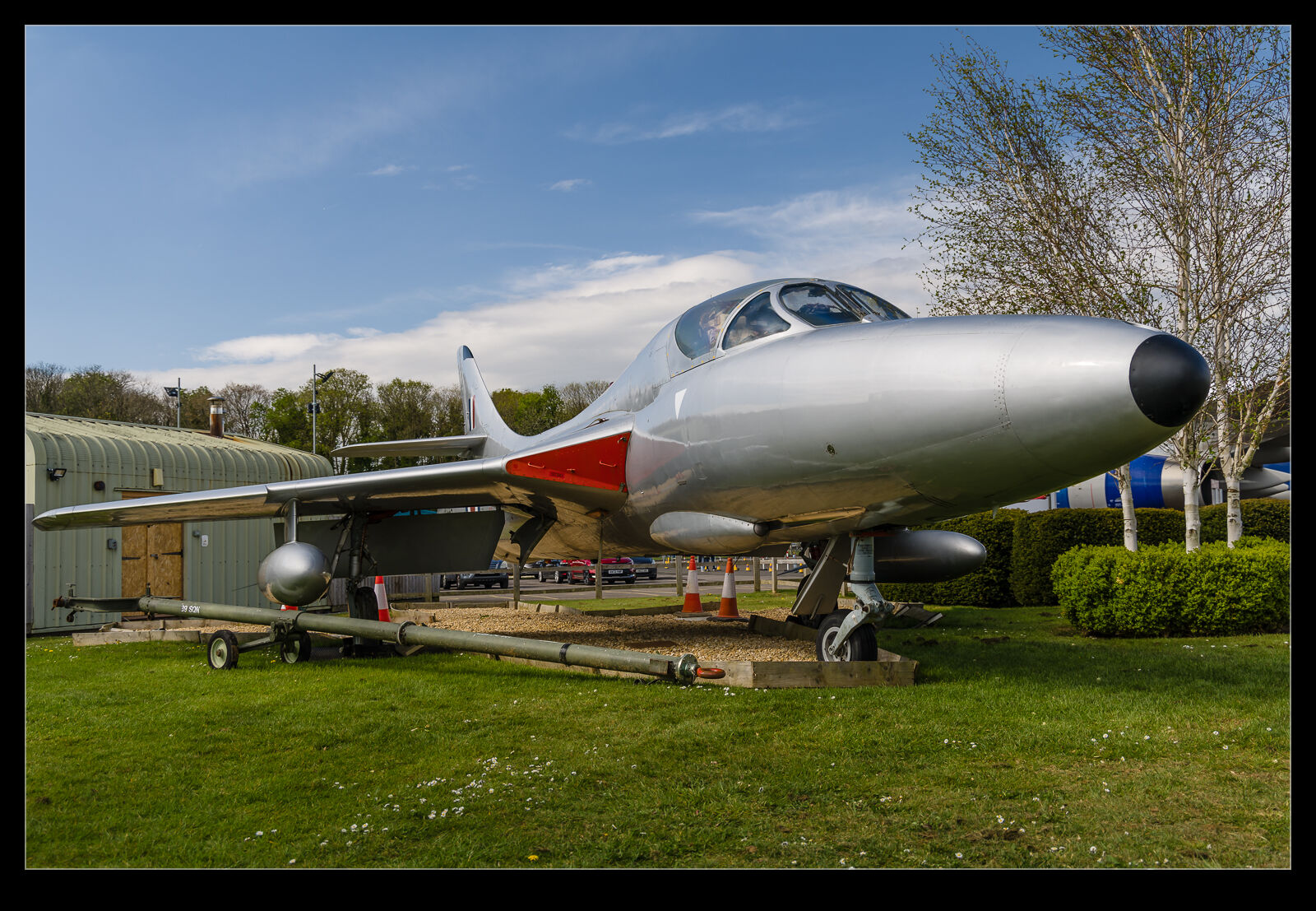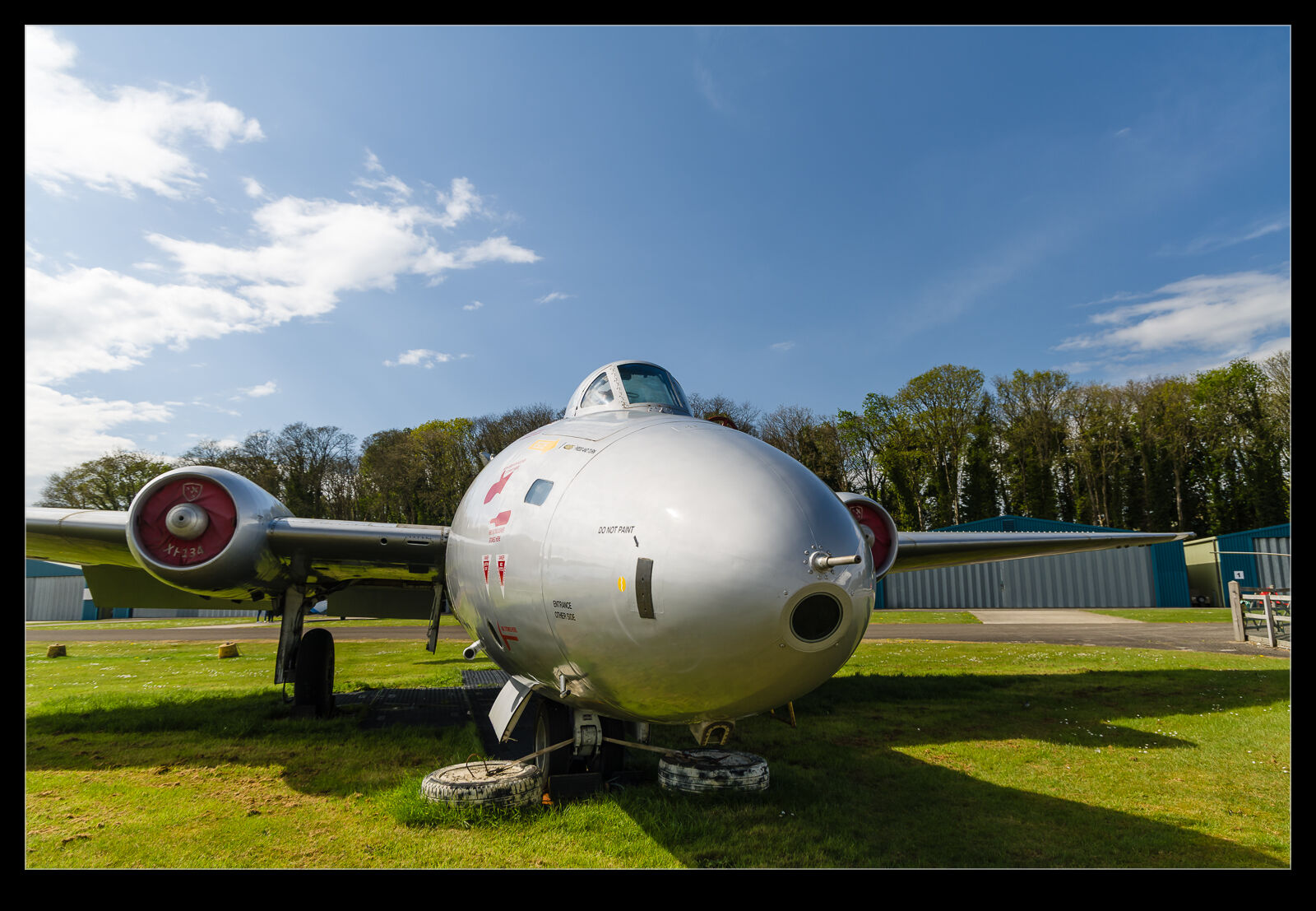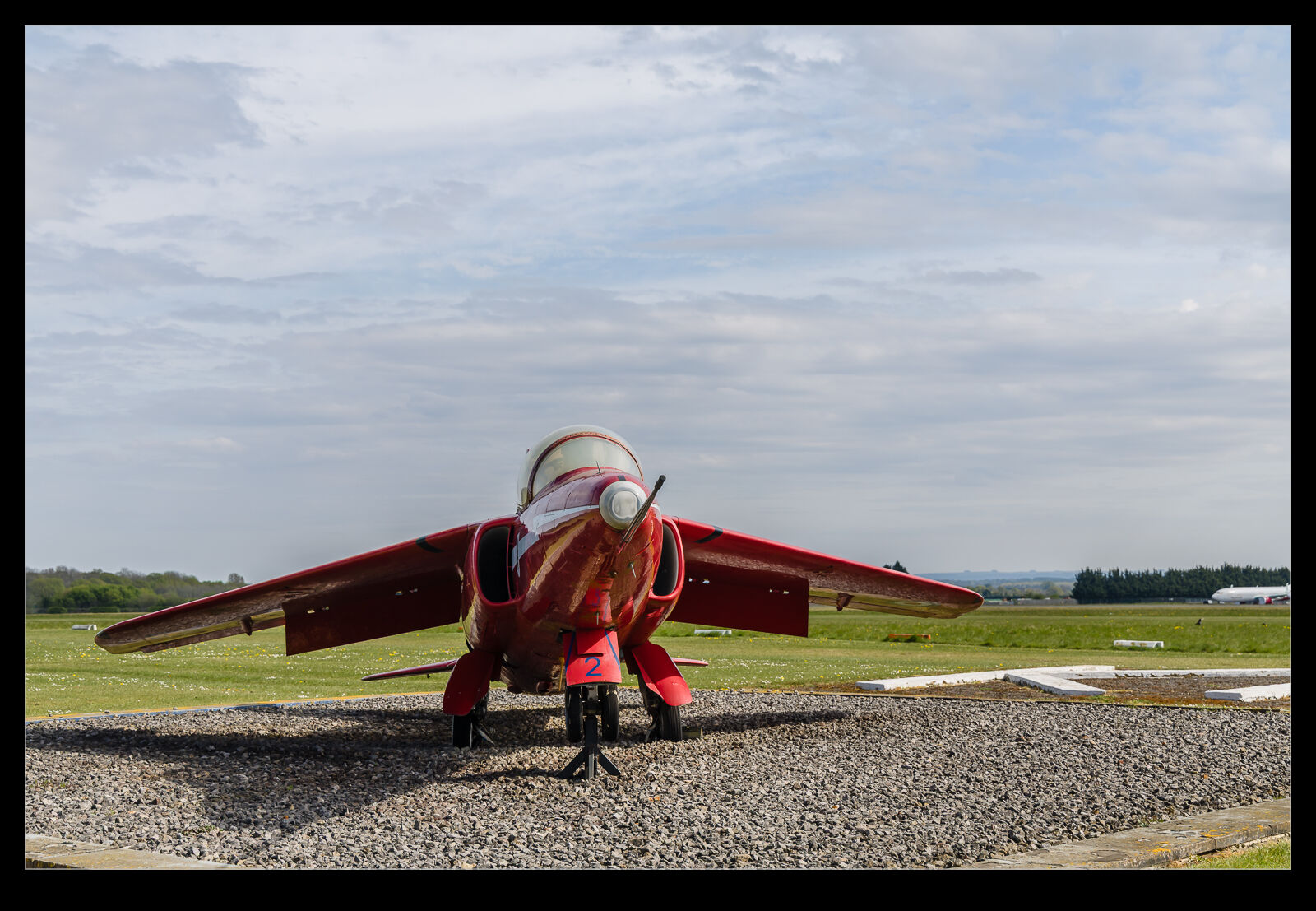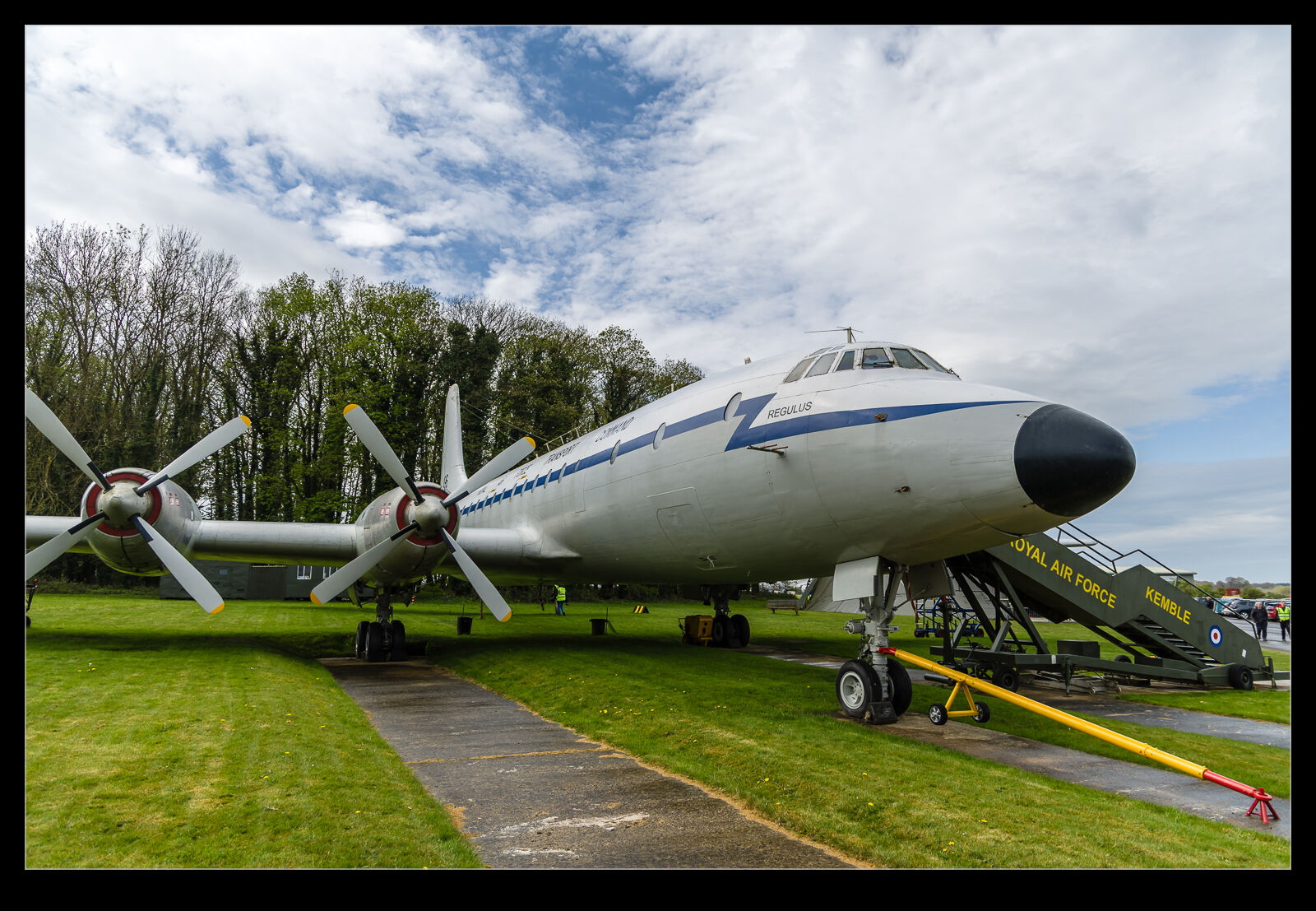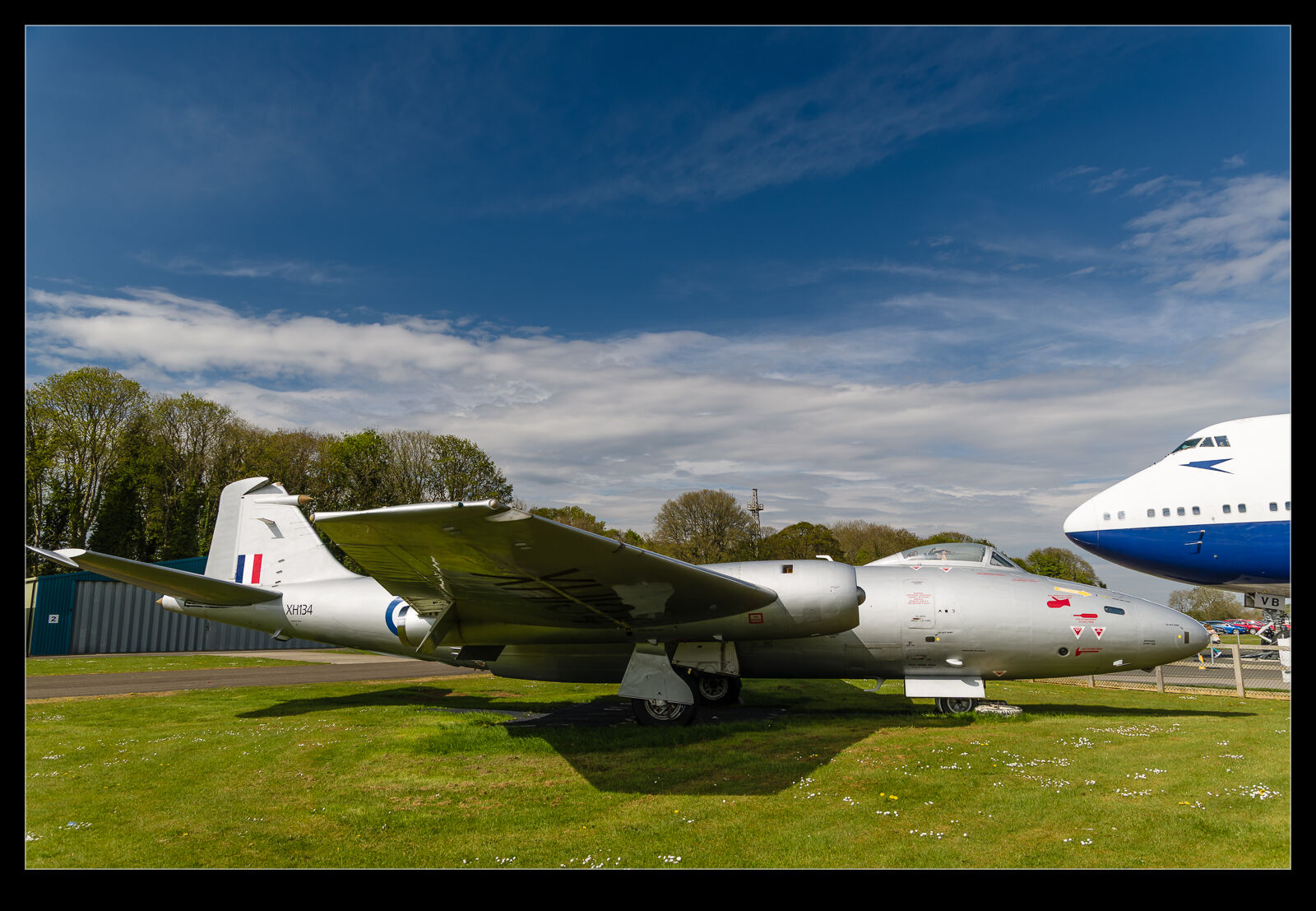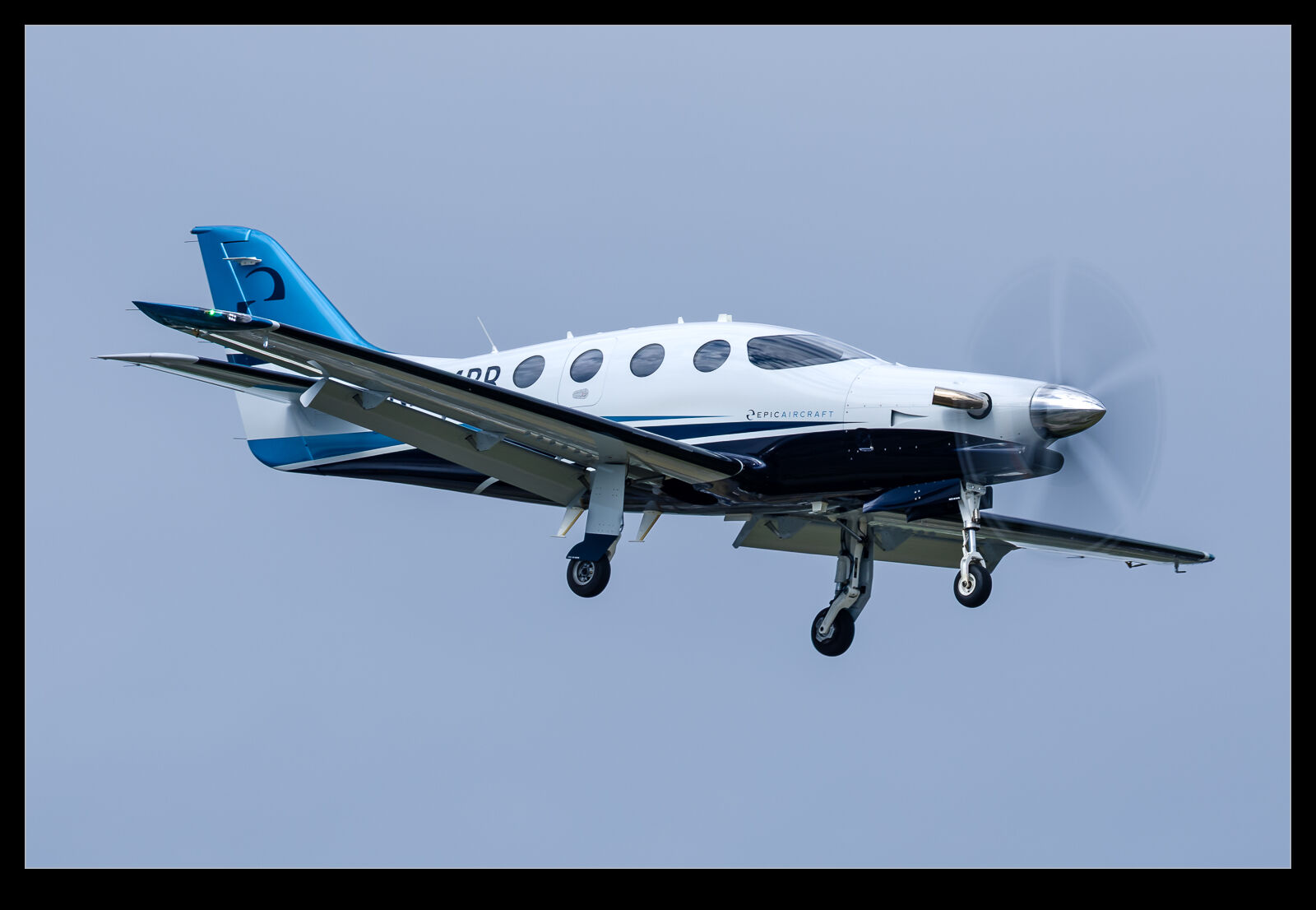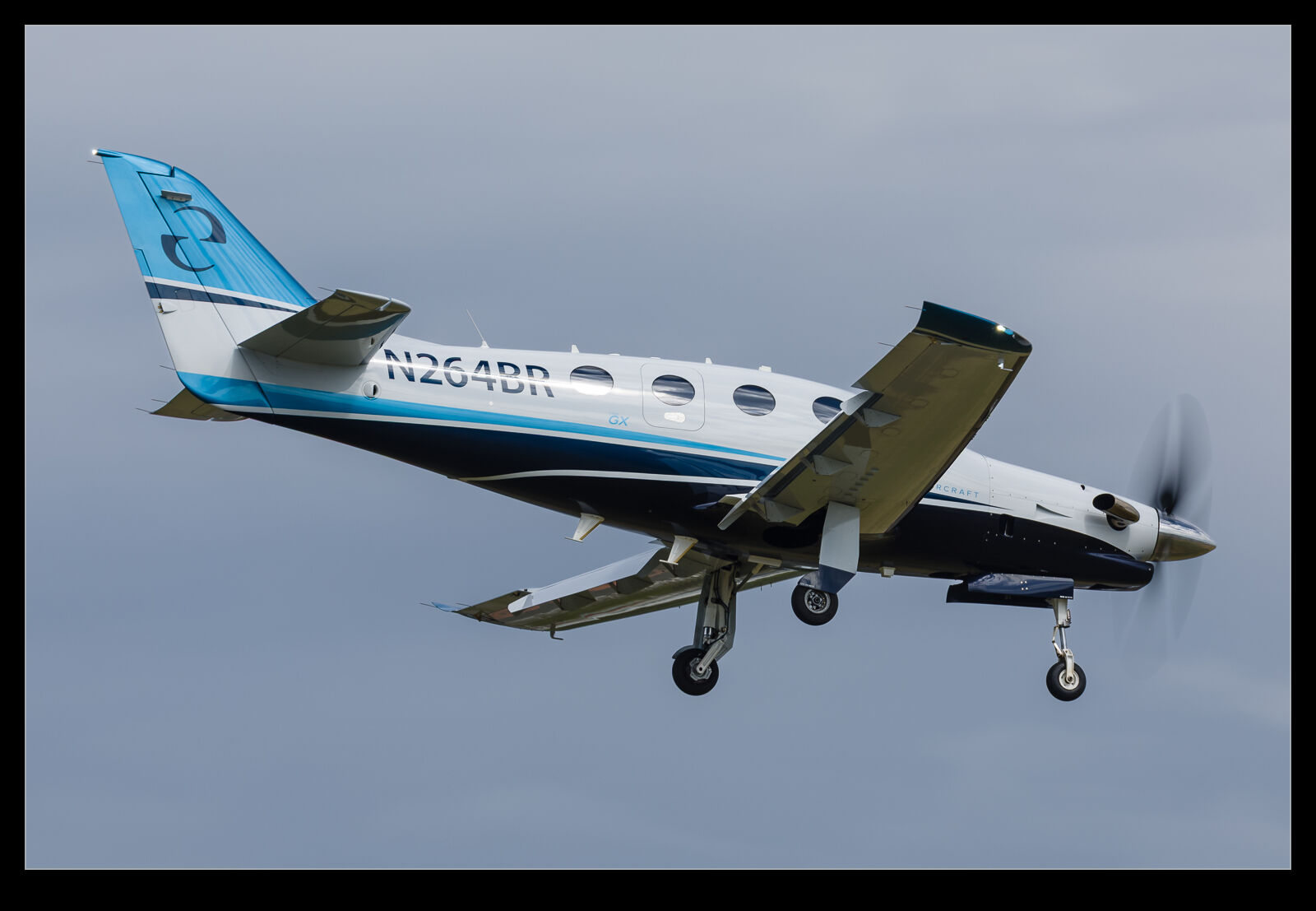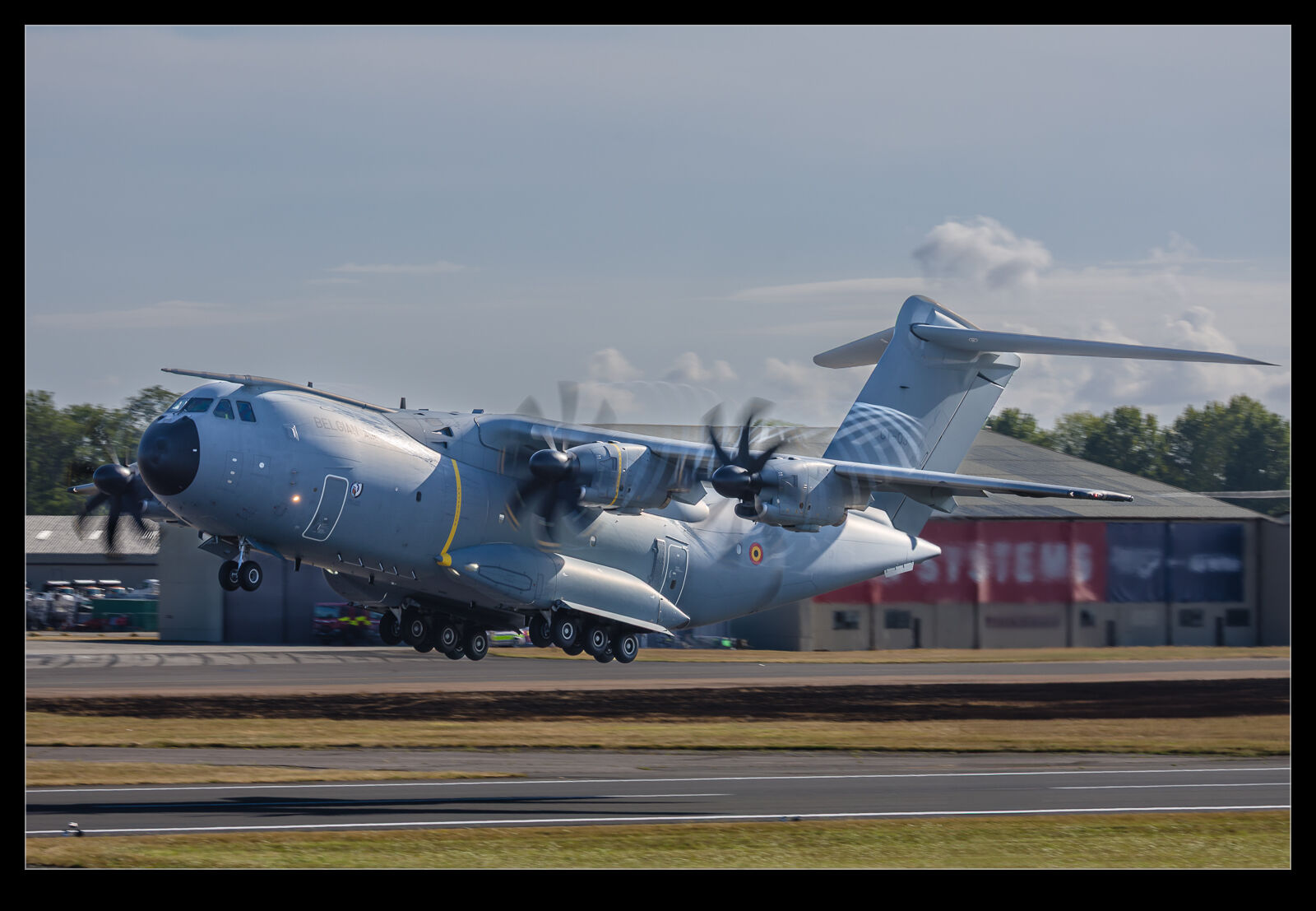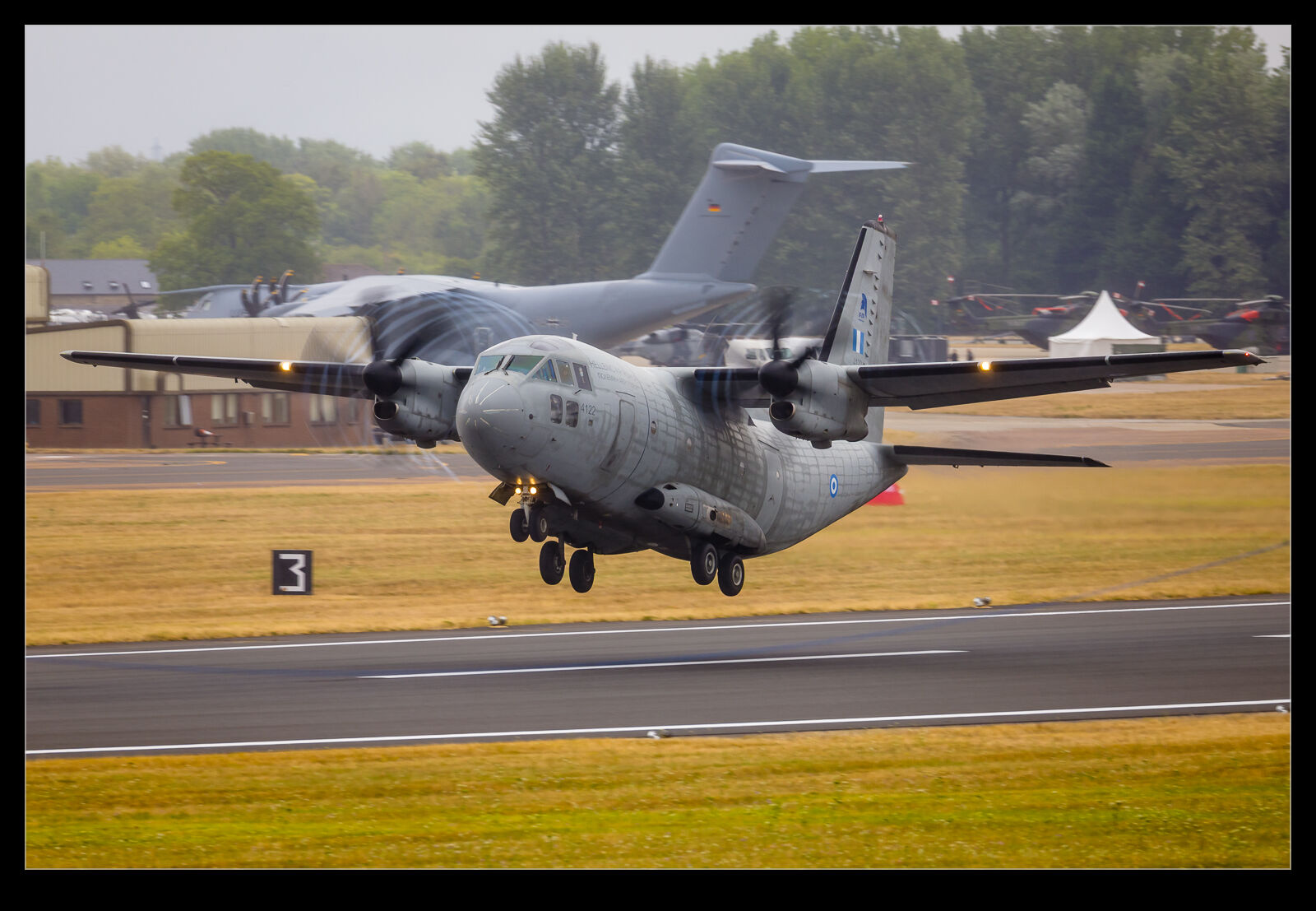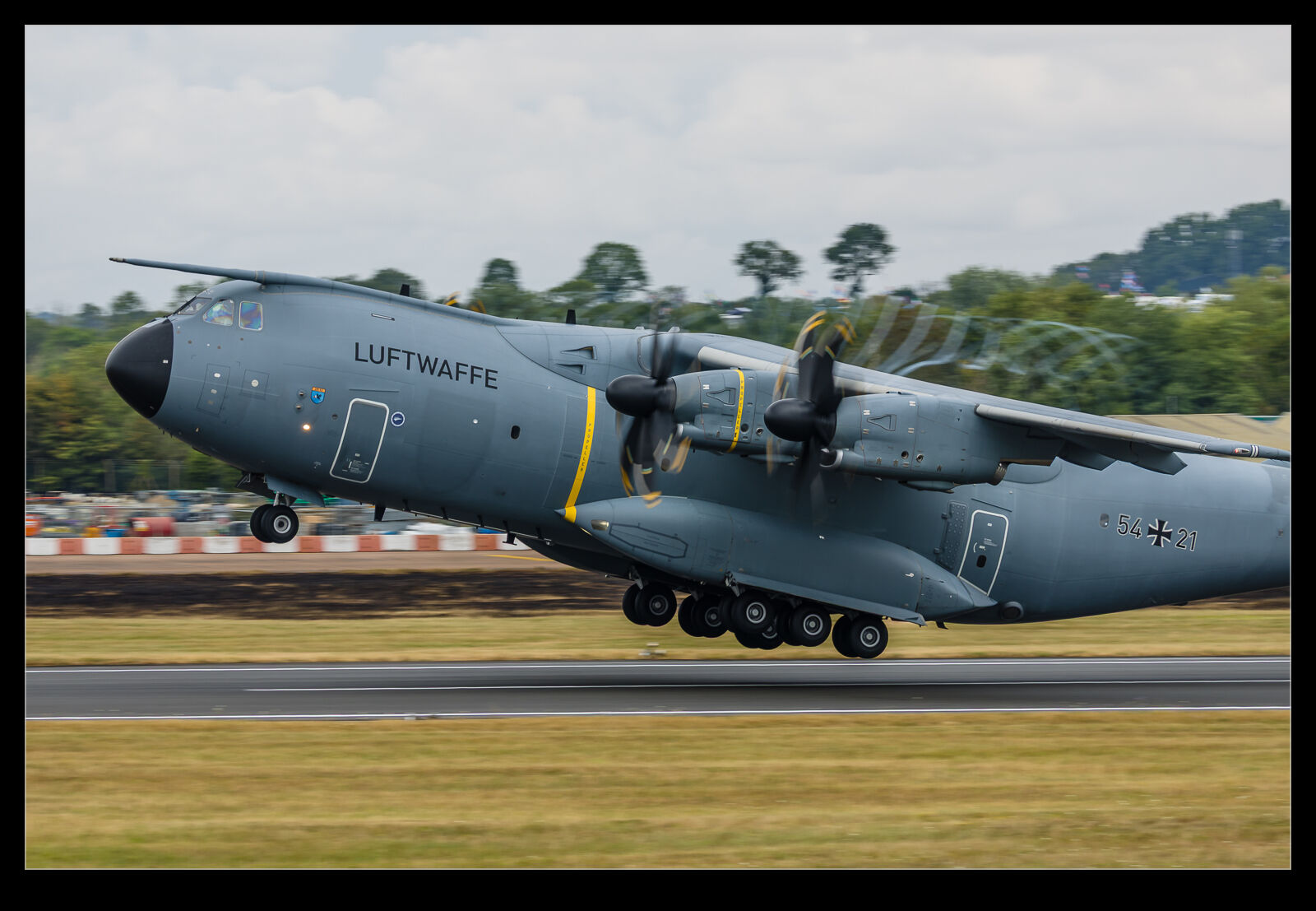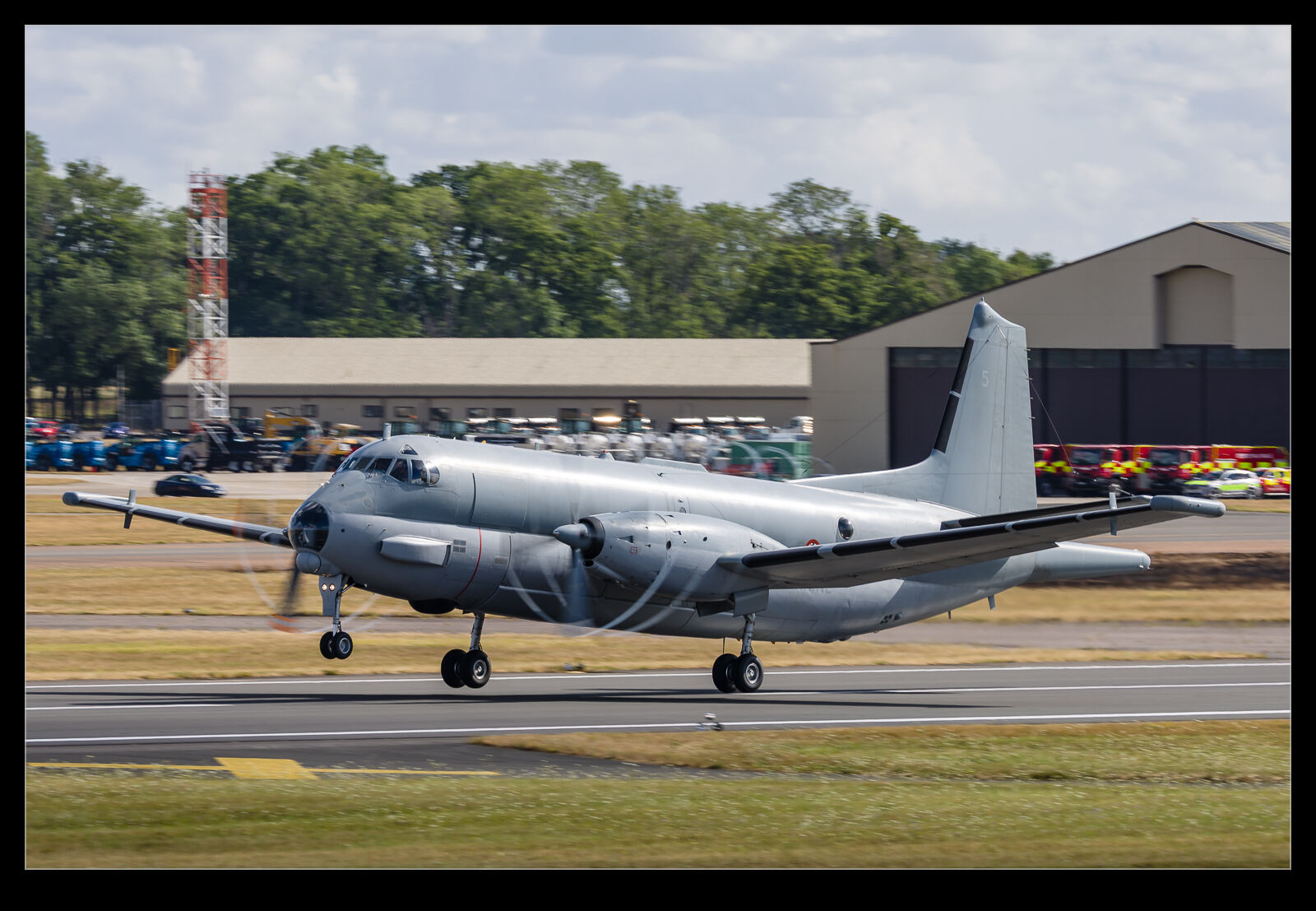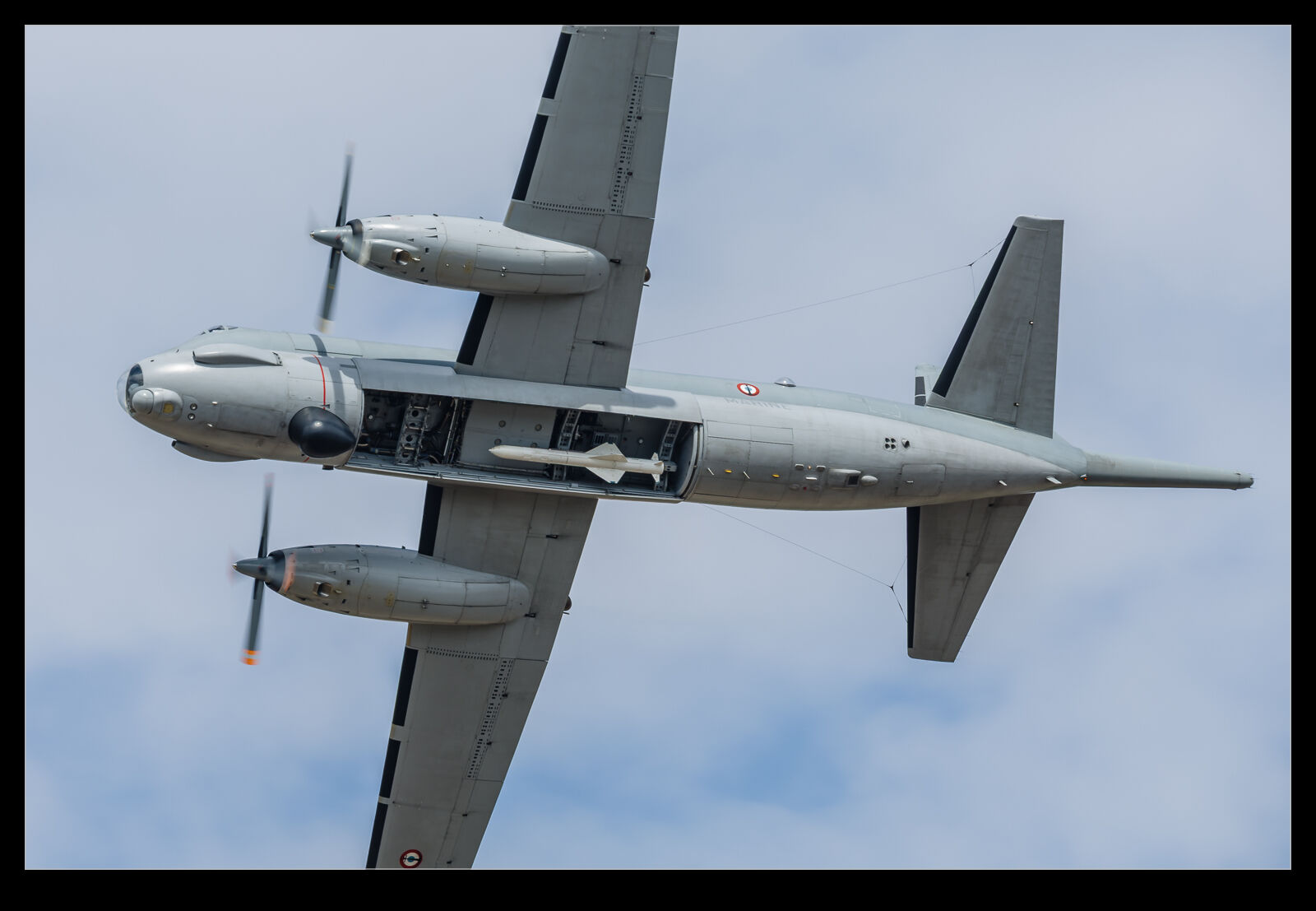
We had some pretty mixed weather during the course of RIAT this year. There was plenty of sun but also some rain. Even when it was dry, the humidity levels were pretty high and this meant that anyone wanting to get some vapour shots was going to have plenty of options. For the turboprop powered aircraft, when they were putting on the power, it meant that their props were pulling tip vortices. Here is a selection of shots of different planes extracting water from the air during their take offs.
Tag Archives: turboprop
Who Flies Over Our House?
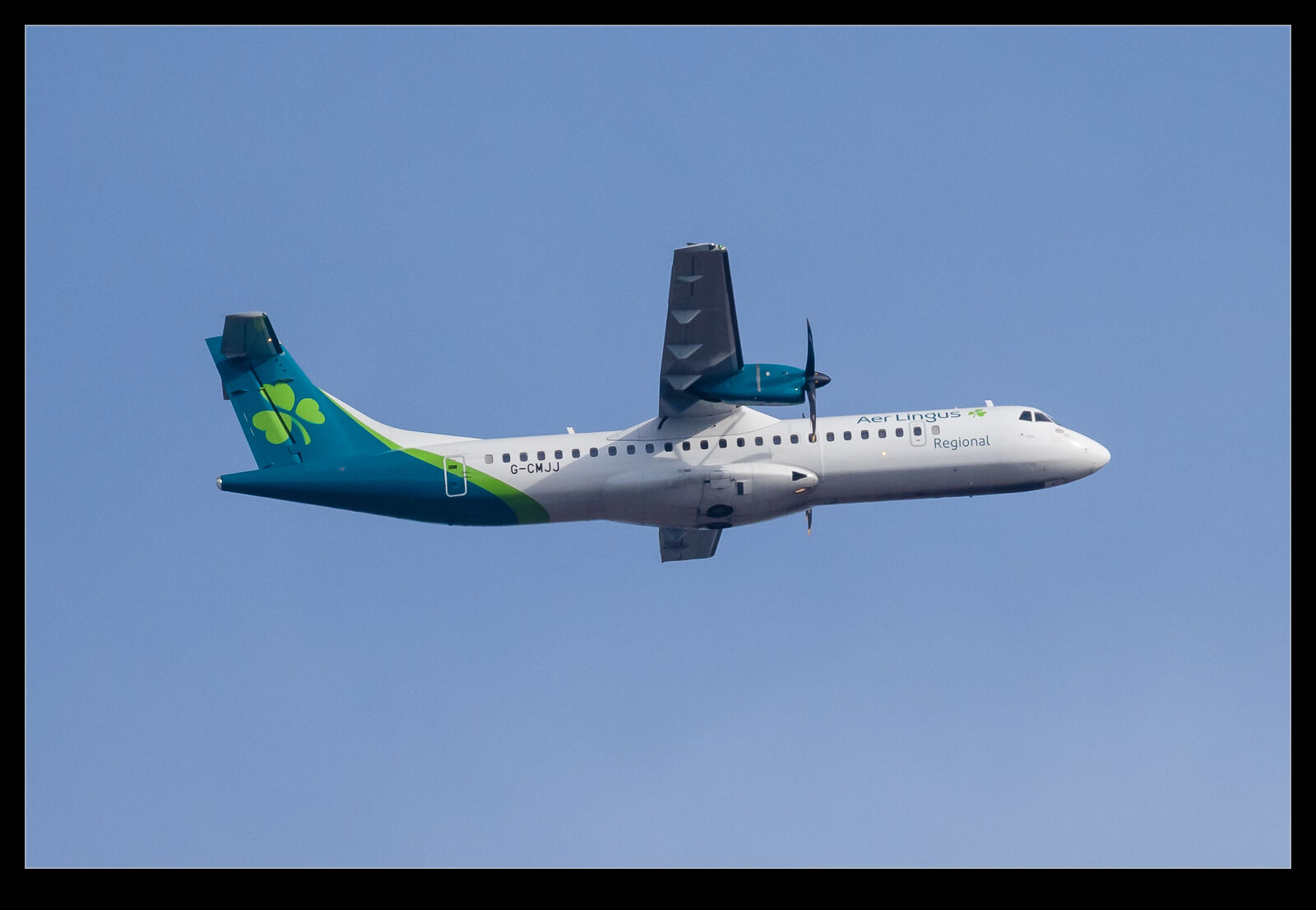
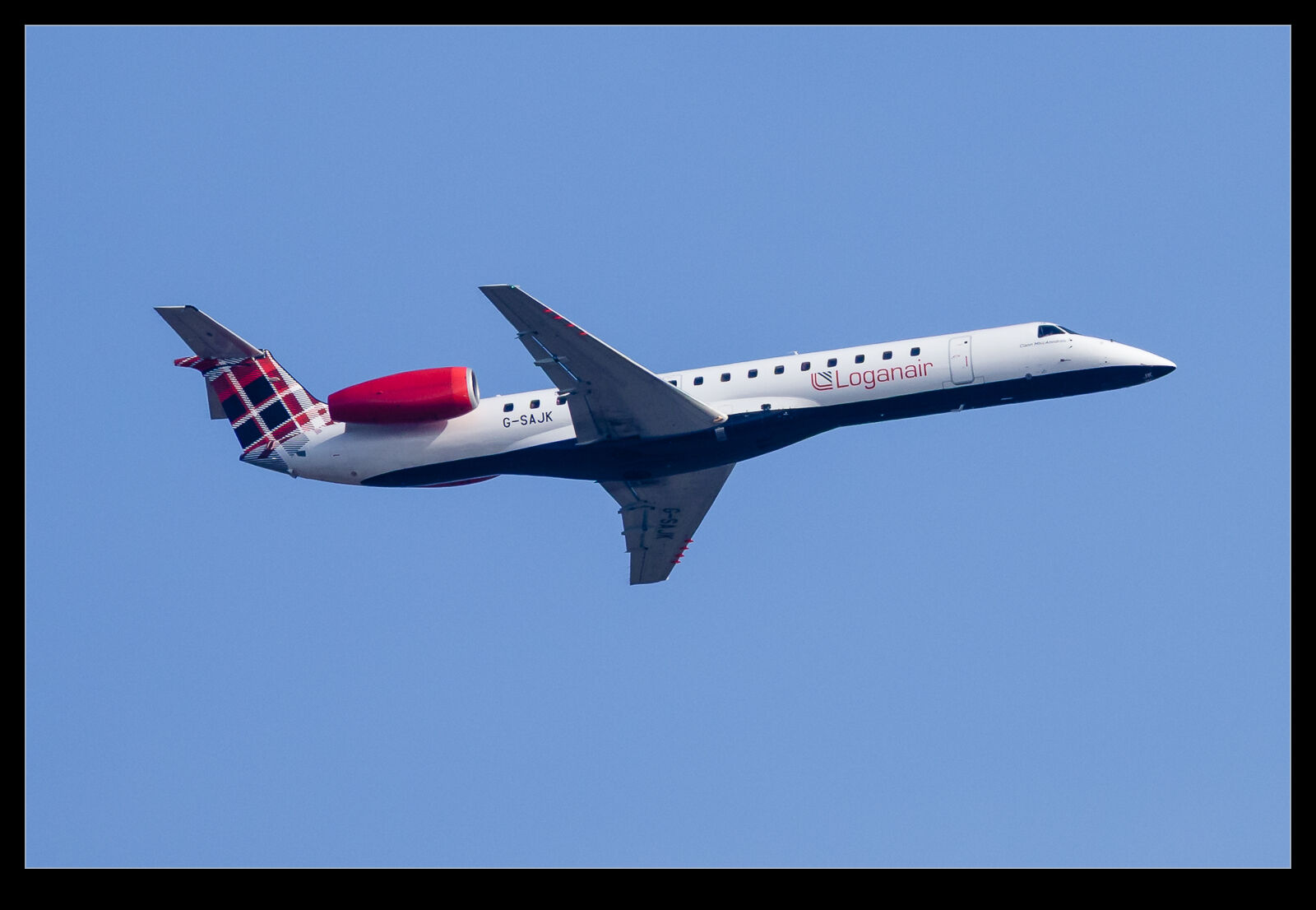
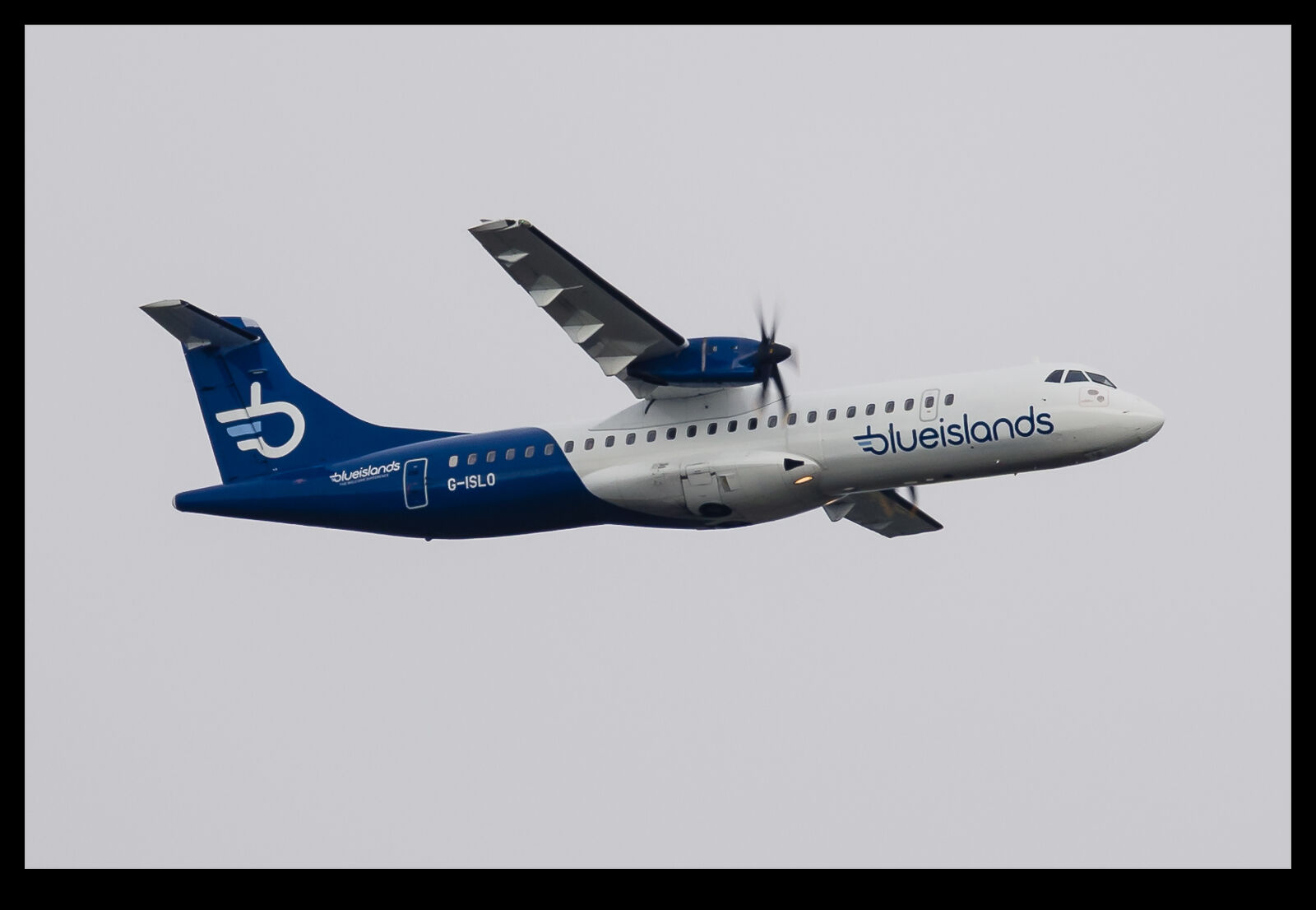
Our location in Winchester puts us close to the approach path to Southampton when traffic is on a southwesterly flow. I assume there must be some airspace constraints in the area because the standard arrival procedure involves overflying us at about 3,000’ and then entering a left descending turn to come back past us when established on the approach to Southampton. While things are a bit far away, I can still get shots from the front of our house.
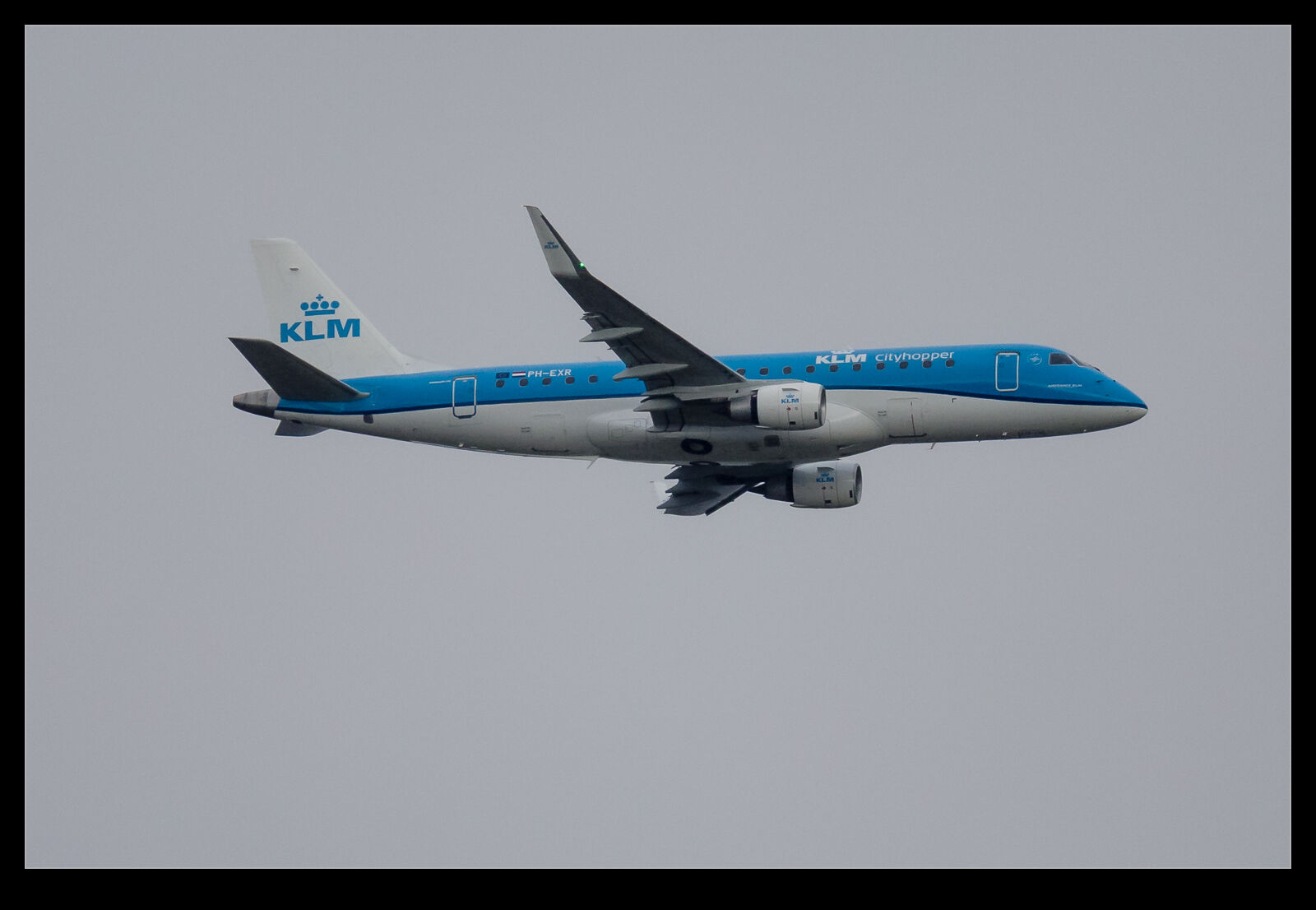
There are a few airlines that are regular visitors along with a pretty steady flow of bizjets. Aer Lingus Express comes in with ATR72s, KLM Cityhopper brings in the Embraer E175s and E190-E2s, Loganair has some EMB145s and then there is an airline I had never heard of before – Blue Island Airways, which also operates ATR72s from the Channel Islands. After a little while, I have got used to them all and don’t spend a ton of time watching them, but I will still look up if I hear something – I haven’t changed that much.
Weird Prop Vortex Effects on the Background
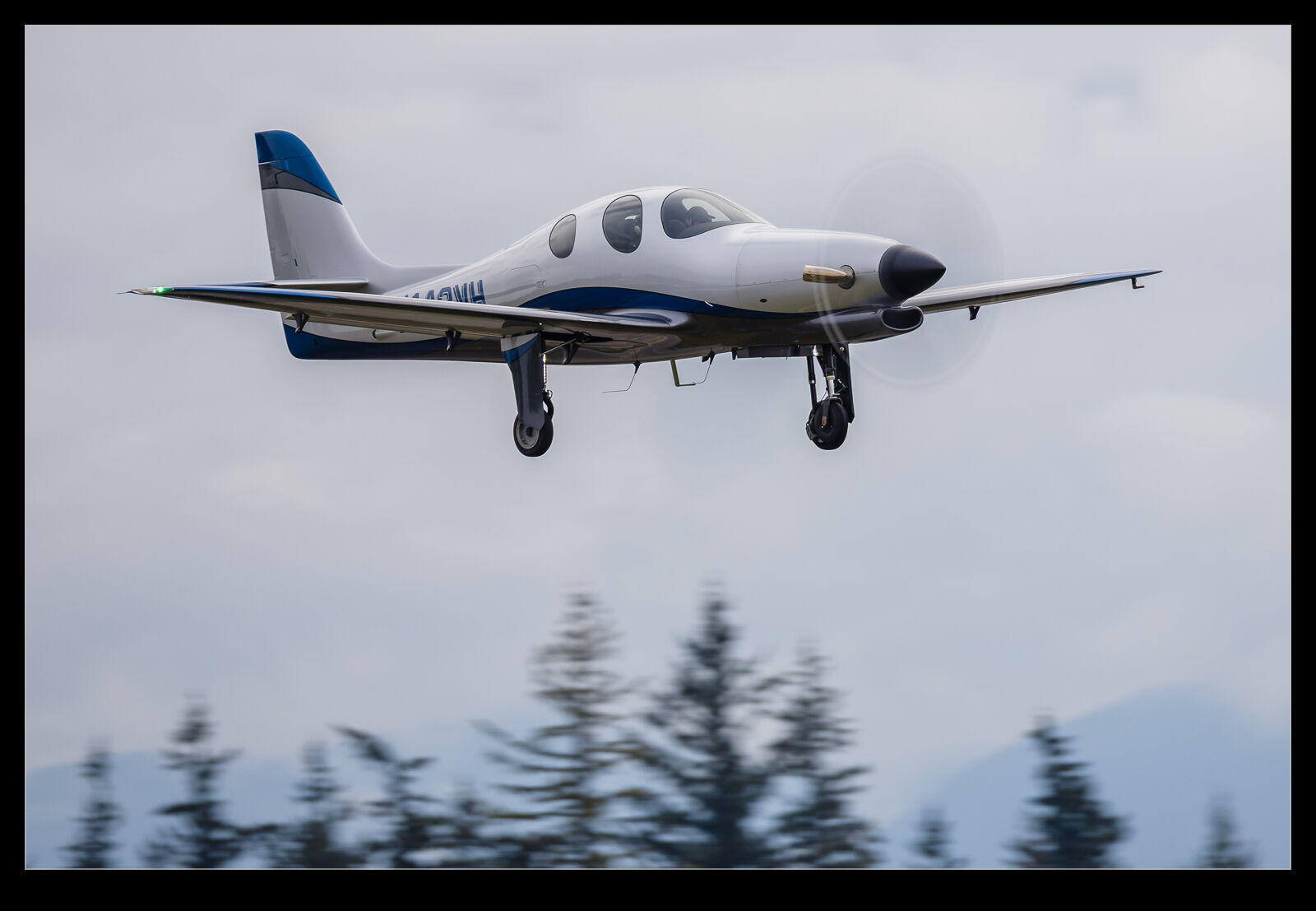
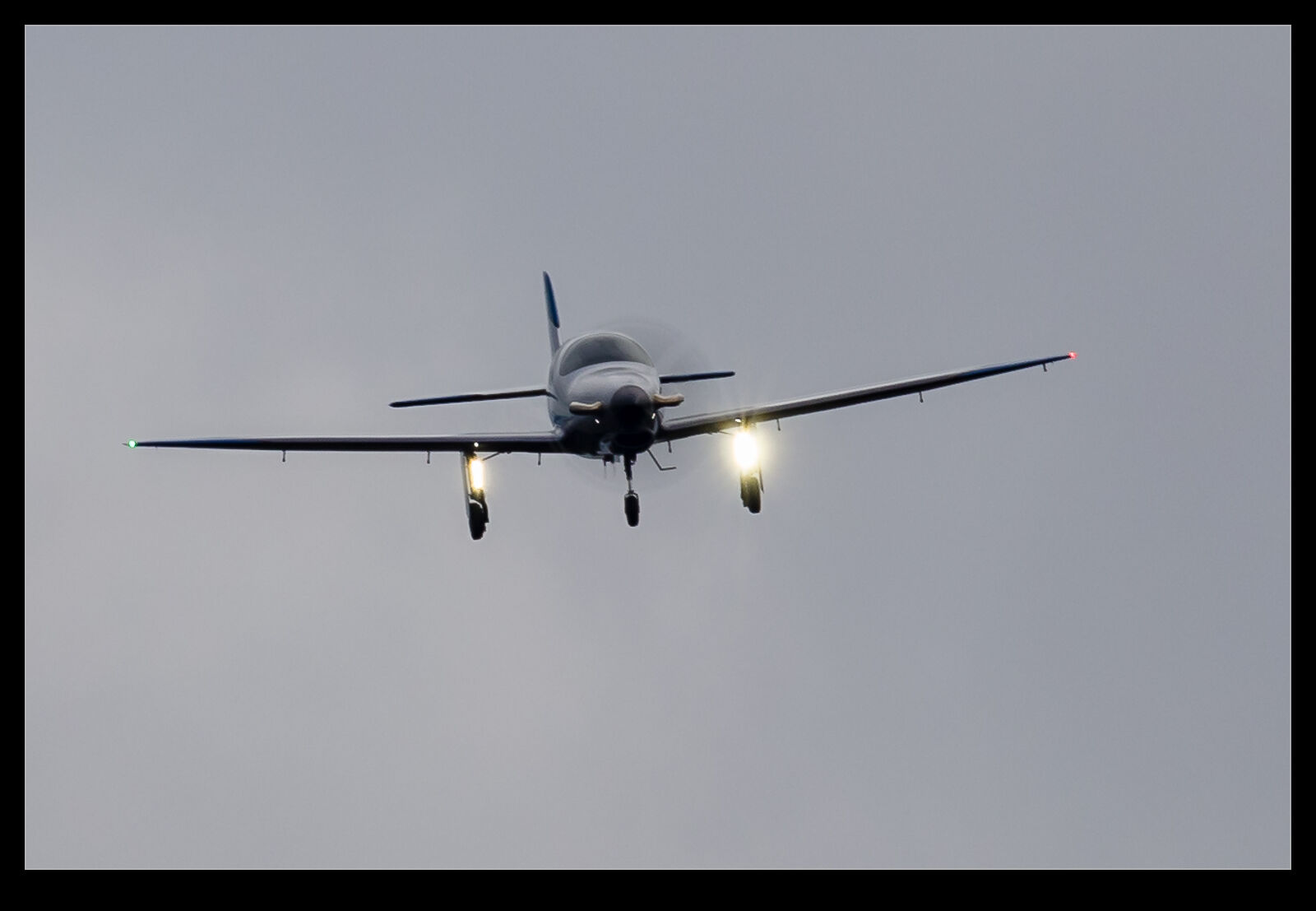
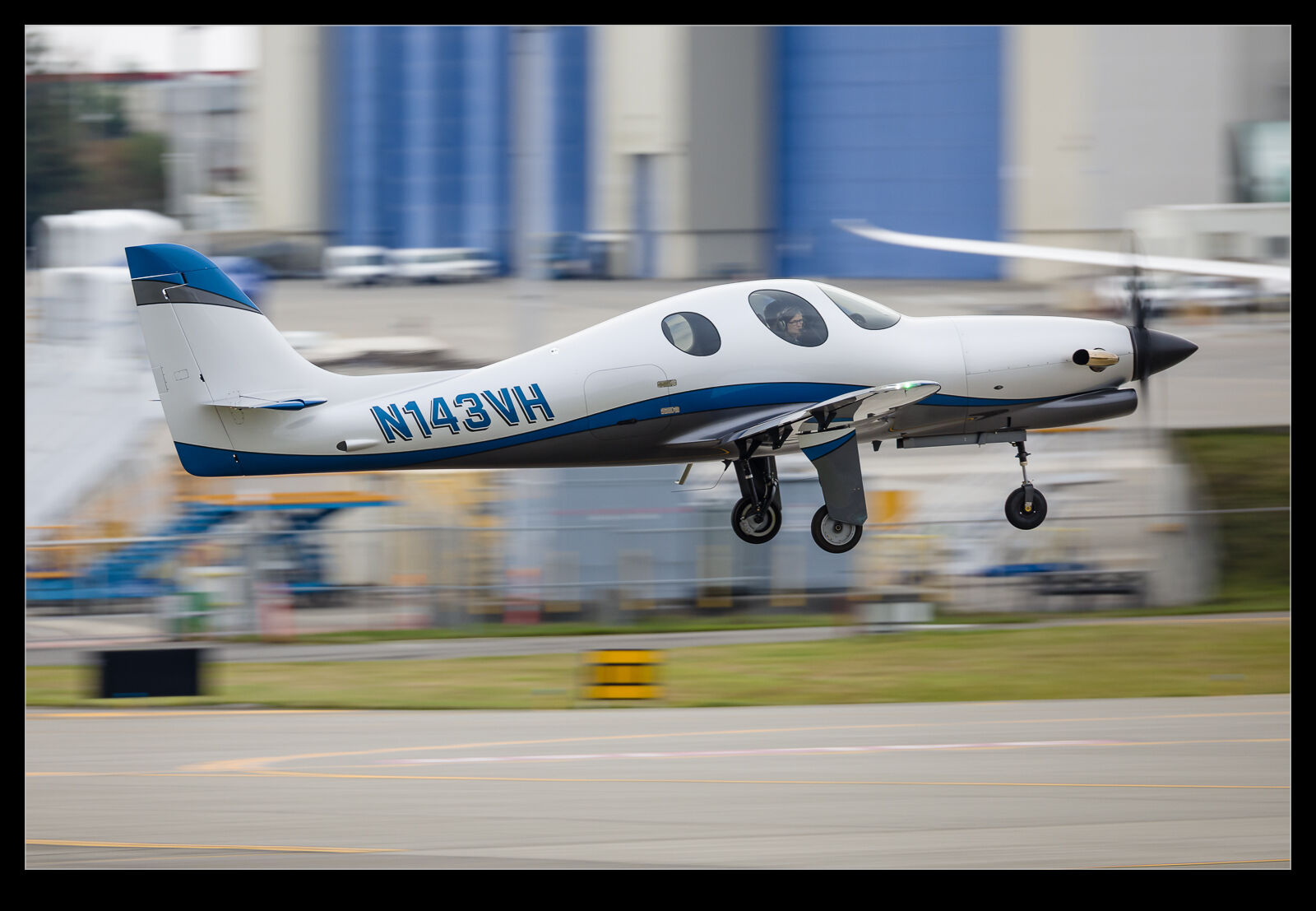
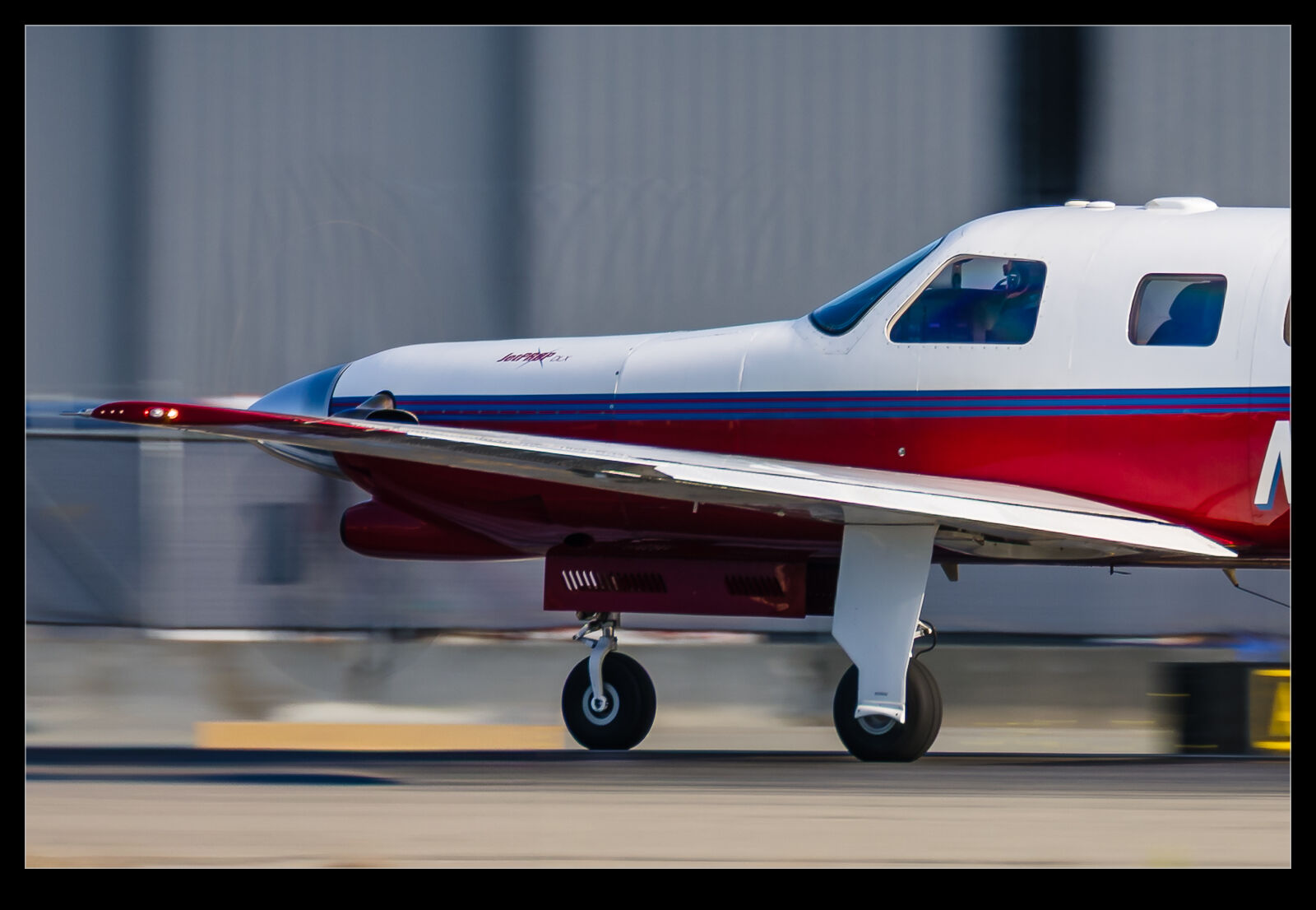
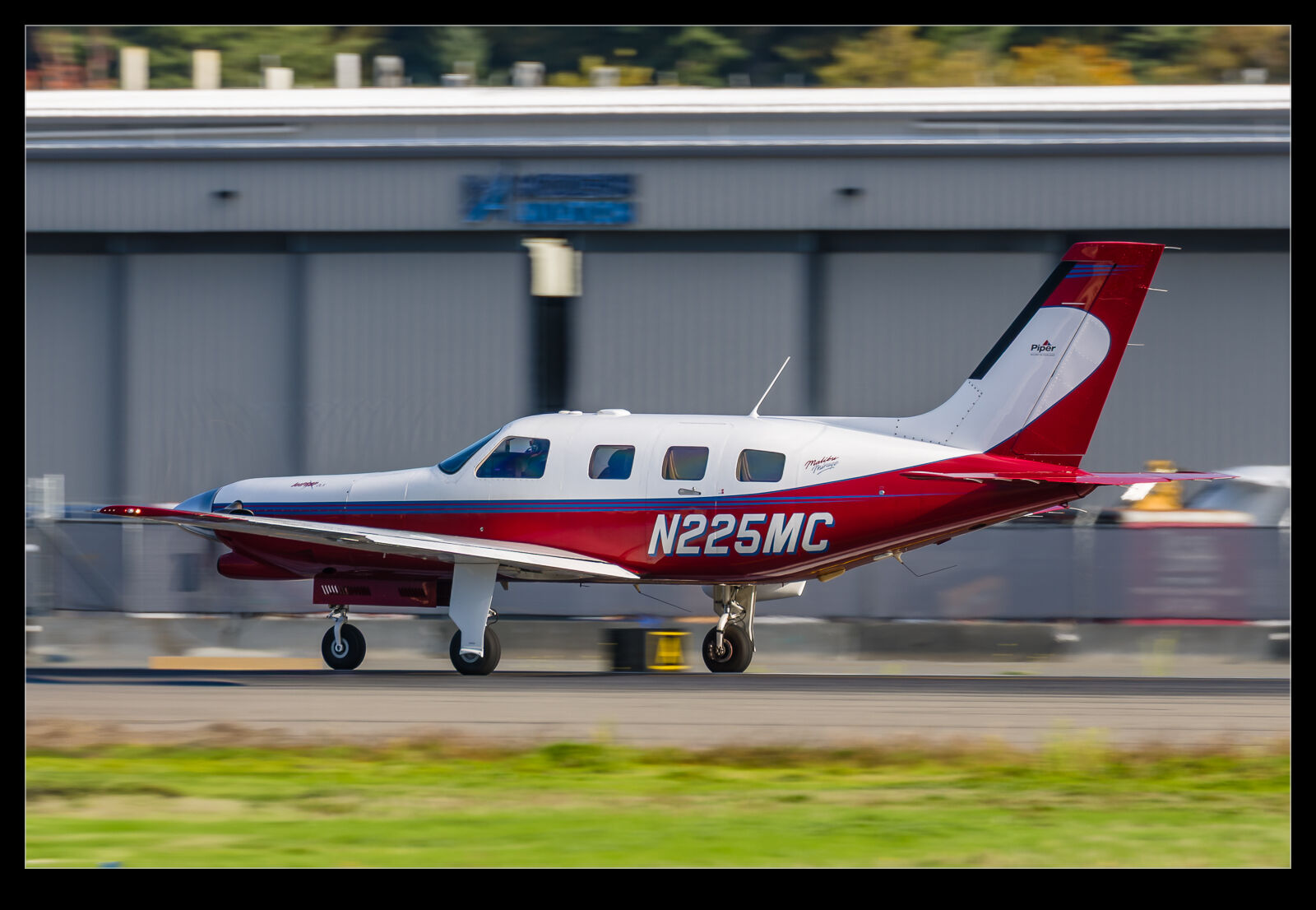
The aerodynamicist in me gets a little happy when I see shots that have the visible effects of the flow fields around a plane. Shock waves will be the most obvious example, but a trailing vortex can also cause some interesting refraction. The propeller produces a strong vortex from each blade and every once in a while, you can get a shot where the background provides enough of a pattern to allow the prop vortices to show up. I was reviewing some shots from Boeing Field of a Malibu Mirage with the PropJet turboprop conversion when I saw exactly this. Head on it can show quite well but getting it from more of a side on position was a nice surprise. Thankfully, the hangar doors in the background have vertical corrugations and this allows the flow to be seen in both directions due to the upward and downward moving blades.
Bill’s Grand Caravan Takes a Spin
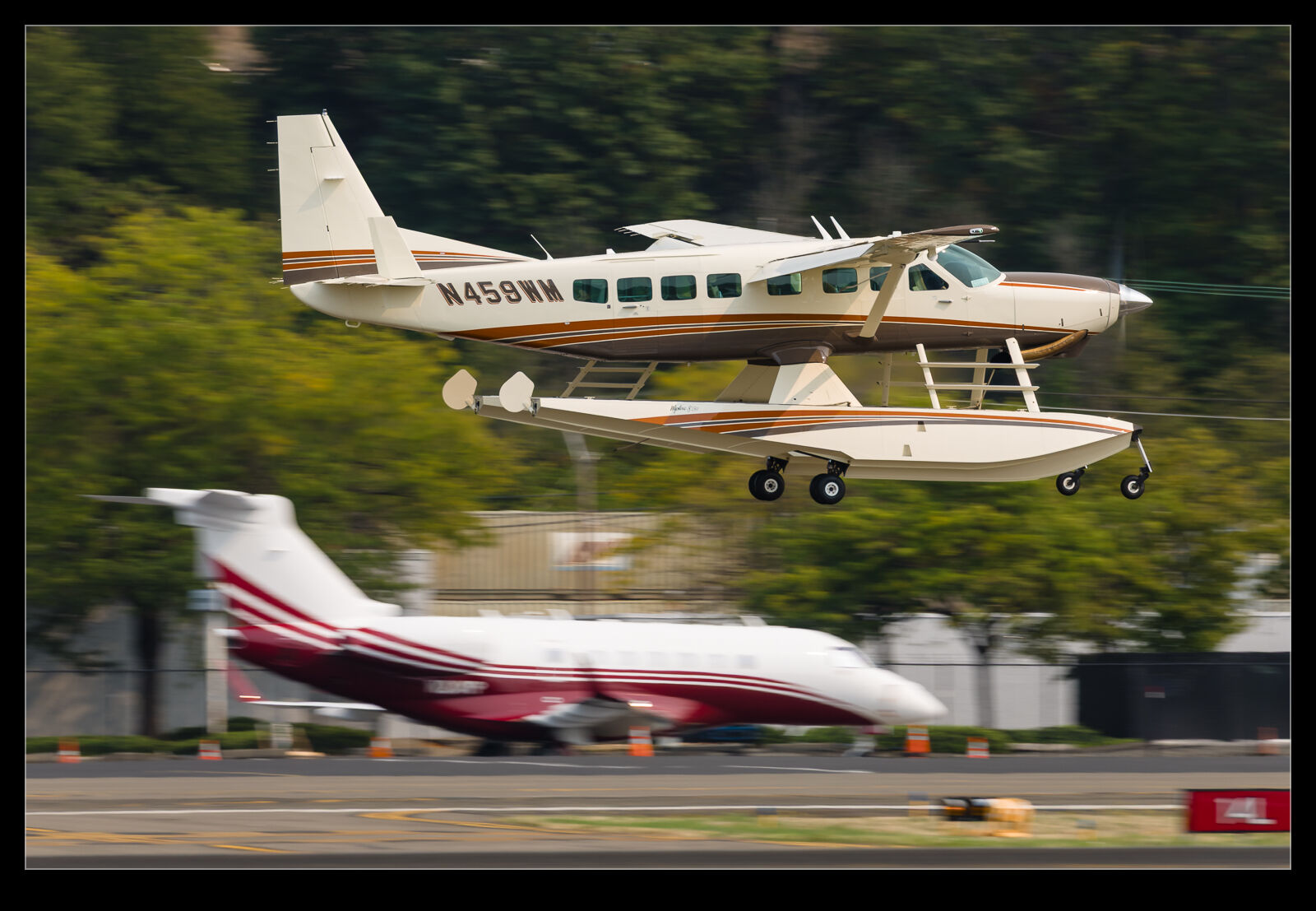
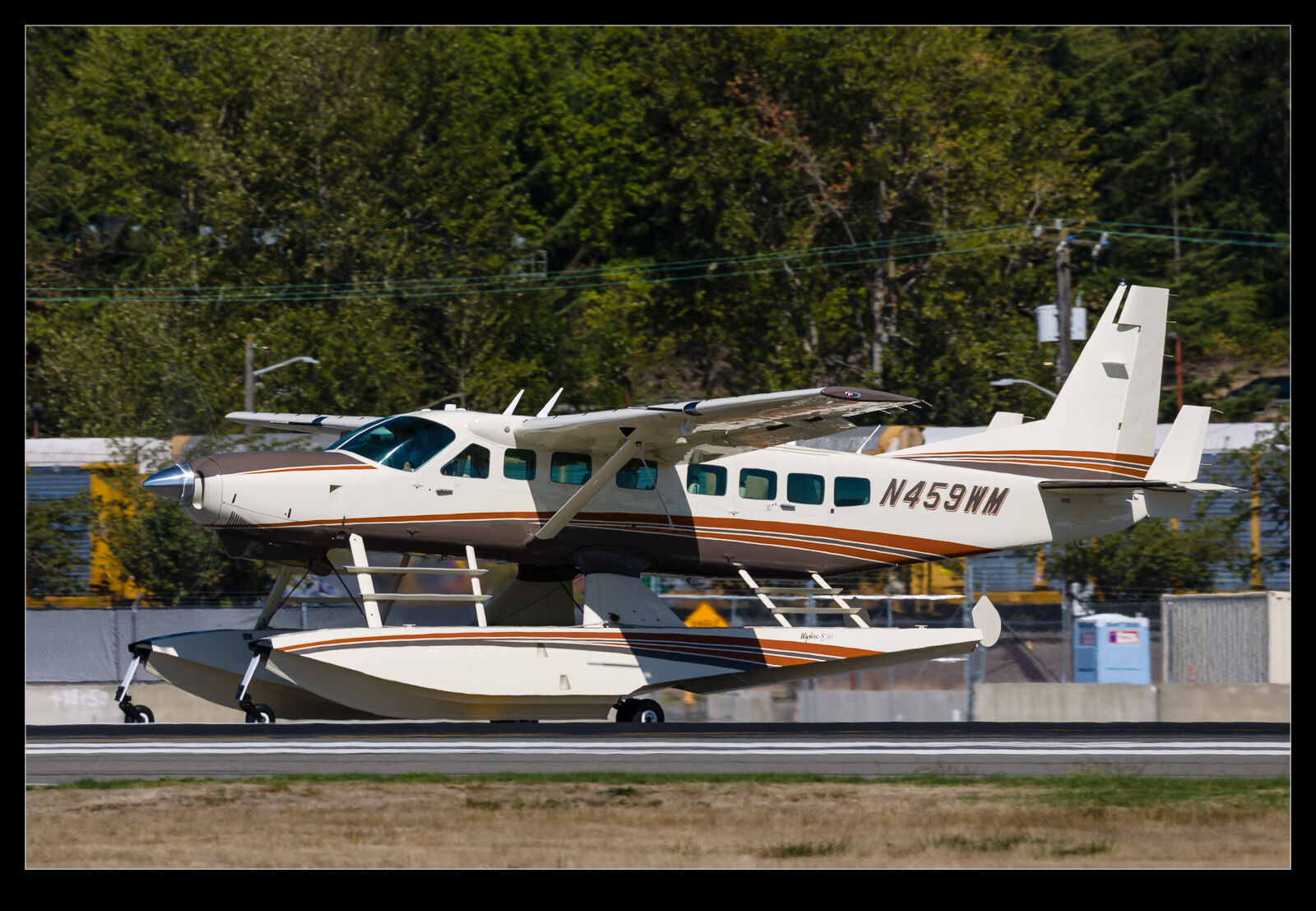
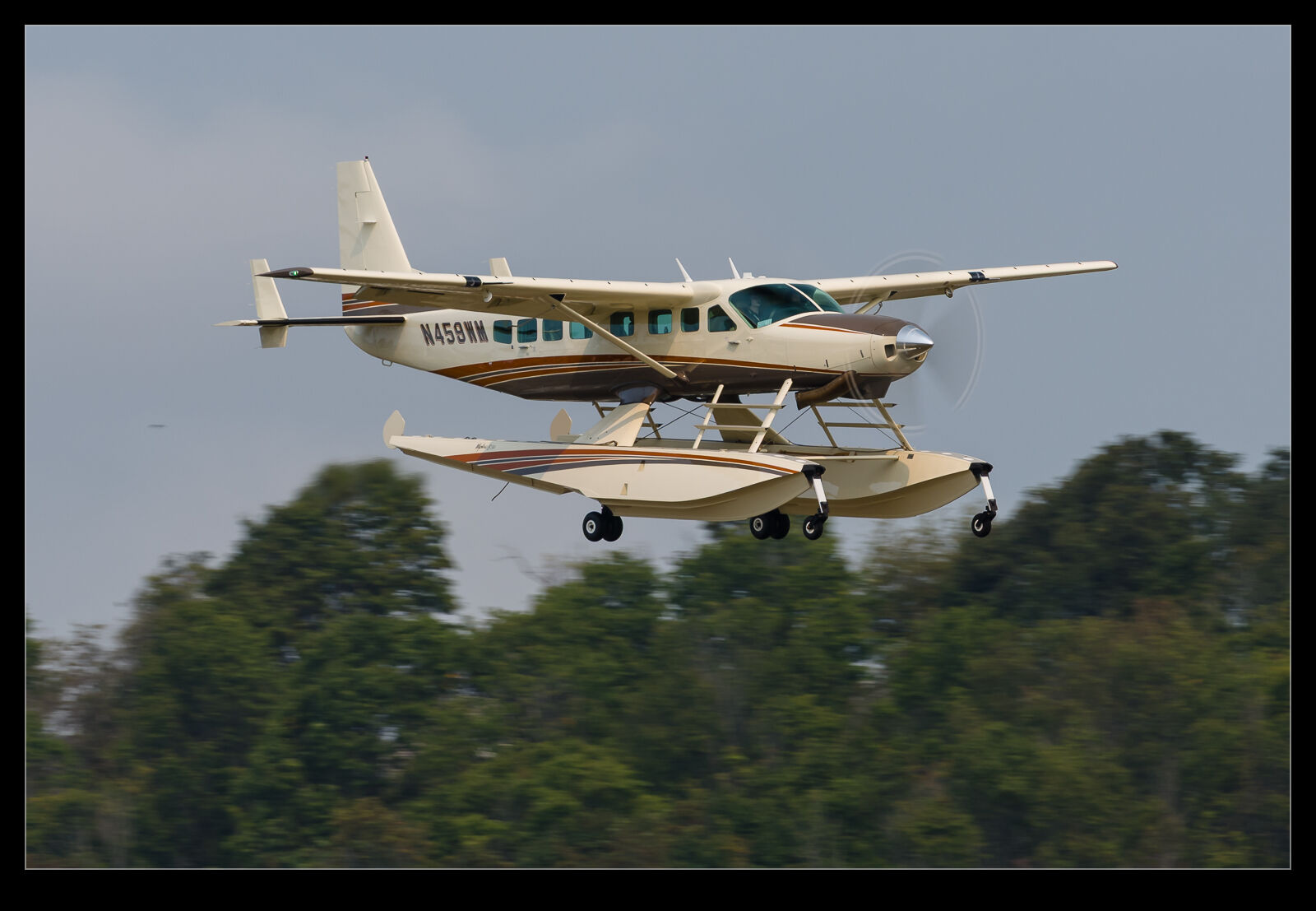
Boeing Field is home to a selection of aircraft belonging to one of the planets more wealthy individuals. The founder of a large software company has his biz jets and helicopters, but he also has a Grand Caravan on floats. In common with his other planes, the registration ends with WM. I have no idea whether he was onboard for this flight or whether it was a currency trip for the crew. It is a nice-looking Caravan (they look so much better on floats) and I guess I won’t be getting a chance to photograph it again for the foreseeable.
The Skyvan Lurks in the Distance
Last year, when a group of us made the trip to Sproat Lake to see the Martin Mars one last time at their home base, we did get lucky and saw Hawaii Mars fly. While we were on the ground (or the water), some others were up above us ready to get some air-to-air shots of this mighty aircraft. They were using a Shorts Skyvan as their photo platform because it provides a good rear ramp from which to get some great shots.
Once the Mars was airborne, it headed off to do some local flying. Meanwhile, we saw the Skyvan off in the distance as it flew around awaiting the Mars to join up. Sadly, the Skyvan never came too close to us. My only shots of it were from afar. I think it is the same airframe that the group had used for the show at Abbotsford in the preceding days.
Fat Albert Takeoff and Video of Return
When I was up the tower at Boeing Field for Seafair last year, I got to play around a bit with what I shot of the Blue Angels C-130, Fat Albert. The takeoff was a straightforward as it was departing in our direction so photographing it as it left the ramp and then rotated and climbed past was the obvious choice for me. However, when it came to the return to landing, I was wondering what to do.
The threshold is a long way from the tower, so any shots of the landing were going to be quite distant and, given the heat haze, unlikely to be that good. I figured I might try video and, with the 200-800 having such good stabilisation, thought this might be practical. It turned out surprisingly well with the original video being pretty stable. I did apply a little extra stabilisation in Resolve afterwards. The worst elements are down to operator error where I had a few moments where I ended up moving the camera very jerkily and there is nothing that the post-production can do to fully disguise that! Shame I didn’t plan ahead enough and avoid having that happen when near the flare!
The Firefighting Collection
Canada has a long history of aerial firefighting and the BC Aviation Museum has a row of planes that have a firefighting history. They are lined up outside the hangar and now include the museum’s most recent addition with the Martin Mars that Coulson donated heading the line. There is an S-2 although the example here is not one that was converted for firefighting. However, it does straddle the Canadian military element of the collection and the firefighting role.
Conair has extensive firefighting activities and there are two of their planes on display. An A-26 Invader is there in Conair colours. It was retired quite a while back. Next to it is a more recent acquisition. A Convair CV-580 with a large belly tank modification is an example of the more recent types used in the role. I wonder over time whether something like a Q400 or a BAe 146 will join the collection. Maybe some of the Trackers at Abbotsford could be brought across.
At Last, This Otter Is Nicely Lit
There is a privately owned DHC-3T Otter that lives in the Puget Sound area, and it comes in and out of BFI on a regular basis. I have seen it plenty of times but have always struggled to get either a nice angle on it or favorable light. I won’t claim it is my white whale, but it has begun to frustrate me somewhat. Therefore, I was delighted when I heard it call up on approach one evening when the sun had popped out from behind the clouds and the warmth of the light was nice.
I saw it far out on approach as it angled in towards the longer of BFI’s two runways – occasionally disappearing behind the trees as it maneuvered in. I was using a lot of lens to see it and even then, it was a bit distant but, since the conditions were favorable, I wasn’t struggling with haze issues. Soon enough it was on short final, and I finally was able to get the types of shots I have been hoping to achieve for a long time. Now I can move on in peace!
Stored Airtankers Awaiting Their Turn
Quite a while back, I made a trip to Abbotsford. In more recent visits I have created posts of their Q400 based airtankers out on some test flights. However, before they became tankers, these were all airliners that had been retired from passenger service. Conair buys up these older airframes when the price is right, and they come to Abbotsford to await their time in the conversion program.
A few of them were sitting on the ramp when I made my visit. Some were being worked on while others were just waiting for some attention. Various bits were missing – often the expensive bits like engines. It is possible that some of the airframes might only be acquired to provide a source of spare parts and they will never fly again. I have no idea whether that is the case for any of these. Hopefully they will have since made it back into the air and are now being used to fight wildfires somewhere.
Refueling the Hornet
Two quite different versions of the same thing here. The Comox Air Show this year included demonstrations are aerial refueling with the RCAF Hornet. The first of these was perfectly sensible because it was the Hornet formating on the C-130 Hercules fitted with refueling pods. The Hornet took up station behind the drogue units to demonstrate how refueling would be done.
Later in the show, there was a slightly odder version of things. A USAF KC-135R Stratotanker (which was carrying Kadena tailcodes which might be a first for me) was airborne and the Hornet formated on this too. Some KC-135s do carry hose drogue units on the wings or a drogue adaptor on the end of the boom but this was not one of them. Instead, they simulated the boom refueling. The Hornet can’t refuel from the boom but, since it was just an airshow, I doubt too many people were bothered by this.