Tag Archives: refraction

Visualise That Trailing Vortex

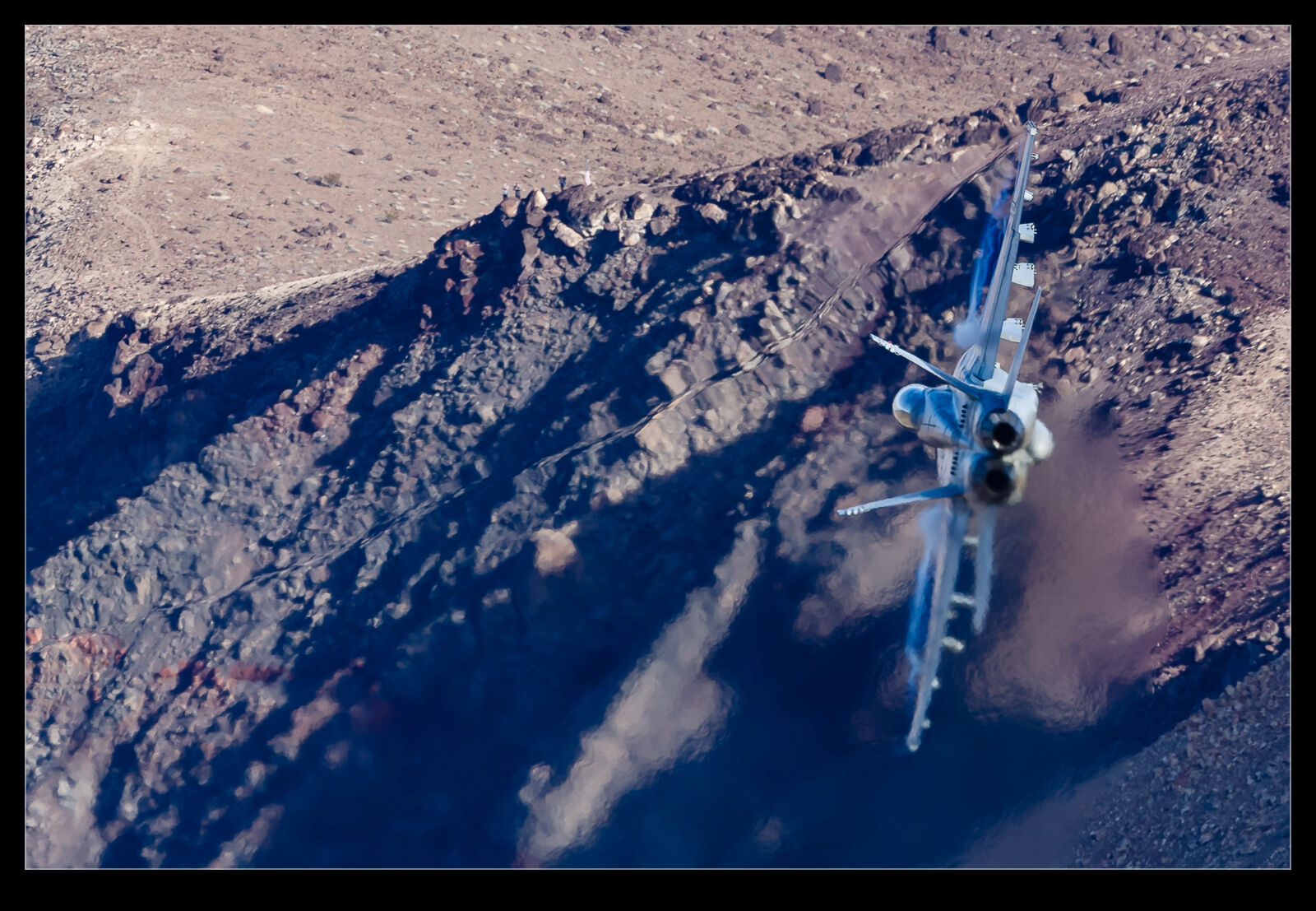
I was working through some images that I had taken on my one and only visit to Rainbow Canyon when the military was still flying through that part of region. One of the shots that caught my eye was this one of a Super Hornet. It had passed me and was heading down towards the valley. This involved a few tight pulls around the curves in the canyon. A strong trailing vortex changes the density of the air which affects the refractive index. This distortion of the light makes the vortex visible if only by impacting the view of whatever is behind it. A good view of that effect can be seen in this shot.

Weird Prop Vortex Effects on the Background

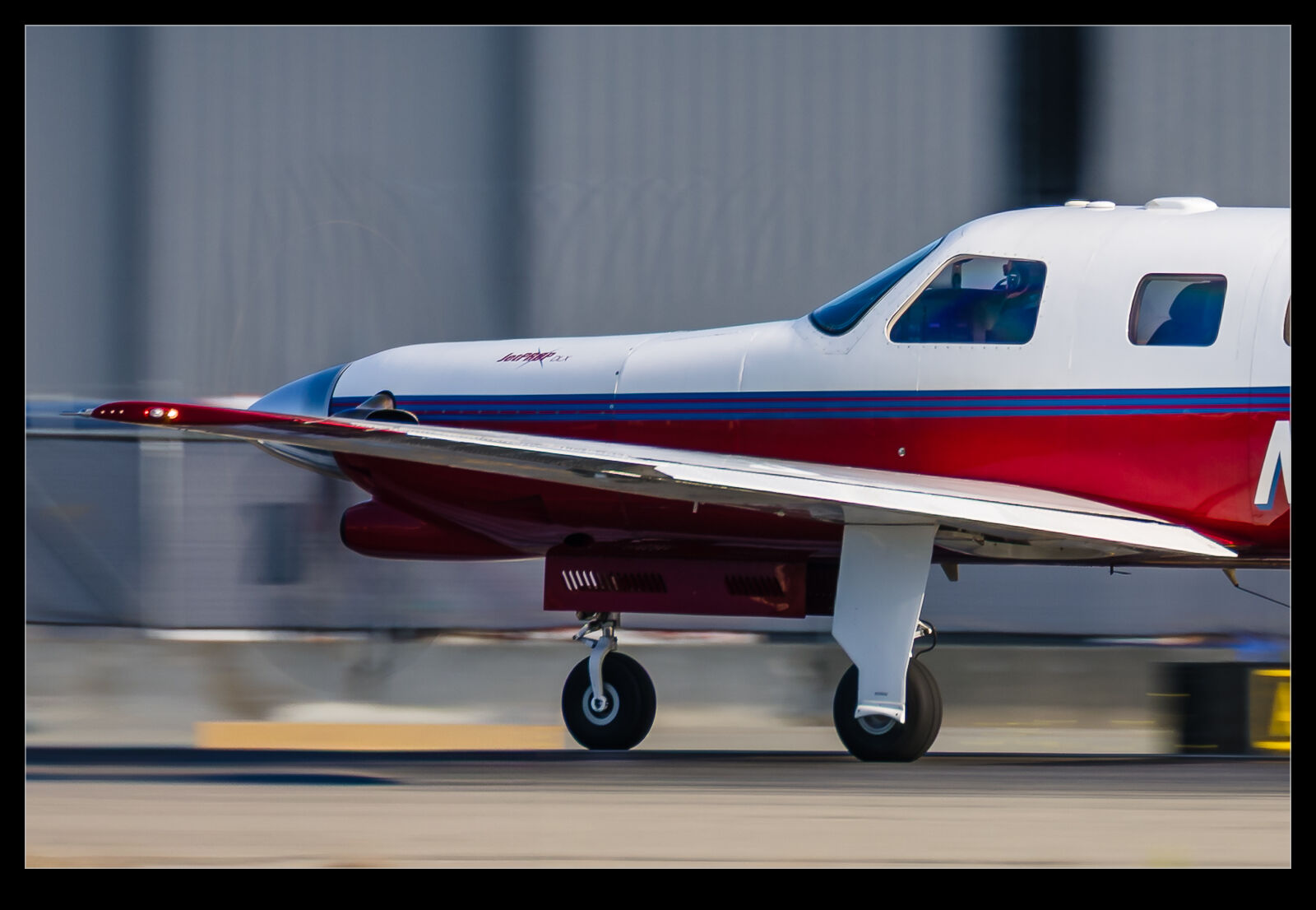
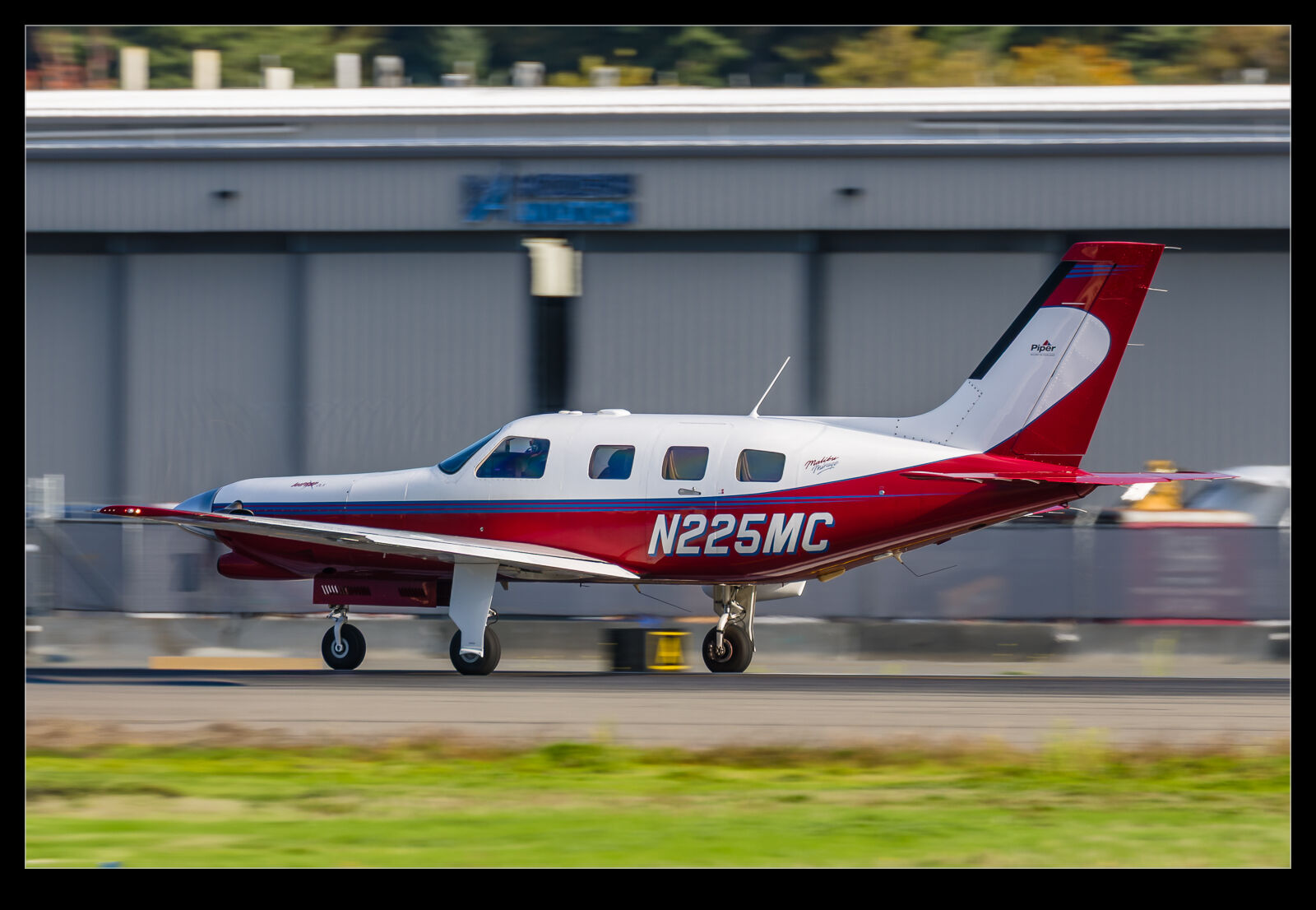
The aerodynamicist in me gets a little happy when I see shots that have the visible effects of the flow fields around a plane. Shock waves will be the most obvious example, but a trailing vortex can also cause some interesting refraction. The propeller produces a strong vortex from each blade and every once in a while, you can get a shot where the background provides enough of a pattern to allow the prop vortices to show up. I was reviewing some shots from Boeing Field of a Malibu Mirage with the PropJet turboprop conversion when I saw exactly this. Head on it can show quite well but getting it from more of a side on position was a nice surprise. Thankfully, the hangar doors in the background have vertical corrugations and this allows the flow to be seen in both directions due to the upward and downward moving blades.

Shocks On The Sneak Pass

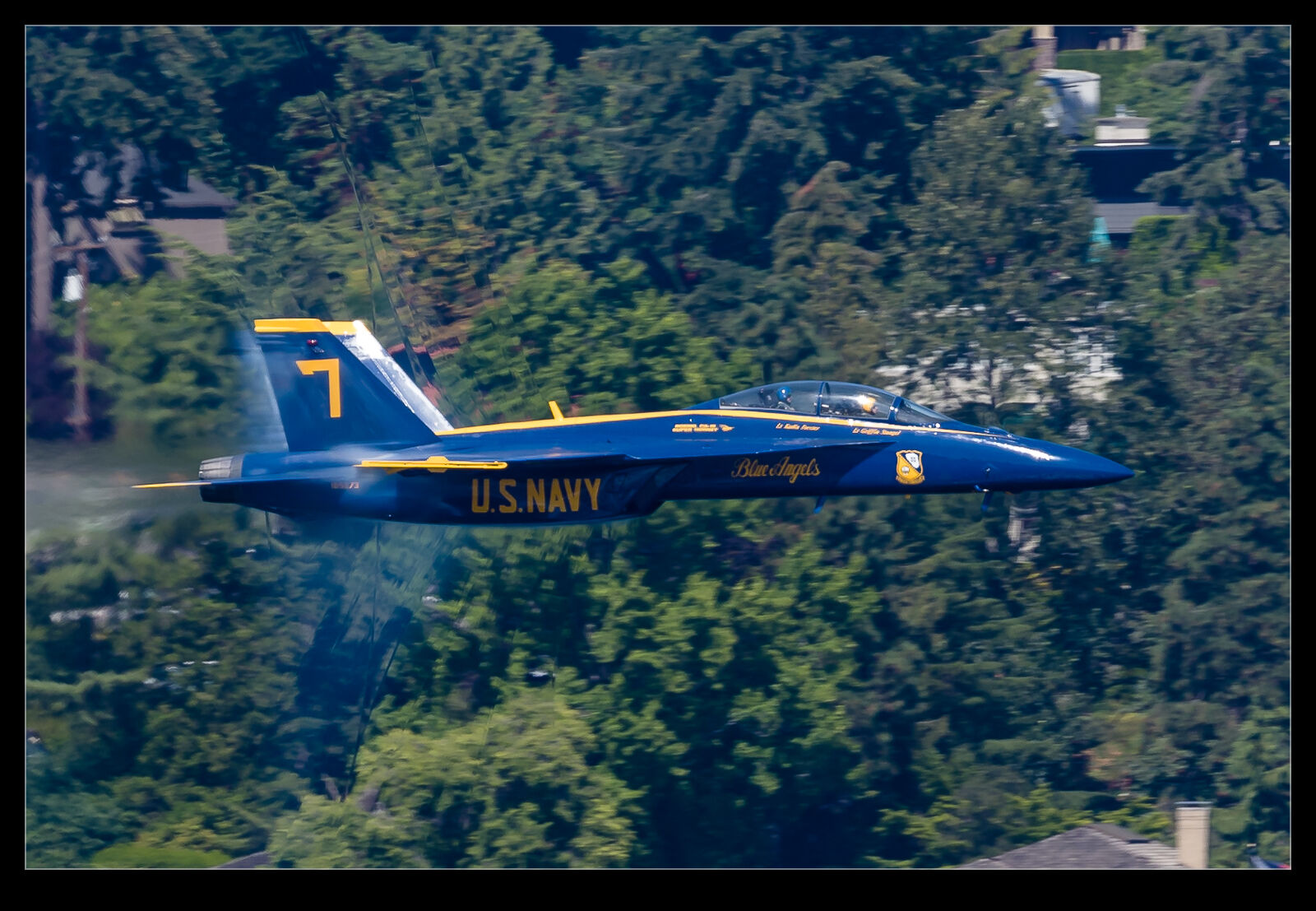
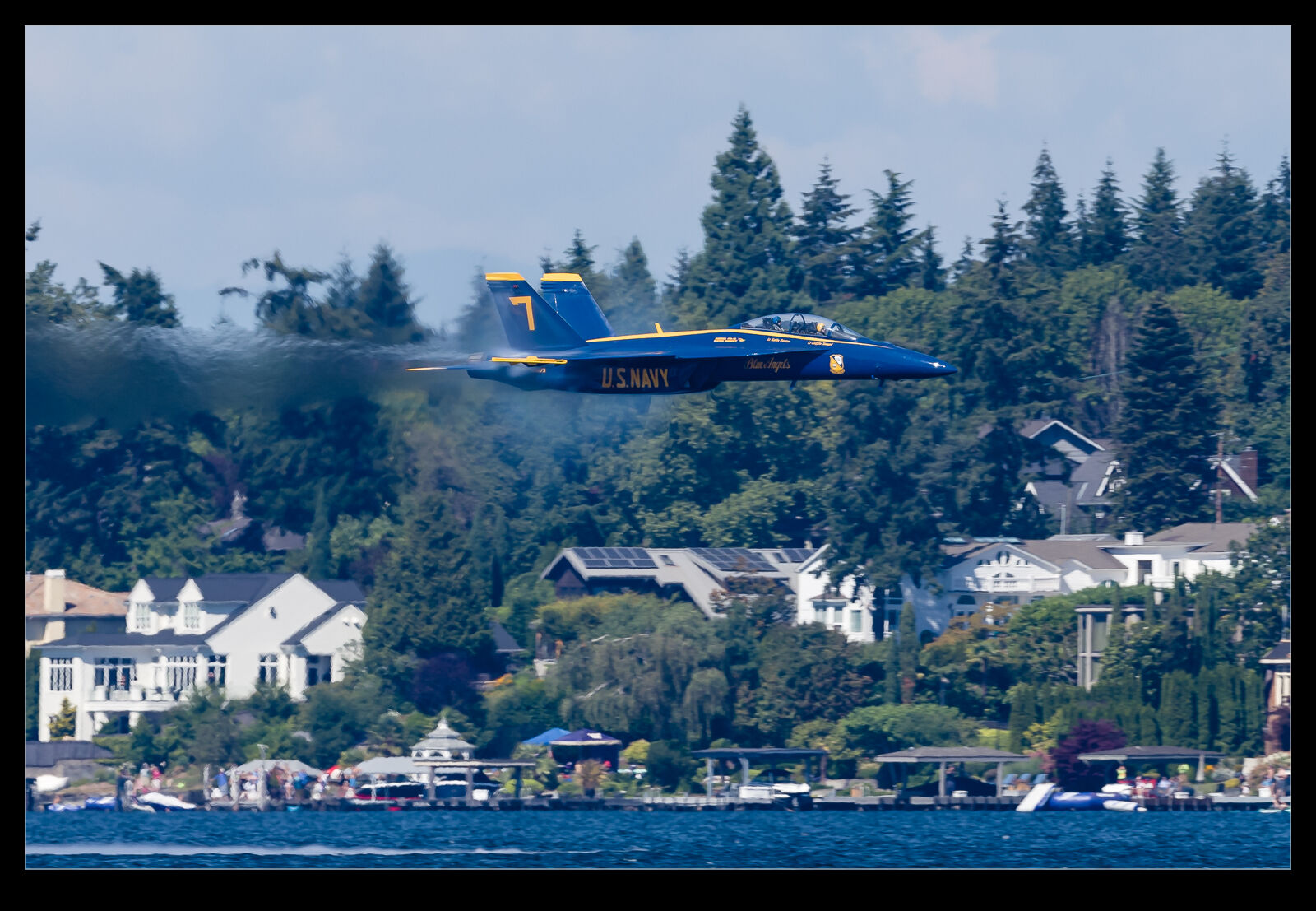
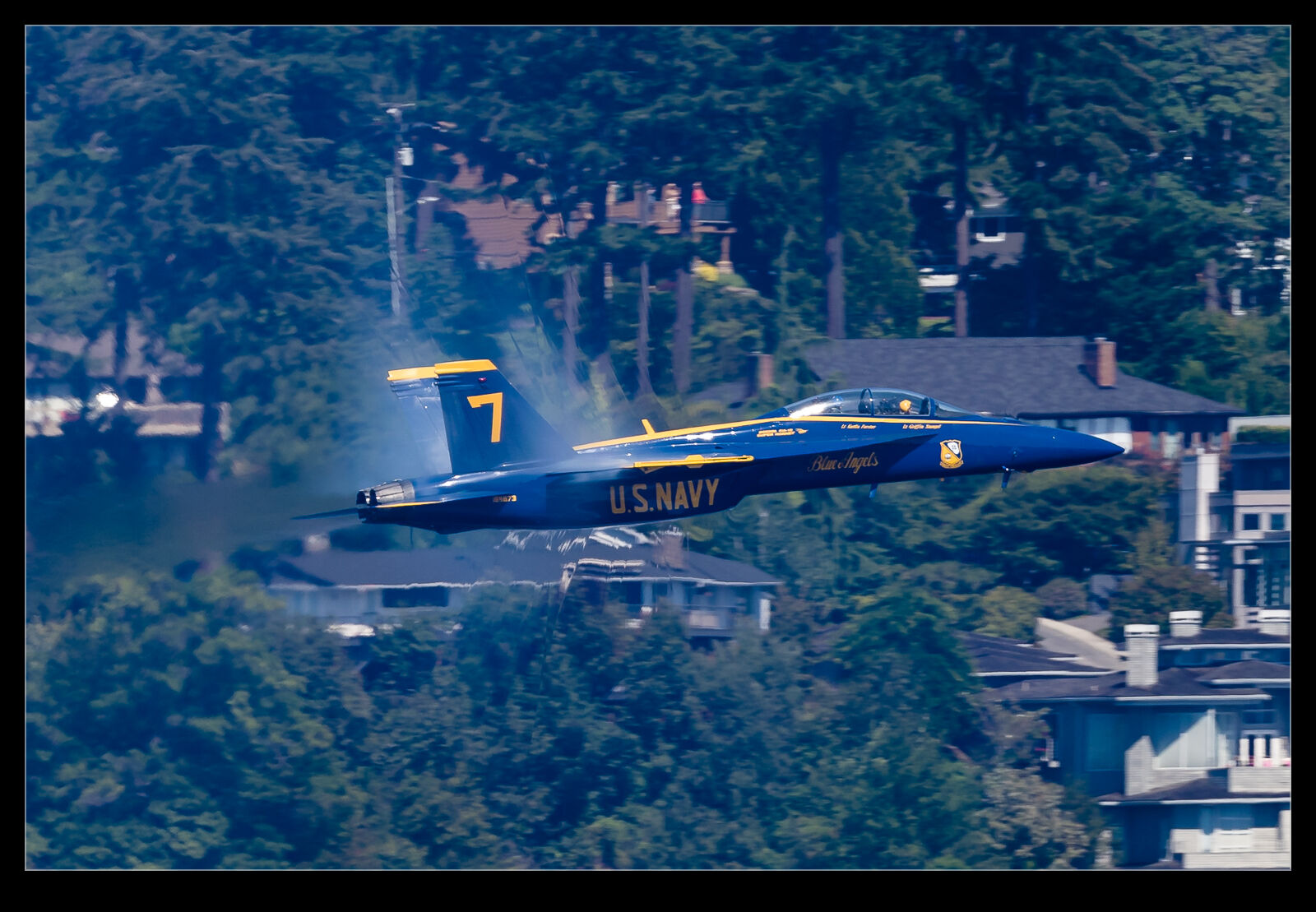
One of the highlights of the Blue Angels’ display is the sneak passes.  The display is good but the sneak pass gets the jets as fast as you are going to get in their routine and there is a chance of vapor cones forming around the shocks and expansion fans.  A display over water enhances the chance of the vapor.  The distance of the display line on Lake Washington was a little disappointing as the jets were quite far away but the advantage of this location was that Mercer Island provided a backdrop.

The benefit of this backdrop was that, the rapid changes in density of the air in the shocks and expansions makes the refractive index change and this will distort the view of the background.  With a clear sky, this is usually not visible but, with a background, you can see the shocks around the airframe.  This is a rare opportunity.  Fortunately, while there was little vapor, there were plenty of shocks.  I was quite happy when I got home and studied the shots of the display to find I had some good results.  It would have been great to have been on the media boat but let’s not complain.