Tag Archives: turboprop

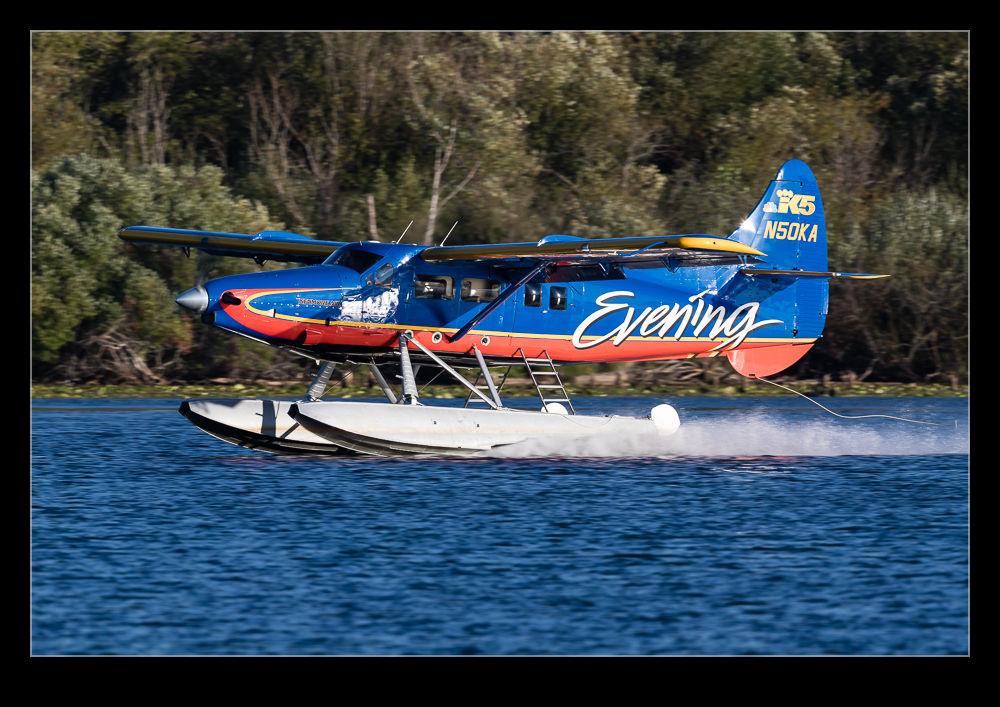
Floatplanes Coming at You

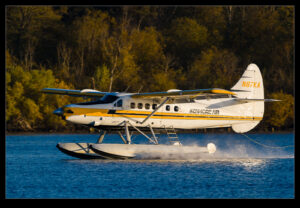
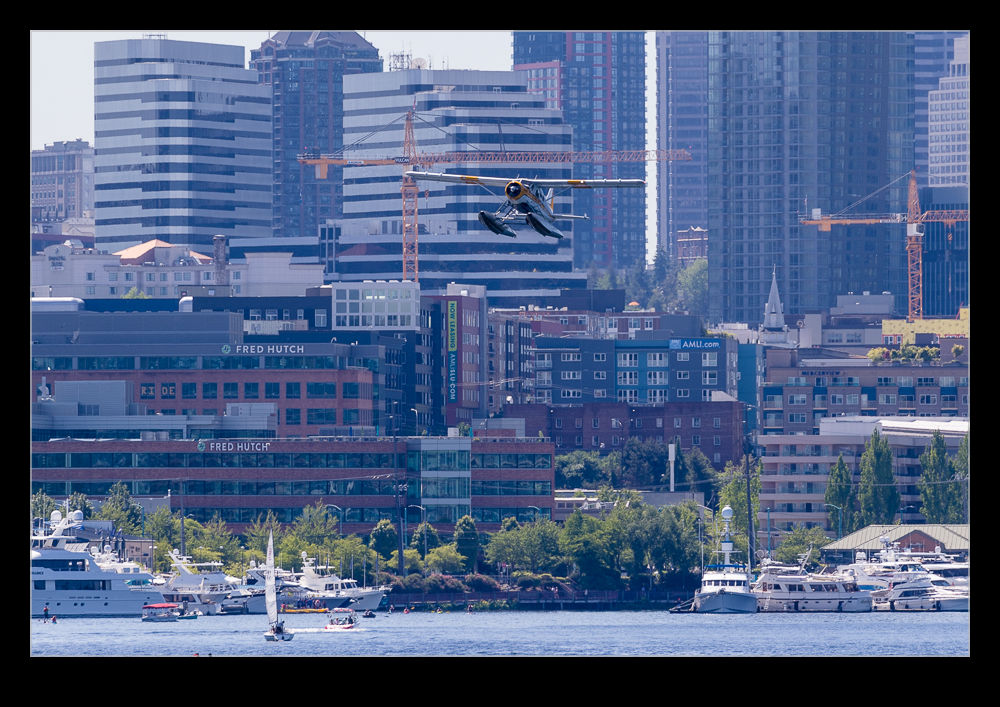
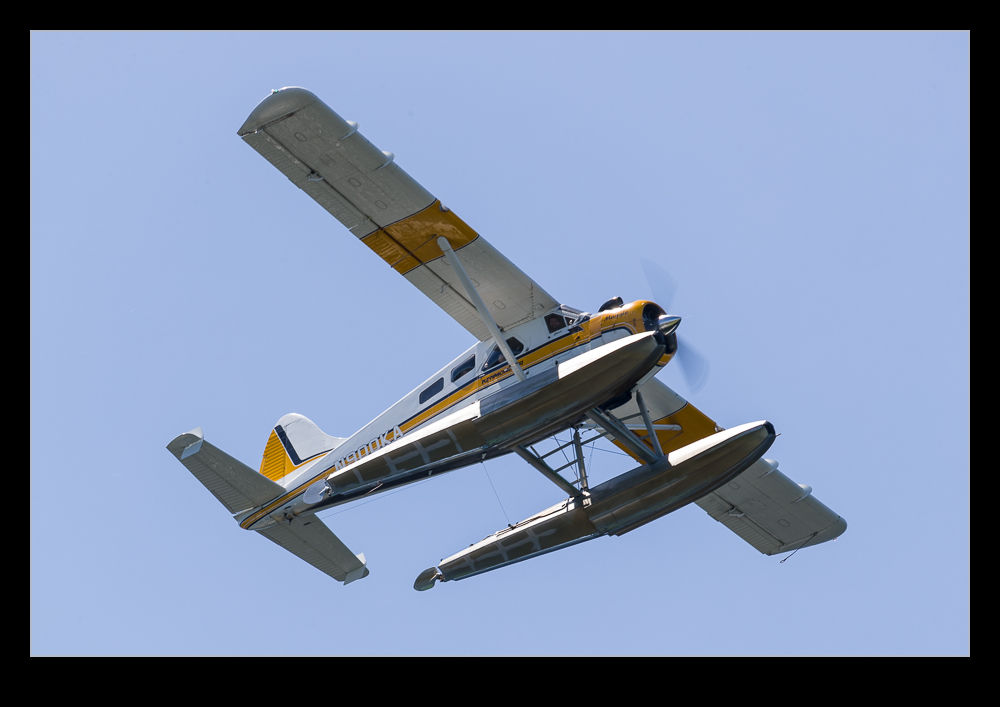
Standing in Gas Works Park, you have a view straight down Lake Union.  At the other end of Lake Union is one of the bases for Kenmore Air.  They operate floatplanes from there on a regular series of services as well as some sightseeing trips.  We got there just as a bunch of planes took off in close succession and I was a bit annoyed to miss out the chance to get some shots of them.  However, they are a busy company so we knew we would get some more flight before too long.

They start their takeoff run at the other end of the lake so they get airborne long before they reached us.  With so much clutter in the background and a lot of ambient noise, you didn’t always immediately pick out that a departure was coming your way.  Once they got airborne and a lot closer, they were easier to identify.  They would turn before they reached us and head off en route.  I could probably have spent a lot of time there watching the flights but Nancy is not quite so keen so we lingered a short while and then moved on.

They Both Float, But…

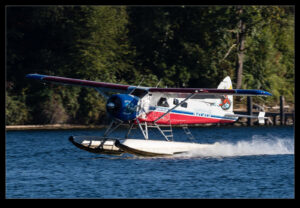
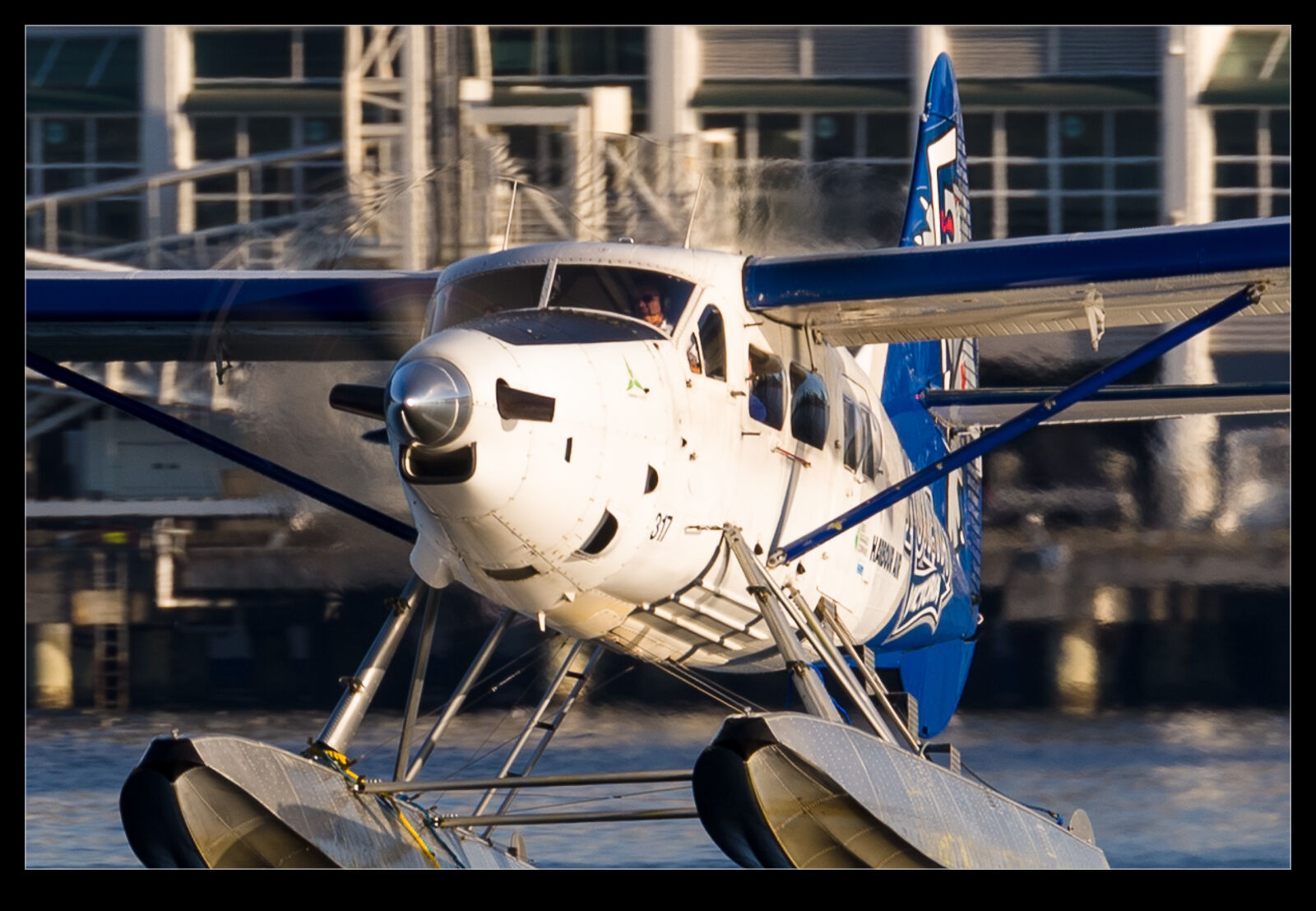
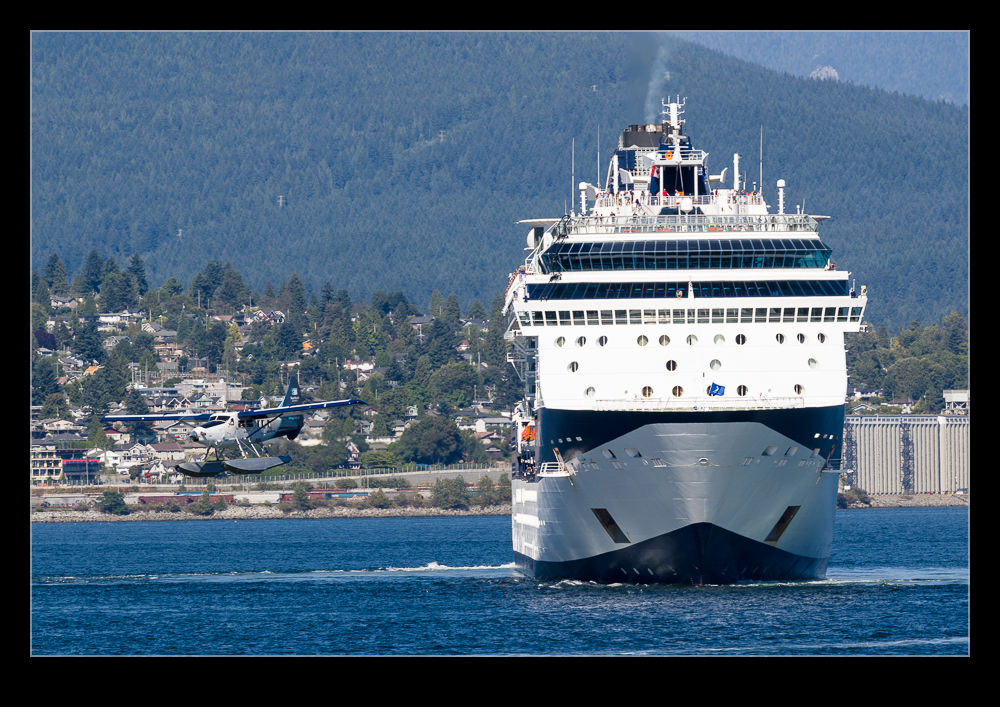
This is the cruise ship that our family had been traveling on when they arrived in Vancouver.  It was heading back out the same day and we watched it leave port and head out.  As it was turning to head back to the open sea, one of the local Otter floatplanes was making its approach to land (or whatever the correct word is when it is water rather than land).  It passed in front of the ship.  Both vessels are comfortable in the water but one is on a rather different scale than the other.

Dash 7s Still Exist!

Coming across something old school is fun.  Go back through the Canadian aircraft history and you come to the Dash 7.  This four engine turboprop could achieve some pretty dramatic steep approaches and departures.  It was the first aircraft to operate in to London City using a 7.5 degree approach angle.  The Dash 8 family was the replacement for the Dash 7 and led to the Q400.  I flew on a Dash 7 in 1994 in a US Air Express flight between DC and Philly.

You don’t seem them around anymore but, I came across a couple of them in Toronto.  They were parked up at Billy Bishop Airport around the back of the terminal.  You can see who has been using one of them based on what is written on the side.  I assume these two are stored awaiting their next tasking but maybe they are more active than I realize.  I hope they still get good usage.

My First Avanti in Ages

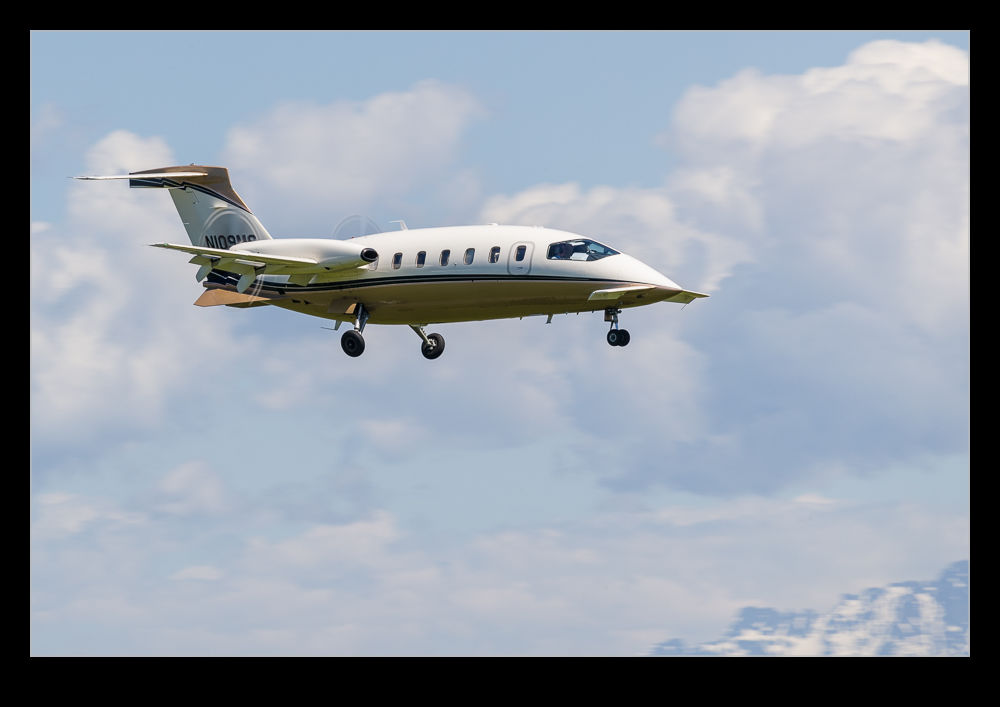
I do love Avantis but, for whatever reason, I have not seen one in ages.  The distinctive sound used to be something I would see quite a bit in the Midwest before Avantair went bust and their frequent appearances abruptly stopped.  To see this one show up was a nice treat.  I have yet to see one of the latest EVO versions.  They have a five bladed prop instead of the six bladed version on the previous iterations so I have yet to find out how much the tone has changed.

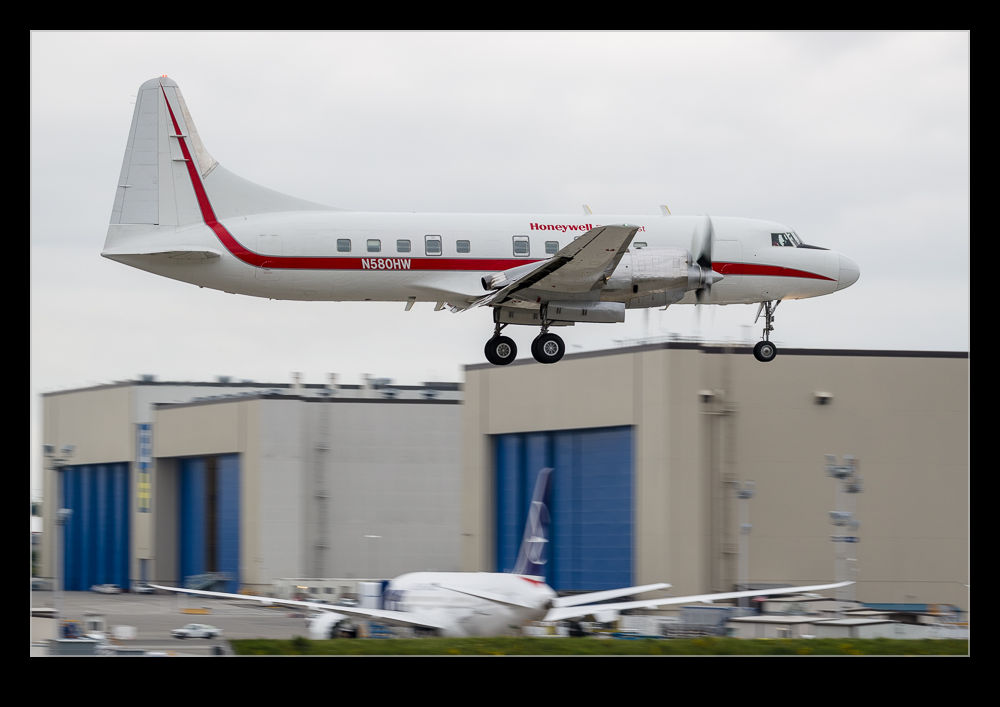
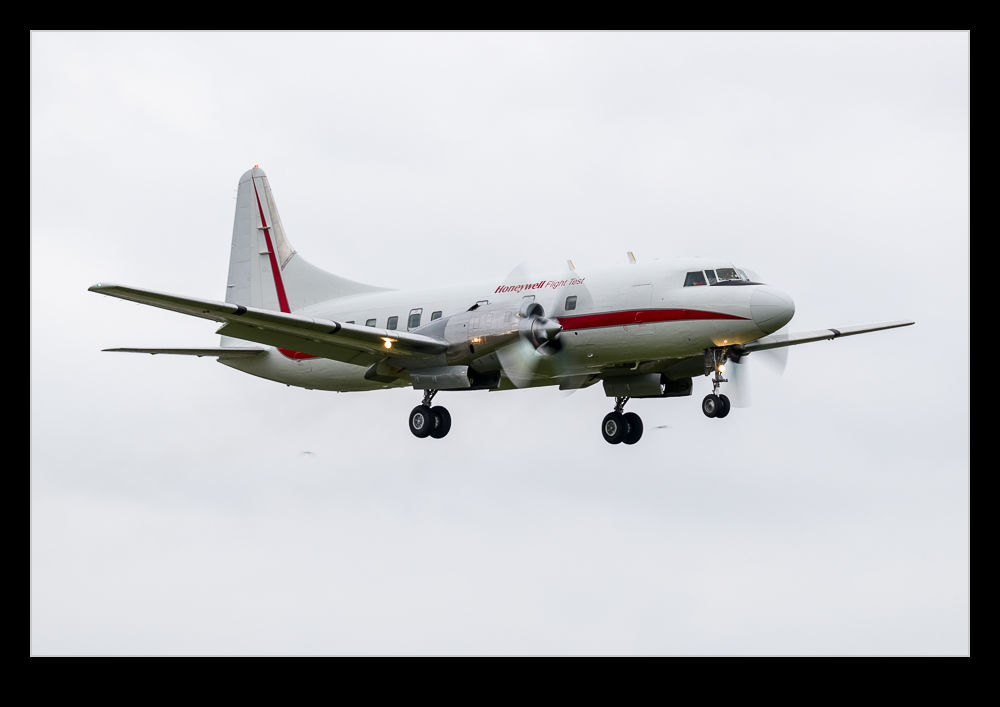
Honeywell Test Convair

An older airframe is always a pleasant surprise.  While I was at Everett, Honeywell had some people making a visit to Paine Field and they came in the company’s old Convair.  This is not the sort of plane you see around much anymore so I was rather pleased to see it show up.

Q400 Go Cougs

Medford is not a busy airport for commercial traffic but it does have some regular services.  Horizon seemed to be the most common operator (should I call them Alaska now?).  Their Q400s were coming and going quite often.  Horizon has been painting their aircraft in a large variety of schemes, many of which are associated with colleges around the region.  (My friend David who works for them recently shared with me just how many there are so I might start trying to get them all.)

One of the planes is painted to represent Washington State University at Pullman WA.  I have seen this one before a few times but this time it was taking off while I was driving around the airport to see what was there.  It quickly climbed away past me but I got a better look at it than I had previously done.

Armee de l’Air A400M

The A400M Atlas is now in service with a number of air forces.  My encounters with them, though, have only involved the development airframes displayed by Airbus.  That changed in Sacramento when The Patrouille de France arrived as part of their North American tour.  They brought an A400M as he support plane.  I was rather disappointed that it arrived late in the evening, after I had gone home and disappeared early the following morning to recover some delayed jets.

It was back for the day of the display though.  It started up at a remote location but then proceeded to give a short flying display.  It then taxied back to the crowd line where it shut down and was opened up for visitors.  The people were lined up to get inside it for ages.  The plane still looked pretty clean so I guess it had not been in service too long.  I was glad to get a close up look around the outside as well as to see the crowds inside and the flying display itself.  Not a dramatic performance like the test crews have put on but still good to see.

A C-146 But Only in the Distance

This shot won’t win any prizes.  I only show it for relative rarity value (although one of my friends has caught a lot of these near his home).  The US Special Forces have their own choices of equipment and the Dornier 328 turboprop has been something they have found a use for under the designation C-146.  This one showed up on the downwind for Nellis during a break in Red Flag.  It was rather far away from me but I wasn’t going to miss taking a shot of it given that it is the first I have seen.  I didn’t even change the camera settings so it has frozen props.  I think the artistic failings are the least of the problems when shooting something this far away!

FedEx Fleet Types

Flipping through various shoots looking for something else, I happened to come across a few shots of aircraft from the FedEx fleet.  It occurred to me that I could drag together a post that was focused purely on the FedEx aircraft types.  FedEx has an extensive fleet of aircraft these days.  Their early days of using Falcon 20s to move their packages around are long gone.  Now they have a variety of aircraft types of different sizes and range to meet all of their needs.

The fleet is constantly in a state of regeneration.  The types that have long been a part of FedEx operations are now going or gone and being replaced with something more up to date.  The 727 fleet has gone.  The A300s and A310s are still in use but the number in the fleet is gradually going down.  The interesting thing about the FedEx fleet is the way the economics are changing.  For a long time, second hand jets that had been retired from airline service made a lot of sense.  The operating model involves a lot of jets flying from their home base to Memphis in the middle of the night to deliver packages to the hub.  Then, after a quick turnaround of all of the sorted packages, the planes fly back to base.  Then they sit on the ground for most of the day.

This model means that utilization for the aircraft is low.  Having a less efficient jet is not a problem when it only flies a few hours each day.  If it is cheap to buy, you can use it efficiently.  Having a bunch of inefficient 727s works very well.  Similarly, the smaller aircraft that feed into hubs also can be operated relatively cheaply.  A fleet of Cessna Caravans that sit on the ground or a bunch of ATR42s is effective.

The 727s are gone now.  They have been replaced with 757s which have all been retired by airline operators (a lot of them from British Airways).The big change is that new jets are being acquired.  The operating economics for FedEx have changed.  The DC-10s (which got upgraded to MD-10s) are gradually being replaced by new 767s.  Meanwhile, the MD-11s which had previously been the kings of the long haul flights are now being relegated to domestic service while the 777F takes over the long haul missions.  Direct from Memphis to China is now the norm for the 777F.  You don’t see MD-11s crossing the Pacific as much any more.  I think the Europe runs are limited too.  The 777 can go direct with a decent payload and doesn’t need to stop for fuel in Anchorage.

The MD-11 will survive for a while yet.  Its less efficient operate will mean it can be pushed onto shorter segments with lower utilization.  The high utilization missions will be the preserve of the newer jets.  The older jets will be fine on the flights that only involve a couple of trips a day.  For these their low capital costs will offset any operational cost penalty.  The migration of the fleet will continue though.  Soon it will be a fleet with a few less types and things will be a bit less interesting.  There will still be a bunch of 727s scattered around airports that had them donated though so keep an eye out for them.

Hercules Tankers at Nellis

B11I4296.jpgRed Flag 16-4 was a bit unusual in that tanker support was not what you normally see.  No KC-135s were taking part.  The Israeli Air Force had brought some 707s for tanking there jets.  The rest of the tankers were KC-130s.  An MC-130J showed up although I don’t know whether it was part of the exercise or just there coincidentally.  The Spanish Air Force brought their KC-130s to support the Hornets.  Seeing a camouflaged Herc is a nice change given how most of them are monotone these days.  It doesn’t hurt that, since tankers tend to recover late, they came back as the light was getting very nice.

B11I2198.jpgB11I2717.jpg