Tag Archives: de havilland Canada

End of the Line for these Dash 7s?

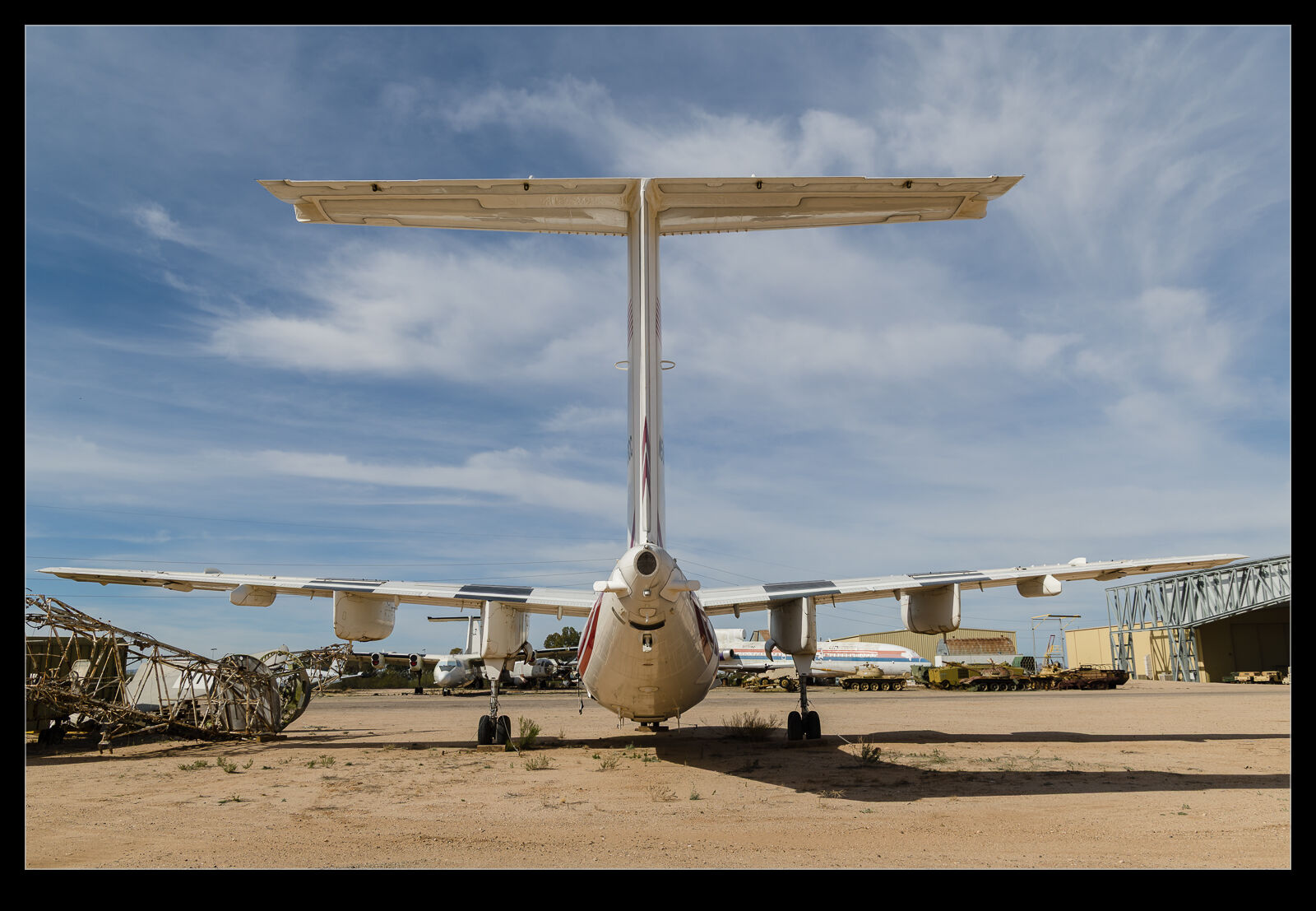
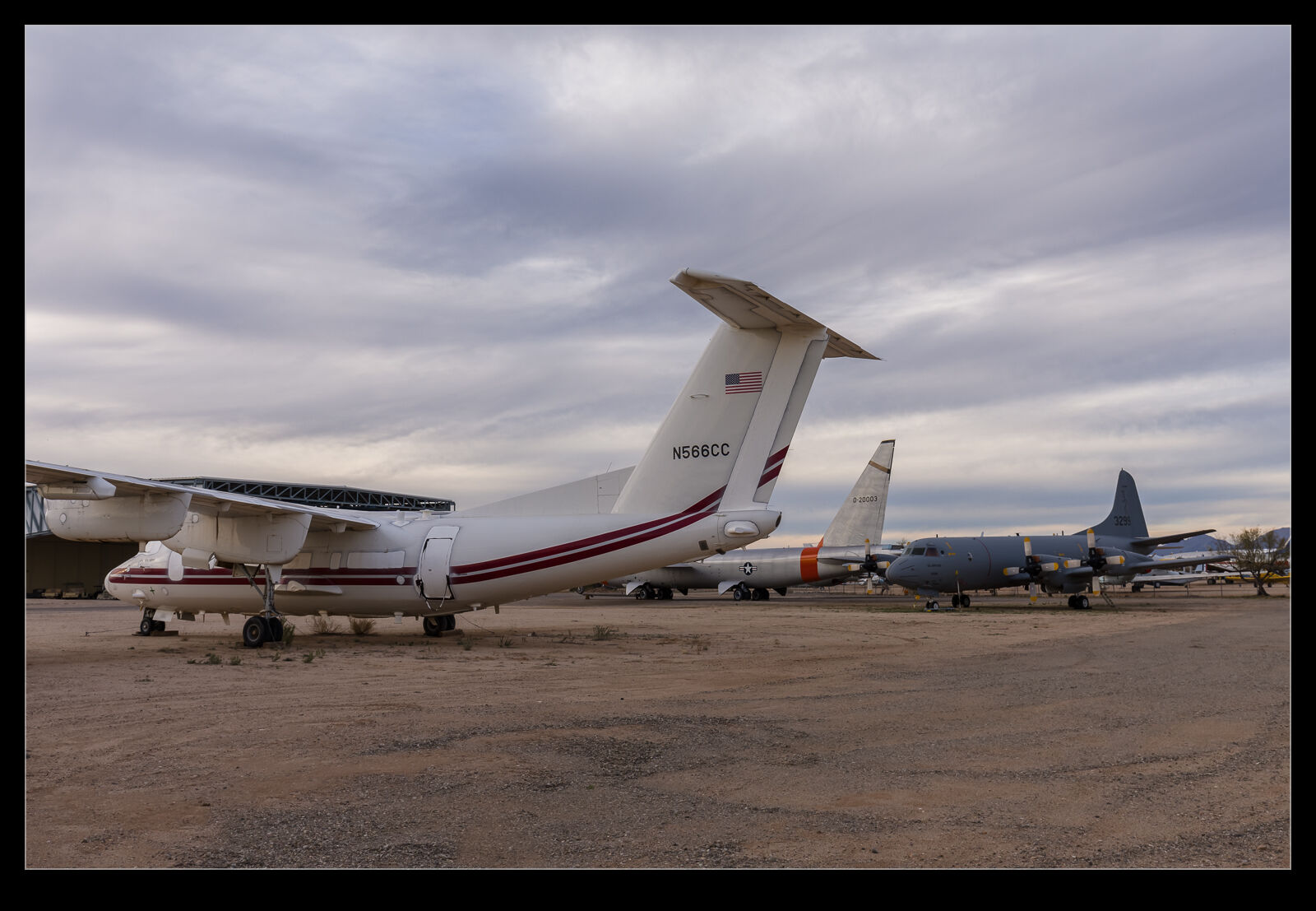
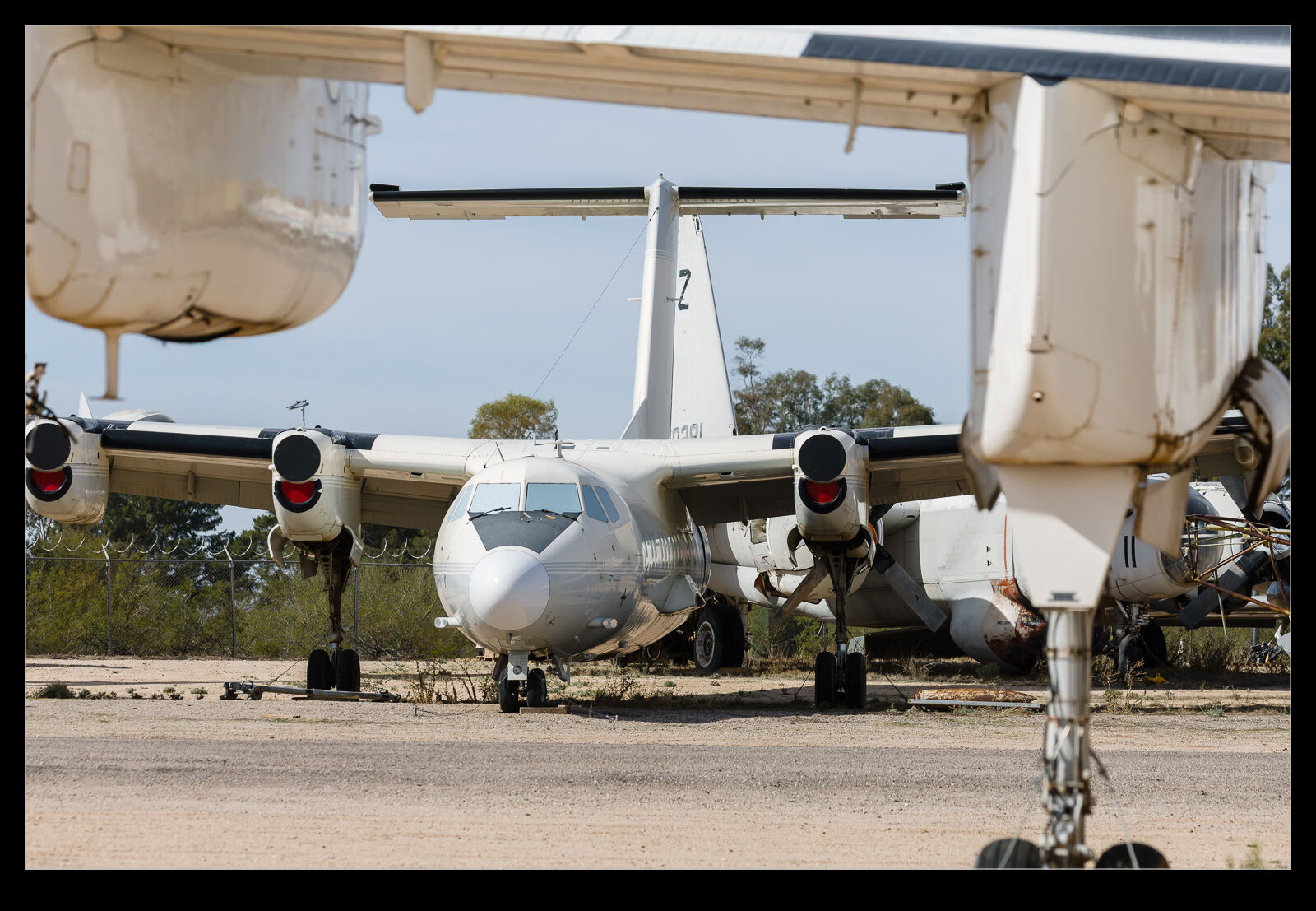
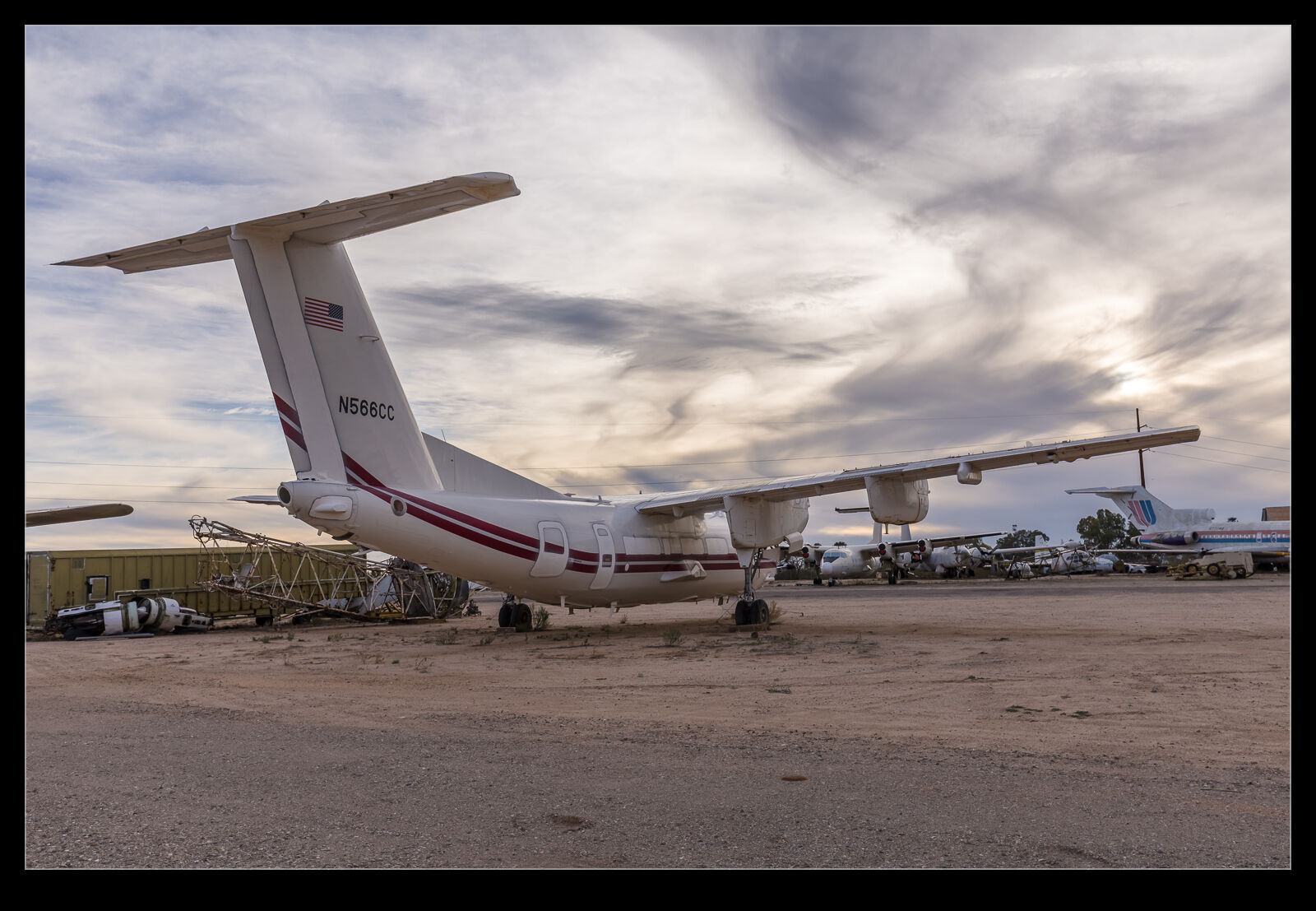
I have been on a bit of a streak on Dash 7 posts recently. A couple of years ago, I was visiting the Pima museum in Arizona with some friends. The museum is very interesting but there are often some airframes just across the fence that are even more interesting. There were a bunch of Dash 7s there. I think they had been used by the US military for assorted purposes and there were signs of fairings added that hinted at modification made.

Civil registrations had been applied to the planes, but they didn’t seem to look like they had an immediate future. The Dash 7 isn’t something in high demand so, while someone might have a specialised need for them, I do wonder whether this will be where they end their days.

More on the Dash 7 Theme

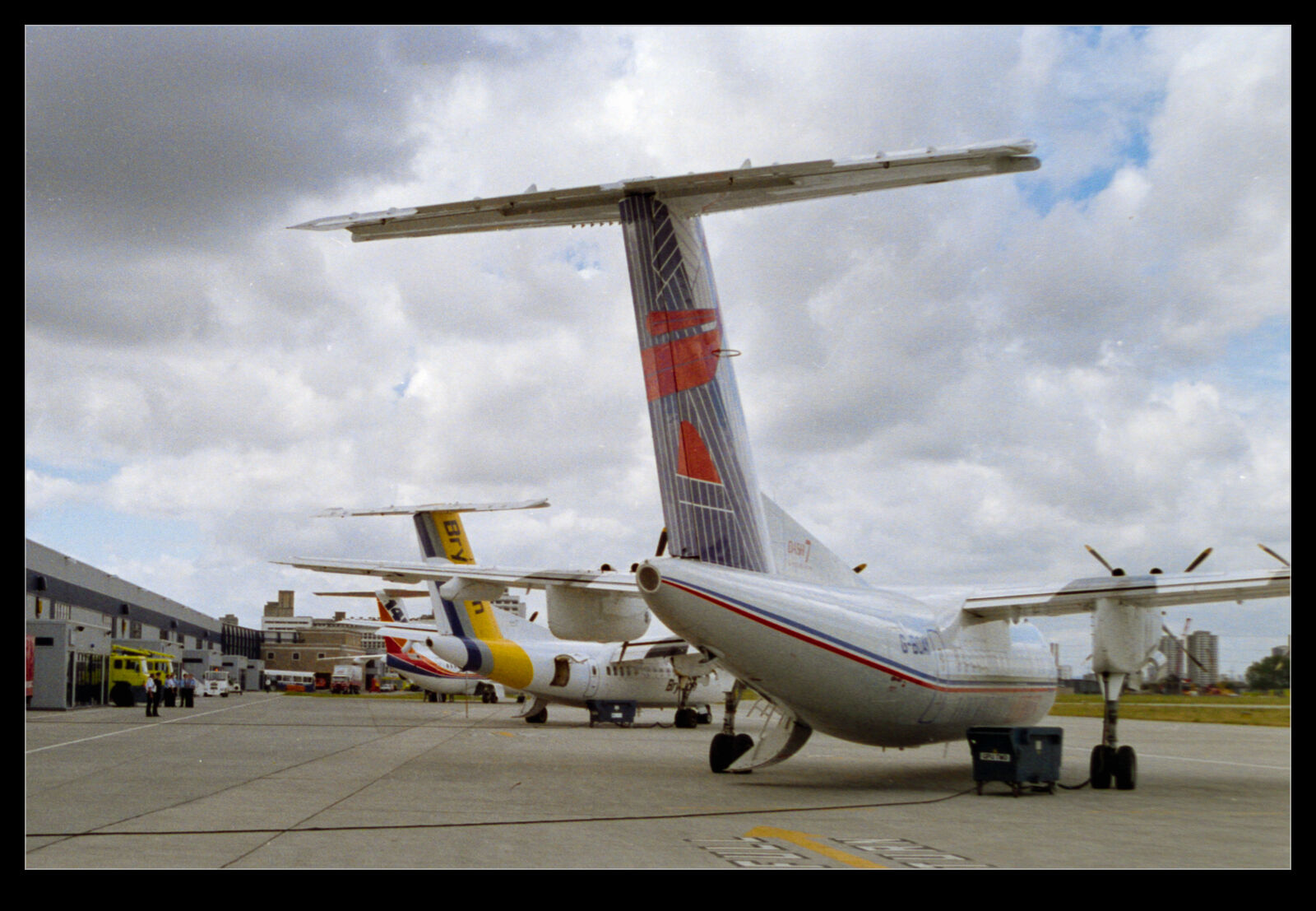
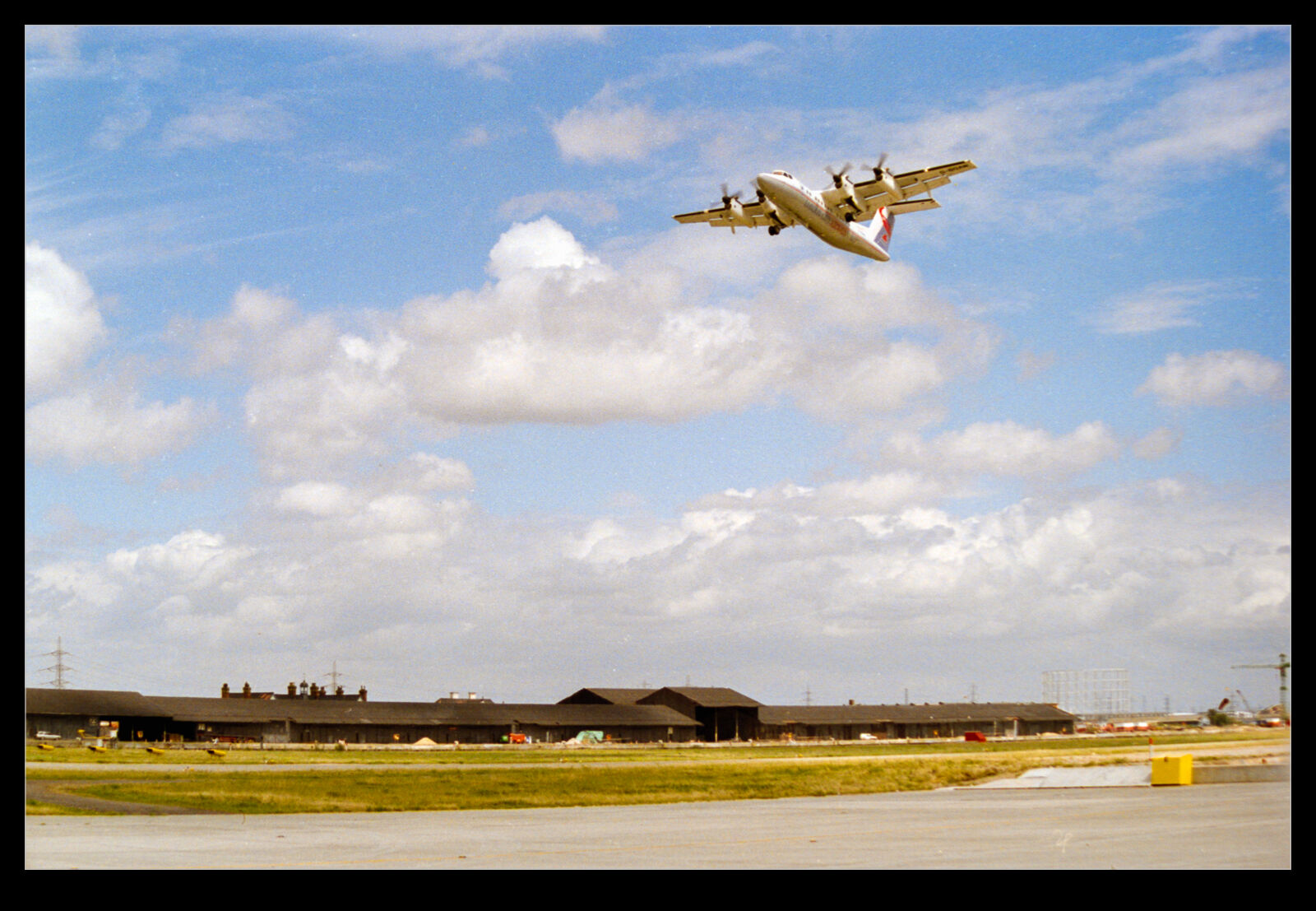
I had a recent post about a testbed Dash 7. That had resulted from finding some other shots that I was looking for to use in a project. That was regarding two defunct airlines that had operated from London City Airport when it first started operations. The only aircraft that was initially allowed to use the airport was the de Havilland Canada Dash 7. The initial operator was Brymon Airways that, if memory serves me right, was based in Plymouth.

A second operator joined them at LCY with the imaginative name of London City Airways. Their livery included a fin designed to look like a business suit. The target market was city workers that didn’t want to make the trek out to Heathrow. It wasn’t long before there was a push to get jet aircraft into the airport. The BAe146 was the only option at that point and a demonstration was undertaken in 1988. I was there for the CAA and had a chance to get out on the ramp at one point. I got these photos during that visit. The 146 did become a regular feature and then runway expansions allowed a variety of larger aircraft to use the airport with slightly less restrictive approach paths.

Electrifying Dash 7

As a youth, the de Havilland Canada Dash 7 was, if not a widespread aircraft, one that was reasonably popular. This was a time when STOL operation was such a big deal with the idea that STOL aircraft would make operations from cities more of a thing. This idea didn’t last long but, at the time, a four engined aircraft with the ability to guarantee climb out in an engine out condition was important which also is why the 146 was a four engined plane.

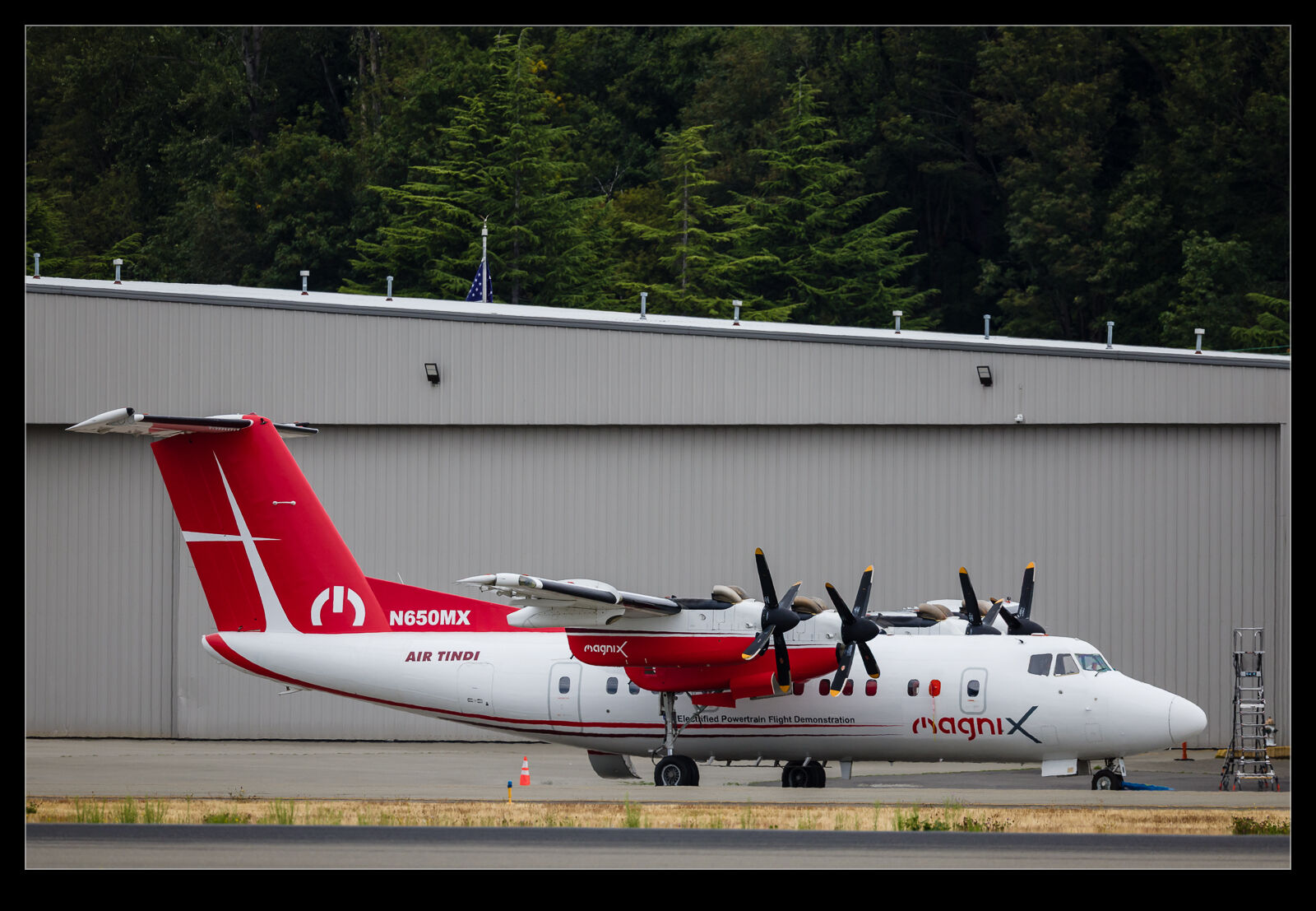
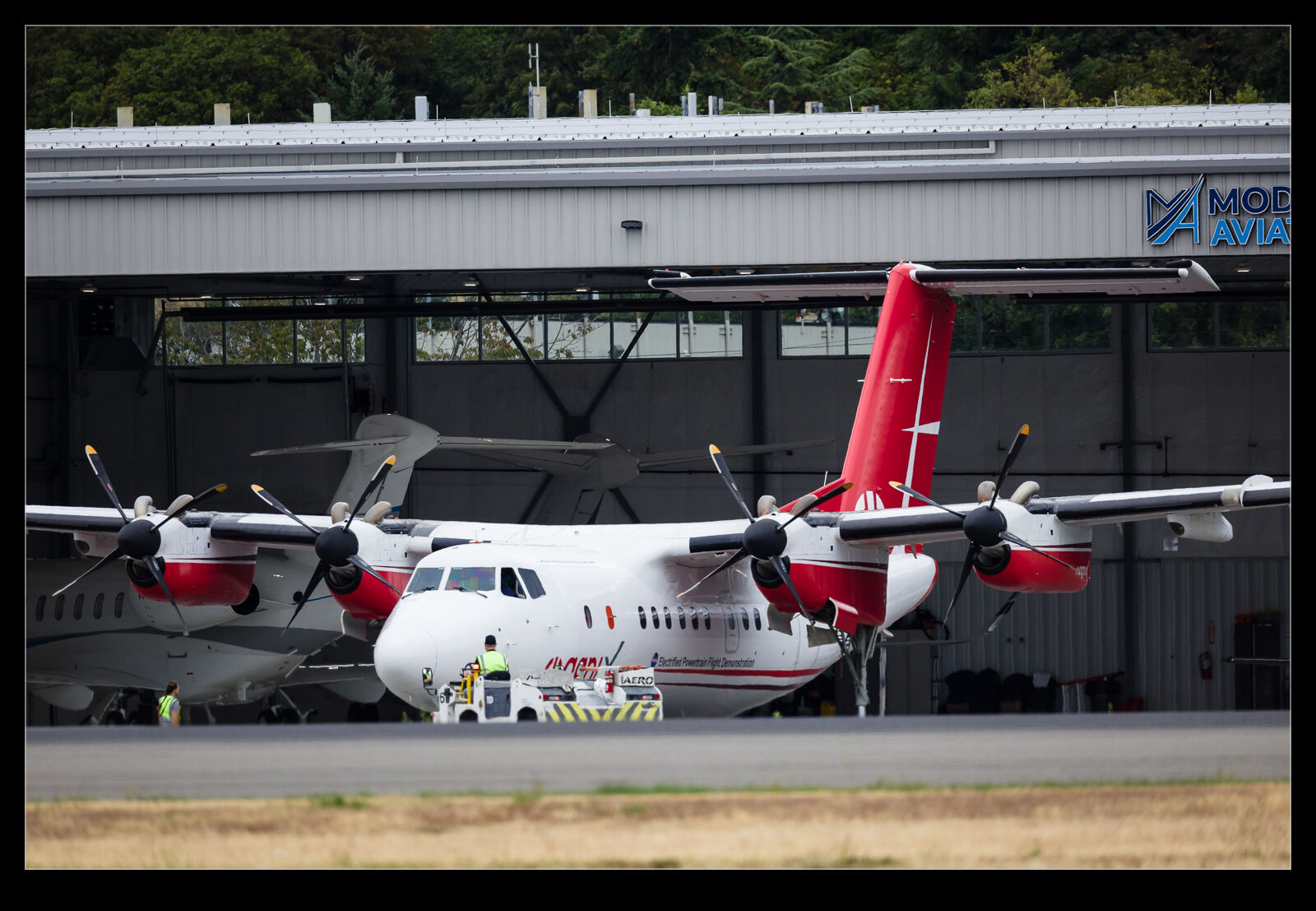
As the focus shifted to regular airports, twin engined turboprops took over including the same company’s Dash 8. The Dash 7 has hung around in niche uses but they are not easy to find. Air Tindi operates them in Canada and one of their airframes showed up in Seattle a while back. Magnix is a company that is making electric powerplants for aircraft and it is supposedly using a Dash 7 as a testbed. It showed up at Boeing Field for a publicity event. Sadly, I didn’t see it in flight, but it was out on the ramp at the FBO for a while before it was moved into the hangar for the event.

Metrea’s Appearance

When I was still in Seattle, we would get periodic appearances from Metrea and their KC-135s. They would provide tanker support to the US Navy. That they operated from Boeing Field rather than going to a Navy base was always welcome. I didn’t know much about Metrea other than that they provided tanking services. However, they showed up at RIAT with a couple of their other types.

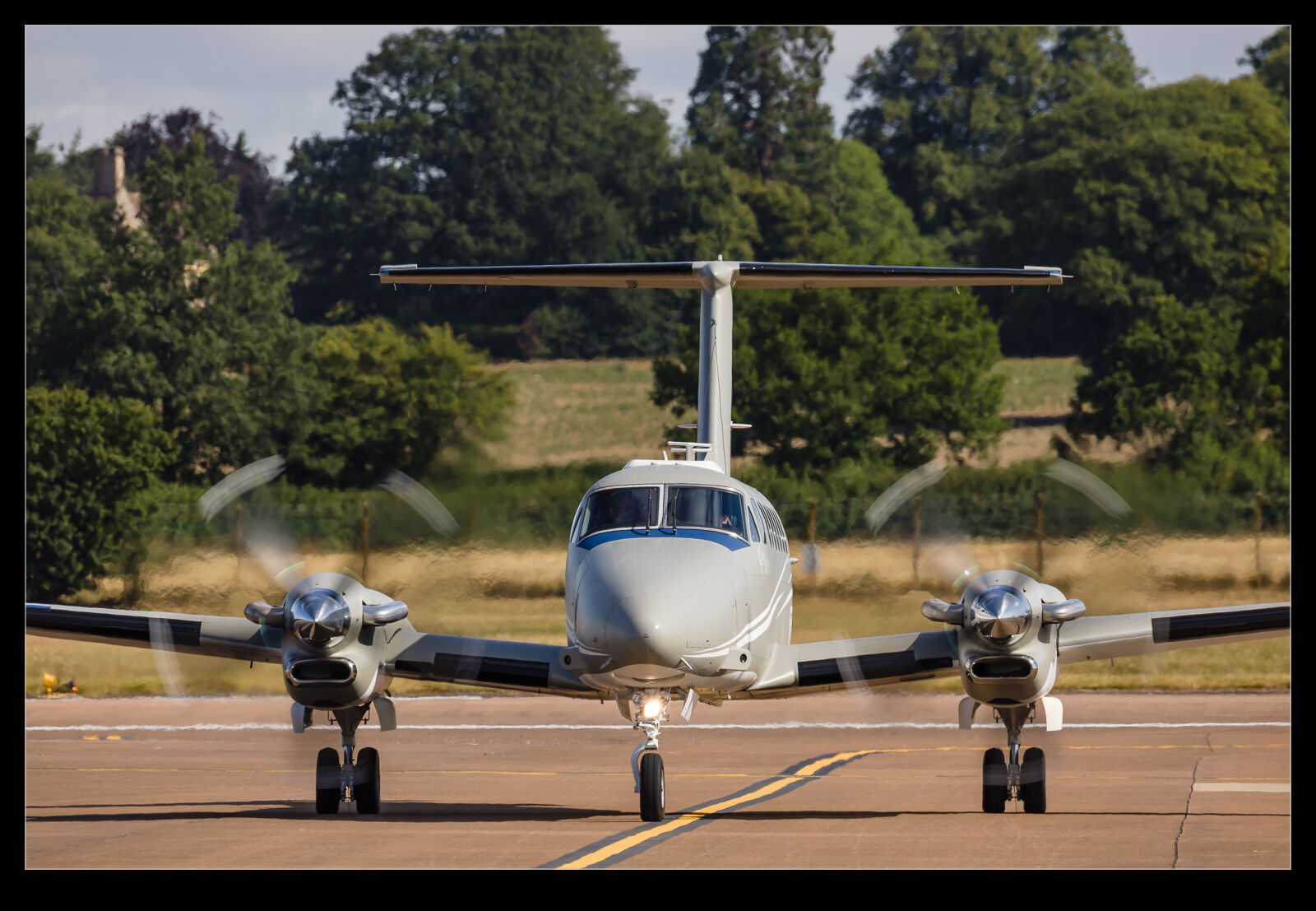
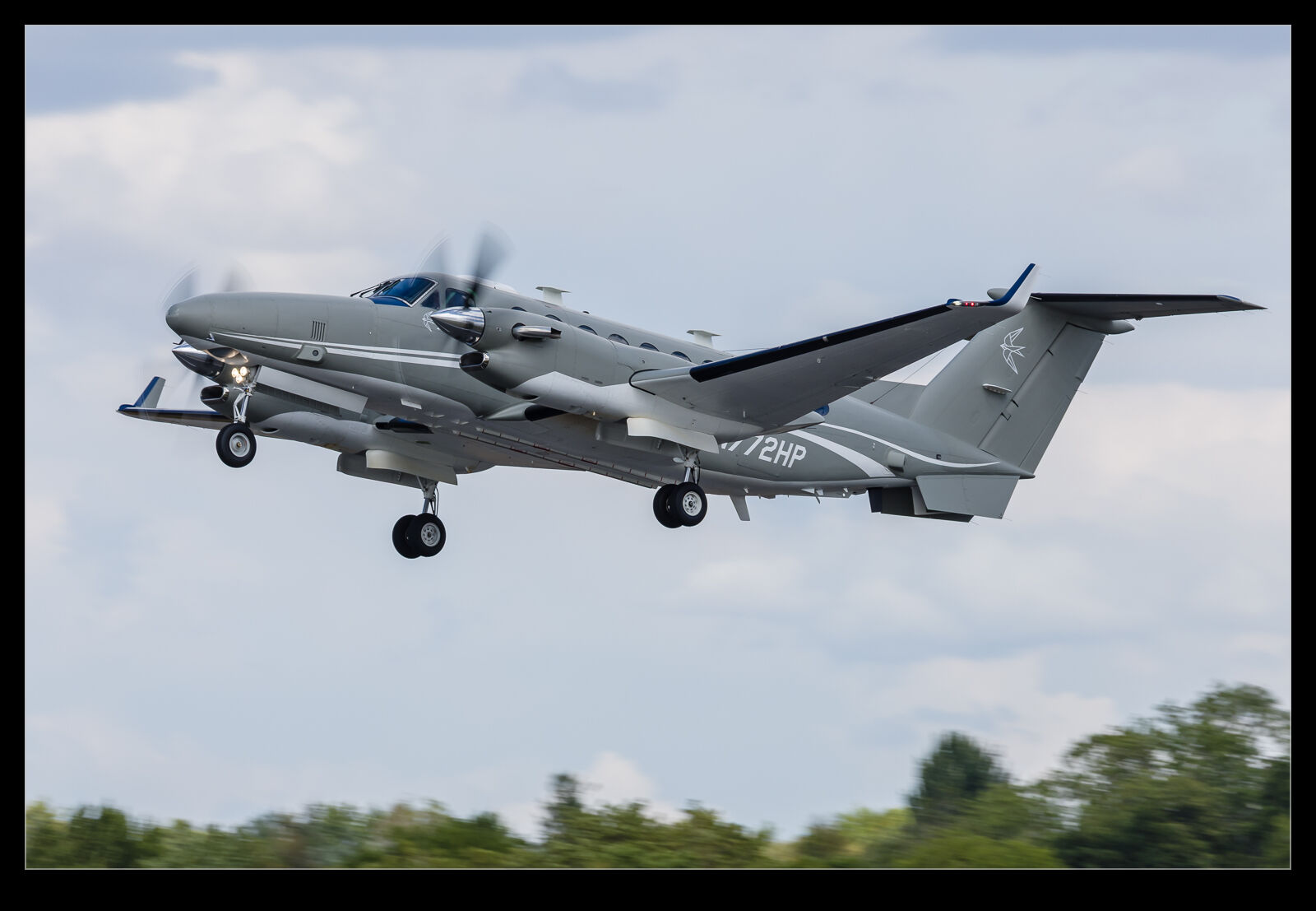
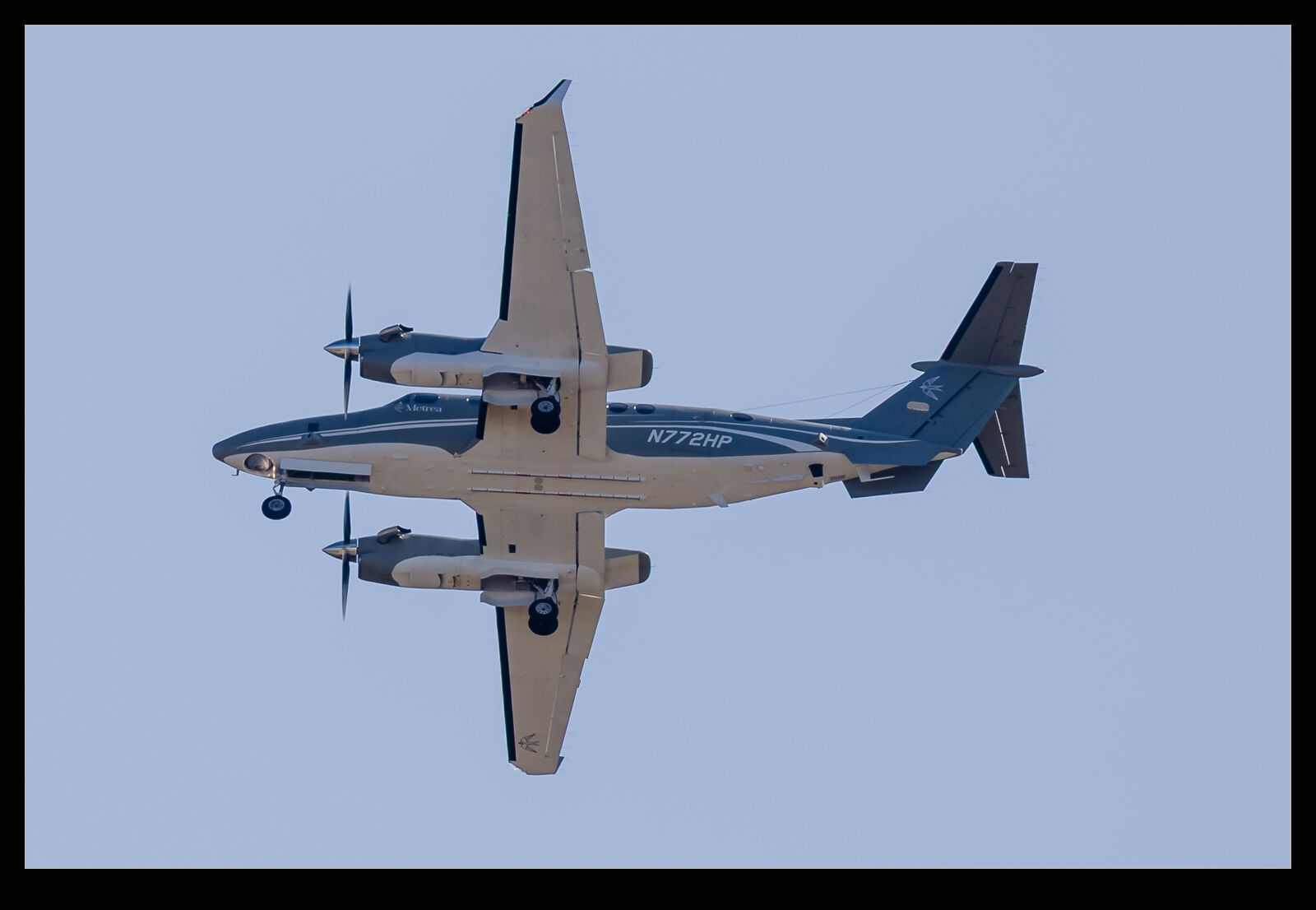
They brought a pair of turboprops. The King Air was in a low-key grey paint scheme and didn’t have many conspicuous external additions. There were some antennae that suggested extra comms capabilities and some ventral fins that imply something else might get added that reduces directional stability.

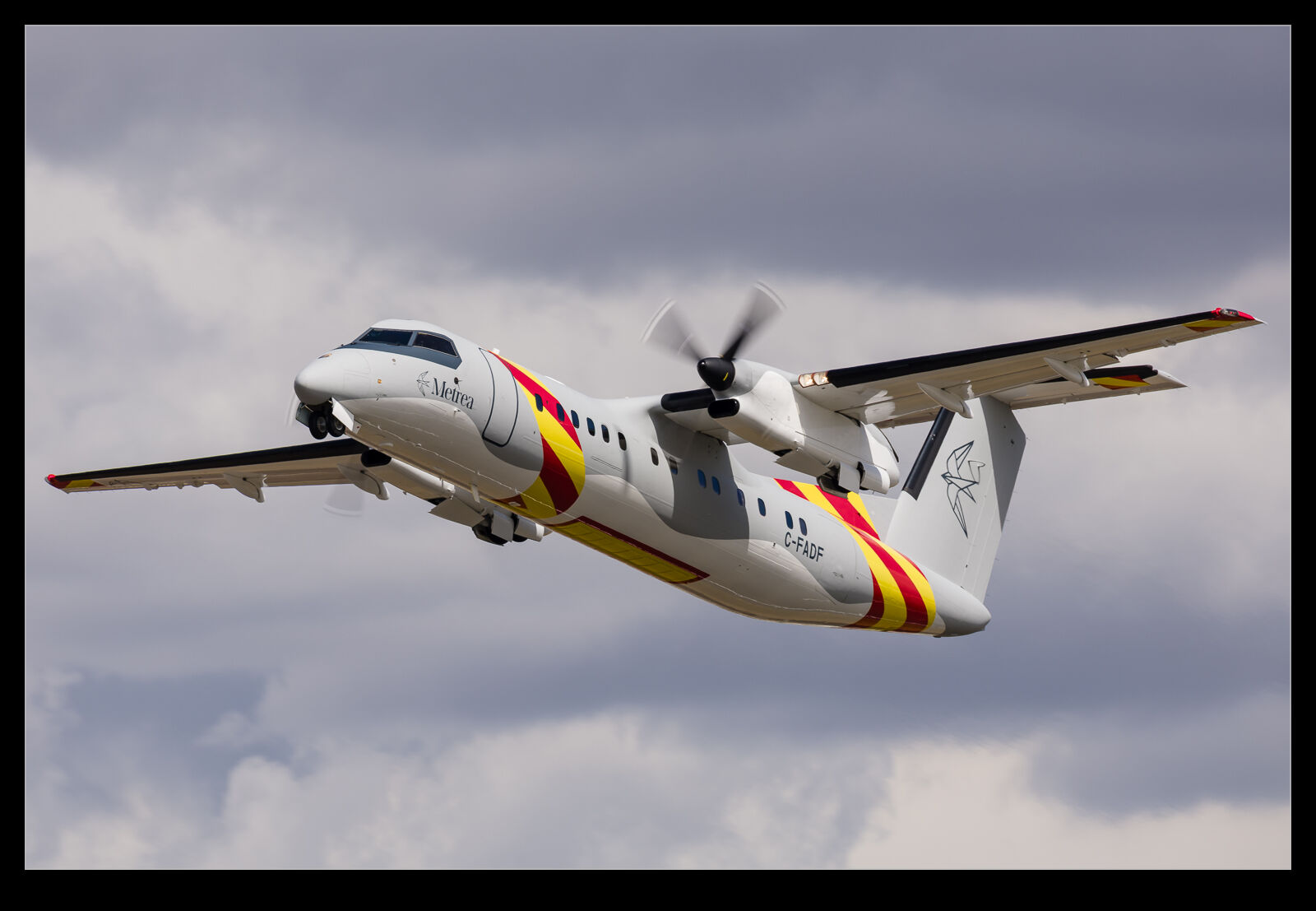
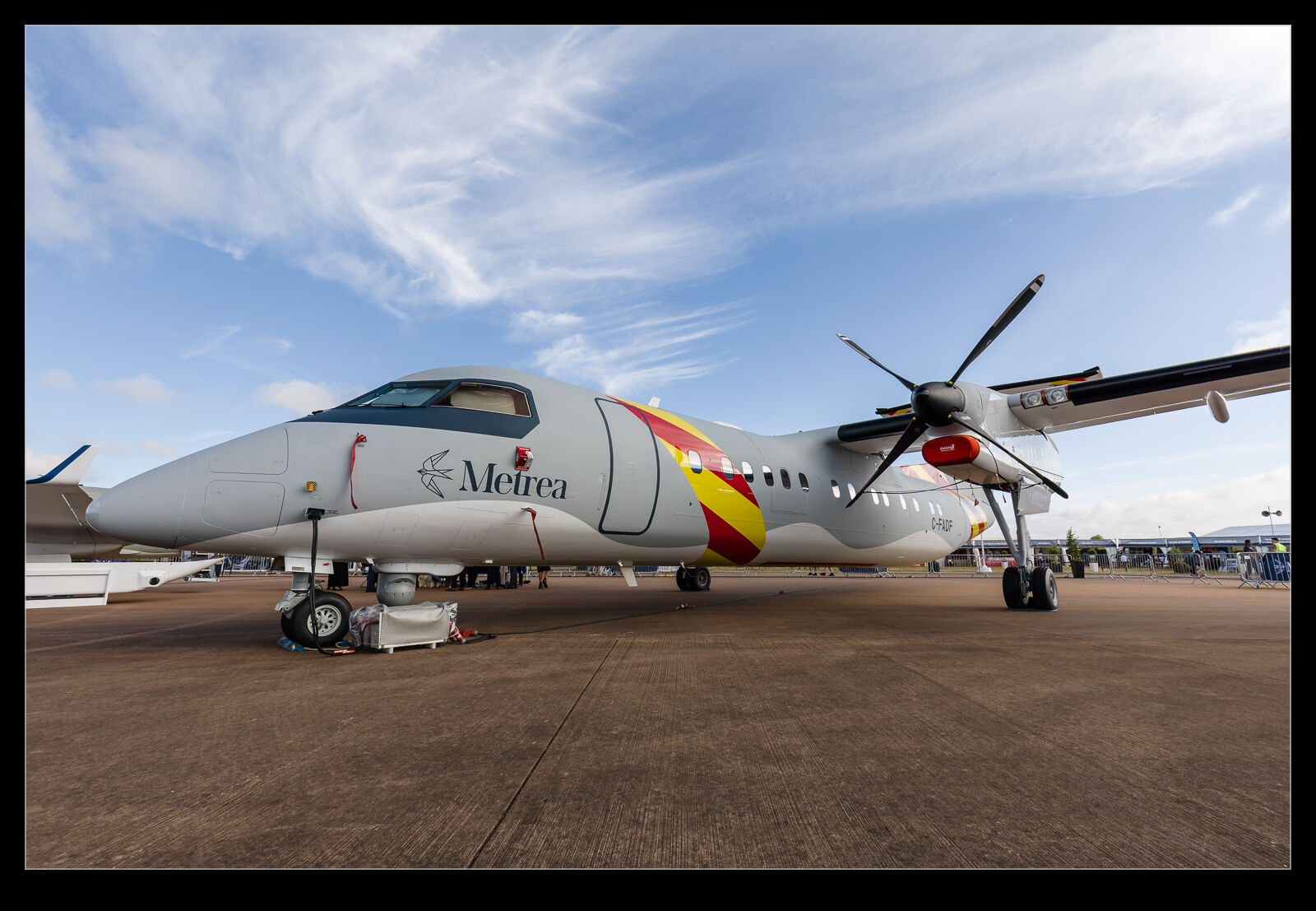
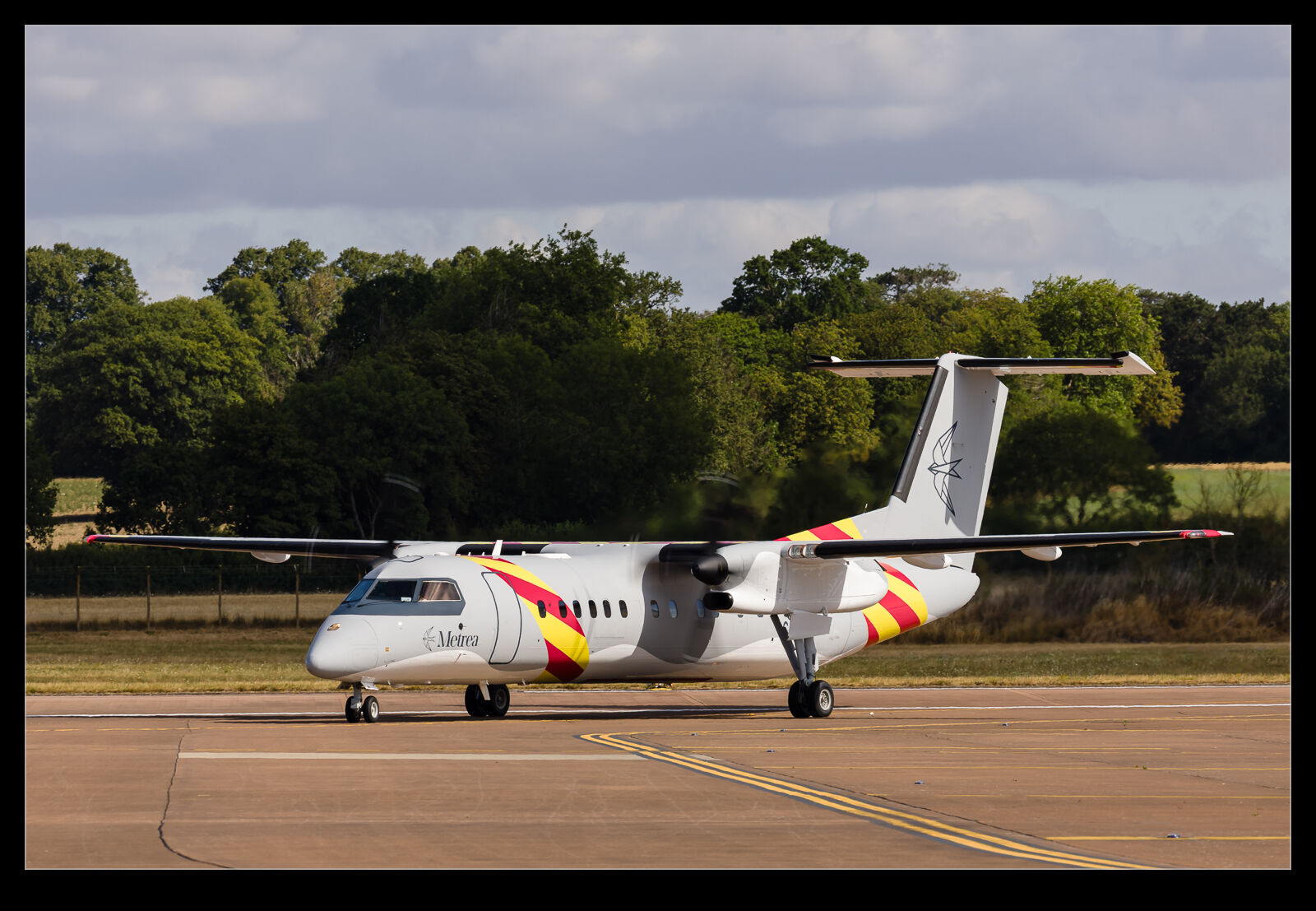
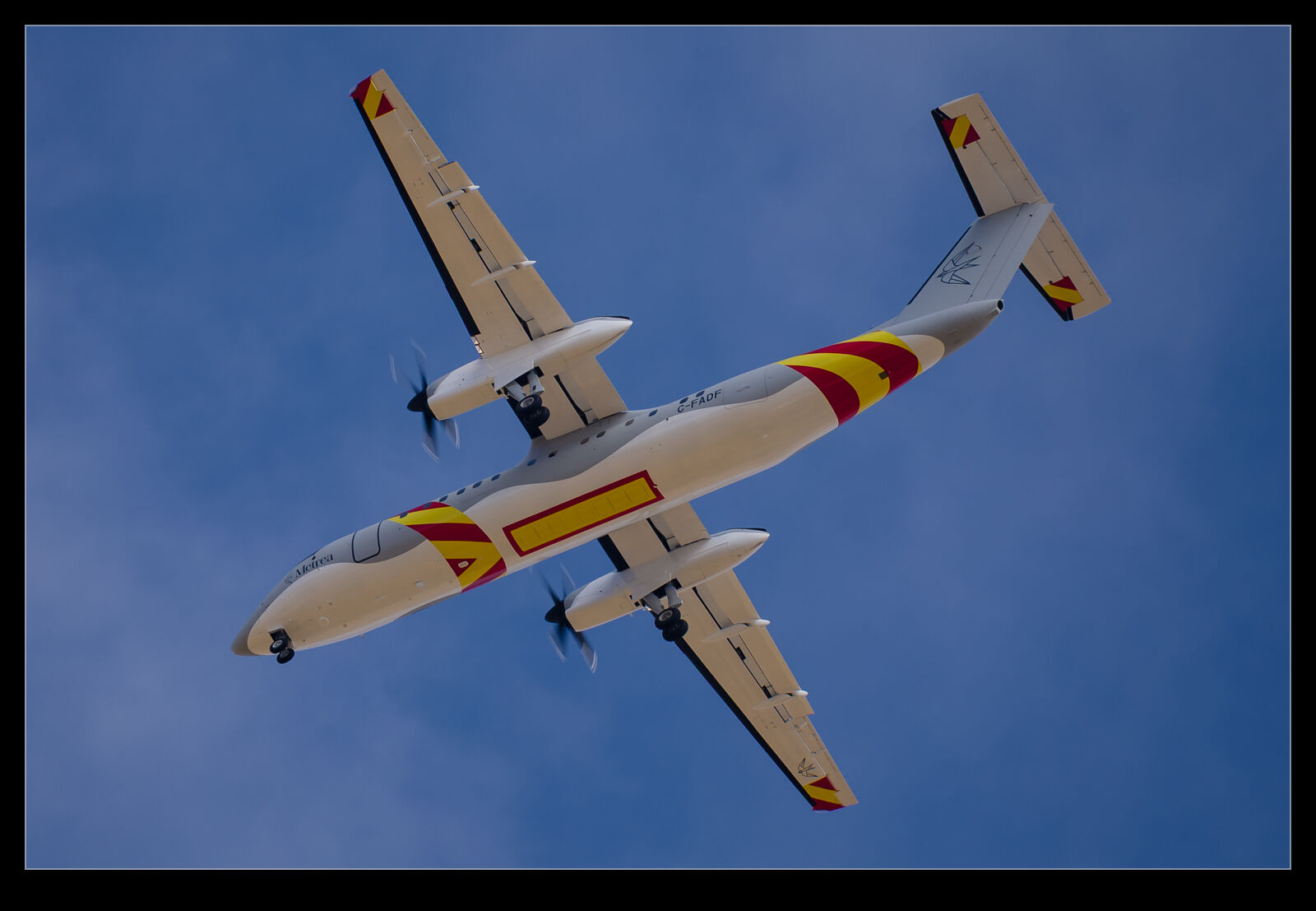
The Dash 8 had a bit more of a colourful paint job. A grey base livery but some red and yellow stripes brightened things up a bit. It similarly didn’t have anything too conspicuous added while it was flying but, when it was on static display, there was a turret under the front fuselage. There was another Dash 8 which did have some sensors which will get a post at some point.

I’ll Miss Beaver Amphibs

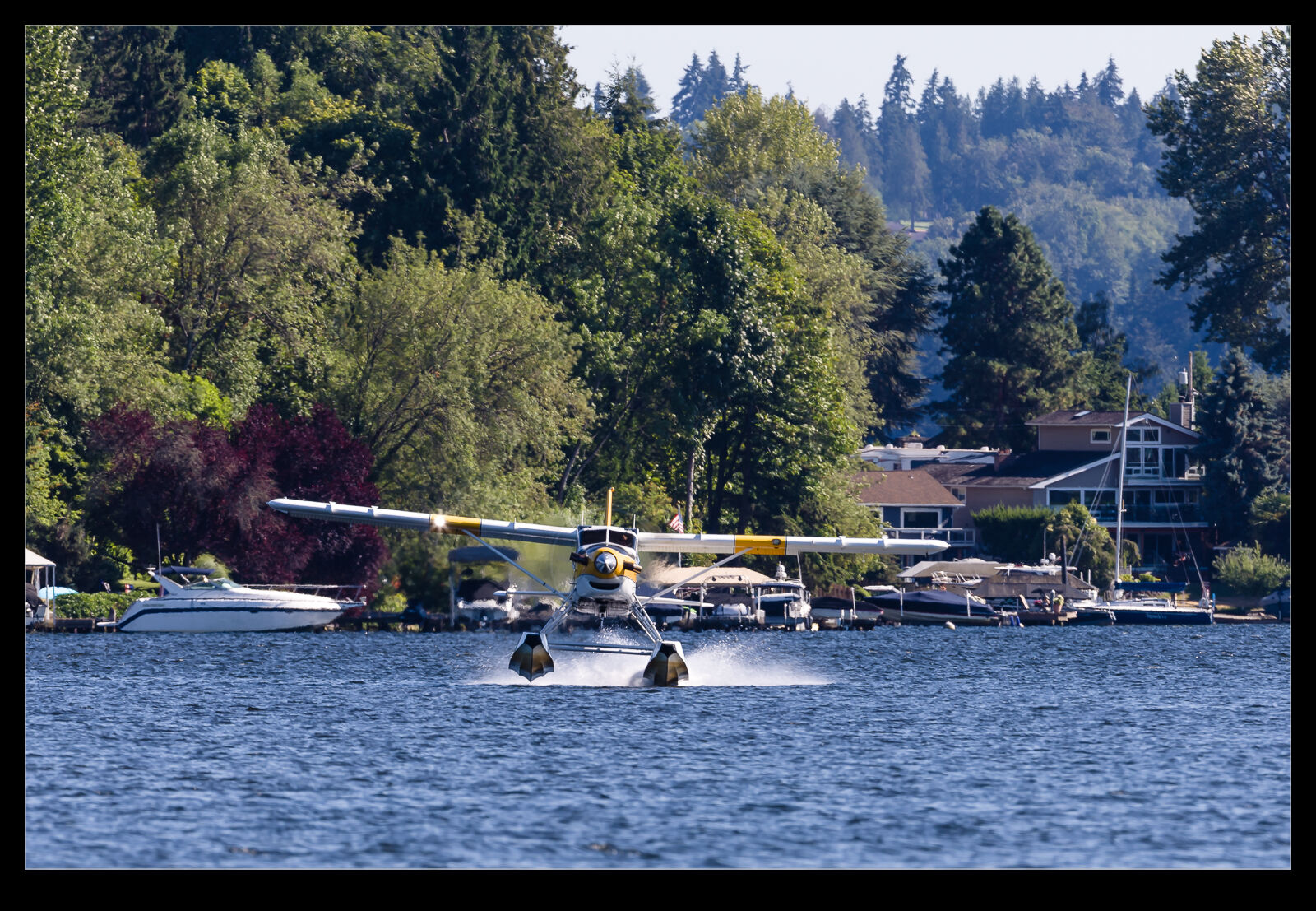
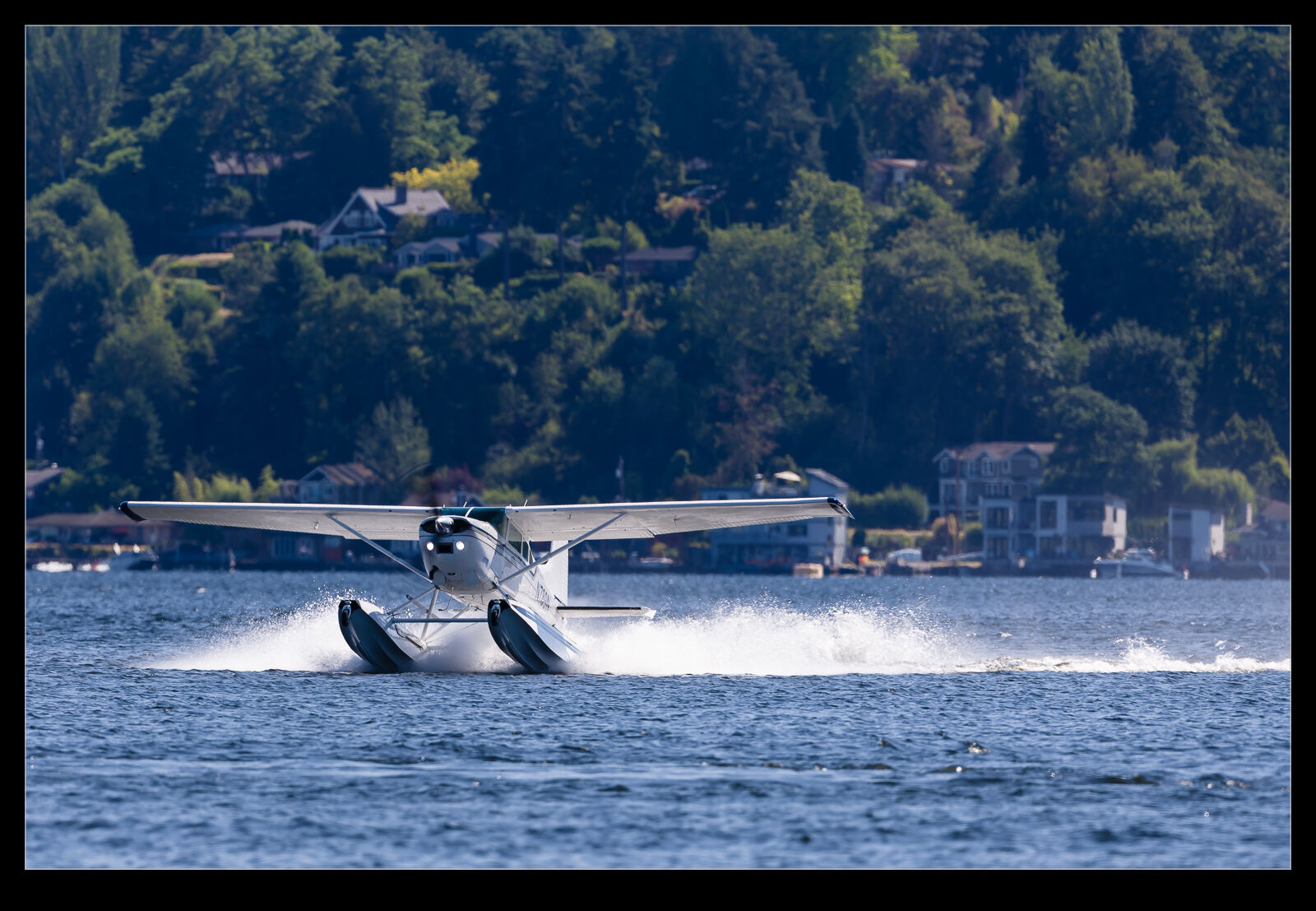
A great feature of the Pacific Northwest is the surfeit of floatplanes that you get to see. It is a region that really suits their usage and so there are lots to see, even if they are amphibious and are operating from runways. I don’t know whether there is a king of the floatplanes, but the Beaver would definitely be a candidate for that title if it were awarded. It is a beast of a plane and looks so cool on floats. This was the last one I got to shoot before leaving.

It turned on to the approach a long way out, but the cold winter weather meant little distortion and the 200-800 can really help in those situations. I had hoped that ATC would have given them an earlier turn on to final which you sometimes get at Paine Field, but it wasn’t to be and they were a lot further out. Never mind. Still a good result for one of my last outings.

At Last, This Otter Is Nicely Lit

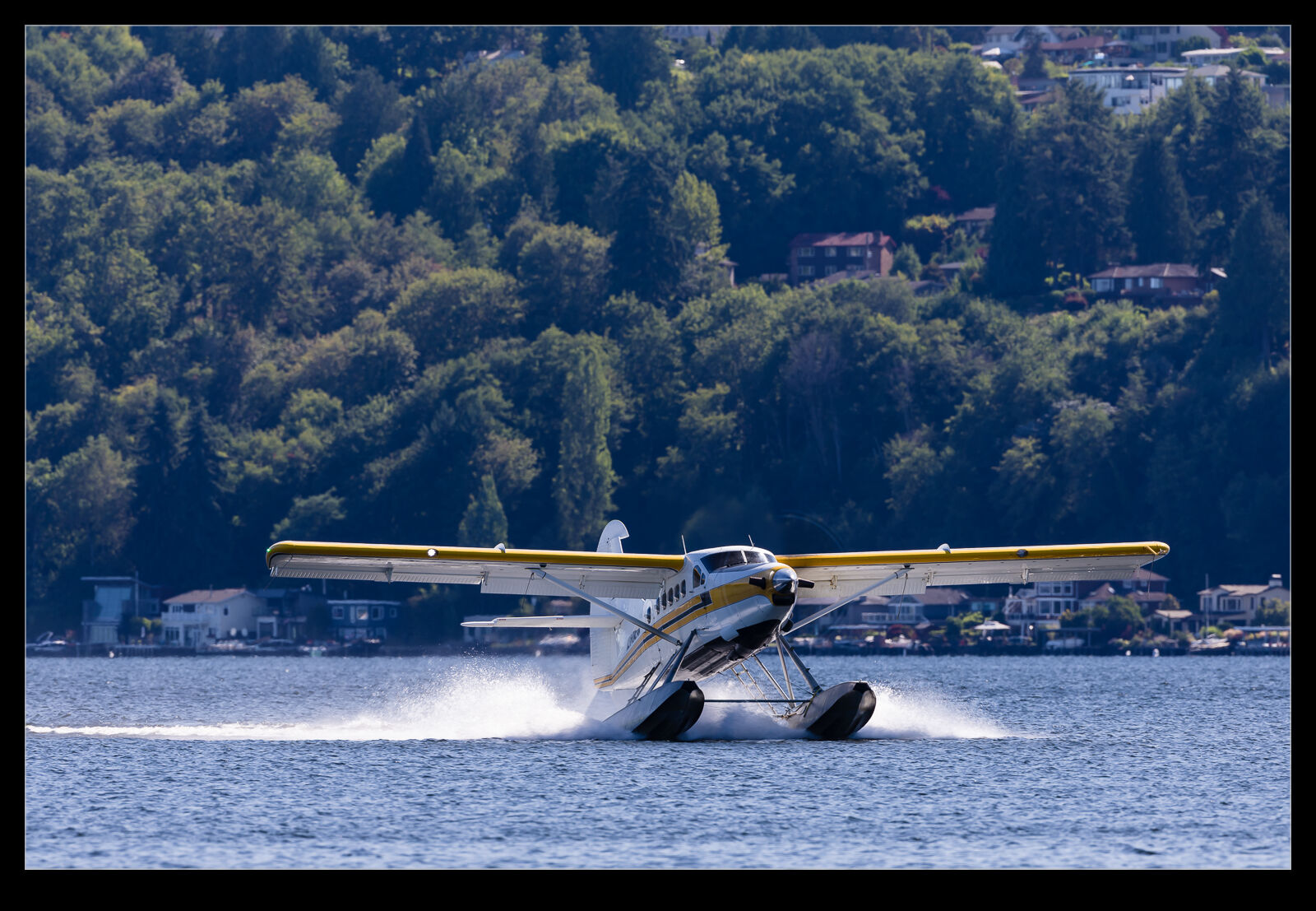
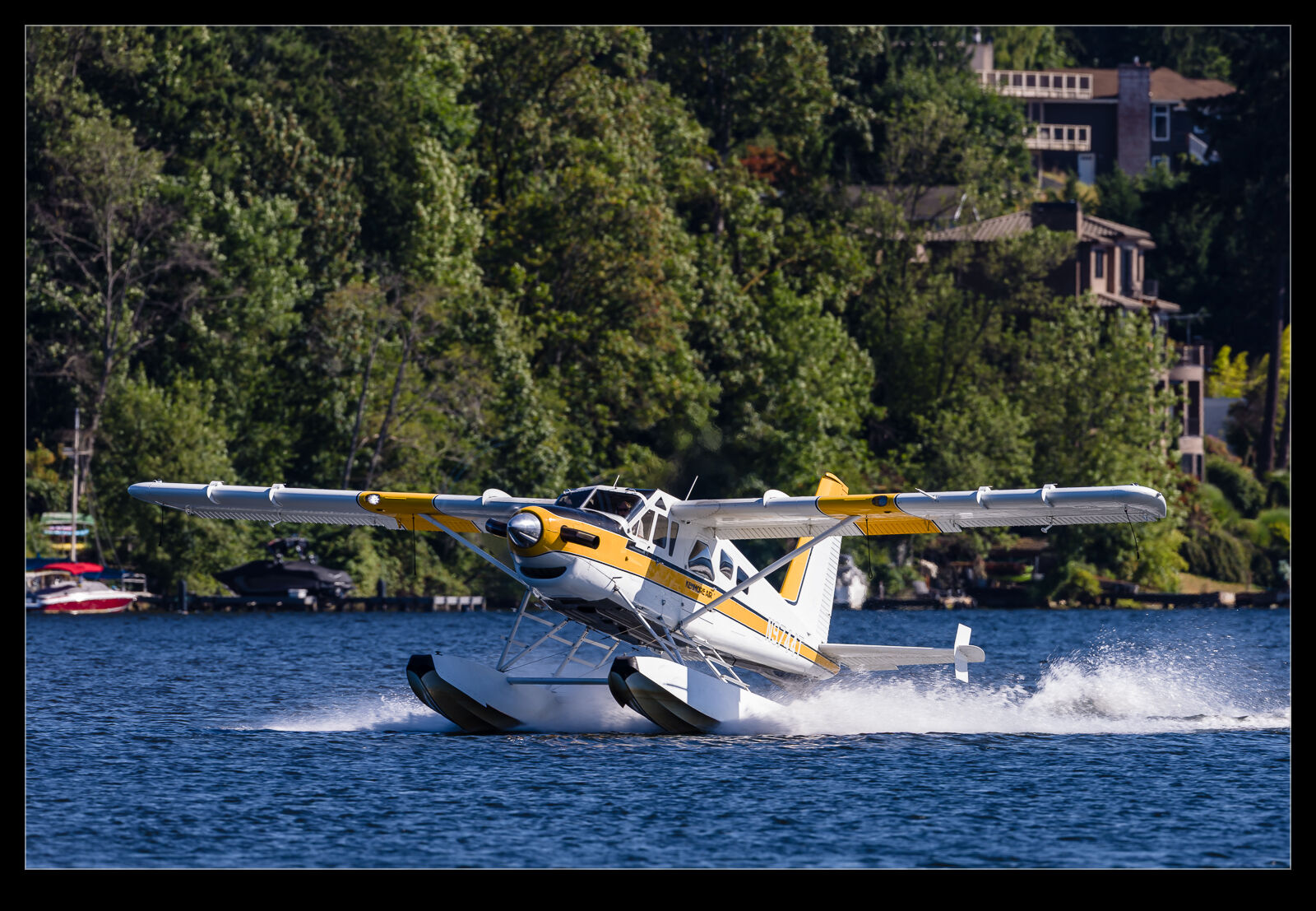
There is a privately owned DHC-3T Otter that lives in the Puget Sound area, and it comes in and out of BFI on a regular basis. I have seen it plenty of times but have always struggled to get either a nice angle on it or favorable light. I won’t claim it is my white whale, but it has begun to frustrate me somewhat. Therefore, I was delighted when I heard it call up on approach one evening when the sun had popped out from behind the clouds and the warmth of the light was nice.

I saw it far out on approach as it angled in towards the longer of BFI’s two runways – occasionally disappearing behind the trees as it maneuvered in. I was using a lot of lens to see it and even then, it was a bit distant but, since the conditions were favorable, I wasn’t struggling with haze issues. Soon enough it was on short final, and I finally was able to get the types of shots I have been hoping to achieve for a long time. Now I can move on in peace!

Stored Airtankers Awaiting Their Turn

Quite a while back, I made a trip to Abbotsford. In more recent visits I have created posts of their Q400 based airtankers out on some test flights. However, before they became tankers, these were all airliners that had been retired from passenger service. Conair buys up these older airframes when the price is right, and they come to Abbotsford to await their time in the conversion program.

A few of them were sitting on the ramp when I made my visit. Some were being worked on while others were just waiting for some attention. Various bits were missing – often the expensive bits like engines. It is possible that some of the airframes might only be acquired to provide a source of spare parts and they will never fly again. I have no idea whether that is the case for any of these. Hopefully they will have since made it back into the air and are now being used to fight wildfires somewhere.

Conair Q400 Water Drop Testing

I went to Abbotsford for the day to see the arrivals of the planes for an event on the airport that weekend.  Abbotsford is also home to Conair with them undertaking conversion of aircraft for firefighting duties as well as maintaining their in service fleet.  They have a fleet of de Havilland Canada DHC8-400s that have been converted to waterbombing duties for fighting wildfires.  One of them was undertaking some test flying while I was there.

It took off while I was waiting for some other arrivals and then started undertaking a series of water drops at the far end of the field.  I did try getting some shots of it, but it was far away, and the heat haze was brutal, so this was not going to be a good result.  After eight drops, they landed and taxied back to the ramp.  Fortunately, later in the afternoon, they came back out for some more runs.  This time, since I was about to leave anyway, I headed to the other end of the field to get some shots of the test drops. 

Unfortunately, the weather became rather damp, and I was standing out trying to get some shots without getting drenched.  Seeing something like this without being in a dangerous spot where real fires are raging was a nice bonus.  I did also try a little video while I was at it so that is lower down too.

I’ve Seen This Before

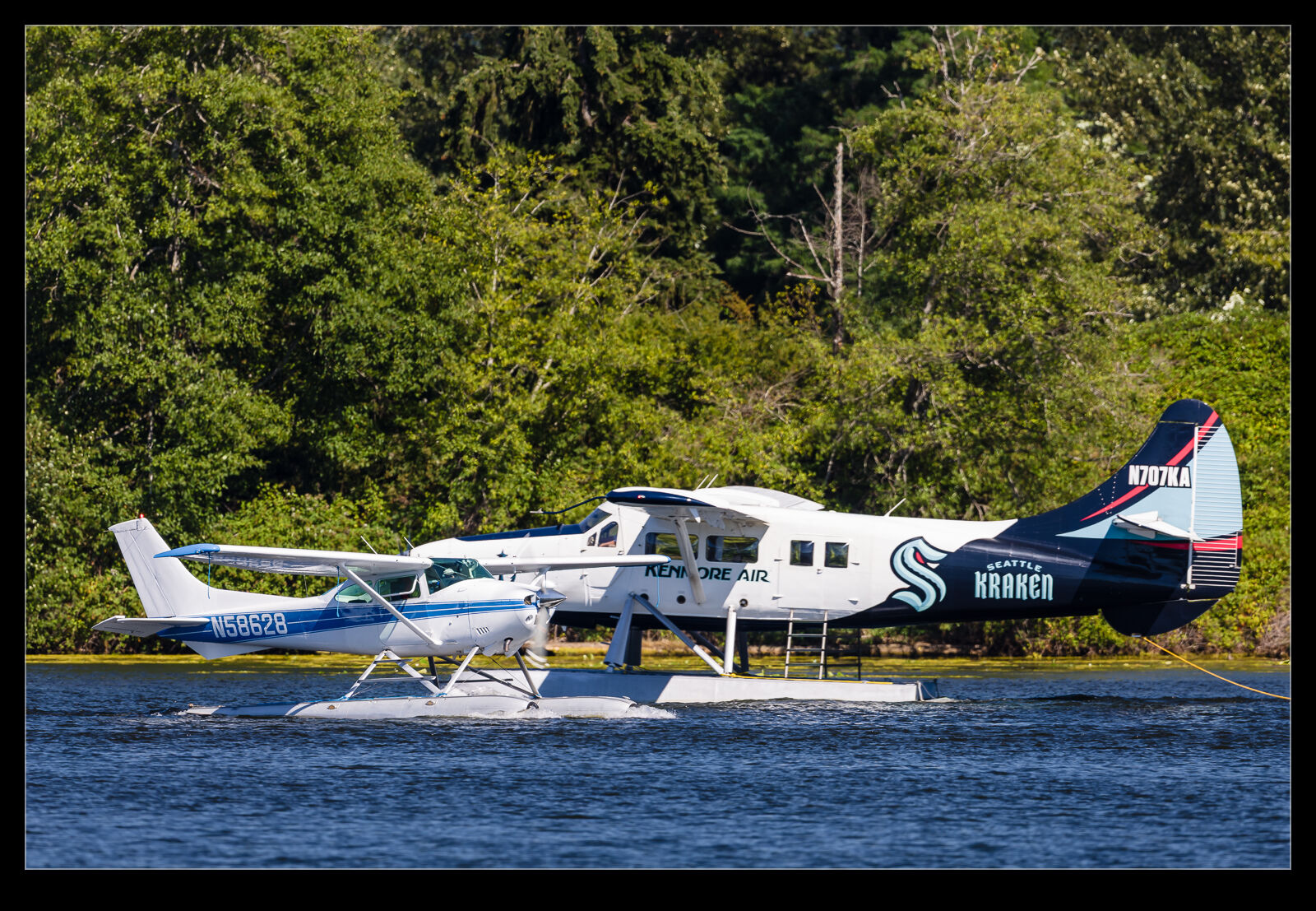
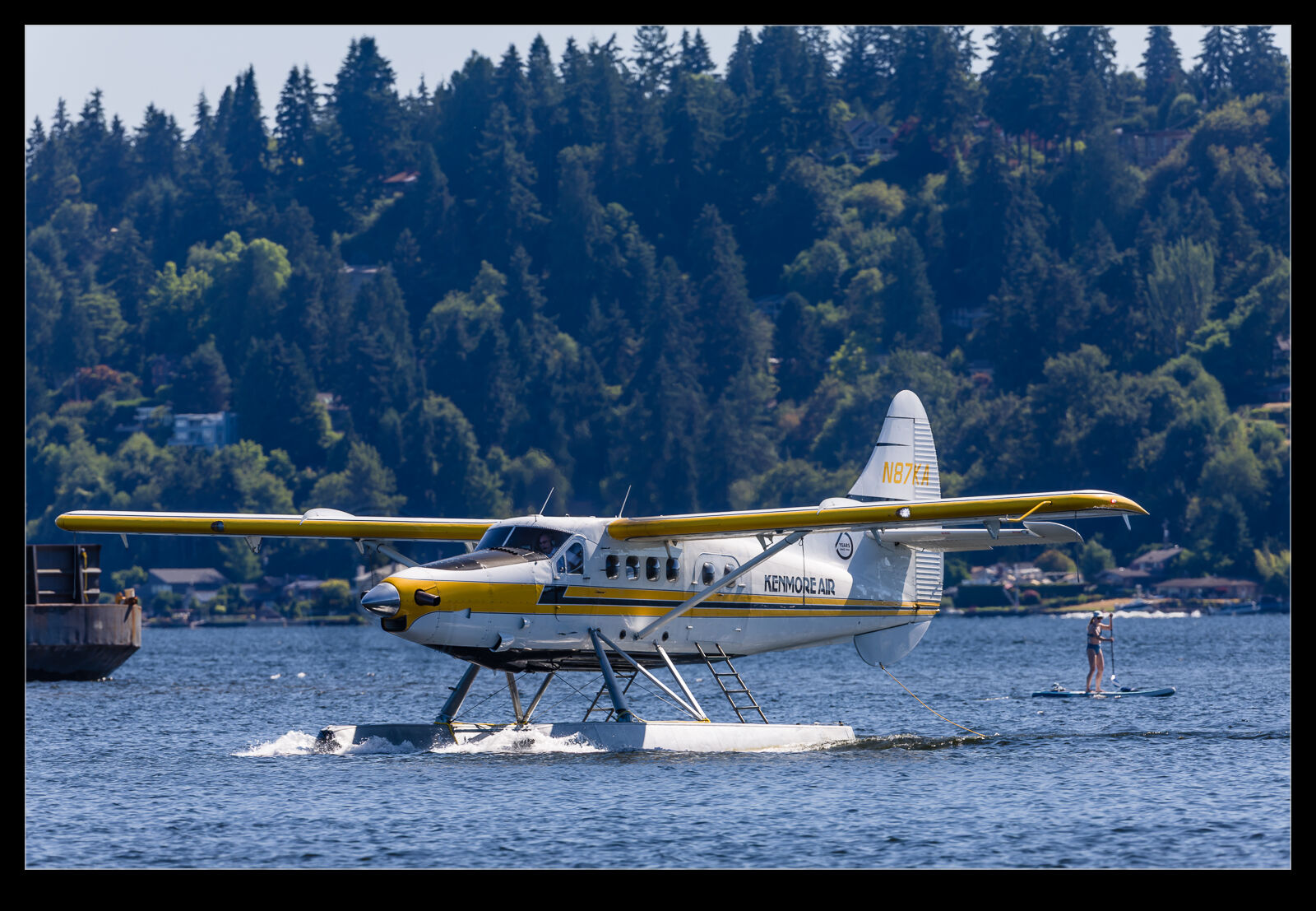
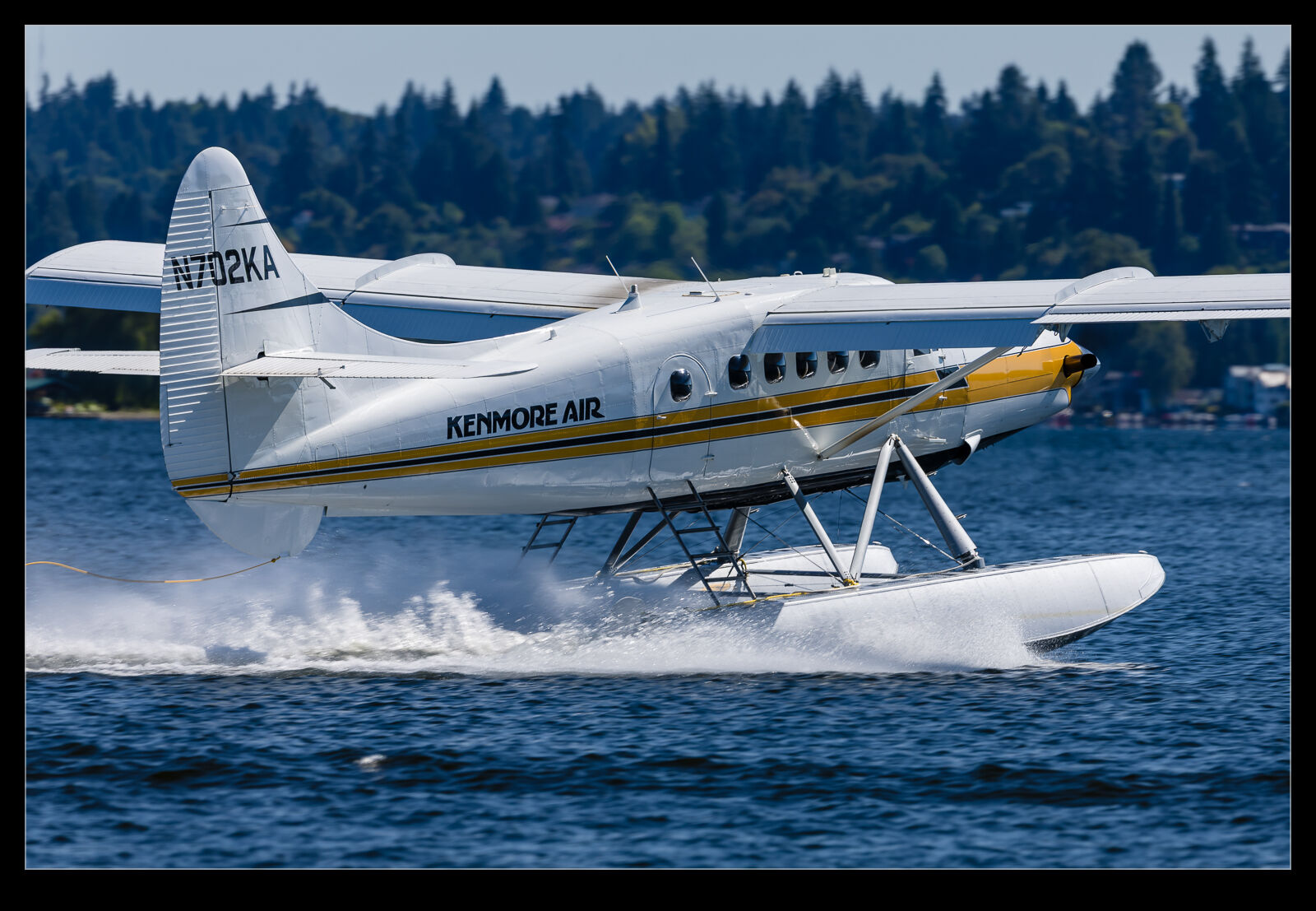
A while back, I was wandering around the Kenmore Air base at the top of Lake Washington.  I saw a camouflage painted Otter on the parking area and grabbed some quick shots.  More recently, it was operating on the lake with a new registration and Kenmore’s own markings.  I guess they have taken it on charge.  Not sure where it came from, why it is painted in this scheme and whether it was always the plan for it to be added to the Kenmore fleet but here it is!

Floatplanes in Nanaimo Harbour

Vancouver and Vancouver Island are busy with floatplane activity.  It should have occurred to me that, when we were staying in Nanaimo, that there would be floatplanes to see.  It didn’t, though.  When we took a walk along the waterfront, I had only taken a camera with a short lens attached.  This was not ideal for getting images of the planes in motion but it worked out just fine when they came in close.  We walked along one of the breakwaters surrounding the harbour and, when one of the planes taxied in, it came right by the end of this breakwater.  Sometimes a short lens will do the trick!