Tag Archives: airplane

Mossie Night Run

Night photo shoots are becoming more popular these days.  The Flying Heritage Combat Armor Museum (FHCAM) held one with the de Havilland Mosquito.  The evening started out with the plane on the ramp when people were free to wander around the aircraft.  I was shooting a lot of long exposures using the tripod which does a good job of removing the people provided they keep moving.  However, a few people were hanging around for long periods so they show up in the shots.  Others were using the flashes on their cameras or flashlights to look at stuff which made things blow out.

Once we were all cleared from the ramp, one of the FHCAM crew came out to talk about the aircraft.  He was the one that would carry out the engine runs and he ran through the test procedures that would be followed for the engines.  People had the chance to ask questions and get a good understanding of the plane and how it is operated.

Then came the fun.  The engines were fired up in sequence.  Then they were run through the test program.  The blue flame from the exhaust stacks could be clearly seen in the very dark conditions.  When the mag checks were carried out, the flames were even more conspicuous.  I moved around a bit to get some different positions.  I was quite surprised to see how blurred some of the shots were.  The aircraft clearly moves a lot despite being chocked and so some of the shots were totally unusable.  This was a lesson learned.  In future I would focus on shortening the exposure times a lot to minimize this issue which I hadn’t anticipated.

I also shot a bunch of video while the runs were underway.  The edited video is below.  It was a fun evening and thanks to FHCAM for holding it.  It would be fun to do on another type.  It might be nice to have a touch more light on the ramp but the dark conditions did have some advantages.  I discovered a bit about shooting in that environment which should hopefully help on future night shoots.

Xiamen Airlines

Since moving to Seattle, I have seen an airline that I had never heard of before Xiamen Airlines is a Chinese airline but their livery looks a lot like Kuwait Airlines and that was what I initially thought it was when I first saw one.  Since then I have seen a few in the air and now recognize them.  It’s not the most exciting scheme in service but I guess I recognize it now so that must have some value.

Was This Sensor Once Highly Classified?

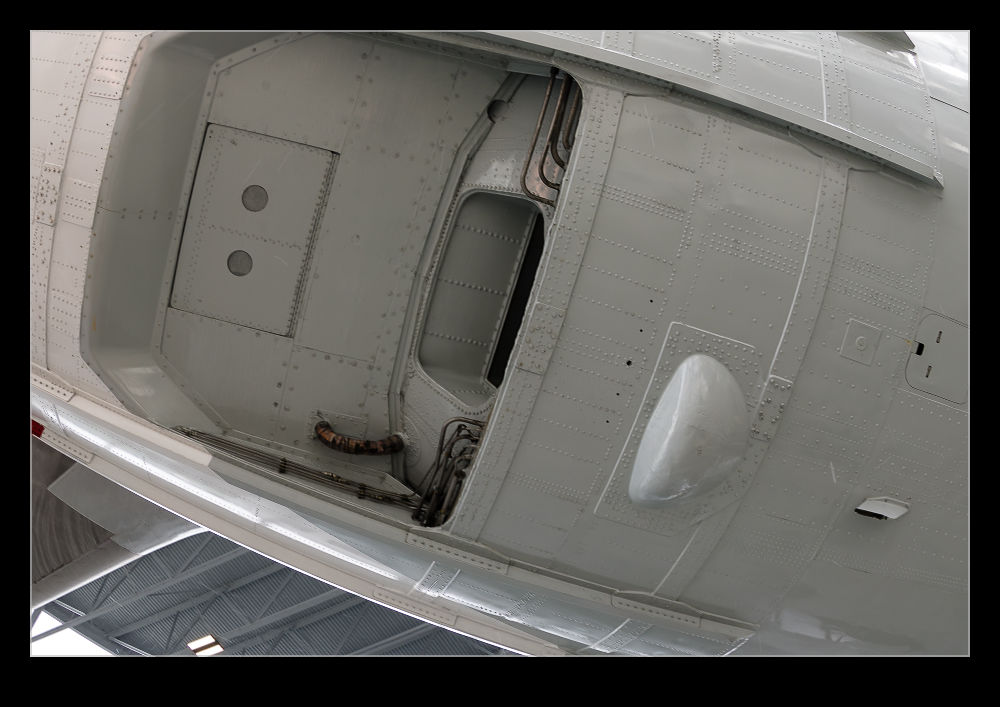
The SR-71 Blackbird provided a reconnaissance platform that was unmatched.  It would have been pretty high in the sensitivity list when it came to its sensors and capabilities.  Now the jets are all retired.  The example that is in the Evergreen Aerospace Museum has one of the sensors extracted from the sensor bay and mounted on a stand in front of the aircraft.  I imagine there was a time when this was something that would not be available for me to look at but now, I guess, this is just another obsolete piece of tech.

Delta Bids Farewell to the QOTS

The disappearance of the 747 from the world’s airline fleets continues apace.  The most recent company to bid the Queen of the Skies farewell is Delta.  Delta did operate 747s in the early days but its current fleet was acquired as a result of the takeover of Northwest.  Northwest has operated plenty of 747s over the years and was the launch operator of the 747-400.  They continued to operate older generation freighters for a number of years too.

Delta carried out a farewell tour for the type and it included a visit to Seattle.  Prior to going to SeaTac, the plane stopped off at Everett, the place where it, and every 747 before or since, was built.  It was a dismal day with low cloud and rain.  The plane emerged from the clag on final approach and zipped low over the threshold to touch down before reversing thrust in a cloud of spray.  It parked up at the Boeing facility next to the Future of Flight Museum where it stayed for a few hours before heading to SeaTac.

Here are a few shots of the Northwest/Delta aircraft I have photographed along with the farewell tour jet as it landed at Everett.

The Sun is Setting! Too Late…

The Thai delivery flight I wrote about in this post went out in lovely light.  It was due to be followed by a Dreamlifter flight to Nagoya.  That is a long leg so means a heavy jet which should use a good amount of the runway.  The scheduled departure time meant it should be just before sundown.  They didn’t start on time, though, and the light was beginning to fade.  A bit of cloud on the horizon meant that sunset was going to be okay but the light was going to go before that.  Meanwhile, once the jet called up, they advised the tower that they needed to burn down a bit of fuel to get to the required takeoff weight.  Great, not what was needed!

By the time they were ready to go, the light was gone.  However, I had waited long enough so I figured I wasn’t giving up now (although I was now getting pretty cold!).  The ISO was being ramped up rapidly as I had to keep assessing the conditions while I waited and it got steadily darker.  Finally, they called for departure and lined up.  Looking up the runway over the ridge, I could see the jet approaching.  Something interesting was making the plane look very squashed!  Once it got over the ridge, they rotated and got airborne very close to me.  Everything was very flat but at least it was something different to shoot.

Cargojet Pairing

Freighter use is the great second chance for older airliners.  It is also a nice source of something different with the number of airlines shrinking as mergers and bankruptcies take their toll.  Cargojet is a Canadian freight operator that has a contract moving mail for Canada Post.  When I was at Vancouver, there were a couple of Cargojet aircraft on the ramp across from where we were.  One was a 767 and the other was a 757.  They were being loaded when I arrived and, as the evening light drew in, the first jet taxied.

It was getting pretty dark by the time they got airborne.  However, I was not complaining since I was able to get another airline in operation that I had not seen before.

EP-3 Aries

P-3 hunting was part of the plan when Paul and I headed to NAS Whidbey Island.  We had some success.  There was a nice bit of icing on the cake for us.  An EP-3E showed up too.  The EP-3 has a nice selection of large radomes added to the airframe to cover the wide variety of sensors that this type has to fulfill its role of listening to transmissions around the world.  I don’t know how long the EP-3 has once the P-3s are gone from fleet service so getting one was a definite plus.

Qantas Dreamliner Delivery

Delivery flights from Paine Field are good news because the jets are going to be a bit heavier and will use more of the runway.  This brings them closer to where you can be to photograph them.  Qantas were taking their second Dreamliner and it was delivering early in the afternoon of a winter Saturday.  The winter light is just so good when the clouds have parted.  No harsh shadows and a low sun angle are great conditions to be shooting in.  I hope the crew had a good flight.  It was long enough!

My Approach to Shooting and Processing on Crappy Weather Days

This is the finished image. This is pretty much what it looked like to the naked eye (through the viewfinder) when I took the shot given how dark the sky was.

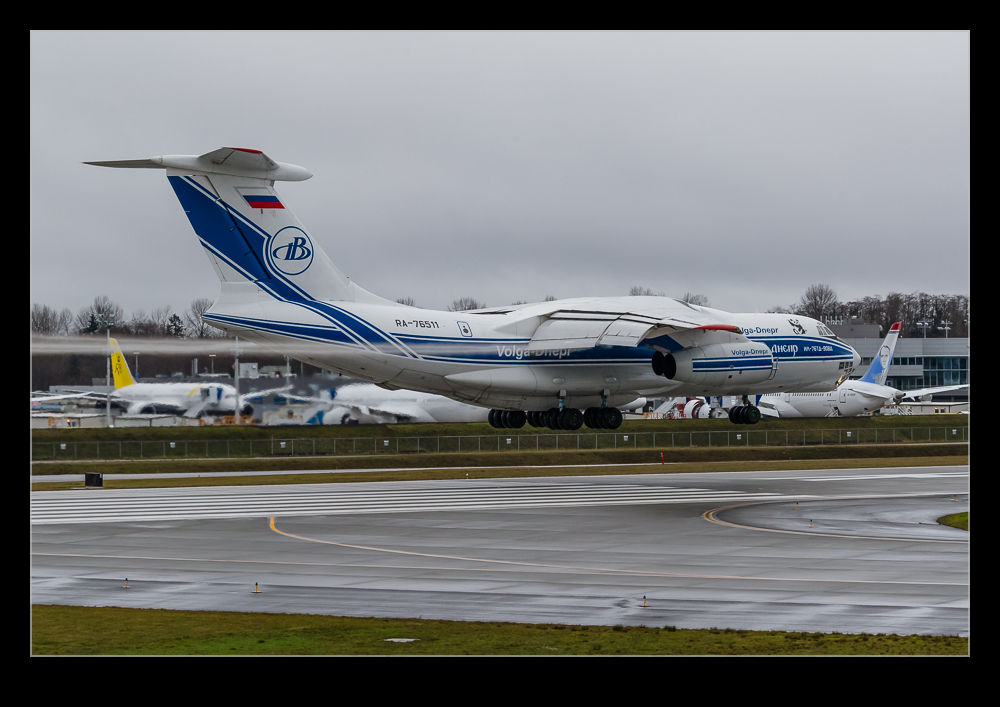
A rare arrival was due on a day that was not good from a weather perspective.  It was dull and rainy and so not what you would hope for.  Conditions like this mean I try to exploit some of the features of the camera and the processing options available.  First, how to set up the camera?  With the light being bad and variable, I went to a pretty high ISO level.  I shot in aperture priority mode and added a lot of exposure compensation.

In my experience, the metering is pretty good when shooting against the sky in clear weather but, when there is a lot of cloud, the camera tends to treat the clouds as too bright and it underexposes the subject too much.  I use a lot of exposure compensation in this case with a setting of +2.0 being used on this day.  The reason I do this is that, aside from the exposure question mark, there is a lot more information available in the lighter end of the exposure curve.  Shooting in RAW gives you options.

This is how the camera recorded the image. This is the in camera JPEG that I extracted from the RAW file using Instant Raw From JPEG.

If you were to look at the aircraft at the time, you would see a dark and menacing sky but you would see plenty of detail on the plane.  The camera does not see that for the original shot.  The aircraft would be very dark.  When processing, this dark area would give you something to work with but the variation in data would be more limited.  Shoot overexposed and you get more to work with.

This approach will only work well if you are shooting RAW.  If you are using JPEG, too much of the usable data will be discarded during the processing in the camera.  To show you what I mean, here are two images.  These are both from the same shot.  One is the RAW file as it showed up when imported in to Lightroom and the other is the embedded JPEG that you can extract from the RAW file and which can be seen when the file is first imported before the rendering is undertaken.  As you can see, the JPEG is over exposed but the RAW rendering seems even more so.

There is way more data in the RAW file though.  Immediately, as I bring the exposure slider back down, the clouds go from being white to quite dark – just as they appeared on the day.  Meanwhile, the fuselage of the aircraft has a lot of the data intact and maintains a lot of the brightness that you could see at the time.  Very little needs to be done with the blacks and they are almost in the right spot by the time the exposure is good for the clouds.  The fuselage might be a bit too dark though.  A small tweak of the blacks and a little boost in the shadows to compensate for too much darkening with the exposure slider and suddenly the shot is looking a lot more like it did when I saw it develop.
My RAW processing baseline always results in a slightly more overexposed shot the embedded JPEG includes. When you first open the image, the embedded image you see in the previous shot initially shows up and then it renders the RAW file. This was the initial RAW rendering prior to any adjustments.

One advantage of shooting on such a crummy day is that the sky is a giant softbox – in this case a very soft one!  The result is that the light is a lot more even than on a sunny day.  The darker look can actually make the colors look a bit more intense than if they were losing out to the whites when the sun is right on them.  While there was only one plane I was specifically there for, playing around with these other shots and working on the technique was a nice extra benefit.

AirEuropa to the Sun

This example is not going to get me to the sun from Seattle.  It will head to Europe before it starts transporting passengers.  I saw it during test flying activities as it flew approaches to Paine Field.  The sun was out but the skies were stormy so it made quite a dramatic sight as it bashed the pattern at Everett.

They even were kind enough to fly a missed approach the first time to get a different view of the jet.  Then it was around the pattern and back in for a second approach, this time landing.  The dark sky background was only in the direction of the approach so the roll out shots were far less dramatic.