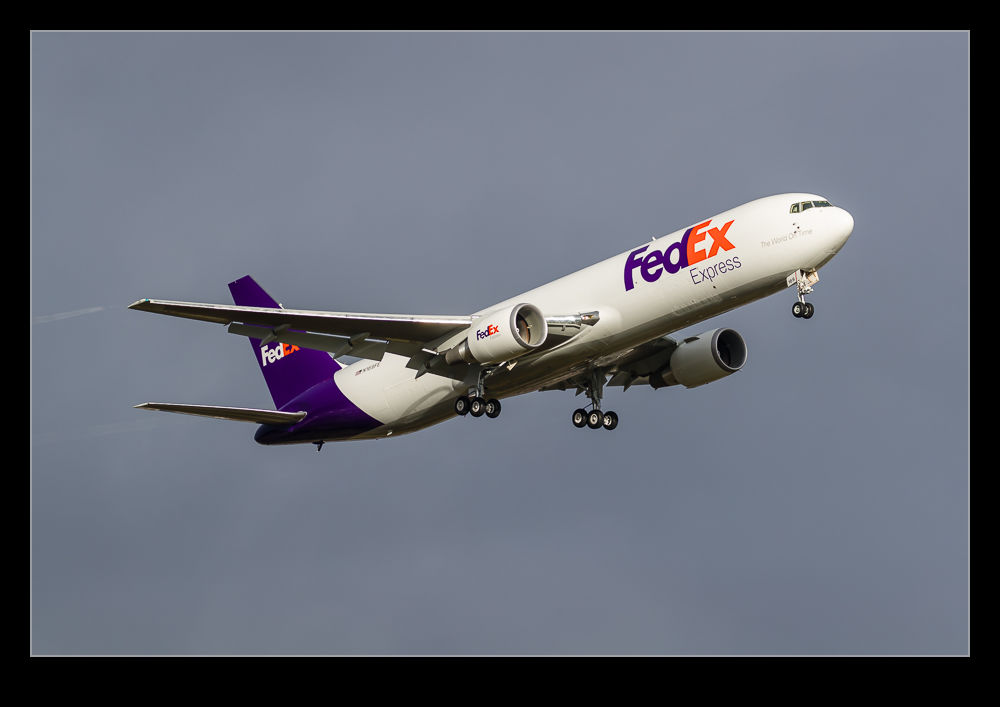
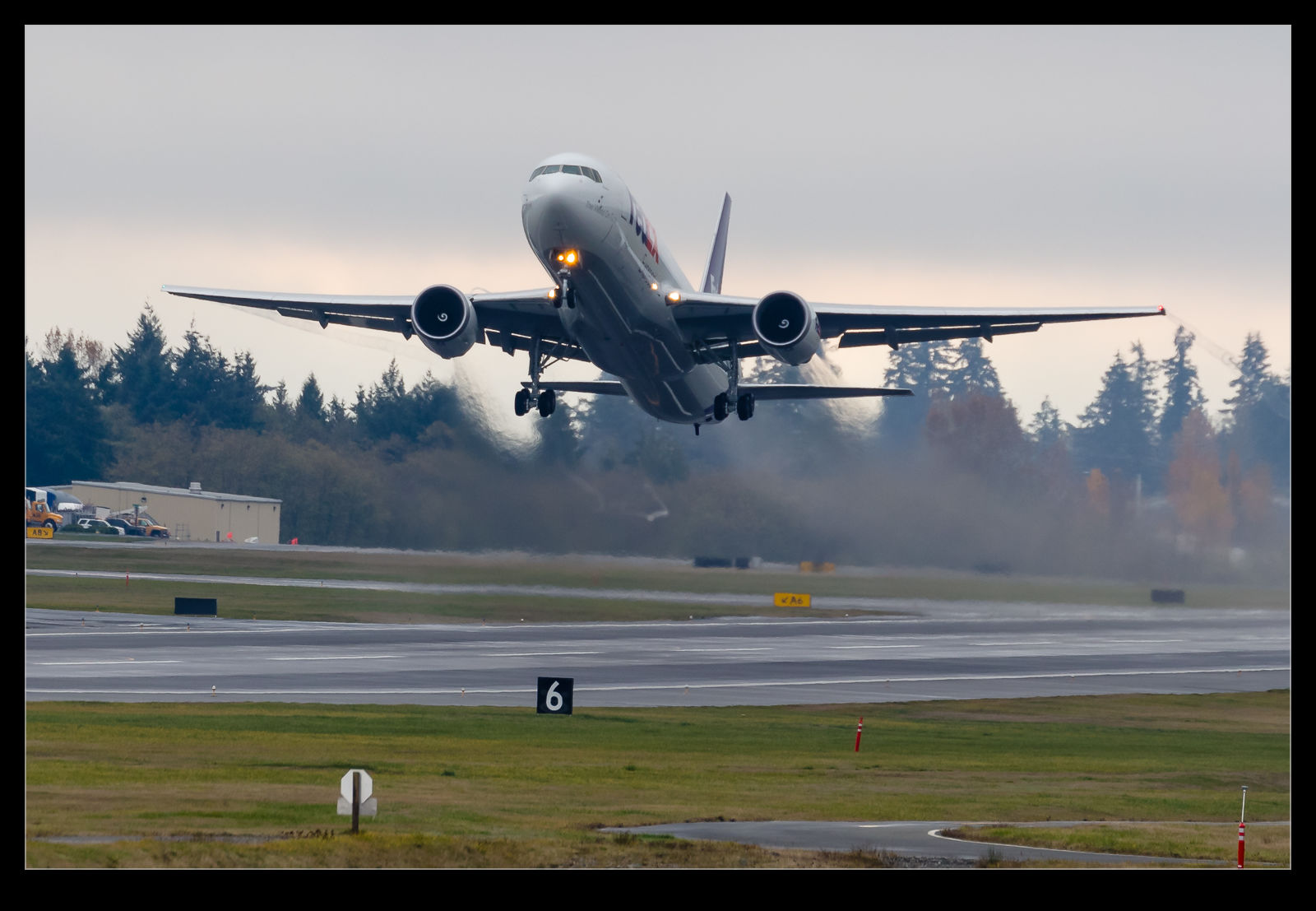
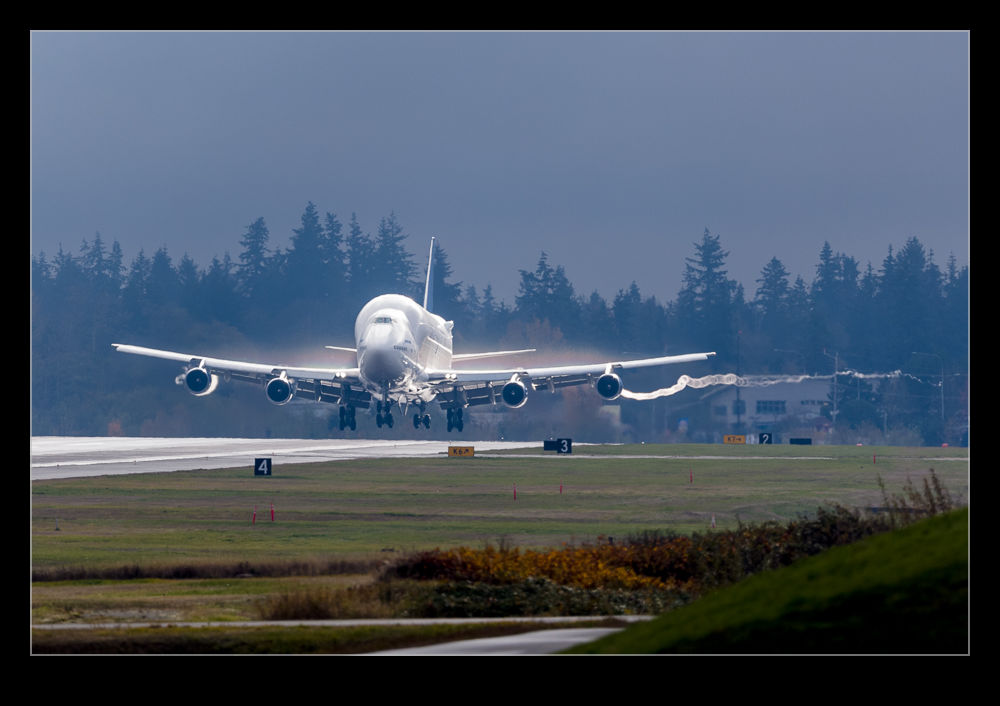
The only civilian 767s being built at the moment are for FedEx. I posted one of them on test at Paine Field in this post. I caught another one recently. I got the departure early on as it disappeared into the clouds that were pretty low. The return later had slightly better light. The approach was terminated with a go-around resulting in some vortices streaming from the wing as they climbed out. Dark skies make for an interesting background!
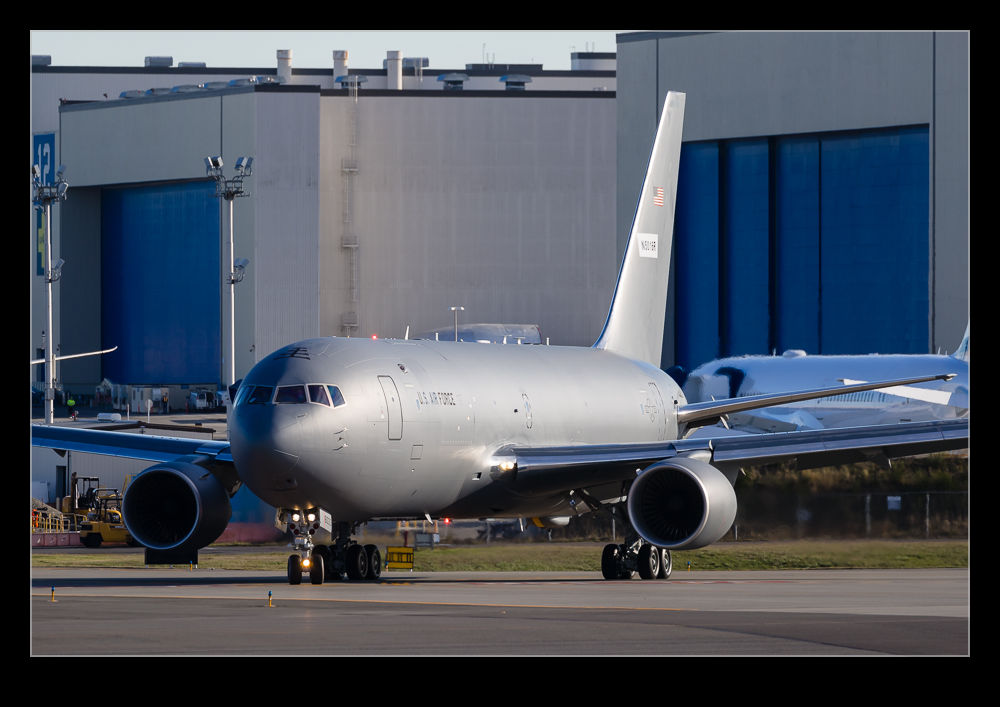
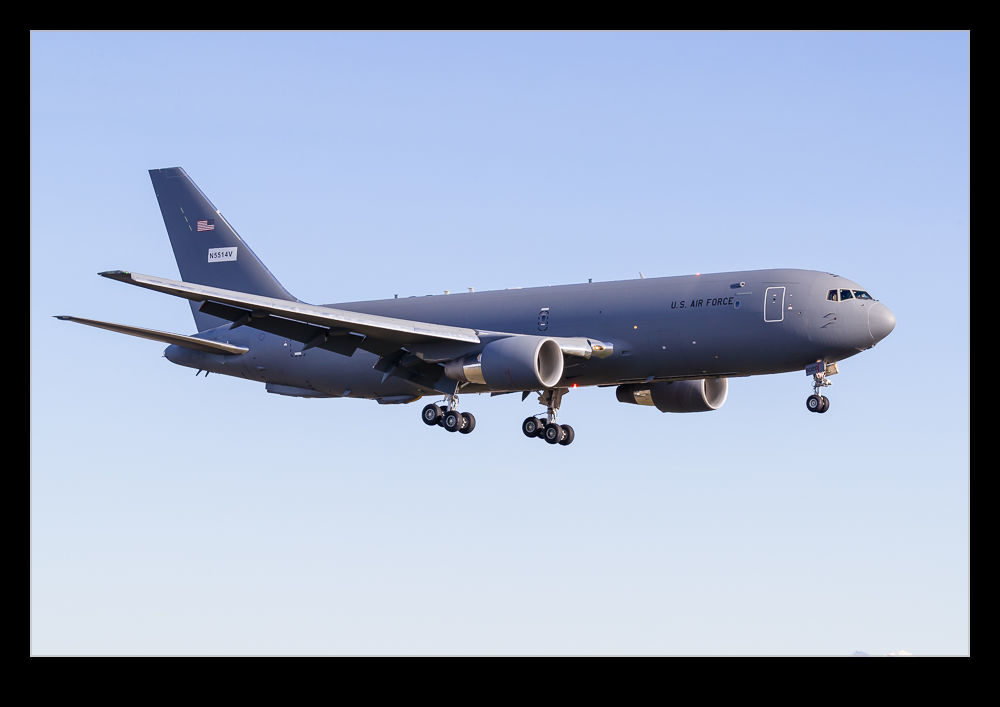
January 2019 brought a milestone for
the USAF. They accepted their first
KC-46 Pegasus. Admittedly they accepted
it with a number of deferred issues that Boeing has been given a few years to
resolve but that are Category 1 deficiencies.
I guess this should mean we will see a lot of deliveries in the coming
weeks and months.
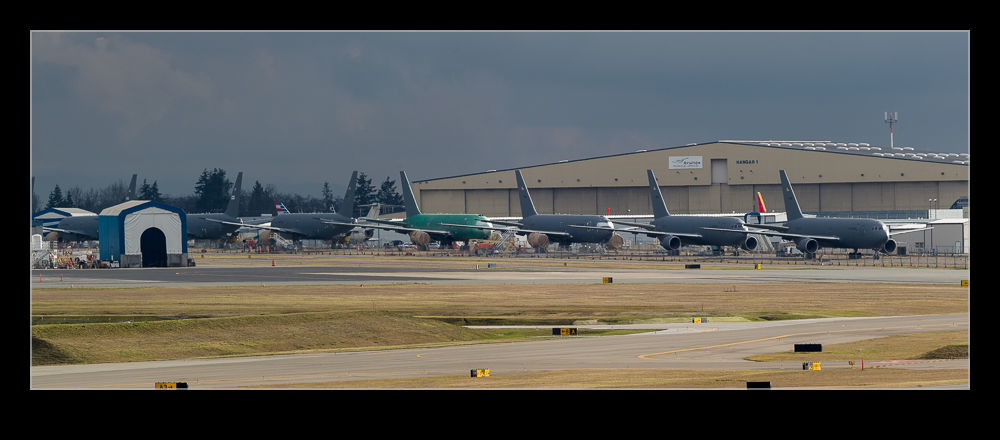
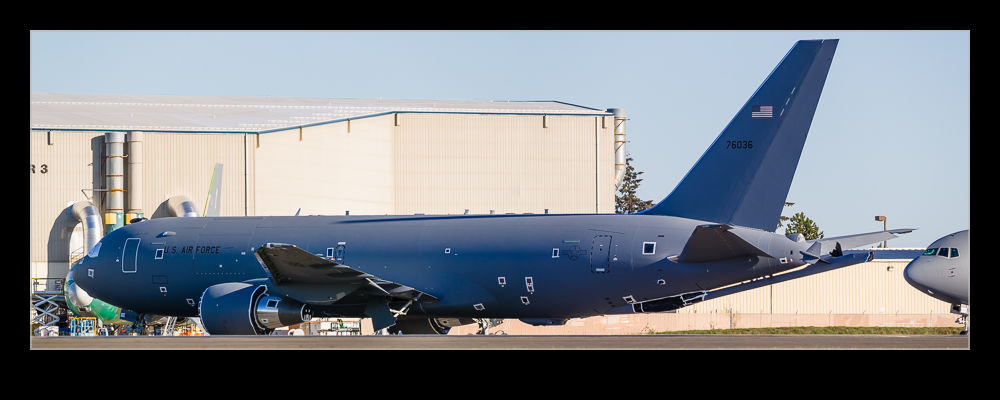
The backlog of jets parked up is
substantial. There are jets parked at
Boeing Field on both the military ramp and the flight test ramp. There are more scattered around the Boeing
ramp at Everett. More of them are in the
conversion area at the south end of Paine Field. More still are parked up across the cross
runway. It’s a lot of jets and, if you
are an accountant, this is a level of Work In Progress that must make you squirm. We should see them start to head on their way
before too long.
Damp and cloudy days are not always
ideal for aviation photography but they can provide some interesting
options. One weekend I was up at Everett
when they were approaching from the south.
The jets broke out of the cloud at quite low level but there was some
light from the side coming under the clouds.
The damp air meant that the jets were pulling some conspicuous vortices
as they flared for landing. They were a
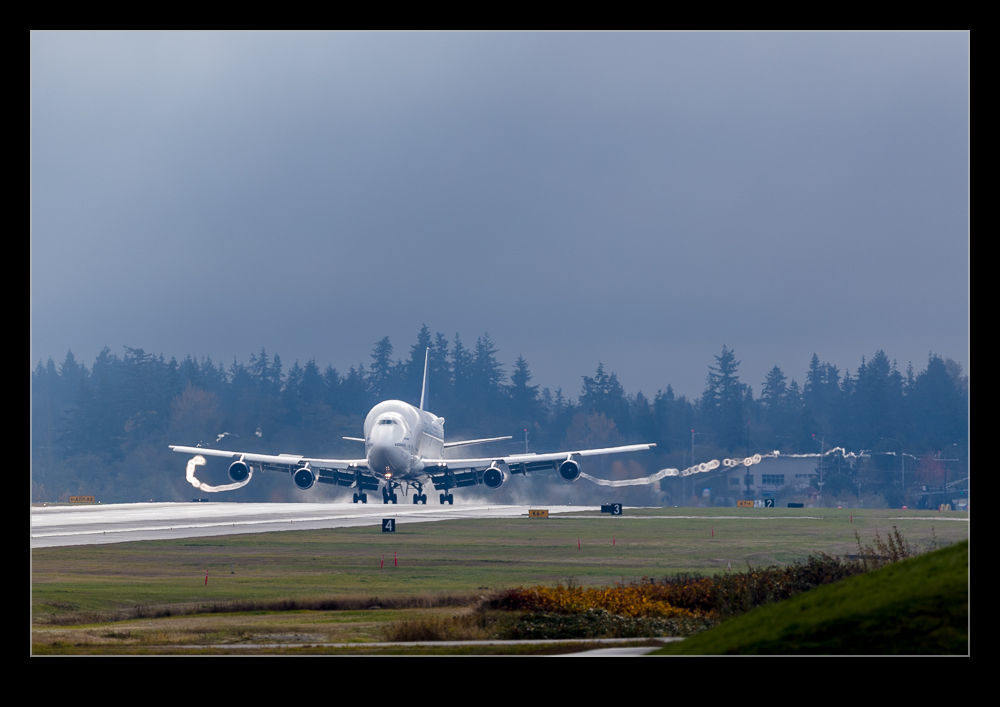
long way off but it was possible to get some shots of them. The 747 produced vortices that were easier to
see but the 787s didn’t do too badly either.
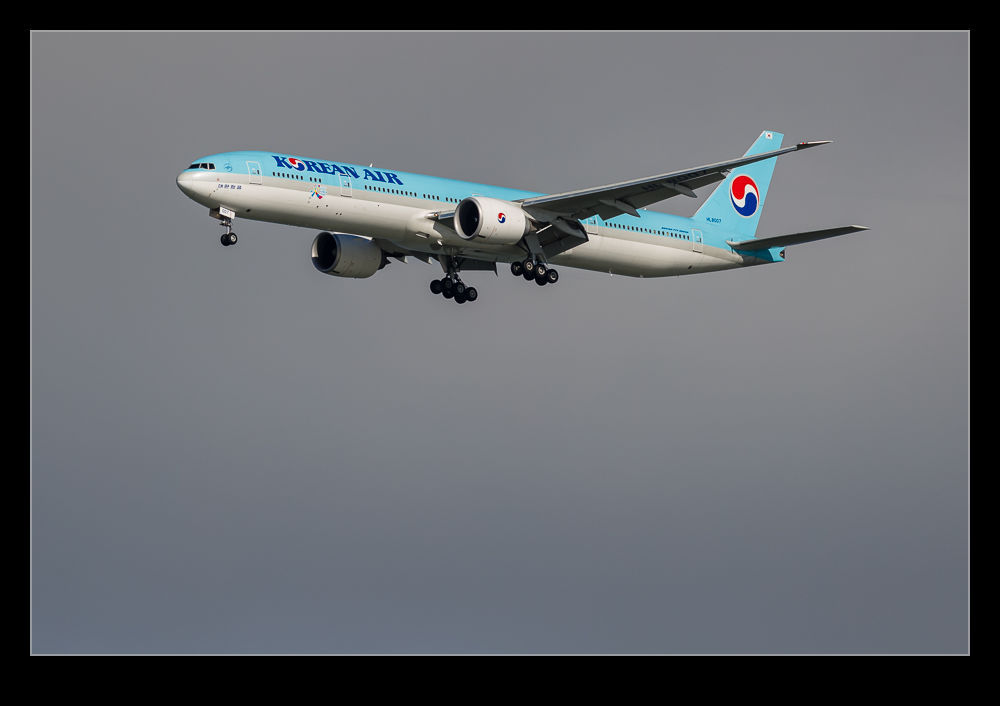
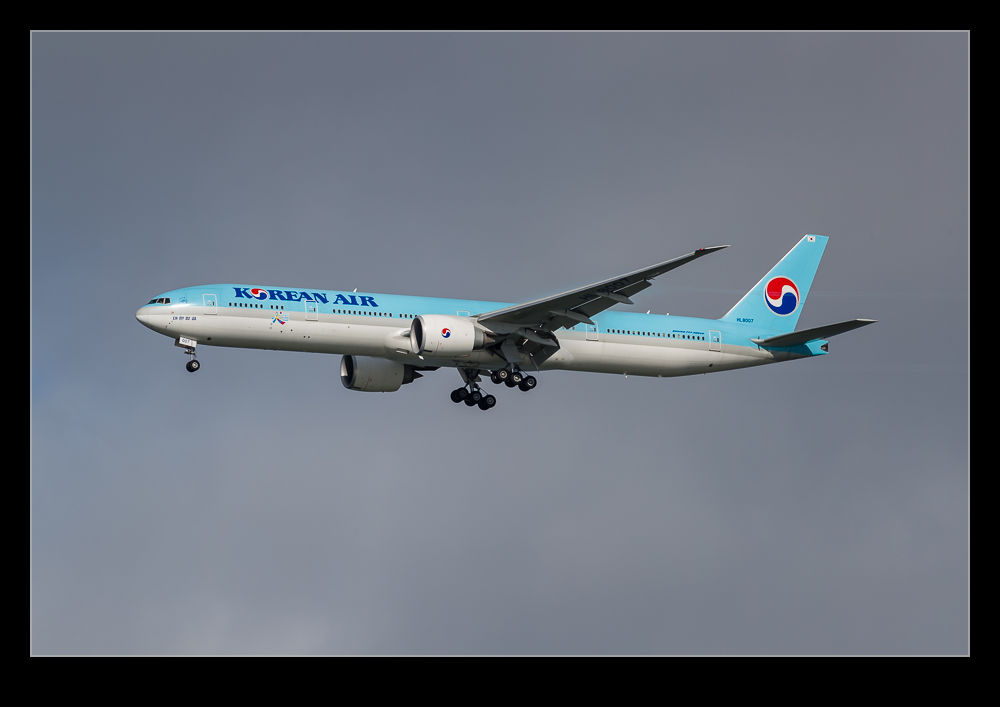
Korean Air 777s are hardly a rarity so
would not normally warrant a blog post.
However, this one arrived at a time when the light seemed to be
particularly appealing and I was pleasantly surprised by the shot. I figured it could have a blog post on what
is probably a cold and rainy winter’s day.
Sorry for the corny pun but I just
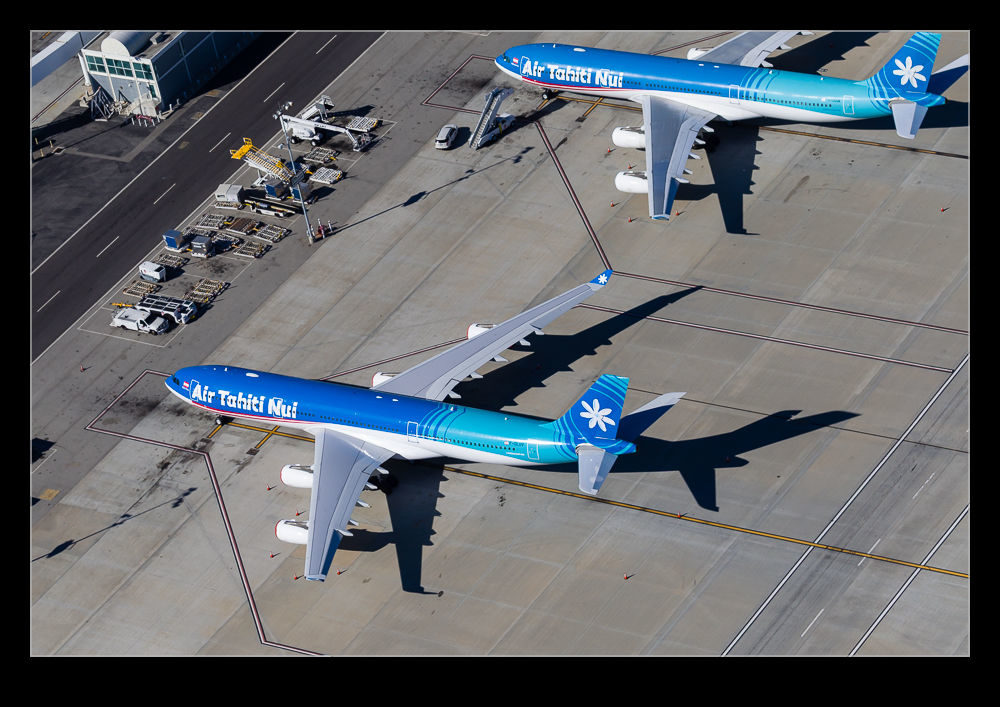
couldn’t resist. One of my favorite
airliners to shoot has been the Air Tahiti Nui A340-300. I have seen them at LAX on a number of
visits. Shooting them taking off on the
south complex has been possible on a few occasions and I was super lucky to get
one of them landing on the north complex when I was overhead in the
helicopter. The A340s are getting a bit
old at this point, though, so their replacement has been ordered and it is
going to be the Boeing 787-9.
One of the jets was in flight test at
Everett so, with nice weather on a weekend and flying underway, I couldn’t
resist a trip up to get the return. I
was too late for a takeoff shot. The
conditions were great. A cold snap meant
that the air was clear and the sun, while it disappeared for a while shortly
after I arrived, was back in plenty of time for the return. Consequently, as the plane came across the
Cascades, I could see it easily prior to it turning north to come in on the
approach. Mt Baker was clear in the
background as they made the turn to final approach.
The dark colors of the livery make it
necessary to use a bit of shadow slider when processing the shots. It was just after midday so the light was a
bit on the nose of the jet but you could still get something good for the
fuselage sides. The touchdown was a bit
firm providing a smoky cloud of tire rubber.
I wonder how much tread the airline expects to have at delivery? Often the jets will come back for a rejected
takeoff run but this time they went straight back to the ramp.
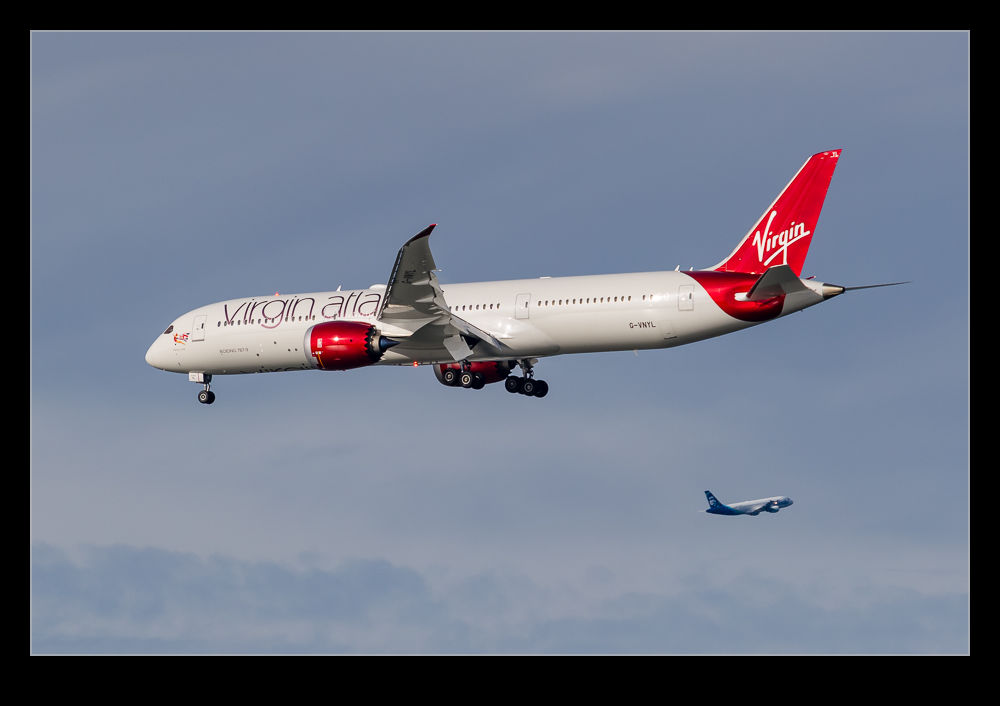
My last time shooting at SFO, I got
shots of a Virgin Atlantic 787 arriving.
Crossing shots are not unusual at SFO as the jets on approach will often
have departing jets in the background.
The Virgin jet had this. It also
had a second crossing shot a little earlier on the approach. A jet heading over the bay to pick up the
approach further down was directly behind the 787 just after it passed Coyote
Point.
The current generation of wide body
jets are being built at rates that would have been hard to imagine a few years
ago. Fourteen jets a month is so much
more than would have been contemplated before.
That is the sort of build rate that the 787 and the A350 are
achieving. The result is a lot of jets
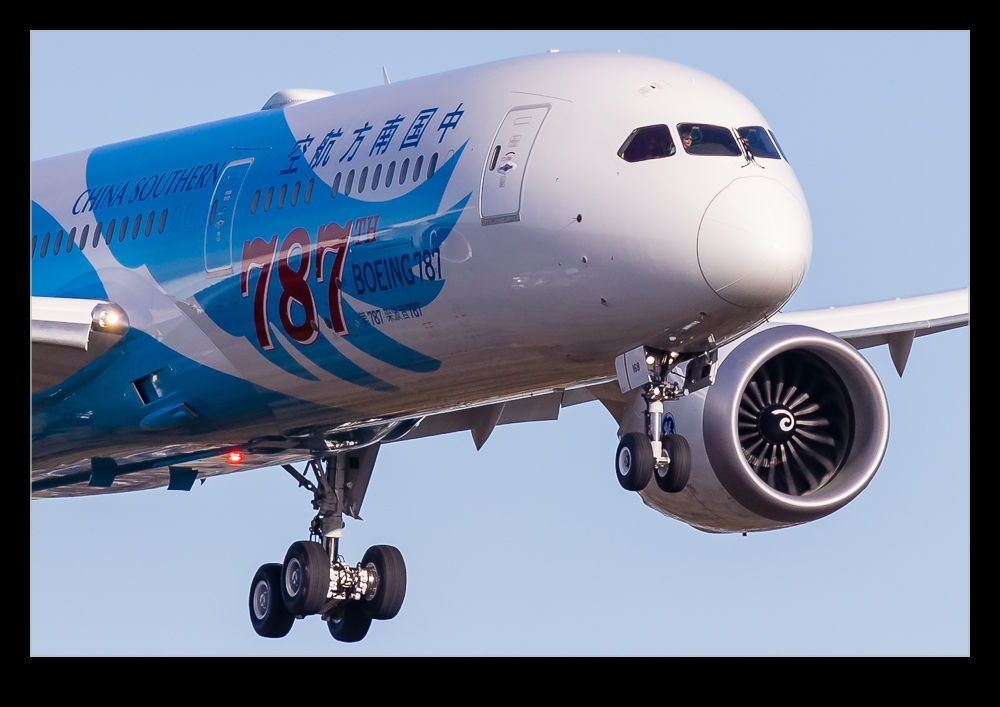
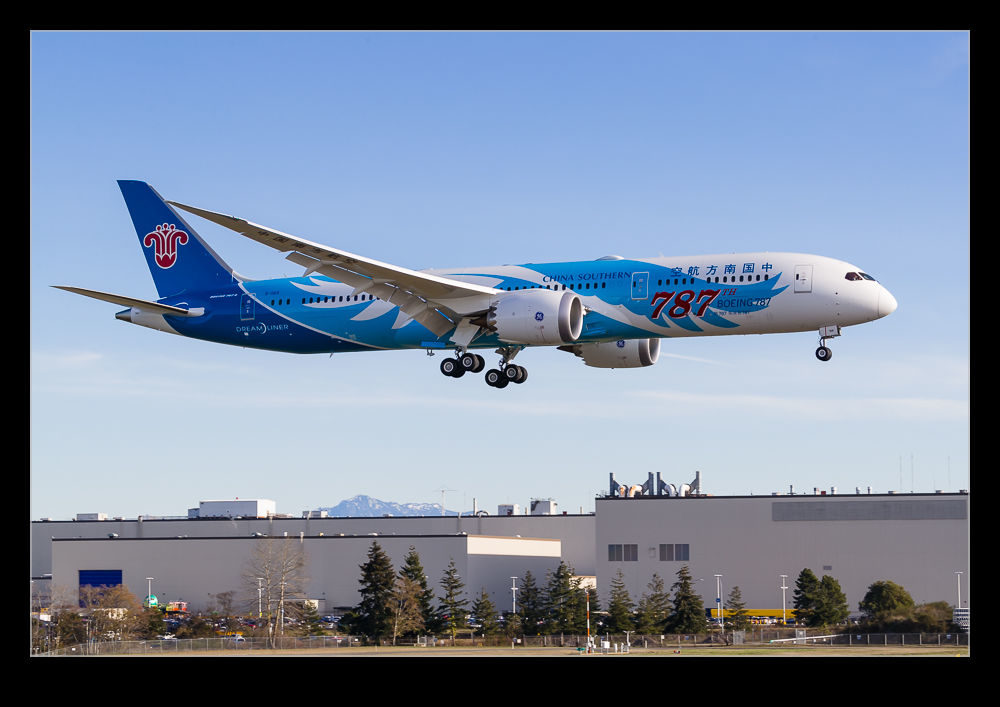
being in service not that long after the fleet first appeared. Boeing recently built the 787th
787. It was a jet for China Southern and
I got a shot of it returning to Everett.
I’m glad it was an Everett jet rather than a Charleston one. I wonder who got to make that decision!
Ethiopian Airlines has been taking
delivery of some Boeing 777F freighters for their cargo operations. One of the new jets was being readied for
delivery while I was at Paine Field.
Operations were in a northerly direction so, from the terrace on top of
the Future of Flight, we were going to get a good view. I was hoping that a direct flight to Bole in
Ethiopia would be sufficiently long to mean that the jet would be very heavy
with fuel and would run long on take off giving us a good view of
rotation. However, while there was a lot
of fuel on board, the lack of any other payload meant it still got off the
ground pretty swiftly. Still, it was a
good view of the initial climb out.
I was picking up someone from SeaTac
just before Christmas. The flight was
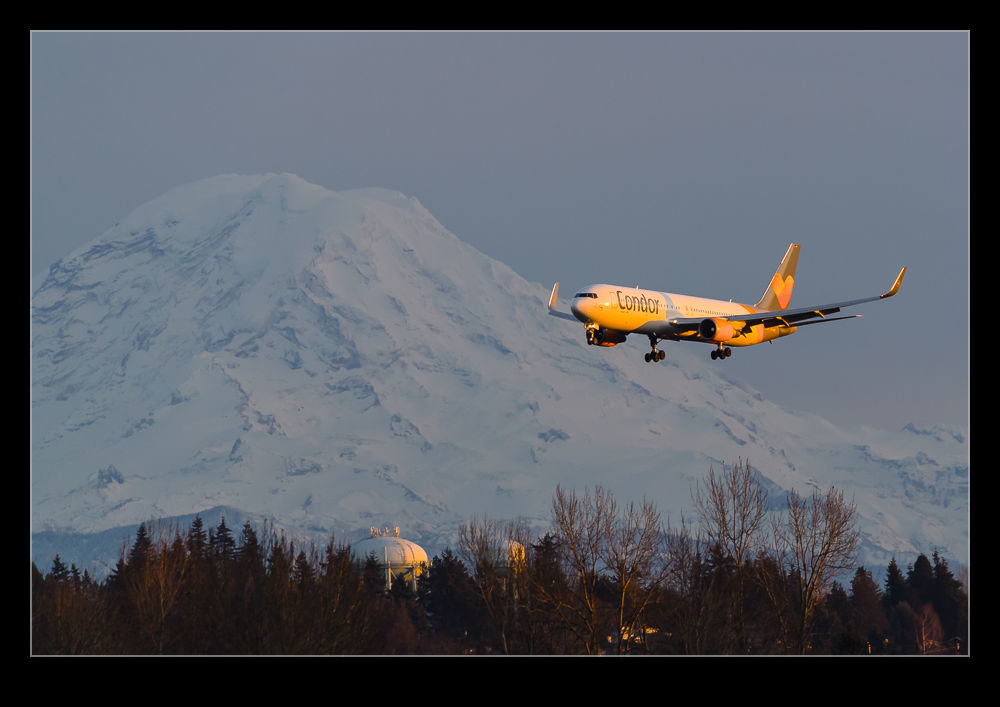
due in just before sunset so I took the camera along just in case. I was out by the outer runway approach path
but the heavies were coming in to the inner runway. This meant they passed nicely in front of Mt
Rainer – assuming you can ignore the 60 odd miles distance to the
mountain. First in was a Condor 767
which still had plenty of evening light on it as it landed.
Next up was a British Airways
777. It arrived as the light was fading
fast. It still had a bit of illumination
but you knew anything following it would be in the gloom. Being winter, there was virtually no
distortion in the atmosphere, which, given the distance was a potential
problem. Things looked pretty sharp in
the final images.
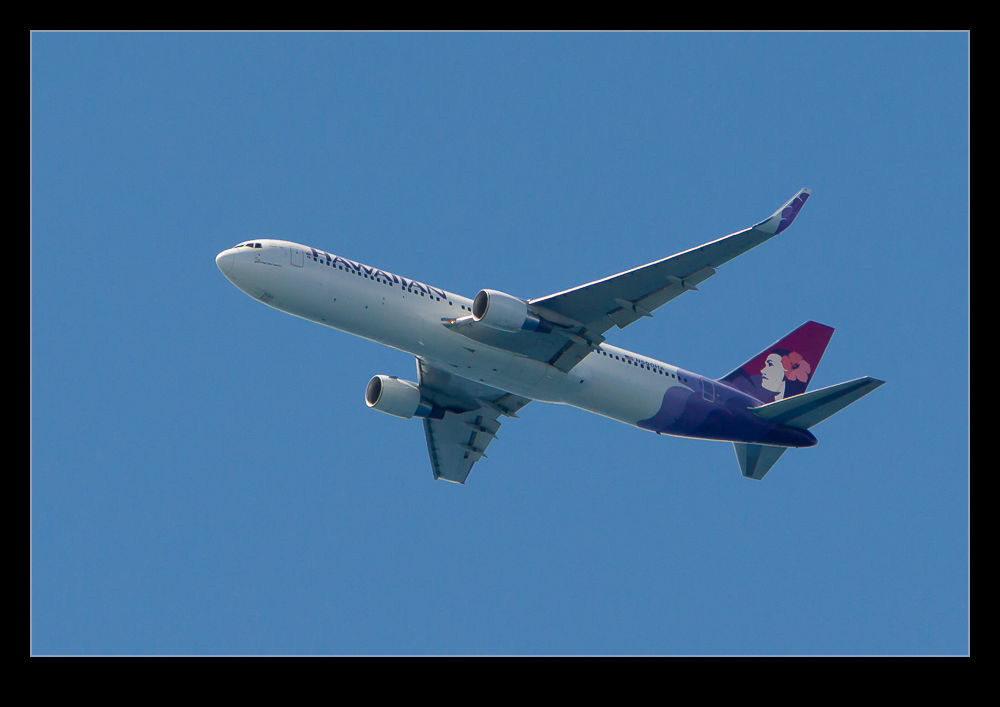
Hawaiian Airlines had a reasonably
large fleet of 767s for its long haul services.
They introduced A330s to expand the fleet and more recently have added
A321neos to serve destinations on the west coast of the US. The arrival of these planes has meant the
767s are no longer needed. Consequently
the fleet has been run down and the final flights have taken place. It won’t be an Airbus only fleet for the
longer flights for long though. 787-9s
are on order so Boeing will return to the long haul fleet before too long.