 When someone in Chicago needed to lift something that was too heavy for the S-58T fleet of Midwest, there was a good chance that CHI Aviation would get the job. When I first worked with them, they were known as Construction Helicopters but their scope has grown a lot and so the name has been changed. Whether it was the S-61 or the Super Puma, some big payloads could be taken up. I thought I wouldn’t see much of them once I moved to California. I was wrong.
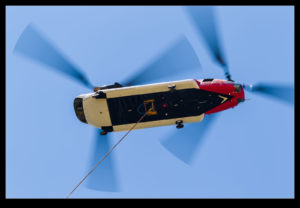
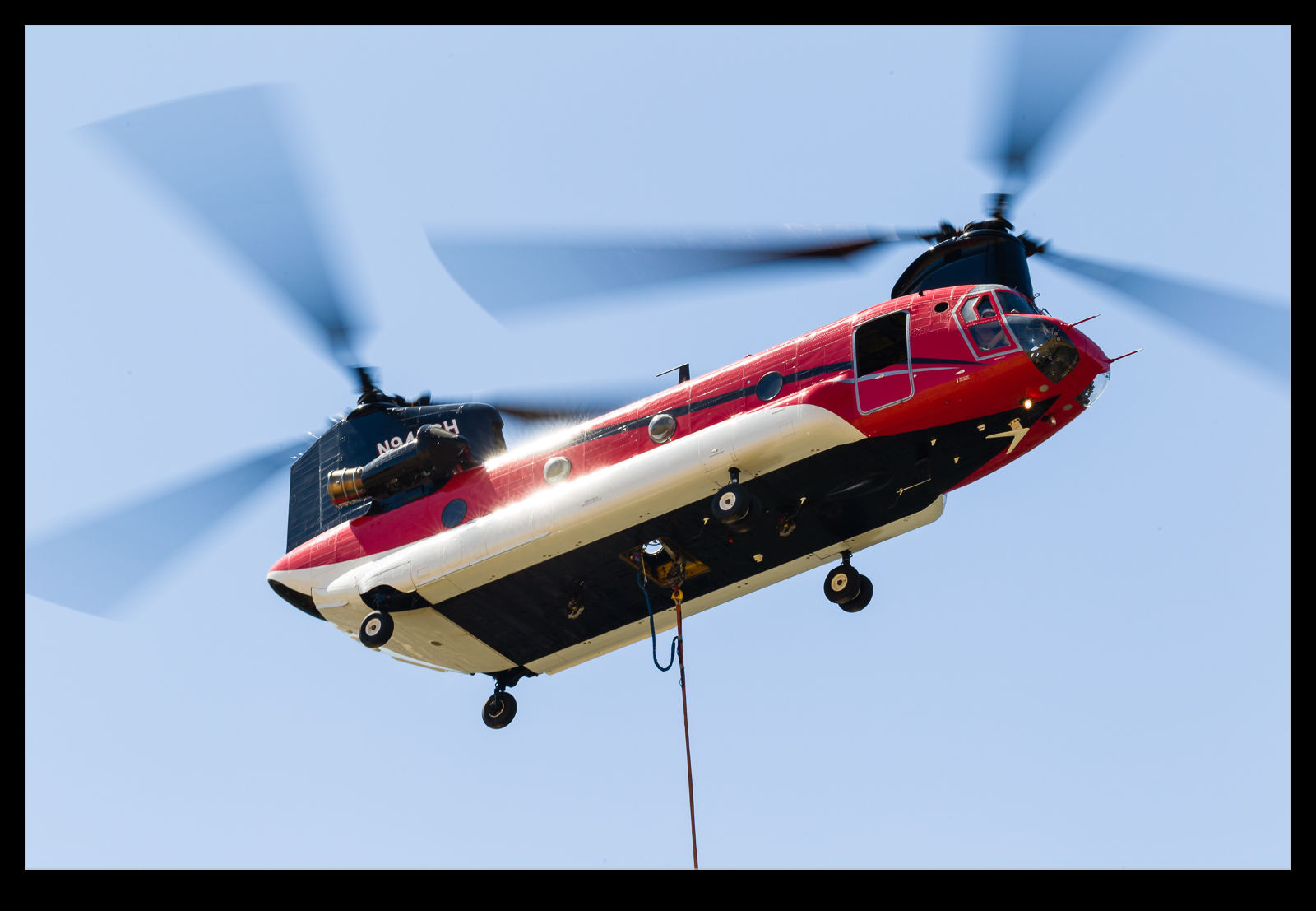
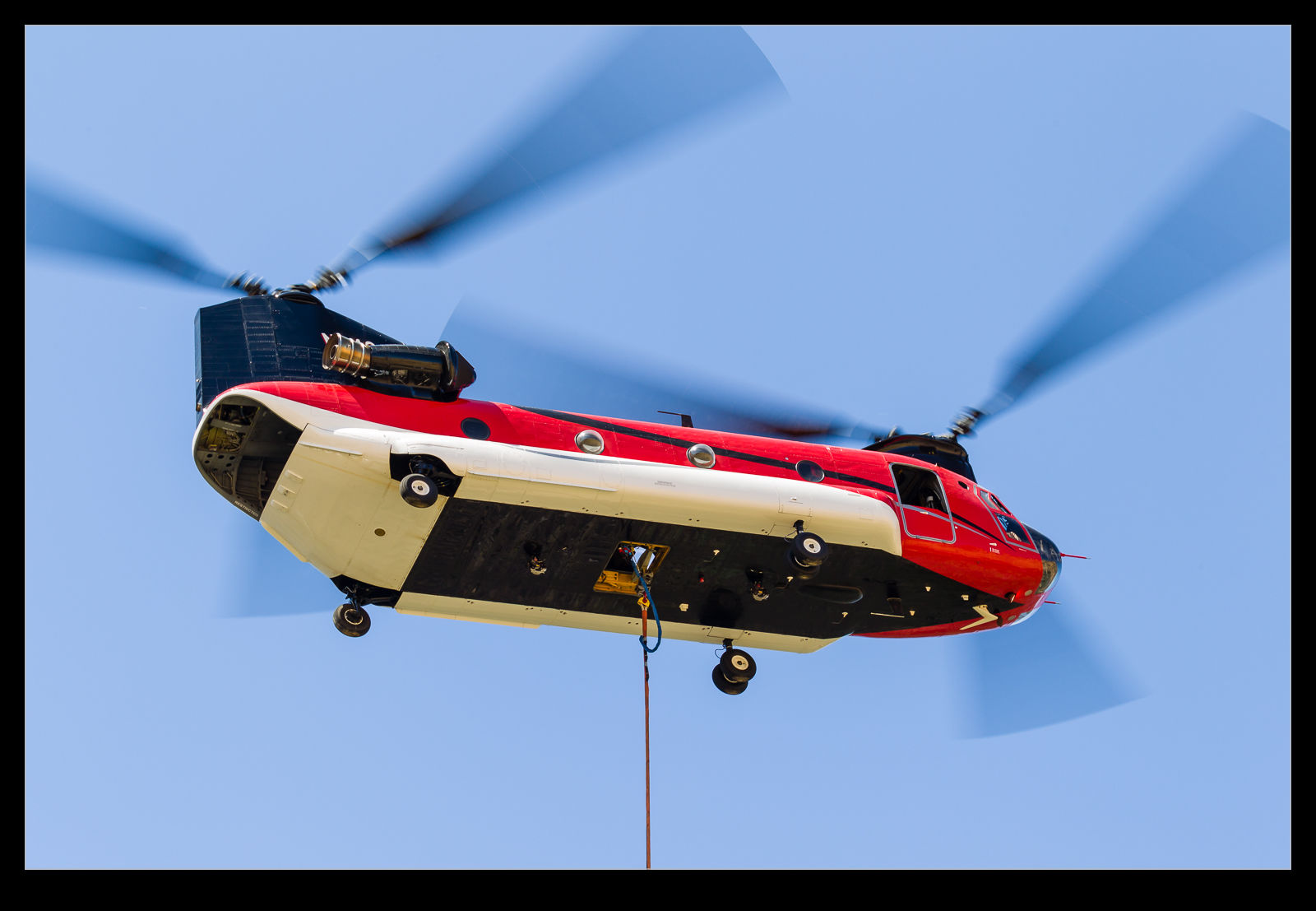
 They have acquired some surplus CH-47 Chinooks from the US Army and a number of them are currently based in California working on firefighting contracts. Some of them were deployed to help fight the Wragg Fire and I had a chance to go hunting for them while I had some free time up there recently. I had no idea where they were going to be operating. A look on Flightradar24 showed that there was a lot of activity in the vicinity of the fires including fixed and rotary wing assets but I was heading off with little real idea what I was looking for.
 I took Route 128 that goes up through the hills and past Lake Berryessa. This road had been shut at one point when the fire first got established but had since been reopened. Even so, as I drove across, there were fire appliances from all over the state in any turn off I passed. There was also an orange streak on the road which, I assume, came from a fire retardant drop of some sort. As I came by the lake, I didn’t see any aerial activity. There were plenty of boats on the lake so I figured that they weren’t picking up water from there. It later turned out that was a false assumption.
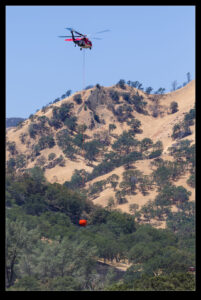
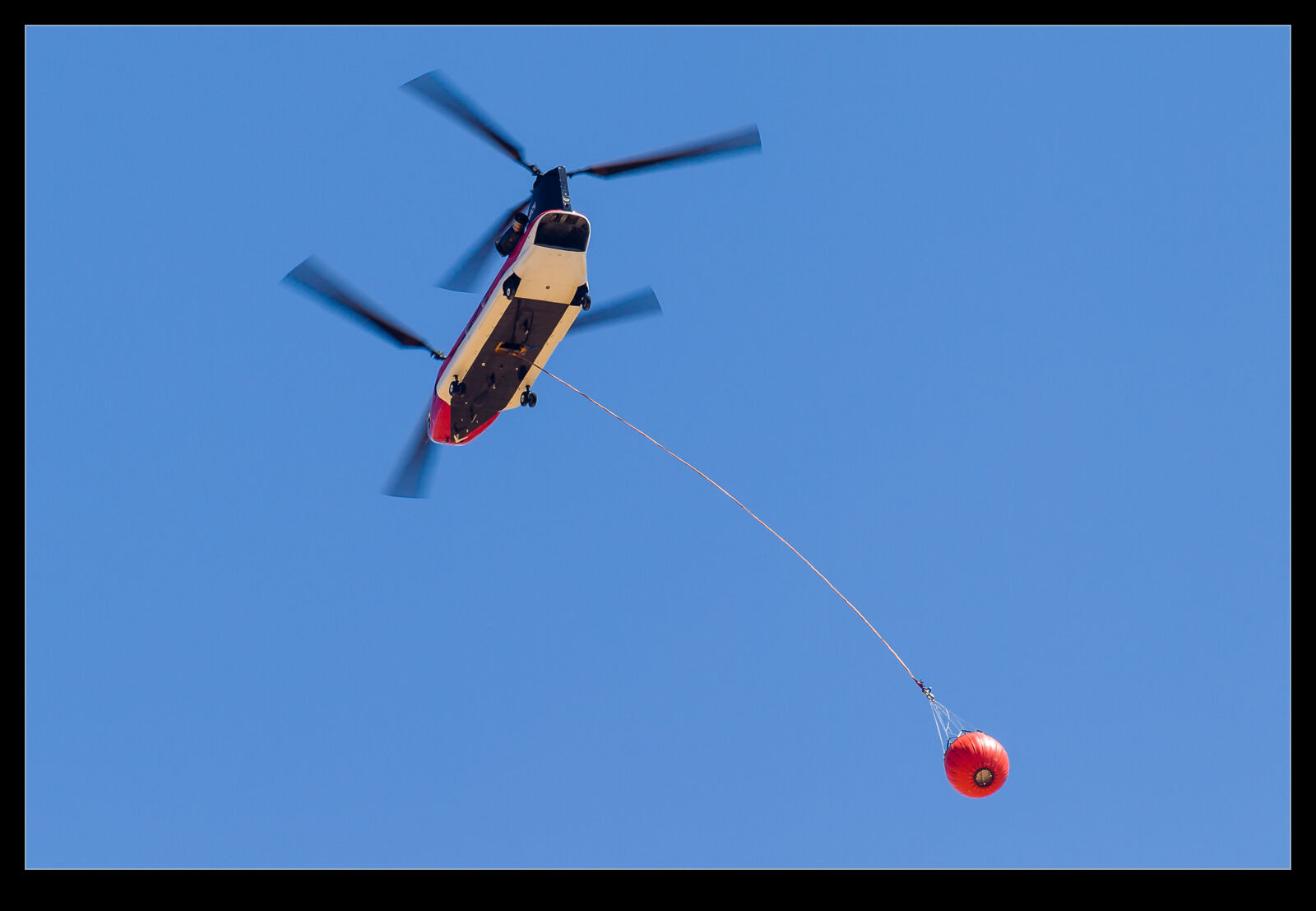 I dropped down from the hills and came around a bend in the road to find myself facing a Chinook coming in to pick up water from the river beside me. Fortunately, I was able to pull off right there. For once, I was well prepared. I had figured that I might see something and need to have the camera ready so I had fitted the lens and set everything up before starting the hunt so I grabbed the camera and started shooting.
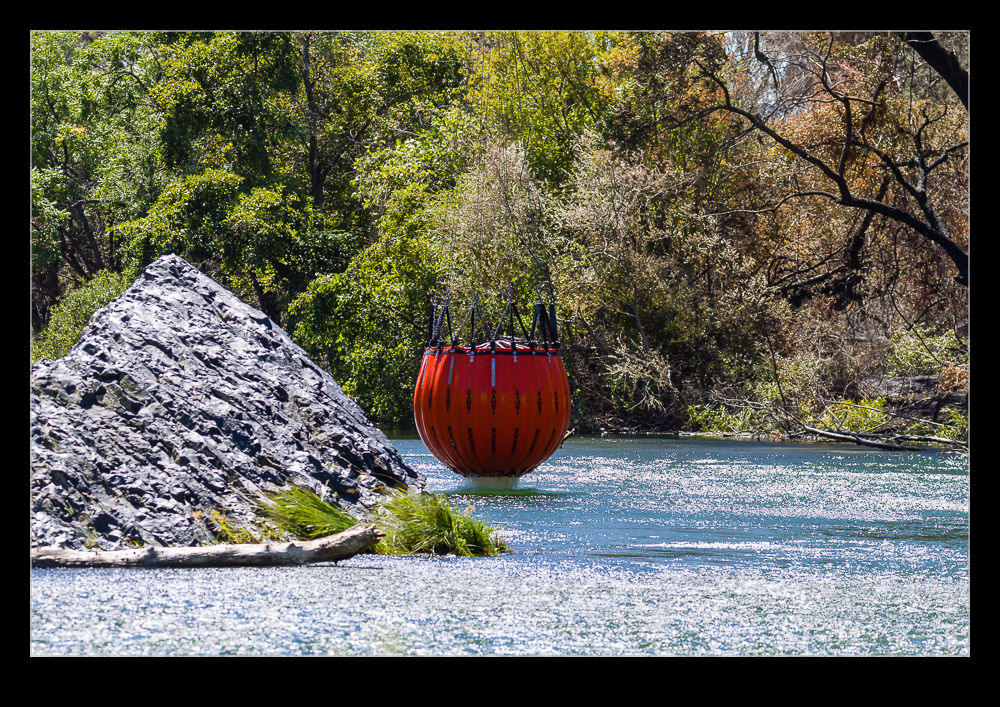
 There was a pair of the Chinooks coming in for water along with a Sikorsky Black Hawk. All of them were using Bambi Buckets to get water from the river before heading back to the fight. I got a bunch of shots from the road before things quietened down. Other than an Army Chinook without a bucket that seemed to be coordinating things (and marked with purple markings over its normal camo), nothing was moving. A guy came up from the river with his fishing gear in hand and suggested I go down to where he was to get a good shot.
I did as suggested but, of course, nothing was happening now. A couple of times I wandered back to the car only to hear something coming over and rushed back. Sadly, these were flights to the lake rather than the river. Finally I did get lucky and got a few shots from river level of someone picking up a load. Then it went quiet again so I headed off for a while on an idea that proved fruitless.
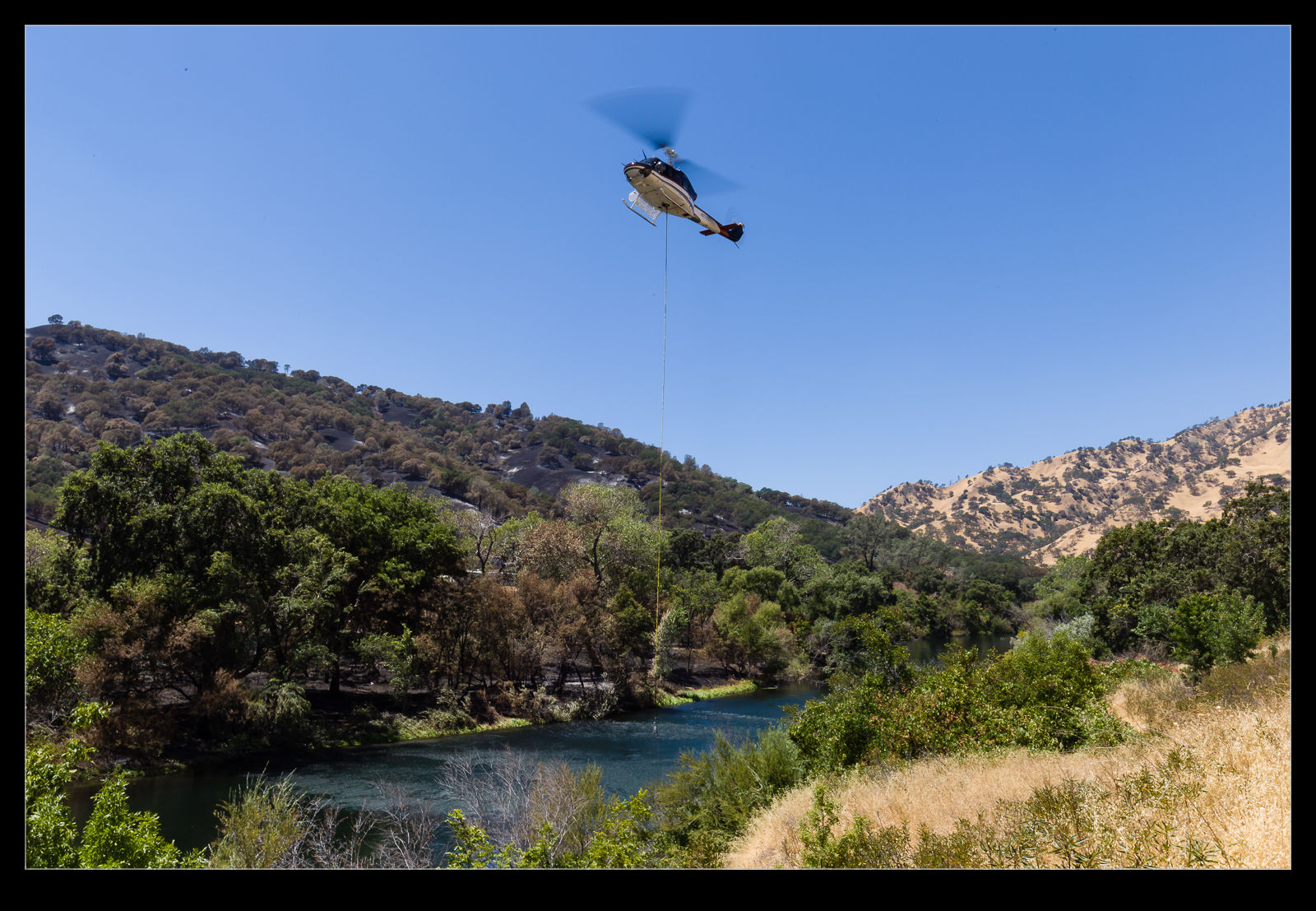
 My return brought me back past the same spot and things were happening again. This time there was a Huey involved and he was running a lot of lifts. He also was loading from a slightly different part of the river. One of the Chinooks still showed up but at the original spot so I had to make my choices. Eventually, I needed to head back so started off. However, the Chinook and another Huey put in another quick appearance so I stopped for them and then finally headed back.
This was a totally impromptu trip and I ended up getting a lot of time with the CHI Chinooks as well as some other types too. Obviously, it is not great that they are needed with these fires raging but it was impressive to see the crews at work providing such a valuable service. Now I want to see them again, hopefully in a slightly more controlled environment! I wrote a piece for GAR which you can see here.
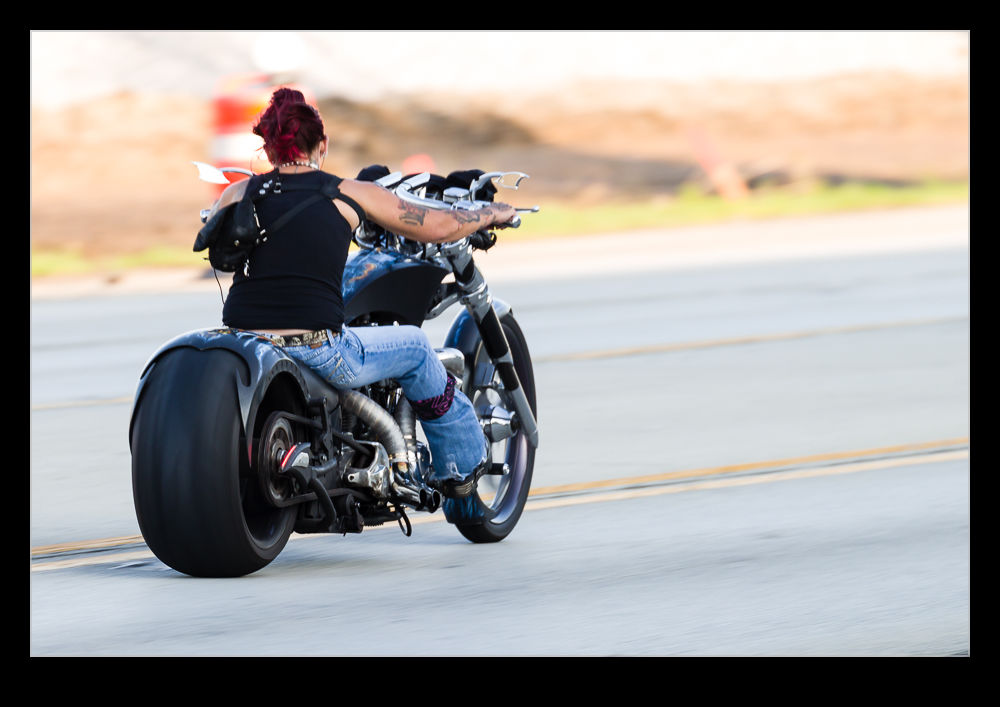 While out shooting, a woman rode by on a custom motorbike that was worthy of a quick shot. The back tire on this thing was immense and the bike had been fitted and cut around the wheel very tightly. She was making good speed so I only managed to grab a quick shot but you can see that this is quite some bike.