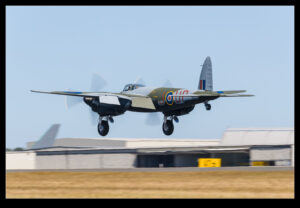
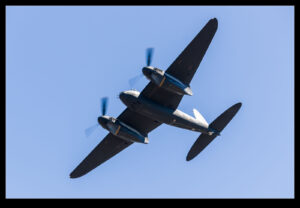
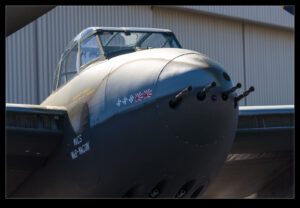
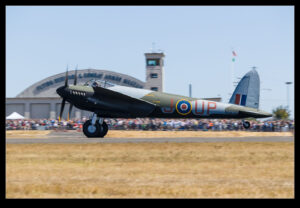
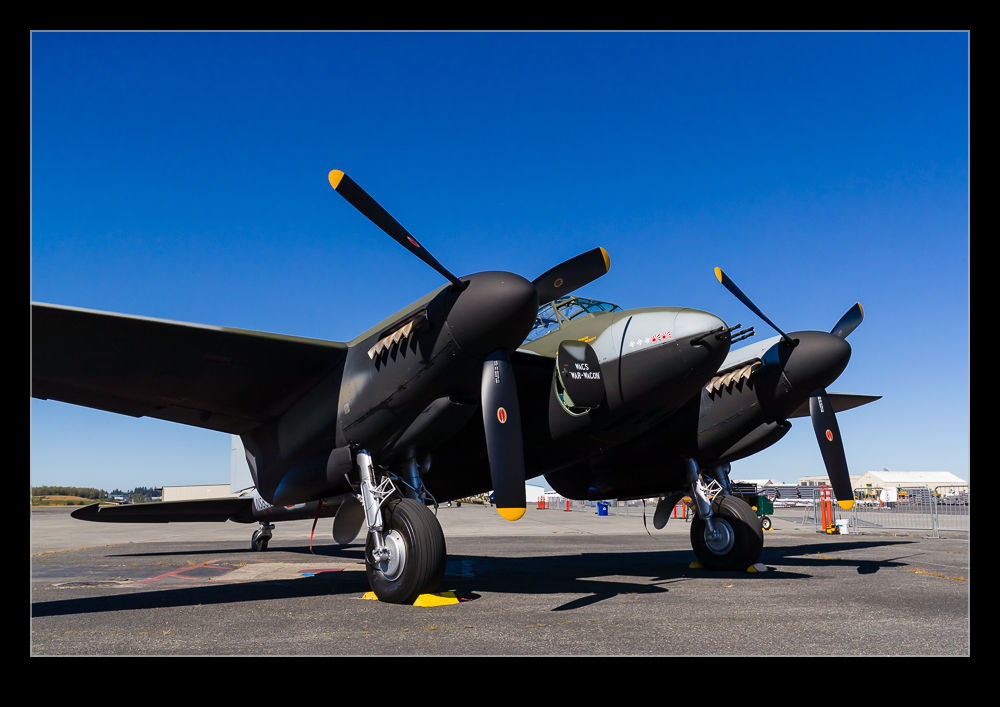
 I last saw a Mosquito in flight in the early 1990s when the BAe operated example was on the air show circuit prior to its loss at Barton. I had assumed at that time that I was unlikely to see another one fly. I never saw Kermit Weeks’ example fly and it has been on the ground for a long time. I hadn’t counted on the recent interest from collectors in getting rare aircraft rebuilt. The Mosquito has been a popular project and there are a couple now flying in the US and, I think, another one in Canada. It is great to see people with the available funds getting these aircraft back in the skies (even if these are pretty close to totally new builds).
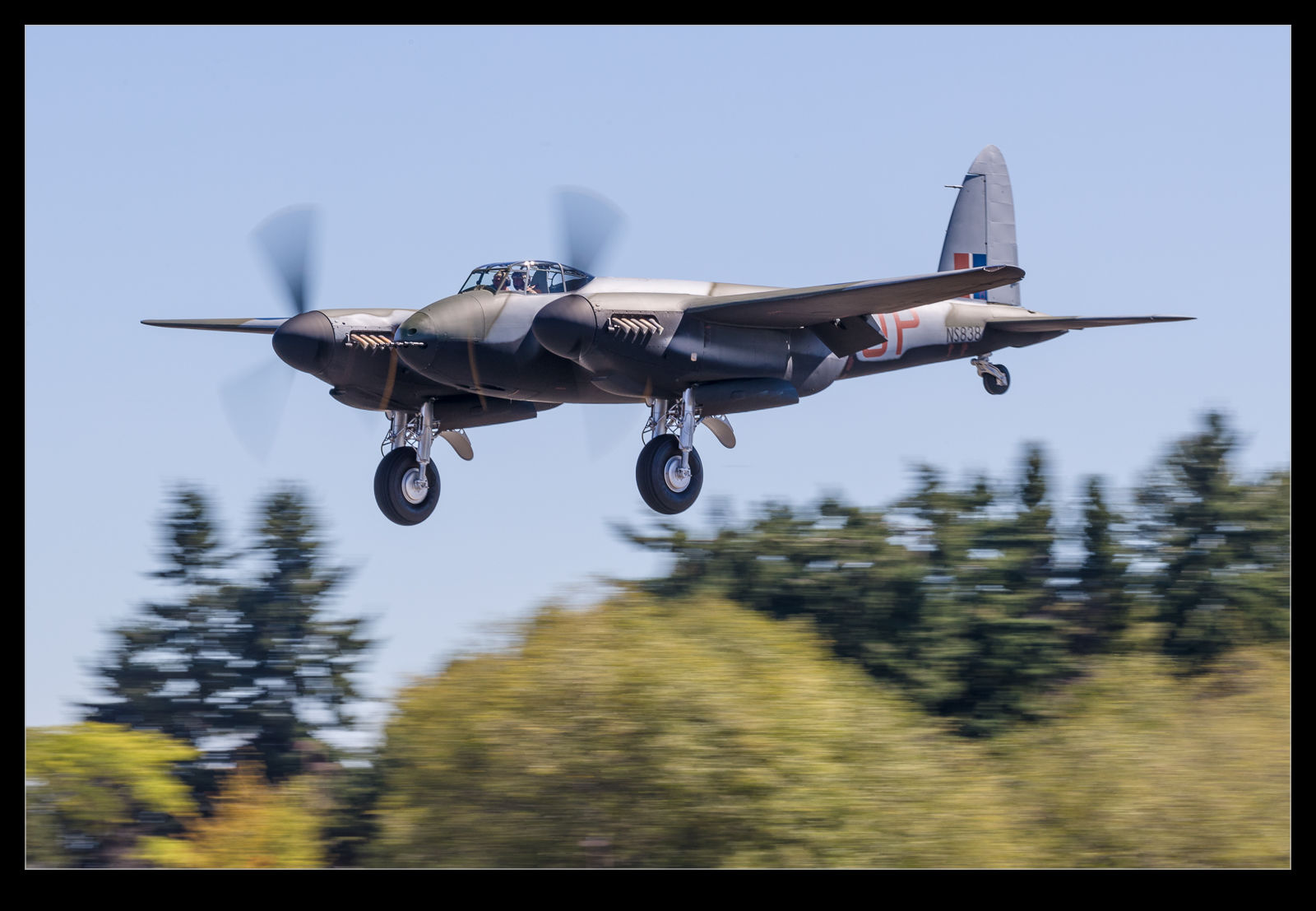 One of the Mossies is part of Paul Allen’s collection and the Flying Heritage and Combat Armor Museum (FHCAM). It had flown a few times since we moved to the area but I had not seen it fly until they held their European Theater Day. I was determined to see it this time. I had forgotten just how large an aircraft the Mossie is. It flew with a bunch of other fighters and included a number of passes with a 109. The Mossie is huge when next to the 109 and it really has presence. It is a bit of a pain to photograph because the color scheme has camouflage upper surfaces and black undersides. With the sun high in the sky, this makes for a very contrasty subject.
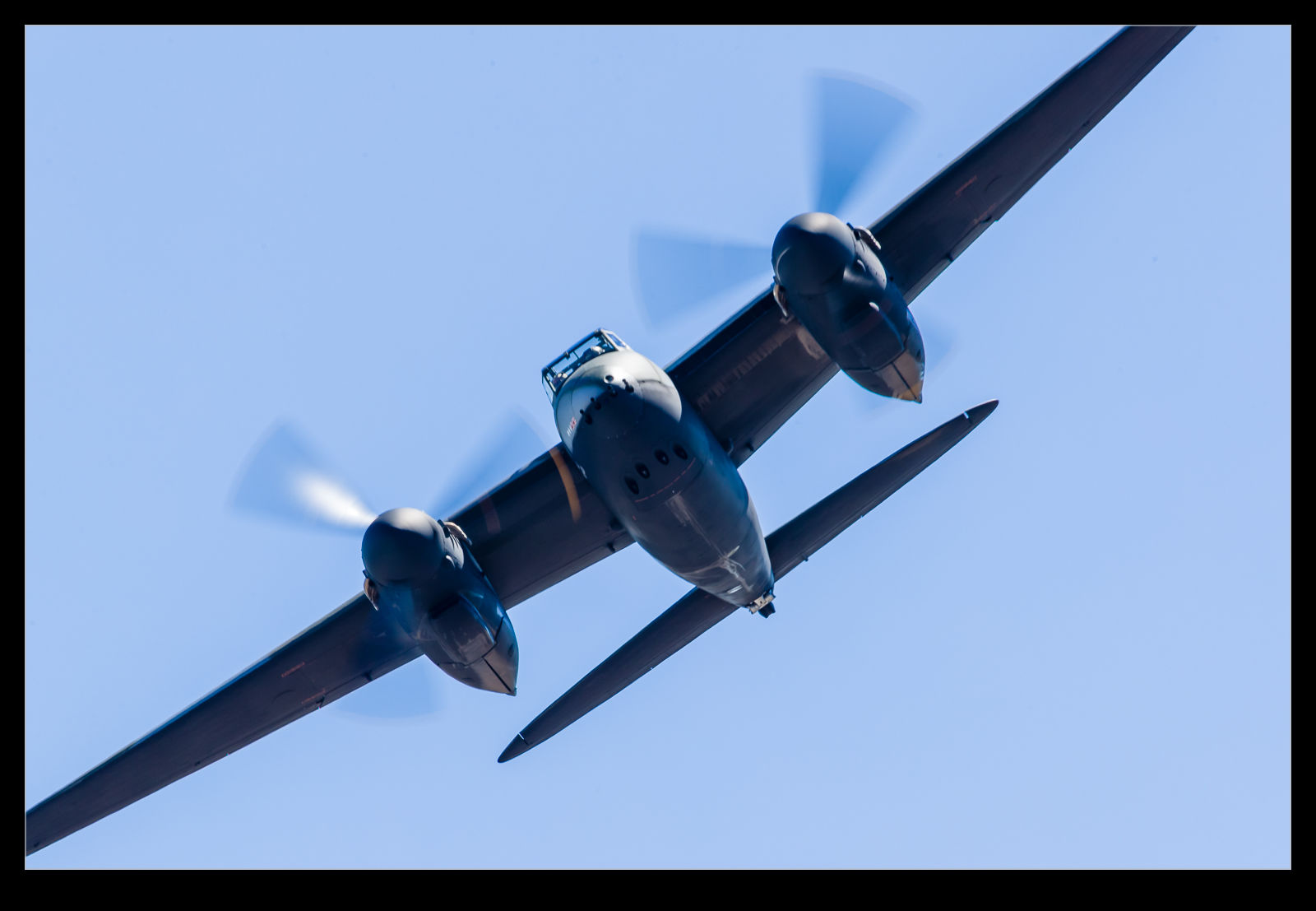 I probably got a little overenthusiastic photographing the plane. It was parked on the ramp before and after the flypasts although not well positioned for the light in either case. That didn’t stop me though. When it was flying it got my maximum attention – a little bit of a compromise since the 109 it was partnered with was also something worthy of some shots. I did get a few of them and they will be in an upcoming post. It is nice to have finally shot a Mossie though after all of this time. I look forward to seeing it again, particularly on its own and in more of a display format.

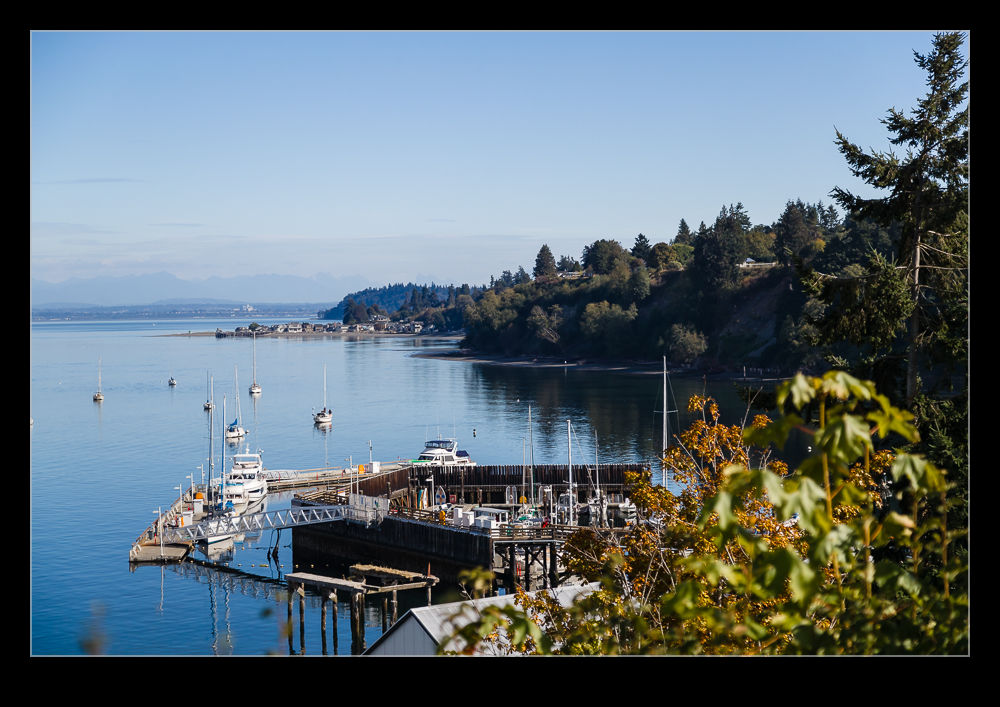
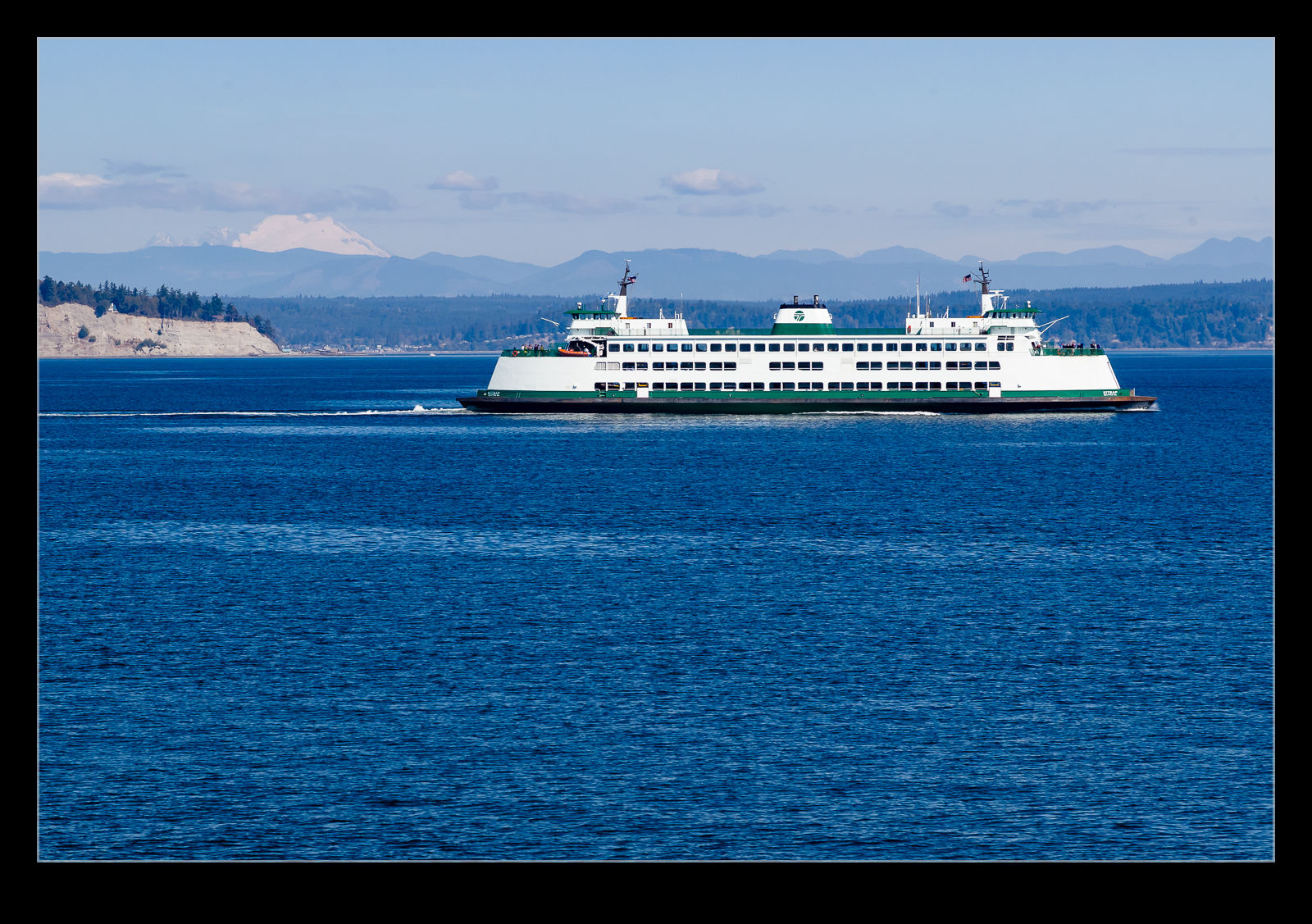
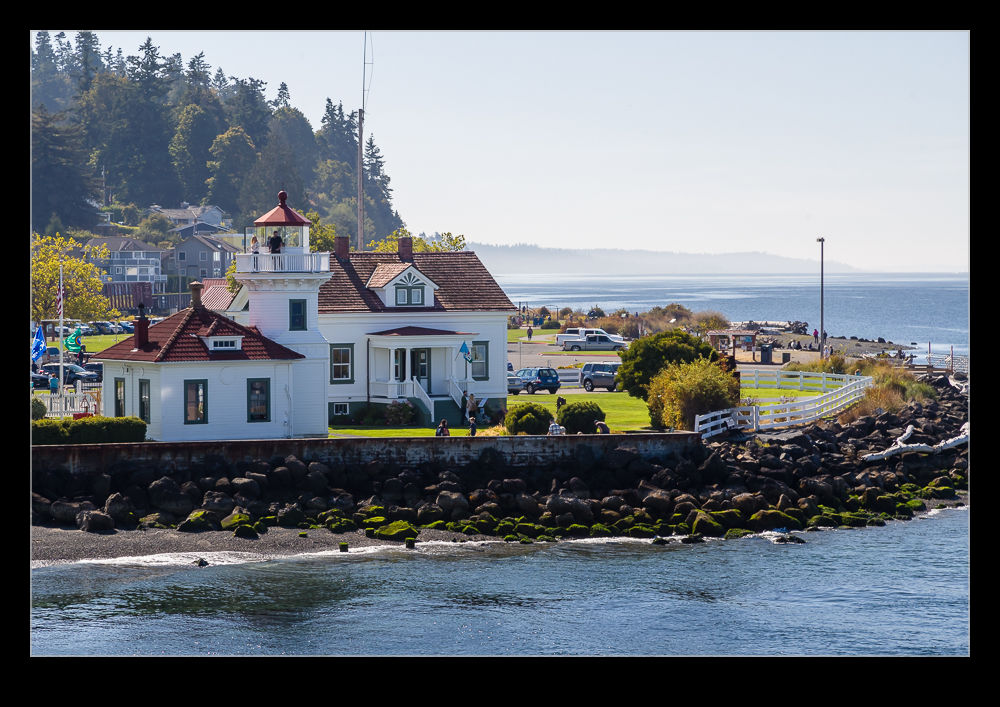
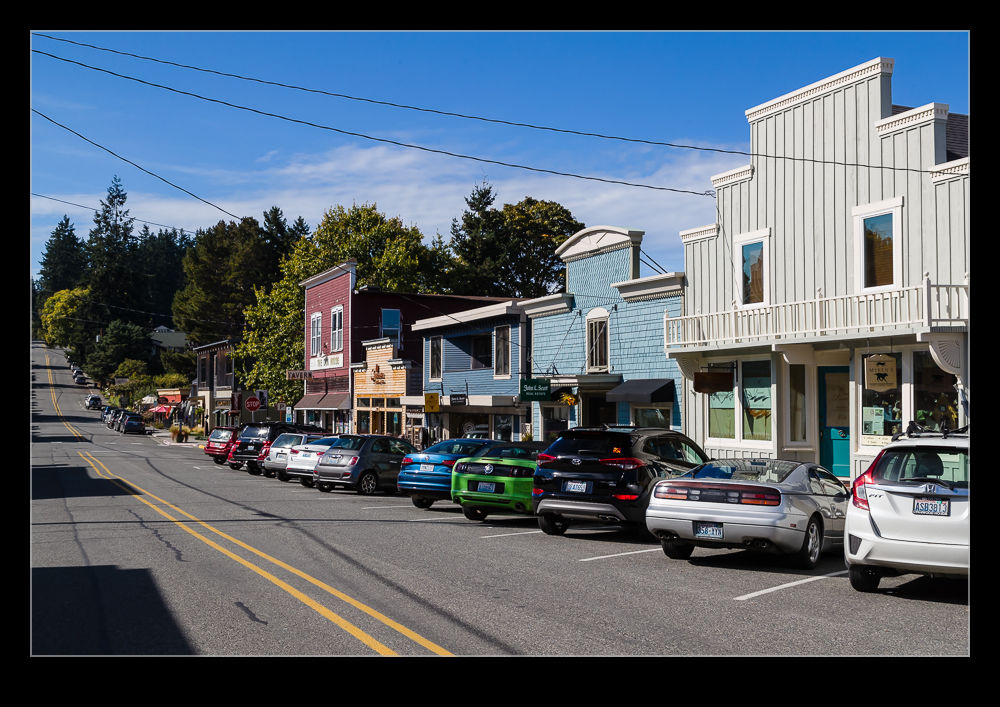 Nancy and I decided to have a day trip to Whidbey Island to do some exploring. We focused our trip on the small town of Langley. Located on the southeast side of the island and not far from the ferry terminal at Clinton, it is an easy place to get to. The town has a very relaxed feel to it. We were there outside peak season which, no doubt, helped but there were still plenty of visitors. Even so, the town had a laid-back feel and did not seem too busy.
 We wandered around the shops, had a spot of lunch overlooking the water and checked out some of the older buildings and their history. We also saw some local entertainment but I shall save details of that for another time. On a sunny fall day, you couldn’t have asked for a nicer place to hang out and watch the world go by. When we had looked around the streets, there was still the shore to explore so a little stroll along the water’s edge wrapped up a great little visit.