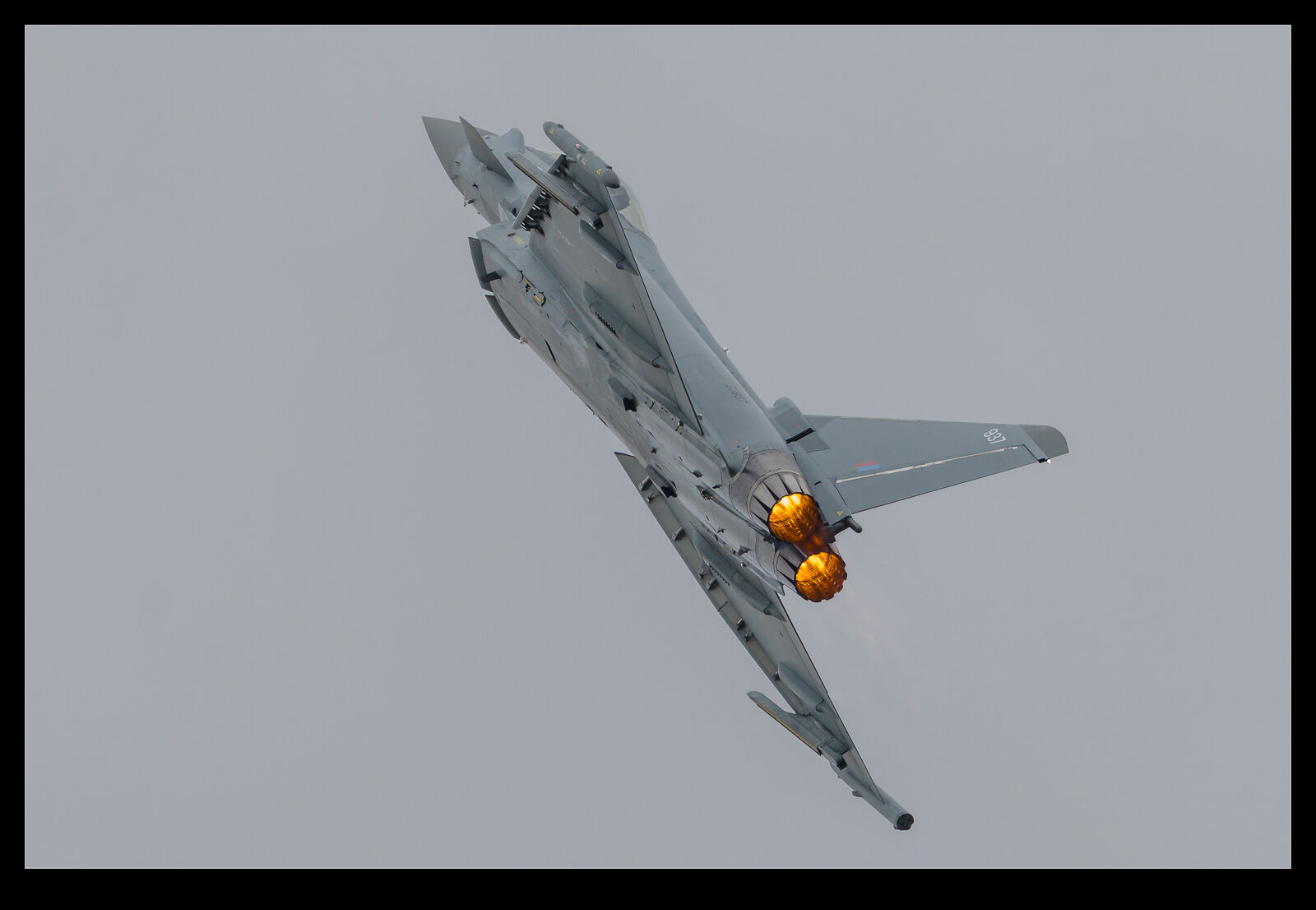
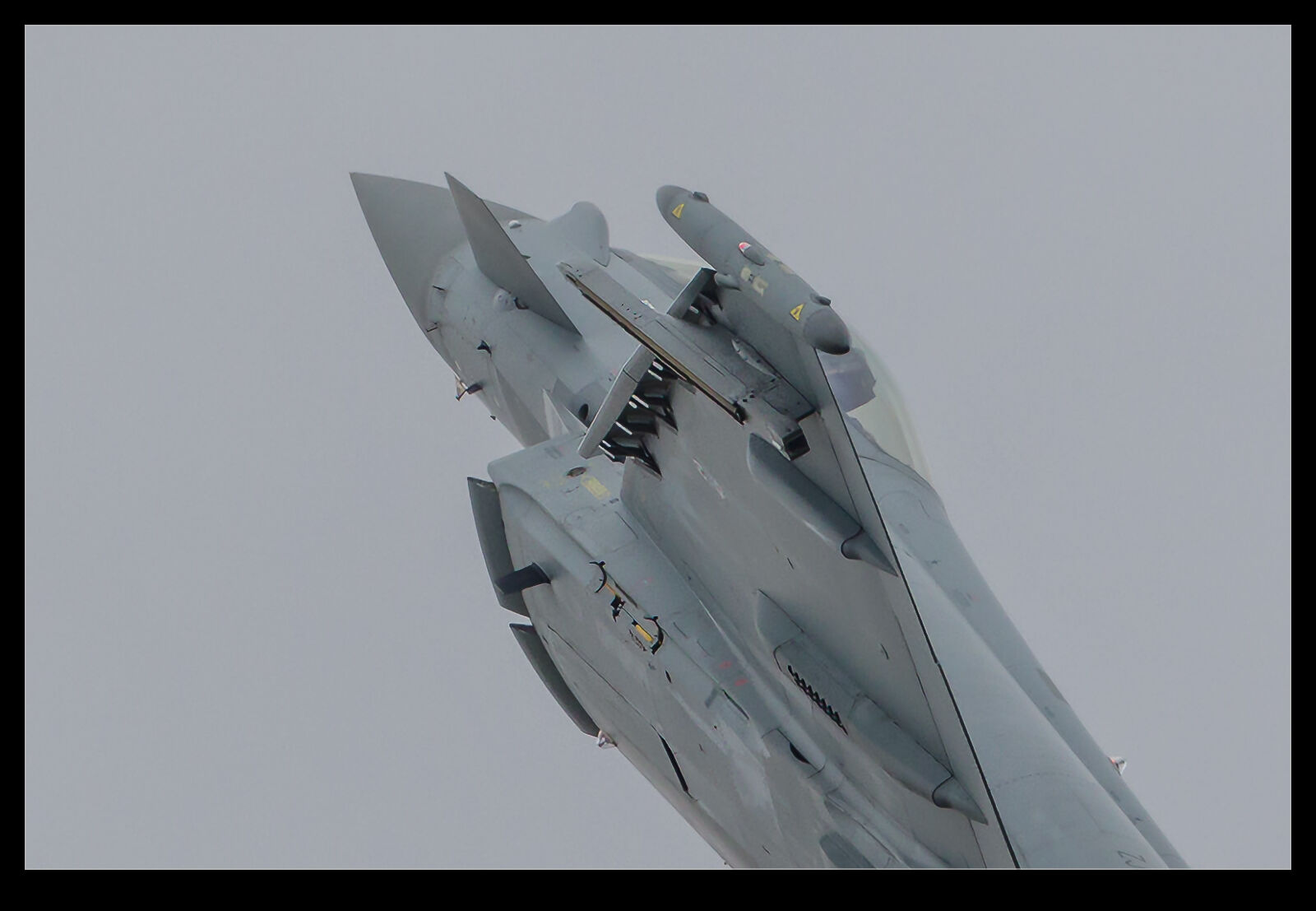
 Working through some older shots for another project, I ended up looking at some shots of an RAF Typhoon displaying. As I was zoomed in on some of the shots, it was interesting to see the air data vanes on the underside of the front fuselage as the plane maneuvered. There are several vanes around the underside of the front fuselage and the differences between them can tell yaw and pitch angles. In one shot when the jet was climbing straight up, the vanes are all pointing in similar directions. Shortly before this, as the jet was pulling hard, the angle of attack was higher and the flow up around the front fuselage results in some significant differences in vane angle.
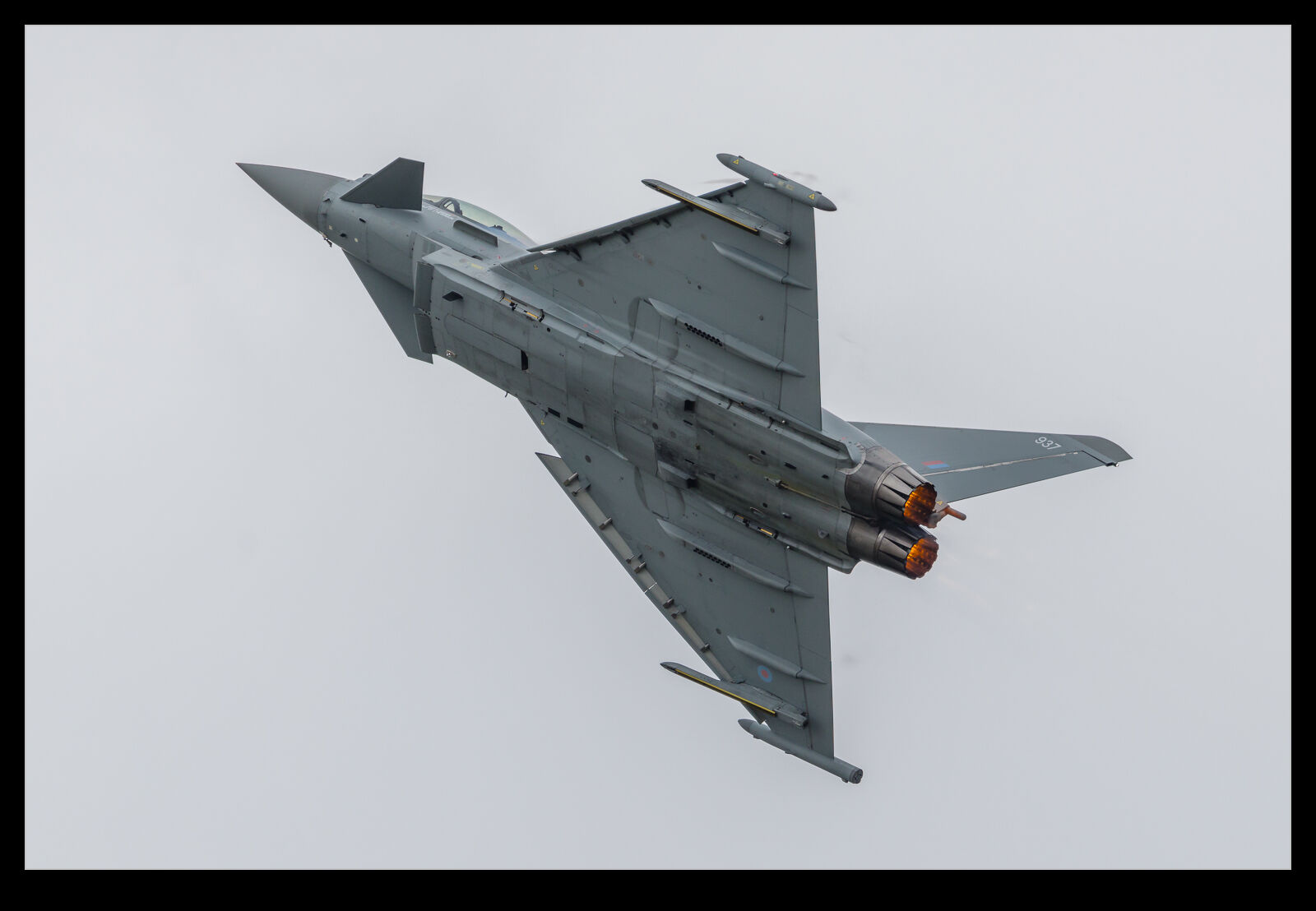
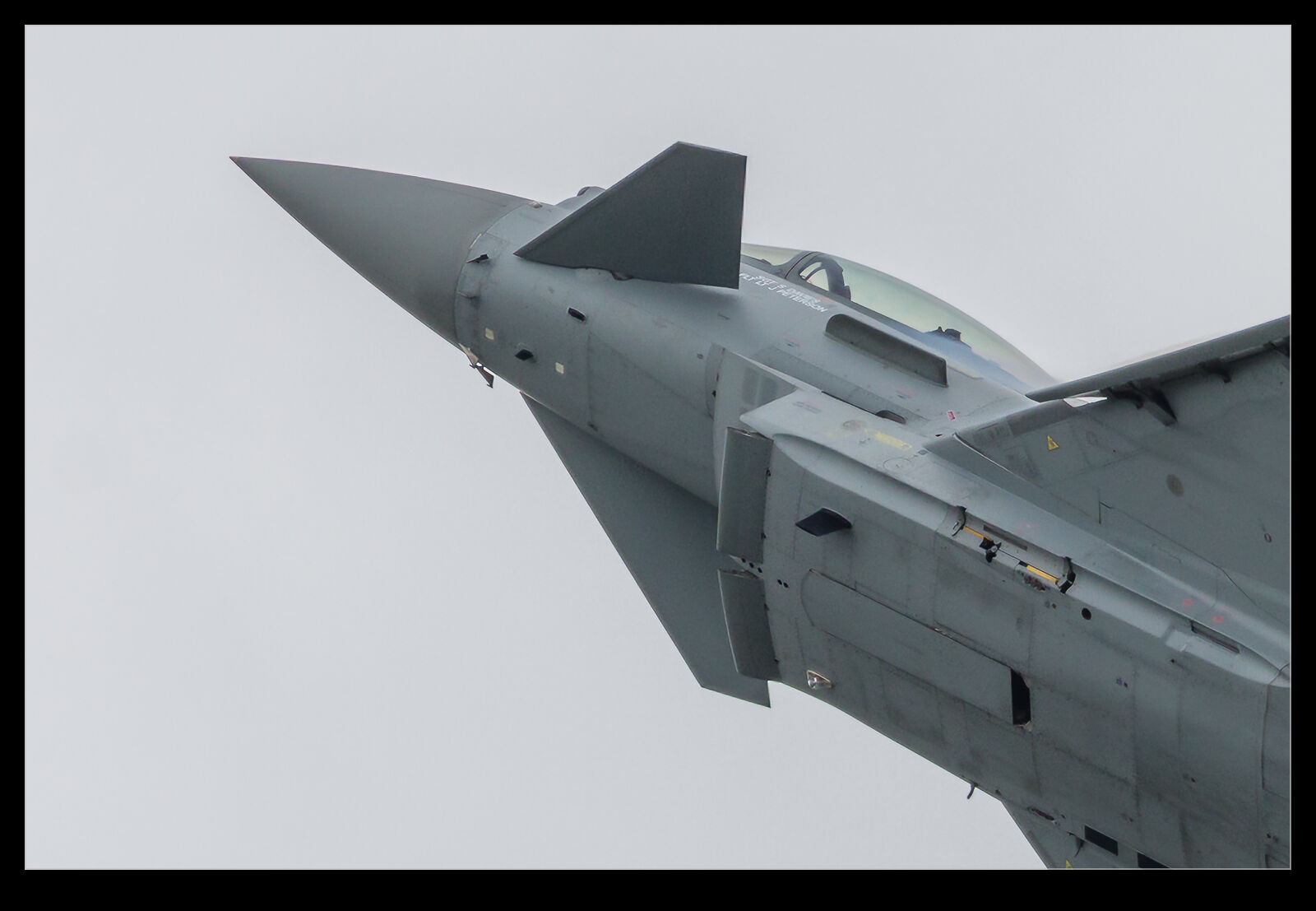 This is the sort of thing that is very important when designing and clearing a flight control system. We had a front fuselage wind tunnel model for the Typhoon during the development program. This was used for intake design but also for air data system modeling. The way in which the various vanes move is vital to understanding the control law requirements. It is also important when considering failure modes. If one vane should fail, how much it impacts the flight control behavior and how much the system detect the failure. Will the aircraft be vulnerable to control loss in the interim? The Tornado did not have as complex a flight control system, but it did have augmentation of the controls and, as it rolled, you would get quite different readings from the angle of attack probes on each side of the fuselage. How much of a difference was normal versus what was a failure was an interesting analysis problem which I enjoyed working on. My days on Typhoon were relatively limited and shortly before first flight so I never got involved with the results of the testing program, but I do enjoy looking at the resulting aircraft whenever I get the chance.





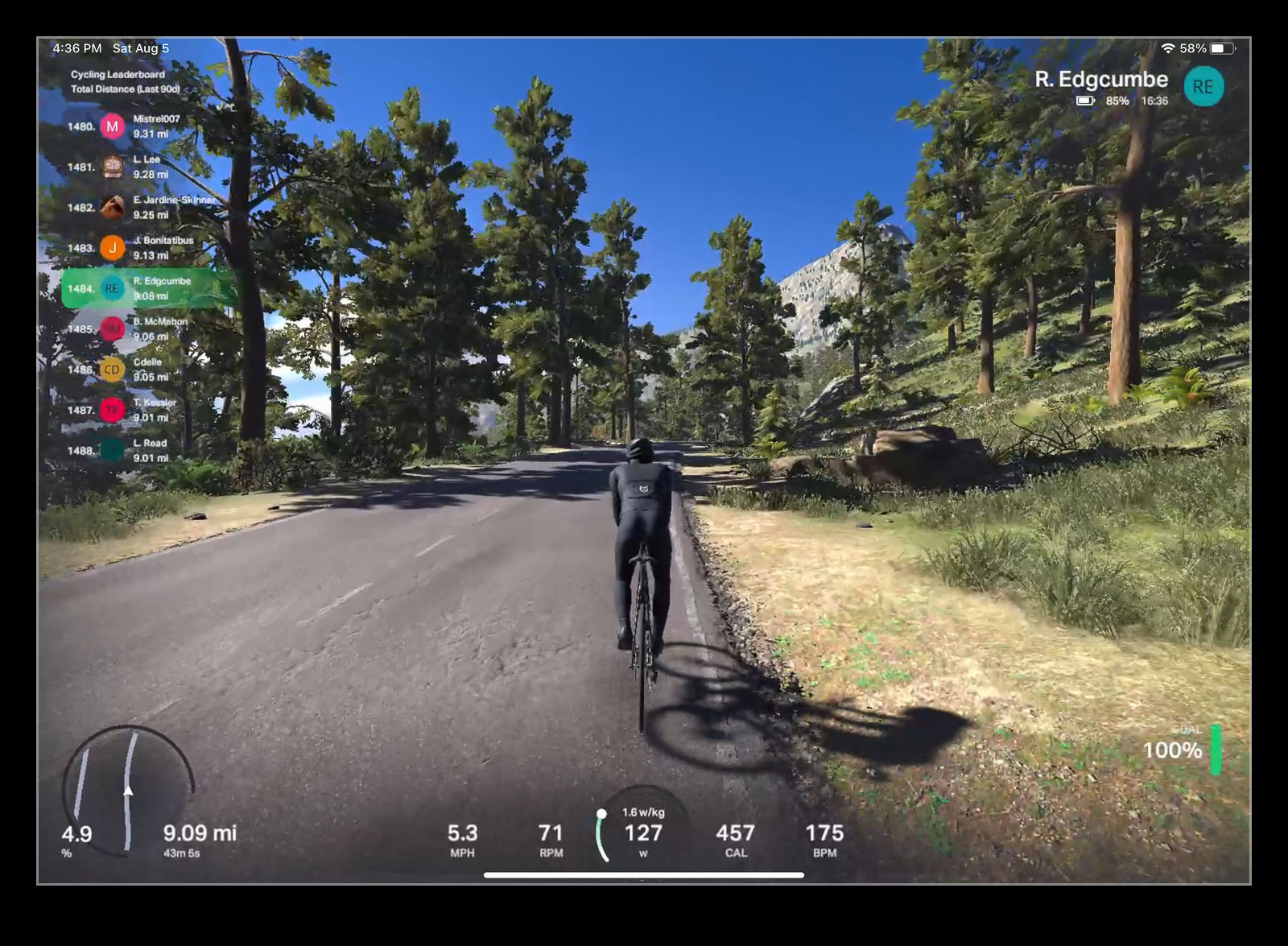
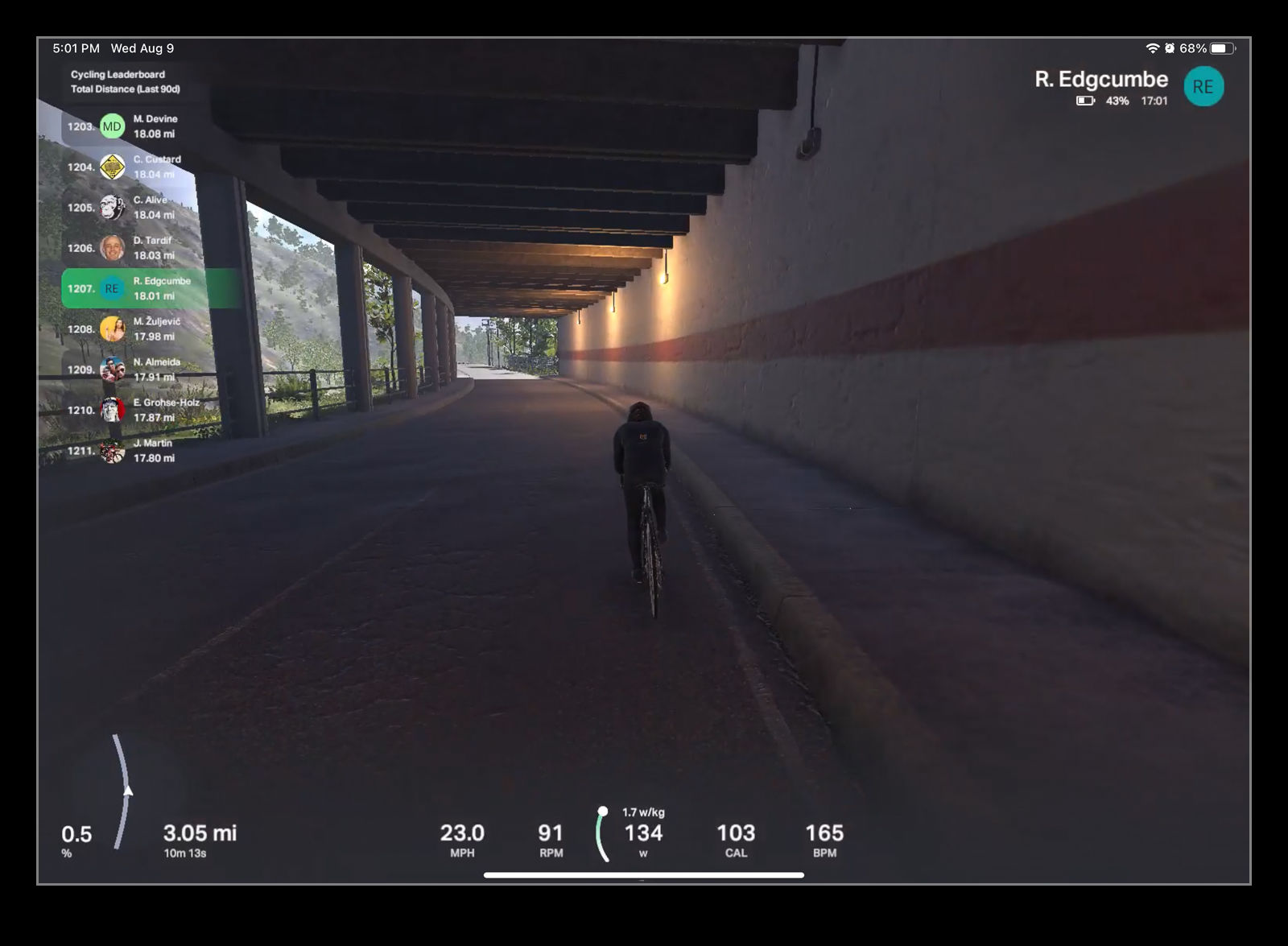
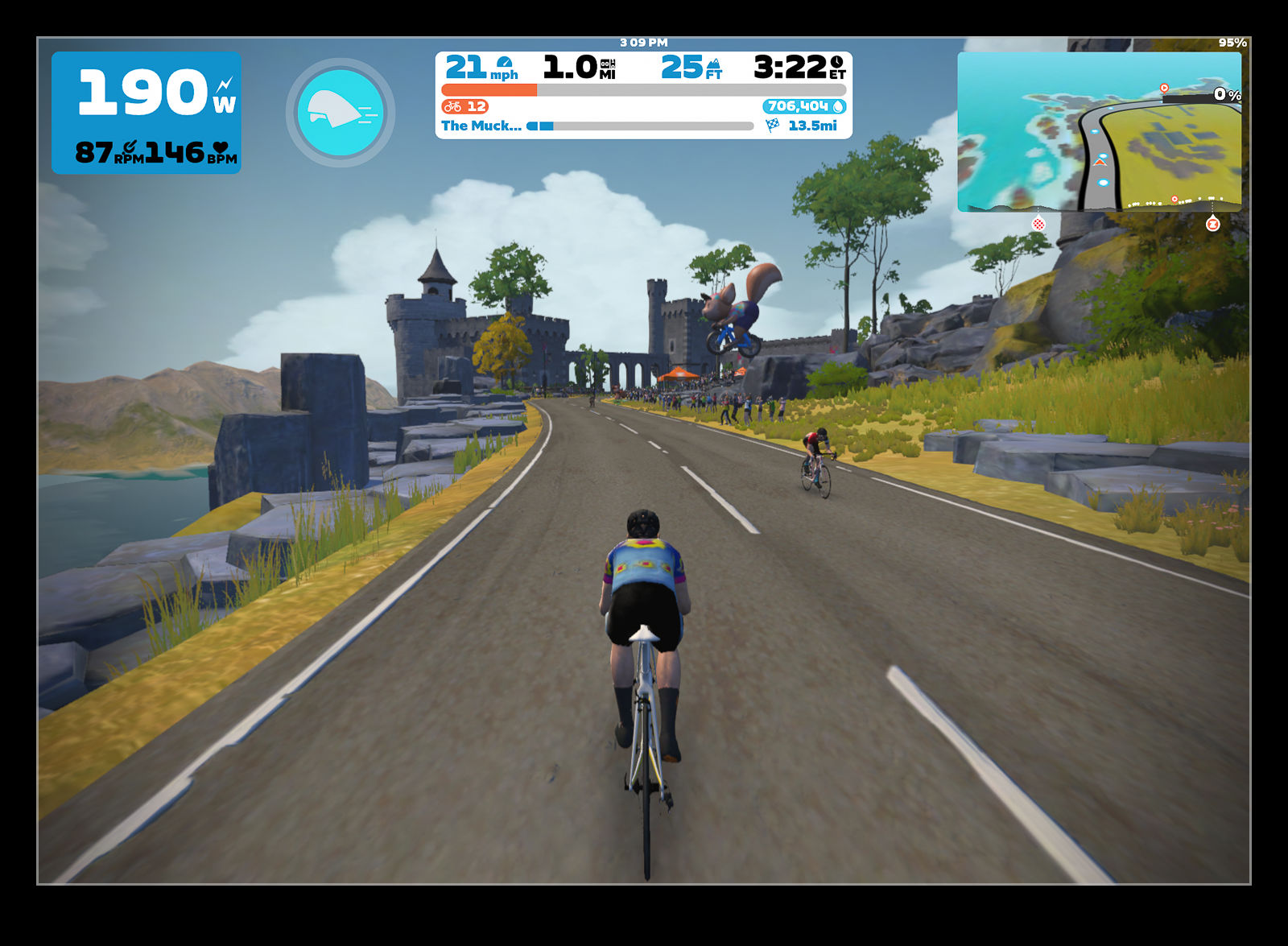
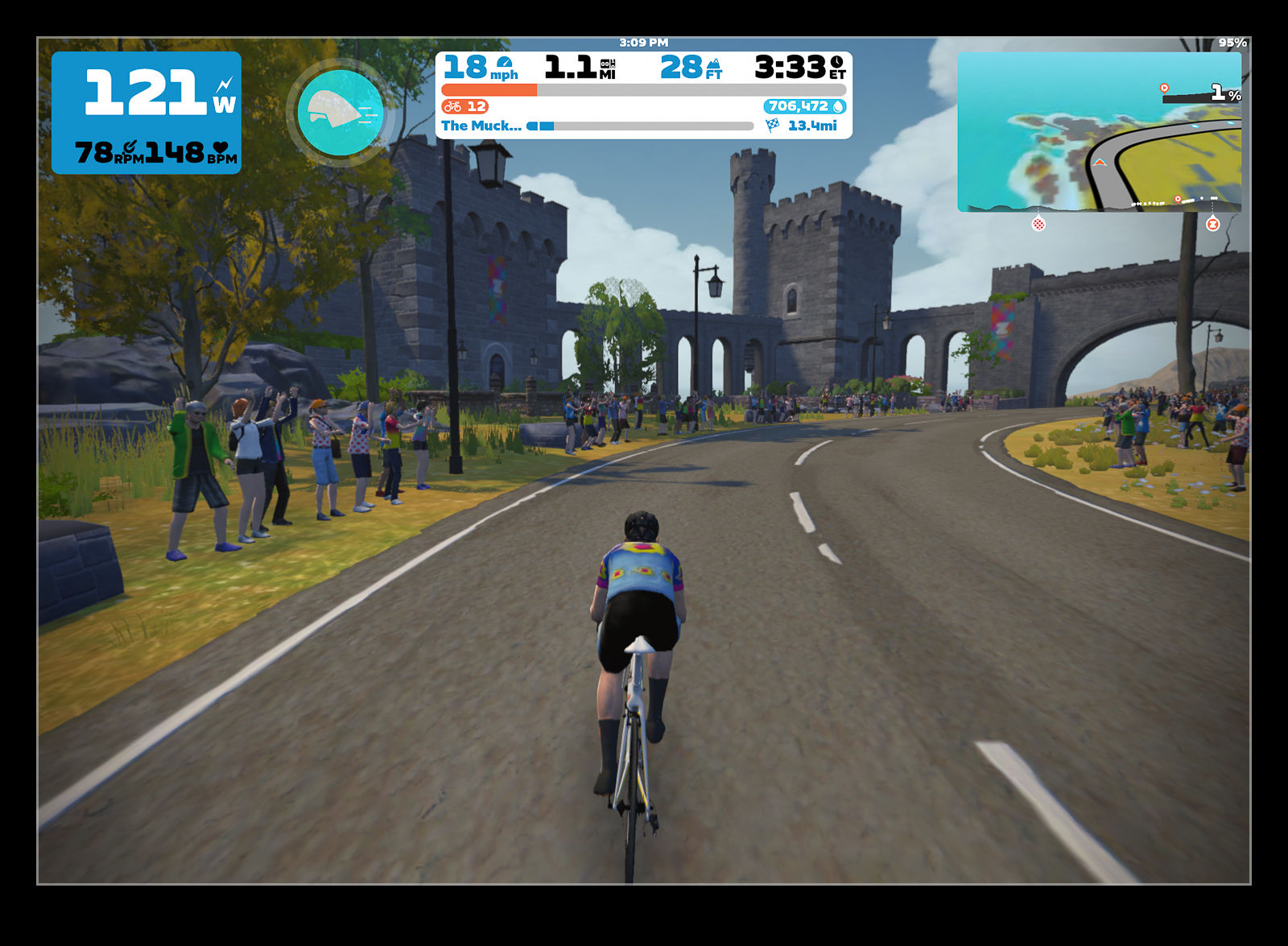 One of the things I did like the look of was the graphics output. Zwift has a slightly cartoonish styling which doesn’t bother me at all – indeed, I quite like the odd things that they throw in like a bear falling out of a tree or a stag by the road – but having more realistic scenery was of interest. Rolla looked like it would be more like riding in real locations. As a new app, I knew it wouldn’t have extensive scenery databases yet, but they could be useful to try out.