Tag Archives: jet

NetJets Gets the Good Conditions

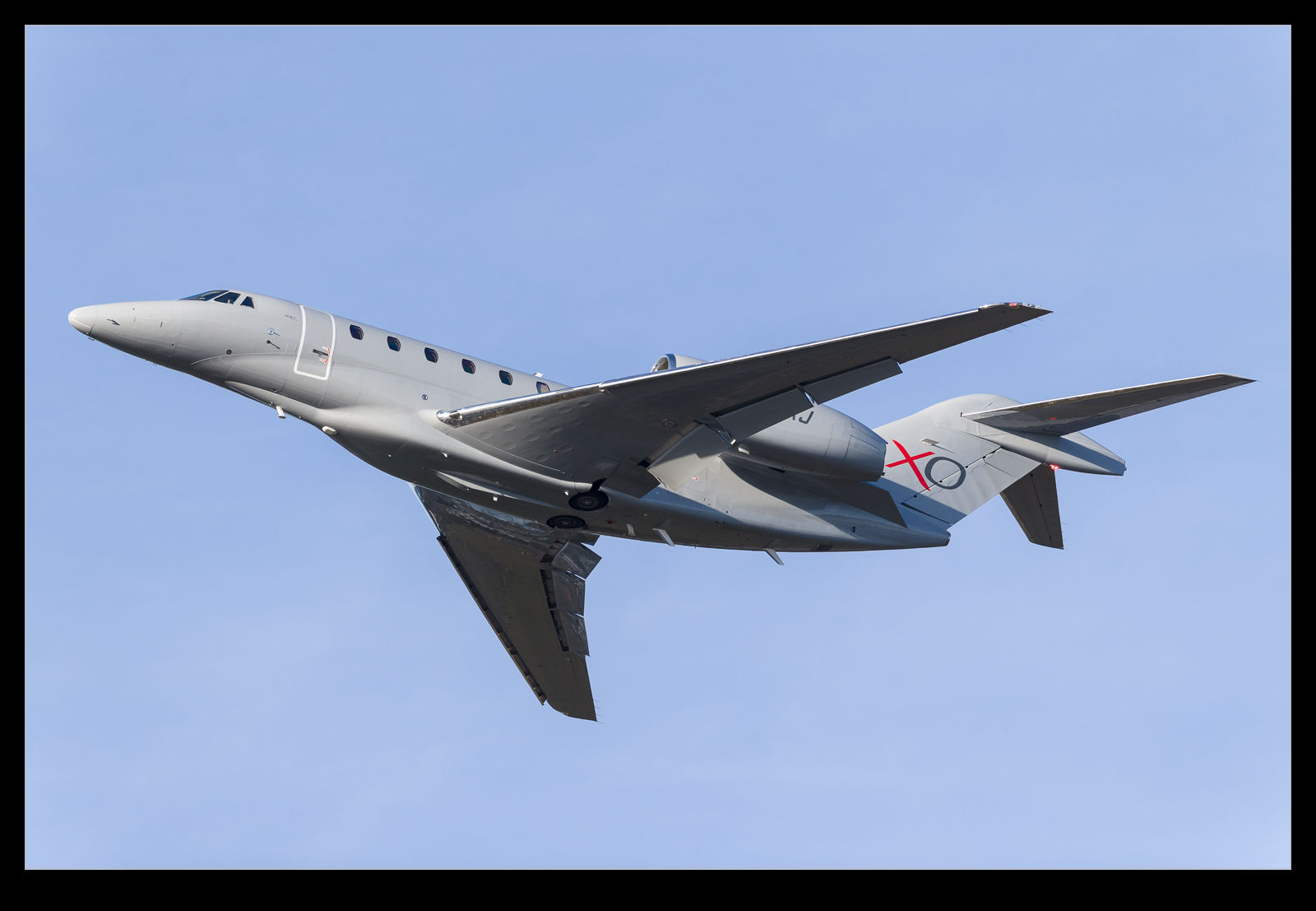
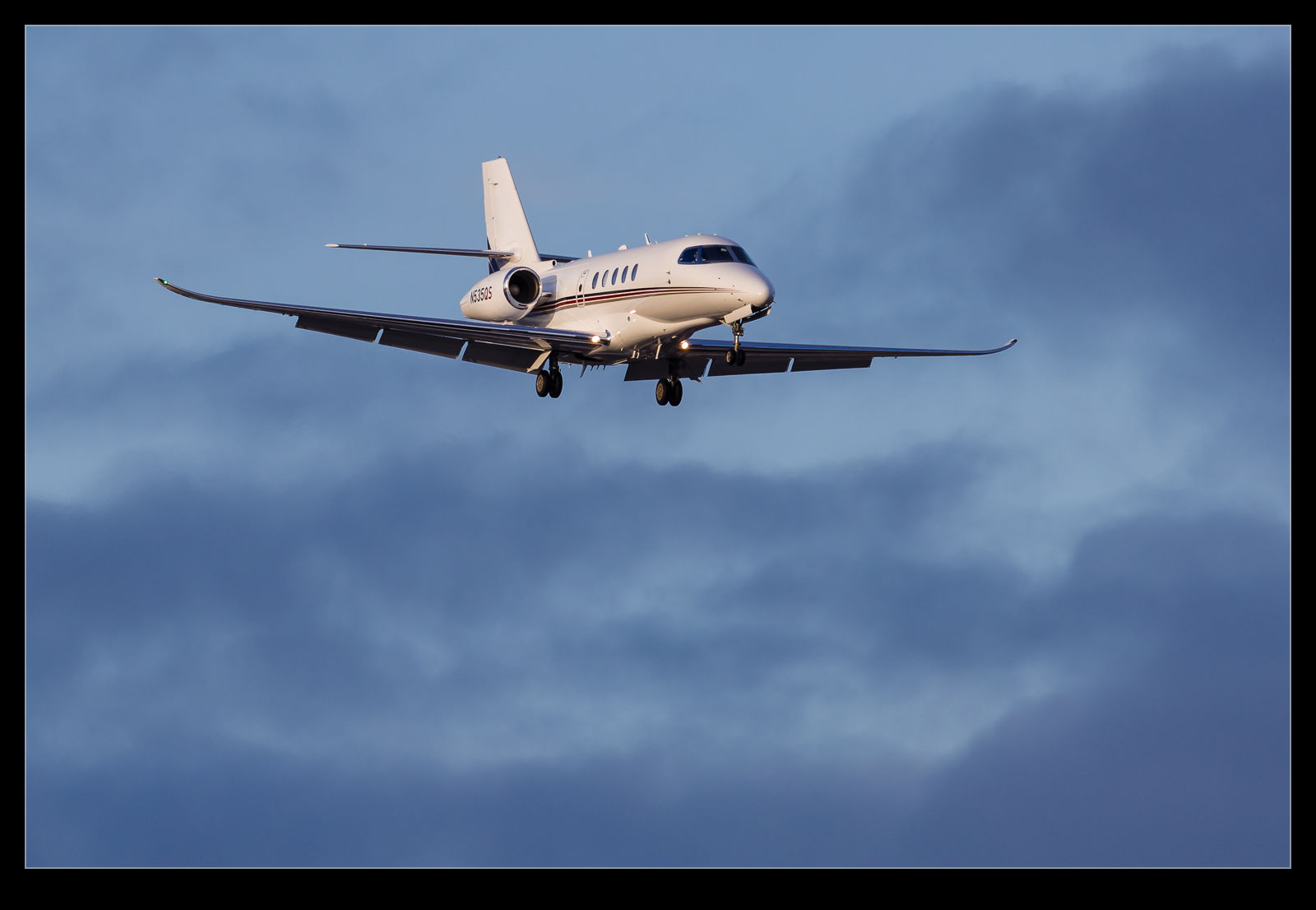
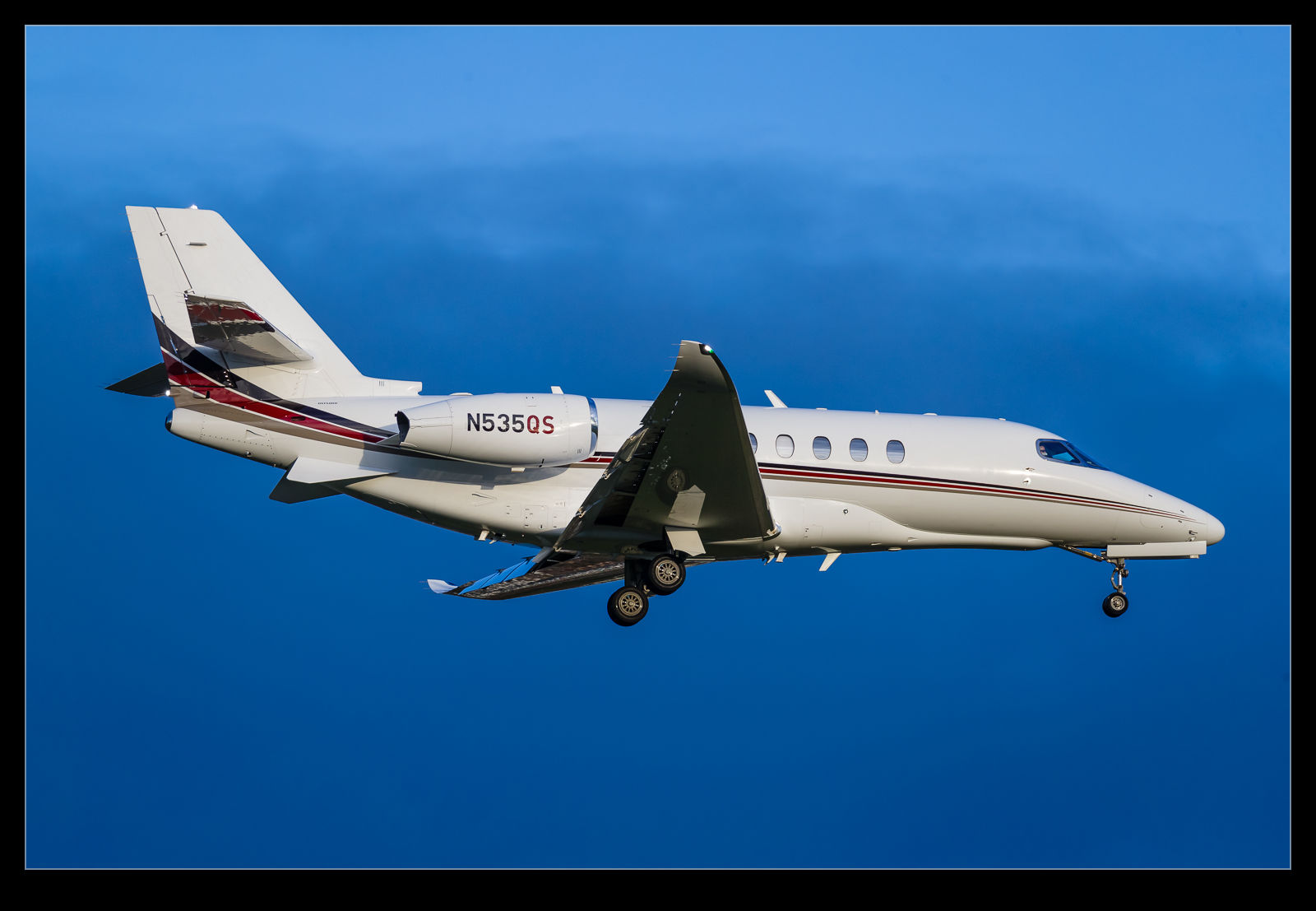
In this previous post, I mentioned the good light I was hoping would be available for a Dornier 328Jet.  While that didn’t work out, I did get a NetJets Latitude arriving at that time.  NetJets colors are certainly not very exciting so they are a bland subject normally (and a Latitude is hardly the most exciting looking bizjet either.  However, with the right lighting, even this can look pretty dramatic!

First JASDF KC-46 Pegasus

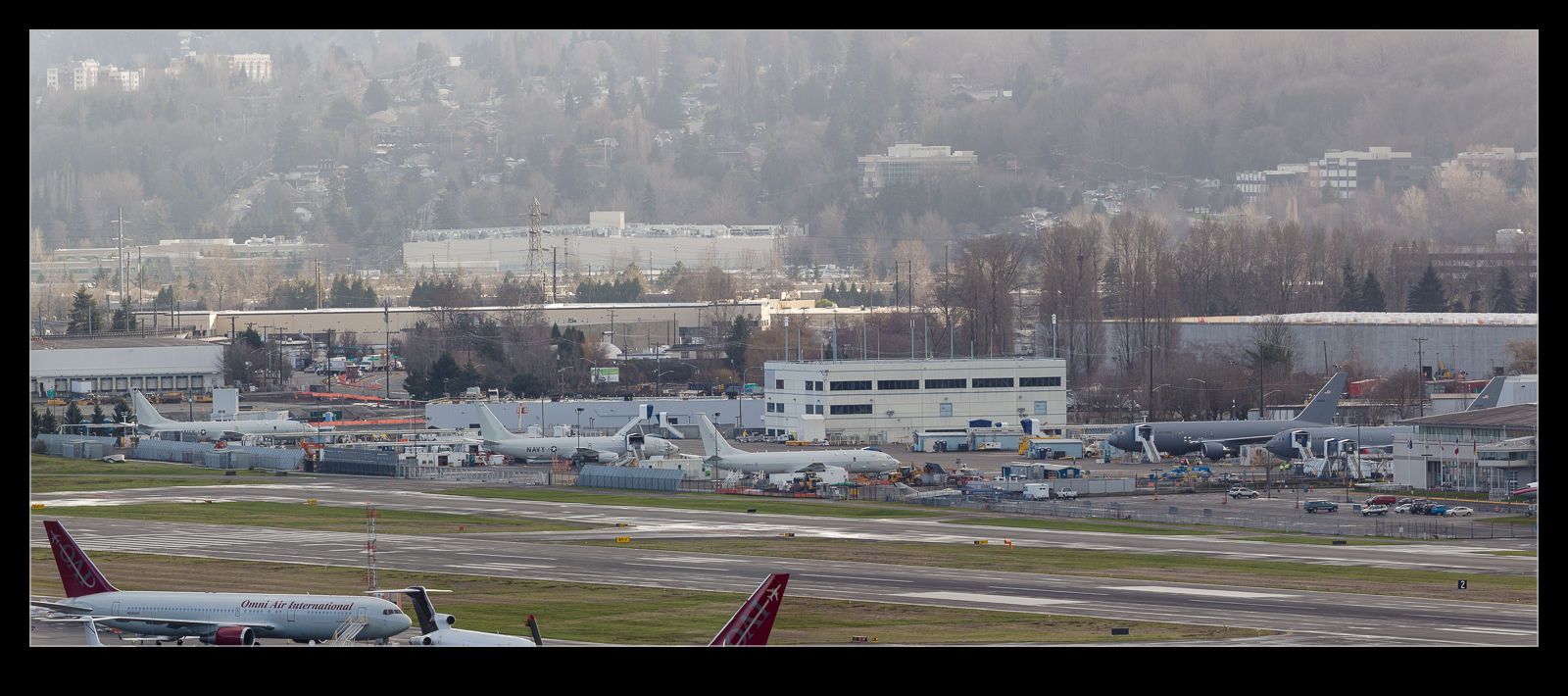
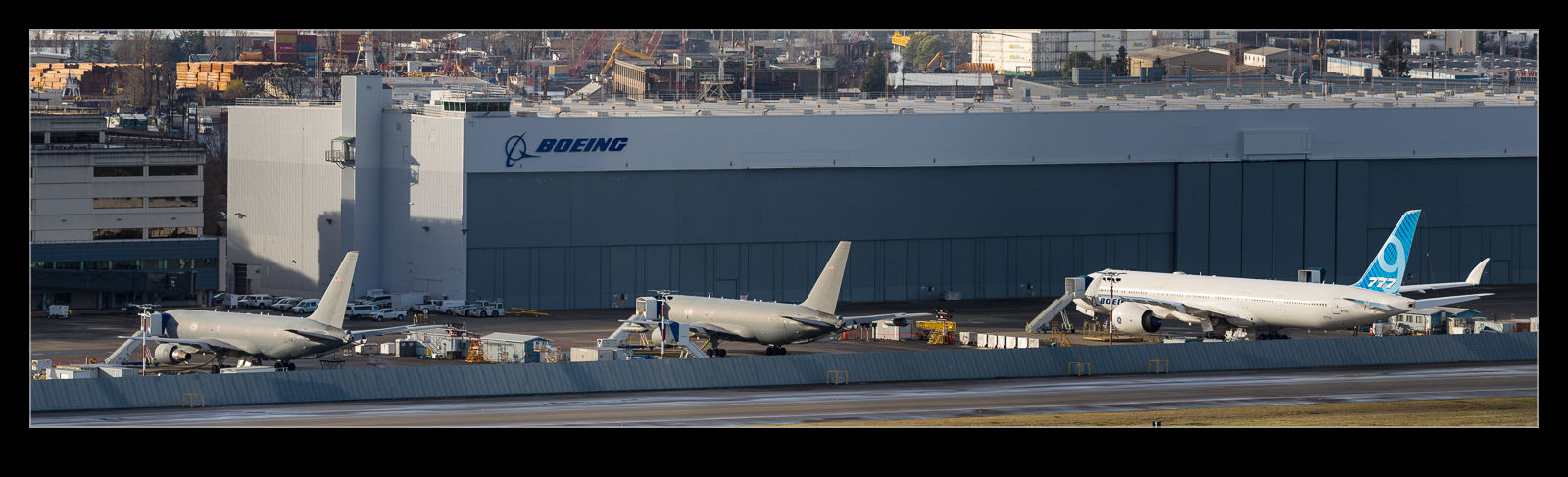
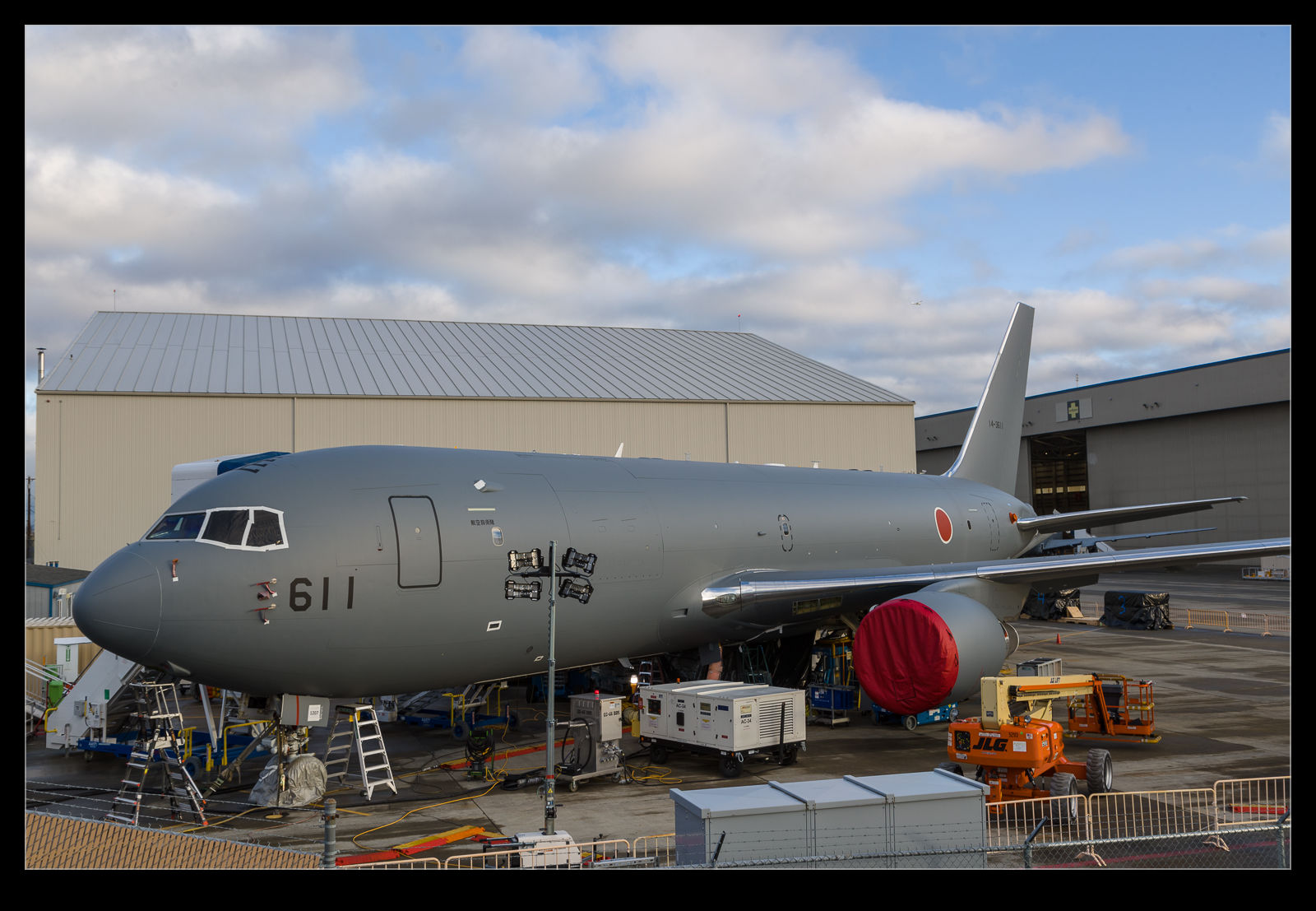
The Japanese (JASDF) were a customer for the tanker version of the Boeing 767 when Boeing was offering it in the early days.  Japan and Italy were the only customers that I am aware of for that aircraft.  Therefore, it was not a massive surprise that Japan ordered the KC-46 when Boeing developed it for the USAF.  The first aircraft is now being completed and has been parked on the ramp up at Everett recently.  Here it is undergoing some testing.  Hopefully we shall get to see it flying soon.

F-15E Strike Eagle

A recent anniversary of the first flight of the F-15E Strike Eagle was commemorated on a Facebook group and it got me looking through a variety of old shots I have of the jet.  Having found a bunch of them that I liked, I figured I might share a few of them on the blog too.  Here are a few of my favorites from over the years.

The Max 737s Are On the Move

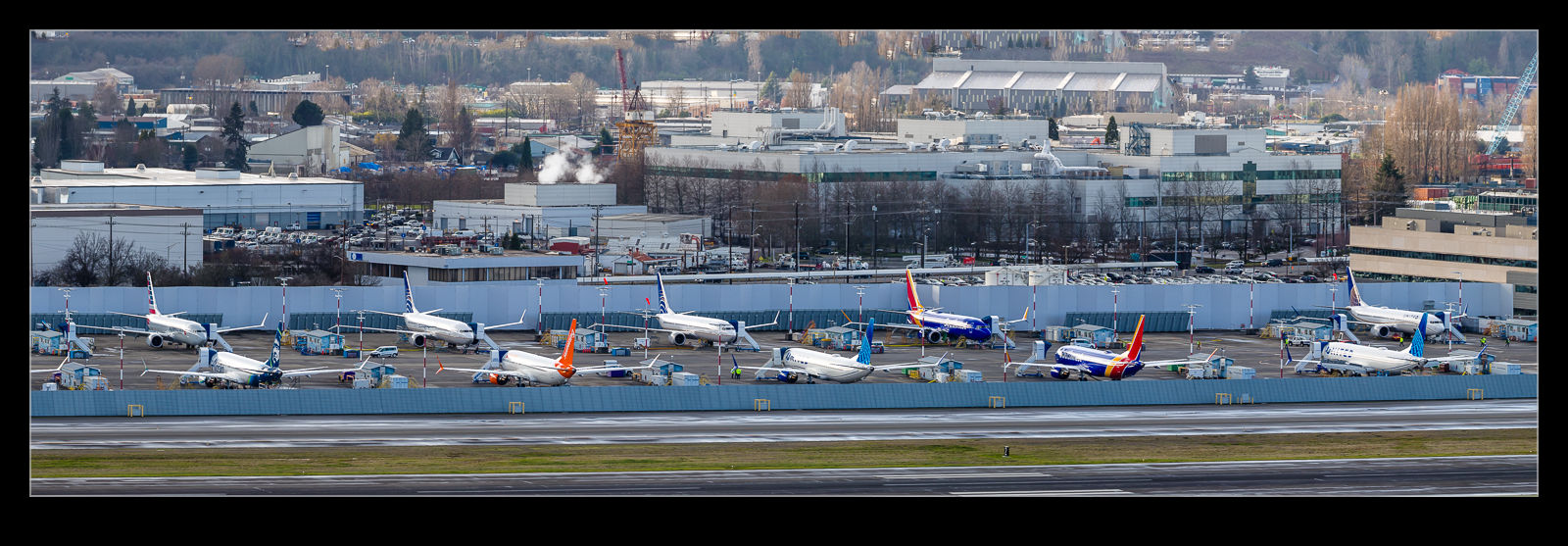
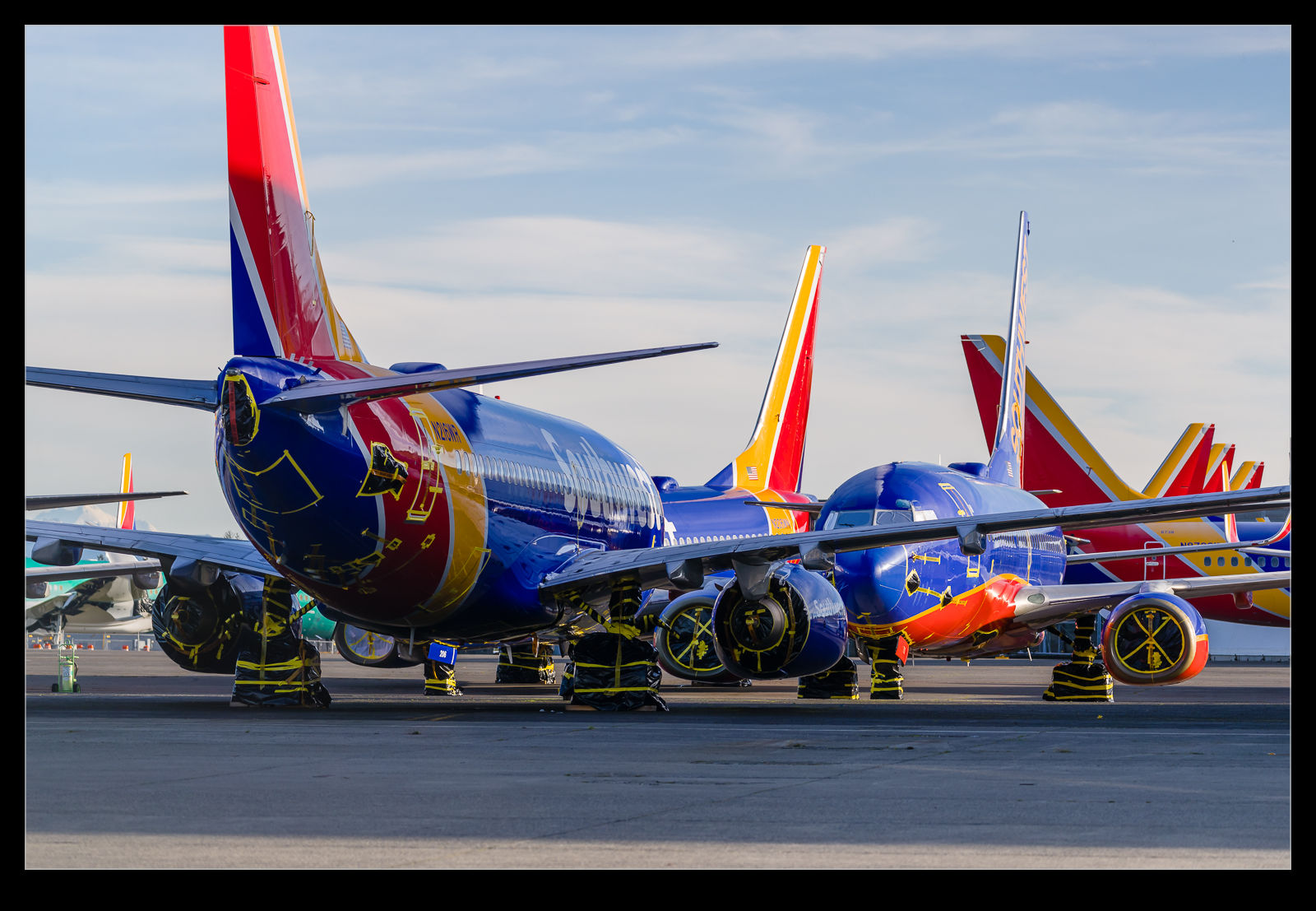
Boeing has been building and testing 737 Max jets throughout the grounding so having them flying is not a great surprise.  However, with the grounding order lifted by the FAA, things are moving into a higher gear.  United took delivery of a jet and American Airlines has indicated it will start service before the end of the year.  Two jets were up on the same day which leads me to think that they have already undergone the mod programs and are being tested prior to delivery to the airline.

Please Give Me Good Light for a 328Jet

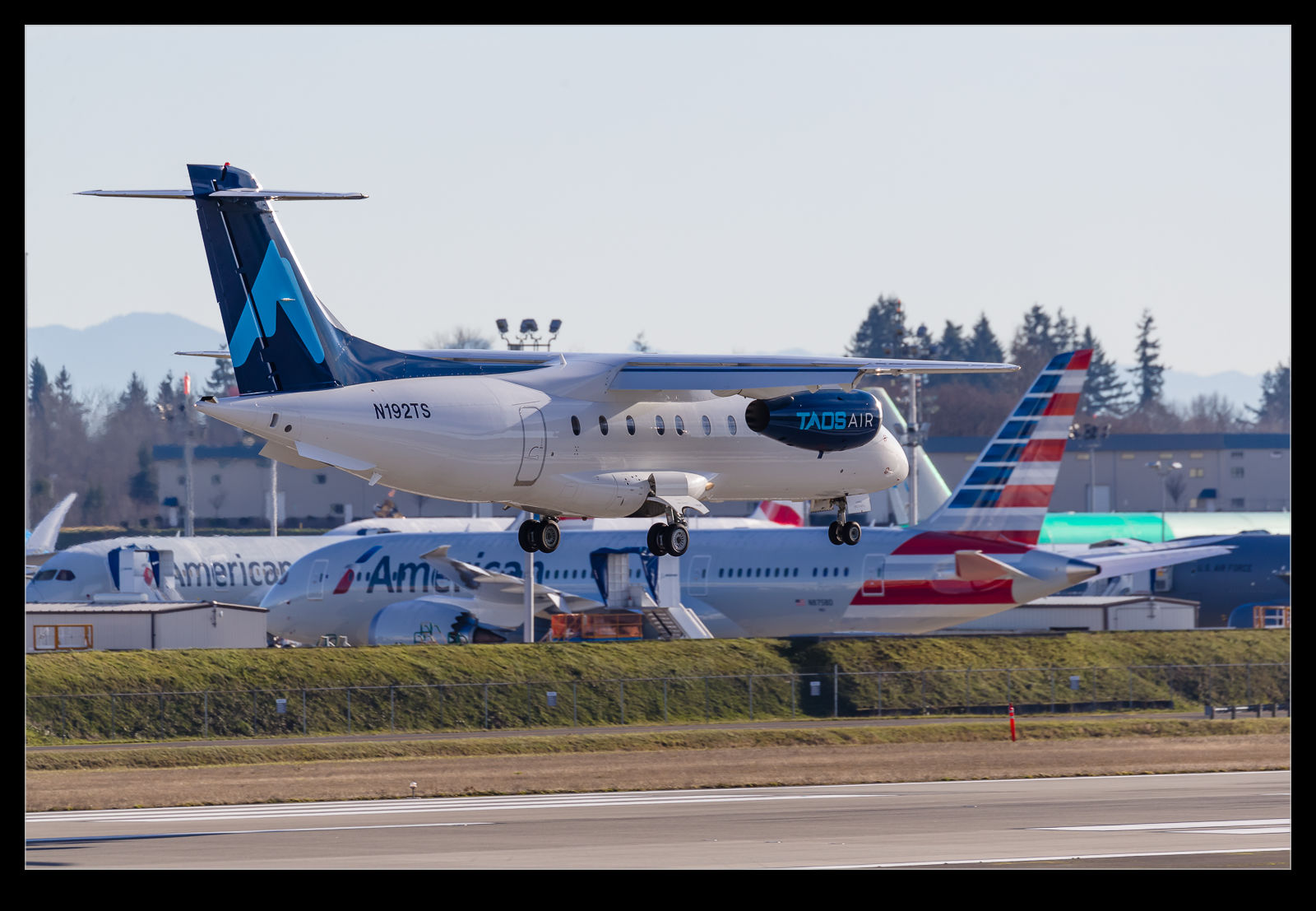
Late in the day in the PNW, you can get lucky with good lighting.  It is not unusual to have a crappy day end with the sun, low on the horizon, cutting under the clouds and providing some briefly great conditions.  With a Dornier 328Jet due in, I was hoping that the conditions might be just what I wanted.  However, the plane was delayed from its planned time.  At the scheduled arrival time, conditions were, in fact, rather good.  I got something arriving then that looked pretty cool and will get its own post.

However, my 328Jet was running late.  I kept my eye on the horizon, hoping the sun would make an appearance but the thick cloud layer hanging on the horizon told me that things were not going to work out.  Sure enough, when the 328Jet showed up, the sky was decidedly dull.  This was all the more annoying given that it had a really nice color scheme.  They aren’t exactly rare but they are not common enough to ignore the chance to get one so this still counts as a plus for me.

It Might Be Raining, But It Is A 727!

Winter in the PNW does not mean reliable conditions for photographing planes.  If the weather is bad, you might decide it isn’t worth going out.  If it is raining and threatening to rain harder, there is a strong possibility you would skip a shot opportunity.  However, 727s are getting pretty rare these days so that seems worthy of a trip out.

The weather was unpleasant when it made its approach but not as bad as it got a short while later.  I went with my normal approach for shooting in really bad conditions by pushing the overexposure pretty high.  I include a couple of edits.  For the main image, I actually blended two different process versions in Photoshop to get the combination that most reflects how the shot looked through the view finder.  The other edit is a straightforward Lightroom edit where the angle and the light suited it.

Stored 777X Numbers Grow

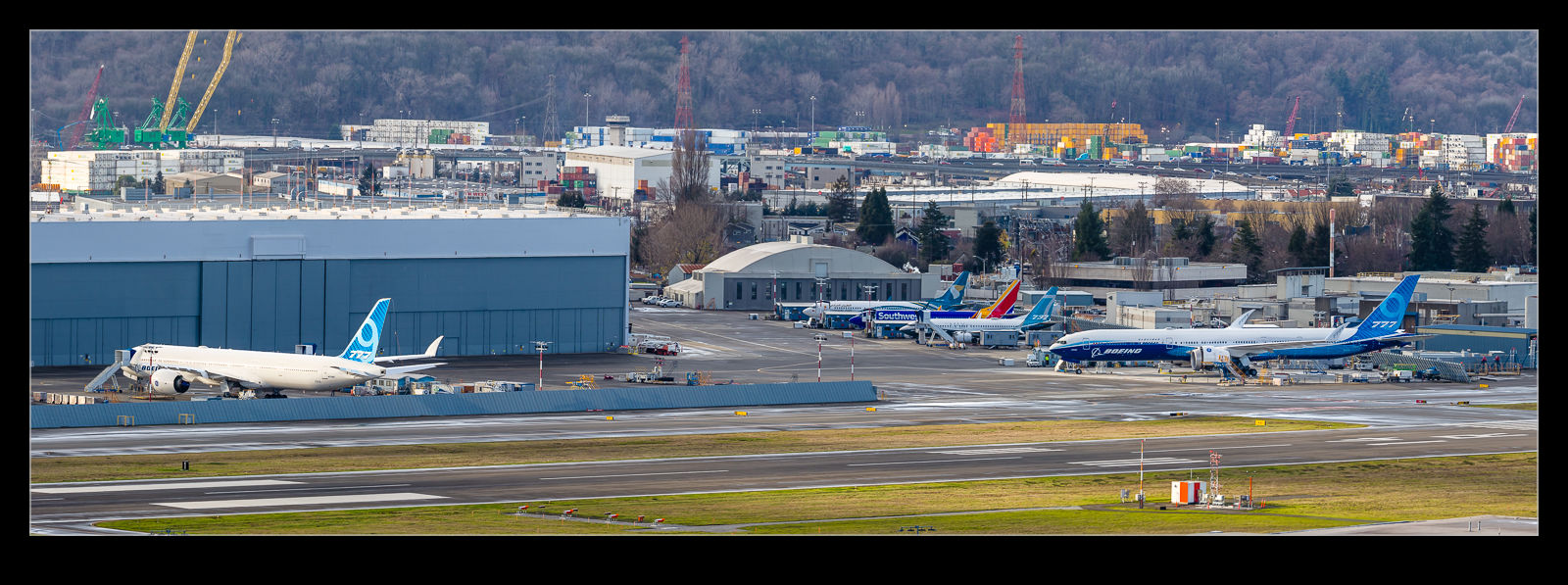
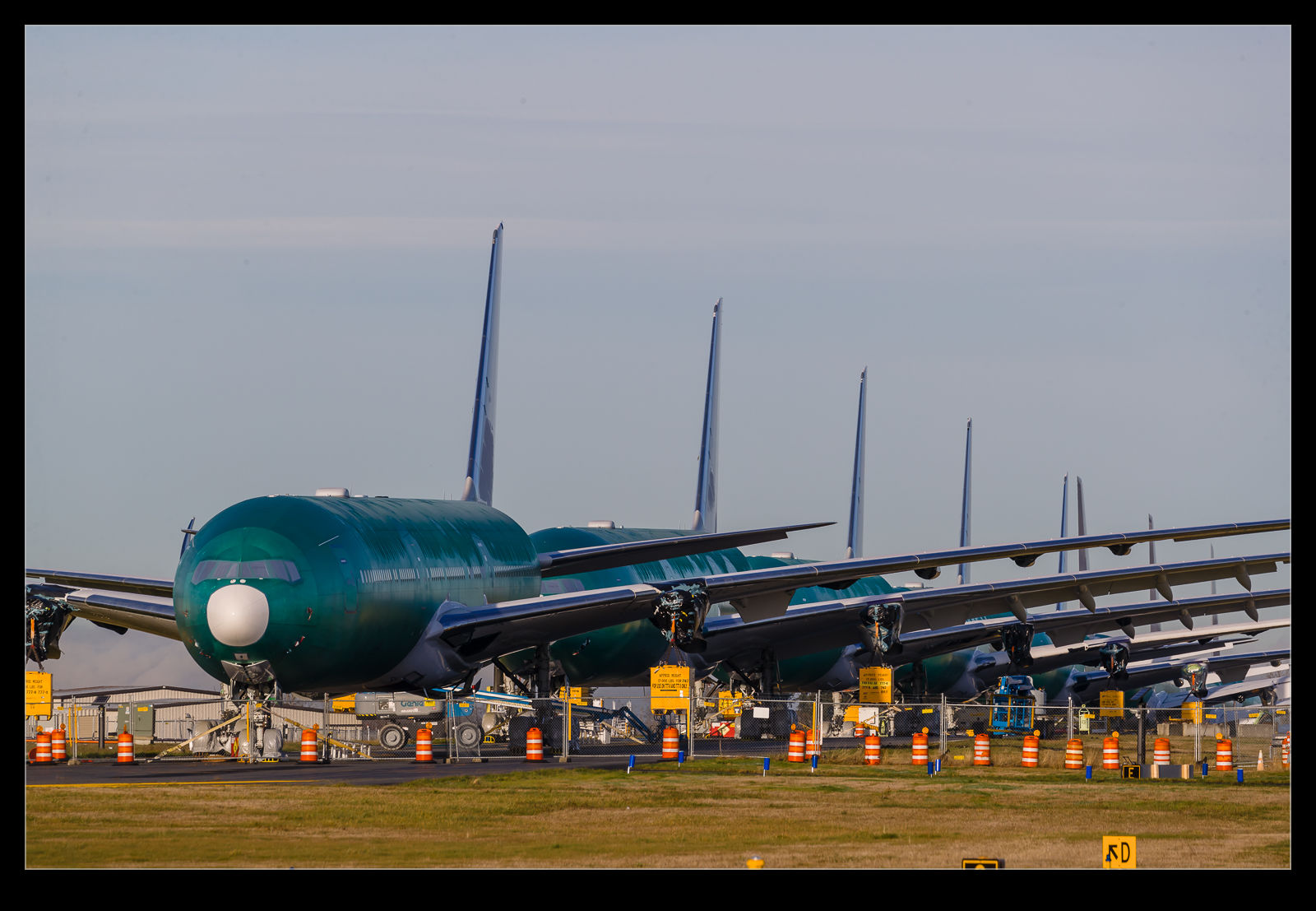
While Boeing has delayed the entry to service date of the 777X, they have continued to produce airframes at Everett with the result being a number of stored airframes on the field.  There are four jets in the test program and the rest are not going to fly until certification is close so, for now, they are finding spaces across the airport for them.  Some are on the Boeing flight test ramp (with production of the other widebodies ramping down, space is more available I guess) while others are on the cross runway.  This has been home to 787s and 737 Max jets over the years and now it is the turn of the 777X.  Some of them are identifiable by the paint on the folded wing tips while others are unmarked for now.

Omni 767 Finds a Gap in the Clouds

For the second time this year, I was at Paine Field when an Omni Air International 767 showed up.  I wrote about the first time in this post.  On this occasion, it arrived in some quite blustery conditions but, as it was on final approach, a gap in the clouds opened up and provided some lovely light on the airframe while leaving the background dark and cloudy.  It makes for a far more interesting shot that would otherwise be the case on a day like that.

Landing a Southwest 737 in a Crosswind

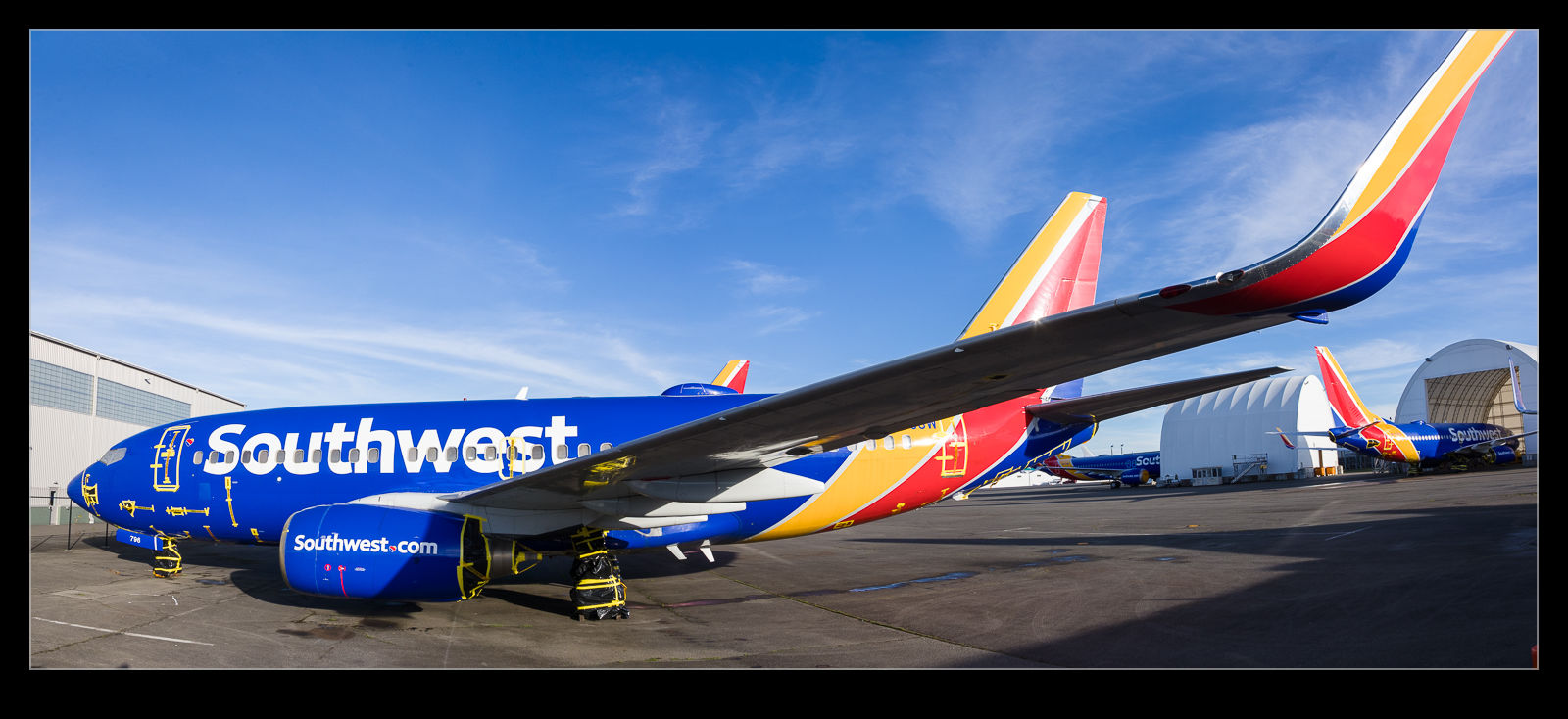
This Southwest 737-700 was completing a test flight at Paine Field.  The crosswind was pretty strong so the pilot used the wing down approach to handling the crosswind.  They touched down on the starboard gear and bounced a bit before settling those wheels on the surface.  A short while later, they rolled wings level and the port gear made contact.  Aside from the bounce, a pretty good example of landing in a crosswind in a big jet.

Shock Diamonds and the F-22

Within the very high speed flows of air in an aircraft’s exhaust, you can set up a series of shock waves and expansion fans as a result of the differences between the pressure of the flow and that of the surrounding air.  When afterburner is engaged, the hot gases and the temperature changes these shocks and expansions cause, result in a diamond pattern forming in the exhaust plume.  In darker conditions, these diamonds are more conspicuous but they are visible even in normal daylight.

These diamond patterns are a function of the flow being symmetrical since most engines have round exhaust nozzles.  This isn’t the case for the F-22, though.  It has flattened nozzles with a pointed profile top and bottom.  This got me wondering what the effect is on the exhaust plume and whether the traditional diamonds are formed or whether the nozzle shape results in a different pattern of shock and expansions as they reflect within the plume.  I decided to dig in to some shots to see what I could find.

I don’t have a lot of F-22 afterburner shots.  While I have shot them a lot taking off, they often take off without afterburner.  Since they have plenty of power and burner use dramatically increases fuel consumption (and the F-22 is not over-endowed with range as it is), there is no point using burner if it isn’t needed.  Air shows are a time when they do give it plenty of burner, so that is the source of the shots.

The result of this is that there is definitely something unusual about the shock patterns.  I include some shots of F-16 and F/A-18 afterburner plumes and the normal shock patterns that create the hotspots known as the diamonds are very obvious and simple in shape.  For the F-22, things are very different with the patterns of hot zones being something more in line with the shape of the nozzle.  The way in which the patterns repeat is more complex than for an axisymmetric nozzle.  There is nothing much to conclude in these observations.  It is just something that appeals to an old aero guy like me.