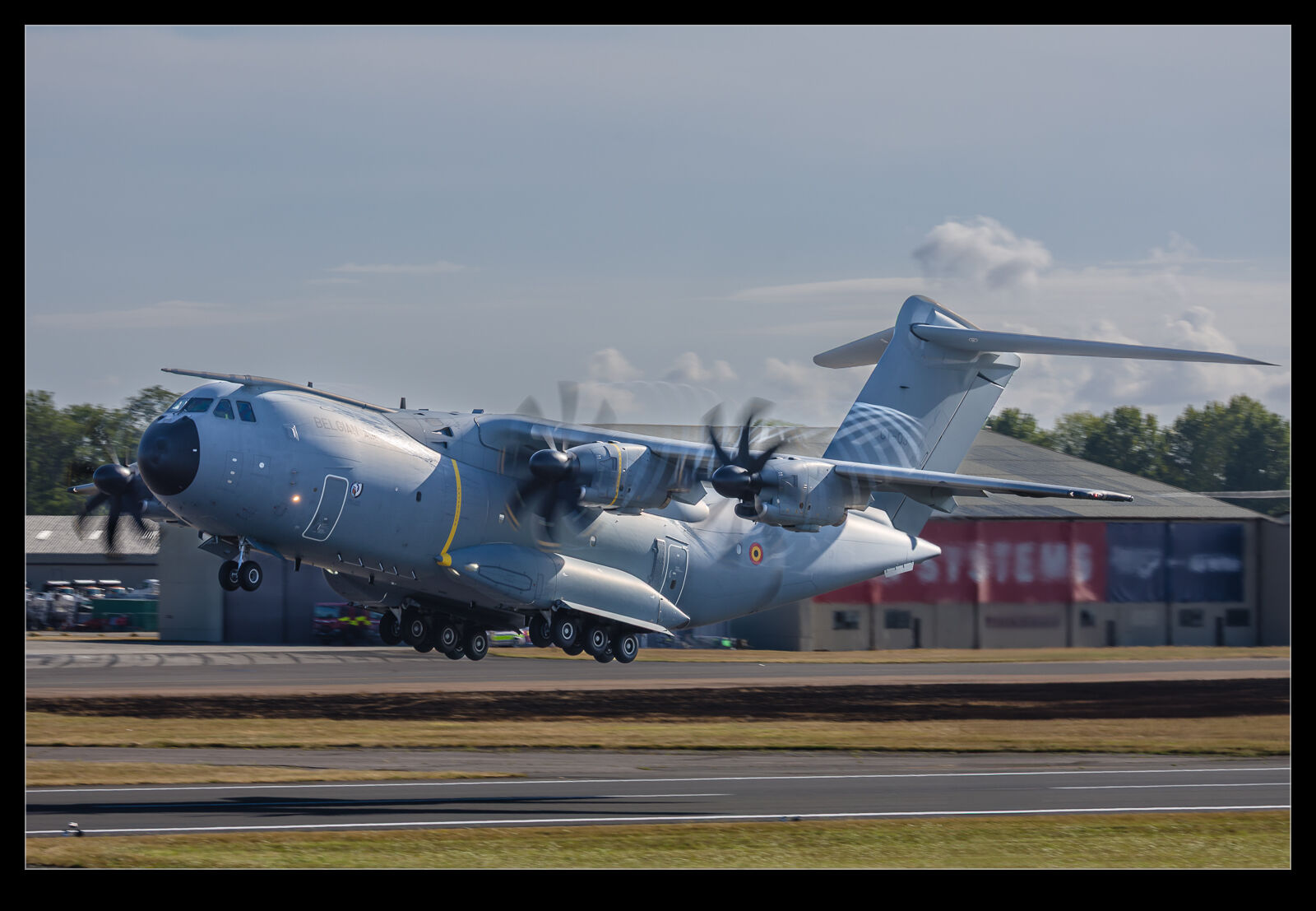
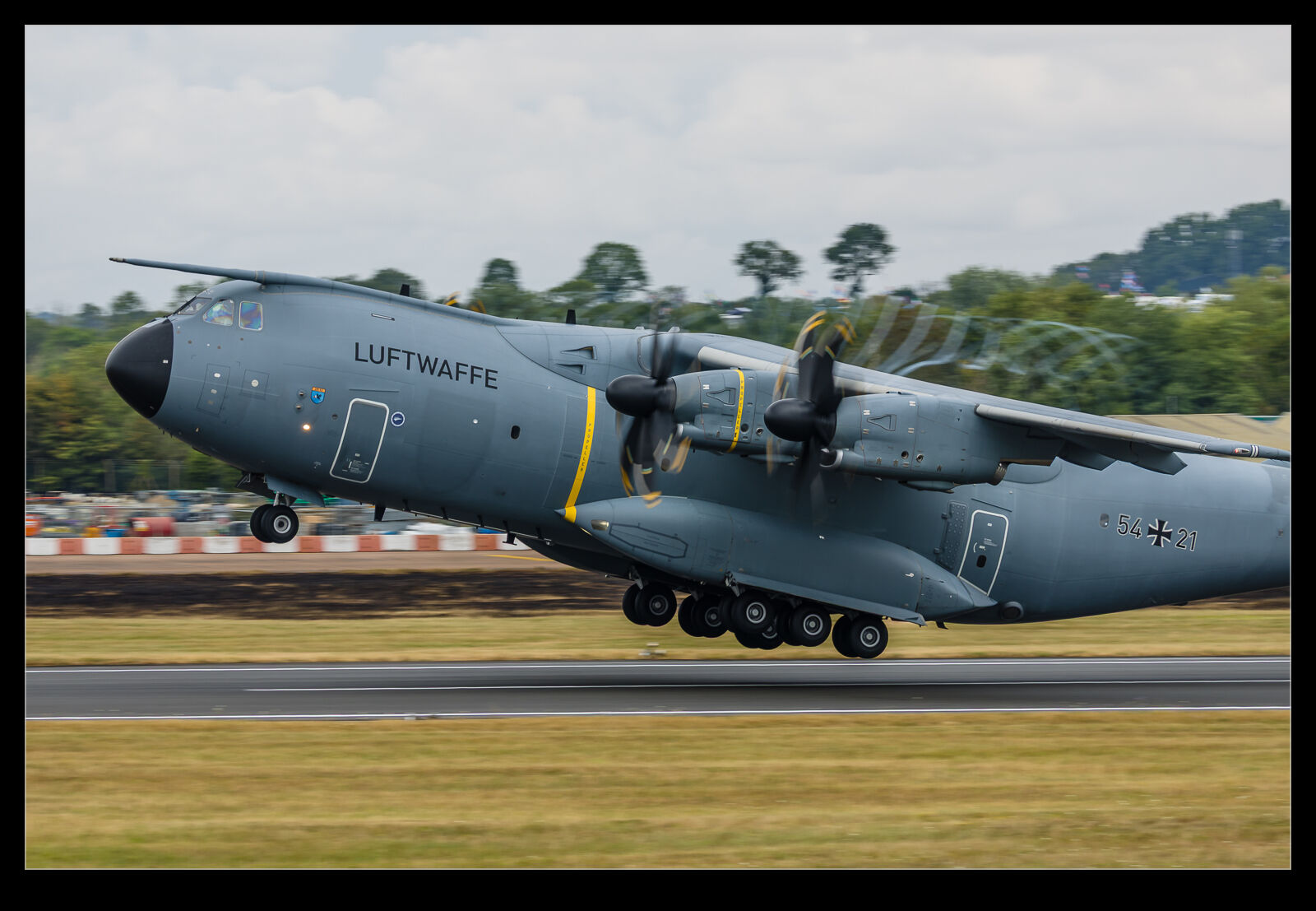
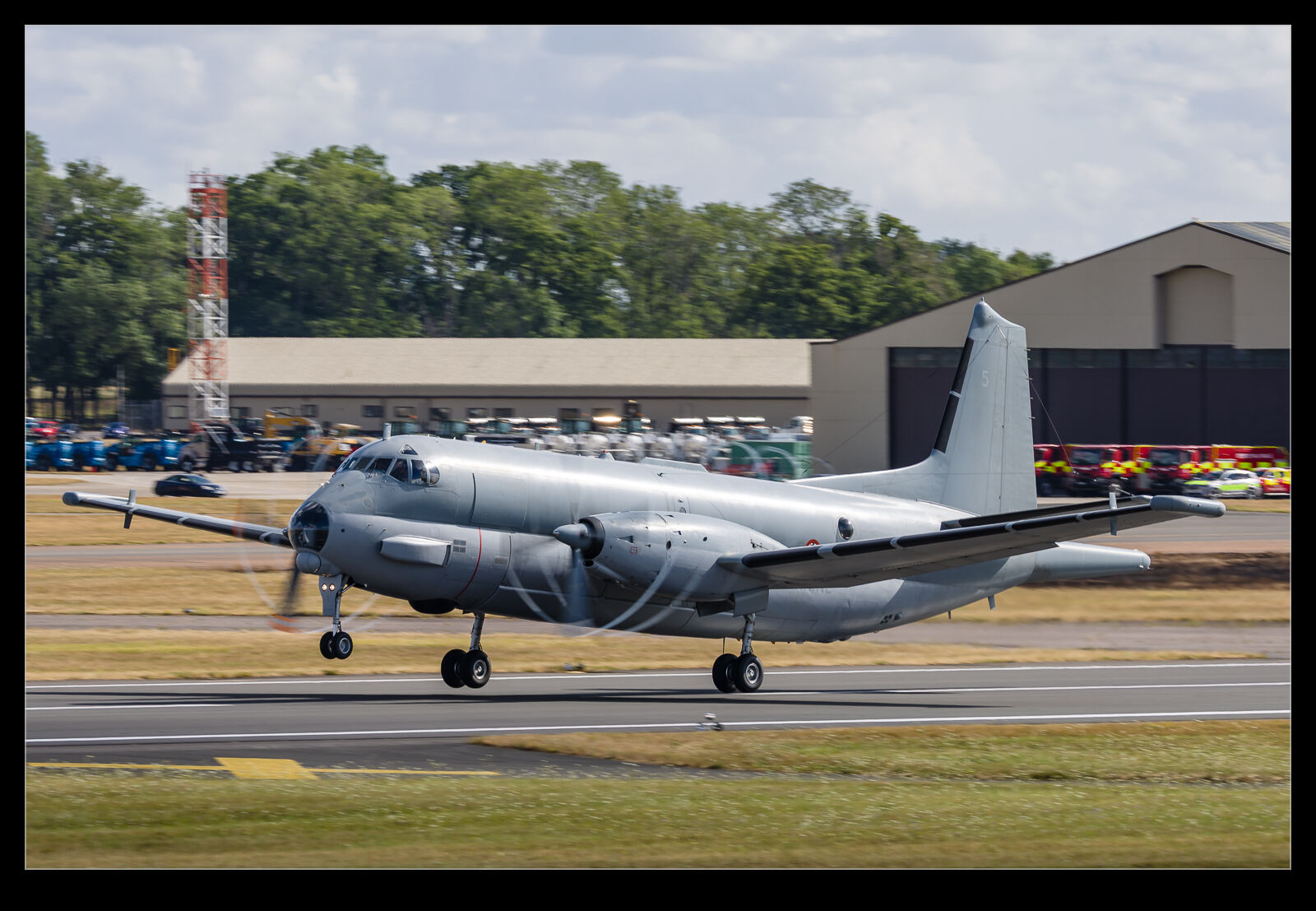
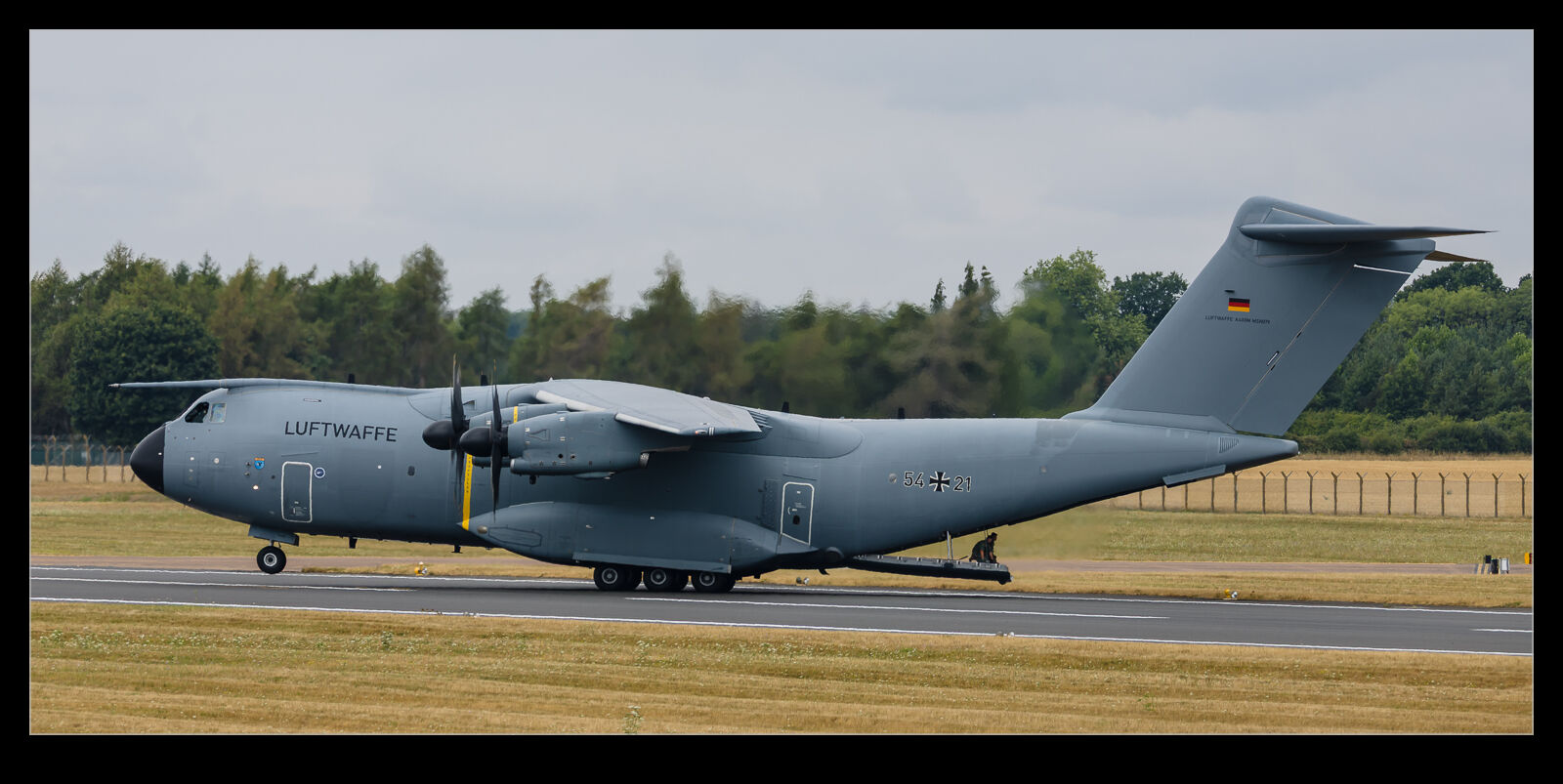
 If you have heard much from the flying displays at the Royal International Air Tattoo this year, you may well have heard about the Luftwaffe A400M doing a wheelie. I will cover that too but the whole approach to land was one that tested the nosewheel of the aircraft quite a bit. They made a tactical approach to land and aimed for a touchdown point closer to show centre so near the crowd and one that would be a good demonstration of how quickly the plane can stop once on the ground.
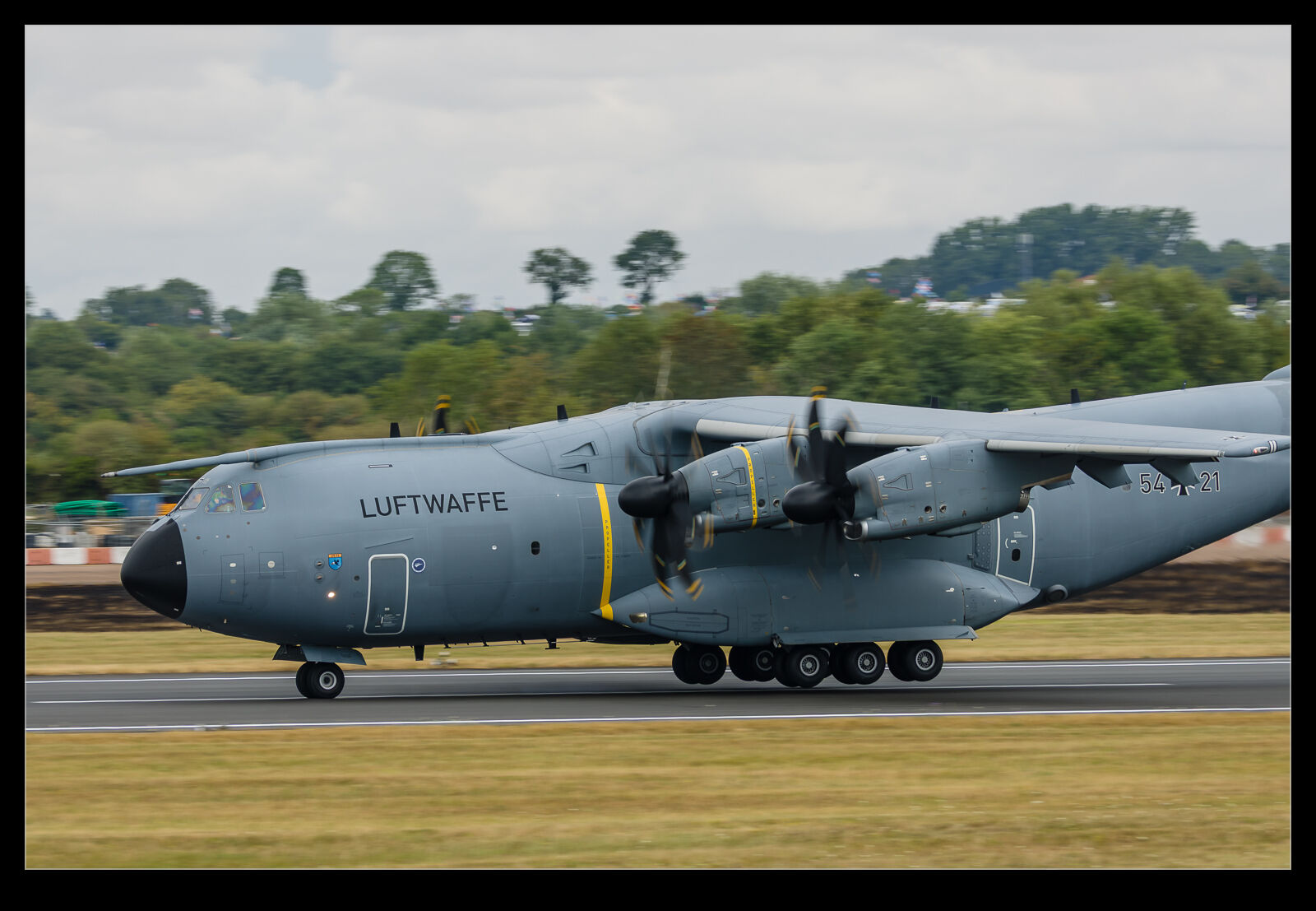 The approach was nose low and, while they did aim to flare the aircraft before touchdown, the nosewheel was the first to make contact with the mains following a short while afterwards. Since this plane is designed to operate from austere strips, the gear is pretty tough, and I doubt a touchdown on a smooth runway is going to cause it undue stress. They then stamped on the brakes and reversed the prop pitch to bring the plane to a rapid stop.
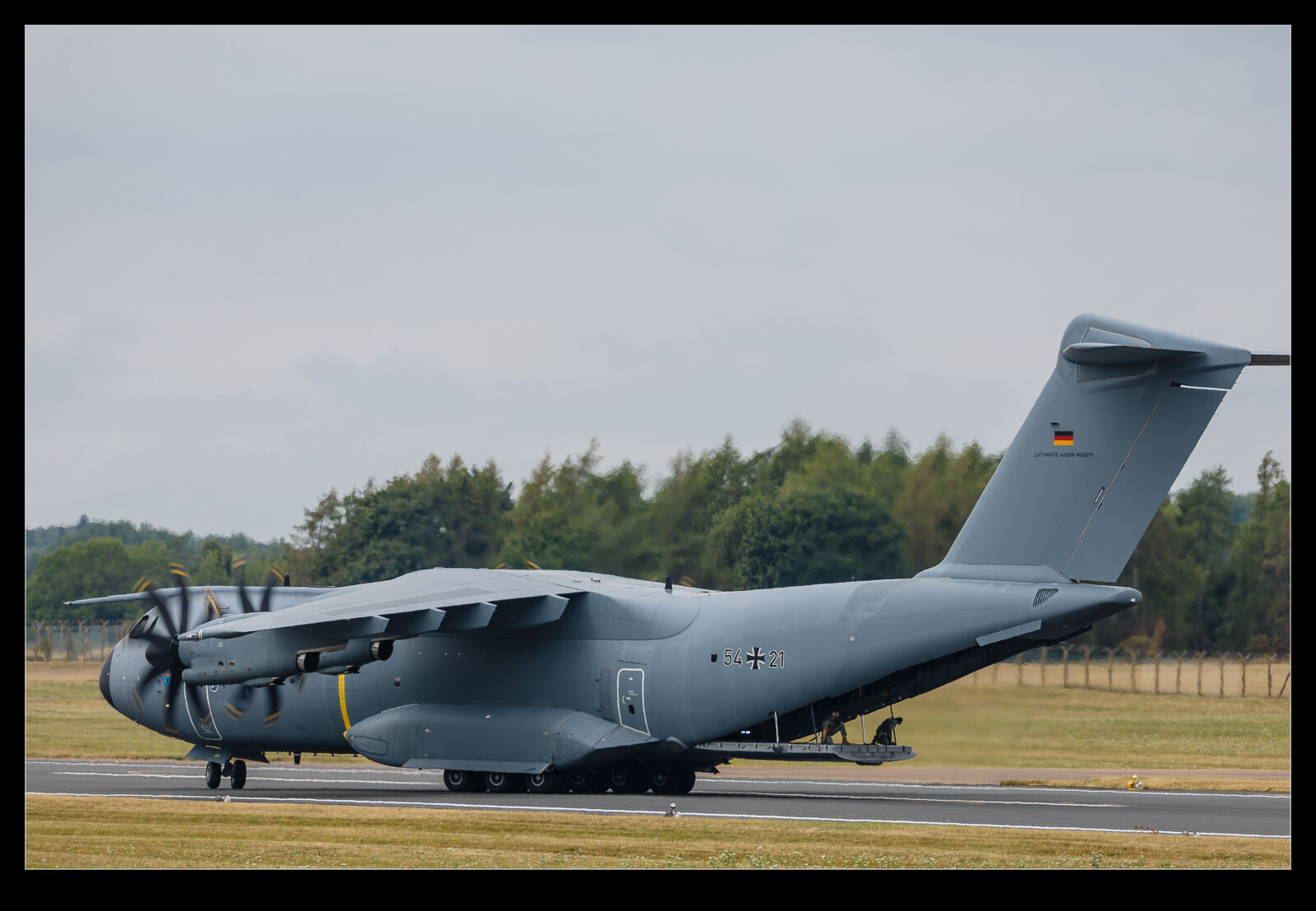 The next part of the manoeuvre was a bit problematic. Keeping the prop in reverse, they started to back up the runway. A crew member was on the ramp as it opened to guide them. They put in a ton of nosewheel steering to swing the plane around, but I don’t think there was much weight on the front of the plane, and the tyres were skidding across the surface, and the turn was not as dramatic as intended.
Then came the fun bit. As they backed towards the edge of the runway, instead of applying some power to the props to stop them, they applied wheel brakes. With the plane going backwards and the braking action under the centre of the airframe, the plane pitched up and the nosewheel came off the ground. It didn’t go too high, and the ramp never hit the ground, but it certainly got everyone’s attention in the crowd! I wonder how the debrief went after the display.
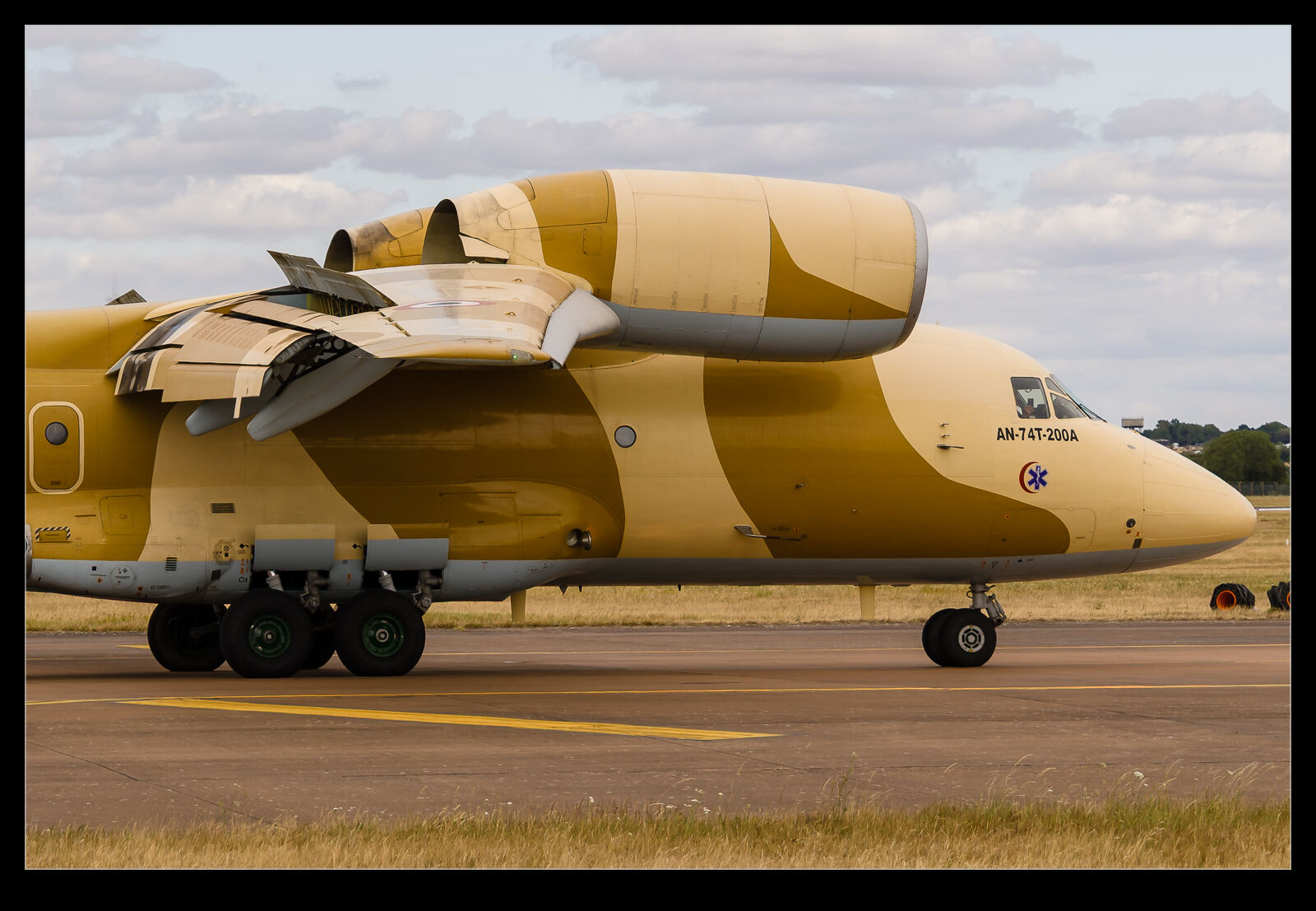
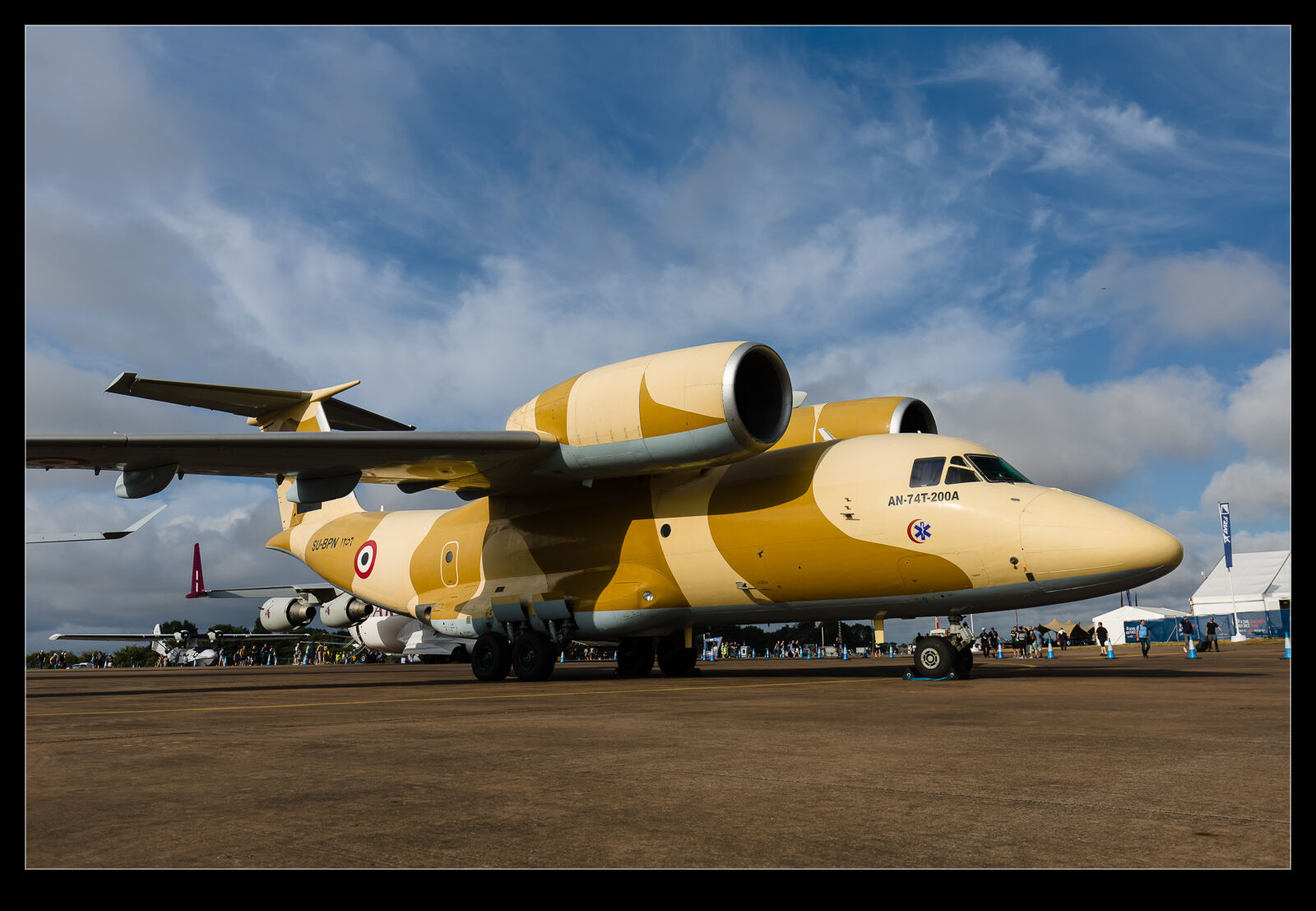
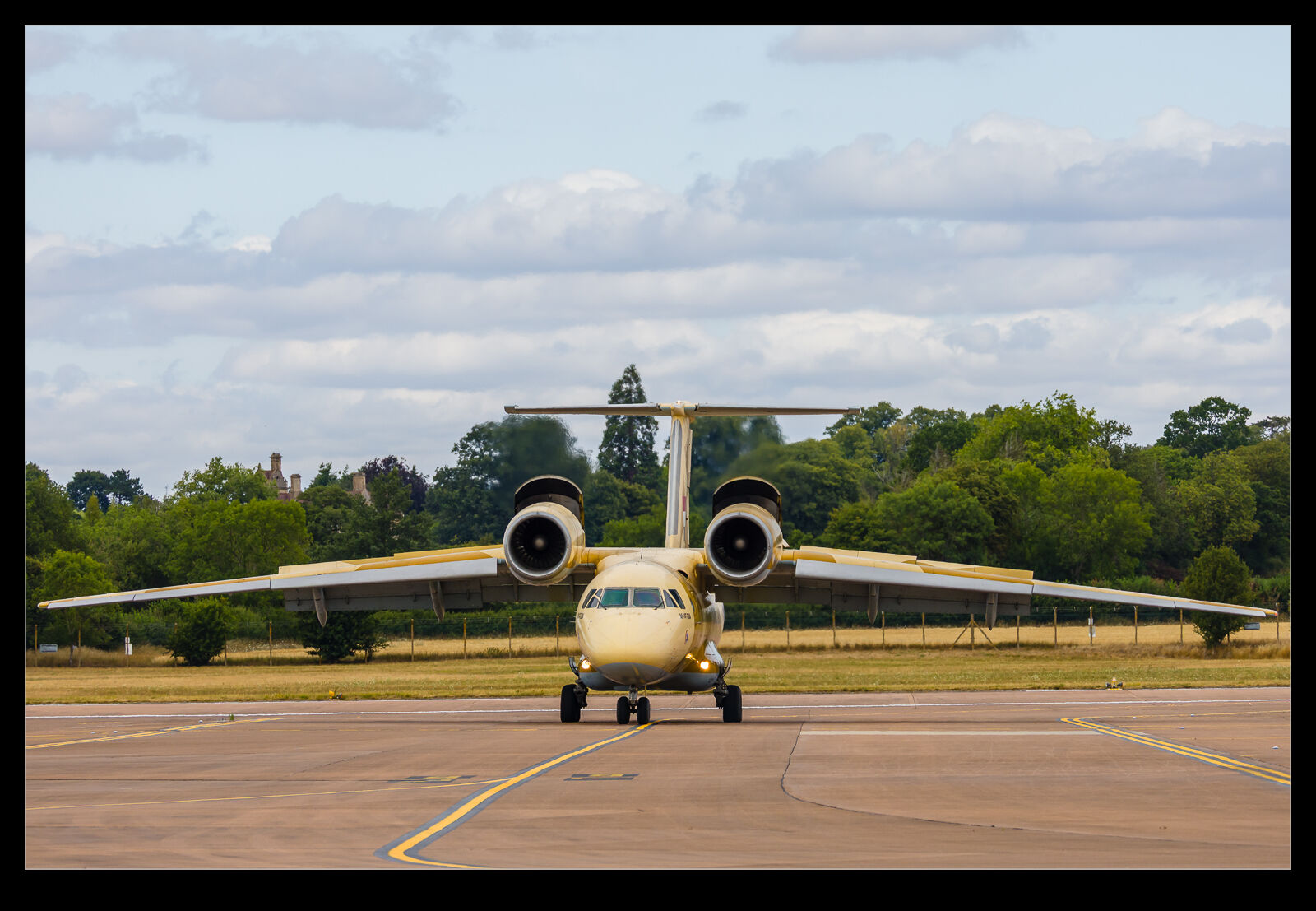
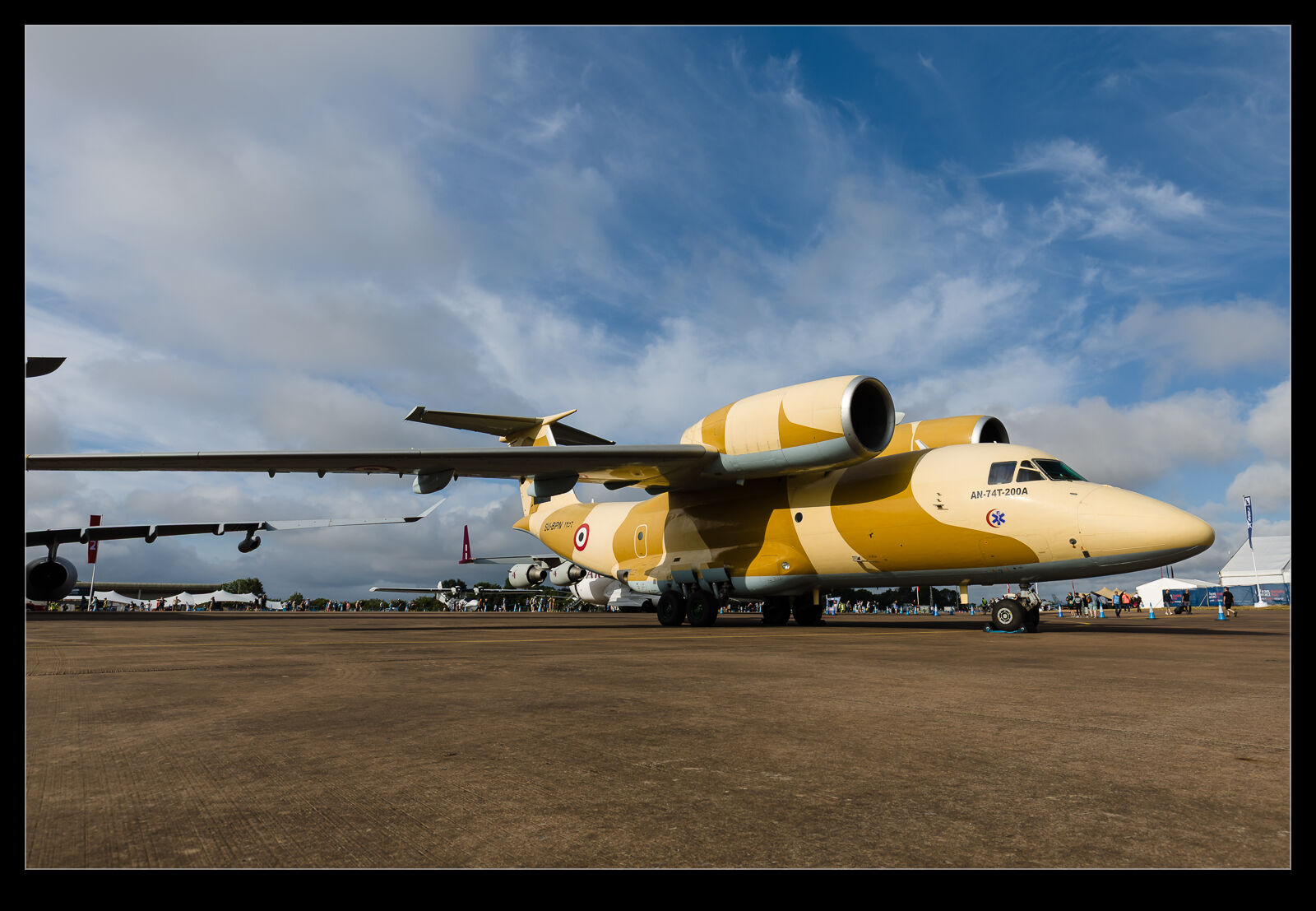
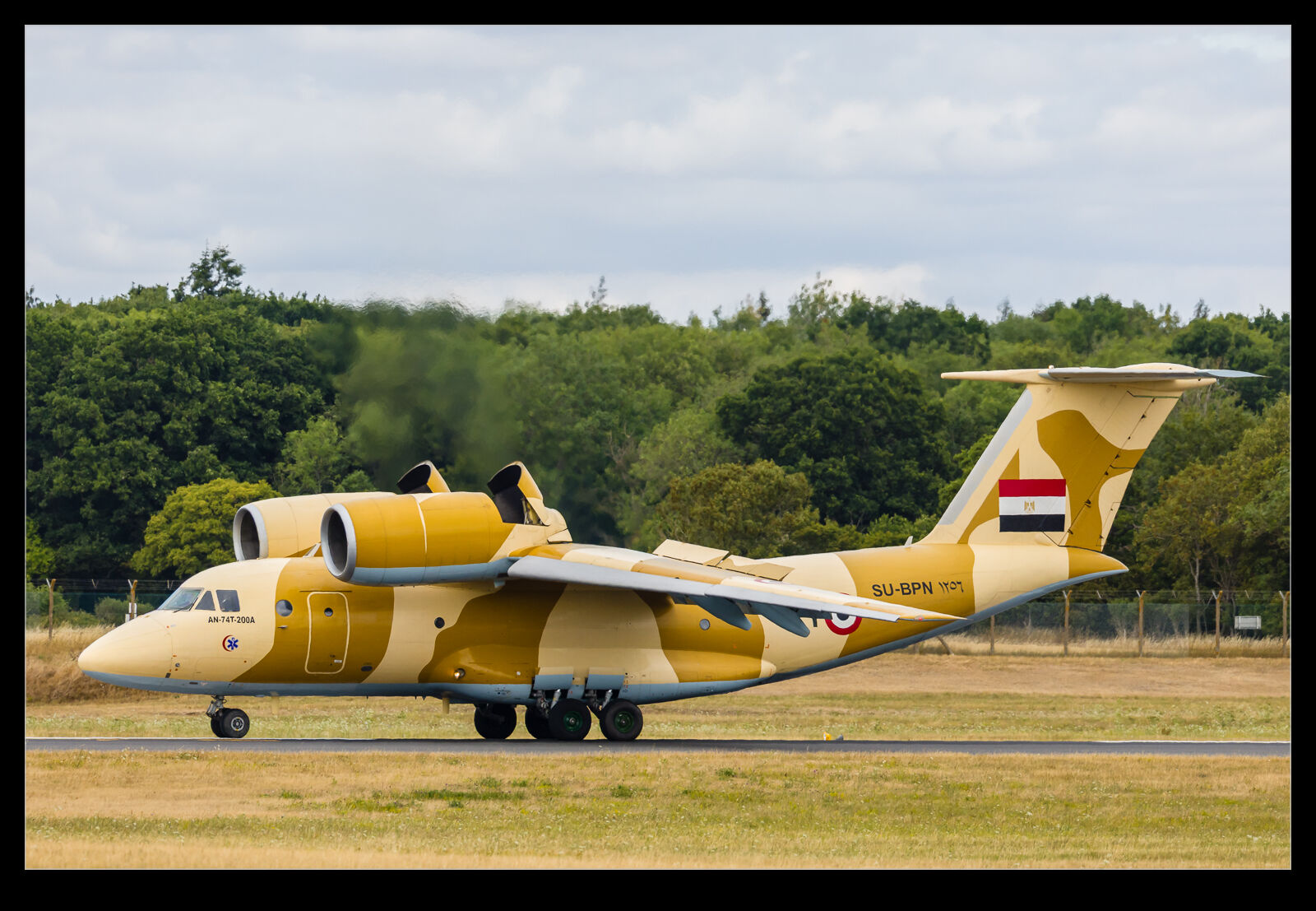
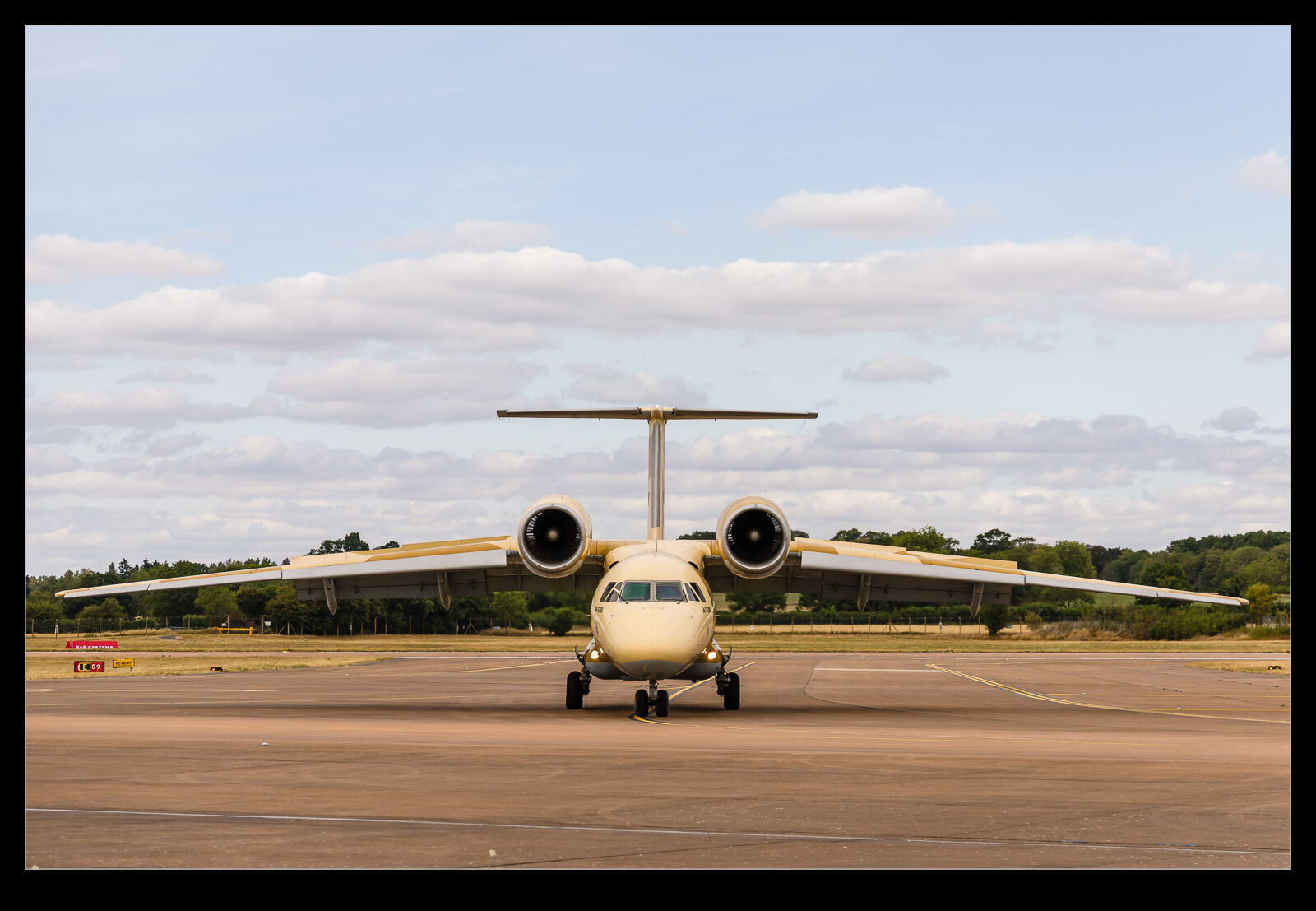
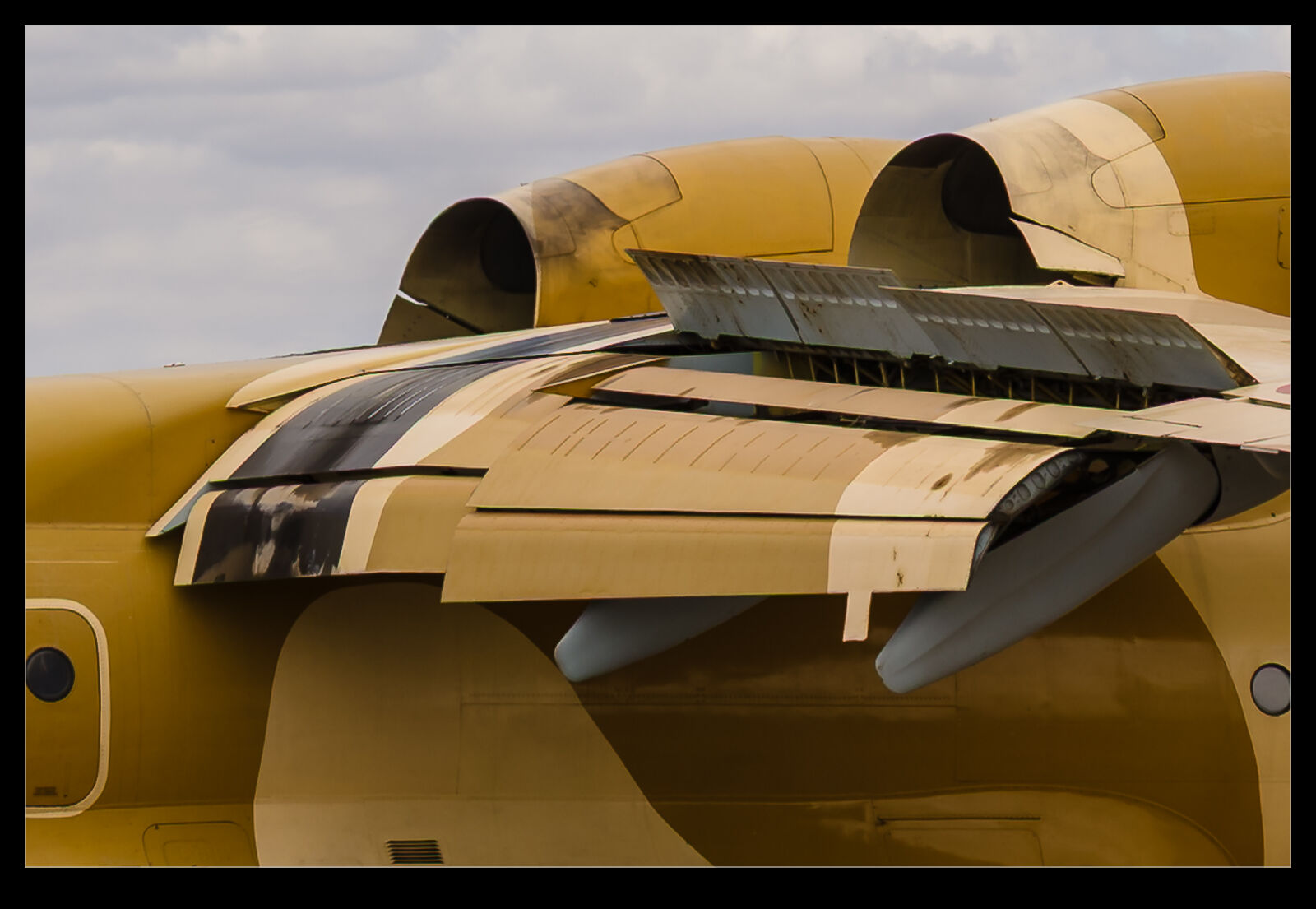 I shared some images of the Egyptian Air Force AN-74 that came to RIAT in 2025 in a previous post. I took a ton of shots during RIAT and have been pretty busy throughout the rest of 2025 so took forever to get through some of the images to cull them down. When looking through some of the shots at the end of 2025, I was quite taken by the high lift system on the AN-74. Previously I focused on the span of the wing but here are some shots that show the flap system and the surfaces across which the engine efflux passes to generate additional lift. It is quite a feat of engineering.