Tag Archives: photo

Bears Training Camp

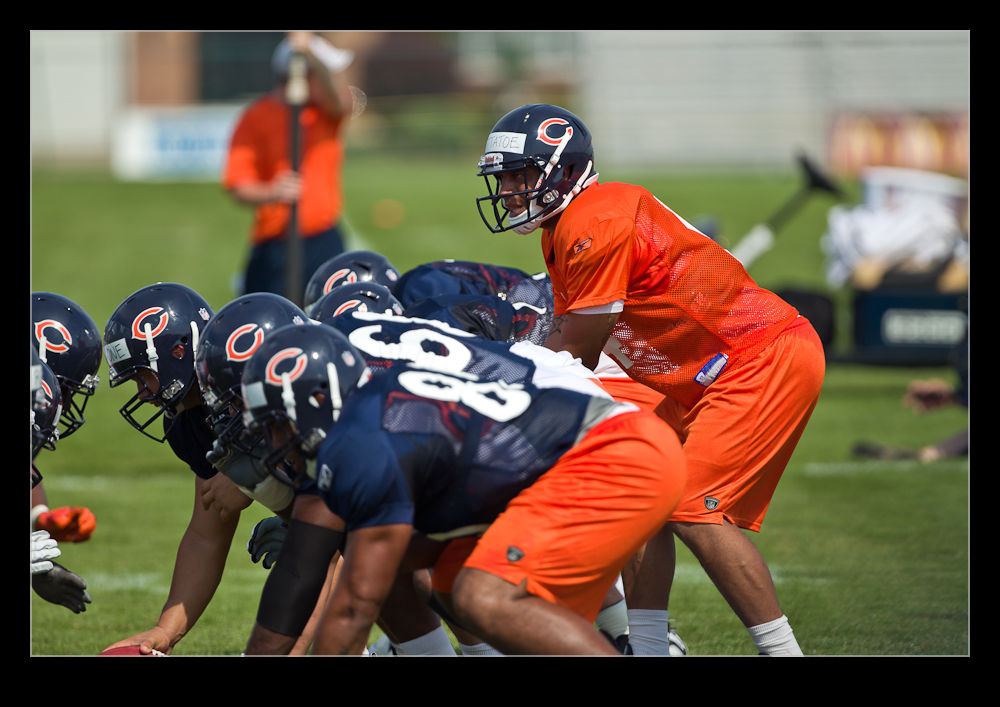
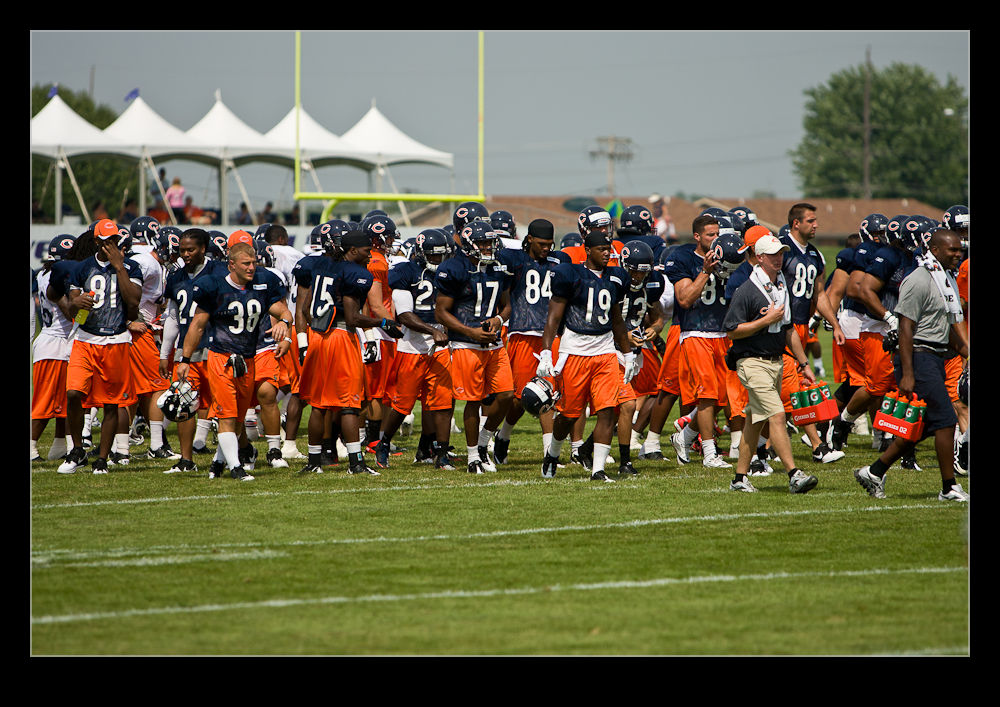
It is that time of year when large men start practicing to inflict pain on each other – and if you are a Bears fan – on us too!  With the negotiations over, it is time for training camp.  The Chicago Bears hold their camp at a university down in Bourbonnais Illinois.  With some spare time now on my hands, I decided to make a trek down for one of the public sessions.

With the temperature in the 90s, this might not have seemed like the best idea but it was windy and that really made things feel a lot better – although I think some of the receivers might have been using it as an excuse!  I went to the camp for the first time last year.  I had checked on what camera gear they allowed and the person I had spoken too said nothing too big.  That time I took a 70-200 as my biggest lens and got there to see a fair few honking pieces of glass.

This time I took what I wanted and I’m glad I did.  Not only does it make shooting easier but people are amazingly accommodating when they see big lenses.  While they were all fighting each other for a spot when they were shooting with their phones, as soon as I wandered up, people would drag their relatives out of my way without me ever having to say a thing.  Great stuff.  Don’t see that at an air show very often!

I didn’t stay for the whole session.  it was a bit toasty and lugging the gear around to different spots to try different things doesn’t help to keep you cool.  However, I was happy with what I saw and slightly happier in the car with the aircon cranked up!  It is a great thing if you like football.  The price of a ticket for Soldier Field is astronomical but this is free and you get to see a bunch of stuff.  The staff were all universally welcoming and you felt good about being there.  Plus, some of the shots came out quite well!

Time to get brutal

When I first started shooting digitally, I didn’t delete any pictures. I’m not sure how this started but, as time went by, I found old shots that benefited from more modern processing and software capabilities.  It was sometimes surprising how a shot that previously I didn’t think was any use could actually be turned into something better.

Of course, this was a tiny proportion of the shots.  Most of the crappy shots were still crappy shots whatever the software that was used.  Being horribly out of focus or even something taken accidentally like the floor or the inside of a camera bag is never going to be fixed with some miraculous software.  However, for a while storage was cheap so I didn’t care.

At various times additional drives have been added to the computer and the back up NAS has been rebuilt with ever larger drives.  (I have lots of spare drives if ever you need one!)  The problem is that I keep taking ever more pictures and the cameras have ever larger file sizes.  Besides, how many pictures do I actually need?  Each time I re-shoot a subject I get a few new shots that are keepers and some of the previous shots of that subject go down the priority list.  Am I ever going to need a thousand different shots of a Strike Eagle?

Consequently, I have finally grown up.  I am getting rid of stuff.  (I should point out that I do have BluRay backups of everything made early on so, if I really wanted to, I might be able to drag out any file!)  I am now getting brutal with stuff as soon as it is shot.  Meanwhile, I am progressively going through a lot of older stuff to get rid of the crap.  This is a two stage process.  First I am going through to take out shots that are clearly not good – blurry, poor focus etc.  If I spot that half of the subject is missing at the same time those will go.  However, zooming in to spot the duds sometimes means you don’t see that the shot is also crap.

Those will get picked up in the second phase.  Then I shall assume the shots are basically useable but remove the ones that just look bad as well as weed out the obvious duplicate.  However, phase one is taking a long time so phase two will come later.  Also, this is a great crappy winter day job and now it is summer.  I am spending more time doing fun things.

Will anyone else see the benefit of this.  Certainly not the hard drive manufacturers but hopefully I will.  The shutter actuations on the cameras won’t reduce but at least I will try and make life easier for Lightroom!

First Flight – for a while at least

My friends at the Warbird Heritage Foundation in Waukegan have been working for a long time on adding another aircraft to their already excellent collection. The newest aircraft is a P-51 Mustang called Baby Duck. It is many years since Baby Duck last flew and she has gone through an extensive restoration since being recovered from a storage location near Philadelphia.

The work has been undertaken at Tap-Air in East Troy WI. They have been putting her back together after a thorough restoration of the whole airframe and engine and the whole process has been coming to a climax with the approach of the first flight post restoration.

After some engine runs and taxiing tests, the date for the first flight was set. Paul Wood, the owner of the foundation, kindly invited me up to see the flight and I headed up to East Troy on a gorgeous day. Pilot for the first flight was Vlado Lenoch. Vlado is a highly experienced pilot of Mustangs. He has his own aircraft, Moonbeam McSwine which he displays all around the country. However, he has flown many other aircraft. I think he said that this was his 25th!

After some final checks on the airframe, Vlado fired her up and taxied off for departure. I headed to a spot up the field to be ready for the first wheels up moment. While it was a lovely day, it was warm and sunny so heat haze was a big deal. However, you don’t get to choose when these things are happening so you go with it and get what you can.

The first flight went very well. Vlado took her up to altitude, cycled the systems, undertook some handling checks and basically made sure things were good. Then he brought her back for a flyby – a good sign that he was pleased with the aircraft. There then followed a debrief about e issues that he had found. The Tap-Air guys then took the opportunity to try and fix a few of the issues that could be dealt with immediately while we had a bite to eat before Vlado took her up again.

This time he had a longer sortie and pushed her a little harder with some basic aeros. All went well and again he showed his comfort with everything with another flyby. After landing, another debrief with the guys and a list of tasks to be worked on. There is still some work to do but, hopefully she should be making her way to her new home pretty soon. Probably not soon enough to make it to Oshkosh this year but there is always another year!

As a finish, I animated some of the shots together to make a pseudo-video.  Here is the result.

Getting a jump in the woods

I recently read a very interesting book on flash photography specifically for Canon shooters. The book was by Syl Arena and he obviously has put a lot of time and effort into developing his technique and understanding the way the Canon flash system works. I don’t know whether a similar book exists for the Nikon shooters out there but, while a lot of the specifics in this book relate to the Canon technology, a lot of the techniques and concepts are equally applicable and might make the book worth a read.
Anyway, having read this book once through and picked at it a number of times for specific sections, I have become quite enthusiastic about experimenting with high speed sync and making the action pop out of the shot while de-emphasizing the background. Some of his examples had included skating and there is a skate park not too far from me that I am interested in trying out at some point soon.
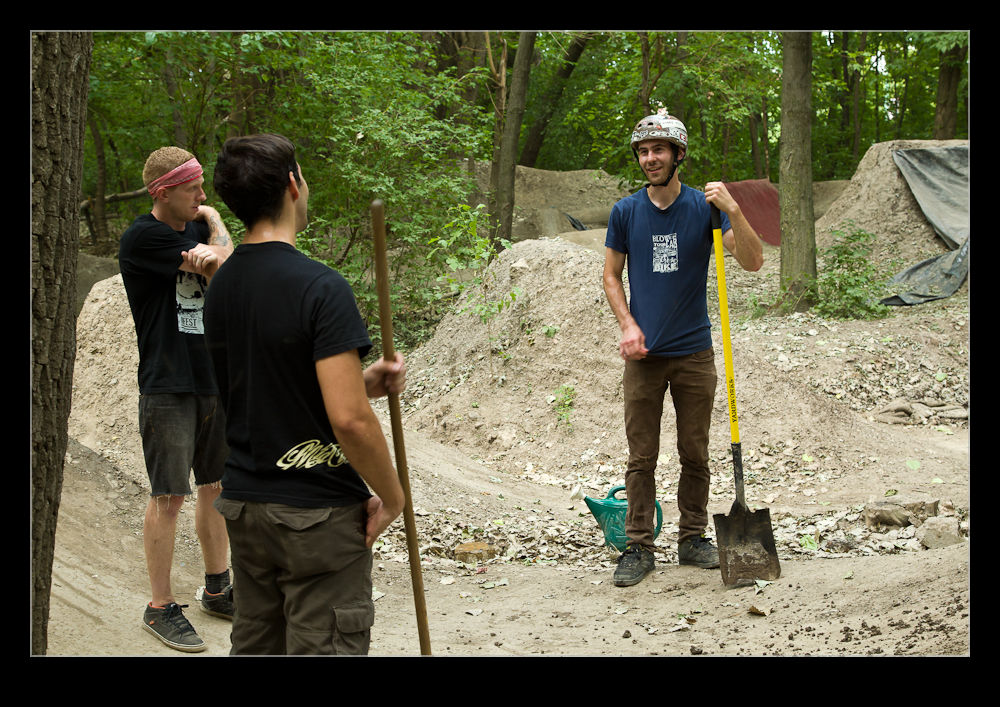
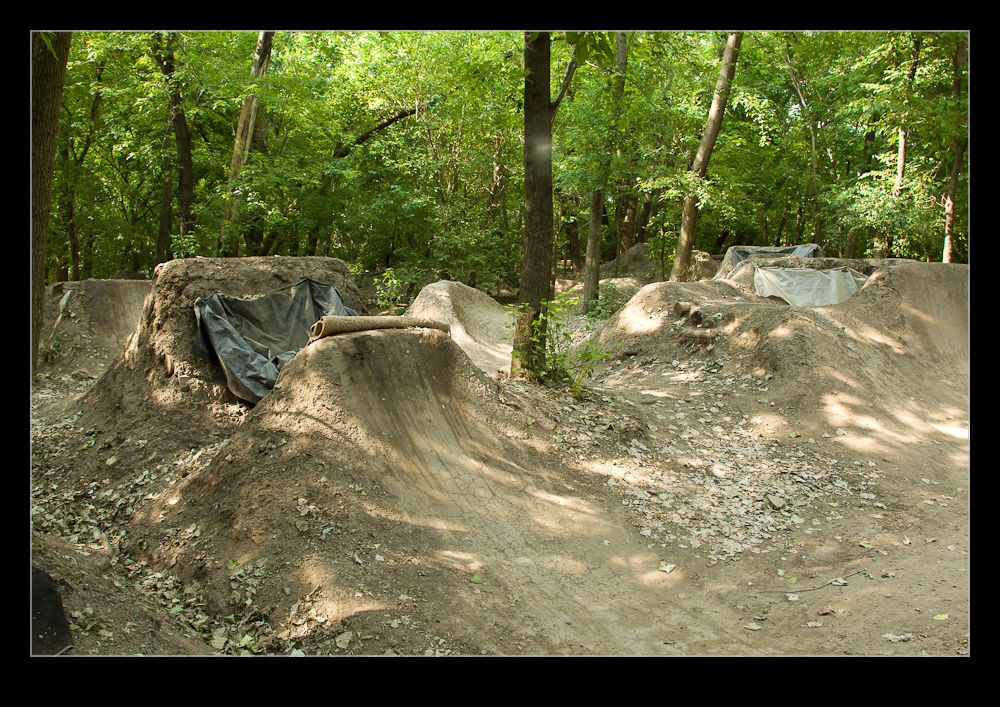
However, the start of my experimentation has actually been some biking. A little way north of me in the city is a park called Clark Park that has some routes laid out by the local cyclists. The area is called The Gardens and is a partnership between the riders and the city. The routes include jumps and berms and I decided to try and check it out to see whether I could get any good shooting opportunities and to see how well I could implement some of the ideas in Syl’s book.

I contacted one of the guys who helps organize things and he was very welcoming about me coming down. I headed down one Sunday when a bunch of them were getting together. Unfortunately, the weather had not been good that week and the ground was wet under foot. Everyone was grabbing shovels and working on developing some of the runs. I grabbed a shovel and a wheelbarrow and got to work too. It has been a while since I did anything at could be considered real physical labor and the blisters and aching muscles that I had the next day were a testament to my easy lifestyle!
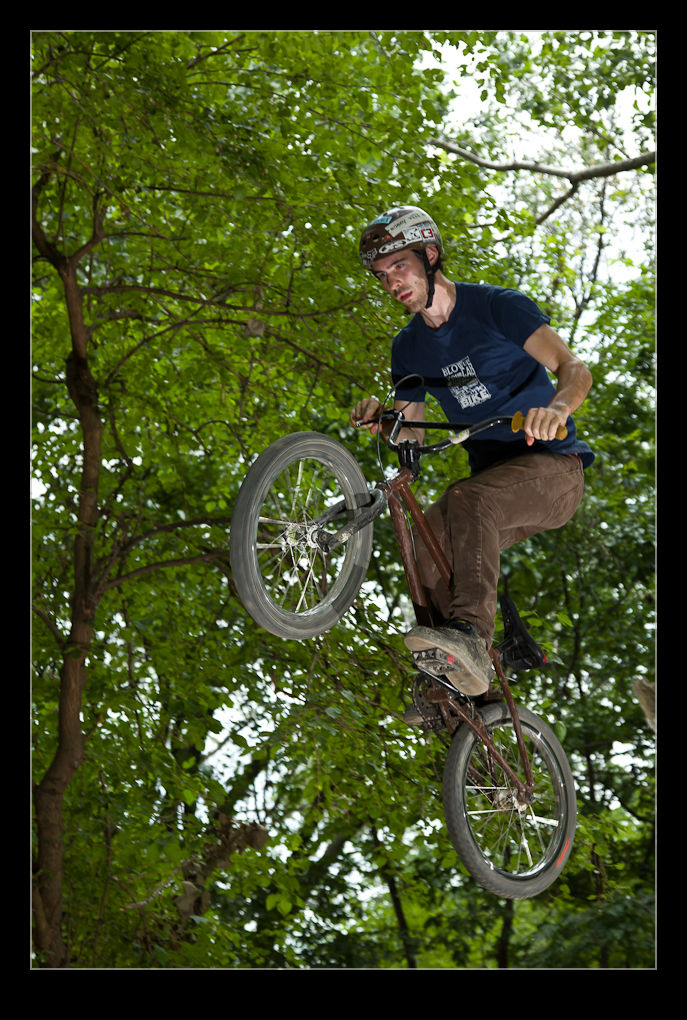
There was no riding that day and in the following weeks the weather was not helpful tending to dump a ton of rain every few days making it hard for anything to dry out properly. That combined with my own other activities meant I didn’t get a chance to go back for a while. However, finally the stars aligned again and I got to head back.
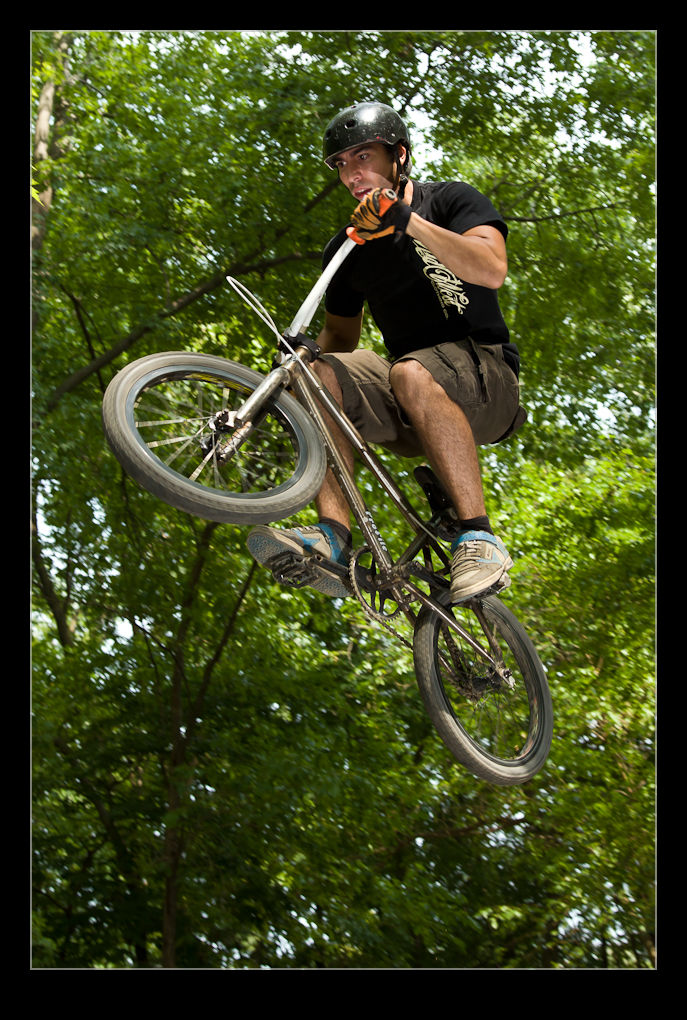
A bunch of guys were already there when I showed up and were starting to get some runs in. The jumps are very dramatic to look at and I suspect more dramatic when you riding toward them. There are a sequence of jumps along a run so the guys get up some momentum as they go. It all looks really cool.
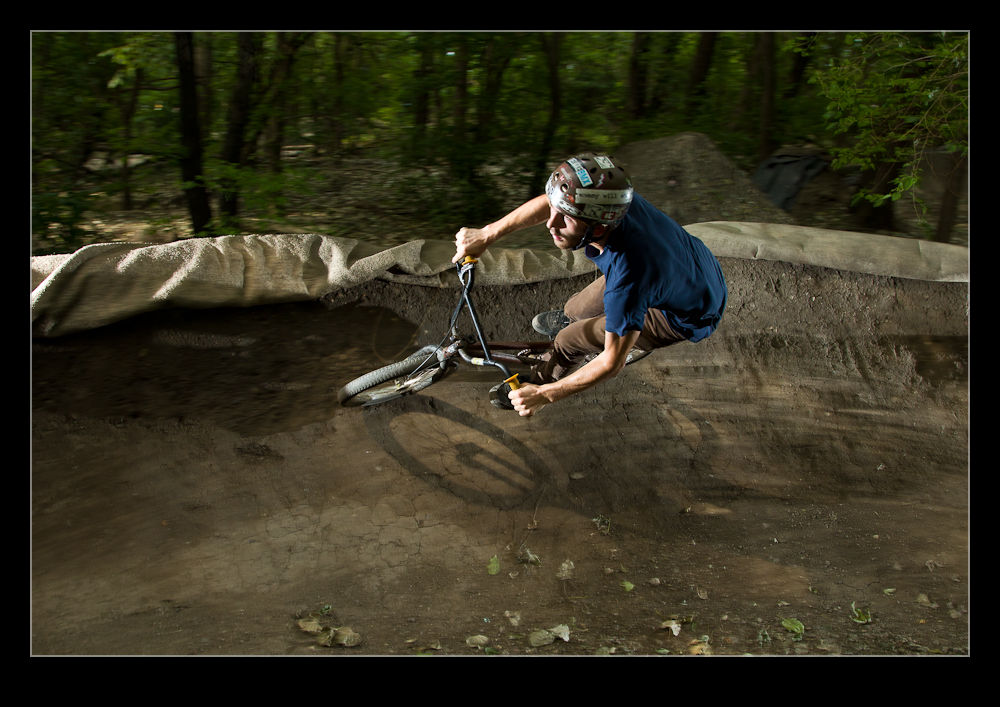
I had a couple of flash units that I was triggering with an IR controller. This is something that is considered unreliable outside but, since we were under tree cover, it proved to be reliable provided I was pointing the right way. I did bring a long cable connection as a backup but didn’t need it on the day.

The guys were happy to try a few things for me as I experimented. I shot a lot of flash on the jumps and around a berm along with some ambient light shots. The tree cover meant those needed the ISO cranked way up but, even then, it was hard to get a good shot. However, some of them gave a good sense of the motion. I shot in manual with the exposure dialed down to make the background less apparent and then used high speed sync at about 1/400th of a second to illuminate the rider. This seemed to work quite well although I did end up taking the flash exposure compensation down to -1 stop.
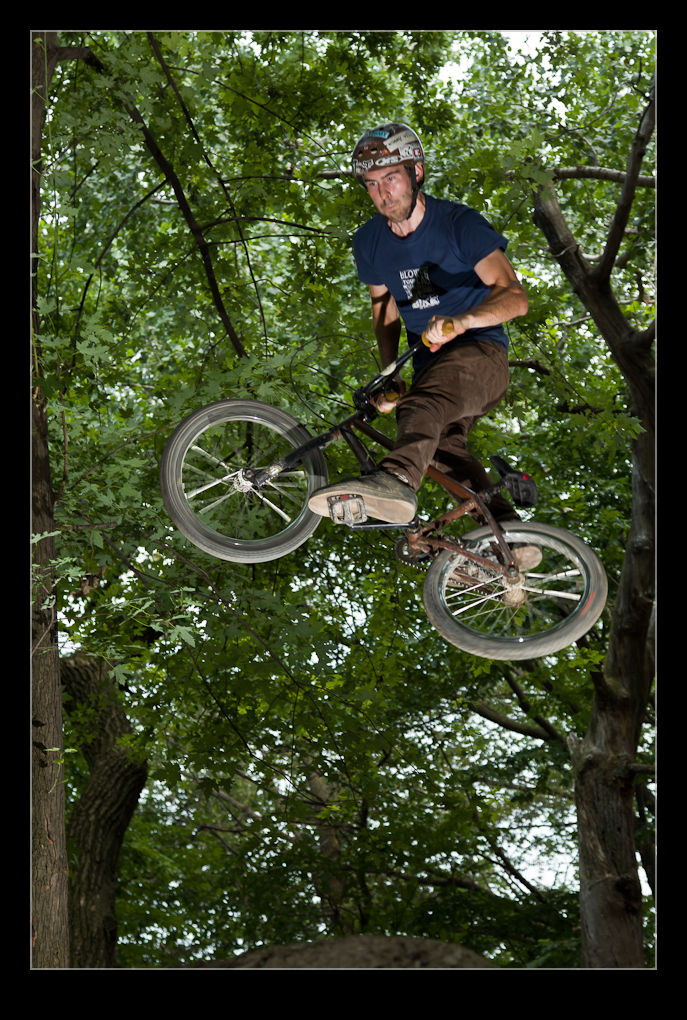
I balanced the two flashes 2:1 with the foreground getting the greater proportion of the light in the rider’s face and the fill coming from behind. Next time I shall experiment a bit more with this. One of the tricky elements is finding a good spot to locate the flashes since the jumps are steep and slightly broken up at the edges. I had one flash on a Gorillapod and the other on a bean bag. The Gorillapod was the better solution and I will have to get another one at some point.
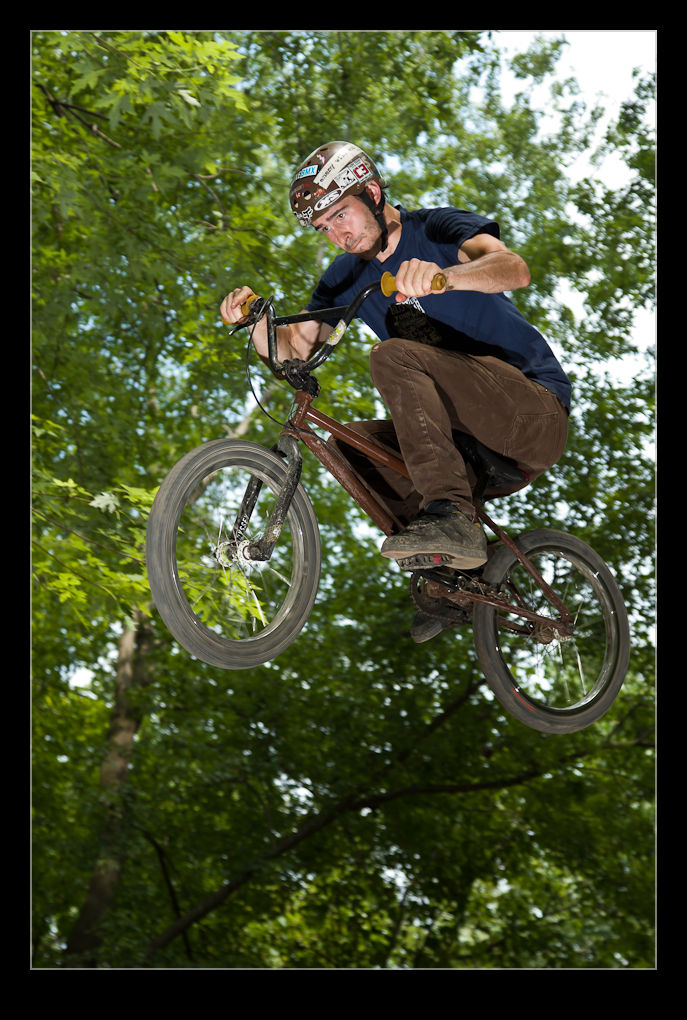
One other thing I experimented with while I was there was mounting a GoPro video camera on the hot shoe and shooting some video at the same time. This worked out okay but the sound of the shutter firing on the camera below tends to be a dominant sound. Some editing will be necessary with the music to blank that out.  When I have done that, I shall put something up here.

For additional shots, go to the gallery at this link.
What’s the best camera?

I suspect you have heard the phrase, the best camera is the one you have with you.  Well, I am a bit of an idiot as I went out to a location the other evening for another reason but didn’t stick a camera in the car.  We headed to Moreton Arboretum out in Lisle.  We are members and go there pretty regularly to wander around.

This time they were running a cheese and wine type of event.  Tables were set up outside, there was a bar and a tapas menu.  A very pleasant way to spend an even out in the warm as the sun gradually headed down.  The photographers amongst you are thinking golden hour.  Why didn’t I think of that.

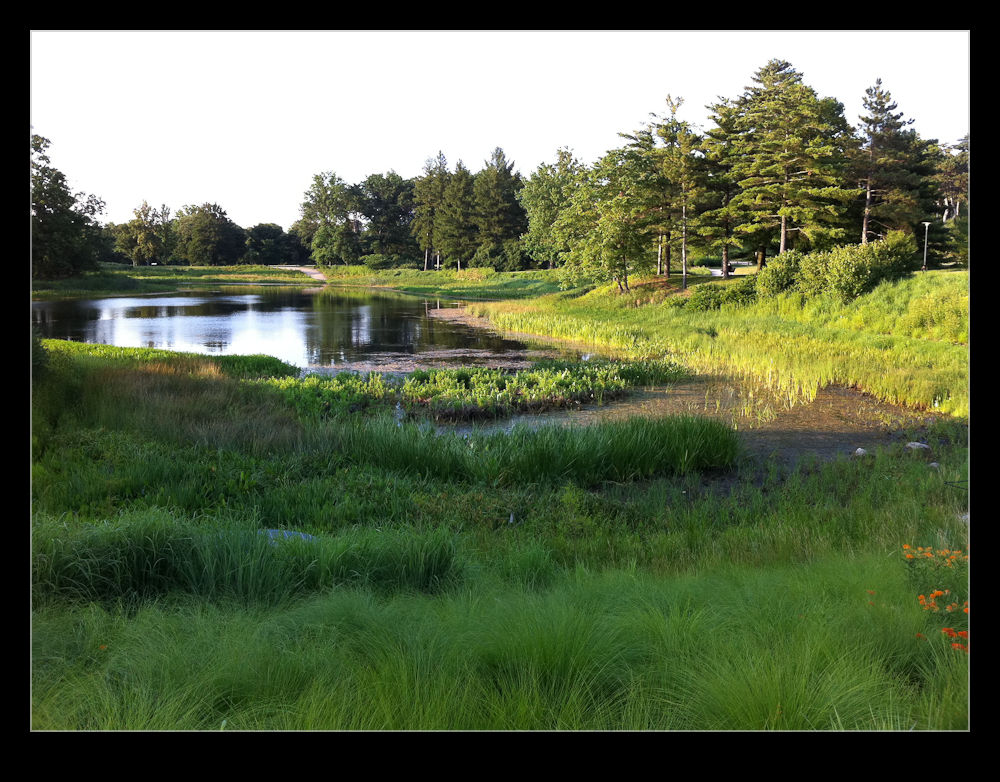
There is a lake near the visitors center which I will have shot a number of times from different directions, usually in the harshest light of the day.  This time I was there when the light was great and as soon as we took a stroll around the lake, I was kicking myself for not having brought my camera with me.

Plan B was my phone.  The camera is okay but not special.  However, it was the best camera I had with me so it would have to do.  It doesn’t handle too much contrast well so a little angling to try and get what I wanted was in order.  Not stunning results but it’s what I got so here you go.

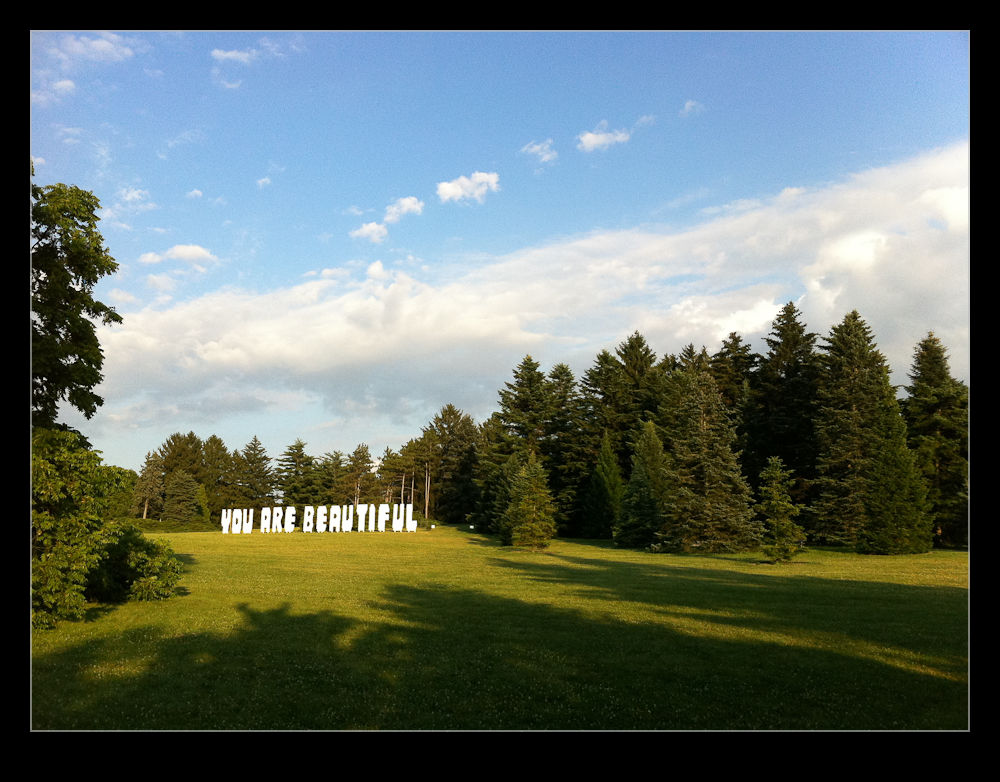
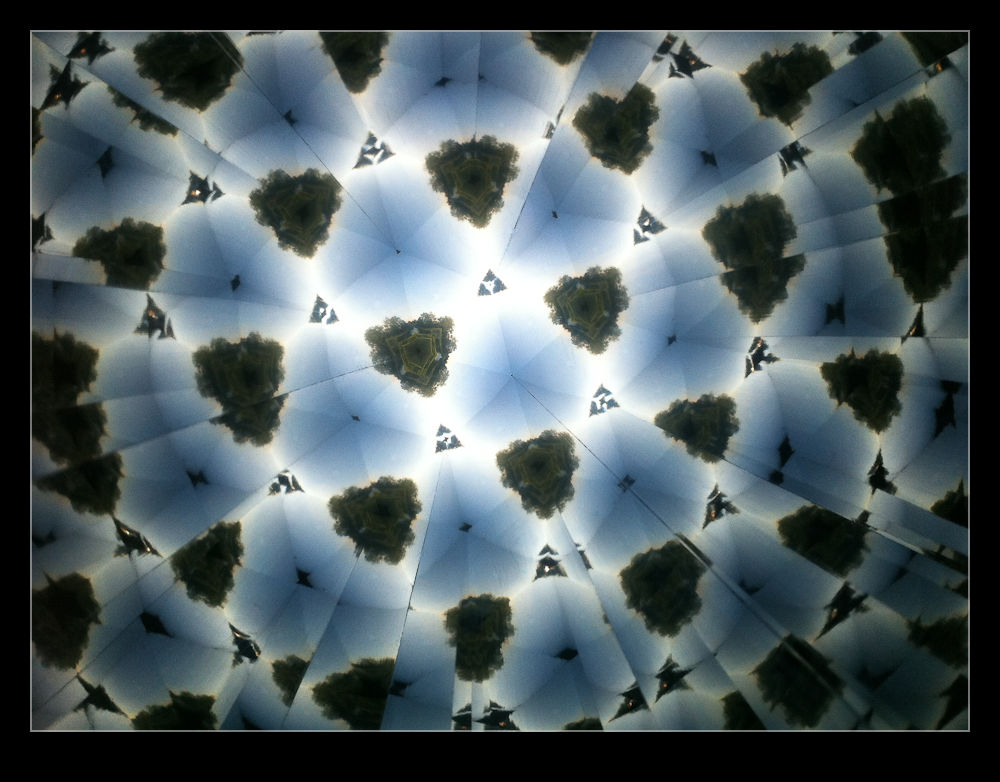
This last shot was something we saw when wandering around.  I might explain more another time…

Bye Bye JAL 747s

When I was a small kid, I had a book called Pictorial History of Aircraft.  This was the 1970s and so the Boeing 747 was still a relatively new kid on the block.  It certainly wasn’t the times of the 400 series being knocked out at the rate of one a week.  The pictures in this book showed Japan Air Lines (JAL) as an operator of both passenger and freighter versions of the jet.

As time passed by, JAL grew its fleet substantially and was for a long time the largest operator of 747s in the world.  Therefore, it is hard to come to terms with the fact that the poor financial state of JAL combined with the introduction of more efficient big twins has meant the 747 has gone from JAL’s passenger operations.  It is odd to know I won’t see one again (except perhaps at a storage yard).  Every once in a while the airline industry has a big change – the end of Pan Am is one that springs to mind.  For me, this is one of those moments.

Anyway, they are gone but I have a few shots of them to remember them by.  I wonder what will be next to go?!

Swallows but no Amazons

When trying to be smart and come up with an amusing play on words for a title, I realized I could be on dangerous territory with this one.  Instead, I decided to play it safe but dull!  Back to the topic…

I was sitting on the shore of Lake Michigan recently watching the swallows do their thing.  I find them a fascinating bird to watch since they have a level of agility that is hard to comprehend.  I guess when you eat by catching insects in mid air, you have to be pretty sharp.  Catching a swallow on the wing is a trickier proposition altogether.  They are hard to pan with and they are small so a long lens helps keep them visible but makes the panning so much harder!

Getting them standing on a non-moving surface makes for a far easier time.  Of course, that isn’t so exciting.  There is always the option to keep trying to get a bit closer without scaring them off.

Then again, you can always try and get the flying shot.  These will never be published but they were better than I expected!

Flashing at the birds

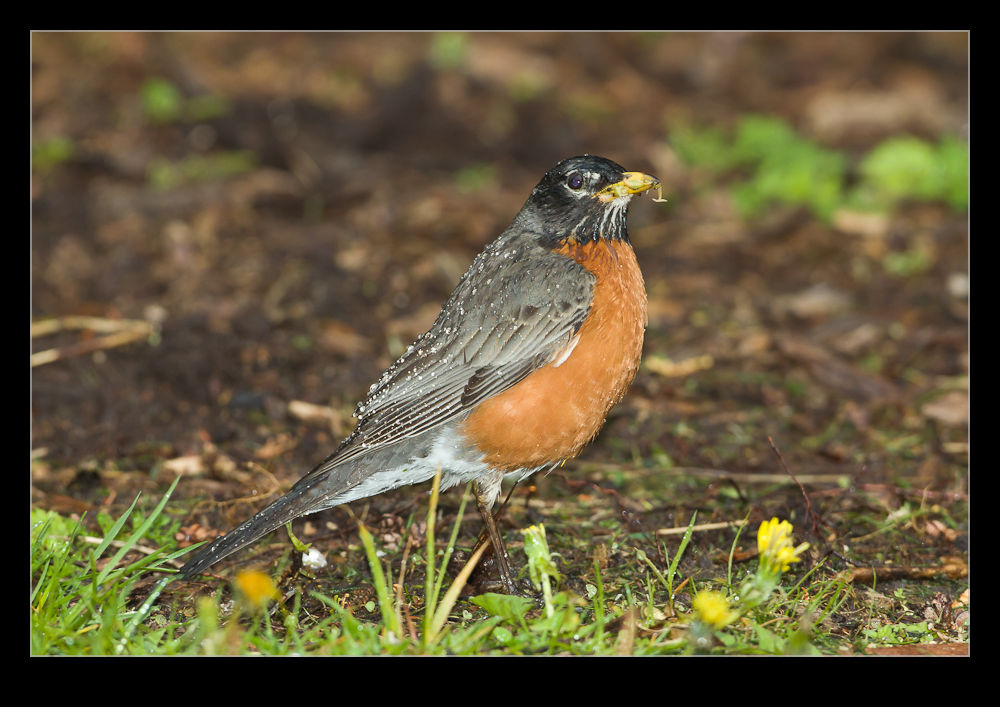
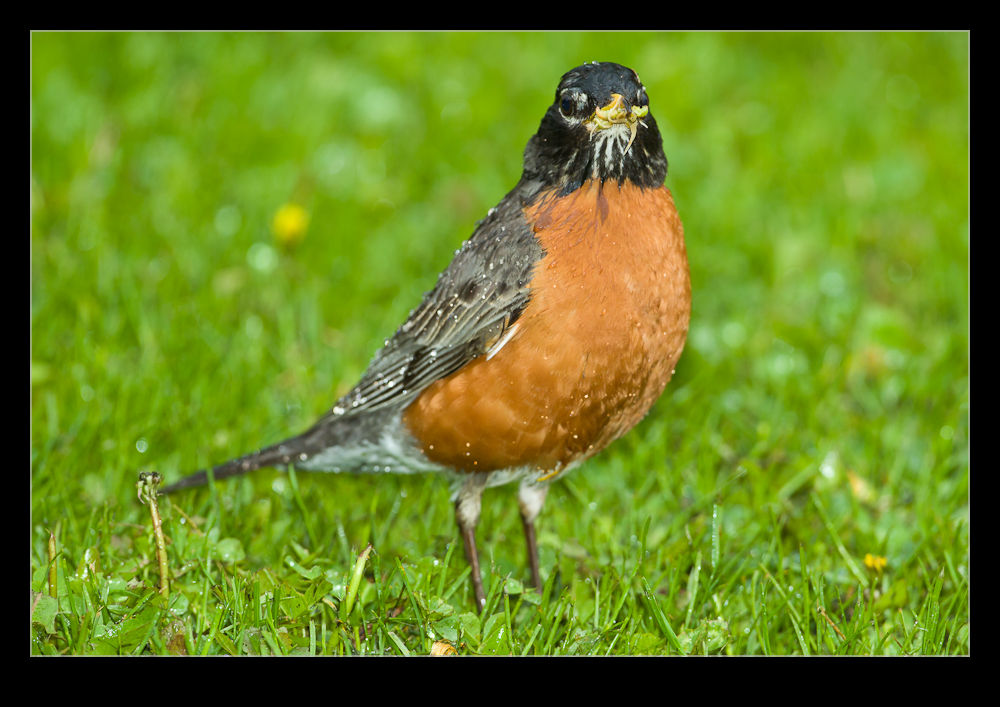
While hanging around up in Door County in Wisconsin, I have been taking a bunch of pictures of the local wildlife. Mainly a lot of birds in the vicinity of our hotel and that is always a fun challenge. To add to the challenge, one of the afternoons that we were back at the hotel, the weather closed in and it began to rain. There was a patch of grass outside our balcony that seemed to be a popular spot for some robins so I started taking some shots.

As you are probably aware, robins are quite bold creatures so, with a little patience, you can end up with them coming reasonably close in. However, with the light having faded fast as the weather deteriorated and the natural shade of the area, it was not looking good to get a good shot. I started out by bumping up the ISO but that was only helping so much and, without a tripod, I was still going to get mixed results.

At this point I decided to try something that everyone who shoots wildlife a lot probably does to some extent but that I had not tried before and that was using some flash to boost the excitement. I had no idea how much to use so experimented with a little extra FEC, then zero and ultimately one stop under on FEC. The latter seemed to have the best results judging by the quick view on the back of the camera – always such a reliable indicator!

I was using the flashgun straight with no boost like a Better Beamer (if that is the right name) so it was a bit of a raw experiment but the results seemed to be be pretty pleasing so this is something I will have to think about further in due course.

Hovercraft Reminiscences

Having taken the chance to shoot one of the LCACs while in San Diego the other week, I decided to have a trip down memory lane for some other hovercraft moments. I have some relatively recent shots of the hovercraft that operate between Ryde and Southsea. I also have some old scans of the massive SRN4 Super 4 hovercraft that used to run across the English Channel taken when I was about to make the crossing on vacation. No great explanations to follow. Just some shots if you want a look.

ISAP Field Trip – Part 3

Back in the bus and it seemed to be running okay now – that is if you didn’t count the clunking that was coming from the suspension almost directly under my seat! Of course, there was still a question as to whether our driver knew where he was going. However, after a few wrong turns, we did arrive at our last destination of the day.

This was Gillespie Field and, more specifically, Bill Allen’s collection. Bill has developed a series of properties on the field that are combination homes and hangars. They are designed to have a really vintage look though and create a mini village at one end of the field.

Bill was an excellent host. Aside from making his place open to us and providing very welcome refreshments and food, he had some great aircraft on display including Stearmans and a Bucker Jungmeister. This was the day preceding the field’s airshow so a variety of interesting aircraft were arriving while we were there.

As I walked in, a familiar dace wandered up. Paul Dunn if Global Aviation Resource was there. Work had brought him to LA and he had taken the chance to come down and spend time with the subject of one of his articles, Captain Eddie, owner of an immaculate Fairey Firefly. Paul suggested I head around the corner to see it before too many people spotted it. Indeed it was a beautifully restored example and I grabbed a few shots.

We all then retreated to the grass near the Jungmeister. As the evening drew in, the light was just getting better and better. There was no urgency to shoot so we relaxed on the grass, occasionally hopping up if something new appeared. A beautiful evening in great surroundings with friends was pretty idyllic.

As the light finally faded we had a couple more treats. A pair if the Stearmans fired up for some dusk passes across the field. Meanwhile, another aircraft was staged for a lighting demonstration by Joe McNally. He put together the shot and built up a selection of flashes to light it, showing us the whole process as he went. Very interesting, even if I did feel a touch guilty running off occasionally when the Stearmans made another pass.

Finally it was dark and time to bid farewell to Bill and Gillespie and head back to the hotel. What a day!