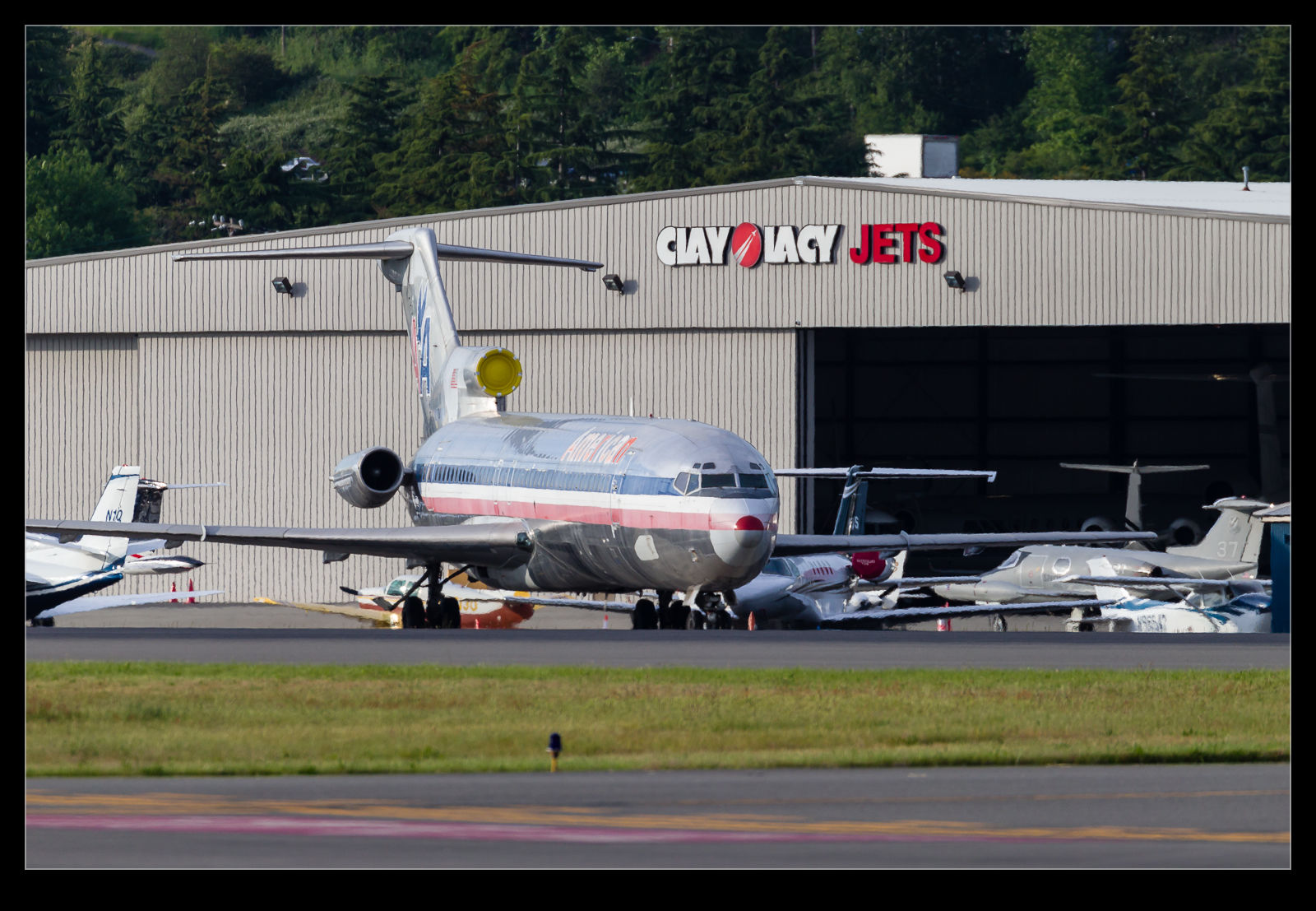
The Museum of Flight in Seattle is currently in the process of building a new facility. While the work is underway, a number of airframes have been moved from their previous location to alternative spots until they can be moved to their new home. Most of them are still near the museum itself. However, the 727 seems to have drawn the short straw and it was parked up on Clay Lacy’s FBO ramp while I was visiting. It was near Joe Clark’s Learjet as well. Some cool stuff to look at for any visiting jets at the FBO!
Tag Archives: jet
Redmond Airtanker Base
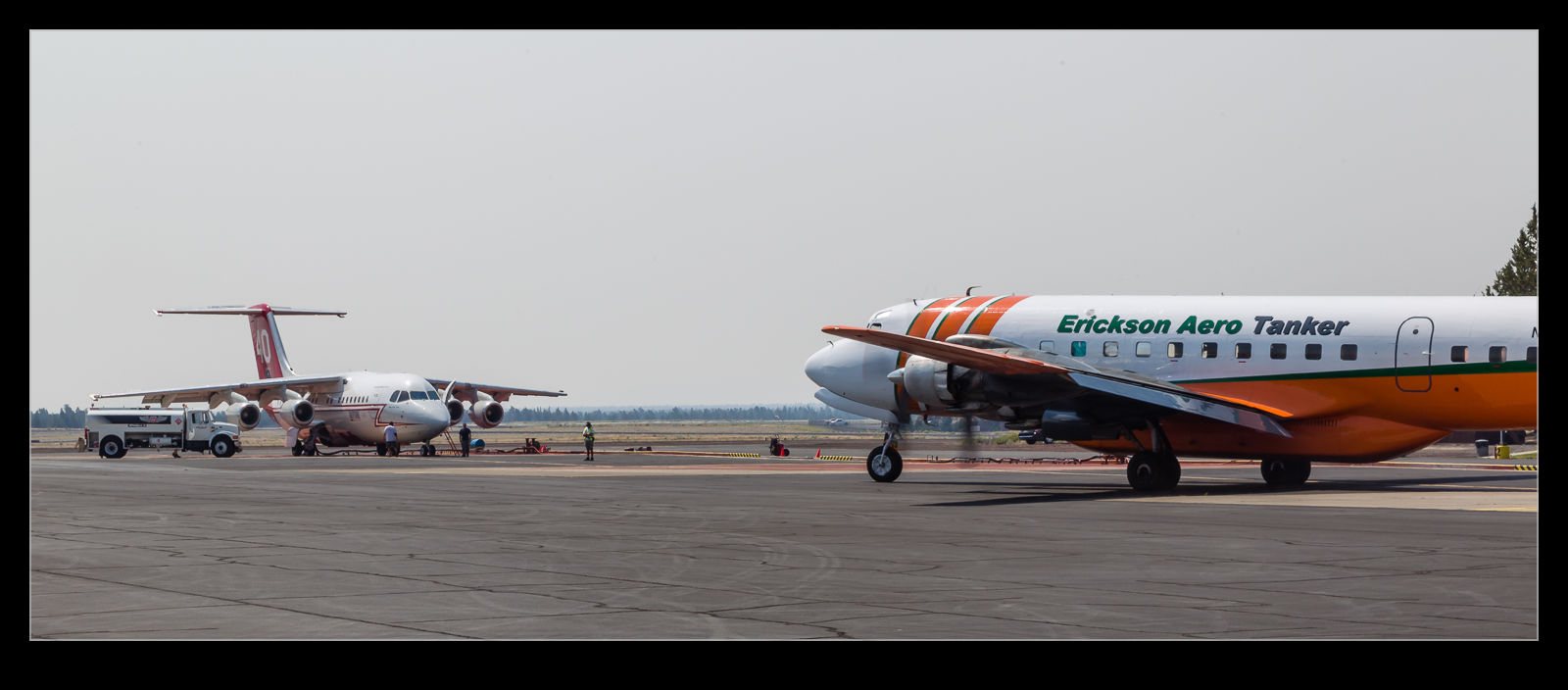
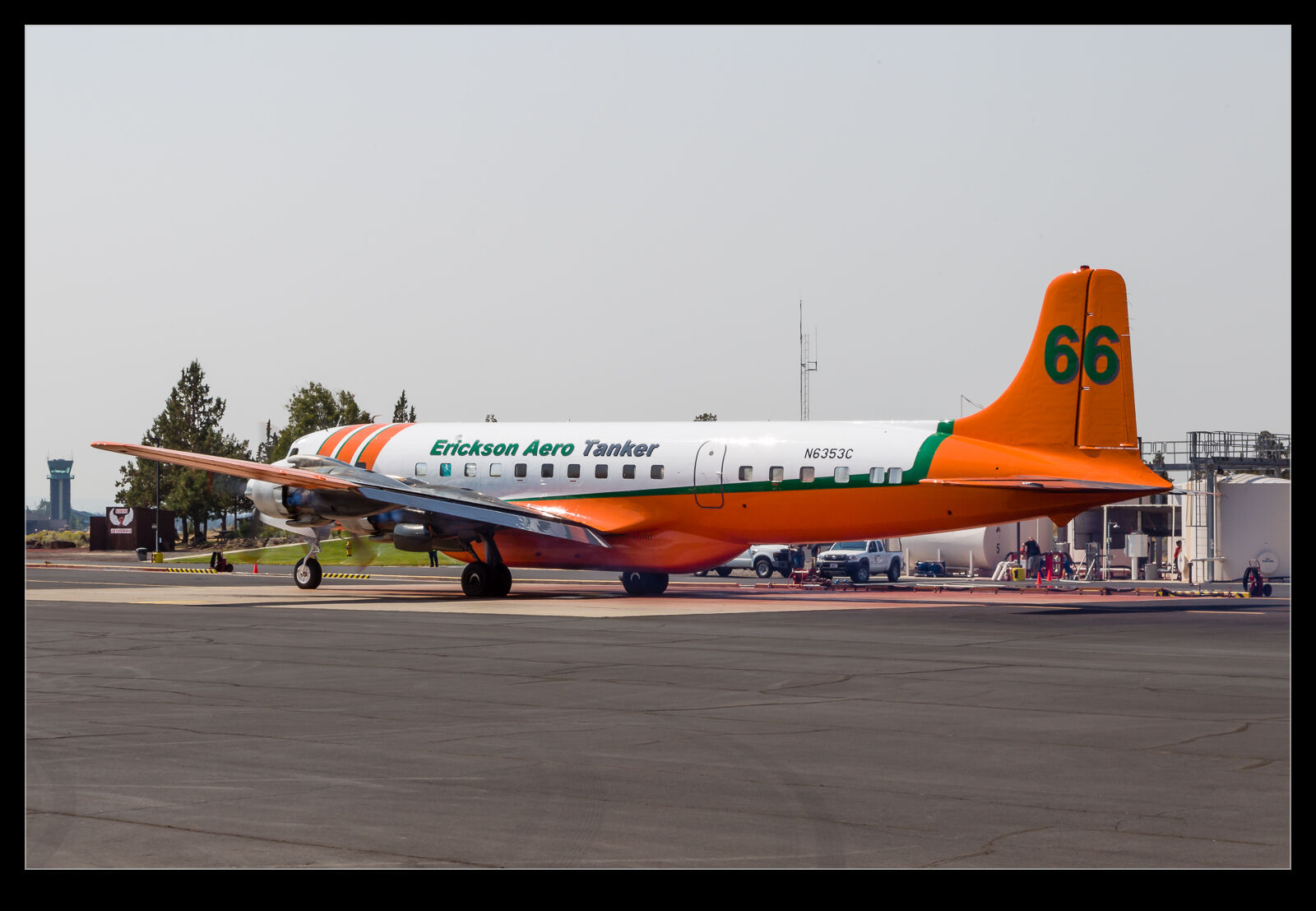
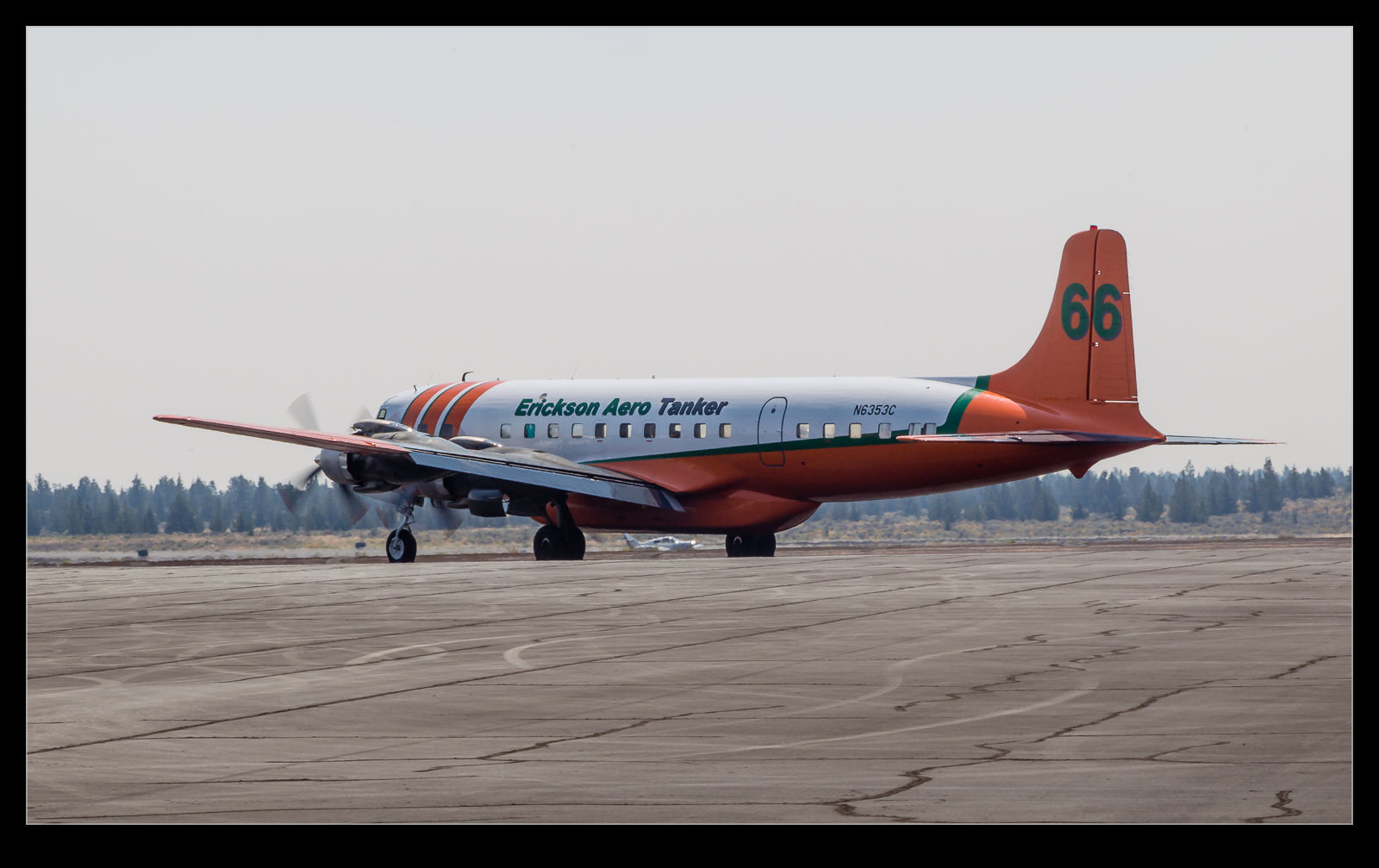
My trip to Madras involved flying in to Redmond airport, about half an hour south of Madras. Hayman and I came in on the same flight and shared a ride to Madras. As we drove out of the airport, something interesting caught my eye on the other side of the field so we did a little exporting before heading off. Redmond has a base for Airtanker operations in support of firefighting. The aircraft that I had first seen was a DC-7 that had been converted for tanker operations and was painted up in Erickson colors. It looked immaculate and the activity suggested it might be preparing to depart. With fires in the surrounding hills, there was plenty of work.
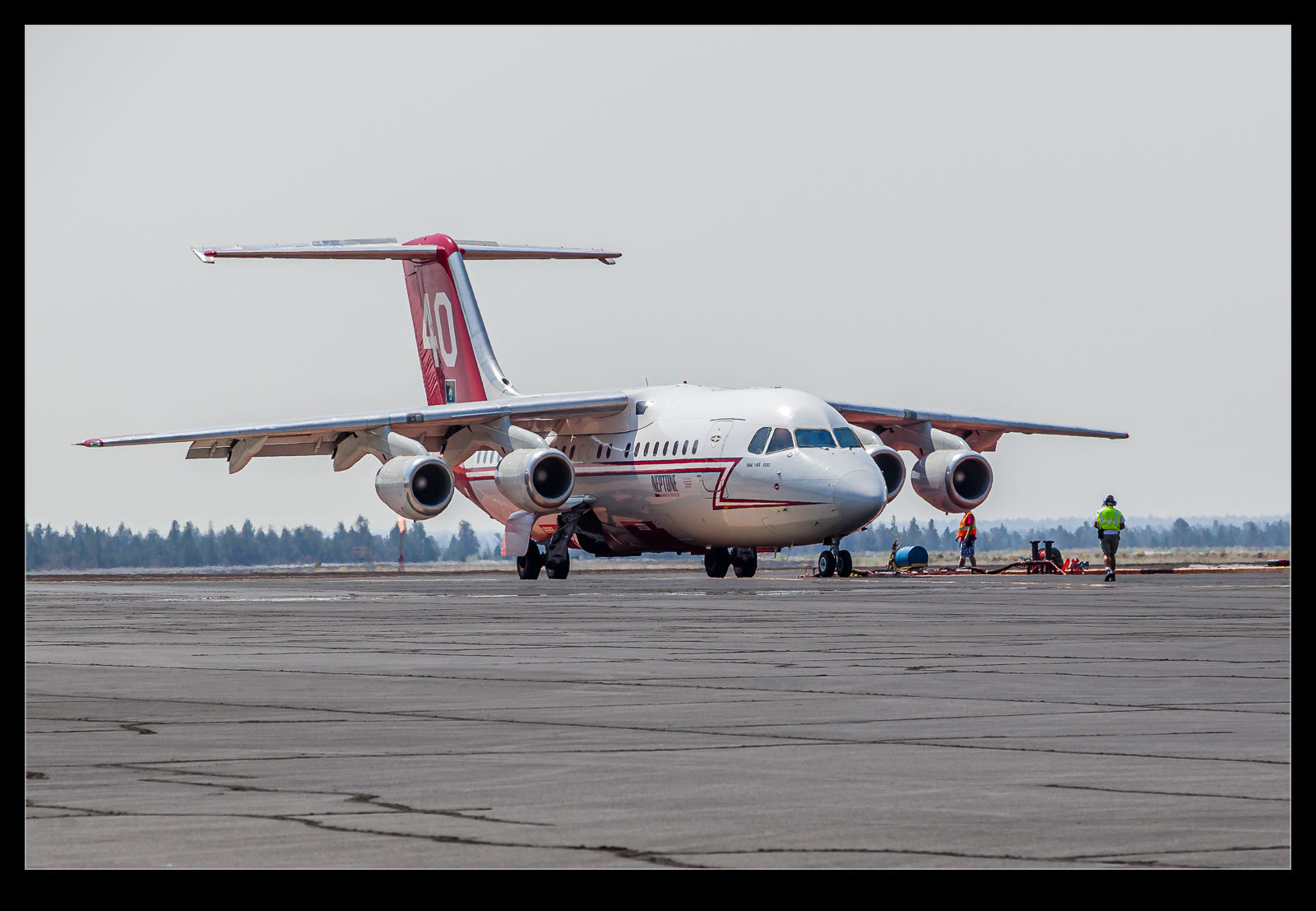
While we waited for it to start up, a BAe146 tanker conversion landed and taxied in to the base. It was the first time I had seen one in person. Sadly the fencing around the base was rather touch to shoot through. Hayman made good use of the gap under the gates but my camera shape did not allow that. I had to make do with shooting through the fence where possible.
Shortly after the 146 came in, the DC-7 fired up and taxied out. With it gone, we figured it was time for us to continue on our way too.
Kfirs
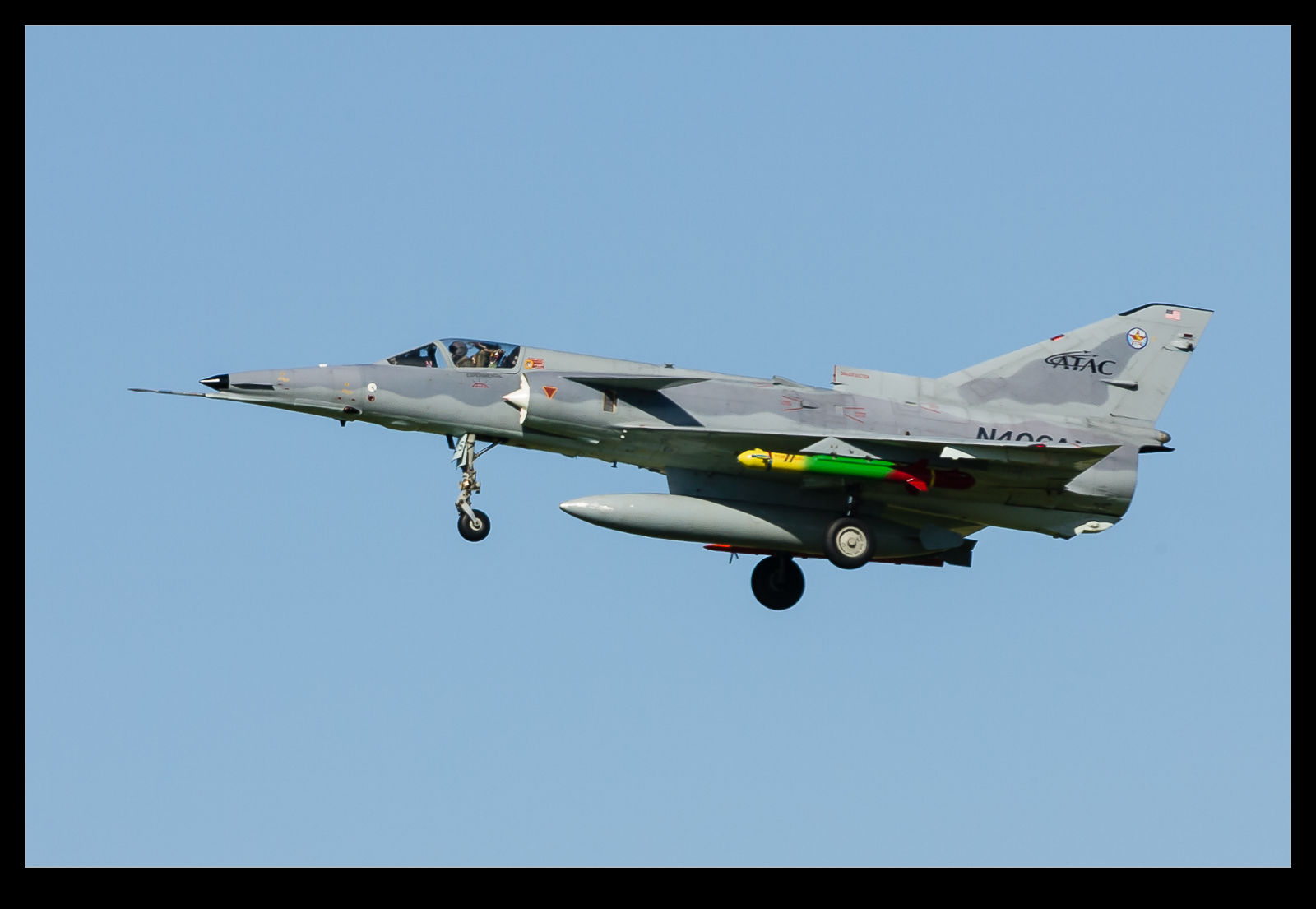
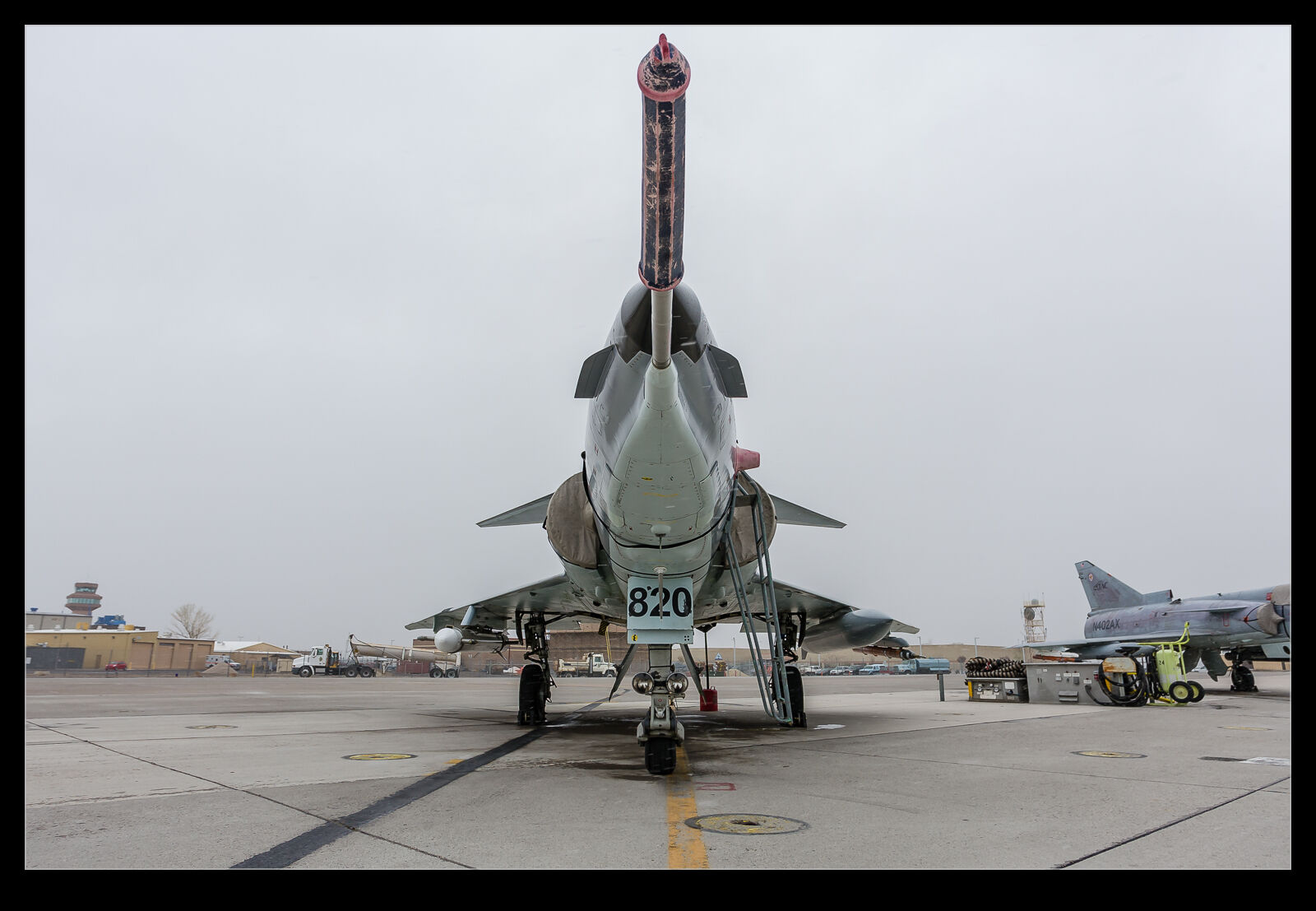
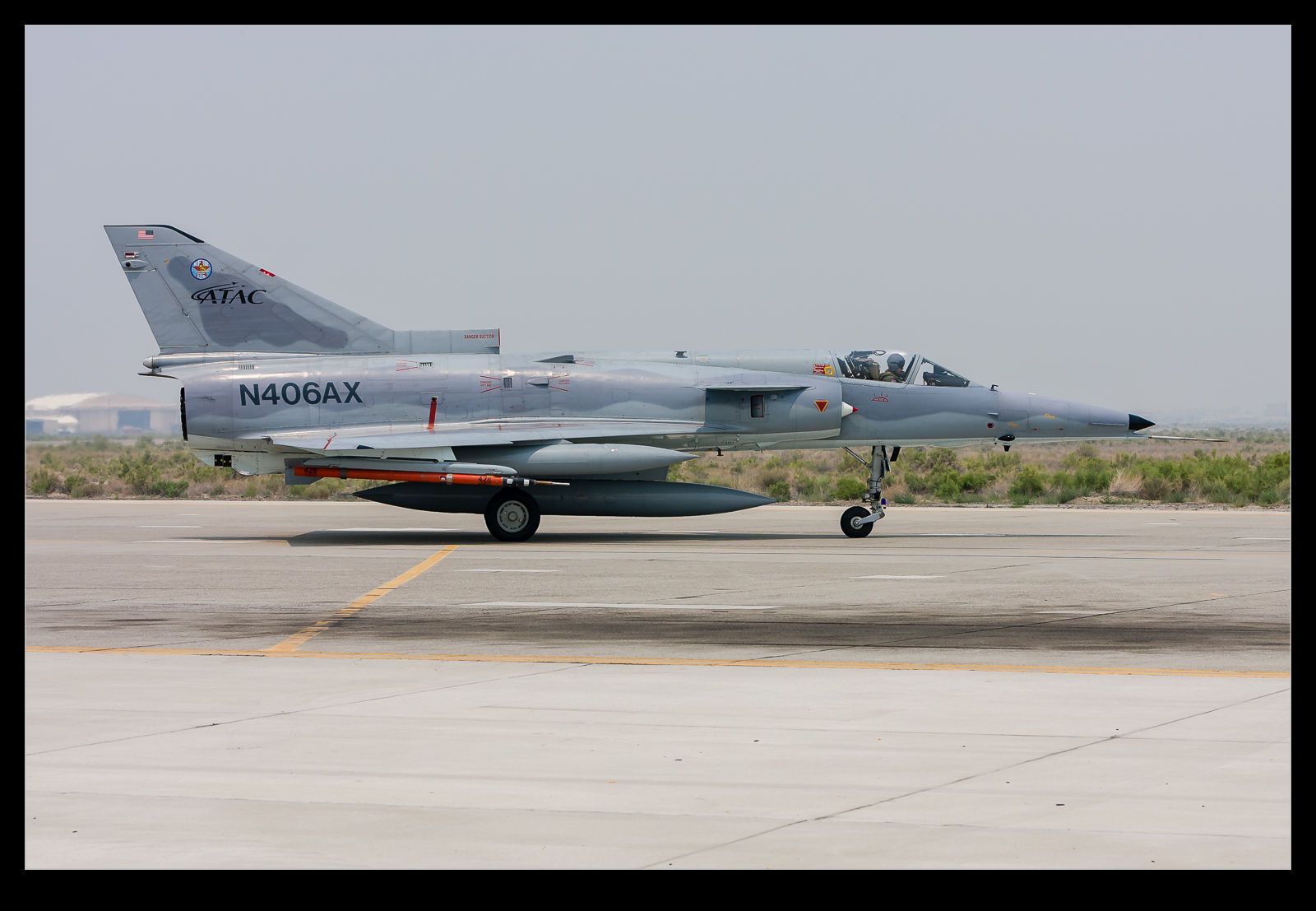
Time for another post on a specific military aircraft. This time it is one with an interesting history. The Israeli Air Force was a customer of Dassault’s Mirage aircraft and had good experience with it. However, Dassault/France declined to sell further aircraft to Israel. Instead, the Israelis decided to make their own version. A combination of covert acquisition of design drawings and the introduction of a new engine resulted in the creation of the Kfir.
During the 1980s, a number of Kfirs were supplied to the US Navy to be operated as aggressor aircraft under the F-21 designation. Their use in service was not terribly long but, once they were withdrawn, they were acquired by private companies to use in support roles for training. I have come across them a couple of times. One was at Pt Mugu in California when an example was shooting approaches. The other time was during a visit to NAS Fallon in Nevada where they were launching on training missions.
The Kfir is quite a mean looking aircraft. The original delta wing design has many good attributes but approach speed is not one of them and they really do seem to be motoring when they come down the approach. I imagine they will remain in service for a number of years to come so I hope to see more in due course.
Last of the Good Light
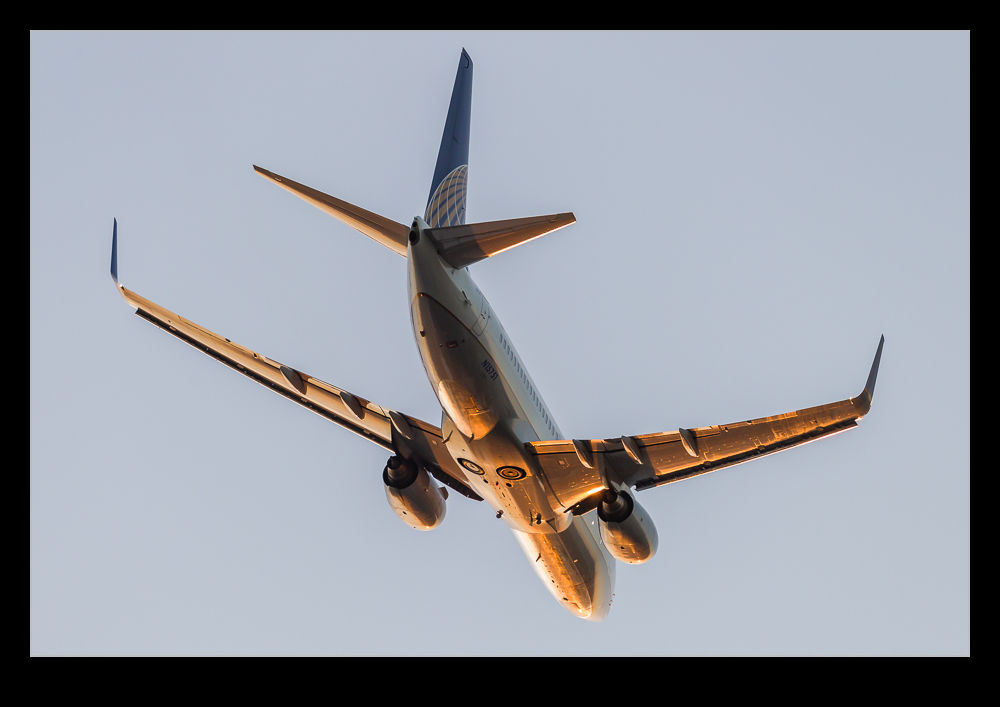
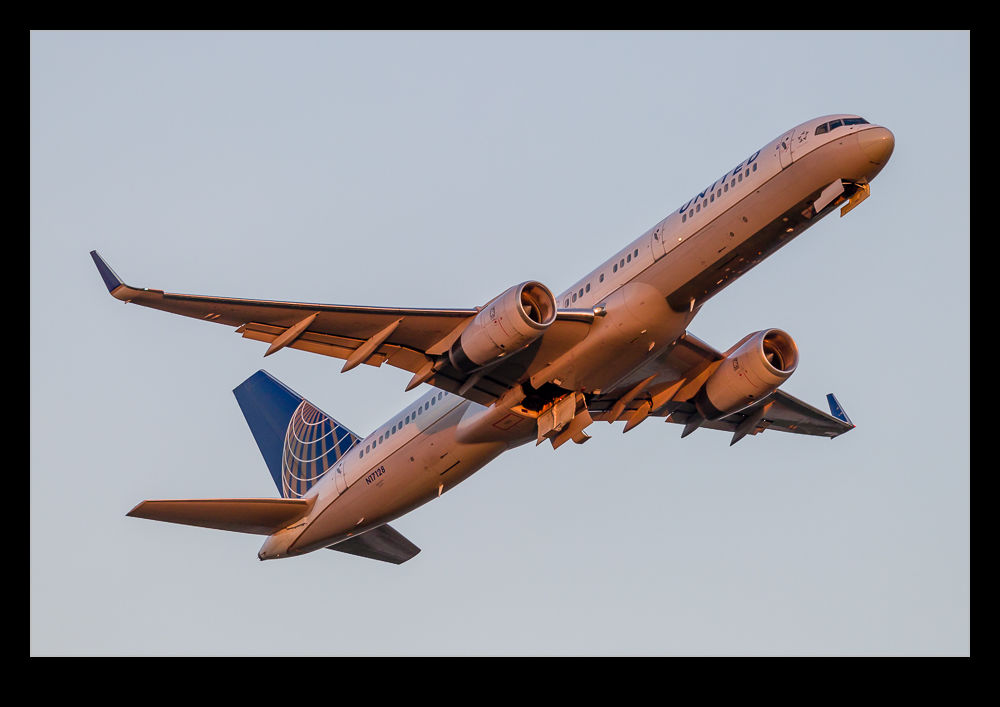
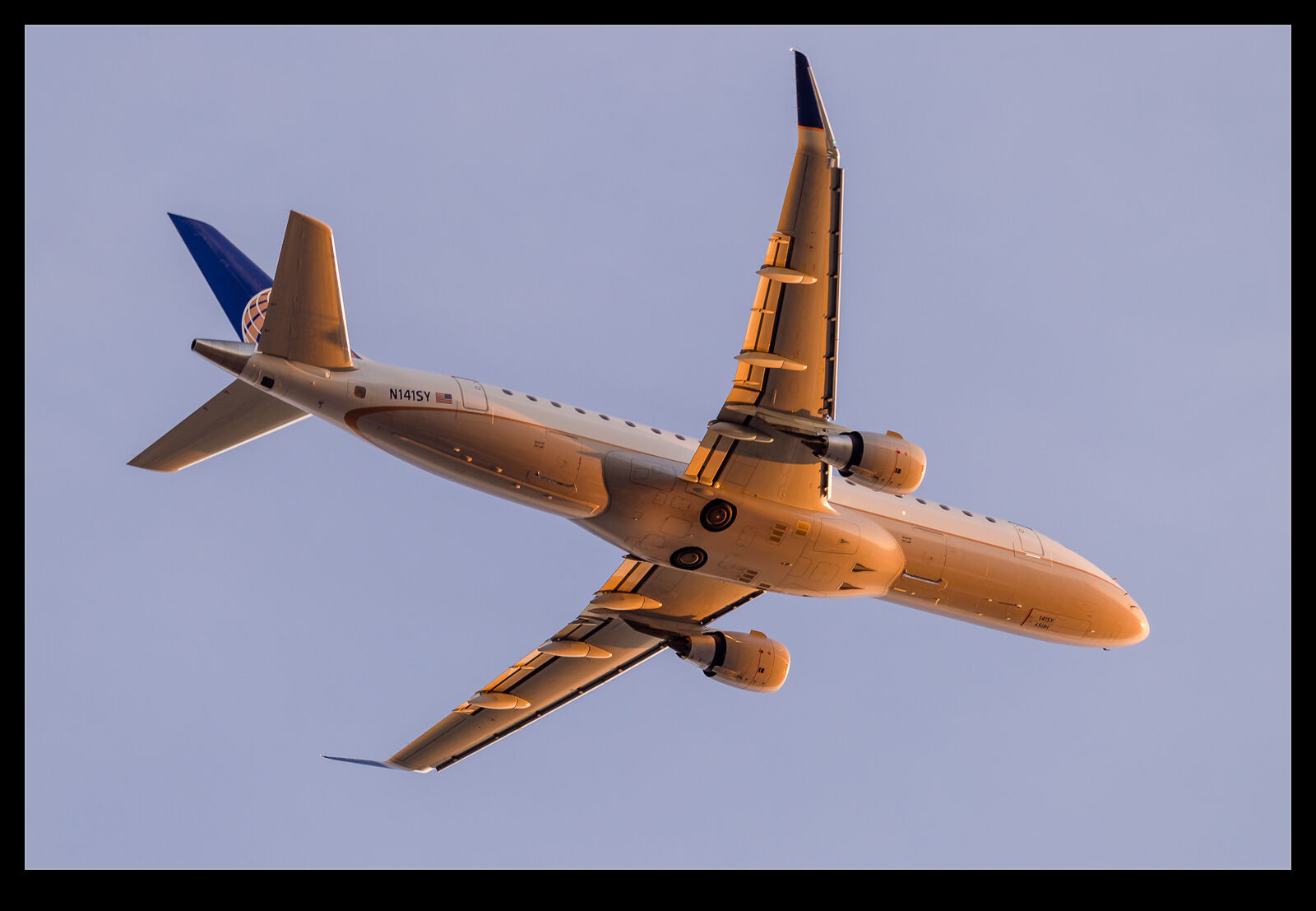
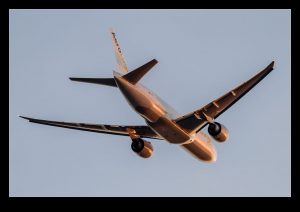
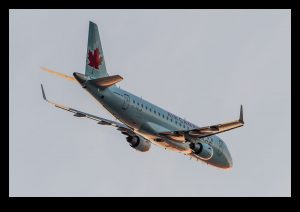
Getting some lovely evening light means the steady improvement in shooting conditions right up until the point when it all goes away. The light was on the nose of the departing jets so was good as they climbed out. Once they were passed our location, they were partially backlit but, since the sun was very low in the sky, the undersides of the jet were illuminated as it climbed. This provided some great options.
As the sun got even lower, the shade was beginning to be an issue for the front shots but the sky still provided a few nice options as the jets were heading away. The back of a plane might not always be the best side to shoot but, if the light is playing ball, it can be good. Of course, the transformation from great to gone is pretty quick so you make the best of it and then you can go home!
MiG29
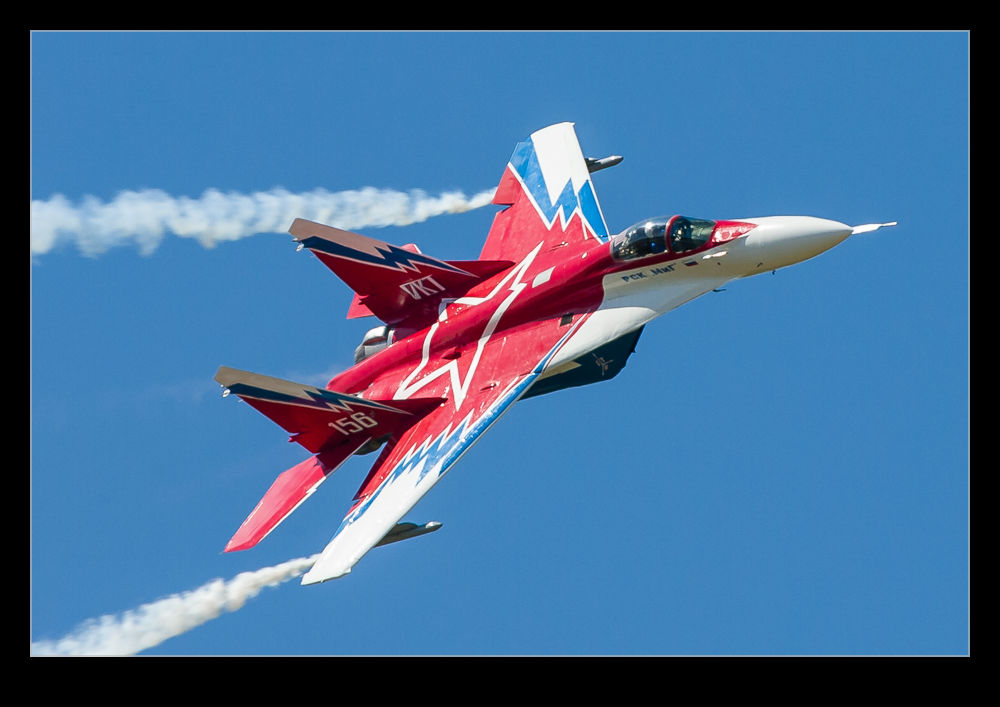
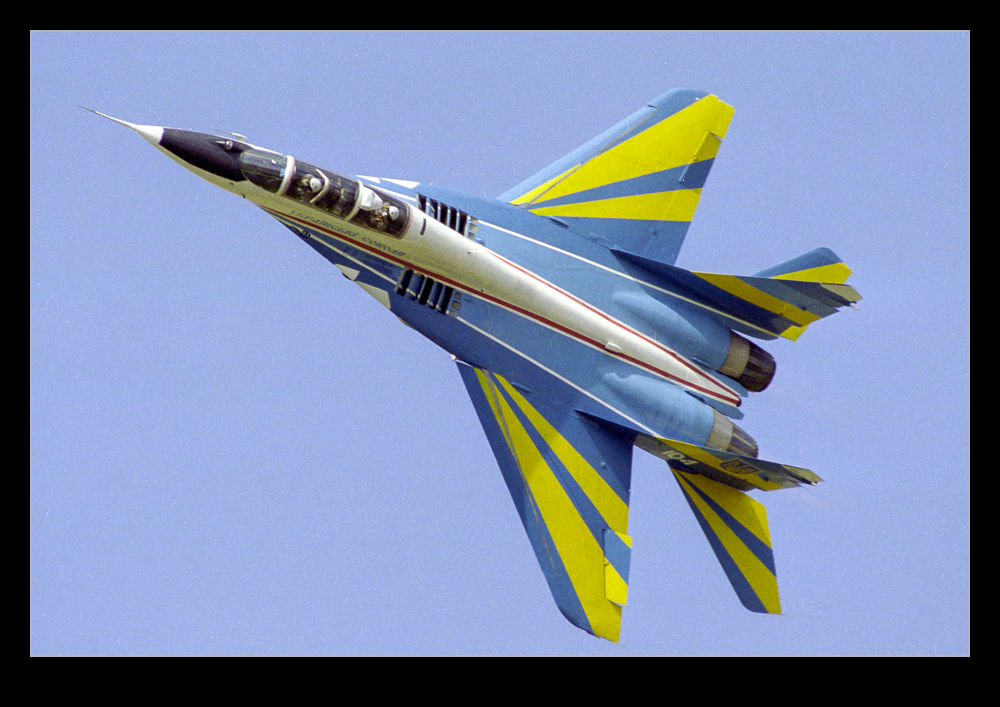
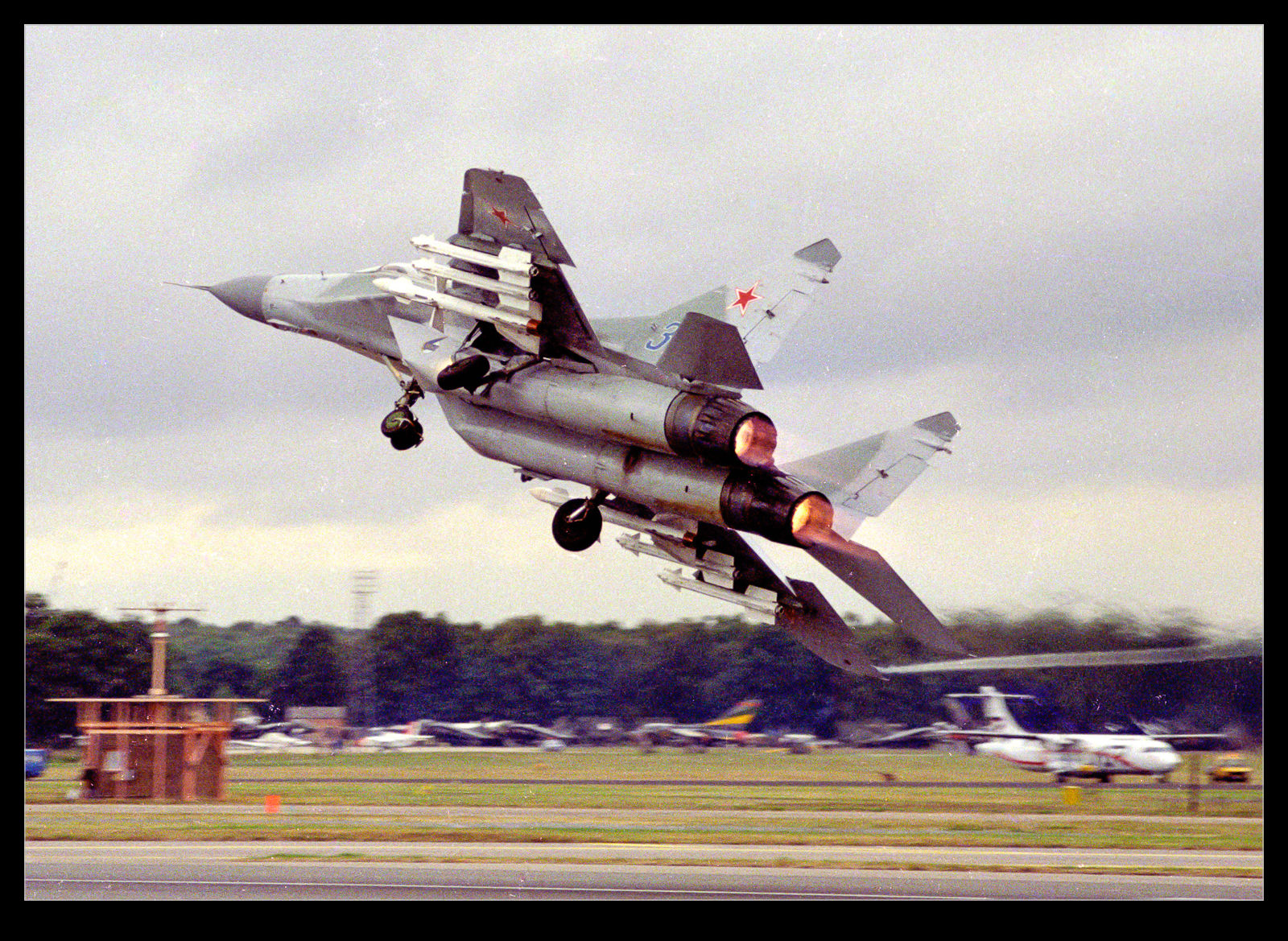
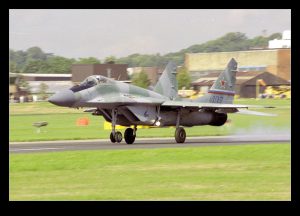
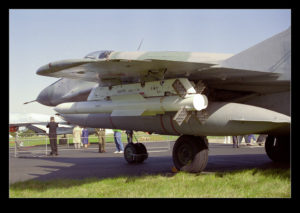
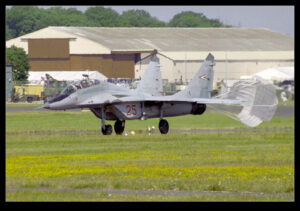
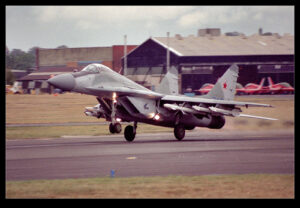
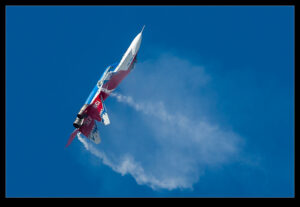
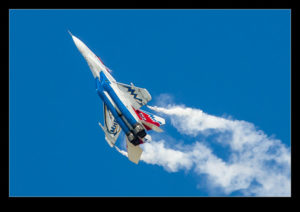
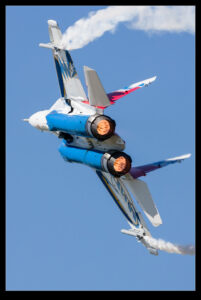
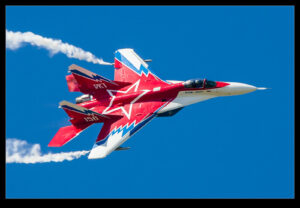
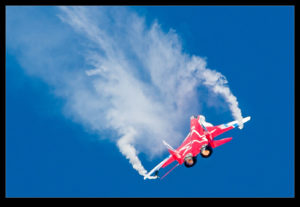
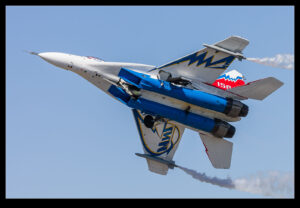
Continuing through my theme of looking at individual types, I came across some old pictures of the MiG-29. I figured I could get a post out of them so here we are. I saw quite a few of the Fulcrums in the late 80s and early 90s when they started traveling further afield. My first encounter was when the Russian Air Force brought a pair to Farnborough. They showed up again in a later year and then examples from other eastern bloc air forces started coming to the UK once the wall came down.
The quality of my film shots from those days is not great but you can see a bit of what was on offer. The Ukrainian aircraft showed up in some really cool colors. The best shots I have are of the MiG-29OMT which was a demonstrator that came to the UK in 2006 and displayed at RIAT. It had thrust vectoring nozzles to enhance maneuverability and put in a pretty impressive display.
Lots of the operators today are starting to look at replacements. The age of some airframes along with the support issues are pushing them to renew while interoperability with NATO forces is another driver for change. I’m not sure how many more I will see flying although there are a good number in museums. There are a couple in private hands here in the states (one of which I saw being towed from across Paine Field) so they might be my best bet.
Is That a Crosswind?
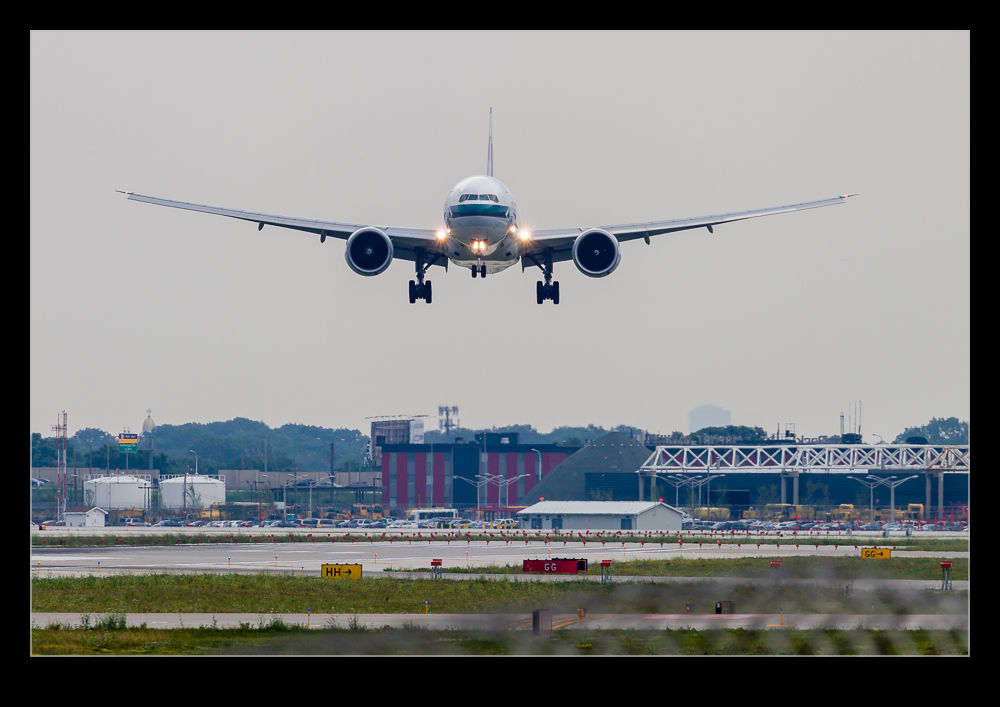
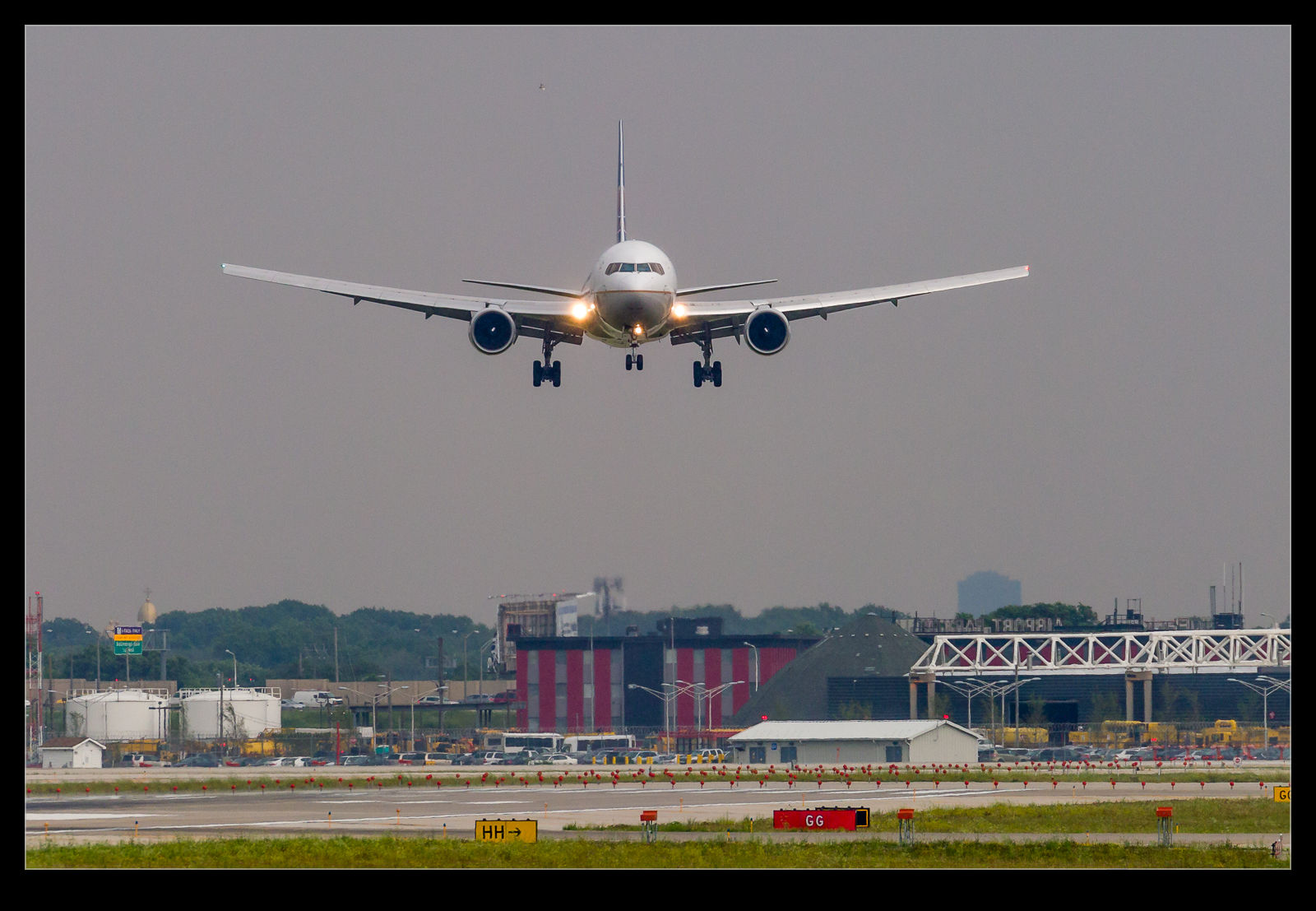
Unless you are on the center-line of the approach, you rarely get to see the aircraft directly head on. If there is a crosswind from your direction, though, you can get the planes pointing straight at you for a while. Sadly, this usually is while they are further out on the approach. If you are closer to the runway then you can get a shot that is more interesting because there is some ground to provide context to the angle of the plane. With a strong enough crosswind, you can get a head on shot until close to touchdown.
There is a location that I shot at once that is no longer available. It provided a good opportunity to get shots on a strong crosswind day. A Cathay Pacific 777-300ER demonstrates what I mean. A long airliner like a 777 emphasizes the effect even better when it swings around just before touchdown. The photos don’t demonstrate that as well as a video would but it did look cool. It wasn’t the only one either!
What is Happening on This 767?
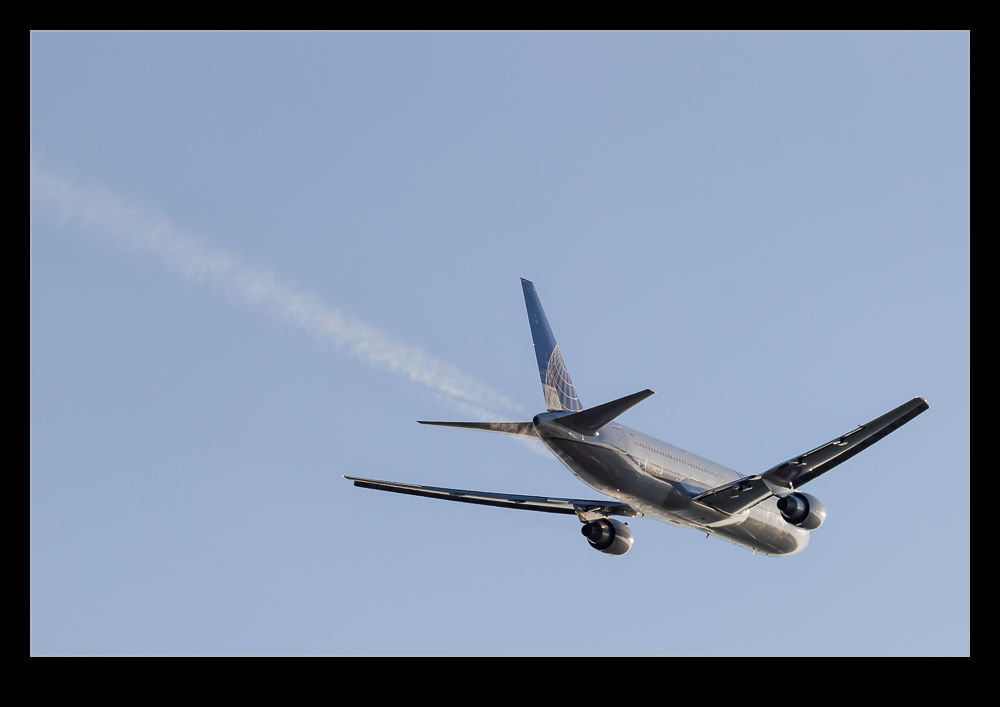
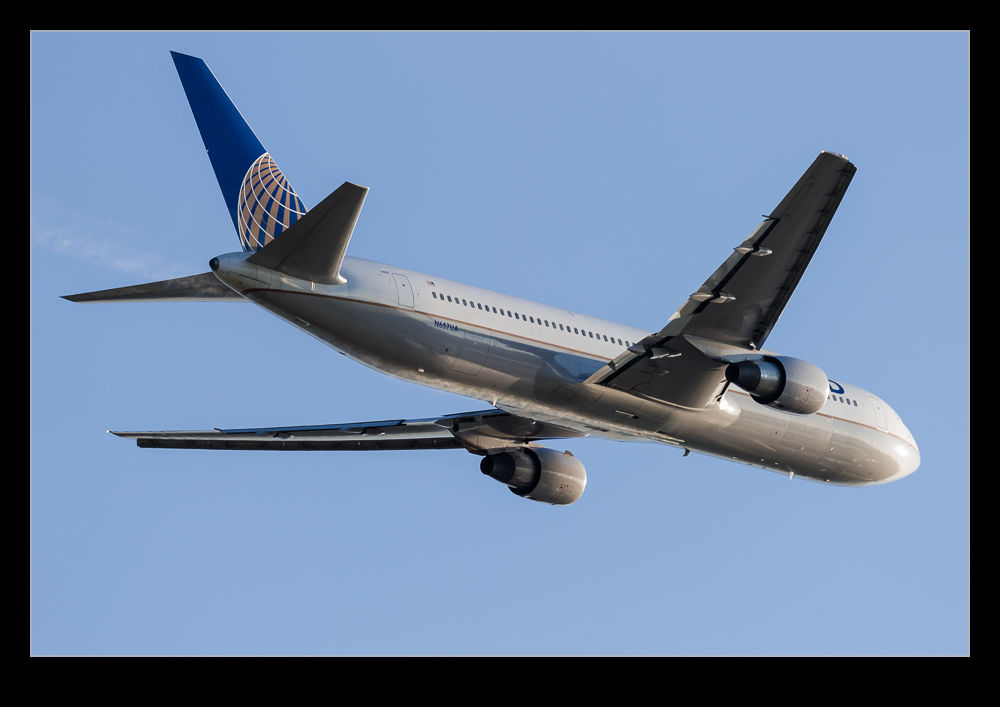
Every once in a while you see something and you have no idea what is going on. As a United 767 climbed out from O’Hare, it was streaming something from the fuselage. I saw it through the viewfinder at the time and figured it would be obvious what it was when I looked at the pictures. It turns out I still don’t know what was happening. Anyone reading this that has any ideas, please let me know what you think.
Let’s All Go To Europe
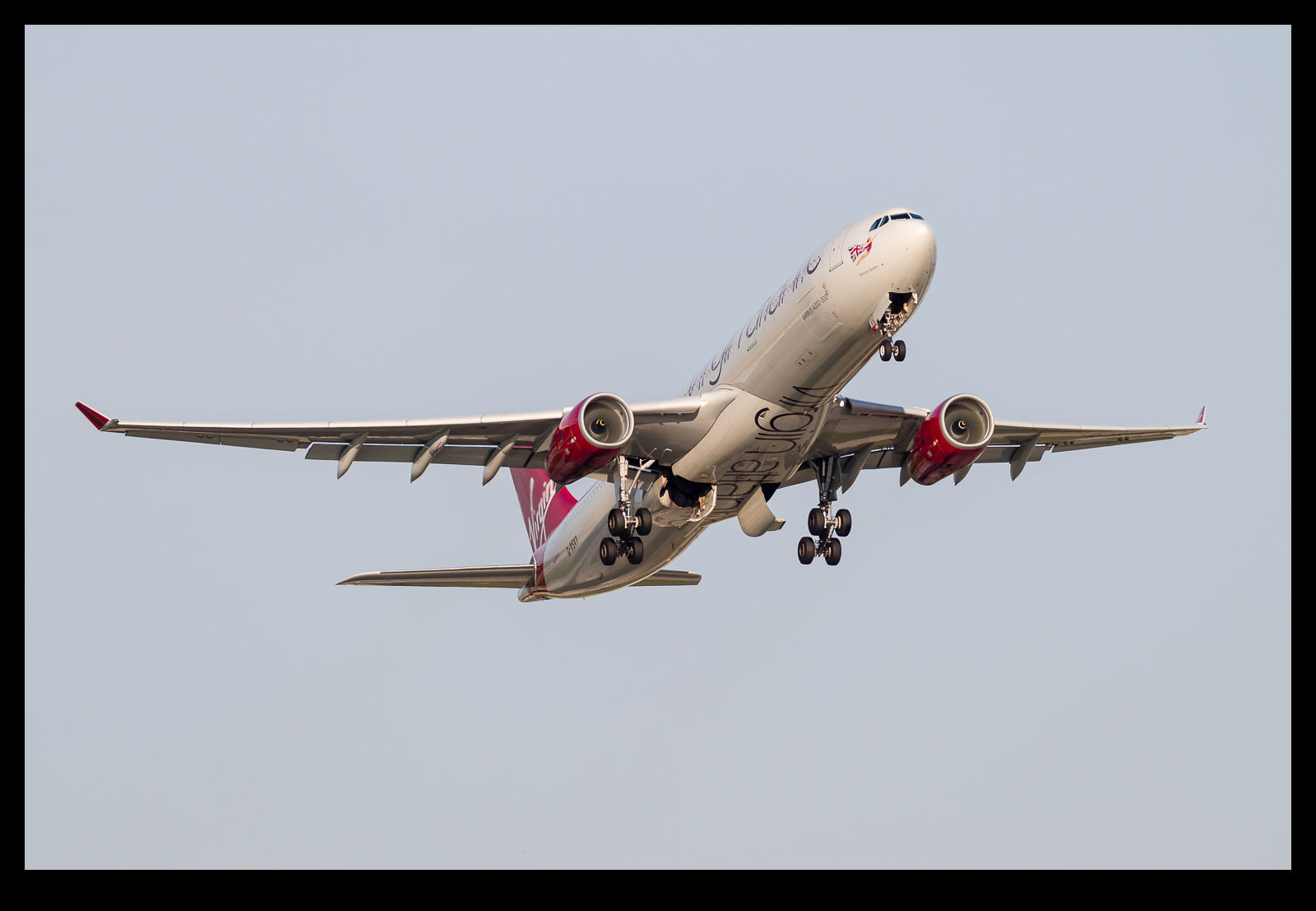
The early evening period at O’Hare is the time when the departures to Europe get into full swing. The flights to the U.S. Tend to arrive from lunchtime into the mid afternoon so a regular turnaround means they are ready to head out later in the afternoon for the overnight trip back to Europe for a morning arrival. When the winds are from the west, this means you get the low sun angle on the nose of the aircraft which is pretty ideal.
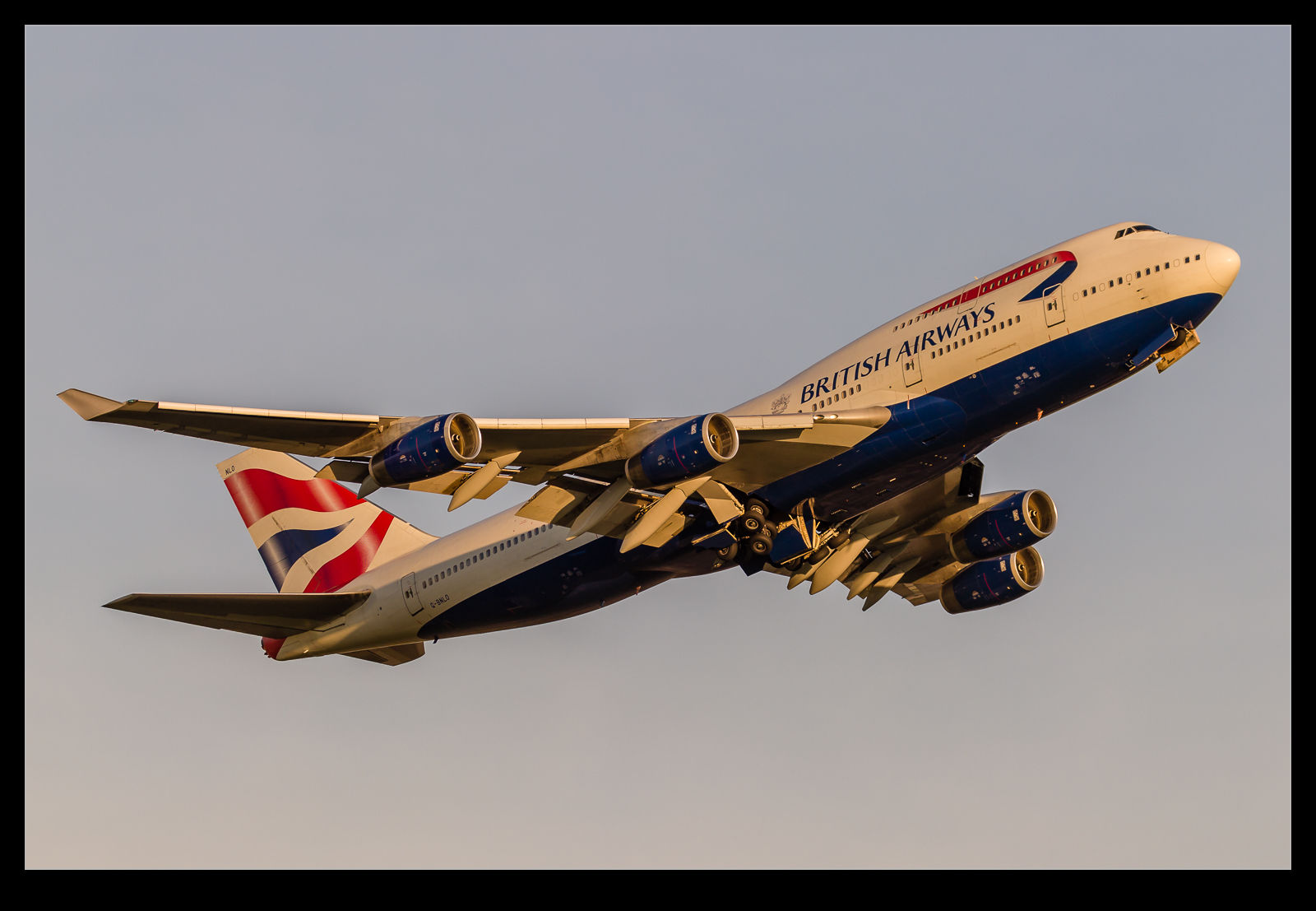
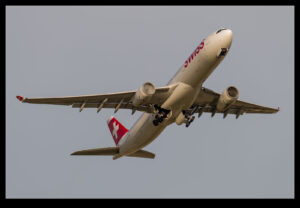
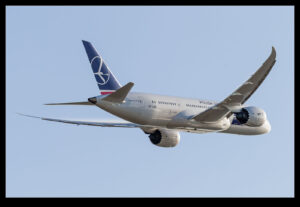
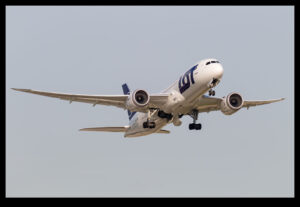
It is a great time to shoot. Everything heads out in a pretty compressed timescale so you get a lot of interesting aircraft in a short period of time. The variety o types has taken a bit of a hit in recent years as things tend to get focused on similar aircraft for the similar missions. However, you still get a mix of A330s, 787s, some 777s and even the occasional 747.
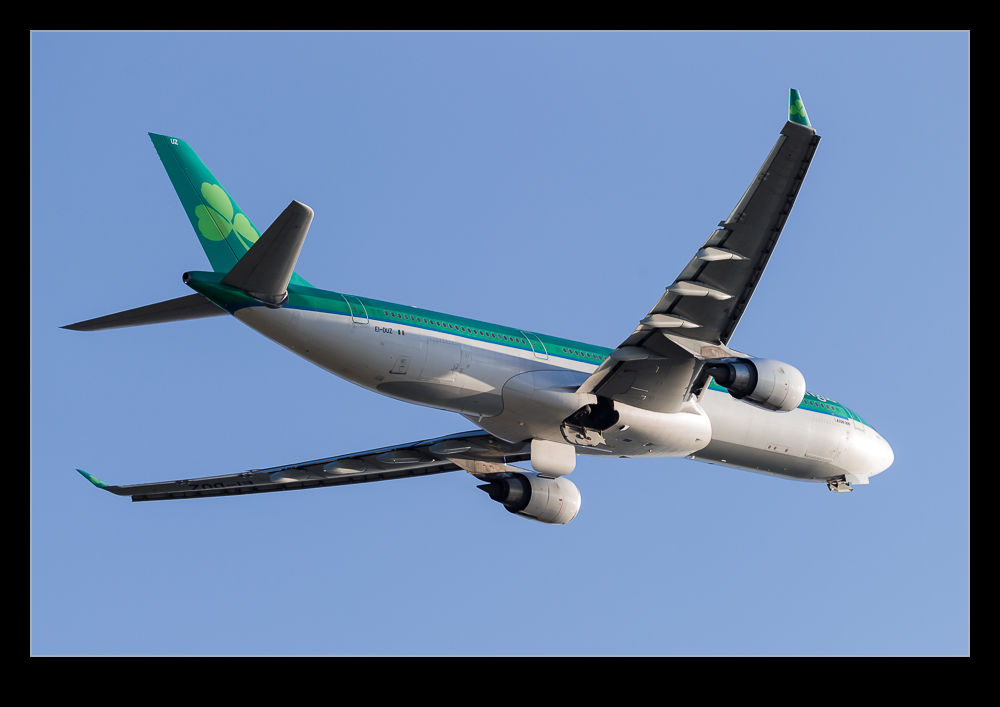
There are a few flights that run a little earlier or a little later which meant I didn’t get a comprehensive collection of what is on offer but there was still plenty to make the time well spent. The fact I was hanging out with a good bunch of guys made the whole event far more enjoyable. If there was a quiet time, we could spend it talking as long as someone was paying attention to whatever was taxiing out. At the western end, there are large earth banks which restrict the view of the field. Instead, you predict where the planes will appear and make sure you are ready. The noise is usually a clue!
Nextant 400XT
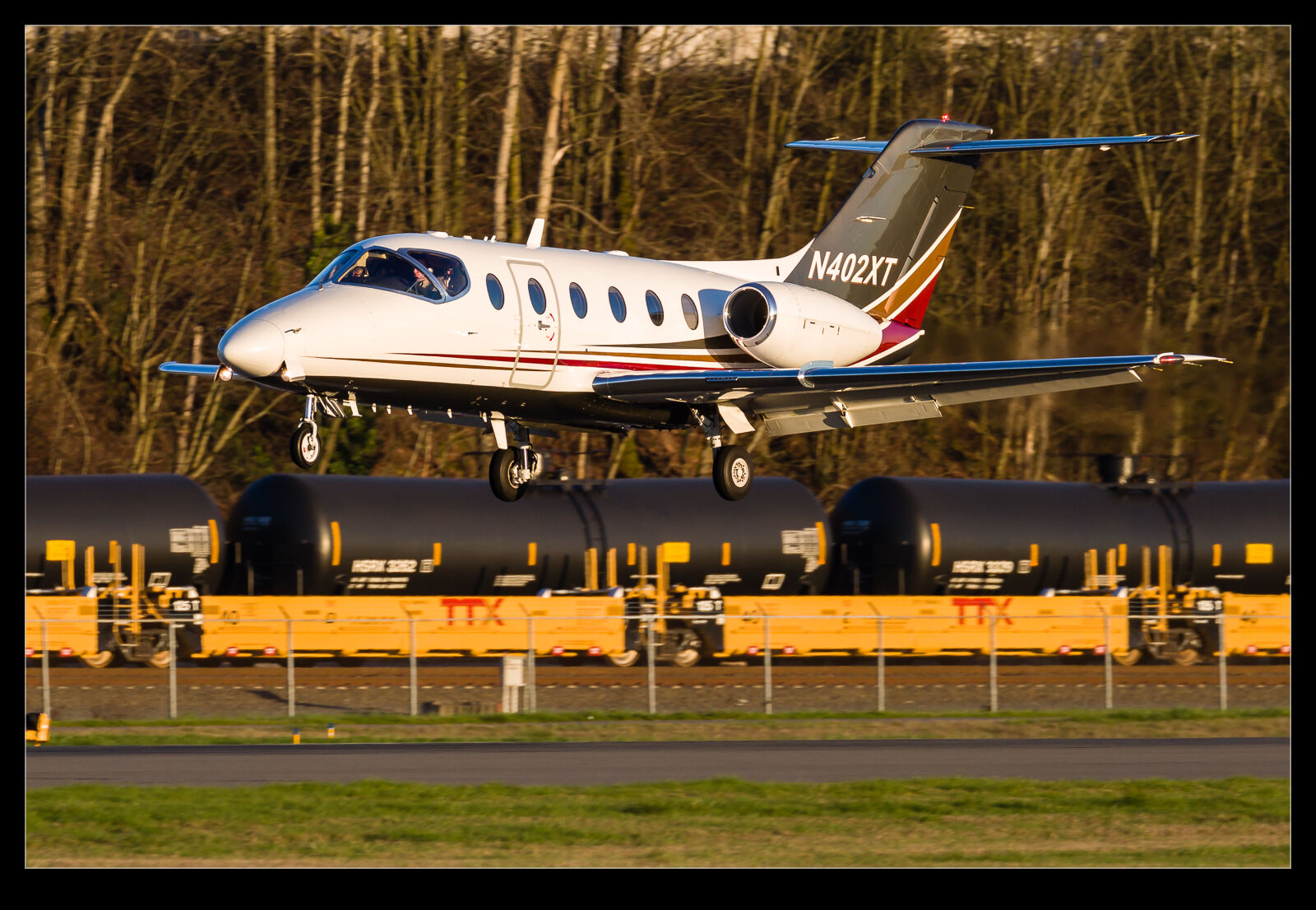
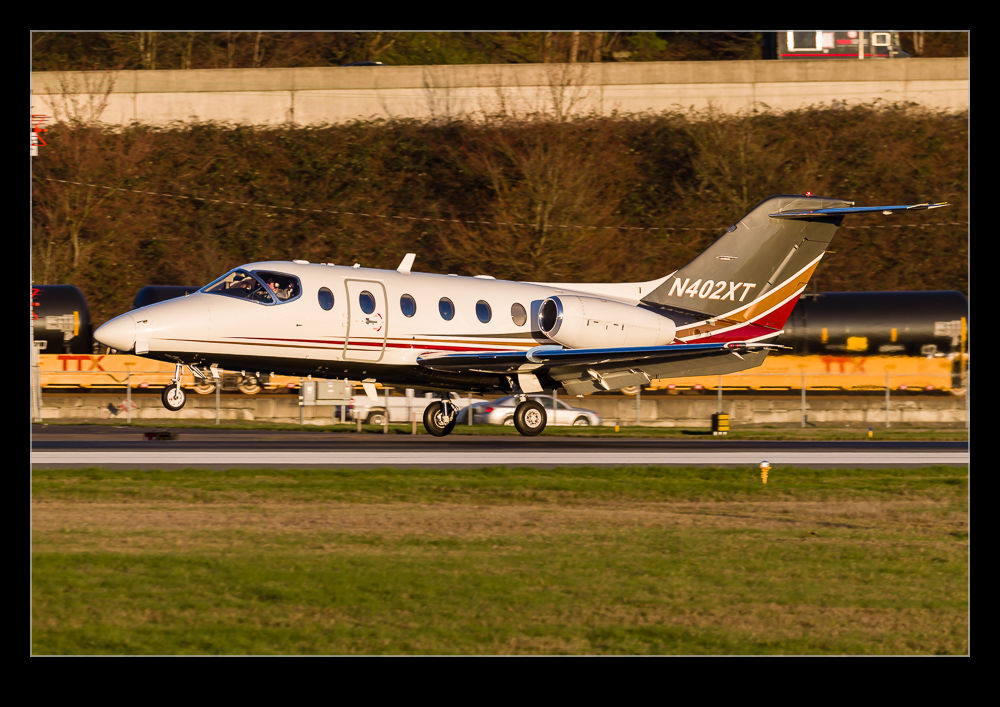
The smaller end of the corporate jet market has taken a pounding in recent years. The downturn in the economy hit that part of the market particularly hard. One company that has been doing well, though, is Nextant. Their first product is the rebuilding of the Hawker 400 jet. They re-engine it, upgrade the cockpit and completely rebuild the interior. The result is the 400XT. This example showed up at Boeing Field while I was there. It looked pretty nice in its new paint scheme. I was never terribly bothered by the Hawker 400 (or Beechjet or Mitsubishi jet if you go back a while) and the shape isn’t much changed. However, the paint job on this one made it look better than average. Nextant are now working on a King Air rebuild program.
Down the Runway
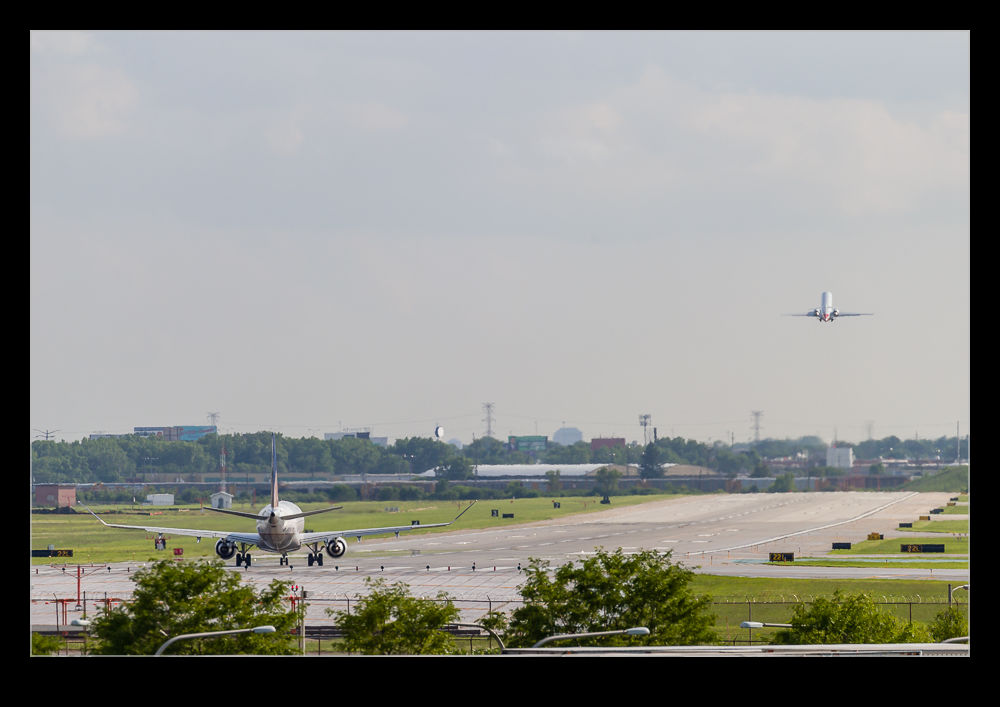
Getting an unusual perspective is one of those goals we set ourselves when out shooting. It is not tricky to get similar looking shots on a regular basis and this blog is often populated with such stuff. However, finding a new angle on something is cool. The view down the runway is one I like. It gives some context to what is going on when planes are operating. Usually a good viewing location is hard to find but a bit of elevation can be helpful.
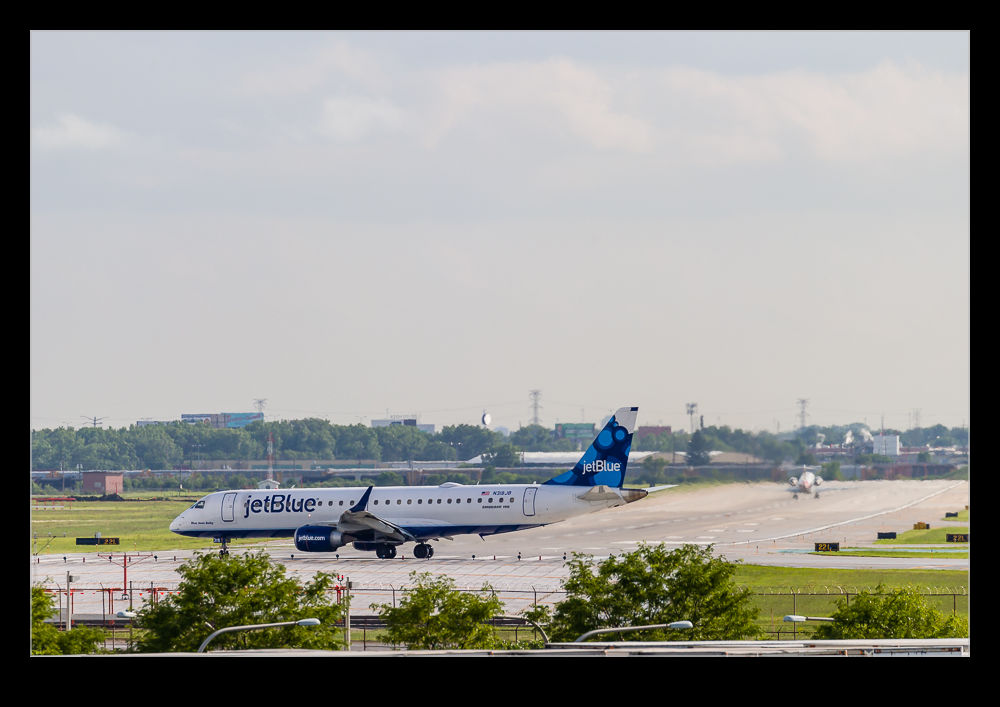
In Rosemont, there is a road that goes over a bridge crossing some railroad tracks. It just happens to be pretty much in line with runway 22L. As the rebuilding of O’Hare’s runways continues, 22L will eventually disappear. However, it is currently used primarily for departures. While it is a bit far away, you do tend to get the chance to have one aircraft taxiing into position for departure while another is getting airborne at the far end. This emphasis on the busy nature of O’Hare is part of the strength of this location.