Tag Archives: airplane

A Different Trimotor

EAA undertake nationwide tours where they take a Ford Trimotor to local airfields and give people the chance to experience a ride in a plane from another era.  One of their regular stops is San Carlos CA.  When I saw them operating there on a previous occasion (and posted about it here), they brought an airframe that I had seen a number of times before at Oshkosh and around Illinois.  This time they brought a different airframe which is slightly larger and accommodates one extra passenger.

It would have been rude not to pop along at least once to see it in action.  It did appear to be slightly larger to my eye but that was not a scientific assessment.  The different paint finish was the real giveaway that they had brought something different.  The conditions were nice to get some shots.  I was planning on catching it again when it came to another local field but the weather ended up being pretty awful so this was my only encounter.
Hercules Tankers at Nellis

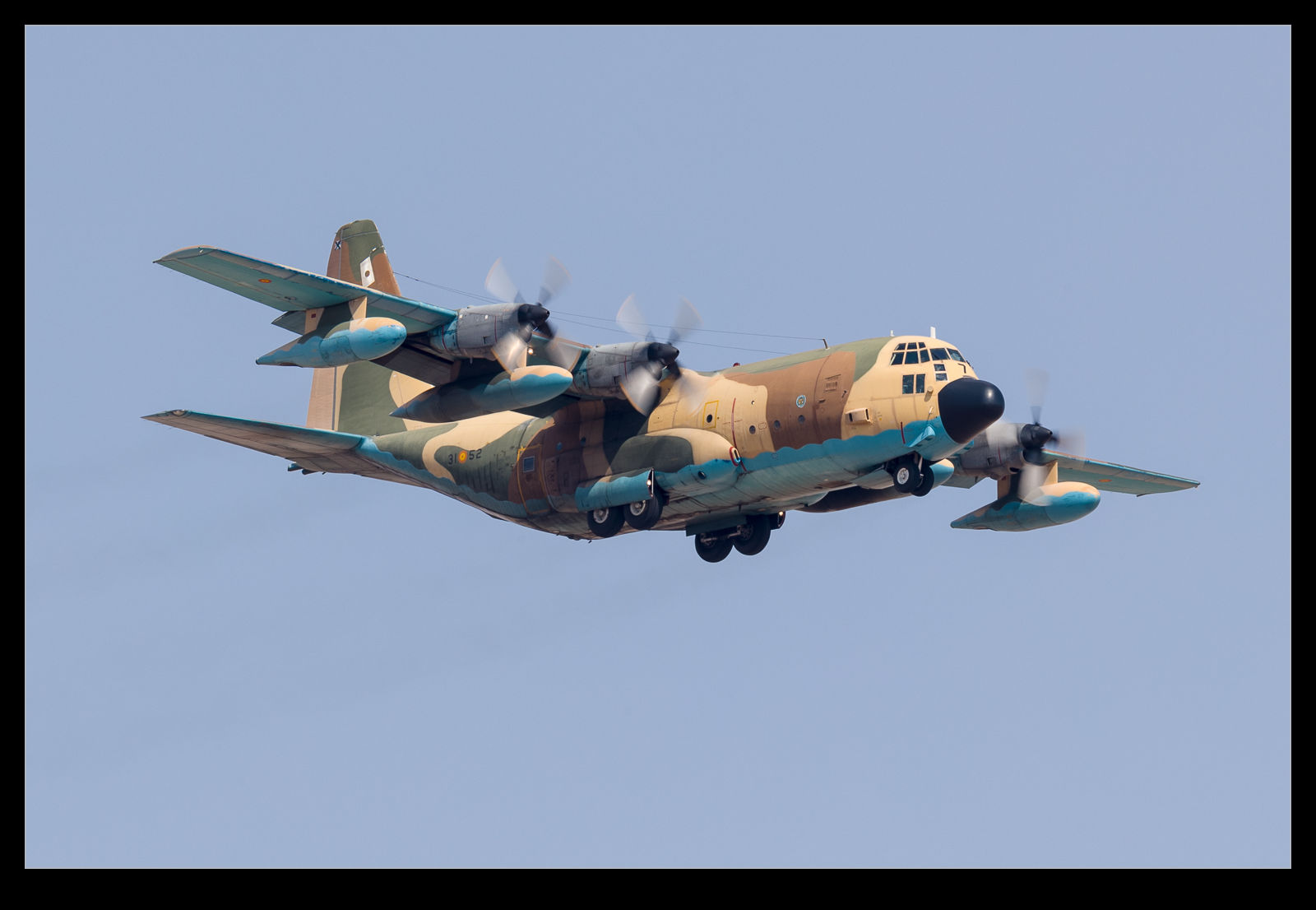
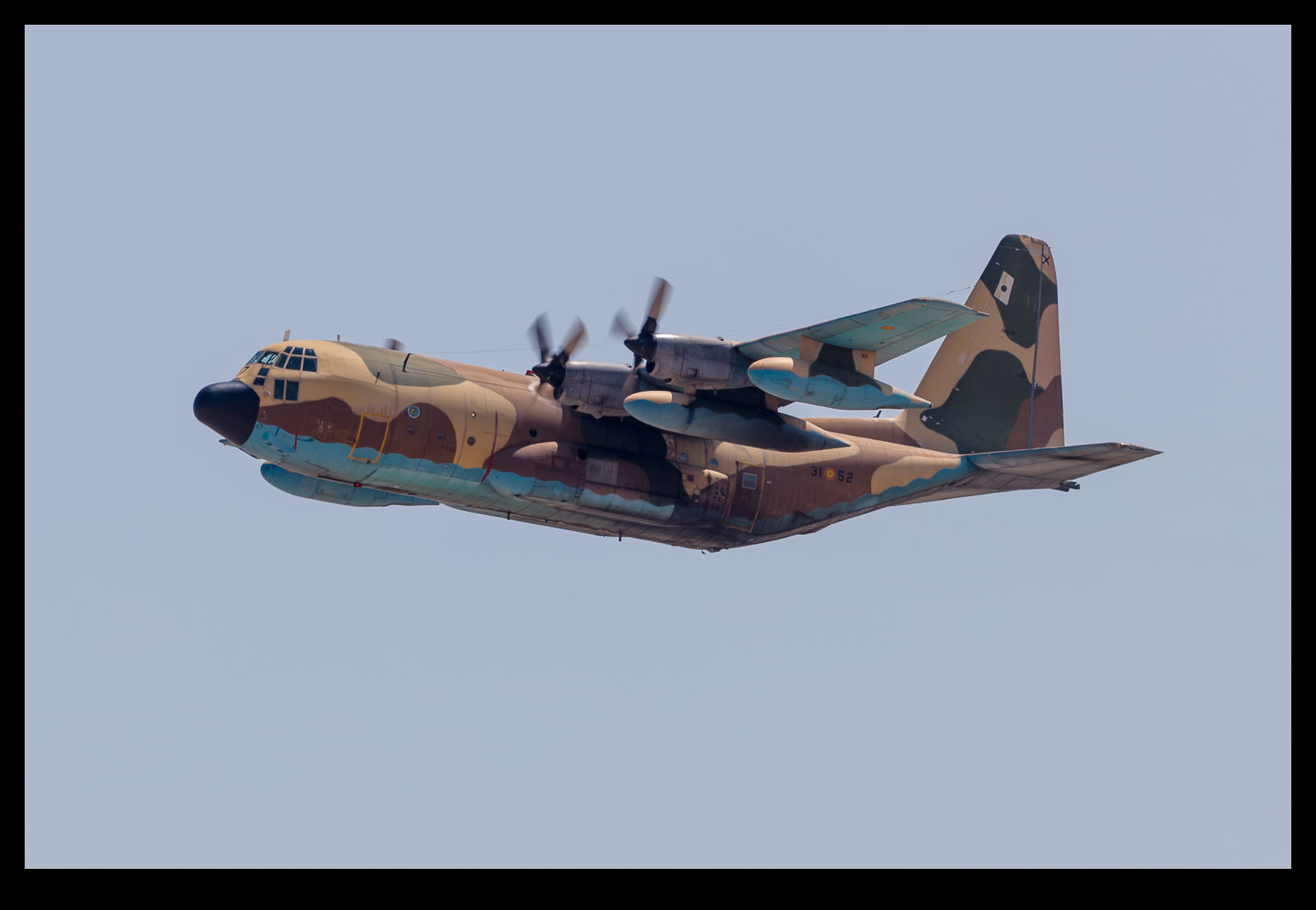
B11I4296.jpgRed Flag 16-4 was a bit unusual in that tanker support was not what you normally see.  No KC-135s were taking part.  The Israeli Air Force had brought some 707s for tanking there jets.  The rest of the tankers were KC-130s.  An MC-130J showed up although I don’t know whether it was part of the exercise or just there coincidentally.  The Spanish Air Force brought their KC-130s to support the Hornets.  Seeing a camouflaged Herc is a nice change given how most of them are monotone these days.  It doesn’t hurt that, since tankers tend to recover late, they came back as the light was getting very nice.

B11I2198.jpgB11I2717.jpg

Customs Citation

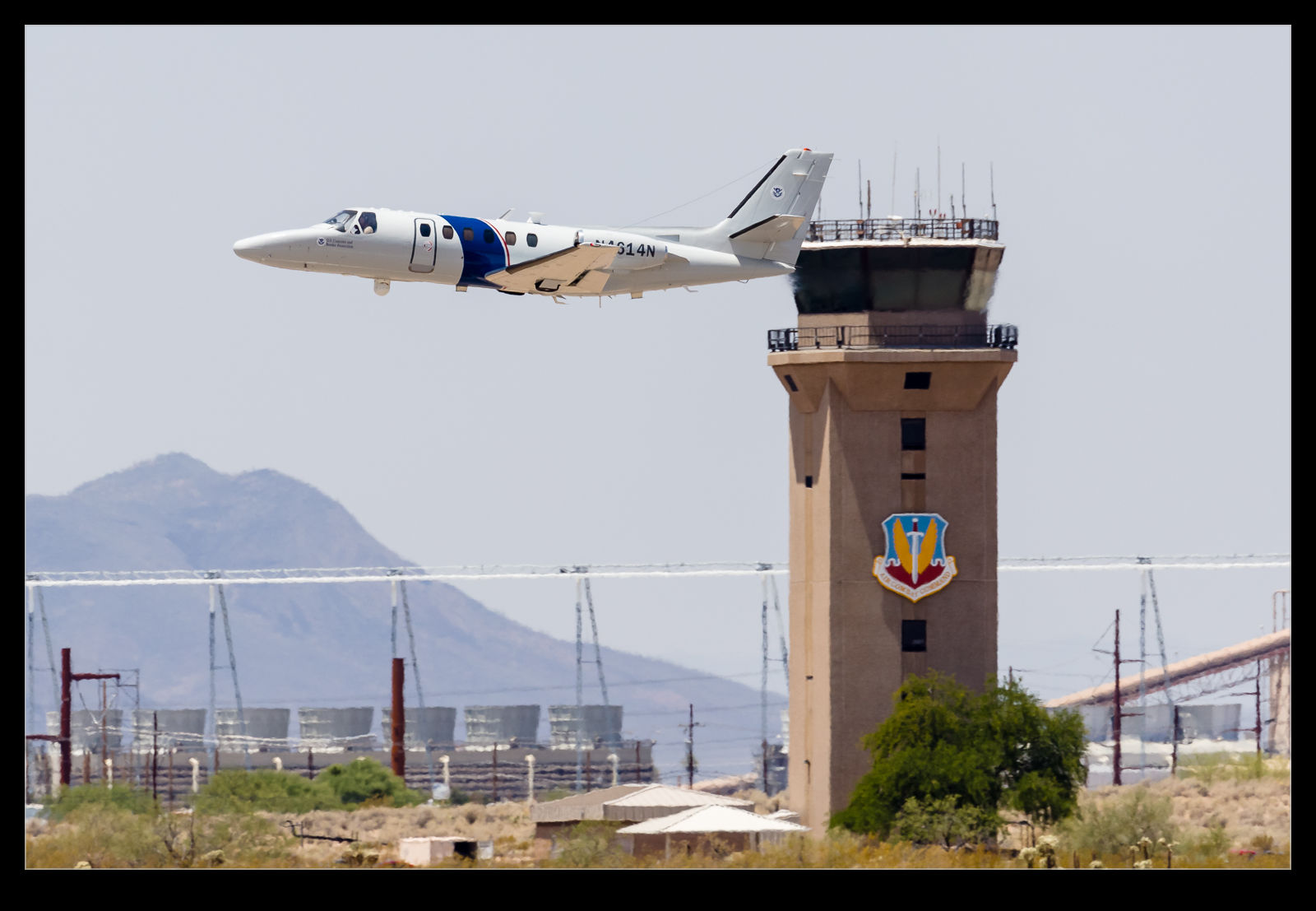
AE7I5235.jpgCessna Citations are not the most exciting business jets.  The original versions are particularly uninspiring with their simple design and unswept wing.  Normally I might not even bother if I came across one.  This example showed up at Davis Monthan while we were on the ramp and it obviously wasn’t a standard version.  It belongs to the Customs people.  I imagine it spends a lot of time looking at what is going on along the border.  Flying out of Tucson would support that idea.  I imagine the sensors on board are a lot more interesting than the plane itself.

Vipers Sneaking up on Strike Eagle

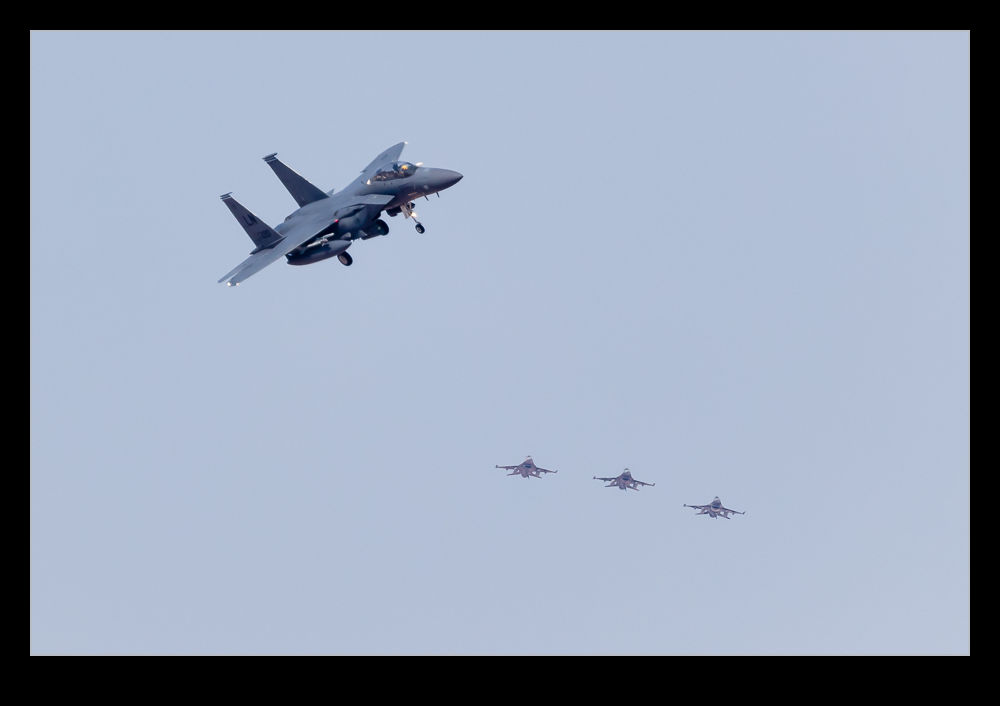
B11I5439.jpgBefore I say anything else, this shot is not original.  I didn’t think of this and I certainly wasn’t the first to shoot it.  Indeed, it is the exact opposite.  This is a shot that I have seen from other people a bunch of times but that I have never achieved.  The recovery for Red Flag has a lot of jets coming home at once.  Jets will break into the pattern and will be turning final when more jets are coming in to the break.  You can get jets coming in overhead directly behind the jet on final turn.  It looks cool but I had not got it before.  This time I got lucky.  I don’t know whether I am pleased with the shot or just glad that I finally happened to get it!

More Parallels

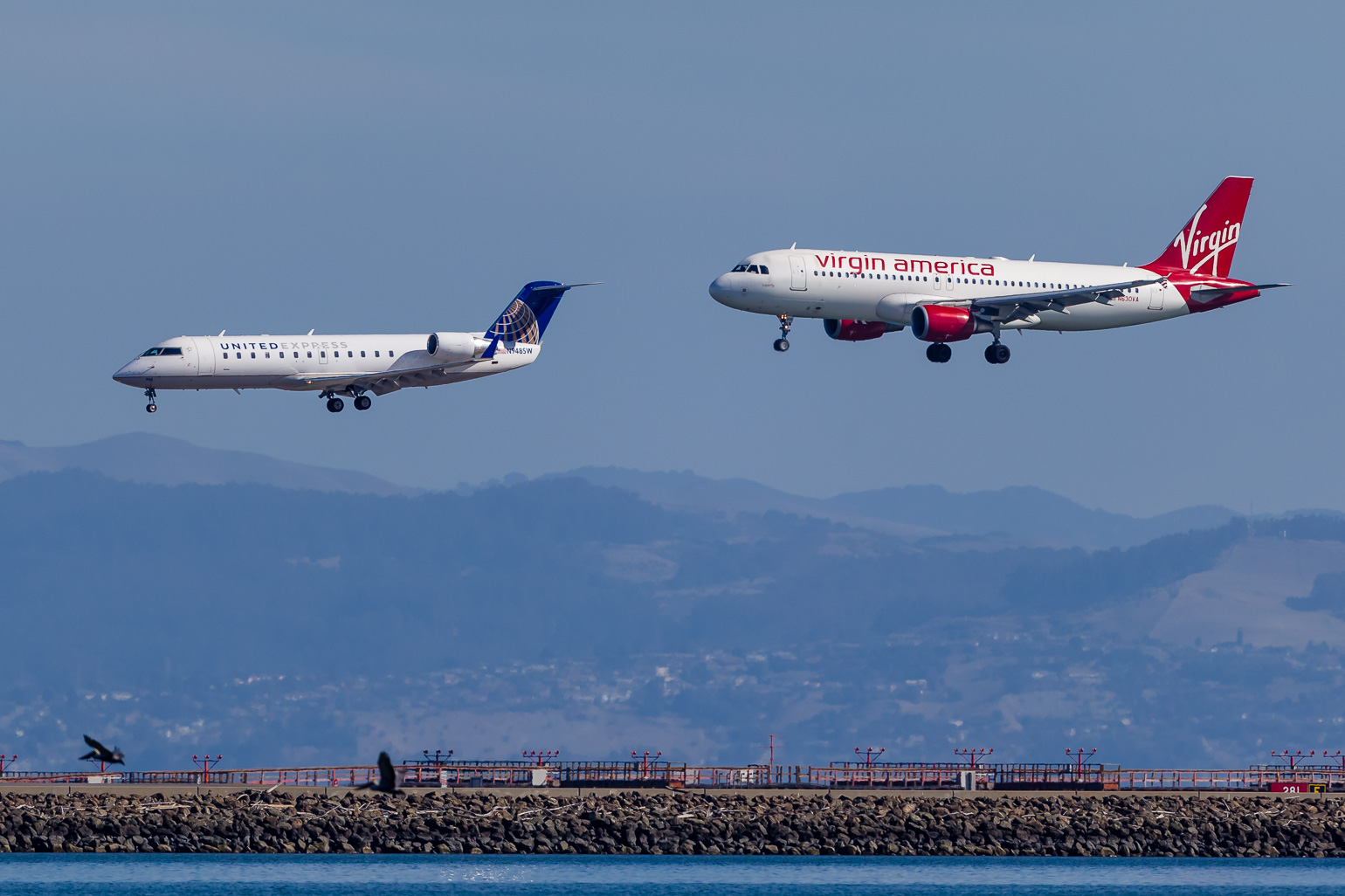
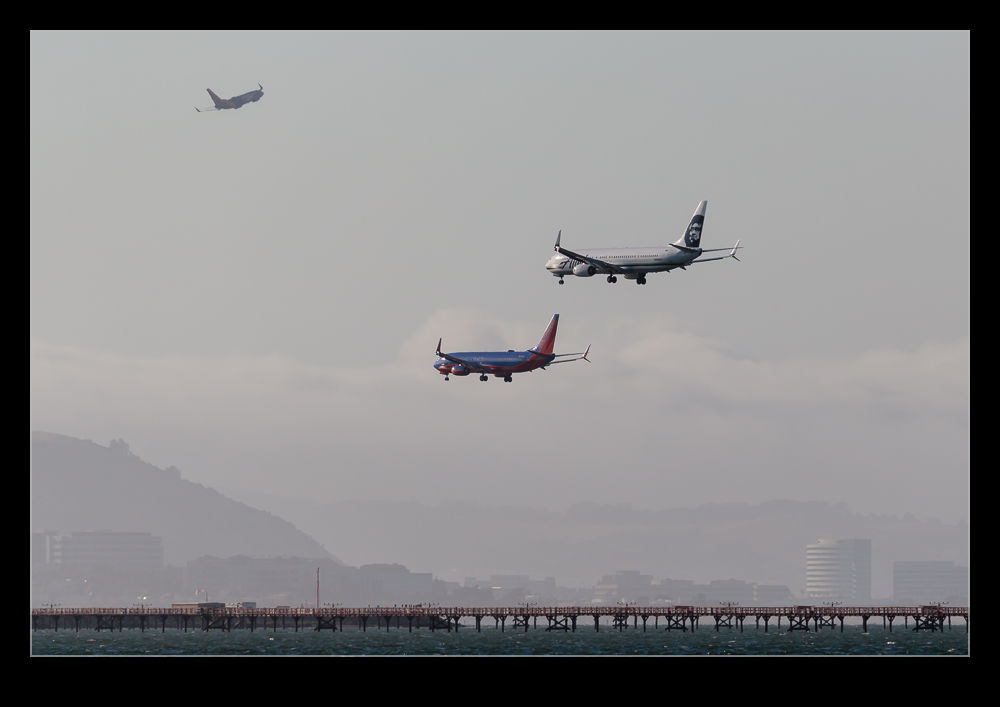
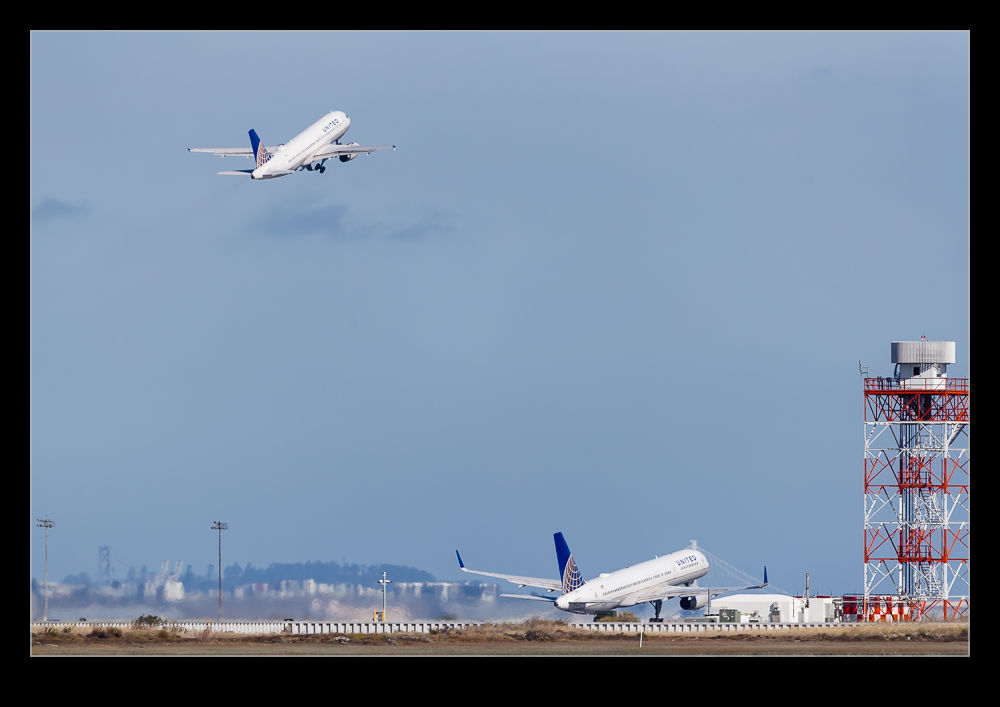
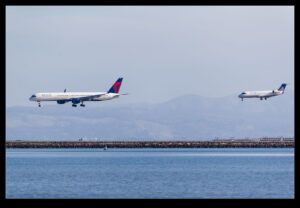
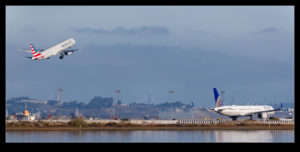
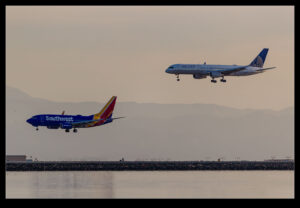
AE7I6074.jpgNot too much description to go with this post.  SFO is well known for its parallel approaches (and departures) and I have been seeing a lot of them recently.  Here are a few of the examples that have cropped up.  As an extra, I include a shot of two on approach with a departure in the background.  Combine a parallel pair with the other traffic a little further out on the approach and the sky looks a little busy.  However, while it looks interesting in person, it doesn’t make for a compelling shot.

B11I8287.jpg

AE7I5855.jpg

Spanish Hornets and Some Strange Patterns

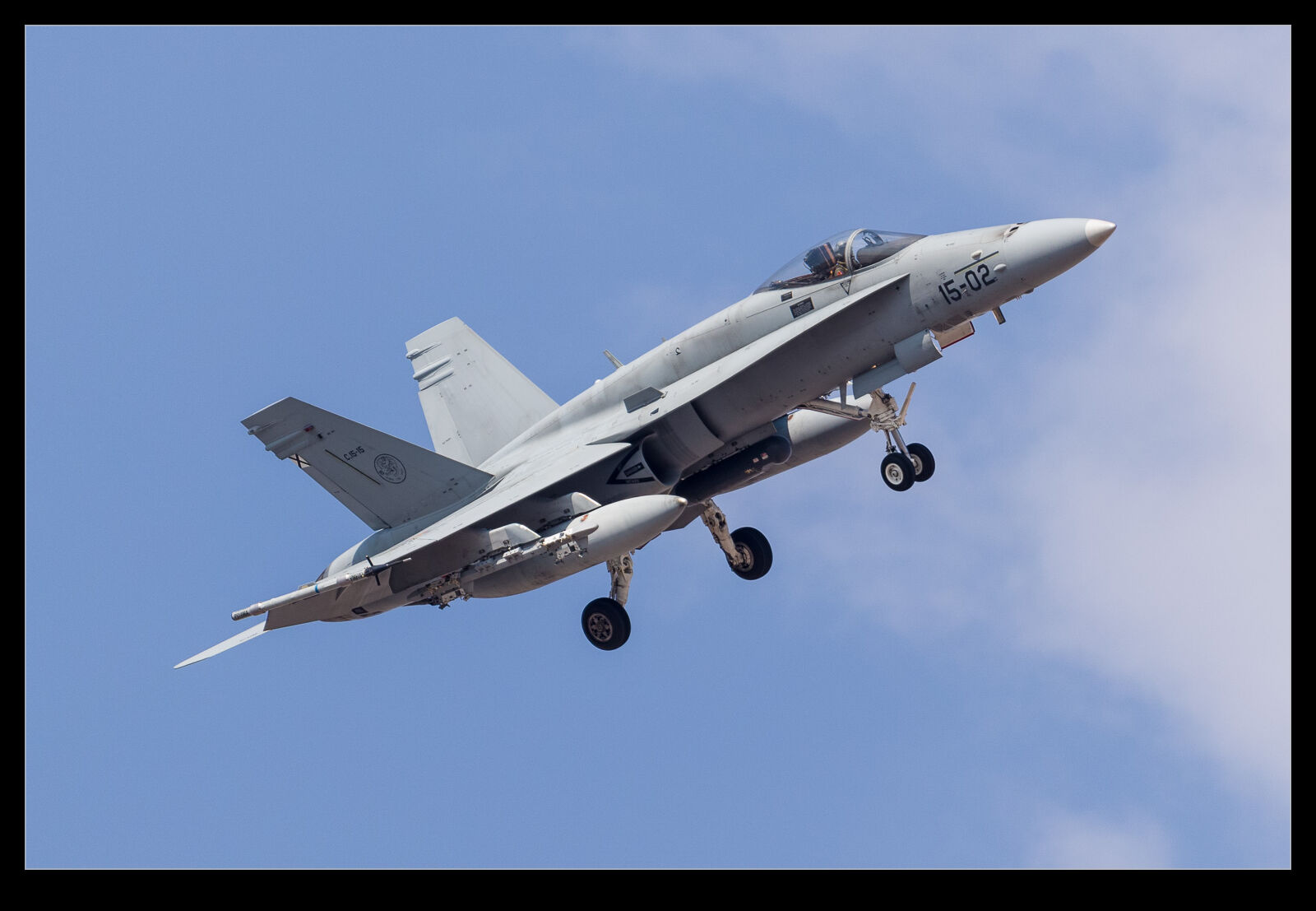
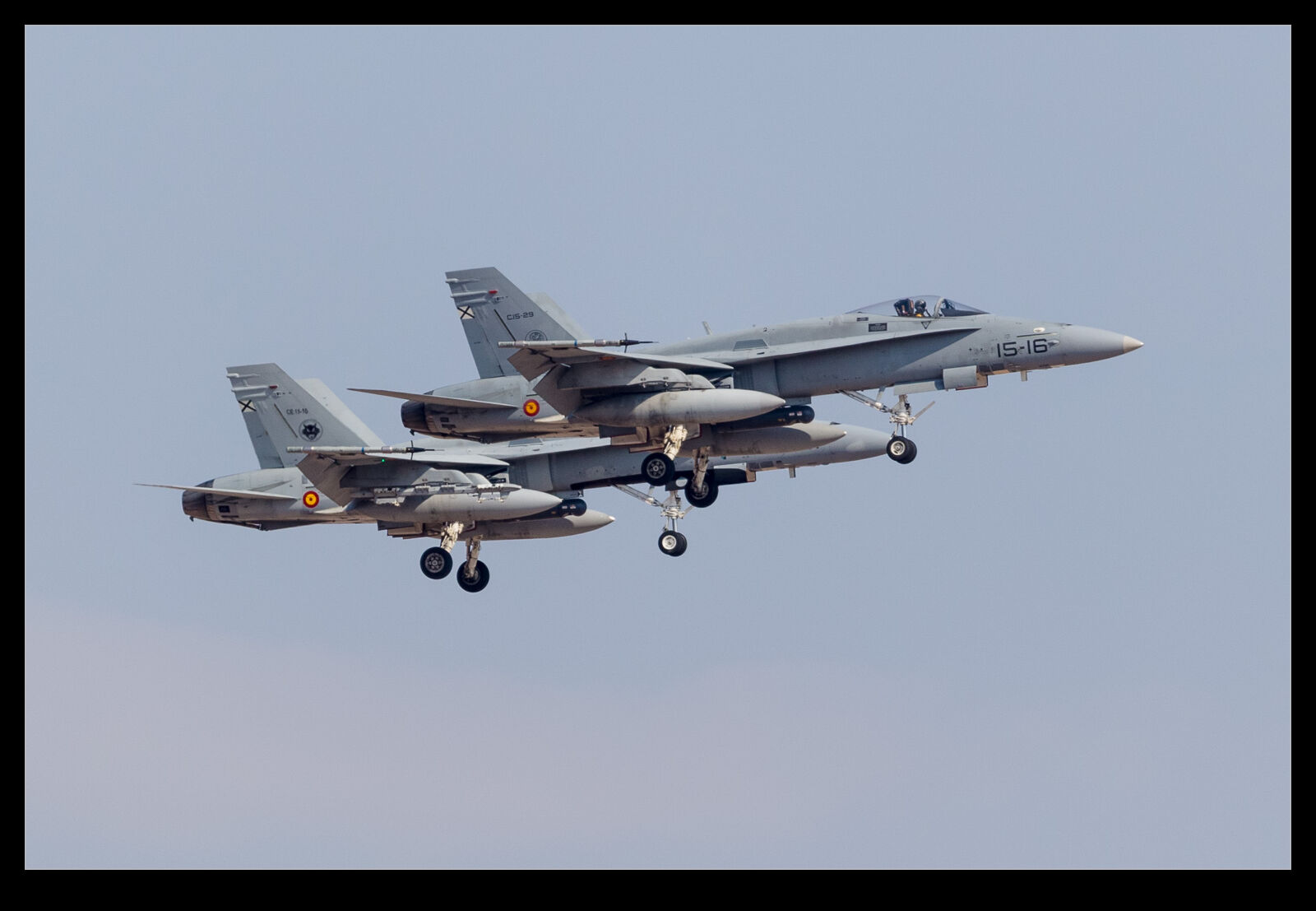
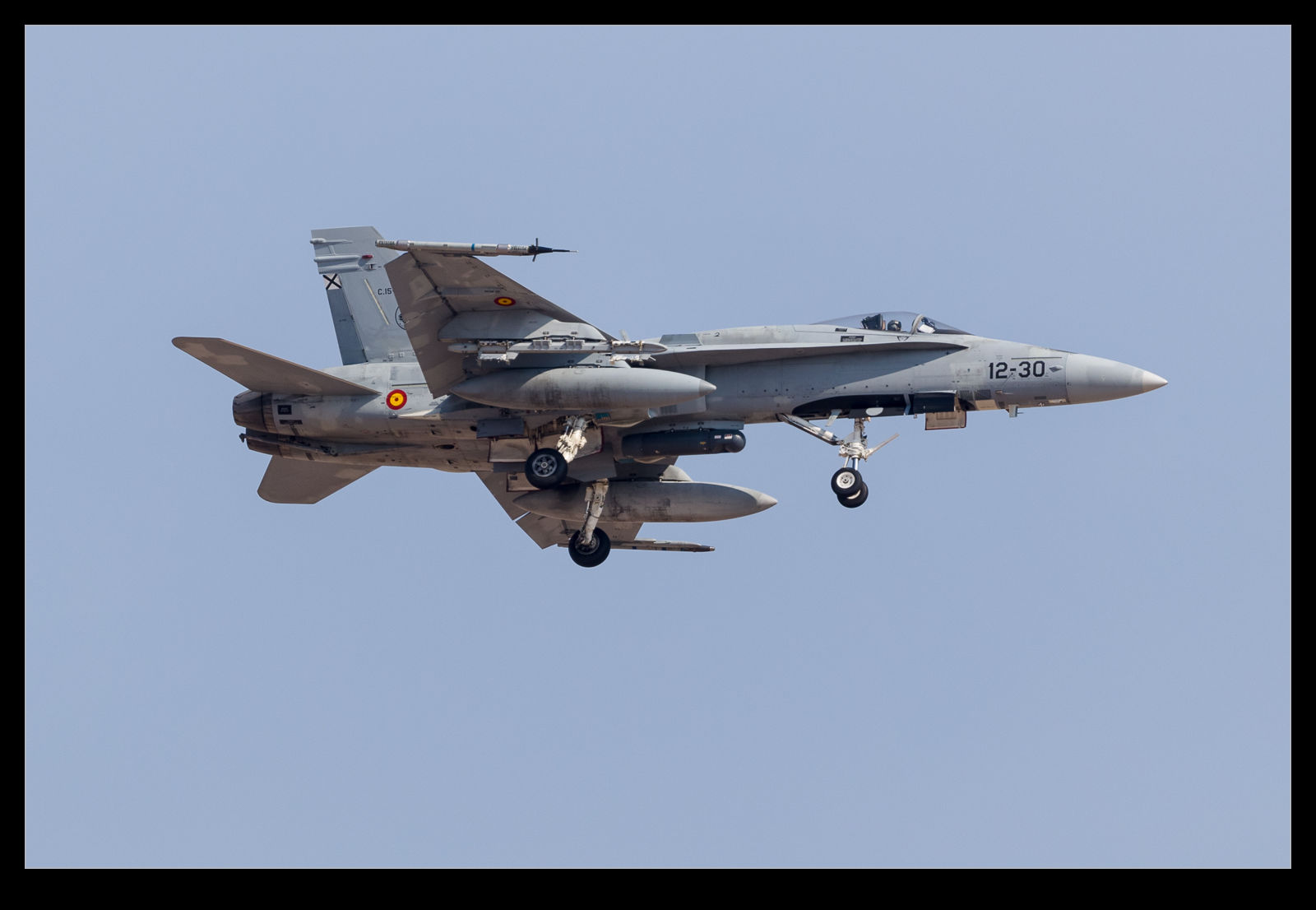
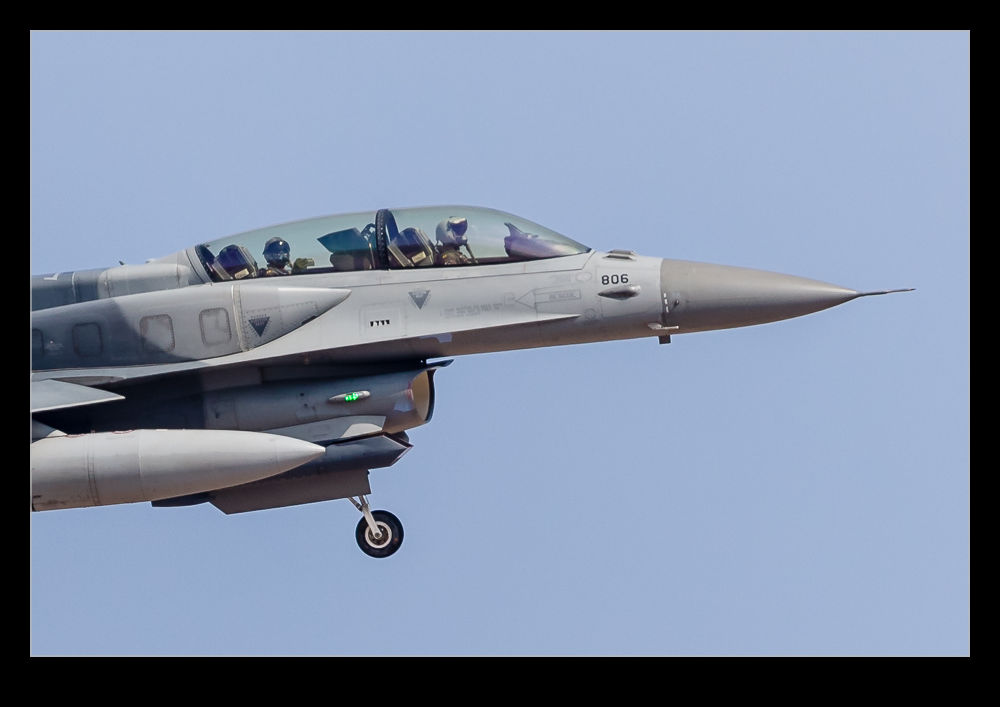
B11I5220.jpgIt has been a long time since I last saw some Spanish Air Force Hornets so I was glad to see them at Red Flag.  They may not look very different to the Navy and Marine Hornets but still, some variety is worth it.  It was the second week of the exercise so I would have expected everyone to be pretty familiar with the operations around the pattern.  However, the Spanish guys seemed to have some different ideas.

B11I5389.jpgThey were certainly interested in keeping the patterns tight.  I don’t know whether they convert to type with the Navy and are trained to fly tight or whether that is just their nature.  However, on one occasion, the pilot came way inside the downwind line while another jet was flying that line and he was going to end up cutting them off.  I guess he realized at the last moment because he turned left to get back out where he should have been.  A bit strange to watch!

B11I5044.jpg

Eagle Inlets

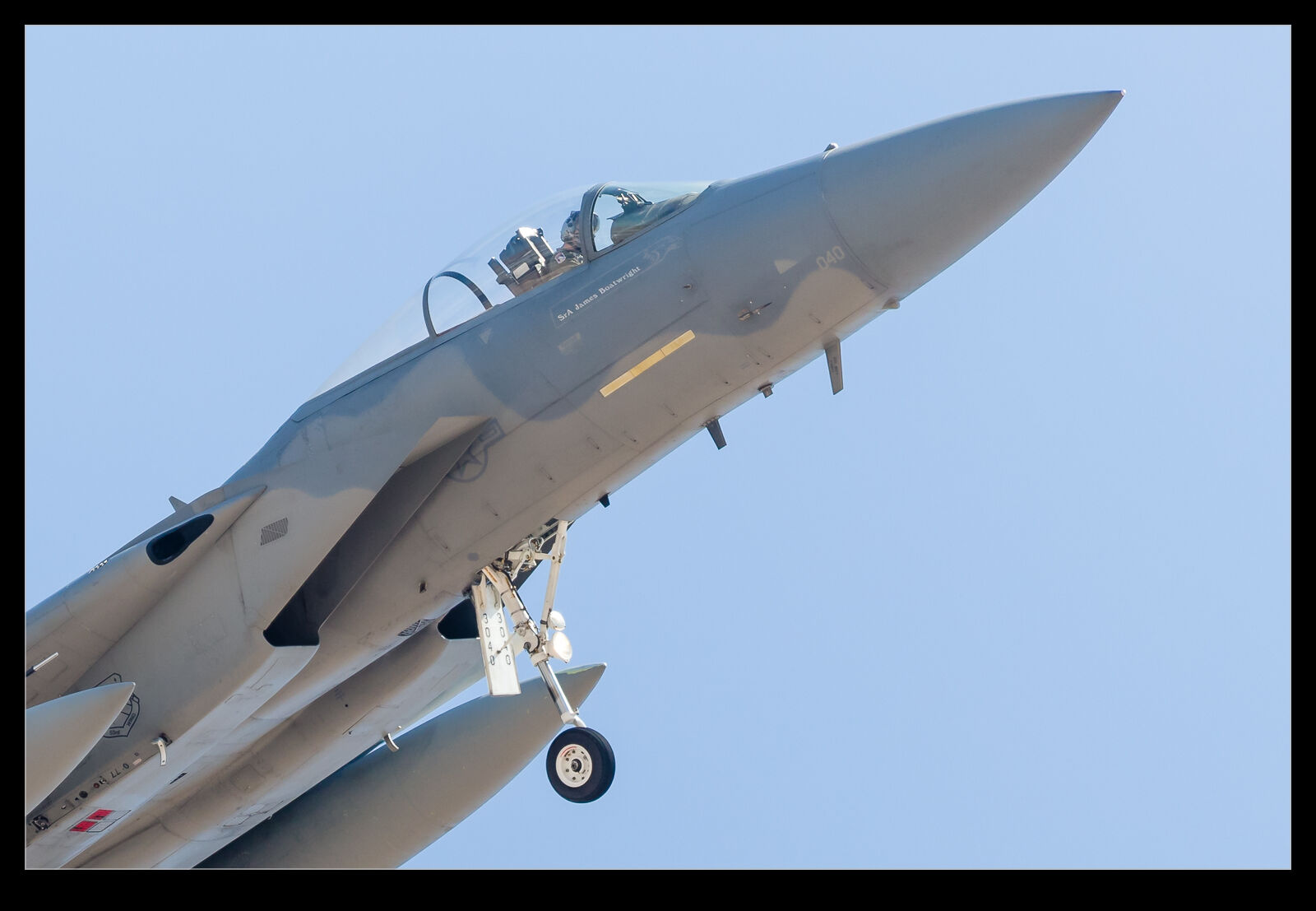
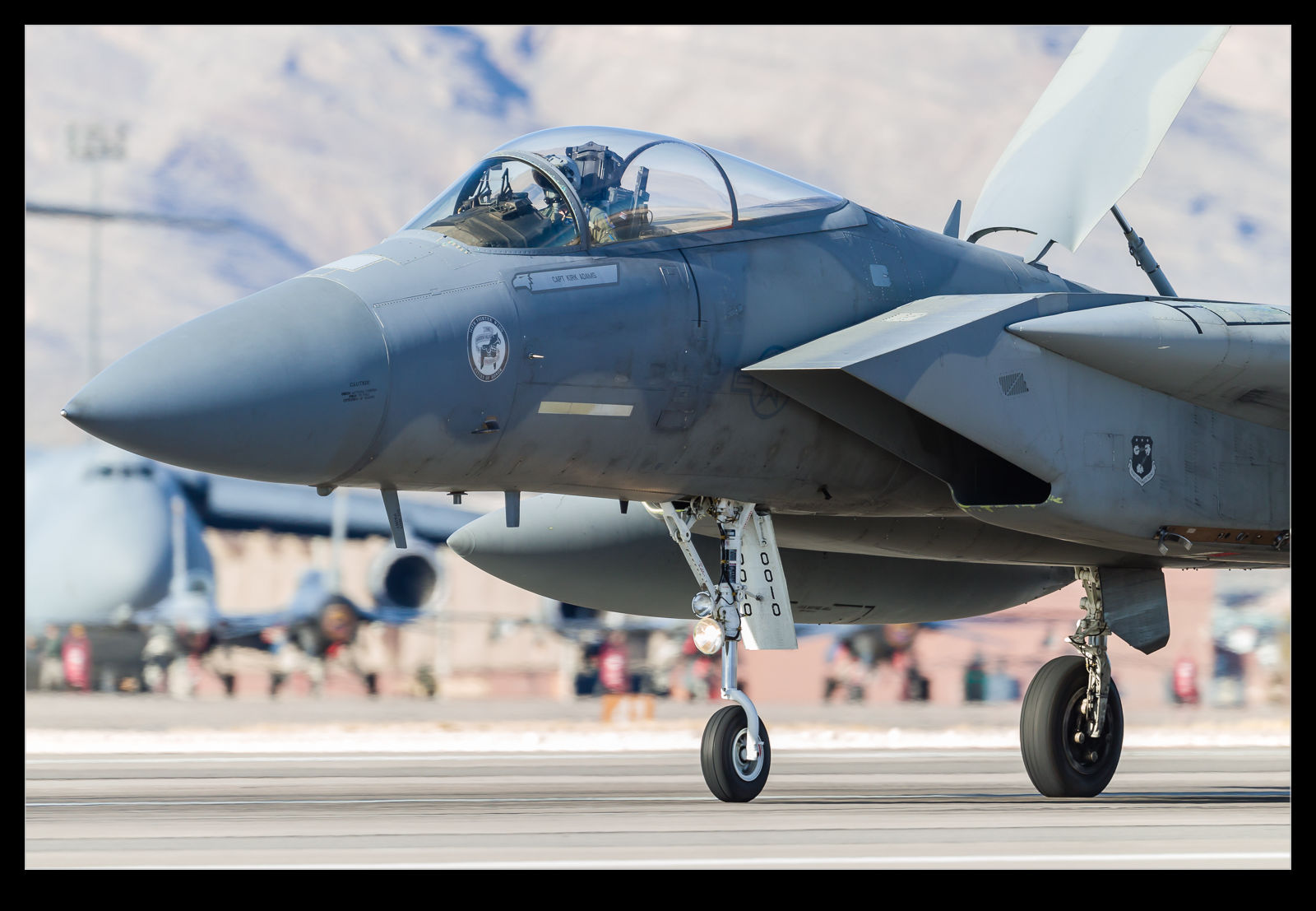
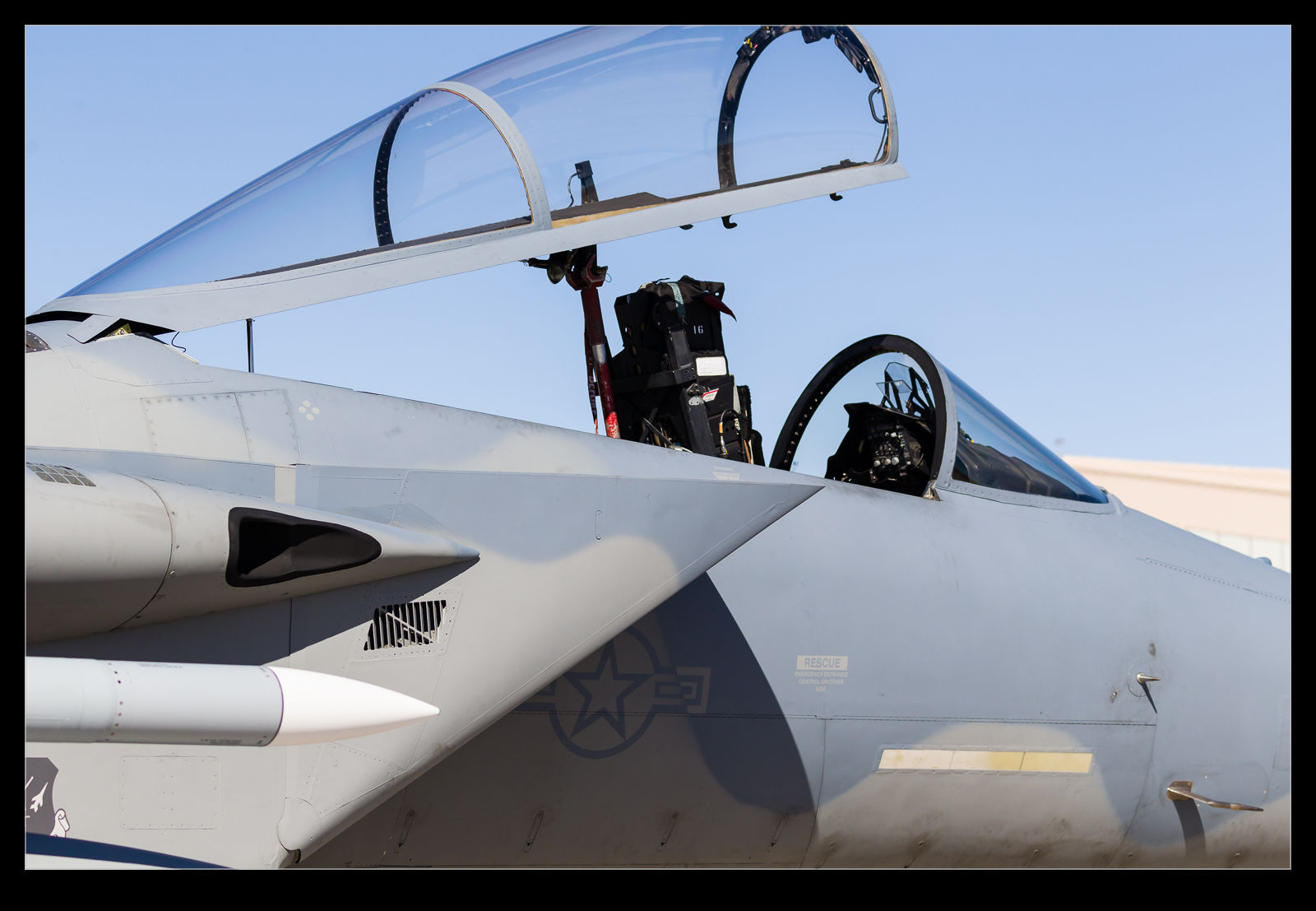
B11I2311.jpgThe F-15 came onto the scene in the 1970s and it has been a major force ever since.  As a kid growing up fascinated with planes, the F-15 and F-14 were two of my favorites.  They each had features I loved.  One of the cool things about the F-15 for me was the inlets.  Big ramp inlets were in vogue at that time.  They combined an angled profile with complex ramps and doors to take flows from above Mach 2 down to subsonic speeds to feed the engines.  (Interestingly the F-16 went with a simple pitot inlet and could still just about make Mach 2.  It used the fuselage to redirect the air into the inlet rather than raking it.)  The F-14 inlets were very sharply angled.  The F-15 didn’t have such a sharp angle but instead took a different approach.  The inlets rotated down towards the approaching air.

B11I5733.jpgThis always struck me as a cool feature and whenever I see F-15s now, I am always looking at the angle of the inlets.  Since they are often at lower speeds when I get to shoot them, they are at higher angles of attack and this means the inlets are rotated down.  McAir’s engineers did a great job of the joint so the top surface doesn’t look too discontinuous.  I include a shot of a parked jet to show the difference.  Even after all these years, I still get a kick out of this.

AU0E7545.jpg C59F5705.jpg

The Lonely Life of the AWACS

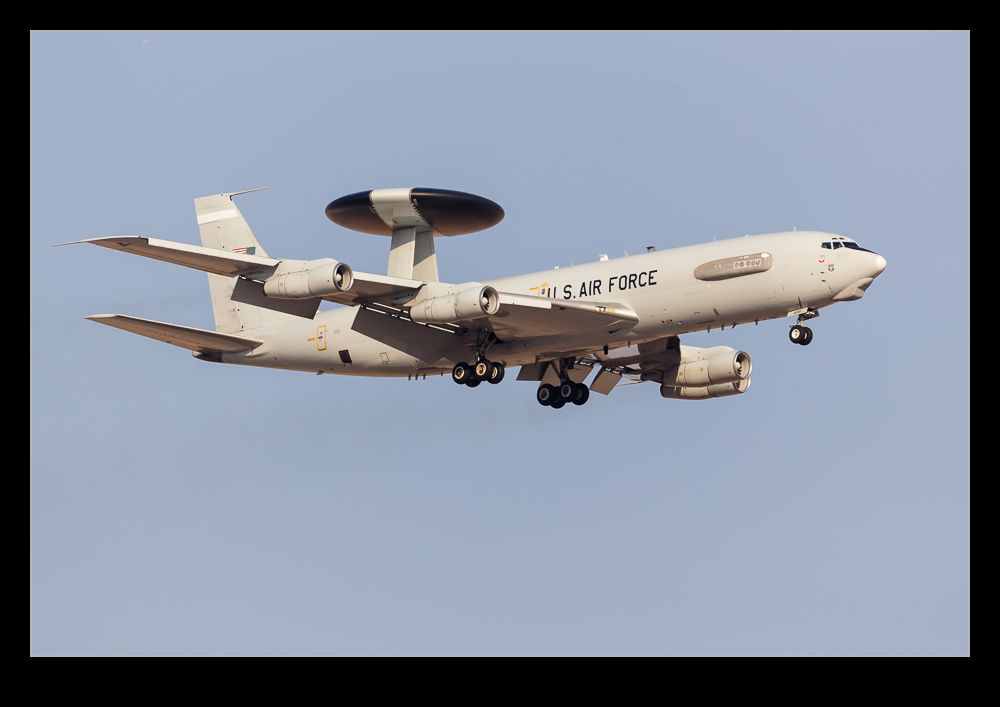
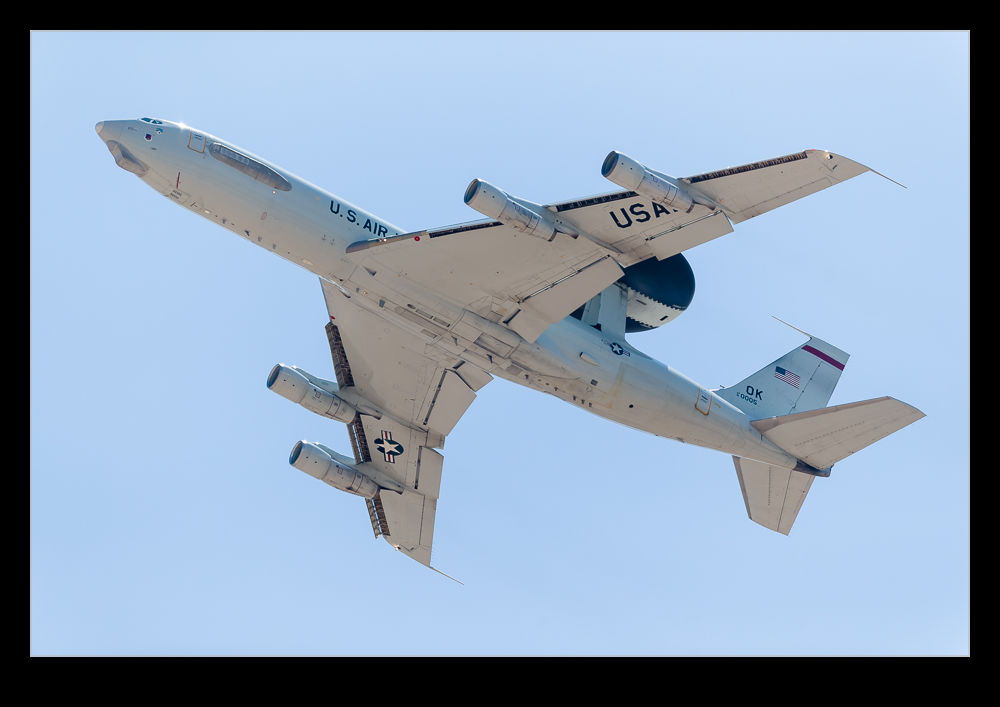
B11I5825.jpgThe beginning and end of an exercise has a common theme.  Long before the fighter start launching, an E-3 AWACS will lumber off the runway and head out towards the exercise area.  It gets on station and sets up to direct the fight as the fast movers enter the range.  It will support the whole mission and will guide the small guys back home at the conclusion of their missions.  It will deal with any of the jets that have to change plans or abort.  With everyone else back on the ground, the AWACS can finally come home.  They are often the last jet back on the ground.  Hopefully everyone outside will stay around for their recovery.  You wouldn’t want them to feel neglected!

B11I2618.jpg

Air Berlin

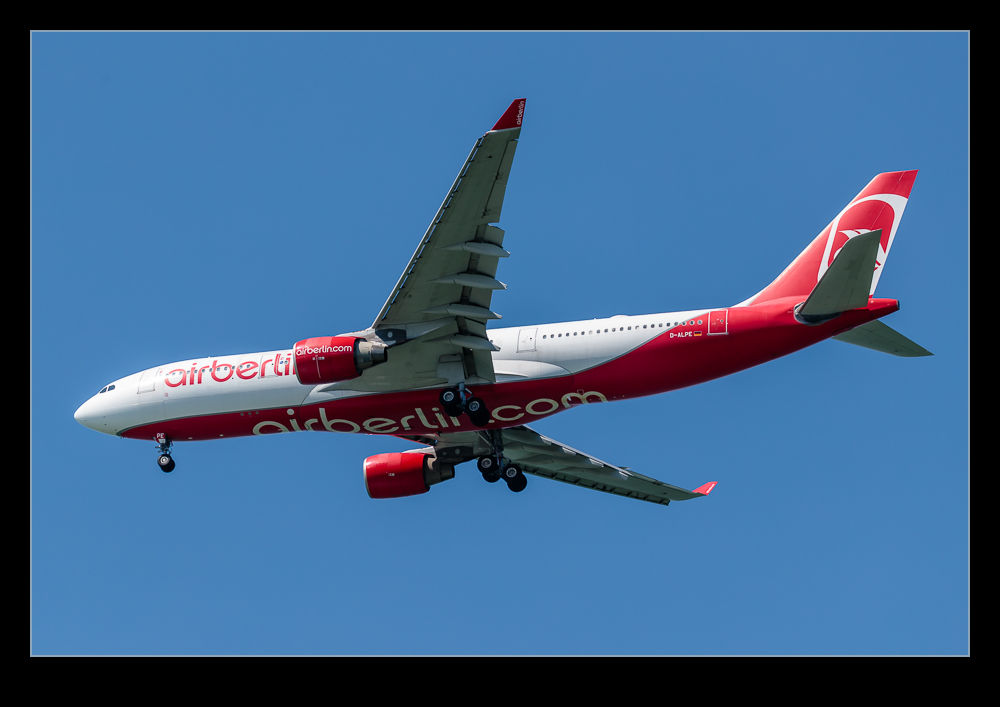
B11I8246.jpgI wonder how long this plane will continue to show up at SFO.  Air Berlin runs a service to San Francisco which is seasonal in nature.  However, Air Berlin is currently in some difficulty and they are reorganizing the operations.  Some of the services are moving in to Lufthansa control while the long haul stuff may be what remains.  Consequently, they might still come to California but, for now, who knows.  They aren’t a daily feature anyway so I haven’t seen the, very often.  Here was a nice day when they did show up.

AE7I1322.jpg

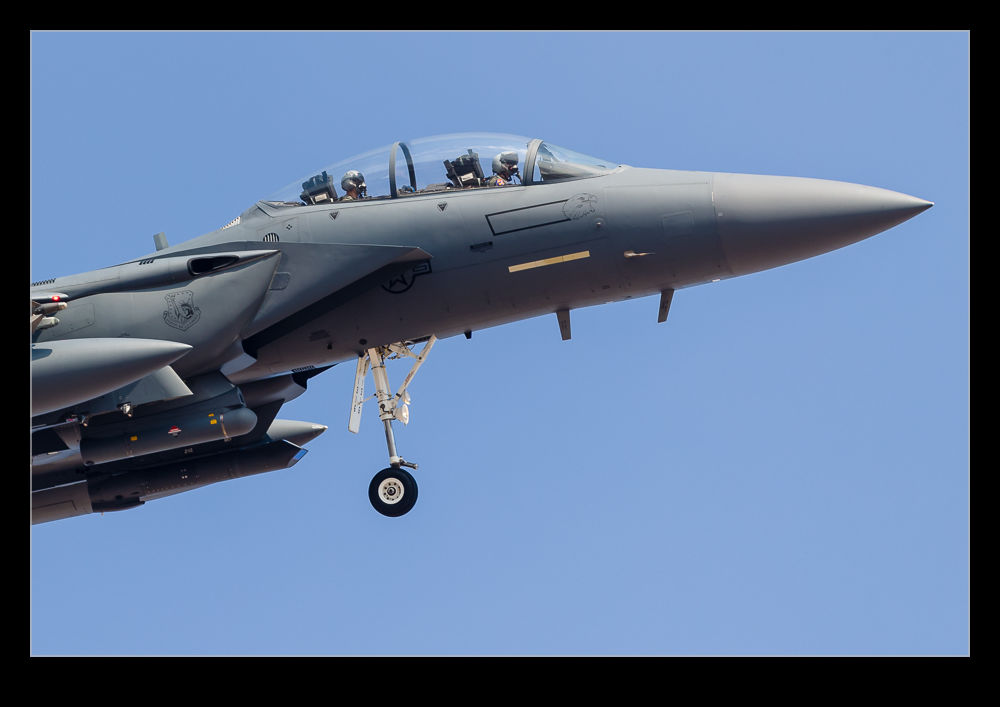
Backseat Cameraman

B11I4468.jpgOne of the fun things about looking through my pictures from a shoot is spotting things I didn’t notice at the time.  Often it is pilots waving or looking like they are doing something different.  This time, I was surprised to see a couple of the backseat guys in the jets with their cameras out.  One of the places you would really like to be as a photographer in in the backseat of one of the jets getting shots as things happen.  I guess the crews are not a lot different.  I assume they are pretty busy during the main part of the mission.  The recovery is a different story and the front seater is dealing with everything that counts.  Time for the Guy in the Back to take in the scenery and grab some shots of the approach.