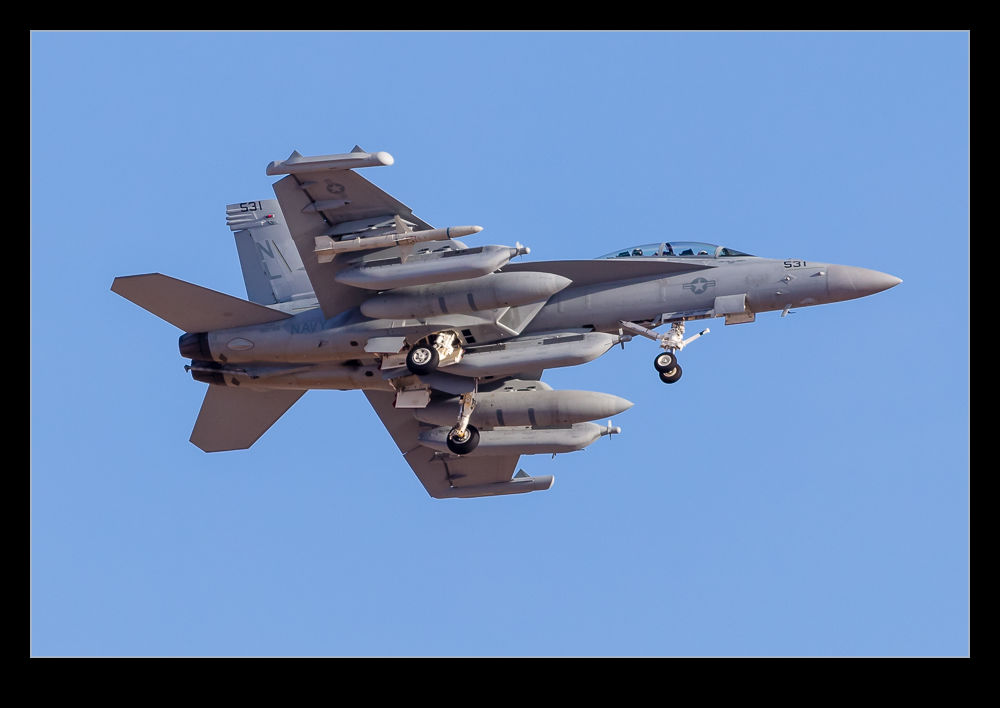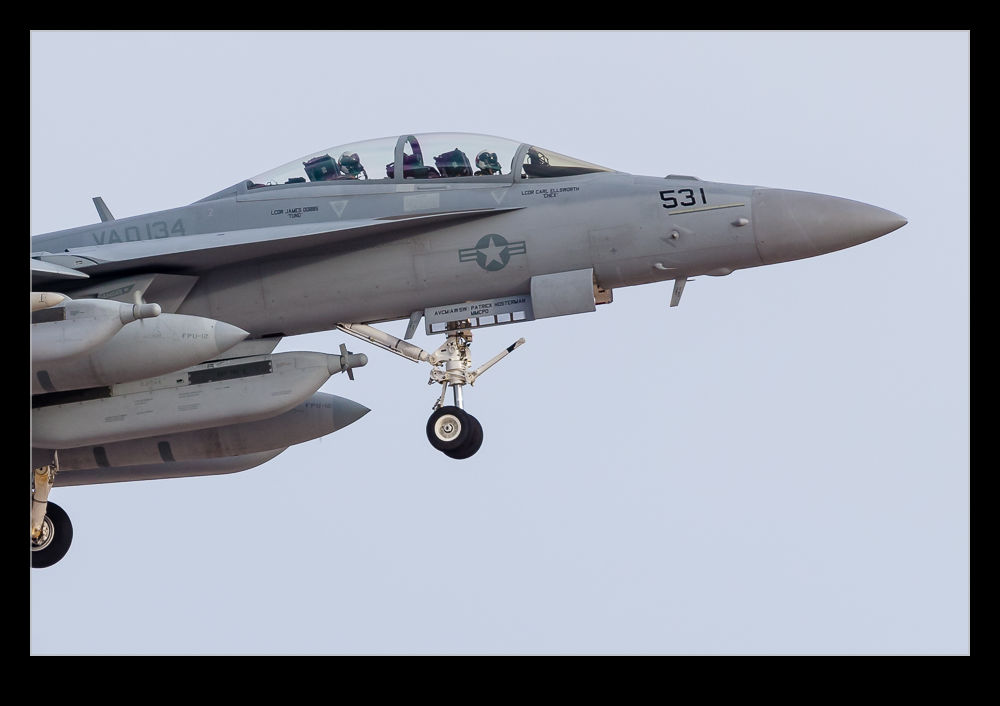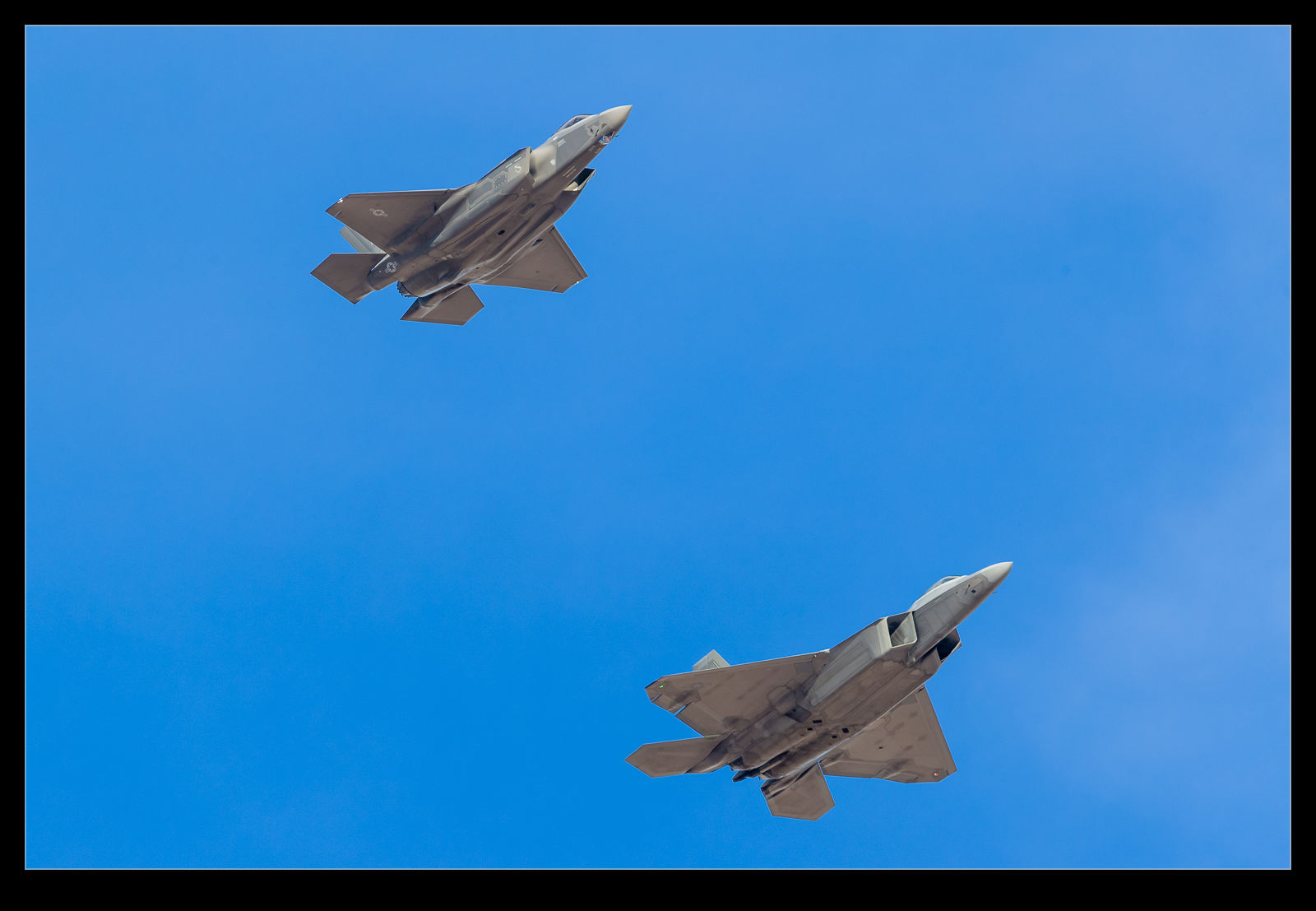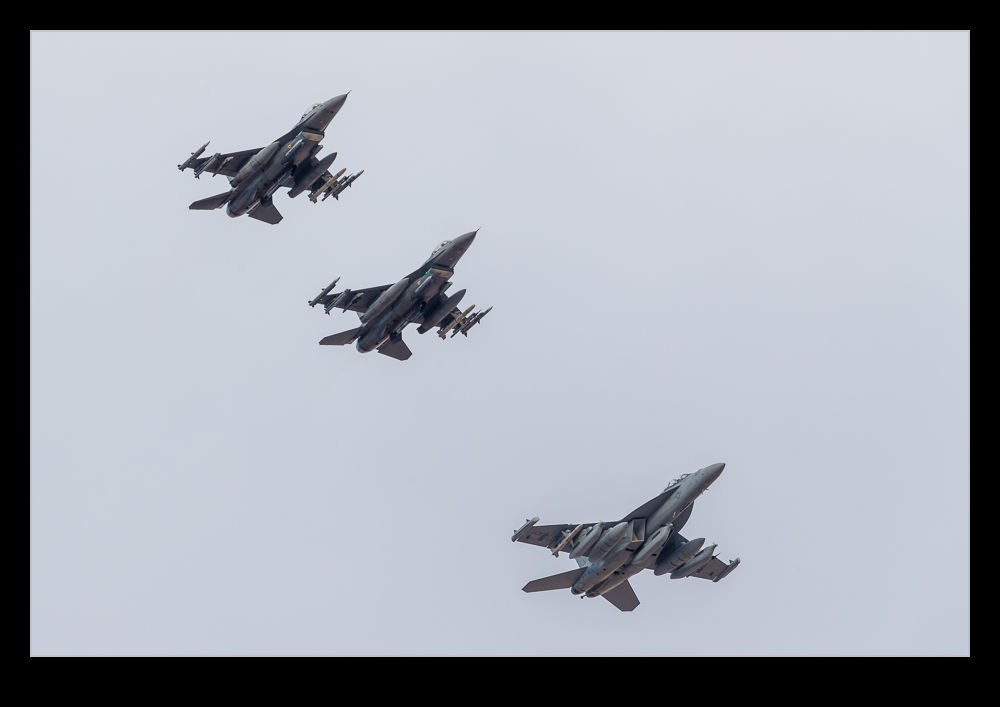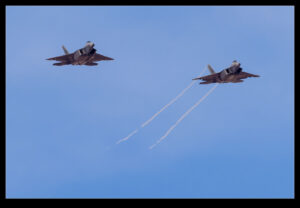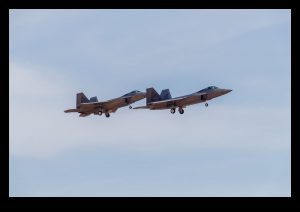
Returning jets from the Red Flag missions often come back with the other jets from their units. However, you do occasionally get a mixed formation or two as a straggler joins up with some other jets for the run in and break. This time, it might have been my imagination, but there seemed to be more mixed formations than normal. We discussed whether, with the F-35s taking part in larger numbers, other pilots were kind of keen to get in formation with them and check them out from closer quarters. Whether that was the case or not, whether there was another reason or perhaps it was just coincidence. Whatever the reason, we got a few mixed groups and not always just with the Daves!
Tag Archives: red flag
At Last a Voyager – But…
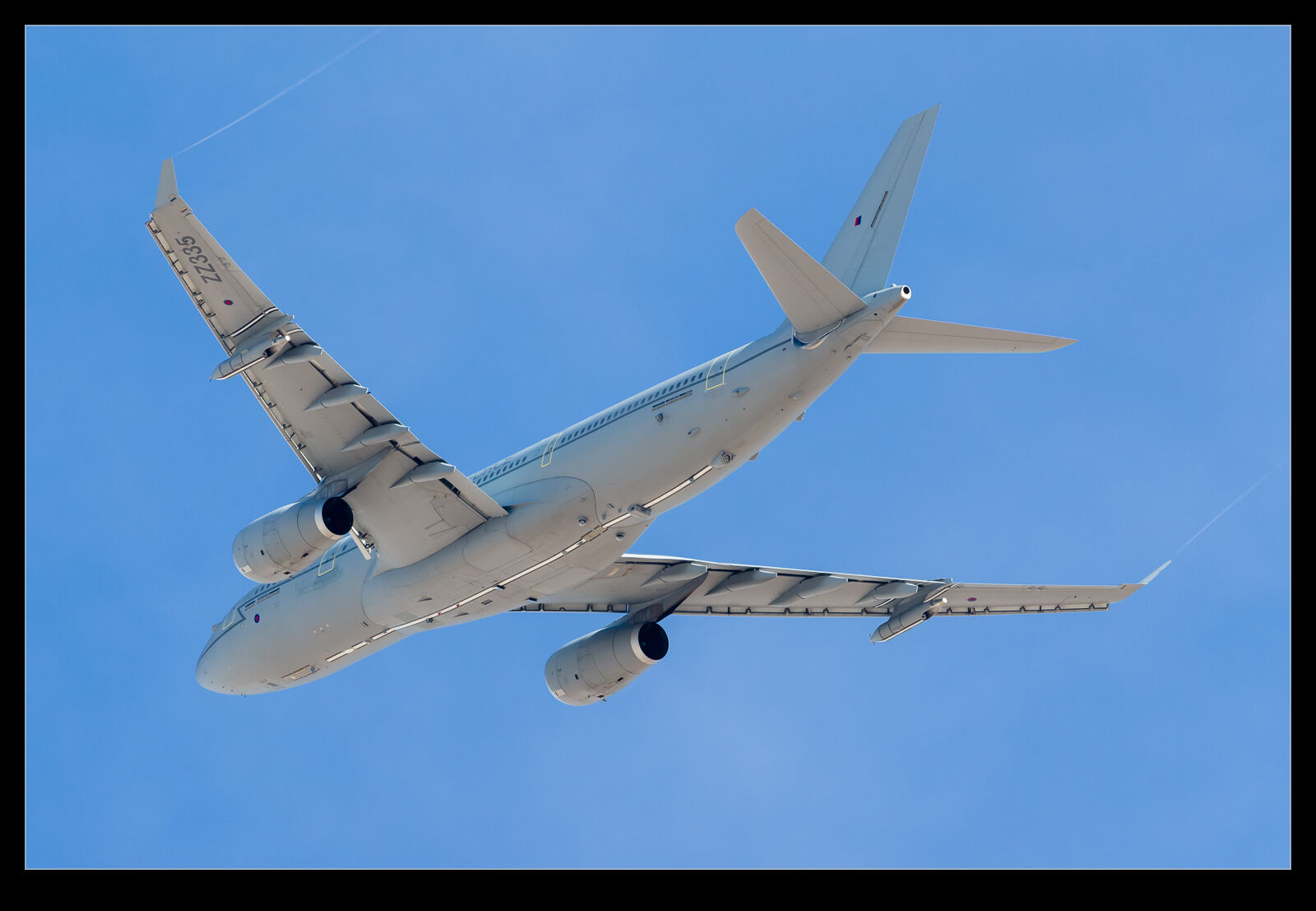
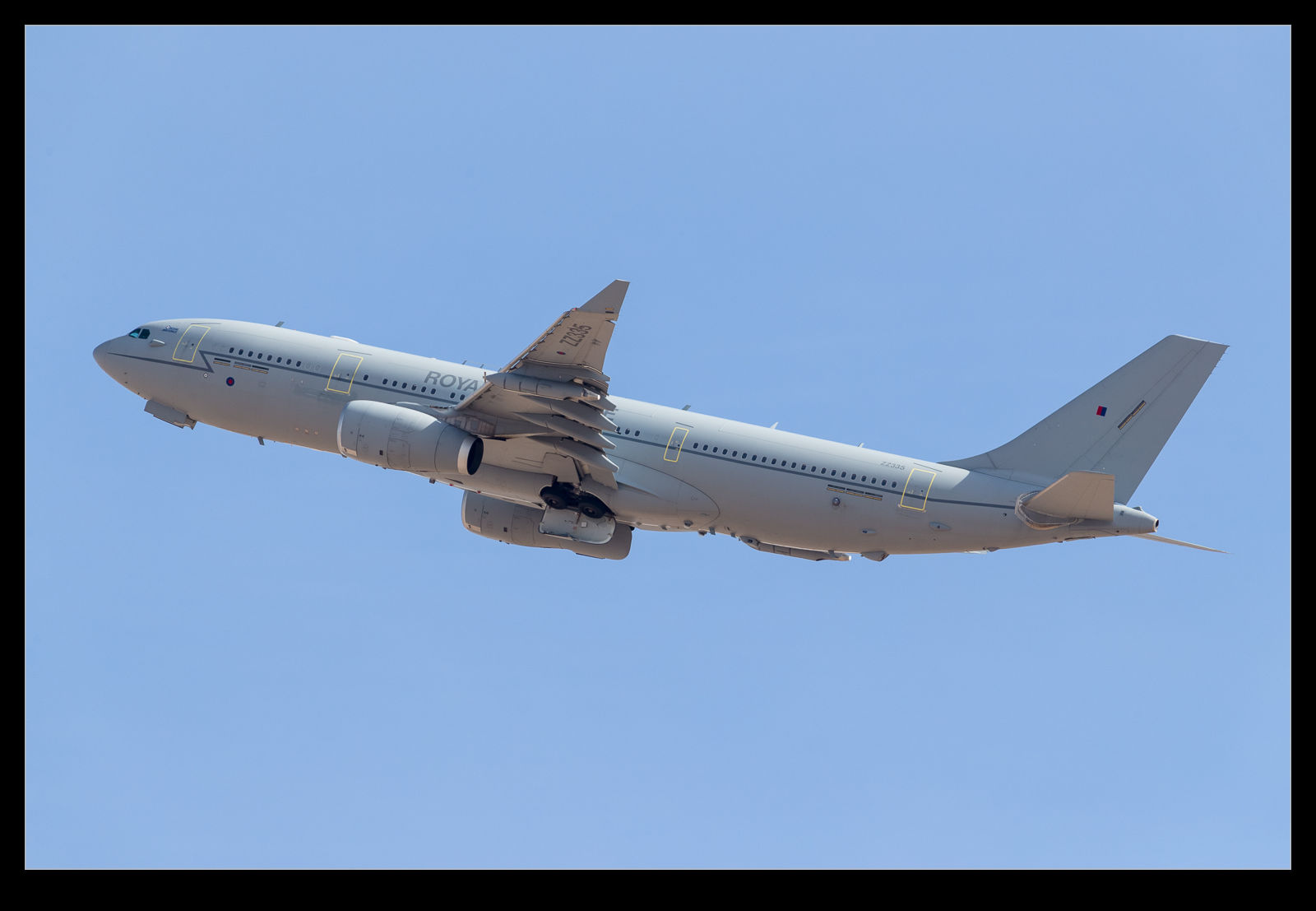
The Royal Air Force has replaced its tanker force since I left the UK. The VC-10s and TriStars have been retired and there is a public private partnership in place to deliver tanking support. This uses converted Airbus A330s. They are able to provide tanking and transport services (with some of the aircraft configured only for transport). In RAF service, these jets are named Voyager. Red Flag 17-1 was my first real opportunity to photograph a Voyager in action. (Annoyingly my sister has shot them before me and has been on a refueling mission with them!) While an A330 might not be the most exciting jet to see, I was really looking forward to photographing it.
As the mission was recovering, the light was great. Low sun providing a warm and soft illumination on the returning jets. Then, the Voyager called up. Just as it did so, the sun went in. The Voyager came down the approach, its gray fuselage in the shade of some clouds. It landed, taxied in and then the sun came right back out again. Arghh! Sure, I can bump up the white balance a bit to warm things up but the jet was in shade and there is not much I can do about that. I had to leave before it recovered on the following day so no luck then. They will be around for a while so I guess I will get any crack at this at some point.
Bones Are Cool But Better in Pairs
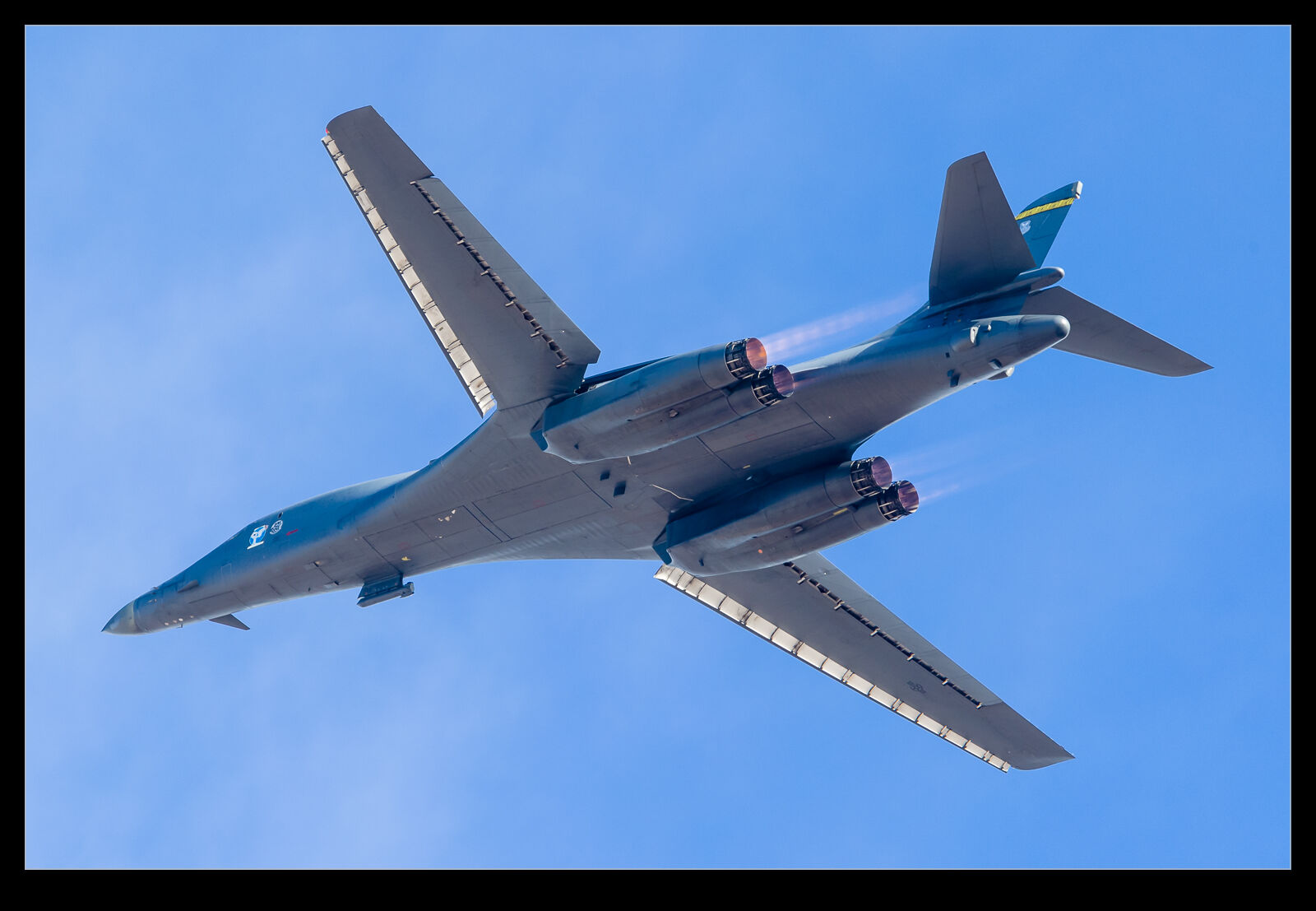
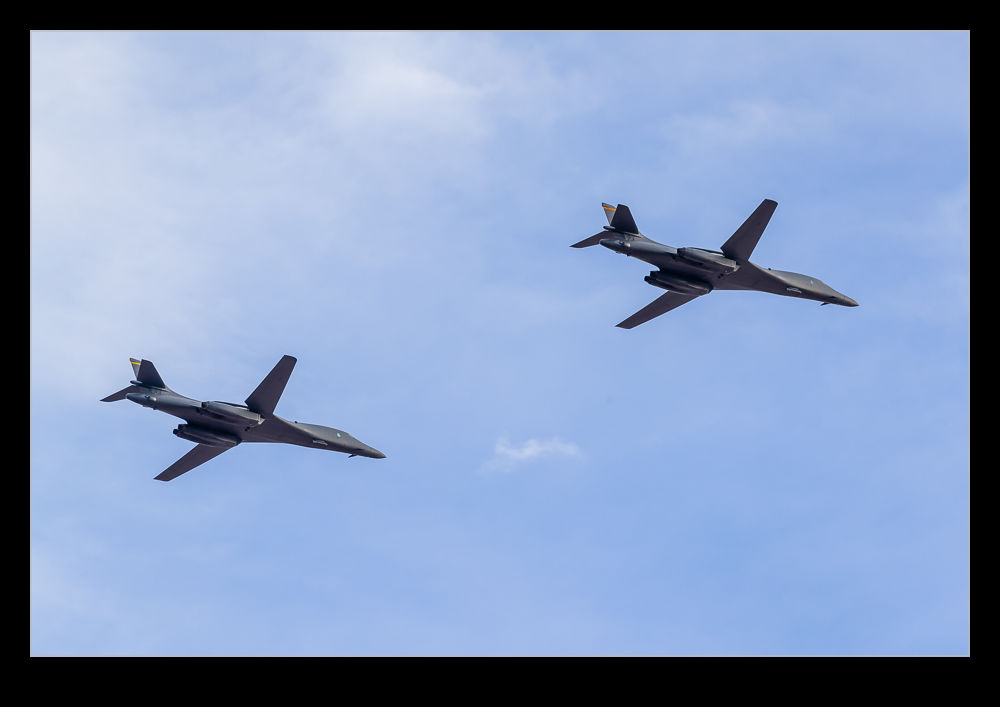
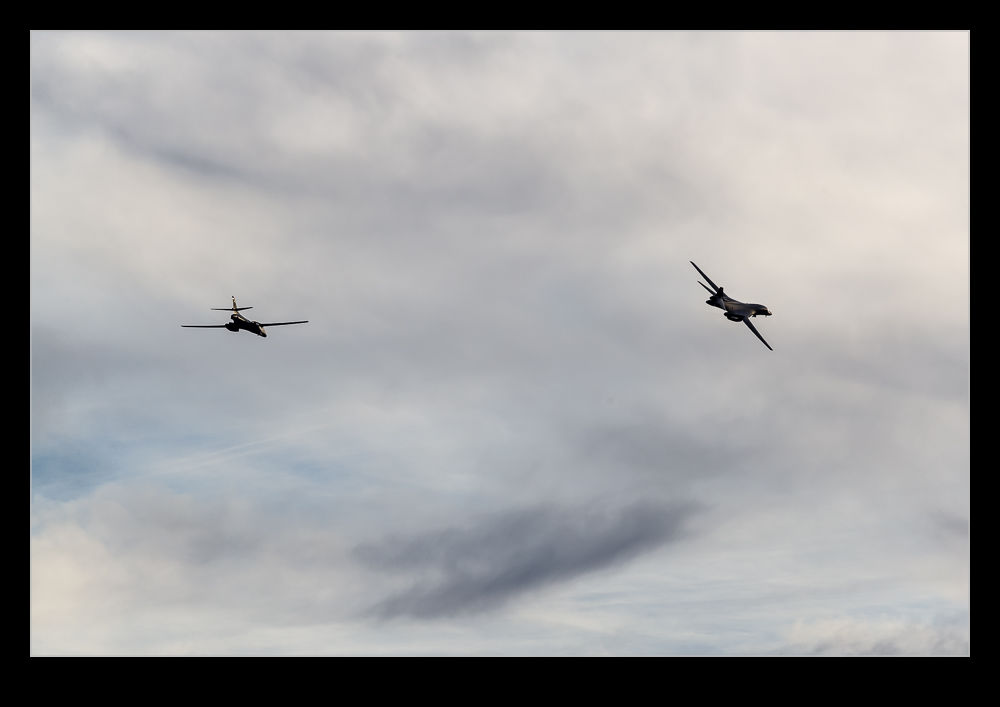
Paul and my second full day at Red Flag was also the one where we both had to fly home. We knew that the timing would mean leaving before the last of the big aircraft came home but we should get most of the recovery. We set a time and started packing up. We had done well so no complaints. We hopped in the car and drove towards the turn to take us out to the freeway. Just as we got there, a pair of B-1s came running in to the break in formation. Surely we couldn’t let them go. A rapid stop at the side of the road, grab cameras from the trunk and start shooting.
They flew by in formation and broke downwind. Each of them turned in reasonably tight for their approach and it was possible to get some nice topside views as the curved around to final. We could have been a bit closer and probably would have chosen different lenses if we had been able to choose but we got the shots. Then it was time to repack the bags and get going. We only lost about five minutes and everything worked out fin getting back so it was totally worth it. There was no waiting for whatever followed them though.
Some Raptors Because, Well Why Not?
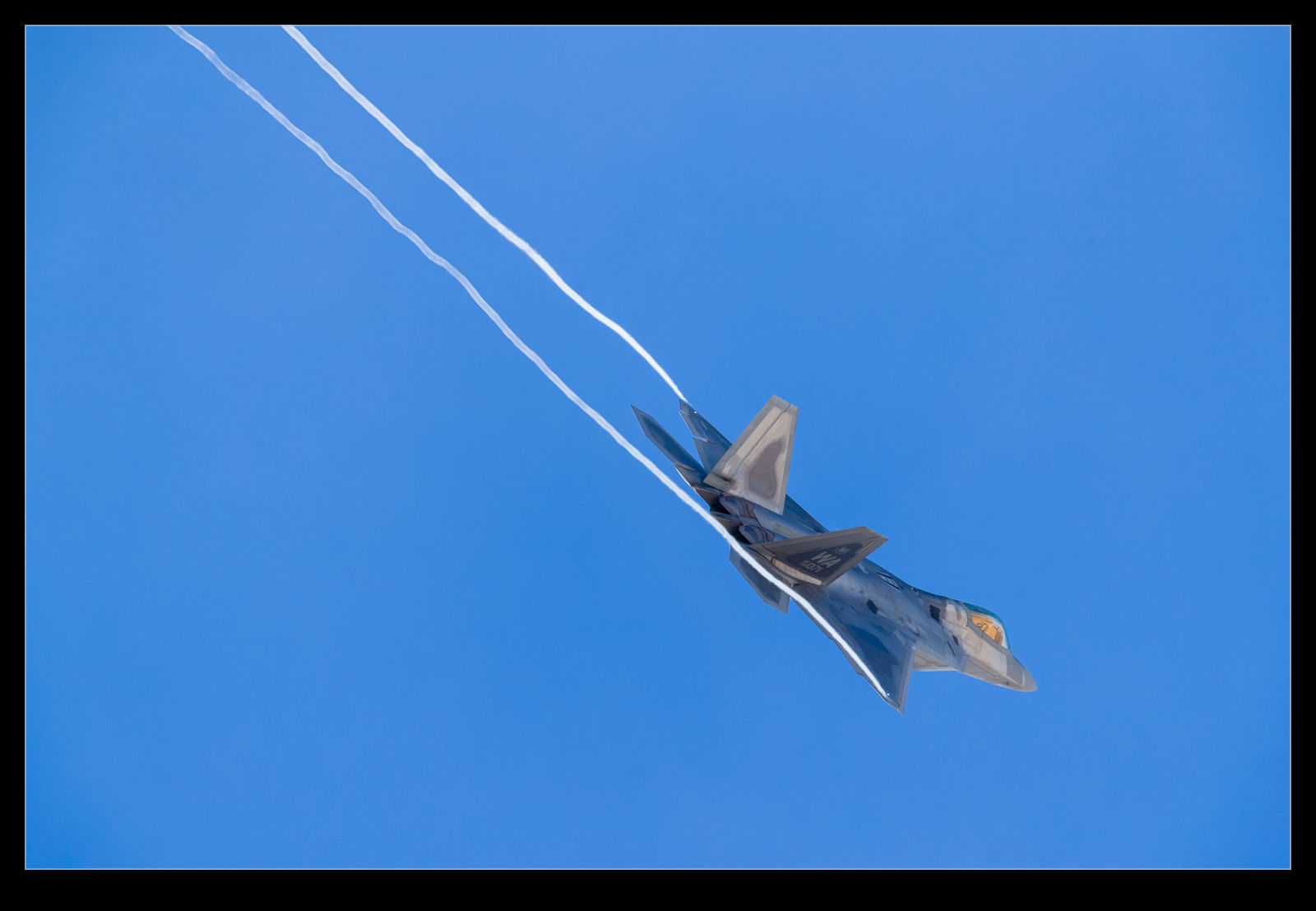
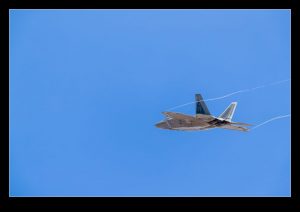
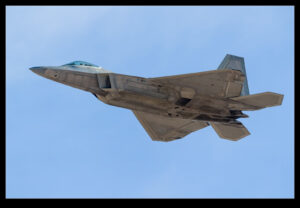
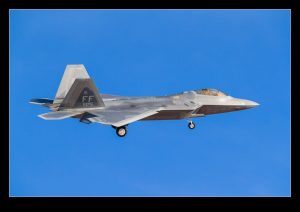
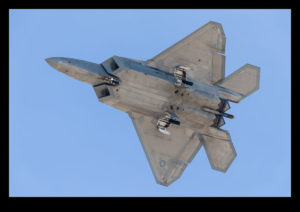
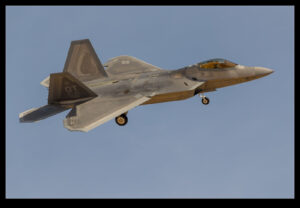
The 1st FW at Langley AFB was the source of the Raptor contribution to Red Flag this year. They weren’t the only F-22s I got to see though. Some of the based aircraft were busy before and after the Red Flag missions so there was plenty of Raptor action. Not much of a story to tell on these. Just a chance to gratuitously show a variety of photos of F-22s because, from the right angle, they look pretty cool!
- A USAF Lockheed Martin F-22A Raptor on final approach to Nellis AFB NV.
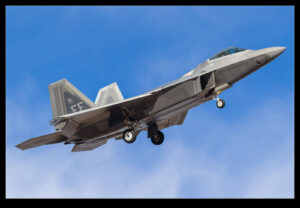
- A USAF Lockheed Martin F-22A Raptor turns on to final approach at Nellis AFB NV.
Stalking the Jollys (Or Are They Stalking Us?)
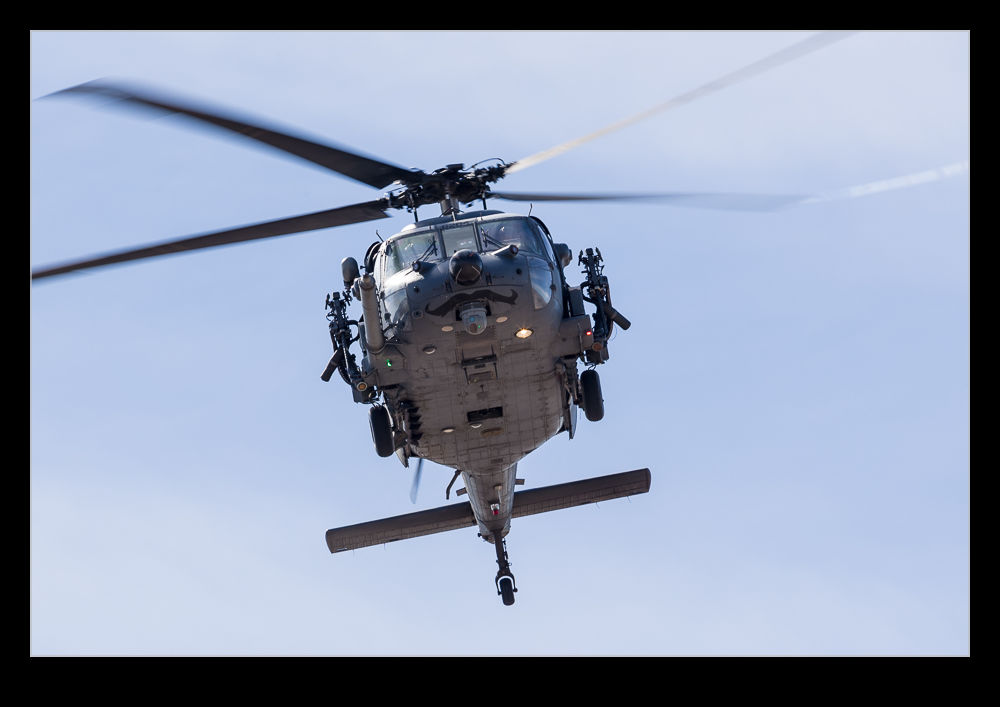
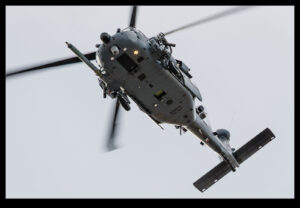
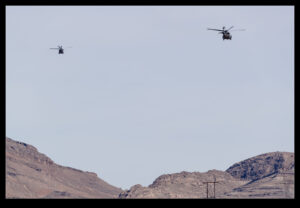
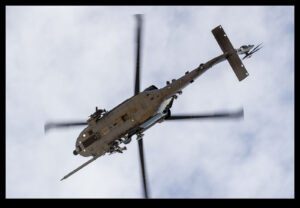
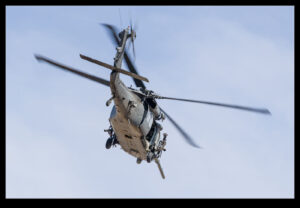
A combat search and rescue element is usually included in Red Flag. The HH-60 Pave Hawk is the usual resource used whether from the locally based unit or from a visiting outfit. When you are set up for the jet action, the helos don’t tend to come anywhere near you. They depart perpendicular to the runways and then head off on course. Two things were different for me on this visit. At one point Paul and I were checking out some other areas when the Hawks launched. We were pretty much directly in the flightpath so we got a good look at the pair as they flew over and headed off to the ranges.
The other change was that on both days we were there, they turned early and flew out directly over our location at the Speedway en route to their exercise are. I hadn’t seen this before. I was surprised the first time and even more so the second. I assume this was good luck on our part to have them come so close but maybe they were actually following us rather than the other way around?
A Couple of Connie’s “Finest”
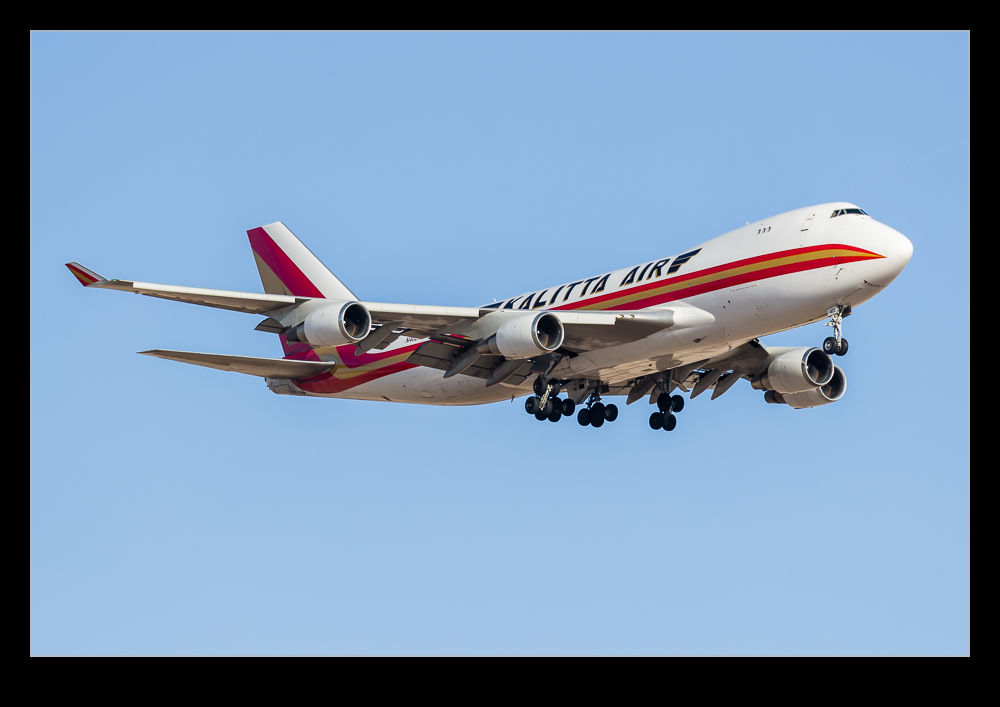
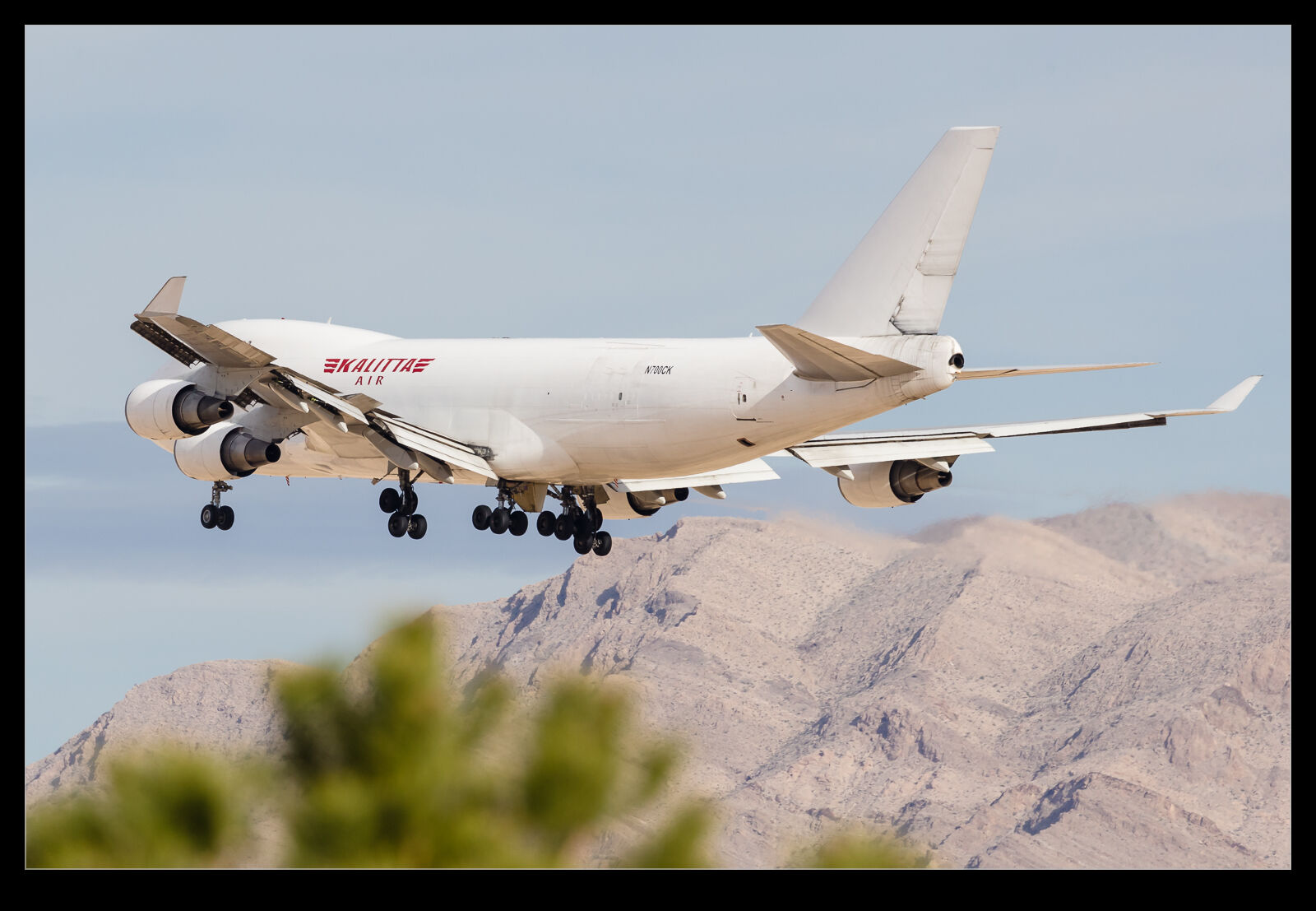
Red Flag is a time for lots of military aircraft to do their thing. However, it isn’t only the military that show up. Transporting everything that is required to support lots of deploying jets might be done by military transports but it is not unusual for civilian organizations to get some work. Whether it was Red Flag support or something else, we got to see a couple of 747-400 freighters while we were there. Both of them came from the same company, Kalitta.
One of the jets was fully painted up and showed up on the approach one day. It flew a straight in approach and landed to either deposit or pick up some bulky items. The second jet was a bit different. First, it was in plane white with just some Kalitta markings. More importantly, it arrived during a Red a Flag mission. It ended up holding overhead for a long time while the launch was underway. Finally they brought them down for an approach. However, it wasn’t clear which way they would come. Nellis has a habit of bringing jets in from different ends almost at whim.
At first it looked like they would land on the 21s. Then they looked like they would go to the other end. We jumped in the car and headed that way. Just as we were getting close, the jet turned away and headed east. We did a quick about turn and followed suit. We hadn’t gone too far when they reversed course. Where they deliberately toying with us? Another quick reversal and we were getting close but now they were turning on to final. Time ran out and we pulled in to a parking lot by a tire dealership just as it came in to view. We had to work for that one.
Head to Head With the Aggressors
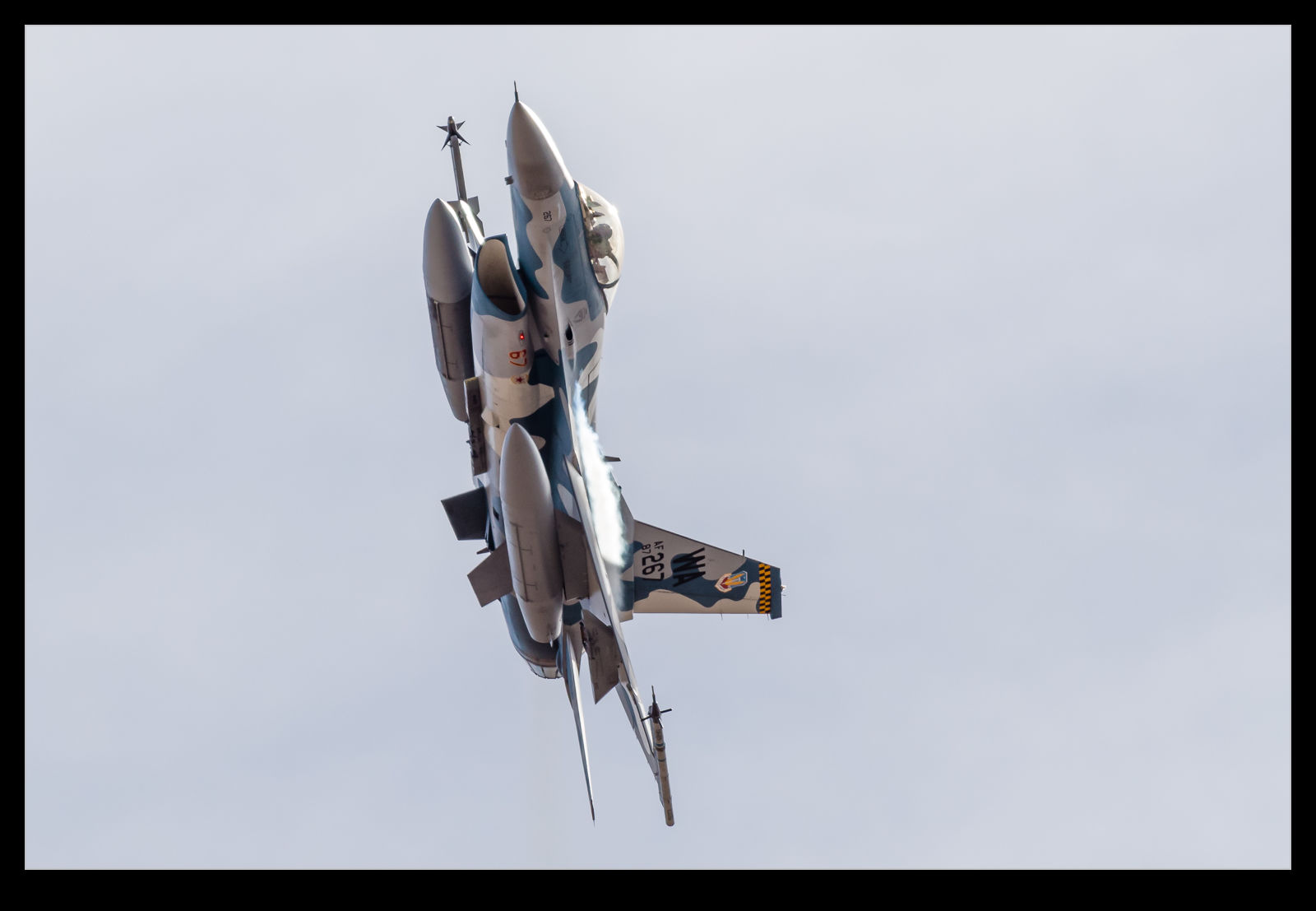
Shooting at Nellis always requires choices to be made. Aside from determining which end you will go to, there is the question about how far up you will go at the Speedway. Some jets turn very tight, others turn long. Some departing jets flex, some flex more tightly than others. Where to go? Paul and I headed up near Gate 7 to see whether we would do alright. As it happened, quite a few of the jets were flexing right overhead us. This didn’t provide the sort of shots we had originally envisaged but, as it turned out, I was rather pleased with the different look.
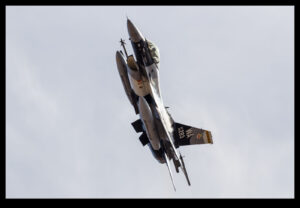
I was getting some very head on shots of some of the aggressor F-16s as the turned towards the ranges. There was even a bit of moisture in the air and the vortices over the root extensions were showing up. That angle has a very dynamic look, even though the lighting in that location is not great for such an angle. The other benefit was as they had passed overhead. You got a close look at the top side of the jet from behind as they flew away. It might not have been what we intended but I was rather pleased with the outcome anyway.
It is Dark at Nellis During the Night Launch
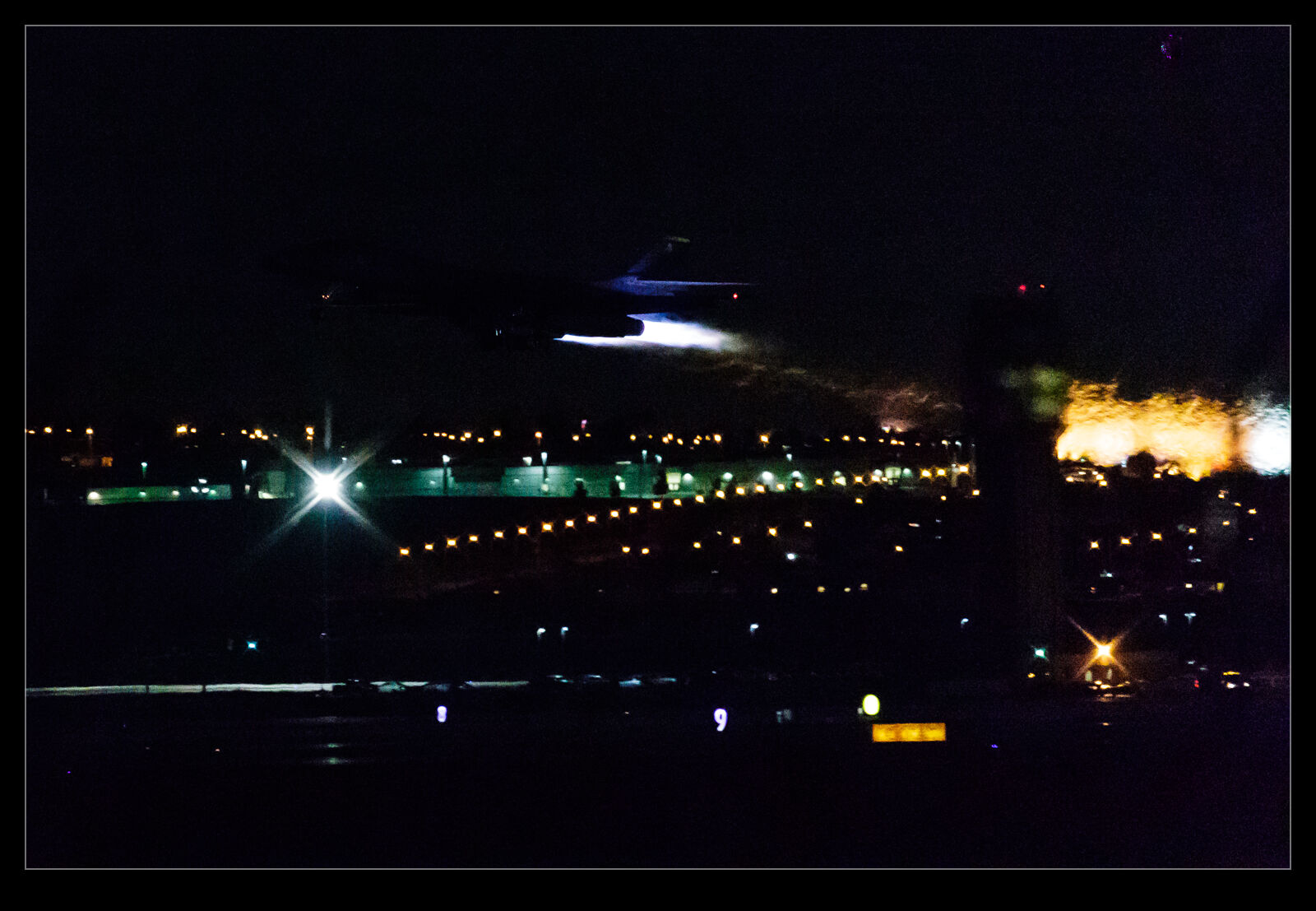
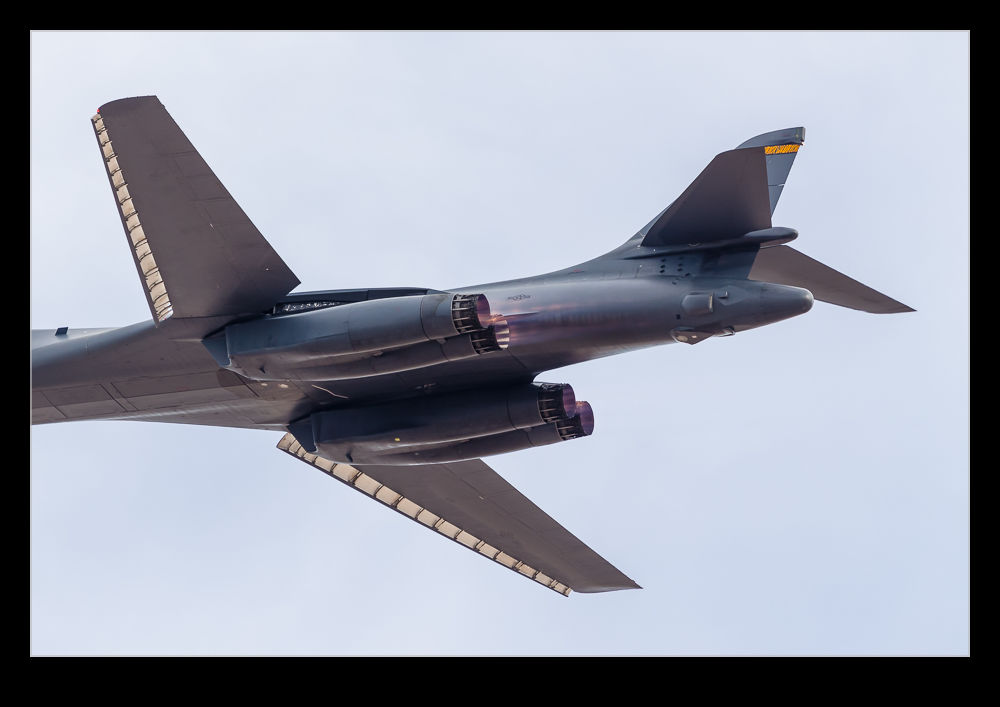
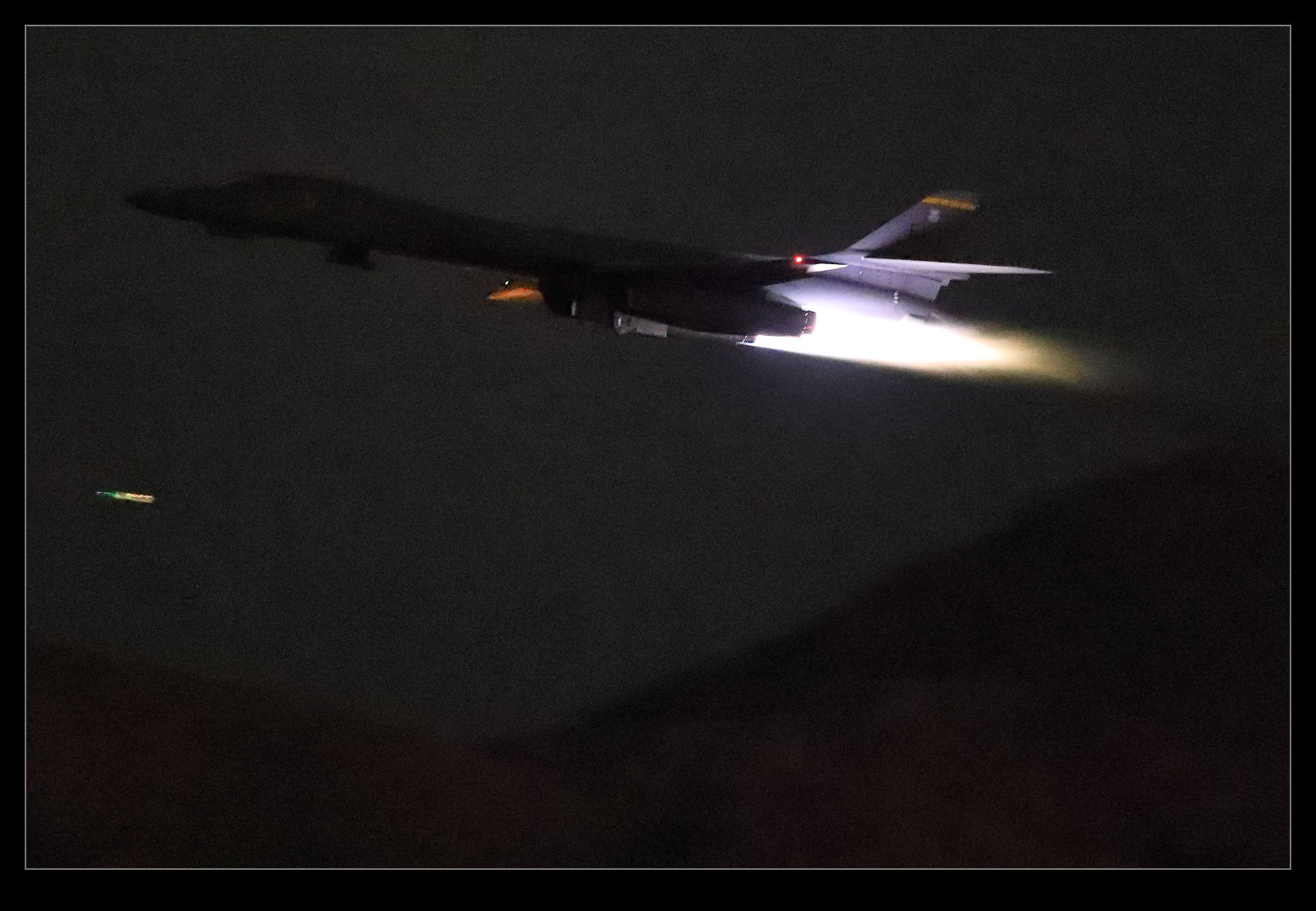
On previous trips to Red Flag I have taken pictures of the departing B-1Bs as they fly overhead. The burners are really impressive and definitely worth getting a shot of from below. However, having done this a few times, I wanted to try something different. The fighter get out of burner very quickly after they get airborne. They are in mil power for ages before they get to you on the centerline. I wanted to see what you could get from the side a lot closer in so Paul agreed to try something different.
We ended up shooting a lot of side on stuff of departures for the night launch. Unfortunately, we didn’t appreciate just how dark it is at Nellis at night. We had a good moon so we were hopeful that there might be some residual light. It turns out that this is not the case. Even close in, the fighters are out of burner. The tankers and the E-7 went out and I got some shots but they were a struggle, event making use of the best high ISO capabilities of the cameras. The B-1s did show up okay but I still didn’t do as well as I thought I should have.
I learned a bit about the performance of the cameras. I was shooting at super high ISO settings with the camera wide open. However, as I review the shots, I realize the camera was behaving in a way that I had not anticipated. I was shooting in aperture priority with some negative exposure compensation dialed in. As I look through the shots I see that the camera would start out with a dark shot, gradually boost the exposure and then go dark again. I would review the shots and see one that was looking good but know that the next would be dark.
When shooting in such limited light, the shutter speeds are very low and the number of lost shots is high. Therefore, you can’t afford to have the exposure be bad. I don’t know how many shots I lost since they may not have been sharp anyway but I cut down on my opportunities. In future, I need to have all of the exposures be acceptable in order to maximize my opportunities. Therefore, I think I shall have to go fully manual on everything for these shots. Set ISO up high and then go to manual aperture and shutter speed. I will still lose a lot of shots but at least I can focus on dealing with my handholding technique rather than worrying about how the camera is metering a dark night. It’s not too reasonable to expect the camera to get that right every time. It is a pretty extreme case!
Some Spare Oxygen – Just in Case
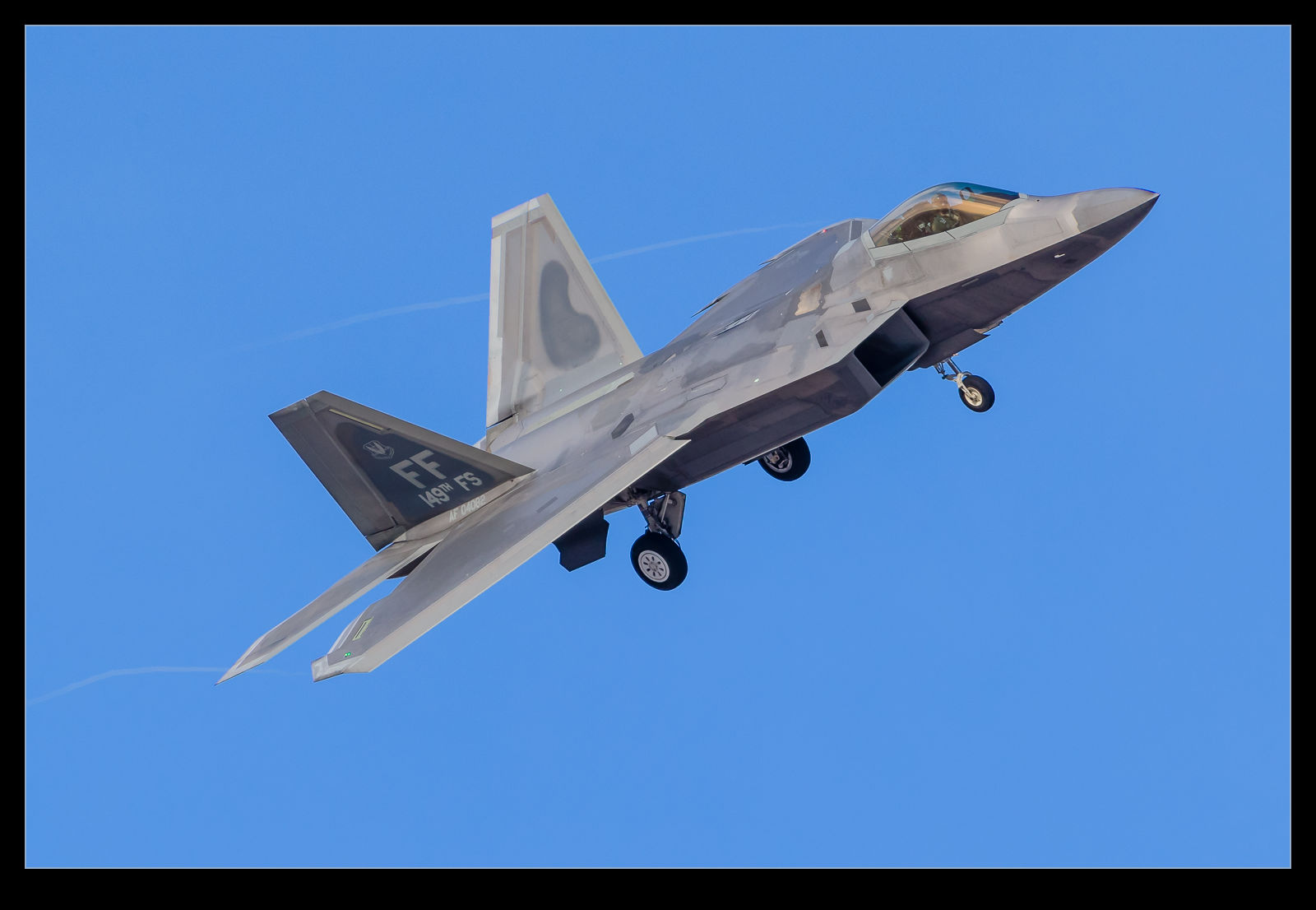
There have been quite a few Raptor posts recently. I guess seeing a bunch of them at Nellis triggered a few things of interest to me. One was as I looked at the jets after they had passed me by on their approach. A few years ago, the F-22 fleet was grounded by some issues with the oxygen system. Like most modern jets, the F-22 doesn’t carry bottled oxygen but instead generates it onboard for the pilot. There were some issues with the oxygen being generated that resulted in pilots feeling unwell and, potentially, losing awareness of what they were doing. As you can image, this is not a good thing in a fast jet and was believed to have contributed to loss of an aircraft with its pilot!
A backup oxygen system was implemented to provide the pilots with something in the event that they felt symptoms of the problem recurring. Not so much of a solution as a fallback plan. As I looked at the jets, I saw green tanks behind the ejection seat. These are pretty big tanks and seem rather unsubtle in the way that something that has been added after the fact often is. I wonder whether these are the spare tanks for the pilots to breathe should the onboard generation system cease to be reliable.
Typhoons are Back in Town
The Royal Air Force was back at Red Flag and the Typhoons were a big part of what they brought. It’s always nice to see Typhoons up and about but, sadly, the RAF has adopted an approach of combining the squadron jets into a maintenance pool. This means that they don’t carry individual squadron colors. A couple off the jets still had markings – one from 6 Squadron and one from 41 Squadron – but, sadly, the rest of the jets were all plain gray. Nothing colorful about them at all. We did get some nice winter light to photograph them in but even that is not going to make them look that great.
- Two Royal Air Force Eurofighter Typhoon FGR4 jets run in to break for landing at Nellis AFB NV.