Tag Archives: pod

My First Experience of the Pods

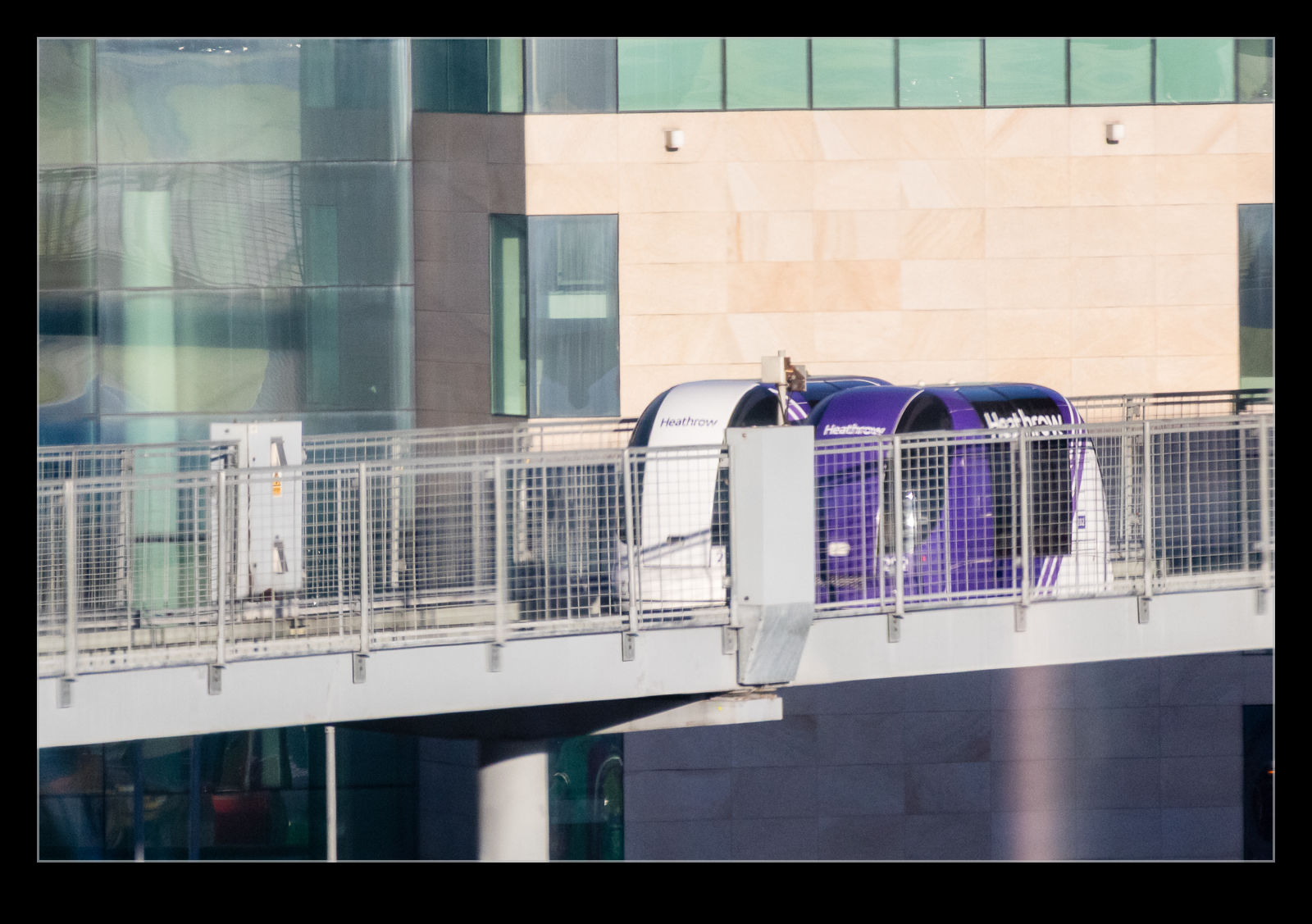
I had a flight to take from Heathrow that had an early start. It wasn’t practical for me to use my normal route to the airport and get there in time, so I was going to have to drive. I decided to have my first go with the Pod Parking connected to Terminal 5. I had seen plenty about this over the years and had watched the pods on their tracks while driving around the perimeter road towards the rental car lot when collecting or returning vehicles.

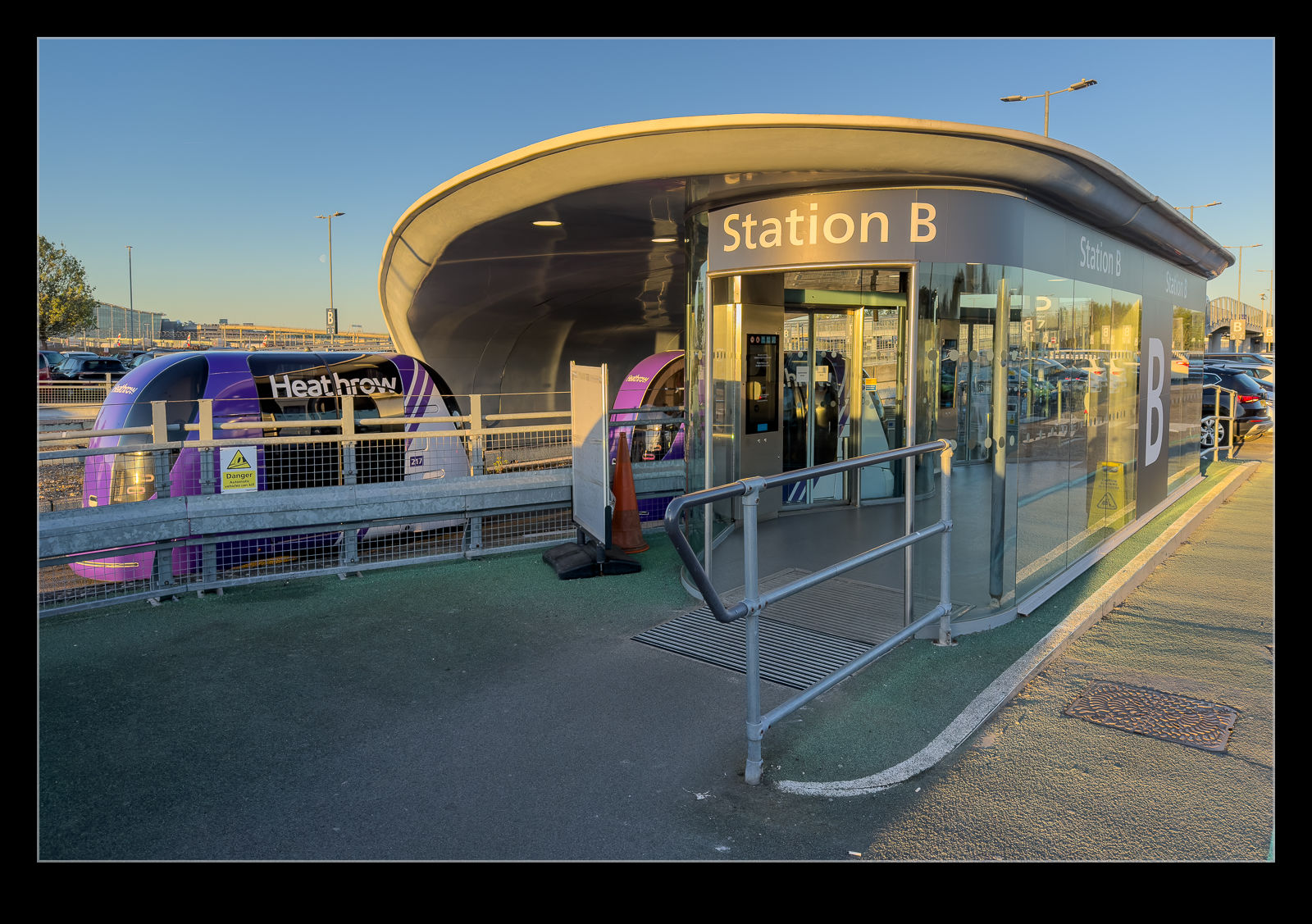
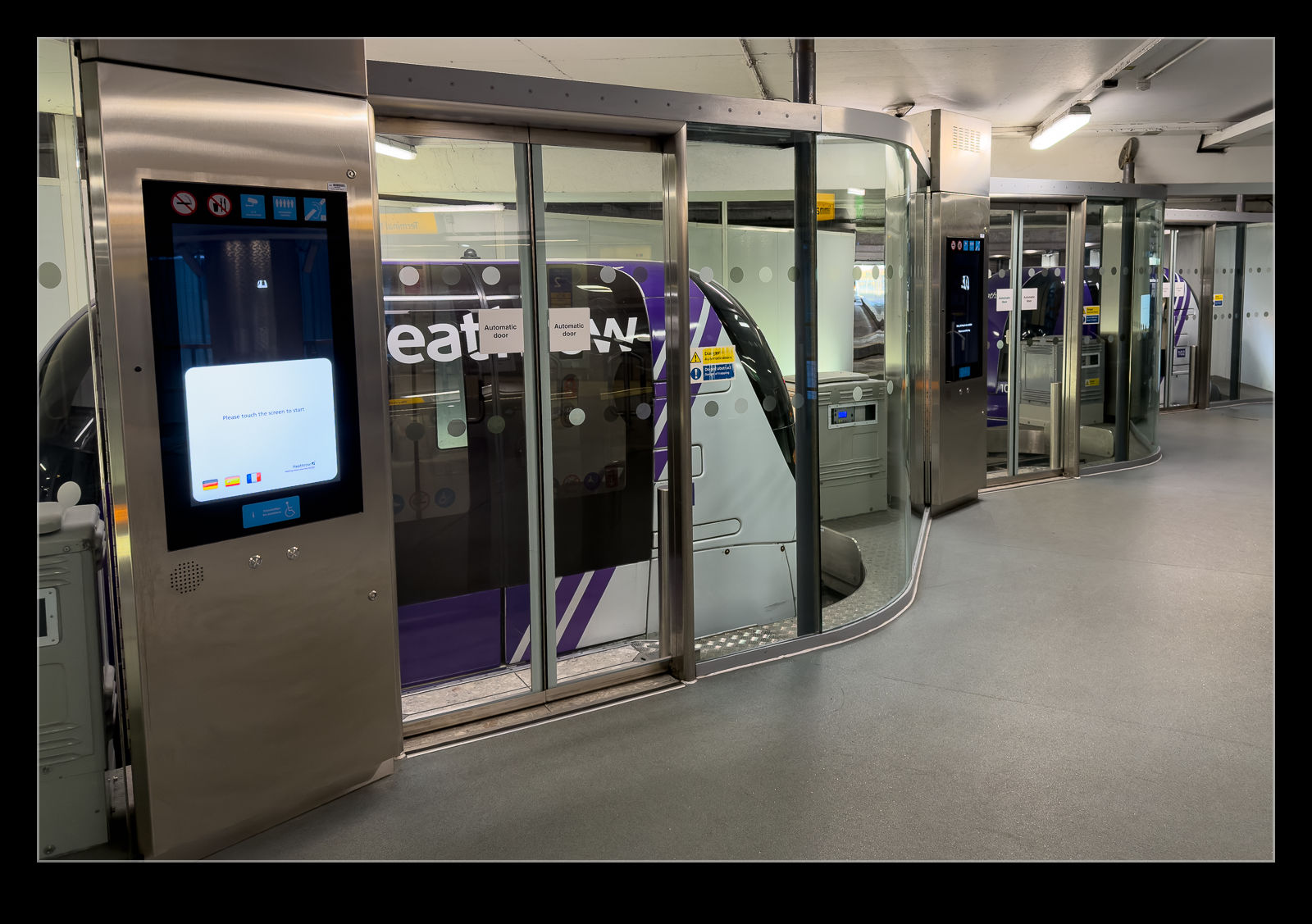
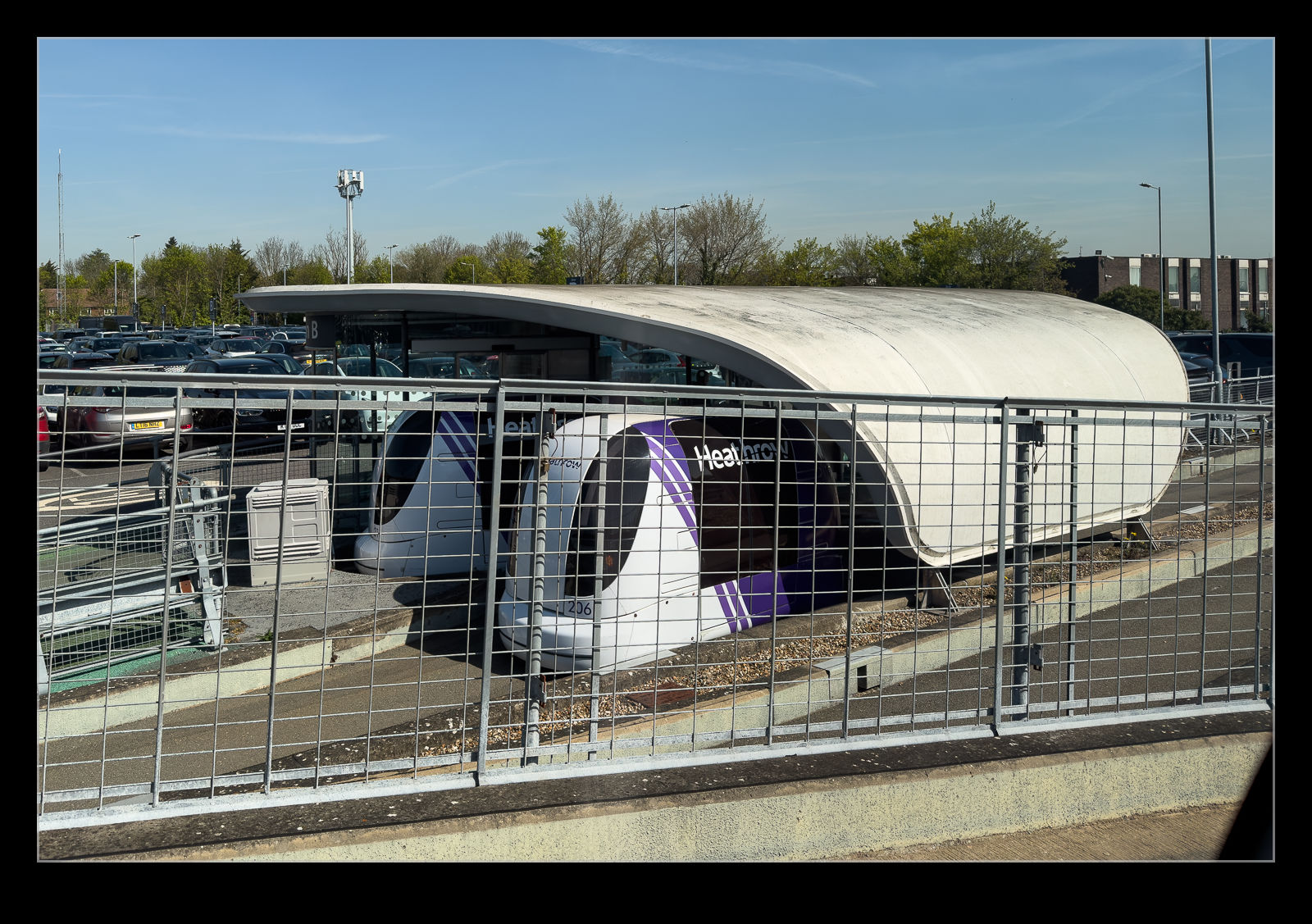
The whole thing was booked in advance, so the number plate recognition system identified me when I got there and let me in. The car park was pretty full, but I got a spot not far from the station B. A short stroll and I was at the station. There were two pods in the station, but both were charging so I had to wait for a minute or so. Amusingly, the screens told me that demand was high and that there might need to be a requirement to share a pod. Since I couldn’t see anyone anywhere near me, I am not sure what congestion that they were thinking of. After a short wait, both pods showed ready and I pressed the screen to get going.
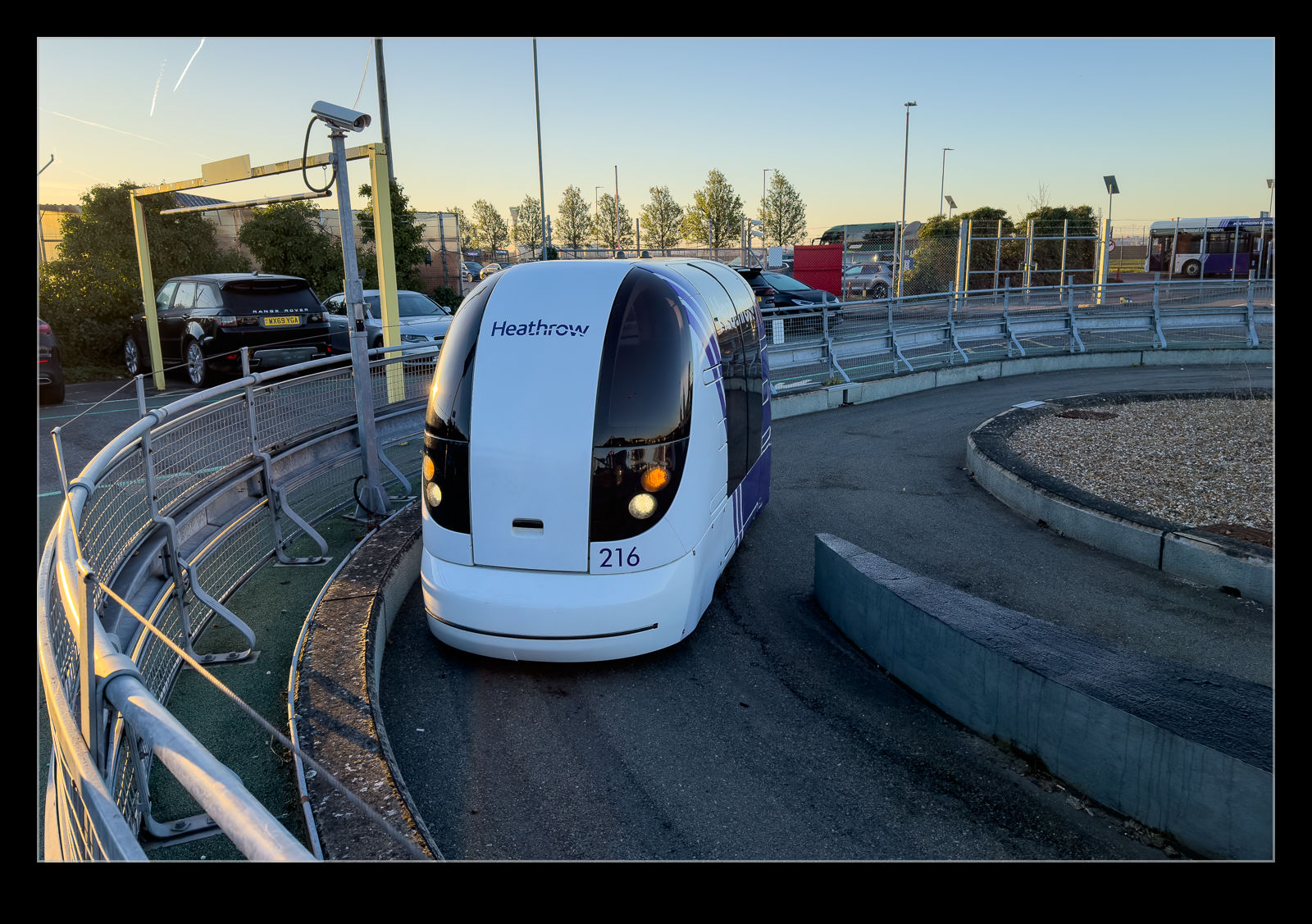
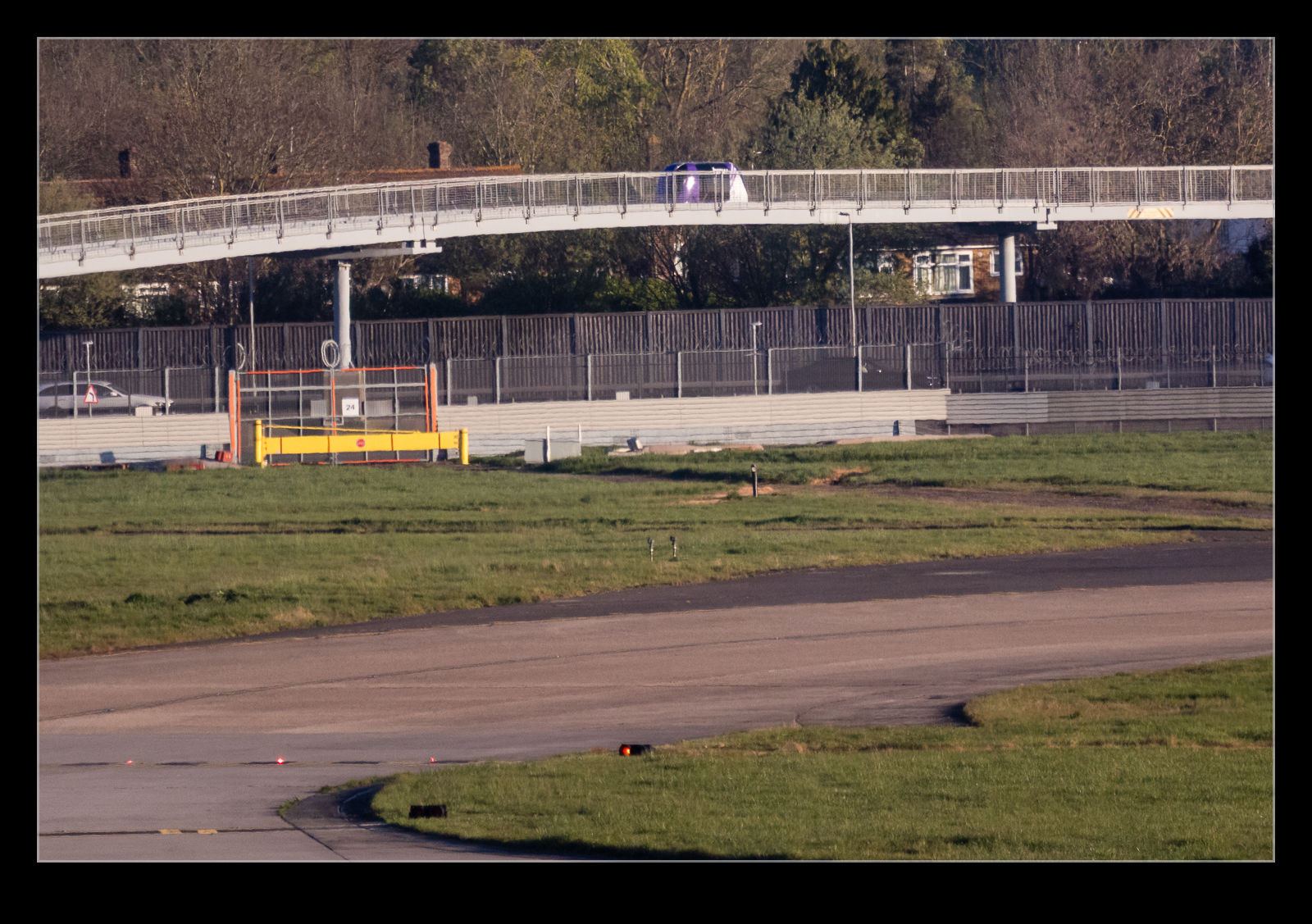
The doors of the station and the pod opened and I climbed in. I had to press one button to close the doors and a second to start on my way. Given I only had one destination to go too, the chances I was in the wrong pod were limited but, once I knew what was needed, we were ready to go. The pod reversed slightly out of the bay and then we were off. There are two stations in the car park, A and B, and they merge in an elevated section of track which then crosses the road and runs inside the airport fencing.
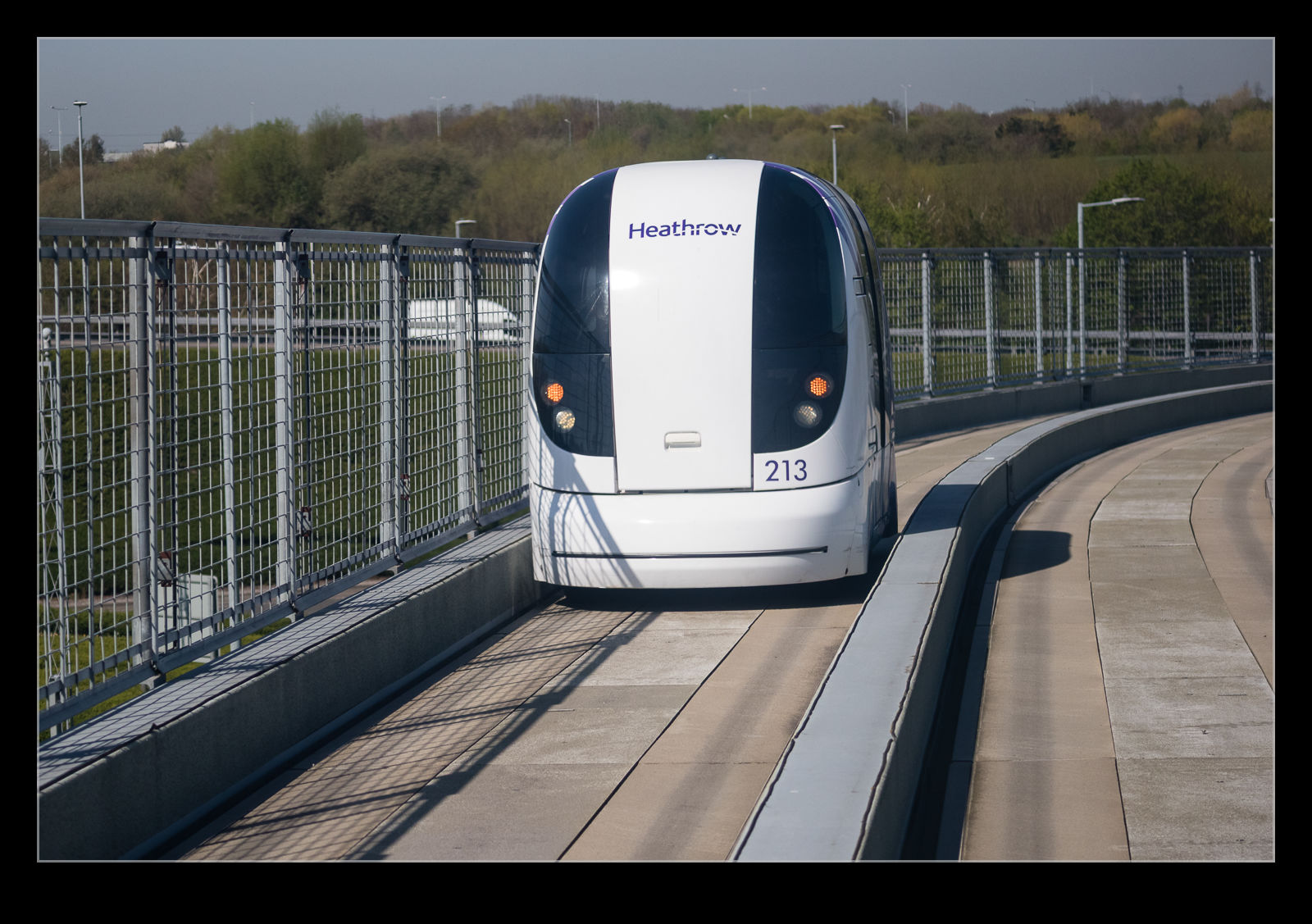
The route brings you around the end of the northerly runway at Heathrow and I had a flight come in over my head as we transited across. The ride was fine if a touch bumpy. It really was a quick run to be approaching the terminal and then we were inside. We loop around the station before approaching the bays where the doors open and I was done. A quick trip up in the lift and I was at the departure level of Terminal 5.
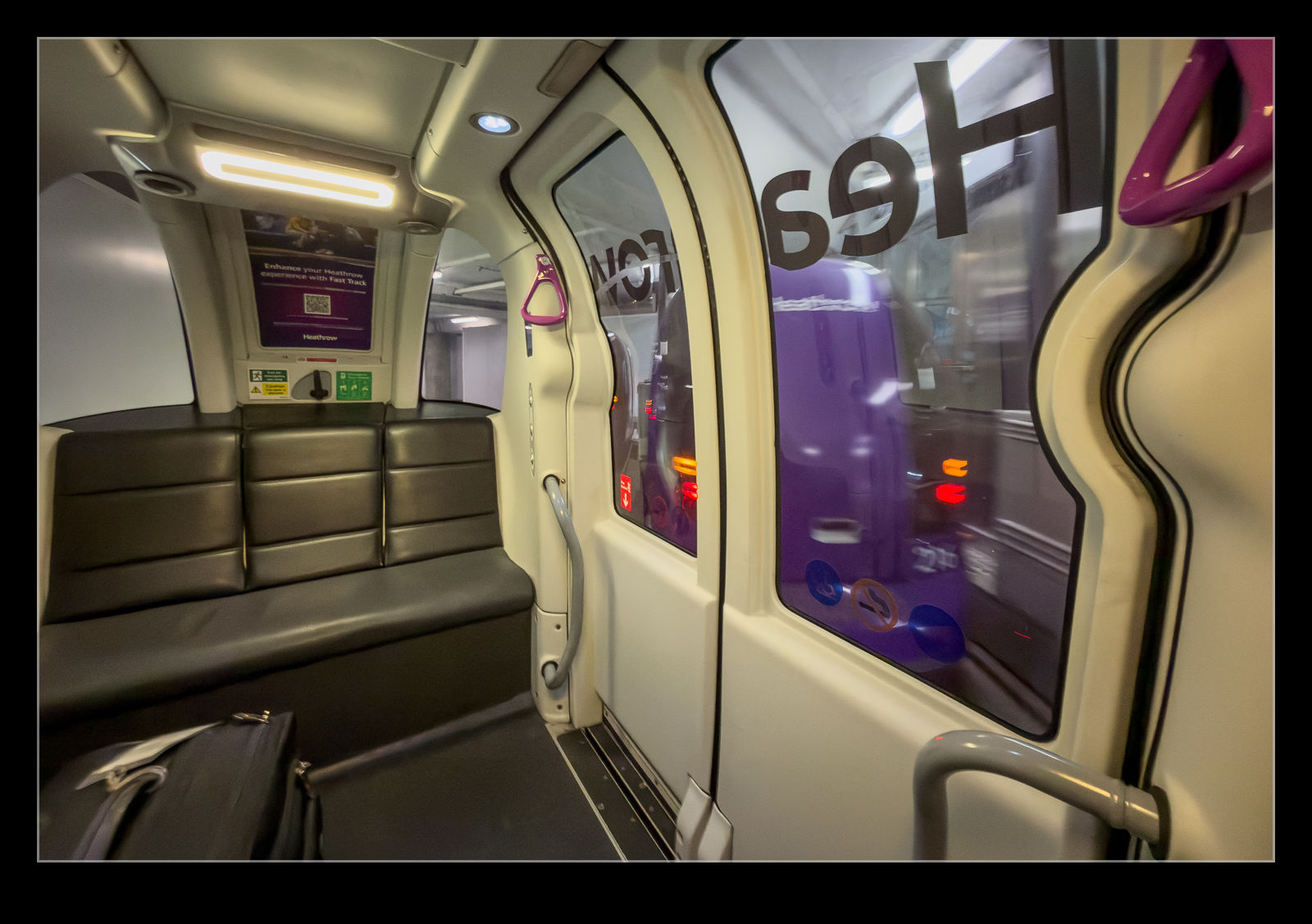
It really was a very simple process and felt like it was a very efficient way of dealing with parking offsite. The same can be said for my return. I collected my bag from the reclaim and headed back to Level 2 of the parking structure. There were two pods waiting and, this time, there was no delay while they charged.
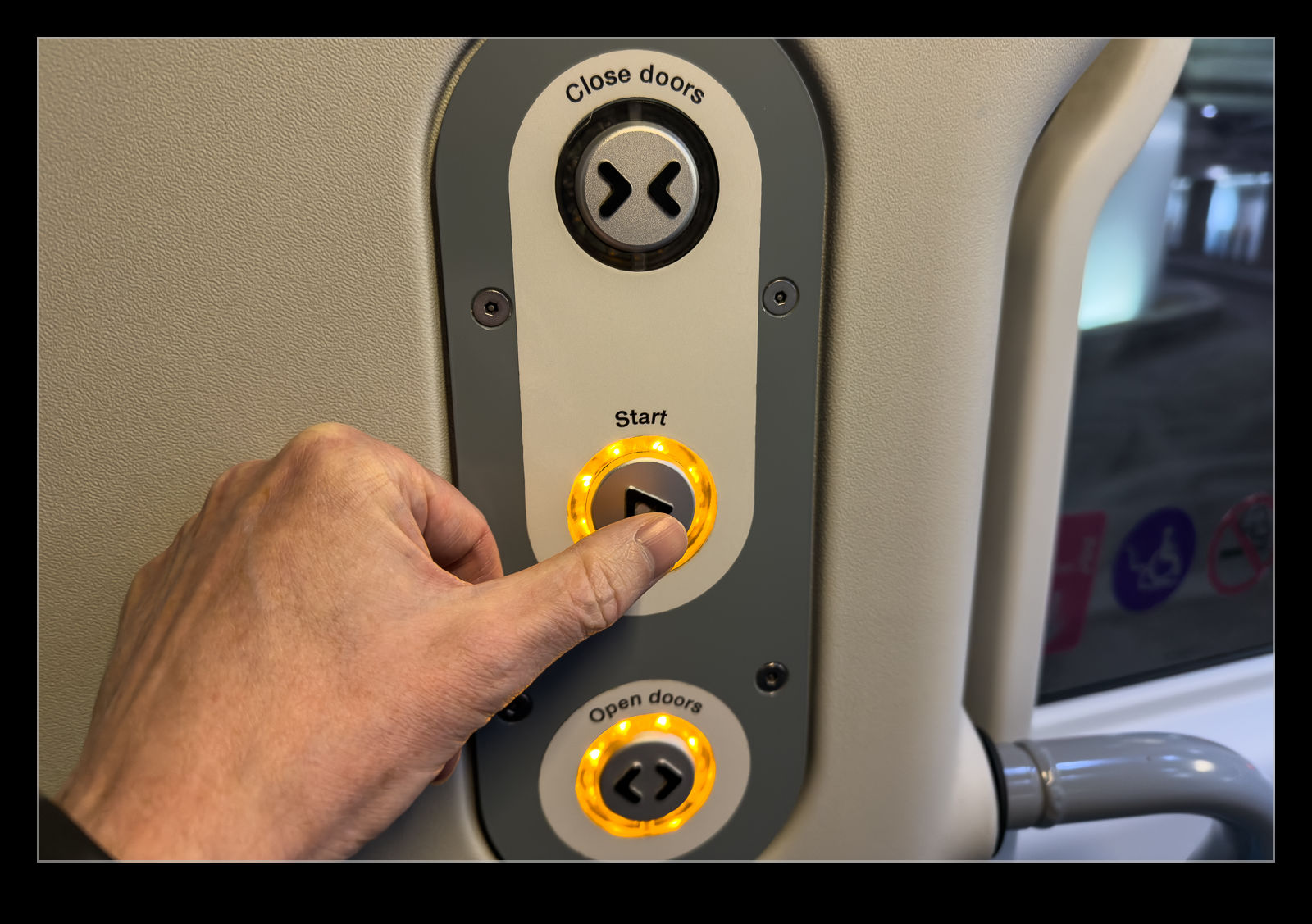
I did have to select which station I wanted in advance. Then, I got in, closed the doors and pressed start – I have learned quickly. Then a quick run back the way I had come before. I was back at the car park in no time and in my car. Since everything was pre-paid, I drove to the gate, and it opened as I approached and I was on my way. If the timing requires it, I will be happy to use the service again.
The New Jamming Pods Make an Appearance

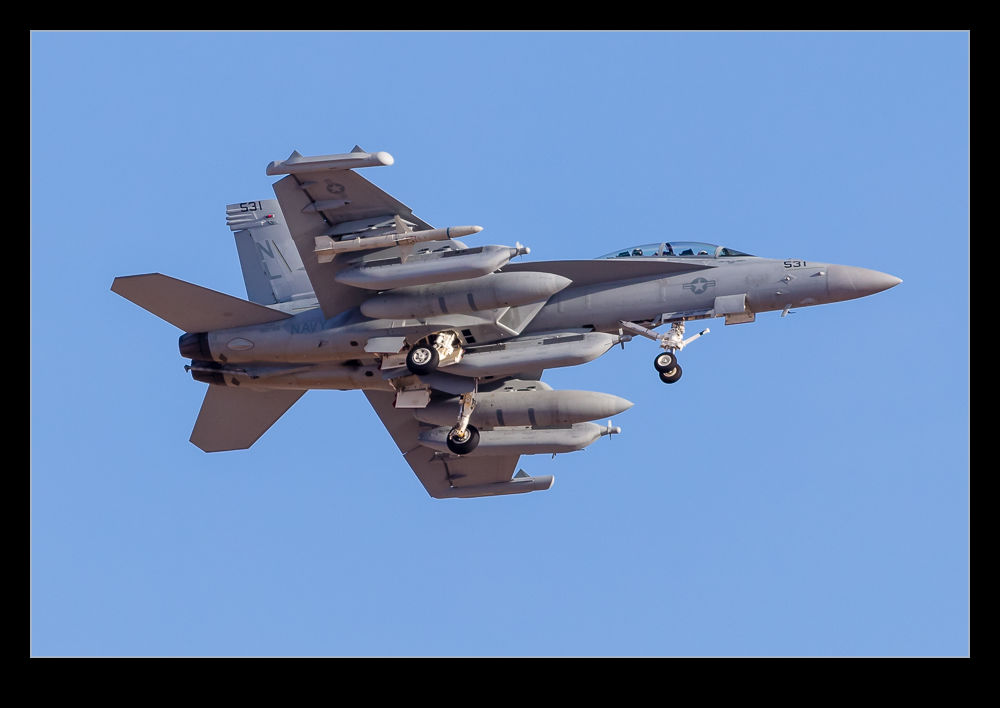
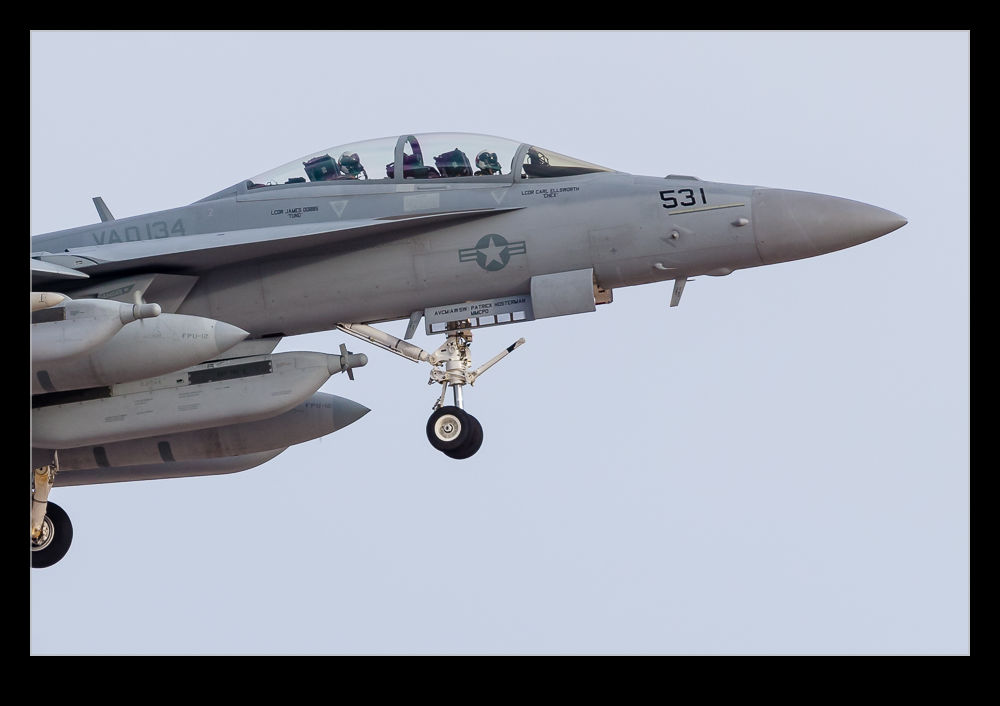
When the EA-18G Growler came into service, it made use of the same pods that had been fitted to the EA-6B Prowler. The Navy has had a long running plan to replace the different pod types over time and this is a slow process. The first of the new pods to arrive is the Next Generation Jammer Mid-Band which is built by Raytheon. These have gradually been delivered to fleet squadrons and, while I had seen images of them that local photographers had taken, I hadn’t seen one.

Then, one afternoon, while sitting up at Paine Field, a Growler rolled out after landing and came all the way to the north end of the runway. I had no idea it was coming in and missed the landing completely. It taxied off and I grabbed some shots because it was a color bird. Then I realized it had the new pods fitted. The light was so nice, and I was hoping they would just gas a go but sadly they didn’t and I didn’t get to see them depart. At least I have seen the pods fitted before I left.

SAAB 340 With an Interesting Pod

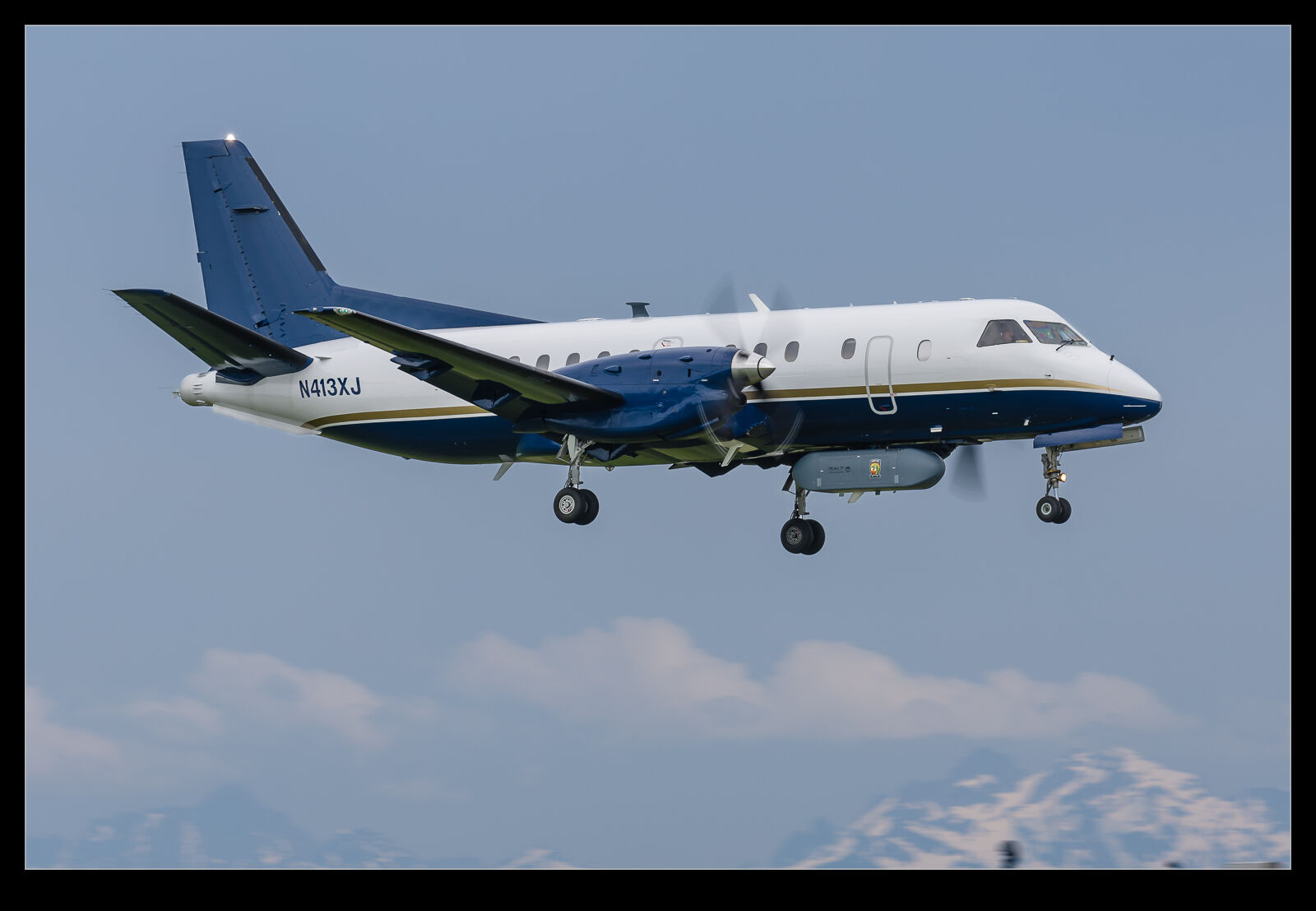
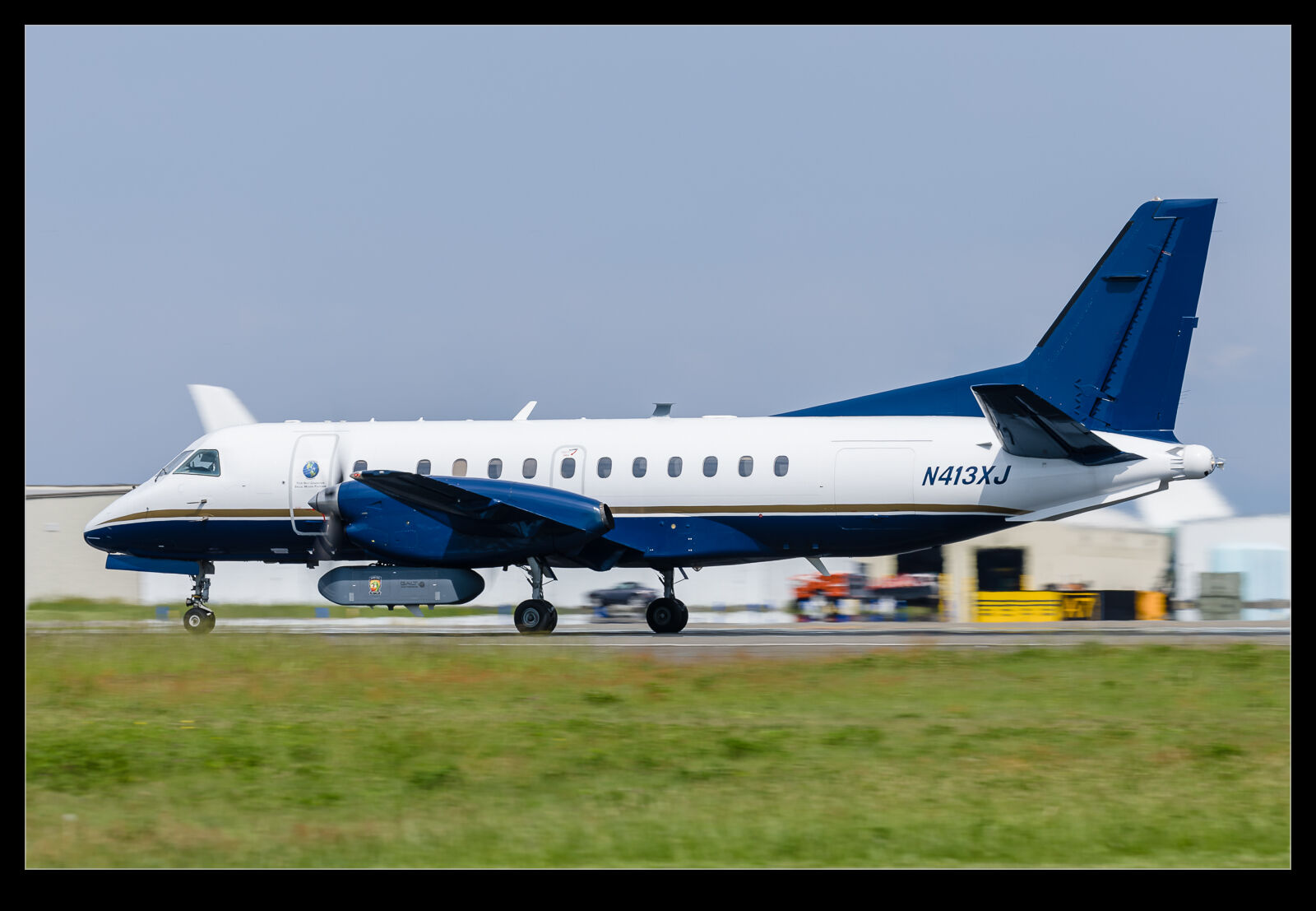
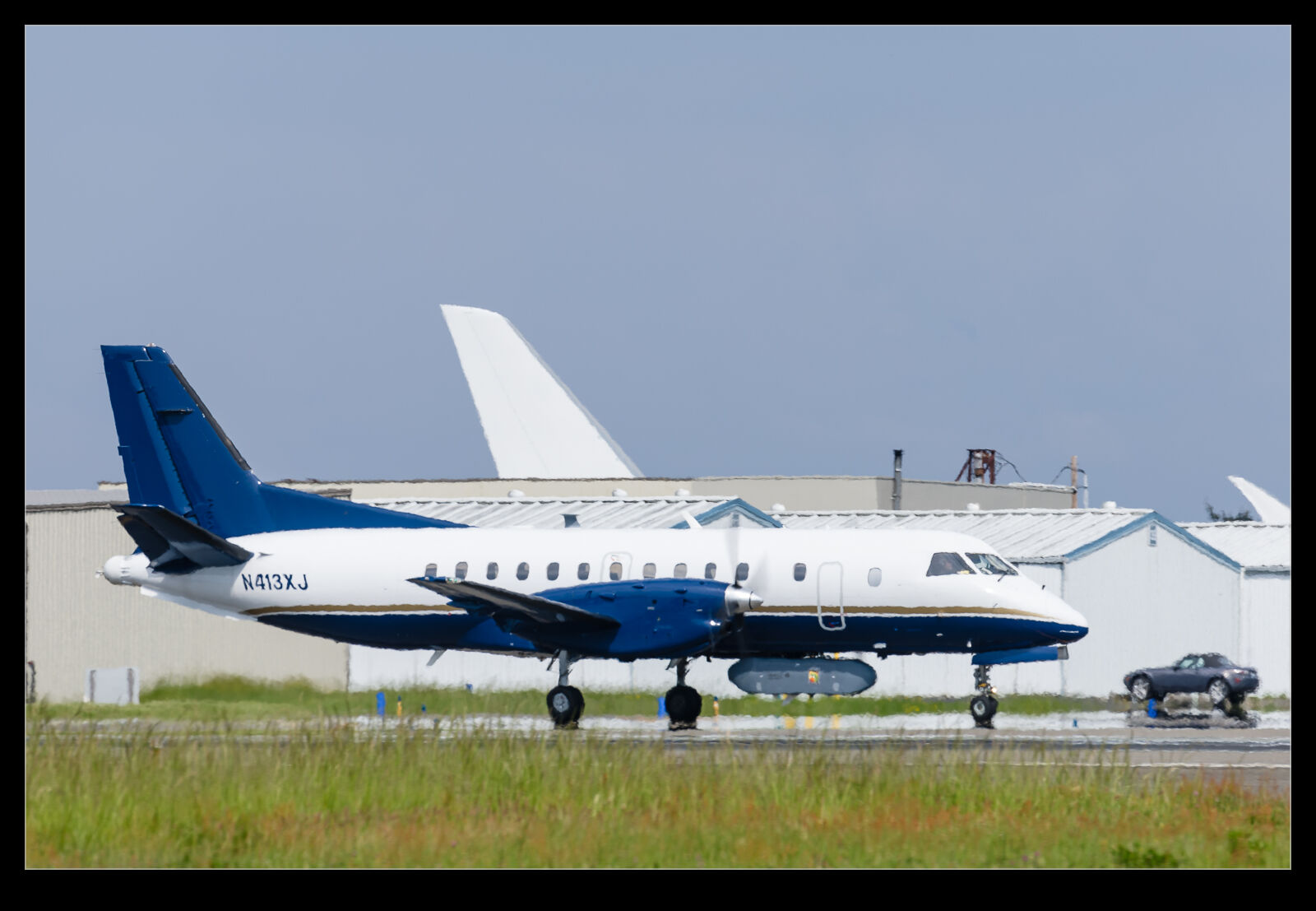
I promise that this is the last of the unusual types that headed to Alaska for a large military exercise.  This one I caught as it came through Paine Field.  I like the SAAB 340 anyway but stick a pod under the fuselage and I will be doubly interested.  The company that operates this jet is based in San Diego from what I can tell.  Their product naming might be coincidental, but I suspect I know the favorite author of someone high in the company.

Smokewinders Not Smoking

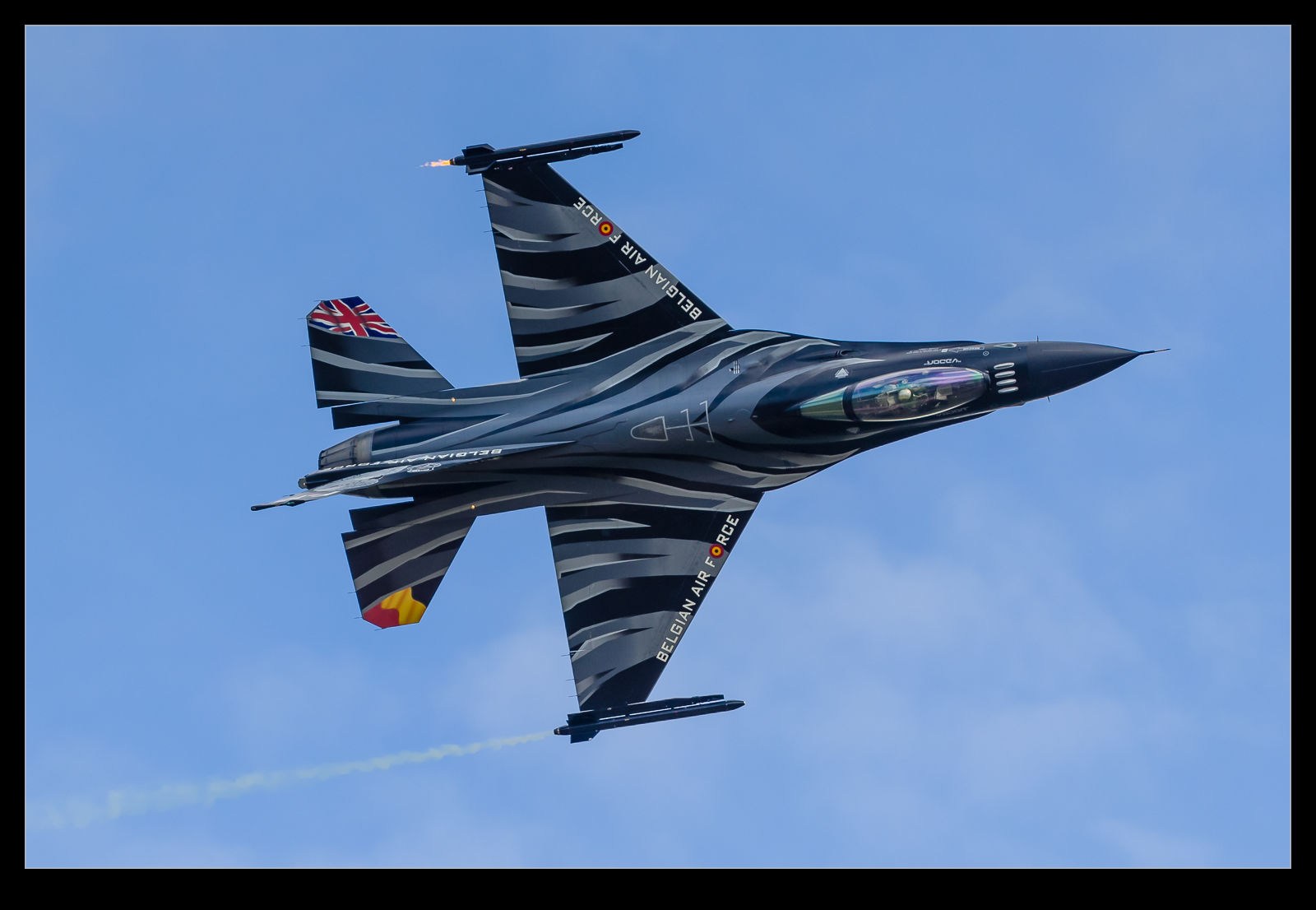
My F-16 shots from RIAT didn’t just throw up vortices (like this post).  They also showed something that seems to be a common occurrence in flying displays.  That is the failure of a Smokewinder to perform.  Smokewinders are a smoke generating pod that fits on a Sidewinder launch rail.  They are controlled from the cockpit and should add a nice effect to a display sequence.  The Belgian Air Force display aircraft was using them for its display.

In the early 90s we used them on the BAe company Hawk demonstrators at shows.  The crews had got to understand the workings of the pods well and knew what could cause them to quit during a display.  At one Farnborough, they actually helped out one of the other companies that was having trouble keeping theirs running smoothly.  I guess the problem hasn’t gone away and the knowledge is not widely shared as the Belgian jet lost one pod during its display.  In the shot above, you can see a small amount of flame emerging rather than the intended smoke and, a short while later, the pod quit for the rest of the display.

Details of a Pegasus

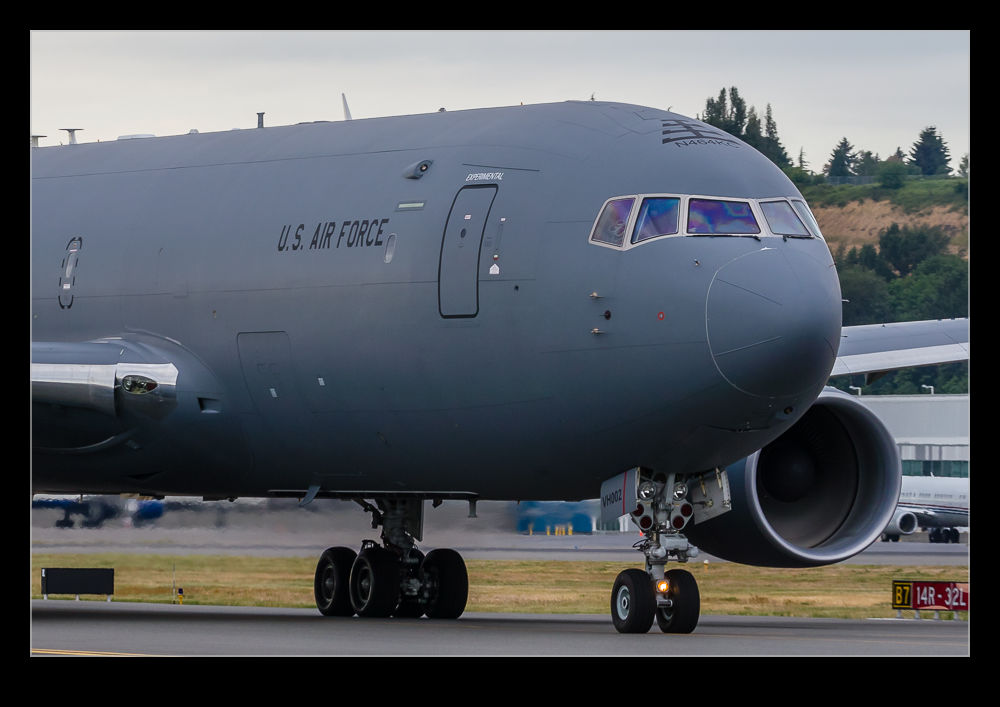
The KC-46 Pegasus test program drags on.  The delivery of jets to the USAF is still not happening and the number of jets built increases but they are stacking up at Paine Field and Boeing Field.  Meanwhile the test jets are working through test points and endeavoring to prove that the problems identified in previous tests are now resolved.  I have seen a few jets now and shot them in varying conditions from sun to downpours.

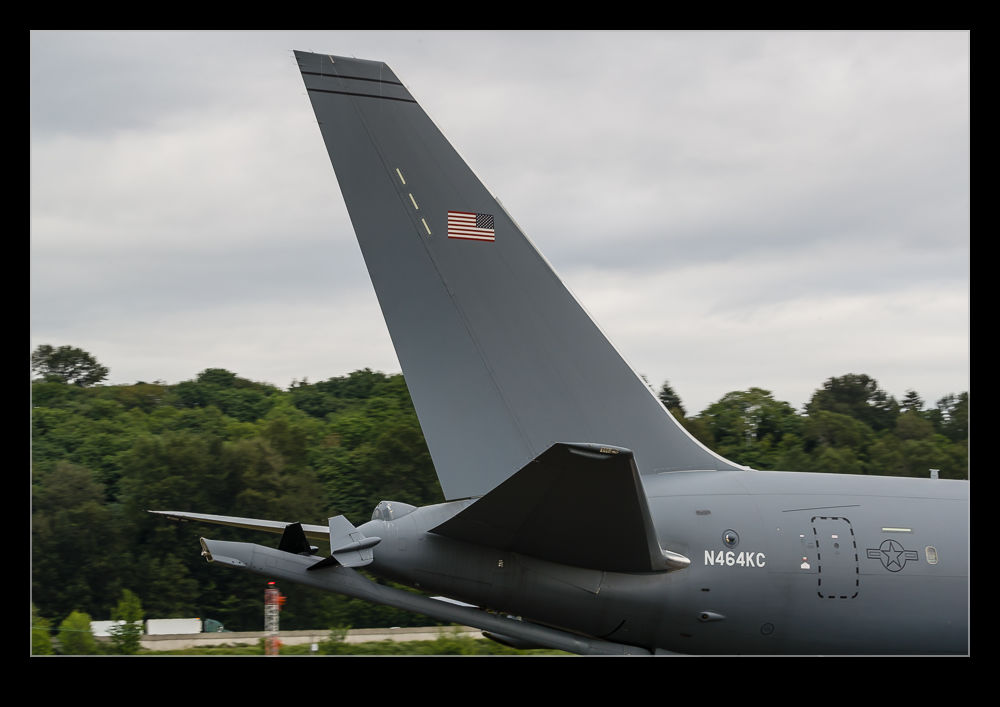
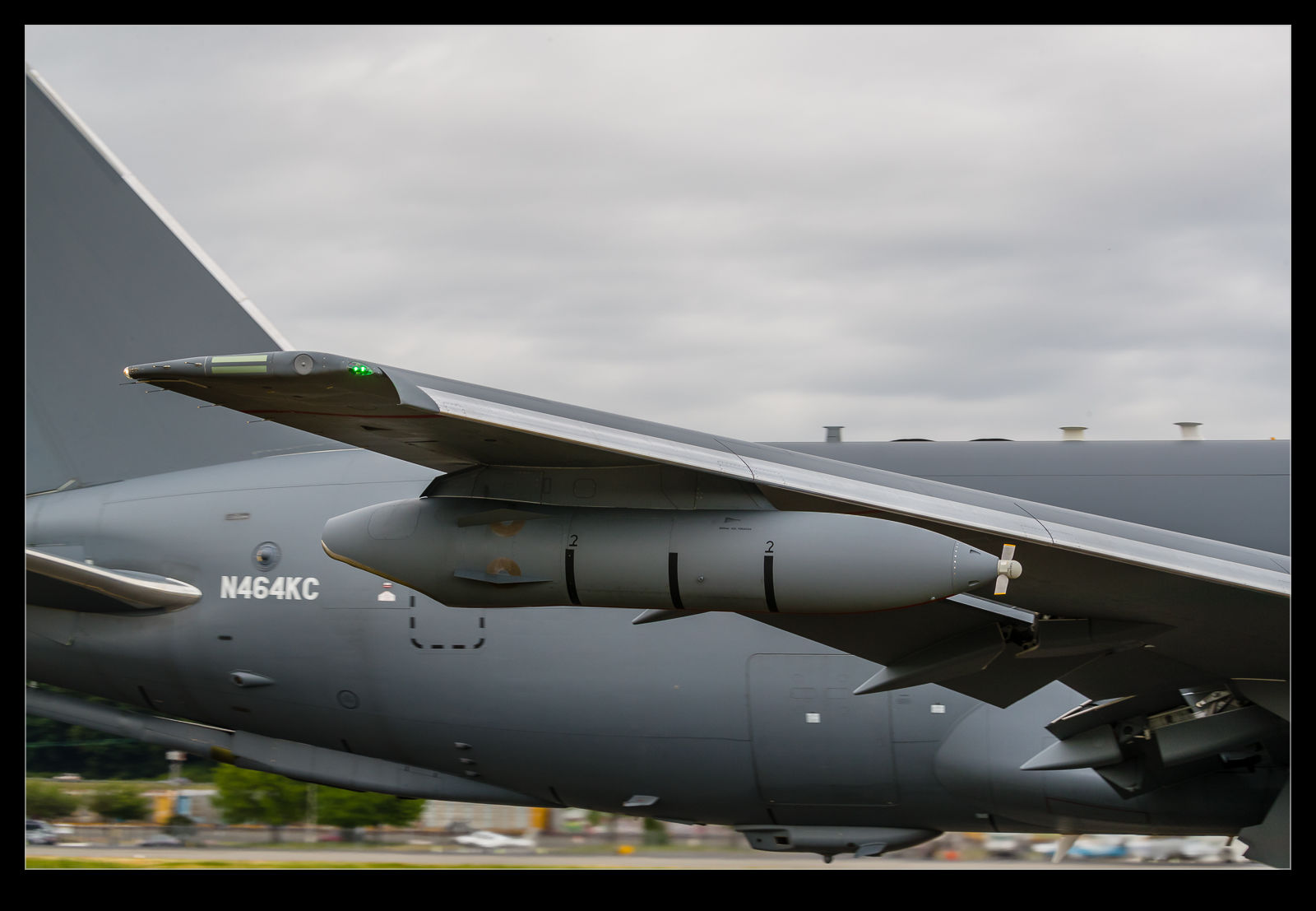
I was at Boeing Field one evening waiting to pick up someone at SeaTac later in the evening when one of the test jets taxied out from the Boeing ramp at the north of the field and came right by me prior to departing on another mission.  The jet was configured with the boom and the underwing pods so the planned final configuration.  As it came by, I decided to get some shots of the airframe to get a better idea of what the various parts look like.

The airframe is the familiar 767 although there are some changes structurally.  The cockpit is updated too but you can’t see that from the outside.  However, you can see the various sensors mounted around the airframe which, I assume, are radar detectors.  Above the cockpit is the receiver receptacle for the refueling boom to allow the jet to receive as well as dispense fuel.  You can’t see much from the ground other than the markings to guide the boomer (and the markings that identify which jet it is).

The underwing refueling pods are a source of some of the troubles the program is having.  Apparently, the supplier in the UK underestimated what was required to achieve he civil certification that is part of the contract requirements.  The pods may not be cleared when the initial jets finally enter service.  Modern pods have a more streamlined look.  Earlier pods have a blunt back end that the hose and drought come out of.  The modern pods and more streamlined and the rogue comes out of a ramp in the bottom of the pod.

The back end has the boom.  Given how many boom tankers Boeing has produced, modern booms seem to cause them a lot of trouble.  This one is still one of the major defects with the jet.  Hopefully it will be resolved soon.  The boomer does not have a window like the earlier jets but instead uses stereo video cameras to give the boomer the view of what is going on.  I assume some of the apertures around the rear fuselage are for the cameras to support this functionality.  We shall see how long it is before we see this being used for real by the USAF as opposed to the test team.

What Goes On These Pylons?

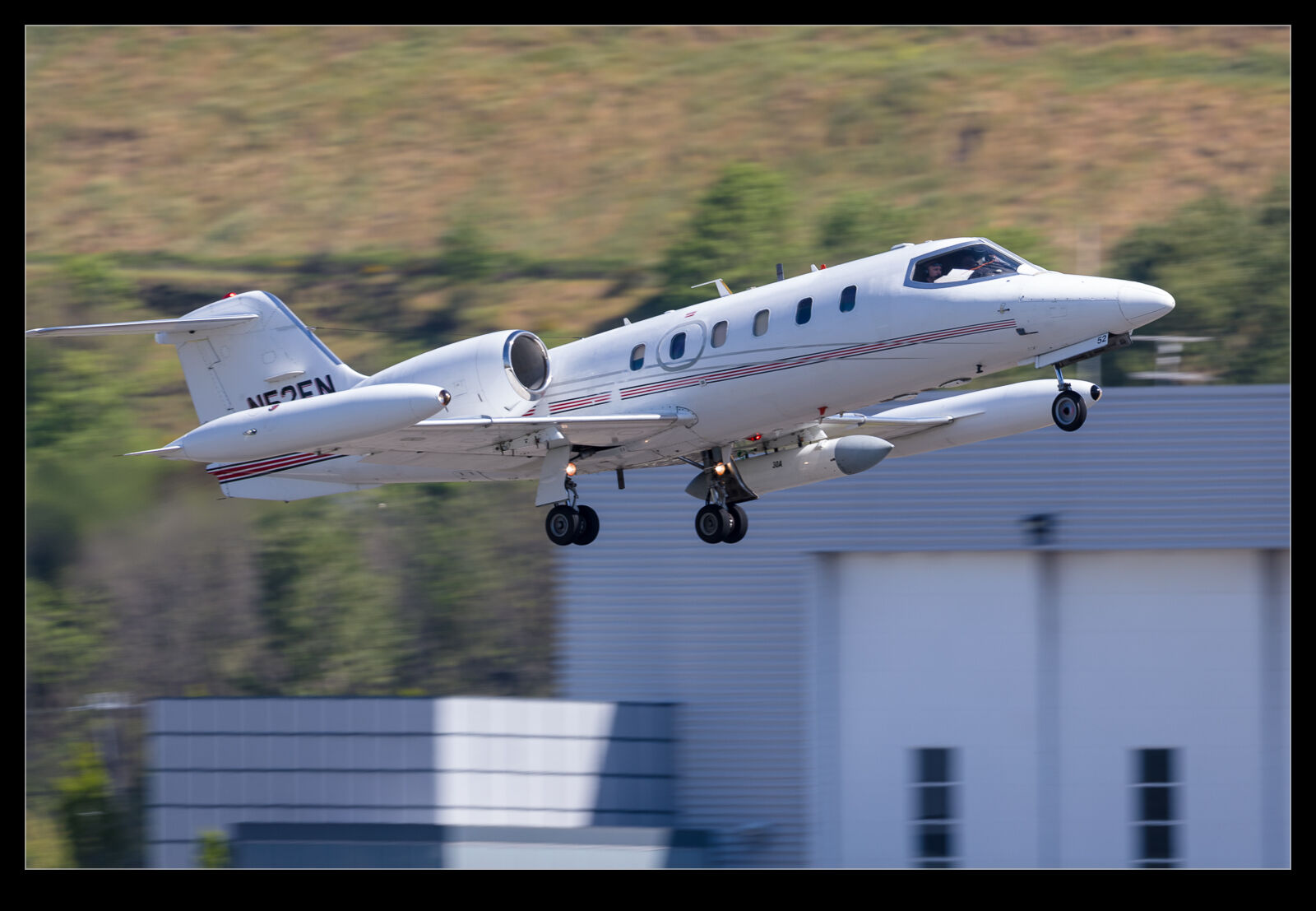
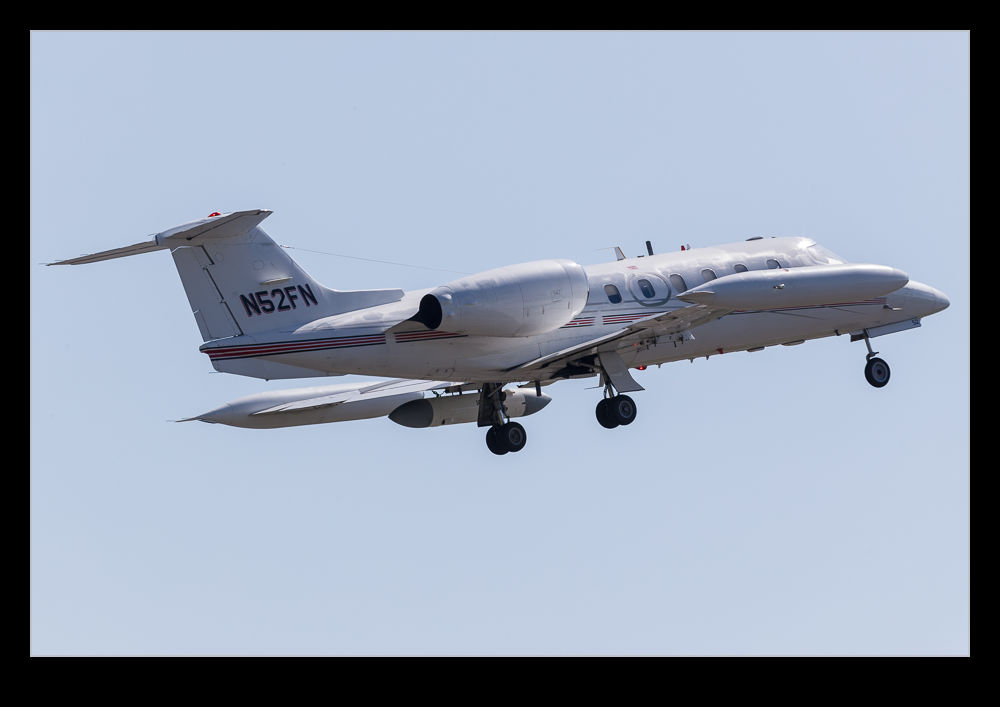
An older generation of Learjet was heading out from Boeing Field.  I almost ignored it but I got a few shots as it rotated and climbed out.  As it did so I noticed it had a pod on an underwing pylon.  A little further research shows it belongs to Phoenix Air.  Apparently, they have a few Learjets that have electronic gear fitted – sometimes on pylons and sometimes internally.  This pod appears to have dielectric elements front and rear so may well be an EW pod of some sort.  I wonder if anyone knows more about these guys and what they would be up to.

Dormant Centerline Jammer

The Growlers use the same jamming pod that came from the Prowler.  A new jamming system is in development but, for now, the ALQ-99 is the system that they have and the pods are the same pods.  The jamming power comes from a generator that is powered by a turbine mounted on the front of the pod.  As the jet flies along, the turbine spins in the airflow and provides the “juice” to power the electronics within.  Even at relatively low speeds the turbine gets rotating.  However, when the jets come in to land, if they have a centerline pod, the turbine is not moving.  I don’t know whether the blockage from the nose gear doors is enough to stop it or whether it is deliberately switched off.  However, the turbine blades are feathered and it is not moving.  Compare the wing mounted pods and the motion and blade angle is clearly different.