Tag Archives: lockheed

The F-16XL That Most People Ignored

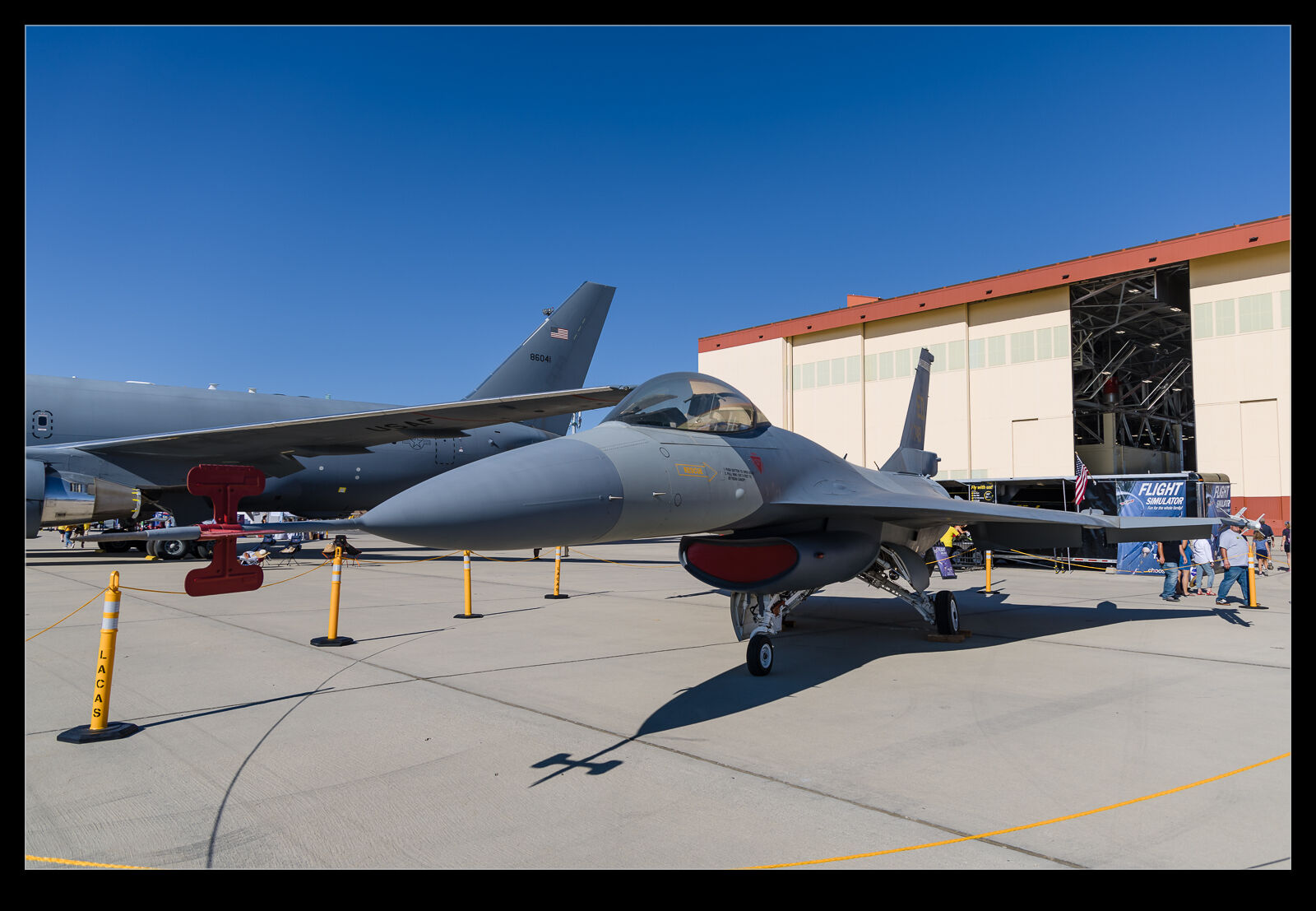
There was a grey camo F-16 on the ramp at the air show at Edwards this year.  When I saw it I was really excited but I think I was in the minority.  I mentioned to a photographer next to me how cool it was and he commented on the air data boom.  I told him it was an F-16XL and he had no idea what that was.  The XL was the long range strike version of the F-16 that went up against and lost to the F-15E Strike Eagle.  Two jets were built and they ended up having some test duties including so work for NASA.  The single seater was the jet on the ramp for the show.
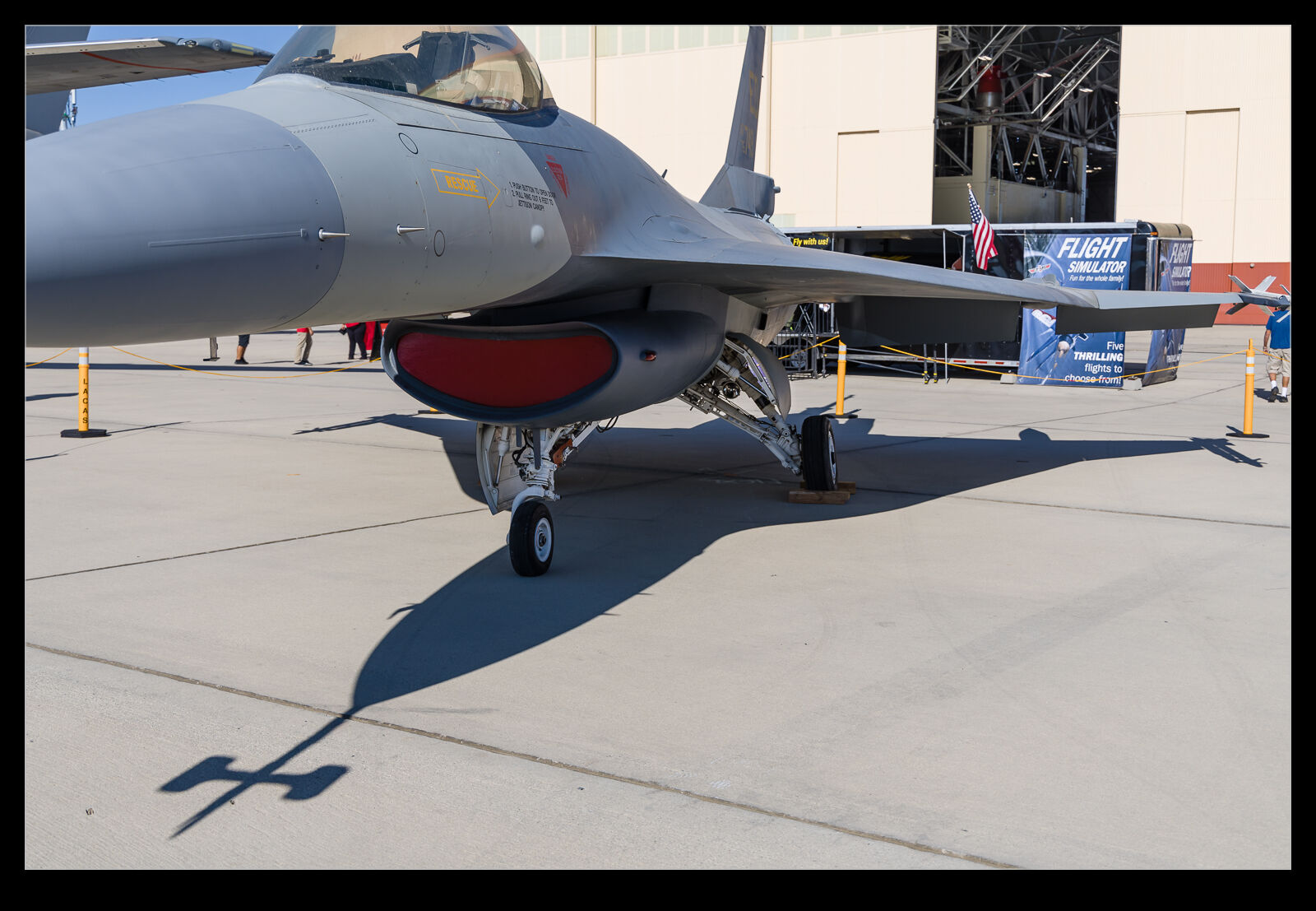
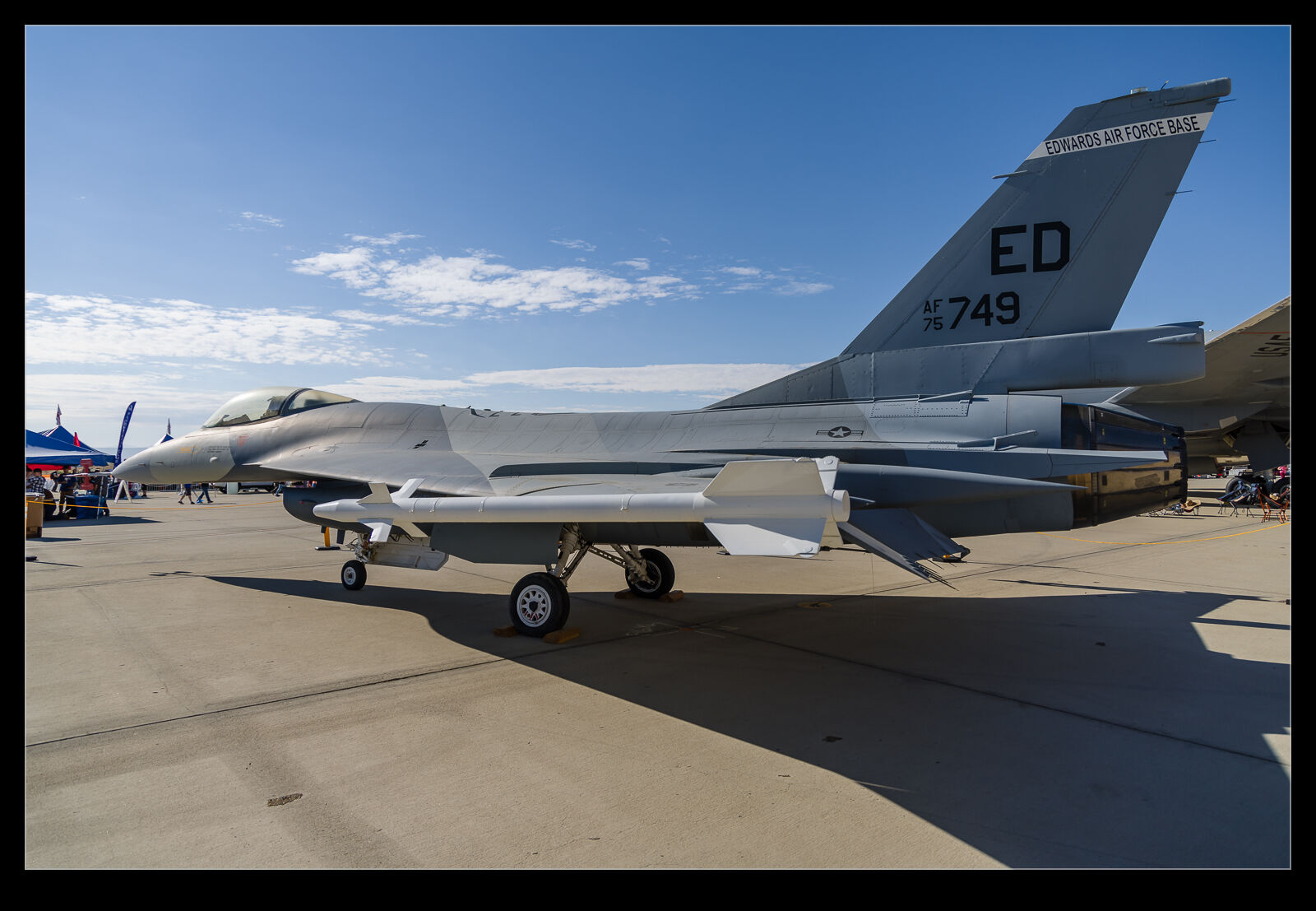
It has a large cranked delta wing but, from a normal viewpoint, that can be seen but isn’t obvious.  A look at the shadows, though, and you know what you are dealing with.  The airframe is an early fiscal number – the next jet became the AFTI aircraft – and the rear fuselage has the mounting points for an anti-spin chute rig.  This jet has done a lot in its flying days but it is now a museum piece.
Inside the JetStars

I have posted about the JetStars that were stored at Klamath Falls.  There were three airframes that we got a chance to check out.  We were given a great opportunity because they also opened up the jets so we could look around inside.  It was fun poking around inside what was once the premier form of executive transport.  It was also interesting to see the difference in the configurations with things like the throttle quadrants looking very different between the jets.

They are being broken down for the key parts that still have value so most of this stuff will either be sold or scrapped but here are some views of the interiors of these three elegant jets.

JetStars In Their Last Resting Place

If you don’t know I like JetStars, you have not been a regular reader of this blog.  If that is the case, I have a real soft spot for this jet.  The original business jet and a plane that looks so cool even decades after it first flew.  If you did know, my apologies for being so repetitive.  On the evening that Mark and I arrived in Klamath Falls, I saw a post on the JetStar Facebook group about some JetStars in the city.  A Brit, Kev Perry, had posted some shots of them.  I decided to contact him, and he gave me some good information about where they were and the team that looked after them.

The next morning found me and Mark at their front door asking if we might come in.  The team couldn’t have been more accommodating.  Two of the jets were parked up on the ramp in the morning sun looking fantastic.  They let us take any shots we wanted.  They also told us about a third jet that they had in their hangar so it would have been rude to not wander across and take a look.  Photographing a jet in the hangar is not as cool as in the morning sun but three JetStars in a morning is not something to miss.

You Want To See Our Starfighter?

In a previous post, I mentioned coming across a MiG 21 in Corvallis Oregon.  When we saw this jet through the door of the hangar, we were surprised.  However, we are polite types so I went in to the office attached the hangar to ask if we could take a look at the MiG.  When I said this to the person on the desk, she asked if I wanted to see their Starfighter.  I was confused but wasn’t going to argue about the type since I wanted them to let me in.  She pointed me through the door to hangar and said I was welcome to look around.

I went through the door and looked to my right and immediately realized what she was talking about.  Tucked in a corner to one side of the MiG was an TF-104G Starfighter.  It was in bare metal but there was a hint of previous paint on it.  I found a panel with markings on it which suggested the jet had seen service with Turkey.  Mark advised that they had received jets from other countries so it might have served elsewhere before.

While it was tucked in the back of the hangar, the hangar doors had plenty of clear panels which meant there was some nice light illuminating the jet as it sat there doing very little.  The Starfighter is such a fantastic looking jet.  It is so dynamic looking and, when in bare metal, it looks even more cool.  I have no idea the story that brought it to Corvallis but was so happy to have found it as part of a short diversion from the long drive home.

Hurricane Hunters Back In Town

I was heading back from south of Seattle when I was surprised to find out that the NOAA WP-3D Orion, Kermit, was at Boeing Field.  It had come in the day before but I hadn’t heard about it.  I was planning to stop for lunch so why not go to BFI?  Just after I got there, I saw a prop start turning on the number one engine.  However, after running it up, they shut down again.  I was dreading that they were going to go tech and the plane wouldn’t move.

Fortunately, whatever they were concerned about wasn’t too much of an issue.  A little while later, while I was still eating my lunch, I looked up to see two engines running.  This looked more promising.  Sure enough they taxied shortly afterwards.  The nice news was that they crossed the runway to taxiway bravo so we got a good look at them.  A while later it was their turn for departure and they came my way.  The nice thing about a four engined prop is that they didn’t climb too rapidly so a good angle on them.  It was pretty overcast so not ideal light but the dark colors show up better without too contrasty light.

JetStar Prototype

I’ve seen the JetStar prototype a few times in various visits to the Museum of Flight restoration facility up at Paine Field.  The JetStar is a favorite of mine as might be determined by several of my posts over the years.  The prototype is a bit different, though.  It was built with two engines – Bristol Orpheus turbojets.  After the first two aircraft, the rest were four engined.  After it finished testing, it was used by Lockheed for transport duties.  It ended up in Vancouver before coming into the museum’s collection.  These shots are of it in the restoration shop.

NOAA Back In Town

A couple of years ago, a NOAA Gulfstream was operating in the area for a while and I managed to get some shots of it that were shared in this post.  That Gulfstream had a couple of interested radomes fitted.  Another part of the NOAA fleet is a WP-3D Orion.  It also has some interesting radomes and antennae installed.  It is based in Florida – there are usually storms to follow on that side of the country.  However, the Pacific has its share of storms too and NOAA studies them as well.

Consequently, NOAA recently deployed the WP-3D to Alaska to pay attention to some weather activity out in the ocean.  They staged it through Boeing Field to split the journey up there in two.  I was waiting for it when it arrived.  The conditions had been pretty overcast but, with a late in the day arrival, the cloud cover was starting to break up and the sun popped out just in time for its arrival.  An interesting airframe with a nice color scheme.  It headed on the following day but I couldn’t be there for that.

Spanish Hercules Retirement

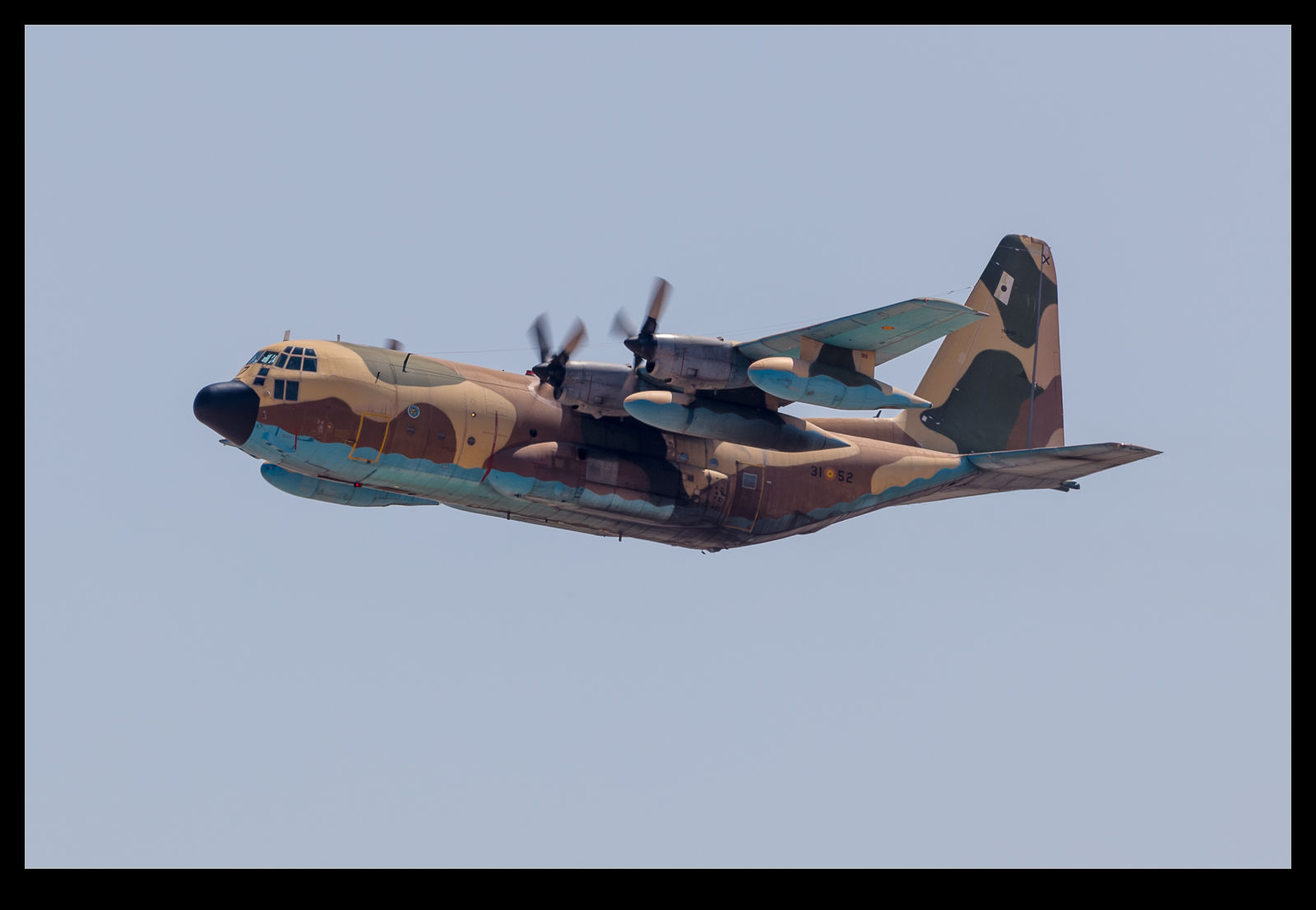
I understand that the Spanish Air Force is retiring (or has retired) their C-130 fleet.  I guess with the A400Ms coming into service, the Hercs were done.  I have not had much interaction with Spanish C-130s but here are a couple of shots to mark their end of service.

A Spanish Air Force KC-130 Hercules launches out of Nellis AFB to provide refueling support to a Red Flag mission.

MC-130 on Exercise

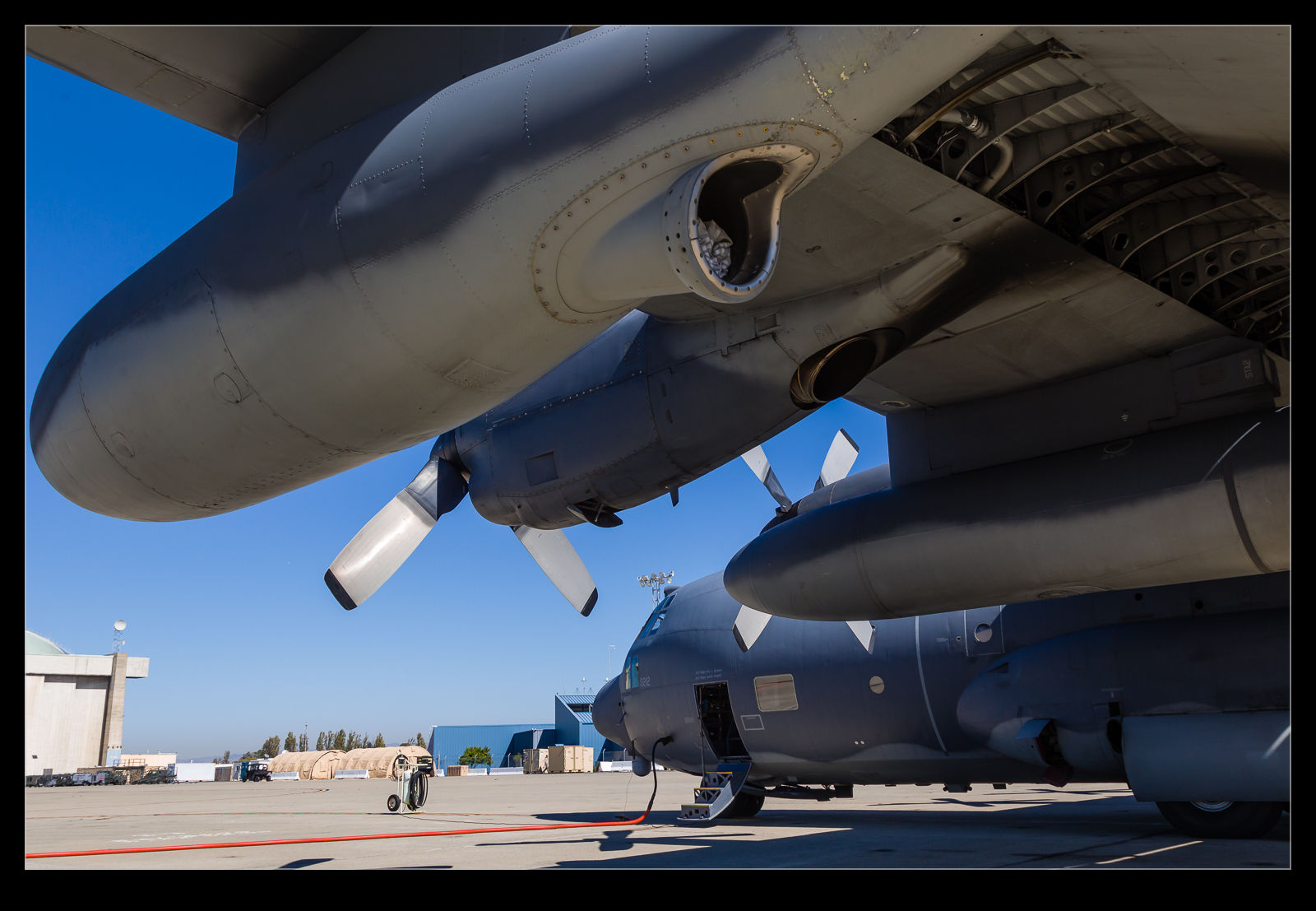
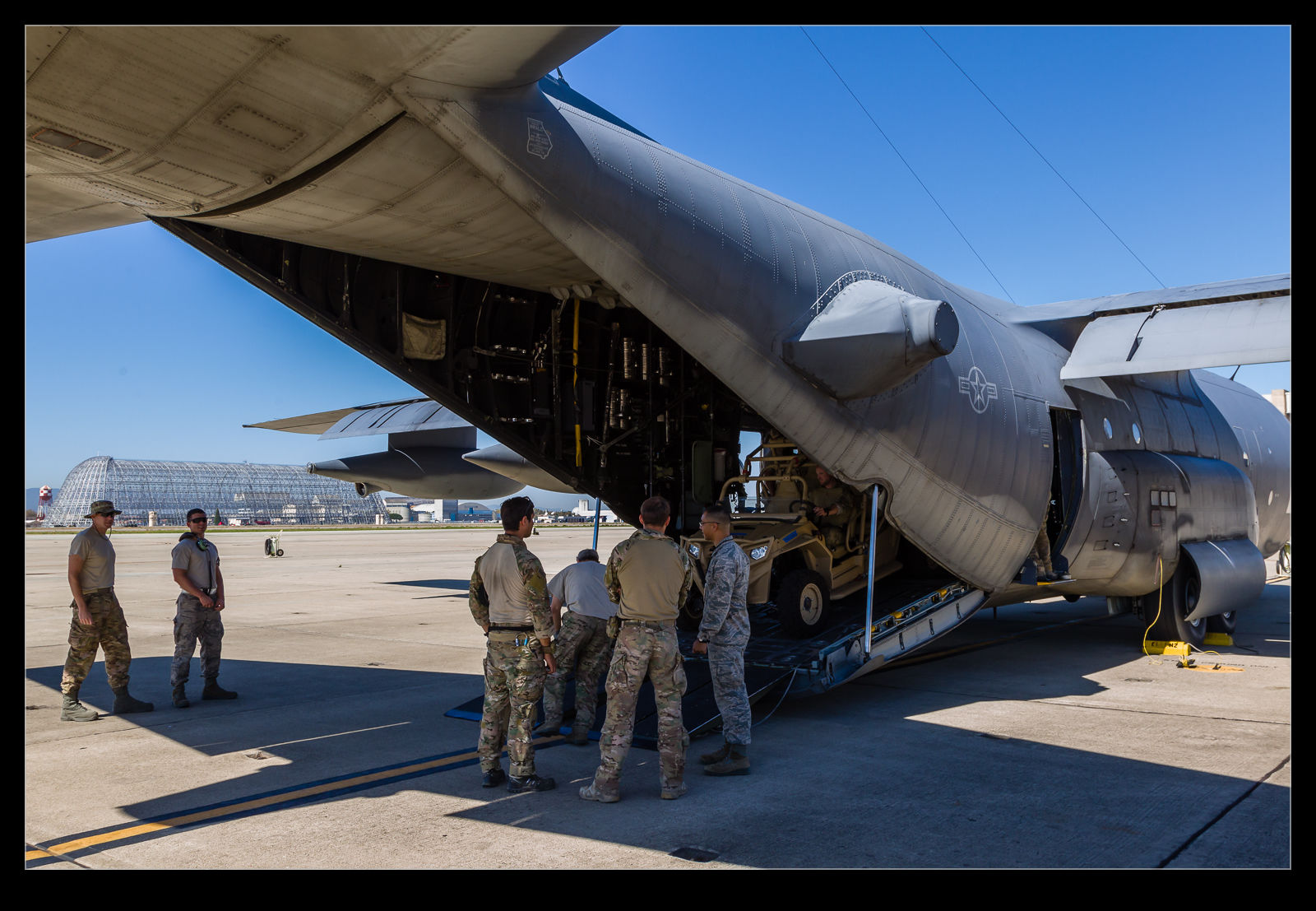
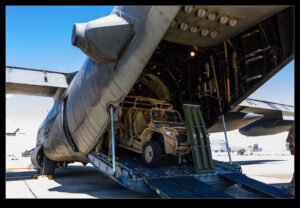
In this previous post about the hangars at Moffett Field, I mentioned that I was there to cover an exercise.  The MC-130s were a big part of the exercise.  They were loading up and launching down to remote landing strips on the California coast.  The holds were full of equipment including off road vehicles.  Loading these up was a tight fit.  While the crews spent time getting everything ready to go, I was reasonably free to wander around the airframe and get some shots.

Here are some that I got that day.  These were some of the oldest Combat Shadow (and maybe Hercules) airframes around at the time and I suspect that they have been replaced by now, I think by Combat King J models.

T-33 Pattern Work

After such a long time of struggling to get shots of the Boeing T-33 chase planes, I seem to have had a lot more luck recently.  One showed up at Paine Field and, rather than just shooting an approach and departing straight to Boeing Field, it made a full stop landing, taxied back, took off, entered the pattern and came around again.  This was a welcome addition to a sunny afternoon.  There was only one crew onboard so I guess with was some continuation training.

As the plane taxied back to the threshold, I got a good look at the upper side of the front fuselage.  There appear to be quite a variety of antennae mounted on there.  I didn’t know whether they were GPS location antennae or other types but there are plenty there.  Whether they are used for different functions or are needed for validating test data and cross referencing, I have no idea.  Some of them may even be redundant but no one has seen the need to remove them.  Whatever the reasons, there are lots there!