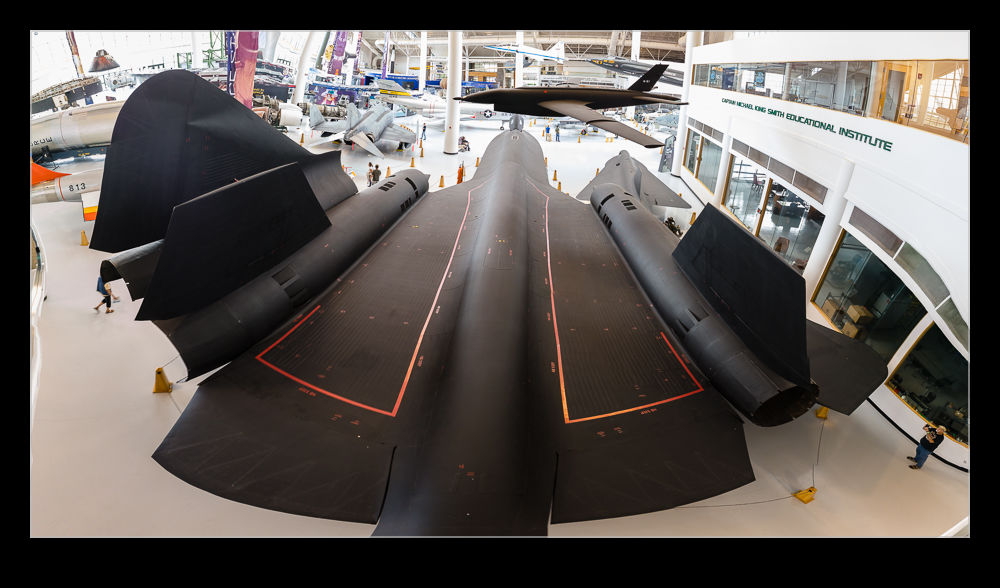
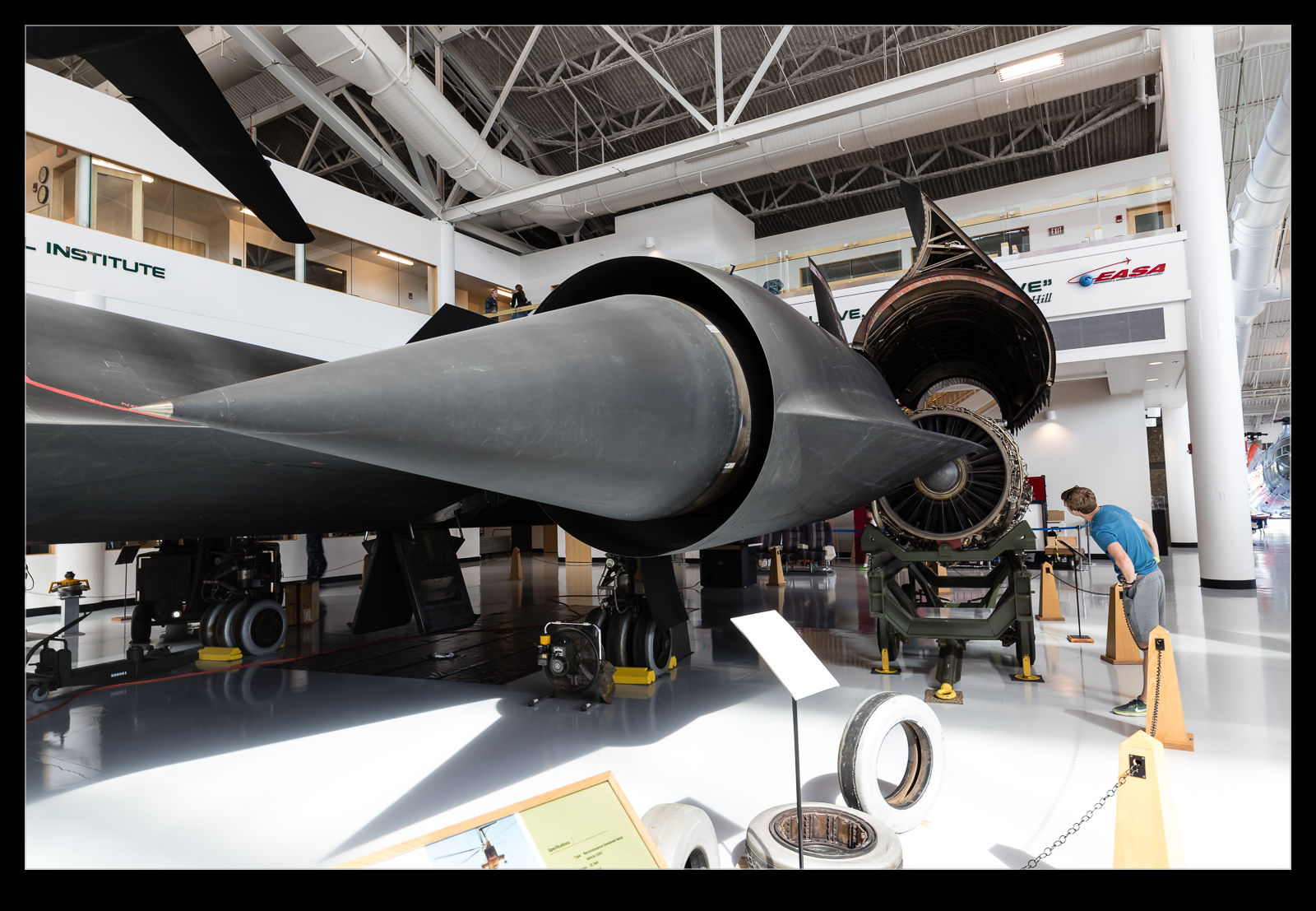
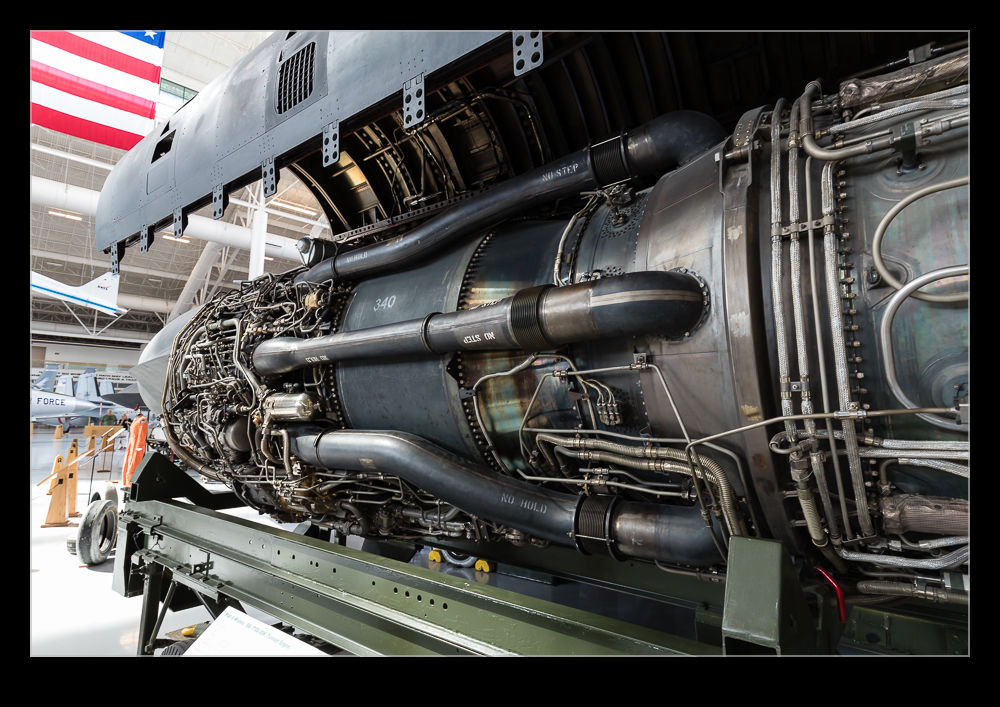
The SR-71 that is located in the Evergreen Aerospace Museum is configured to give some interesting views of the aircraft. One side of the aircraft is opened up to show the engine. The whole of the outer portion of the wing folds up to give access to the engine. I had no idea that was the way it operated until I saw this plane. It does show the engine configuration nicely. At the high supersonic speeds, there is a bypass process whereby a lot of the flow is taken around the core. The pipes for this can be clearly seen along the side of the engine.
Tag Archives: jet
Missile Load Training
The open day at the Portland ANG base included a demonstration of missile loading. A jet had been parked out on the ramp for the morning and there was a rack of missiles also on display. Towards the end of the morning, a team started to prep the jet for loading. This was an exercise that had multiple purposes. It was a demonstration for the guests, but it was also a qualification test.
Apparently, the crews are required to carry out a loading drill every 90 days when they are timed and observed in order to maintain their qualifications. Therefore, a pair of observers were there to watch the three-person team do their work. It can’t have been fun to have the public watching and the assessment team overseeing you at the same time. The crew got to it though and they seemed to be diligently following every procedure which is no bad thing when you are potentially dealing with live weapons (not that these examples were in any way live).
The missile configuration was quite a mix. They had six AMRAAMS to load, four on the fuselage and two on the stub pylons. The other two stubs were fitted with an AIM-9M and an AIM-9X. The Sidewinders were loaded by hand but the AMRAAMs are heavier and required the use of a mechanical loader. Prepping the plane before the missiles came close took a while and then the missiles were loaded in sequence with things like fins being added at different times such that some were on before the missile was attached and some were added once it was installed.
Once the whole task was completed, they reversed the process and removed the missiles. There was some choreography involved with getting the loader in place. It is not a subtle piece of machinery, but it could be placed quite accurately. Then there is adjustability in the rotation and position of the missile holders to allow things to be fine-tuned into position. Maneuvering a missile on to the rail or the launcher while not hitting anything else also requires some careful work. It was a most interesting process to watch.
UPS’s New 747-8F Freighter
Boeing breathed a big, if perhaps temporary, sigh of relief when UPS signed up for a bunch of 747-8F freighters. These jets are now starting to come off the line and, before they get allocated to the long runs across the oceans, I figured I would try and catch one at Everett. Conditions were a little gloomier than I had hoped for but the timing was driven by luck, so I had to make do with what I could get. The 747 may be disappearing from operators around the world but the freighters will continue for a long time and the 8F is the better of the most recent versions in my mind. The extended upper deck of the 8I is a little too long for my tastes. UPS colors are not bad either. Hopefully I shall see more of them in service.
CAG Growlers
NAS Whidbey Island is the home for all of the Growlers in the fleet. It is a fair chance that you will get a bit of Growler activity on a visit and we were not disappointed. What was really pleasing was to see a bunch of the CAG aircraft in action. The first glimpses were as they taxied out for departure and you could see the planes coming up the taxiway. Unfortunately, the heat haze was a bit of a problem while they were on the ground.
Naturally, if they were launching, they were likely to be coming back at some point. Sure enough, we got them come into the overhead and down the approach. Even when airborne, the heat haze was a bit of a problem. Better than on the ground but still an issue. In a time of gray jets, it is certainly welcome to get something a bit more colorful, even if for some of them that is only black and white.
Are These Globals Twins?
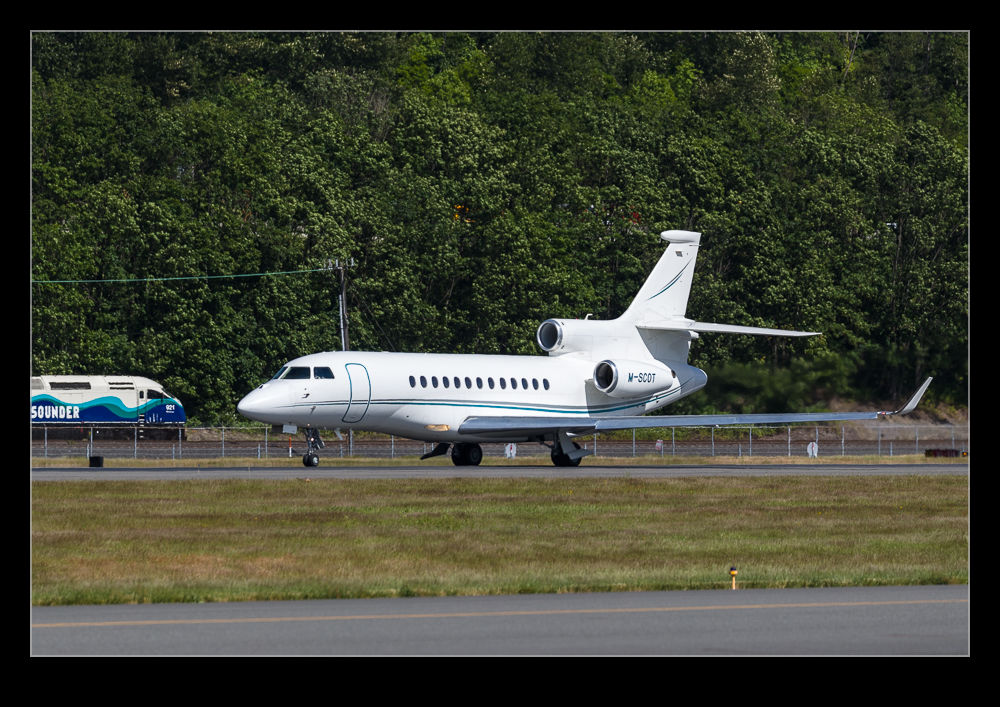
Within the space of a few minutes, two Bombardier Global Expresses took off from Boeing Field. This type is a regular feature at BFI so this is not unusual. What did catch my eye was that they appeared to have the same color scheme. If they were NetJets aircraft, that would make sense. However, they didn’t look like a fleet operator I know (not that I know them all). Is this just a standard scheme that Bombardier will finish the jet in if you don’t have a preference or were they connected? If so, was a group of people taking two jets at the same time to go to the same place? Who knows?
Cathay/Atlas/Polar – Whichever!
A 747-8 freighter came in to Portland while I was at the ANG base. I could see it on FlightRadar24 before it landed, and it was listed with a Cathay Pacific flight number. I was pleased to get a Cathay jet but, when it landed, it wasn’t in Cathay Colors. Instead, it was in Polar Air Cargo colors. I figured it was a subcontract operation by Polar. However, when it taxied closer, on the side of the fuselage was the notice that it was operated by Atlas. Atlas and Polar are related so I guess this shouldn’t be such a surprise. Finding who actually operates any jet can be a bit of an exercise these days.
A Pair of T-33s, How Nice
A previous post talked about wanting to get the Boeing T-33s after having seen one of them flying over my office. I saw that two T-33s were actually operating out of St Louis. They appeared to be operating with the Catfish 757 testbed. A couple of days later I happened to see that the two jets were operating cross country, presumably en route back from St Louis to Seattle. Sure enough, that was what they were doing.
I was able to get to Boeing Field when they were completing the return journey. The tow jets were operating about ten minutes apart. The weather wasn’t great, unfortunately. There had been some nice sun a little earlier but, by the time they arrived, the clouds had rolled in. Even so, it was good to catch both jets. One of them was operating solo but the other had someone in the backseat who seemed to spot me and watched me most of the way down the approach.
Where to Park Your 747?
Evergreen Aerospace Museum has a couple of 747s as part of the campus. They are retired freighters from the now-defunct company that provided a lot of the backing for the museum when it was established. One of the 747s is sitting out in front of the main museum building. The other one is slightly more dramatic. It is parked on top of a water park that is next to the museum. The waterslides come from within the fuselage. Getting the plane up there must have been quite something to watch. Now it is an eye-catching way to let everyone know where the water park is.
Thai Delivery
Before the time changed, it was possible to get some evening departures from Everett in nice light after work. I saw that a delivery flight was scheduled for a Thai 787 and a Dreamlifter was due out shortly afterwards. I figured this was a good one to go for. The Thai delivery actually slipped a bit from its scheduled time and I was more than happy for it to do so as the light was getting better and better. By the time the jet started rolling, the light couldn’t have been nicer. It was also a heavy jet and rotated not far from me so I got a great angle on the takeoff and, as it climbed away, the purple in the livery seemed to glow.
Bye Bye United 747s
The disappearance of passenger 747s from service continues. Today is the last day for the United 747 fleet. I do not have anything of their earlier versions of the jet but I have seen the 747-400s in service a lot and have flown on them a couple of times too. I won’t be doing so again. A flight from San Francisco to Honolulu will repeat the first service and was sold out a long time ago. The planes have been heading to the storage yards in recent weeks and after today, there is one more to make the trip. Now the 777s and 787s will be responsible for the long-haul services.