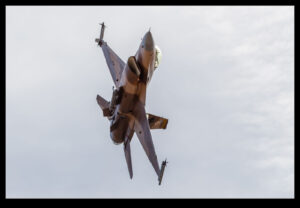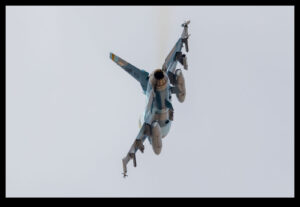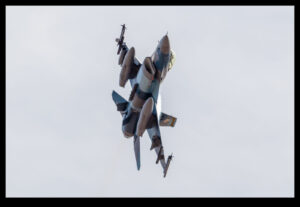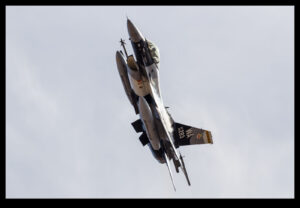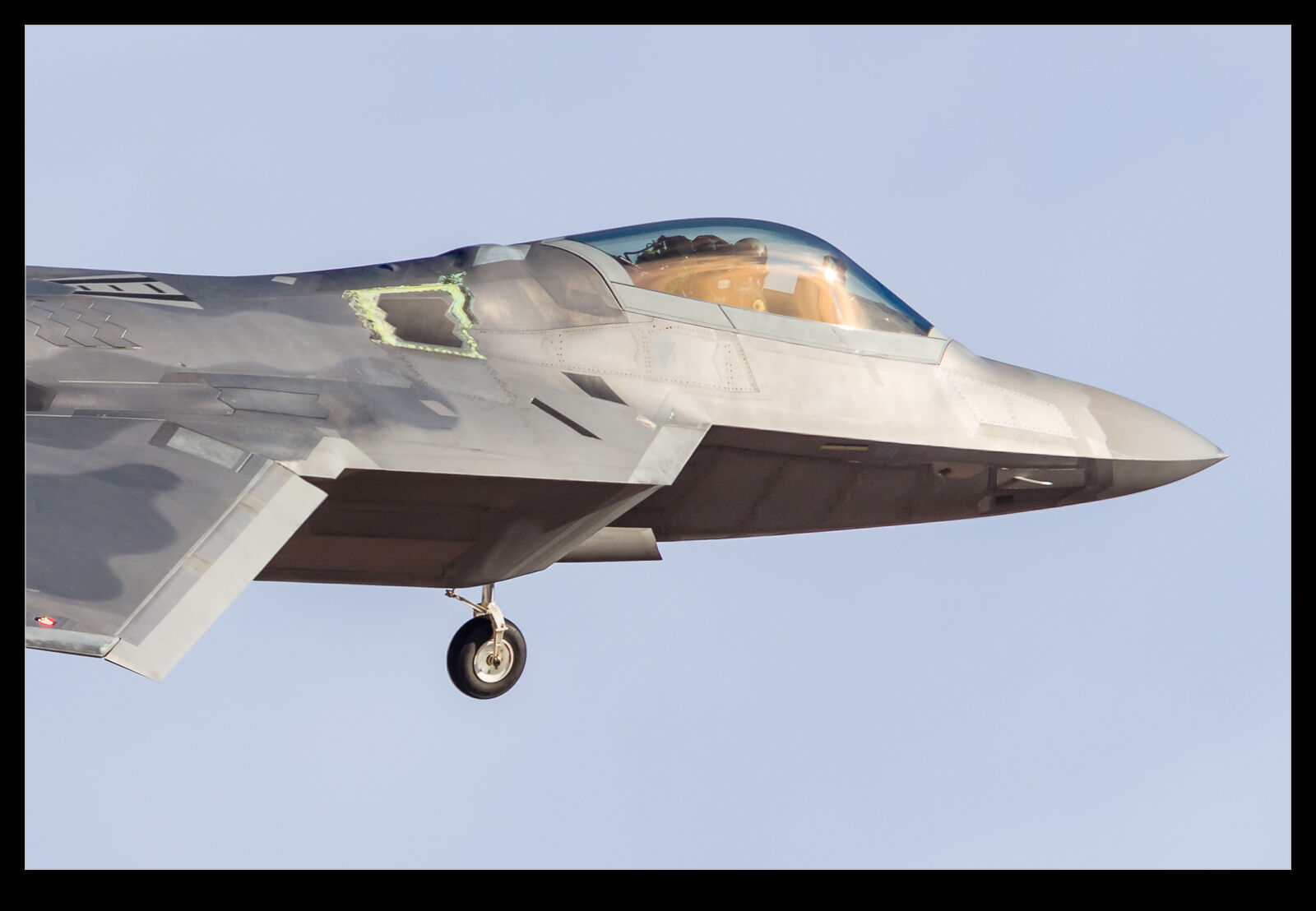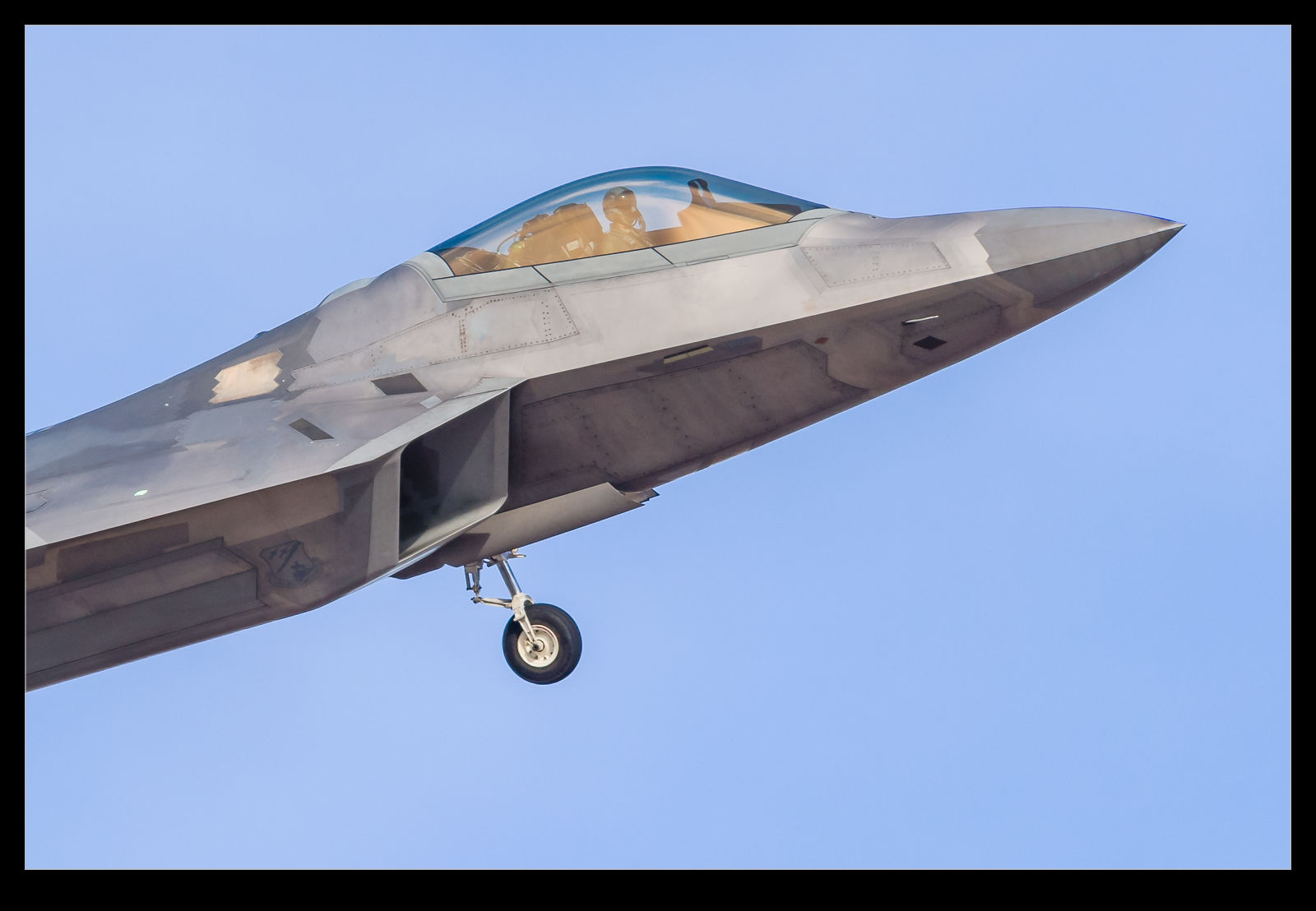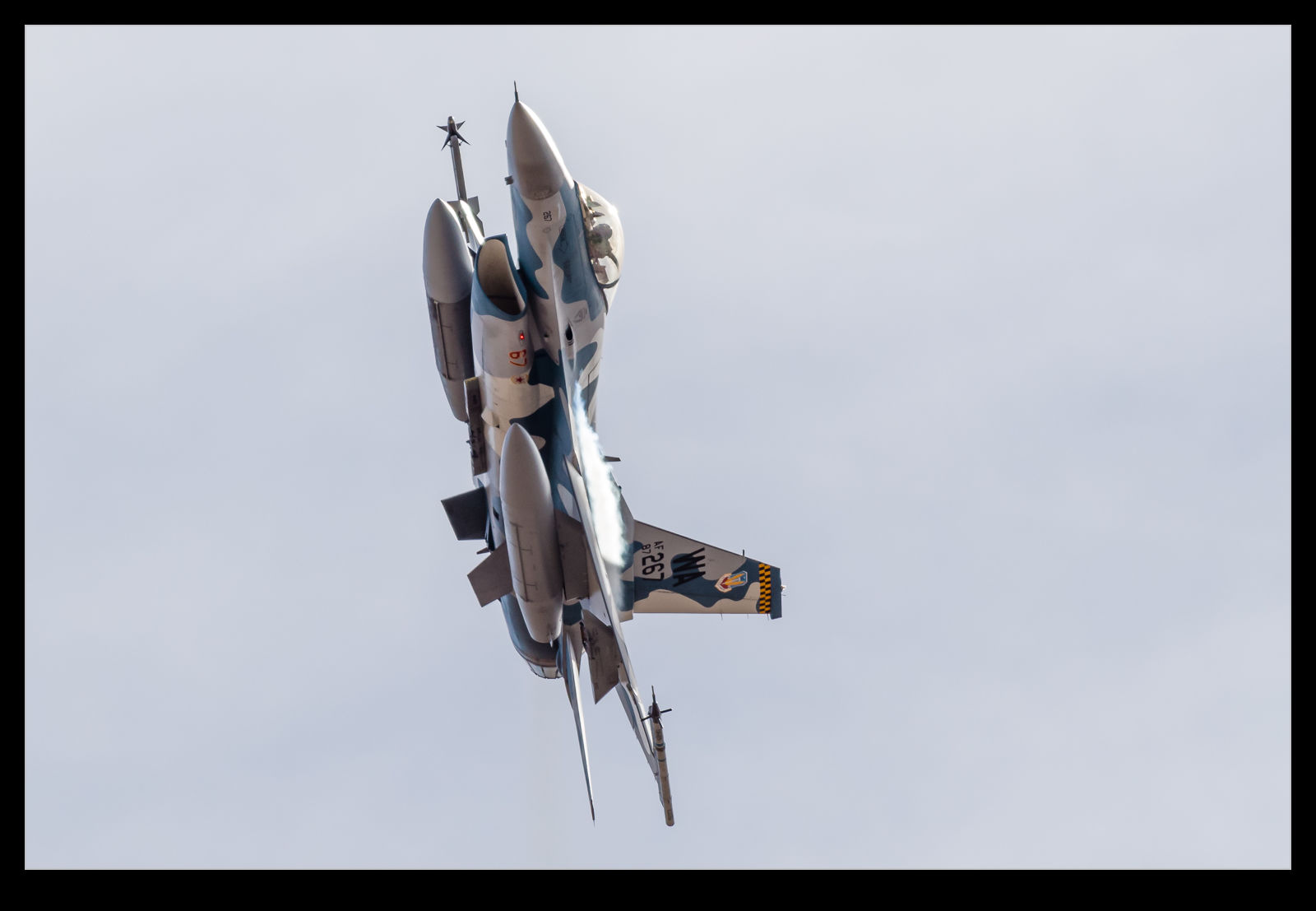
The F-22 Raptor has a complex coating system on the skin of the airframe that is part of the overall approach to stealth. Normally, they look pretty well finished in order to preserve the performance of the system (although I have spotted a few jets with the green primer showing through worn finishes). However, one or two of the jets that were at Red Flag had what almost looked like a panel missing from the spine of the jet. Looking a bit closer, I think the panel had been replaced and the finishing of the surfaces around the work remained to be done. It did look a bit of a mess though. Checking some of the other jets, they also show this panel in a slightly different color. Perhaps they have all been undergoing a modification program in this area?
Tag Archives: fighter
Guarding the Gate That Doesn’t Exist Anymore
Over the years, many military installations have been closed down. In what form they get handed back to the local community varies. Close to us is Alameda. This was once a big base for the Navy with many ships based there and an airfield that was home to many operational aircraft. The whole thing is now closed with the runway having garnered most attention as the location for many a stunt by the Mythbusters. The layout of the base is still much as it was beforehand though. The hangars are still there now being home to local businesses.
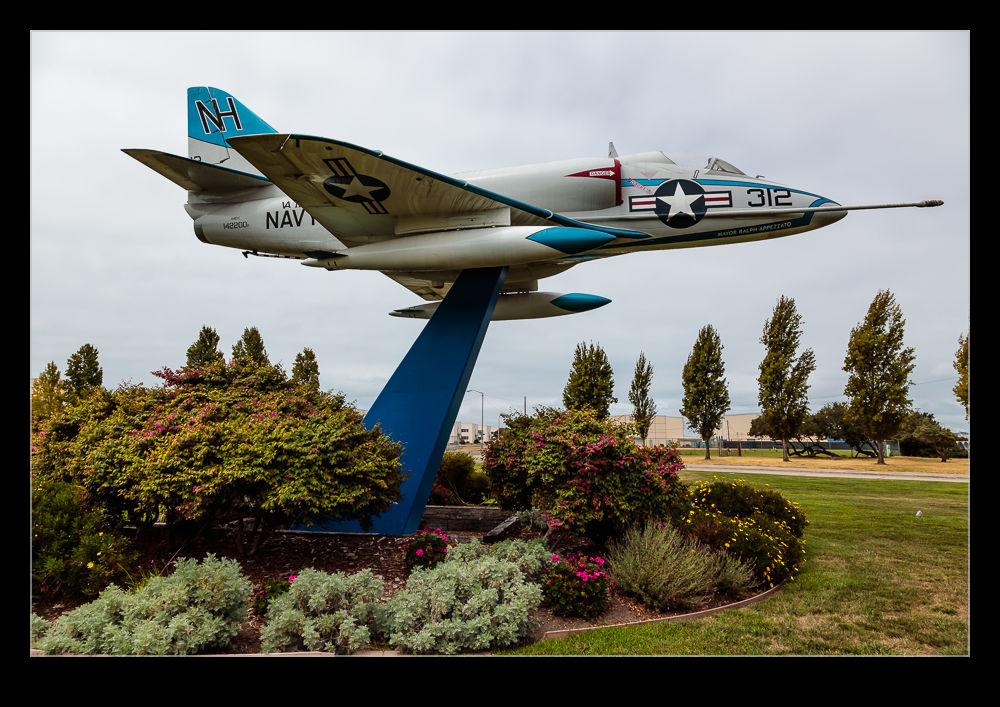
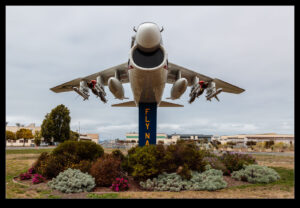
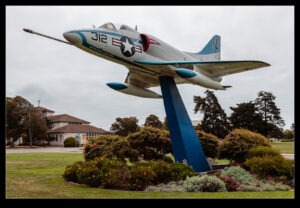
The aviation theme shows itself in some relics of the past. Gate guardians are common at air bases and Alameda has a few. Drive into the old base along one main road and you go around a grassy circle which has an A-7 mounted on a plinth in the middle. It is loaded up and looks pretty dramatic. Another gate near the water has an A-4 Skyhawk mounted just inside. It has the name of some local dignitaries painted on the side.
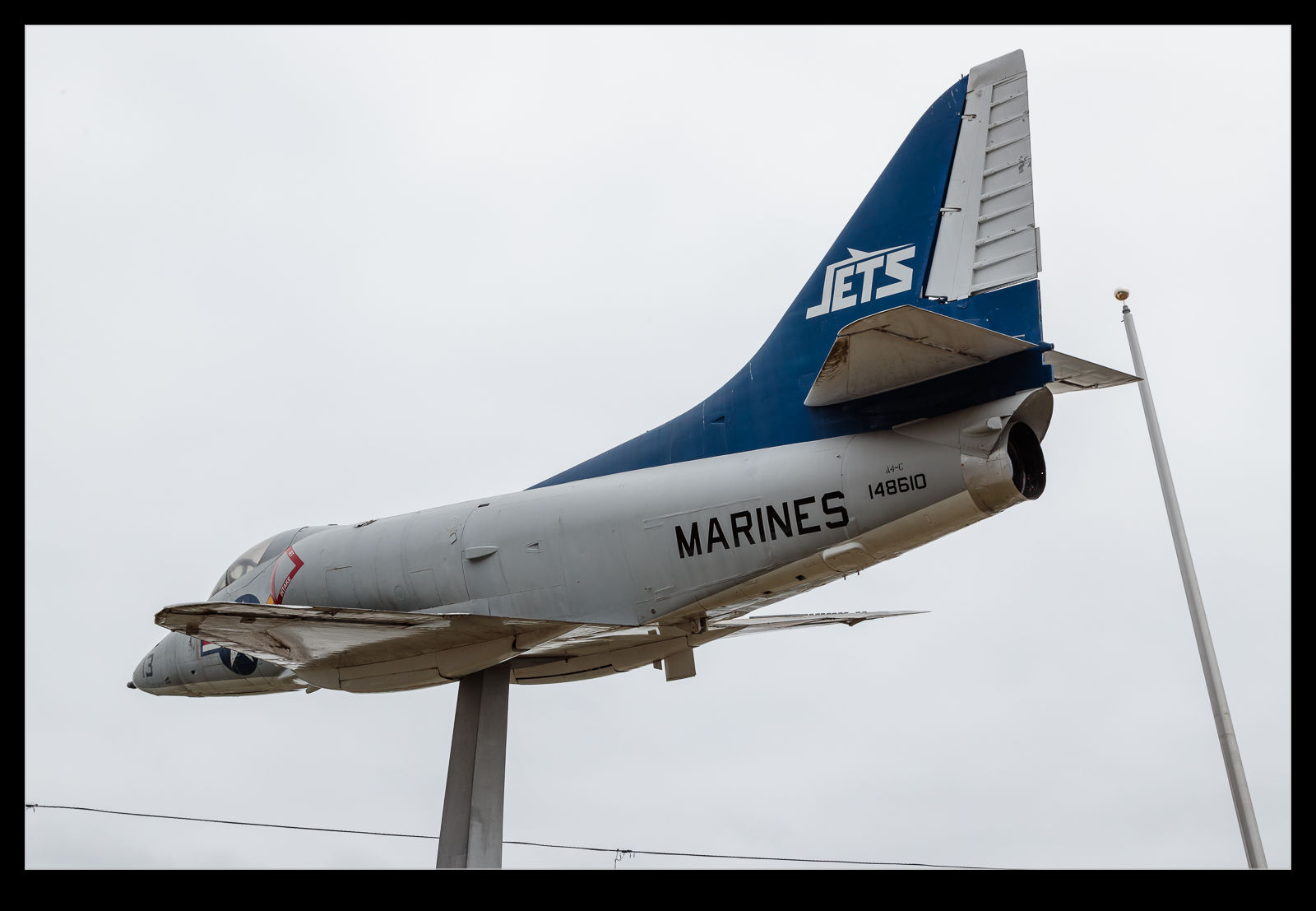
Another Skyhawk is not far away. This one is not on the base itself. Instead it is mounted outside a local school. The Jet is not as dramatically painted as the others but it is still a pretty cool thing to have outside your school if you are an aviation nut like me. It actually looks like it could do with a repaint before too long. It’s good to see that they are still on guard duty, even if the thing they were guarding is no more.
Get Those Shock Waves Showing
The Fleet Week air show in San Francisco is wrapped up by the Blue Angels. The sneak passes made by the pair are an opportunity to try and get something interesting. Since they display over the bay and the city is known for having high relative humidity, I am always hoping to get some good vapor shots. This time out, that wasn’t to be. The air seemed to be pretty dry and there was not a lot of vapor on show. However, the fast pass from left to right takes the jet in front of the hills and Alcatraz which provides some detail to show up the distortion caused by the shock-waves. The large number of boats and associated masts meant a clean shot was tricky but I got a couple I was pleased with.
Vipers Sneaking up on Strike Eagle
Before I say anything else, this shot is not original. I didn’t think of this and I certainly wasn’t the first to shoot it. Indeed, it is the exact opposite. This is a shot that I have seen from other people a bunch of times but that I have never achieved. The recovery for Red Flag has a lot of jets coming home at once. Jets will break into the pattern and will be turning final when more jets are coming in to the break. You can get jets coming in overhead directly behind the jet on final turn. It looks cool but I had not got it before. This time I got lucky. I don’t know whether I am pleased with the shot or just glad that I finally happened to get it!
Spanish Hornets and Some Strange Patterns
It has been a long time since I last saw some Spanish Air Force Hornets so I was glad to see them at Red Flag. They may not look very different to the Navy and Marine Hornets but still, some variety is worth it. It was the second week of the exercise so I would have expected everyone to be pretty familiar with the operations around the pattern. However, the Spanish guys seemed to have some different ideas.
They were certainly interested in keeping the patterns tight. I don’t know whether they convert to type with the Navy and are trained to fly tight or whether that is just their nature. However, on one occasion, the pilot came way inside the downwind line while another jet was flying that line and he was going to end up cutting them off. I guess he realized at the last moment because he turned left to get back out where he should have been. A bit strange to watch!
Eagle Inlets
The F-15 came onto the scene in the 1970s and it has been a major force ever since. As a kid growing up fascinated with planes, the F-15 and F-14 were two of my favorites. They each had features I loved. One of the cool things about the F-15 for me was the inlets. Big ramp inlets were in vogue at that time. They combined an angled profile with complex ramps and doors to take flows from above Mach 2 down to subsonic speeds to feed the engines. (Interestingly the F-16 went with a simple pitot inlet and could still just about make Mach 2. It used the fuselage to redirect the air into the inlet rather than raking it.) The F-14 inlets were very sharply angled. The F-15 didn’t have such a sharp angle but instead took a different approach. The inlets rotated down towards the approaching air.
This always struck me as a cool feature and whenever I see F-15s now, I am always looking at the angle of the inlets. Since they are often at lower speeds when I get to shoot them, they are at higher angles of attack and this means the inlets are rotated down. McAir’s engineers did a great job of the joint so the top surface doesn’t look too discontinuous. I include a shot of a parked jet to show the difference. Even after all these years, I still get a kick out of this.
Backseat Cameraman
One of the fun things about looking through my pictures from a shoot is spotting things I didn’t notice at the time. Often it is pilots waving or looking like they are doing something different. This time, I was surprised to see a couple of the backseat guys in the jets with their cameras out. One of the places you would really like to be as a photographer in in the backseat of one of the jets getting shots as things happen. I guess the crews are not a lot different. I assume they are pretty busy during the main part of the mission. The recovery is a different story and the front seater is dealing with everything that counts. Time for the Guy in the Back to take in the scenery and grab some shots of the approach.
Spanish Fake Canopies
When the Canadian Hornets first came into service, they introduced the fake canopy on the underside of the front fuselage. This was a painted outline of the canopy. The idea was that, on the heat of a dogfight, the opposing pilot might be confused about the orientation of the jet and think it was coming towards him rather than away as a result of seeing this canopy.
The US Hornets never had this on the fleet jets but it appears that the Spanish Air Force has adopted it for theirs (although not all of the jets are so painted). I heard a rumor that the Canadians have some rights on this and other users have to pay for it but I have no idea whether there is any truth to this or not. However, their jets certainly do have the canopies painted on the fuselage.
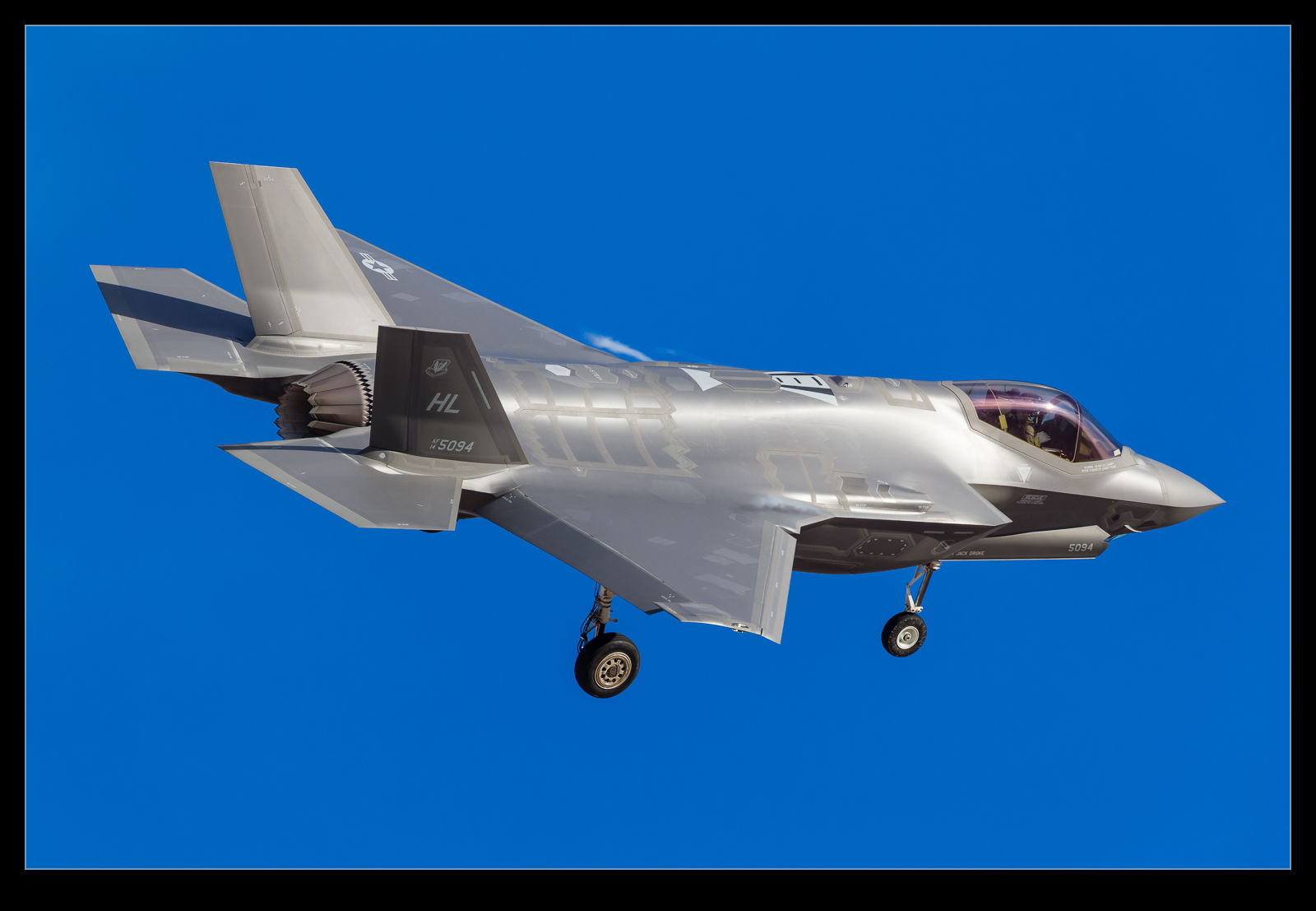
Weapons School F-35s
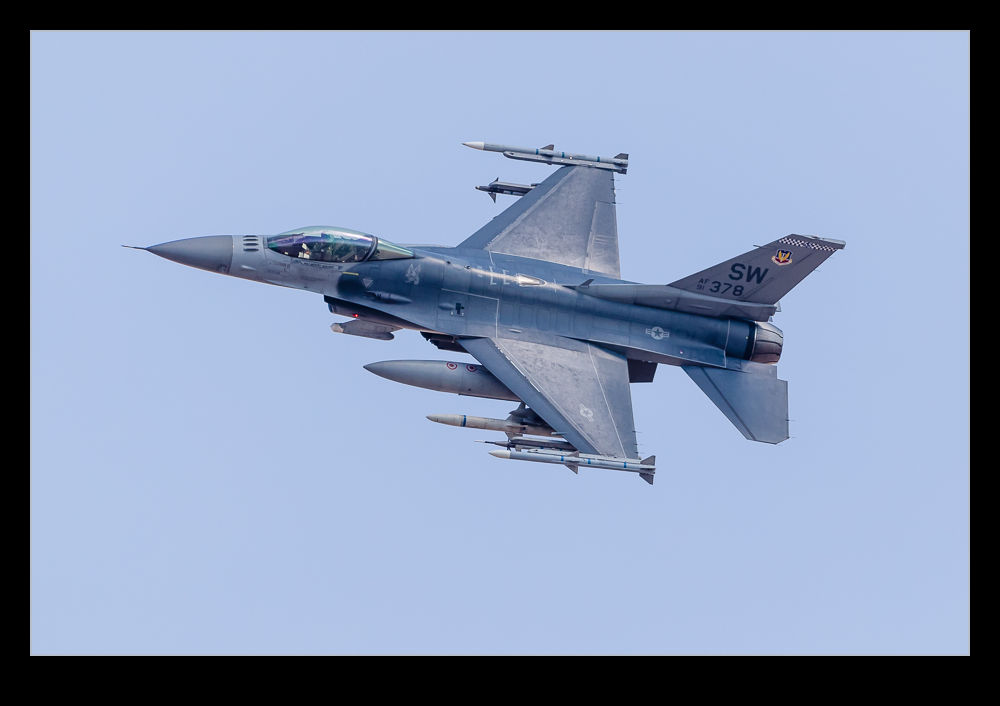
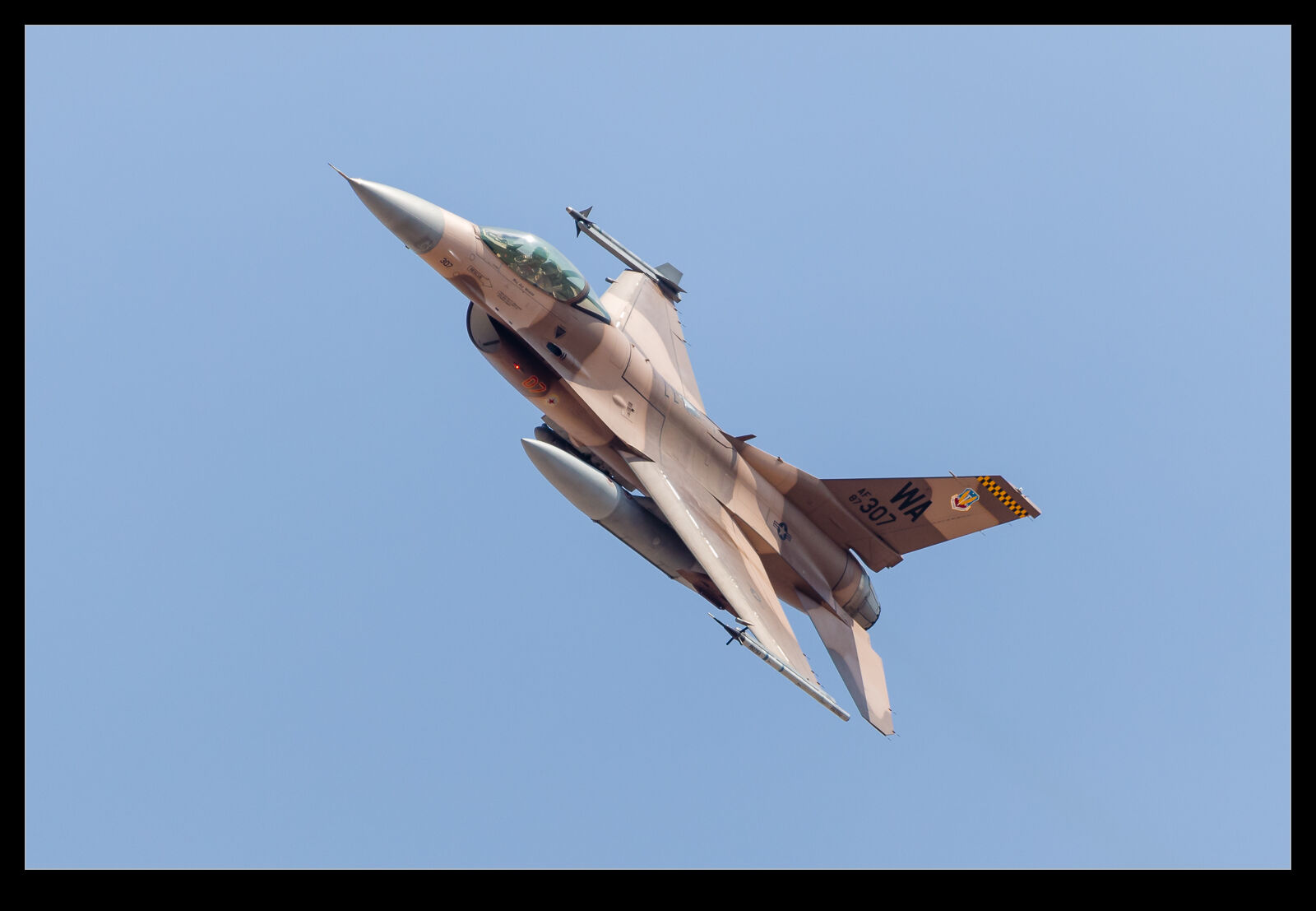
The local Nellis traffic gets a bit restricted by the exercise traffic when Red Flag is underway. Get a mission in during the morning or wait for the gap between the afternoon and the evening evolutions to get airborne. For those of us outside, they provide some additional aircraft to shoot. They may also give some variety in types (although given how few types there are these days, not a lot). Before the F-35 becomes ubiquitous in service and replaces the multiple F-16 units that currently participate, it is something a bit different.
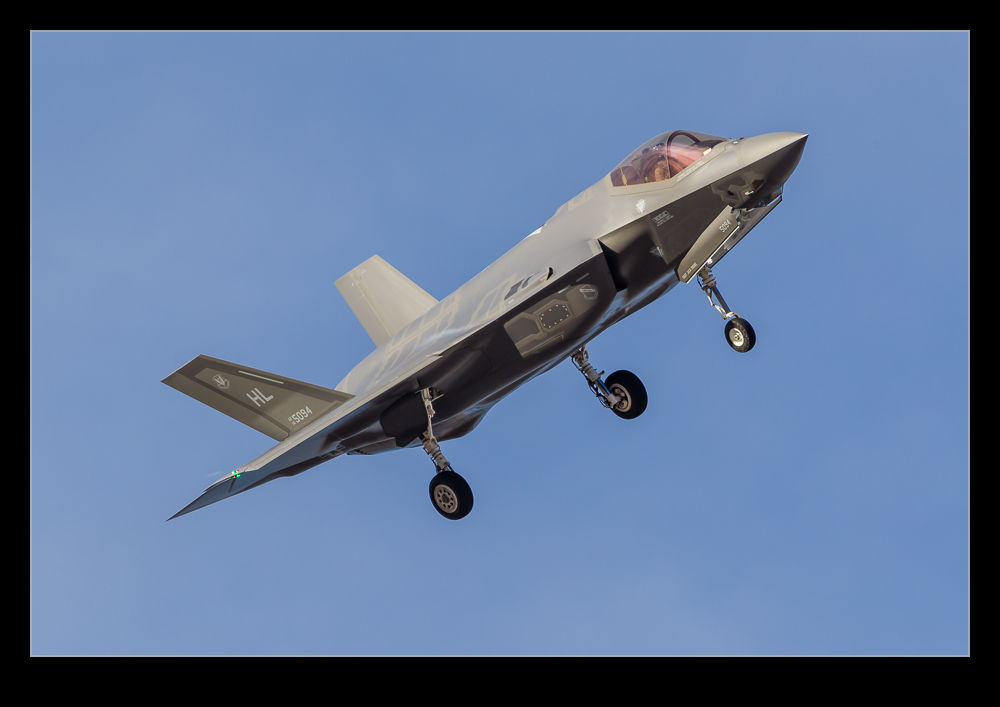
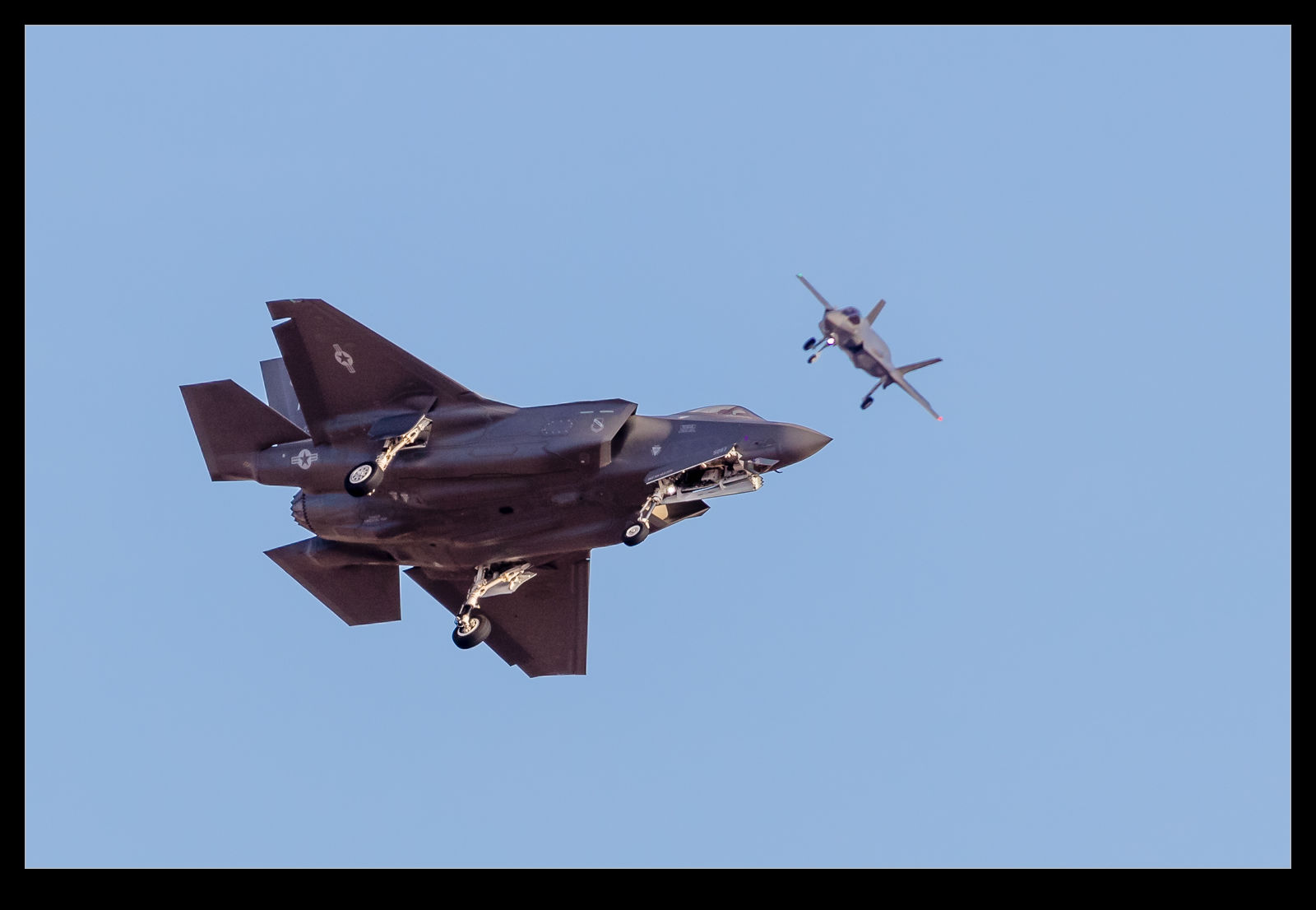
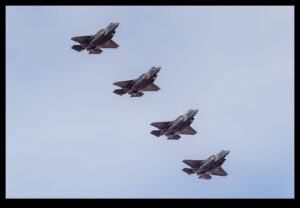
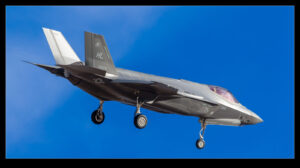
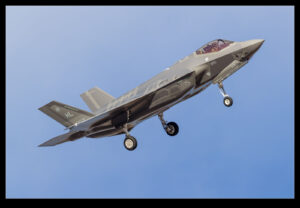
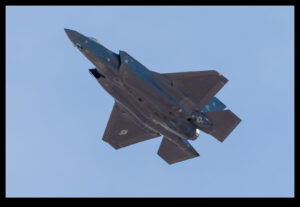
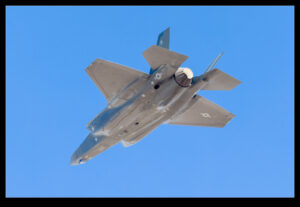
The Weapons School has a bunch of F-35A jets now. The first ones to arrive at Nellis were OT jets for operational test and evaluation. Now the Weapons School is using them to develop tactics and employment. The lines of the jets are a bit different from the Marine Corp F-35Bs that I shot at a previous exercise. Without the lift fan, the back of the airframe is smoother while the canopy is blended into the spine in a different way that enhances visibility and fits with the different profile. The jets were pretty active while I was there so I managed to get a few shots. I had seen them during previous visits but, when on base we had been barred from shooting them and, while off base, I had always managed to be in the wrong place to get them. While I am currently pleased to have got some shots, I will soon be used to seeing them around all over the place.
Talon Hate
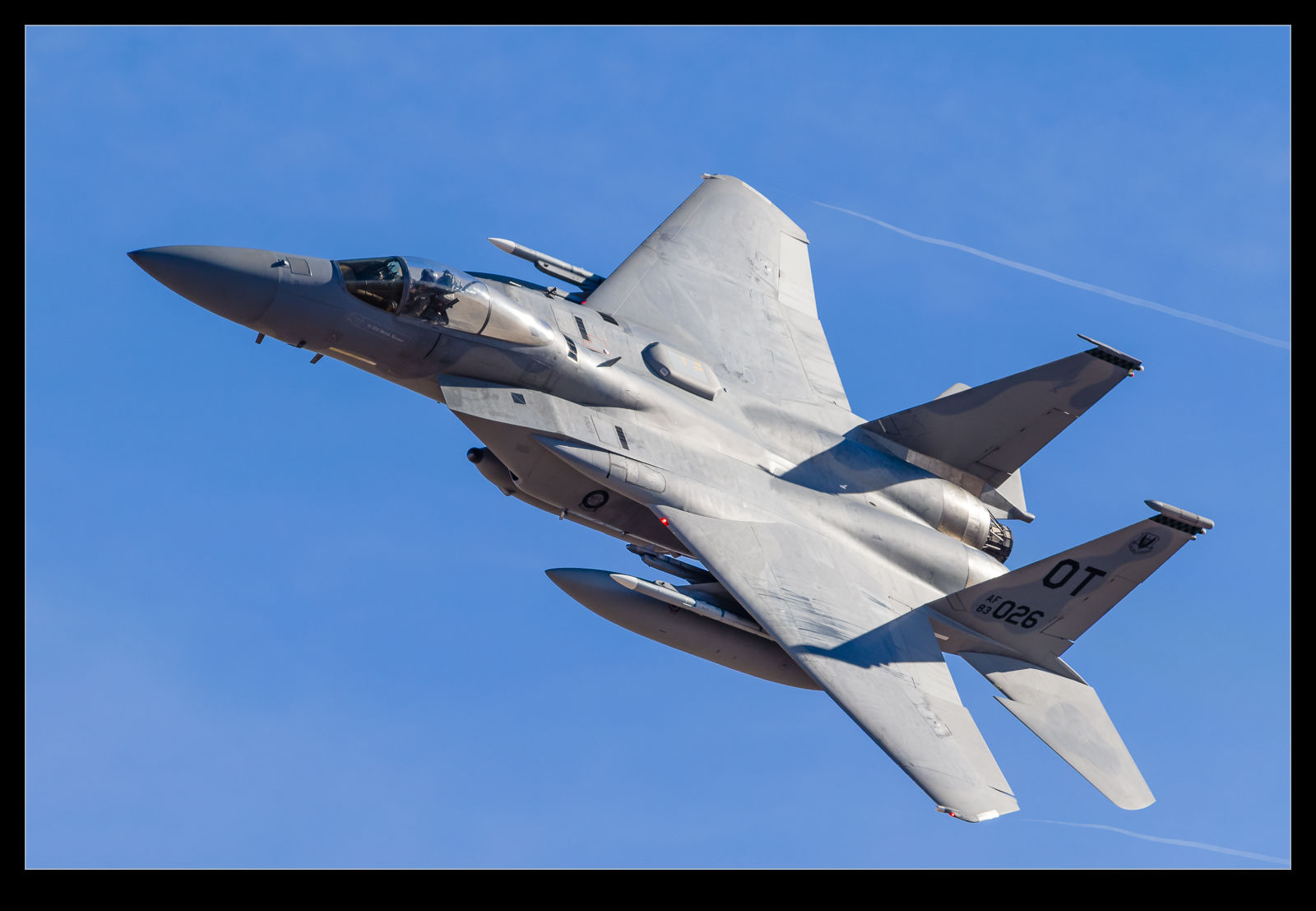
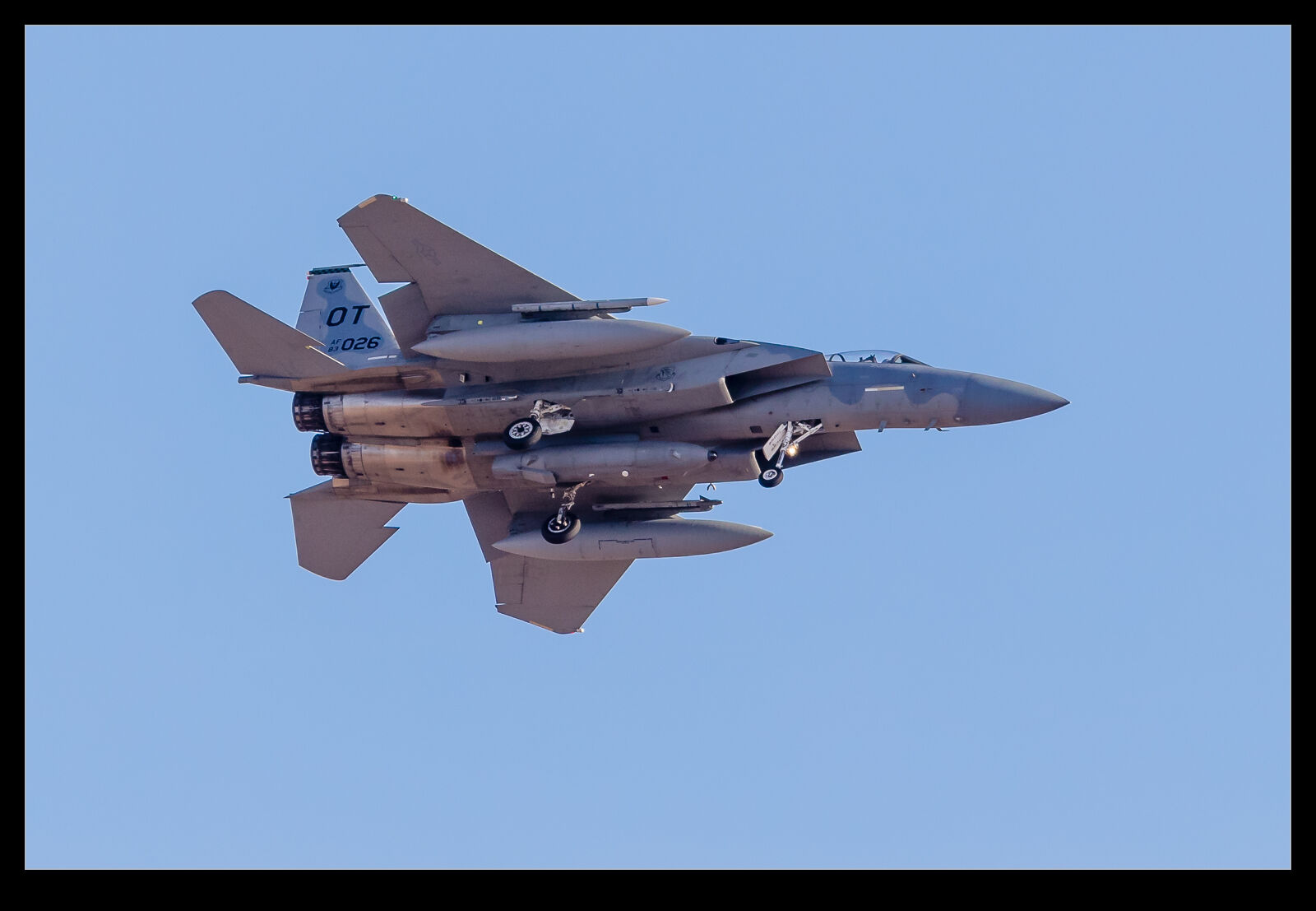
Talon Hate is a program that the Air Force is running involving an infrared sensor mounted in the front of a centerline fuel tank. It is mounted on an F-15 from the operational test unit at Nellis AFB. The first time I saw it, I was walking along the flight line at Nellis. We were shooting with the California ANG unit that was the next space along the line. As we walked past the Talon Hate jet, we were under strict instructions not to photograph it. I was right there but nothing I could do.
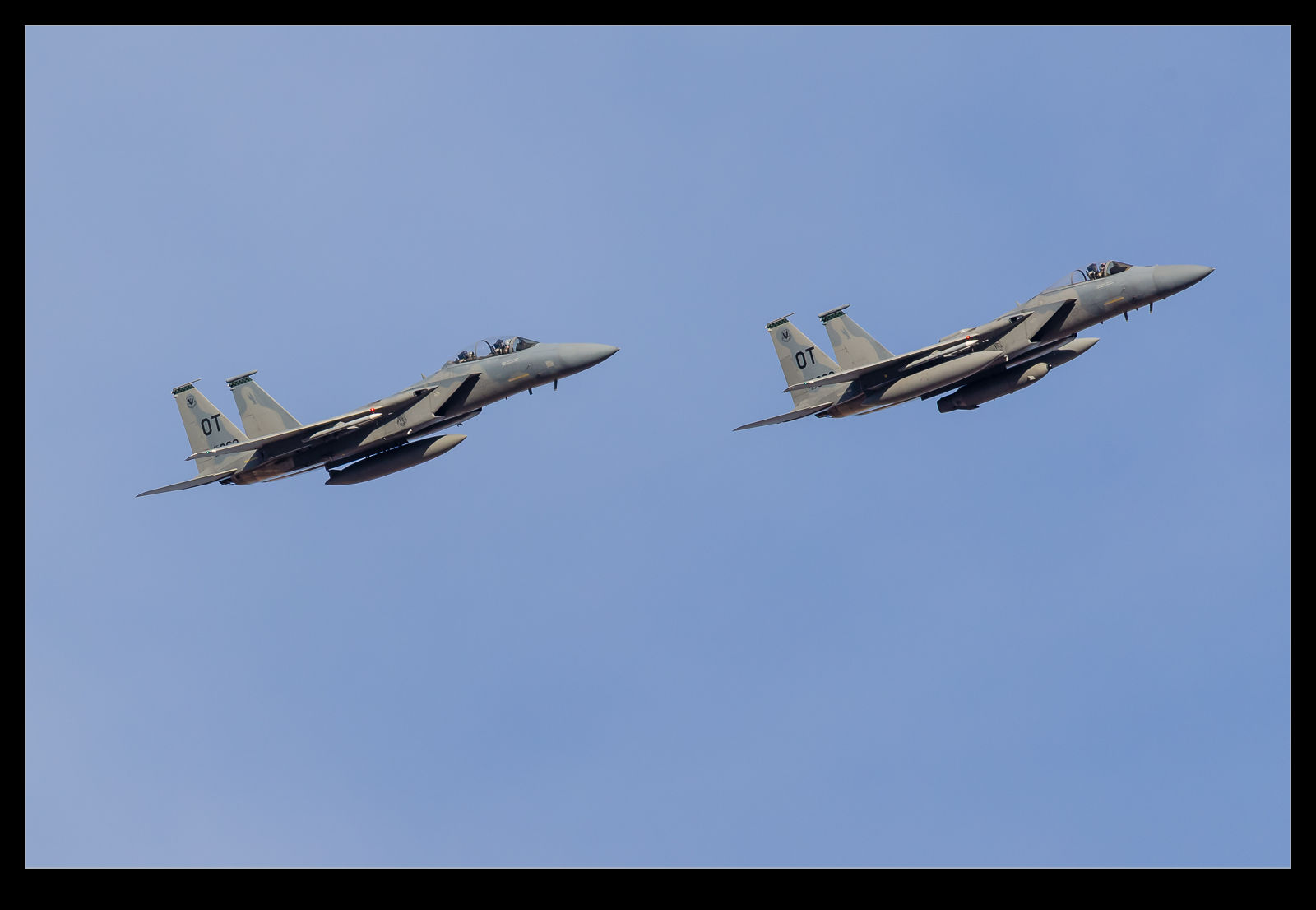
During my visit to Red Flag 16-4, the Talon Hate jet flew a couple of times. It flew with a second F-15 each time and sometimes with other jets. The pod is clearly visible on the jet but the other modifications are less conspicuous. There is a satellite communications antenna mounted on the back on the jet. When it turns for final, you can see the antenna mount. I don’t know what the outcome of the program will be but it is cool to see the venerable F-15 still trying out new stuff.