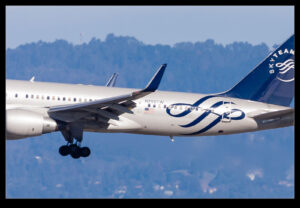
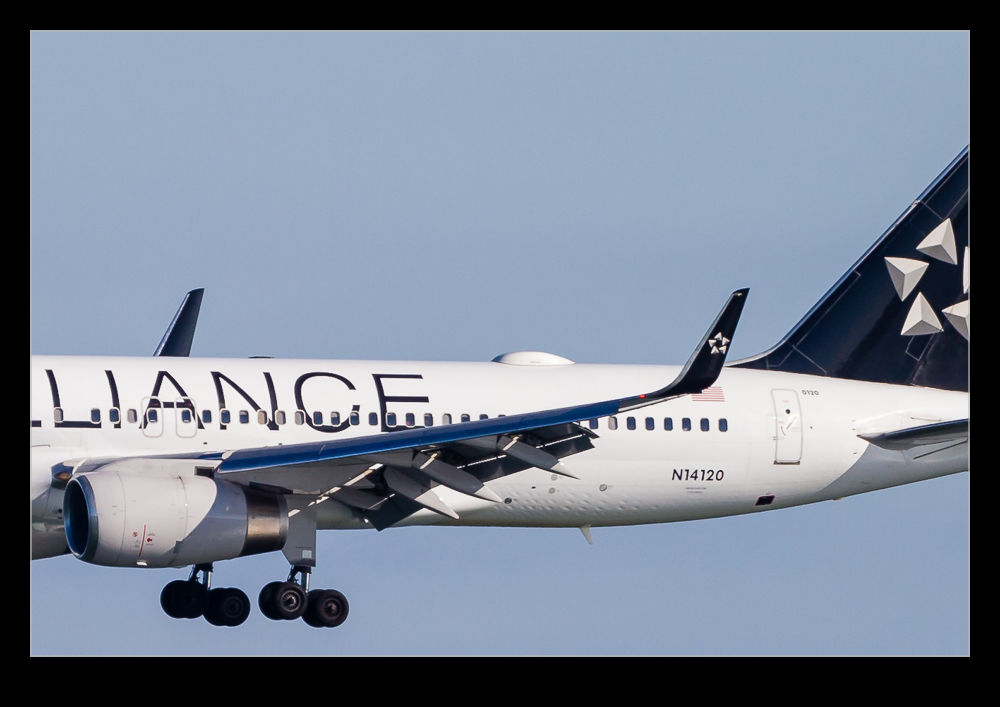
 The construction technique for aluminum aircraft fuselages is known as semi-monocoque. A monocoque structure takes the entire load through the shell of the structure. In airframes, the skin is very thin and so frames and longerons are joined to the inside to provide additional rigidity while the skin still takes a lot of the load. If you haven’t ever seen the cross section of an aircraft structure, you may be surprised to see just how thin the skin panels actually are. They are perfectly up to the task of pressurization and bending loads so no need to panic.
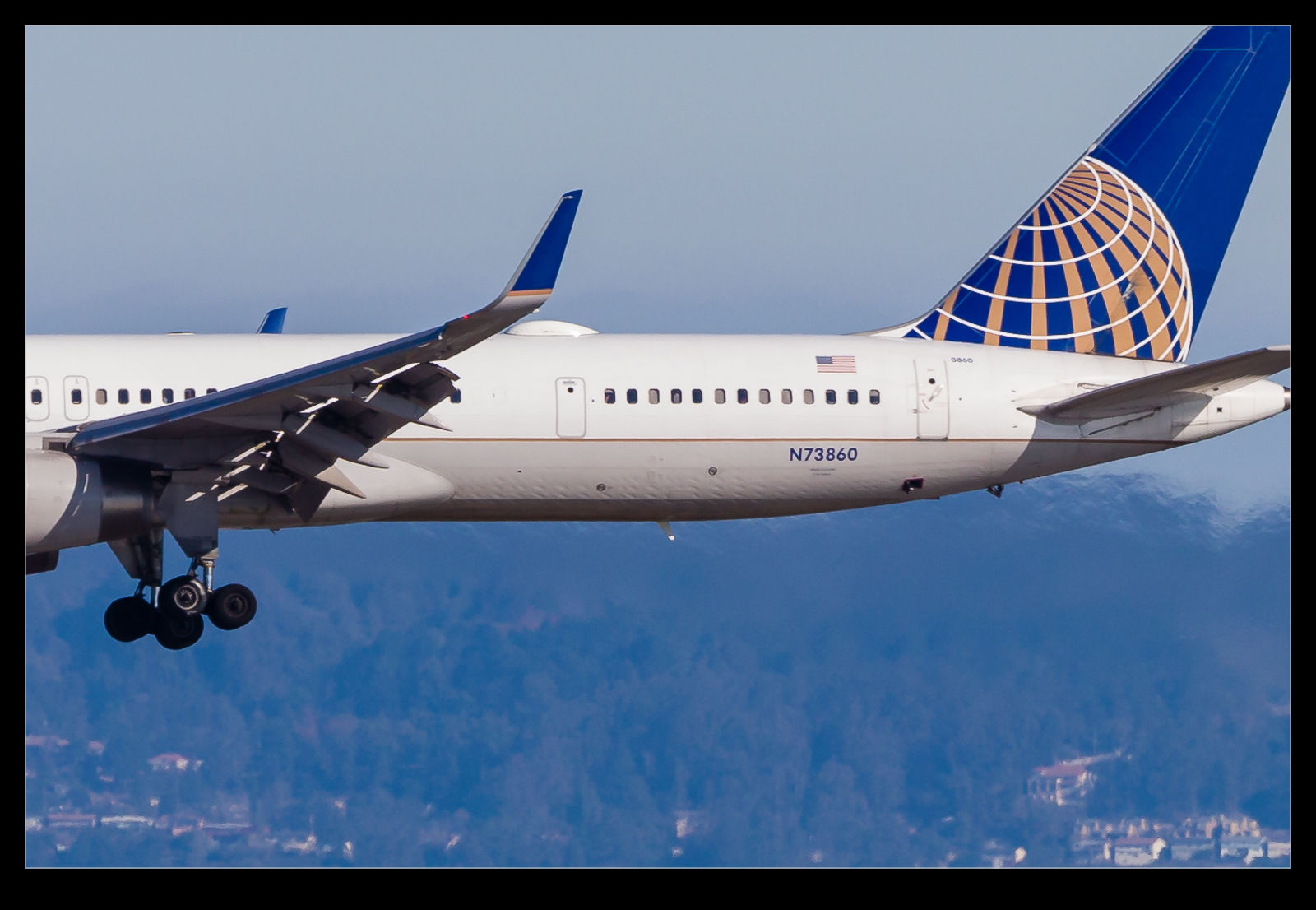 An outcome of this design approach is that the panels between the frames and longerons can experience some load directions that induce a measure of buckling. Nothing that is beyond their elastic limits but something that can be apparent if the light comes from the right angle. The lower side of the rear fuselage of the Boeing 757 is an area that is susceptible to this in certain flight conditions. I saw a number of them recently – both -200 and -300 models – and they both were showing visible distortion of the panels. The sun angle meant that the shadowing of these areas was apparent.
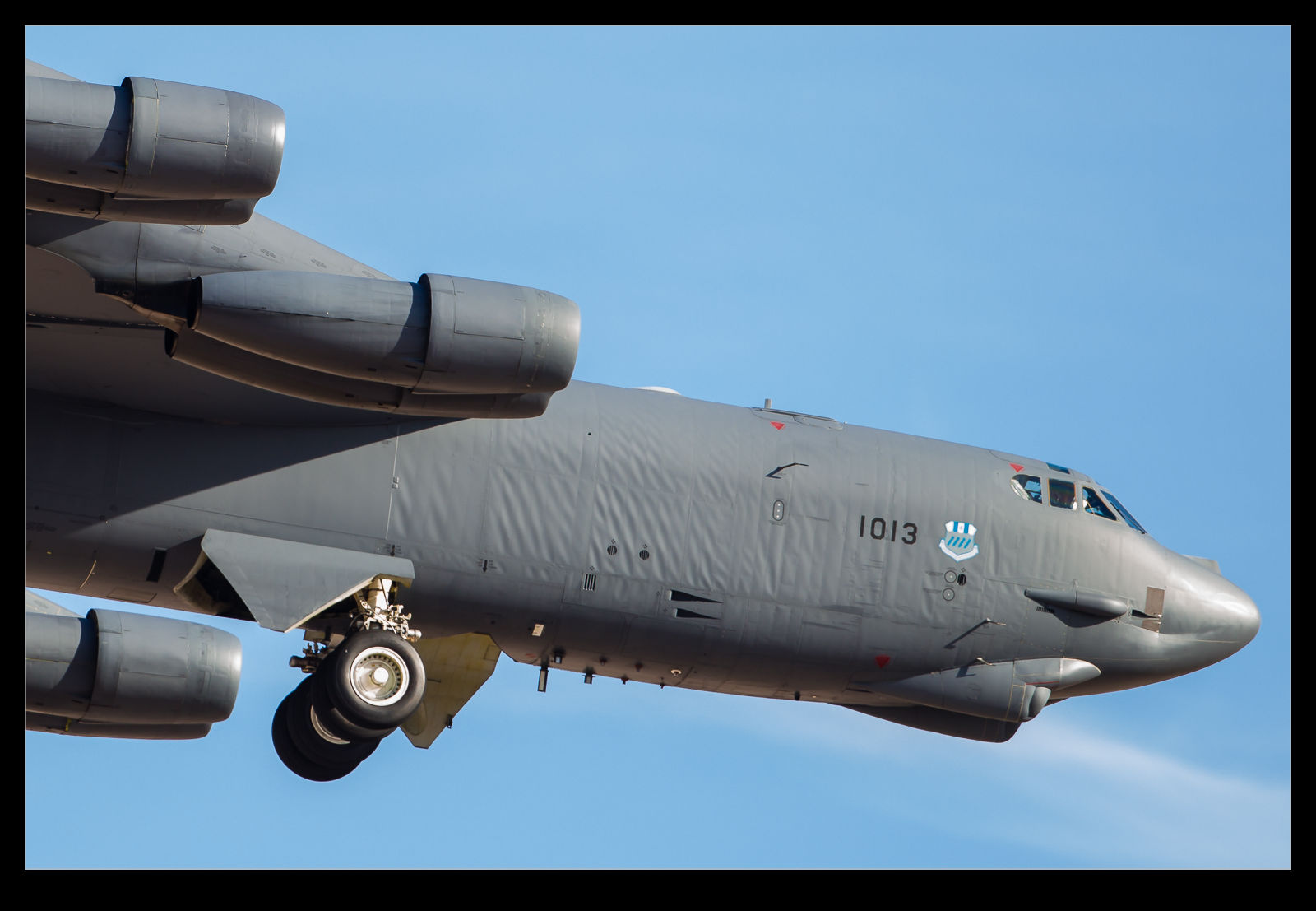 The 757 is by no means the only aircraft to experience this phenomenon. The B-52 Superfortresss is a jet that shows this effect on plenty of occasions. I have heard people comment on it being a function of the age of the airframes but it is more of a result of the design of the basic structure than anything else. Certainly nothing to be immediately concerned about.
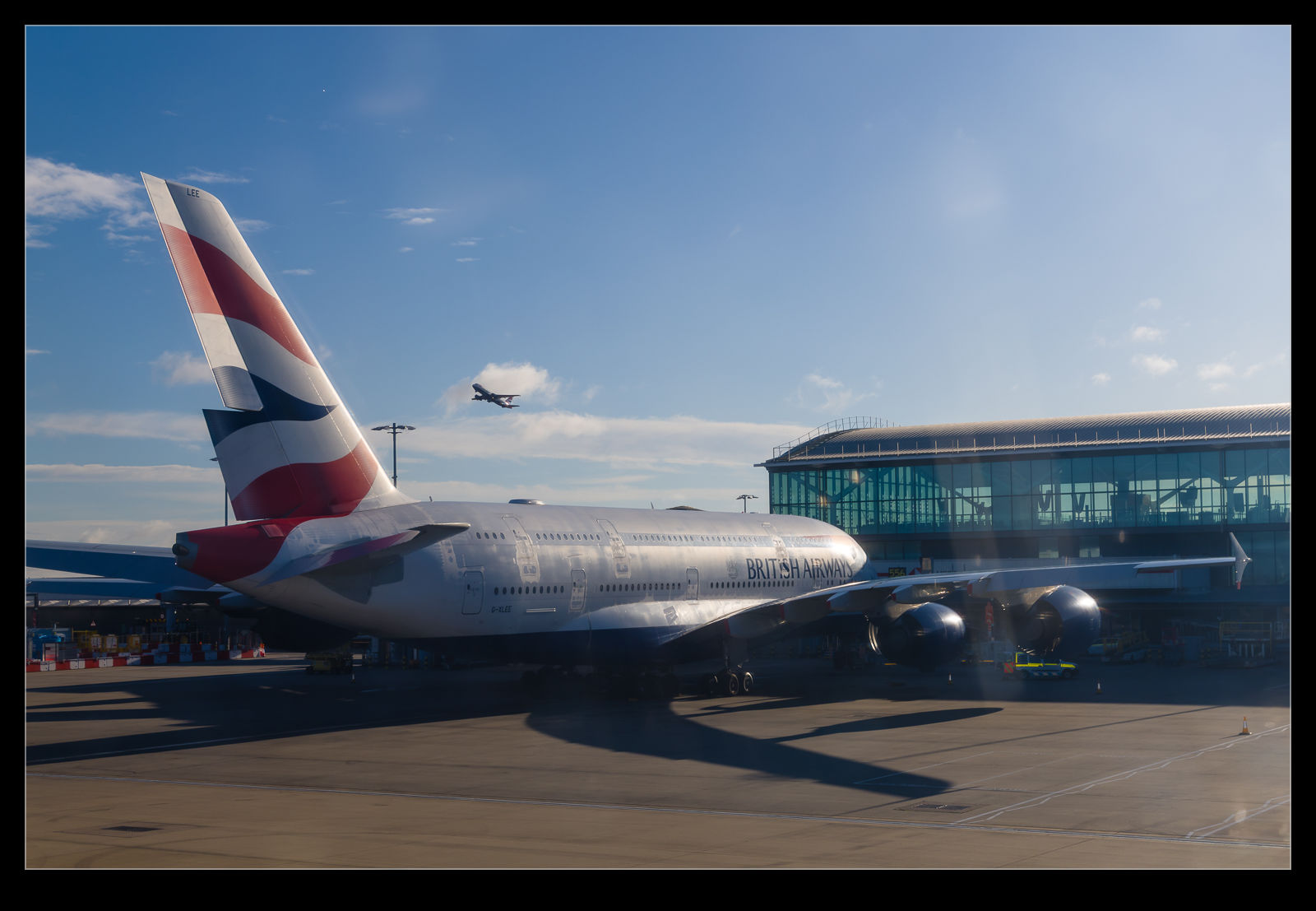
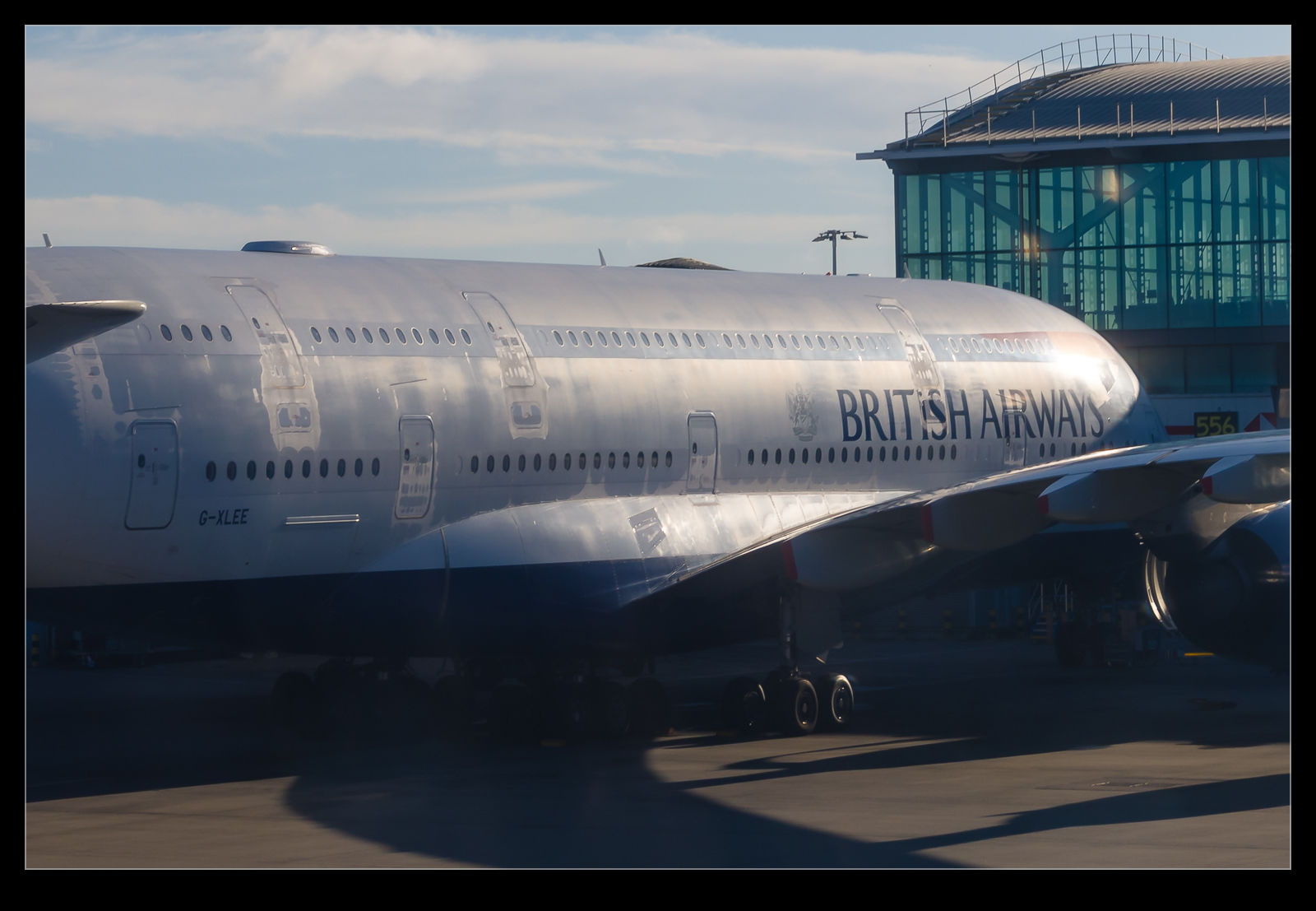 The glossy paint finishes on airliners tend to make the fuselages look uniform to the naked eye – particularly when at a distance. Of course, when you get closer – particularly on an aluminium fuselage – you can see the joints and reinforcements that go into the detailed design. A British Airways A380 was on one of the gates at Heathrow early one morning as we taxied by. I assume it had been there for a while because there was a lot of condensation on the skin from morning dew. This served to highlight the different parts of the structure including where the skin was thicker and were there was an overlap of skin layers. I thought it was interesting to see how it made a normally uniform fuselage look so much more complex.