Tag Archives: aircraft

SFO Night Approach Time Lapse

wpid10427-C59F8422-Edit.jpgMany moons ago (pun intended), my buddy Paul was visiting and we decided to have a go at night light trails at SFO. However, we had not come well equipped so headed to Best Buy to pick up cheap tripods. They were very cheap and performed as might be expected. However, with Paul coming back, we decided to have a second go at this and to prepare properly this time. We also scoped out some locations that might be suitable to get good angles on SFO.

Two things conspired against us this time. First, SFO is having runway upgrades installed so the pair of 28 runways are the only ones in use. This cuts down on the possible angles for a while. Second, the great weather forecast turned out to include some low cloud over the location we had scouted out. The aircraft rapidly disappeared from view as they climbed. (It later turned out that they were still in the clear but above the thin layer of cloud which we were under.)

We went with a plan B and found a location along the lake-shore that would provide an alternative. It was not as good but it did work. I had actually brought a spare tripod in case Paul didn’t have his so I set up two cameras. One was running long exposures that I intended to blend together to get light trails. The other I point out onto the approach which was quite busy at that point and take a lot of shorter exposures for creating a time lapse. The blend is above and the time lapse video is below. Let’s hope for better weather next time. I shall also remember that warm weather does not include after sunset and bring something a bit ticker to wear!

Rainbow Phantom

wpid9832-C59F9200.jpgIn going through my archive recently for a piece for Global Aviation Resource, I was searching through old shots of F-4 Phantoms.  I noticed one that I hadn’t recalled taking but that seemed pretty cool.  Occasionally jets pull ‘g’ when above you and the angle of the sun makes the vapor project a rainbow.  This was one of those moments.

HDR Panoramas

wpid10158-C59F8190-Edit-Edit.jpgAnother one of my processing technique posts today. For those of you interested in pictures of places, today will probably be one you pass on. You have been warned. This is about my first venture into the realm of HDR panoramas. I know at least one of you who knows exactly how to do this sort of thing and does it on a regular basis. You also will probably skip the rest of the post. However, you have some specialized tools for doing the job and I am playing with Lightroom and Photoshop so here is how it goes.

My initial thought having taken the shots was which order to carry out the processing. HDR first or pano first. I concluded that it had to be pano first. All of the pano exposures were consistent and would stitch properly while I wasn’t convinced that each of the pano frames would be consistent if I had done the HDR blending first. However, this left me with a second concern. Would the pano merge produce images that would align for the HDR merge. I use the pano tools built into Photoshop and, while I select the algorithm it uses, I did not have confidence that it would produce an identical alignment for each set of exposures. However, this was the route I tried.

Stitching the panos was straightforward enough. I created each of them from Lightroom and ended up with five panos with differing exposures. At this point I could have taken them directly to HDR Pro within Photoshop but, since I wanted everything to end up in the Lightroom catalog, I decided to save the files and go to HDR Pro from there.

Here I encountered my first hiccup. As expected, the panos produced were not identical. There were very close but not identical. HDR Pro only works on files that are the same dimensions. I imagine some more specialized HDR applications might be able to handle this but I was stuck with Photoshop. Since the panos were thousands of pixels across and only a few pixels different, I opened them back up in Photoshop and changed the canvas size to be identical in each case. HDR Pro is able to manage alignment of slightly misaligned shots anyway so I wanted worried about the positioning. Also, with such small changes in dimensions, I didn’t fear that I would have distortion.

With this change made, Photoshop went to work and created the HDR file. Amazingly, it worked just fine. I didn’t have any problems with the files being distorted relative to each other and it did a great job of blending them. All that was left was to crop everything in to clear up the empty corners from the pano creation (I didn’t get rid of those in the first instance since I was trying to keep the pano files identical in size and alignment) and then a few tweaks back in Lightroom had the job finished. I was pretty pleased with how it worked and, with the experience of this time, should be able to turn them around quite quickly next time.

Boeing Field

wpid10079-AU0E4499.jpgNo great story for today’s post. I got some time to shoot at Boeing Field in the evening after a day of meetings and travel. Some of the interesting subjects got their own posts. Here are just a few shots of the other traffic that was coming in to the field. The evening light was fantastic and it was fun to watch the movements including some of the Boeing production traffic. Mongolian was a new airline for me. Sadly my timing was off and I didn’t get to see the Indian Navy P-8 on test. Never mind.

Dream Machines

wpid10115-C59F4973.jpgHalf Moon Bay on the Pacific coast hosts a great little event each year called Dream Machines. It is a combination of an aircraft and car event. I took a trip with my buddy Hayman to see how it was this year. The weather did not start out favorably and it looked like it might be a bit of a dull day. The clouds early certainly stopped a few visitors from making it in. However, the weather got a lot better as the day went on and there were still lots of great things to see.

wpid10135-C59F5507.jpgDream Machines is not an airshow so there are no displays. However, some aircraft get airborne and might do a few flybys. I covered the event for Global Aviation Resource and you can read my coverage in more detail at http://www.globalaviationresource.com/v2/2014/05/05/aviation-event-review-dream-machines-half-moon-bay/. There are a couple of sad notes associated with this day. The Sanders owned Sea Fury, Dreadnought, was at the event and departed in mid-afternoon. It was closely followed by a Cessna support plane. Unfortunately, en route to their base, they collided over the water and the Cessna was lost along with its pilot. Dreadnought suffered damage but returned to base. Also, as it was his home base, Eddie Andreini was part of the day’s proceedings including flying his Mustang. On the static line was his Stearman and this was the aircraft he was flying at Travis a few weeks later when he crashed on the runway and died. Both losses are very sad and our thoughts are with the friends and families and all involved.

SeaTac

wpid10028-AU0E5035.jpgI had an early flight out of Seattle on my way back to the Bay Area. It was a nice morning and the planes were departing to the south. The terminal that Southwest operates from is towards the southern end of the airport so you get the aircraft passing you as they get airborne. I had given myself some margin for getting to the airport, checking in the rental car and getting the shuttle to the terminal and everything had gone smoothly so I actually had a bit of time on my hands. Also, on the shuttle I had seen an Alaska 737 in 75th anniversary markings on a gate so I thought I might have a chance to get a shot of it if it wasn’t going straight out.

wpid10018-AU0E4833.jpgThere is a kink in the pier as you head to Southwest’s gates that gives you a good view across the field and is not obstructed by jet bridges. Moreover, it isn’t a busy part of the terminal so waiting there and getting some shots is practical. Of course, you are shooting through some thick glazing but, even so, I was pleasantly surprised that the shots were not too badly compromised. The only problem was that the Q400s that Horizon operates from the central part of the terminal throw of some exhaust distortion which ruins what could be some good angles.

wpid10024-AU0E5001.jpgI had to make sure I didn’t forget my own flight but I did get some nice shots. The Alaska anniversary jet did time its departure well for me and I was even more pleasantly surprised when one of their 737s came by sporting the new scimitar winglets from APB. That was the first time I had seen some for real. A nice bonus before heading home.

Boeing 787-9

wpid10081-AU0E4517.jpgOne evening I arrived at Boeing Field to see what was moving. Just as I got there, a 787 was rolling out on landing. Since the wind was in the opposite direction to my previous visit, I didn’t see it land but it rolled down to our end of the field. Interestingly, the gear doors were down and the RAT was deployed. These RAT is usually tested on early production test flights so I suspect this was the reason but the gear doors being down is one that had me wondering. The aircraft, which was finished in the livery of All Nippon Airways, taxied off the runway and turned on to the taxiway where it promptly shut down. It hadn’t even straightened up and the nosewheel was still at an angle. I have no idea whether this is normal practice or if something unusual had happened.

wpid10089-AU0E4568.jpgWhatever the reason, it sat there for quite a while until a Boeing team showed up to recover it. Interestingly, they brought an ambulance with them although there didn’t appear to be any need for one. This could also be a standard procedure or maybe something unusual had occurred. I doubt I will ever know. In all of this time, it never occurred to me that this would be other than a regular production 787. However, checking into this later, this was in fact one of the 787-9 and so something new for me. In truth, it wasn’t entirely new. The previous evening one of the dash 9 test aircraft had come back in while I was there so this trip got me my first two airborne dash 9s. I had seen a test aircraft on the ground before but that seems like a bit of a cheat in comparison.

Starships

wpid10007-AU0E3649.jpgI was at Boeing Field when an interesting shape appeared on the approach. When I first saw it, I thought it looked like a Beech Starship and, sure enough, as it got closer, that was exactly what it was. The Starship is an interesting plane although it was not a success for Beech. I first saw one at Farnborough where Beech was displaying it for the first time in Europe. I think the aircraft was destined for Denmark. Since then I have come across them infrequently.

wpid10005-IMG_0129.jpgThe program was not good for Beech (although they probably learned a lot about building composite aircraft) and it didn’t become the new King Air that they originally thought it would be. When the program was wrapped up, Beech went through a process of buying back airframes and having them destroyed rather than support them going forward. Not everyone was willing to give them up though. Consequently, there are a number of them still operating and a few more in museums.

wpid9999-QB5Y7854.jpgI haven’t seen too many but here are the ones that I have come across over the years.

Oakland Aviation Museum

wpid9748-C59F4457.jpgThe aviation museum that is on the perimeter of Oakland Airport has been something I have passed a few times but never at a time when either I had enough spare time to visit or that it was actually open. Finally, I recently found myself coming by with some time in hand and decided to drop in and take a look around. The collection that they have is quite interesting and splits into a series of areas.

wpid9750-C59F4381.jpgObviously the aircraft are the major part of the displays. However, they do have a collection of aero engines, both piston and turbine, which span quite a period including a TF-30 from an F-14 Tomcat. There are displays of uniforms and historical sections on a variety of topics including individuals and airlines from the history of the area.


wpid9738-C59F4439.jpgHowever, it was the aircraft that I was primarily interested in. Part of the collection is kept inside. It is a selection of types from some relatively familiar light aircraft like the Ercoupe, a replica Wright Biplane, a Boeing T-5 which is a unique type which was developed locally, the only example of the Hiller Ten99 which lost out to the Huey in an Army competition and a MiG-17. The internal displays are reasonably spread out although light is a little limited.

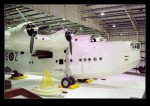
wpid9728-C59F4393.jpgWhen you head outside, things are very different. A lot of more modern military aircraft are on display along with the flagship of the Museum, a Shorts Solent flying boat. The aircraft outside are quite close together although not very cramped. However, the combination of positions and the ever present overhead power lines makes getting an uncluttered shot a little tricky. Some imaginative angles are sometimes required. It was a bright day as well so the harsh light was not helping.

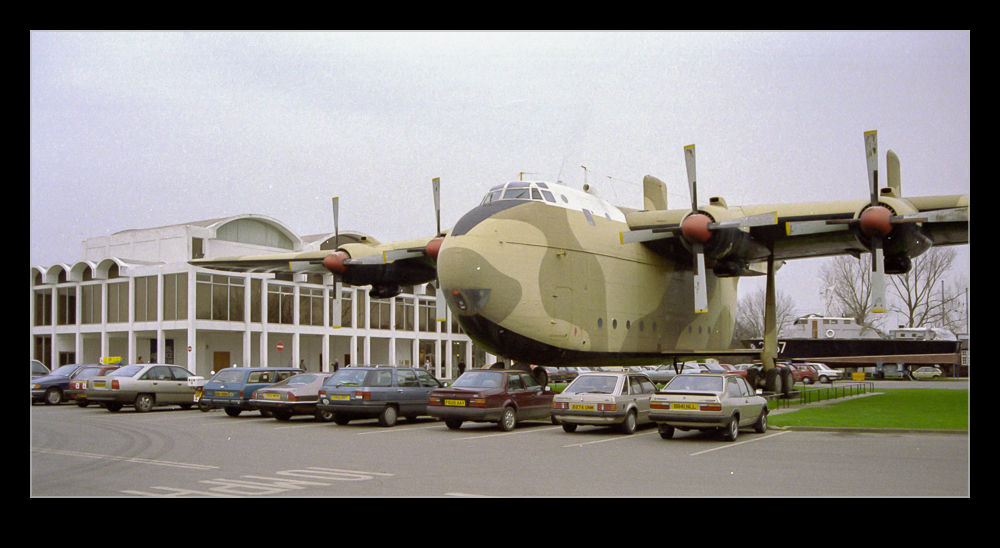
wpid9744-C59F4453.jpgWhile the F-14, the A-3 and the TAV-8A are worth a bit more time, it is hard to ignore the Solent. It is set facing the parking lot so it is striking as soon as you arrive. Internal tours can be arranged and, had I been able to stay longer, I would have been able to take a look around. However, I had to make do with external only this time. The rudder is currently missing and the wing floats are dismounted but the aircraft is still in great condition. The shaping of the nose is a feature of that era of flying boats and you can’t help but want to accentuate it when photographing her.

wpid9746-C59F4454.jpgEven events are held at the museum and some night photography might provide some interesting opportunities. I do want to see inside the Solent so I shall be heading back before too long.

Narita

wpid9389-AU0E0607.jpgMy trip back home departed from Narita Airport. The journey out there was swift so I got there with some time to spare. Narita is one of the airports that still has a viewing terrace. Not only that, they provides holes in the wire fencing to stick your lens through! I wasn’t there for terribly long and it was the afternoon when the sun is pretty much in your face. However, it was a far nicer place to be than sitting at the gate. This was the side of the airport where the US airlines tended to operate so I saw a lot of planes that I can see at home. However, there were some interesting operators departing from the runway on that side of the field that I hadn’t seen before so I sat back and enjoyed the new sights along with the old.