Tag Archives: aircraft

Breaking the Old Jets

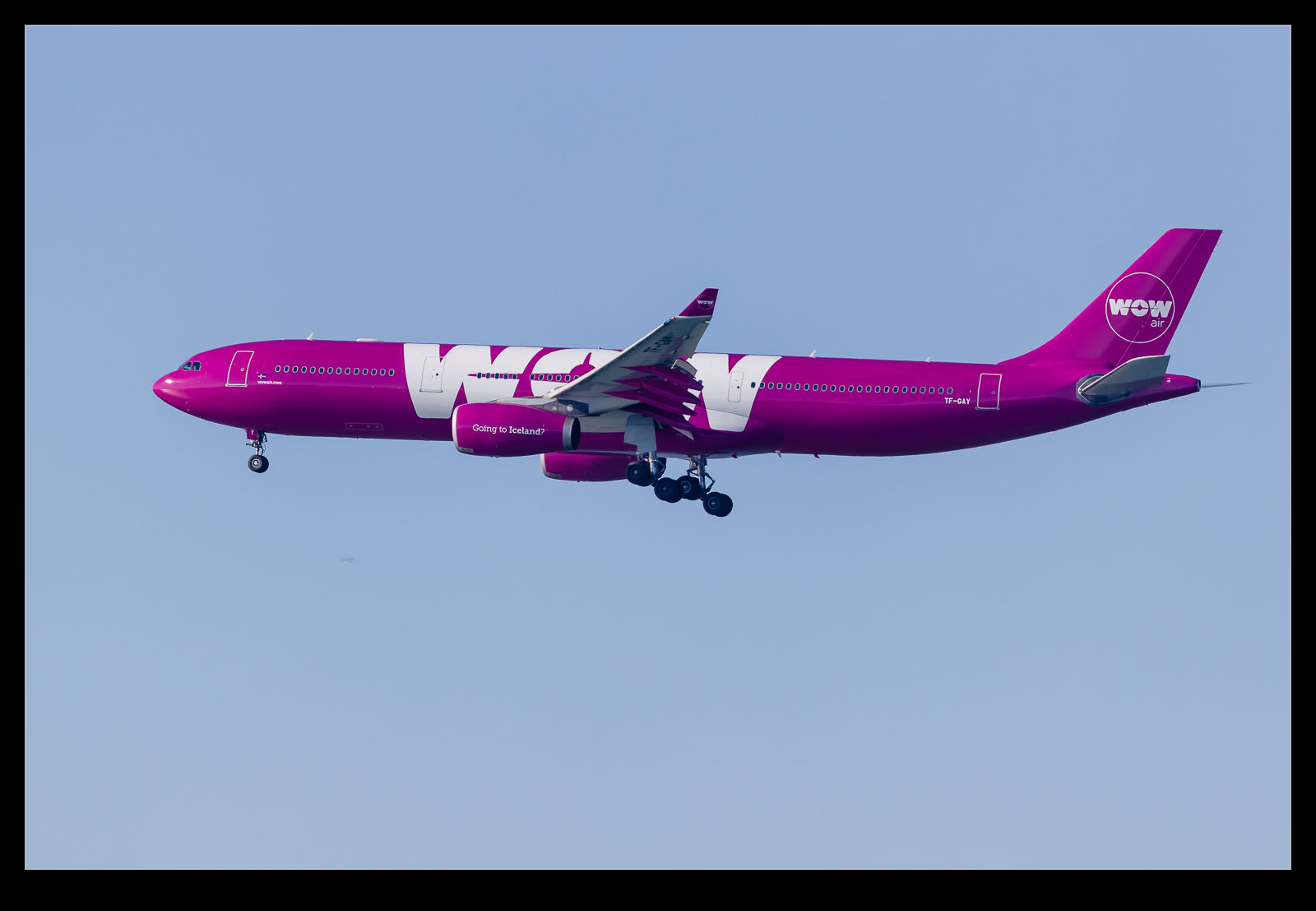
B11I4119.jpgBoneyards can be interesting place to explore.  Old stuff and things from odd locations abound.  On one side of Tucson International Airport is a place filled with old airliners.  Some are being worked on and will fly again.  Others are being stripped for the useful parts that they have.  I didn’t get to go inside but instead wandered along the fence line seeing what was going on.  Interestingly, having seen one of the last flights of the Texas 737 for Southwest, I was surprised to find it here a few days later.  It was being broken down already.  Other 737s were looking short of key parts and a few MD-80s were looking unlikely to move any time soon.  A couple of A320s were there and they did look like they might be on the move at some point.  One was being repainted which I imagine means it has a future.
Vampires Out in Daylight

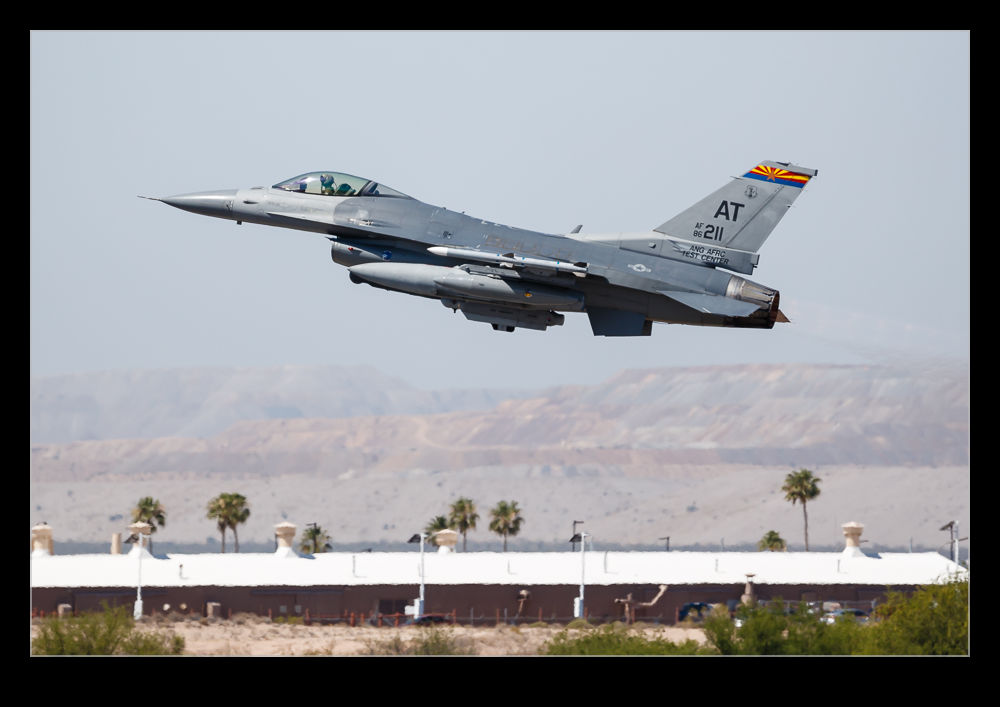
B11I5928.jpgTucson International is a place I was expecting to shoot F-16s of various nations.  I had not expected to see any Super Hornets.  However, the Navy had other plans.  A couple of VX-9 Vampires jets were detached and carrying out missions with some of the based test aircraft.  One of them was the color jet too!  This was a very pleasant surprise.  They took off in the morning for a mission and we got to see them head off.  They returned ahead of my expectations and I wasn’t in the right place to get them on approach.  Even so, a great addition to the day.  I was flying home later that day and, while looking out of the window at the gate, they taxied by again so I guess they were getting a lot of flying in.

French Gazelle

AU0E8445.jpgChino is full of surprises.  There are many hangars and many unusual things contained in them.  A friend showed me a shot of a Jaguar T4 that was in one of them – I was disappointed to not see that myself.  As I was walking back towards the parking with a fellow shooter, we came across a hangar with a Gazelle in it.  The guy cleaning out the hangar floor invited us in.  It was a French Army Gazelle, still equipped with many electronic boxes from its military role and showing the mounting point on the side of the fuselage where HOT anti-tank missiles were once mounted.  He flies it regularly and says it has been immaculately maintained over its service life.  It certainly looks great.

Rolls’ Testbed Flies While I Am There – Twice!

AE7I6300.jpgOn my previous visit to Tucson, I saw the Rolls Royce owned Boeing 747 engine testbed.  This was converted for the Boeing 787 Trent engine development program (hence the registration N787RR).  The Number Two engine was removed and replaced with the test engine.  The other three Rolls RB211s are unchanged.  At various times the testbed has been reported to be without an engine in the test location but there was something there when I was last here – it’s just they didn’t fly.  This time was different.

AE7I6367.jpgI saw the testbed when I left the airport after my flight landed.  The following morning, I headed out to see what F-16 traffic there was and saw online that a flight plan had been filed for the testbed.  I only had a certain amount of time before I was due to be at Hawgsmoke but it was supposed to fly long before that.  Of course, test flying is not usually something that happens to a tight schedule and the takeoff time came and went.  We were beginning to think we might miss it when the sound of some large engines spooling up reached us.  A while later, out she came.

AE7I4746.jpgEngine testbeds require some careful control.  Since one engine is significantly different in thrust from the others, there is a balancing act required to keep the thrust differential within the ability of the control surfaces to overcome.  That means the max thrust is not always going to be used.  Consequently, they use a good portion of the runway for takeoff rotating just passed our location.  That meant I didn’t get the front quarter rotation shot I had in mind.

AE7I4883.jpgNo matter, I still got to see it fly.  The return was about six hours later and I was busy elsewhere at that time.  I figured that was it for this trip.  I was wrong.  The morning of my departure, I had a little time to spare so went back to see what was happening.  Amazingly, the testbed was already being crewed as I drove up.  We got a repeat of the previous day and some similar shots.  I guess I was compensating for not seeing it fly last time!

Departure of Solar Impulse

AU0E8488.jpgHaving been to Moffett Field for the arrival of Solar Impulse and then made another visit to the hangar while they were there, I wasn’t going to miss the departure.  This might not seem like a difficult decision to make but if I tell you I had been away in Southern California for the weekend and having driven back on Sunday and then finding out that departure was scheduled for 5am on Monday and we would be required to get there at 2am and I would need to be up at 1am, you can see why this was a bit tougher to do.

C59F6089.jpgHowever, I was committed at this point (or should have been) so I slept in the spare room so as to not disturb Nancy.  Off for an early run.  Traffic was no problem at that time as your might imagine.  Once there it was back to the same issues as we had faced with the arrival.  It was very dark.  Hayman did the stills and I went for video but got some stills as well.  Unfortunately, they chose not to back-track the aircraft as had been briefed so it took off from ahead of us and went away.  We still got some good shots and, while it got airborne very quickly, it got to a certain distance when it seemed like it had stopped moving.

AU0E4323.jpgThen, it was time to go.  We wrapped up and got on our way.  I actually was back at home a little ahead of my normal time to get up so I did my normal routine and headed in to the office.  It would be fair to say that I was not at my most perky that day!

Mustang Motion

C59F9966.jpgThe Society of Aviation History visit to Airmotive Specialties in Salinas gave us a great opportunity to look around the restoration facility.  One of the Mustangs was not being worked on though.  It was due to be picked up by its owner that afternoon.  As a result, having had a break for lunch, we headed back to the ramp to await the departure.

C59F9941.jpgThe aircraft was run up on the ramp outside the hangar and then taxied to the opposite end of the runway for takeoff.  We anticipated the takeoff and then a further pass before he left.  I figured the first time I might go with a slow shutter speed for fun.  The second one I would be a bit more conservative in order to make sure I actually got a sharp shot.

AU0E4253.jpgAfter the two passes the aircraft headed off en route.  Getting a bit of airborne Mustang time was a cool addition to a great day.

C59F9461.jpg

Marineflieger Tornado

Scan 2-1251.jpgTornado was a tri-national program.  The UK, Germany and Italy were the partners that developed and produced the aircraft.  There was only one export customer which was Saudi Arabia.  All of the users continue to operate the aircraft although all of the ADVs have now been withdrawn.  Germany took a substantial number of the jets but, while the Luftwaffe remains a major user, it is easy to forget that they were not alone.

The German Navy had a fast jet fleet.  The Marineflieger operated the F-104 in large numbers and these were replaced by the Tornado.  Originally, they were in the Blue/gray upper fuselage with white undersides colors which looked very neat.  Later on (including the time this photo was taken), they had migrated to a camouflage scheme.  Then, a consolidation exercise took place and the Navy jets were transferred to the Luftwaffe which took over their responsibilities.

What Does 40 Years of Design Get You?

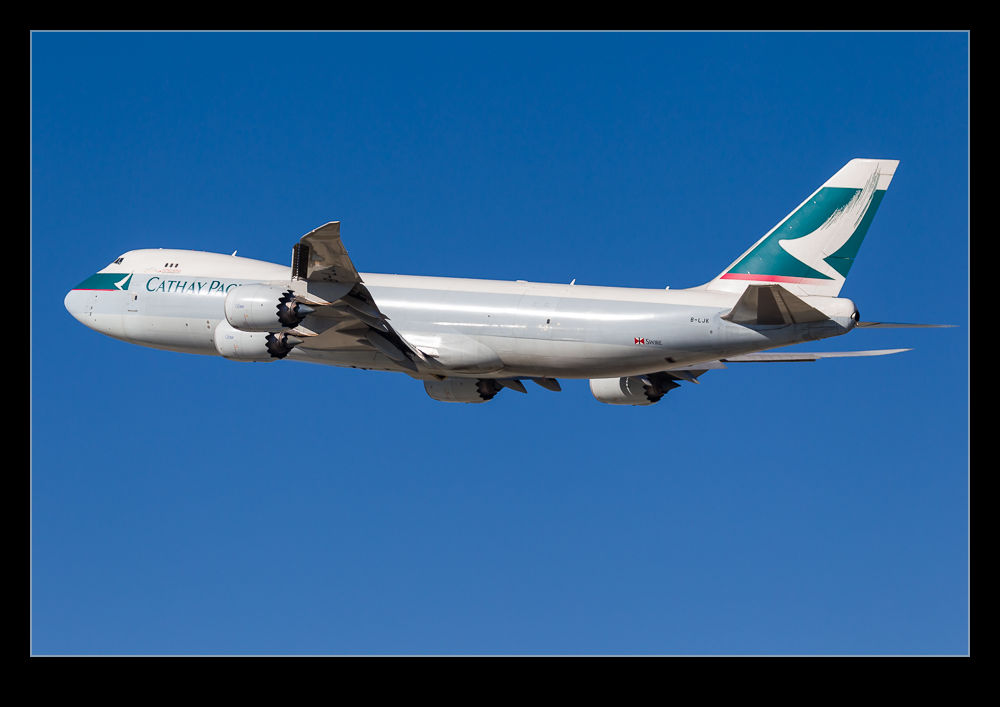
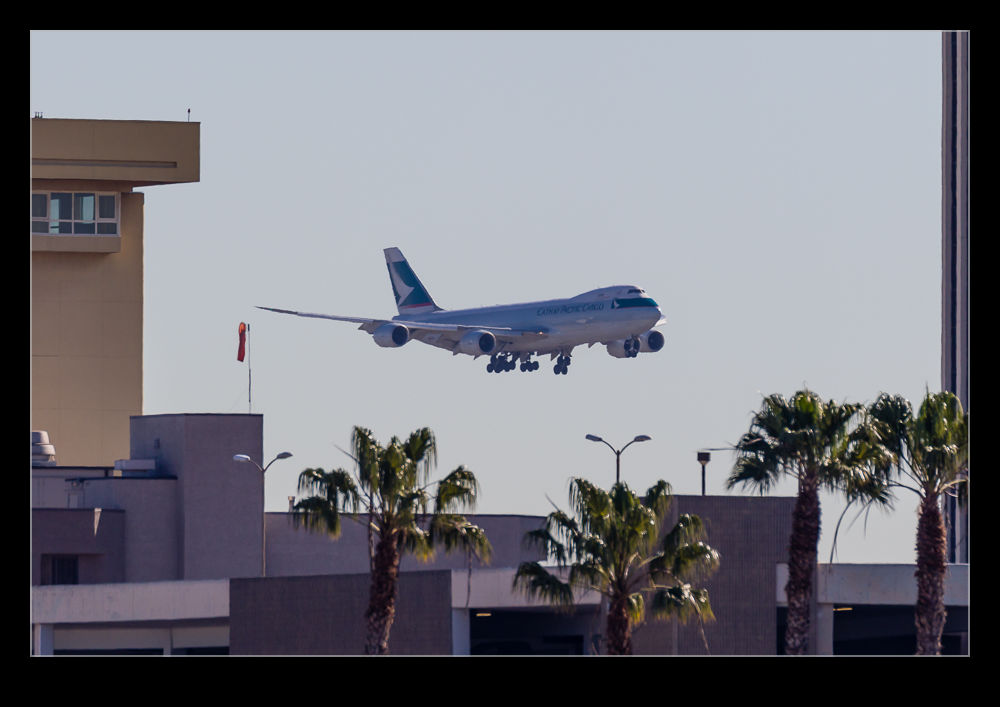
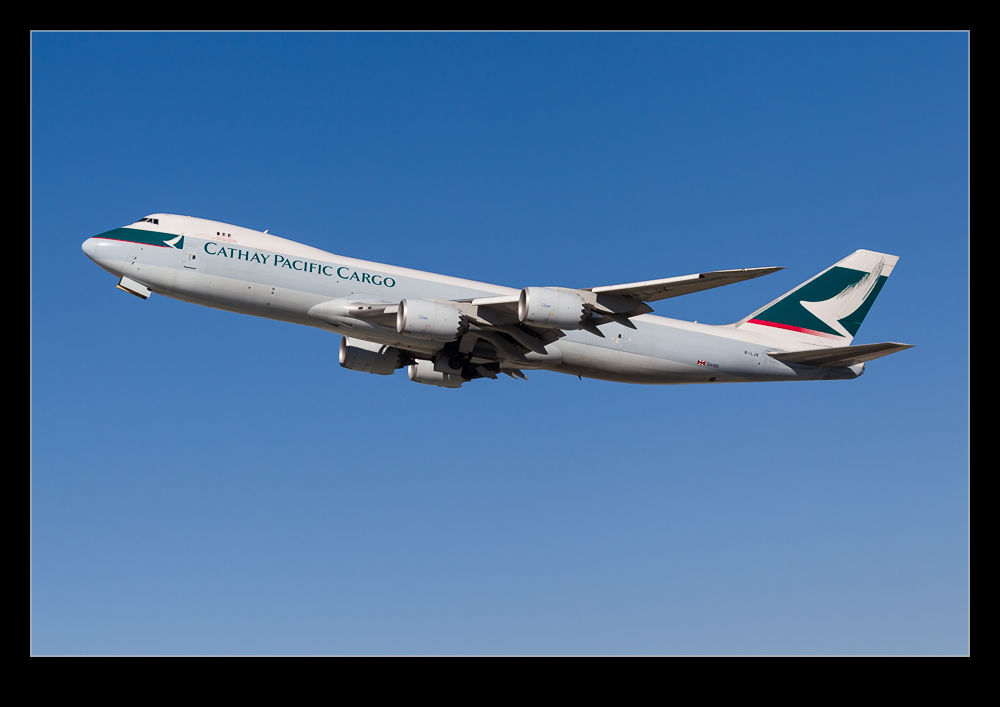
AU0E1641.jpgThe Boeing 747-8 has not been a terribly successful program.  Boeing decided to update the 747 family with new engines and revisions to the wing along with a stretch to the fuselage.  The resulting jet was delayed by its own and other program issues and it came around at a time when there were few passenger airlines interested and the freighter market was taking a kicking.  The result has been anemic sales and a production rate that has steadily reduced as a result of the low demand.  However, from a technical point of view, it is a nice upgrade.

C59F2632.jpgThe wing came in for a lot of attention and was significantly redesigned.  The most conspicuous change is the introduction of the swept tips common to many Boeing designs these days.  Less obvious is that the flap system was completely redesigned.  The original 747 flaps, carried through on the 747-400 are very complex.  Sections are triple slotted.  The Boeing aerodynamicists came up with a single slot design to replace this which apparently has good performance but I imagine is a lot simpler to make and maintain.  Only from the rear on approach can you see the difference.  These shots compare a 747-400 from Air New Zealand with a Korean Air 747-8 and you can see for yourself how much simpler the new design is.

AU0E1681.jpg

Airmotive Specialties Visit

AU0E4162.jpgThe Society of Aviation History organized a visit to Salinas to the facility of Airmotive Specialties. Owned and run by Dave Teeters, Aviation Specialties provides a number of services but the thing that brings them most attention is the restoration of warbirds with a strong focus on P-51 Mustangs. During our visit, there were seven Mustangs in the hangar in various states of restoration. There were some other types too as well as some more commonplace types undergoing maintenance.

AU0E4175.jpgDave has spent his life in this business having started working for his Dad before setting up on his own. He supplies parts to his Dad’s business and vice versa as they both operate in the same field. Dave has really committed to the processes and capabilities needed to restore these vintage aircraft. His team is one that he has trained and many of his staff have been with him for years. He has also invested in technology. So many parts for these aircraft are hand crafted but Dave has acquired numerically controlled machines to assist in producing a large number of components. These machines are also capable of digitizing the outline of existing components to allow him to reproduce them as needed.

AU0E4195-HDR.jpgThe investment in these machines is substantial but the pay off comes in how quickly he can produce replacement parts once the process is done. Hand crafting these parts is an intensive business and, when sufficient are needed, the business case is straightforward. Even so, there are still many pieces that require the hand skills that are in short supply and are becoming rarer. Dave maintains capabilities with many old tools and techniques in order to make sure that they can always provide what the customers need.

AU0E4188.jpgThe hangar was full of interesting projects in various states. Some were disassembled completely with rework on fuselages and wings plus various subassemblies. Others were fully complete and were just in for ongoing maintenance. A great looking Beech 18 was at the front of the hangar along with a P-51 due to be picked up by its owner. A couple of Robinson R44s were also parked in with a JetRanger – one of the R44s flew off later in the day.

AU0E4192.jpgDave provided great access to our visit and was exceedingly generous with his time. He explained exactly how they work and answered any questions the group had for him. The hangar has some nice facilities for customers but, while they were very comfortable, the contents of the working area were of most interest to us and Dave gave us freedom to wander as we wished. It was a great time. Many thanks Dave.

AU0E4165.jpg AU0E4233.jpg

Rafale A Demonstrator

Scan 2-1502.jpgThe Dassault Rafale is a fantastic looking aircraft. Gradually being built in reasonable numbers, it has broken into the export market and has customers in Egypt and Qatar and probably India although exports to India are always hard to pin down! The French air force and navy will no longer be the sole operators. The Rafale B is a two seat version and the C is the Air Force’s single seat version. However, there was the Rafale A. One of them was built in the mid 1980s as a demonstrator. It looks almost identical to the production version but was actually slightly larger. Painted in Dassault’s house colors, it made a number of air show appearances. At the time, it was competing for attention with BAe’s EAP demonstrator. I didn’t get to see EAP until I got to Warton where I wasn’t able to photograph it!

Scan 2-1535.jpgHere are some shots of the Rafale A. It was originally powered by GE F404 engines although later one was swapped for the M88 that would power the production Rafale. The first Rafale C was rolled out in an all black paint scheme which made it look very cool. The size difference is not immediately obvious but a number of detail design changes were incorporated too including lots of sensors required for an operational type rather than the demonstrator. The wing planform was also altered slightly based on the experience gained with the demonstrator. I understand that, when the aircraft was retired, it went to the Museum at le Bourget in Paris.

Scan 2-1536.jpg