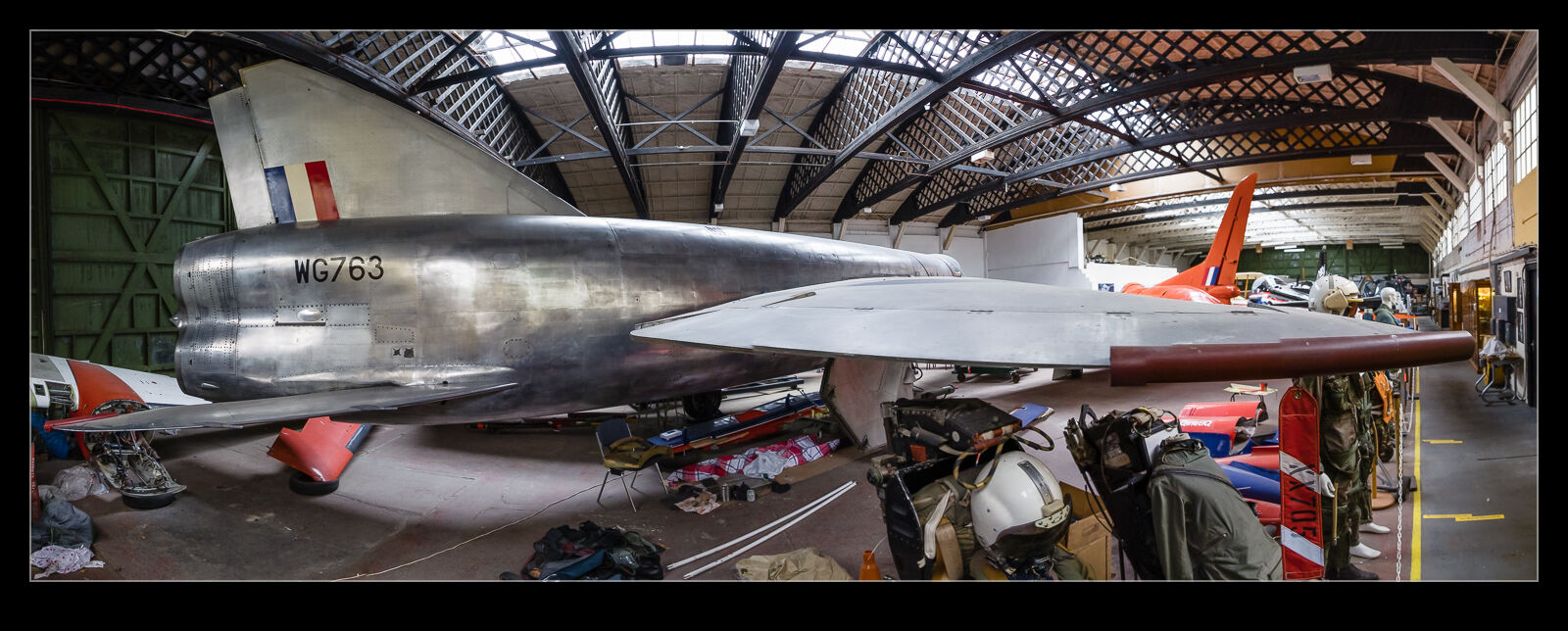
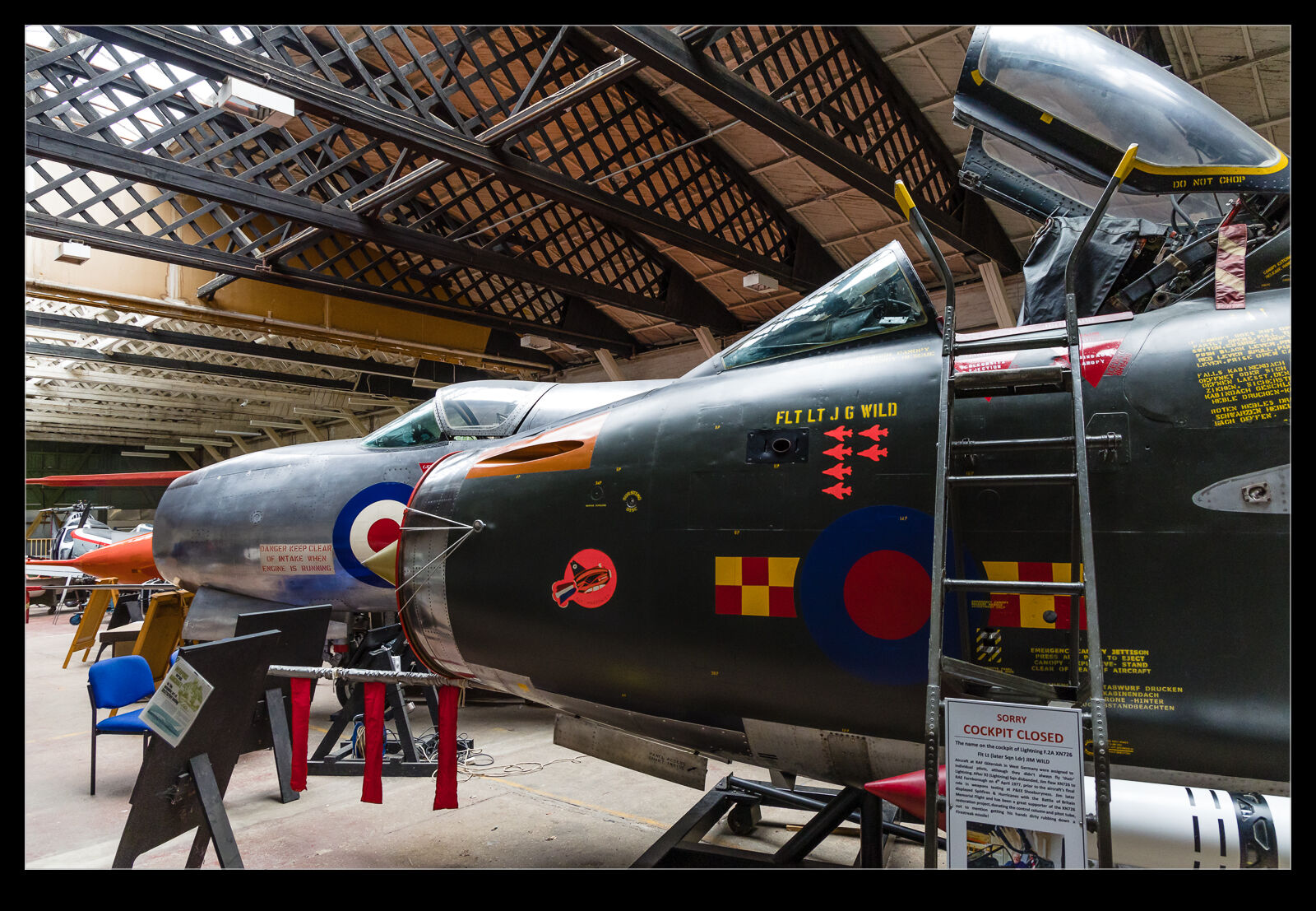
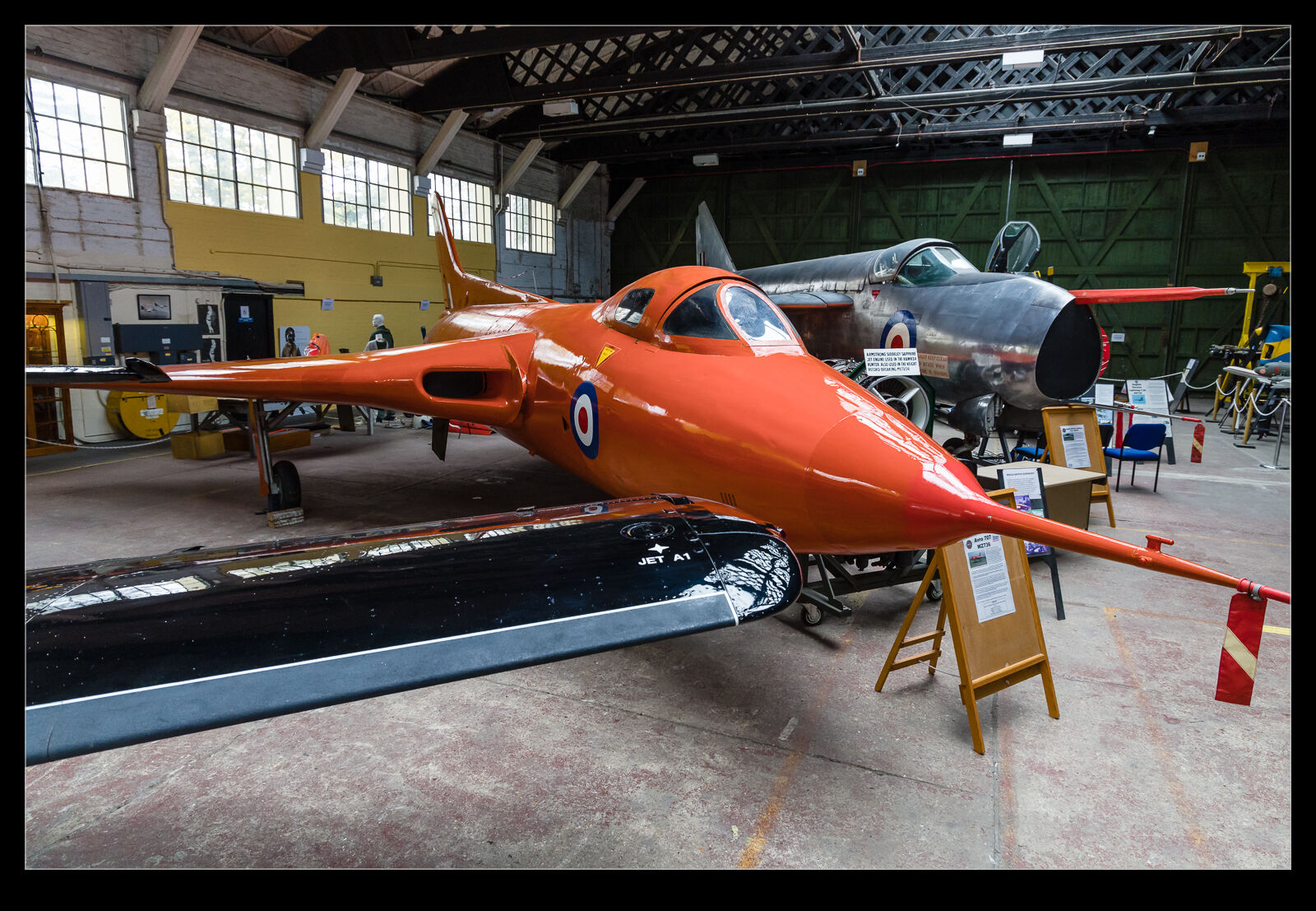
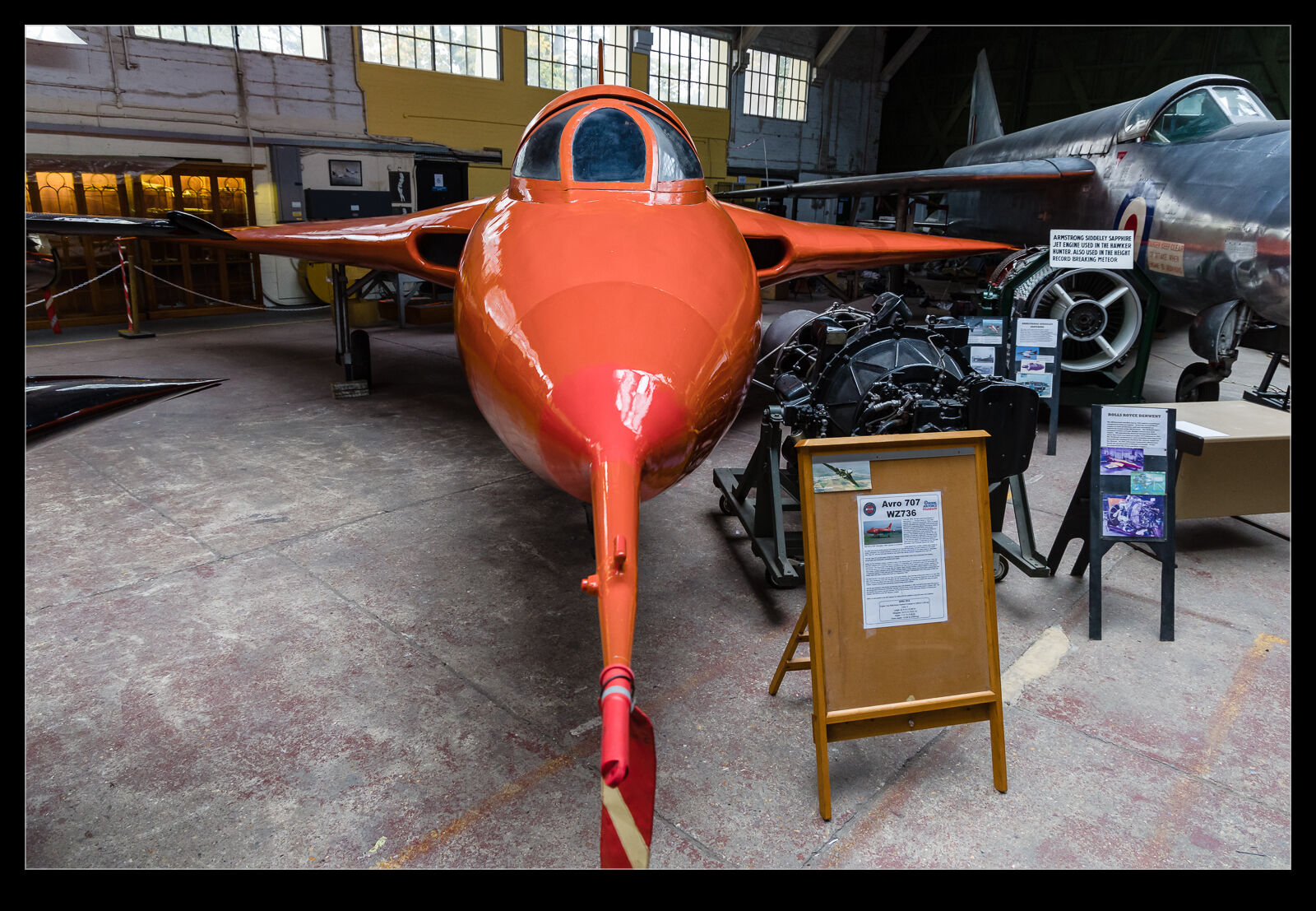
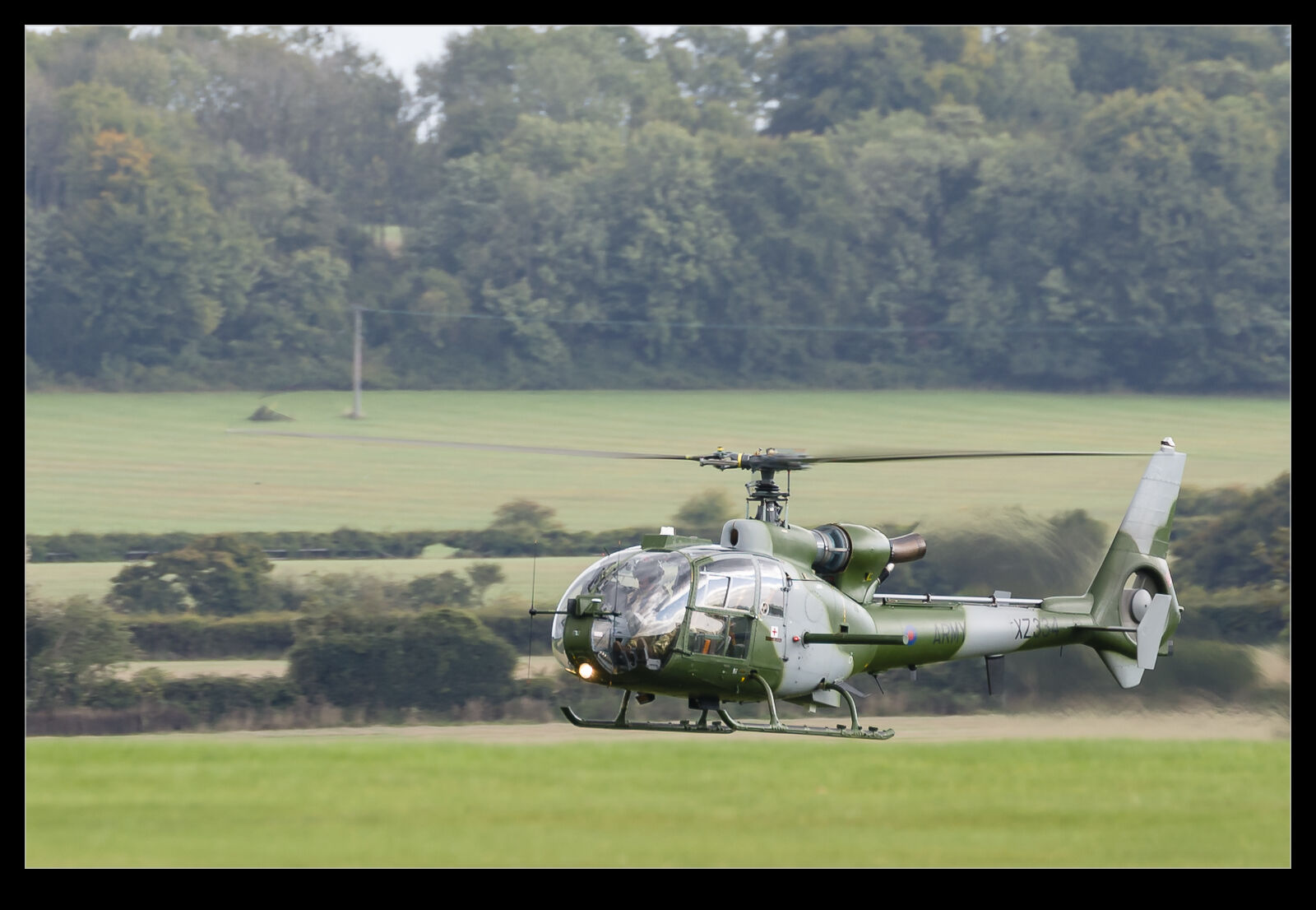
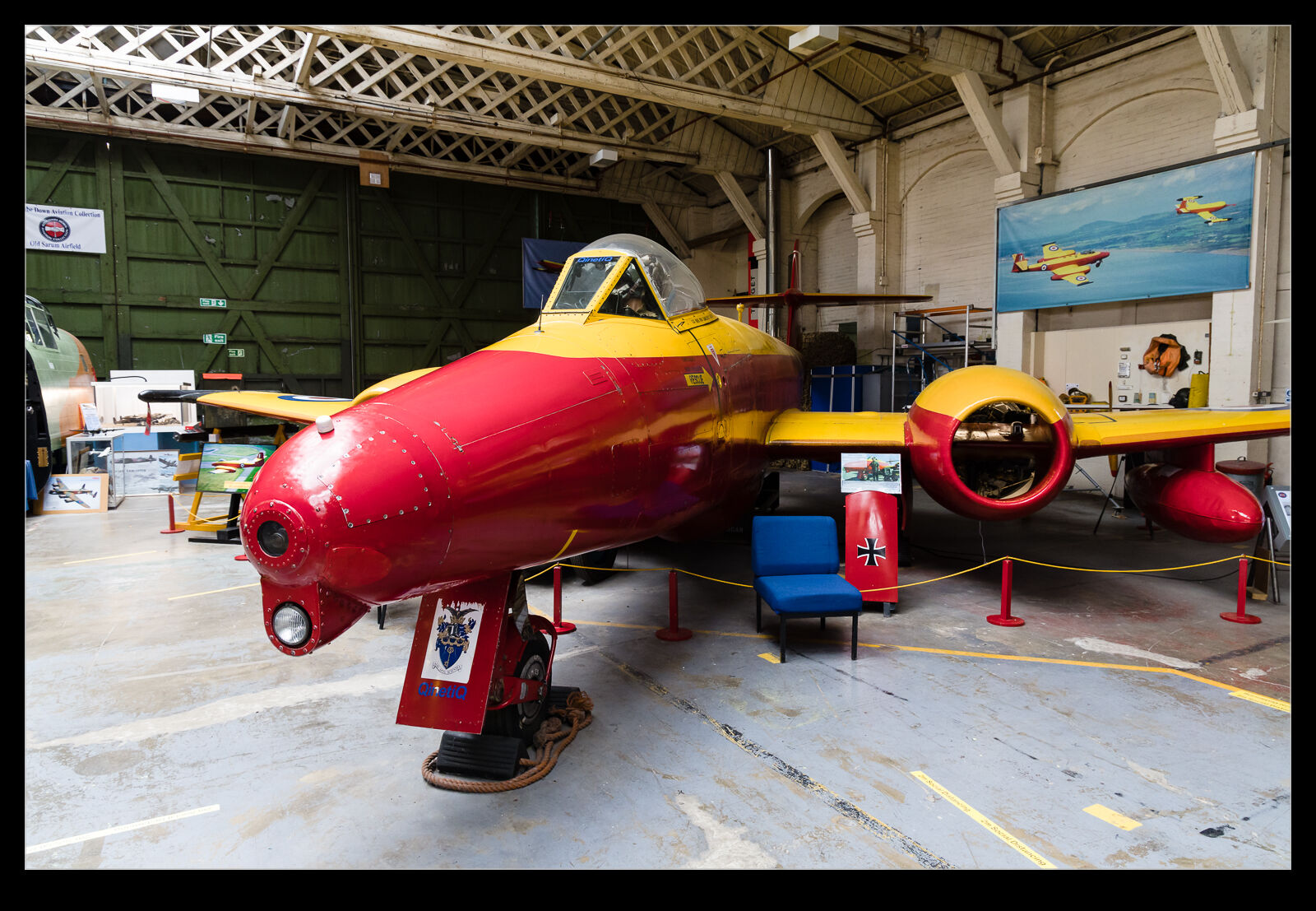
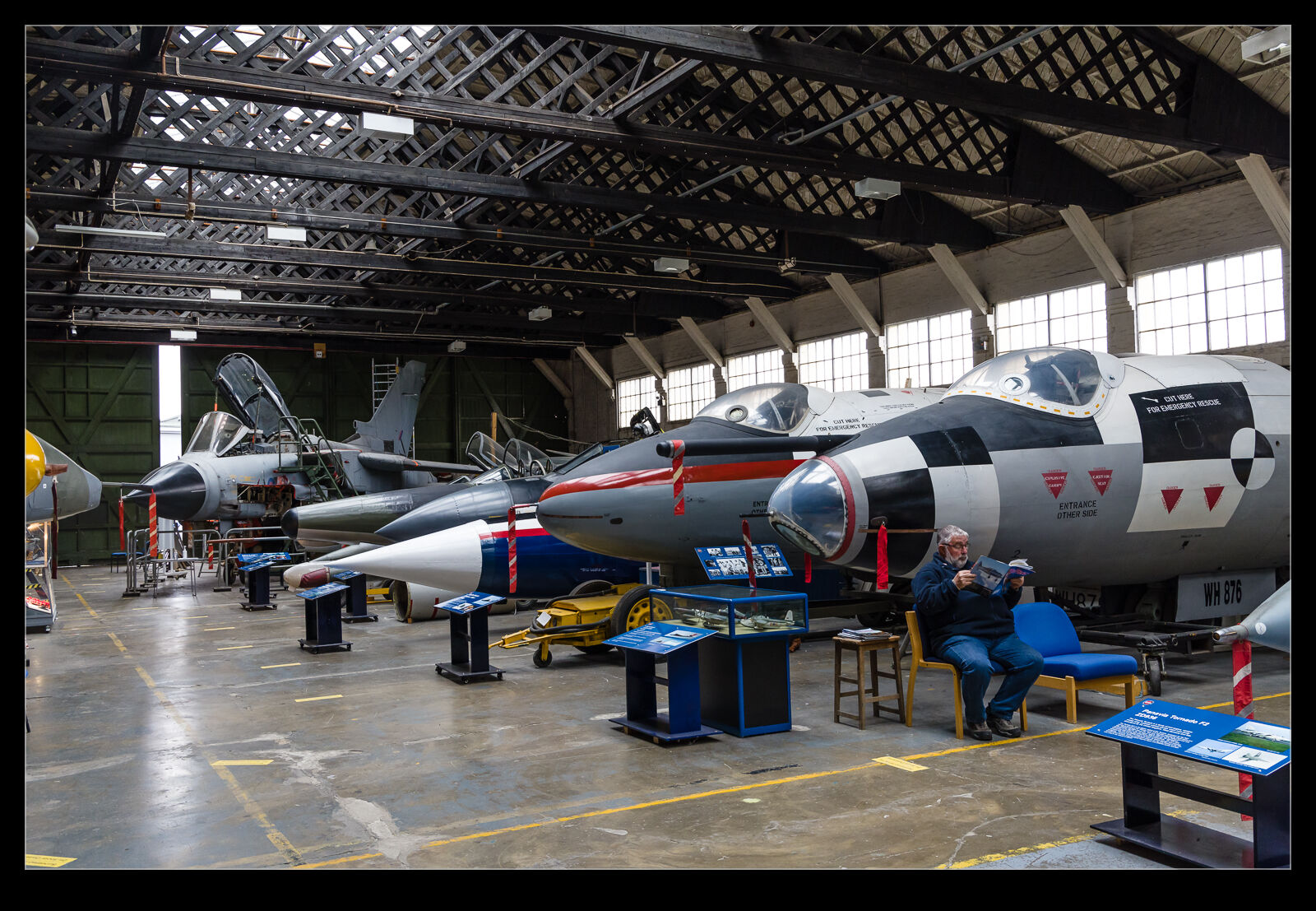
 Middle Wallop was my first aviation museum of our vacation but there was a second. I didn’t have a lot of time but, with a small gap in the schedule and a very accommodating wife, we headed to Old Sarum, home of the Boscombe Down Aviation Collection. For those not familiar with UK military aviation, Boscombe Down is the center of military test in the UK and has a variety of unusual aircraft that are used for test duties and test pilot training.
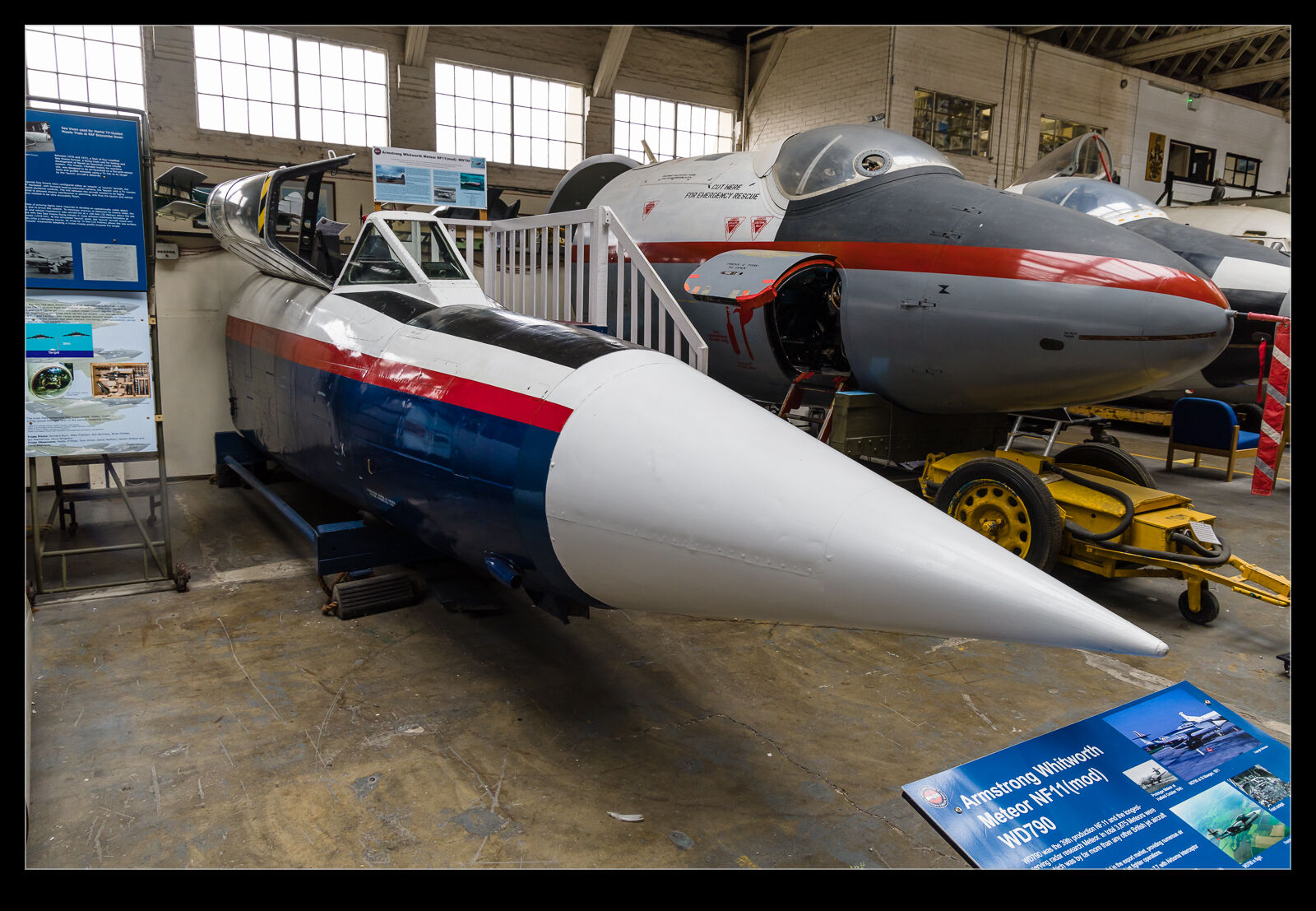
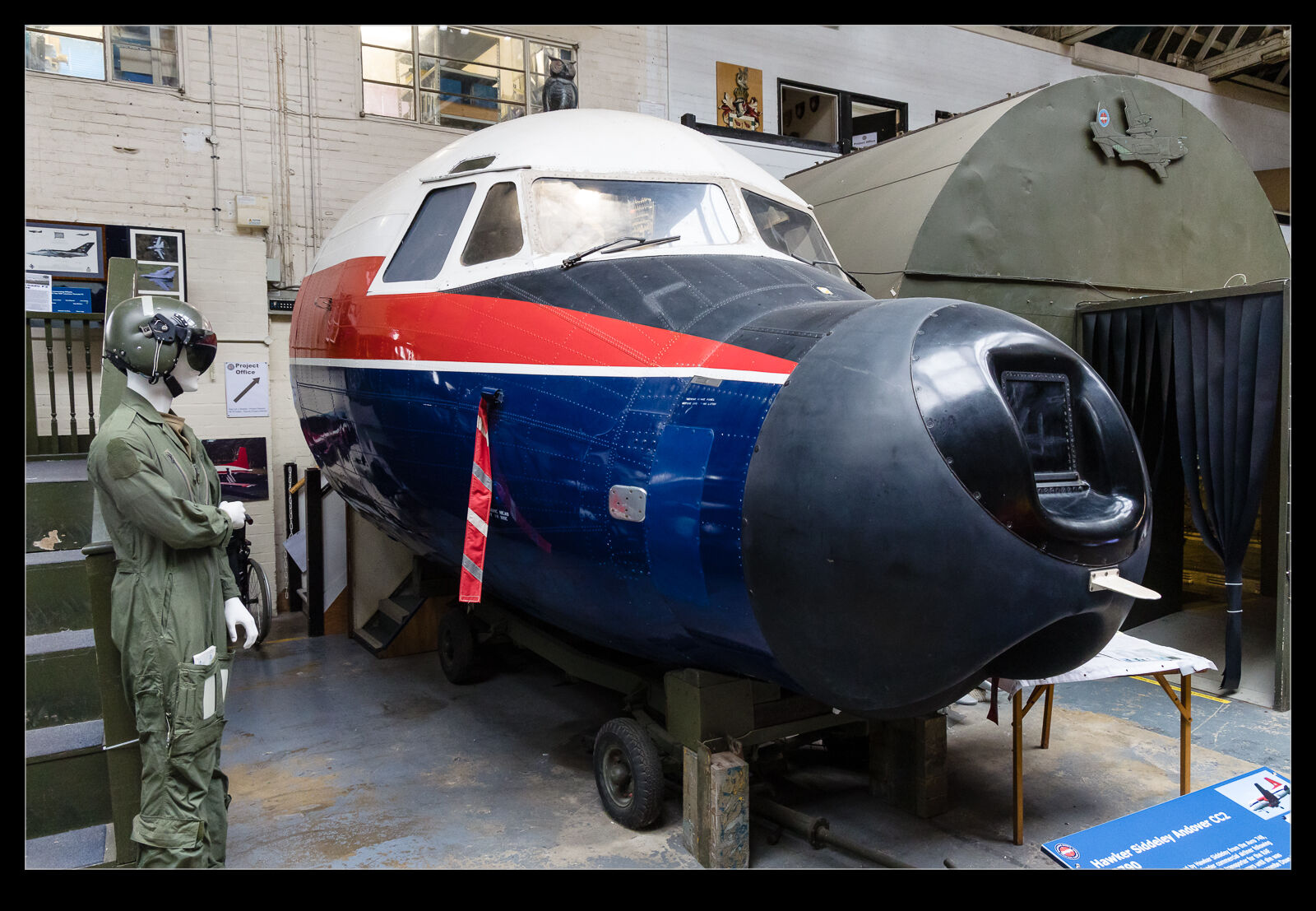
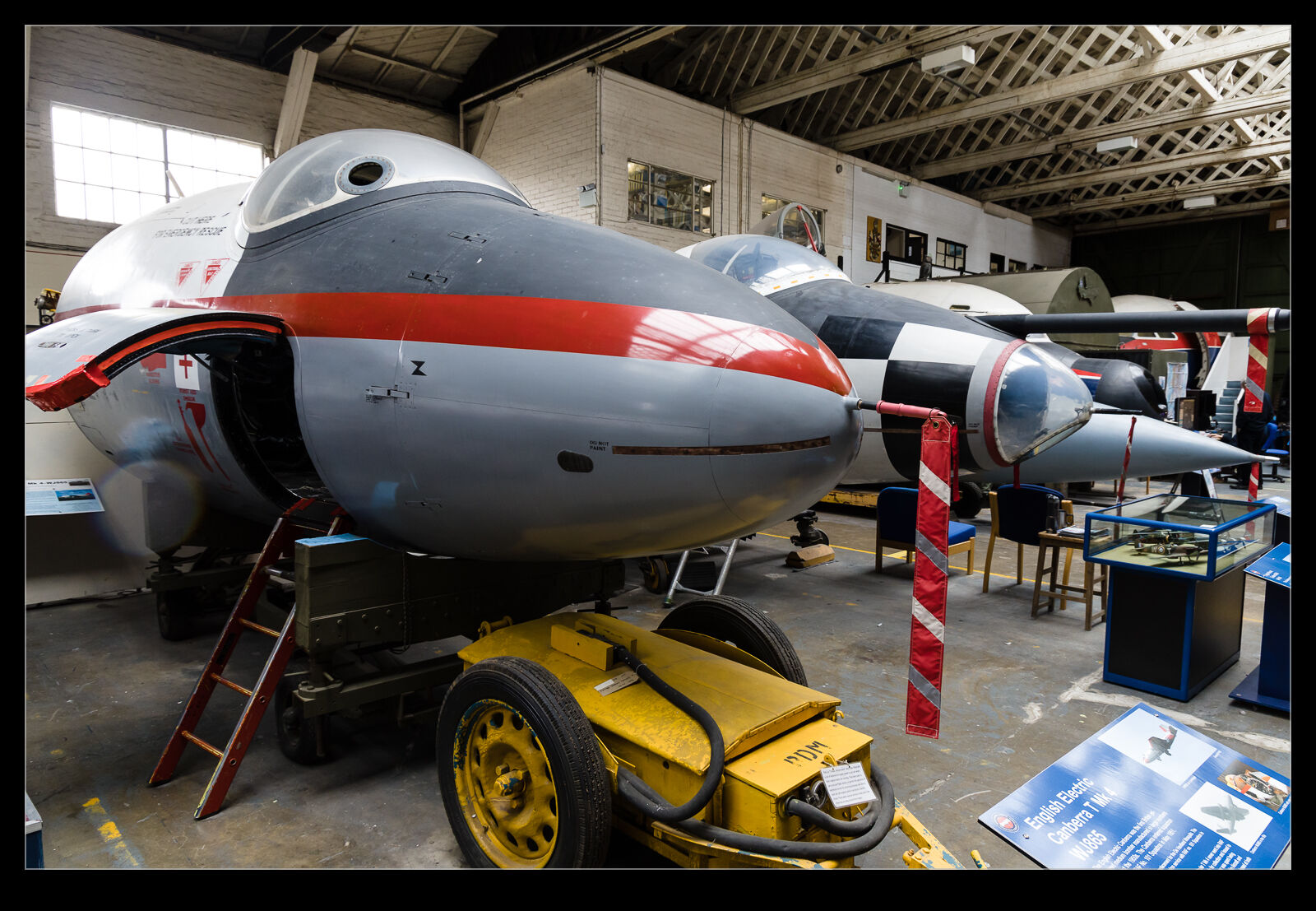 The weather was dismal but the vintage hangars meant I could stay dry (although there were a couple of exhibits outside including a Hunter and the nose of a Comet). The collection is full of interesting items. There are whole airframes and cockpit sections from others. The cockpits are all accessible and, if I had been there longer, I would probably have got in to some of them. However, time was tight and hopping in wasn’t that important to me. There were a variety of Canberra front fuselages and a Sea Vixen. Some of the exhibits are special enough to justify their own posts so those will come in due course. The stories of restoration of the airframes were pretty interesting too and a lot of good work had been done to preserve them. (As an aside, the one thing I was a little disappointed in was the painting of the aircraft. The colors and markings seemed inaccurate which seemed at odds with the great efforts made in to earth respects.)
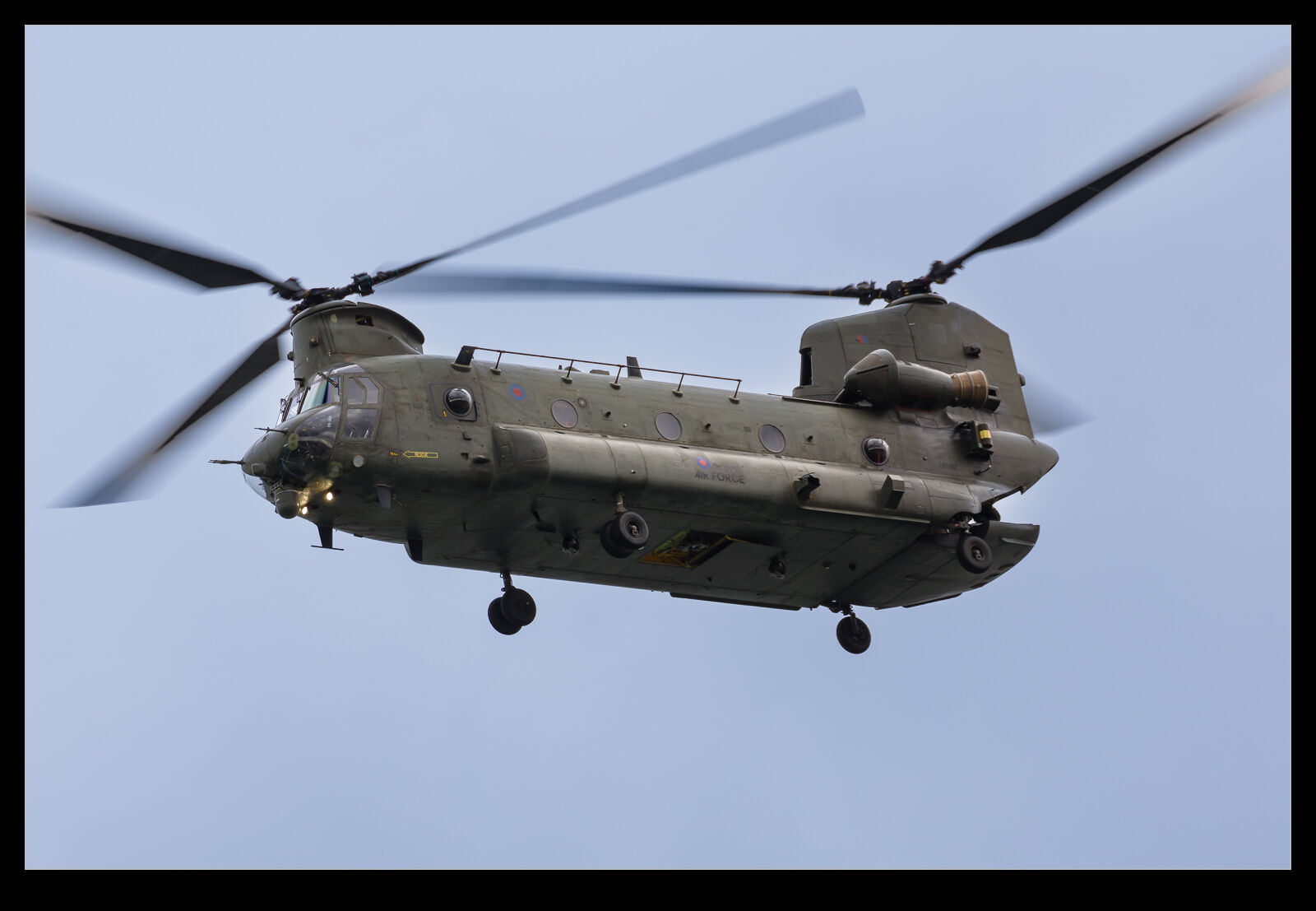
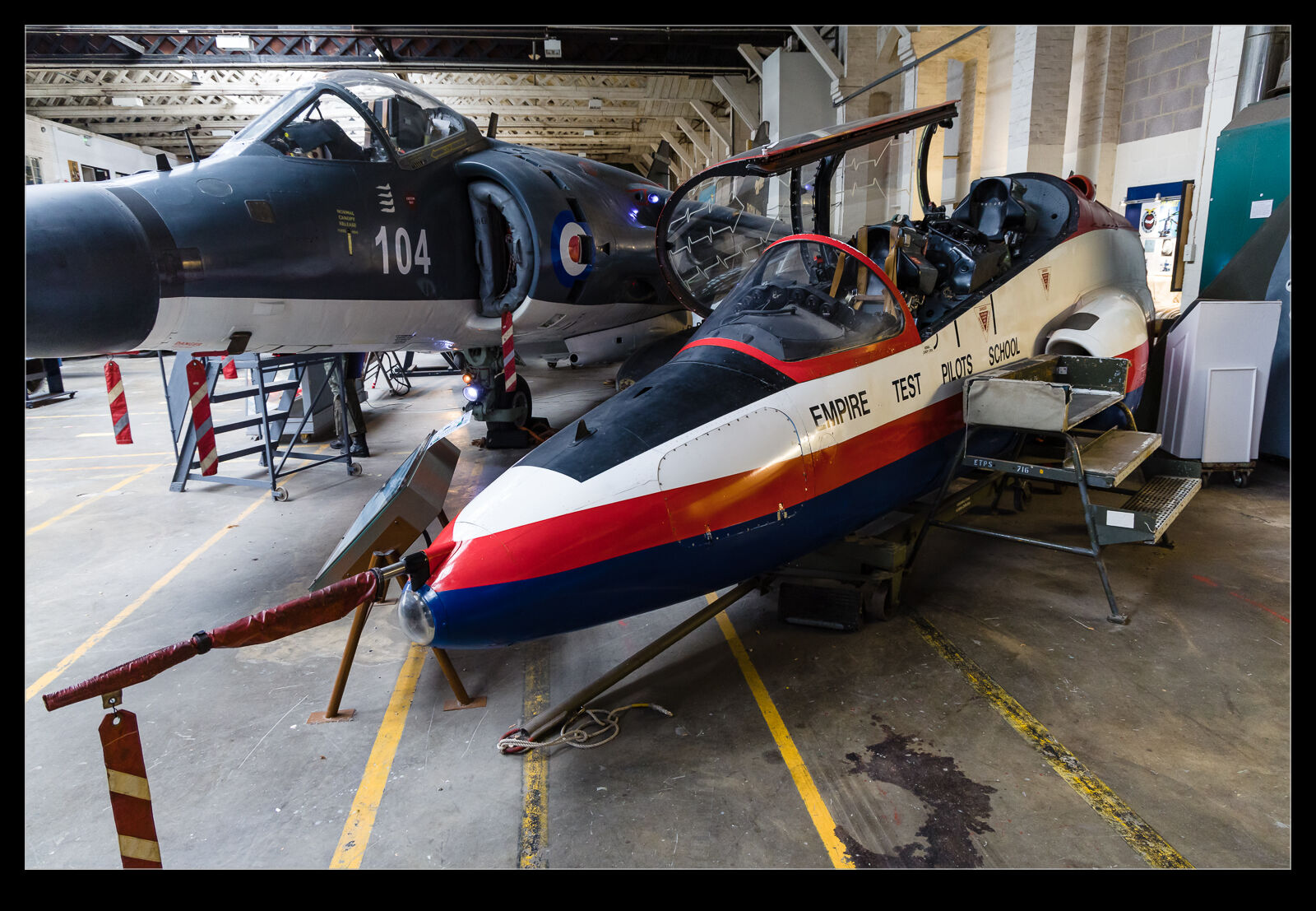
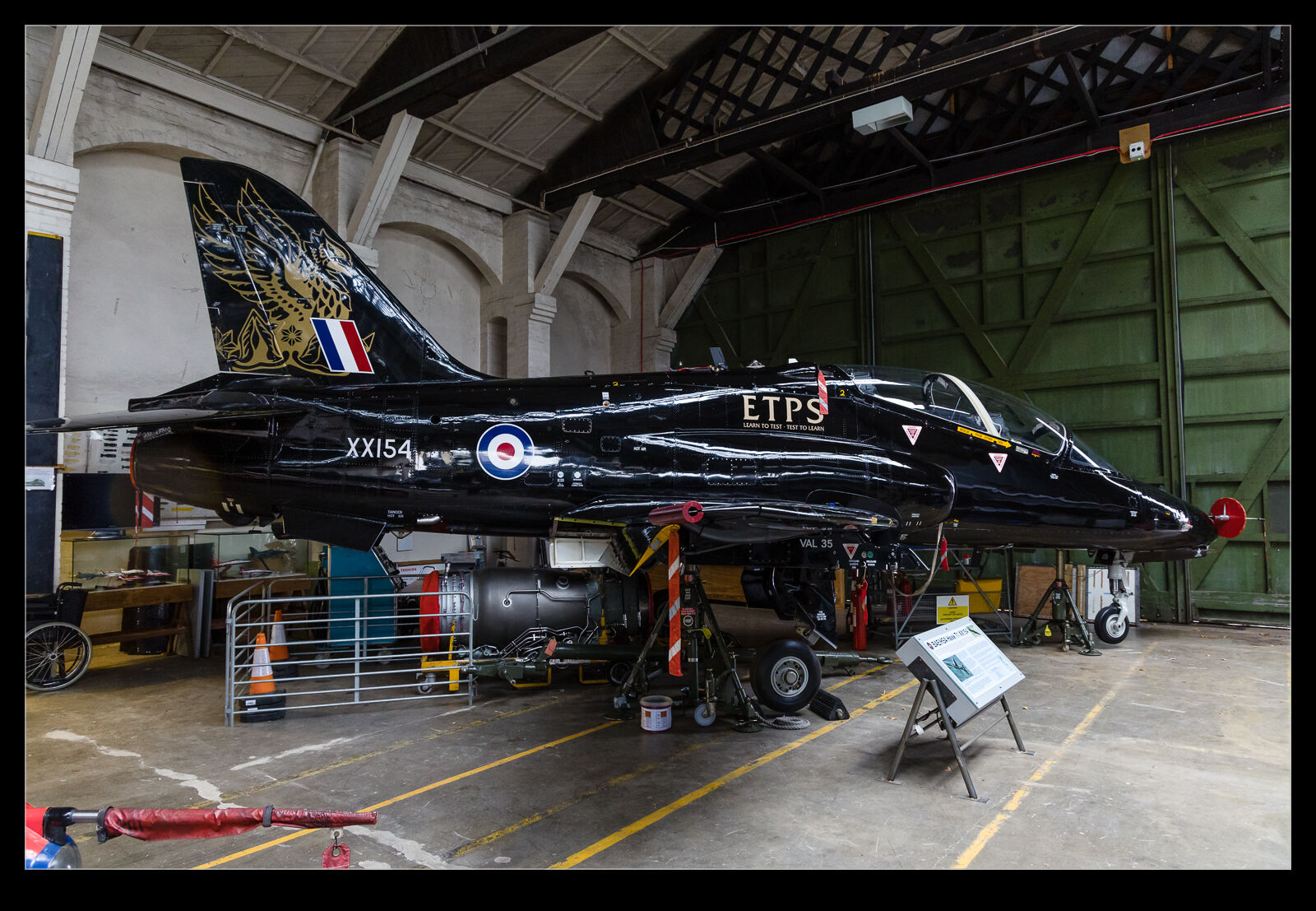 A Sea Harrier was on display as was a Jaguar. One of the highlights for me was Hawk XX154. This is the first Hawk built and one that had a full career in test duties ending up at Boscombe. It was moved to Old Sarum by the RAF with a Chinook lifting it across as a training exercise. It is displayed in its final gloss black finish but I will always think of it in red and white. There is also a front fuselage from one of the ETPS Hawks that was written off in an accident.
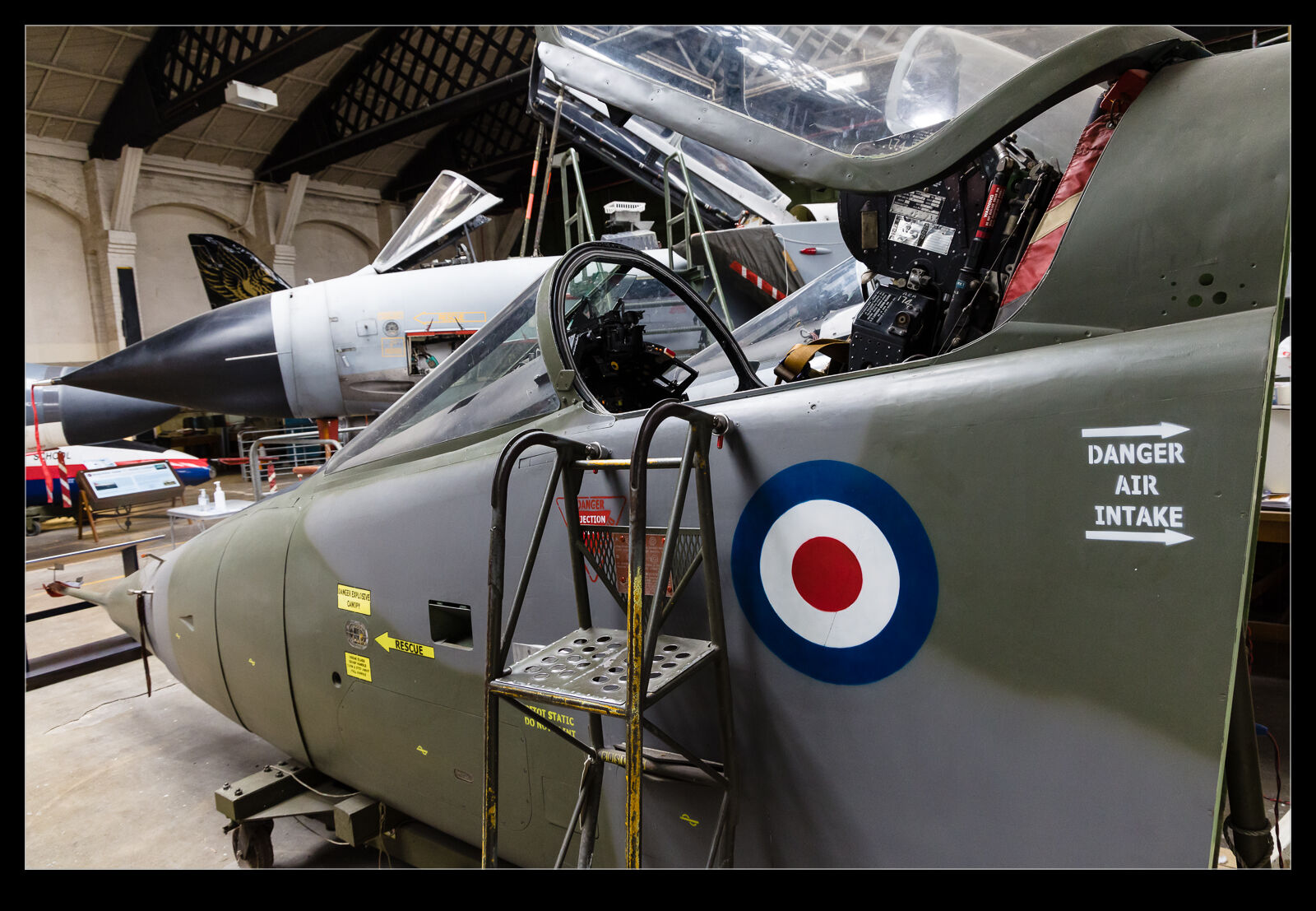
 So much variety of exhibits and definitely a top place to visit if you like military aviation. The nice thing is that the airframes are unusual in their configuration and history. They tend not to be regular squadron jets so give extra to learn about. I would love to go back again some time.
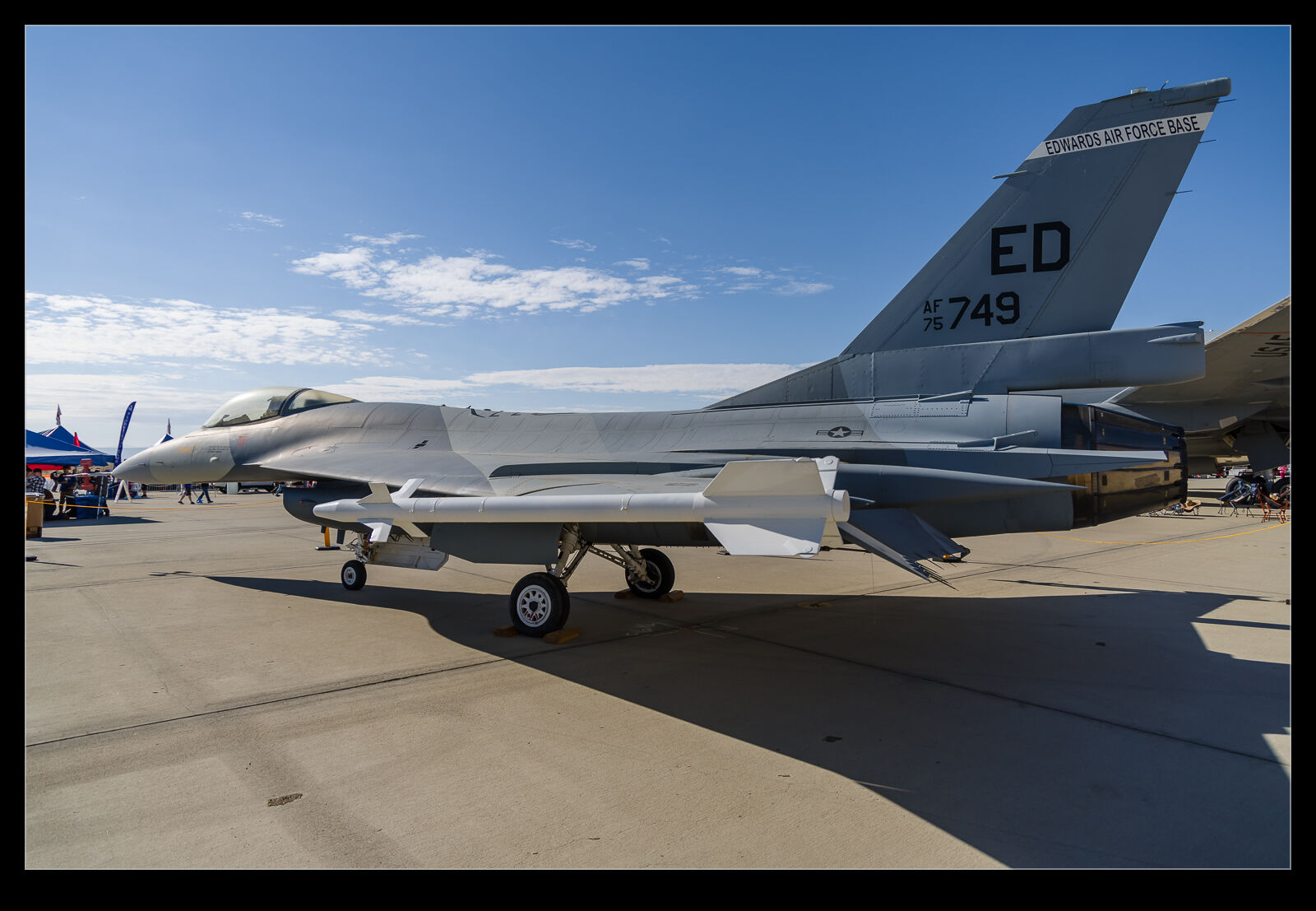
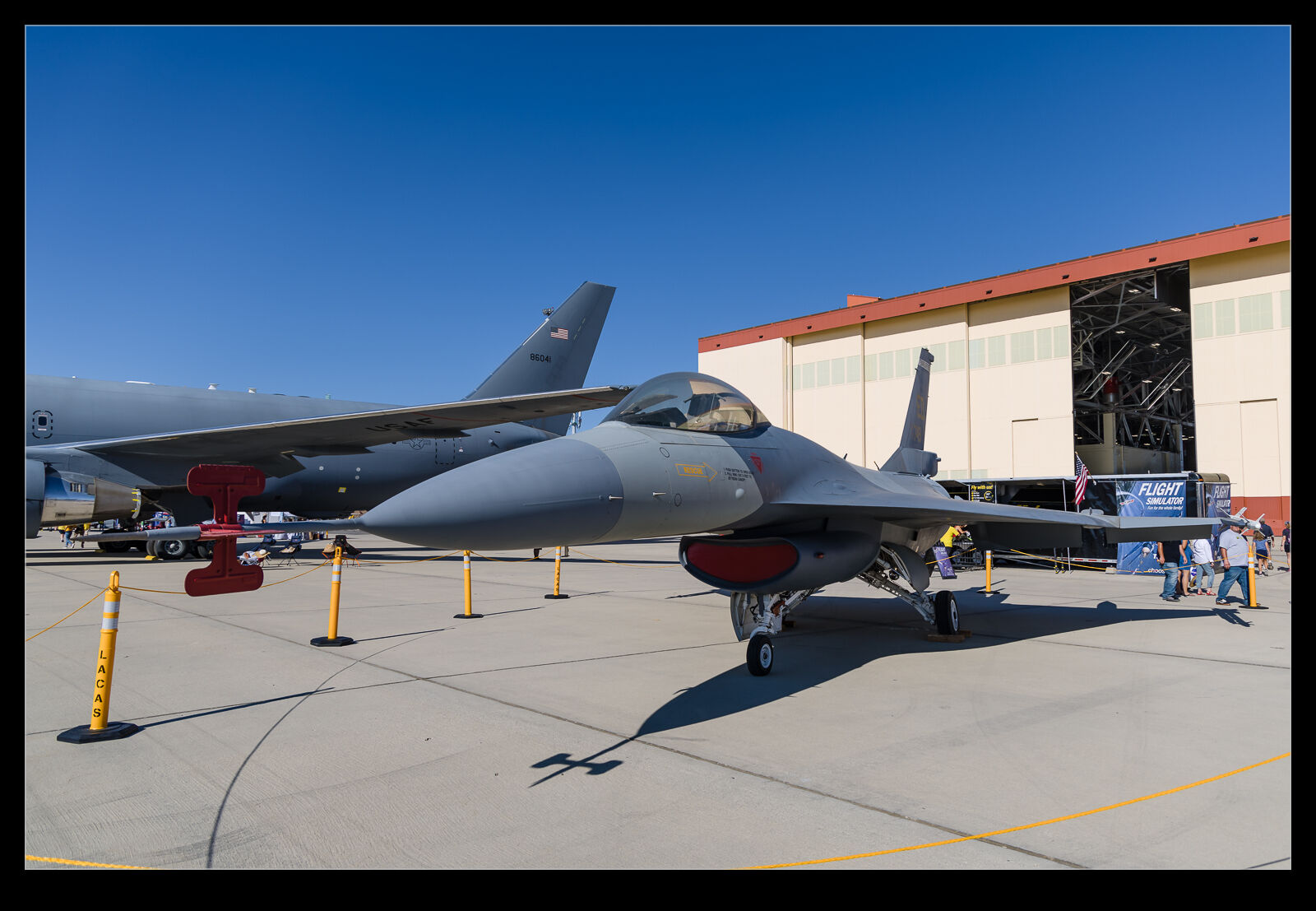 There was a grey camo F-16 on the ramp at the air show at Edwards this year. When I saw it I was really excited but I think I was in the minority. I mentioned to a photographer next to me how cool it was and he commented on the air data boom. I told him it was an F-16XL and he had no idea what that was. The XL was the long range strike version of the F-16 that went up against and lost to the F-15E Strike Eagle. Two jets were built and they ended up having some test duties including so work for NASA. The single seater was the jet on the ramp for the show.
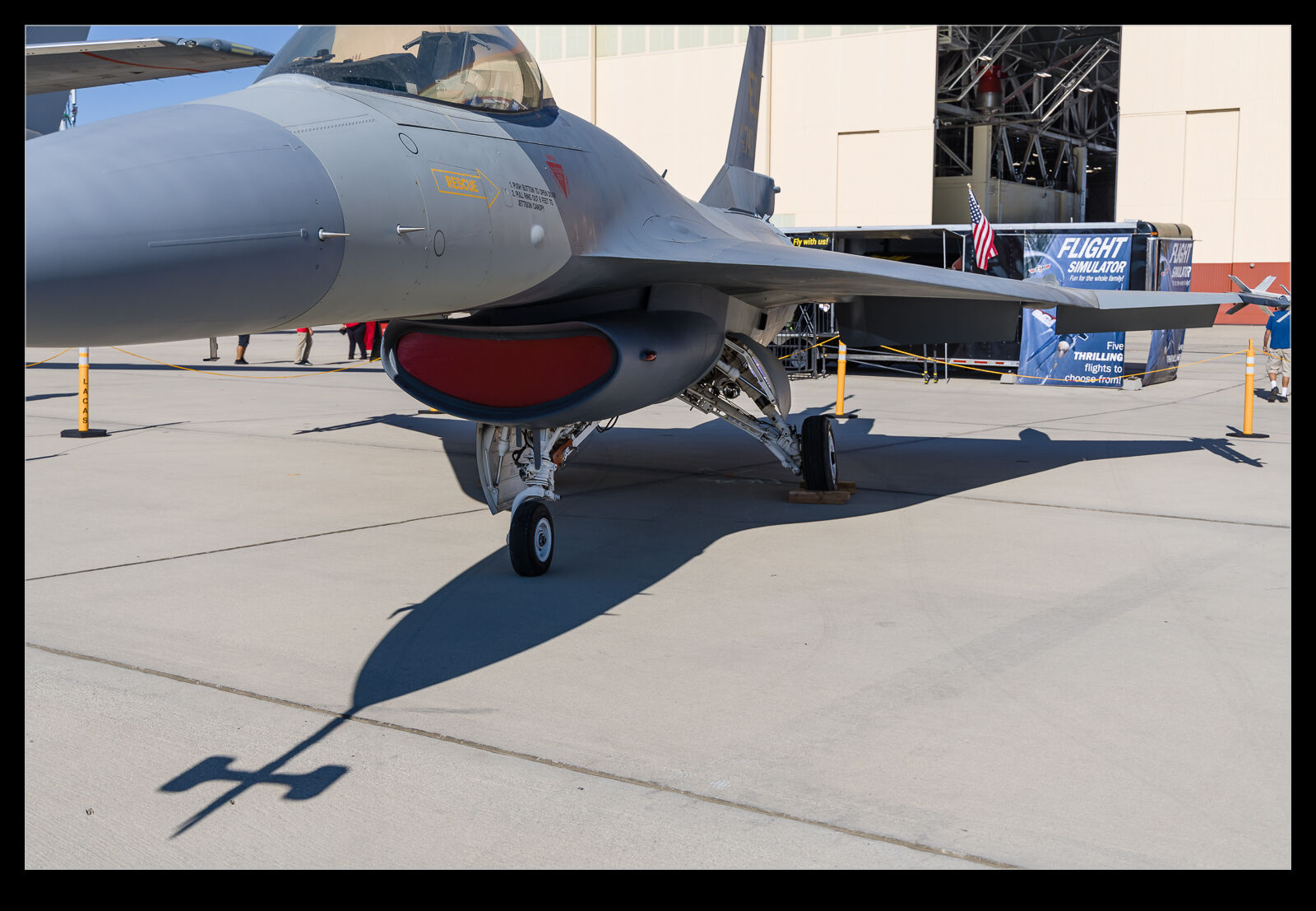 It has a large cranked delta wing but, from a normal viewpoint, that can be seen but isn’t obvious. A look at the shadows, though, and you know what you are dealing with. The airframe is an early fiscal number – the next jet became the AFTI aircraft – and the rear fuselage has the mounting points for an anti-spin chute rig. This jet has done a lot in its flying days but it is now a museum piece.