Tag Archives: railway

Duquesne Incline

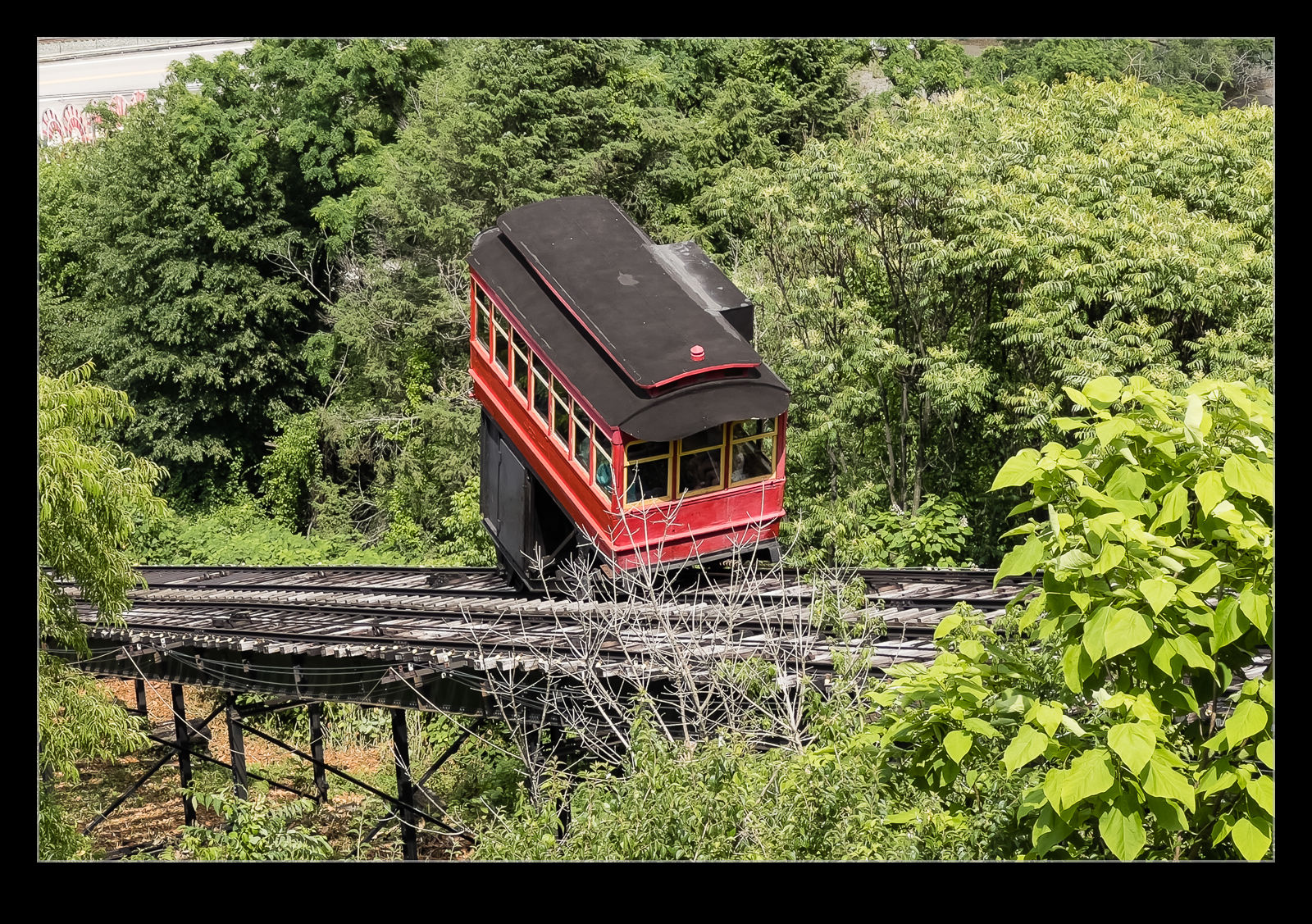
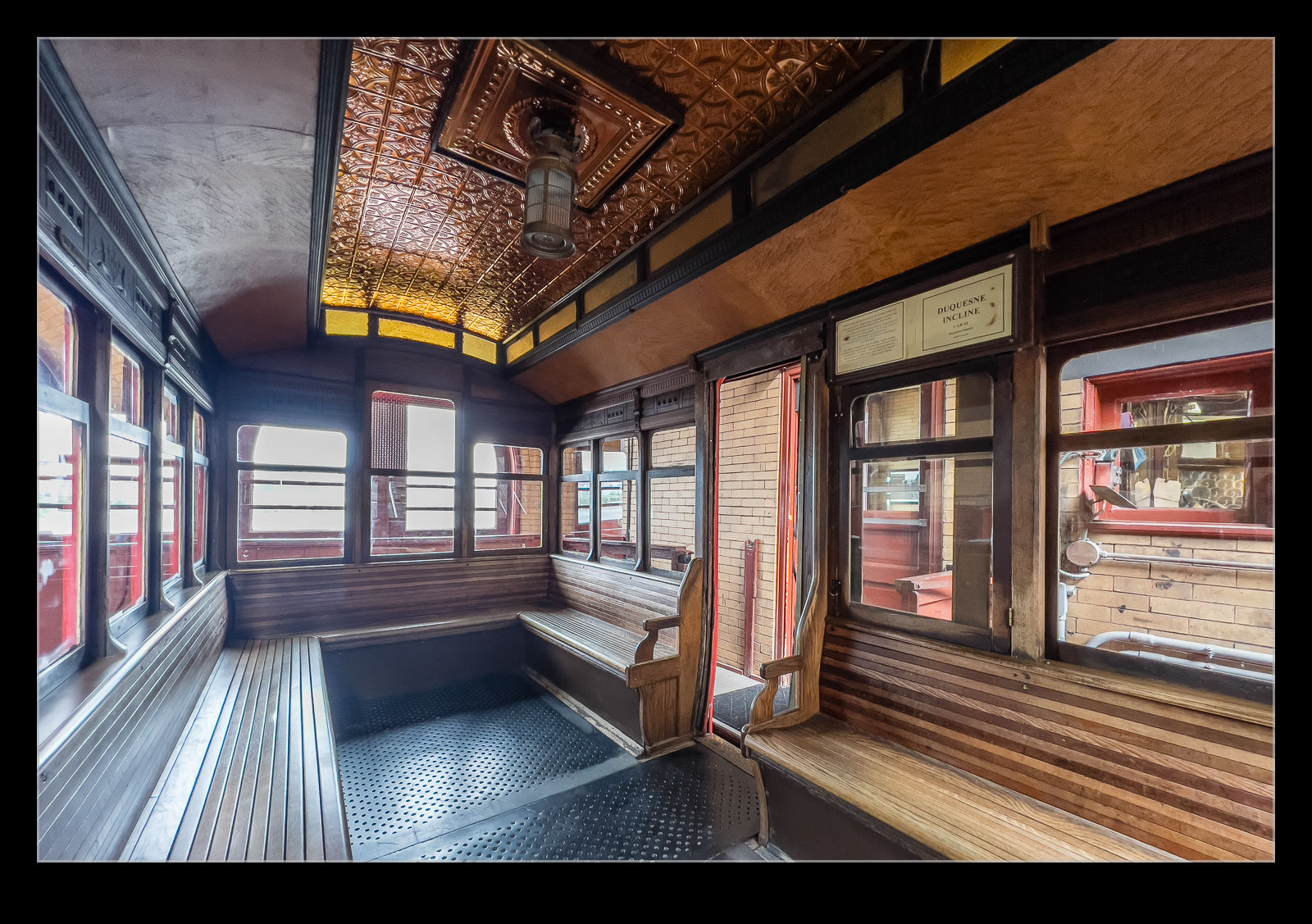
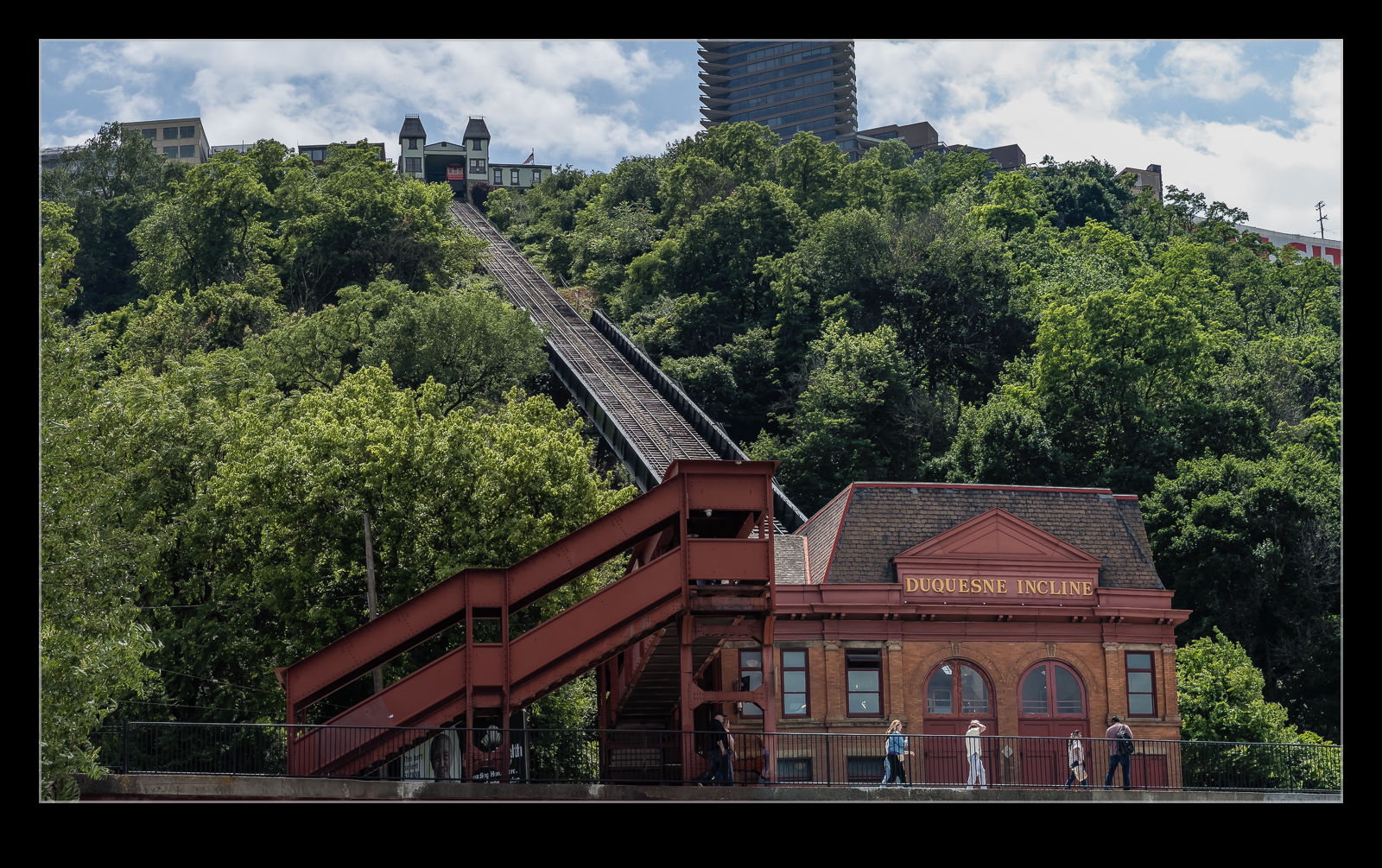
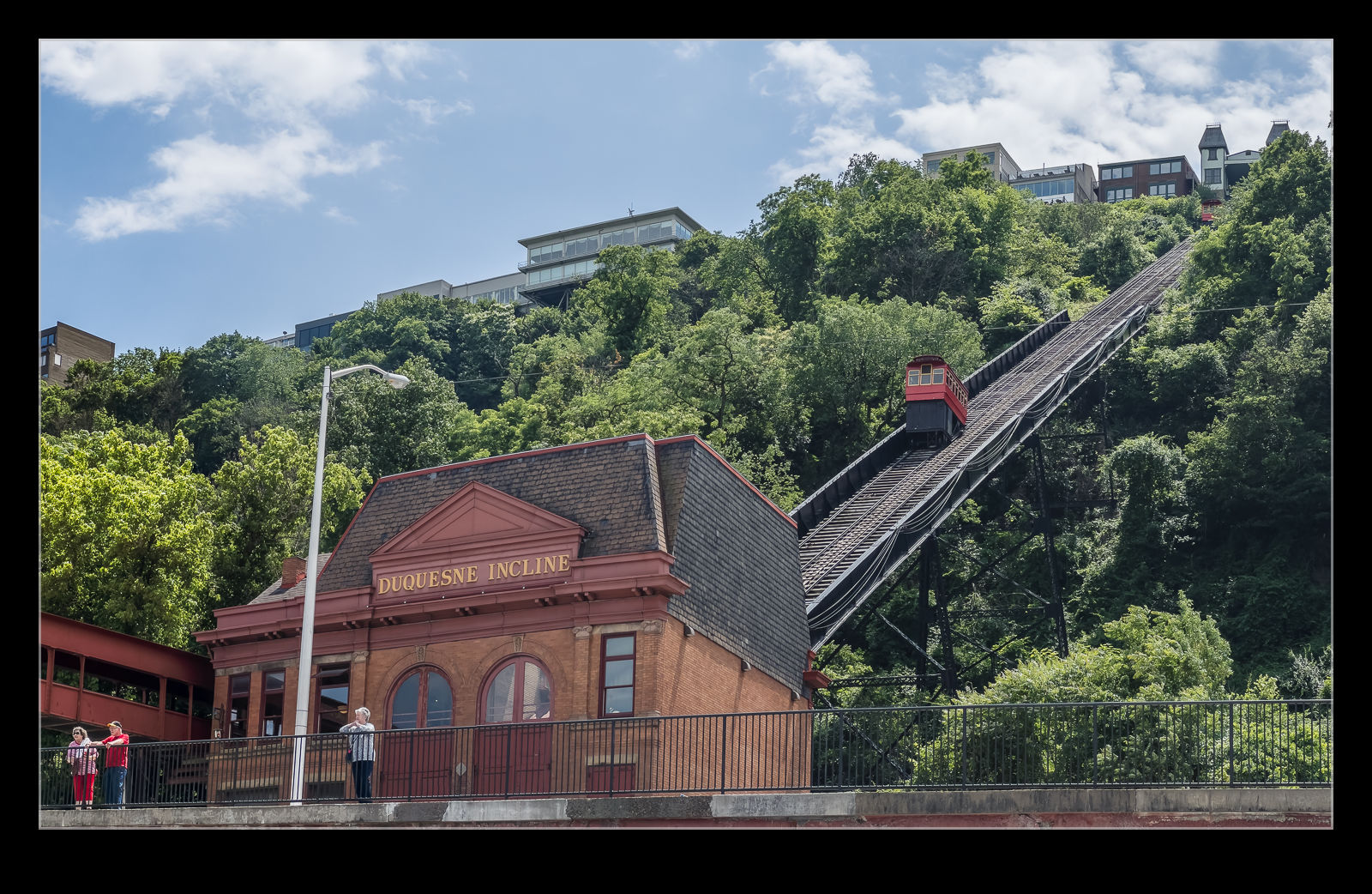
At the end of my recent visit to Pittsburgh, I wrapped up my meetings and had lunch prior to heading to the airport.  I did have about 90 minutes spare and was able to slot in a visit that I had thought about before going but that had slipped my mind for much of the visit when I was tied up with work stuff.  This was to check out one of the incline railways that Pittsburgh has.  Originally, there were twenty of these funicular railways on the hills surrounding Pittsburgh but now just two remain.
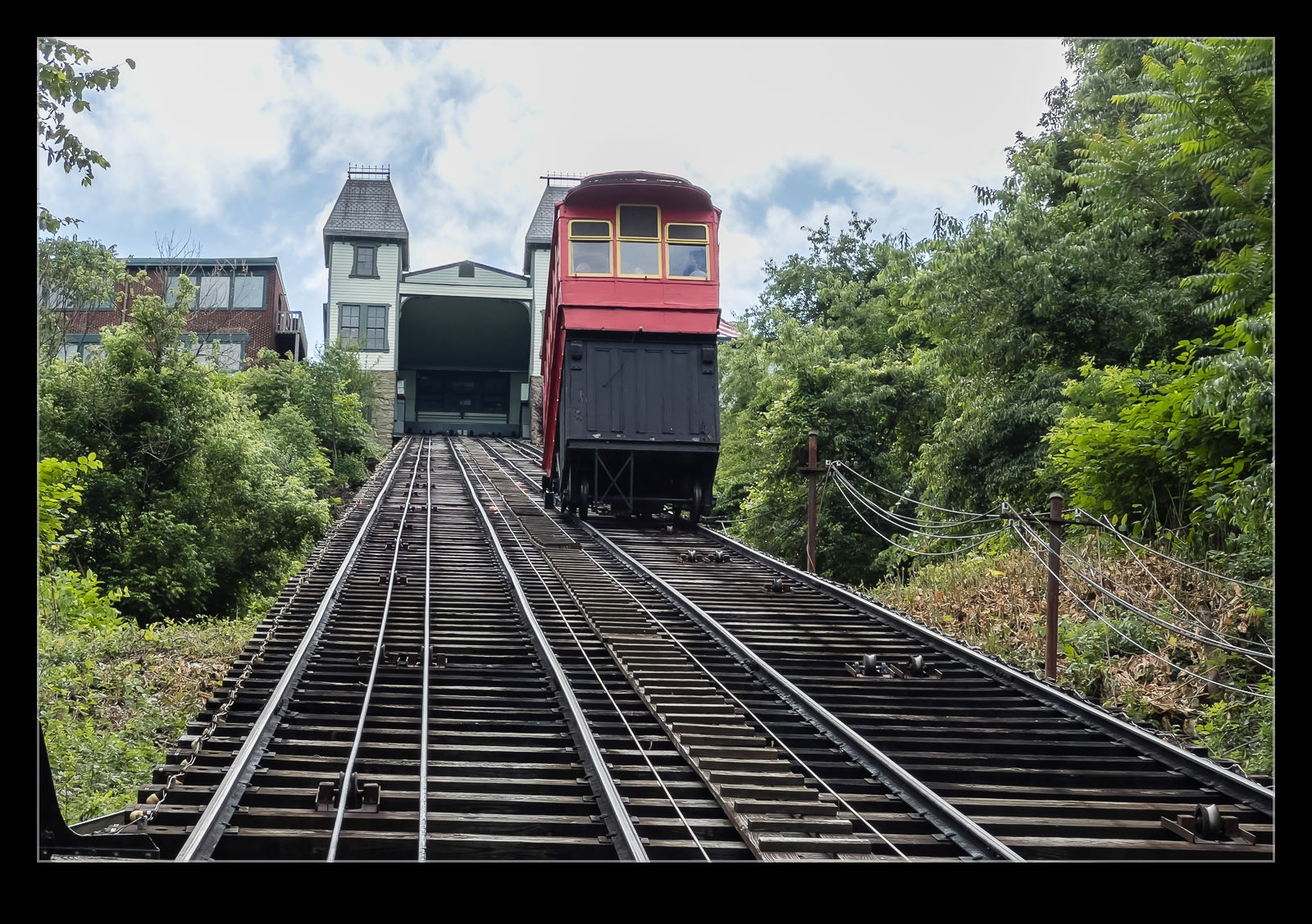
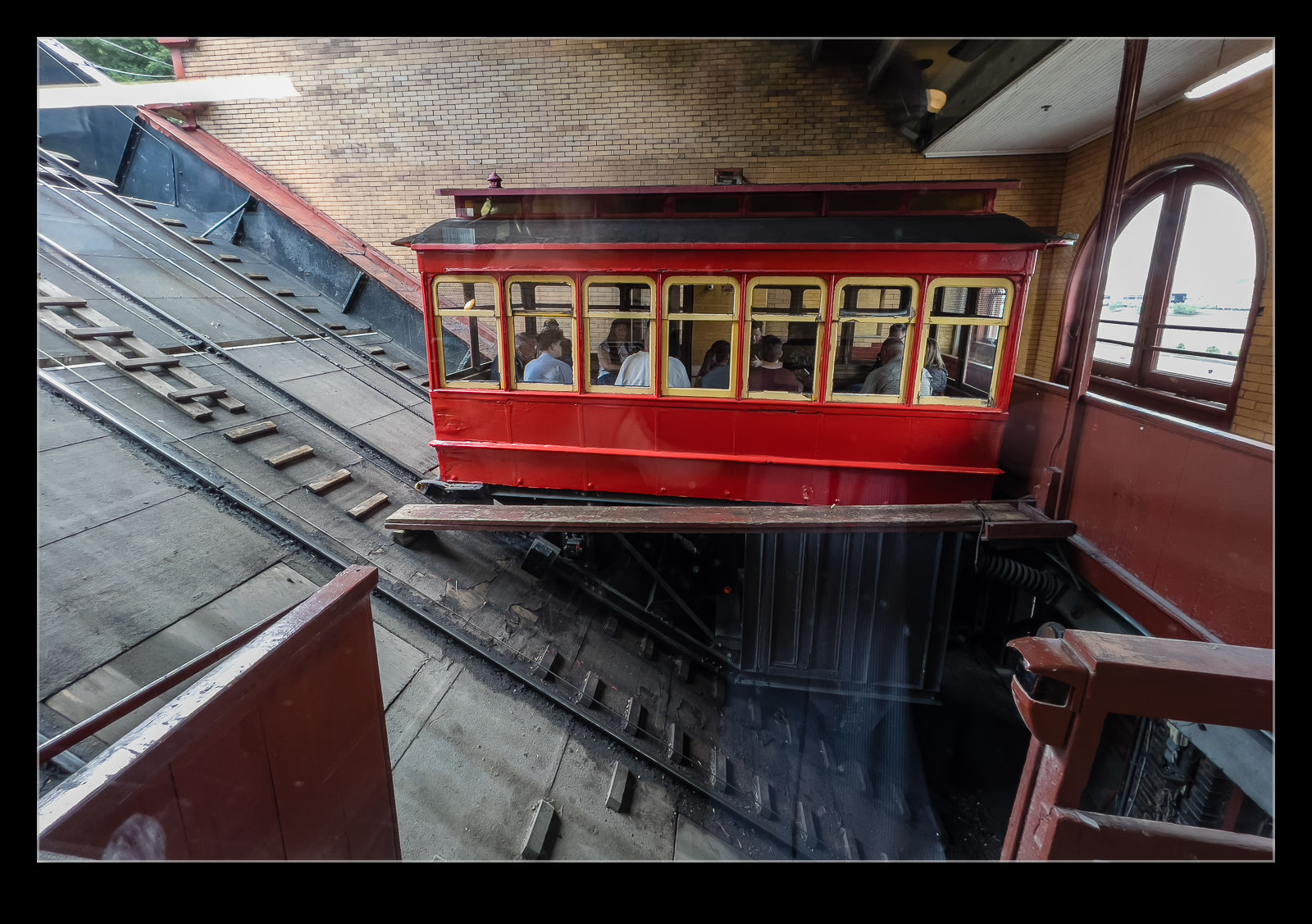
I chose to try the Duquesne Incline.  My Uber driver told me that this was the better one as the view from the top covered the downtown better, but I won’t claim this was an informed choice on my part.  However, I will take being lucky any time.  The incline was built in the late 1800s to get workers from the industrial lands along the rivers to their homes up on the hills overlooking the city.  There are two cars on individual tracks (not all funiculars are configured this way) with a cable connecting them after passing through the equipment room at the top of the hill.  The weight of the cars counterbalances to a reasonable extent so the power required is only what is necessary to overcome any weight differential and the friction of the system.
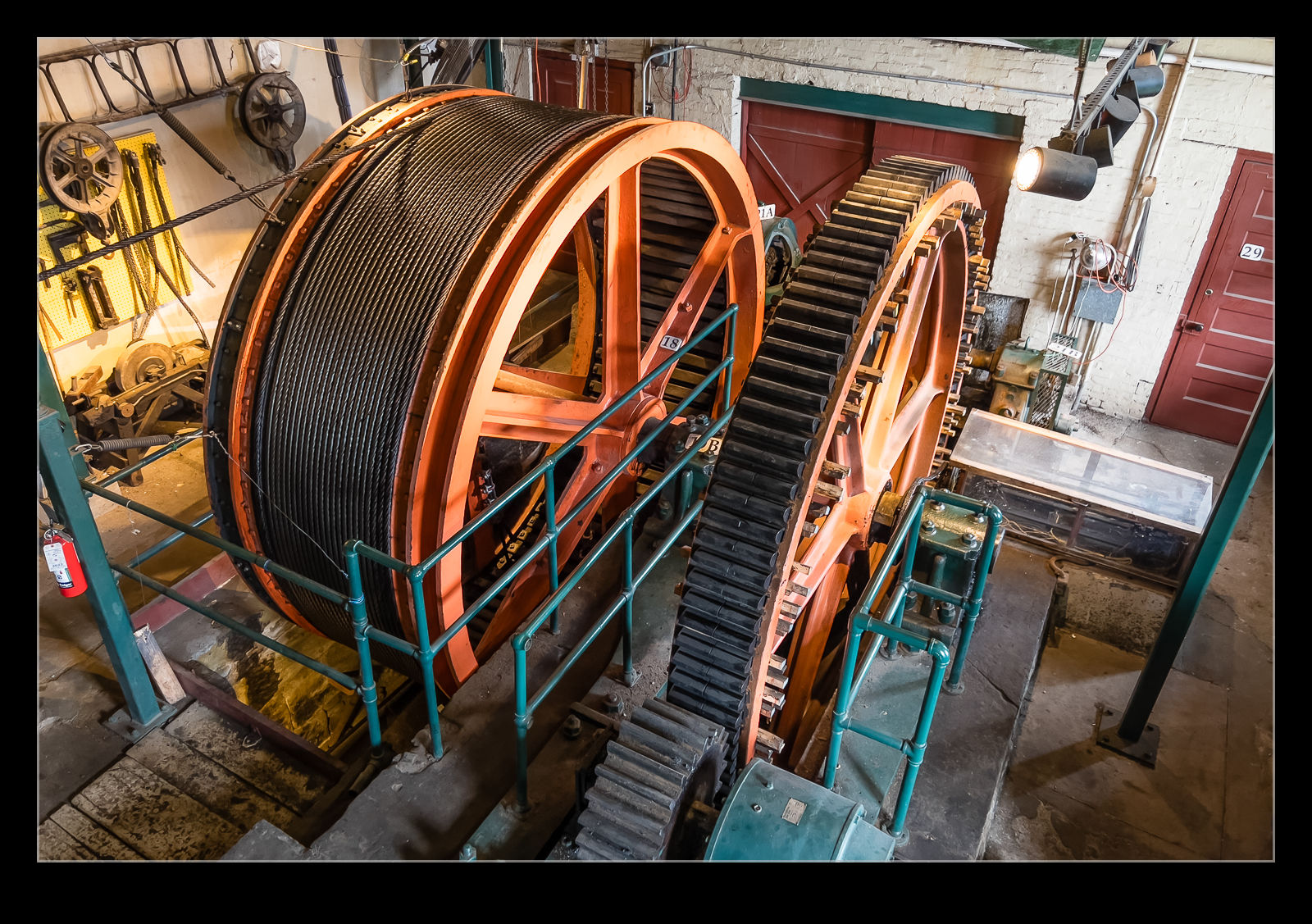
At the top of the hill, you can walk down under the station to see the machinery at work.  The sheaves reminded me of a visit many years ago to the Cable Car Barn in San Francisco.  This is on a smaller scale, of course.  Watching the cars heading up and down the grade was pretty cool and the viewing deck at the top provided a great view across the city.  This is all part of the Pittsburgh transit system so you can use the Incline as a connection to your bus journey if you want.  If you find yourself in Pittsburgh and have a little time, do check out either the Duquesne Incline or the Monongahela Incline.  They are quite something.
Watercress Line

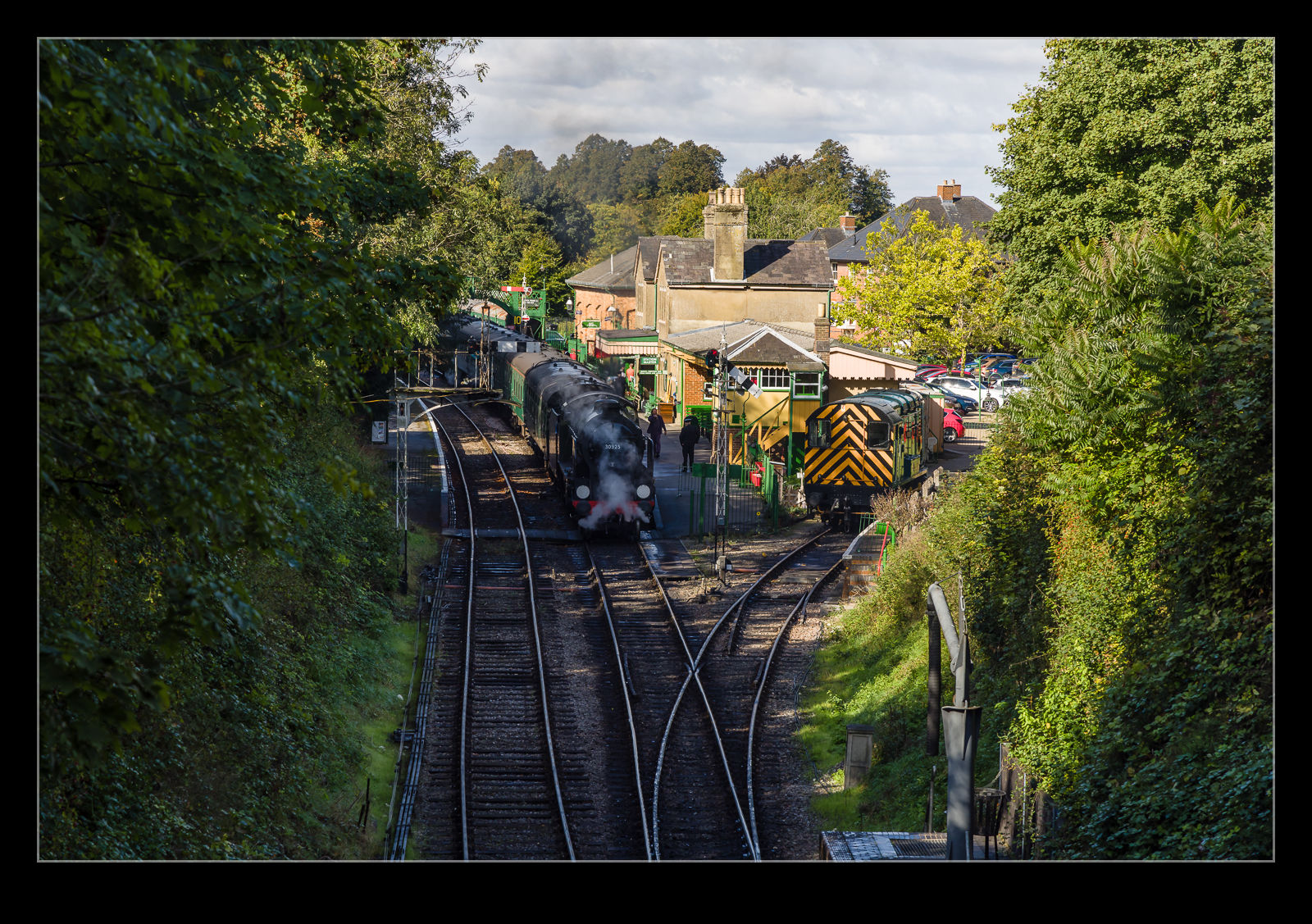
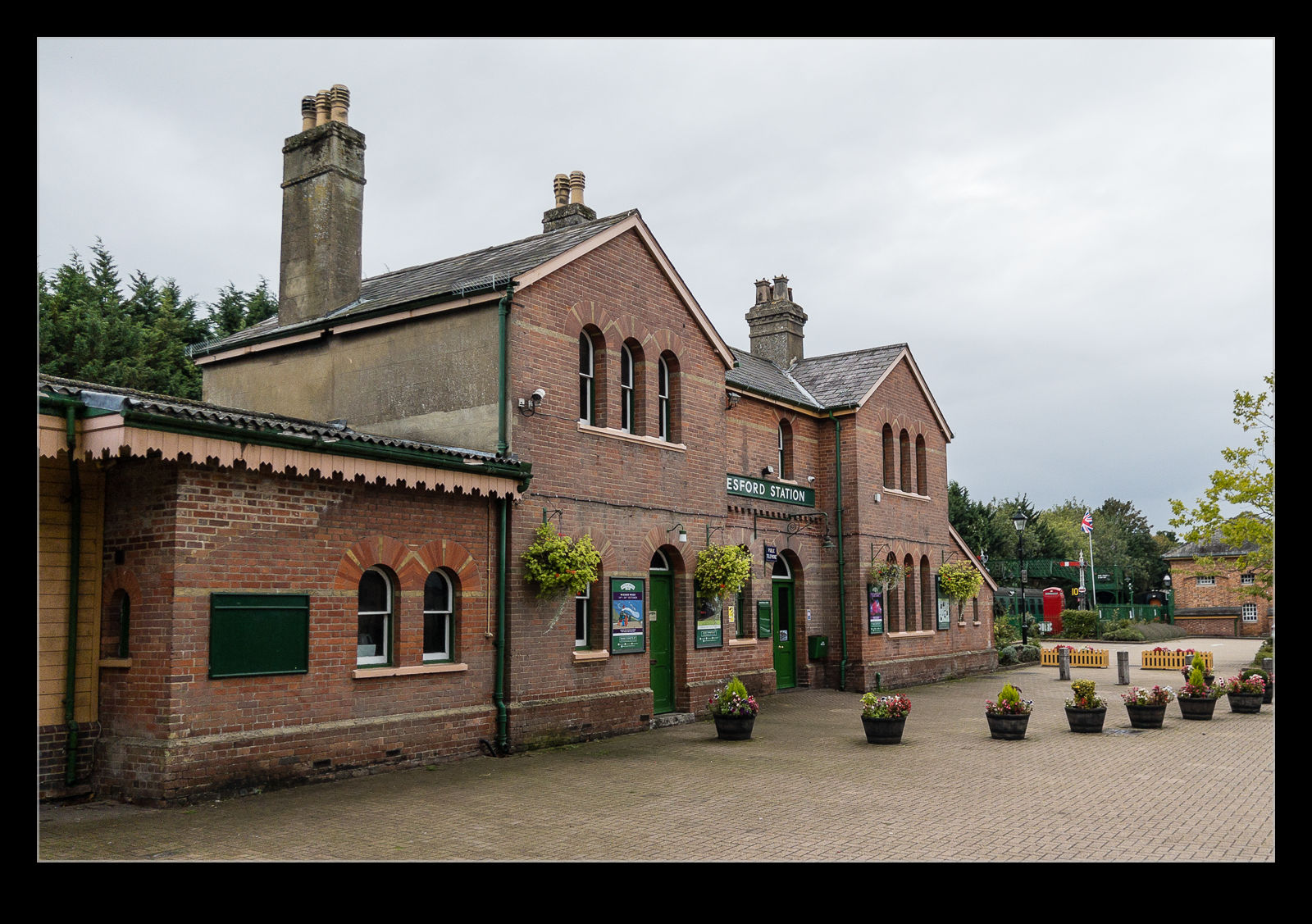
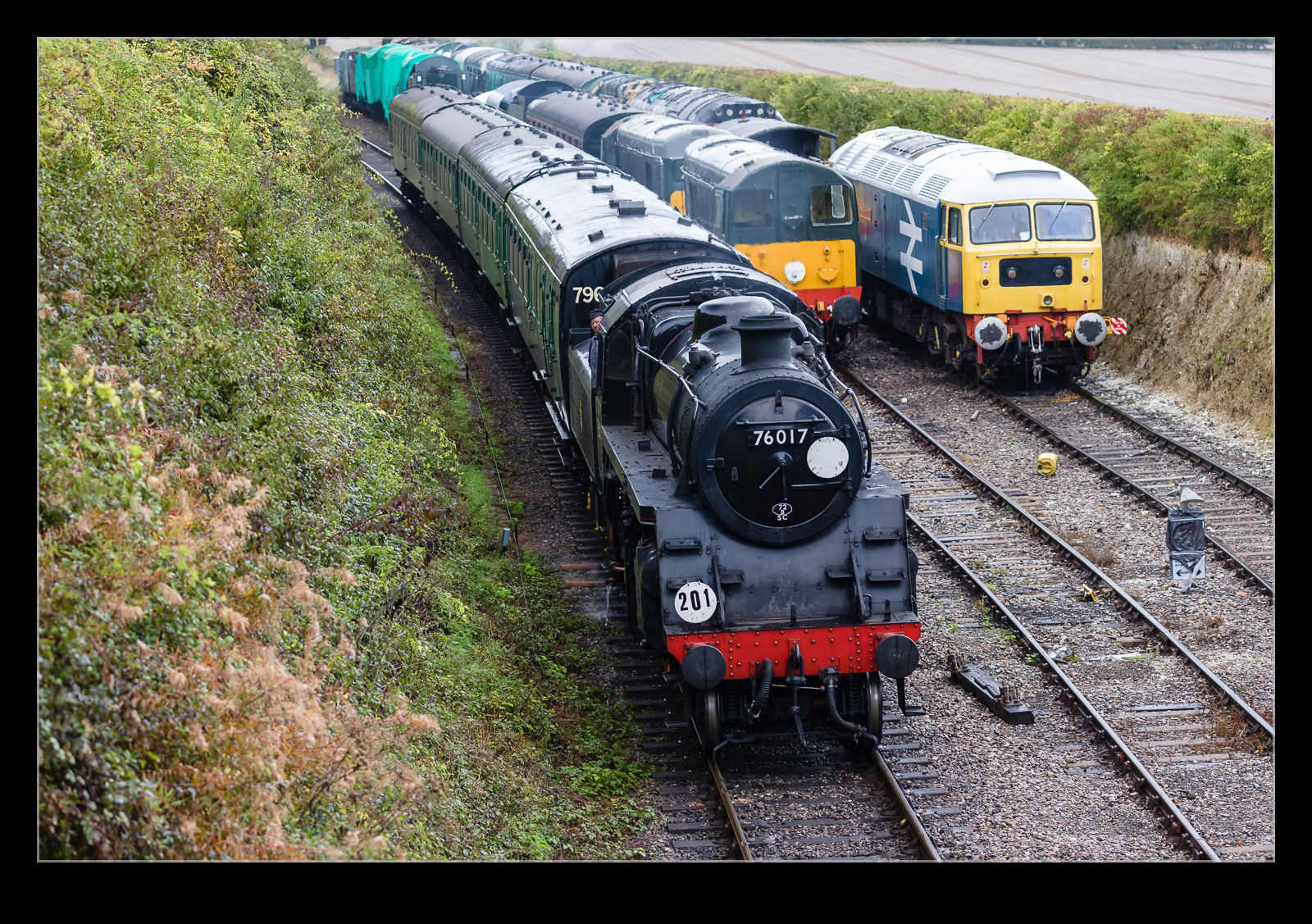
The UK has a large selection of preserved railways.  The cuts in the second half of the twentieth century that closed many branch lines provided opportunities for the preservation movement to get going and the result is a lot of lines that you can visit and ride on.  They are usually very well run operations.  The Watercress Line runs from Alresford to Alton in Hampshire.  We wandered past the station in Alresford when we were visiting with some friends there but it wasn’t operating that day.

However, since we were nearby and staying for a long time, I did take the opportunity to nip back out at some point to see the trains in action.  I got to see one of the services departing from the terminus at Alresford but, I was a little thwarted on that occasion because the locomotive was billowing steam forwards and almost totally obscuring the view of it from the bridge I was on.

I also stopped off at an intermediate station which had a passing location which allowed trains operating in opposite directions to pass each other and continue on their way.  A steam locomotive is quite an impressive thing to watch as it works and a little video does a better job of conveying the impression than stills.  Neither will give you the full sensation, though.  The smell and the feel if it passing beneath you is hard to replicate.

Our schedule was pretty full and didn’t leave time for playing with train rides but it might be fun to have a ride on this line or another like it when we are next in the area.  I’m sure it would be quite fun.  However, watching one of these old things at work seems better from the outside than the inside.  (The line does run along a ridge that parallels the main road and I would like to go back at some point to try and get some shots of this location too.)


BNSF’s Interbay Yard

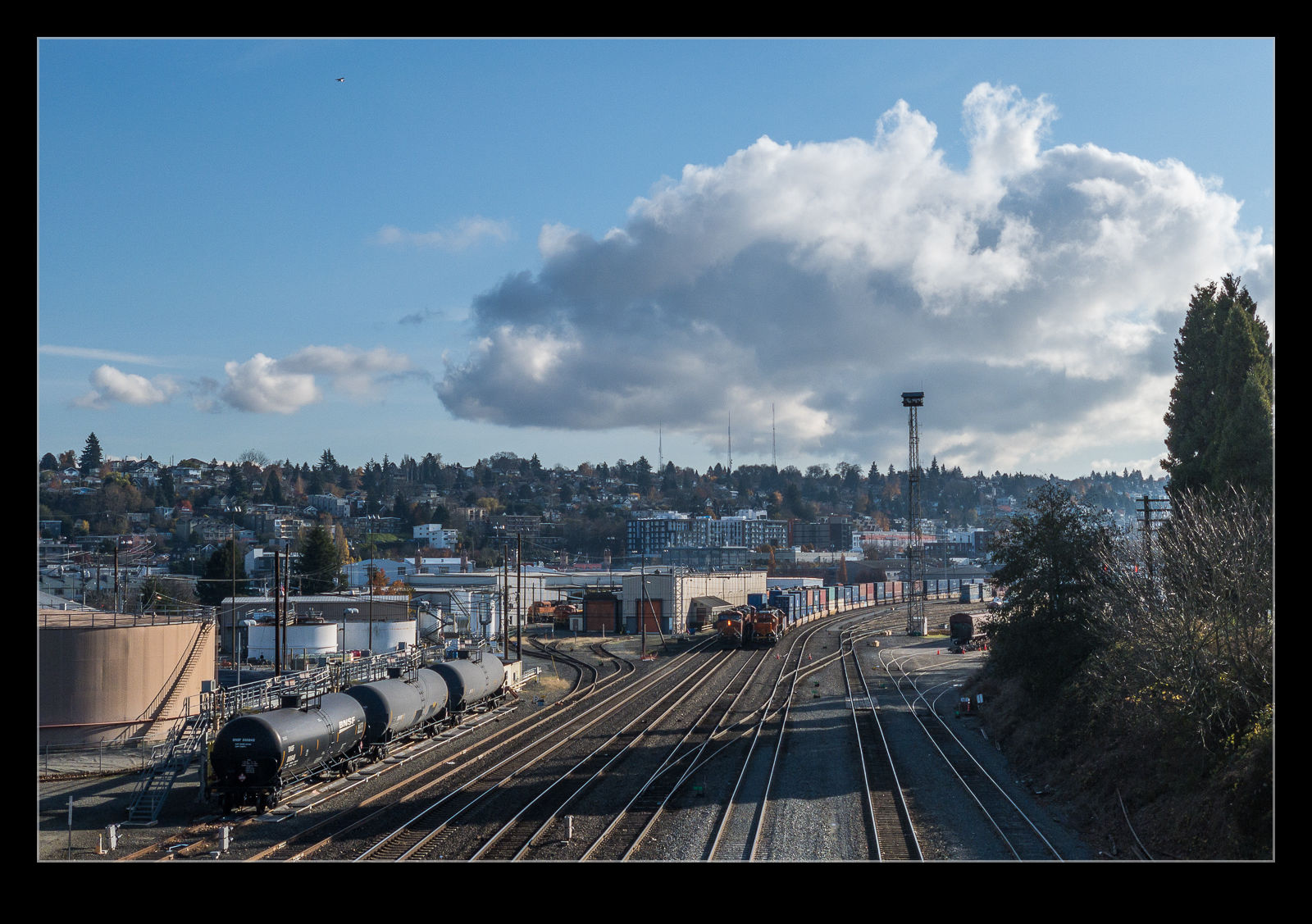
BNSF has a large maintenance yard in Seattle in the Interbay area.  My bike ride took me past the yard and then up and over the tracks.  On my return leg, I stopped to have a look at the facility.  There is a space where a round house used to be which you can see on Google Maps.  A couple of trains were on the lines and there were a bunch of locos elsewhere in the yard.

Vintage Japanese Rolling Stock

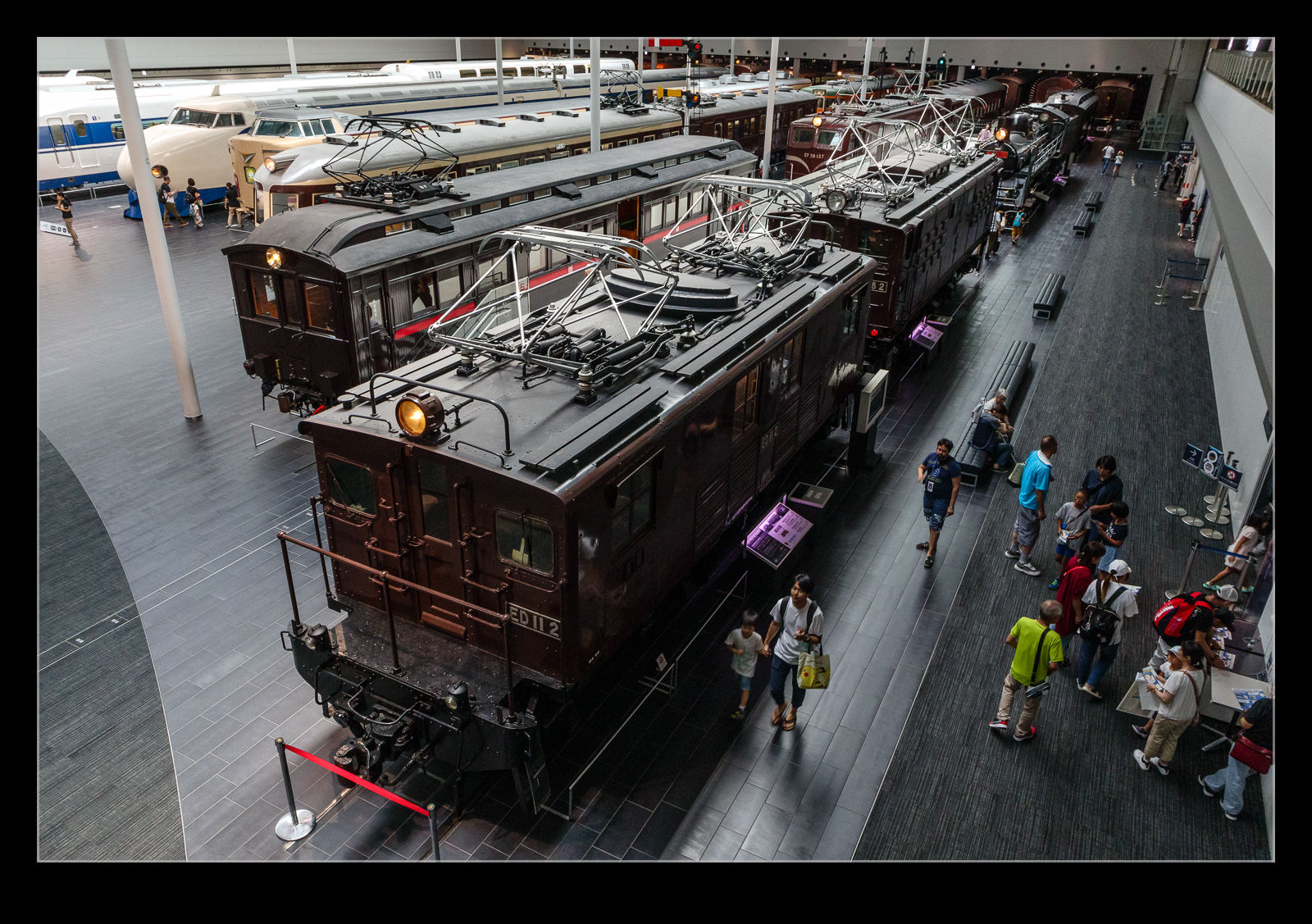
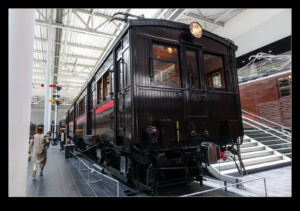
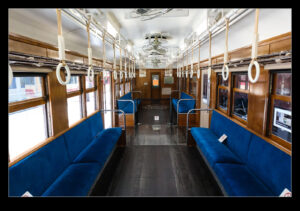
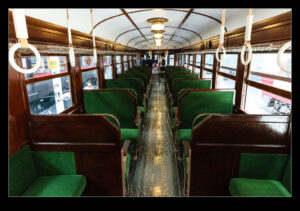
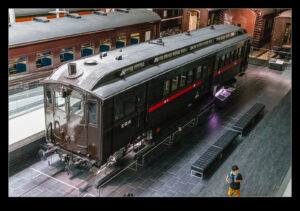
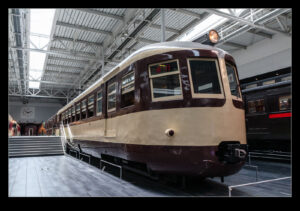
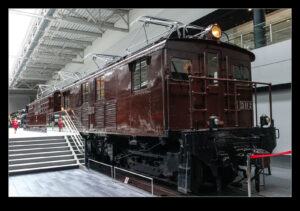
Here are some old Japanese rail vehicles.  These are part of the SCMaglev museum in Nagoya that I visited when I was in Japan last summer.  The museum has a great selection of Shinkansen equipment across the generations but it also has a lot of other rail vehicles from long ago.  The vehicles clearly look old from the outside but the interiors are really an interesting comparison with what you see these days.  The amount of wood in the paneling and the materials of the seating are definitely of their time.  I was quite amused by the fans mounted on the ceiling.  Obviously pre-air conditioning days with these cars and so a bit of air circulation was all you could hope for.  Knowing how incredibly hot it gets in Japan during the summer, they would not have done much for the riders I would have thought.  I wonder whether it was as crowded in those days as it is now.  If it was even close, that would have been brutal.
An Update to the Japanese Rail Photos

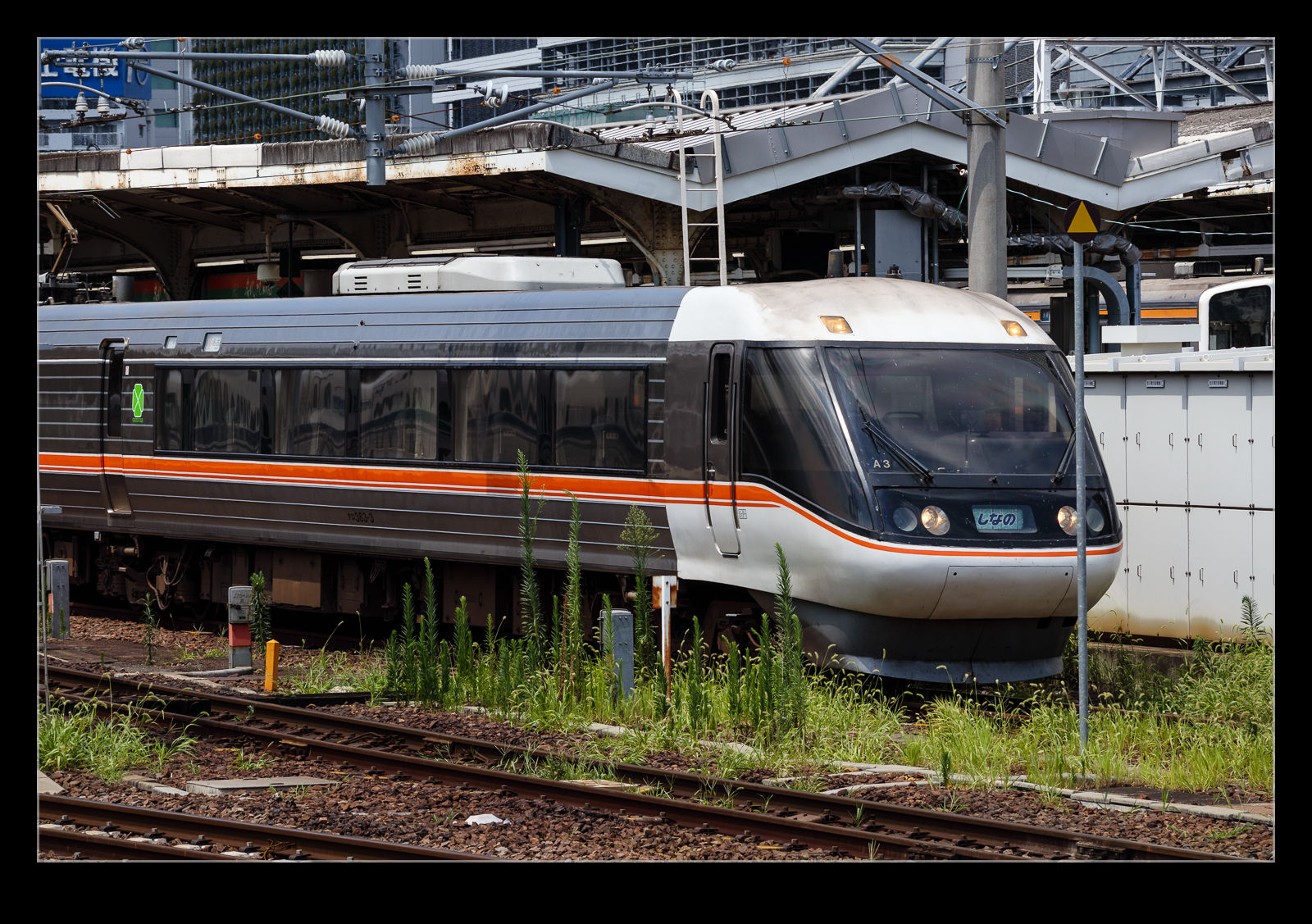
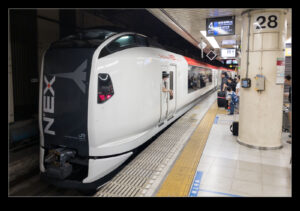
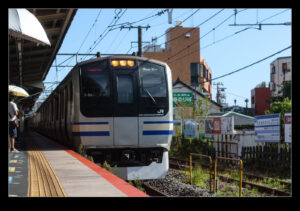
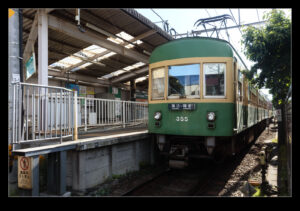
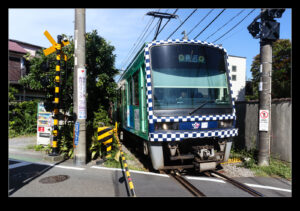
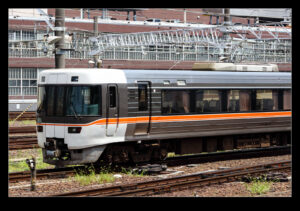
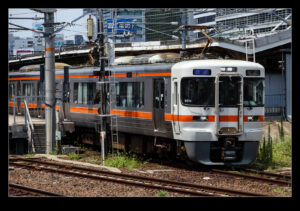
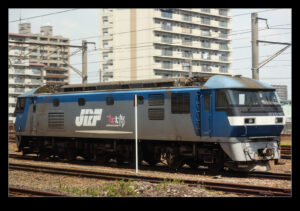
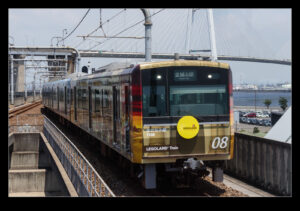
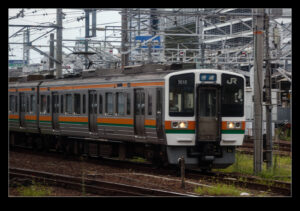
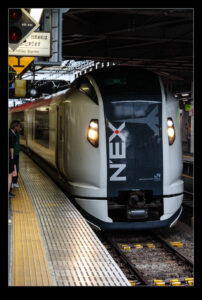
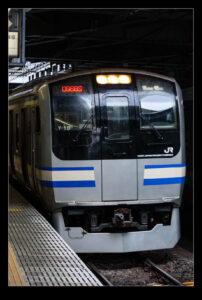
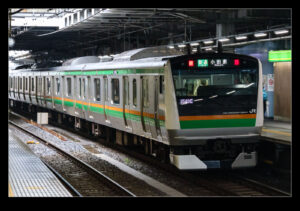
I have put some previous posts together of Japanese trains from my travels.  This is an update to that (although a very late update given that these were taken nearly a year ago!).  I got to see some different trains while I was in Nagoya for the day and then there is the variety of trains that you get around the Tokyo area.  There was also a small line that ran through the Kamakura area which we crossed paths with as we were walking to the beach from the giant Buddha statue that I wrote about in this post.  A few more photos to amuse those of you that like different trains.

Looking Back at the HSTs

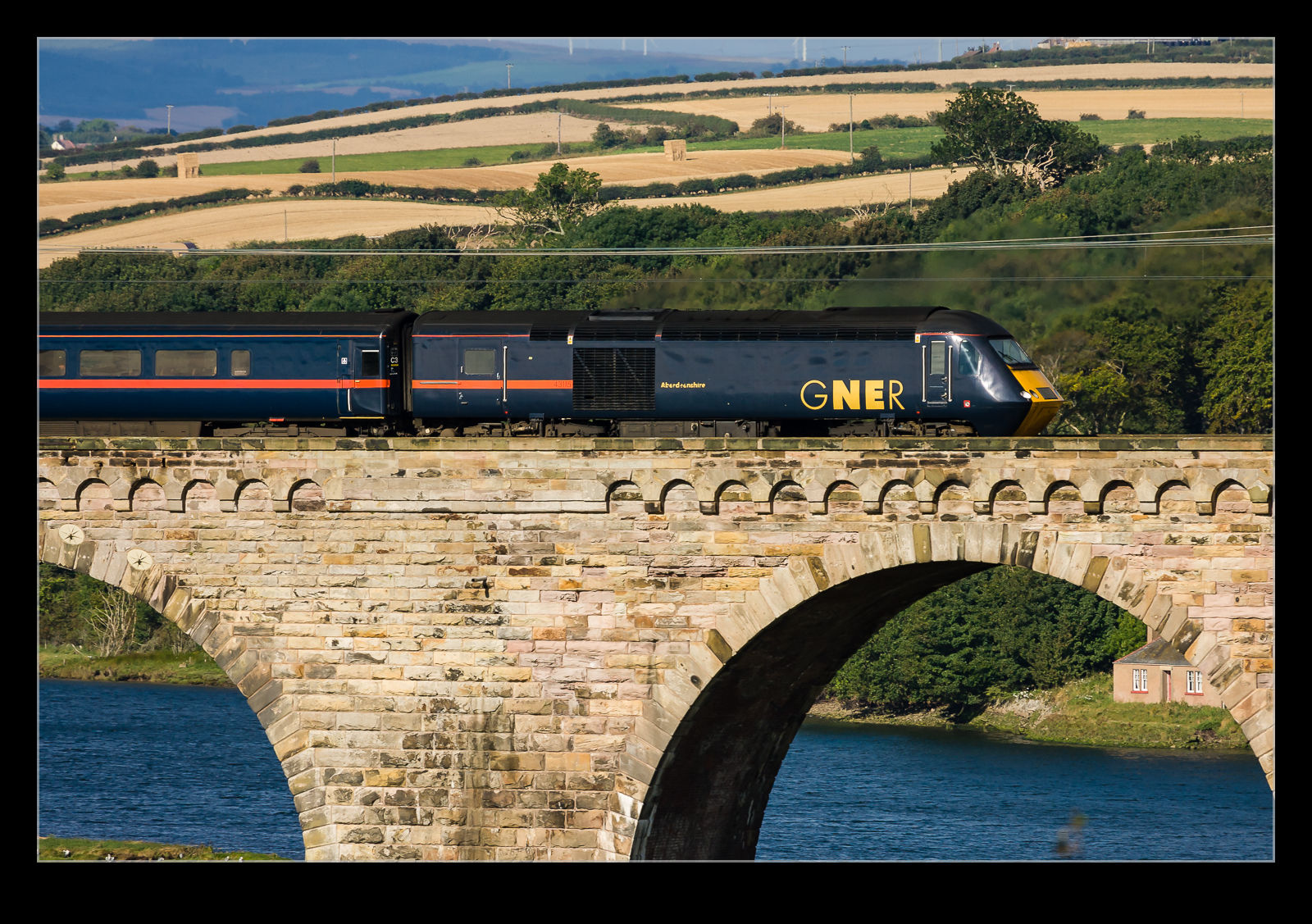
As a small boy, the new thing in British trains was the Intercity 125.  Known in the industry as the HST, this was a step forward in fast train travel for the UK.  When I started working in the rail industry many years later, the HSTs were a big part of our fleet.  They had been in service a long time by then but were still the backbone of certain corridors and were getting further investment.  Move on another 20 years and now the fleet is finally disappearing.
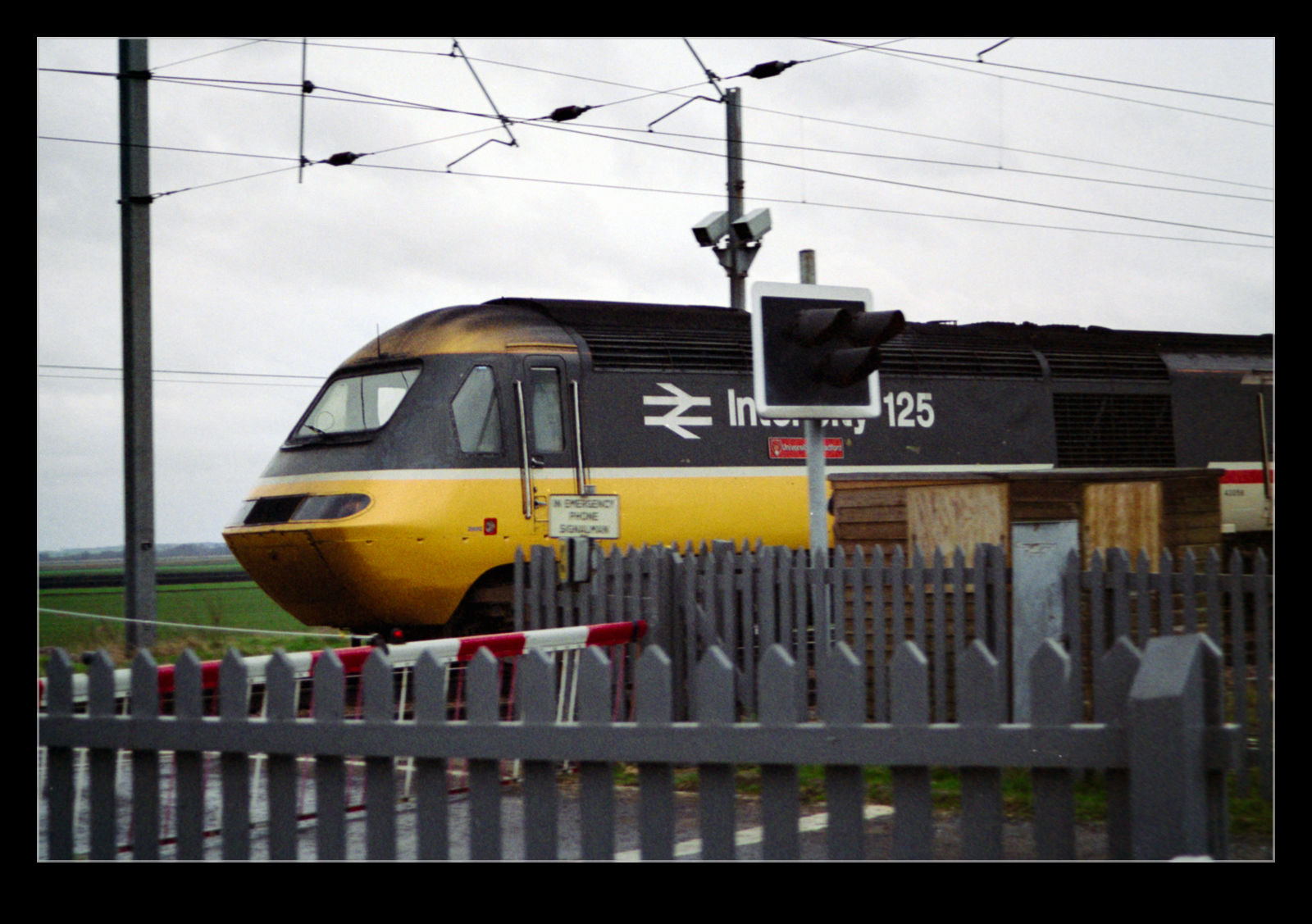
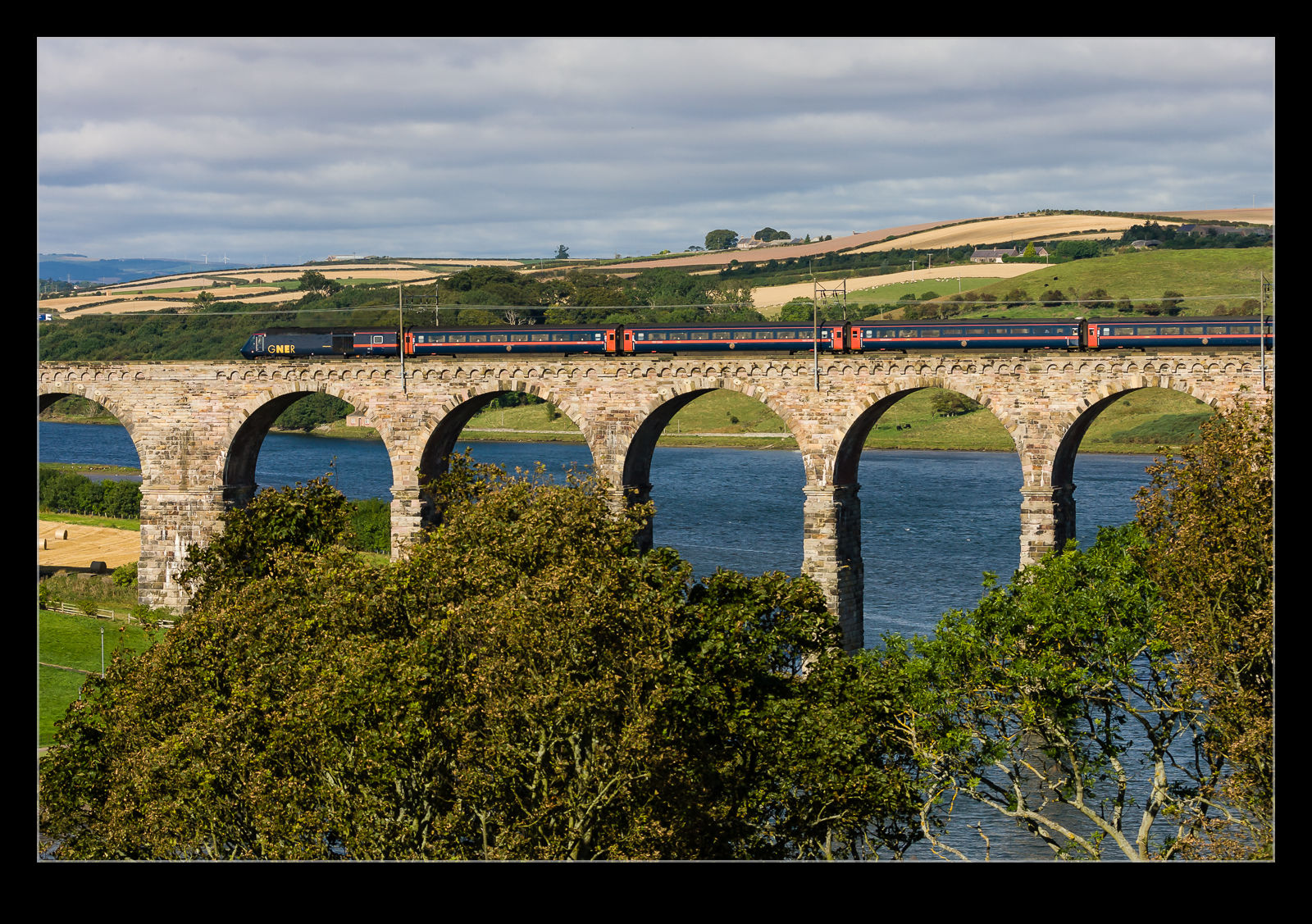
Some are still being reconfigured for a future on new routes, but the majority of the fleet is being replaced by a new generation of trains and it is a surprise just how long it has taken to find their successors.  The HSTs have been a solid fleet with strong performance, a level of redundancy and a ride quality that was impressive.  I figured I would through in a couple of shots I have of them.  I have very few, sadly.  One is an old one in British Rail colors from the 80s and the others are from the days of GNER.  What a shame I don’t have more.  Given the amount of time I spent traveling on them or inspecting them at depots and overhaul facilities, I should have tons.  Oh to have had had phones in our cameras then!
Ribblehead Viaduct

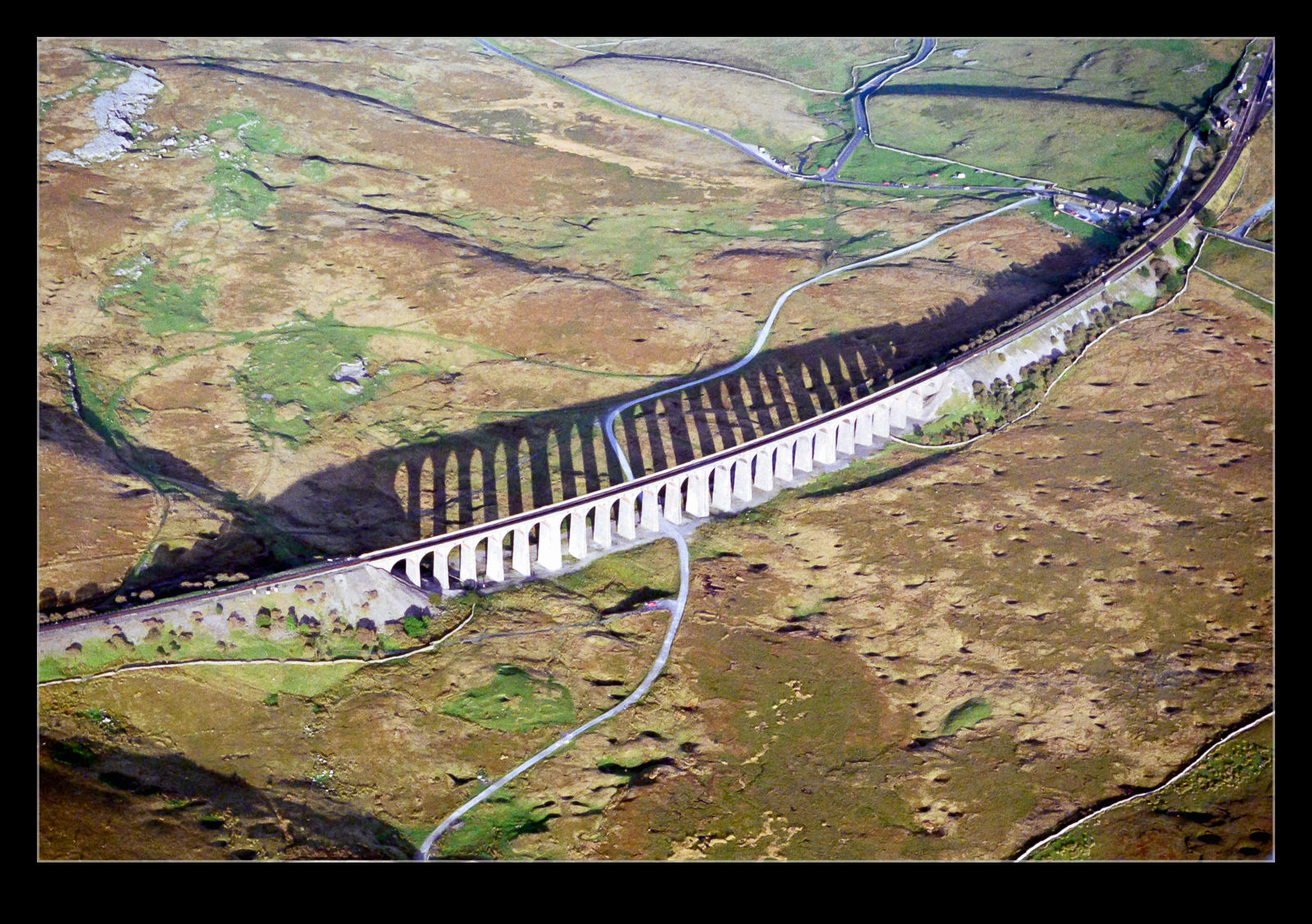
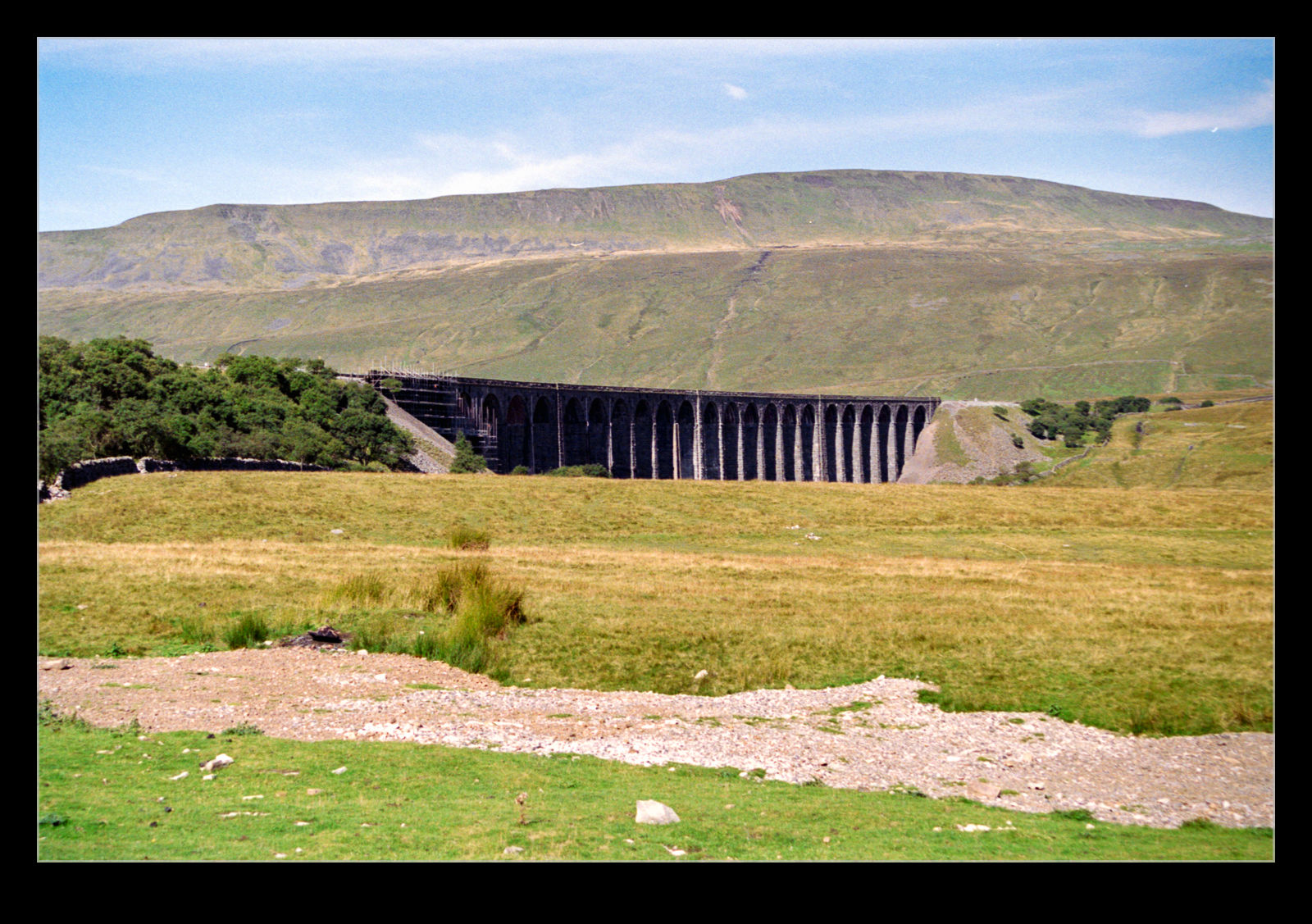
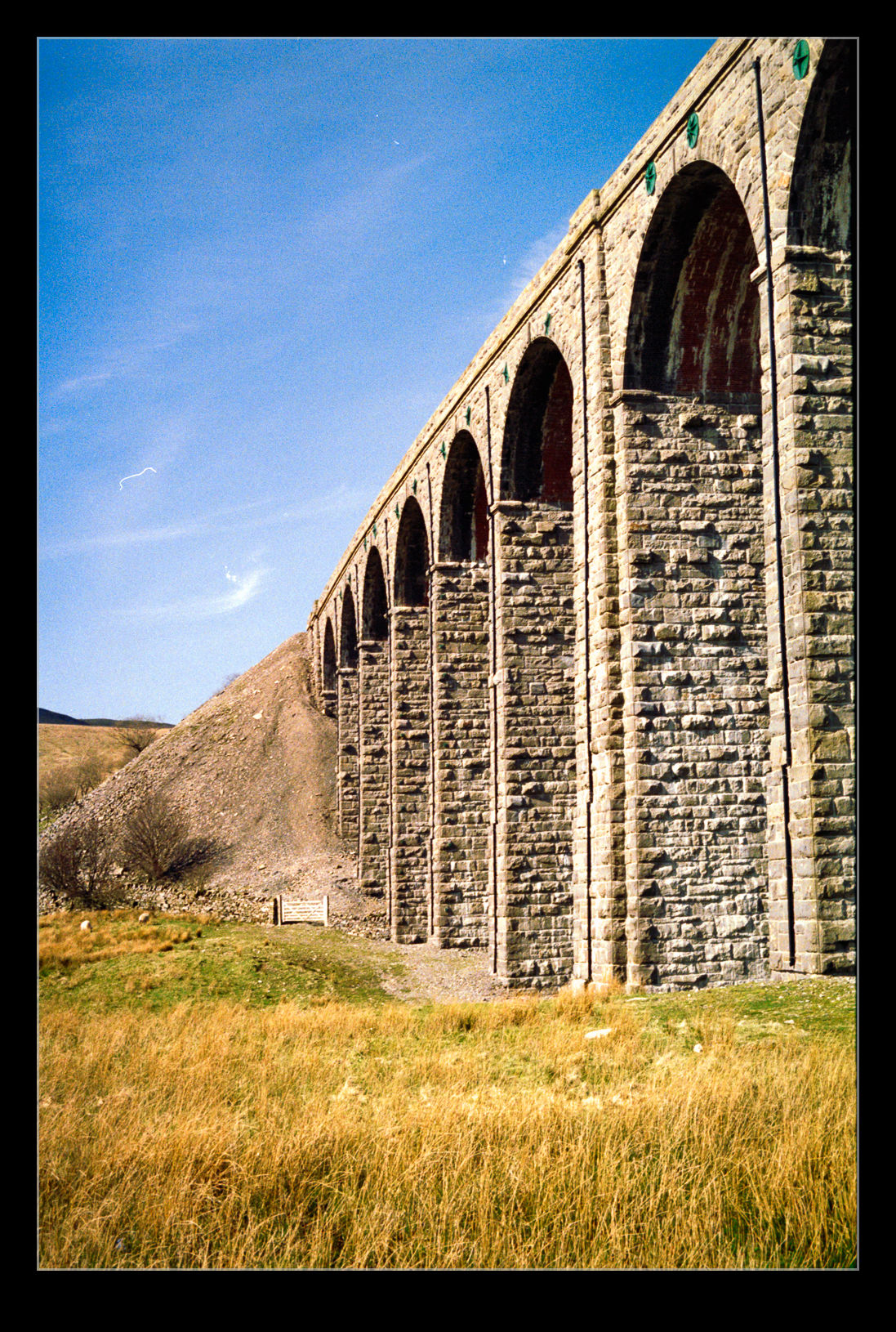
The Victorians built railways across the UK in a serious way.  Geography was not a barrier and tunnels would get you through hills and viaducts would address valleys.  They also liked them to look pretty cool.  There are numerous viaducts across the UK – some of which are well known and others of which are rather anonymous.  One of the more famous viaducts is the Ribblehead.  It is part of the Settle to Carlisle line which was once lined up for closure but now seems to be secure.

The main shot here was taken from my friend, Mark’s, Ercoupe as we had a flight from Blackpool and up over Yorkshire and Cumbria.  We were flying after work so the evening light was setting in and the shadows of the viaduct were very nice.  Since this was the days of film, there aren’t lots of shots to choose from.  However, this one worked out well enough.  Nancy and I visited the area from the ground when we lived up that way and here are a couple of additional shots of the viaduct from the ground.

The Train That Started It All

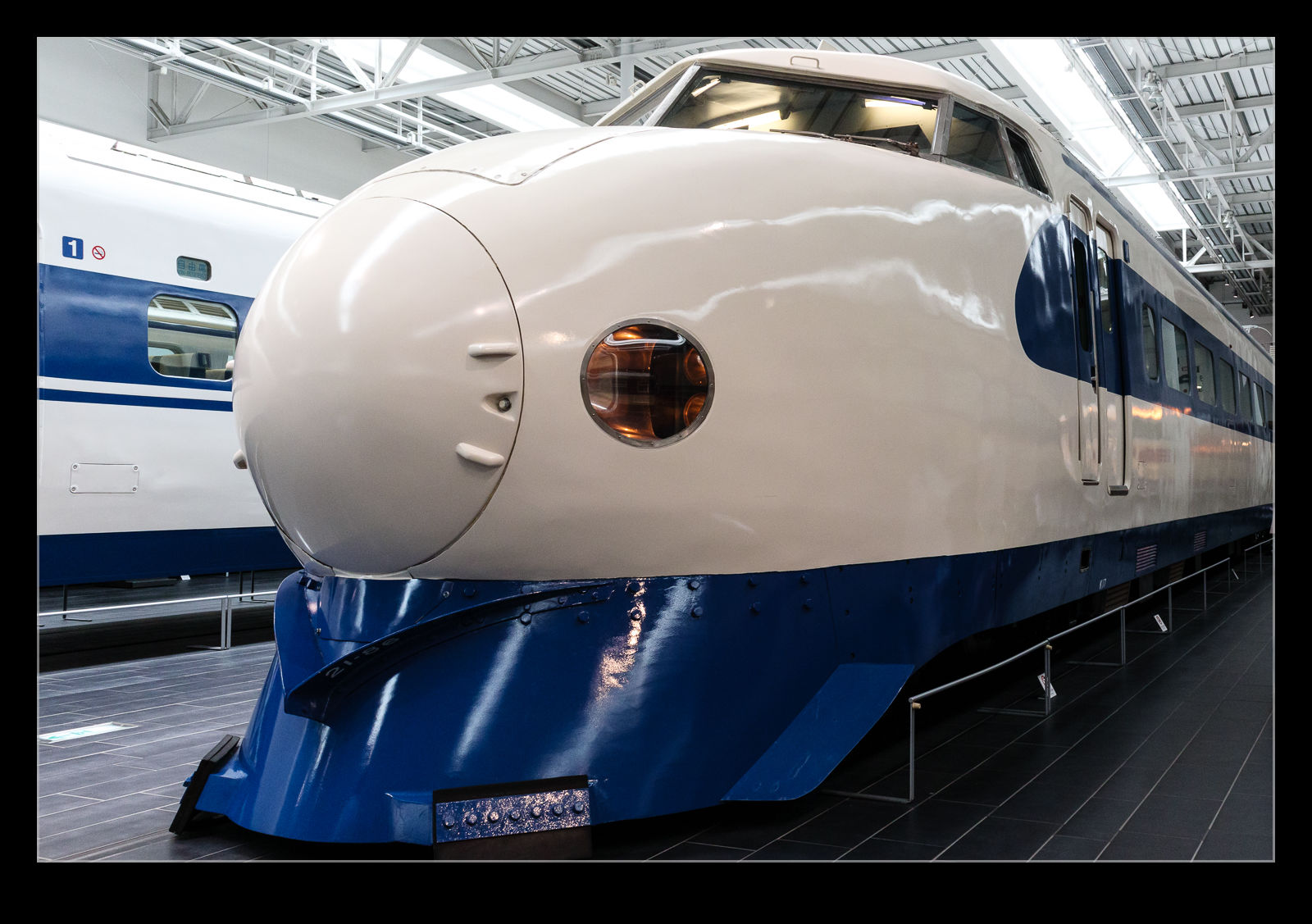
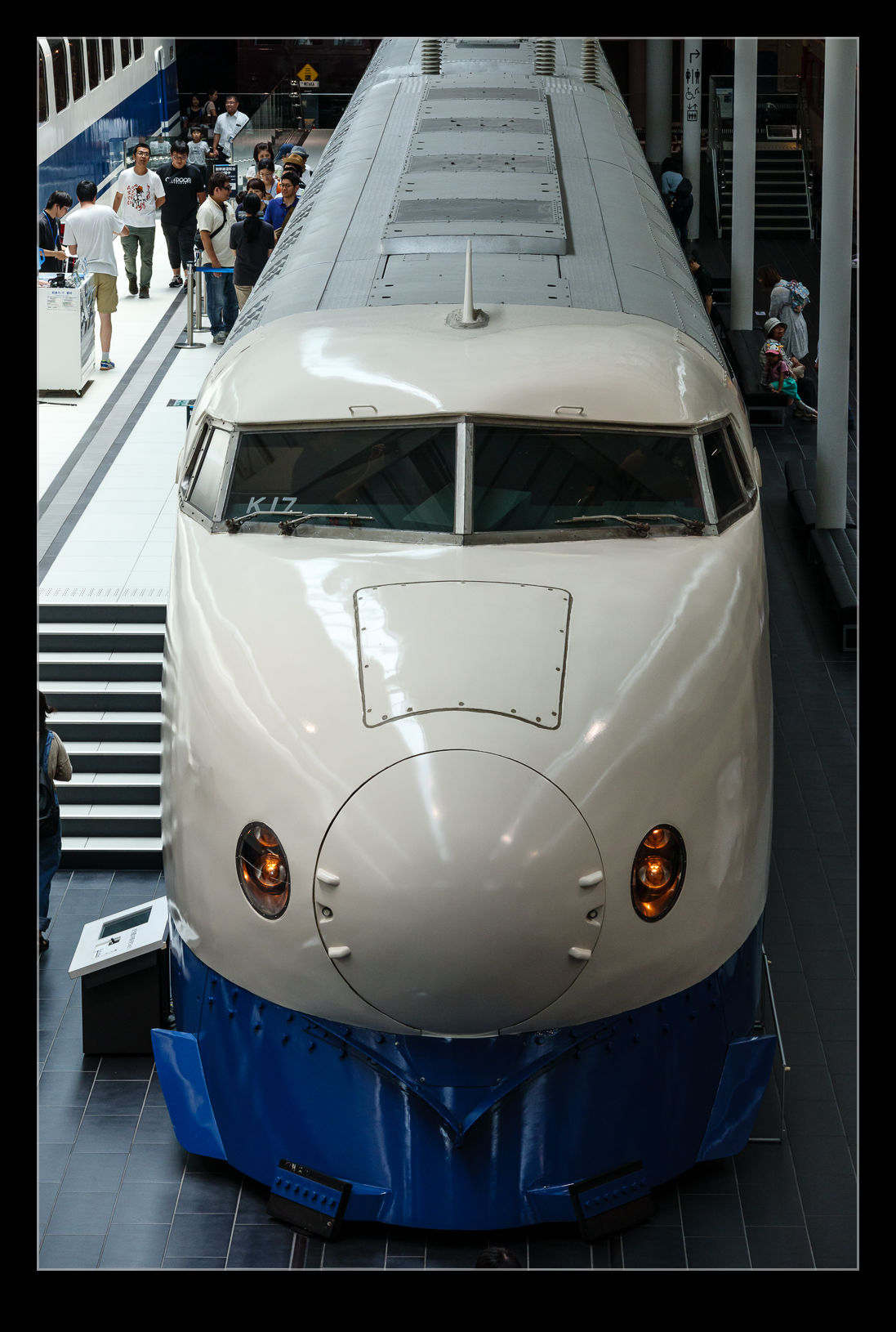
The Japanese Shinkansen trains introduced in the 1960s became known around the world as bullet trains.  The shape of them was well known, often photographed with Mt Fuji in the background.  While other countries developed high speed rail, the Japanese bullet train was often the first one people would associate with the topic.  These first trains are known as the Series 0.  There have been several iterations of design since.  However, the Series 0 is still very recognizable to me and probably others of my generation.

I had seen a Series 0 vehicle once before.  I visited the Nippon Sharyo factory is Toyokawa many years ago and they have a cab vehicle on display by the main gate.  Sadly, I wasn’t able to get a photograph of that then.  Seeing an example at the SC Maglev museum was my second opportunity.  It was displayed alongside a number of the more recent iterations of the Shinkansen but, judging by the number of people taking photos of it, it still has a strong level of recognition.

Tokyo Station

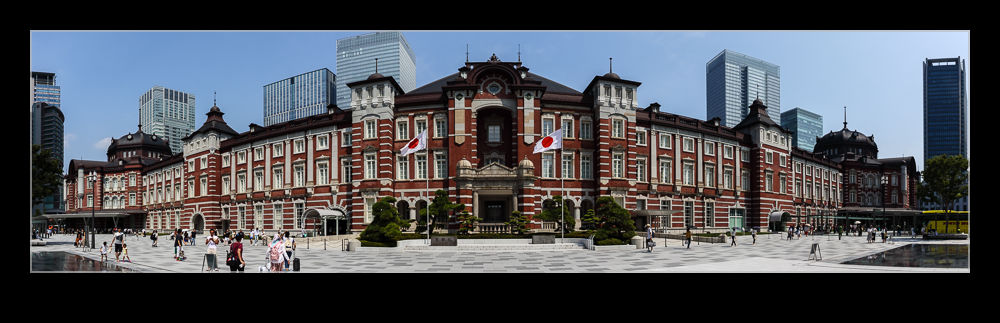
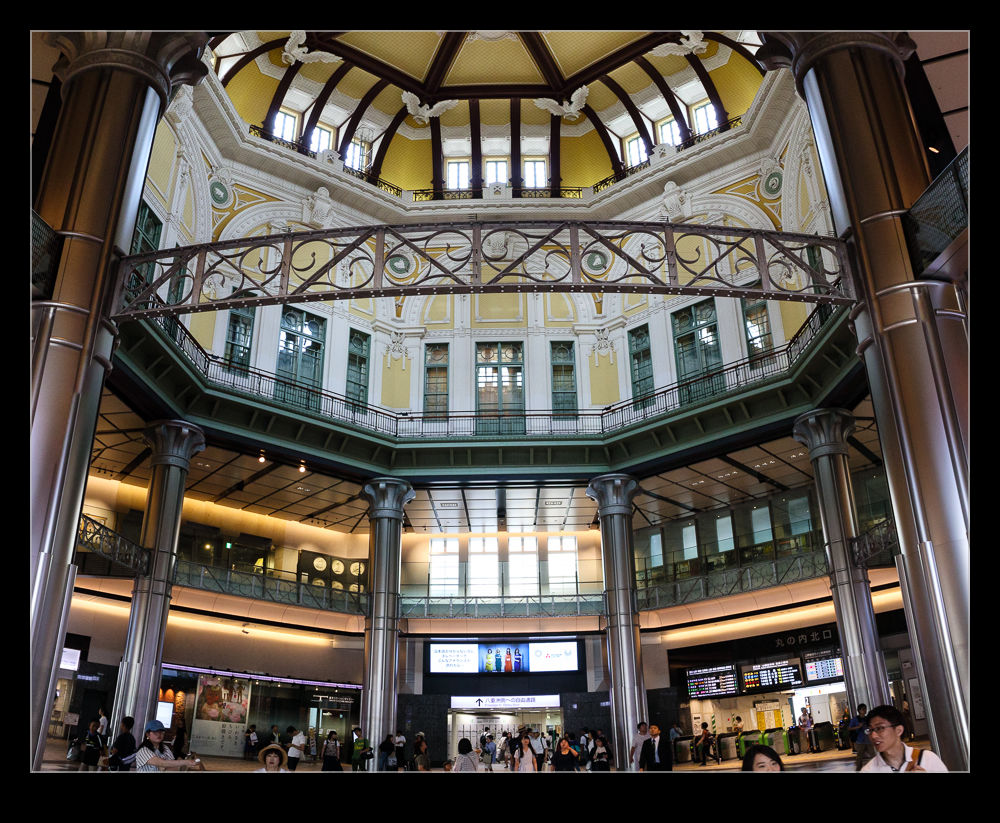
I briefly saw Tokyo Station last time I was in Japan.  This time I wanted to take a better look.  While the station has been significantly redeveloped over the years, the west frontage that looks towards the Imperial Palace has retained the brick structure designed and built over 100 years ago (although some rebuilding was necessary over the years).  I think it is an interesting looking building and an interesting contrast with the high-rise developments around it or even the old buildings that can still be found in the city.

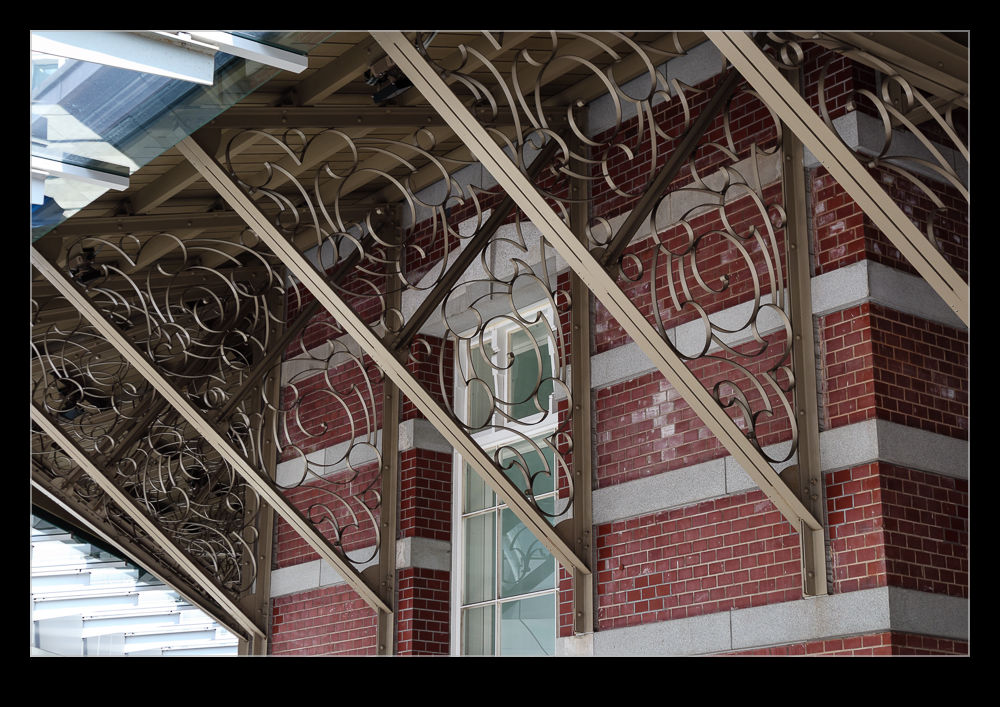
I got there in mid-morning and my brain was obviously not firing on all cylinders.  The front was in shade with the sun quite high in the sky and I thought for some reason I had left it too late.  I ended up taking a bunch of pictures of the building, none of which I was terribly happy with given the shadow on the front and the bright overall conditions.  I did shoot some of the details around the hallways and overhangs which were fine.

It was only later when I returned from the Palace grounds that I realized which way the building was facing and that the sun had now come around to the front of the station, not retreated.  Consequently, things were a lot more brightly illuminated.  Let’s not kid ourselves.  Midday sun is not the greatest thing for shooting but, for getting snapshots for the trip, this was a significant improvement.  With such a wide and low structure, a panorama was obviously going to be tried!

Trestle Out of Use

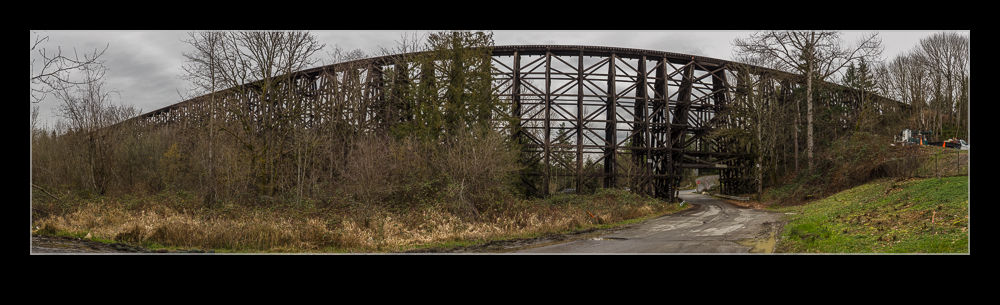
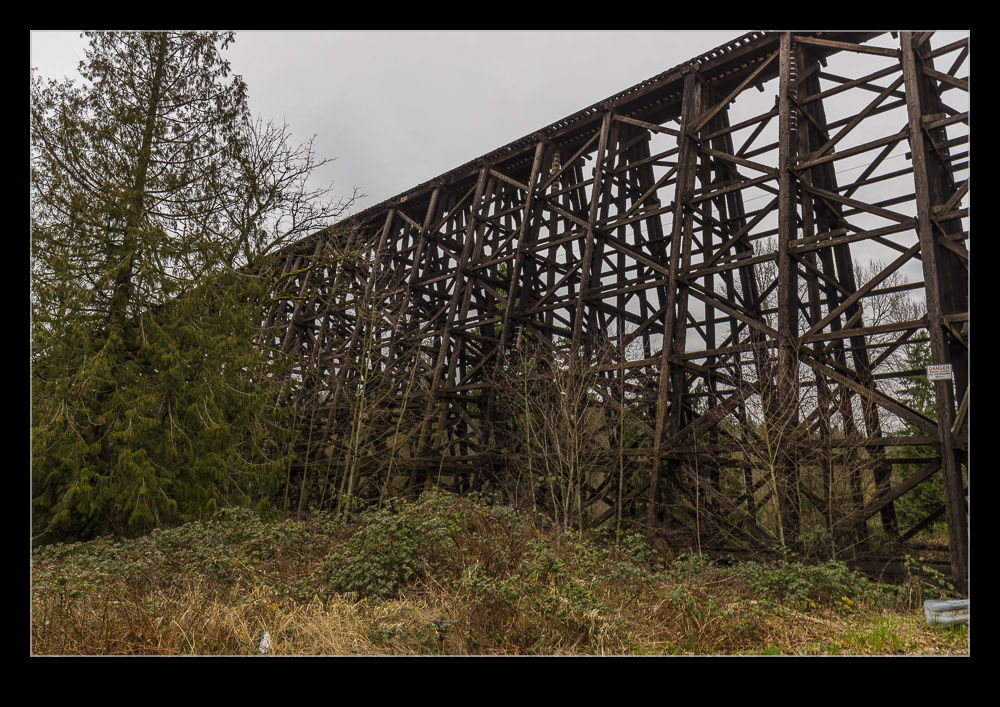
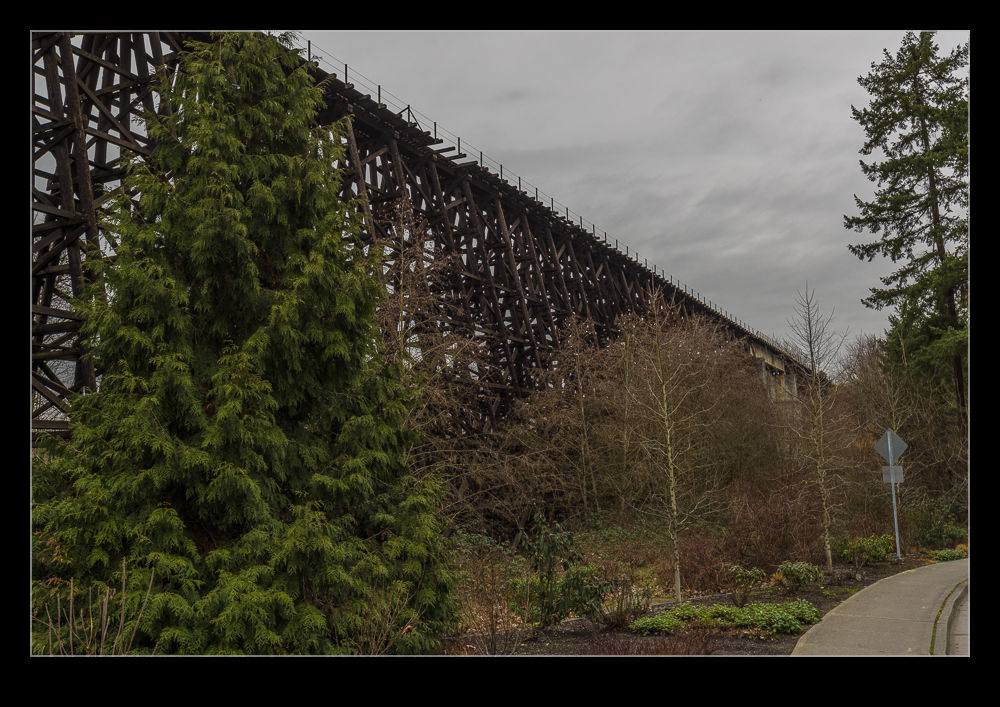
The east side of Lake Washington used to have a lot more train traffic.  A line ran up that side of the lake but the railroad closed it down and then the interstate was rebuilt and went over the previous right of way.  In Bellevue, the tracks crossed a valley on a large trestle bridge, the Wilburton Trestle.  This wooden structure was modified at some point to allow an expansion of the road that ran underneath it but, once the railroad was closed, it fell out of use.

For the longest time, I didn’t even notice it.  While it is close to the interstate, it is off to one side at a time when you don’t have much time to look around.  When I finally noticed it, I was amazed I had driven by so many times.  Even then, I never got a chance to take pictures.  I was hoping for better weather but winter has not really helped in that regard so, one afternoon, as I was heading back from Bellevue, I stopped off to check it out.

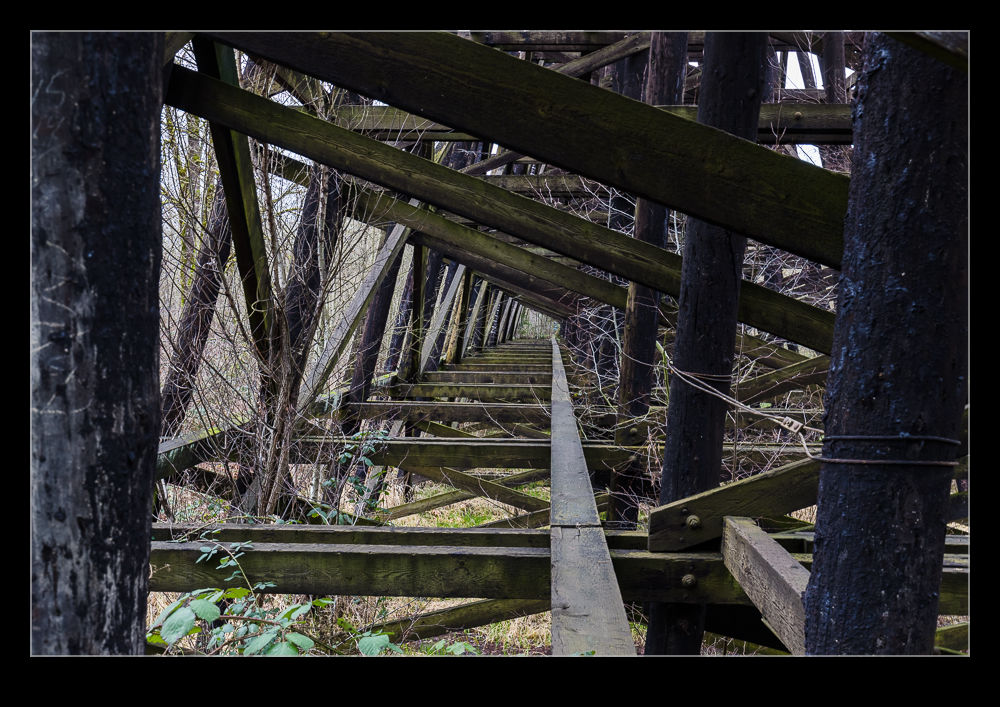
Wooden trestle structures are a curious thing and very typical of old American railroads.  The dull light may not have helped emphasis the structure much but it does reduce the contrast you can get with something so sheltered underneath.  Even so I used HDR a bit to help manage the exposure range.  Supposedly, the future for the trestle will be as part of the expanding trail network for the eastside.  It is suggested that it will reopen to trail users by 2020.  I think I shall ride down to it at that point to check the view out.  I imagine it is pretty good from up there.