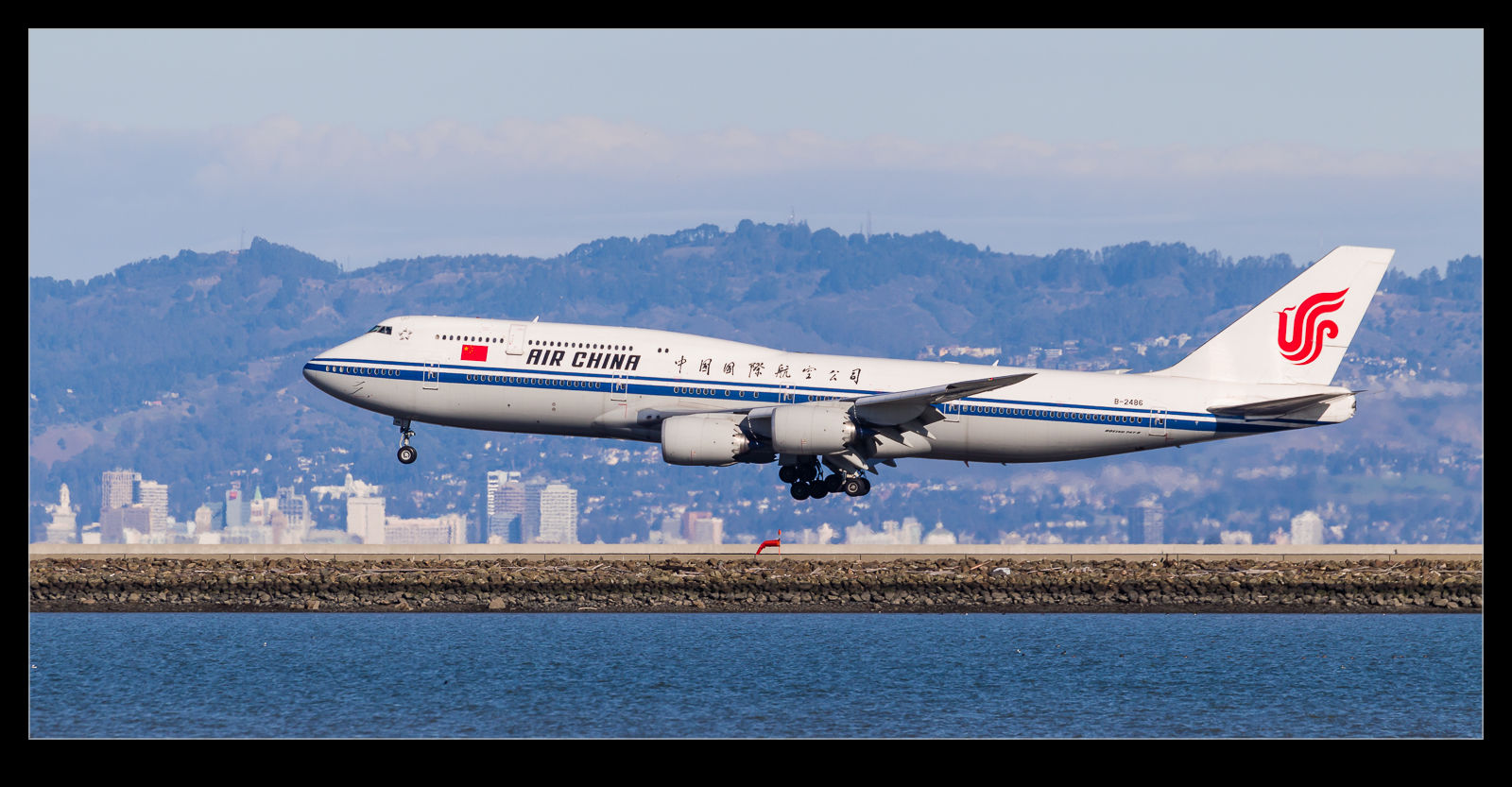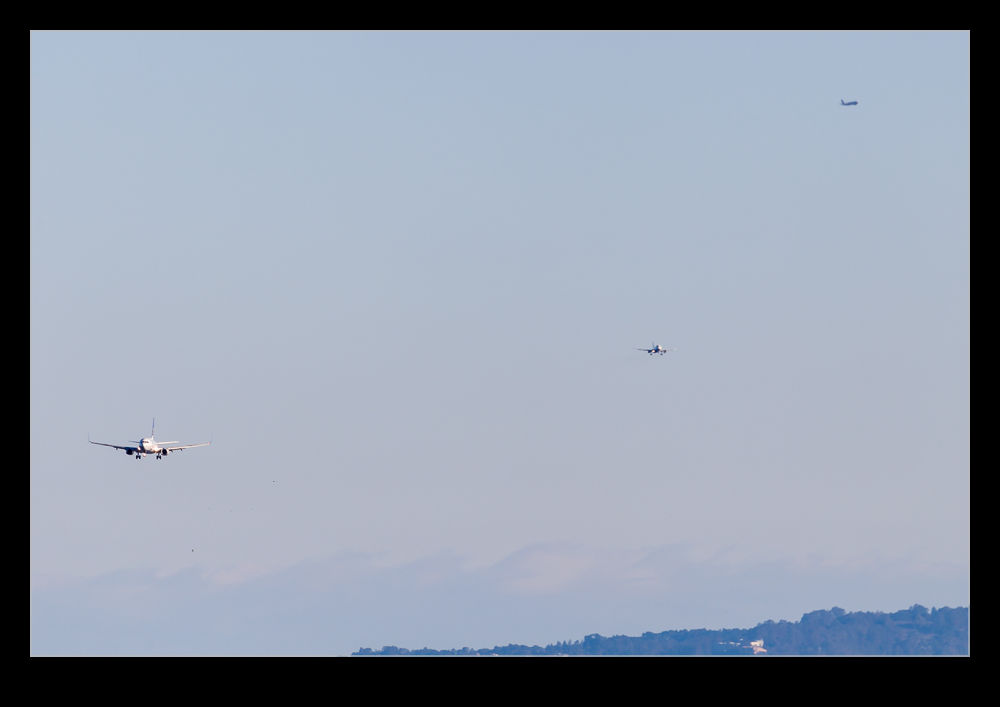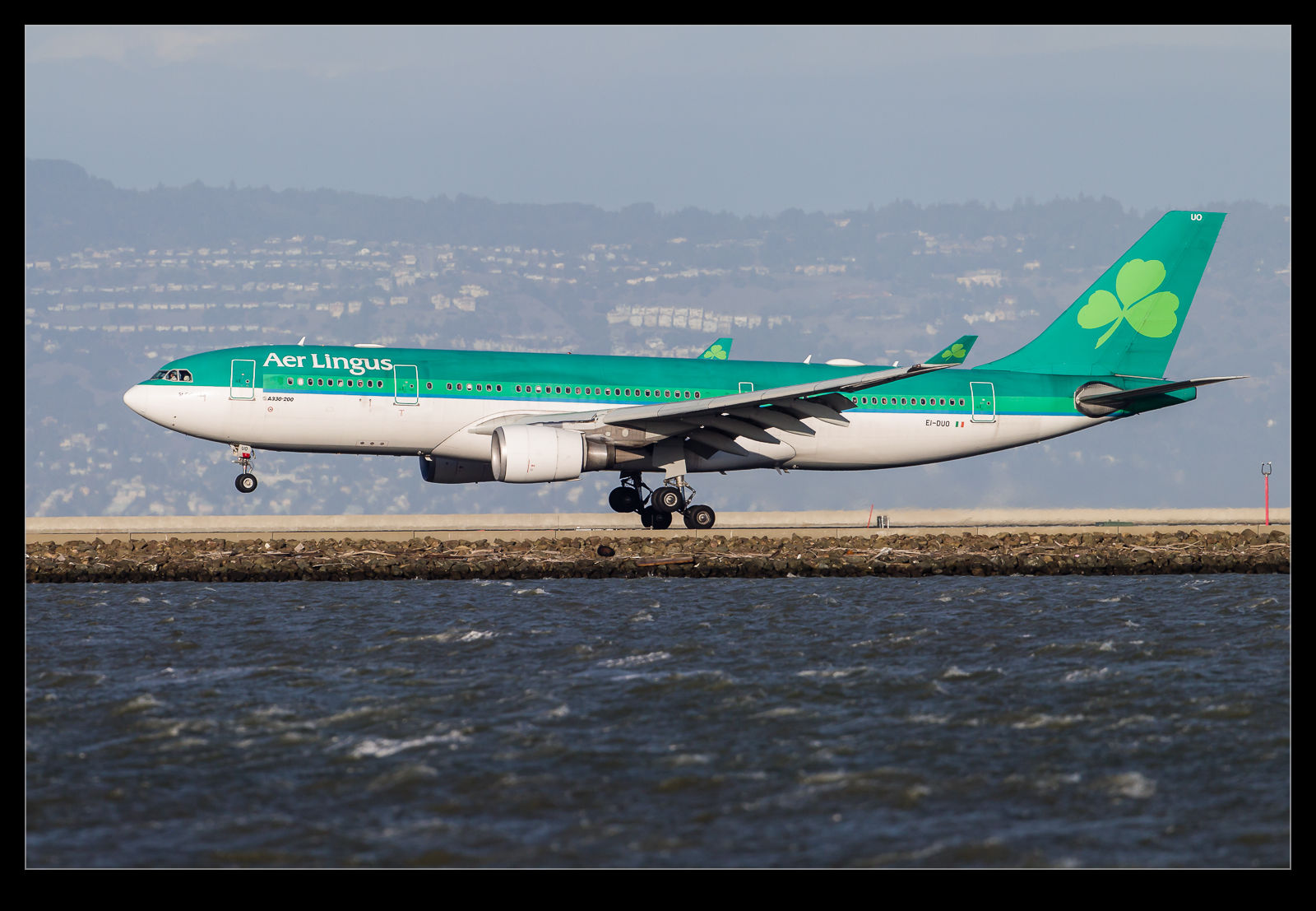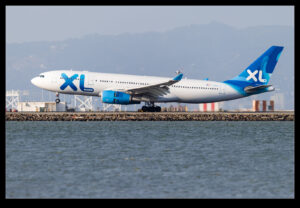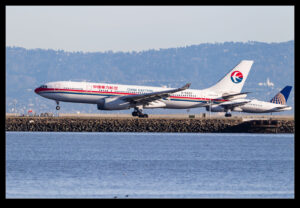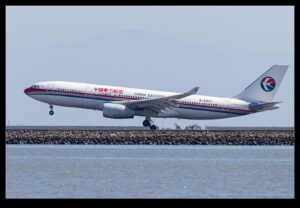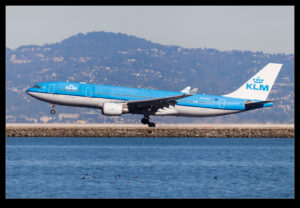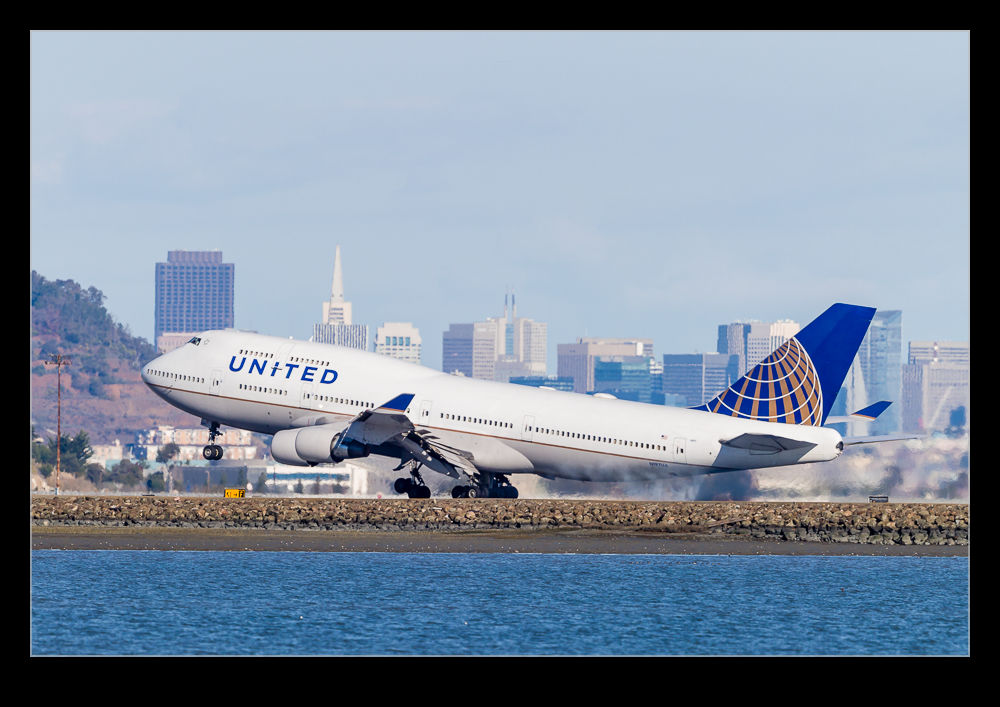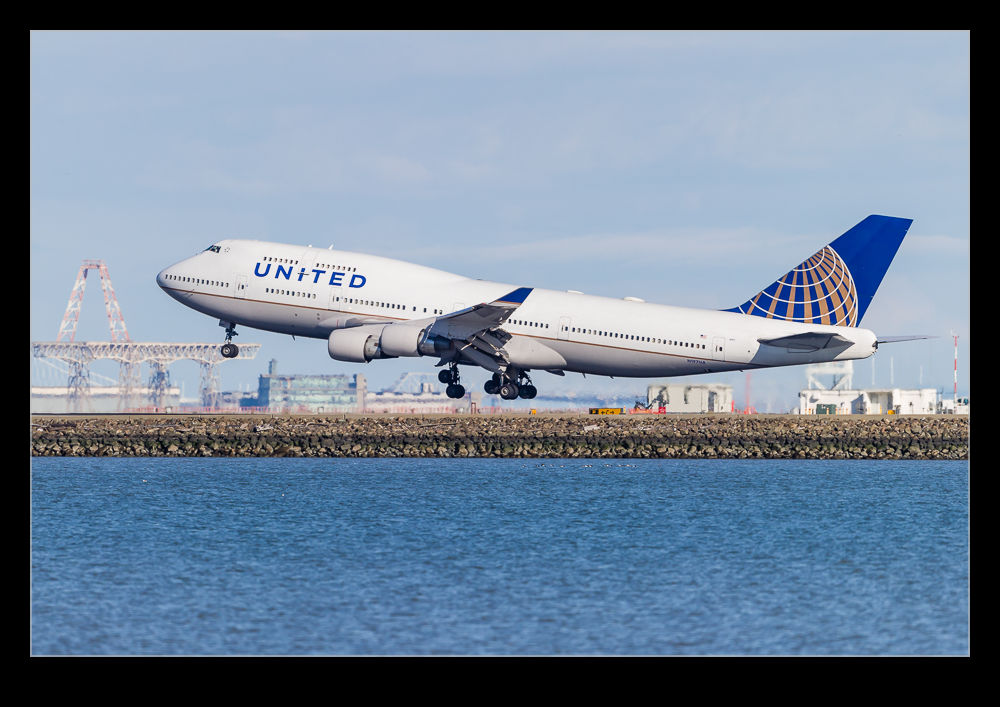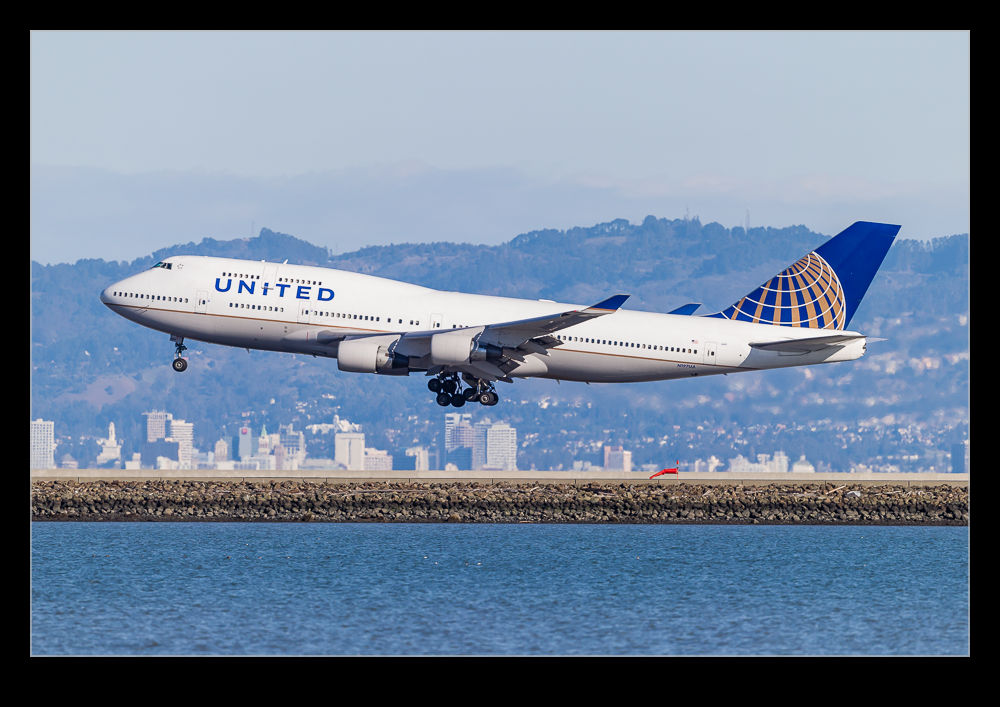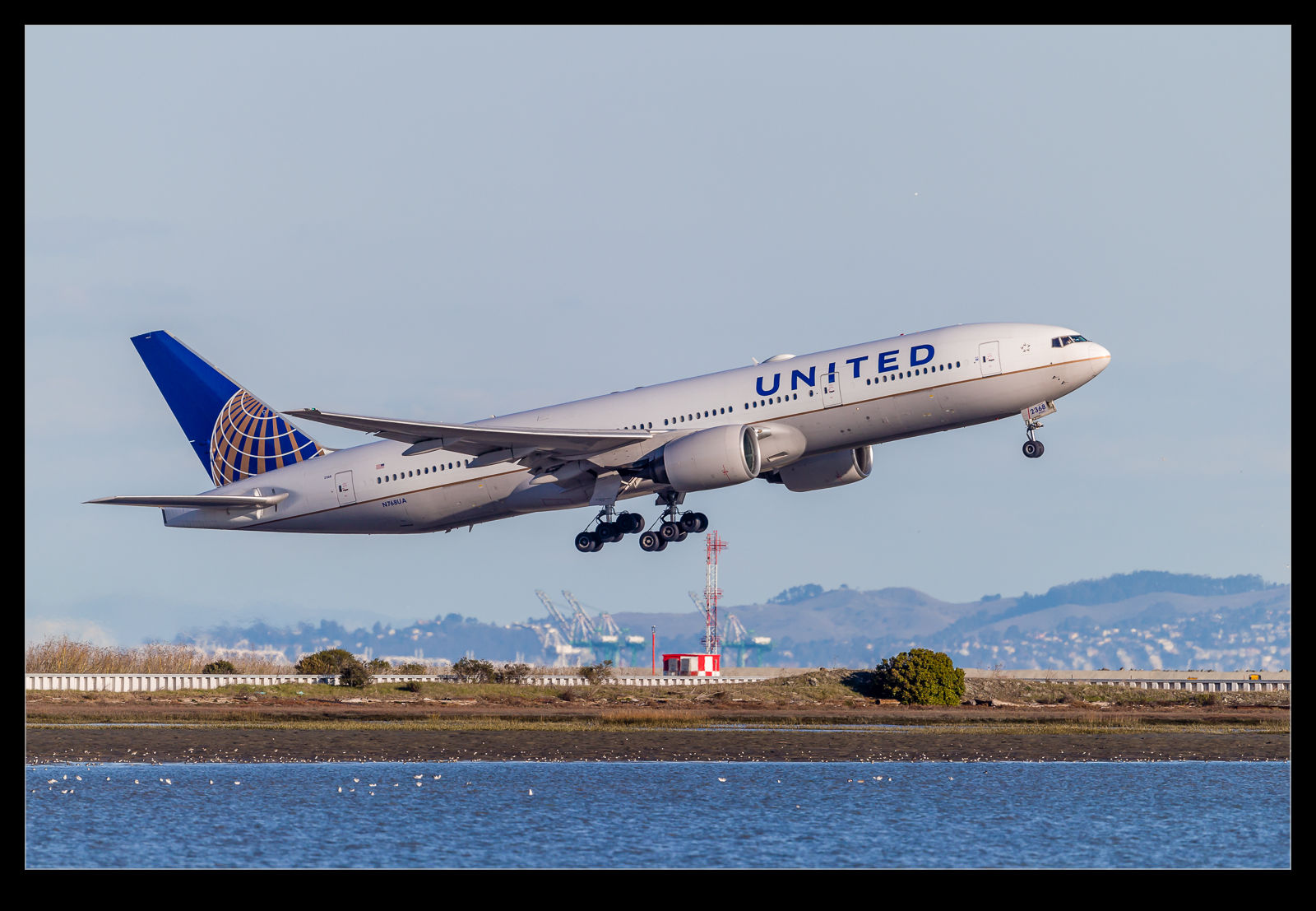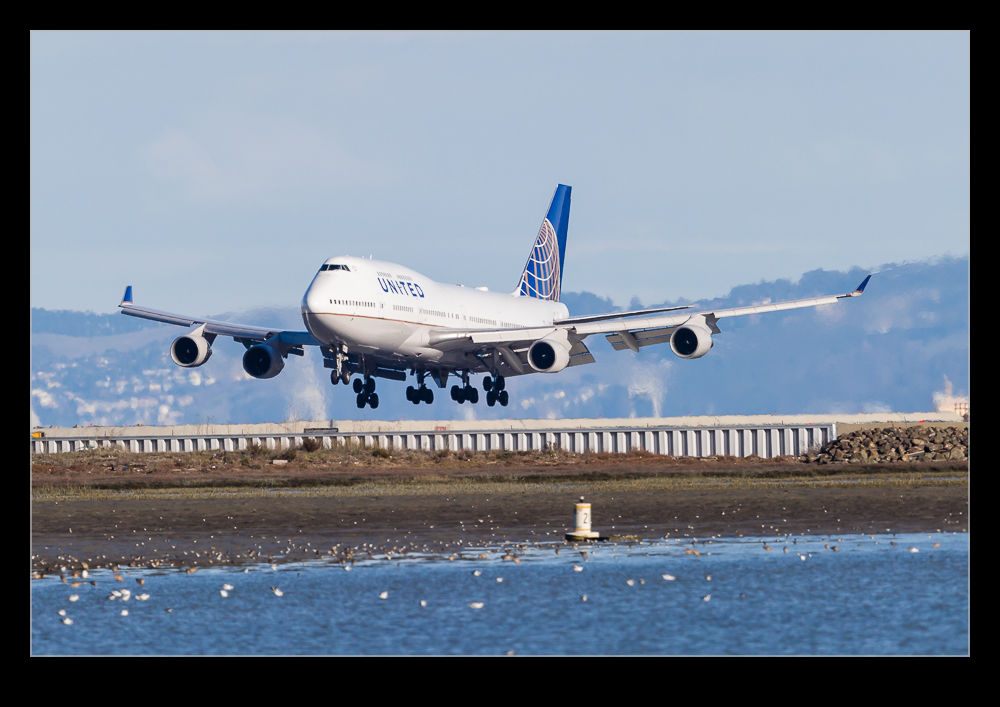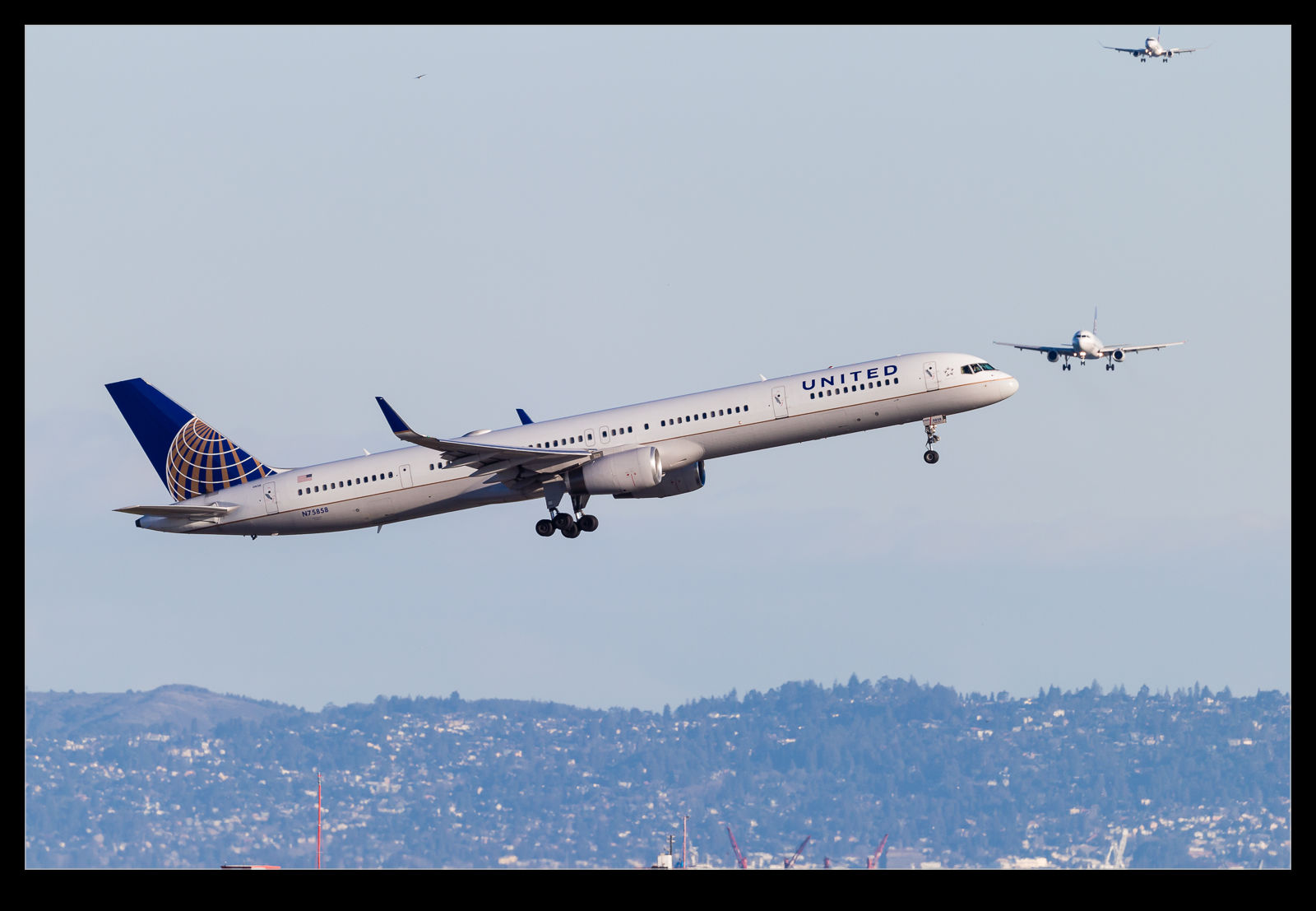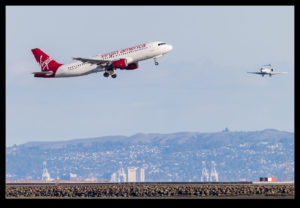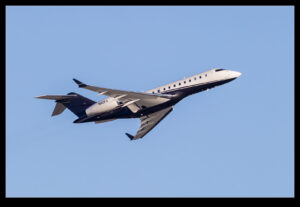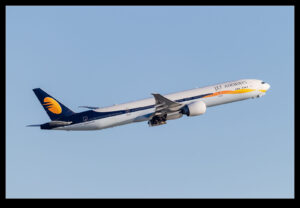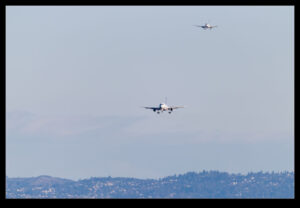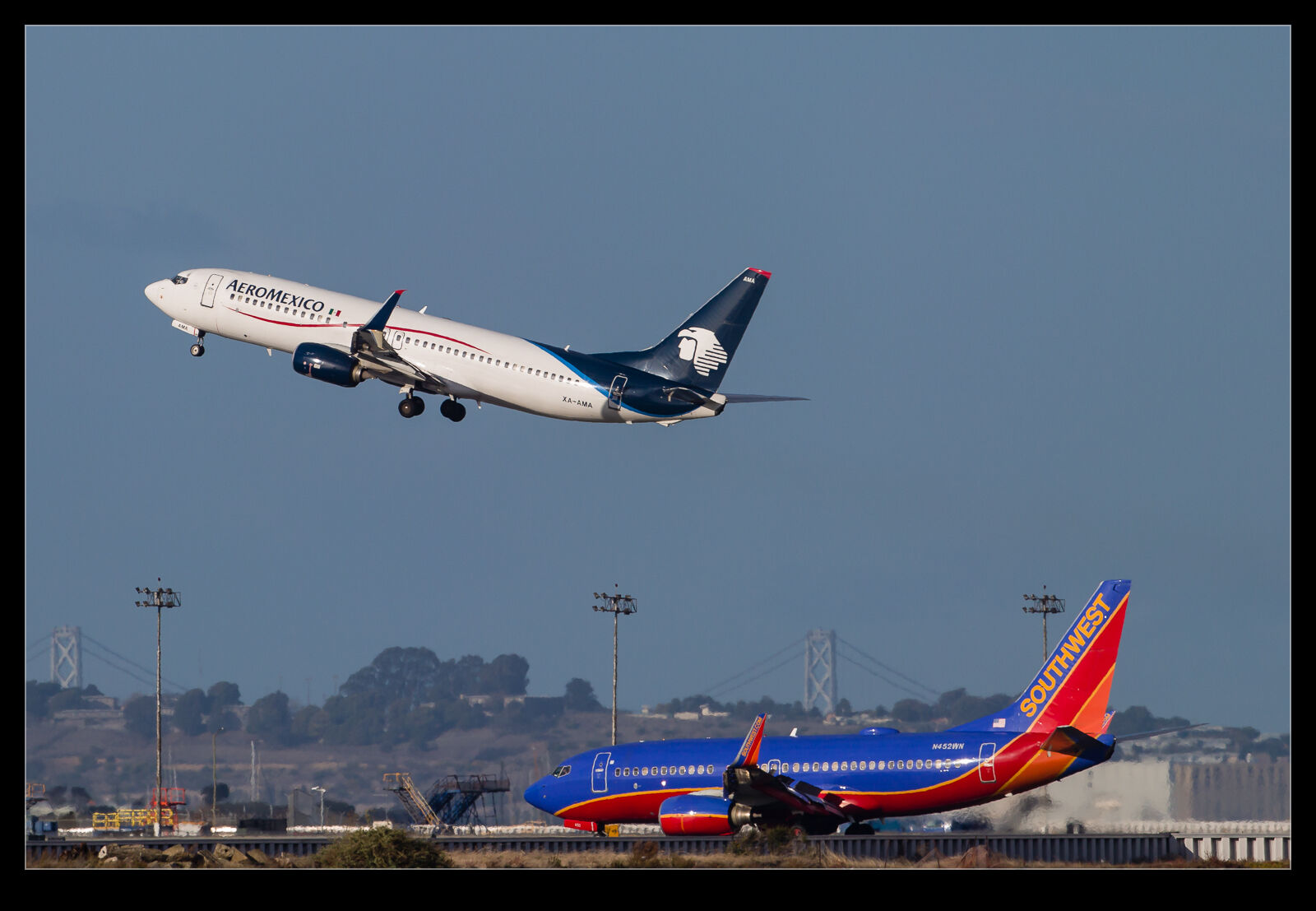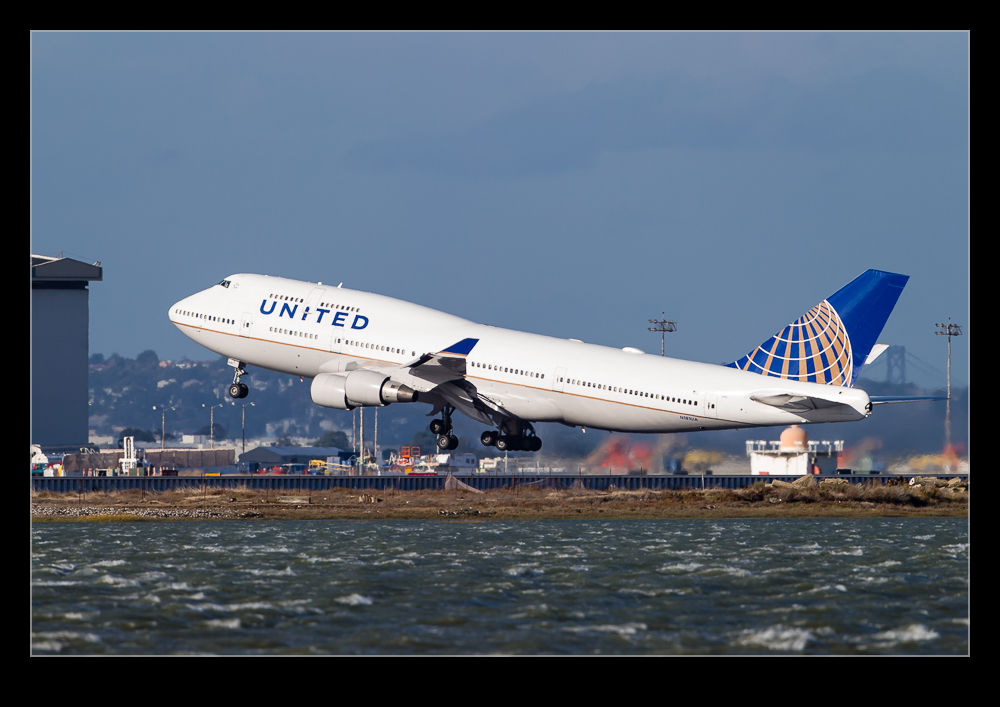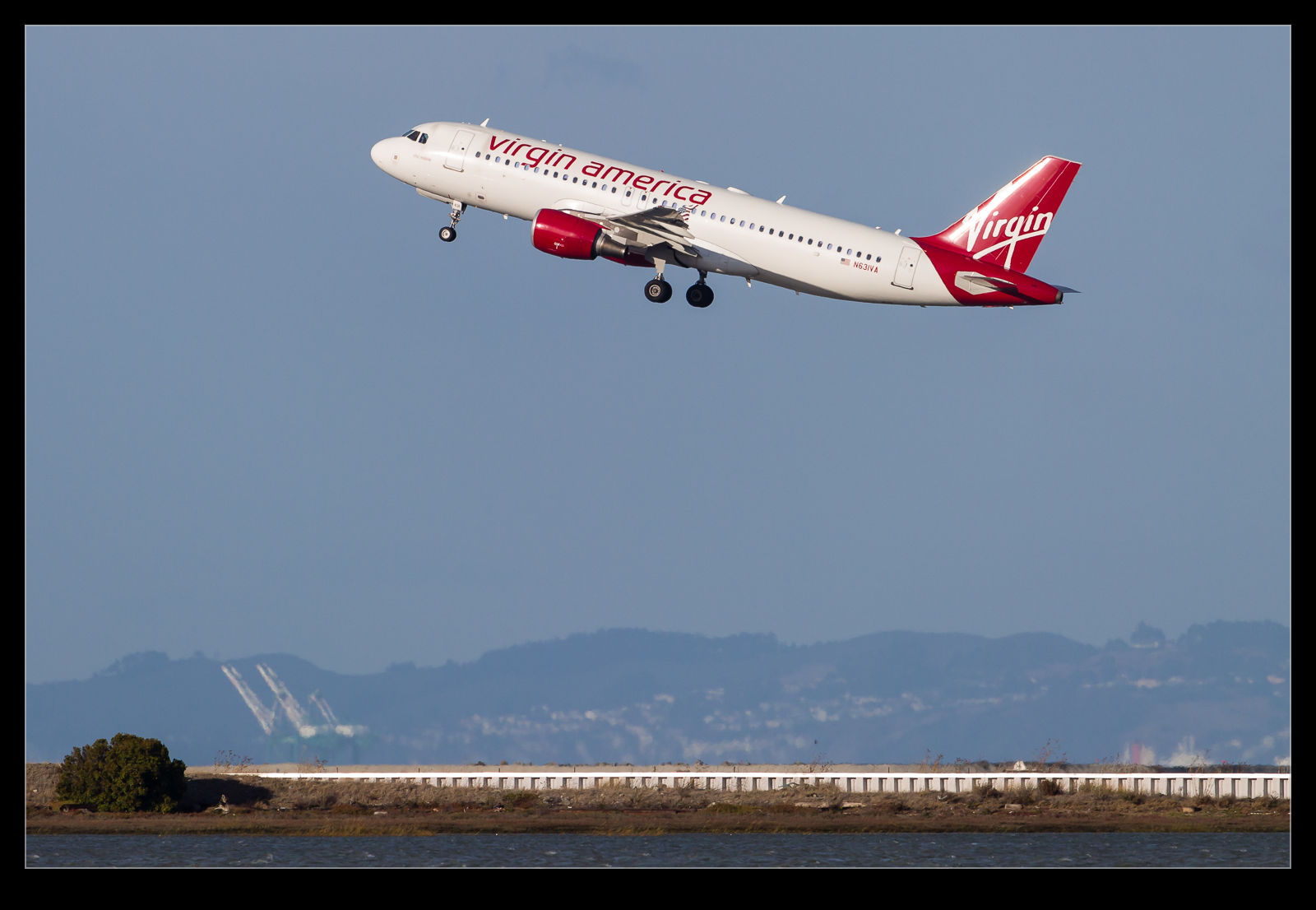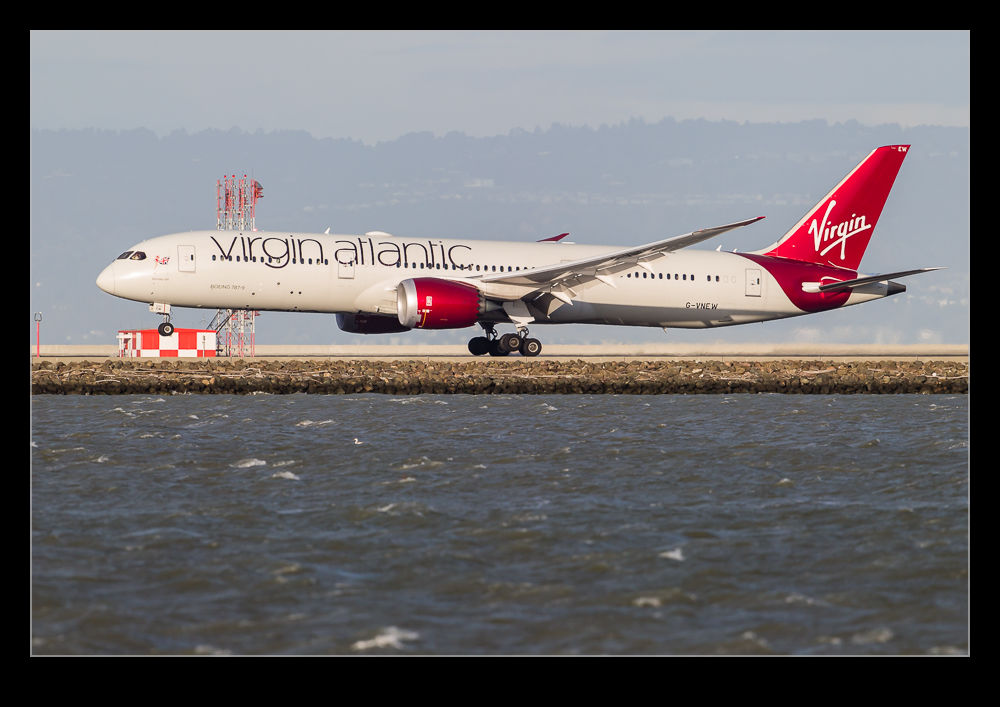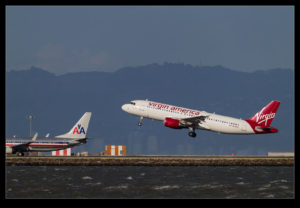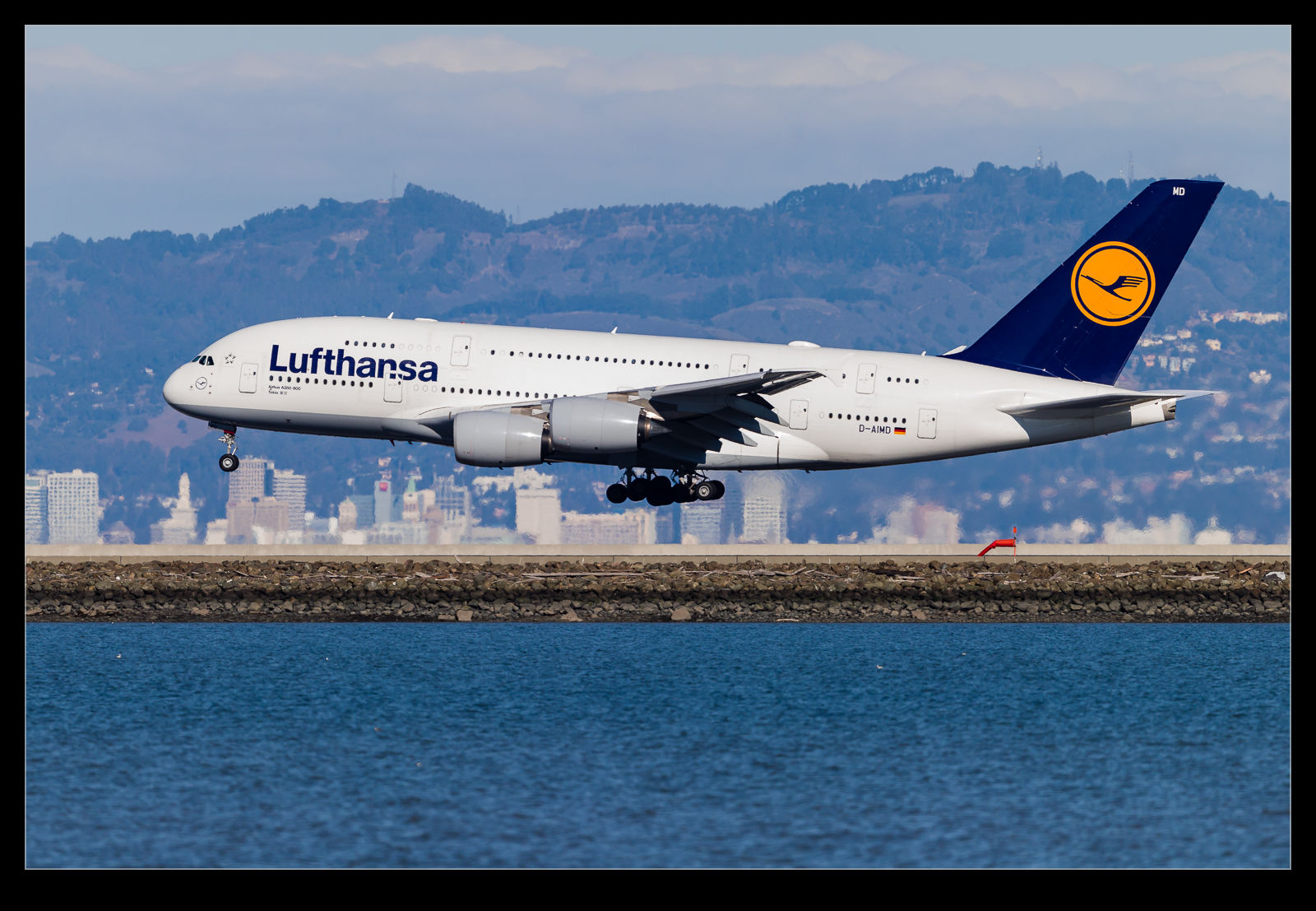
Major international airports can get very busy with a steady stream of departures and arrivals. Often it is hard to visualize how much traffic there is. It can be that the best time is at night when the string of lights strung out on the flightpaths makes it clearer just how much is out there. If you can find yourself in line (or almost in line) with the runways, you can get a better view of what is moving out there. The reversal of operations at SFO provided an opportunity to see the jets spread out across San Francisco Bay towards Oakland as they came in to land. A bit of a long lens and you can see several aircraft in a single frame.
Tag Archives: airplane
A330 Wheelies
I have seen a few Airbus A330s landing recently and they have a slightly unusual landing approach. I am not sure whether this is a feature of the design, the training techniques for the pilots or just a random occurrence that I have seen more than my fair share of. The planes appear to do a wheelie as they land. They have two main gear legs with a four wheel bogie on each. As they touchdown, they seem to hang on the rear wheels longer than would seem normal, even as the aircraft is de-rotating. Meanwhile, the reversers will start to deploy (sadly not in any shots I have) so there must be enough weight on wheels to trigger their activation. Gradually the jet sinks down on to all main wheels and the nose lowers.
Floating Down The Runway in a Jumbo
Airline operates are usually pretty predictable – at least provided the weather is not too extreme. You tend to get jets on glide path and at the appropriate speed. This results in touchdowns being reasonably close to the same place each time. However, poor are flying these planes and they introduce some variability to the mix. A recent visit to SFO included one United 747 that was a bit off target.
First I should point out that the runway in use is a long one and that a 747 at the end of a flight can get down safely in a lot less space than is provided. In this case, that helped. The 747 came across the threshold and flared for landing. It was higher than normal and must have been carrying some speed because it floated a long way down the runway. When it eventually touched down, we had the city skyline behind it which only emphasized how far it had gone. No harm done and it exited with plenty to spare but it was conspicuous enough to have got all present commenting on it.
Raptor Vortices
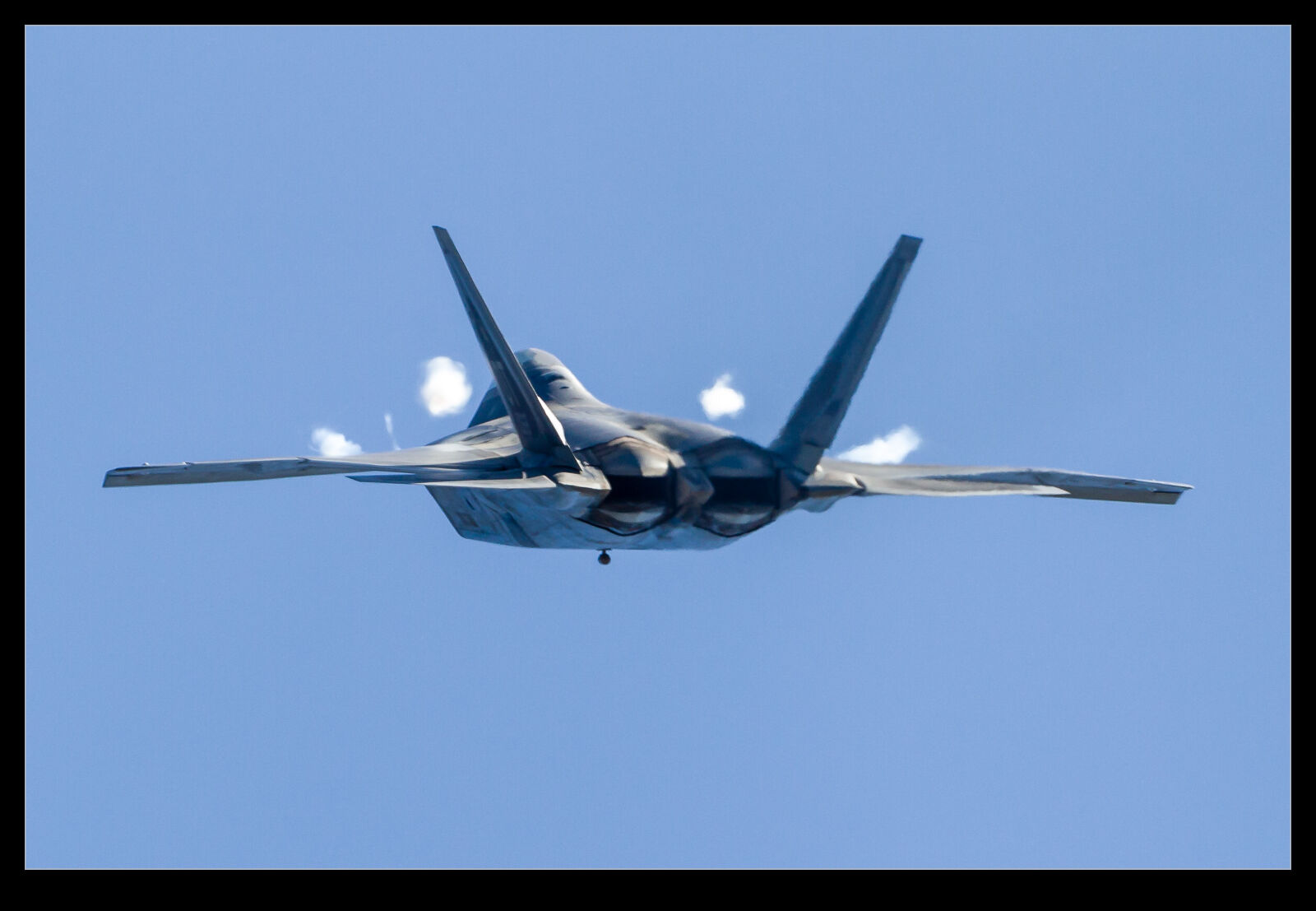
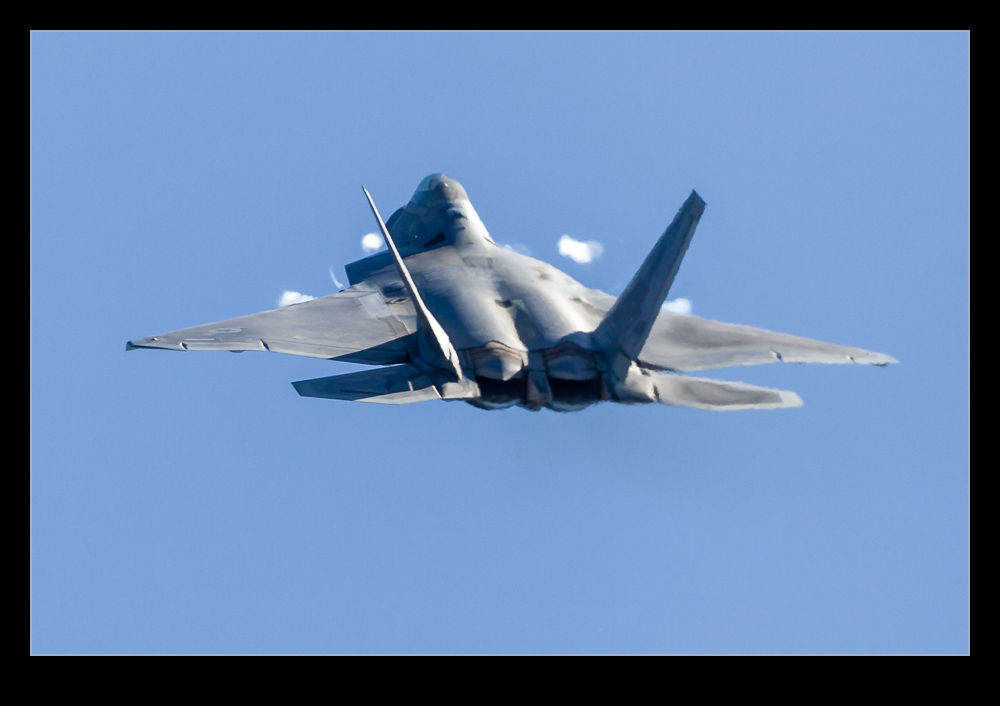
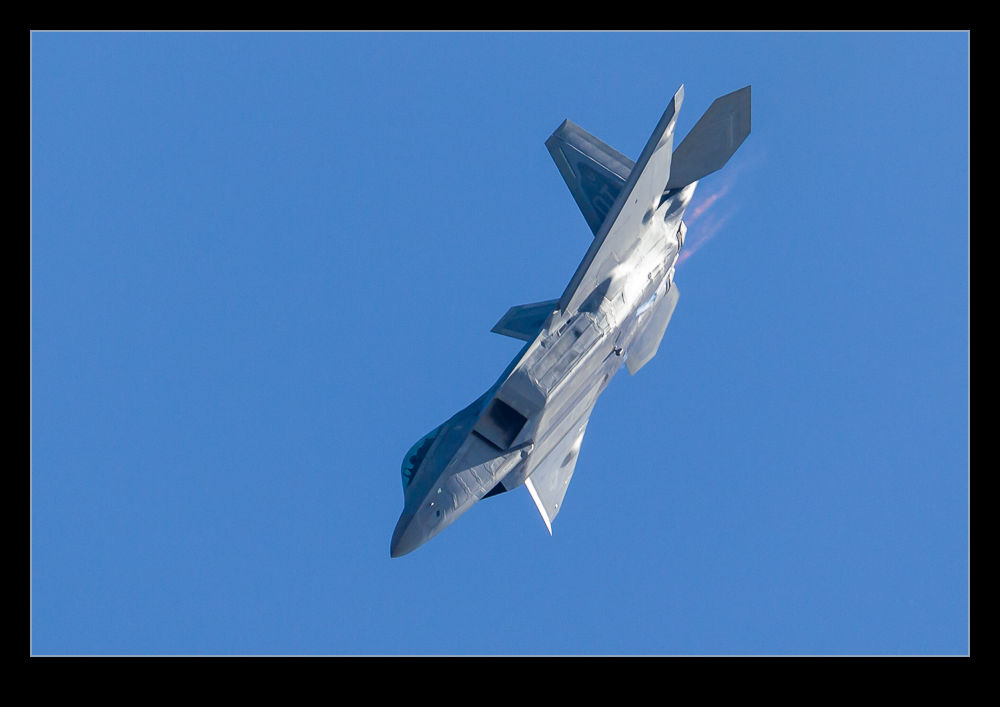
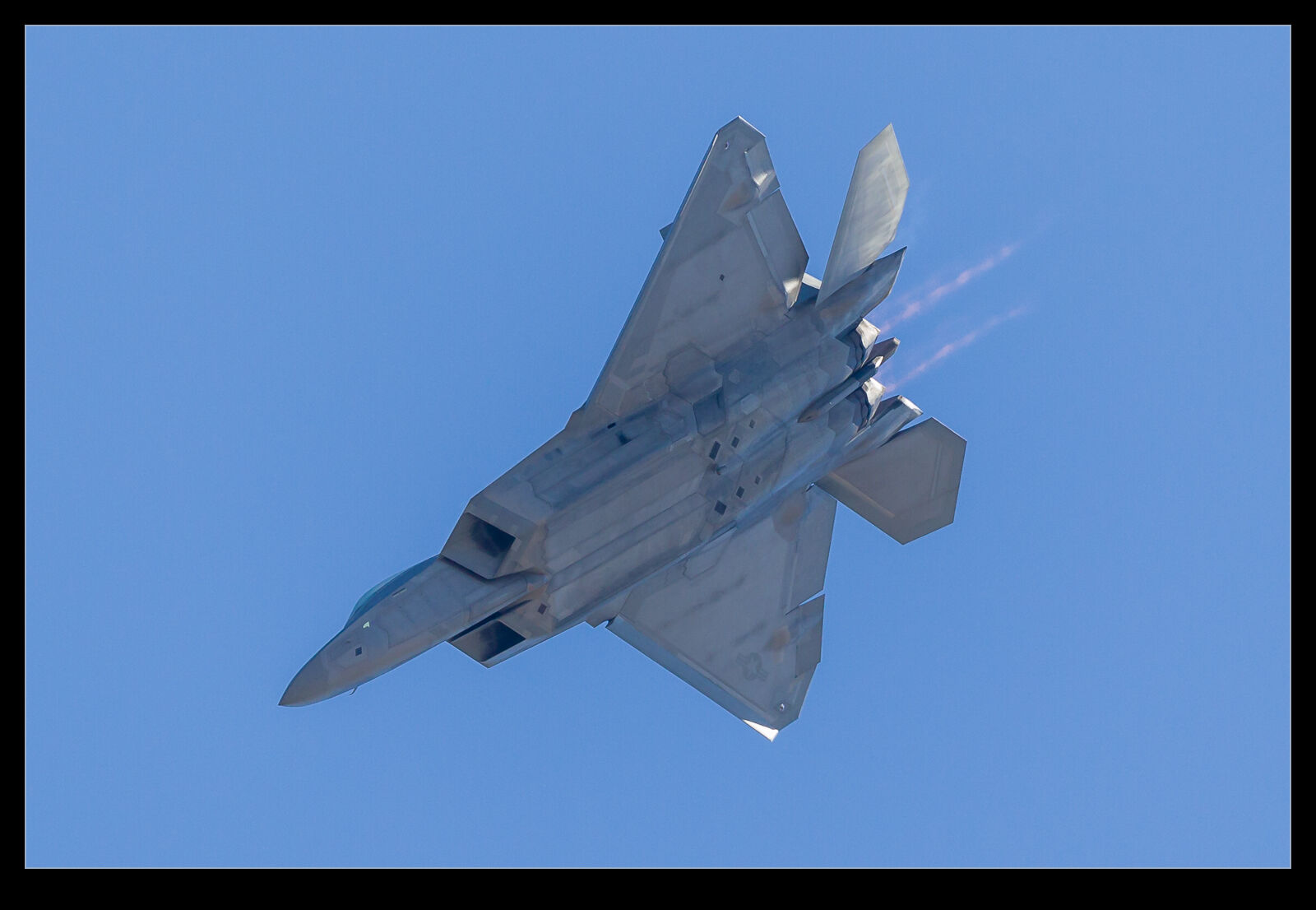
A bit more from the Raptor display today. As the jet flew away from the crowd, it pulled in to the vertical. From a view directly astern, we got a brief view of the vortices forming over the forebody. The jet was quite a way off so these shots are cropped quite a bit. I love the way the vortex sits away from the body. Chino was a pretty dry environment so not a lot of vapor to pull from the air but it still showed up nicely.
A Different Angle on a Familiar Place
What is one of the basic lessons of photography? Walk around a bit and see the different angles available to you before taking the shot. Given how often I have thought about this idea, I am quite annoyed at myself about the lesson I learned with my friend, Roger, recently. We met up by SFO for a relaxing morning of shooting. If you have followed the blog, you will know the various different places I have tried in the past when shooting at SFO to try and get a different perspective. Given all of these different locations, I have missed an opportunity that should have been obvious.
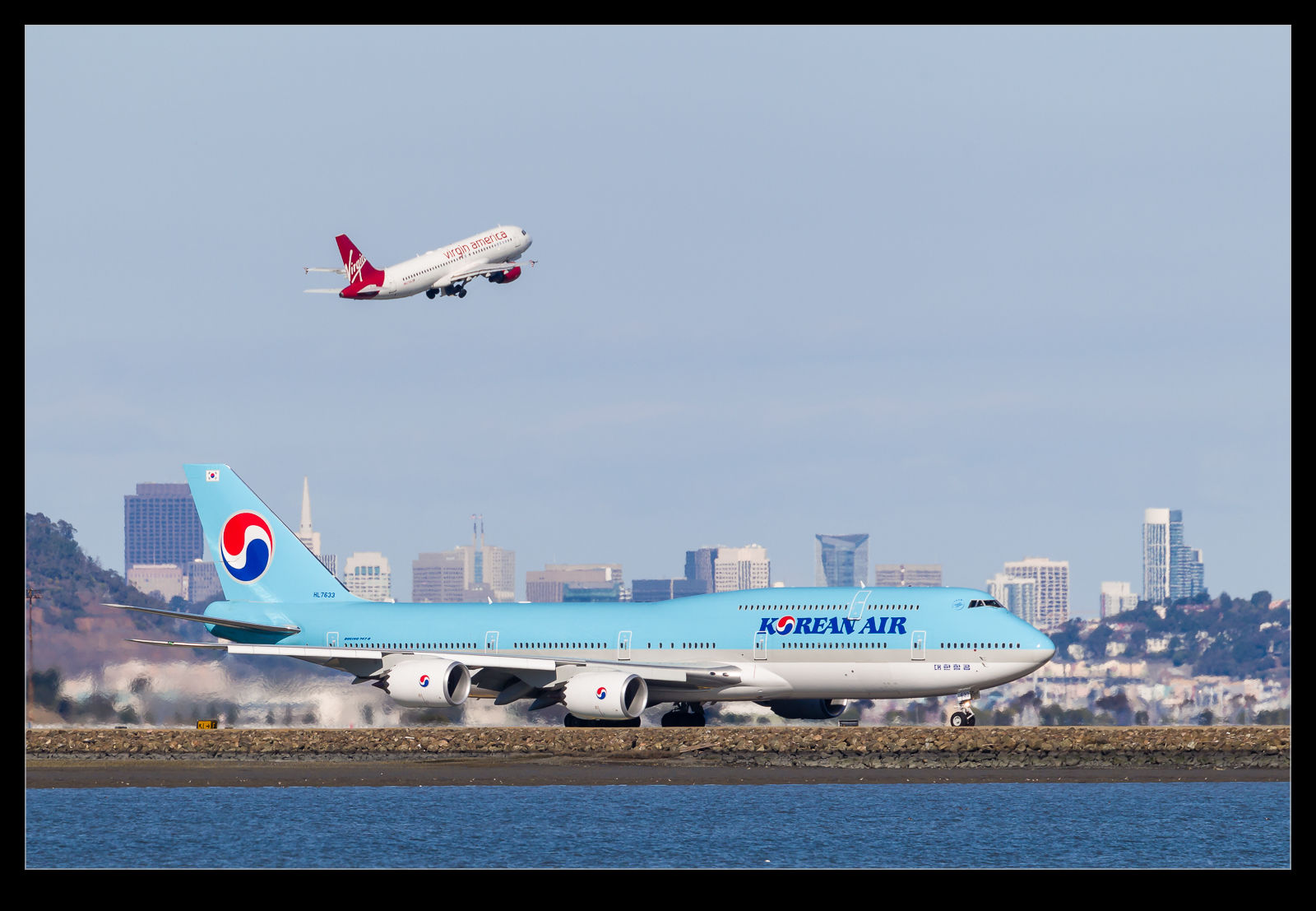
The bayshore trail near the Marriott hotel has been a regular spot for me over the years. When you look at the map, it is a place that brings you as close as you can get to the runways. Moving along the bay gradually takes you further away and, consequently, I had not given much thought to heading that way. Roger wanted to shoot along there (he has been shooting at SFO for years so his experience should not be overlooked) so I joined him. Turns out I have been overlooking a great location.
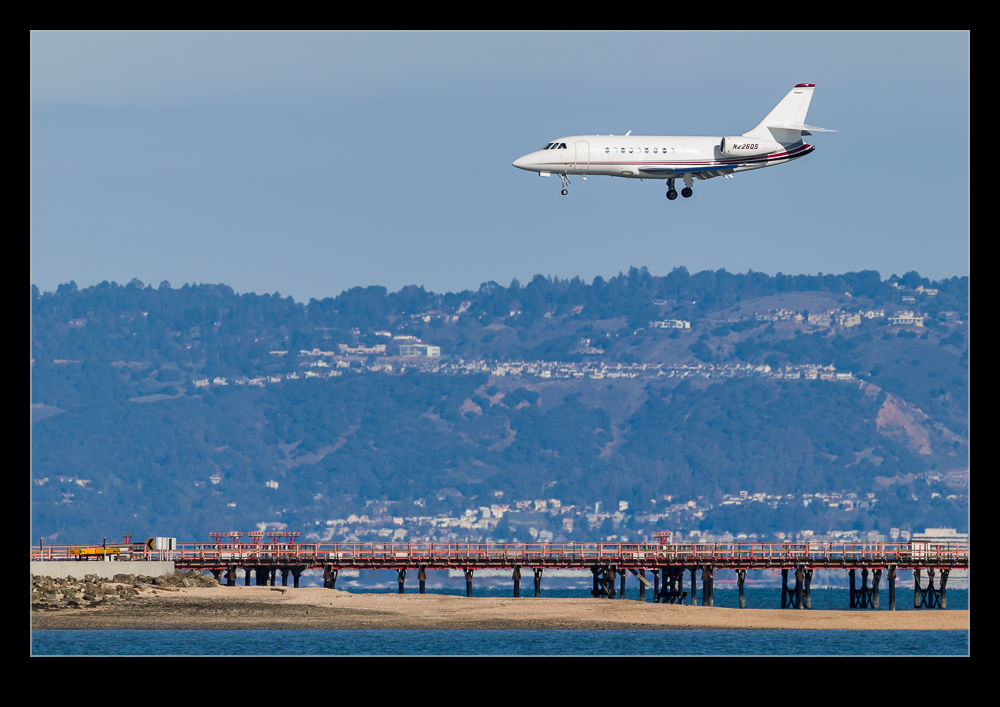
It is true that you are slightly further away from the runways. However, you are up near the threshold so have a different perspective on the approaches. Also, anything taxiing out comes past a backdrop of downtown San Francisco. You are further away from the cross runway departures but, with clear weather and less heat haze, the airborne jets are in front of the skyline. It makes for quite a nice shot and brings to mind the photos from Las Vegas that have the skyline in the background.
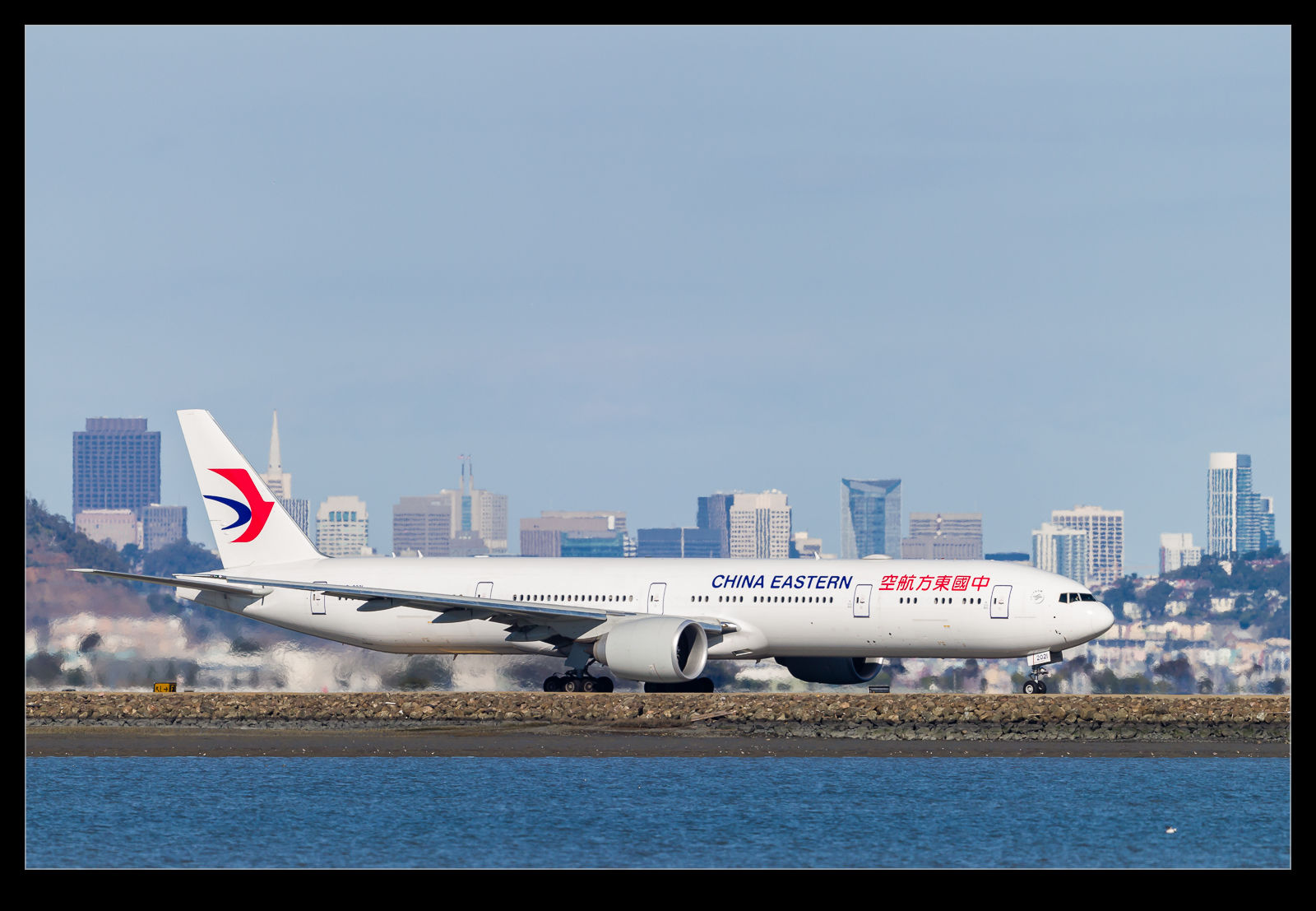
Another benefit comes as the tide goes out. The mudflats at low tide can be problematic from a heat haze point of view. Further along the shore, the water doesn’t retreat too far so you have more water and less distortion. I imagine summer will still be a problem but for winter shooting it works well. A different angle, a nice background, less haze and still not to far away. This is a good option. Also, you can park close by without trouble which is certainly not always possible at the bayshore given how popular a place it is. I am late to the game but glad to have learned my lesson.
Skywest Races Southwest
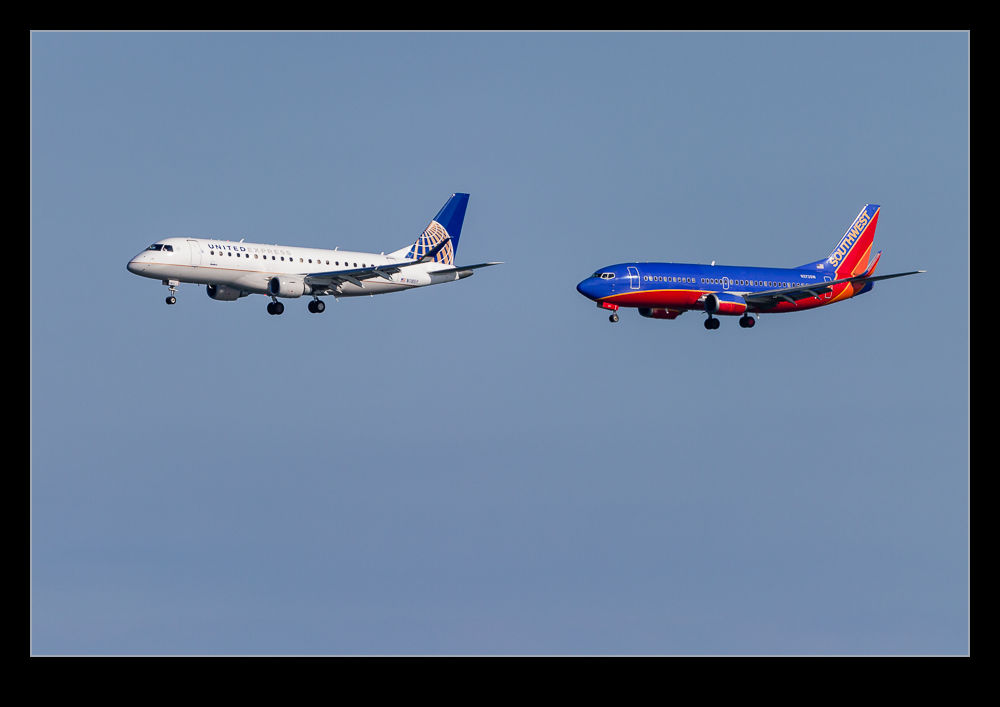
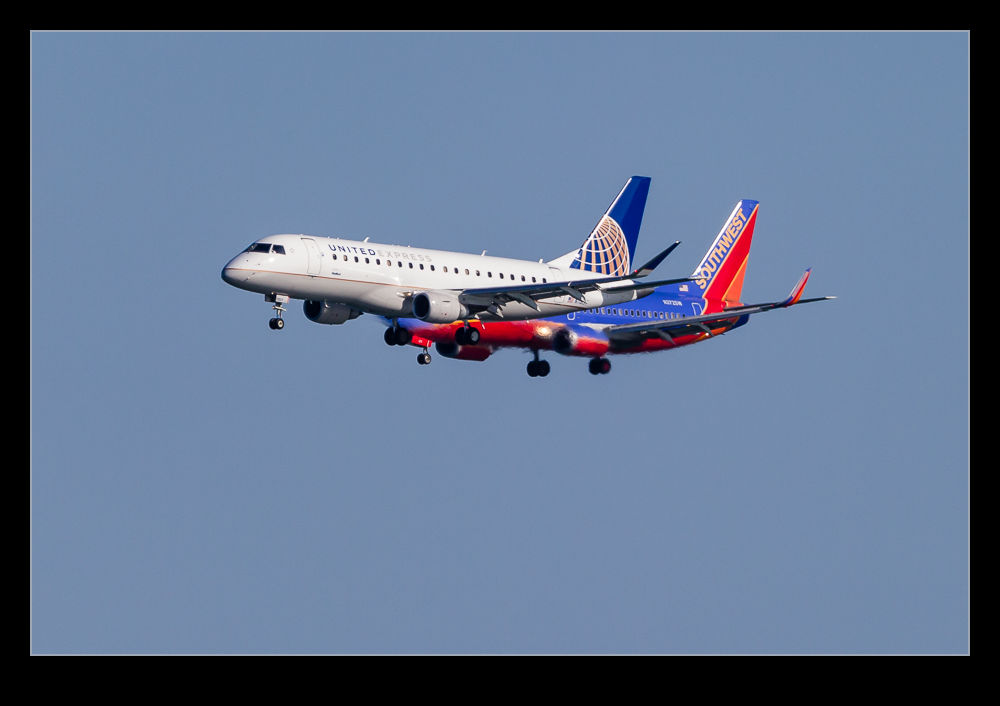
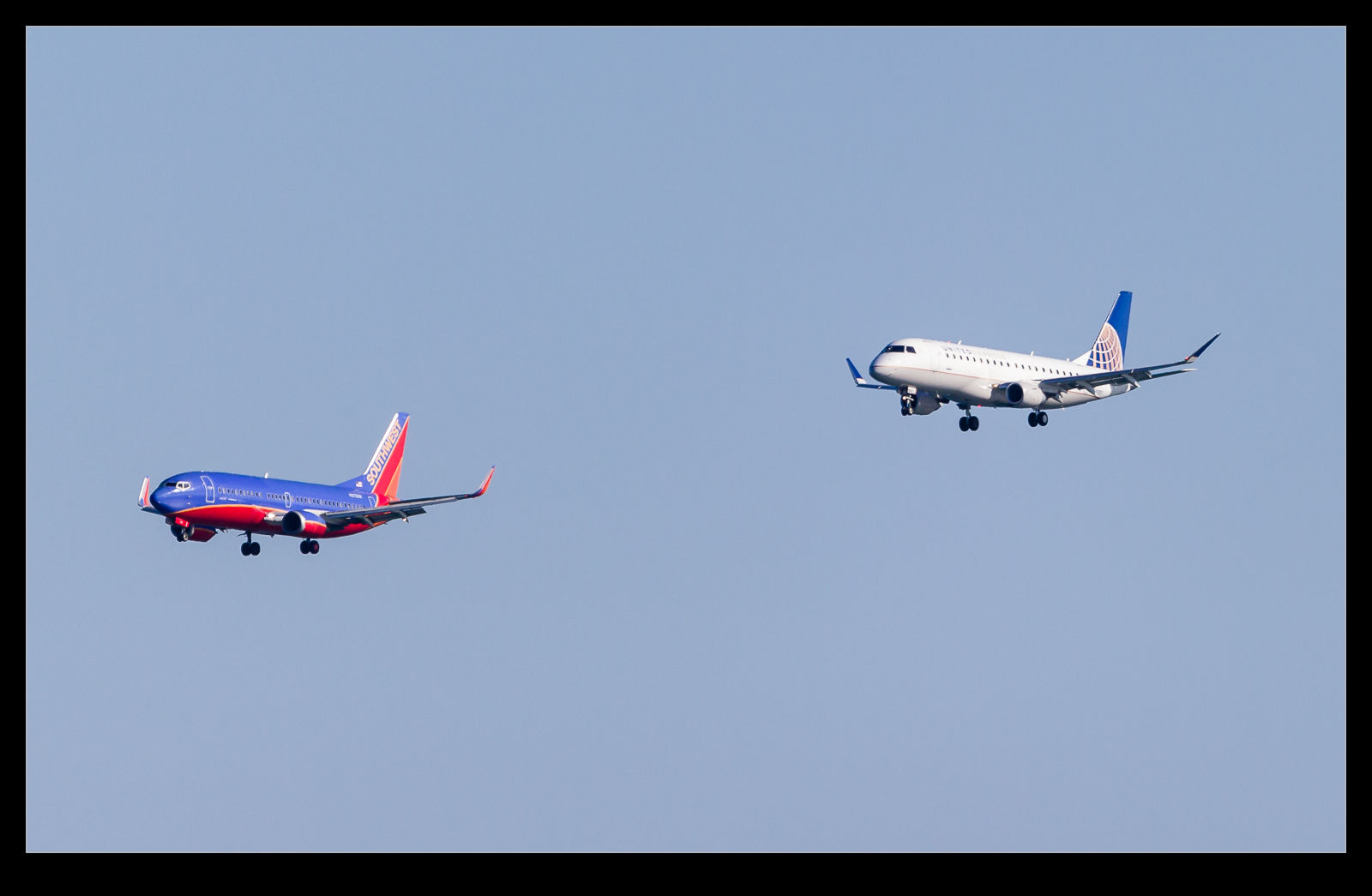
I like having more than one airliner in one shot as you have probably figured by now if you read the blog a lot. Since SFO has parallel approaches, getting this type of shot is not a rarity although you do appreciate it when it works out. In this case a Skywest Embraer E175 (operating for United Express) and a Southwest 737 were lined up on the approach. They were offset a bit so their relative position from my viewpoint changed during the approach which provided a nice variety of compositions.
Reversed Operations at SFO
An early morning start had me in Oakland looking for a shot that didn’t ending up working out the way I had anticipated. It didn’t take long to work out that I wasn’t going to be successful so I started looking for an alternative. It turned out that the winds were from a slightly unusual direction and SFO was running with operations in a different direction to normal. As a result, while I had been to SFO a few times in the previous month or so, I decided to head along.
Normally, the arrivals at SFO come in on the parallel 28 runways with departures of most jets from the 01s with the heavy jets going off the 28s in between the arrivals. With the wind switched around, most of the departures were coming off the 10s heading down the bay while the arrivals were coming across the bay from the Oakland direction to land on the 19s. In the morning, this meant the light was well placed on the nose of the departing jets and it also provided good illumination on the arriving jets. You also see them from an angle that is not normal at SFO.
Getting operations in these directions when the skies were clear and the temperatures cool enough to avoid too much in the way of heat haze was a combination I couldn’t pass up. Unfortunately, it wasn’t to last. While I could see jets out over the bay on their way in, some of the departing jets were starting to taxi around to the thresholds of the 01s. Sure enough, after the last of the landings, the departures started reverting to normal and the arrivals started to appear on the 28s. Not the end of the world but a shame that I didn’t get some more of the bigger jets departing from the 10s. They would have been cool to see given the favorable light.
Another 747 Operator Bites the Dust
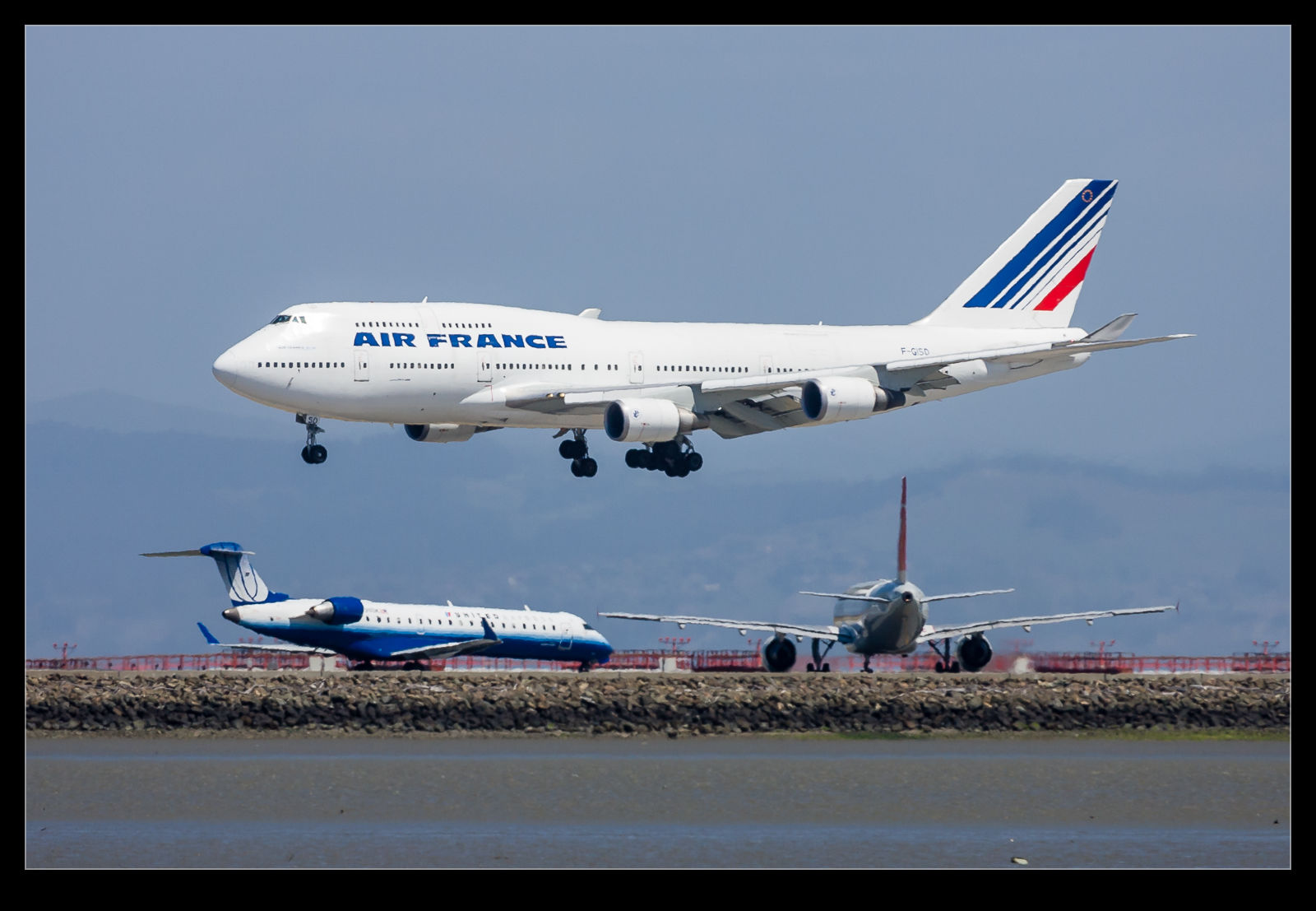
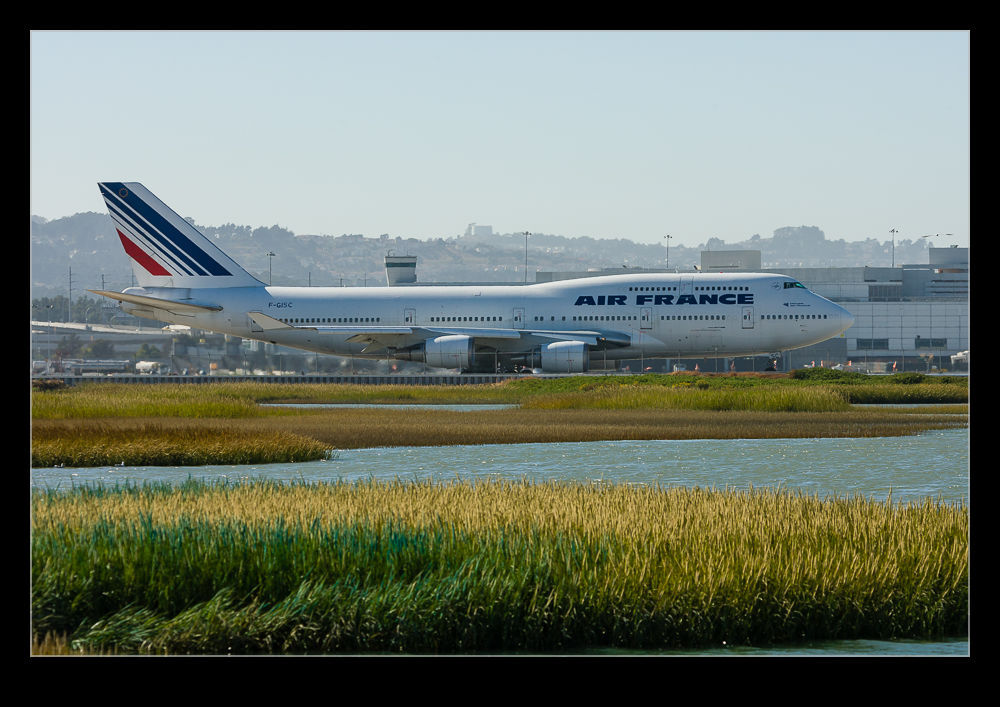
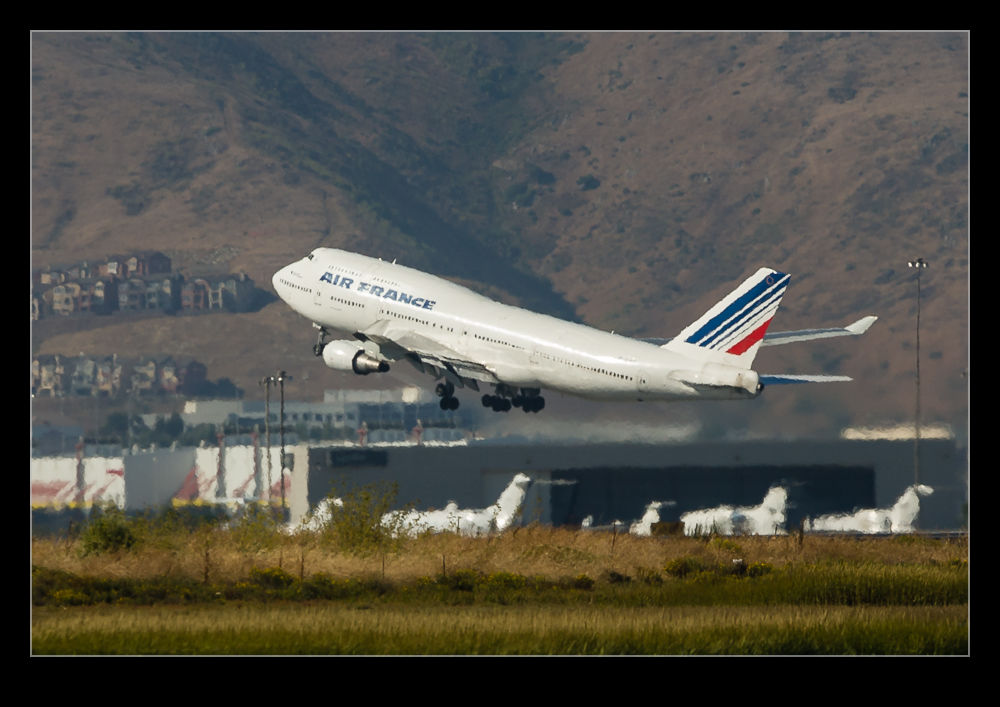
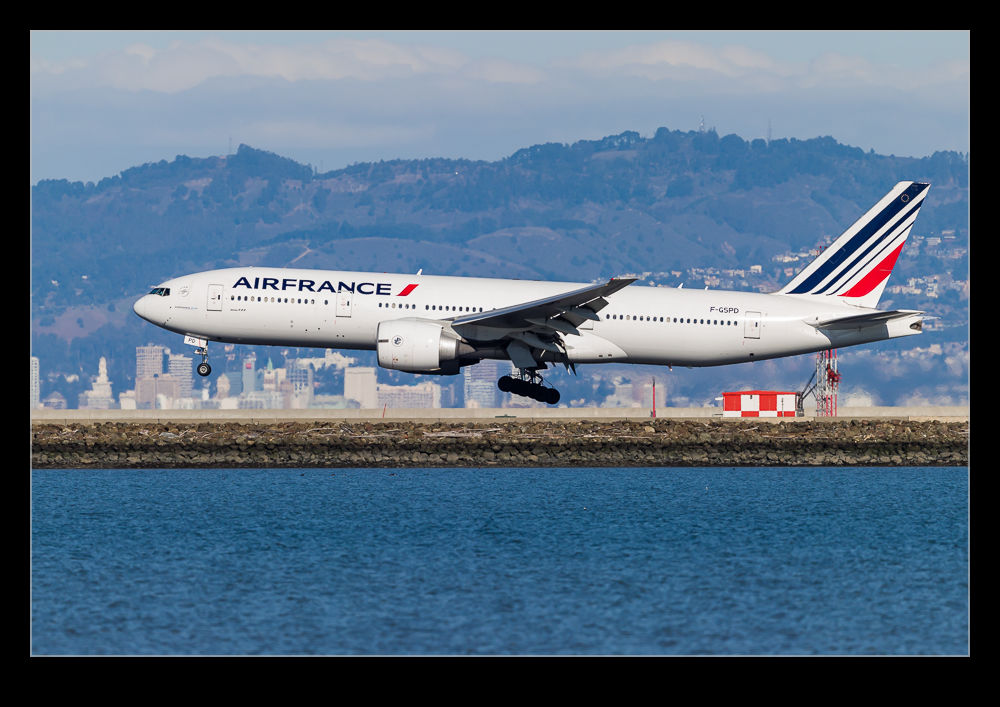
There is a steady stream of Boeing 747 fleet retirements right now. This month another one occurred when the last Air France 747 flight took place. I have not seen a huge number of their Jumbos over the years but they have cropped up from time to time. It turns out that the best shots I have got have all been at SFO although these were mainly taken long before I moved here.
Anyway, farewell Air France 747s. I wonder which operator will be next?
Interesting Raptor Control Inputs
It might be a long time ago that I did anything closely related to the engineering of fighters but there is still a part of me that is a stability and control type of guy. Watching the control inputs and responses of planes is cool as far as I am concerned. With the advent of fly by wire designs, there was considerable scope to play around with the use of the control surfaces to achieve different aims. With no direct linkages to the stick, the pilot can be totally unaware of the choices the system is making for control combinations.
The engineers may have chosen to program the trailing edges to have different deflections inboard and outboard to offload the outer portion of the wing for example. The F-22 makes use of a variety of interesting control inputs. For example, it doesn’t have a traditional speed brake. I assume this was removed for stealth reasons. Instead, the control surfaces move counter to each other. You may have inboard flaps going down and outboard flaps going up. The moments cancel out but all increase drag incrementally so the effect is like having a speed brake deployed.
Since the aircraft is also unstable, you may have tail deflections that seem at odds with the maneuver being flown. During the Chino show, the usual routine was flown (usual for an F-22 but not many other jets) and, as I look through a bunch of the shots, I see some quite unusual control inputs. If you are in to such things, these may appeal to you. Gary, are you reading this?
Windy Day at SFO
The winter brings days with clear skies and nice light angles. That is not all it brings, though. It can mean strong winds. One of my visits to SFO last year coincided with some very strong winds. The wind was gusting over 40kts on a regular basis. This was far to strong to allow operations on all of the runways. With the wind almost directly down the 28s, those runways were in use for arrivals and departures.
The wind might have been strong but the conditions weren’t bad for photography. The sun was actually out and the light on the planes was pretty nice. However, using a long lens was a bit more tricky with the wind since it tended to blow the lens around a lot. I spent a lot of time trying to stay in the lee of a tree to shield myself from the worst of the gusts.
Consolidation of all operations on the two runways meant that things could get pretty congested near the thresholds. Plenty of jets were lined up ready for departure in between the arrivals. Having so many jets up there is relatively unusual. It is a bit problematic for some shots though. The arriving jets are behind those awaiting departure slots. The waiting jets produce a lot of distortion from the heat of their engine exhausts. This can be quite frustrating since the number of jets means that clear space for a shot is limited.
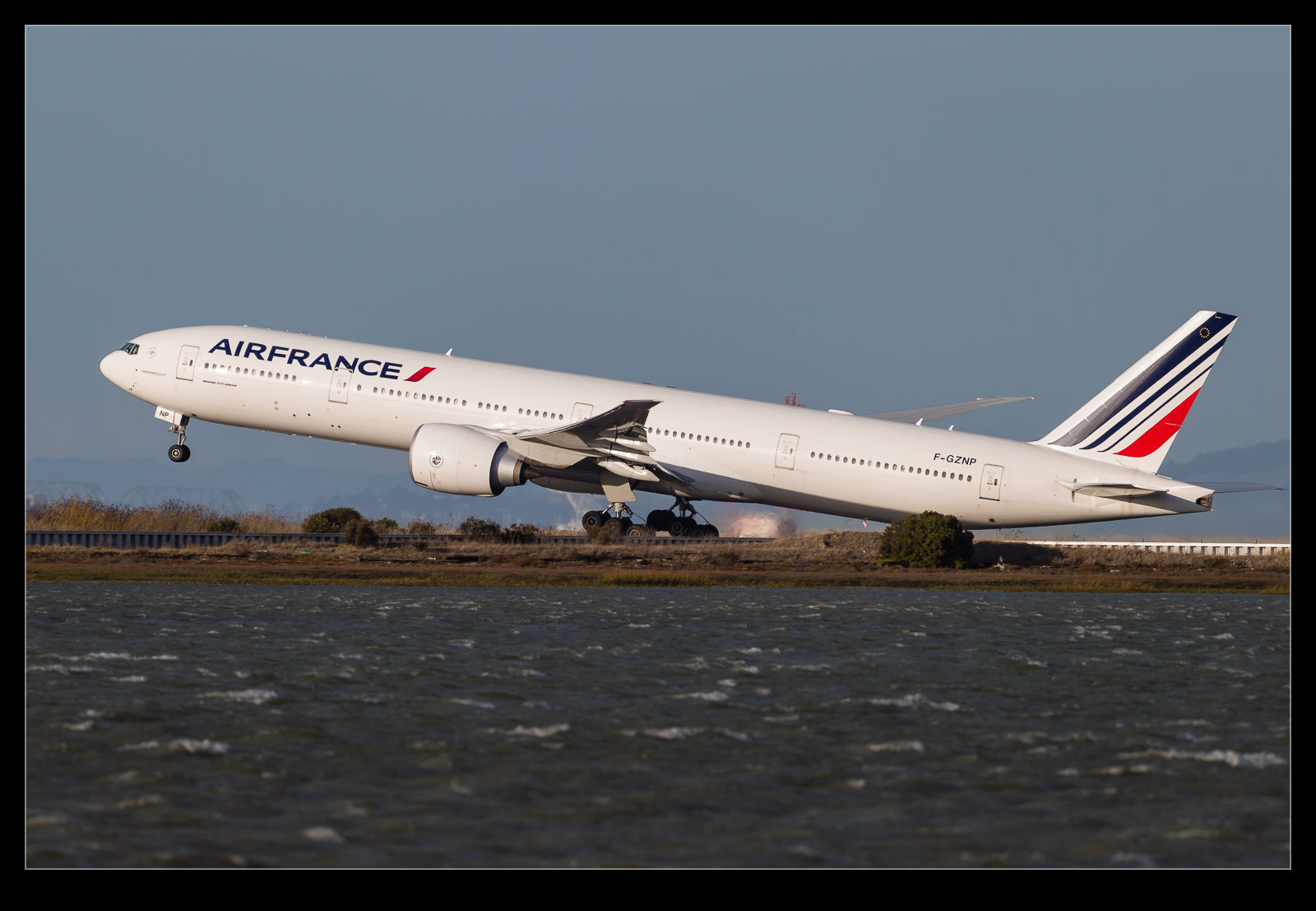
There are more benefits of course. Having very strong winds straight down the runway means the departing jets have a big advantage. Nearly 40kts on your ASI while standing still means a lot less ground roll is needed to get airborne. The narrow bodies were jumping into the air long before they got off peninsula extending the runways out into the bay. The same was true for the wide bodies. The heavy 747s always have a longer roll but they were getting up before the cross runways. The big twins were getting up very quickly. I had a pretty good view of the 777s as they departed and got what is probably my clearest view yet of the truck rotation on the 777-300ERs – a quest familiar to the regular readers.
Fighting the wind made for a tiring day. I decided I would wait around until the Virgin 787-9 showed up and then call it quits. This was due to be one of the last big arrivals prior to the sun disappearing. When it came in, the light was very nice. I got some good shots and then packed up to go. Going back through the shots since, it was quite clear that the wind was a big factor in my shooting. The sharpness of some shots suffered but the bigger issue was tracking accurately. Far to many extremities of planes got chopped off. Despite, that, the opportunities a day like that offers made it well worth doing and I would be back in a heartbeat if the conditions come together.