Tag Archives: Lockheed Martin

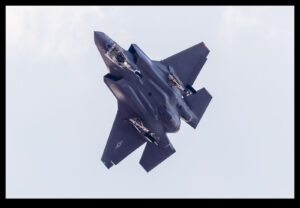
Weapons School F-35s

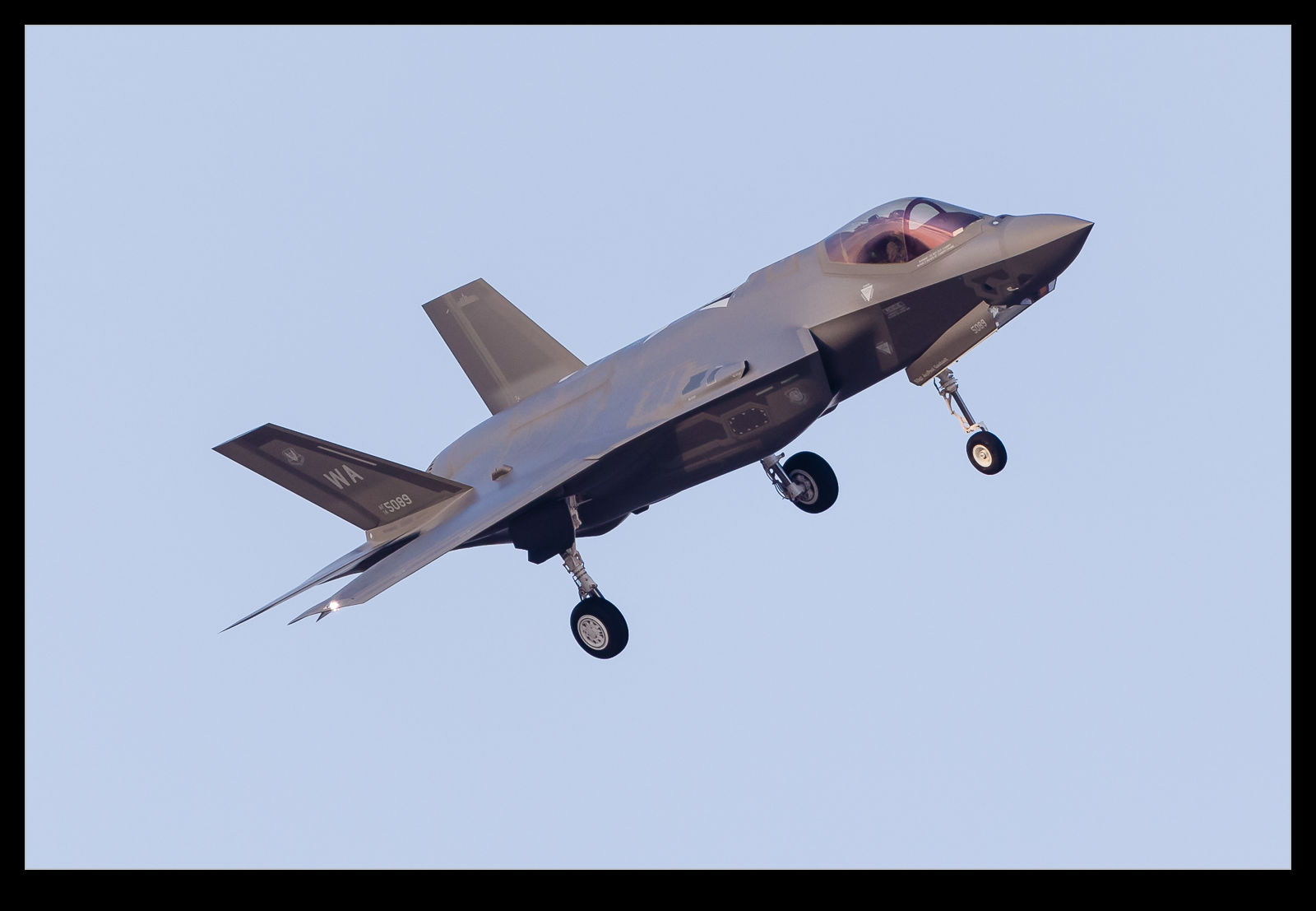
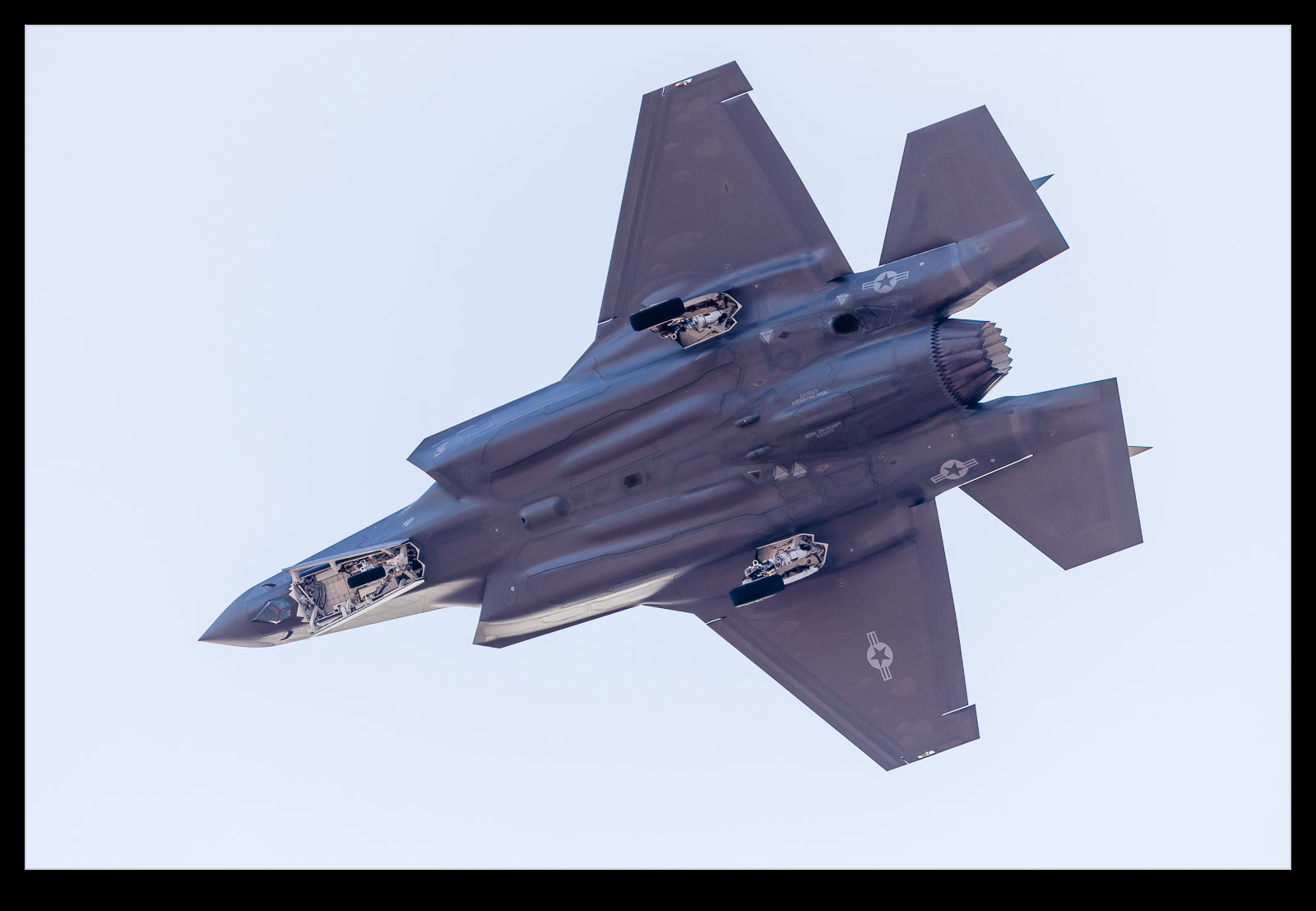
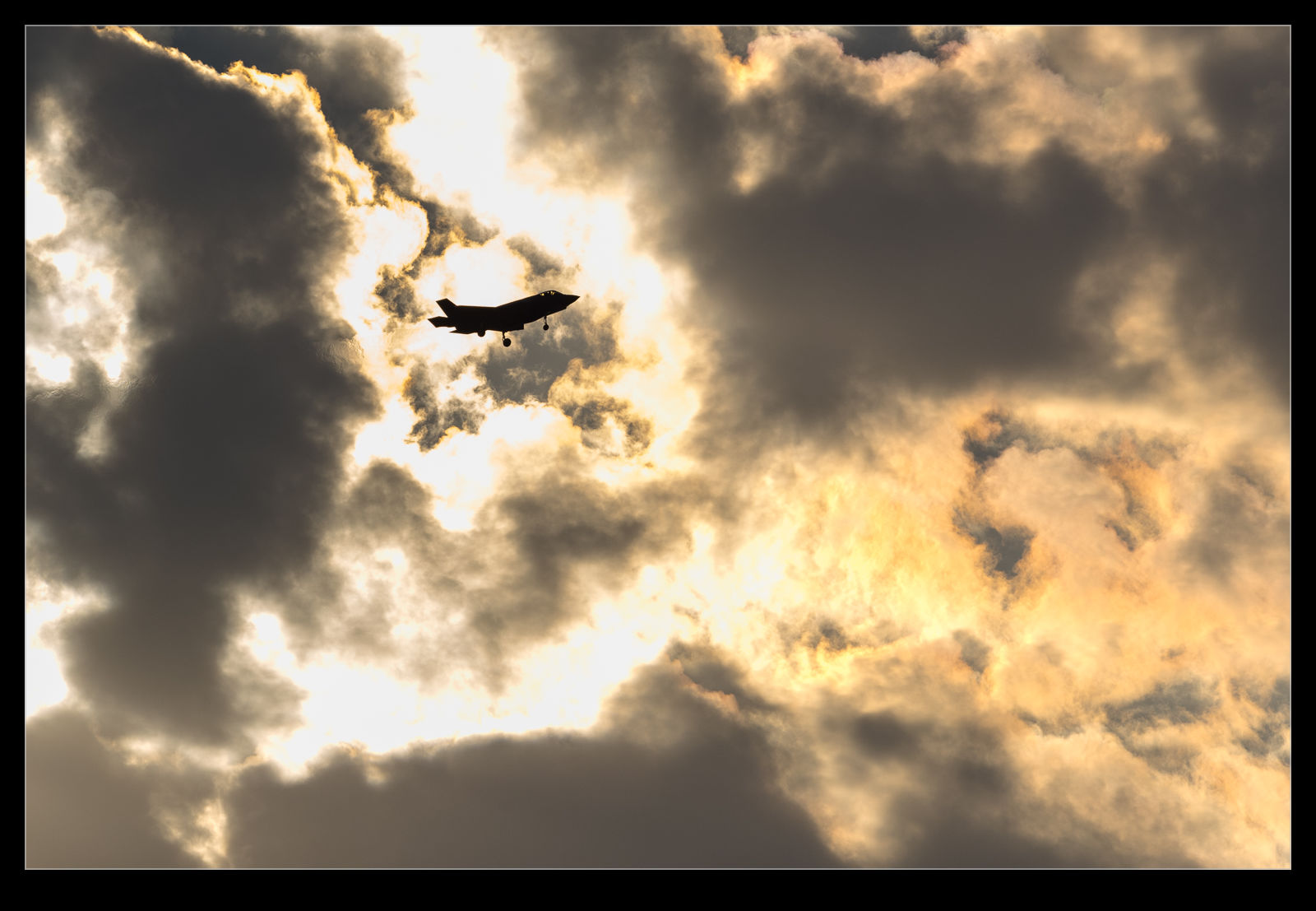
B11I6272.jpgThe local Nellis traffic gets a bit restricted by the exercise traffic when Red Flag is underway.  Get a mission in during the morning or wait for the gap between the afternoon and the evening evolutions to get airborne.  For those of us outside, they provide some additional aircraft to shoot.  They may also give some variety in types (although given how few types there are these days, not a lot).  Before the F-35 becomes ubiquitous in service and replaces the multiple F-16 units that currently participate, it is something a bit different.

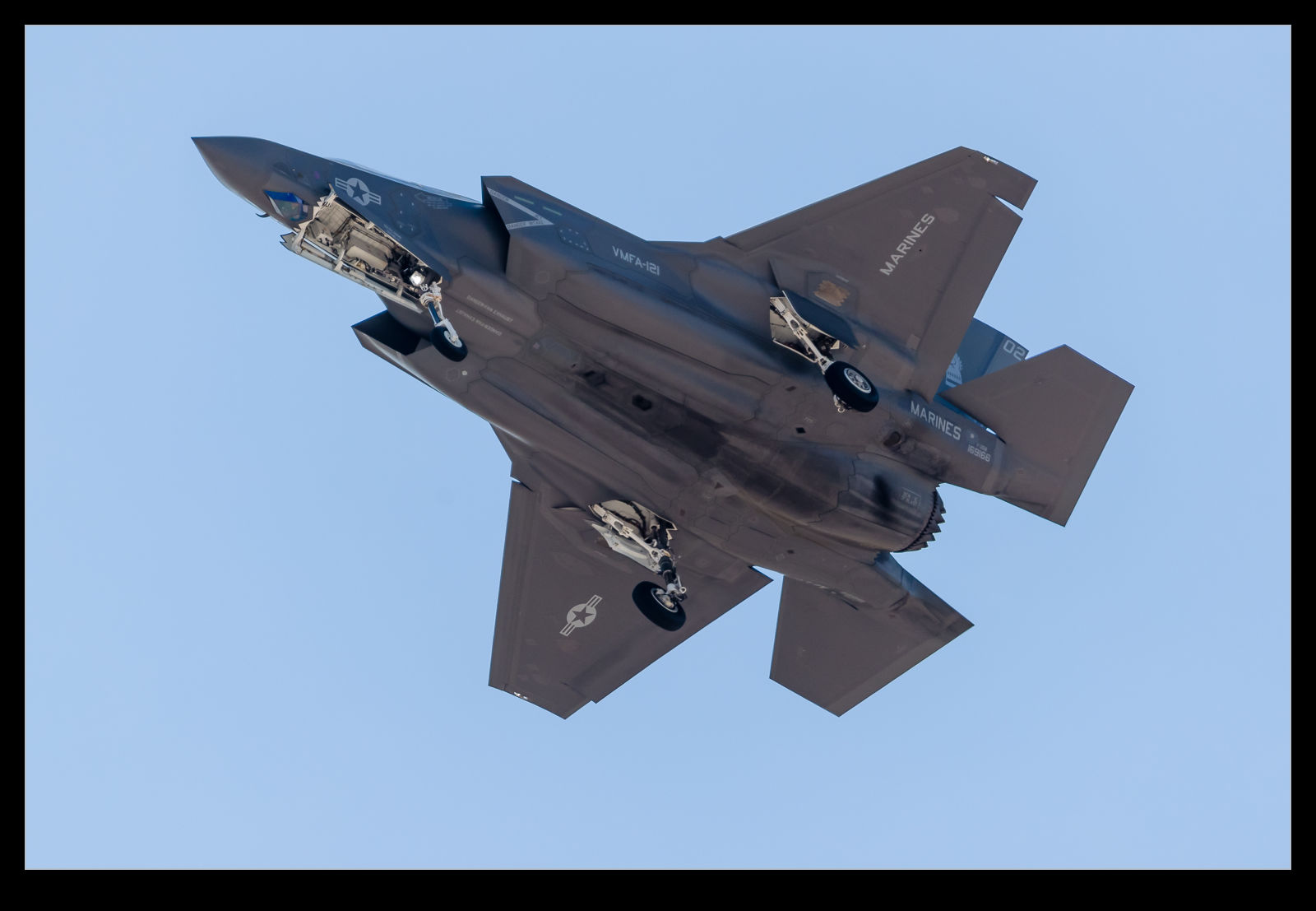
B11I6235.jpgThe Weapons School has a bunch of F-35A jets now.  The first ones to arrive at Nellis were OT jets for operational test and evaluation.  Now the Weapons School is using them to develop tactics and employment.  The lines of the jets are a bit different from the Marine Corp F-35Bs that I shot at a previous exercise.  Without the lift fan, the back of the airframe is smoother while the canopy is blended into the spine in a different way that enhances visibility and fits with the different profile.  The jets were pretty active while I was there so I managed to get a few shots.  I had seen them during previous visits but, when on base we had been barred from shooting them and, while off base, I had always managed to be in the wrong place to get them.  While I am currently pleased to have got some shots, I will soon be used to seeing them around all over the place.

B11I6363.jpg

Lumps and Bumps on the Sufas

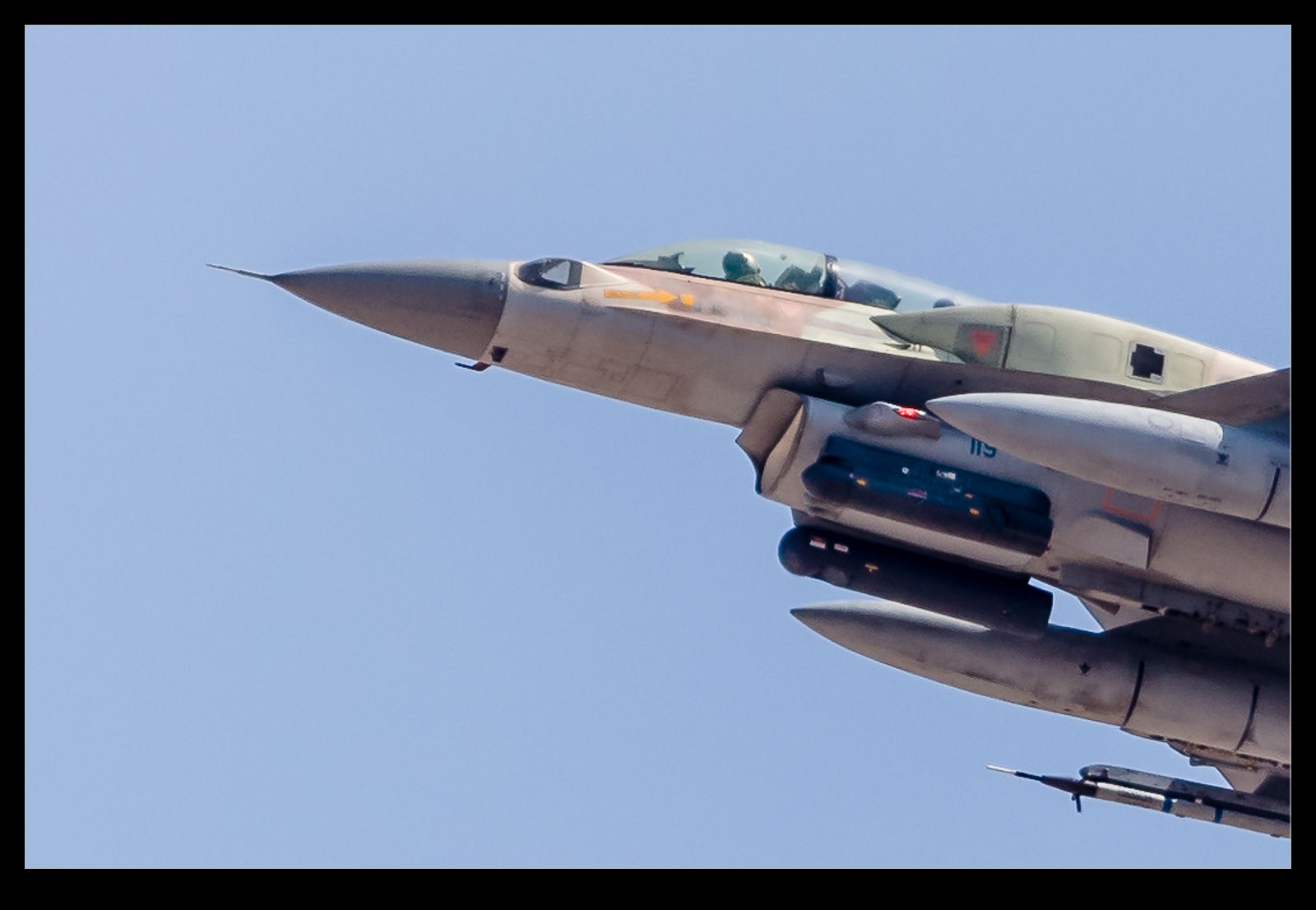
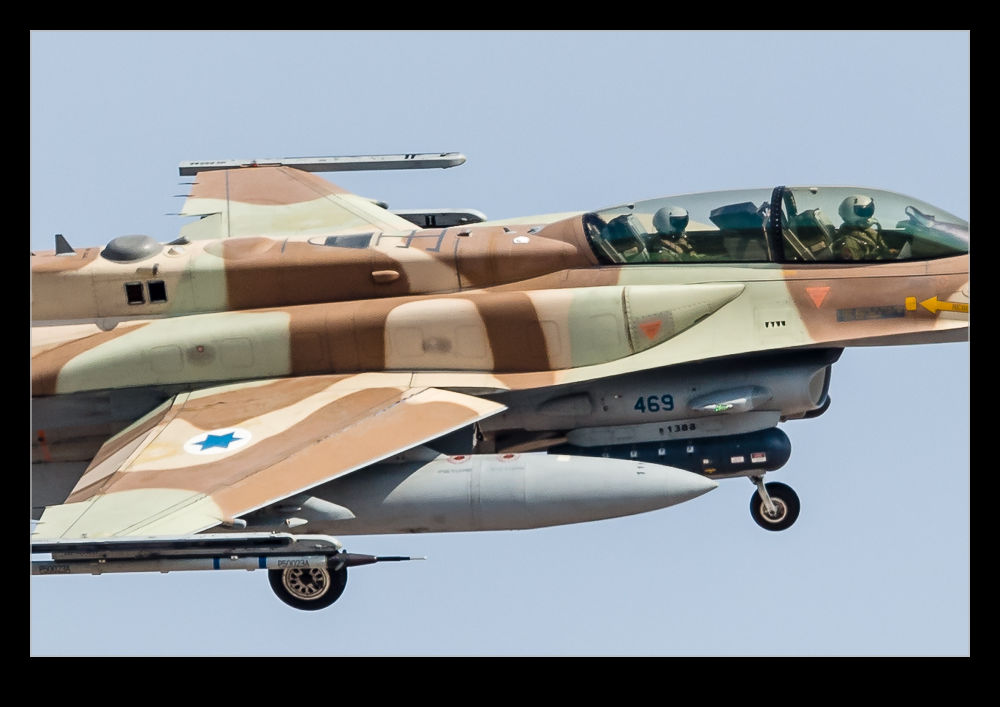
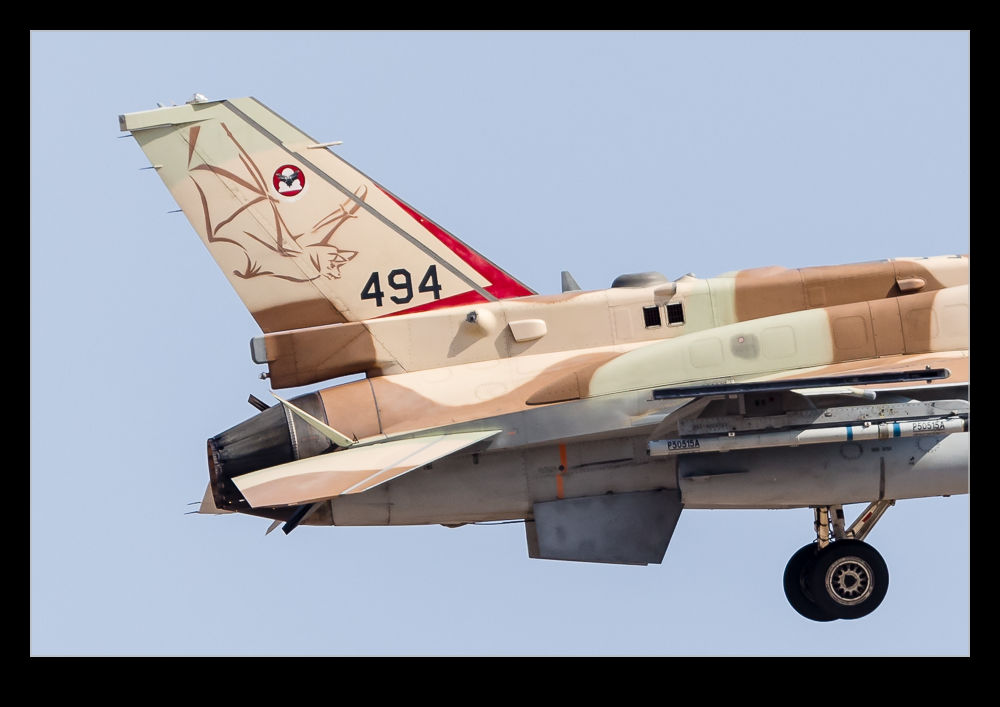
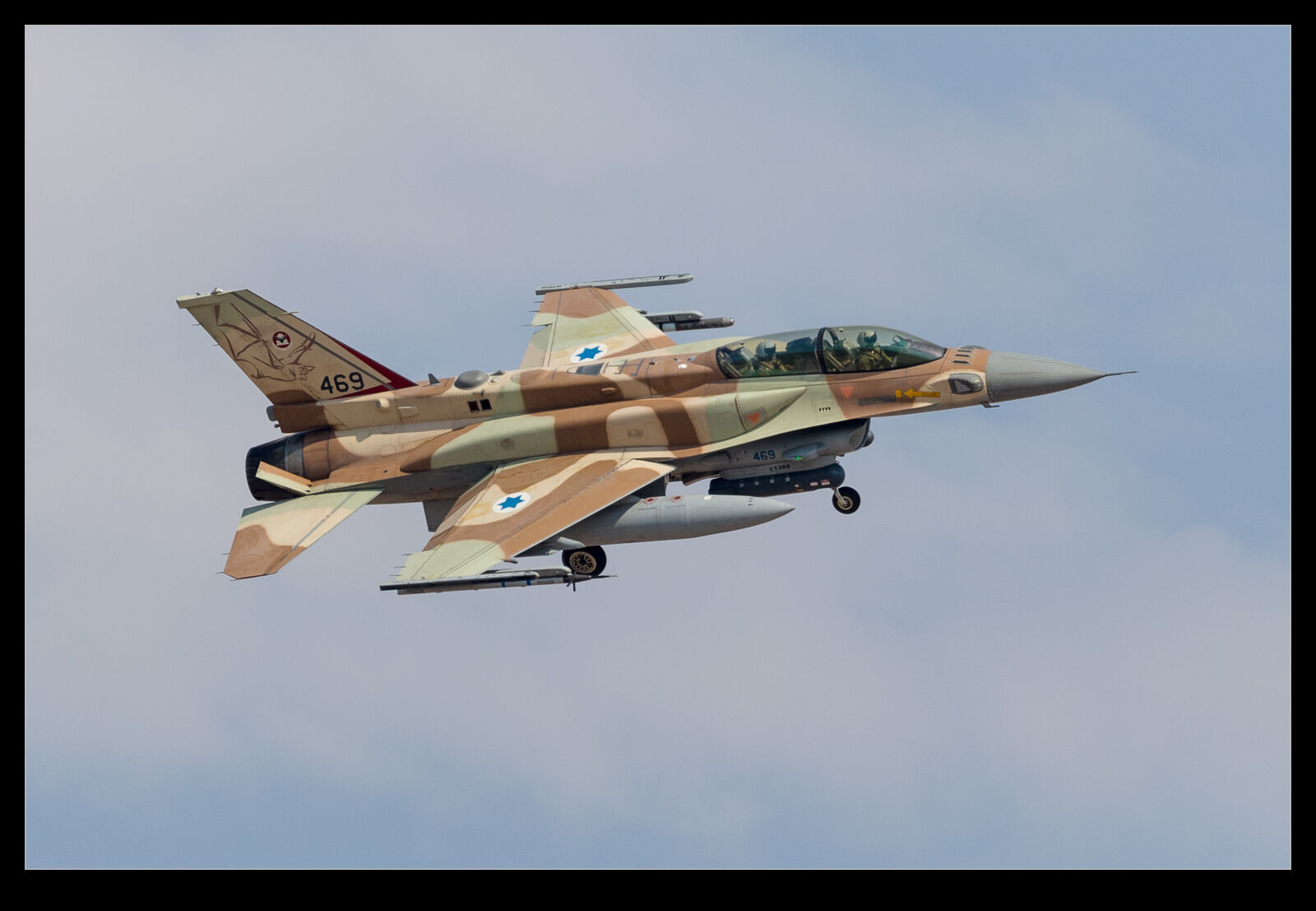
B11I3915.jpgLockheed Martin has been evolving the F-16 over the years.  It has been massively transformed from the original F-16A (which was a big change from the YF-16) to the Block 50/52 version.  The development of the F-16E/F for the UAE took the jet up another level.  When the Israeli Air Force decided to buy an updated jet, they created the F-16I Sufa.  A lot of local electronic systems are incorporated to the LM designed airframe.

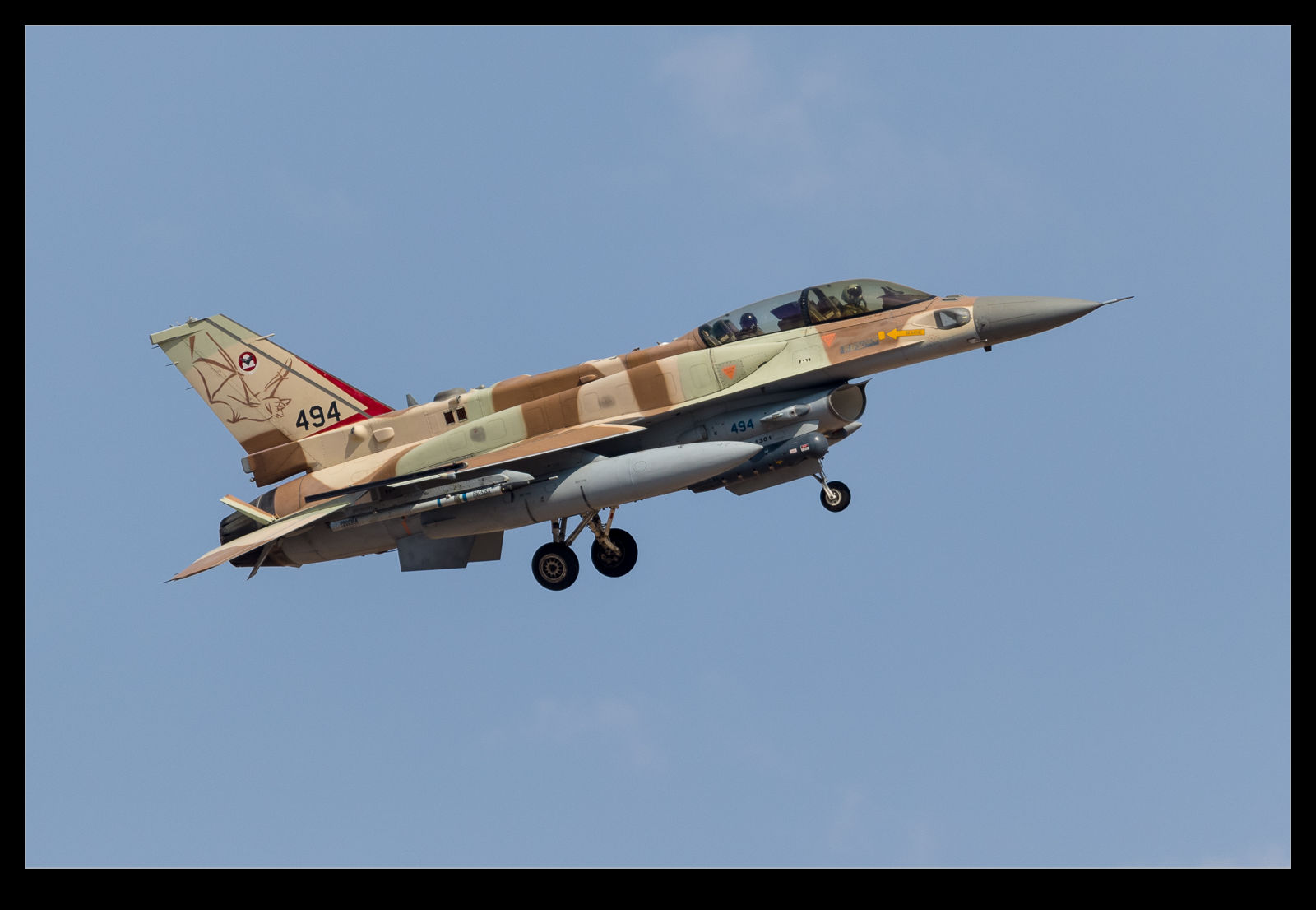
B11I4715.jpgAs you take a closer look at the airframe, you see all sorts of bits that are specific to the jet.  The big spine is a common feature these days although it was pioneered on Israeli jets a long time ago.  Aside from that, there is a circular antenna on the spine.  On the sides of the inlets are some more antennae.  Head back on the spine and some more side antennae seem to be present (although not on all of the jets I saw).  Then there are sensors on the canopy (which I guess are related to helmet sighting systems).  The jet is covered in devices.  I assume there is a great system for integrating all of the information these sensors are gathering.  The crew should have plenty of data to work with.

B11I4863.jpg

Have You Been Playing in the Sand?

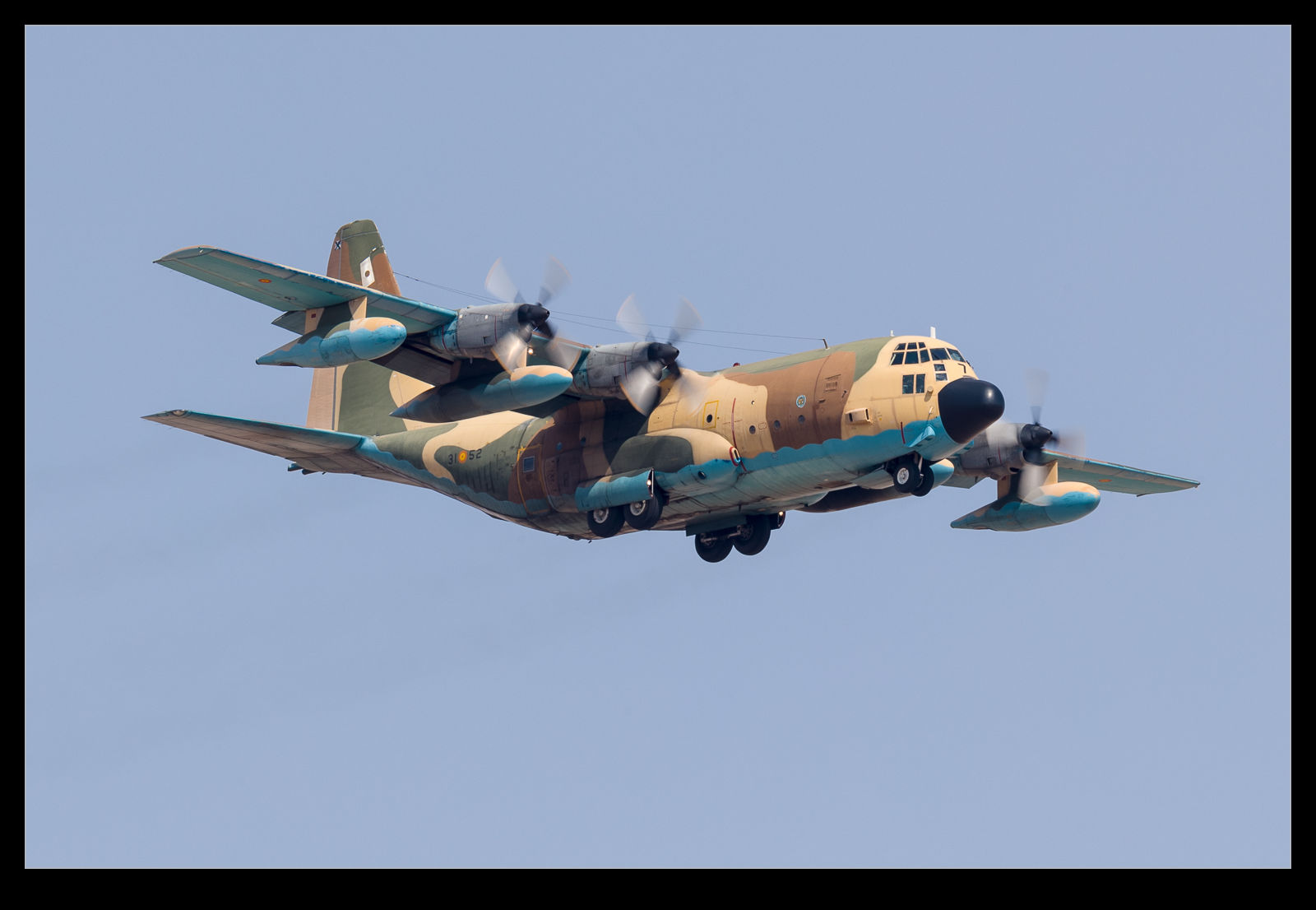
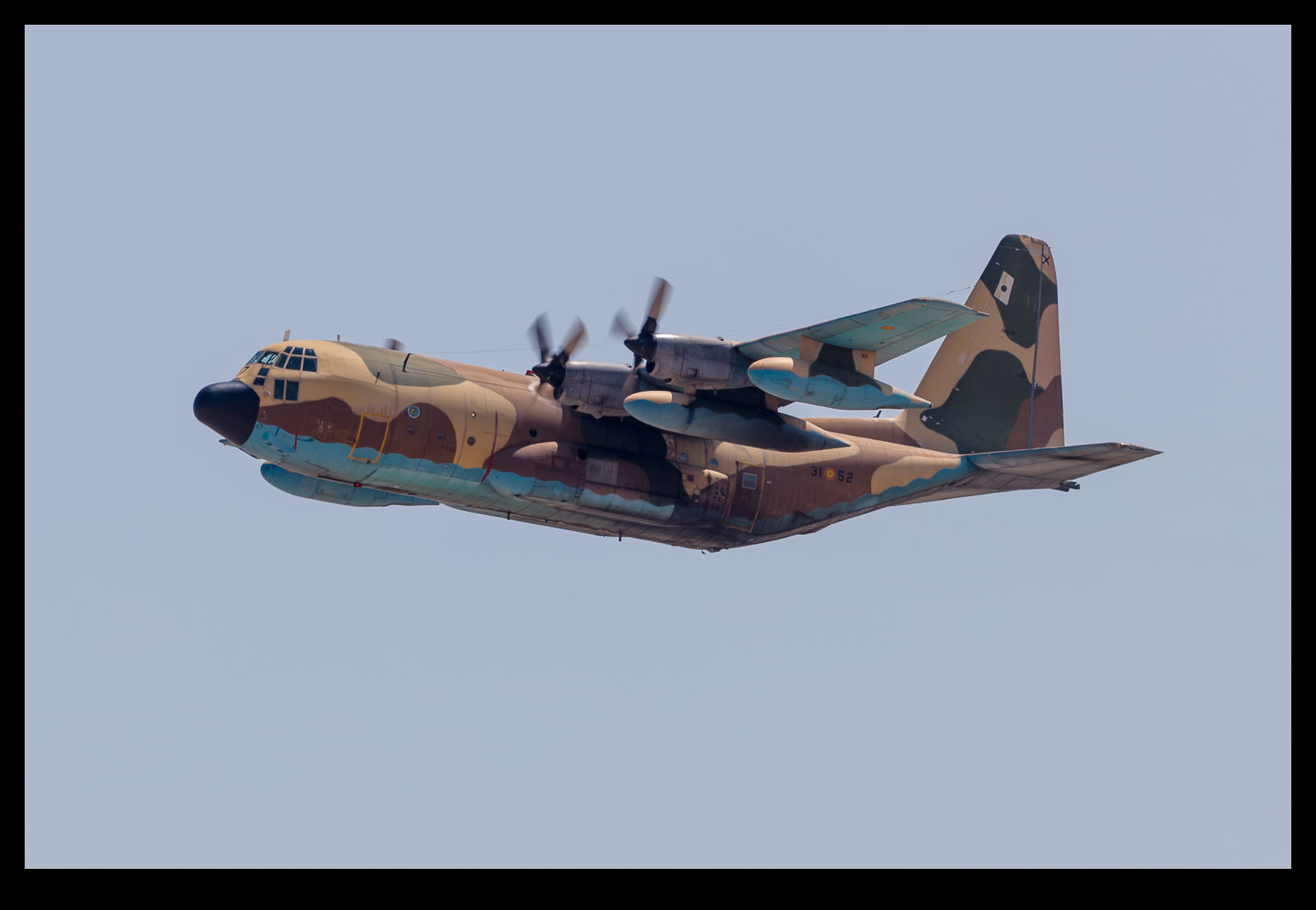
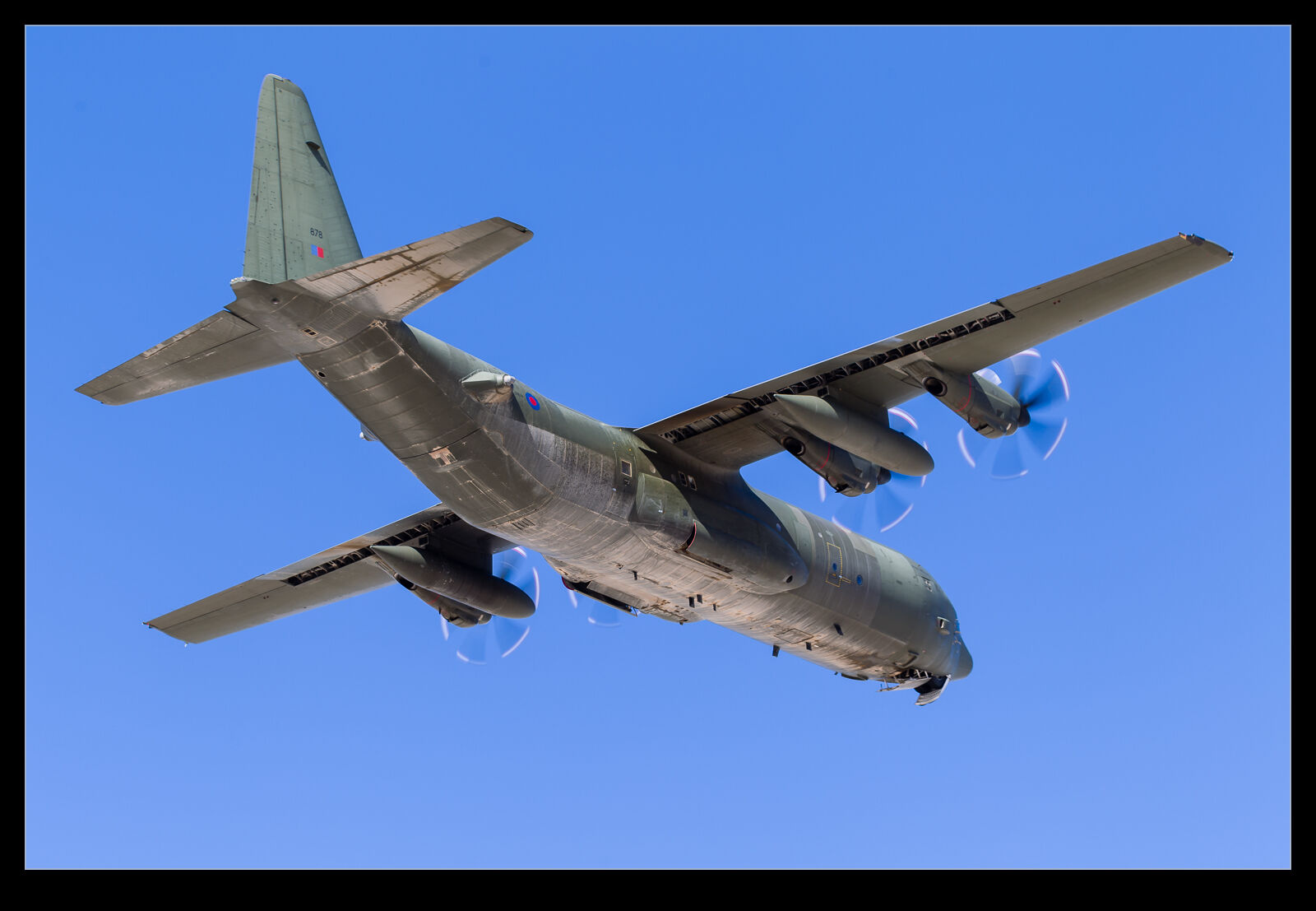
A Royal Air Force C-130J Hercules, covered in desert dust from rough field operations climbs away from Nellis AFB Las Vegas Nevada on a Red Flag Mission.Red Flag may be well known for the fast jet activity but the jets aren’t the only ones that get to play.  The transports also get to have a role.  One of the exercises earlier this year included the U.K. RAF.  They brought along a C-130 Hercules.  I got to shoot it a couple of times.  One thing that was clear as the aircraft took off was that the bottom of the fuselage was very dirty.  I think it was safe to say that it had been landing on some rough strips somewhere out on the range.

Sufas Finally Come Right

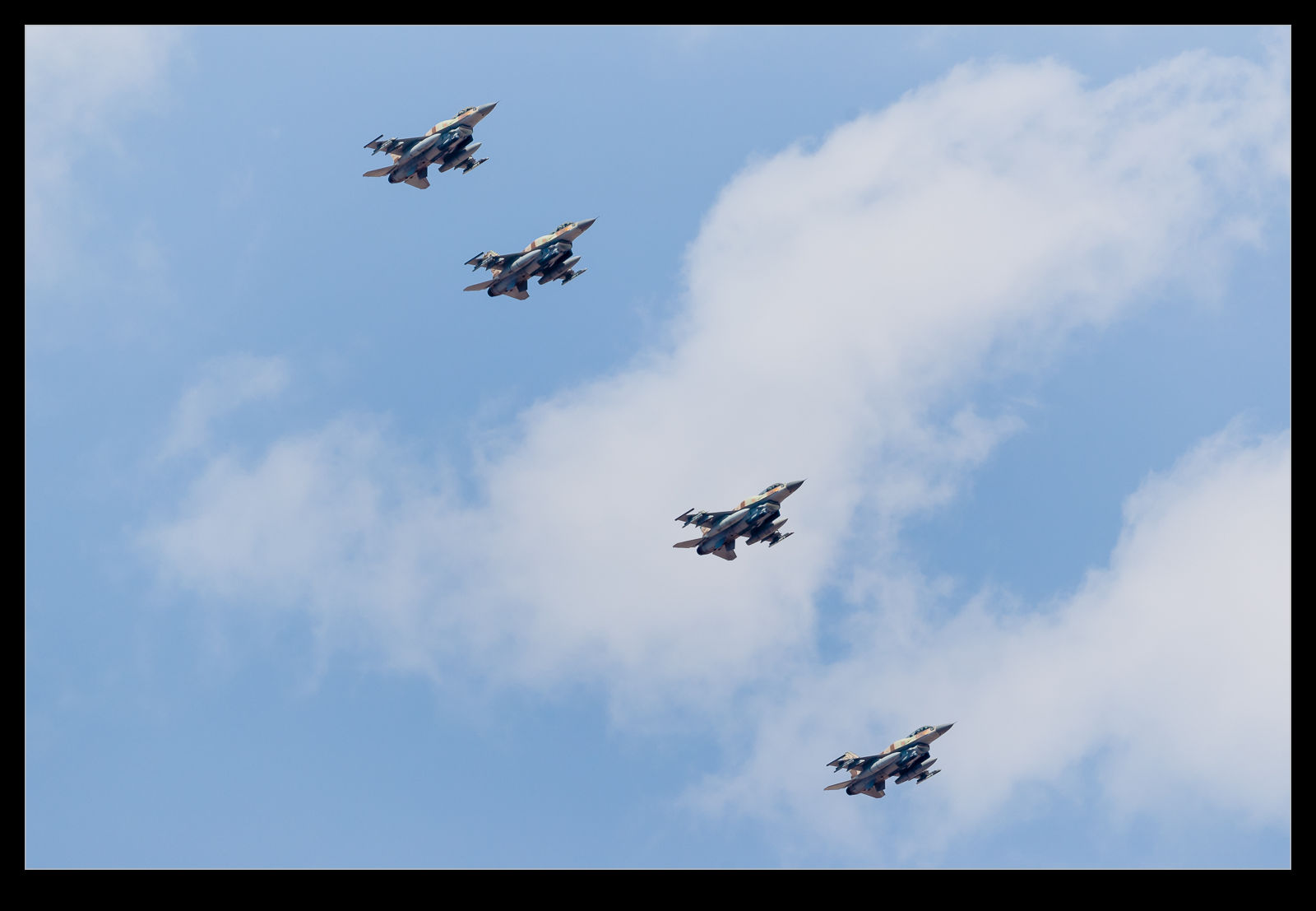
B11I4708.jpgOne of the big attractions of Red Flag 16-4 was the appearance of the F-16I jets of the Israeli Air Force.  The Sufa is a variant of the F-16 that incorporates the conformal fuel tanks and a lot of local Israeli electronic equipment.  In the days before I was there, the jets had been landing on the left runway which meant they broke away from the photographers and landed a fair distance away.  When I was there, things changed.

B11I4644.jpgThey started to come in with a right break for the right runway.  This was really good news.  It makes getting shots of them a lot easier.  They didn’t fly very tight patterns so they were a little far away on the final turn but it was still better than if they went left.  The departures were mainly from the far runway so they were a bit far then but it was still a good result for me.

B11I4849.jpg

Relaxed Raptor Pilot

A USAF F-22A turns towards the ranges after takeoff from Nellis AFB as part of a Red Flag mission.

All cool fighter pilots should look like they are not operating a complex and expensive jet.  Instead, they should look like they are out cruising in a convertible with their arm resting on the door just taking in the scenery.  This guy obviously understands what is required and provides the casual look of a person enjoying their day!

Pakistani Block 50 F-16s

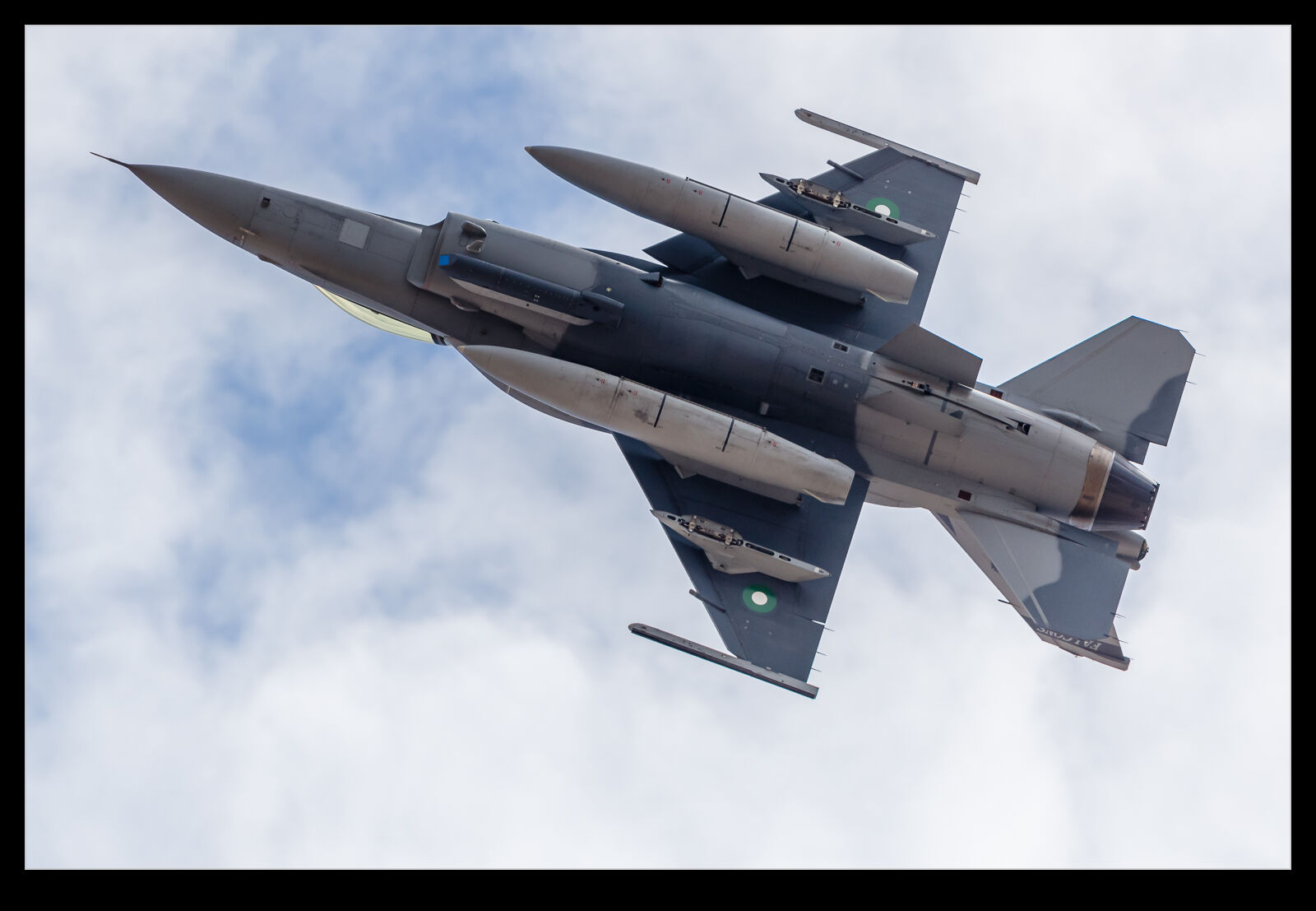
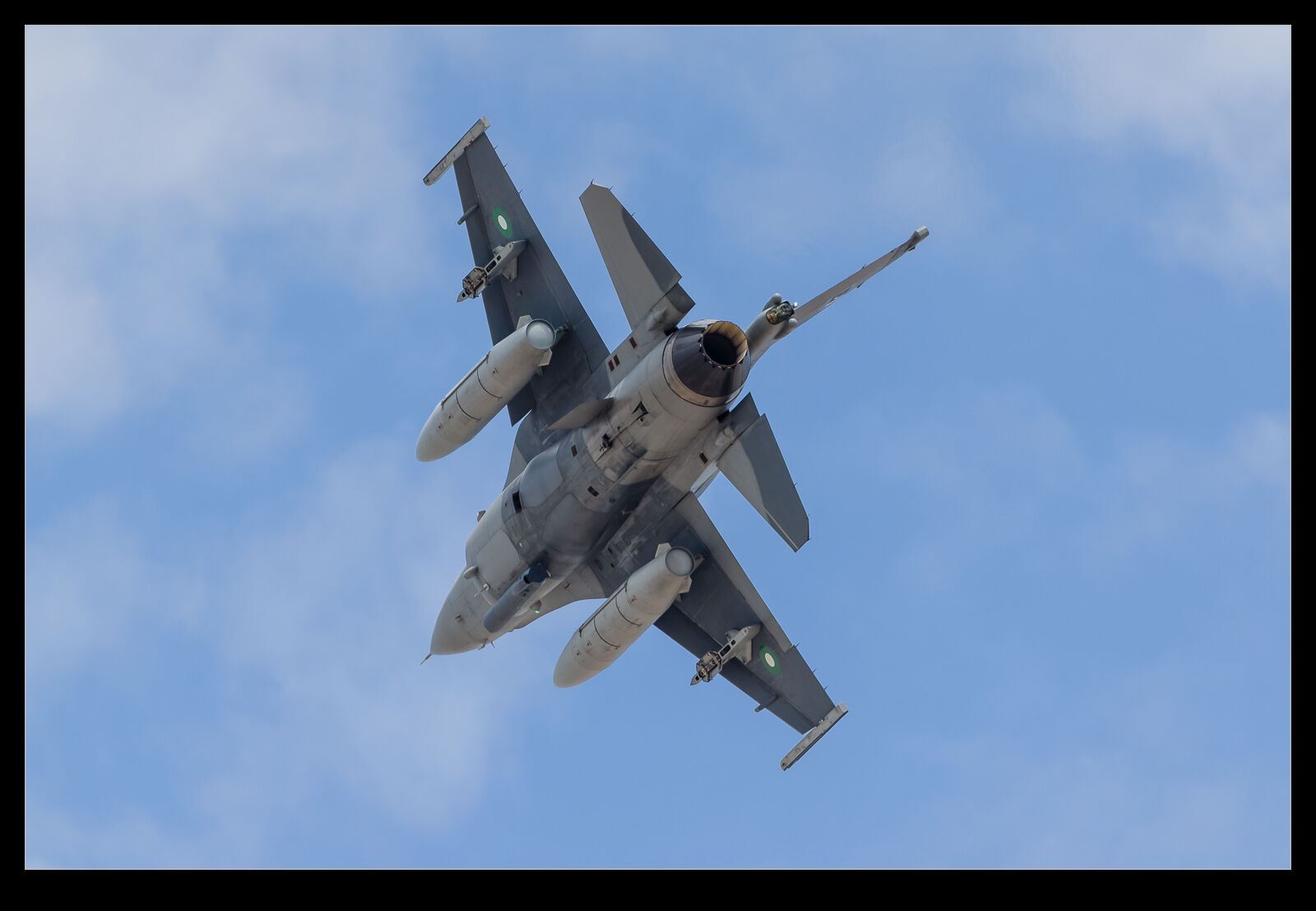
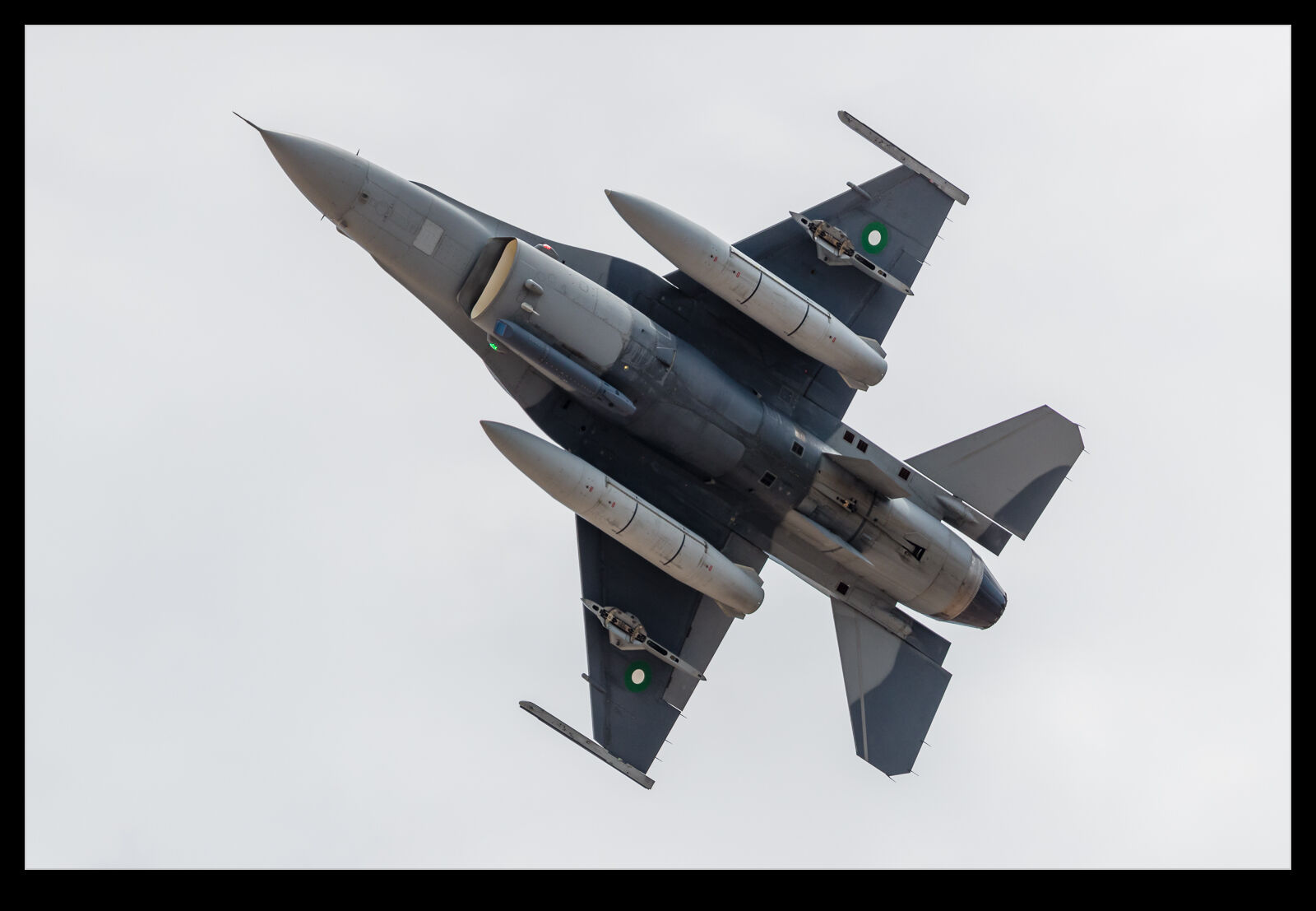
AE7I4452.jpgI have made two short visits to Nellis for recent Red Flag exercises.  The Pakistani Air Force attended RF16-4 but they showed up near the end of the preceding RF16-3 to allow them to familiarize themselves with operations before the next exercise kicked off.  They weren’t supposed to be flying while we were that after their arrival but the F-16s that launched over us clearly had the conformal tanks and it turned out that they were up and flying ahead of the rumored times.  Sadly, it was a brief opportunity and the lighting wasn’t great.

AE7I4414.jpgI did head back for RF16-4 and that trip will get a post of its own.  Enough went on that week to easily fill another entry.  However, staying on track, I did get to see the Pakistan jets as they launched and recovered.  They are a recent build standard and, aside from the conformal tanks, they are also distinctive courtesy of a paint scheme that is different to the normal F-16s camouflage.  I don’t know whether they had a productive time at Red Flag or not but I was glad to catch them while they were over.

AE7I4405.jpg

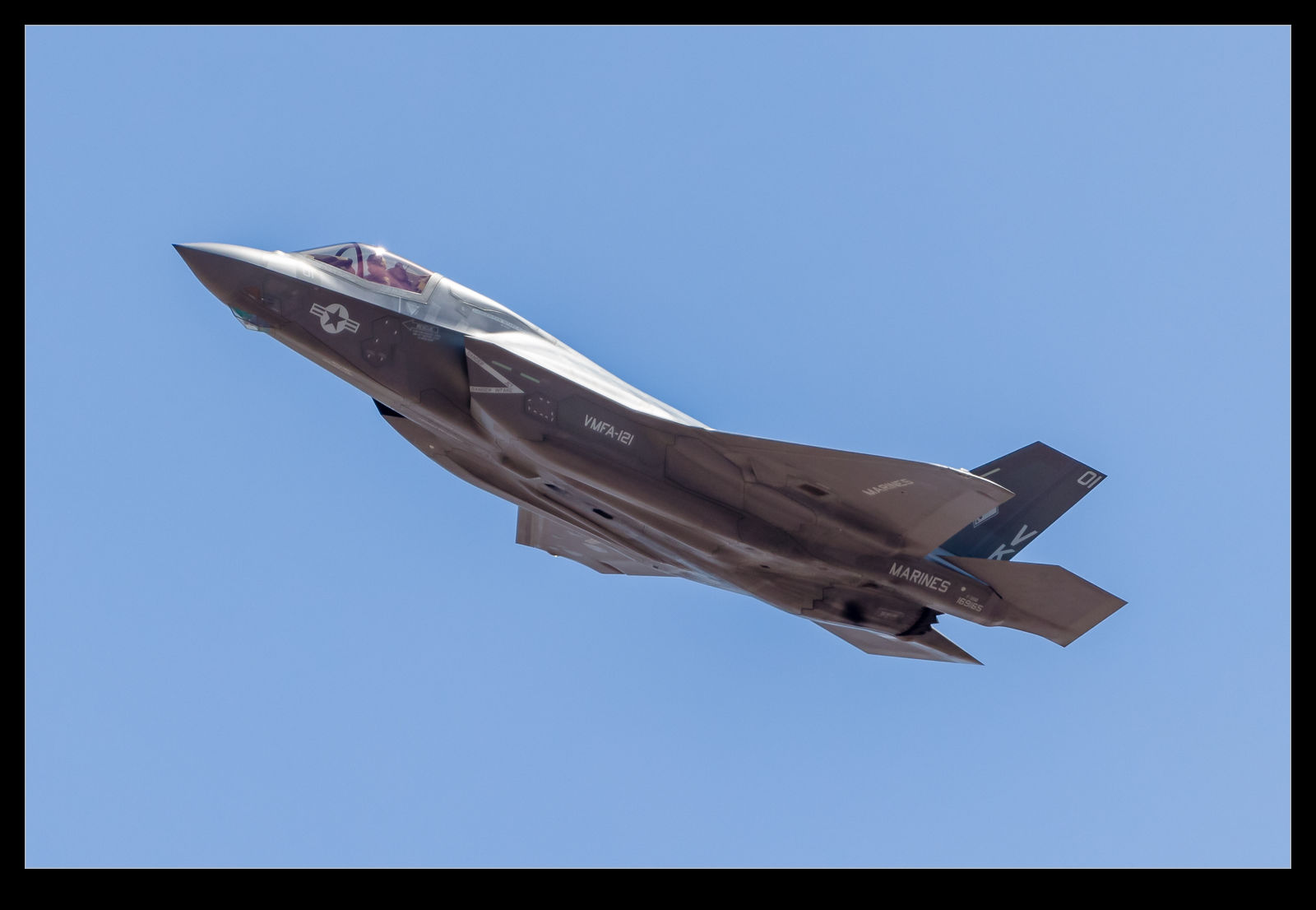
My First F-35B Jets

A USMC F-35B climbs out after takeoff from Nellis AFB on a Red Flag mission.

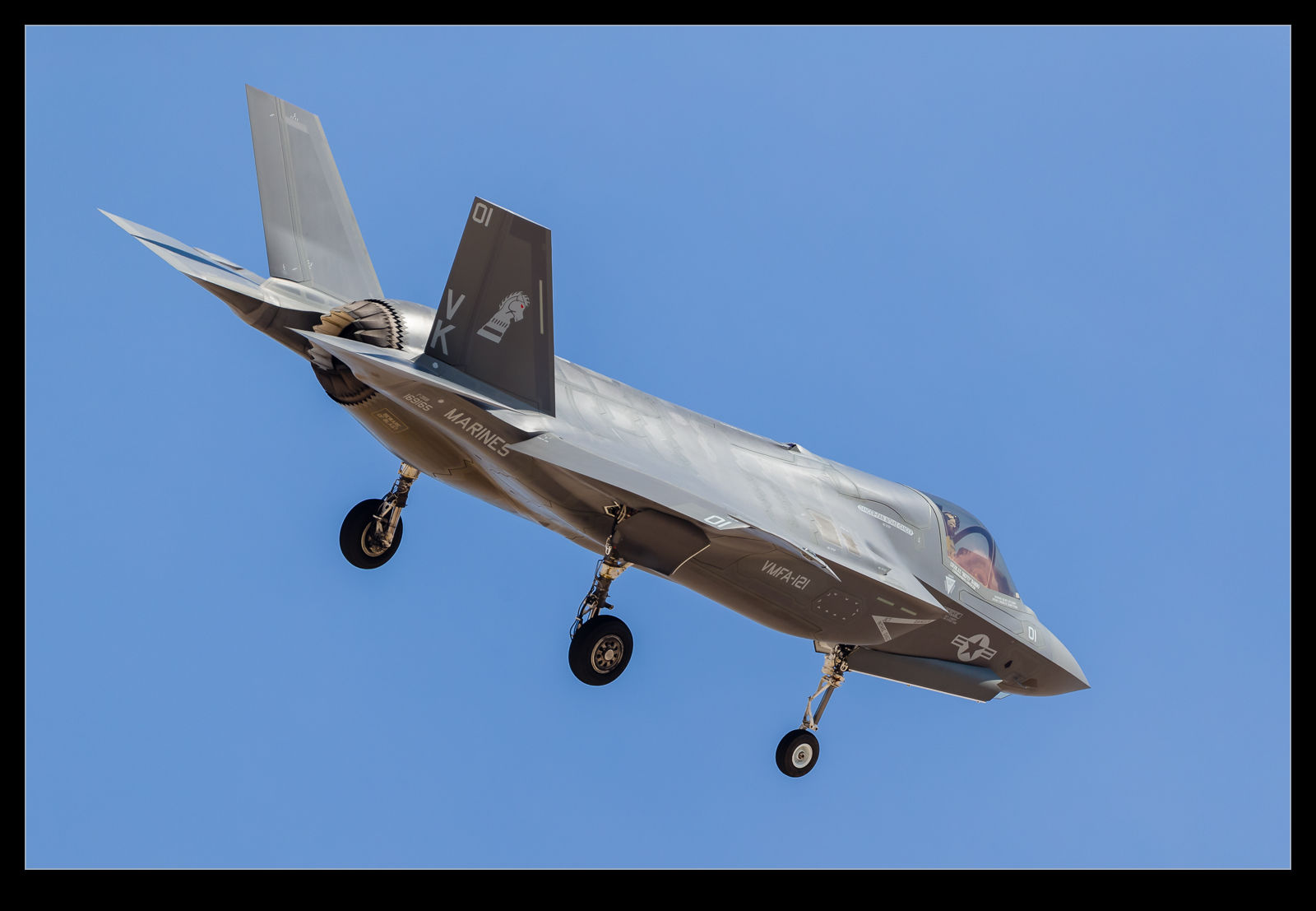
I have had a bunch of times when I have seen F-35 jets.  I got to shoot the first prototype at Fort Worth in its early days.  After that, I didn’t see any more for a long time.  As the production jets started to show up, I saw a number of them at Nellis AFB. Sadly, when we were on base we weren’t allowed to shoot them and when I was off base, I was always in a bad place to get shots of them.  As a result, I do not have many useful shots in my catalog.
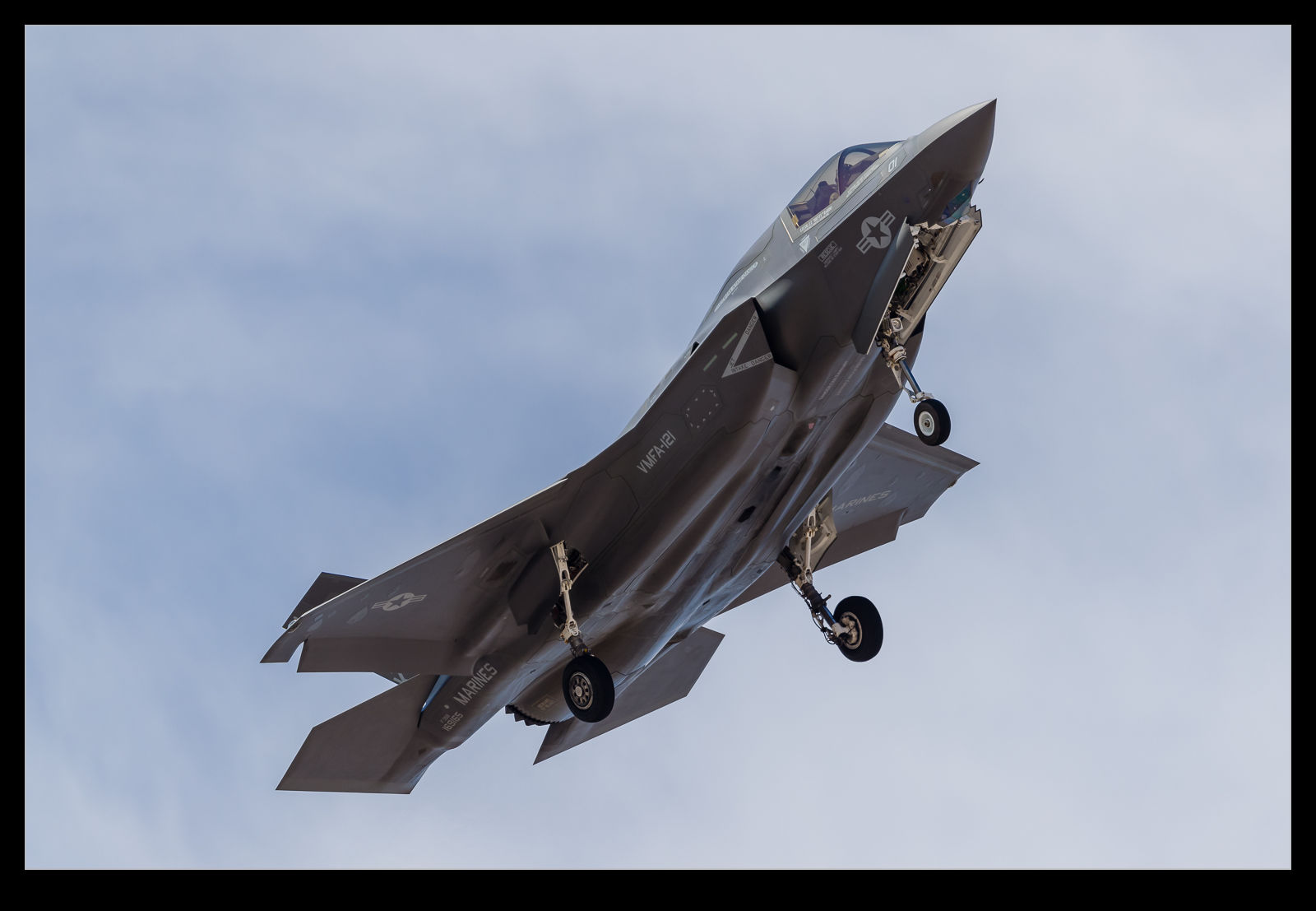
A USMC F-35B turns on to final approach at Nellis AFB.

I had no shots of the B model.  This is the one being developed for the Marine Corps to replace their Harriers and Hornets.  It is also being acquired by the UK and Italy to use from their carriers.  Red Flag 16-3 was the first one that the Marines brought their jets to so I was pleased to get a chance to shoot them.  My timing was not great and there was limited flying while I was there.  However, the Marines did launch a pair while we were in place.  Nicely, both jets flexed on departure and came towards our position quite nicely.  Recovery was a different story.  For those that aren’t familiar with shooting at the Speedway, there is a constant debate about which gate is the best one to be at.  Some jets turn on to final very tightly and you need to be a inside Gate 4 to get a good shot.  Sadly, a lot of the jets turn long and they can be a long way off if you are at 4.  If there is a four ship, the later jets tend to turn later so, even if the first jet is good, the later ones can be a way off.
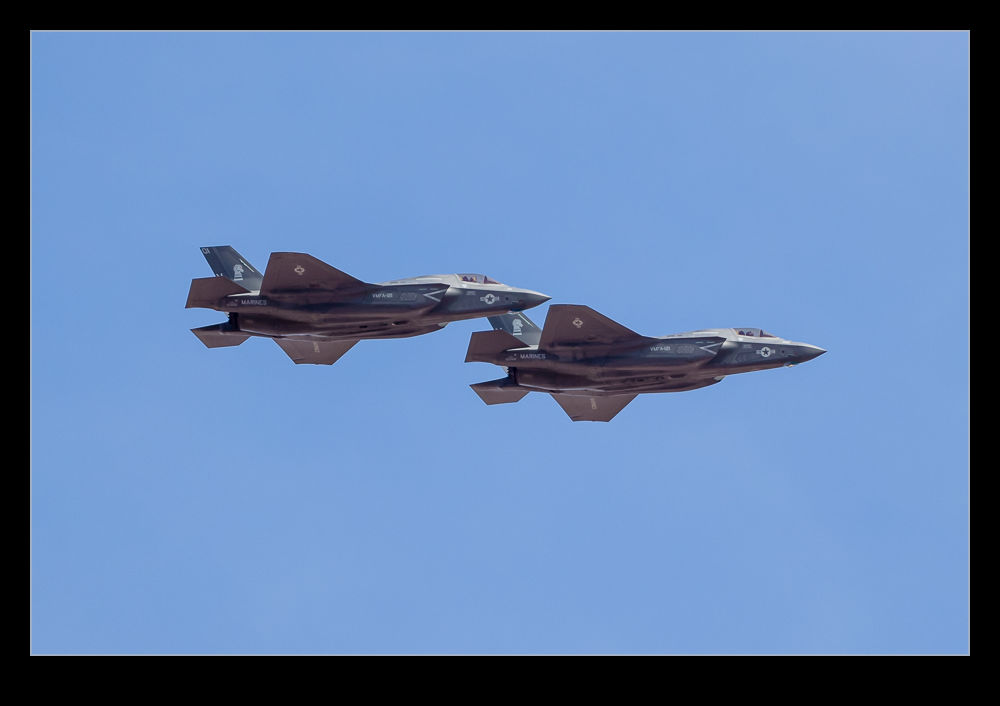
B11I0418.jpgIf the jets are Navy or Marines, you need to be on your toes.  They can be a lot more enthusiastic about keeping their patterns tight.  When the two F-35s returned, we soon realized everyone else knew something we needed to know.  They were all grabbing their cameras and running down the street.  I took a while to catch on.  The first jet turned very tightly.  Even as I ran, I could only get a head on shots as he turned inside me.  I then got moving again and was just about in a reasonable option for the second jet.
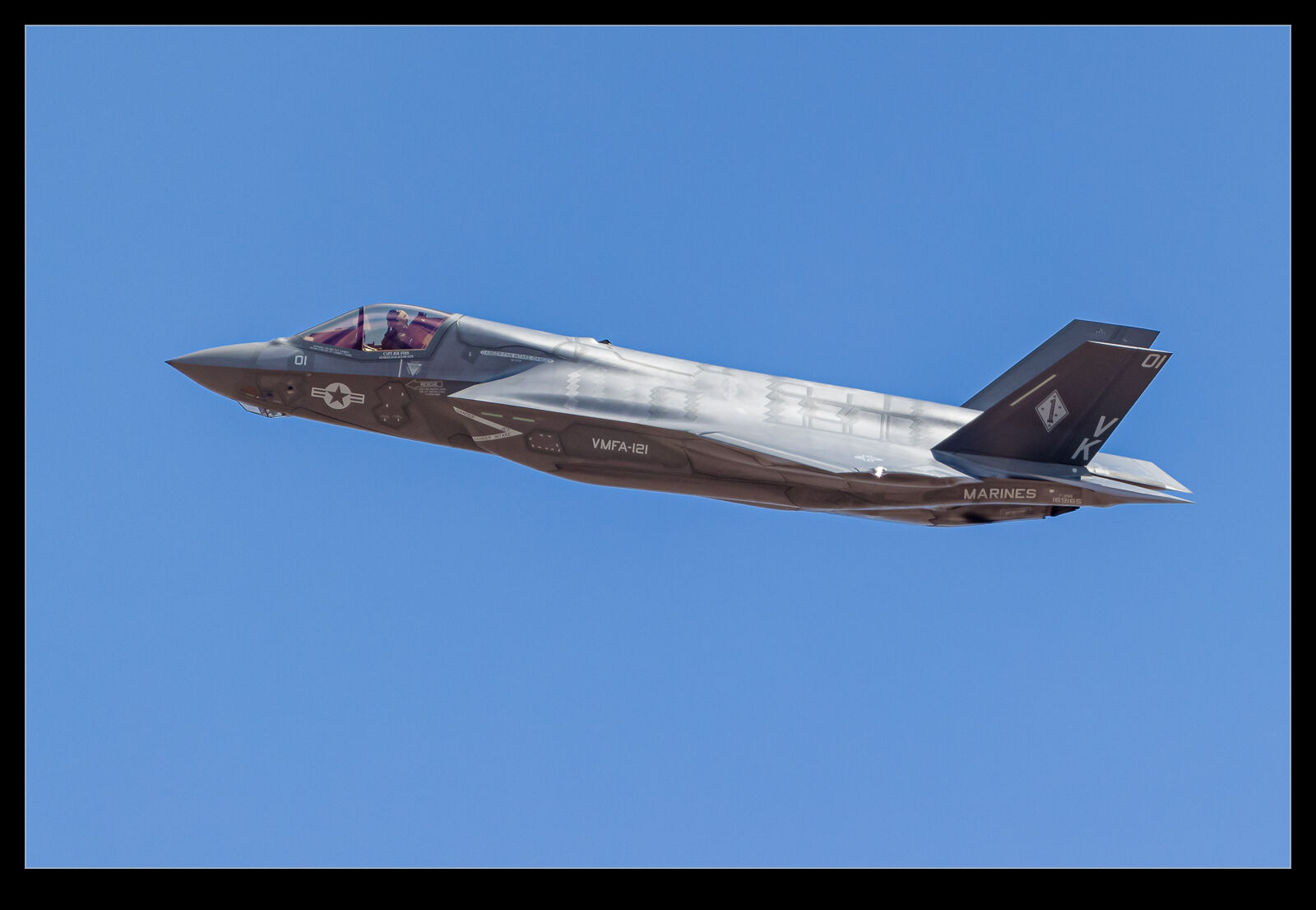
A USMC F-35B climbs out after takeoff from Nellis AFB on a Red Flag mission.

The second day we were there, timing was again not in our favor.  Just as the 35s were returning, a pair of Growlers were launching to head home.  They were coming off the runway we needed the jets to land on to get good shots.  Instead, they were sent to the other runway.  They broke left towards the hills.  We did have some recovery though.  By the time they had run downwind, the Growlers were gone and the runway was clear.  They switched to land on our side.  We had lost the final turn but at least they came closer when on final.  At some point these jets will be very common but the first encounter is fun.
AE7I6177.jpg AE7I6144.jpg

Are New Tires That Expensive?

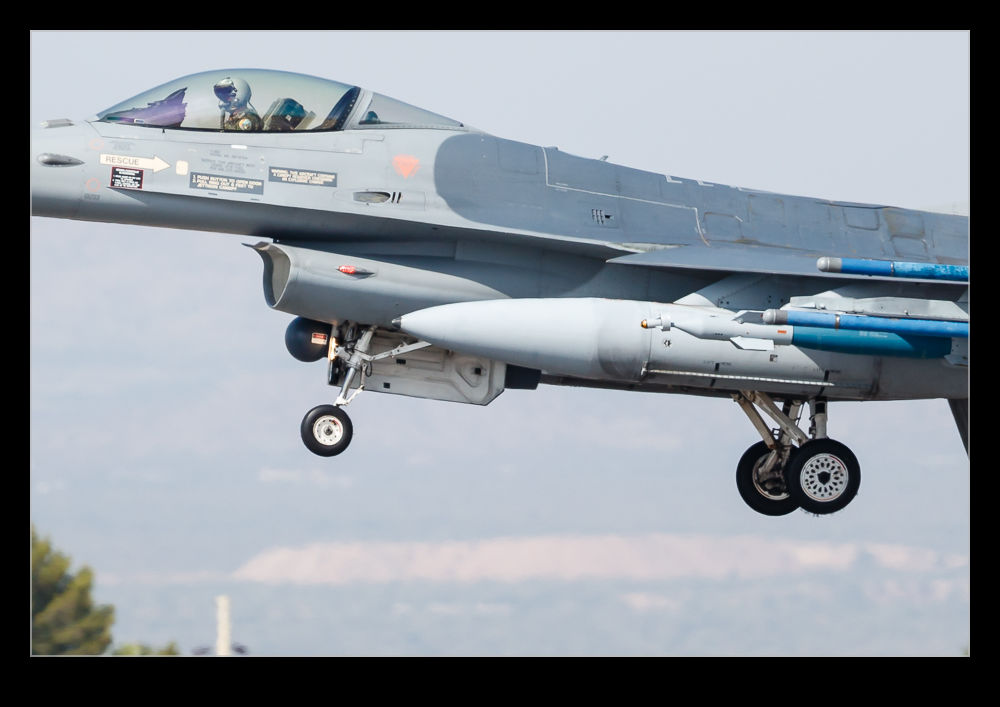
B11I3641.jpgI was skimming through some shots from Tucson to thin out the shots that I got from that day.  I looked at one of the shots because I thought that there was something wrong with the shot.  When I checked a few of the surrounding shots, I realized that there was nothing wrong.  The shot was real.  The F-16 had a tire that was looking very sad.  I know that budgets are tight but I think they need to change the tires on this jet.

Mako F-16 is a Nice Surprise

B11I6315.jpgI have not seen Mako F-16s very often.  Seeing one taking off from Tucson was quite a surprise and definitely a good one.  It was accompanied by a jet in Texas Reserve markings to so maybe there has been a swap of some jets.

Section Training

B11I5727.jpgIn my previous visits to Tucson International, I have never seen jets taking off or landing as pairs.  It has always been single jets.  This time I had a couple of times when section takeoffs were carried out.  There also appeared to be some arrivals in pairs too.  Nothing too dramatic but a bit of a change from what I have seen there before.