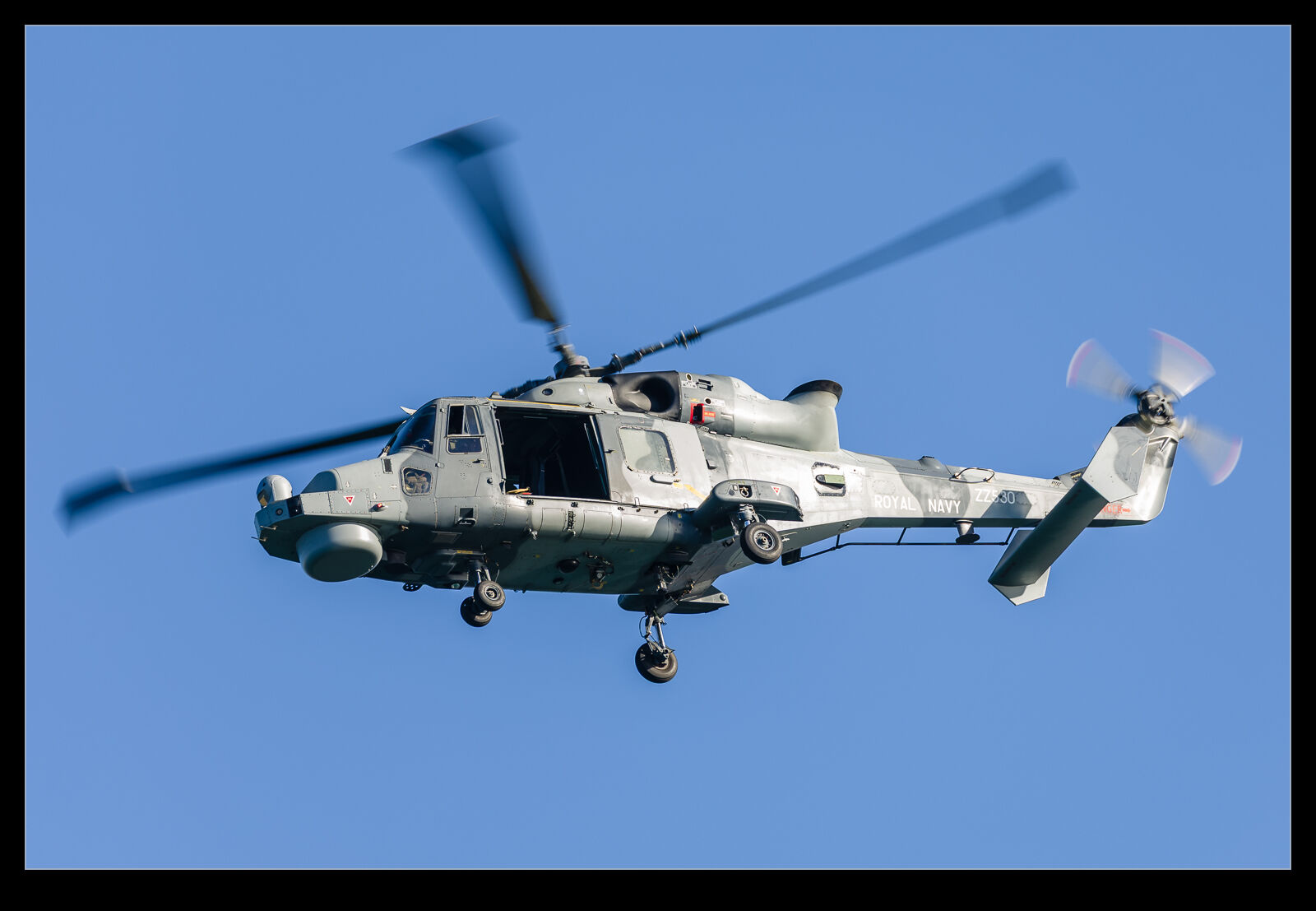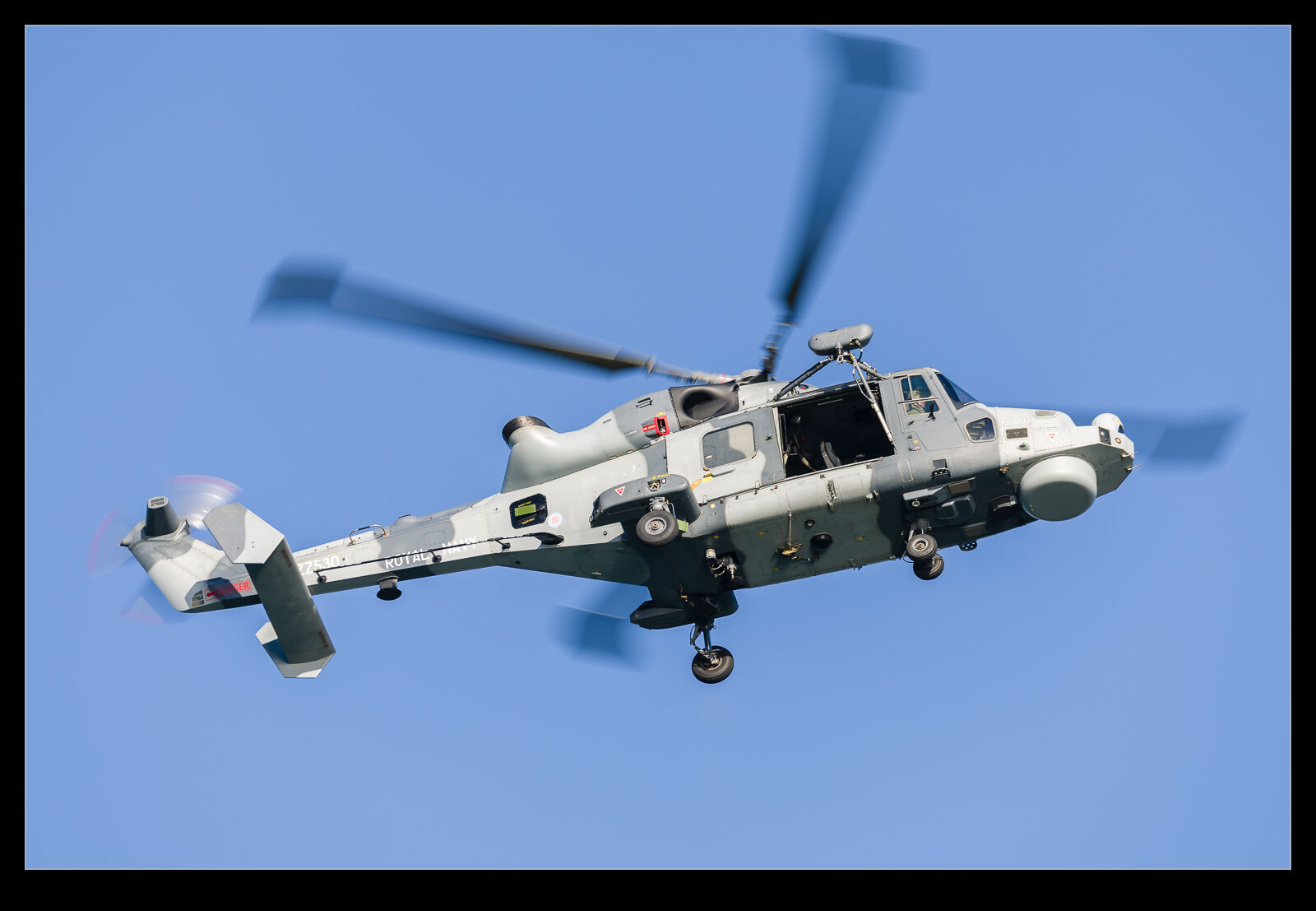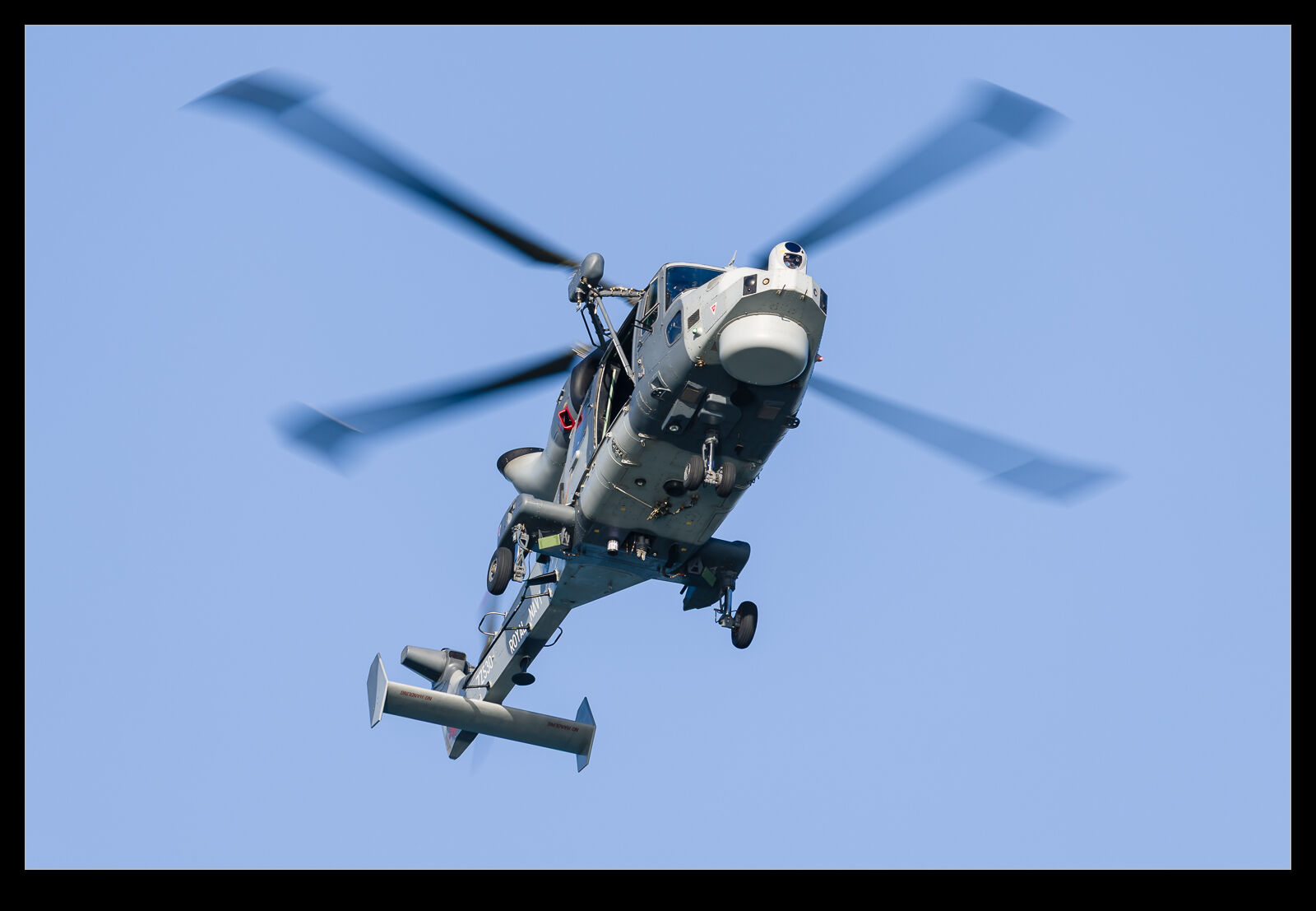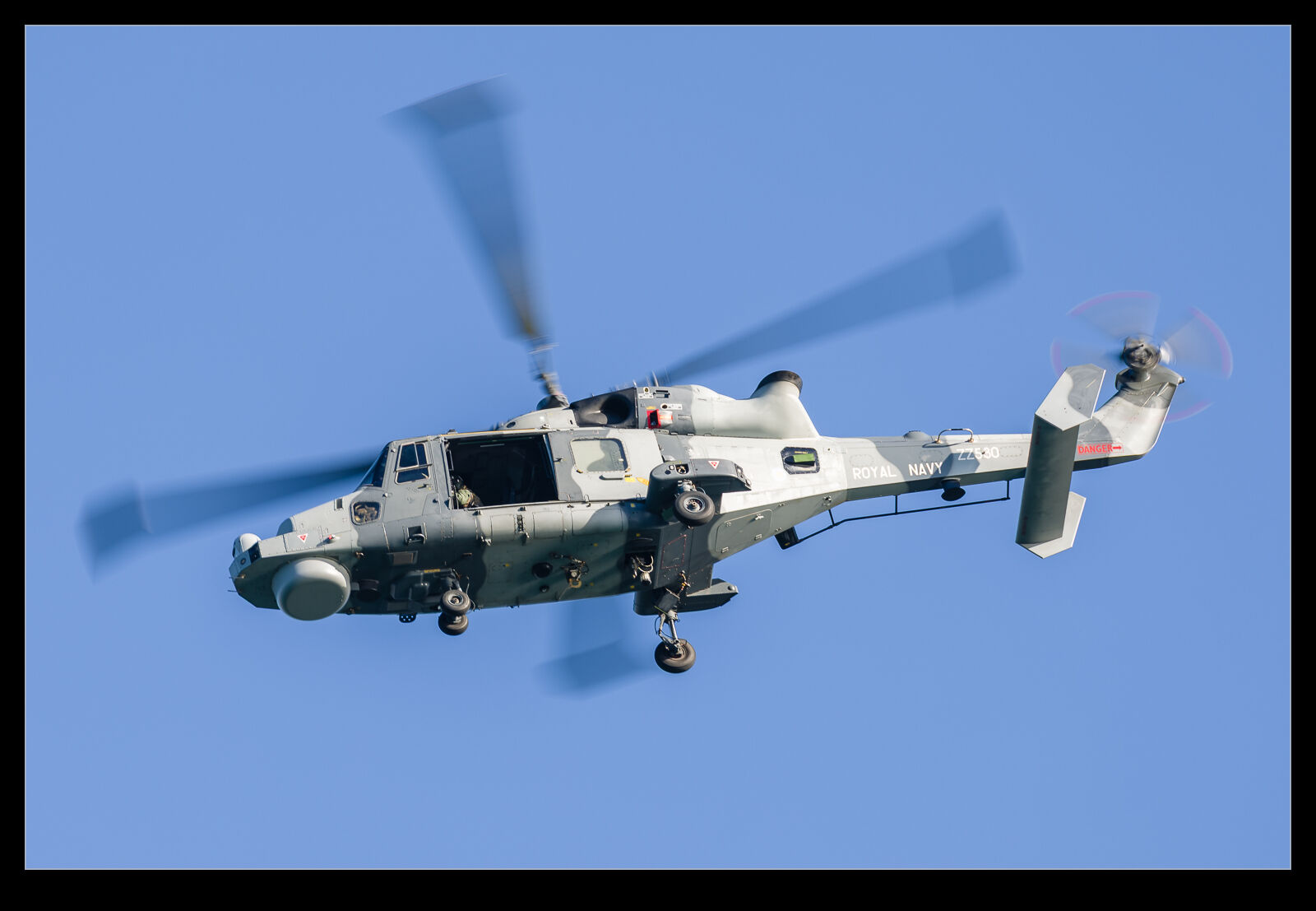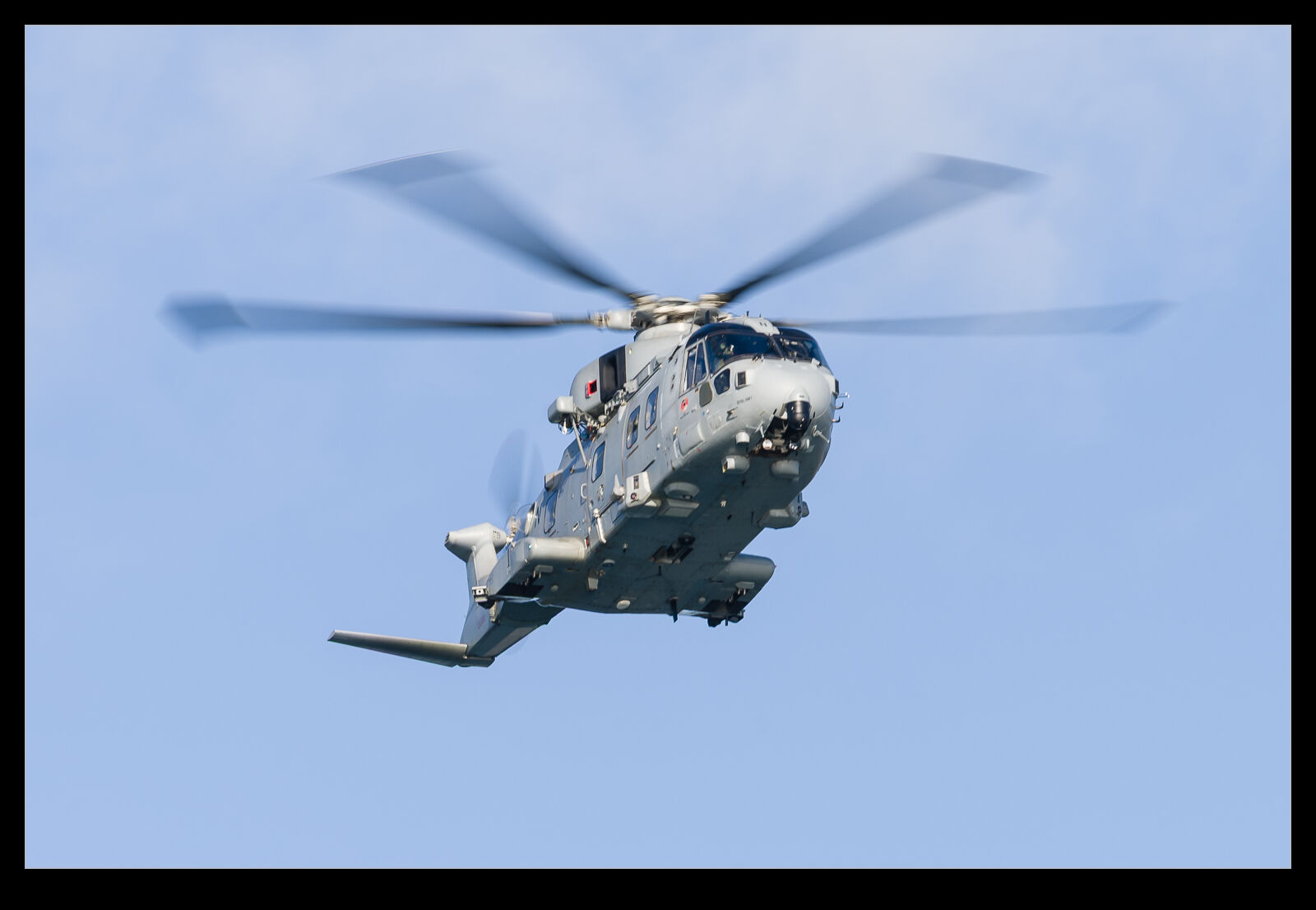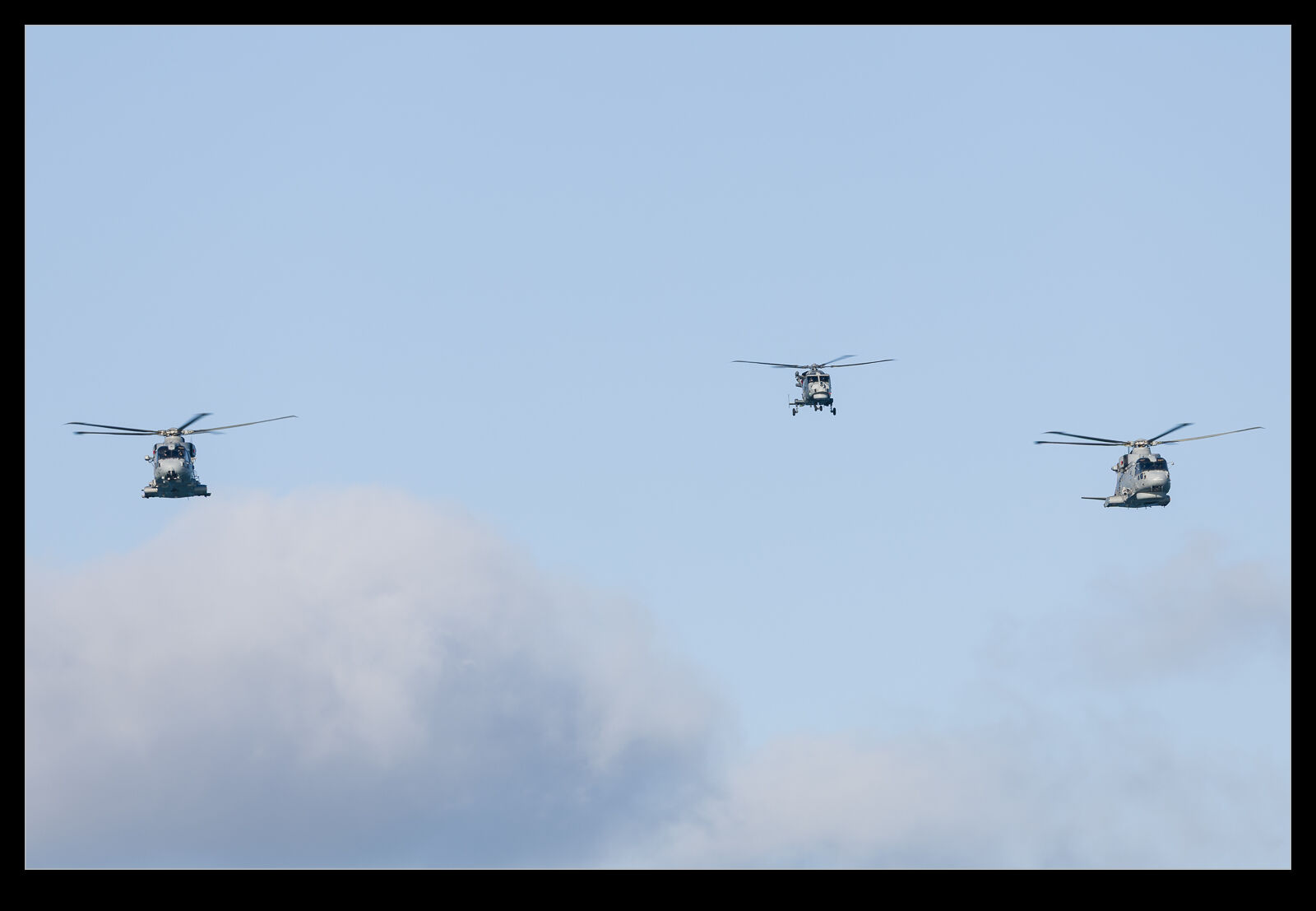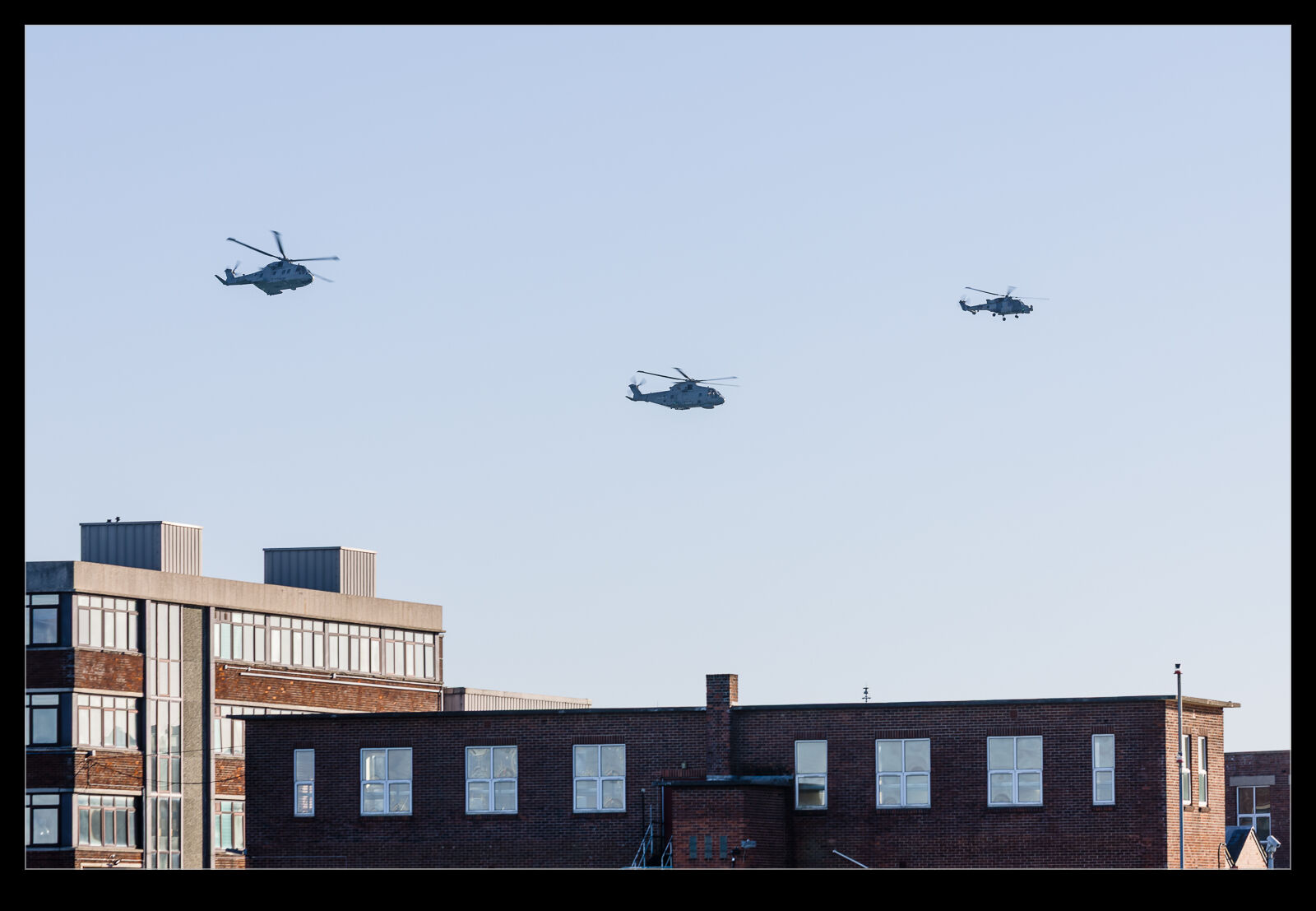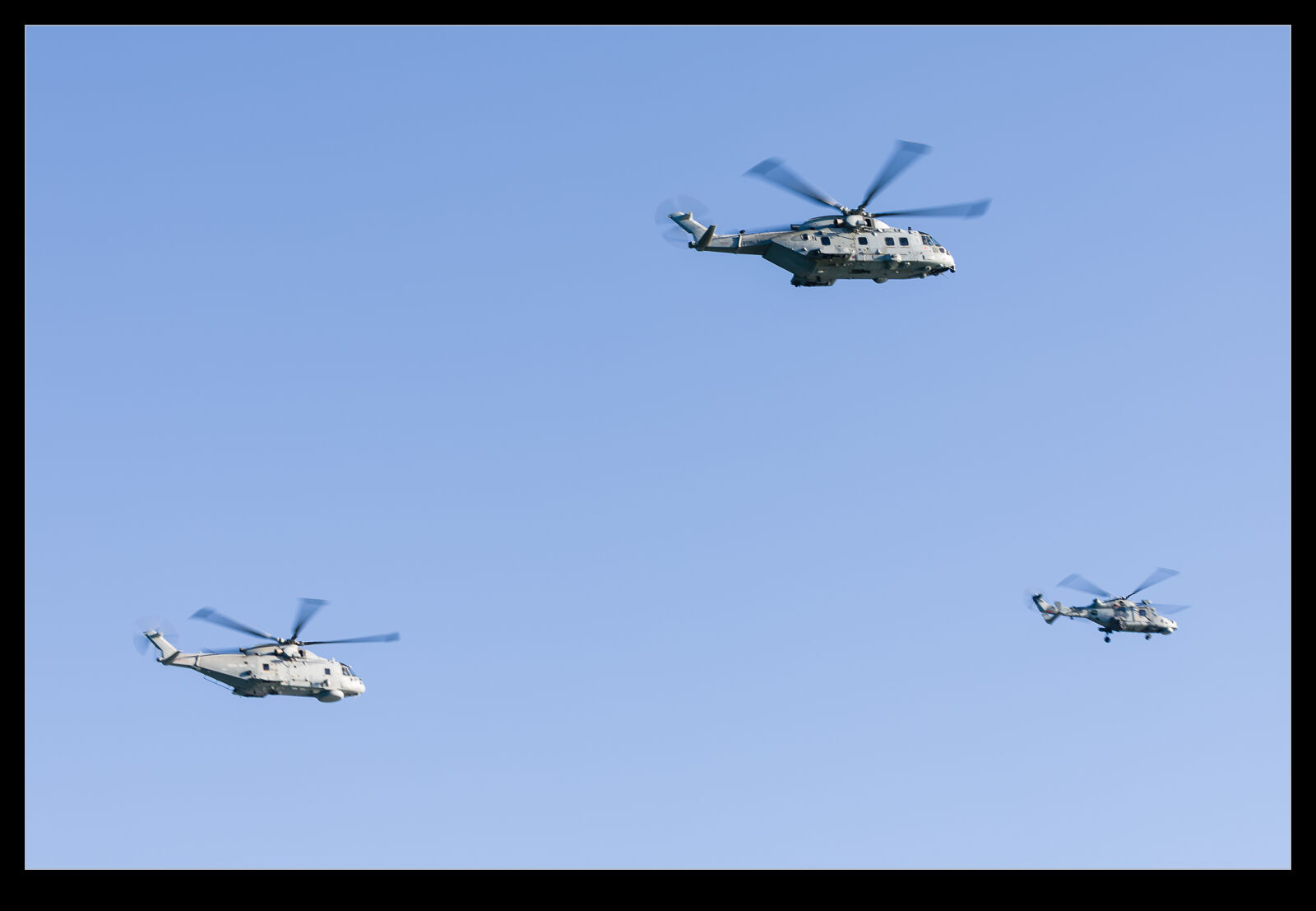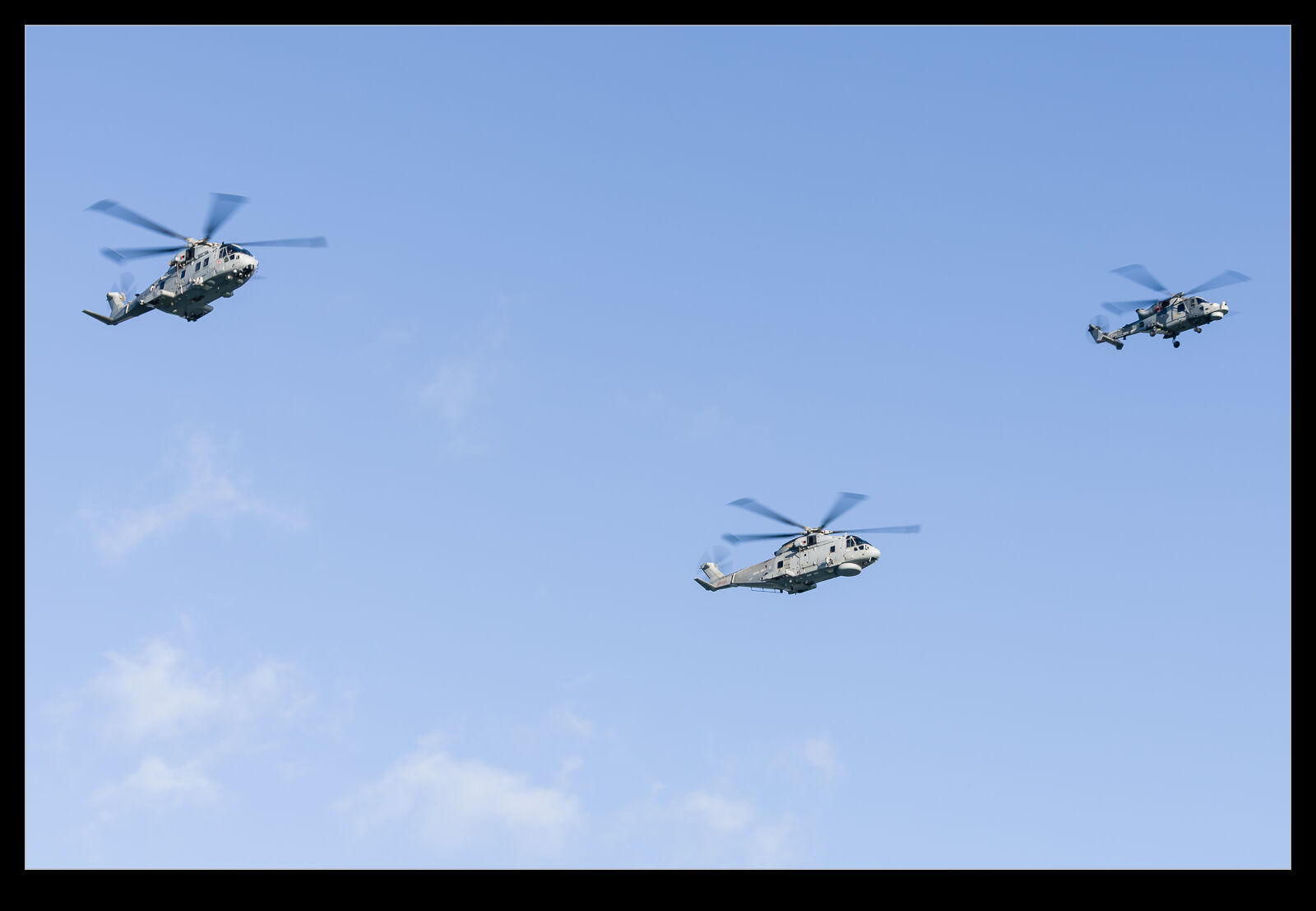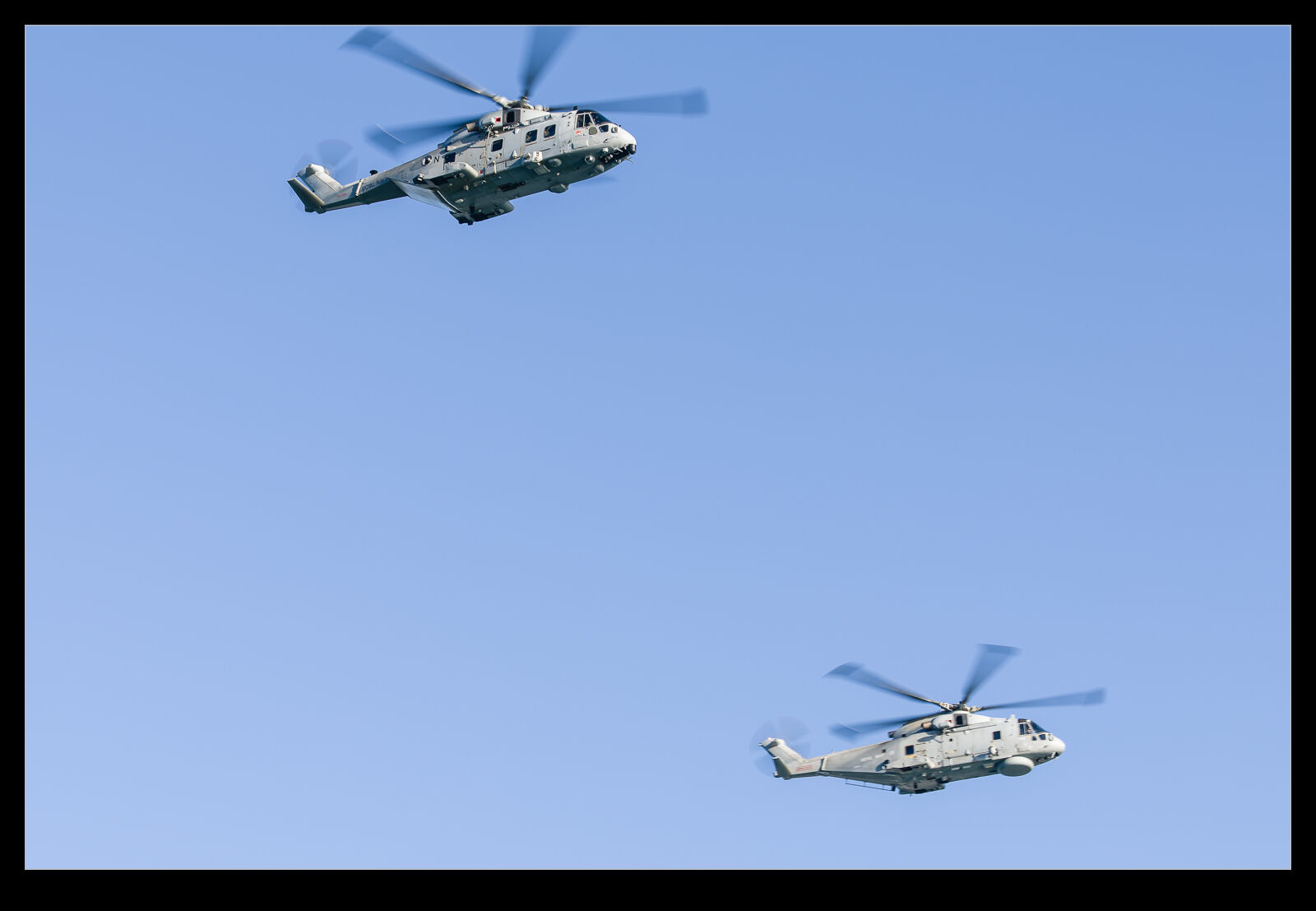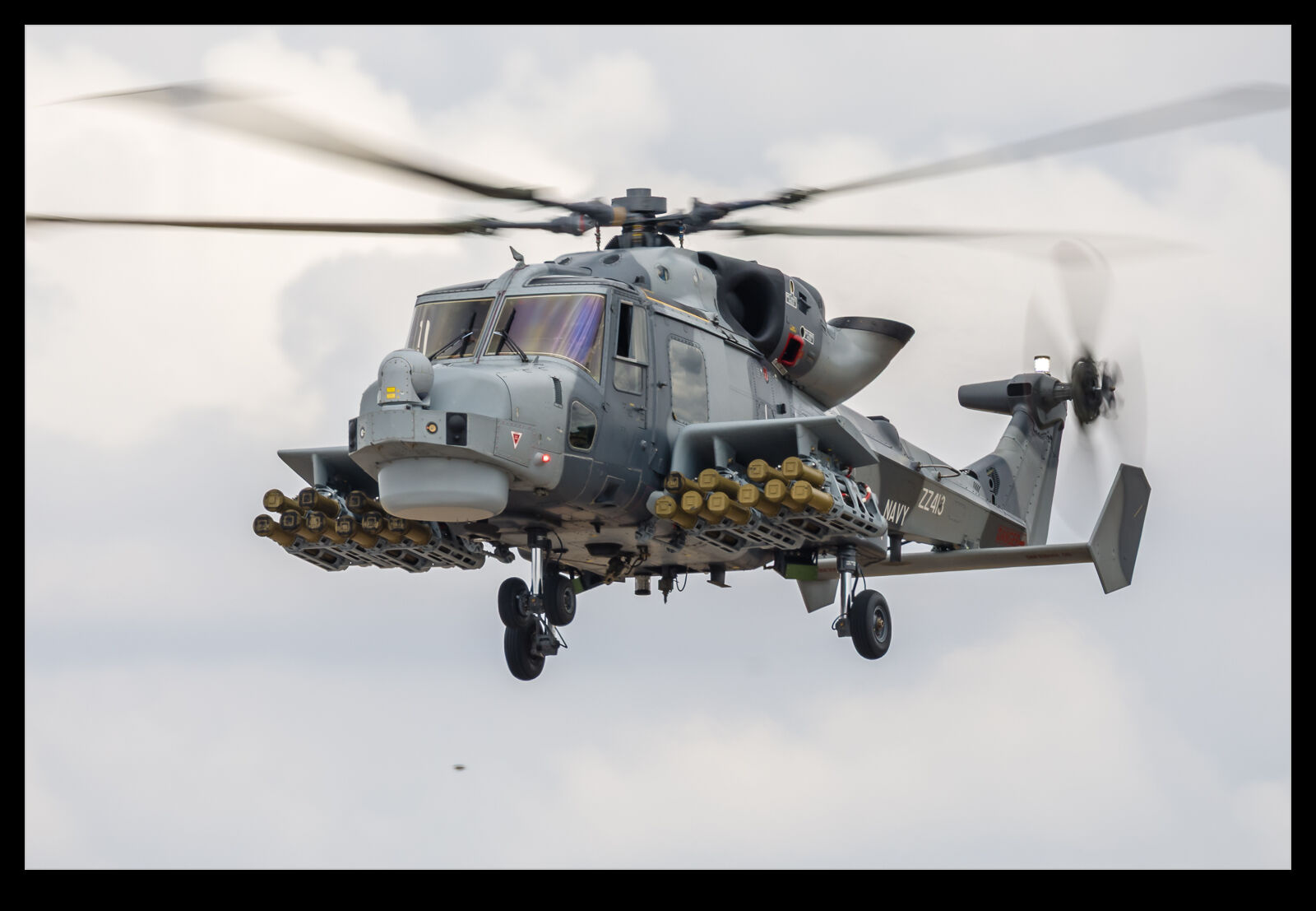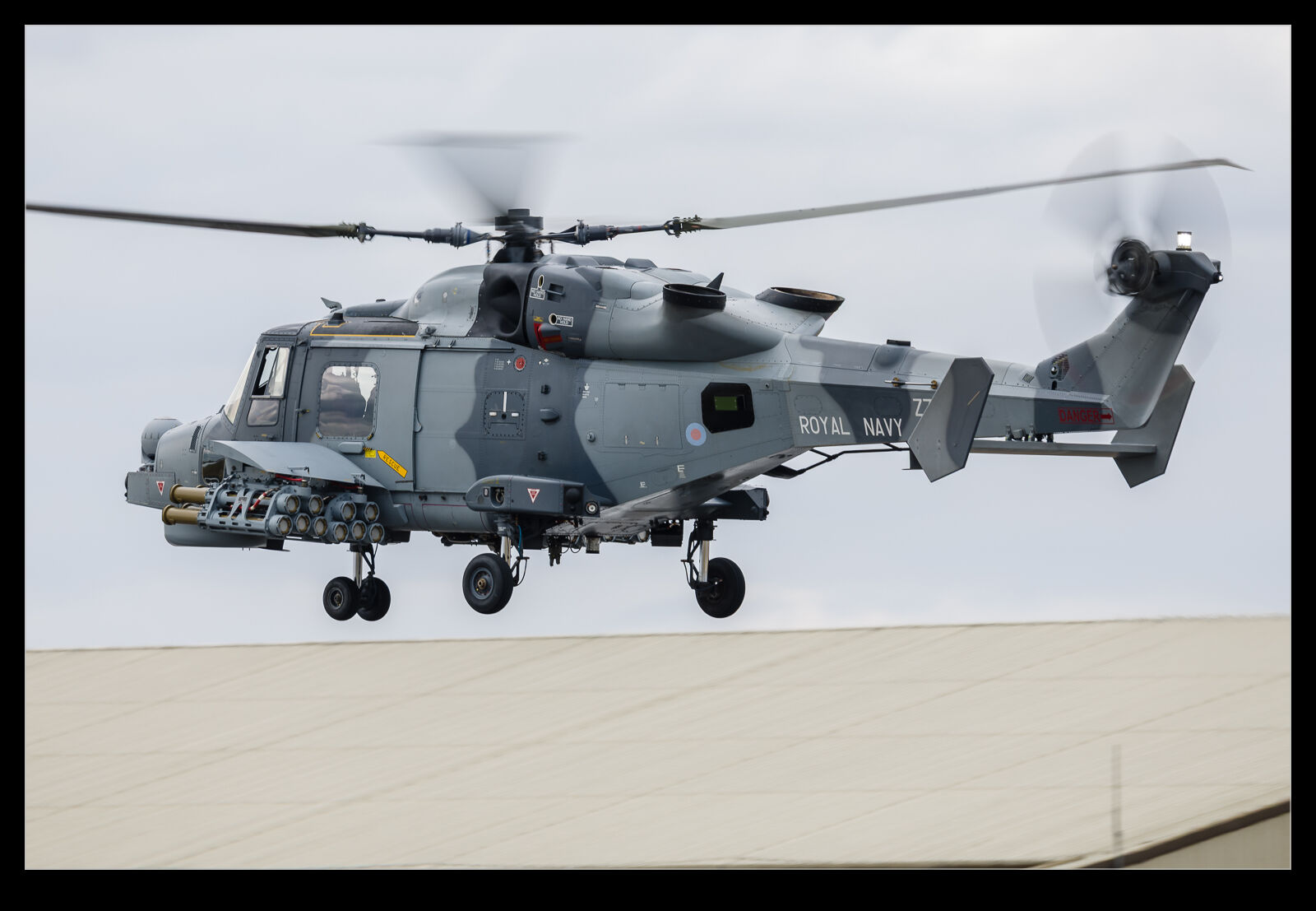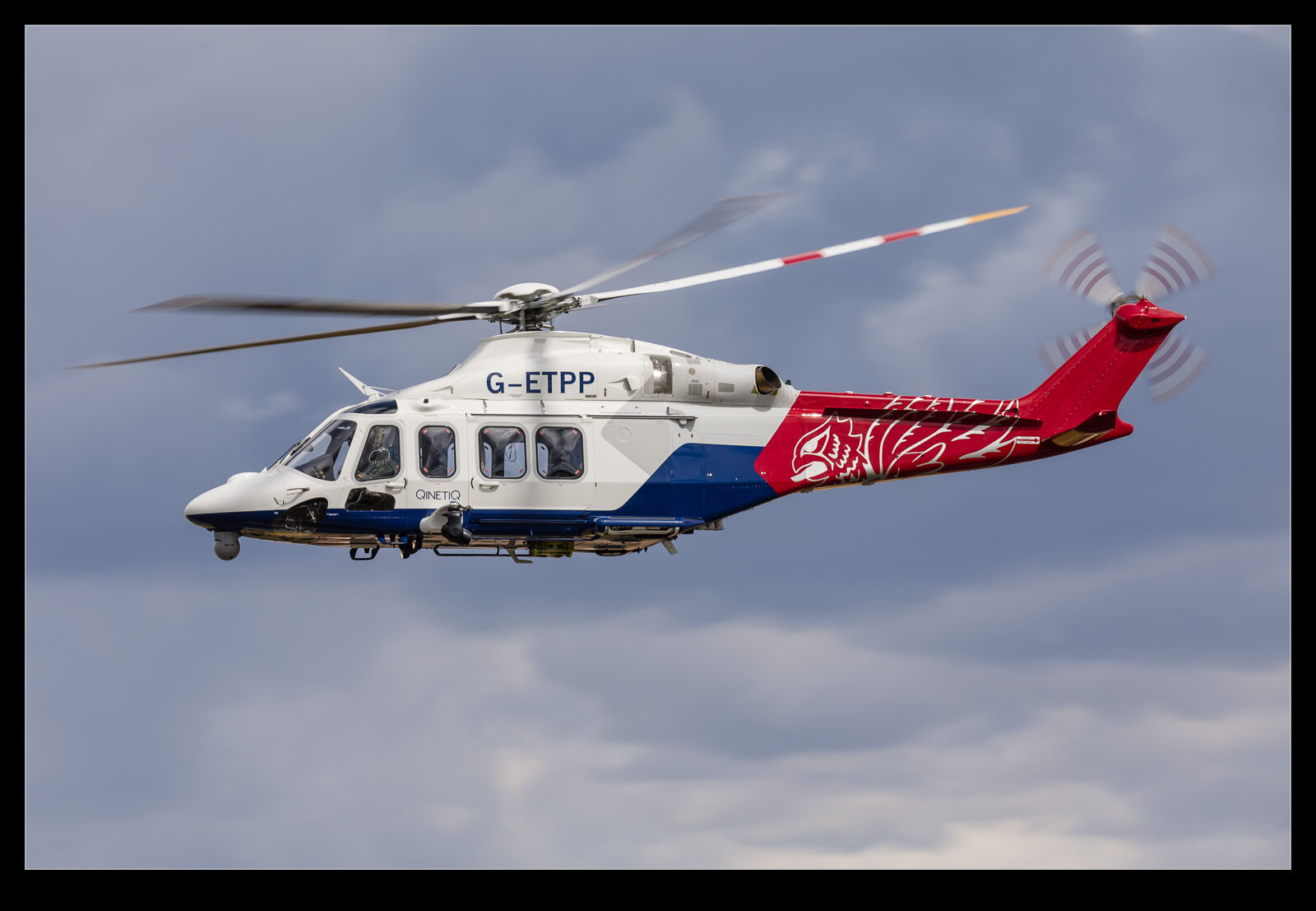
While the Merlins departed for base after the arrival of HMS Prince of Wales, the Wildcat wasn’t going anywhere. I suspect that they had a film unit on board that was recording the arrival of the carrier strike group, so they were getting aerial shots from different angles. A number of times they flew out of the harbour and then turned to run back in. It is possible that this was necessary for a shot that they were trying to get but my suspicion is that the parents of the pilot were in the crowd and a few flybys were for their benefit instead. Who knows???
Tag Archives: helicopter
Flyby of RN Helos for the Returning Carrier
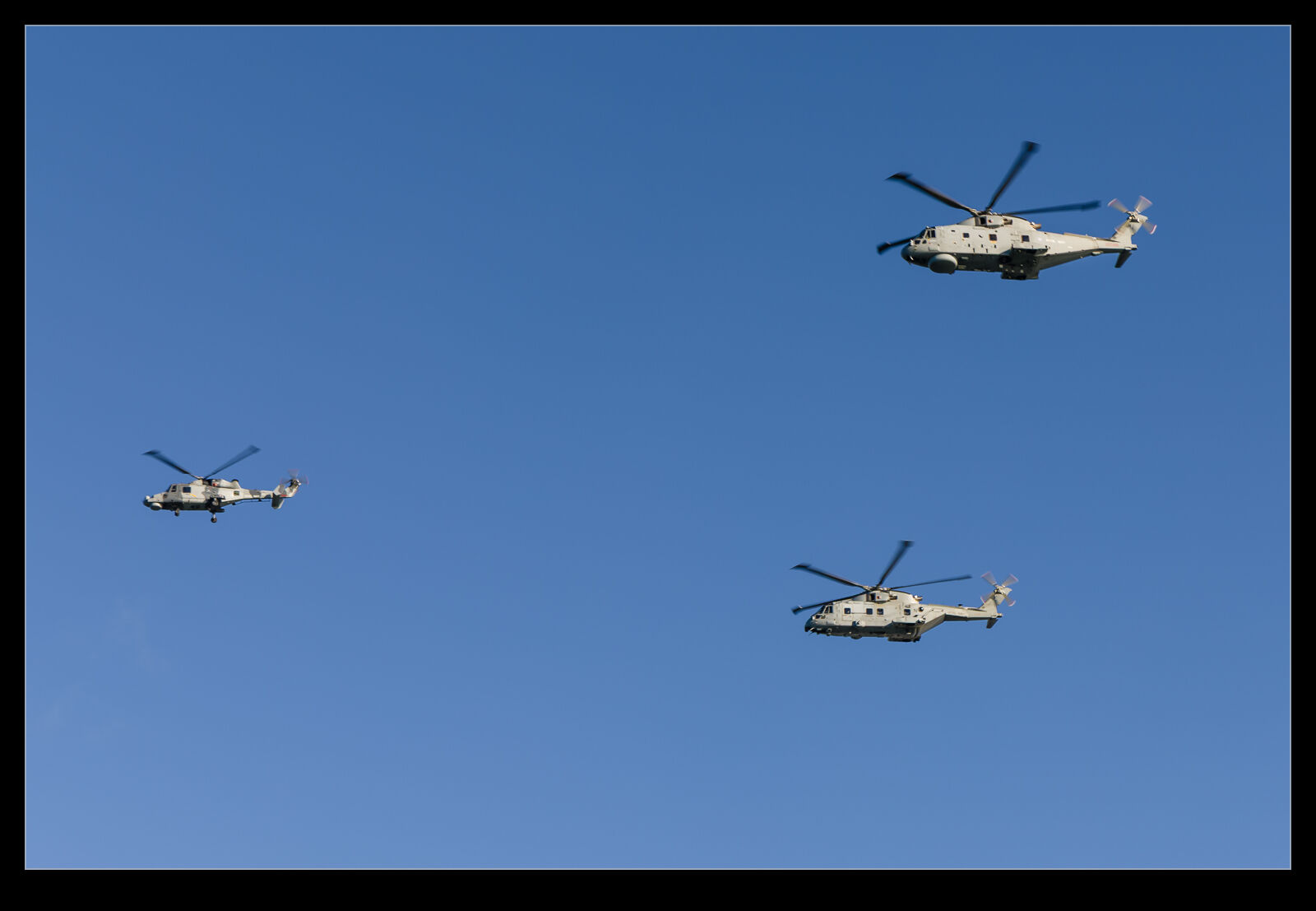
The arrival of the carrier strike group was the big theme of the day, but the Fleet Air Arm was going to support the process with a flyby. A pair of Merlins and a Wildcat were assigned to the role, and they were initially noted off Bournemouth as they joined up before heading to Portsmouth. As they came over Portchester, we could see them from where we were, and they flew up the harbour and over our location to head out and meet the carrier.
We would see them a bit from a distance as the manoeuvred around the ship and this allowed us to have a reasonable idea of where everything was at any point. Then, as the ship entered the harbour, the formation flew over the top to celebrate the return to home port. The Merlins then peeled off while the Wildcat hung around.
Czech Helo Stellar Displays
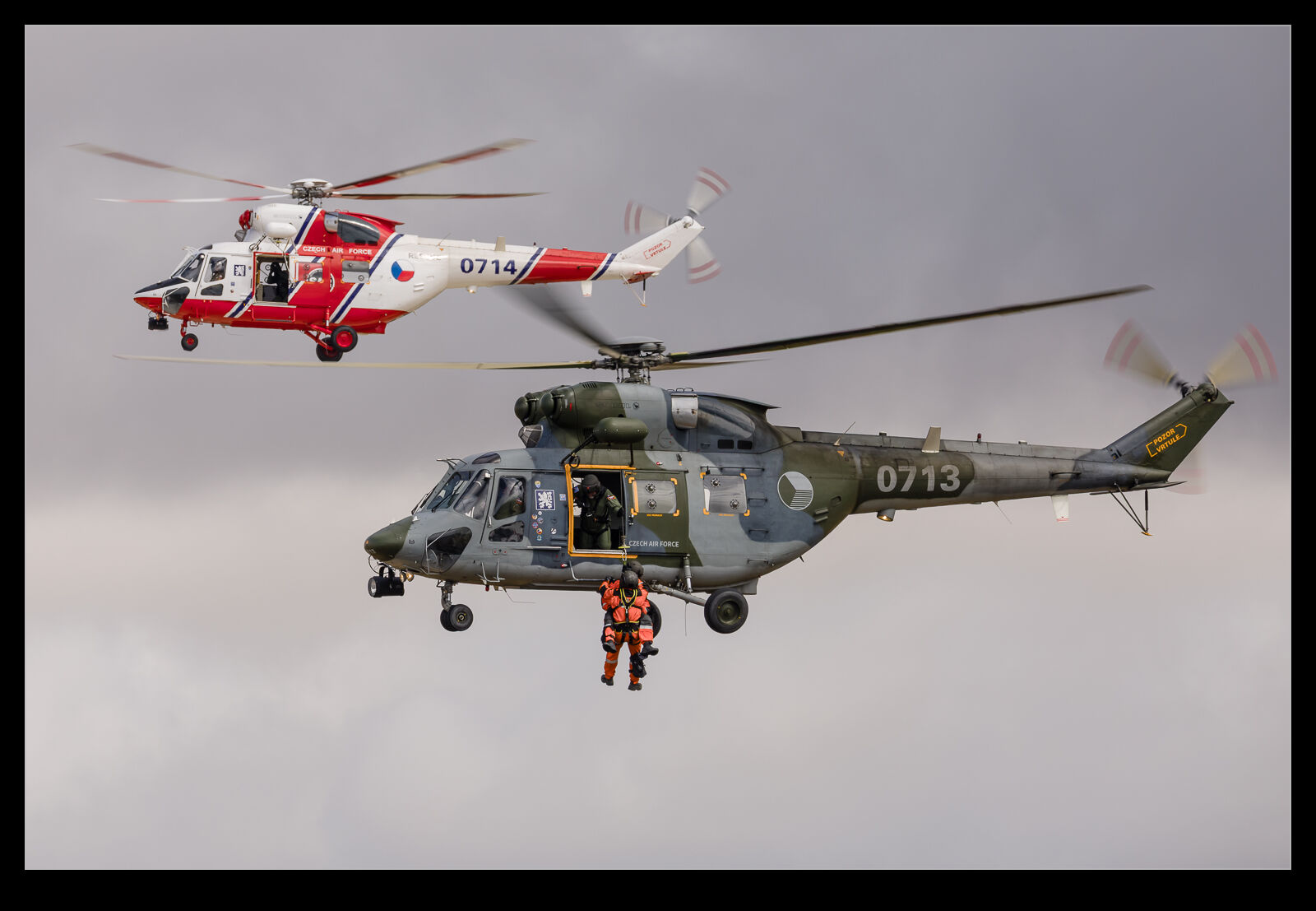
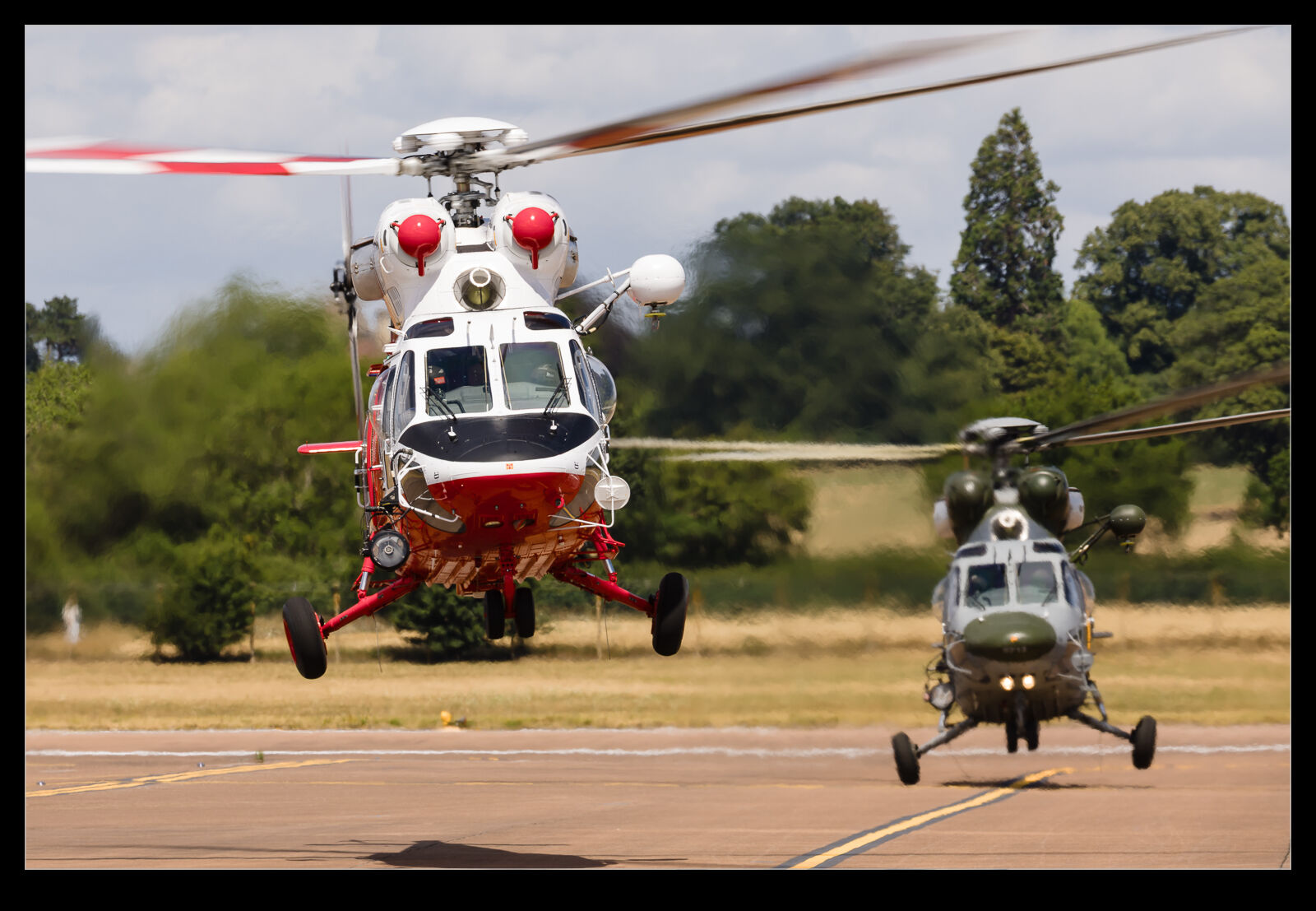
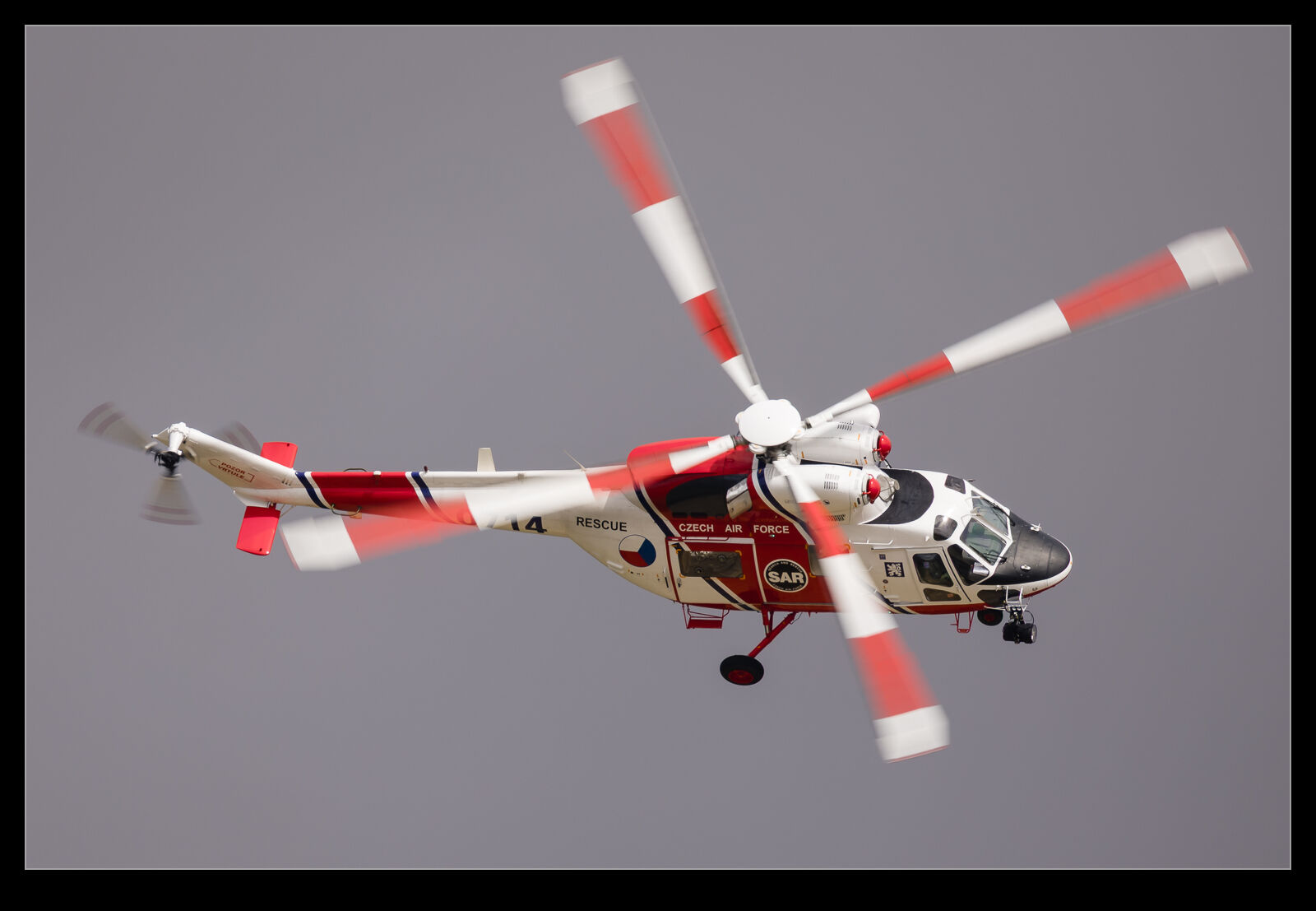
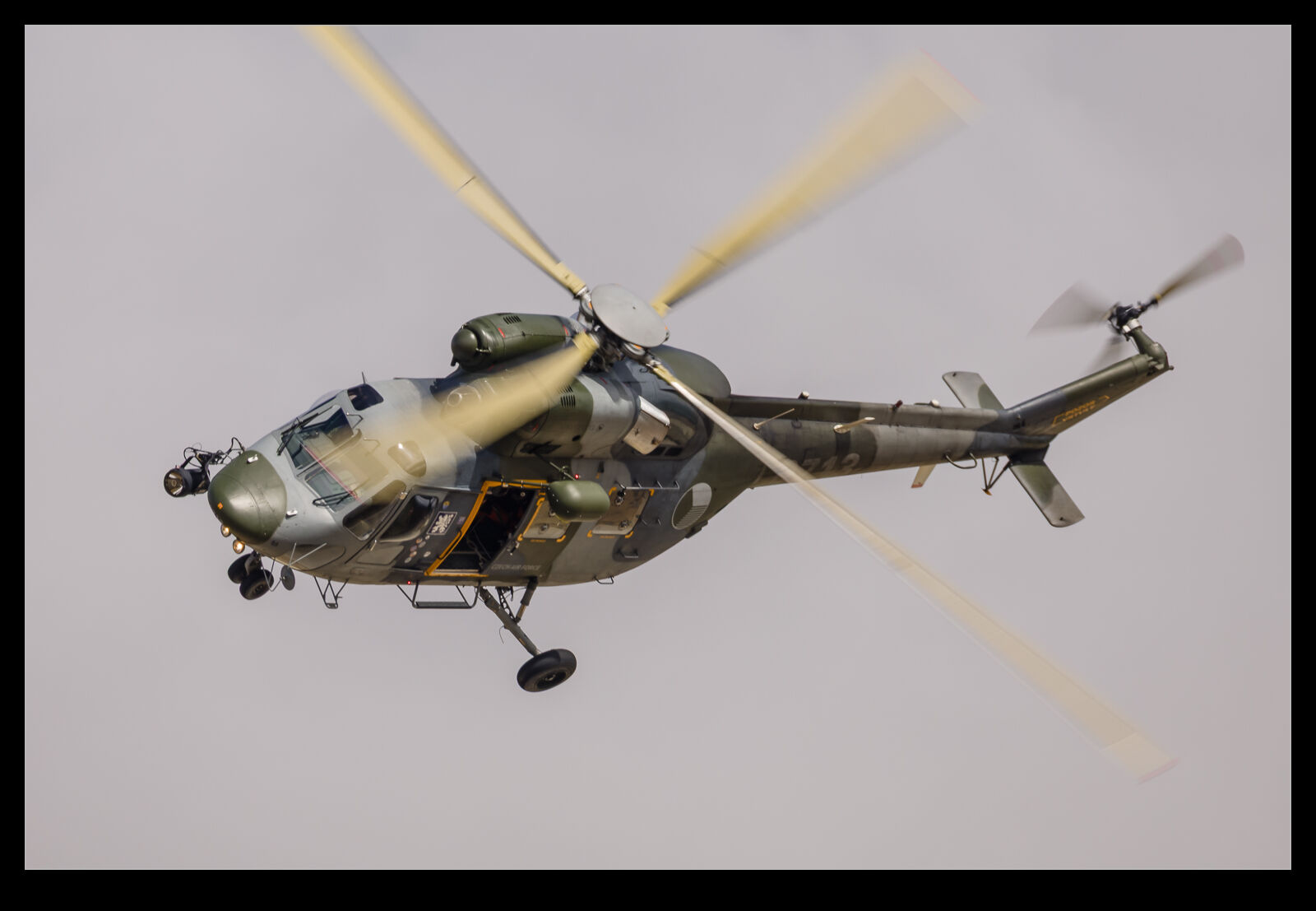
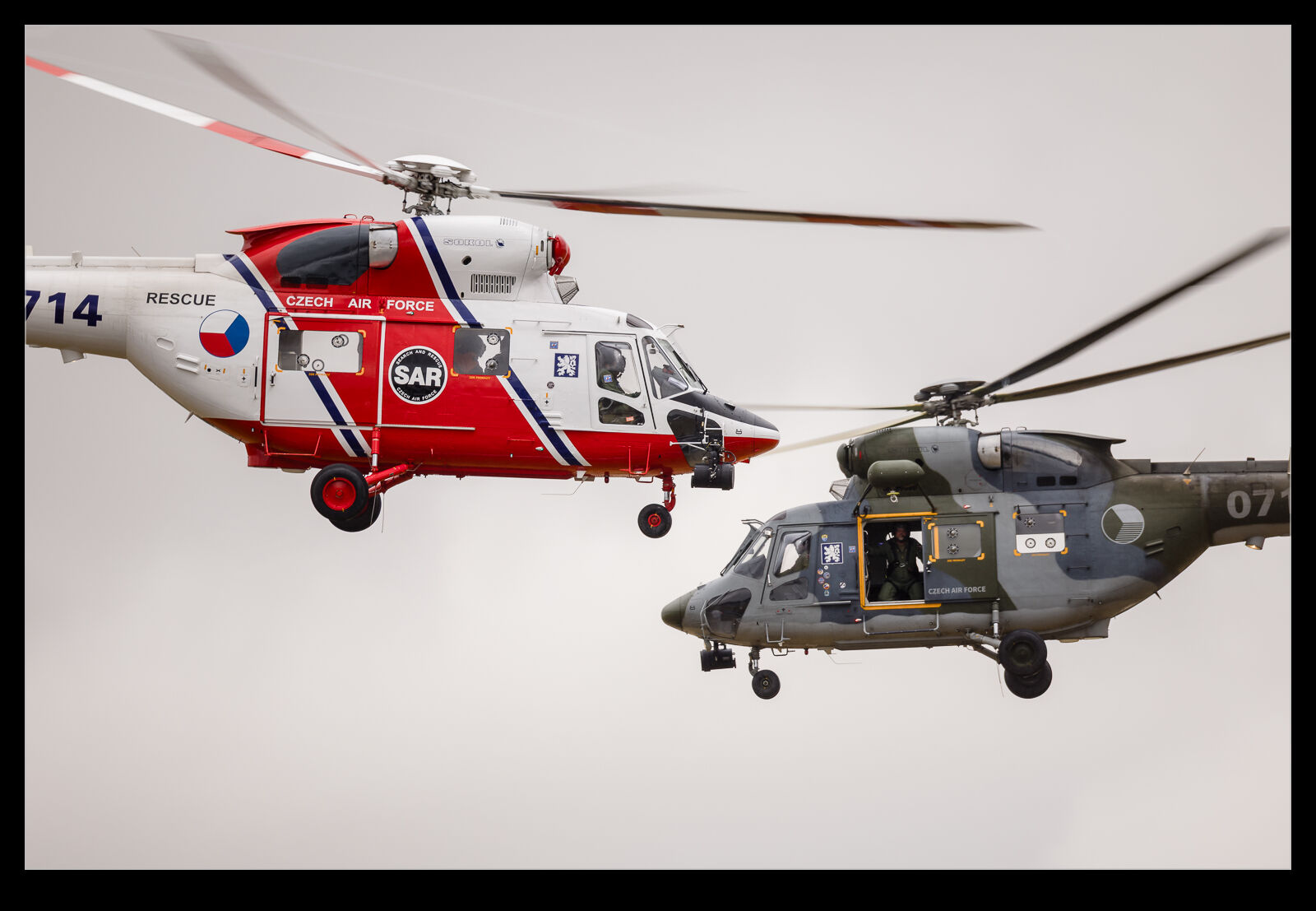
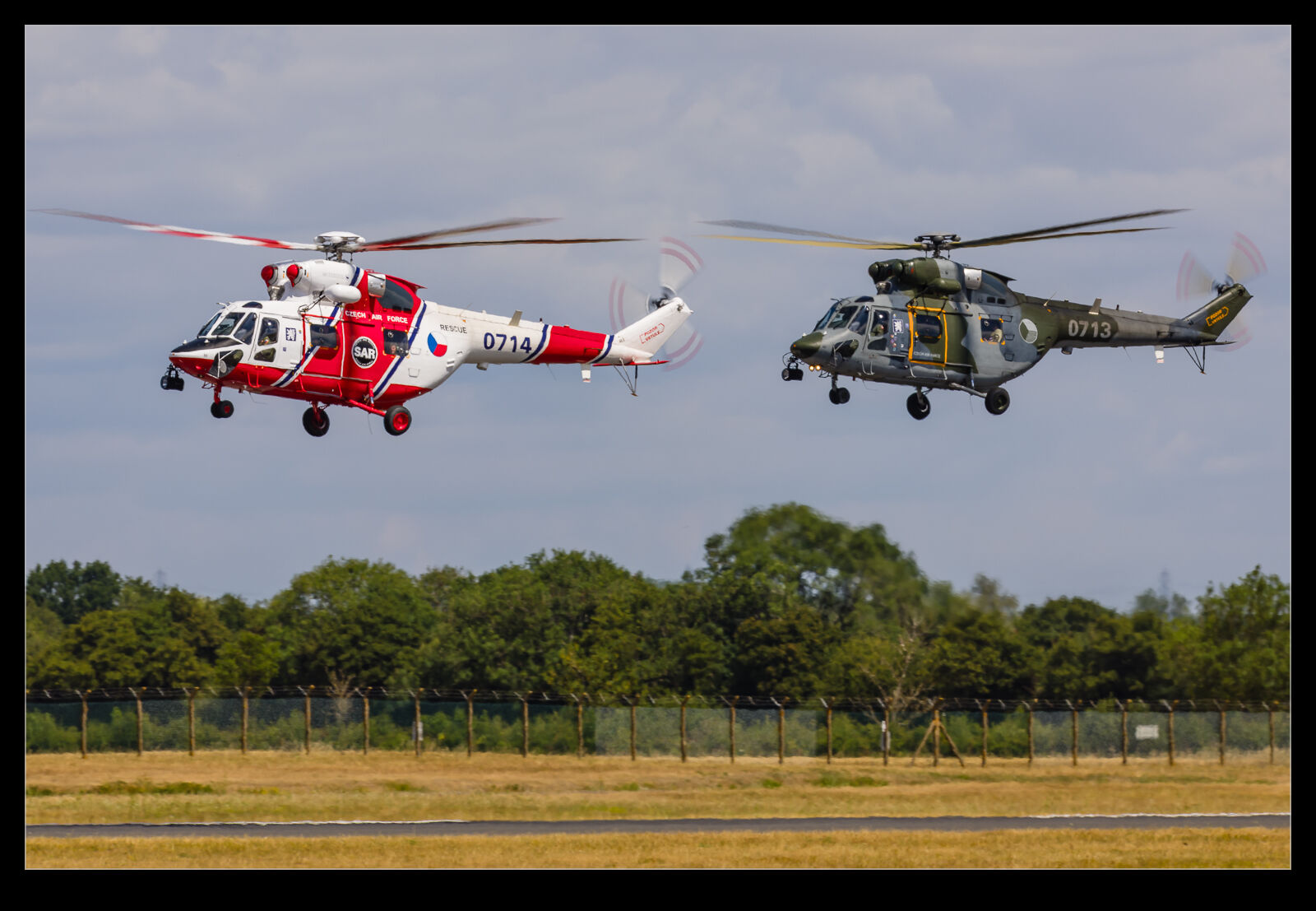
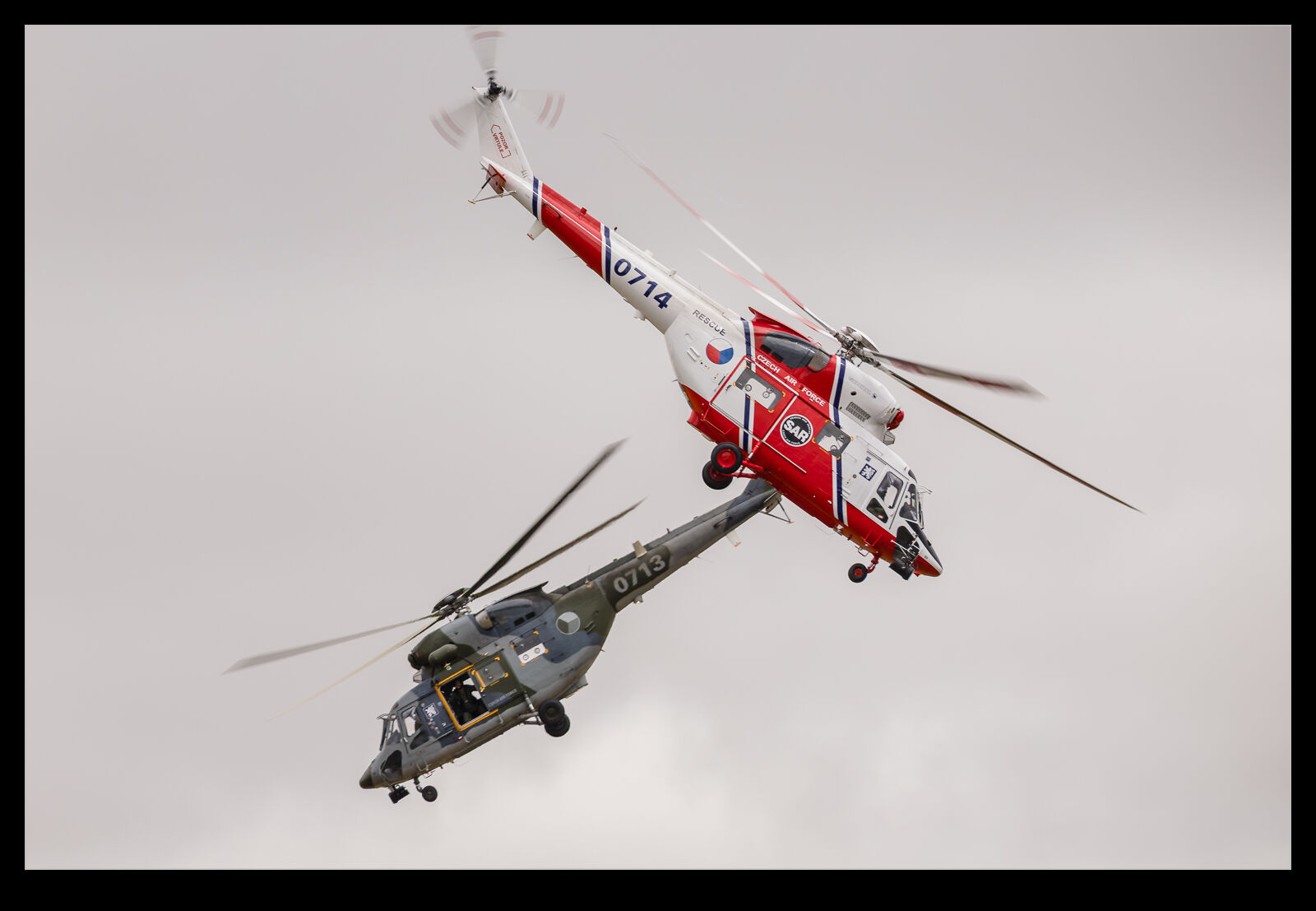
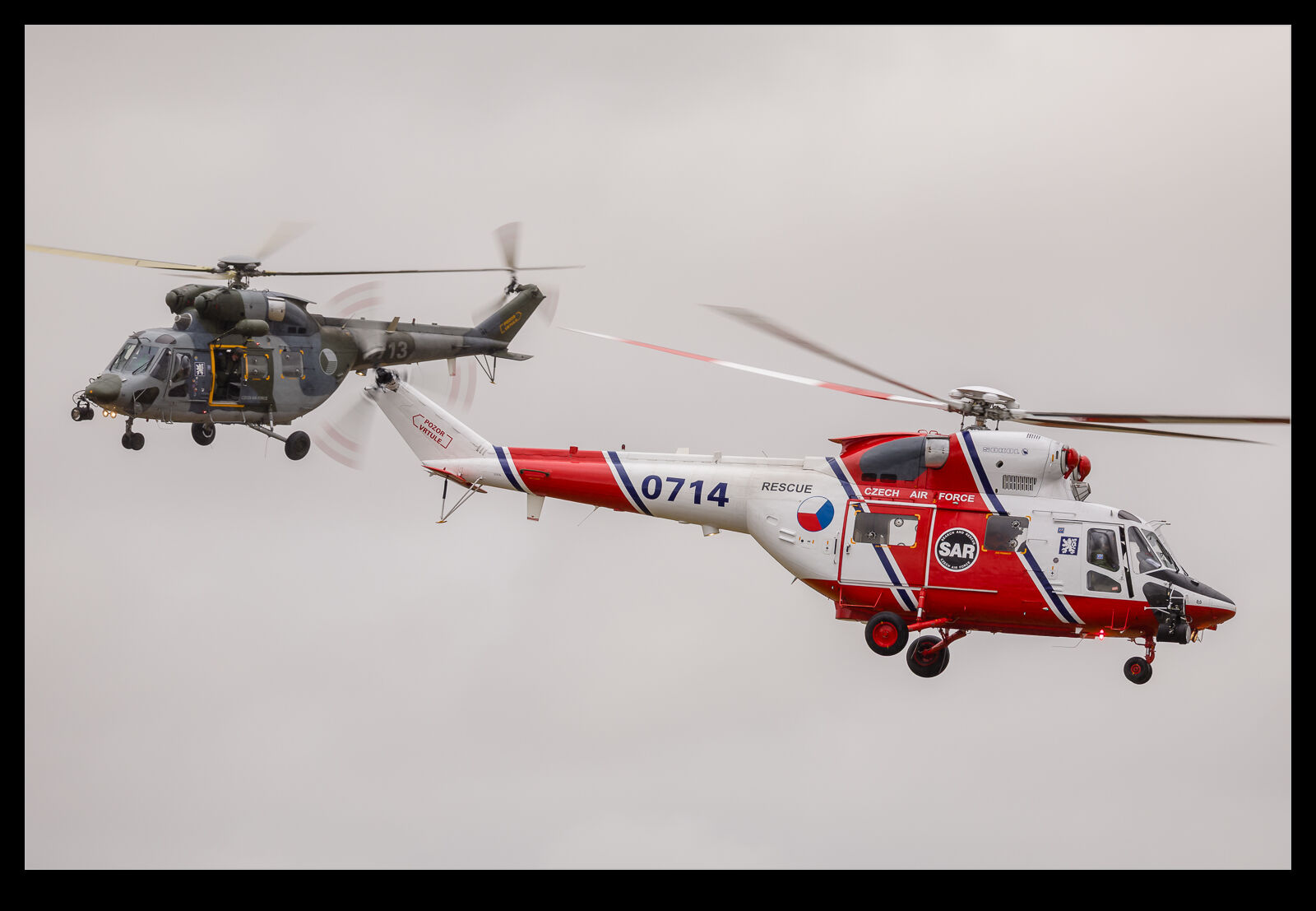
The Czech Air Force brought a pair of PZL-Swidnik W-2 Sokols to RIAT this year. One was in camo and the other in a SAR paint scheme. While this was a type that I hadn’t seen display before, I must admit I wasn’t terribly excited by the prospect. Helicopter displays can be pretty good but often lack punch. This team couldn’t have been further from that idea.
I first saw them display when they were doing a rehearsal. They were absolutely throwing the machines around. A ton of really good, coordinated manoeuvres that showed off the capabilities of the helicopter and the crew in equal measure. They would be pirouetting around each other and keeping the action right in front of the crowd. They never seemed to take a breath, and you were never tempted to stop watching.
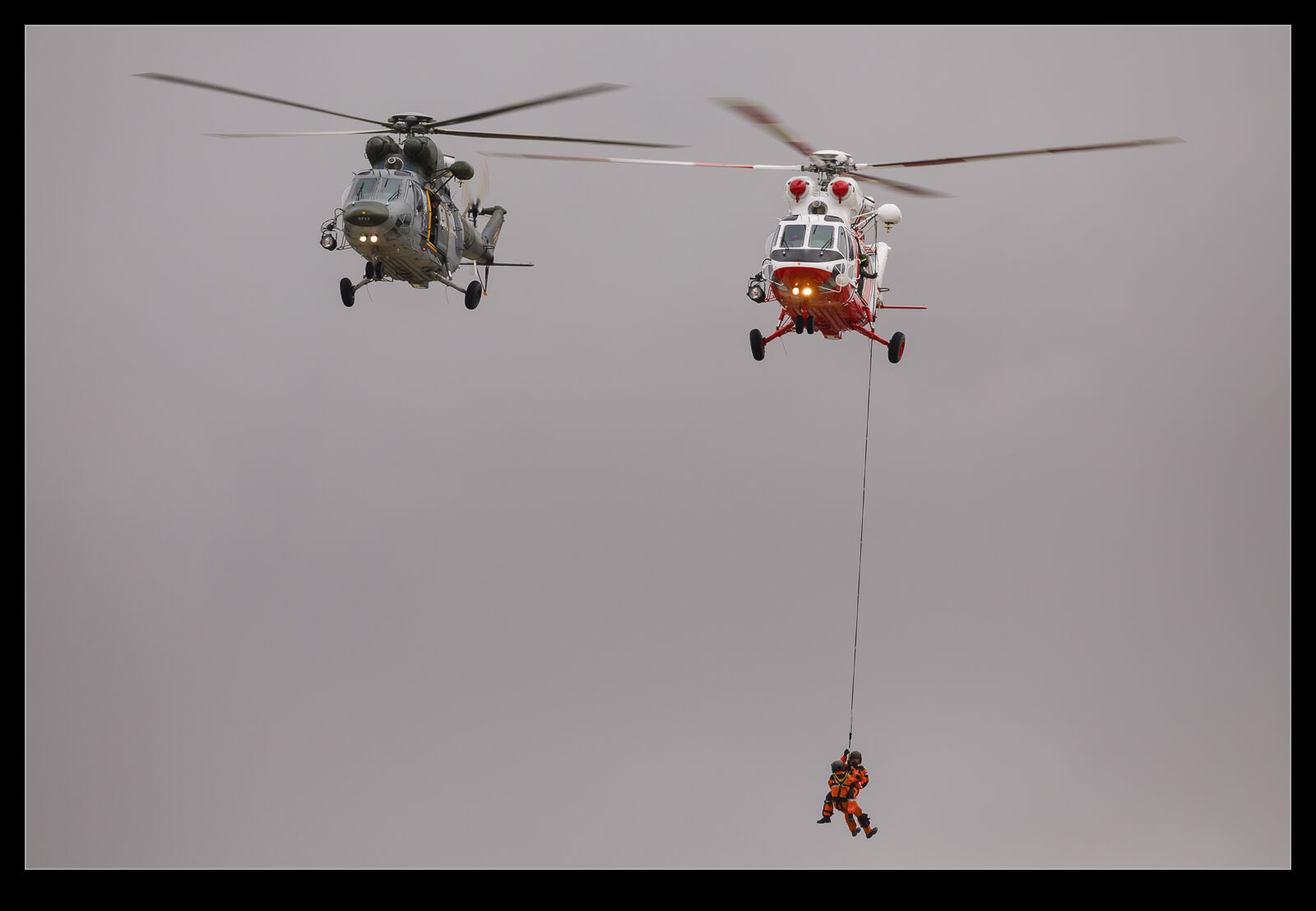
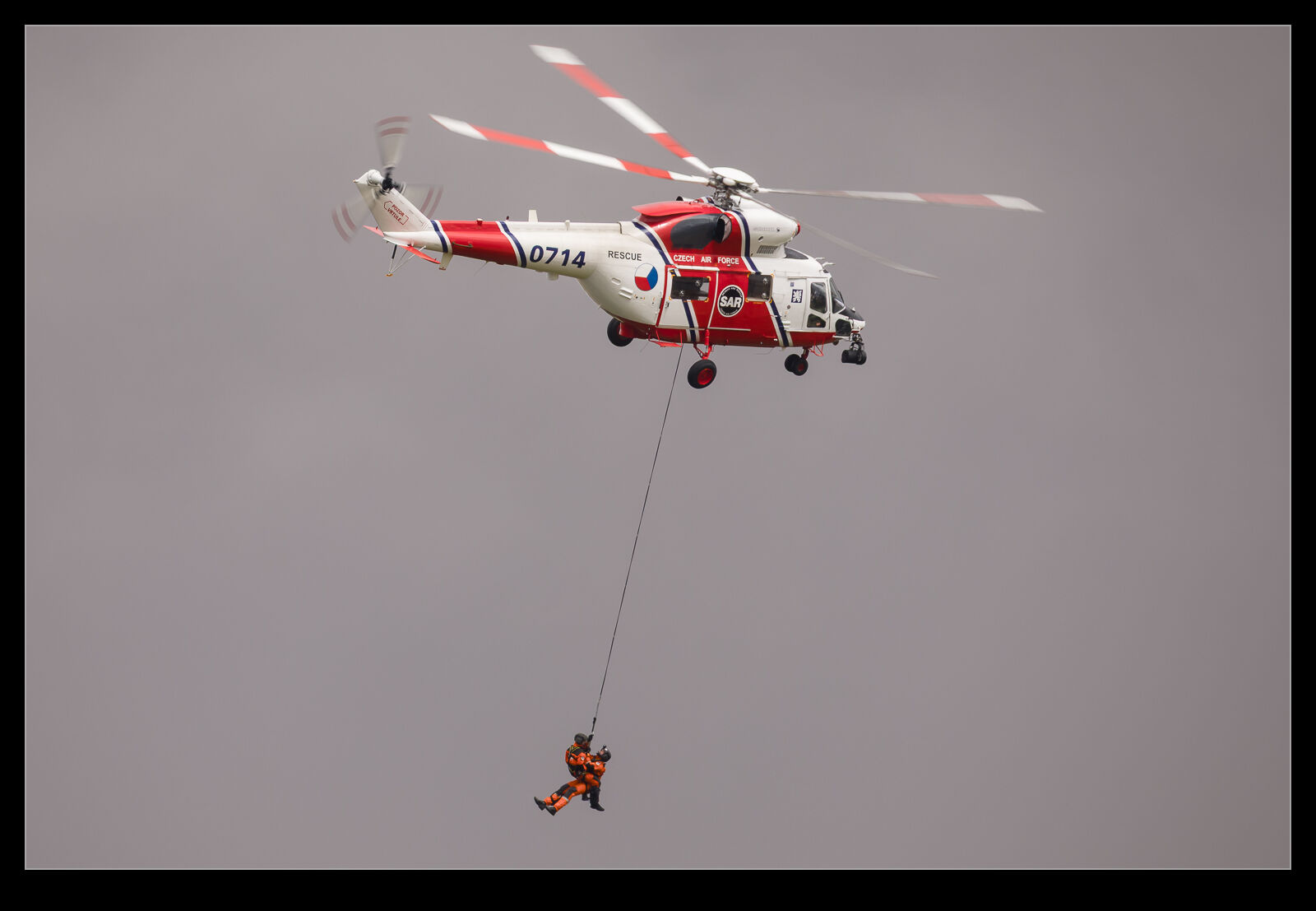
The highlight of the demo for me was a winching demonstration. This is not an unusual thing for a helicopter display to include. It is something that makes the type special and the search and rescue role will appeal to people that can imagine needing to be helped at some point. In this display, they added something that showed off the skill of the crew coordination. While in the hover, the winchman would pick up someone on the ground. They would winch them up a certain amount and then stabilise the hover. Then the pilot would climb while the winchman would let out line. The person at the end would stay exactly where they were as the helicopter climbed.
Then the pilot would stabilise again before starting a descent. Again, as the helicopter came down, the line would be taken in and the person at the end wouldn’t move. The whole thing was perfectly coordinated. I don’t know whether the winchman could vary the speed or if the pilot was modulating power to make it work and I don’t mind which it is. It was perfectly executed every time they did it across the days of the show. Top work. I hope other crews get to see this performance and it inspires them to try something innovative with their displays.
Chinooks Use Our Area for ILS Training
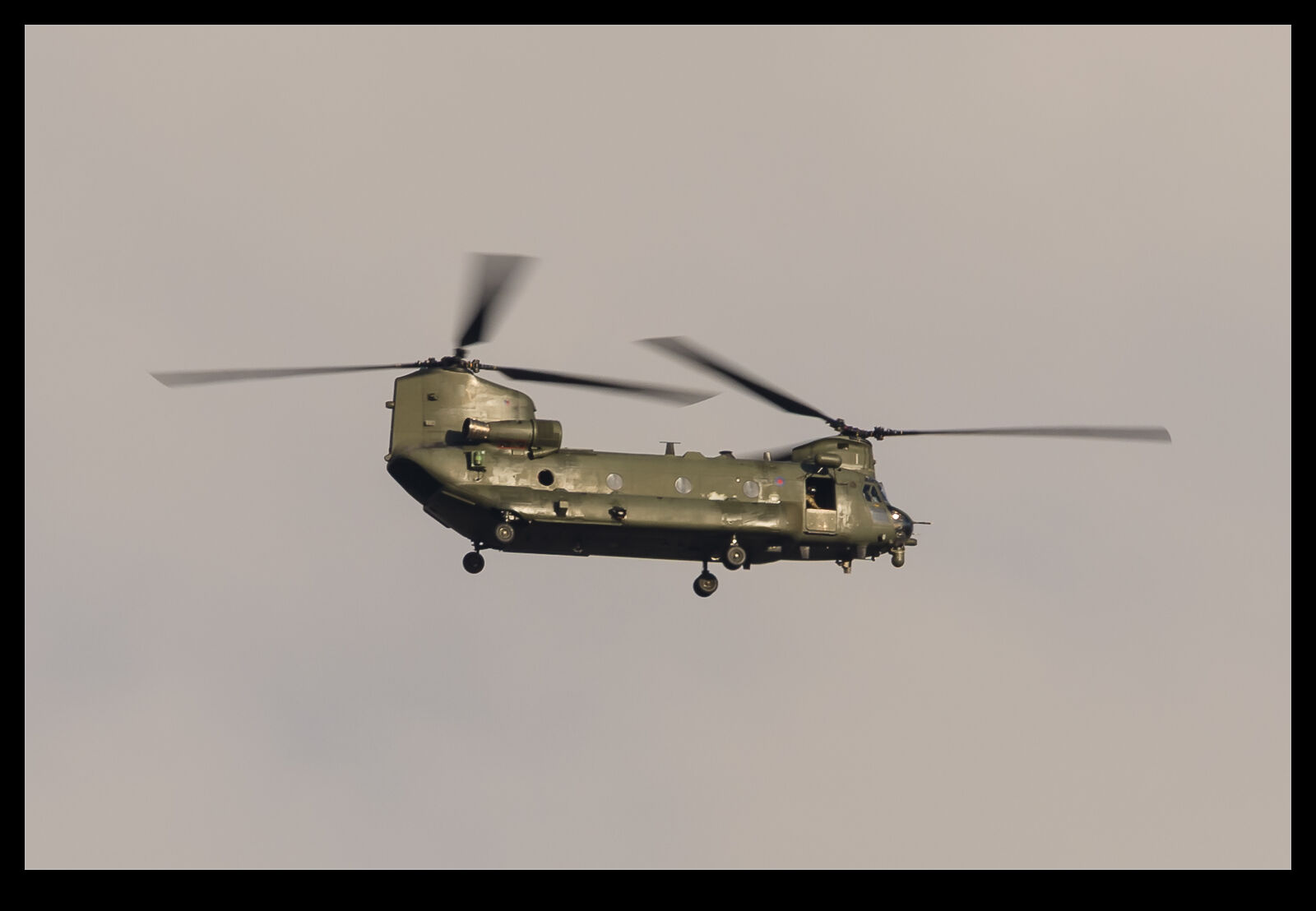
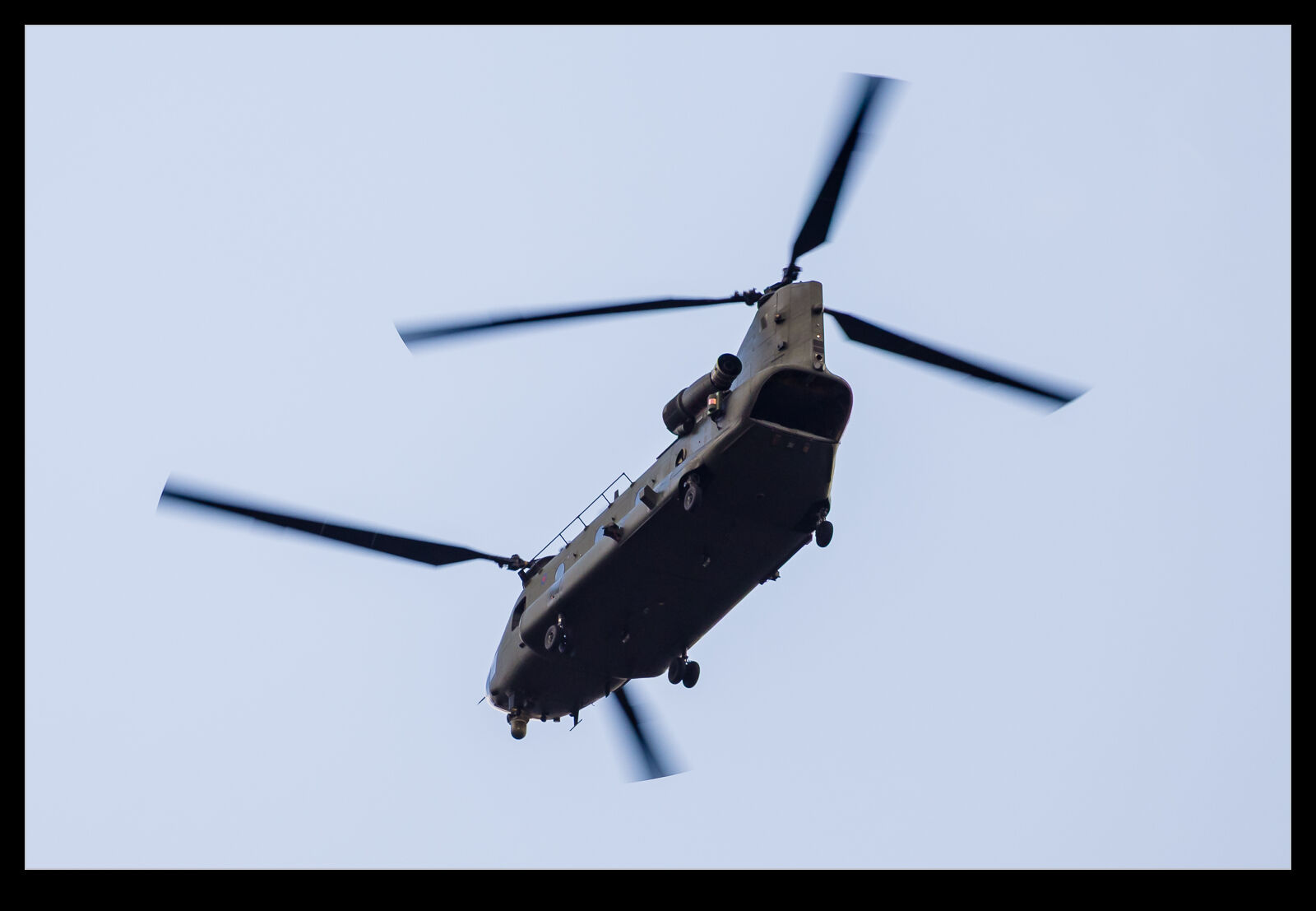
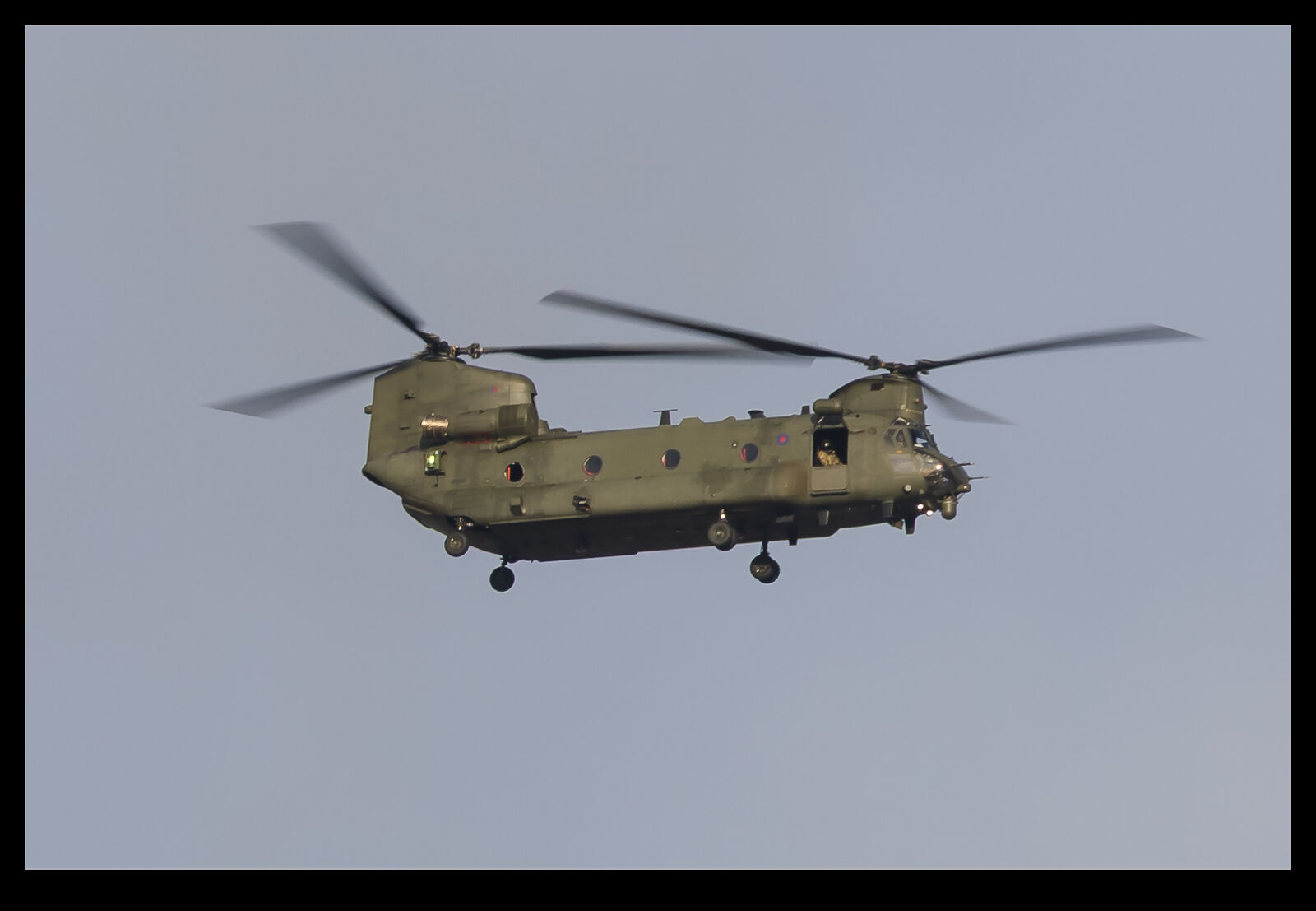
The RAF’s base at Odiham is not too far from where we live and it has been home to Chinook operations since the type was first introduced to service. I guess that there are training requirements for instrument approaches for the crews because it is not uncommon for them to show up over our house as they head to Southampton Airport. They will fly a few patterns which can include coming over the house.
Usually, they are a bit offset from us if established on the localiser and, while the Chinook is a large airframe, they are a bit distant for a good shot. However, I have managed to get a few when the light was more favourable. At some point I will get a closer encounter with them.
Portugal’s Merlins Just Look Better
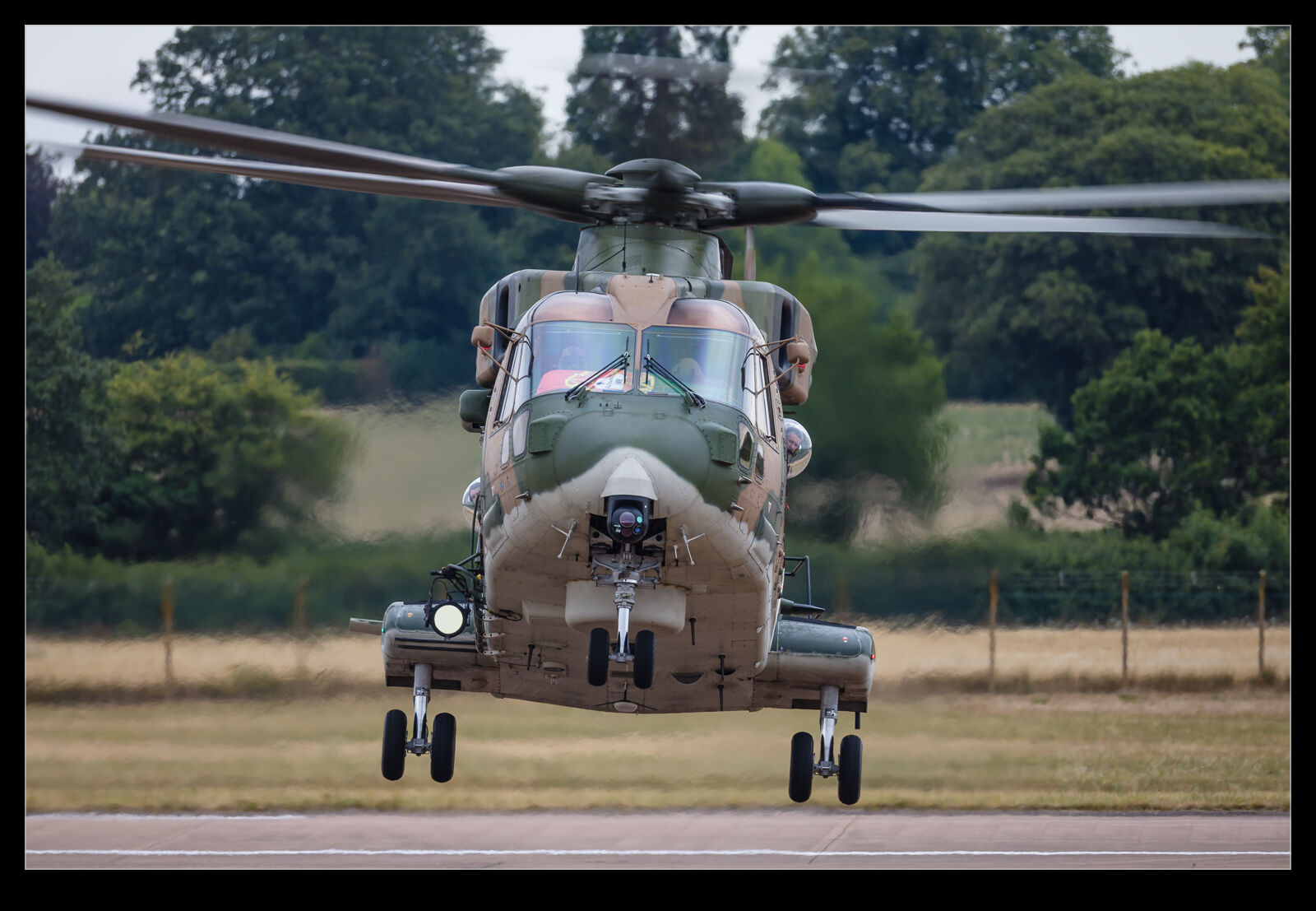
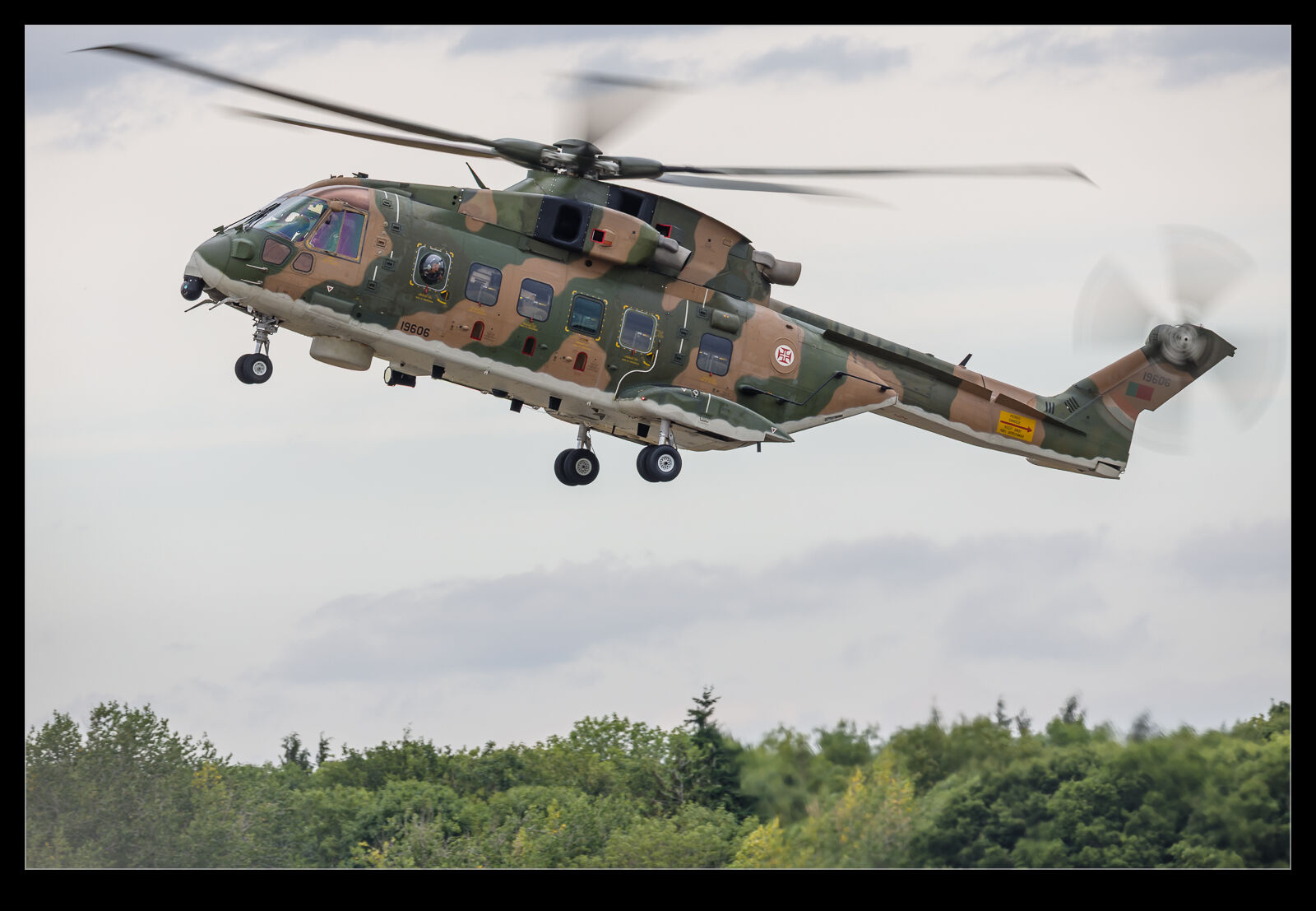
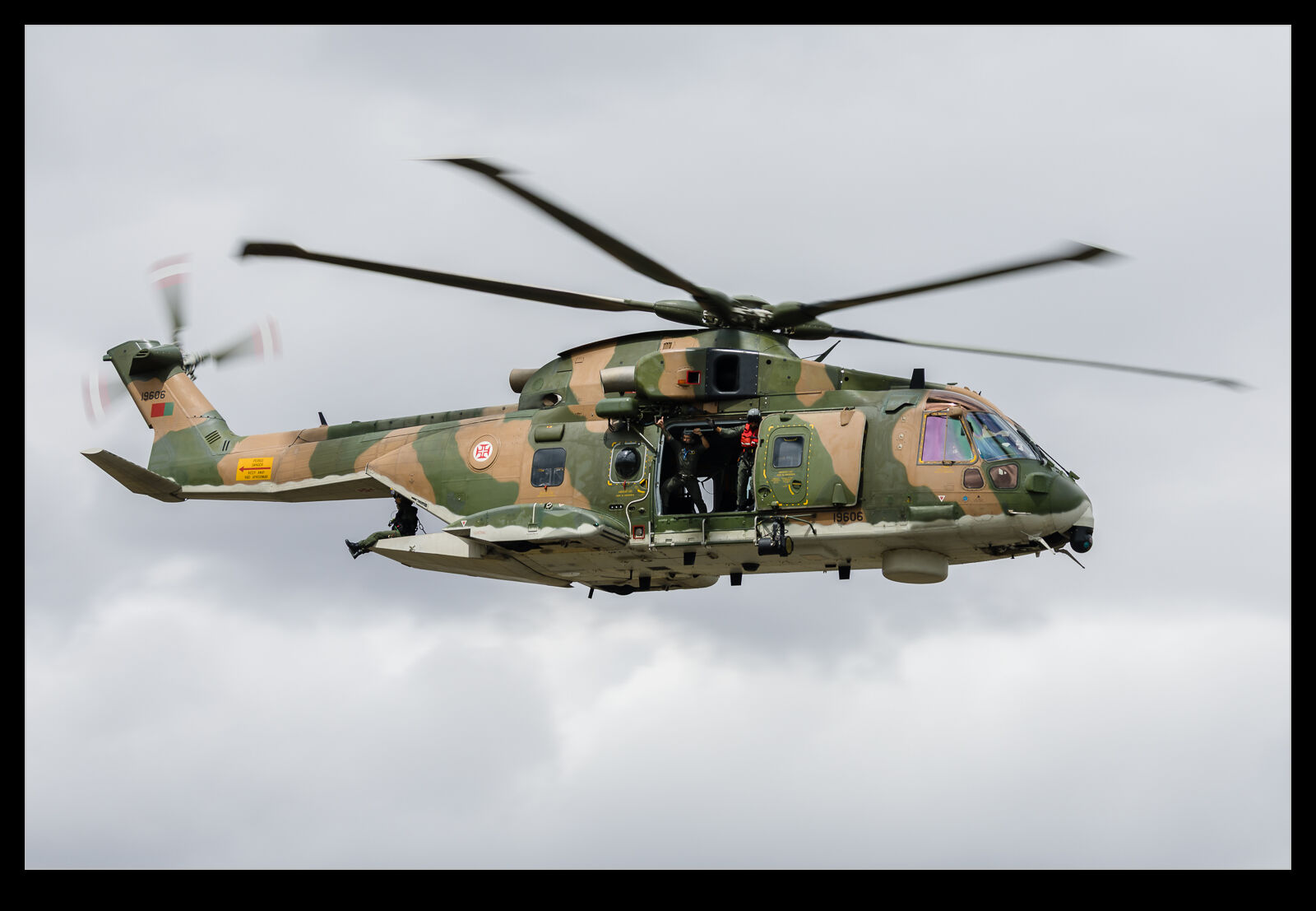
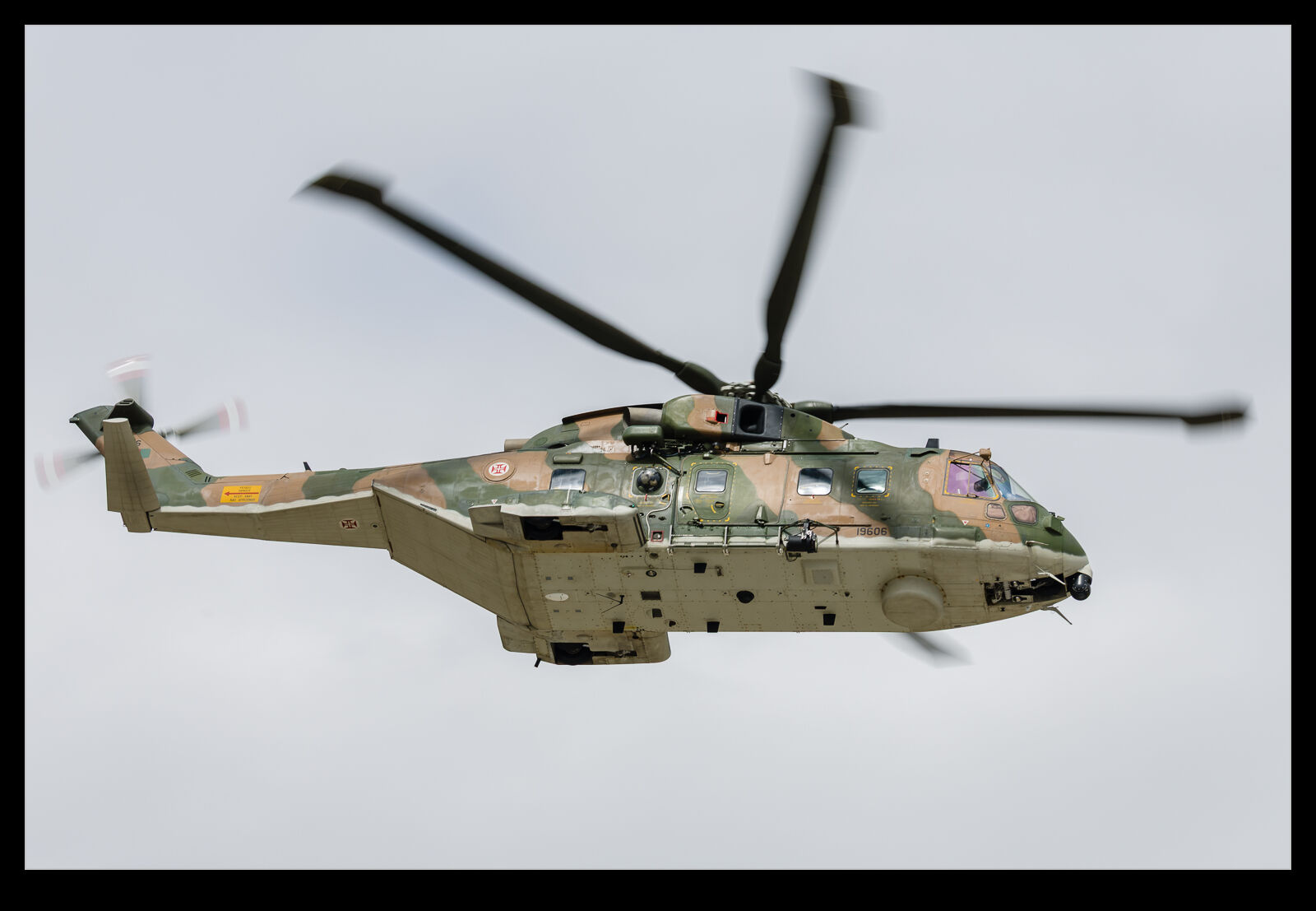
The AW101 is a great looking helicopter. I saw the original prototypes fly in the late ‘80s and early ‘90s including one that was configured as a civilian passenger type (sadly never to have the demand to make it to production). Since that time, I have liked to get photos of them wherever possible. The Canadian Cormorants look great in their yellow paint, and I finally got shots of them last year. Normally they are not painted in a very exciting way.
However, the Portuguese Merlin came to display at RIAT this year and it was way better looking than the average. It has a camouflage finish which seems to be a rarity these days. The colours of the camo were also quite vibrant, and it made for a striking subject. It certainly helped that the crew were throwing it around quite energetically and performed on more than one occasion, so I got plenty of shots of it.
An air show is an opportunity to see an airframe performing in ways that you wouldn’t normally get but it is also a rather sterile environment. These helicopters are used for search and rescue along the coastline of Portugal, and I imagine it would be really nice to get to photograph them in their “natural habitat” with cliffs and the see behind them. Maybe I might find myself out there one day.
Apparently, This Helicopter is Very Rare
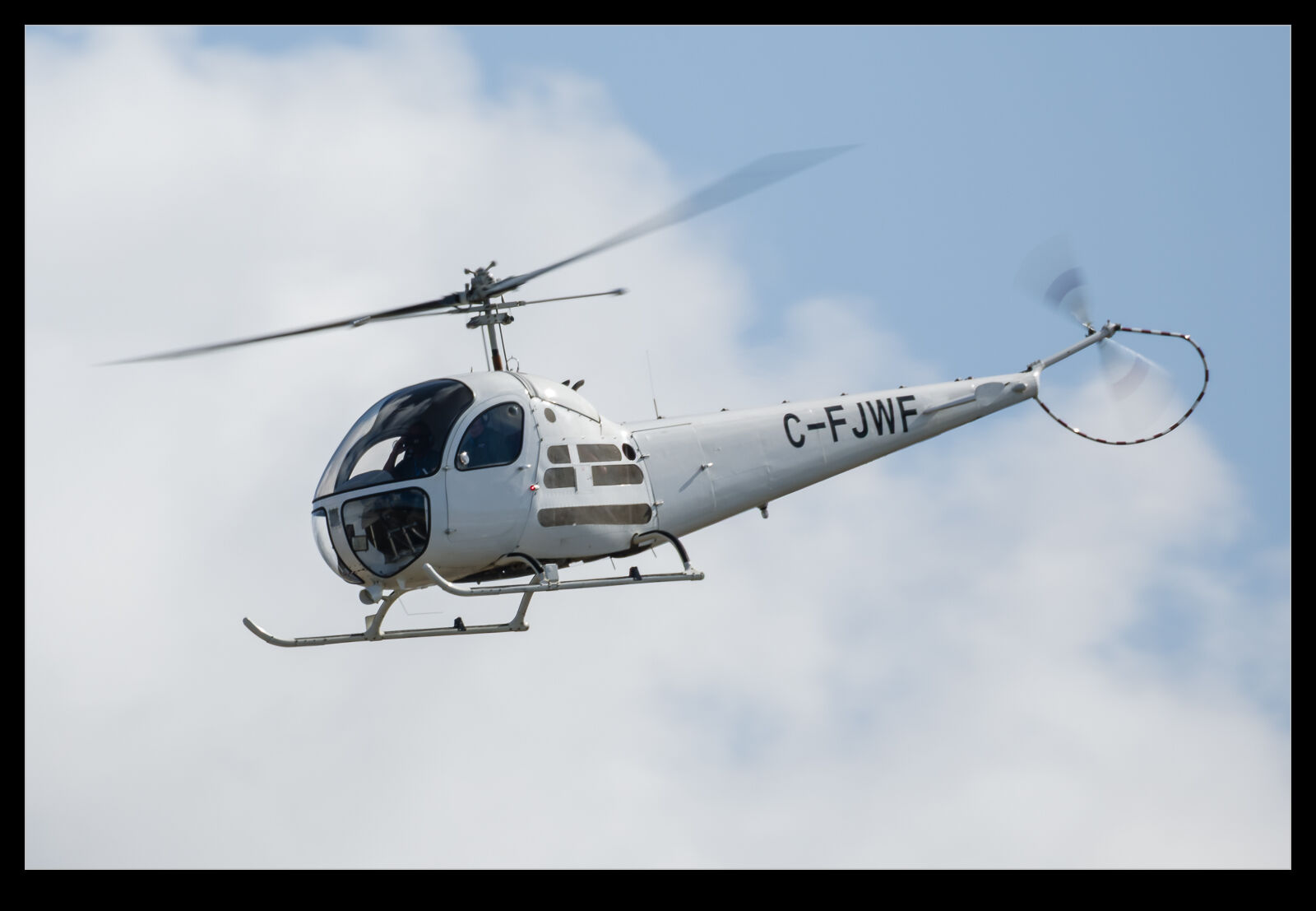
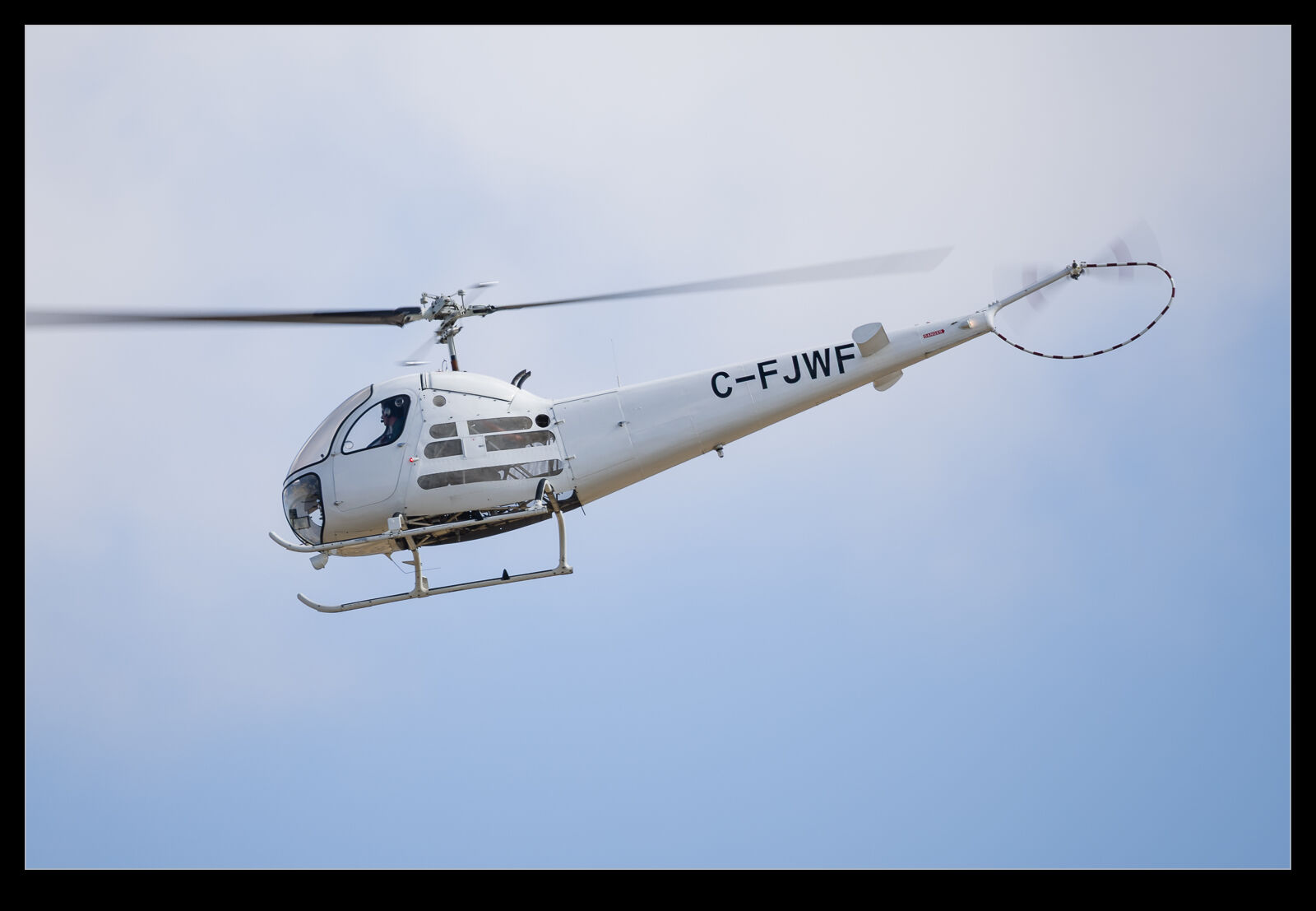
While the majority of aircraft that appear at RIAT are military, you do get some civilian types that show up as well. This year, one of these was a Canadian registered Bell 47. This airframe is a Bell 47H-1 which I am informed is a pretty rare member of the larger family. No idea whether this is true or whether these things are common as muck. I certainly haven’t got a pile of shots of similar airframes but that is hardly proof. Given that it is registered in Canada, I am not sure how much time it is spending in the UK, but it was here and flying so that’ll do!
Is This Wildcat Carrying Enough?
RIAT was visited by a number of AW159 Wildcats for the show. The Navy and Army brought examples with the Navy showing theirs as part of the Black Cats team. Midway through the show, another Navy example showed up. Unlike the others, this one was carrying external stores. The original Lynx looked heavily loaded if it was carrying four Sea Skuas, but this one really did look like it was ready for anything. I’m not sure if this is the Martlet missile installation or something else but, whatever it is, there was no shortage of capability on display.
An Original Lynx is Welcome
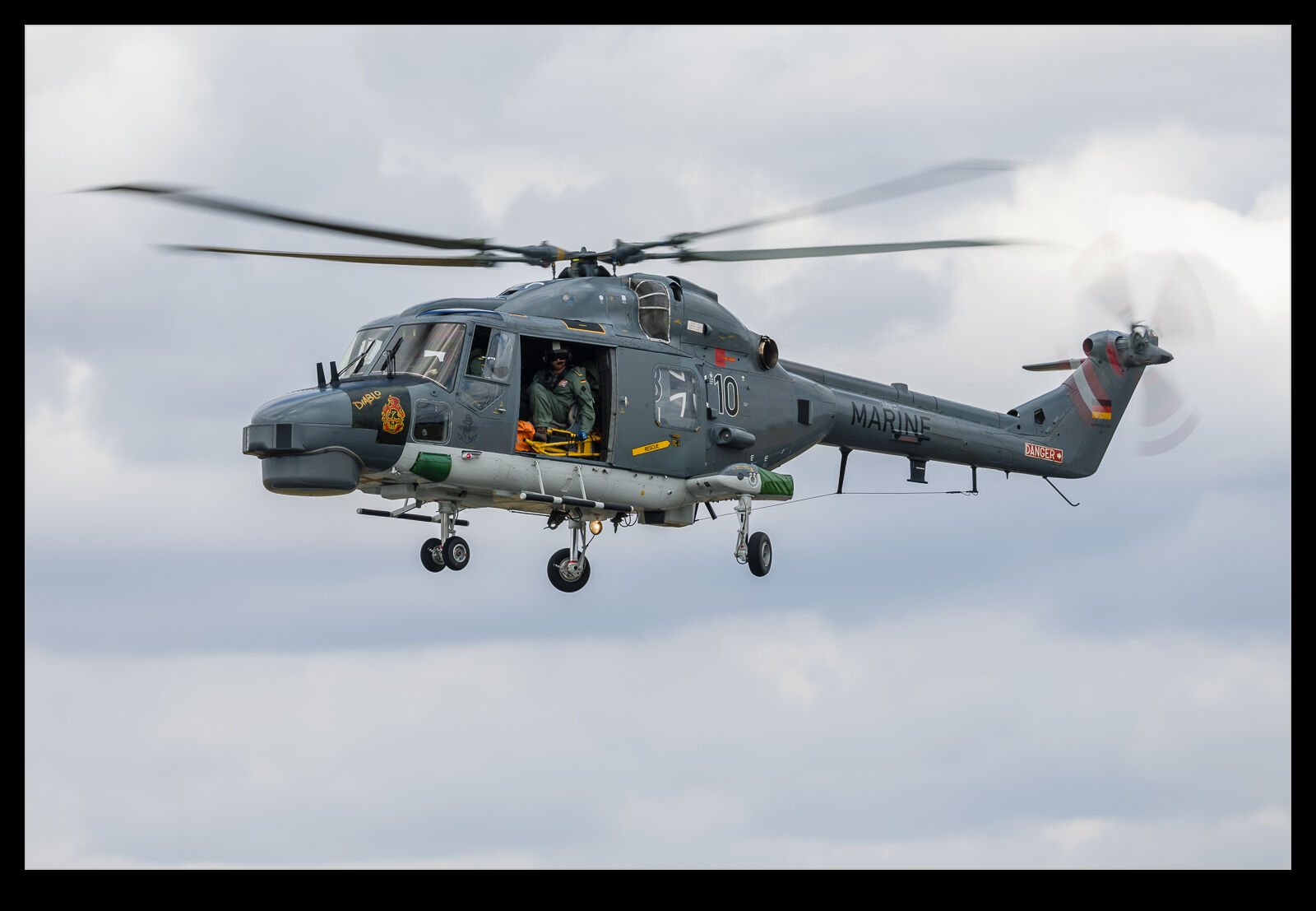
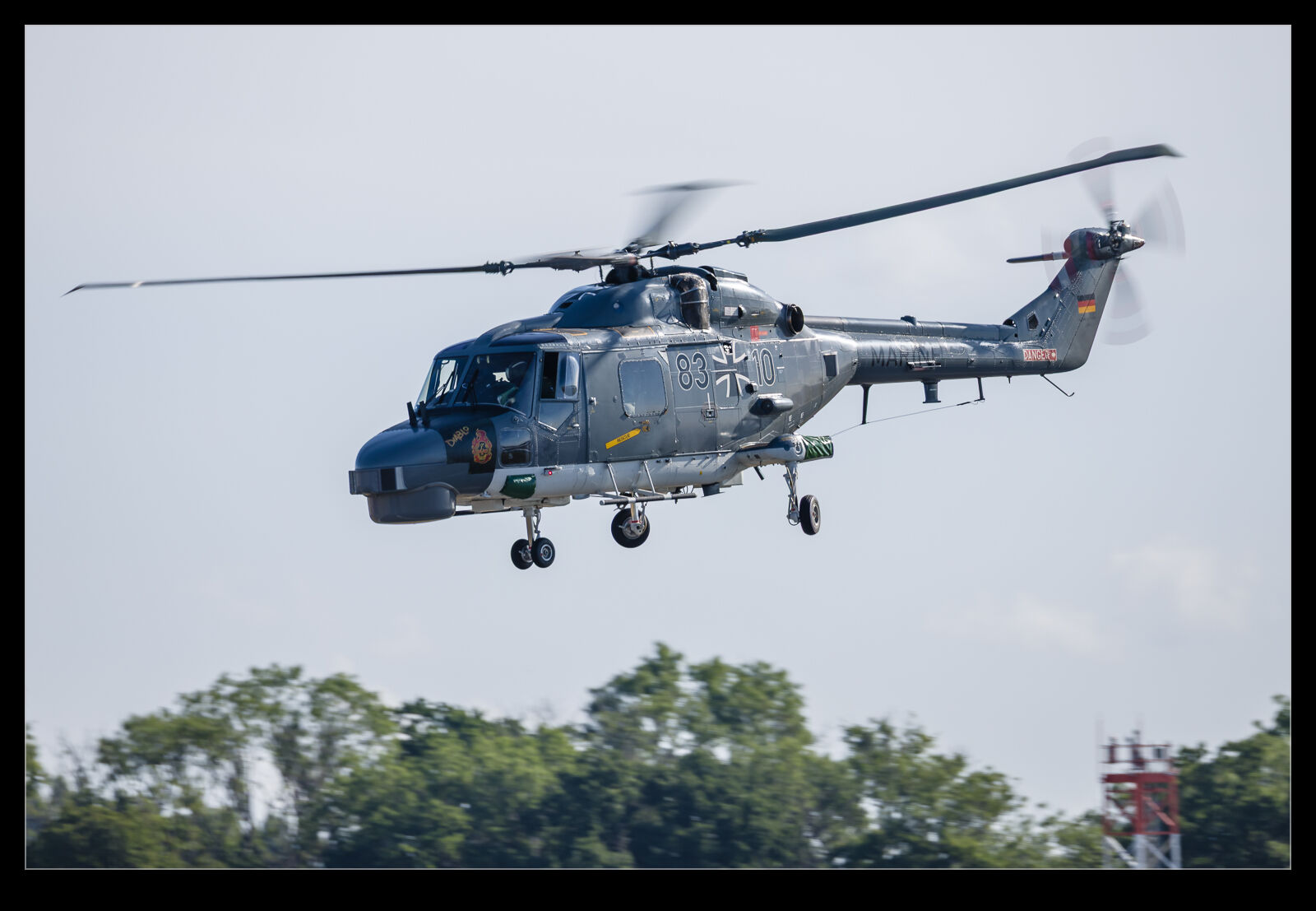
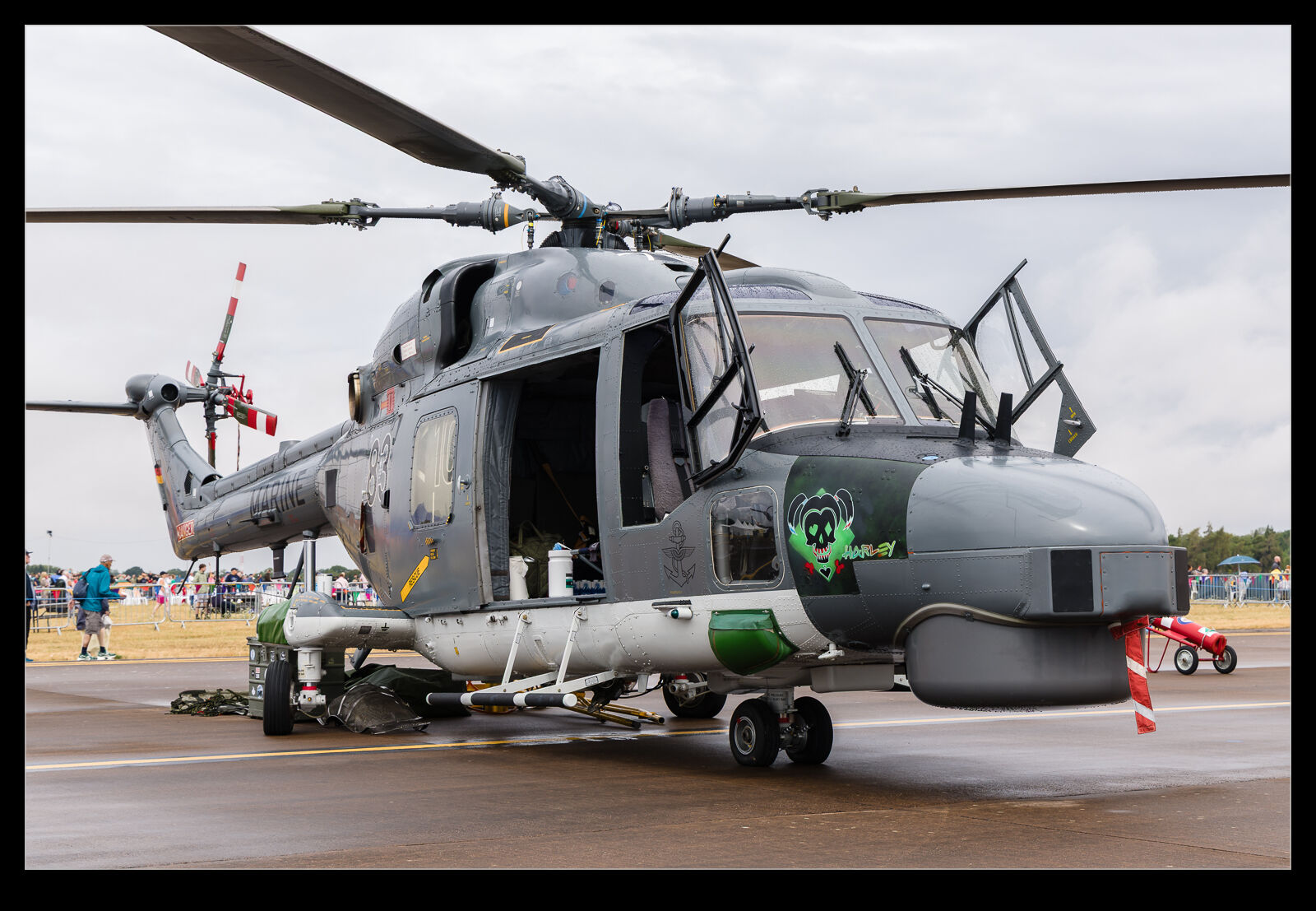
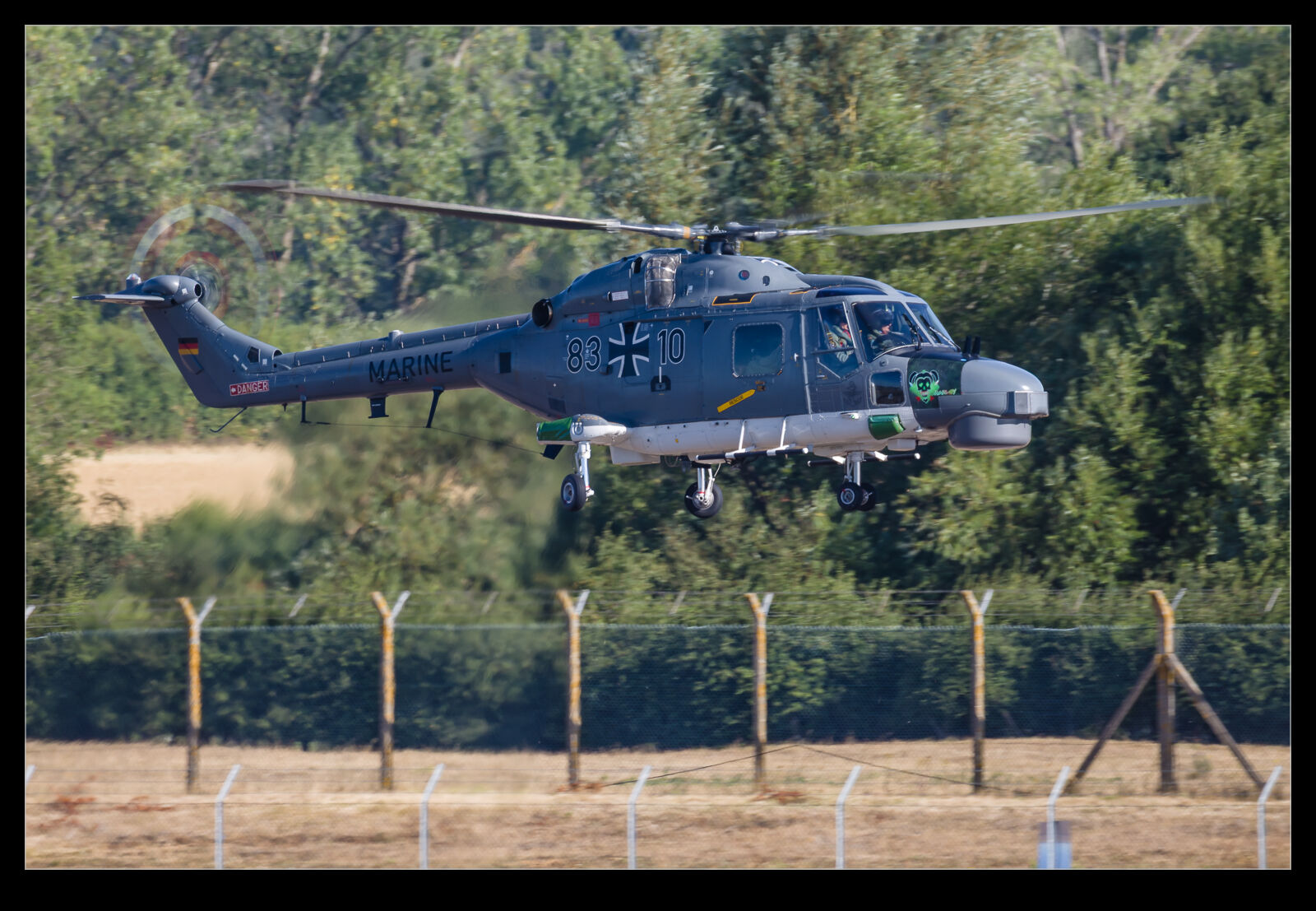
The Westland Lynx was a popular type and it sold well around the world. However, time has moved on and many operators have replaced their examples. The AW159 Wildcat has been the successor in some operators but other types have replaced them for most countries. Having an original Lynx still in use is a nice treat and the German Navy has not yet replaced all of theirs. They brought one to RIAT this year and the smooth lines of the original design are relatively untouched on their versions. They will soon be gone so this was a good opportunity to see one again.
Someone Else Playing with Rotor Tracking
I have come across some flying with Hughes 500s at Boeing Field when someone was using a strobe to track the rotors as part of the maintenance. I figured that would be a one off but another time I was there, the same thing happened – this time with a 369. I would have loved to have been onboard when this was being done to see how the tracing of the blades looks in flight when the strobe is flashing. I imagine it would be quite an interesting engineering thing to see.
Finally, a Little Sun on a Cyclone
My first encounter with a Canadian Cyclone was in the middle of a storm when it was incredibly gloomy. The next time I got to see one flying, the conditions might not have been so bad, but they were definitely dull! I figured I would just not get to see one in good light and, given that it has a dark and dull grey paint finish, it really sucks in whatever light there is. However, I did finally get lucky when I saw one on the ground at Abbotsford. A bit of sun at last. Sure, not flying and might not be the greatest but it was definitely a step up.